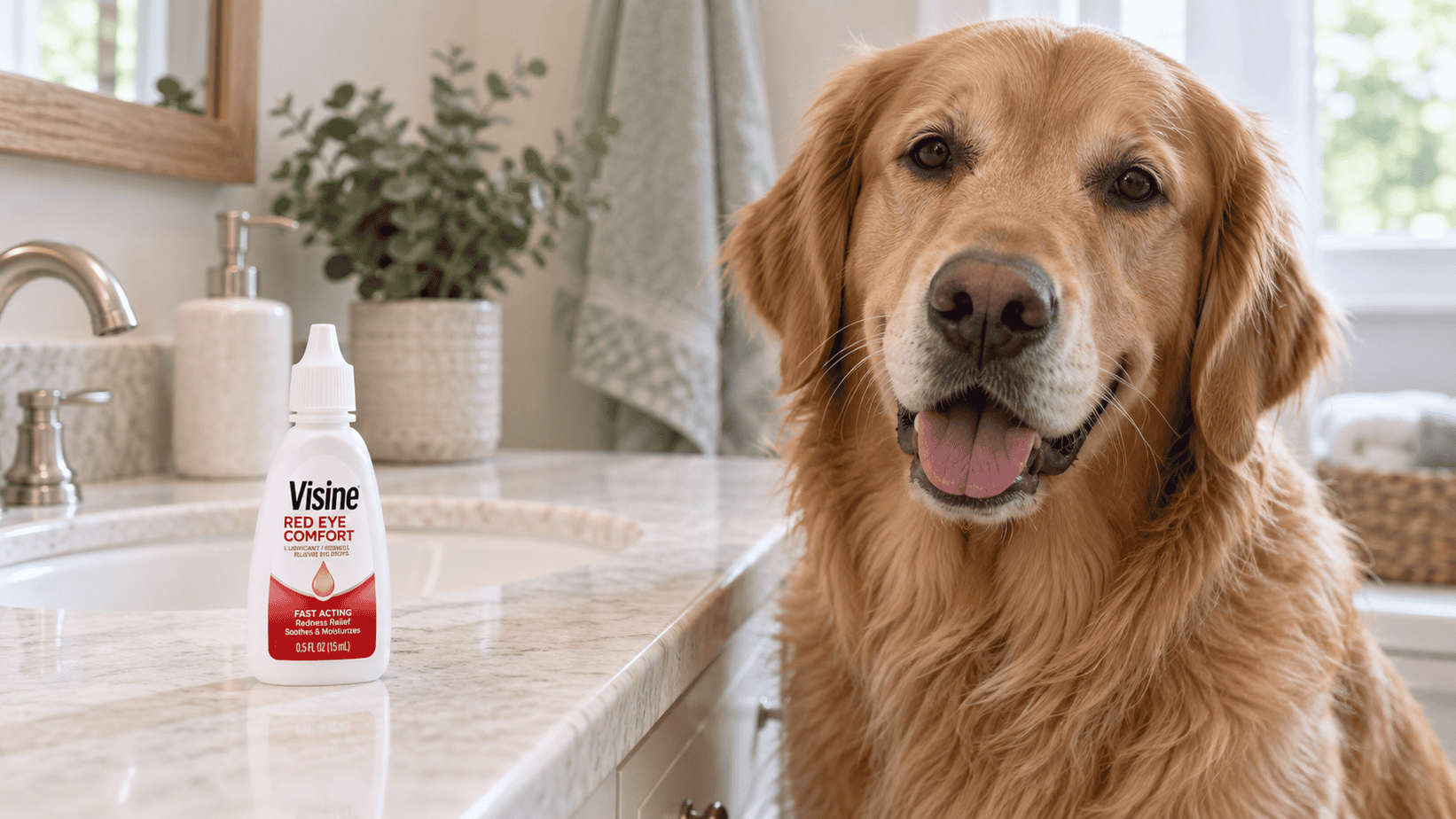
No, you should not use redness-relief Visine in your dog’s eyes unless your veterinarian has reviewed the exact product and specifically told you to use it. Visine is a brand, not a single formula. Some products contain ingredients that narrow blood vessels to make a human eye look less red, but that does not treat the reason your dog’s eye is irritated.
If you already used a drop, stop using it, save the bottle, and call your veterinarian with the product name and ingredient list. If your dog swallowed any eye-drop solution, contact a veterinarian or pet poison service right away.
Can You Use Visine on Dogs?
The safest general answer is no. A red eye is a symptom, and making the redness fade can create false reassurance while the real problem continues.
Visine Red Eye Comfort, for example, is labeled for human use and contains tetrahydrozoline hydrochloride 0.05% as a redness reliever. Its official label also warns about contamination, overuse, eye pain, vision changes, and swallowing. [1] A human label does not establish that the product is appropriate for a dog.
Visine Is a Brand, Not One Formula
Brand names can be confusing because the products sitting next to one another may have very different active ingredients. One bottle may be a redness reliever. Another may be marketed as a lubricant or allergy product. A familiar logo on the front does not tell you whether the formula is suitable for a dog’s eye.
Read the Drug Facts panel, not just the brand name. Avoid any product described as a redness reliever unless your veterinarian has directed its use after reviewing the exact formula. Do not assume that a product is safe because it says soothing, gentle, natural, or preservative-free.
Why Redness Relievers Are the Wrong Tool
Tetrahydrozoline is an imidazoline drug. It narrows small blood vessels, which can temporarily reduce the appearance of redness. That cosmetic effect does not remove a grass seed, heal a scratch, restore tear production, treat infection, or lower harmful pressure inside the eye.
There is another practical concern. Dogs often rub a painful eye and may lick liquid from their face. They can also chew the bottle. Imidazolines can cause serious poisoning when swallowed, even in small amounts. Reported signs in pets include drooling, vomiting, a slow heart rate, low blood pressure, lethargy, stumbling, collapse, and death. [2]
What Should You Do If You Already Used Visine?
One accidental drop does not mean that every dog will become ill, but it is still worth taking seriously. The exact formula, the amount, your dog’s size, whether any was swallowed, and the condition of the eye all matter.
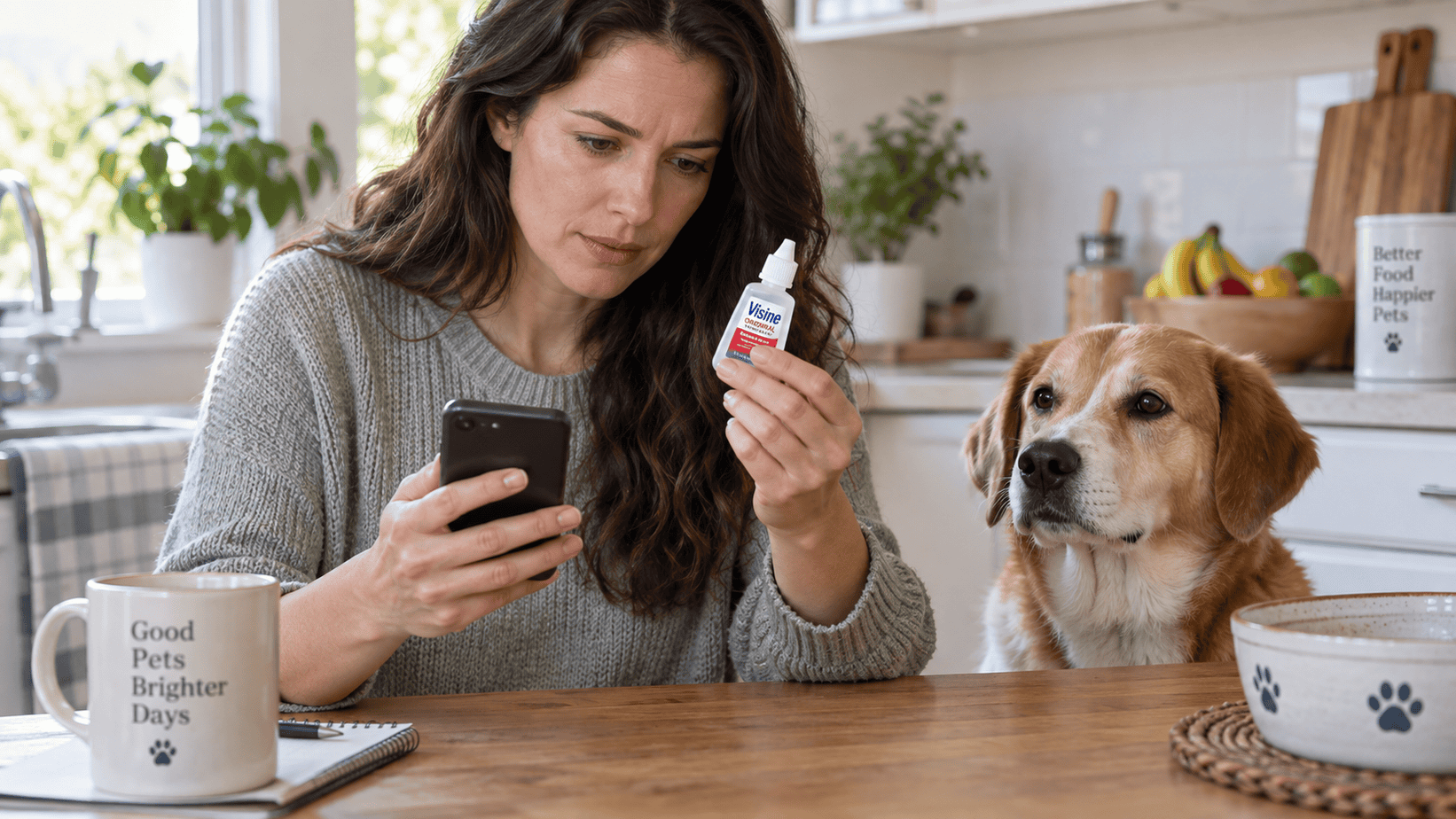
- Stop using the product. Do not add another drop or home remedy to counteract it.
- Save the bottle and packaging. Your veterinarian will want the active and inactive ingredient lists.
- Call your veterinarian. Explain whether the liquid went into the eye, onto the face, or into the mouth.
Keep your dog from rubbing the eye while you wait for instructions. Do not force the eyelids open. If your veterinarian advises rinsing, use only the sterile eye-rinse product and technique they recommend.
Seek urgent care if your dog is squinting, holding the eye closed, pawing at the face, developing swelling or cloudiness, acting unable to see, or becoming more uncomfortable.
What If Your Dog Swallowed Visine?
Treat swallowed redness-relief eye drops as a poison concern. Call your veterinarian, an emergency clinic, or a pet poison service immediately. Do not wait for symptoms, and do not induce vomiting unless a veterinary professional specifically tells you to do so.
Have the package in your hand when you call. Be ready to share your dog’s weight, the product name, the ingredients, the possible amount, the time of exposure, and any signs you are seeing.
Go to emergency care promptly if your dog becomes very sleepy, weak, wobbly, collapses, vomits repeatedly, seems to have trouble breathing, or has an unusually slow heartbeat. Pet Poison Helpline notes that imidazoline exposures can affect the digestive, cardiovascular, and nervous systems. [2]
Why Is Your Dog’s Eye Red?
Redness can begin with something minor, such as dust or wind, but it can also be the first visible sign of a painful eye problem. Looking at the whole dog helps. So does resisting the urge to diagnose the cause by color alone.
Irritation, Debris, or Trauma
Dust, shampoo, plant material, a bug, or another small irritant can make an eye red and watery. A scratch from brush, a toy, or a cat claw can injure the clear corneal surface. A dog may blink rapidly, rub the face, or refuse to open the eye.
Corneal ulcers are painful and may worsen quickly. The Royal Veterinary College lists trauma, dry eye, eyelid abnormalities, and primary corneal problems among possible causes. [3] A large or embedded object should be left in place while you head to a veterinary clinic. Trying to pull it out can make the injury worse.
Conjunctival Inflammation or Infection
The conjunctiva is the tissue around the eye and inside the eyelids. It can become inflamed from allergy, irritation, infection, or another eye problem. Thick yellow or green discharge may make infection more likely, but discharge alone does not tell you which treatment is needed.
Antibiotic drops are not a universal solution. They will not treat allergy, glaucoma, dry eye, or every corneal problem. Leftover medication can also be contaminated or contain an ingredient, such as a steroid, that may be dangerous when an ulcer is present.
Dry Eye and Eyelid Problems
Some dogs do not make enough healthy tears. Others have eyelashes, facial hairs, or eyelids that rub the cornea every time they blink. These dogs may have recurring redness, stringy discharge, or a dull-looking eye.
Lubrication can be part of a veterinarian’s treatment plan, but the underlying cause still matters. A dog with dry eye may need ongoing testing and prescription care rather than an occasional human drop.
Corneal Ulcer, Uveitis, or Glaucoma
A corneal ulcer is damage to the clear outer surface of the eye. Uveitis is inflammation inside the eye. Glaucoma involves pressure that can damage vision. All can cause redness and discomfort, and none can be safely sorted out with a quick look at home.
A large primary-care study found that canine corneal ulcer disease affects welfare through pain and possible effects on vision. [4] That is why squinting, cloudiness, sudden vision change, or a very painful red eye deserves prompt examination.
What Can You Safely Put in a Dog’s Eye?
The honest answer is that it depends on why the eye is red. Flushing, lubricating, and medicating are three different jobs. A product that helps with one may be useless or harmful for another.
Sterile Saline for Loose Debris
Your veterinarian may recommend a sterile saline eye wash for loose surface debris. Use a sealed product made for eye irrigation, not contact-lens disinfectant and not a homemade mixture.
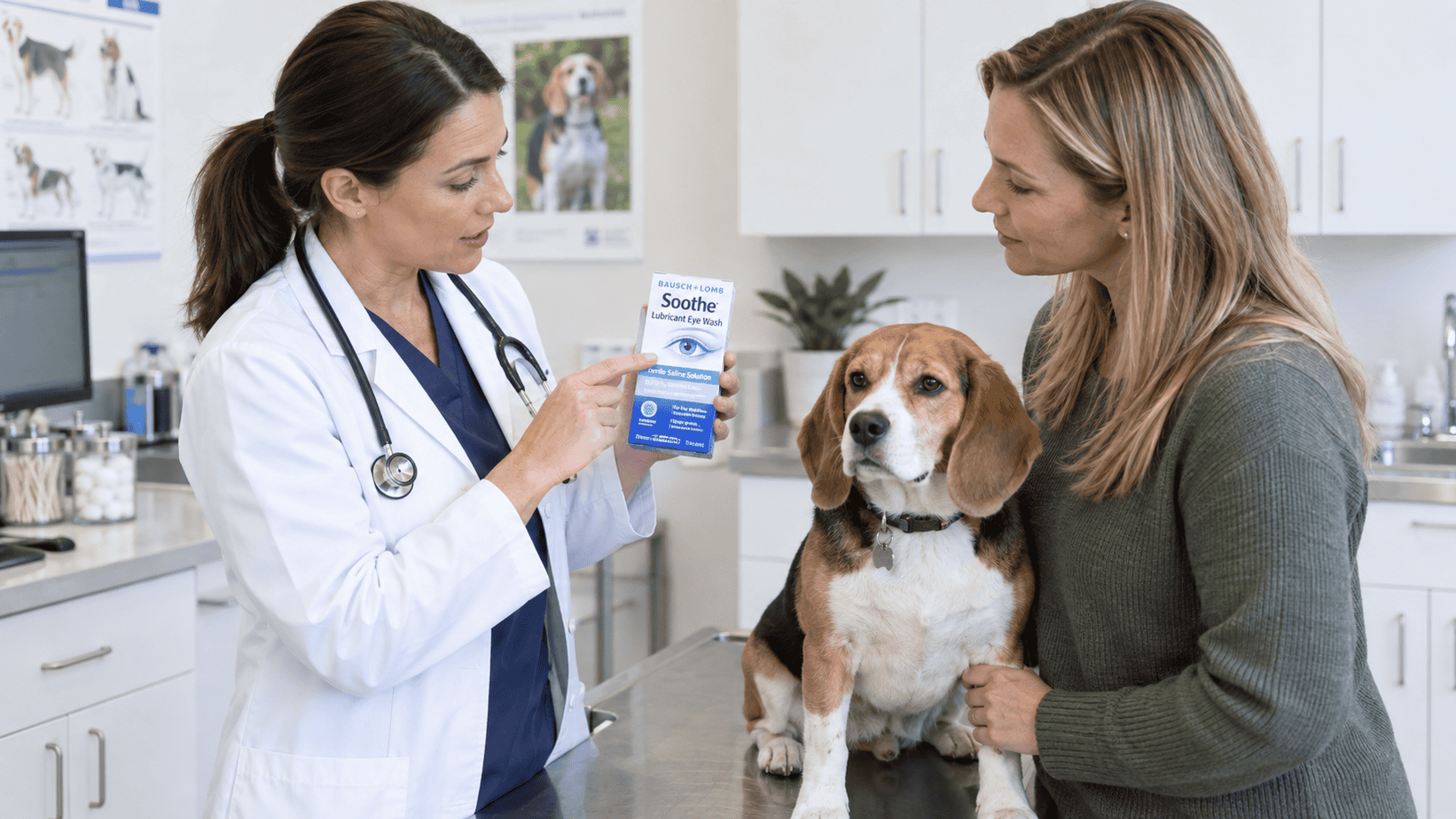
A gentle rinse can help move dust or a small particle off the surface. It cannot treat an ulcer, infection, dry eye, uveitis, or glaucoma. If your dog is painful or the material appears embedded, skip home flushing and go in for an examination.
Homemade saline is not sterile enough for an eye. Human medical guidance also warns that homemade saline can introduce infection when used as an eye rinse. [5] The same sterility concern is reason enough to keep kitchen-made mixtures away from a dog’s eye.
Lubricating Drops Need Formula Review
Veterinarians sometimes recommend plain lubricating artificial tears for certain dogs. That does not make every human dry-eye product interchangeable.
Before using one, ask your veterinarian to review the exact ingredients. Choose only the formula they approve, use it for the reason they identify, and follow their schedule. Avoid combination products that also claim to remove redness or treat allergy unless they have been specifically prescribed or approved for your dog.
What Not to Put in the Eye
An irritated eye is not the place to experiment. Do not use:
- Redness-relief drops
- Homemade salt water
- Tea, chamomile, eyebright, or other herbal infusions
- Essential oils
- Contact-lens cleaning or disinfecting solution
- Leftover antibiotic or steroid drops
- Another pet’s prescription
- Any cloudy, expired, or contaminated bottle
Natural does not automatically mean sterile or gentle enough for the cornea. A holistic approach should lower risk and support healing, not add another unknown to a sensitive eye.
When Does a Red Eye Need Prompt Veterinary Care?
Use good light and compare both eyes, but do not force a painful eye open. Notice whether your dog can blink normally and move around without bumping into things.
Arrange prompt veterinary care for any of these signs:
- Squinting or holding the eye closed
- Repeated pawing or rubbing
- Cloudiness, a blue haze, or a visible spot on the cornea
- Blood, a wound, or a foreign object
- A bulging eye or pupils that look different in size
- Sudden trouble seeing
- Thick yellow or green discharge
- Marked swelling
- Chemical exposure
- Redness that is worsening or not settling quickly
Pain, trauma, chemical exposure, cloudiness, a bulging eye, or sudden vision change can be urgent. Call the clinic while you are on the way so the team can guide you.
How Will a Veterinarian Check a Red Eye?
An eye examination is usually quick, but each part answers a different question. Your veterinarian may look under the eyelids and across the cornea, check how the pupils respond, and examine the eye with focused light.
A fluorescein stain can reveal a corneal scratch or ulcer. A tear test helps assess dry eye. Measuring eye pressure helps the veterinarian evaluate for glaucoma or inflammation inside the eye. Those findings guide the right treatment.
This is also why borrowing someone else’s drops is risky. Two red eyes can look similar at home and need completely different medications.
How to Give Prescribed Eye Drops
Once your veterinarian has chosen the correct medication, a calm routine can make treatment easier.
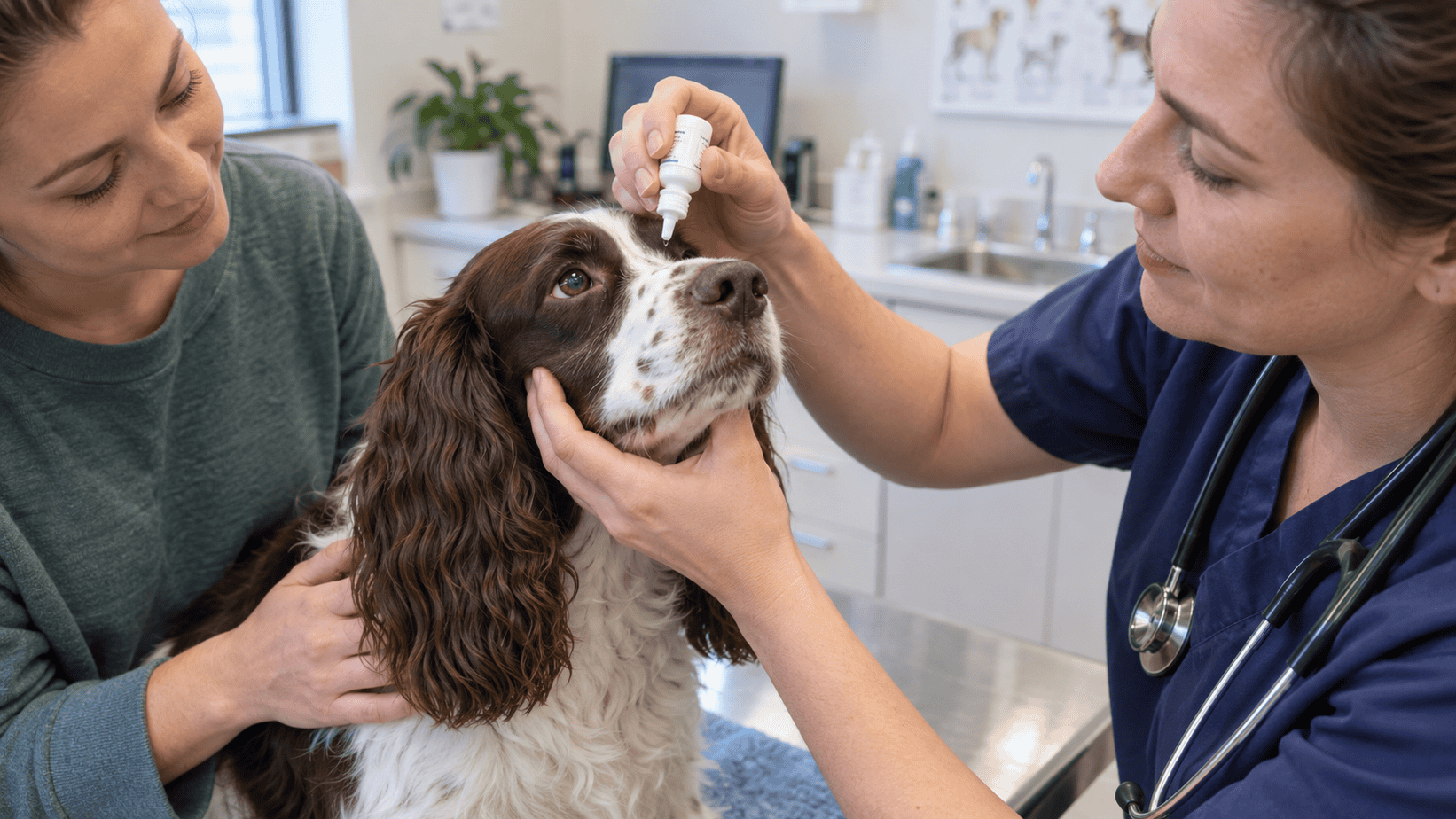
- Wash your hands and have the bottle ready.
- Check the label, eye, dose, and timing.
- Position your dog comfortably. A helper can offer quiet support.
- Rest the side of your hand against your dog’s head so your hand moves with them.
- Gently pull down the lower eyelid to form a small pocket.
- Hold the bottle above the eye without touching the tip to the eye, eyelashes, fur, or fingers.
- Give only the prescribed amount, then let your dog blink.
- Replace the cap and offer praise or a small reward.
If your dog needs more than one eye medication, follow the spacing and order provided by your veterinary team. Call the clinic if you cannot get the drops in safely. Wrestling a frightened dog can injure both of you and turn every future dose into a battle.
A Holistic, Safety-First Approach to Eye Health
I like to think about the eye and the rest of the dog together. Redness may be local, but the dog’s environment, facial anatomy, tear quality, allergies, and overall health can influence how often irritation returns.
Reduce smoke, aerosol sprays, dusty bedding, and face-level chemical cleaners. Keep facial hair clean and trimmed when your dog’s coat or eye shape makes rubbing more likely. Protect curious faces from stiff brush and sharp seed heads on walks.
A complete diet, clean water, regular movement, and good allergy management support the whole dog. They do not replace an eye examination when pain or redness appears. Avoid putting herbs, oils, supplements, or homemade preparations directly into the eye unless a veterinarian with ocular experience has recommended a sterile, appropriate product for that individual dog.
Final Thoughts
Put the Visine away. If exposure already happened, keep the bottle and call your veterinarian with the exact formula. If any was swallowed, contact a veterinary professional or pet poison service immediately.
For a mildly irritated eye, your veterinarian may advise a sterile rinse or a plain lubricant after checking the ingredients. For pain, cloudiness, trauma, swelling, discharge, or vision changes, the kindest choice is prompt examination. Eyes can change quickly, and early care gives your dog the best chance to stay comfortable and protect vision.
Frequently Asked Questions
One topical drop does not guarantee harm, but the risk depends on the formula, the eye problem, your dog’s size, and whether any was swallowed. Stop using it, save the package, and call your veterinarian for product-specific guidance.
A veterinarian may recommend a sealed, sterile saline eye wash for loose surface debris. Do not use homemade saline or contact-lens disinfectant. Do not flush an embedded object or delay care when the eye is painful, cloudy, injured, or swollen.
Some plain lubricating products may be appropriate after a veterinarian reviews the exact formula. Avoid redness-relief and combination drops. A lubricant can soothe or protect the surface, but it will not treat every cause of redness.
Call your veterinarian, an emergency clinic, or a pet poison service immediately. Do not induce vomiting unless instructed. Keep the bottle with you and report the product, ingredients, possible amount, time, your dog’s weight, and any symptoms.
Pain, squinting, cloudiness, trauma, chemical exposure, swelling, a bulging eye, unequal pupils, or sudden vision trouble deserves urgent care. Mild redness without pain should still be discussed with your veterinarian if it persists, worsens, or keeps returning.
References
- DailyMed. (2024, November 13). VISINE Red Eye Comfort: Tetrahydrozoline hydrochloride ophthalmic solution. U.S. National Library of Medicine. https://dailymed.nlm.nih.gov/dailymed/drugInfo.cfm?setid=d7abd7cb-e094-481f-bea5-a5983e2c9ef4
- Pet Poison Helpline. (n.d.). Imidazolines are toxic to pets. https://www.petpoisonhelpline.com/poison/imidazoline/
- Royal Veterinary College. (n.d.). Corneal ulcers in pets. https://www.rvc.ac.uk/small-animal-vet/teaching-and-research/fact-files/corneal-ulcers
- O’Neill, D. G., Lee, M. M., Brodbelt, D. C., Church, D. B., & Sanchez, R. F. (2017). Corneal ulcerative disease in dogs under primary veterinary care in England: Epidemiology and clinical management. Canine Genetics and Epidemiology, 4, 5. https://pmc.ncbi.nlm.nih.gov/articles/PMC5471714/
- Cleveland Clinic. (2024, May 21). Saline solution: What it is, types and uses. https://my.clevelandclinic.org/health/treatments/saline-solution
A note about your dog’s health
This article provides general education and does not replace an examination, diagnosis, or individualized advice from your veterinarian. Contact a veterinary professional if you are concerned about your dog’s symptoms.

ABOUT THE AUTHOR