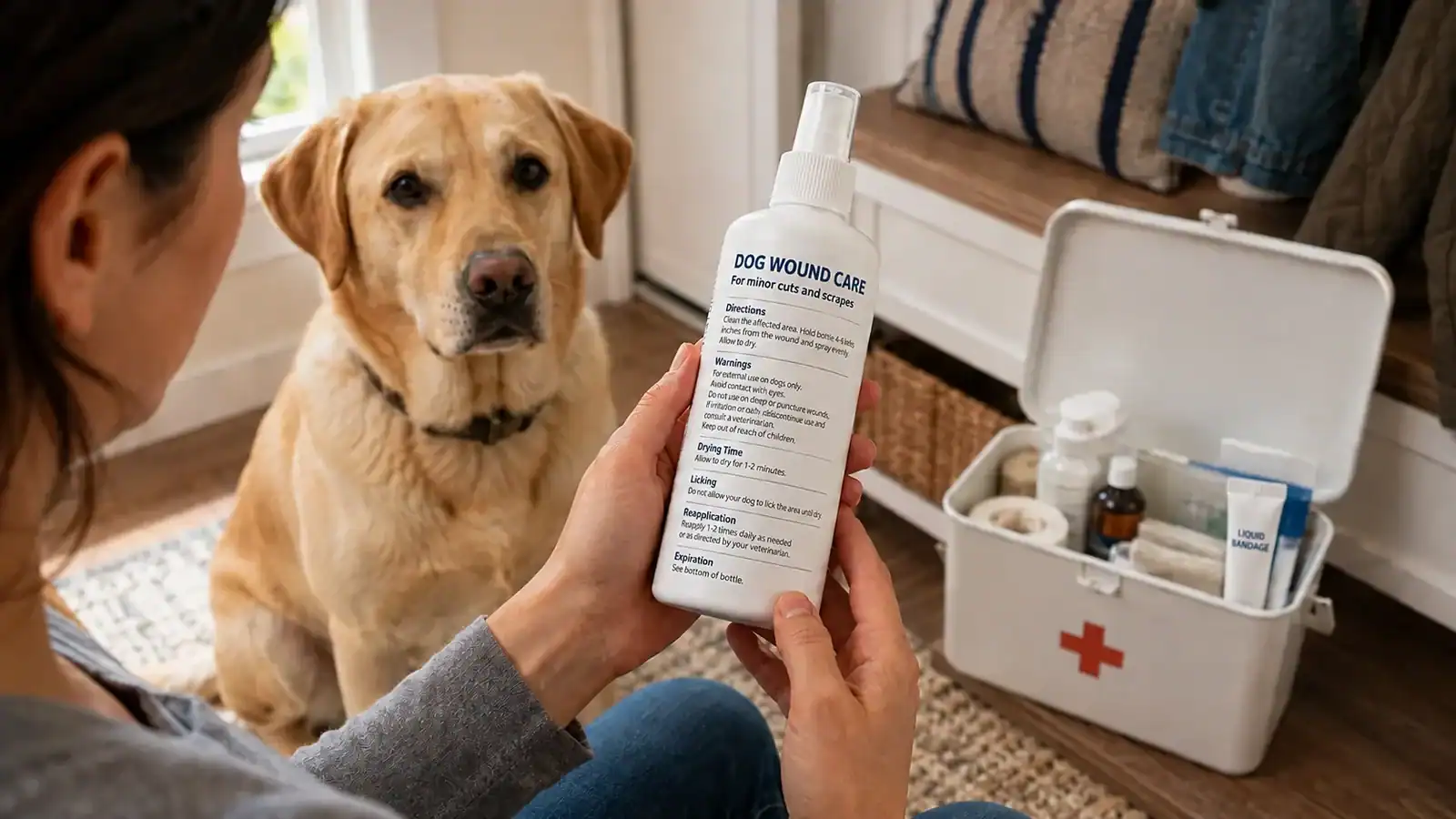
Yes, you can use Bag Balm on dogs. The current animal label includes directions for dogs and lists paw pads, snouts, hot spots, and other areas of dry skin. I think of Bag Balm as a simple moisturizing and protective ointment for those surface-skin jobs, not as a catch-all treatment for every skin problem. [1]
The practical boundary is straightforward. If your dog has dry paw pads after rough weather, a dry nose, or a small area of chapped skin, Bag Balm can be useful. If the skin is bleeding, deeply cracked, swollen, draining, painful, or repeatedly becoming irritated, I want you to look beyond the balm and figure out why the skin is struggling.
What Is Bag Balm and What’s in It?
Bag Balm started as a farm ointment, but it is no longer accurate to say it is only a product for cows or that it is not formulated for dogs. The current animal label specifically includes dogs. [1]
The label lists four ingredients: petrolatum, lanolin, 8-hydroxyquinoline sulfate 0.3%, and paraffin wax. [1] Petrolatum and lanolin contribute to the ointment’s moisturizing and softening character, while the full formula is designed to remain on the treated area for a long-lasting effect. [1][2]
The dog-specific Bag Balm Pet label lists the same four ingredients and directs owners to massage the product into paw pads or hot spots and allow it to remain for its softening effect. [2]
Is Bag Balm the Same as Vaseline?
Not exactly. Plain Vaseline is petrolatum. Bag Balm contains petrolatum plus lanolin, 8-hydroxyquinoline sulfate, and paraffin wax. They have a similar heavy, protective feel, but they are not the same formula. [1]
Where Bag Balm Can Be Useful for Dogs
I like to separate the simple dry-skin problems from the problems that need more investigation.
Bag Balm can be a reasonable fit for dry, rough paw pads, a dry or chapped snout, and other uncomplicated areas of dry skin. The label also includes hot spots. [1] It is not enough by itself for deep or puncture wounds, bleeding or gaping wounds, or skin problems that are swollen, draining, painful, or repeatedly inflamed.
The manufacturer’s current animal directions specifically include paw pads, snouts, hot spots, and wherever dry skin occurs. The same label says to seek medical help for deep or puncture wounds and to discontinue use if a rash or irritation develops. [1]
Dry Paw Pads
Paw pads are supposed to be tougher than ordinary skin, so they do not need to feel baby-soft. But weather, rough ground, frequent walking, dry indoor air, and repeated wet-to-dry cycles can leave the surface rough and chapped.
For uncomplicated dryness, an ointment such as Bag Balm can help hold moisture in the outer skin and soften rough areas. I would still pay attention to why the paws became dry. If the problem returns as soon as you stop applying balm, the dryness is giving you useful information.
Dry Nose or Snout
The current label also includes a dog’s snout. [1] A small amount can be useful when the surface is simply dry or chapped.
A chronically crusted or excessively thickened nose is different. Moisturizing can soften the surface, but it does not explain why the tissue keeps building up. Persistent crusting, cracking, color changes, sores, or bleeding deserve a closer look.
Hot Spots and Irritated Skin
Bag Balm’s current labels include hot spots among its dog uses. [1][2] I would still be cautious about treating every red or itchy patch as a simple hot spot. Dogs develop skin lesions for many reasons, including allergy, infection, parasites, trauma, and skin-barrier problems. A systematic review of canine dermatology describes how different skin conditions have very different causes and treatment needs. [3]
If a spot is wet, spreading, painful, foul-smelling, producing discharge, or your dog cannot leave it alone, a moisturizer alone is unlikely to solve the underlying problem.
How to Apply Bag Balm Safely
For a dry paw or small dry area, start with clean, dry skin. Work enough ointment into the surface to coat and soften it without leaving a huge glob for your dog to lick off or track across the floor.
The original animal label says Bag Balm can be applied liberally to dog paw pads, snouts, hot spots, and dry skin. The Bag Balm Pet directions say to massage it thoroughly into paw pads or hot spots and allow it to remain for the full softening effect. [1][2]
I usually prefer applying a topical product when a dog is settling down. That gives it a little time to stay on the skin instead of immediately ending up on the carpet or on the dog’s tongue.
Stop using it if the skin becomes redder, more irritated, or develops a rash. That stop-use instruction is also on the current animal label. [1]
What If My Dog Licks Bag Balm?
The Bag Balm Pet formula is described as being made to discourage licking, but dogs are dogs, and some will still try. [2]
A quick incidental lick from a treated paw is very different from a dog chewing open a tin or swallowing a meaningful amount of ointment. I would not deliberately let a dog eat any topical product. Apply it in a way that gives the ointment time to stay where you put it, and keep the container out of reach.
If your dog eats a meaningful amount, chews the container, or develops concerning signs after an exposure, contact your veterinarian or an animal poison service for advice based on the product, amount, and your dog’s size.
Can You Put Bag Balm on an Open Wound?
I would not use Bag Balm as a substitute for proper wound care.
The current animal label is very clear that deep or puncture wounds need medical help. [1] A superficial dry crack is not the same thing as a puncture, a gaping cut, a bite wound, or tissue that is bleeding and contaminated.
Wounds can involve inflammation, pain, tissue damage, and bacterial contamination. Veterinary dermatology literature also shows that infected wounds can contain a broad range of bacteria, which is one reason I do not want owners relying on a moisturizing ointment as though it were complete wound treatment. [3]
Have a wound properly evaluated when you see deep tissue, a puncture, uncontrolled bleeding, spreading redness, swelling, discharge, odor, significant pain, or worsening instead of steady improvement.
When Dry or Cracked Skin Is a Sign of Something More
This is where I think a holistic approach becomes especially useful. We can moisturize the surface while still asking why the skin keeps becoming dry, itchy, thick, or damaged.
Hyperkeratosis and Thickened Pads
Some dogs develop excessive keratin on the paw pads or nose. It can look rough, thick, crusty, or almost hairy around the edges. An ointment can soften the surface, but recurring hyperkeratosis is not simply a lack of moisturizer.
If the thickening becomes painful, creates deep fissures, changes the way your dog walks, or keeps worsening, the underlying cause deserves attention.
Allergies and Dermatitis
Repeated paw licking, redness between the toes, recurrent hot spots, ear problems, or seasonal itching can point toward a larger dermatologic pattern. Canine skin disease can involve allergies, secondary bacterial or yeast problems, parasites, wounds, and other causes. [3]
That means the best long-term plan may involve more than choosing a stronger balm. I want to consider the whole picture: diet, environmental exposures, allergens, grooming products, parasites, activity surfaces, moisture, and the overall condition of the skin barrier.
Environment and Friction
Sometimes the explanation really is mechanical. Rough surfaces, repeated walking, and harsh or drying conditions can all contribute to chapped paw pads.
In those cases, topical protection makes more sense when it is paired with reducing the irritating exposure and giving the pads time to recover.
Better Options for Specific Skin Problems
Bag Balm does not need to be either “good” or “bad.” It simply needs to be used for the right job.
For routine paw protection, a dog-specific paw balm can be convenient. For a deep or infected wound, use appropriate wound care rather than relying on an occlusive moisturizer. For allergies or chronic dermatitis, address the trigger and the skin-barrier problem. For persistent hyperkeratosis, determine why the tissue is thickening and whether the excess keratin itself needs management.
The more specific we are about the problem, the easier it is to choose something that actually fits.
Final Thoughts
Yes, Bag Balm can be used on dogs, and the current animal label specifically says so. I am comfortable thinking of it as a useful option for dry paw pads, a dry snout, and other uncomplicated areas of dry skin when your dog tolerates it well. [1]
What I do not want is for the ointment to hide a problem that keeps asking for attention. If the skin repeatedly cracks, thickens, becomes inflamed, smells, drains, bleeds, or makes your dog lick and chew constantly, keep looking for the reason. The surface of the skin often gives us clues about what is happening underneath.
Frequently Asked Questions
Is Bag Balm Safe for Dogs?
Yes, Bag Balm’s current animal label includes directions for dogs. It lists use on paw pads, snouts, hot spots, and areas of dry skin. Stop using it if your dog develops a rash or irritation. [1]
Can Dogs Lick Bag Balm?
The pet formula is designed to discourage licking, but you should still apply it so your dog does not immediately remove it. A small incidental lick is different from eating a large amount. Contact your veterinarian or an animal poison service if your dog consumes a significant quantity or develops concerning signs.
Can I Put Bag Balm on My Dog’s Paws?
Yes. Paw pads are specifically listed in the current directions for dogs. [1] It is most useful for uncomplicated dry or rough pads. Deep cracks, bleeding, swelling, discharge, or pain need a different level of care.
Can I Put Bag Balm on My Dog’s Nose?
Yes. The current animal label includes the snout, and the pet formula is marketed for noses as well as paws and hot spots. [1][2] Persistent crusting, bleeding, sores, or marked thickening should not be treated as simple dryness indefinitely.
Can Bag Balm Be Used on an Open Wound?
Do not rely on it for deep or puncture wounds. The current label specifically directs users to seek medical help for those injuries. [1] A gaping, contaminated, bleeding, swollen, draining, or painful wound needs appropriate wound assessment and care.
This article provides general education and does not replace an examination, diagnosis, or individualized advice from your veterinarian. Contact a veterinary professional if you are concerned about your dog’s symptoms.
Dr. Candy Akers earned her Doctor of Veterinary Medicine degree from Oklahoma State University in 2009 after completing undergraduate studies at the University of Delaware. Her experience includes companion-animal nutrition, chronic disease, allergies, autoimmune conditions, cold laser therapy, wildlife rehabilitation, and emergency wildlife response. She combines conventional veterinary knowledge with a whole-animal perspective to help pet parents understand their options and recognize when individualized veterinary care is needed.
Can you use human eye drops on dogs? Sometimes, but the answer depends on the exact product and why your dog’s eye is irritated. Some sterile lubricating drops sold for people contain the same types of ingredients used in veterinary tear replacements, and common ocular lubricants have been studied directly in dogs. [1][2] But a human eye drop is not automatically safe just because it is gentle for you.
The biggest mistake is treating “human eye drops” like one category. Redness relievers, allergy drops, antibiotics, steroids, glaucoma medications, lubricants, and combination products do very different things. The safest choice is based on the active ingredients, the eye problem, and whether the product is actually meant to go on the surface of the eye.
Quick Guide: Which Human Eye Drops Can Dogs Use?
Eye Drop Type
Practical Answer
Why
Plain sterile ocular lubricants or artificial tears
Sometimes appropriate
Tear replacements use ingredients such as carboxymethylcellulose, propylene glycol, polyethylene glycol, glycerin, and related lubricants. Some common human-market lubricant formulations have been studied in dogs. [1][2]
Redness-relief drops
Do not use casually
Some contain imidazoline drugs such as tetrahydrozoline or naphazoline. Cornell lists imidazolines used in human eye and nasal products as toxic to pets. [3]
Steroid eye drops
Only when specifically prescribed for that eye problem
Steroids can be useful ophthalmic medicines, but they are contraindicated when a corneal ulcer is present. [4]
Antibiotic, allergy, glaucoma, or combination drops
Only when the exact product is appropriate for the diagnosed problem
A red or watery eye can have many causes. Using the wrong medication can treat the wrong problem or hide an important change.
This is why a product-specific answer is more useful than a blanket rule. Some medications used in veterinary ophthalmology are also used in human medicine. What matters is the formulation and the reason it is being used.
Why The Type Of Eye Drop Matters
Lubricating Drops And Artificial Tears
Artificial tears are designed to support the tear film and protect the corneal surface. Veterinary tear replacements can contain cellulose-based lubricants, polyvinyl alcohol, glycerin, propylene glycol, polyethylene glycol, hyaluronic acid, and other ingredients chosen to improve lubrication or retention on the eye. [1]
That does not mean every bottle labeled “dry eye” is interchangeable. Preservatives and lubricant combinations differ, and some products are better suited to frequent use than others. Merck notes that some detergent preservatives can be irritating to the corneal epithelium when products are used frequently. [1]
A useful piece of canine research compared five ocular lubricants in healthy dogs. One of the products studied was Systane Ultra, which contains polyethylene glycol 400 and propylene glycol. The study measured how long the formulations remained on the dogs’ ocular surface. [2] That supports an important distinction: some human-market lubricants can have a legitimate place in canine eye care, but that is very different from saying any human eye drop is appropriate.
Redness-Relief, Allergy, And Combination Drops
Redness-relief drops deserve extra caution because some contain imidazoline drugs such as tetrahydrozoline or naphazoline. These ingredients constrict blood vessels, which makes a red eye look less red. Cornell University lists imidazolines used in human eye and nasal preparations as toxic to pets and not recommended for veterinary use. [3]
Do not choose a human allergy or combination drop based only on symptoms such as redness or watering. Those signs can come from irritation, dry eye, a corneal scratch, eyelid or eyelash problems, foreign material, inflammation, or other causes. Redness is a clue, not a diagnosis.
Prescription Antibiotic, Steroid, And Glaucoma Drops
Prescription eye medications are even more condition-specific. An antibiotic only makes sense when an antimicrobial is appropriate. A glaucoma medication changes eye pressure. A steroid suppresses inflammation. These are not interchangeable treatments for “a red eye.”
Steroid drops are a good example of why guessing can create trouble. They can be valuable for certain inflammatory eye diseases, but Merck Veterinary Manual states that the cornea should be checked with fluorescein before steroid use and that corticosteroids are contraindicated when a corneal ulcer is present. [4]
If you have an old prescription eye medication in a cabinet, do not assume it fits a new episode just because the eye looks similar.
What To Do If You Already Used Human Eye Drops
First, Identify The Product
If you already put a human eye drop in your dog’s eye, start with the bottle. Find the exact product name and active ingredients. One accidental use of a plain ocular lubricant is a very different situation from repeated use of a redness reliever or a prescription medication.
Do not keep giving more drops while you are still trying to identify what was used. If the product contains tetrahydrozoline, naphazoline, oxymetazoline, or another imidazoline, take it seriously. Cornell identifies this drug group as toxic to pets. [3] If your dog licked or swallowed the product, or you are unsure how much exposure occurred, contact your veterinarian or an animal poison control service for product-specific guidance.
Watch The Eye And The Whole Dog
Next, look at the eye rather than only the bottle. A mildly watery eye that stays open and comfortable is different from an eye that is painful or suddenly looks abnormal.
Seek prompt veterinary eye care if you notice:
persistent squinting or holding the eye tightly closed
pawing or rubbing because the eye seems painful
cloudiness or a blue-white change to the cornea
a visible foreign object, scratch, puncture, or blood
marked swelling
sudden vision change
an obviously enlarged eye or abnormal pupil
rapidly worsening redness or discharge
If the dog swallowed a potentially toxic eye-drop product or seems unwell after exposure, contact your veterinarian or an animal poison control service promptly. [3]
What Your Dog’s Eye Symptoms May Be Telling You
Irritation And Environmental Triggers
When an eye problem keeps returning, a holistic approach does not treat redness as the whole problem. Dust, wind, smoke, fragrances, grooming products, pollen, plant material, and hair rubbing the eye can all be useful clues. Seasonal timing matters too. If the eyes flare at the same time as itchy skin or ears, that pattern is worth noticing.
This is where a holistic approach becomes useful. Instead of repeatedly suppressing the visible symptom, look for the reason the eye keeps becoming irritated. Keep track of what changed in the environment, whether the problem affects one eye or both, whether it follows outdoor time or grooming, and whether your dog has other allergy-type signs.
Squinting, Cloudiness, Discharge, Or Injury
Eye symptoms are not all equal. Clear tearing after a windy walk may be simple surface irritation. Persistent squinting is a pain sign. Thick discharge can occur with several different eye problems. Cloudiness, trauma, sudden vision changes, or a tightly closed eye move the problem into a different category.
This is also why leftover steroid drops are a poor choice when a dog suddenly starts squinting. A corneal ulcer can be painful and may look like a simple red eye early on, yet corticosteroids are contraindicated when an ulcer is present. [4]
A Holistic Approach To Recurrent Eye Irritation
Holistic care still starts with asking what is driving the problem. For a dog with repeated mild eye irritation, look at the environment, seasonal patterns, skin and ear history, diet history, facial hair, tear-film problems, and anything that repeatedly contacts the face.
At the same time, natural does not automatically mean suitable for the eye. The ocular surface is not a place for homemade saline, herbal tea, apple cider vinegar, coconut oil, honey, witch hazel, or other nonsterile kitchen mixtures. If something is going directly into the eye, sterility, concentration, formulation, and the condition of the cornea matter.
You can still use a holistic lens without putting a home remedy into the eye. Reduce smoke and strong fragrances, keep irritating hair away from the eye, notice seasonal or environmental patterns, support good whole-body nutrition, and work on the underlying allergy or inflammatory pattern when one is present.
How To Give An Appropriate Eye Medication
Once you know the eye medication is appropriate for your dog, good technique makes the process easier.
Wash your hands and have the correct bottle ready.
Gently steady your dog’s head. A calm position is usually easier than wrestling.
If there is discharge on the eyelids, clean the surrounding skin gently before applying the medication.
Hold the bottle close enough to aim accurately, but do not let the tip touch the eye, eyelashes, or skin.
Apply the amount directed for that product.
Let your dog blink, then reward cooperation.
If your dog uses more than one eye medication, follow the order and timing given for those products rather than creating your own routine.
Final Thoughts
Can you use human eye drops on dogs? The useful answer is not simply yes or no. Some sterile ocular lubricants and some prescription ophthalmic drugs used for dogs are also human-market products. Other products, especially redness relievers or medications chosen without knowing the cause of the eye problem, are poor choices.
The best next step is to identify the exact product and pay attention to the pattern behind the eye irritation. If the problem keeps returning, write down when it happens, what your dog was exposed to, and whether skin, ear, or allergy signs appear at the same time. Those details can help you get beyond repeated symptom treatment and closer to the reason the eye keeps flaring.
FAQs
Can I Use Visine On My Dog?
Do not use a redness-relief product such as Visine as a casual dog eye treatment. Some redness-relief drops contain imidazolines such as tetrahydrozoline, and Cornell lists this drug group as toxic to pets. [3] Read the active ingredients rather than relying on the brand name alone.
Can I Use Artificial Tears Such As Systane Or Refresh On My Dog?
Some plain ocular lubricants can be appropriate for dogs, but the exact formulation matters. Tear replacements use several common lubricant ingredients, and a 2023 canine study included Systane Ultra among five ocular lubricants tested on healthy dogs. [1][2] That does not make every Systane, Refresh, or artificial-tear product interchangeable.
Can I Use Saline To Rinse My Dog’s Eye?
If the goal is simply to rinse the eye, use a sterile ophthalmic rinse rather than homemade saline. If your dog is squinting, has a cloudy eye, has visible trauma, or remains uncomfortable after a simple rinse, do not keep experimenting with home treatment.
Can I Use Leftover Antibiotic Or Steroid Eye Drops On My Dog?
Not unless the exact medication has been confirmed as appropriate for the current eye problem. Antibiotics do not treat every cause of redness or discharge, and steroid drops can be harmful when a corneal ulcer is present. [4]
References
Whelan, N. (2025). Tear replacements in animals. Merck Veterinary Manual. https://www.merckvetmanual.com/pharmacology/systemic-pharmacotherapeutics-of-the-eye/tear-replacements-in-animals
Bedos, L., Allbaugh, R. A., Roy, M., Kubai, M. A., & Sebbag, L. (2023). Precorneal retention time of ocular lubricants measured with fluorophotometry in healthy dogs. Veterinary Ophthalmology, 26(Suppl. 1), 81-88. https://doi.org/10.1111/vop.13065
Cornell University College of Veterinary Medicine. (n.d.). Small animal toxins. https://www.vet.cornell.edu/hospitals/pharmacy/consumer-clinical-care-guidelines-animals/small-animal-toxins
Whelan, N. (2024). Anti-inflammatory agents in animals. Merck Veterinary Manual. https://www.merckvetmanual.com/pharmacology/systemic-pharmacotherapeutics-of-the-eye/anti-inflammatory-agents-in-animals
A note about your dog’s health
This article provides general education and does not replace an examination, diagnosis, or individualized advice from your veterinarian. Contact a veterinary professional if you are concerned about your dog’s symptoms.
Lindsie Parks is the founder of Healthy Happy Dogs and holds a bachelor’s degree in biology. She brings more than 19 years of experience across veterinary medicine, animal welfare, practice leadership, nutrition, cold laser therapy, rescue work, and emergency animal response. Her goal is to give pet parents clear information, practical options, and greater confidence in the decisions they make for their animals.
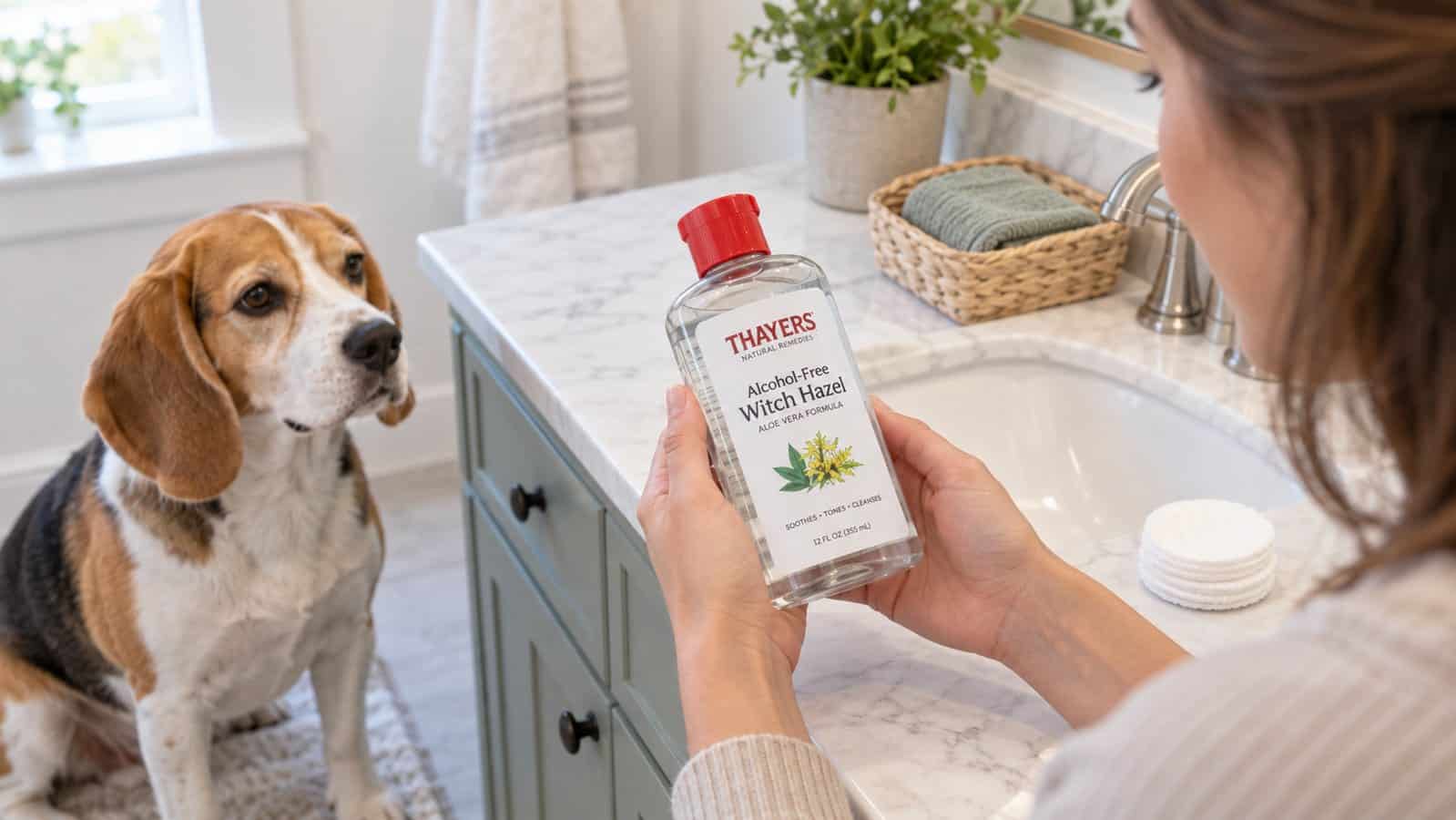
You can use a simple alcohol-free, fragrance-free witch hazel sparingly on a small patch of intact dog skin, but it is not my first choice for most problems. Do not use standard alcohol-based witch hazel on your dog. Keep it away from open wounds, eyes, the mouth, and any spot your dog can lick. Do not pour it into the ear canal.
The safest choice depends on three things: the exact formula, the part of the body, and why the skin is irritated. A tiny wipe on healthy skin is very different from treating a hot spot, wound, or painful ear. When a problem is persistent or looks infected, soothing the surface is not enough. Your dog needs the cause addressed.
What Is Witch Hazel?
Witch hazel is a plant extract made from Hamamelis virginiana. It is an astringent, which means it can temporarily tighten and dry surface tissue. That drying effect is why some people use it on minor skin irritation.
The name on the front of the bottle does not tell you the whole story. Many human witch hazel products contain 14 percent alcohol and are labeled for external use only. Those labels describe human over-the-counter use, not veterinary approval for dogs. [1]
Why the Formula Matters
For a dog, look beyond the words “witch hazel” and read the complete ingredient list.
A product is a poor choice if it contains:
Alcohol
Fragrance
Essential oils
Menthol
Multiple active ingredients
A warning that does not fit the area you plan to treat
Alcohol can sting and dry irritated skin. It also creates an ingestion concern when a dog licks the area. Alcohols can cause serious toxicosis in companion animals, with effects that may include vomiting, weakness, poor coordination, low body temperature, breathing problems, and nervous-system depression. [2]
Even an alcohol-free product can irritate a sensitive dog. Preservatives, botanicals, and fragrances all matter. “Natural” describes where an ingredient came from. It does not guarantee that every formula is gentle or appropriate.
Is Witch Hazel Safe for Dogs?
Witch hazel is not universally safe or unsafe. The answer changes with the location and the condition of the tissue.
Here is my practical guide:
Small area of intact skin: A simple alcohol-free, fragrance-free product may be tried sparingly after a patch test.
Intact paw surface: Water is usually better for cleaning. Limited witch hazel use may be reasonable if the skin is healthy and licking can be prevented.
Cracked or bleeding paw: Do not use it.
Open wound, puncture, or bite: Do not use it.
Healthy outer ear flap: A barely damp wipe may be reasonable on intact skin, while keeping liquid out of the canal.
Ear canal or painful ear: Do not use it without veterinary direction.
Eyes, nose, mouth, genitals, or other mucous membranes: Do not use it.
Large, inflamed, infected, or very itchy area: Skip the home remedy and arrange an examination.
There is also an evidence question. A systematic review of medicinal plants in canine dermatology evaluated several herbs with promising topical properties, but witch hazel was not one of the plants assessed. That does not prove witch hazel is harmful. It does mean we should not turn human uses or traditional uses into strong canine treatment claims. [3]
How to Use Witch Hazel on a Dog
If your dog has a very small area of intact skin and you decide to try witch hazel, keep the method simple and conservative.
Read the Label First
Choose an alcohol-free, fragrance-free formula with a short ingredient list. Do not use a combination product with essential oils or other active ingredients. Avoid standard distilled witch hazel that lists alcohol.
Patch Test and Apply Sparingly
Try one small spot first.
Gently clean the area with cool water and pat it dry.
Put a small amount of witch hazel on a soft cotton pad. Do not pour or soak the skin.
Dab the intact skin once.
Watch for increased redness, dryness, swelling, pain, or scratching.
Stop and rinse with cool water if the area looks or feels worse.
There is no single dilution ratio that makes every product safe. Formulas vary, and irritated tissue varies. When the label is complicated or the skin is damaged, choose another option.
Prevent Licking
Keep your dog beside you until the area is dry. Wipe away any excess and redirect licking with calm supervision or a brief activity. If you cannot keep your dog from licking the spot, do not apply witch hazel there.
Witch Hazel for Itchy Skin, Bites, and Hot Spots
A cool-water rinse or cool compress is the gentlest place to start for a small, mildly itchy area. It can remove pollen or surface debris without adding another ingredient.
Intact Itchy Skin and Insect Bites
An alcohol-free witch hazel may give temporary surface relief on one small patch of intact skin. Use very little, keep it away from the face and genitals, and stop if it stings or dries the skin.
Temporary relief is not the same as treatment. Itching can come from fleas, mites, allergies, contact irritation, bacterial or yeast overgrowth, pain, or another condition. If the itch returns, spreads, or interrupts sleep, your veterinarian should help identify the cause.
Hot Spots and Ongoing Itch
Do not rely on witch hazel for a hot spot. These moist, painful areas can worsen quickly, especially when licking and scratching continue. Spreading redness, wetness, odor, discharge, hair loss, or pain are reasons to seek veterinary care.
A whole-dog approach looks beyond the red patch. Diet, environmental allergies, parasites, moisture, grooming products, and underlying health can all affect the skin. The goal is not only to quiet the symptom. It is to understand why the skin keeps asking for attention.
Can You Use Witch Hazel on Dog Paws?
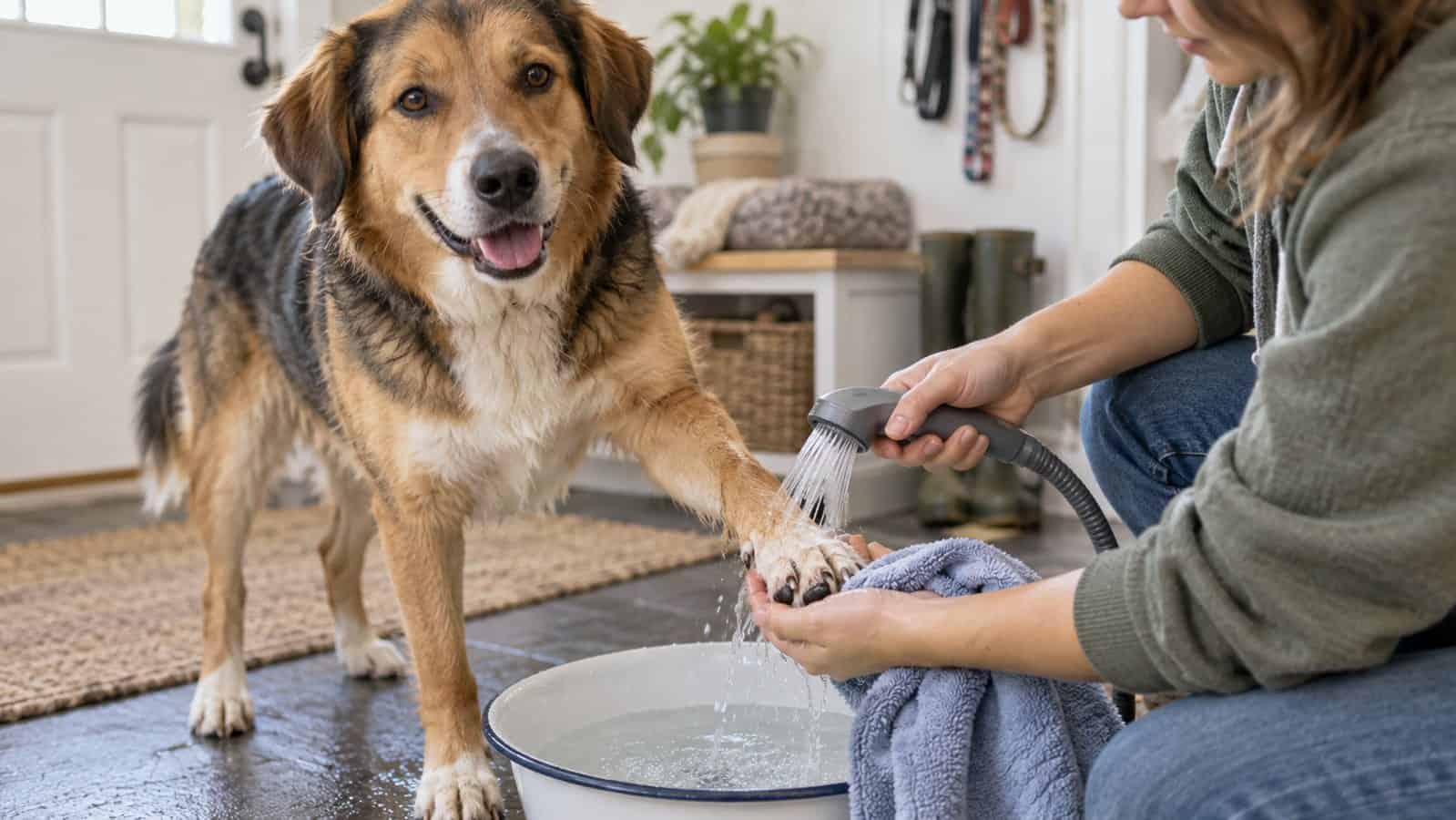
For routine paw cleaning, plain water is usually enough. Rinse away dirt, salt, or pollen, then dry carefully between the toes.
Intact Paw Pads
If one small area of an intact pad is mildly irritated, a simple alcohol-free witch hazel can be tried sparingly after a patch test. Keep your dog from licking it and discontinue use if the pad becomes dry or tender.
Cracked, Bleeding, or Inflamed Paws
Do not put witch hazel on cracked pads, raw skin between the toes, a puncture, or a bleeding nail bed. Gently rinse the paw and check for thorns, burrs, glass, foxtails, or other debris that is easy to see. Do not dig into the tissue.
Limping, swelling, discharge, heat, odor, bleeding, or constant licking deserves veterinary attention. Paw problems are often more painful than they first appear.
Can You Use Witch Hazel on Dog Wounds?
Do not use witch hazel on an open, deep, bleeding, or infected wound. It should not be described as a wound sterilizer, and there is not good canine evidence that it speeds healing.
Minor Surface Scrapes
For a very shallow scrape, gently flush away visible dirt with clean water or sterile saline. Pat around the area with clean gauze and prevent licking. Small scrapes still need monitoring because fur can hide swelling, discharge, and spreading redness.
Open, Deep, or Infected Wounds
For active bleeding, apply gentle, steady pressure with clean gauze. Protect the wound from further contamination and arrange veterinary care for punctures, bites, deep cuts, embedded debris, persistent bleeding, severe pain, swelling, pus, odor, or a dog who seems unwell. Veterinary wound management focuses on controlling contamination and inflammation while protecting the tissue from further trauma. [4]
Do not scrub a wound or keep trying household products when the tissue is painful. Gentle first aid and timely evaluation are kinder than repeated experimentation.
Can You Put Witch Hazel in a Dog’s Ears?
Do not pour witch hazel into your dog’s ear canal. Witch hazel is not a treatment for an ear infection, and liquid placed in a painful ear can make irritation worse.
The Outer Ear Flap
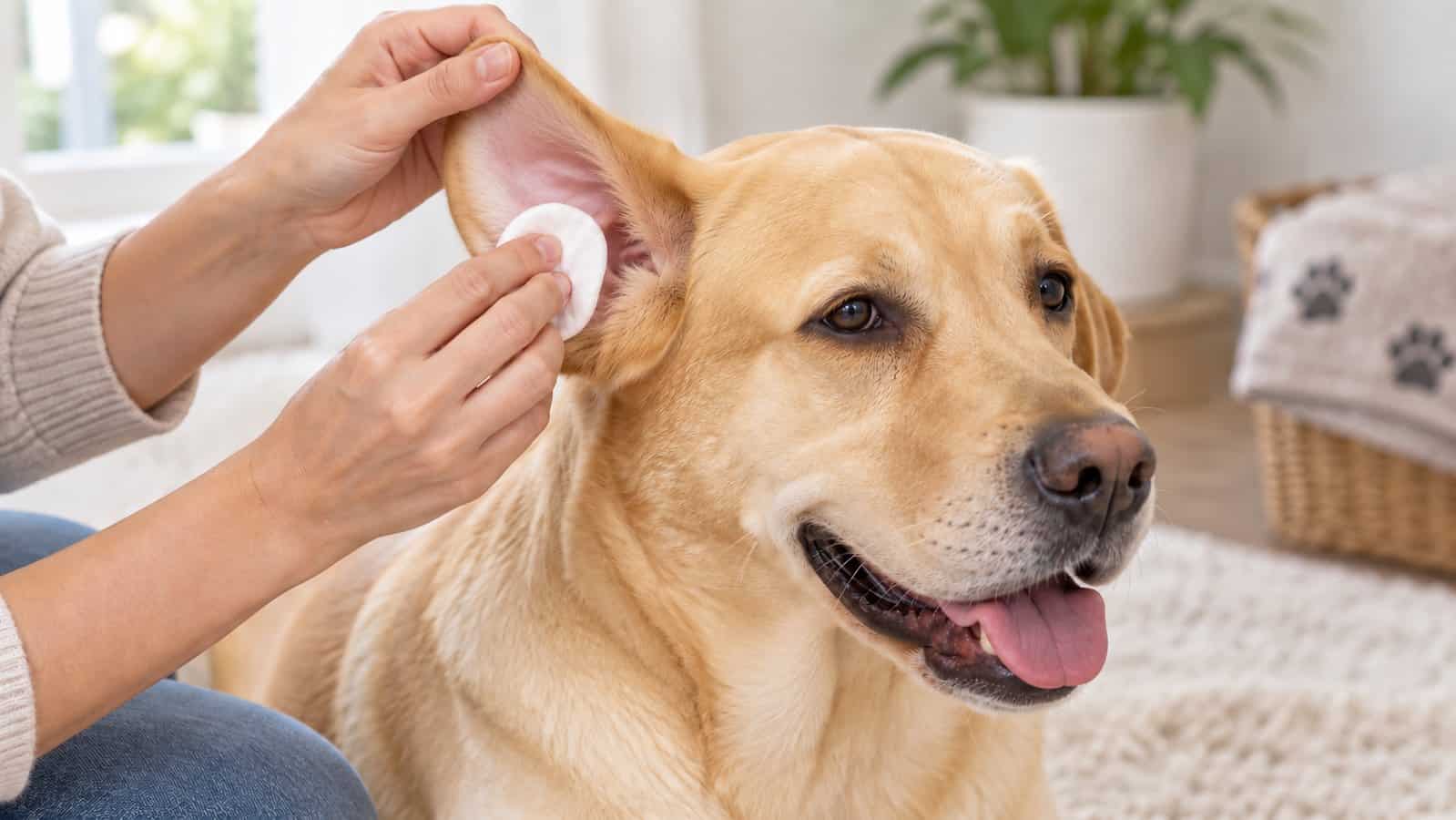
If the visible ear flap is healthy and intact, a barely damp cotton pad with a simple alcohol-free product may be used to wipe a small dirty area. Keep the pad at the outer flap. Do not let liquid drip toward the canal.
The Ear Canal and Ear Infections
Ear cleaning can be helpful when the product and schedule fit the dog, but over-cleaning can trigger irritation and otitis. [5] The eardrum also cannot be assessed safely at home, which is one reason not to improvise with ear-canal products.
Head shaking, scratching, pain, redness, odor, discharge, swelling, a head tilt, or balance changes call for a veterinary examination. Recurring ear trouble may be linked to allergy, trapped moisture, anatomy, parasites, or another underlying condition. In severe or stubborn cases, a veterinarian may need to examine a sample under the microscope or perform a culture.
When to Stop and What to Use Instead
Stop using witch hazel if your dog develops more redness, dryness, swelling, pain, scratching, or licking. Rinse the area gently with cool water.
If your dog licks an alcohol-containing product or develops drooling, vomiting, diarrhea, weakness, wobbliness, unusual sleepiness, tremors, or breathing changes, contact a veterinarian or animal poison service promptly. Bring the bottle or take a clear photo of the label.
Gentler Alternatives by Situation
Match the alternative to the problem:
Mild irritation on intact skin: Cool water or a cool compress
Pollen or dirt on paws: Plain water followed by careful drying
Superficial scrape: Clean water or sterile saline
Routine ear care: A dog-specific ear cleaner recommended for your dog’s ears
Persistent itch, hot spot, painful ear, or suspected infection: Veterinary examination
Recurrent skin or ear trouble: A plan that investigates allergies, parasites, moisture, diet, and other underlying factors
Gentler does not mean ignoring a problem. It means using the least irritating option while watching your dog closely and getting help when the pattern suggests more than a minor surface issue.
Final Thoughts
Witch hazel has a narrow place in dog care. A tiny amount of a simple alcohol-free formula on intact external skin is different from using it on a wound, in an ear, or over a large irritated area.
My practical rule is to start with the gentlest option and stay curious about the cause. If the skin is broken, the ear is painful, the problem keeps returning, or your dog cannot stop licking, skip witch hazel and call your veterinarian. A thoughtful next step is more valuable than a stronger home remedy.
Frequently Asked Questions
Can I Use Witch Hazel on My Dog’s Itchy Skin?
You may try a very small amount of alcohol-free, fragrance-free witch hazel on one patch of intact skin after a patch test. Cool water is gentler and often a better first choice. Do not use witch hazel on raw, wet, infected, or widespread irritation. Persistent itch needs a veterinary evaluation.
Can I Put Witch Hazel on My Dog’s Paws?
Only consider it on intact skin, use it sparingly, and prevent licking. Do not apply it to cracked pads, bleeding tissue, a puncture, or inflamed skin between the toes. Plain water is usually best for routine paw cleaning.
Can I Clean My Dog’s Ears With Witch Hazel?
Do not pour witch hazel into the ear canal. A barely damp wipe may be used on healthy, intact outer-ear skin, but an ear with pain, odor, discharge, redness, or head shaking should be examined by a veterinarian.
What Should I Do if My Dog Licks Witch Hazel?
Remove the product, check the ingredient label, and note how much may have been swallowed. Call your veterinarian or an animal poison service if the product contains alcohol, the amount is uncertain, or your dog has vomiting, weakness, wobbliness, unusual sleepiness, or another symptom.
Is Witch Hazel Safe for Puppies?
Puppies are small, may have sensitive skin, and are quick to lick topical products. Avoid home experimentation and ask your veterinarian for an age-appropriate option, especially when the skin is broken or the puppy has ongoing itch.
Tresch, M., Mevissen, M., Ayrle, H., Melzig, M., Roosje, P., & Walkenhorst, M. (2019). Medicinal plants as therapeutic options for topical treatment in canine dermatology? A systematic review. BMC Veterinary Research, 15, 174. https://pmc.ncbi.nlm.nih.gov/articles/PMC6537371/
This article provides general education and does not replace an examination, diagnosis, or individualized advice from your veterinarian. Contact a veterinary professional if you are concerned about your dog’s symptoms.
Dr. Candy Akers earned her Doctor of Veterinary Medicine degree from Oklahoma State University in 2009 after completing undergraduate studies at the University of Delaware. Her experience includes companion-animal nutrition, chronic disease, allergies, autoimmune conditions, cold laser therapy, wildlife rehabilitation, and emergency wildlife response. She combines conventional veterinary knowledge with a whole-animal perspective to help pet parents understand their options and recognize when individualized veterinary care is needed.
I would not use human calamine lotion as a routine itch treatment for a dog. A common current calamine formulation contains both calamine and zinc oxide, and dogs are very good at licking topical products off their skin. [1] A quick accidental lick is not the same as repeated or heavy ingestion, but I would still choose a dog-appropriate option instead.
If you already put calamine lotion on your dog, do not panic. Stop further licking, check the exact product label, and remove excess lotion from the skin. The next step depends on what is in the product, how much your dog may have swallowed, and whether any symptoms develop.
Why Zinc Oxide Matters
Calamine lotion is made for people, and formulas are not all identical. One current U.S. OTC label lists calamine 8% and zinc oxide 8% and states that the product is for external use only. [1]
The zinc oxide is the ingredient I pay closest attention to with dogs. According to the Merck Veterinary Manual, acute ingestion of zinc oxide products most often causes stomach irritation, vomiting, and diarrhea. More serious blood-cell damage is not expected from most single acute exposures, but repeated ingestion over days to weeks can cause intravascular hemolysis, which means red blood cells break apart inside the circulation. [2]
That difference is important. A dog that gets one tiny lick from a treated spot is in a different situation from a dog that keeps licking zinc-containing cream off the skin several times a day.
Published canine case reports show why repeated exposure deserves respect. One dog developed severe zinc toxicosis after ingesting large amounts of zinc oxide cream that had been applied repeatedly for about a week. [3] Another report described hemolytic anemia after a 40% zinc oxide diaper-rash cream had been used daily for one week. [4]
I do not use those cases to make every small exposure sound like an emergency. I use them to explain why a human zinc-containing topical is not my first choice for a dog that may keep licking it.
What to Do If Calamine Is Already on Your Dog
If you discover that calamine has already been applied, I would keep the response simple:
Prevent more licking while you check the product.
Read the active ingredients on the exact bottle. Do not assume every pink lotion has the same formula.
Wipe away excess product and gently rinse the area if needed.
Pay attention to how much your dog could realistically have swallowed and whether exposure happened once or repeatedly.
If your dog swallowed a meaningful amount, chewed the bottle, has been repeatedly licking the product for hours or days, or develops vomiting, diarrhea, unusual weakness, pale gums, dark urine, or another concerning change, contact your veterinarian or an animal poison service for advice based on that specific exposure. Zinc-containing topical products can cause more than simple stomach upset when enough is ingested repeatedly. [2][3][4]
What If My Dog Licked Calamine Lotion?
A small incidental lick and repeated ingestion are not the same problem.
With a single quick lick, the most likely concern is gastrointestinal irritation rather than severe zinc toxicosis. Merck notes that acute zinc oxide ingestion commonly causes vomiting or diarrhea. [2] I would still prevent more licking and check the label, especially if the product contains other active ingredients.
Repeated licking changes the picture. When a zinc oxide product stays on a dog’s skin and the dog keeps ingesting it over days, zinc can accumulate enough to damage red blood cells. [2][3][4]
This is one reason I prefer not to start with human calamine at all. If I am trying to soothe a dog’s skin, I want the treatment itself to create as few new problems as possible.
Safer Ways to Soothe Mild Itching
For a very small area of mild irritation, a cool damp cloth can be a simple first step while you figure out why the skin is itchy. If there is residue from another product on the skin, gently removing it is often more useful than layering another human lotion over the top.
When a topical product is needed, I prefer one that is made and labeled for dogs and that fits the actual problem. Dry, intact skin needs something different from a wet hot spot, an infected lesion, a bite, or an open wound.
I also avoid turning mild itching into a pile of creams, sprays, essential oils, and home remedies. More ingredients are not automatically better, especially on skin that is already irritated and easy for a dog to lick.
When Itching Means Something More
This is where a holistic approach becomes much more useful than simply trying to shut the itch down.
Dogs itch for many reasons. Canine dermatology includes allergic skin disease, secondary bacterial or yeast problems, parasites, wounds, and other conditions that need different approaches. [5] A lotion that briefly cools the skin does not tell us why the itching started.
If the problem keeps returning, I want to look at the whole pattern. That can include diet, seasonal or environmental exposures, parasites, grooming products, moisture, friction, repeated licking, and the health of the skin barrier.
A dog that licks the same paw every evening, develops recurring red skin between the toes, or repeatedly gets hot spots needs a different plan from a dog with one mild patch of dry skin after a windy week.
Dry Skin and Simple Irritation
Simple dryness is usually easier. If the skin is intact and only mildly dry or irritated, remove obvious triggers, protect the area from more rubbing or licking, and use a dog-appropriate moisturizer if needed.
Allergies and Recurring Itch
Recurring itch, especially with paw licking, ear problems, redness, or seasonal patterns, makes me think beyond a topical lotion. Covering the itch for a few hours can make the skin look calmer without changing the underlying trigger.
Hot Spots, Infection, and Open Wounds
A wet, painful, spreading, foul-smelling, draining, or open lesion is not a good place to experiment with human calamine. These problems need care that matches the actual condition rather than a general anti-itch product.
Can I Use Calamine Lotion for Hot Spots, Dry Skin, or Insect Bites?
For routine dog care, I would skip human calamine in all three situations.
For a hot spot, I want to know whether the area is wet, infected, painful, or being driven by allergy or self-trauma. For dry skin, a dog-appropriate moisturizer makes more sense than a zinc-containing human lotion. For a simple insect bite, gentle cooling and preventing scratching may be enough while you watch the reaction.
The important part is matching the response to the problem. Calamine was designed as a human skin protectant, not as a universal canine skin treatment. [1]
Final Thoughts
So, can you use calamine lotion on dogs? I do not recommend it as a routine treatment.
Many current calamine products contain zinc oxide, and a dog can turn a topical exposure into an oral exposure simply by licking. A one-time small lick is very different from repeated ingestion, but there is little reason to create that risk when better dog-specific options exist. [1][2]
If calamine is already on your dog, check the exact label, remove the excess, stop more licking, and judge the exposure by the ingredients, amount, duration, and your dog’s condition. If the itching keeps coming back, work on the cause rather than repeatedly covering the symptom.
Frequently Asked Questions
Is Calamine Lotion Safe for Dogs?
I would not use human calamine lotion as routine dog skin care. A common current calamine formulation contains zinc oxide, and dogs may ingest topical products by licking them from the skin. [1][2]
What If My Dog Licked a Small Amount of Calamine Lotion?
A quick small lick is more likely to cause stomach irritation than severe zinc toxicosis, but check the exact product label and prevent more licking. Repeated ingestion over days is more concerning because zinc oxide can eventually damage red blood cells. [2]
Can I Use Calamine Lotion on a Dog Hot Spot?
I would not choose human calamine for a hot spot. Hot spots can involve moisture, inflammation, self-trauma, allergy, and secondary infection, so the care should match the cause and condition of the skin. [5]
What Human Cream Can I Put on My Dog for Itchy Skin?
I do not use a one-size-fits-all human cream for dog itching. Mild irritation may only need gentle cooling and protection from licking. Persistent or recurring itch needs a cause-based plan, and any topical product should be appropriate for dogs and for the specific skin problem.
What Should I Do If I Already Put Calamine Lotion on My Dog?
Prevent further licking, check the active ingredients, wipe away excess product, and monitor your dog. If a meaningful amount was swallowed, the exposure was repeated, or symptoms develop, contact your veterinarian or an animal poison service for individualized advice. [2]
This article provides general education and does not replace an examination, diagnosis, or individualized advice from your veterinarian. Contact a veterinary professional if you are concerned about your dog’s symptoms.
Dr. Candy Akers earned her Doctor of Veterinary Medicine degree from Oklahoma State University in 2009 after completing undergraduate studies at the University of Delaware. Her experience includes companion-animal nutrition, chronic disease, allergies, autoimmune conditions, cold laser therapy, wildlife rehabilitation, and emergency wildlife response. She combines conventional veterinary knowledge with a whole-animal perspective to help pet parents understand their options and recognize when individualized veterinary care is needed.
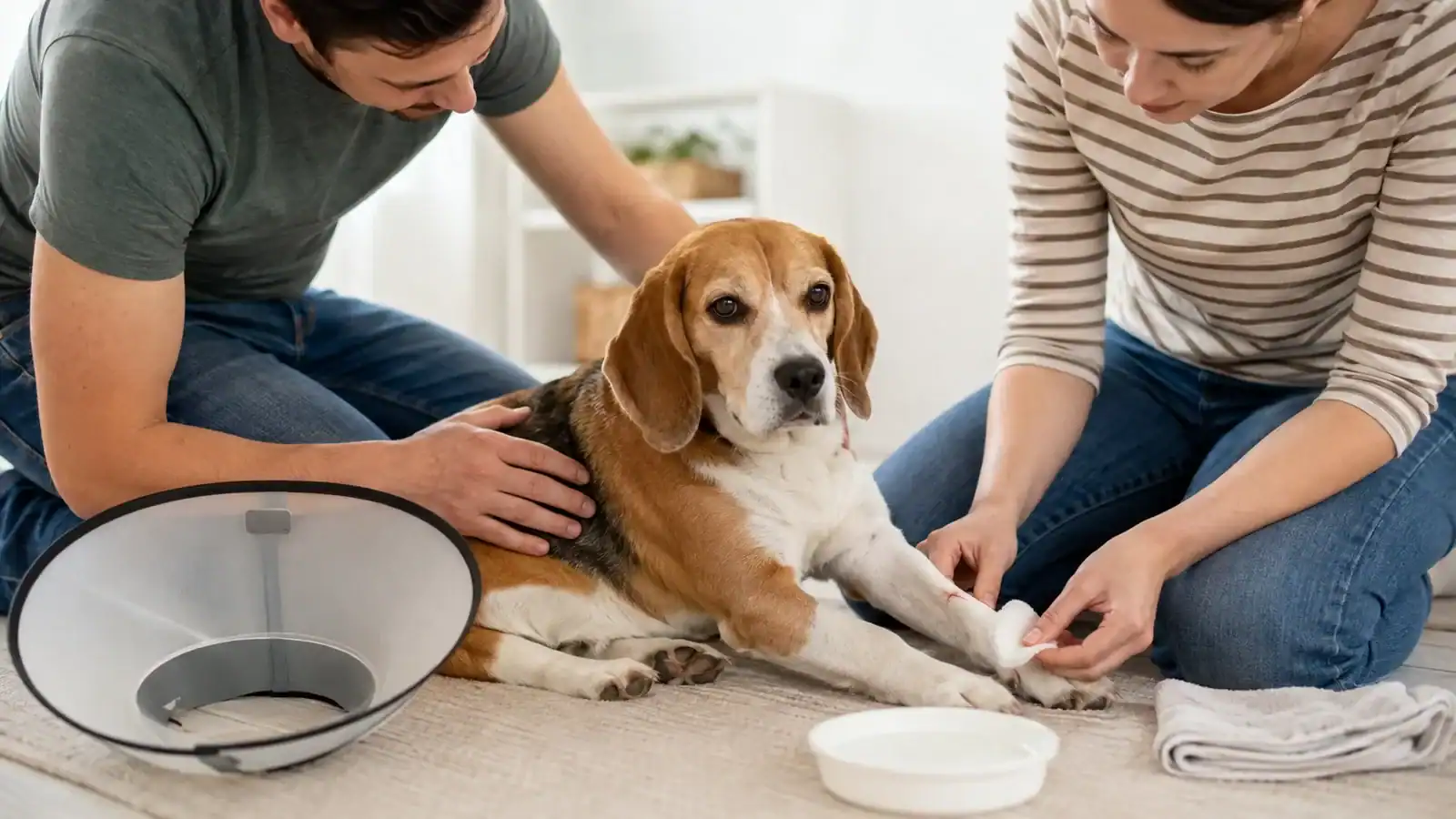
Yes, you can sometimes use a liquid bandage on a dog, but only use a product labeled for dogs and only on a small, clean, superficial cut or scrape after the bleeding has stopped. Do not use it on a deep or gaping wound, bite, puncture, infected area, burn, or surgical incision unless your veterinarian specifically directs you.
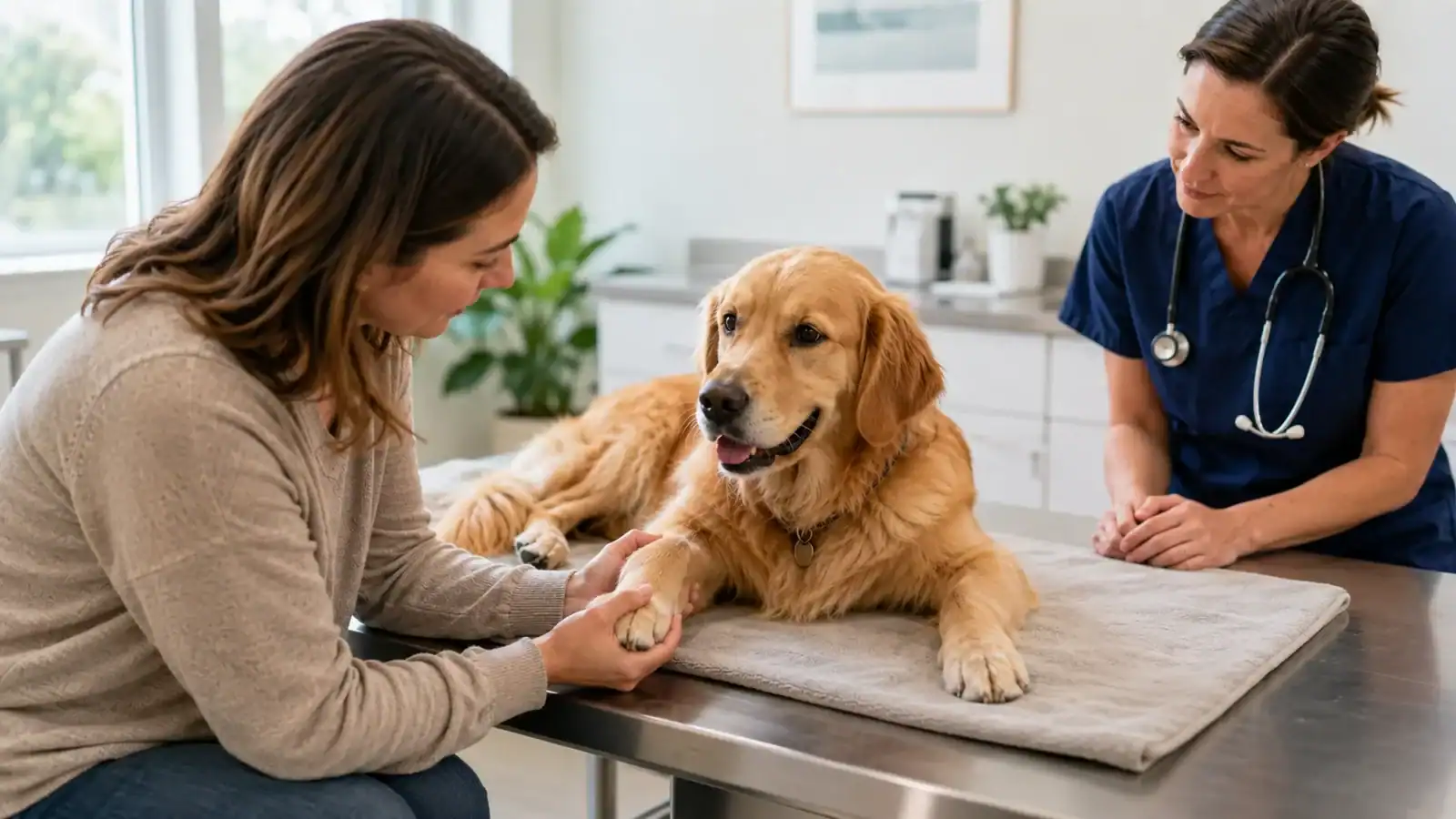
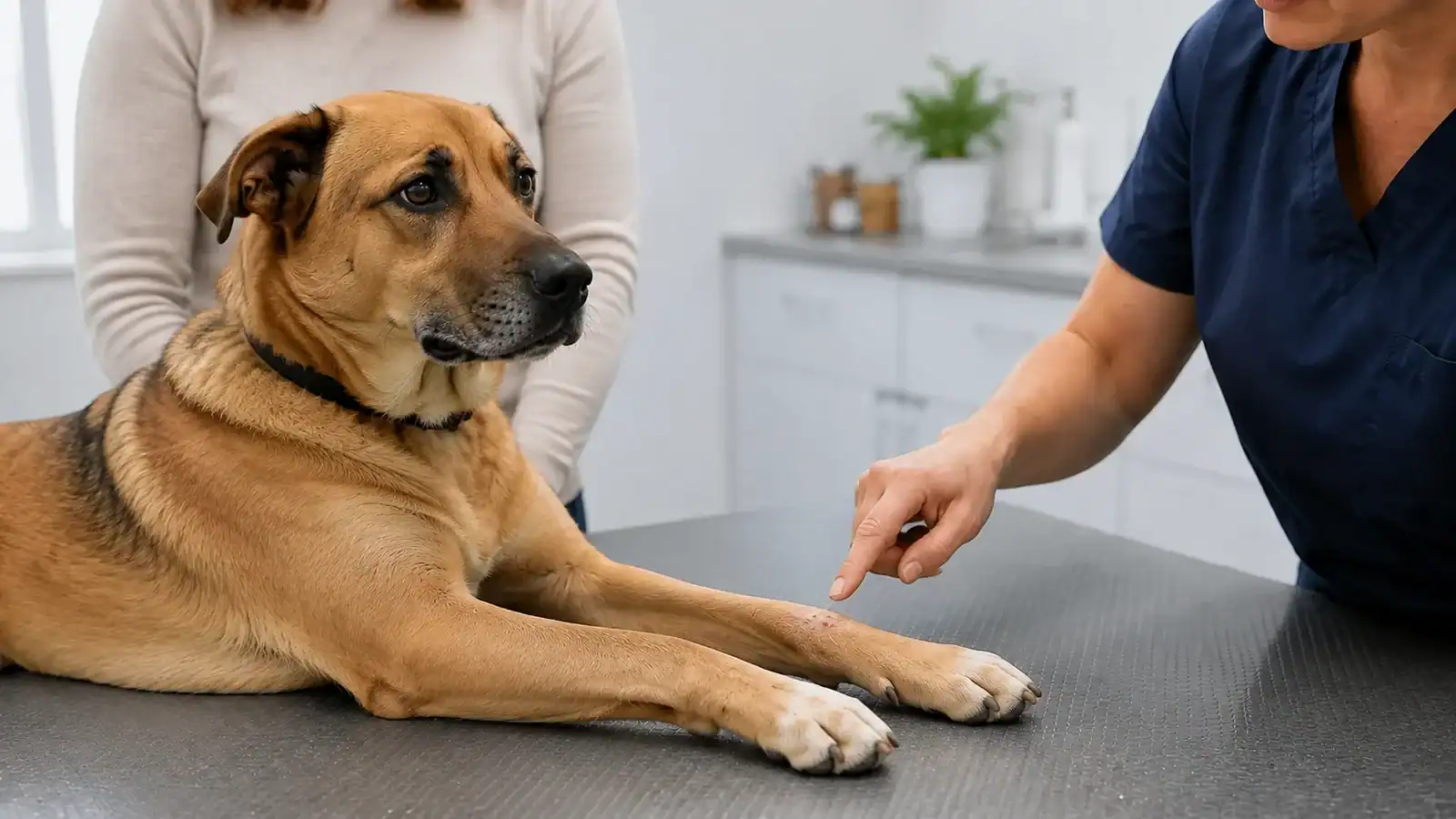
The product is optional. Careful wound assessment comes first. If you cannot clearly see how deep the injury is, or your dog seems painful or unwell, let your veterinarian examine it.
The Short Answer
A dog-specific liquid bandage forms a thin film over the skin. It can help shield a very minor wound from dirt and friction while you watch it heal. It should never be used to seal a wound that may need cleaning, drainage, stitches, staples, or other veterinary treatment.
Use this quick guide:
Often Reasonable to Consider
A tiny, shallow scrape or abrasion
A small, clean cut with edges that sit together
Bleeding has fully stopped
The area is easy to inspect every day
The product label specifically allows use on that type of wound
Do Not Treat With Liquid Bandage at Home
A deep, gaping, crushed, or heavily contaminated wound
A bite or puncture
Ongoing bleeding
Pus, odor, increasing redness, heat, or swelling
A wound near the eye, mouth, nose, ear canal, or genitals
Exposed fat, muscle, tendon, or bone
A burn or a large area of damaged skin
Ask Your Veterinarian First
A surgical incision
A cut over a joint or on a paw pad
A wound your dog keeps reopening
Any injury when your dog has diabetes, takes immune-suppressing medication, or has delayed healing
What Liquid Bandage Does
Pet liquid bandages are film-forming topical products. Depending on the formula, the film may be waterproof or breathable. The useful part is the physical barrier, not a promise that every product prevents infection or speeds healing.
Liquid Bandage Is Not Wound Glue
A spray or brush-on liquid bandage is not the same thing as the medical tissue adhesive a veterinarian may use to close selected wounds. Veterinary wound closure is a clinical decision made after the wound has been inspected, cleaned, and assessed for contamination. A wound may need to stay open if it is contaminated or infected. The Merck Veterinary Manual notes that closure choices depend on factors such as wound location and contamination, and that cyanoacrylate is one of several closure methods veterinarians may use in appropriate cases. [1]
Please do not try to glue wound edges together at home. Sealing contamination inside can create a much bigger problem.
When Liquid Bandage May Be Appropriate
The best candidate is a wound you might otherwise describe as a small surface scrape. It should be shallow, clean, and no longer bleeding. Your dog should be comfortable enough to let you inspect it without struggling or crying out.
A Quick Wound Check
Before reaching for any product, look at the whole dog as well as the skin. Is your dog alert? Are the gums their usual color? Is breathing normal? Was there a fall, vehicle injury, or animal bite? Merck emphasizes that the animal’s general condition takes priority because an obvious wound can distract from a more serious injury. [1]
Then look closely at the wound:
Are the edges close together rather than pulled apart?
Can you see the entire base of the wound?
Is there only mild surface redness?
Has bleeding stopped with gentle, steady pressure?
Is there no dirt, splinter, glass, or other object embedded in it?
Is the area away from sensitive tissues?
If any answer worries you, skip the liquid bandage and call your veterinarian.
Product Label Checklist
Pet products are not interchangeable. Before applying one, check:
The label clearly says it is for dogs
The intended uses include the type of minor wound you see
The ingredients and warnings are readable
You know how long it must dry
You know whether and when to reapply it
You understand the licking precautions
The product is not expired
A government database listing is not proof that a product has been approved as safe and effective. For example, the DailyMed page for VetraCare Pet Liquid Bandage contains label directions for minor cuts and scrapes, but it also states that the drug has not been found by the FDA to be safe and effective and that its labeling has not been FDA approved. [2] This difference helps you compare products accurately.
When Not to Use Liquid Bandage
Liquid bandage is the wrong tool when a wound needs veterinary cleaning, drainage, closure, pain control, or infection treatment. Bite wounds and punctures can look small on the surface while carrying bacteria deep under the skin. Gaping wounds may involve tissues you cannot assess safely at home.
Avoid home application if the area is:
Deep, wide, or longer than a small surface cut
Caused by a bite, puncture, crush, or burn
Dirty or contains a foreign object
Swollen, hot, very red, painful, or draining
Producing a bad odor
Bleeding despite steady pressure
Located over a joint, on a paw pad, or in a high-motion area that keeps opening
Close to an eye or mucous membrane
A surgical site that has opened or changed
Do not cover a surgical incision with liquid bandage unless the veterinarian who performed the procedure tells you to. Incisions are designed and closed in specific ways. A change in the incision needs to be assessed, not hidden beneath another product.
Signs of Infection
Call your veterinarian if redness, swelling, heat, pain, or discharge is increasing rather than settling. Other concerns include an unpleasant smell, low energy, poor appetite, feverish behavior, or repeated licking that you cannot control.
A film can make a wound harder to inspect. If you are using one, look at the surrounding skin at least daily and stop if the label tells you to stop after irritation.
Emergency Warning Signs
Seek urgent veterinary care for heavy bleeding, pale or white gums, weakness, collapse, breathing changes, major trauma, or exposed deeper tissue. Apply firm direct pressure with clean gauze or a clean cloth while arranging care. Merck lists stabilization and bleeding control as first priorities in wound management. [1]
Can You Use Human Liquid Bandage on Dogs?
I do not recommend treating human liquid bandage as a safe substitute for a dog-labeled product. Formulas vary, and dogs may lick whatever you put on their skin. A human label also does not account for fur, canine skin, or the chance that the product will be swallowed.
If a veterinarian approves a particular product for your dog, follow that specific guidance. Otherwise, choose a dog-labeled product whose intended use matches the wound. If your dog has already licked or swallowed a human product, keep the package and call your veterinarian or an animal poison service for advice. The ingredients and amount matter.
How to Apply a Dog-Specific Liquid Bandage Safely
Once you have confirmed that the wound is minor and the label allows use, keep the process gentle.
Step-by-Step Application
Calm your dog. Ask someone to help with gentle restraint if needed. Stop if your dog is frightened or painful enough to bite.
Control minor bleeding. Hold clean gauze or a clean cloth against the area with steady pressure. Do not keep lifting it to check every few seconds.
Inspect the wound. Make sure it is shallow, clean, and free of embedded material.
Rinse gently. Sterile saline is a good choice for a small surface wound. Merck describes 0.9% saline as the least toxic lavage fluid for healing tissue and warns that hydrogen peroxide is toxic to healthy tissue. [1] Do not scrub with rubbing alcohol, peroxide, surgical soap, or a home remedy.
Pat the surrounding skin dry. A liquid film will not adhere well to wet fur or skin. Do not rub the raw surface.
Follow the exact label. Directions vary. The VetraCare label says to clean and dry the area, spray, and allow it to air-dry. [2] Dogswell directs users to spray lightly and hold the dog still for 30 to 60 seconds. [3] Do not invent extra coats or warm the product unless your product’s instructions specifically say to do so.
Prevent licking and rubbing. Keep your dog still until the film is completely dry. Use an Elizabethan collar or another veterinarian-approved barrier if your dog keeps reaching the area.
Check it daily. Watch for film cracking, trapped moisture, redness, swelling, discharge, pain, or a wound that is getting larger.
Paw and Joint Considerations
Paws and joints move constantly. They also meet dirt, moisture, and rough surfaces, so a liquid film may crack or wear away quickly. A pad cut can be deeper than it first appears, and a poorly applied wrap can create circulation problems. Ask your veterinarian which type of protection is best if the injury is on a paw pad, between the toes, or over a joint.
What If Your Dog Licks It?
Do not assume licking is harmless just because a product is sold for pets. The safest plan is to prevent licking while the product dries and follow any continued restriction on the label.
If your dog takes one quick lick from a dried film and remains well, contact the manufacturer or your veterinary clinic for product-specific advice. If a large amount was swallowed, or your dog drools, vomits, coughs, seems weak, or acts abnormally, call a veterinarian or animal poison service promptly. Have the container with you.
Liquid Bandage Versus Other Options
Sometimes the simplest care is enough. A tiny surface scrape may only need gentle rinsing and protection from licking while you monitor it. Liquid bandage can be helpful in selected spots, but it is not automatically better.
A nonstick dressing may be preferable when a wound needs cushioning or absorption. Bandages must be applied correctly and checked often, especially on a leg or paw. Too much pressure or moisture can cause trouble.
An Elizabethan collar may be the most useful tool when licking is the main problem. For wounds that need true closure, your veterinarian may choose sutures, staples, tissue adhesive, or open-wound management after examining the injury. [1]
A Holistic Approach to Minor Wound Care
Holistic care begins with the whole dog, not with a bottle. I want the wound clean, the dog calm, and the body given a good environment for normal healing.
For a very minor injury, that usually means gentle cleansing, protection from licking and dirt, and a short break from activities that stretch or reopen the skin. Keep fresh water available and continue your dog’s normal balanced diet unless your veterinarian advises otherwise.
More products are not always better. Essential oils, herbal mixtures, harsh antiseptics, and kitchen remedies can irritate open tissue or be unsafe when licked. Use only what you can identify, justify, and monitor.
When to Call Your Veterinarian
Call if you are unsure whether the wound is truly superficial. I would also want veterinary guidance for:
Any bite, puncture, burn, or crush injury
A wound that is deep, gaping, or very painful
Bleeding that returns or does not stop
Dirt or an object you cannot gently rinse away
Increasing redness, heat, swelling, discharge, or odor
A wound that keeps opening
A surgical incision that looks different
No clear improvement over the next day or two
A dog whose health condition or medication may slow healing
A quick call can keep a small problem from becoming a painful one.
Final Thoughts
A dog-specific liquid bandage can be useful for a small, clean, superficial cut or scrape, but it should never replace careful wound assessment. When in doubt, rinse gently, prevent licking, and ask your veterinarian before sealing anything over the skin.
For your dog’s first-aid kit, keep sterile saline, gauze, a clean cloth, an Elizabethan collar, and your veterinarian’s phone number. If you add a liquid bandage, choose one labeled for dogs and keep its directions with it.
Frequently Asked Questions
Is Human Liquid Bandage Safe for Dogs?
Not as a general rule. Human formulas vary, and dogs may lick the product. Use a human product only if your veterinarian approves that exact formula for that exact wound.
What Happens If My Dog Licks Liquid Bandage?
The risk depends on the ingredients, amount, and whether the film was wet or dry. Prevent licking, save the package, and contact your veterinarian or an animal poison service if more than a tiny amount was swallowed or your dog develops symptoms.
Can I Put Liquid Bandage on My Dog’s Paw?
Possibly, but paw wounds deserve extra caution because pads can split deeply and films wear quickly with motion and moisture. Ask your veterinarian if the cut is more than a tiny surface scrape, sits between the toes, or keeps reopening.
Can I Use Liquid Bandage on a Surgical Incision?
Not unless the veterinarian who performed the surgery specifically directs you. An opening, discharge, swelling, or color change at an incision should be reported to that clinic.
How Often Should I Reapply Liquid Bandage?
Follow the exact product label. Some labels allow daily reapplication, while others differ. Remove nothing forcefully, and stop using the product if the wound worsens or the surrounding skin reacts.
This article provides general education and does not replace an examination, diagnosis, or individualized advice from your veterinarian. Contact a veterinary professional if you are concerned about your dog’s symptoms.
Dr. Candy Akers earned her Doctor of Veterinary Medicine degree from Oklahoma State University in 2009 after completing undergraduate studies at the University of Delaware. Her experience includes companion-animal nutrition, chronic disease, allergies, autoimmune conditions, cold laser therapy, wildlife rehabilitation, and emergency wildlife response. She combines conventional veterinary knowledge with a whole-animal perspective to help pet parents understand their options and recognize when individualized veterinary care is needed.
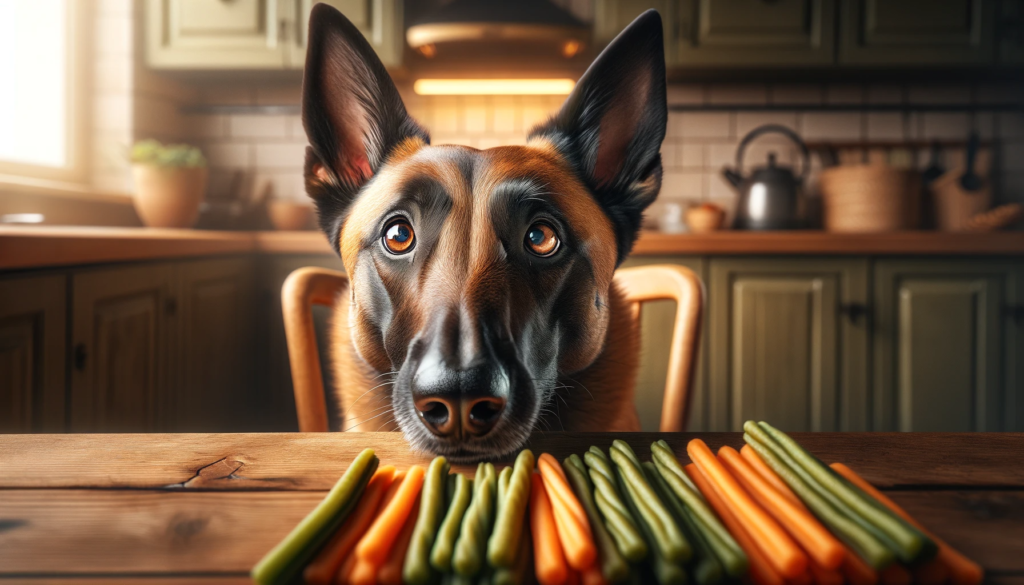
Veggie straws have become increasingly popular among humans in recent years as a snack option. These crispy treats are marketed as a healthier alternative to traditional potato chips and other processed snacks. This makes them a popular choice for those looking to make healthier choices in their diet. Have you ever wondered “Can dogs eat veggie straws?” The short answer is no, dogs should not eat veggie straws.
One of the main reasons for the popularity of veggie straws is their perceived health benefits. Made from real vegetables such as potatoes, spinach, and tomatoes, many people believe that they are getting essential vitamins and minerals while satisfying their cravings for something crunchy and salty.
Another reason why veggie straws have become so popular is that they come in a variety of flavors. From classic sea salt to more exotic options like ranch or BBQ. There seems to be a flavor for everyone’s taste buds.
Can Dogs Enjoy Veggie Straws Too?
With the rise in popularity of veggie straws among humans, it’s only natural that pet owners would wonder if their furry friends can enjoy this snack too. After all, dogs love crunchy snacks just as much as we do!
However, the answer isn’t quite as straightforward as one might think. Veggie straws may seem like a healthy snack option because they contain vegetables. However, it’s important to remember that dogs have different nutritional needs than humans.
When considering whether or not dogs can eat veggie straws, there are several factors to consider. For example, what are the ingredients in the veggie straws?
Are there any potential health risks associated with feeding dogs processed snacks like these? In addition to these questions, it’s also important to consider how your dog’s digestive system may react to eating something like veggie straws.
Some dogs may have no problem digesting them. Others may experience stomach upset or even vomiting if they consume too many processed snacks. Overall, while it may be tempting to share your veggie straws with your furry friend, it’s best to err on the side of caution and stick to dog-friendly snack options.
Overview of Veggie Straws
What are Veggie Straws?
Veggie straws are a popular snack food that has gained popularity in recent years due to their crunchy texture and perceived health benefits. These snacks are typically made of a combination of potato starch, cornstarch, and vegetable powders like spinach, tomato, and beetroot. They are shaped like small tubes or sticks and often come in a variety of flavors.
How are Veggie Straws Made?
To make veggie straws, combine the ingredients to create a dough-like mixture for veggie straws. Then, feed this mixture into a machine, which extrudes it into small tubes or sticks. Finally, bake these snacks until they reach a crisp and crunchy texture.
Nutritional Value of Veggie Straws
One of the main selling points of veggie straws is their perceived nutritional value. While they do contain some vegetable powders, it’s important to note that they are still processed snack food. They should not be considered a replacement for fresh vegetables in your diet.
That being said, some brands of veggie straws boast being lower in fat than traditional potato chips and may also contain less sodium. They may also contain vitamins like vitamin A or vitamin C from the vegetable powder ingredients.
Potential Health Benefits for Humans
There isn’t much research on the specific health benefits of eating veggie straws. Consuming more vegetables in general can have many positive health effects. Vegetables contain fiber which can aid digestion and help you feel full longer.
They also provide important vitamins and minerals that your body needs to function properly. Some studies have also suggested that consuming more vegetables can help reduce your risk for chronic diseases such as heart disease, diabetes, and certain types of cancer.
The Bottom Line
Veggie straws may be a tasty and fun snack option. It’s important to remember that they are still processed food. They should not be relied upon as a primary source of vegetables in your diet. It’s always best to aim for fresh, whole vegetables whenever possible.
That being said, if you’re looking for a crunchy snack that’s lower in fat and sodium than traditional potato chips, veggie straws could be an option worth considering. Just be sure to read the label and choose brands with simple ingredient lists and minimal added sugars or artificial flavors.
Can Dogs Eat Veggie Straws?
The short answer is no, dogs should not eat veggie straws. While veggie straws may seem like a healthy snack option for humans, they are not nutritionally appropriate for dogs. In fact, feeding your dog veggie straws could potentially lead to health issues and complications.
One of the main reasons why veggie straws are not suitable for dogs is that they are highly processed and contain ingredients that may be harmful to them. Many brands of veggie straws contain onion powder or garlic powder. Both of these are toxic to dogs in large quantities.
Additionally, the high salt content in these snacks can be harmful to your dog’s health. This is true especially if they have kidney or heart problems. Moreover, although some ingredients in veggie straws may be safe for dogs in small amounts such as potato starch and cornstarch which have low nutritional value and low digestibility rate.
Feeding your dog processed snacks like veggie straws can cause stomach upset. This includes diarrhea because their digestive system isn’t built for digesting human foods. While some people may argue that their dog has eaten veggie straws without any ill effects, it’s important to remember that every dog is different and may react differently to certain foods.
Just because one dog was fine after eating a few stray pieces of veggie straw doesn’t mean that it’s safe or healthy for all dogs. If you’re looking for a snack option for your furry friend, there are plenty of healthier alternatives out there.
While it may be tempting to share your favorite snack with your four-legged friend, it’s important to remember that not all human foods are safe for dogs. Veggie straws, in particular, are highly processed and contain ingredients that can be toxic to dogs.
Potential Risks for Dogs Eating Veggie Straws
Dangerous Ingredients in Veggie Straws
Veggie straws are made from a combination of carrots, potatoes, and spinach. However, some manufacturers add additional ingredients to enhance the flavor or color of the snack.
Some of these added ingredients can be harmful to dogs. For example, onion powder and garlic powder are often included in veggie straws to give them a savory taste.
These ingredients can damage a dog’s red blood cells and cause anemia if ingested in large quantities. Another danger ingredient is salt.
Most veggie straws contain a high amount of sodium which can lead to dehydration if consumed excessively by your pooch. Too much salt can also cause electrolyte imbalances which could lead to other health issues.
Digestive Issues From Processed Snacks Like Veggie Straws
Veggie straws are processed snacks that contain artificial flavors and colors. They also contain preservatives that help to extend their shelf life. Unfortunately, these additives may cause digestive issues such as diarrhea or vomiting in dogs with sensitive stomachs. Moreover, the high fiber content in veggie straws may be too much for some dogs to handle which could lead to bloating and gas.
The Importance of Reading Labels Before Giving Treats
It is important always to check the label before giving your dog any snack including dog treats or human food such as veggie straws. Some seemingly healthy foods may include dangerous substances that will harm your furry friend. Checking food labels allows you to note any harmful ingredients beforehand. This way you can avoid them entirely while buying snacks for your dog at home.
Consulting A Veterinarian Before Introducing New Foods Into Your Dog’s Diet
In case you’re unsure what type of treats are safe for your dog, or if you’re considering adding new food to their diet, it’s always best to consult with your veterinarian first. Your vet may suggest specific snacks or foods that are ideal for your dog’s specific dietary requirements depending on their age, breed, and activity level. Your veterinarian can also help you determine the appropriate serving size based on your dog’s weight and calorie needs.
Veggie straws aren’t necessarily toxic to dogs but they could potentially cause digestive issues and contain harmful ingredients. Onion powder, garlic powder, and salt could lead to health complications if consumed excessively. When it comes to feeding dogs any human food or treats even those labeled healthy, it is always best first to consult with a veterinarian before introducing anything new into their diet.
Alternatives to Veggie Straws for Dogs
Dog-Friendly Snacks
While veggie straws may seem like a healthy snack option for humans, they are not necessarily the best choice for our furry friends. However, there are plenty of other alternatives that can be just as tasty and even more nutritious for dogs.
One great option is carrots. Not only are they low in calories, but they also contain vitamins and minerals that can benefit a dog’s overall health. Carrots are also great for promoting healthy teeth and gums due to their crunchy texture. Another alternative is green beans. These vegetables are rich in fiber and protein, making them an excellent source of nutrition for dogs. They also contain antioxidants that can help support a dog’s immune system.
Other healthy snack options for dogs include apples, bananas, blueberries, and pumpkin puree. These snacks not only provide essential vitamins and minerals but also add variety to a dog’s diet.
The Importance of Consulting with a Veterinarian
Before introducing any new food into a dog’s diet, it is always important to consult with a veterinarian first. While some foods may seem harmless or even beneficial to us humans, they may pose potential risks or complications for our pets.
For example, certain fruits such as grapes or raisins can cause kidney failure in dogs if ingested in large amounts. Additionally, some human foods may be high in fat or salt content which can lead to digestive issues or obesity in dogs.
By consulting with a veterinarian before introducing new foods into their diet, pet owners can ensure that they are providing their furry friend with the proper nutrition while minimizing potential risks. While veggie straws may seem like an appealing snack option due to their crunchy texture and vegetable-based ingredients, they might not be the best choice for our dogs.
Instead, opting for healthier, dog-friendly snacks such as carrots or green beans can provide our pets with the nutrition they need while reducing potential health risks. Remember to always consult with a veterinarian before introducing new foods into a dog’s diet to ensure their health and wellness.
Conclusion: Can Dogs Eat Veggie Straws?
After much discussion and analysis, the answer to the question “Can dogs eat veggie straws?” is: it depends. While veggie straws themselves are not inherently toxic to dogs, the ingredients they contain can be harmful if consumed in large quantities.
Onion powder and garlic powder, two common ingredients found in veggie straws, can cause gastrointestinal distress and anemia in dogs. While it may be tempting to share your snack with your furry friend, it’s important to consider their nutritional needs and digestive system.
Dogs require a diet that is high in protein and fat, while also containing essential vitamins and minerals. Veggie straws are a processed snack that lack many of these necessary nutrients.
However, if you still want to give your dog a taste of veggie straws as a special treat, there are some precautions you can take. First, make sure that the particular brand of veggie straws you choose does not contain any potentially harmful ingredients like onion or garlic powder.
Second, only feed them in moderation as an occasional treat rather than as a regular part of their diet. Overall though, there are many healthier alternatives for dog treats that offer more nutritional value such as carrots or green beans which provide fiber and vitamins without the risk of any harmful additives.
When considering introducing new foods into your dog’s diet it’s always best to consult with your veterinarian first. They will be able to provide specific recommendations based on your dog’s individual needs and health history.
While it is technically possible for dogs to eat veggie straws, there are certainly better snack options out there for our furry friends. By making informed decisions about what we feed our pets we can ensure they stay healthy and happy for years to come!
A note about your dog’s health
This article provides general education and does not replace an examination, diagnosis, or individualized advice from your veterinarian. Contact a veterinary professional if you are concerned about your dog’s symptoms.
Lindsie Parks is the founder of Healthy Happy Dogs and holds a bachelor’s degree in biology. She brings more than 19 years of experience across veterinary medicine, animal welfare, practice leadership, nutrition, cold laser therapy, rescue work, and emergency animal response. Her goal is to give pet parents clear information, practical options, and greater confidence in the decisions they make for their animals.
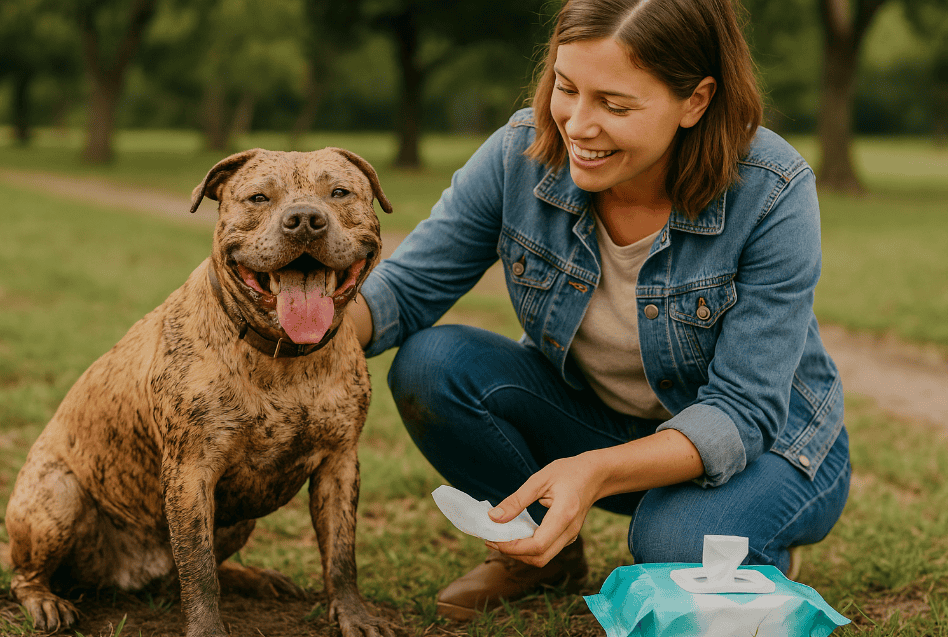
Have you ever found yourself in a situation where your dog gets dirty after a walk or playtime but you don’t have access to a bath? Or maybe your pup stepped in something gross and you just want to clean their paws? You might be tempted to reach for some baby wipes, but can you use baby wipes on dogs? In this article, we’re going to answer the question of whether or not baby wipes are safe for dogs.
We’ll also provide some context for why someone might want to use them on their pup. Dogs love getting dirty, but sometimes it’s just not practical or healthy for them to be covered in mud or other substances.
That’s where baby wipes come in handy. They can be used as a quick and easy way of cleaning up your pet without having to give them a full bath. But before you start wiping down your dog with any old baby wipe, it’s important to understand that not all wipes are created equal. In this blog, we will discuss the chemicals to watch for and the ingredients that can actually be beneficial.
What are baby wipes?
If you have a baby or know someone who has one, you’re probably familiar with baby wipes. These moist towelettes are specifically designed for cleaning a baby’s delicate skin during diaper changes.
But did you know that they can also be used to clean your furry friend’s paws and fur? Baby wipes come in various sizes and can be purchased in bulk or individually wrapped.
They are made of soft, gentle materials that won’t irritate your baby’s skin. Some brands advertise as being “unscented,” while others offer various scents, like lavender or chamomile.
What are they typically used for?
As mentioned, the primary use of baby wipes is for cleaning babies during diaper changes. However, they can also be used for wiping away spit-up, food messes, and other general messes that come with having a little one.
But what about dogs? Can they be used on them too?
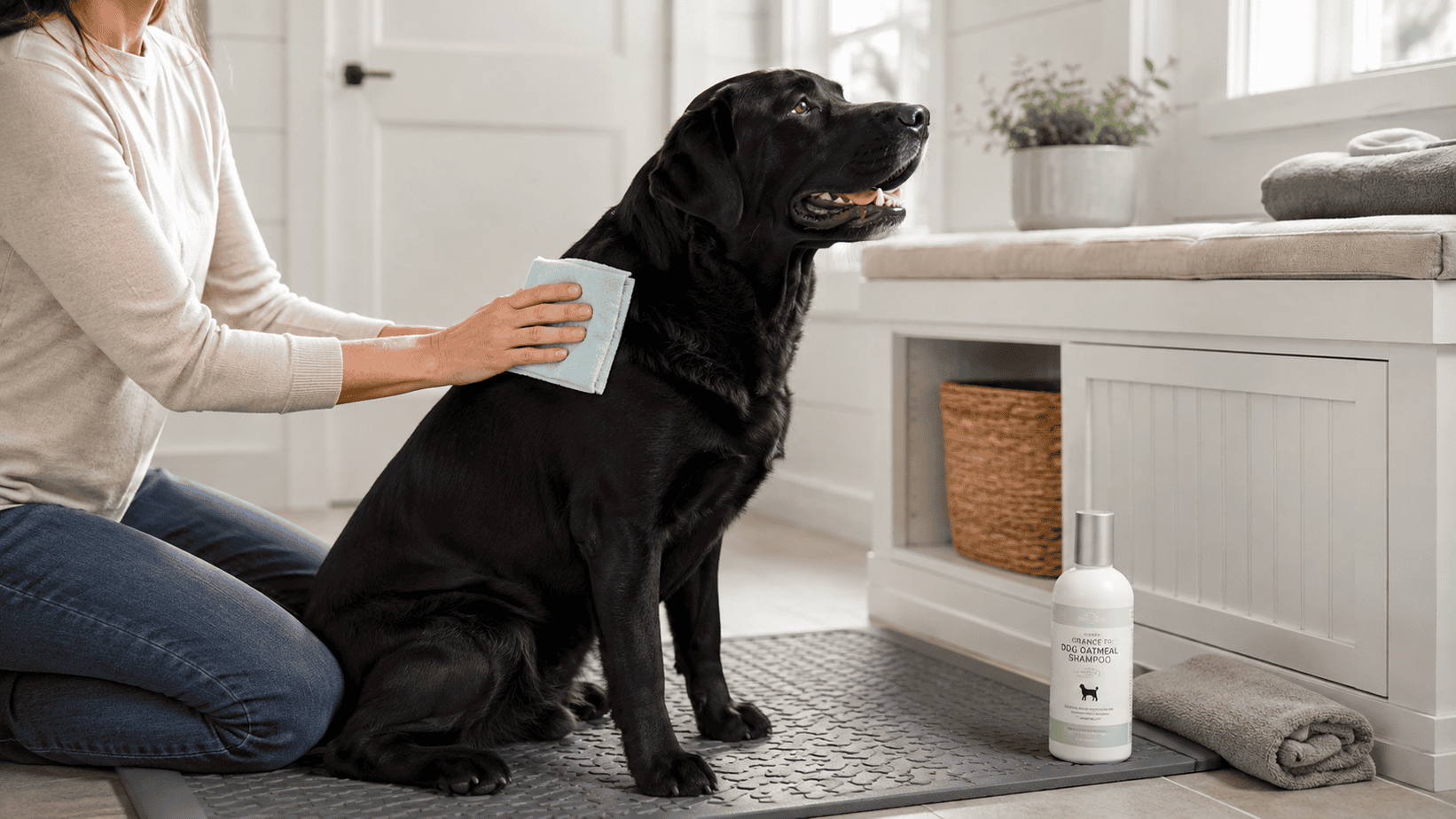
The answer is yes! Baby wipes offer an easy and convenient way to clean up your dog after a walk or playtime in the park.
Common ingredients found in baby wipes
Different brands have unique ingredients in their baby wipes. However, common ones exist. Water is primary, making up most of the wipe. Baby wipes also have mild cleansers. These include surfactants and emulsifiers. They break down dirt on the skin.
Many wipes contain moisturizers like glycerin or petrolatum. They hydrate the skin. Other ingredients are preservatives, fragrances, and pH adjusters. Preservatives stop bacteria growth. Fragrances add scent. pH adjusters balance acidity levels.
The difference between regular and pet-specific wipes
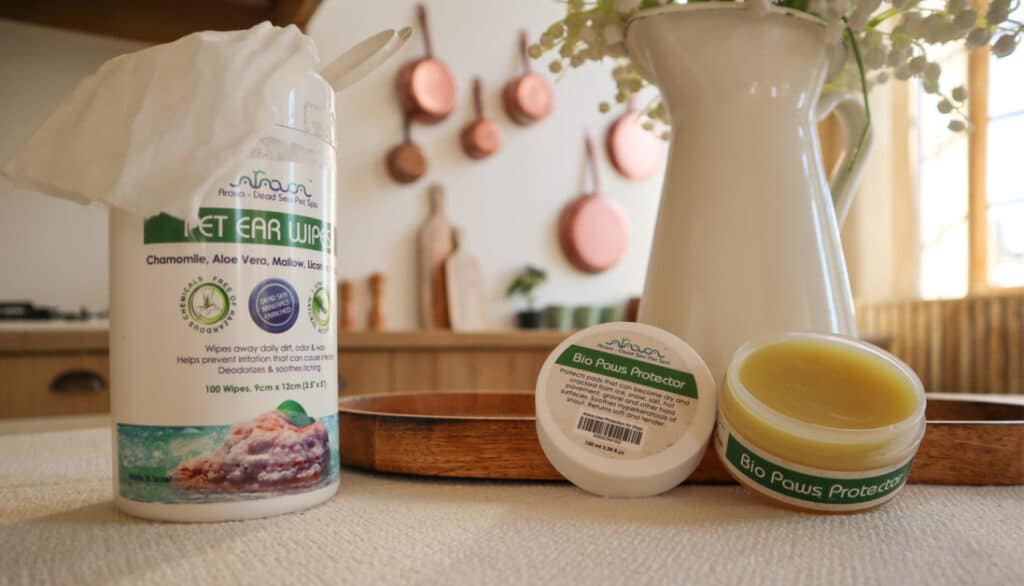
While baby wipes can be used on dogs, there are some differences between regular baby wipes and pet-specific ones. Pet-specific wipes are specially designed for dogs and contain ingredients that cater to their needs.
For example, pet wipes may contain ingredients like aloe vera or oatmeal to soothe irritated skin. Some may even have antibacterial properties to prevent infections. Additionally, pet-specific wipes are often larger than baby wipes, making them better suited for cleaning larger dogs.
If you must clean your dog and lack pet-specific wipes, use a baby wipe. However, pick an unscented one. Ensure it’s free of harsh chemicals. These could irritate your dog’s skin
Can You Use Baby Wipes on Dogs?
As a dog owner, you may be wondering if it’s safe to use baby wipes on your furry friend. The answer is yes, but with some important considerations.
Not all types of baby wipes are created equal, and some can even be harmful to your dog’s skin. In this section, we’ll explore the ins and outs of using baby wipes on dogs and how to choose a safe brand.
Not All Baby Wipes Are Safe for Dogs
While many baby wipes are gentle enough for human babies, they may not be suitable for use on dogs. Some brands contain harsh chemicals or fragrances that can cause skin irritation or allergic reactions in dogs. Before using any type of wipe on your dog, it’s important to read the label carefully and make sure it’s safe for pets.
Pet-Specific Wipes May Be a Better Option
If you want to play it safe when cleaning your dog with wipes, consider purchasing pet-specific wipes. These are specially formulated for use on dogs (and sometimes cats), meaning they’re less likely to contain ingredients that could harm your pet. Pet-specific wipes also tend to be larger and more durable than standard baby wipes, making them easier to use on bigger dogs or messier situations.
Choosing a Safe Brand of Baby Wipe
If you decide to go with standard baby wipes instead of pet-specific ones, there are still ways to ensure the safety of your furry friend. Look for fragrance-free or hypoallergenic options that are gentle enough for sensitive skin. Avoid products that contain alcohol or other harsh chemicals known to cause irritation.
It’s also a good idea to check the packaging for information about whether the manufacturer recommends using the product on pets. Some brands may explicitly state that their wipes are not intended for animal use.
How to Use Baby Wipes on Your Dog Safely
Using baby wipes on your dog can be a great way to quickly clean up messes or freshen up their coat between baths. However, it’s important to do so safely, to avoid causing irritation or other health problems. Start by choosing a wipe that’s safe for your dog and free of any potential allergens or irritants.
Then, gently wipe down your dog’s fur, paying special attention to any areas that are particularly dirty or smelly. Avoid using wipes on open wounds or irritated skin, as this can further aggravate the problem.
Also, don’t use too many wipes at once – one or two should suffice for most situations. Always dispose of used wipes in the trash rather than flushing them down the toilet.
The Bottom Line: Baby Wipes Can Be Safe for Dogs When Used Properly
Yes – you can use baby wipes on dogs! Just make sure to choose a safe brand and be careful when using them on your furry friend. By following these guidelines and taking care not to overuse wipes, you can help keep your pup clean and comfortable between baths.
When Should You Use Baby Wipes on Your Dog?
As mentioned earlier, using baby wipes on dogs can be a convenient way to clean them up after a messy outdoor excursion. However, it’s important to know when and how often to use the wipes to avoid any adverse effects. One example of a situation where using a baby wipe on your dog is beneficial is after a muddy walk.
If your dog enjoys exploring muddy puddles or rolling around in dirt, their fur can quickly become caked with mud and dirt. Instead of giving them a full bath every time this happens, using a baby wipe can help get rid of the excess dirt and prevent it from being tracked into your home.
Another situation where baby wipes may come in handy is after playing in the park or going for a swim. Dogs are known for getting into all sorts of odorous messes, whether it be running through goose poop or rolling around in decomposing plant matter.
Again, instead of resorting to a full bath every time this happens, wiping down your dog with baby wipes can help keep them clean and smelling fresh. However, it’s important not to overdo it with the wipes.
Using too many wipes on your dog can strip their skin of natural oils and cause irritation. Only use as many as necessary for each cleaning session, and don’t make it an everyday routine unless absolutely necessary.
How Often Should You Use Baby Wipes on Your Dog?
It’s generally recommended that you limit the use of baby wipes on dogs to once or twice per week at most. Using them more frequently than that could lead to dry skin and other irritations. If you find that your dog frequently gets dirty or smelly during the week, consider using other methods besides baby wipes such as dry shampoo or giving them more regular baths.
Choosing Safe Brands
When choosing which brand of baby wipes to use on your dog, it’s important to read the ingredients list carefully. Look for wipes that are free from alcohol, fragrances, and other harsh chemicals that can irritate your dog’s skin.
Additionally, you can look for pet-specific wipes that are designed with dogs in mind. These wipes will typically have a more neutral pH balance and be gentler on your dog’s skin than regular baby wipes.
How to Use Baby Wipes Safely
When using baby wipes on your dog, make sure to avoid sensitive areas such as their face or genitals. Instead, focus on wiping down their fur and paws, being careful not to apply too much pressure or rub too vigorously.
Before using the wipe, it can also be helpful to test a small area of your dog’s skin first to make sure they don’t have any adverse reactions. If you notice any redness or irritation after using the wipe, discontinue use immediately.
Baby wipes can be a useful tool for cleaning up after your furry friend without resorting to a full bath every time they get dirty. However, it’s important to use them in moderation and choose safe brands with gentle ingredients.
Remember not to overdo it with the use of wipes and only use as many as necessary during each cleaning session. With proper precautions and care taken while using them safely on your dog’s body parts like paws etc., you can ensure that both you and your dog are happy with the results!
How to use baby wipes on your dog
Choosing the Right Baby Wipes
Not all baby wipes are created equal, so it’s important to choose the right ones for your furry friend. Look for unscented, hypoallergenic wipes that are free of any harmful chemicals like alcohol or fragrances. It’s also a good idea to opt for wipes that are specifically designed for pets as they often come with added benefits like conditioning agents and natural essential oils.
Preparing Your Dog
Before using the baby wipe, make sure your dog is calm and relaxed. If they’re not used to being wiped down, it may be helpful to give them a treat or a toy to distract them. Use a leash or have someone hold onto your dog’s collar if they tend to move around a lot.
Wiping Down Your Dog
Start by wiping down your dog’s paws and work your way up their legs. Be gentle and avoid applying too much pressure as you don’t want to cause any discomfort or irritation. Pay extra attention to areas that tend to get dirty like their paws, belly, and underside.
If you’re using pet-specific wipes with added ingredients like essential oils or moisturizers, make sure you follow the instructions on the package carefully. Some wipes may need to be rinsed off after use while others can be left on.
Cleaning Sensitive Areas
When wiping sensitive areas like around their eyes or ears, use caution and avoid getting too close. You may also want to switch out the wipe frequently if it becomes too soiled as bacteria can spread easily in these areas.
Drying Off Your Dog
After you’ve finished wiping down your dog, use a towel to dry them off thoroughly. Make sure they’re completely dry before letting them outside as wet fur can lead to skin irritation or infection.
Conclusion
Using baby wipes on your dog can be a great way to keep them clean and fresh in between baths, but it’s important to do so safely and responsibly. As always, if you have any concerns about your pet’s health or wellbeing, don’t hesitate to consult with your veterinarian.
A note about your dog’s health
This article provides general education and does not replace an examination, diagnosis, or individualized advice from your veterinarian. Contact a veterinary professional if you are concerned about your dog’s symptoms.
Sheena Keliher is a passionate and knowledgeable pet expert with over a decade of experience in the veterinary profession and rescue work. She has always been dedicated to caring for animals and has spent countless hours helping them in any way she can. Throughout her career, Sheena has provided valuable insights to pet owners and helped them make informed decisions about their furry friends.
In her 13 years in the veterinary profession, Sheena has gained extensive knowledge and experience in animal health and wellness, including diagnostics, treatments, and surgeries. She has worked with a wide range of animals, from dogs and cats to exotic pets and wildlife, and has always been committed to providing the best possible care for each and every one of them.
In addition to her work in the veterinary field, Sheena has also been actively involved in rescue work for the past 15 years. She has helped countless animals find loving homes and has been a tireless advocate for animal welfare. Sheena’s dedication to rescue work has been unwavering, and she continues to be a source of inspiration to many in the animal welfare community.
At home, Sheena is a proud parent of one German Wirehaired Pointer named Jasper and three cats named Sammie, Bat, and Ezra. Her pets are her family, and she always goes above and beyond to ensure that they are happy and healthy.
With her wealth of knowledge and experience, Sheena is an exceptional resource for pet-related advice and assistance. Her love for animals is evident in everything she does, and she is committed to making a positive difference in the lives of pets and their owners.
Most canned, condensed, restaurant, and family-recipe chicken noodle soups are not a good choice for dogs. They often contain onion, garlic, concentrated seasonings, and more sodium than a dog needs.
A plain homemade version can be offered occasionally if it is made with dog-friendly ingredients. If your dog already had a small lick, that is different from eating a full bowl. Check the ingredient list, estimate how much your dog ate, and consider your dog’s size and health before deciding what to do next.
Can Dogs Eat Chicken Noodle Soup? The Quick Answer
The recipe matters more than the name of the soup.
Canned or condensed soup: Usually avoid. It may contain onion, garlic, seasoning powders, concentrated broth, and a lot of sodium.
Restaurant or deli soup: Usually avoid unless you can confirm every ingredient.
Ordinary homemade soup: Check carefully. Family recipes often start with onion or garlic.
Dog-safe homemade soup: Fine as an occasional topper or short-term gentle food when it is plain, fully cooked, and free of unsafe ingredients.
If you do not have the full ingredient list, it is safer to choose a plain alternative.
Why Most Human Chicken Noodle Soup Is Not Dog-Friendly
Onion, Garlic, and Other Alliums
Onion, garlic, leeks, and chives belong to the Allium family. These ingredients can damage a dog’s red blood cells. Garlic is more concentrated than onion, and dried powders or soup mixes can be more concentrated than fresh ingredients. [1] A peer-reviewed review also identifies onion and garlic among household foods that can poison dogs and cats. [2]
Check the label for onion powder, garlic powder, dried onion, dried garlic, leek, chive, seasoning blends, bouillon, and soup base. Removing visible onion pieces does not make the broth safe because flavor and dissolved ingredients remain in the liquid.
Sodium, Fat, and Seasonings
Human soup is often salty. A small taste is not the same as a large exposure, and serious salt toxicosis is less likely when a healthy dog can regulate sodium normally and has free access to fresh water. Large amounts, restricted water access, and existing health problems can increase concern. [3]
Even when the sodium level is not an emergency, salty soup is a poor routine food for a dog. Plain, minimally seasoned ingredients make the better choice.
What to Do If Your Dog Ate Chicken Noodle Soup
Stay calm and gather the details your veterinarian will need.
Save the label or recipe. Look for onion, garlic, leeks, chives, powders, soup base, bouillon, and added salt.
Estimate the amount and time. A lick, a few spoonfuls, and a full bowl are different exposures.
Consider the whole dog. Size, age, current symptoms, water access, and medical history can change the level of concern.
Offer fresh water. Do not induce vomiting unless a veterinarian or animal poison professional specifically tells you to do so.
Call your veterinarian promptly if an Allium ingredient is listed, the amount was large or is unknown, your dog is very small, water was restricted, or your dog has a relevant medical condition.
After an Allium exposure, early signs may include vomiting or diarrhea. Weakness, lethargy, pale gums, rapid breathing, a fast heart rate, or dark to reddish urine may develop later. [1] Seek veterinary care if you notice any of these signs.
How to Make Dog-Safe Chicken Noodle Soup
A simple homemade version gives you control over every ingredient. Keep it plain.
Simple Ingredients
2 cups water or unsalted broth that you have confirmed contains no onion, garlic, leek, or chive
1 cup plain, boneless, skinless cooked chicken or turkey, chopped
1/2 cup cooked white rice or plain noodles
1/4 cup finely chopped carrot or green beans, optional
Do not add onion, garlic, leeks, chives, seasoning packets, bouillon, added salt, butter, chicken skin, or cooked bones.
Easy Directions
Put the water or verified allium-free broth in a saucepan.
Add the cooked chicken or turkey, rice or noodles, and optional vegetables.
Simmer until the vegetables are soft and all ingredients are heated through.
Let the soup cool completely.
Check once more for bones before serving.
How to Serve It
Start with a small spoonful as a topper and see how your dog responds. The right amount depends on your dog’s size, usual diet, and health.
This simple recipe is intended as an occasional topper or short-term gentle food. It is not formulated as a complete long-term diet. If your dog needs a homemade diet for more than a brief period, ask your veterinarian for a nutritionally complete plan.
Can Chicken Soup Help a Sick Dog?
The warm aroma and soft texture of a plain homemade soup may encourage some dogs to take an interest in food. It can also provide fluid along with simple ingredients. Still, soup is supportive food. It does not diagnose or treat the reason a dog feels unwell.
Call your veterinarian if your dog repeatedly vomits, cannot keep water down, seems very weak or painful, or continues to refuse food. Puppies, older dogs, and dogs with chronic health conditions may need help sooner. Do not force-feed a dog who is nauseated or struggling to swallow.
Final Thoughts
Most chicken noodle soup made for people is not worth the ingredient risk. The safer choice is a plain homemade version made without onion, garlic, other alliums, added salt, rich fat, or seasoning packets.
If your dog already ate soup, check the full label and estimate the amount. When an Allium ingredient is present, the amount is large or uncertain, or your dog has symptoms, contact your veterinarian. If you want to share soup safely, use the simple dog-friendly recipe above and keep it as an occasional extra.
Frequently Asked Questions
Can dogs eat Campbell’s chicken noodle soup?
Check the current label because formulas can change. Canned and condensed soups commonly use concentrated broth, seasonings, and substantial sodium, so they are usually not a good choice for dogs. If your dog already ate some, save the label and call your veterinarian when it contains an Allium ingredient or the amount was large or unknown.
Can I remove the onion and give my dog the rest of the soup?
No. Onion flavor and compounds can remain in the broth, and the recipe may also contain onion or garlic powder that you cannot remove. Choose a separate allium-free broth or make a plain soup from scratch. [1]
Can puppies eat homemade chicken noodle soup?
A puppy can have a small amount of a plain, allium-free homemade version as an occasional extra, but it should not replace a complete puppy diet. Because puppies are small and still growing, ask your veterinarian for advice if the puppy ate ordinary human soup or is not eating normally.
Is chicken broth okay for dogs?
It can be, but read the full label. Choose an unsalted product with no onion, garlic, leek, chive, seasoning mix, or concentrated soup base. When the label is unclear, plain water is the safer cooking liquid.
This article provides general education and does not replace an examination, diagnosis, or individualized advice from your veterinarian. Contact a veterinary professional if you are concerned about your dog’s symptoms.
Lindsie Parks is the founder of Healthy Happy Dogs and holds a bachelor’s degree in biology. She brings more than 19 years of experience across veterinary medicine, animal welfare, practice leadership, nutrition, cold laser therapy, rescue work, and emergency animal response. Her goal is to give pet parents clear information, practical options, and greater confidence in the decisions they make for their animals.
Yes, sometimes, but I would use Benadryl cream on a dog only in a narrow situation. The spot should be very small, the skin should be intact, the product should have no extra active drugs, and you must be able to prevent licking. I would not put it on raw, oozing, infected, or widespread skin. Keep it away from the eyes, mouth, genitals, and deep ear canal.
If your dog is very uncomfortable, has facial swelling, is having trouble breathing, or is scratching over a large area, skip the cream and get veterinary help. A cream may quiet a symptom for a short time, but it cannot tell us why the itch started.
What Is in Benadryl Cream?
Benadryl is a brand name used on several products, so do not assume every tube contains the same ingredients. A common extra-strength itch cream contains diphenhydramine hydrochloride 2% and zinc acetate 0.1%. Its human label says it is for external use only and should not be used on large areas of the body. [1]
Diphenhydramine is an antihistamine. In a topical cream, it is meant to work at the skin surface. That does not make the product automatically appropriate for a dog. Dogs lick their skin, their coats trap products, and irritated canine skin may absorb a topical product differently than healthy skin.
Check the Exact Label
Read the active-ingredient panel before the tube touches your dog. I would avoid any cream, gel, or spray that contains an additional active drug unless your veterinarian has approved that exact product.
Also check the expiration date and look at the cream itself. Do not use a product that has changed color, separated, or picked up debris. Topical and oral Benadryl are different decisions, even when both contain diphenhydramine.
When Benadryl Cream May Be Reasonable
A limited use may be reasonable for a mild, localized problem such as one small insect bite or a tiny patch of contact irritation. The skin should be closed, dry, and only mildly pink. Your dog should otherwise feel well.
Use Only on a Tiny Area of Intact Skin
If your veterinarian has said that the exact product is appropriate, apply only a very thin film to the small affected spot. Do not keep adding more because the dog is still itchy. If the spot is not improving, the next step is to find the cause, not to increase the amount or frequency on your own.
Watch the skin after application. Stop if the redness, swelling, pain, or itching becomes worse.
Prevent Licking
Lick prevention is essential. Stay with your dog until the cream is no longer wet, and use a properly fitted recovery collar when needed. A sock or bandage can trap moisture and may make some skin problems worse, so I do not cover an irritated area unless I know the type of lesion and how the covering will be managed.
When Not to Use Benadryl Cream
The skin is broken, bleeding, oozing, crusted, infected, hot, or very painful.
The irritated area is large or appears in several places.
The spot is in or near an eye, the mouth, the genitals, or deep in the ear canal.
The label lists another active drug you have not discussed with a veterinarian.
Your dog can reach the area and you cannot prevent licking.
Your dog is a young puppy, is pregnant or nursing, has a serious health condition, or takes other medication and you have not asked your veterinarian.
The itching comes with facial swelling, widespread hives, weakness, collapse, or any change in breathing.
A moist, inflamed hot spot is not a good place for a human antihistamine cream. Hot spots often need clipping, cleaning, infection control, and treatment for the trigger. Sealing a cream under fur can make the area harder to evaluate.
What to Do If Your Dog Licks It
First, take the tube away and prevent more licking. Keep the package so you can report the active ingredients, product strength, and tube size. Note when the licking happened and estimate how much product is missing.
Diphenhydramine exposure can cause sleepiness, but an excessive amount may also cause agitation, vomiting, a fast heartbeat, tremors, or seizures. [2] The risk depends on your dog’s weight, the amount swallowed, and every ingredient in the product.
If your dog had more than a tiny taste, the amount is unknown, the product contains several active ingredients, or your dog has any unusual sign, call your veterinarian or ASPCA Animal Poison Control at (888) 426-4435. The service is available 24 hours a day, and a fee may apply. [3] Do not induce vomiting or give another medication unless a veterinary professional tells you to do so.
Why Is Your Dog Itchy?
Itching is a sign, not a diagnosis. Parasites, infections, and allergies are among the most common causes in dogs. [4] I also think about insect bites, contact irritation, mites, dry or damaged skin, a wound, and pain that makes a dog lick one spot.
Treat the Cause, Not Just the Itch
Location and timing offer useful clues. Itching at the tail base can point toward fleas. Repeated paw licking may occur with allergy, infection, or contact irritation. An itchy ear may involve yeast, bacteria, mites, or a foreign object. Hair loss, odor, greasy skin, crusts, or discharge make infection more likely.
A topical cream will not remove fleas, clear an ear canal, treat mites, or correct a food or environmental trigger. If the itch returns, spreads, or lasts more than a day or two, an examination can save your dog a lot of discomfort.
Gentler Options for Itchy Skin
For one mild spot on intact skin, I usually begin with simple comfort and a clean surface. A cool compress for five to ten minutes can calm the area without adding another ingredient. A gentle cool-water rinse also helps when pollen, dust, or another contact irritant may be sitting on the coat.
Start With Simple Skin Support
An oatmeal bath can be soothing when the itch is mild and widespread but the skin is not infected or broken. Choose a fragrance-free dog product, rinse well, and pat the coat dry. Heavy rubbing can make inflamed skin angrier.
Some popular home options need more care:
hydrocortisone cream may help certain small inflammatory spots, but the strength, other ingredients, and diagnosis matter. Use it only with veterinary guidance and prevent licking.
calamine lotion can contain ingredients that are not meant to be swallowed. I do not use it on a dog without checking the exact label.
Aloe vera gel should be a dog-appropriate purified product, not gel scraped from an aloe plant. Keep it away from the mouth and stop if it stings or reddens the skin.
Coconut oil may feel soothing on a tiny dry patch, but it is greasy and encourages some dogs to lick. It is not a treatment for infection or allergy.
Apple cider vinegar can sting damaged skin. Never apply it to a raw hot spot, wound, or inflamed ear.
Chamomile tea is sometimes used as a cooled skin compress. A systematic review found promising laboratory and early topical evidence for chamomile and several other medicinal plants in canine dermatology, but it also found that stronger clinical research is needed. [5]
Natural does not mean harmless, and a pleasant-smelling product is not always gentle. When I use holistic support, I match it to the skin in front of me and keep the plan simple enough to notice whether it is helping.
Is Oral Benadryl the Same?
No. A topical cream and an oral antihistamine are not interchangeable. Oral diphenhydramine decisions depend on your dog’s weight, age, health, other medications, and the exact product. Some combination products contain ingredients that can be dangerous for dogs.
Do not calculate an oral dose from a cream label, and do not give oral Benadryl simply because a topical product did not help. Ask your veterinarian whether an antihistamine fits the type of itch your dog has.
When to Call Your Veterinarian
Arrange veterinary care when the skin is painful, moist, smelly, bleeding, crusted, producing pus, or spreading quickly. A dog who cannot sleep, keeps chewing one spot, develops hair loss, or has repeated flares also deserves a closer look.
Seek urgent care for facial swelling, widespread hives, weakness, collapse, repeated vomiting, tremors, seizures, or any breathing change. The same applies after a meaningful or uncertain ingestion of a human skin product.
Final Thoughts
Benadryl cream can have a small role for a tiny patch of mild irritation, but it is not my default answer for unexplained itching. Check the label, use it only on intact skin when the exact product has been approved for your dog, and prevent licking.
For many minor irritations, a cool rinse, a cool compress, or a dog-appropriate oatmeal product is a gentler first step. If the itch persists or the skin looks unhealthy, focus on the cause. That is where lasting relief begins.
Frequently Asked Questions
Can I Put Benadryl Cream on My Dog’s Paws?
Only with care. Paw skin is easy to lick, and redness between the toes often comes from allergy, infection, a foreign object, or contact irritation. I would not use the cream on cracked pads, raw webbing, or an area your dog keeps chewing. A cool rinse and a veterinary check are safer when the problem is more than one tiny intact spot.
Can I Use Benadryl Cream on a Hot Spot?
No, not on a moist, raw hot spot. These lesions can spread quickly and may need the fur clipped, the skin cleaned, and infection or allergy treated. A human cream can trap moisture and will not fix the trigger.
What Should I Do If My Dog Licked Benadryl Cream?
Remove the product, keep the package, and estimate how much is missing. Call your veterinarian or ASPCA Animal Poison Control if it was more than a tiny taste, the amount is unknown, there are extra active ingredients, or your dog is acting unusual. Do not make your dog vomit unless a veterinary professional directs you.
What Can I Put on My Dog for Itching?
For mild irritation on intact skin, start with a cool compress, a cool-water rinse, or a fragrance-free dog oatmeal product. Avoid mixing several remedies. If there is odor, discharge, broken skin, hair loss, severe discomfort, or repeated itching, have your veterinarian identify the cause before applying more products.
Tresch, M., Mevissen, M., Ayrle, H., Melzig, M., Roosje, P., & Walkenhorst, M. (2019). Medicinal plants as therapeutic options for topical treatment in canine dermatology? A systematic review. BMC Veterinary Research, 15, 174. https://doi.org/10.1186/s12917-019-1854-4
A note about your dog’s health
This article provides general education and does not replace an examination, diagnosis, or individualized advice from your veterinarian. Contact a veterinary professional if you are concerned about your dog’s symptoms.
Dr. Candy Akers earned her Doctor of Veterinary Medicine degree from Oklahoma State University in 2009 after completing undergraduate studies at the University of Delaware. Her experience includes companion-animal nutrition, chronic disease, allergies, autoimmune conditions, cold laser therapy, wildlife rehabilitation, and emergency wildlife response. She combines conventional veterinary knowledge with a whole-animal perspective to help pet parents understand their options and recognize when individualized veterinary care is needed.
Yes, a dog can be allergic to turkey. Turkey allergy is possible, but itching, ear trouble, vomiting, or diarrhea after a meal does not prove turkey is the cause. Fleas, environmental allergies, infections, parasites, and other food ingredients can create a very similar picture. The most reliable way to investigate a suspected food allergy is a strict elimination diet followed by a carefully planned food challenge with your veterinarian.[1]
That distinction matters. Removing turkey at random may seem simple, but a casual food switch can hide the real trigger, leave a secondary infection untreated, or create an unbalanced diet. A methodical trial gives you much clearer answers.
What a Turkey Allergy Means
A true food allergy involves an immune reaction to a food protein. A food intolerance does not require an immune response. Intolerance is more likely to show up as digestive upset, although the signs can overlap so much that symptoms alone cannot reliably separate the two.
Turkey is not automatically hypoallergenic. A protein is only “novel” for a particular dog if that dog has not eaten it before. Turkey appears in many foods, treats, chews, supplements, and flavored medications, so a dog may have been exposed even when turkey was never the main ingredient.
Turkey is also not one of the best-documented common food allergens in dogs. A systematic review found beef, dairy, chicken, and wheat were reported most often, while turkey was not among the leading allergens.[2] That does not make turkey allergy impossible. It means there is no sound basis for calling turkey a common trigger or assuming every itchy dog needs a turkey-free diet.
Signs That Deserve a Closer Look
Food allergy in dogs often looks like other allergic skin disease. The pattern may include:
Itching that is present through much of the year
Repeated licking or chewing of the paws
Red, irritated skin on the face, feet, belly, groin, or under the tail
Recurrent ear inflammation or infections
Hair loss, hot spots, scabs, or darkened skin caused by chronic irritation
Repeated vomiting, loose stool, diarrhea, gas, or abdominal discomfort
Some dogs have skin signs without digestive problems. Others have digestive signs with little or no itching. Recurrent bacterial or yeast infections may be secondary to the underlying inflammation and often need treatment while the food question is being investigated.[1]
Sudden facial swelling, hives, trouble breathing, weakness, or collapse is an emergency. Seek veterinary care immediately rather than trying a diet change at home.
Symptoms Do Not Identify the Ingredient
If a dog becomes itchy while eating a turkey recipe, turkey is only one possibility. The food may also contain chicken, beef, egg, dairy, wheat, soy, peas, fish oil with added flavoring, or another ingredient. The timing may be coincidental with flea exposure, pollen season, a skin infection, or an ear problem.
A useful first step is to write down everything your dog consumes. Include meals, toppers, table scraps, dental chews, training treats, flavored preventives, supplements, pill pockets, and anything another family member may share. This diet history helps your veterinarian choose a trial food that is truly different from past exposures.
Turkey Ingredients That Are Easy to Miss
Reading the front of the bag is not enough. Check the complete ingredient list and ask the manufacturer about vague terms when needed.
Label Term
What It Means During a Turkey-Free Trial
Turkey, deboned turkey, turkey liver, or turkey heart
Direct turkey protein and should be excluded
Turkey meal or turkey by-product meal
Concentrated turkey ingredients that still contain protein
Turkey broth, stock, digest, or flavor
May contain turkey protein and should be excluded unless your veterinary team confirms otherwise
Poultry meal, poultry by-products, or poultry flavor
The species may not be clear, so contact the manufacturer
Turkey cartilage or collagen
May appear in joint supplements or chews and can contain turkey-derived protein
Turkey fat
Allergy is directed at protein, but purity and cross-contact vary, so most diagnostic trials exclude it unless the veterinarian approves it
“Natural flavor”
The source may not be obvious and may require manufacturer confirmation
Ingredient lists can change. Recheck the label each time you buy food, treats, or supplements. For a diagnostic diet trial, an over-the-counter limited-ingredient food may also be exposed to undeclared proteins during manufacturing. A veterinary therapeutic diet is often preferred when avoiding cross-contact is important.[1]
How a Veterinary Elimination Diet Trial Works
An elimination diet trial is not simply changing brands. The new diet must avoid ingredients your dog has eaten before or use proteins broken down enough to reduce recognition by the immune system.
1. Choose the Trial Diet
Your veterinarian may recommend one of three approaches:
A veterinary therapeutic novel-protein diet based on a carefully reviewed diet history
A veterinary therapeutic hydrolyzed-protein diet
A complete home-prepared trial diet formulated for the individual dog by a veterinarian with nutrition expertise
Home-cooked meat and starch recipes found online are not automatically complete and balanced. They may be used for a short diagnostic period only when specifically formulated and supervised. Puppies, pregnant dogs, and dogs with other medical conditions need especially careful nutritional planning.
2. Remove Every Other Food Source
During the trial, the assigned diet must be the only food that crosses your dog’s lips. One flavored chew or a handful of another pet’s kibble can muddy the result. Review treats, chews, supplements, toothpaste, flavored medications, and preventives with your veterinarian before the trial begins.
Use pieces of the trial food as treats. Feed pets separately, secure trash, wash shared bowls, and make sure everyone in the household understands the plan. These small practical steps are often what make the trial useful.
3. Continue Long Enough to Judge the Result
Skin inflammation settles slowly. A review of elimination-diet studies found that more than 90 percent of dogs with food-responsive skin signs reached remission within eight weeks.[3] Some digestive signs may improve sooner, but an early change does not confirm turkey allergy. Follow the duration selected by your veterinarian, and do not stop the trial because the dog looks a little better after several days.
Keep a simple weekly log. Record itch level, paw licking, ear redness, stool quality, vomiting, medications, and any accidental exposures. Photos of the same skin areas can make gradual changes easier to see.
4. Treat Problems That Can Cloud the Trial
An ear infection, bacterial skin infection, yeast overgrowth, or flea infestation can keep a dog itchy even when the diet is helping. Your veterinarian may treat those problems at the start of the trial. Keep medications consistent unless your veterinarian changes them, since starting or stopping anti-itch treatment midway can make the response harder to interpret.
5. Perform a Planned Food Challenge
Improvement on the trial diet tells you that food may be involved. It does not identify turkey by itself. Confirmation requires a controlled challenge in which the previous food or a specific ingredient is reintroduced and the dog is watched for a return of signs.[1]
Challenges should be planned with your veterinarian. Do not deliberately re-expose a dog that previously had facial swelling, breathing trouble, collapse, or another severe reaction. If signs return after turkey is introduced and settle again when the elimination diet resumes, the evidence for turkey as a trigger becomes much stronger.
Tests That Cannot Confirm Turkey Allergy
Blood, saliva, and hair tests are marketed as convenient ways to identify food allergies. Current reviews have not found these tests reliable enough to diagnose adverse food reactions in dogs.[4] Skin testing is useful for selecting allergens for environmental allergy immunotherapy, but it does not replace a food elimination and challenge trial.
This can feel frustrating because a strict diet trial takes work. Still, it is better to spend those weeks gathering meaningful information than to build a long avoid-list from a test that may produce false positives. Unnecessary restriction can make feeding more expensive, less balanced, and much more complicated than it needs to be.
Can a Chicken-Allergic Dog Eat Turkey?
Maybe, but do not assume turkey is safe simply because it is a different bird. Laboratory research has found that antibodies from some chicken-reactive dogs can recognize turkey and duck proteins, which supports a potential for poultry cross-reactivity.[5] That study measured antibody recognition, not whether every dog would develop clinical signs after eating turkey.
The practical answer is individual. Some chicken-allergic dogs may tolerate turkey, while others may not. A veterinarian-guided diet history and challenge is safer and more informative than treating all poultry as interchangeable.
The same caution applies in reverse. A confirmed turkey allergy does not automatically prove that chicken, duck, goose, quail, or egg will cause a reaction. Test only what is useful for the dog’s long-term diet, and introduce one ingredient at a time after the initial trial is complete.
Is Turkey Meal, Turkey Fat, or Hydrolyzed Turkey Safe?
Turkey meal and turkey by-products still contain proteins, so they are not suitable for a dog with a confirmed turkey allergy.
Pure fat contains little protein, but pet-food fats may carry trace protein or encounter cross-contact during production. For a diagnostic trial, avoiding turkey fat is the clearest approach unless the supervising veterinarian has reviewed the specific product.
Hydrolyzed protein has been broken into smaller pieces. The degree of hydrolysis matters. Research using poultry-reactive sera found that extensive hydrolysis reduced antibody recognition more effectively than partial hydrolysis.[5] Even so, no hydrolyzed food is perfect for every dog. If a dog does not improve on one properly conducted trial, the veterinarian may reassess the diet choice, compliance, infections, parasites, and nonfood allergies before choosing the next step.
What to Feed After Turkey Allergy Is Confirmed
The best long-term food is one your dog tolerates, enjoys, and can eat as a complete and balanced diet. It does not need to carry a “hypoallergenic” marketing label. Your veterinarian may recommend staying with the successful therapeutic diet or transitioning to another carefully selected food after the trigger is confirmed.
Keep the plan simple:
Avoid confirmed triggers rather than every ingredient that appeared on an unvalidated test.
Choose a complete and balanced food appropriate for your dog’s life stage and medical needs.
Check treats, chews, supplements, and flavored medications for the same trigger.
Recheck labels because formulas can change.
Contact your veterinarian if itching, ear disease, or digestive signs return. A relapse may come from accidental exposure, infection, fleas, environmental allergy, or a different medical problem.
Nutrition works best as part of the whole picture. Skin health, parasite control, ear care, infection treatment, digestion, and a balanced diet all influence how comfortable a dog feels. Removing turkey helps only when turkey is truly part of the problem.
Final Thoughts
A turkey allergy is possible, but symptoms alone cannot diagnose it. Start with a complete diet history and veterinary exam, then use a strict elimination diet and planned challenge to separate a true food trigger from look-alike problems. That approach protects your dog from unnecessary restrictions and gives you a feeding plan based on evidence instead of guesswork.
Frequently Asked Questions
How Do I Know if My Dog Is Allergic to Turkey?
You cannot tell from symptoms alone. A veterinarian first considers infections, parasites, environmental allergies, and other diet ingredients. A strict elimination diet followed by a controlled turkey challenge provides the strongest practical evidence.
Is Turkey Hypoallergenic for Dogs?
Not universally. Turkey may function as a novel protein for a dog that has never eaten it, but many dogs have already encountered turkey in foods, treats, or supplements. Any dietary protein can potentially become a trigger.
Can Turkey Cause Ear Infections in Dogs?
A food allergy can contribute to ear inflammation, and inflamed ears may develop secondary yeast or bacterial infections. Turkey cannot be identified as the cause from an ear infection alone. The ear still needs an examination and appropriate treatment.
How Long Does a Turkey-Free Diet Trial Take?
Many veterinary diet trials for skin signs last about eight weeks, although the exact plan depends on the dog. The clock starts when the dog is fully on the trial diet and receiving no unapproved foods, treats, chews, supplements, or flavored medications.
Can a Dog Be Allergic to Turkey but Not Chicken?
Yes. Turkey and chicken are distinct proteins, even though cross-reactivity may occur. A reaction to one does not automatically prove a reaction to the other. Test each ingredient only under a veterinarian-guided plan.
References
Mueller, R. S., & Unterer, S. (2018). Adverse food reactions: Pathogenesis, clinical signs, diagnosis and alternatives to elimination diets. The Veterinary Journal, 236, 89–95. https://doi.org/10.1016/j.tvjl.2018.04.014
Mueller, R. S., Olivry, T., & Prélaud, P. (2016). Critically appraised topic on adverse food reactions of companion animals (2): Common food allergen sources in dogs and cats. BMC Veterinary Research, 12, 9. https://doi.org/10.1186/s12917-016-0633-8
Olivry, T., Mueller, R. S., & Prélaud, P. (2015). Critically appraised topic on adverse food reactions of companion animals (1): Duration of elimination diets. BMC Veterinary Research, 11, 225. https://doi.org/10.1186/s12917-015-0541-3
Mueller, R. S., & Olivry, T. (2017). Critically appraised topic on adverse food reactions of companion animals (4): Can we diagnose adverse food reactions in dogs and cats with in vivo or in vitro tests? BMC Veterinary Research, 13, 275. https://doi.org/10.1186/s12917-017-1142-0
Bexley, J., Kingswell, N., Olivry, T., & Mueller, R. S. (2017). Extensive protein hydrolyzation is indispensable to prevent IgE-mediated poultry allergen recognition in dogs and cats. BMC Veterinary Research, 13, 251. https://doi.org/10.1186/s12917-017-1183-4
A Note About Your Dog’s Health
This information provides general education and does not replace an examination, diagnosis, or individualized advice from your veterinarian. Contact a veterinary professional if you are concerned about your dog’s symptoms.
About the Author
Lindsie Parks B.S., CRDNS
Healthy Happy Dogs combines practical animal-care experience with responsible, evidence-informed guidance. Veterinary review is identified on individual articles when applicable.
Can you use cat dewormer on dogs? Do not assume that a dewormer labeled for cats is appropriate for a dog. Check the exact product first. Some deworming ingredients are used in both dogs and cats, and some products are labeled for both species. But the product strength, combination of ingredients, target parasites, weight range, age limits, and directions can be different. [1][2]
If your dog already swallowed or was given cat dewormer, the next step is to identify exactly what your dog received. Keep the package, find the active ingredient or ingredients and product strength, estimate how much was given and when, and note your dog’s current weight. Do not automatically give another dewormer on top of it while you are still trying to sort out the first product. [3]
Can You Use Cat Dewormer on a Dog?
There is an important difference between asking, “Can I use this cat product for my dog?” and asking, “My dog already got the cat product. Is my dog going to be okay?”
For planned use, the practical answer is no unless the label specifically includes dogs or you have product-specific veterinary guidance. “Cat dewormer” is not one medication. It is a broad category that can include different active ingredients, different concentrations, and different parasite coverage.
For an accidental dose, do not jump straight to the conclusion that your dog has been poisoned. Some anthelmintic drugs are used in both species. The exact product and amount matter much more than the word “cat” on the front of the package. [1]
A blanket “never” answer sounds simple, but it is not precise enough to guide someone who is holding an actual package and trying to make a safe decision.
Why Cat and Dog Dewormers Are Not Automatically Interchangeable
Two products can have a familiar brand name or even share an active ingredient and still have different directions. One product may be made for cats, another for dogs, and another for both species.
The most reliable way to compare them is to read the actual label.
Check These 6 Things on the Label
What To Check
Why It Matters
Species
Confirms whether the manufacturer’s directions include dogs
Active ingredient or ingredients
Tells you which anthelmintic drug or drug combination is present
Strength or concentration
The same active ingredient can be supplied at different strengths
Parasite listed
A safe medication can still be the wrong medication for the worm
Weight and age range
Product directions can change by body size and age
Directions and warnings
Tells you how that exact formulation is meant to be used
The parasite target matters just as much as the species label. A product aimed at tapeworms is not automatically the right treatment for roundworms, hookworms, or whipworms. Using the wrong dewormer can leave the actual parasite untreated even if the medication itself is well tolerated.
Same Active Ingredient Does Not Mean Same Product
Praziquantel is a good example. Elanco’s Droncit line uses praziquantel for tapeworm treatment in both dogs and cats. The product information lists an injectable formulation for dogs and cats, along with separate canine and feline tablets that have different tablet strengths and species-specific directions. [1]
That does not mean you should swap the dog and cat tablets. It means the active ingredient alone does not tell you the whole story.
Drontal Plus for dogs gives us another useful example. It combines praziquantel with pyrantel pamoate and febantel and is labeled for dogs. That ingredient combination broadens the parasites covered by the product. [2] The U.S. FDA approval summary for Drontal Plus also identifies it as a canine broad-spectrum anthelmintic. [4]
So when someone says, “They both contain dewormer medicine,” that is not enough information. We need to know which medicine, how much is in the product, what other ingredients are included, and which parasites the product is intended to treat.
Some Dewormers Are Used in Both Dogs and Cats
It is true that some deworming drugs are used in both dogs and cats. That is exactly why a blanket statement that every cat dewormer is dangerous to every dog is inaccurate.
Droncit is one clear label-based example. Praziquantel is used for tapeworm treatment in both species, but the manufacturer still provides species-specific tablet products and directions. [1]
The key distinction is simple:
A shared active ingredient does not automatically make two finished products interchangeable.
A product labeled for both dogs and cats is different from a cat-only product that happens to contain an ingredient also used in dogs.
A cat product that was accidentally given to a dog also needs a different kind of decision than choosing a product on purpose. After an accidental dose, the question becomes, “What exactly did my dog get, and how much?”
What If My Dog Ate Cat Dewormer?
If your dog has already swallowed cat dewormer, keep the product packaging and work from facts instead of guessing.
If Your Dog Already Got the Cat Product
Save the box, bottle, tube, or package. Take a clear photo of the front and ingredient panel if that is easier.
Find the active ingredient or ingredients and the strength or concentration.
Estimate how much your dog received and when it happened.
Note your dog’s current weight, age, and any health conditions that could affect medication safety.
Do not give another dewormer or try to make your dog vomit unless a veterinary professional specifically tells you to do that.
If the product is not labeled for dogs, the amount is uncertain, your dog got more than one medication, or your dog is acting abnormally, contact your veterinarian or an animal poison-control service with the package in hand.
The ASPCA recommends gathering the package or remaining medication after a possible toxic exposure. Its poison-control team uses details such as the pet’s breed, age, weight, health, what was ingested, and the estimated amount to judge the risk and recommend the next step. [3]
This is much more useful than assuming every cat dewormer causes the same reaction. Different products contain different drugs, and different exposures can have very different risk levels.
The Right Dewormer Depends on the Worm
A dewormer can be appropriate for dogs and still be the wrong dewormer for the parasite your dog actually has.
Roundworms, hookworms, whipworms, and tapeworms are not one infection. Deworming products have different coverage, which is why knowing or strongly suspecting the parasite matters before choosing treatment.
Testing Helps Match Treatment to the Parasite
Current Companion Animal Parasite Council guidance recommends fecal testing more frequently in puppies than in adult dogs. CAPC recommends at least four fecal examinations during the first year of life and at least two per year for healthy adult animals, with the frequency adjusted for health, environmental exposure, travel, outdoor access, and contact with other animals. [5]
That is a testing framework, not a reason to give every dog the same dewormer on the same schedule.
A fecal test can also be helpful when a dog has recurring diarrhea, visible worms, suspected parasite exposure, or repeated reinfection. Some parasites can be harder to detect than others, so the testing method and timing matter too. [5]
Fleas Matter When Tapeworms Are Involved
Dipylidium caninum, the common flea tapeworm, affects both dogs and cats. Pets become infected when they swallow an infected flea. [6]
That means treating the tapeworm without addressing the flea exposure leaves the door open for reinfection. In a household with both cats and dogs, flea control needs to account for every pet and the environment while still using products according to each species label.
This is a good example of why parasite care should be bigger than simply asking which pill kills a worm.
A Holistic Plan Also Prevents Reinfection
A holistic approach to parasites is not about grabbing the most “natural” product and hoping it covers everything. It means looking at the whole situation.
Ask:
Which parasite are we trying to control?
How was the dog likely exposed?
Is the infection confirmed, strongly suspected, or only a concern?
What can reduce reinfection after treatment?
Does the dog have lifestyle factors that change parasite risk?
Are fleas, scavenging, hunting, shared outdoor spaces, or contaminated feces part of the cycle?
Prompt feces removal, good environmental hygiene, appropriate flea control, and reducing access to prey or scavenged material can all reduce parasite exposure. CAPC also recommends tailoring parasite-control programs to the individual pet’s health, environment, and lifestyle. [5]
Good nutrition and digestive health are important parts of caring for the whole dog, but they cannot identify which parasite is present. They also cannot tell you whether a cat-labeled medication is the right drug, strength, or formulation for your dog.
If you are interested in natural parasite support, keep the same standard: identify the parasite first, then evaluate the evidence and safety of the specific approach. “Natural” is not a substitute for knowing what you are treating.
Final Thoughts
So, can you use cat dewormer on dogs?
Do not assume that a cat-labeled dewormer can be substituted for a dog product. Read the exact label first. Some deworming ingredients and some formulations are used in both species, but finished products can differ in strength, ingredient combinations, parasite coverage, and directions. [1][2]
If your dog already got cat dewormer, save the package and identify the active ingredients, strength, amount, and timing before giving anything else. The exact product matters more than a generic rule about “cat medicine.”
Checking the real product instead of guessing from the front label makes the next step clearer and helps avoid adding another medication before the first exposure is understood.
~ Sheena
Frequently Asked Questions
Can Dogs and Cats Ever Use the Same Dewormer?
Yes, some deworming products are labeled for both dogs and cats, and some active ingredients are used in both species. Droncit provides a clear example because praziquantel is used for tapeworms in dogs and cats. Even then, oral dog and cat products can have different strengths and directions, so follow the exact label for the product you have. [1]
What Should I Do If My Dog Ate Cat Dewormer?
Keep the package, identify the active ingredients and product strength, estimate how much your dog received and when, and note your dog’s weight. Do not automatically give another medication. If the product is not labeled for dogs, the amount is uncertain, or your dog is acting abnormally, contact your veterinarian or animal poison control with the packaging available. [3]
Is Praziquantel Used in Both Dogs and Cats?
Yes. Praziquantel is used for tapeworm treatment in both dogs and cats. The fact that the active ingredient overlaps does not mean every praziquantel product has the same strength, directions, or species label. [1]
Will Cat Dewormer Kill Worms in Dogs?
It depends on the exact active ingredient and the parasite. Some deworming drugs are active against parasites that infect both species, but a cat-labeled product may still have different strength, directions, or coverage. The better choice is to identify the worm and use a product whose label or veterinary instructions fit the dog and the parasite.
Should I Give Dog Dewormer After an Accidental Cat-Dewormer Dose?
Do not automatically stack another dewormer on top of the first product. First identify exactly what was given, how much, and when. After a possible medication exposure, ASPCA guidance recommends gathering the packaging and getting product-specific advice before taking additional steps. [3]
This article provides general education and does not replace an examination, diagnosis, or individualized advice from your veterinarian. Contact a veterinary professional if you are concerned about your dog’s symptoms.
Sheena Keliher is a passionate and knowledgeable pet expert with over a decade of experience in the veterinary profession and rescue work. She has always been dedicated to caring for animals and has spent countless hours helping them in any way she can. Throughout her career, Sheena has provided valuable insights to pet owners and helped them make informed decisions about their furry friends.
In her 13 years in the veterinary profession, Sheena has gained extensive knowledge and experience in animal health and wellness, including diagnostics, treatments, and surgeries. She has worked with a wide range of animals, from dogs and cats to exotic pets and wildlife, and has always been committed to providing the best possible care for each and every one of them.
In addition to her work in the veterinary field, Sheena has also been actively involved in rescue work for the past 15 years. She has helped countless animals find loving homes and has been a tireless advocate for animal welfare. Sheena’s dedication to rescue work has been unwavering, and she continues to be a source of inspiration to many in the animal welfare community.
At home, Sheena is a proud parent of one German Wirehaired Pointer named Jasper and three cats named Sammie, Bat, and Ezra. Her pets are her family, and she always goes above and beyond to ensure that they are happy and healthy.
With her wealth of knowledge and experience, Sheena is an exceptional resource for pet-related advice and assistance. Her love for animals is evident in everything she does, and she is committed to making a positive difference in the lives of pets and their owners.
*This page may include affiliate links, which means that if you make a purchase through one of the product links, we may receive a small commission. For full affiliate disclosure please see our disclaimer page.
When a dog’s toenail grows extremely long it can curl in towards the foot. And over time it can actually pierce and become embedded in your dog’s paw pad. Sometimes pet parents don’t even notice it until their dog starts limping or licking. The nail can grow in various directions, but when it starts to grow into your dog’s foot it can cause some pain and infection. Here is what to do if your dog’s toenail is curled into their paw.
Do You Need A Vet To Treat A Toenail That Has Curled Into Your Their Paw?
Most of the time, you do not need assistance from a veterinarian when your dog’s toenail is curled into their paw. However, if your dog is extremely painful and sensitive in the area, a vet can administer pain medications and sedatives. If an infection has developed deep in paw tissues then a round of antibiotics may help the foot heal faster.
The Steps To Treating A Dog With a Toenail Curled Into Their Paw:
Get A Good Look
Prepare Materials & Supplies
Cut The Nail
Remove Ingrown Piece
Clean Pad Area
Dry Foot Completely
Apply Antibacterial Ointment
Monitor Healing
You need to examine the area to get a good look at what is going on with your dog’s toenail. To accomplish this you might need to clip hair, grab a flashlight or find a friend to assist you.
PRO-TIP: I usually have a small flashlight in my doggie first aid kit, but recently I have found that an even better solution is a headlamp so I can use two hands to evaluate the nail problem.
After you get a good look at the situation, the next step is to gather the supplies that you will need. The most important materials would include sharp nail clippers, cotton balls, hydrogen peroxide, antibacterial ointment, and someone to help you.
When you are ready, find the tip of the nail to trim. If you cannot tell which end is the tip, just estimate the middle of the curved nail and quickly cut the nail using clean, sharp pet nail clippers. I have found this type of nail trimmer to work the best in this situation.
This step may be uncomfortable for your dog, so cutting the nail quickly can minimize secondary tissue trauma, pinching, squeezing, smashing, and additional nail damage. After cutting the toenail, the end piece will usually fall out on its own. If half of the nail does not fall out, you may need forceps or tweezers to gently pull out the end of the nail.
How To Clean A Wound Left By A Toenail Curled Into Their Paw
After you have removed the nail from the paw pad, you should clean the wound. Lots of dirty stuff could be hiding in there so we need to clean it up. Warm water with a small amount of gentle hand soap will do the trick. The best antiseptic for this situation is regular hydrogen peroxide. Soak a cotton ball with the peroxide and dab it on the wound.
Now, we need to let the area dry completely. At this stage, try not to let your dog lick the toe. I know this is easier said than done. You can distract them with a yummy chew treat, put a sock over the paw, or use an e-collar cone to prevent licking. Usually just supervising them for a few minutes will allow it to dry. Alternately, a blow dryer on the low setting with no heat can speed things along.
After the paw pad has dried completely, we want to apply some sort of antibacterial ointment or cream.
What Do I Do If The Toenail Is Ingrown?
In cases of ingrown toenails, we recommend using a safe antibacterial ointment. This will help heal the paw pad and kick out any infection present. When applying the antibacterial ointment to the paw puncture, use only a small amount and use the original regular strength generic products. Make sure there are no pain relief ingredients nor other additives.
At this time, it pays to make an effort to prevent your dog from licking off all of the ointment right away. If your dog licks the wound excessively then the ointment will not do its job to kick out any infection. On top of that, licking can leave moisture behind which promotes yeast growth and additional bacteria may be introduced from your dog’s mouth.
When it comes to infection on and around paws, dogs actually heal quickly. Some people wrongly assume that paws are at high risk for infection because these parts touch the floor, the grass, dirt, and other yucky areas. But over the years I have seen direct proof of the tough immune system in a dog’s, and other animals, feet. Deep or long lasting infections are rare and most cases do not need oral antibiotics.
SIDE NOTE: However, if your veterinarian recommends antibiotics due to the extent of the infection, make sure to take the medication as directed and always finish the whole course.
How Do These Curved Ingrown Nails Happen?
Nails that are curled and growing into your dog’s own paw pad are usually caused by toenails that are not trimmed nor worn down naturally. Dog toenails are designed to dig in dirt and grip things. When running or chasing, the toenails give extra traction to their feet. So, if your dog is not hitting the trails or pounding the pavement, nails are not worn down naturally and trimming will be needed. As your dog’s nails become longer, they start to curve downwards and continue back towards the toes. If they get long enough, they will grow under the foot near the paw pads. Then each step will cause the nail to dig into the bottom of the paw pad. At this stage, pain and discomfort could be present although animals are really good at hiding pain.
Which Dogs Are More At Risk for Nails Curled Into The Paws?
Ingrown nails can happen to any dog, but certain qualities can make some dogs at a higher risk for this occurrence. These curled nail conditions happen more frequently in small breed dogs and happen more often in older dogs. Senior dogs usually receive less exercise than younger dogs. Other risk factors include breeds with dew-claws or double dew-claws. Additionally, nail curvature may change due to past injuries or trauma.
What Are The Signs Of A Dog’s Nail Curling Into Their Foot?
Signs or symptoms that your dog has an ingrown toenail could include:
Licking or chewing the toe
Bleeding from foot
Yelping or growling in pain
Smelly infection or discharge
Pinkish swelling around the toes
Limping or favoring a paw
Cindy Lou waits calmly while I check her overgrown toenails.
How Can I Prevent Ingrown Nails In My Dog?
The easiest way to prevent a nail-to-paw pad clash is to trim your dog’s nails regularly. Get into a routine and start by clipping nails every two weeks. Then move to every 3 weeks, then 4 weeks, etc. These small trims will help the nail quick recede to a more natural length.
PRO-TIP: Using a Dremel or grinding tool also stimulates the nails to regress to a normal shorter position. The vibrations of the grinder act as a body signal that nails are too long and that they are hitting the ground forcefully with each step. I especially like the Dremel tool because it is quiet. When used appropriately, Dremel-type tools do not hurt, but may “tickle” some dogs.
Getting your dog more exercise will also help prevent these injuries. Keeping your dog active will help them stay healthy and look great in more ways than one. Monitor your dog’s nails and feet, checking at least once a week. You can put a recurring reminder on your smartphone calendar to send yourself reminder notifications.
There are Tons of Resources To Help You Maintain Your Pup’s Toenails At Home
You can order the maintenance supplies you need online and can watch hundreds of YouTube videos demonstrating how to clip your dog’s nails. Give yourself some time and go slow as you navigate this important part of health maintenance. However, I also know how intimidating it can be to trim your dog’s nails. It is surprisingly common for those of us in the animal care field to not be able to trim our own personal dog’s nails. If you try but cannot make the situation a positive one, then go ahead and call your vet.
Other helpful resources are pet groomers and pet stores. In some areas, they even have mobile nail services for dogs! A nail expert, like Nailed it! Denver comes to your home at a scheduled time, trims your pup’s nails, and even sweeps up the mess! Just follow the steps above to fix the toenail, and your pup will be stepping pain-free soon!
A note about your dog’s health
This article provides general education and does not replace an examination, diagnosis, or individualized advice from your veterinarian. Contact a veterinary professional if you are concerned about your dog’s symptoms.
Dr. Candy Akers earned her Doctor of Veterinary Medicine degree from Oklahoma State University in 2009 after completing undergraduate studies at the University of Delaware. Her experience includes companion-animal nutrition, chronic disease, allergies, autoimmune conditions, cold laser therapy, wildlife rehabilitation, and emergency wildlife response. She combines conventional veterinary knowledge with a whole-animal perspective to help pet parents understand their options and recognize when individualized veterinary care is needed.
Hi there, fellow pet parent! I’m Dr. Candy Akers, and today we’re going to explore a somewhat unnerving question: can ear mites affect humans? As a holistic veterinarian, I’ve seen my fair share of ear mites, primarily in our furry friends. But what happens when these tiny critters make the leap from pets to people? It’s a topic that’s often overlooked, but it’s crucial to understand for the health of both you and your pet. So, let’s dive in and find out more about these pesky parasites and their potential impact on us humans.
Understanding Ear Mites: What Are They?
Ear mites are tiny, spider-like parasites that are usually invisible to the naked eye. They are scientifically known as Otodectes cynotis. These microscopic creatures thrive on the wax and oils in an animal’s ear canal, causing intense itching and inflammation.
Detailed Explanation of Ear Mites
Ear mites are eight-legged parasites that are barely visible without a microscope. They lead a parasitic lifestyle, feeding off the ear wax and oils in the ears of their hosts. They reproduce rapidly, with a life cycle of only three weeks, and they can easily spread from one host to another through physical contact.
Ear mites are responsible for causing otodectic mange, also known as ear mange. This condition is characterized by a dark, crumbly discharge from the ears that resembles coffee grounds. It’s accompanied by severe itching and inflammation, leading to discomfort and distress in the affected animal.
Common Hosts of Ear Mites
Ear mites primarily affect animals, particularly pets like dogs and cats. They are especially common in young animals and outdoor pets that have more opportunities for contact with infected animals. Other hosts include ferrets, rabbits, and foxes. While ear mites can technically infect humans, it’s a very rare occurrence. The conditions in a human ear are not as conducive for ear mites to thrive and reproduce as they are in the ears of animals.
So, when we talk about can ear mites affect humans, the answer is yes, but it’s extremely rare. Keep in mind that if you have pets, especially those that spend time outdoors or interact with other animals, it’s crucial to regularly check their ears for any signs of infection. This will not only keep your fur babies healthy, but it will also minimize the risk of potential transmission to humans.
Can Humans Get Ear Mites? A Holistic Vet’s Perspective
As a holistic vet, I often get asked, “can ear mites affect humans?” The simple answer is yes, but it’s quite rare. Ear mites are tiny parasites that primarily infect pets, particularly cats and dogs. They can, in some circumstances, find their way into a human’s ear, but it’s not a common occurrence.
Ear mites prefer the warmer and more hospitable environment of a pet’s ear. The human ear is not their ideal host due to its structure and the body’s immune reaction. However, in rare cases, especially in households with multiple infested pets, humans may contract these annoying pests.
Expert Opinion on Humans and Ear Mites
Ear mite infestation in humans is rare: While ear mites can technically infest humans, it’s not a common occurrence. The mites prefer the environment of a pet’s ear, finding it more suitable for their reproduction and survival.
Temporary infestation: Even when humans do contract ear mites, it’s usually a temporary infestation. The mites are unlikely to reproduce and establish a long-term presence in the human ear.
Hygiene and cleaning: Regular cleaning and maintaining good hygiene can significantly reduce the risk of ear mite infestation.
The Science Behind Ear Mites Transmission to Humans
Ear mites are highly contagious among pets. They can easily jump from one host to another through direct contact. So, if you’re cuddling or playing with your mite-infested pet, there’s a chance you might pick up a few of these tiny parasites.
Once they’re on your body, they might find their way into your ear. But, as mentioned earlier, they’re unlikely to stay there for long. Your body’s immune system will typically react to their presence, making the environment inhospitable for them. This is why can ear mites affect humans is a more complicated question than it initially appears.
In conclusion, while it’s possible for humans to get ear mites, it’s not a common issue and is usually temporary. Still, it’s essential to treat an infested pet promptly to minimize the risk of transmission and keep everyone in the household, including you, free from these pesky parasites.
Symptoms of Ear Mites in Humans
When it comes to identifying symptoms of ear mites in humans, it’s important to understand that they might not be as obvious as in pets. Ear mites in humans can cause a range of symptoms that may be mistaken for other conditions.
Identifying Symptoms of Ear Mites in Humans
Ear mites, also known as Otodectes cynotis, are microscopic parasites that typically infest the ears of pets. However, on rare occasions, they can also affect humans. The main symptoms include:
Itching: This is often the first sign. You might feel an intense itch inside your ear, which is caused by the mites moving around.
Redness and inflammation: The ear may become red and inflamed due to the mite infestation.
Discharge: Ear mites can cause a dark, waxy discharge from the ear that resembles coffee grounds.
Rashes: Some people may develop a rash or bumps around the ears or on other parts of the body.
If you experience any of these symptoms, it’s crucial to seek medical advice to rule out other conditions and confirm the presence of ear mites.
Differences Between Ear Mites and Other Ear Infections
While ear mites can cause discomfort and irritation, their symptoms are often similar to other ear-related conditions, such as bacterial or fungal infections. Here’s how you can differentiate between them:
Discharge: Ear mites usually produce a dark, coffee-ground-like discharge, while bacterial and fungal infections result in a yellowish or greenish discharge.
Odor: Ear mites don’t usually cause an odor. In contrast, bacterial and fungal infections often produce a foul smell.
Pain: Ear mites cause itching, but usually not pain. If your ear is painful, it may be due to an infection rather than mites.
Remember, only a healthcare professional can definitively diagnose an ear mite infestation in humans. If you’re experiencing any of these symptoms, it’s essential to get checked out to ensure you receive the correct treatment. Can ear mites affect humans? Yes, although it’s rare, it is possible. Therefore, it’s crucial to be aware of the symptoms and seek help if necessary.
How Do Humans Contract Ear Mites?
Understanding how humans contract ear mites is crucial in preventing the condition and maintaining good ear health. This section will explore the common sources of ear mites in humans and the role of pets in transmitting these parasites.
Common Sources of Ear Mites in Humans
Ear mites are tiny, microscopic parasites that primarily infest the ears of pets, particularly cats and dogs. However, they can also affect humans in rare cases. The most common way for humans to contract ear mites is through close contact with an infested pet.
These parasites thrive in warm, dark environments, making the ear canal an ideal habitat. They feed on the ear wax and oils, causing severe irritation and discomfort. In humans, ear mites can also be contracted through the use of contaminated personal items such as headphones, earbuds, hats, or pillows.
The Role of Pets in Transmitting Ear Mites
Pets play a significant role in the transmission of ear mites to humans. If your pet is infested with ear mites, they can easily transfer to you during cuddling, petting, or even sleeping together. It’s important to note that ear mites can’t live long without a host. Therefore, they seek a new host quickly, which could be a human in close proximity.
While dogs and cats are the most common carriers, other pets like rabbits and ferrets can also harbor these parasites. If you notice your pet scratching their ears excessively, shaking their head, or if there’s an unusual dark discharge from their ears, it’s essential to get them checked by a vet. These could be signs of an ear mite infestation.
Remember, early detection and treatment in pets are key to preventing the spread of ear mites to humans. Always maintain good hygiene practices for your pets, regularly clean their bedding, and schedule routine vet check-ups to keep ear mites at bay.
In conclusion, while it’s rare, humans can contract ear mites, primarily through close contact with infested pets. Therefore, it’s essential to ensure that your pets are free of these parasites to protect your ear health.
Treatment Options for Ear Mites in Humans
When it comes to treating ear mites in humans, there are both medical treatments and natural remedies available. However, it’s important to note that you should always consult with a healthcare provider or a holistic vet before starting any treatment regimen.
Medical Treatments for Ear Mites
Modern medicine offers several treatment options for ear mites. Prescription ear drops containing pyrethrin or piperonyl butoxide are often recommended. These are insecticidal compounds that kill the ear mites.
Another common treatment is Ivermectin, which is administered orally or through an injection. This medicine is often used in severe cases as it effectively kills both adult mites and their eggs.
Antibiotics may also be prescribed if a secondary bacterial infection has occurred due to the mites. It’s crucial to follow the prescribed dosage and complete the entire course of medication to ensure all mites and bacteria are eliminated.
Natural Remedies for Ear Mites
For those seeking a more holistic approach, there are natural remedies that can help in the treatment of ear mites. Here are a few options:
Garlic Oil: Garlic has natural antimicrobial properties. You can create a mixture of garlic oil and olive oil, allow it to infuse overnight, then apply a few drops in the affected ear. Always check with a healthcare provider before trying this remedy, as some people may have allergies or sensitivities to garlic.
Mineral Oil: A few drops of mineral oil in the ear can help suffocate the mites, making it easier for them to be removed. It also helps in soothing the irritated skin.
Green Tea Rinse: Green tea is known for its antiseptic properties. A lukewarm green tea rinse can help clean the ear and eliminate mites.
Remember, while these remedies can be effective, they should not replace a consultation with a healthcare provider or holistic vet. It’s essential to get a proper diagnosis and treatment plan to effectively deal with ear mites and prevent potential complications.
Can ear mites affect humans? Yes, they can. But with the right treatment and preventive measures, you can keep your ear health in check.
Preventing ear mites in humans is essential for maintaining overall ear health. While ear mites are more common in pets, especially cats and dogs, humans can also contract these parasites. Let’s discuss some effective preventive measures to help you avoid this uncomfortable condition.
Tips for Preventing Ear Mites from Pets
If you have pets at home, it’s crucial to regularly check them for any signs of ear mites. In case your pet has ear mites, seek immediate veterinary care to prevent the mites from spreading to other pets or even to you. Here are some tips to prevent ear mites from pets:
Regular Pet Check-ups: Regular veterinary check-ups can help detect ear mites at an early stage.
Good Hygiene: Clean your pet’s ears regularly using a vet-approved ear cleaner.
Isolation: If one of your pets is infected, isolate them from other pets until treatment is completed.
Anti-parasite Medications: Use vet-prescribed anti-parasite medications that can kill ear mites and prevent them from spreading.
General Hygiene Practices to Avoid Ear Mites
Good hygiene practices can significantly reduce the risk of ear mite infestation. Here are some general hygiene practices to follow:
Regular Hand Washing: Wash your hands regularly, especially after handling pets or coming into contact with animals.
Clean Bedding: Regularly clean and disinfect your bedding, as well as your pet’s bedding. This can help eliminate any mites that may have fallen off your pet.
Avoiding Direct Contact: Avoid direct contact with animals known to have ear mites.
Use of Personal Items: Avoid sharing personal items like headphones or earbuds, which can potentially carry mites.
Remember, prevention is better than cure. By following these simple preventive measures, you can greatly reduce the risk of contracting ear mites. If you suspect that you may have ear mites, seek immediate medical attention to avoid any complications.
Conclusion: Can Humans Get Ear Mites?
So, can ear mites affect humans? After exploring the life cycle of ear mites, how they affect their common hosts, and how they can potentially be transmitted to humans, we’ve learned that while it is rare, it is indeed possible. However, it’s important to remember that humans are not the preferred host for ear mites and such cases are not typical.
Recognizing the symptoms of ear mites is crucial. It’s always a good idea to seek medical advice if you’re experiencing ear discomfort, especially if you have pets that have been diagnosed with ear mites. Remember, the symptoms can be very similar to other ear conditions, so professional diagnosis is essential.
When it comes to treatment for ear mites in humans, medical and natural remedies can be effective. However, prevention is always the best approach. This includes maintaining good hygiene practices and ensuring that our furry friends are also free from these pesky parasites.
As a pet parent, it’s essential to be informed and vigilant. Our pets rely on us to keep them healthy, and that includes protecting them, and by extension, ourselves, from things like ear mites. So, while the possibility of humans getting ear mites is there, with the right knowledge and precautions, it’s a risk that can be effectively managed.
Above all, remember: ear mites are more of a nuisance than a serious health threat. With prompt attention and treatment, they can be quickly and effectively dealt with. So, keep an eye on your pet’s behavior, keep up with regular vet check-ups, and don’t let the fear of ear mites disturb your peace of mind.
Frequently Asked Questions
Q1: Can humans get ear mites from their pets?
A: While ear mites are common in pets, especially cats, they are not typically transmitted to humans. However, in very rare cases, it may happen.
Q2: What are the symptoms if a human gets ear mites?
A: Symptoms may include itching and redness in the ear, discomfort, and in severe cases, an infection may develop.
Q3: How can I prevent my pet from getting ear mites?
A: Regular check-ups with your vet, keeping your pet’s living area clean, and using prescribed preventative treatments can help prevent ear mites.
Q4: Can ear mites in humans be treated the same way as in pets?
A: No, humans should seek medical attention if they believe they have ear mites. Treatment for humans differs from that for pets.
Q5: What should I do if I suspect my pet has ear mites?
A: If you suspect your pet has ear mites, you should take them to a vet for a proper diagnosis and treatment plan.
A note about your dog’s health
This article provides general education and does not replace an examination, diagnosis, or individualized advice from your veterinarian. Contact a veterinary professional if you are concerned about your dog’s symptoms.
Lindsie Parks is the founder of Healthy Happy Dogs and holds a bachelor’s degree in biology. She brings more than 19 years of experience across veterinary medicine, animal welfare, practice leadership, nutrition, cold laser therapy, rescue work, and emergency animal response. Her goal is to give pet parents clear information, practical options, and greater confidence in the decisions they make for their animals.
A small amount of pale yellow to light brown dog ear wax is usually normal when it is soft, has little odor, and your dog’s ear looks comfortable. A sudden change in color, amount, smell, or texture deserves a closer look, especially when it comes with redness, scratching, head shaking, pain, or balance changes.
Wax color gives you a clue, not a diagnosis. Yeast, bacteria, mites, allergies, trapped moisture, foreign material, and ordinary dirt can look surprisingly similar. The safest decision comes from looking at the whole picture and, when needed, checking the ear canal and a sample of debris.
Quick Check: Normal Ear Wax Or A Possible Problem?
A healthy ear has its own normal pattern. One dog may leave a faint tan mark on a cotton pad, while another may have almost no visible wax. Compare both ears and notice what has changed.
Usually reassuring:
Small amount of pale yellow, tan, or light brown wax
Soft or slightly oily texture
Little to no odor
Pale pink skin without swelling
No scratching, head shaking, pain, or change in behavior
Worth closer attention:
A sudden increase or one ear that looks different from the other
Thick, wet, crumbly, green, bloody, or very dark debris
Sour, musty, or foul odor
Redness, heat, swelling, crusts, or moisture
Scratching, rubbing, head shaking, tenderness, head tilt, or poor balance
Ear inflammation has several possible causes, and secondary yeast or bacterial overgrowth can develop after the canal environment changes. That is why a symptom pattern is more useful than one color by itself. [1]
Dog Ear Wax Color And Texture Guide
Appearance
Possible Clues
What Else Matters
Sensible Next Step
Pale yellow to light brown, soft, small amount
Common normal cerumen
Little odor and a comfortable ear
Monitor your dog’s usual pattern
Dark brown or black, waxy
Old wax, dirt, yeast or bacterial overgrowth, or other inflammation
Odor, itch, redness, and amount
Arrange an exam if new, heavy, smelly, or uncomfortable
Dark and crumbly, like coffee grounds
Ear mites are one possibility
Strong itch, head shaking, contact with an affected pet
Have debris checked instead of treating by appearance alone
Yellow or green, wet or pus-like
Inflammation or infection is possible
Odor, pain, swelling, warmth
Leave the ear alone and arrange an exam
Red, rust-colored, or bloody
Irritation, scratching, injury, or severe inflammation
Pain, swelling, wound, or head shaking
Do not clean deeply. Seek prompt help
Gray or dusty
Dirt, skin debris, old cleaner, or inflammation
Recurrence, odor, itch, and redness
Gently wipe only if comfortable, then reassess
This guide is meant to help you notice patterns. Different problems can produce the same color, and the same problem can look different from one dog to another.
Amount, Odor, And Consistency
The amount of wax often tells you more than its shade. A little tan wax that stays consistent for months is less concerning than a large new buildup, even if both look “brown.” One-sided buildup can also point toward a local problem, such as trapped plant material, rather than a whole-body issue.
Odor is another useful clue. Healthy ears are not perfectly scent-free, but a new musty, sour, or foul smell often travels with inflammation. Thick moisture, sticky discharge, or rapidly returning debris deserves testing rather than repeated cleaning.
Symptoms That Matter More Than Color
Your dog’s comfort is the best tie-breaker when the wax is hard to interpret. Make an appointment soon if you notice ongoing scratching, head shaking, redness, swelling, odor, or discharge. Pain when the ear flap is touched means the canal may be too sore for home cleaning.
Get prompt veterinary help for active bleeding, marked swelling, a head tilt, stumbling, loss of balance, sudden hearing change, or severe pain. These signs can involve deeper structures or significant inflammation. Keep the advice calm, but do not wait several days to see whether a painful ear settles on its own.
Why Dogs Develop Excess Ear Wax
Ear wax is not the disease. It is part of the ear’s protective system, and extra wax often reflects a change in the canal. A useful plan asks what started the change and what is keeping it going.
Allergy And Skin Inflammation
Allergy and other skin inflammation can affect the ears before the rest of the body looks obviously irritated. Recurrent wax may travel with paw licking, seasonal itch, belly redness, or digestive changes. Looking at those patterns supports a root-cause plan instead of treating each dirty ear as a separate event.
A whole-dog approach may include reviewing food ingredients, treats, seasonal exposure, bathing products, and the timing of flare-ups. The goal is not to guess at one culprit. It is to gather a clear pattern that can guide testing and a practical care plan.
Moisture, Ear Shape, And Airflow
Swimming, bathing, humid weather, dense ear hair, narrow canals, and pendulous ear flaps can hold moisture or reduce airflow. These factors raise risk, but they do not mean every floppy-eared dog needs frequent cleaning. Your dog’s comfort, history, and actual debris should guide the routine.
Dry the outer ear gently after water play. If your dog has repeated trouble after swimming, note the timing and discuss a preventive routine tailored to that ear rather than adding more cleaning on your own.
Parasites, Foreign Material, And Chronic Change
Ear mites, grass awns, other foreign material, masses, and long-standing inflammation can all increase debris. A foreign object often causes a sudden one-sided problem. Chronic inflammation can narrow the canal and trap more wax, which creates a frustrating cycle.
This is where a holistic view is especially helpful. The visible wax is one piece of the story. Skin health, allergies, environment, moisture, anatomy, and past ear problems can all shape what is happening today. [1]
Ear Mites Versus Ordinary Wax
Ear mites can cause intense itching and dark, crumbly debris, but coffee-ground material does not prove mites. Yeast, bacteria, dried blood, and dirt can create a similar appearance. Otodectes cynotis is found in dogs, cats, foxes, and ferrets and spreads readily between animals, although it is more common in cats than dogs. [3]
If one pet has been diagnosed with mites, the other pets in the home may need evaluation. For an individual dog, the reliable next step is to look for mites or eggs with an otoscope or microscope. Guessing from a photo can send care in the wrong direction.
How Ear Problems Are Diagnosed
Otoscopy
An otoscope lets a veterinarian see the vertical and horizontal ear canal, the eardrum when visible, and problems such as swelling, narrowing, foreign material, masses, and heavy discharge. A very painful or blocked ear may need extra comfort measures before a complete view is possible.
Cytology
Cytology means examining a small sample of ear debris under a microscope. It can show yeast, bacteria, mites, and inflammatory cells within minutes. This simple test helps separate problems that look alike and guides treatment choices. It is also useful when an ear keeps relapsing or does not respond as expected. [1]
How much testing is needed depends on the pattern. A first mild flare and a long-standing one-sided problem are not the same. Recurrent or severe disease may call for culture, imaging, or a closer search for an underlying cause.
When To Clean And When To Leave The Ear Alone
Gentle Cleaning For A Comfortable Ear
A comfortable ear with ordinary wax can be cleaned gently when needed. Use a dog ear-cleaning solution, massage the base only if your dog accepts it comfortably, let your dog shake, and wipe the visible folds with cotton or gauze. Do not push a cotton swab or other tool down the canal. Cornell’s veterinary guidance also recommends wiping only as far as a finger can easily reach. [2]
Recommended Products For Routine Dog Ear Care
These products are intended for routine care of comfortable ears. A cleaner that works well for ordinary wax may not be right for a painful, infected, bleeding, or injured ear. Ask your veterinarian before putting anything into an ear when the eardrum may be injured.
Pre-moistened wipes for dirt and wax on the visible ear flap and outer folds. Never push a wipe down into the ear canal.
Not every dog needs a weekly cleaning. Some healthy ears rarely need help, while dogs with a known history may have a personalized schedule. Stop if the ear becomes red, sore, or more irritated. Over-cleaning can disrupt the canal and add to the problem.
Do Not Clean Before An Exam When
Leave the ear alone and arrange an examination when there is:
Significant pain or your dog pulls away sharply
Active bleeding, marked swelling, or pus-like discharge
A head tilt, stumbling, or balance change
A suspected grass awn or other foreign object
Sudden hearing change
A request from the clinic to preserve debris for sampling
Do not pour cleaner into an ear if you suspect an injured eardrum or cannot tell why the ear is severely painful. A photograph of the visible debris and notes about odor, timing, swimming, grooming, and other skin signs can be more useful than a freshly scrubbed ear.
A Root-Cause Plan For Recurrent Wax
When wax keeps returning, track the pattern for a few weeks. Note which ear is affected, what the debris looks and smells like, whether your dog has been swimming, and whether paw licking or skin itch flares at the same time. This turns “dirty ears again” into usable information.
A good plan may combine testing, gentle ear care, moisture control, and attention to allergy or skin health. Nutrition can be part of that larger picture, especially when ear flares travel with other signs, but repeated painful discharge should not be managed by diet changes or cleaning alone.
Final Thoughts
Your dog does not need perfectly wax-free ears. A small, stable amount of light wax can be normal and useful. Pay attention to change, comfort, odor, and the skin around the canal. If something feels off, compare both ears, take a clear photo, and arrange an ear exam before cleaning away the evidence.
Frequently Asked Questions
How Much Dog Ear Wax Is Normal?
Normal varies by dog, but it is usually a small amount that stays close to your dog’s usual pattern. Pale yellow to light brown, soft wax with little odor and no redness or itch is generally reassuring.
Is Dark Brown Ear Wax Always An Infection?
No. Dark brown material can be old wax or dirt, but it can also accompany yeast, bacteria, mites, inflammation, or dried blood. Odor, quantity, texture, redness, pain, and microscopic testing provide a clearer answer.
How Often Should I Clean My Dog’s Ears?
Clean only when your dog needs it or when a clinician has given you a specific routine. Many healthy ears do not need weekly cleaning. Dogs with recurring problems may need an individualized plan.
Can Excess Ear Wax Affect Hearing?
A heavy plug of wax or swelling can muffle sound, but sudden hearing change can have other causes. Do not probe a blocked ear. Have the canal examined so the wax can be removed safely and the deeper ear can be checked.
Should I Clean My Dog’s Ears Before A Veterinary Appointment?
Not if the ear is painful, bleeding, very swollen, producing pus-like discharge, or showing neurologic signs. Leaving debris in place can help with cytology and diagnosis. Ask the clinic if you are unsure.
This article provides general education and does not replace an examination, diagnosis, or individualized advice from your veterinarian. Contact a veterinary professional if you are concerned about your dog’s symptoms.
Lindsie Parks is the founder of Healthy Happy Dogs and holds a bachelor’s degree in biology. She brings more than 19 years of experience across veterinary medicine, animal welfare, practice leadership, nutrition, cold laser therapy, rescue work, and emergency animal response. Her goal is to give pet parents clear information, practical options, and greater confidence in the decisions they make for their animals.
Welcome to your Complete Guide to IVDD in Dogs: Diagnosis & Care. Imagine your furry best friend unable to jump, play, or even walk without pain. That’s the reality for many dogs suffering from Intervertebral Disk Disease (IVDD), a condition that can strike fear in the heart of any dog owner. As a holistic veterinarian, I’ve seen the impact of IVDD on both pooches and their parents, and it’s my mission to arm you with the knowledge to navigate this challenging condition.
IVDD doesn’t have to be a life sentence of discomfort for your dog. With the right diagnosis and care, many dogs can continue to lead happy, active lives. In this guide, we’ll explore everything from the nuts and bolts of IVDD’s anatomy to the latest in treatment options, ensuring you’re equipped to provide the best possible support for your canine companion.
Understanding IVDD: Anatomy and Mechanisms
As a passionate pet parent, understanding the intricacies of your dog’s health can be empowering. One disease that many dog owners encounter is Intervertebral Disk Disease (IVDD). Let’s dive into the anatomy and mechanisms behind this condition.
IVDD is a condition in which the cushioning disks between the vertebrae of the spinal column either bulge or burst (herniate) into the spinal cord space. These disks then press on the nerves running through the spinal cord causing pain, nerve damage, and even paralysis.
Imagine your dog’s spine as a string of pearls; each pearl represents a vertebra, and the threads connecting them are the intervertebral disks. These disks play a vital role in the dog’s body, acting as shock absorbers for the spine. When IVDD occurs, it’s as if these threads are frayed, causing the pearls (vertebrae) to rub against each other, leading to discomfort, pain and in severe cases, paralysis.
The onset of IVDD can be sudden or gradual, often depending on the type of IVDD your dog may be experiencing. There are two types: Hansen Type I and Hansen Type II. Hansen Type I occurs typically in smaller breeds and is usually a sudden onset, often caused by a minor trauma. On the other hand, Hansen Type II is a chronic condition that often affects larger breeds and occurs over a longer period.
As a holistic veterinarian, it’s essential for me to emphasize that IVDD is not a death sentence. With proper care and treatment, many dogs with IVDD continue to live happy, fulfilling lives. Knowledge is power, so understanding the anatomy and mechanisms of IVDD is the first step towards ensuring your furry friend gets the best possible care.
Remember, early detection is key. The sooner we can diagnose and treat IVDD, the better the prognosis for your dog. So, if you notice any changes in your dog’s mobility or behavior, don’t hesitate to reach out to your vet. Together, we can ensure your dog gets the care they need and deserve.
Diagnosing IVDD: Methods and Techniques
As a veterinarian, diagnosing Intervertebral Disk Disease (IVDD) in dogs is a process that requires a combination of clinical examination and advanced imaging techniques. As part of this ivdd dogs diagnosis care guide, I’ll explain how we go about this crucial process.
When your dog comes into the clinic showing signs of IVDD, such as reluctance to jump, pain and discomfort, or even difficulty walking, the first step we take is a thorough clinical examination. This involves:
Neurological assessment: This checks for any abnormalities in your dog’s gait or reflexes that could indicate nerve damage.
Pain response: We gently palpate your dog’s spine to identify areas of tenderness or discomfort.
General health check: This helps us rule out other conditions that could be causing your dog’s symptoms.
Imaging Techniques: X-rays, MRI, CT scans
While a clinical examination can give us a good idea of whether IVDD might be the issue, we need imaging to confirm the diagnosis and pinpoint the exact location of the problem. Here’s how we use different imaging techniques:
X-rays: These provide a basic image of the spine and can show changes in the space between vertebrae. However, they can’t show the discs themselves.
MRI scans: An MRI gives us a detailed image of both the spinal cord and the discs. It’s the gold standard for IVDD diagnosis, but isn’t always available due to cost and equipment.
CT scans: These are often used when an MRI isn’t available. They provide a good image of the vertebrae and can sometimes show disc material in the spinal canal.
Remember, diagnosing IVDD is the first step towards getting your dog the right treatment. If you notice any symptoms, don’t hesitate to seek veterinary help. As part of our ivdd dogs diagnosis care guide, we’re here to provide the best possible care for your furry friend.
Managing IVDD: Treatment Strategies
When it comes to managing IVDD in dogs, there are a number of treatment strategies you can consider, each depending on the severity of your dog’s condition and overall health.
Anti-Inflammatory Drugs
One of the first lines of treatment for IVDD is the use of anti-inflammatory drugs. These medications work by reducing inflammation and swelling around the affected disks, relieving pain and potentially improving your dog’s mobility. Some commonly used drugs include non-steroidal anti-inflammatory drugs (NSAIDs) and corticosteroids. However, it’s important to note that these medications should only be used under the direct supervision of a veterinarian, as they can have side effects.
Exercise and Movement
Another crucial aspect of managing IVDD is controlling your dog’s exercise and movement. Dogs with IVDD often need to have their physical activities restricted, especially during the initial stages of treatment. This is to prevent further damage to the spinal cord and allow the inflamed disks to heal.
You should avoid activities that put strain on your dog’s back, such as jumping or running. Instead, opt for gentle exercises like slow walks or swimming, which can help maintain muscle tone without causing stress on the spine. Always consult with your vet to determine the right type and amount of exercise for your dog.
Significance of Early Intervention
Remember, the earlier IVDD is diagnosed and treated, the better your dog’s chances of recovery. So, if you notice any signs of back pain, difficulty moving, or changes in behavior, don’t hesitate to seek veterinary care. With the right treatment plan, your furry friend can still lead a happy and active life, despite their diagnosis.
As a dog parent, your role in the care and management of IVDD is crucial. Stay informed, work closely with your vet, and always prioritize your dog’s comfort and well-being.
When it comes to treating Intervertebral Disk Disease (IVDD) in dogs, the options can be broadly categorized into two: surgical and non-surgical interventions. The choice between these two largely depends on the severity of the condition, the overall health of the dog, and the potential risks associated with each method.
Surgical and Non-Surgical Interventions
Non-surgical treatments are usually the first line of defense against IVDD. These methods are typically recommended for dogs with mild to moderate symptoms and include:
Medications: Anti-inflammatory drugs, pain relievers, and muscle relaxants can help manage the symptoms of IVDD.
Physical Therapy: Exercises and movements designed to strengthen the dog’s back and improve mobility can be beneficial.
Rest: Limiting a dog’s physical activity, especially jumping and running, can help prevent further damage to the spine.
However, in severe cases or when non-surgical treatments fail to improve the condition, surgical interventions may be necessary. The most common surgical procedure for IVDD is decompressive surgery, which involves removing the material that’s pressing on the spinal cord. This can significantly improve a dog’s quality of life, but it’s important to note that surgery comes with its own risks.
Potential Complications of IVDD Surgery
While surgery can be a life-saving intervention for dogs with severe IVDD, it’s not without potential complications. These can include:
Infection: Like any surgical procedure, there’s a risk of infection. This can usually be managed with antibiotics.
Recurring Symptoms: In some cases, the symptoms of IVDD may return after surgery, requiring additional treatment.
Post-Surgical Pain: Dogs may experience discomfort or pain after surgery, which can usually be managed with medication.
Despite these potential complications, many dogs recover well from IVDD surgery with proper post-operative care and management. This includes regular follow-ups with the vet, a tailored physical therapy program, and a controlled diet and exercise regimen.
Ultimately, the decision between surgical and non-surgical treatments for IVDD should be made in consultation with a trusted vet, who can guide you through the process and help you make the best decision for your furry friend. Remember, every dog is unique, and what works for one may not work for another. The goal is to ensure the highest possible quality of life for your dog, regardless of the treatment path chosen.
Holistic Approaches and Weight Management
When it comes to managing Intervertebral Disk Disease (IVDD) in dogs, a holistic approach can be incredibly beneficial. This means looking beyond the conventional treatments and considering alternative therapies that can aid in your dog’s recovery.
Holistic and Alternative Treatment Modalities
One such treatment is Cold Laser Therapy. This non-invasive procedure uses light to stimulate cell regeneration and increase blood circulation. It can help reduce inflammation and pain, promoting healing and improving your dog’s mobility. It’s important to note that while this therapy can complement conventional treatments, it should not replace them. Always consult with your vet before starting any new treatments.
Other holistic modalities that may provide relief include acupuncture, chiropractic care, and hydrotherapy. These therapies can aid in pain relief, improve mobility, and enhance overall well-being. They should be administered by trained professionals and under the guidance of your vet.
The Weight Factor
Managing your dog’s weight is another crucial aspect of IVDD care. Overweight dogs have a higher risk of developing IVDD and can experience more severe symptoms. Excess weight puts additional strain on the spine, exacerbating the condition.
Here are some tips for weight management during your dog’s recovery:
Consult with your vet: They can provide a personalized diet plan considering your dog’s breed, age, and health condition.
Control portion sizes: Overfeeding can lead to weight gain. Ensure you’re providing the right amount of food for your dog’s size and activity level.
Healthy treats: Opt for low-calorie, nutritious treats. Remember, treats should make up no more than 10% of your dog’s daily caloric intake.
Regular weigh-ins: Regularly monitor your dog’s weight to ensure they are maintaining a healthy weight range.
Remember, a holistic approach to IVDD involves a combination of medical treatments, alternative therapies, and lifestyle changes like weight management. It’s all about providing the best care for your furry friend and improving their quality of life.
Breed-Specific Risks and the IVDD Spectrum
Identifying Breeds More Susceptible to IVDD and Underlying Reasons: Genetic vs. Environmental Factors
While any dog can suffer from Intervertebral Disk Disease (IVDD), certain breeds are more predisposed to it due to genetic factors. These include Dachshunds, Beagles, Basset Hounds, and other breeds with long spines and short legs, often referred to as chondrodystrophic breeds. These dogs have a higher risk because of the way their spine is formed, which puts extra pressure on their intervertebral discs.
Other breeds that are often affected include Cocker Spaniels, Poodles, and German Shepherds. However, this doesn’t mean that other breeds or mixed breeds are immune. Any dog can develop IVDD, especially with age or if they are overweight, leading to additional stress on their spine.
Environmental factors also play a significant role. Dogs that are overweight or obese have a higher risk of developing IVDD, as the excess weight puts more strain on their spine. Similarly, dogs that are not regularly exercised or that engage in high-impact activities can also be at greater risk.
Differentiating Between Chronic and Acute IVDD and Understanding Varying Degrees and Symptoms
IVDD can present itself in two forms: acute and chronic. Acute IVDD occurs suddenly, often due to a traumatic event such as a fall or jump. The dog may yelp in pain and show immediate signs of discomfort or difficulty moving.
Chronic IVDD, on the other hand, develops gradually over time due to the slow degeneration of the intervertebral discs. Symptoms might include a slow onset of back pain, stiffness, decreased activity levels, or difficulty jumping or climbing stairs.
Regardless of whether IVDD is acute or chronic, the severity and symptoms can vary greatly from one dog to another. Some dogs might experience mild pain and discomfort, while others might suffer from severe pain and even paralysis. The most common symptoms include back pain, weakness in the hind legs, and changes in gait or posture. But remember, every dog is unique, and the symptoms can vary widely.
Understanding the IVDD spectrum and how it affects different breeds, as well as the difference between acute and chronic forms, can help you better monitor your dog’s health and seek timely veterinary attention if needed. Early diagnosis and treatment are key to managing this condition and ensuring the best possible quality of life for your furry friend.
Proactive and Comprehensive Care for Dogs with IVDD
As we wrap up our discussion on IVDD in dogs, it’s crucial to remember that timely intervention plays a significant role in your pet’s recovery and quality of life. When you notice any signs of discomfort or changes in your dog’s movement, don’t hesitate to seek veterinary care. Early diagnosis and treatment can greatly influence outcomes, reducing the risk of severe complications like paralysis.
Proactive care also means being mindful of your dog’s lifestyle. Regular exercise, maintaining a healthy weight, and providing a balanced diet can help manage and even prevent IVDD, especially in susceptible breeds. If your dog has been diagnosed with IVDD, follow the prescribed treatment plan diligently, whether it includes medication, surgery, or alternative therapies like cold laser therapy.
Remember, managing IVDD isn’t just about treating the symptoms; it’s about providing comprehensive care. This includes physical care, like exercise and weight management, but also emotional care. Your dog may experience stress or anxiety due to their condition, so provide plenty of love, comfort, and reassurance.
To summarize, here are the key points we’ve covered in this IVDD dogs diagnosis care guide:
IVDD is a potentially serious condition that can lead to paralysis if not treated promptly.
Diagnosis involves clinical examination and imaging techniques such as X-rays, MRI, or CT scans.
Treatment strategies range from medication and exercise restriction to surgery and alternative therapies.
Proactive and comprehensive care, including weight management and emotional support, is essential for managing IVDD.
In the face of IVDD, the best thing you can do as a pet parent is to stay informed, be proactive, and provide comprehensive care for your furry friend. With the right approach, you can help your dog live a happy, comfortable life despite their condition.
Frequently Asked Questions
1. What is IVDD in dogs?
Intervertebral Disc Disease (IVDD) is a condition in dogs where the cushioning discs between the vertebrae of the spinal column either bulge or burst into the spinal cord space. This can cause nerve damage, pain, and even paralysis.
2. How is IVDD in dogs diagnosed?
IVDD in dogs is typically diagnosed through a combination of a physical examination, medical history, and diagnostic imaging such as X-rays, CT scans, or MRI.
3. What are the treatment options for IVDD in dogs?
Treatment options for IVDD in dogs can range from conservative management with rest and medications to surgical intervention, depending on the severity of the condition.
4. Can a dog recover from IVDD?
Yes, many dogs can recover from IVDD with appropriate treatment and care. However, the prognosis can vary depending on the severity of the disease and the dog’s overall health.
5. How can I prevent IVDD in my dog?
While you can’t completely prevent IVDD, you can reduce your dog’s risk by maintaining a healthy weight, providing regular exercise, and avoiding activities that put excessive strain on the spine, such as jumping off high surfaces.
A note about your dog’s health
This article provides general education and does not replace an examination, diagnosis, or individualized advice from your veterinarian. Contact a veterinary professional if you are concerned about your dog’s symptoms.
Lindsie Parks is the founder of Healthy Happy Dogs and holds a bachelor’s degree in biology. She brings more than 19 years of experience across veterinary medicine, animal welfare, practice leadership, nutrition, cold laser therapy, rescue work, and emergency animal response. Her goal is to give pet parents clear information, practical options, and greater confidence in the decisions they make for their animals.
*This page may include affiliate links, which means that if you make a purchase through one of the product links, we may receive a small commission. For full affiliate disclosure please see our disclaimer page.
Brand name medications, like Animax, are brought up frequently in client questions. Particularly, I hear about it in questions about skin issues. Animax is an ointment commonly used by veterinarians that needs a prescription. Additionally, I get a lot of questions akin to “Are there over-the-counter alternatives to Animax?”.
The simple answer is… no. Unfortunately, there is not an identical medication available over the counter. Luckily, there are other skin products for dogs that you can get over the counter. Products that are safer, cost less, and are more effective than Animax. Natural alternatives to Animax provide a great solution to dry skin, scratches, infections, and more.
Ok, so here we go! Coming up, I will give you the scoop so that you can pick the best remedy for your dog. I always have these products around. Emphatically, I suggest that you toss one of these products into your pet’s first aid kit. Below, check out the important information about Animax and switch to a product that can help your dog live healthier.
What is Animax?
According to its manufacturer Dechra, Animax is:
“Animax is a combination antimicrobial and corticosteroid for the management of dermatological disorders characterized by inflammation or dry exudative dermatitis, particularly those caused by bacterial or candidal infections, in cats and dogs.”
Label ingredients – Animax Ointment:
ANIMAX Ointment combines nystatin, neomycin sulfate, thiostrepton, and triamcinolone acetonide in a non-irritating polyethylene and mineral oil base.
First, the biggest disadvantage of Animax ointment is that it is only available by prescription. Your vet may require an exam or other services for you to get the medication. Due to this, you will have to physically travel to the vet clinic. Additionally, Animax is only available from a veterinary licensed pharmacy. This fact makes it less available, as pet specific pharmacies are few and far between.
Animax is a combination of medicines. The pharmaceutical industry plays a big role in it’s availability. In the past 3 years, in both the veterinary and medical communities, I have seen a rapid growth in medication shortages. Due to unknown (and probably shady) reasons, medications can often be out of stock or backordered. Consequently, this drives the cost of the drug through the roof. Medications that typically cost $10.00 can be seen at prices over $100.00.
Moreover, another disadvantage of Animax is the chemical nature of the product. Animax contains an antifungal, two antibiotics, and a corticosteroid. The product delivers a specific medication to a specific area of skin. However, that doesn’t really address the need for healing and soothing. Also, it is not nourishing and replenishing the skin. The ointment doesn’t provide necessary vitamins and fats for skin cells to regenerate in a stronger, healthier way.
Know Your Ingredients
Also of equal importance is the delivery agents listed in the inactive ingredients of Animax. These include polyethylene and mineral oil. Polyethylene is mainly obtained from petroleum and natural gas. Both petroleum and natural gas are non-renewable fossil fuels. Additionally, mineral oil is also made from heavily refined and processed petroleum.
Fossil fuels are one of the leading causes of global warming and climate change.
Cautions When Using Animax
Unfortunately, there has been mention of dogs going deaf after using Animax ointment in their ears. Due to numerous reports, the drug company has added deafness as a known side effect to all of their inserts and safety materials.
“CAUTION: Federal law restricts this drug to use by or on the order of a licensed veterinarian. As with all drugs, side effects may occur. Hearing loss, with varying degrees of recovery, has been reported with the use of ANIMAX Ointment.”
I don’t know about you, but that is a risky side effect that far outweighs any benefits. We have so many natural products that are alternatives to Animax, and subsequently do a much better job. Below, I have listed some of my favorite alternatives to Animax.
Best for wider wounds with skin layer damage and no hair left
Great for wounds under bandages for a few days at a time
As always, monitor your dog’s skin carefully. I recommend checking it at least twice a day. Watch for signs of healing or signs of a worsening condition. Additionally, if your pet has a sore that is large, deep, or dirty, please contact your veterinarian for recommendations. If the wound gets worse, looks infected, or creates yellow, green, or white discharge, or starts to smell, call your veterinarian immediately.
This article provides general education and does not replace an examination, diagnosis, or individualized advice from your veterinarian. Contact a veterinary professional if you are concerned about your dog’s symptoms.
Dr. Candy Akers earned her Doctor of Veterinary Medicine degree from Oklahoma State University in 2009 after completing undergraduate studies at the University of Delaware. Her experience includes companion-animal nutrition, chronic disease, allergies, autoimmune conditions, cold laser therapy, wildlife rehabilitation, and emergency wildlife response. She combines conventional veterinary knowledge with a whole-animal perspective to help pet parents understand their options and recognize when individualized veterinary care is needed.
As loving pet owners, we always strive to provide the best possible care for our furry friends. Just like humans, dogs require a healthy, well-functioning digestive system to live happy and active lives. With a myriad of digestive supplements and specialized dog foods on the market, navigating the world of canine gut health can be overwhelming. Fear not, fellow dog lovers! In this blog, we’ll explore the incredible benefits of prebiotics, probiotics, and digestive enzymes, and how they can work together to support your dog’s overall health and well-being. Get ready to embark on a journey towards better digestion and happier tails with our comprehensive guide to boosting your dog’s gut health, naturally.
Boosting Your Dog’s Digestive Health Naturally
A healthy and balanced diet plays a crucial role in supporting your dog’s overall well-being, but sometimes, even the most nutritious meals could use a little extra help. To give your dog’s digestive system a natural boost, it’s essential to understand the roles that prebiotics, probiotics, and digestive enzymes play in their gut health. By incorporating these elements into your dog’s diet, you’ll be promoting a strong immune system, reducing the risk of digestive upsets, and ensuring they get the most out of their meals.
As pet owners, we often hear about the latest trends and supplements for our dogs, but it’s important to remember that not all supplements are created equal. Instead of relying on marketing gimmicks or flashy packaging, focus on understanding the science behind these natural digestive aids and how they can truly benefit your dog. Keep in mind that every dog is unique, and their individual needs might vary based on their breed, age, and overall health condition. Before making any significant changes to your dog’s diet, it’s always wise to consult with your veterinarian to ensure the best possible outcome.
In this blog, we’ll delve into the specifics of prebiotics, probiotics, and digestive enzymes, providing you with the knowledge you need to make informed decisions about your dog’s dietary needs. By choosing natural and scientifically-backed solutions, you’ll be well on your way to improving your dog’s digestive health and overall happiness. After all, a healthy gut is the foundation of a happy dog!
Prebiotics: Unlocking the Power of Dietary Fibers for Your Dog’s Gut
As we dive into the world of canine gut health, let’s begin by exploring the wonders of prebiotics. These naturally occurring dietary fibers have a significant impact on your dog’s digestive system, paving the way for better nutrient absorption and promoting overall well-being. By unlocking the potential of prebiotics, you’re not only fostering a healthy gut environment but also contributing to a stronger immune system and reduced inflammation in your furry friend. In this section, we’ll help you understand what prebiotics are, how they benefit your dog, and the best sources to incorporate them into your dog’s diet. Get ready to discover the power of these essential fibers and how they can contribute to a happier, healthier dog.
What Are Prebiotics and How Do They Benefit Your Dog?
Prebiotics are a type of nondigestible fiber that serves as food for the beneficial bacteria residing in your dog’s gut. These fibers pass through the digestive system mostly intact, reaching the large intestine where they are fermented by the good bacteria. In turn, this fermentation process stimulates the growth and activity of these beneficial microorganisms, contributing to a balanced and healthy gut environment.
But how exactly do prebiotics benefit your dog? Here are some key advantages of incorporating prebiotics into your furry friend’s diet:
Improved gut health: By promoting the growth of beneficial bacteria, prebiotics help maintain a healthy balance of gut flora. This balance is essential for optimal digestion, nutrient absorption, and overall gut function.
Enhanced immune system: A well-balanced gut microbiome plays a significant role in supporting your dog’s immune system. By fostering the growth of good bacteria, prebiotics help protect your dog from harmful pathogens and reduce the risk of infection.
Reduced inflammation: Prebiotics have been shown to possess anti-inflammatory properties. By maintaining a healthy gut environment, they can help reduce inflammation throughout your dog’s body, which can be particularly beneficial for dogs with chronic conditions such as arthritis or inflammatory bowel disease.
Understanding the benefits of prebiotics is just the beginning. In the next section, we’ll explore the best sources of prebiotics for your dog, both from natural foods and supplements.
Top Reasons to Add Prebiotics to Your Dog’s Diet
As we’ve already touched upon the benefits of prebiotics, let’s dive deeper into the top reasons why you should consider adding them to your dog’s diet. Embracing prebiotics can lead to a range of positive outcomes that contribute to your dog’s overall well-being and happiness.
Optimal digestion: A balanced gut microbiome is crucial for efficient digestion. By promoting the growth of beneficial bacteria, prebiotics help break down food, allowing your dog to absorb and utilize essential nutrients more effectively.
Stronger immunity: A healthy gut is closely linked to a robust immune system. By supporting the growth of good bacteria, prebiotics help your dog fend off harmful pathogens and maintain a healthy immune response.
Weight management: Prebiotics can contribute to better weight management in dogs by supporting a healthy metabolism and maintaining the right balance of gut bacteria. This can be particularly beneficial for overweight dogs or those prone to obesity.
Reduced gastrointestinal issues: By fostering a balanced gut microbiome, prebiotics can help alleviate common gastrointestinal issues such as diarrhea, constipation, and bloating, making your dog more comfortable and happy.
Improved skin and coat health: A well-functioning digestive system, supported by prebiotics, can lead to healthier skin and a shinier coat, as proper nutrient absorption is essential for maintaining skin and coat health.
Better overall health: A balanced gut microbiome plays a key role in overall health. By supporting your dog’s digestive system with prebiotics, you’re not only contributing to their gut health but also promoting overall well-being and vitality.
Adding prebiotics to your dog’s diet is an investment in their long-term health and happiness. In the following section, we’ll discuss the best natural and supplemental sources of prebiotics to help you make the right choice for your furry friend.
Best Natural and Supplemental Sources of Prebiotics for Dogs
Now that you understand the benefits of prebiotics for your dog’s health, it’s time to discover the best sources to incorporate them into your furry friend’s diet. With both natural and supplemental options available, finding the perfect fit for your dog’s specific needs is a breeze.
Natural Sources:
Chicory root: Packed with inulin, a prebiotic fiber, chicory root is a fantastic choice for promoting a healthy gut in your dog. You can find chicory root in powder form or as an ingredient in some high-quality dog foods.
Jerusalem artichoke: Also known as the sunchoke, this root vegetable is another excellent source of inulin. Jerusalem artichoke can be incorporated into your dog’s diet in small amounts, either raw or cooked.
Dandelion greens: These nutrient-rich leafy greens not only contain essential vitamins and minerals but also boast prebiotic fiber that supports gut health. Add chopped, fresh dandelion greens to your dog’s meals or look for dog food that includes them as an ingredient.
Apples and bananas: Both apples and bananas provide pectin, a soluble fiber with prebiotic properties. When introducing these fruits to your dog’s diet, do so in moderation to avoid digestive upset, and remember to remove any seeds or peels.
Supplemental Sources:
Inulin-based supplements: Derived from plant sources like chicory root or Jerusalem artichoke, inulin supplements can be easily mixed into your dog’s food.
Fructooligosaccharides (FOS): FOS is a type of prebiotic fiber commonly found in supplements and is ideal for supporting your dog’s gut health, especially if they’re experiencing digestive issues.
Prebiotic-enhanced dog foods: Some high-quality dog foods are specifically formulated with added prebiotics to promote gut health. Look for brands that list prebiotic fibers such as inulin, FOS, or other plant-based fibers in their ingredient list.
When adding prebiotic-rich foods or supplements to your dog’s diet, remember to introduce them gradually to prevent potential gastrointestinal discomfort. As always, consult with your veterinarian before making any significant changes to your dog’s diet to ensure they’re receiving the proper balance of nutrients and prebiotics for their unique needs.
Probiotics: Strengthening Your Dog’s Gut with Beneficial Bacteria
Now that we’ve explored the world of prebiotics, let’s shift our focus to another essential component of your dog’s gut health: probiotics. These living microorganisms work hand-in-hand with prebiotics to support a balanced and thriving gut microbiome. In this section, we’ll demystify probiotics, explain their role in canine digestion, and discuss the many benefits they offer for your dog’s overall health. Moreover, we’ll provide you with guidance on natural probiotic foods and supplements that your dog will enjoy. Get ready to learn how to fortify your dog’s gut with the power of beneficial bacteria, paving the way for a happier, healthier life for your four-legged companion.
Understanding Probiotics and Their Role in Canine Digestion
Probiotics are live microorganisms that benefit your dog’s gut health. They live in the digestive system, helping to maintain a healthy balance of good and bad bacteria. This balance is vital for your dog’s overall well-being.
So, what role do probiotics play in canine digestion? Here are some key points:
Boost nutrient absorption: Probiotics help break down food, making it easier for your dog to absorb essential nutrients. This means your furry friend gets the most out of their meals.
Maintain gut balance: A healthy gut has both good and bad bacteria. Probiotics help keep this balance by supporting the growth of beneficial bacteria and preventing harmful ones from taking over.
Strengthen the immune system: A balanced gut microbiome is crucial for a strong immune system. Probiotics support your dog’s immunity by maintaining a healthy gut environment.
Alleviate digestive issues: Probiotics can help reduce common gastrointestinal problems like diarrhea, constipation, and bloating. This makes your dog feel more comfortable and happy.
In the next sections, we’ll explore the benefits of probiotics for your dog and discuss the best natural and supplemental sources to add to their diet.
Key Benefits of Probiotics for a Happy and Healthy Dog
Incorporating probiotics into your dog’s diet can bring about numerous benefits, ultimately leading to a happier and healthier life for your furry friend. Let’s take a closer look at some of the key advantages of probiotics for your canine companion:
Improved digestion: Probiotics support the digestive process by helping to break down food and enhance nutrient absorption. This leads to more efficient digestion and better overall gut health for your dog.
Stronger immune system: A well-balanced gut microbiome plays a significant role in your dog’s immune system. Probiotics contribute to this balance by promoting the growth of beneficial bacteria, thus helping to ward off harmful pathogens.
Reduced gastrointestinal issues: Incorporating probiotics into your dog’s diet can alleviate common digestive problems like diarrhea, constipation, and gas. By easing these symptoms, your dog will feel more comfortable and content.
Enhanced skin and coat health: A healthy digestive system, supported by probiotics, can result in improved skin and coat health. Proper nutrient absorption is crucial for maintaining a vibrant coat and healthy skin.
Weight management support: Probiotics can help regulate your dog’s appetite and metabolism, contributing to better weight management. This can be particularly beneficial for dogs prone to obesity or those on a weight loss journey.
By understanding the key benefits of probiotics, you’re one step closer to helping your dog achieve optimal health and happiness. In the following sections, we’ll explore the best natural and supplemental sources of probiotics for your canine companion.
Natural Probiotic Foods and Supplements Your Dog Will Love
Introducing probiotics into your dog’s diet can be simple and enjoyable with the right choices. Both natural foods and supplements offer excellent sources of probiotics to help your furry friend achieve optimal gut health. Let’s explore some of the best options that your dog will surely appreciate:
Natural Probiotic Foods:
Plain yogurt: Yogurt is a fantastic source of beneficial bacteria, particularly Lactobacillus and Bifidobacterium strains. Opt for plain, unsweetened yogurt without any added sugars or artificial sweeteners, as these can be harmful to your dog.
Kefir: This fermented milk drink is packed with probiotics and offers a similar taste and texture to yogurt. Kefir can be an excellent option for dogs with lactose intolerance, as the fermentation process breaks down most of the lactose.
Fermented vegetables: Sauerkraut, kimchi, and other fermented veggies are rich in probiotics. When adding these to your dog’s diet, opt for low-sodium, unsweetened versions, and introduce them gradually to avoid digestive upset.
Probiotic Supplements:
Canine-specific probiotics: Many probiotic supplements are designed specifically for dogs, containing strains of beneficial bacteria known to support canine gut health. Look for reputable brands and follow the recommended dosages.
Multi-strain probiotics: Supplements containing multiple strains of probiotics can offer a broader range of benefits for your dog’s gut health. Look for products with a variety of strains, such as Lactobacillus, Bifidobacterium, and Enterococcus.
Probiotic chews and treats: Some companies offer probiotic-infused chews and treats, making it easy and enjoyable for your dog to get their daily dose of beneficial bacteria.
Always consult with your veterinarian before introducing new probiotic foods or supplements to your dog’s diet. They can provide guidance on the best choices and appropriate dosages for your dog’s specific needs. With the right probiotic sources, your furry friend will be on the path to better gut health and overall well-being.
Digestive Enzymes: Enhancing Nutrient Absorption for Optimal Canine Health
As we’ve explored the benefits of prebiotics and probiotics, it’s now time to delve into another essential component of your dog’s digestive health: digestive enzymes. These vital proteins play a crucial role in breaking down the food your dog consumes, allowing them to absorb the nutrients necessary for maintaining overall health and well-being. In this section, we’ll shed light on the importance of digestive enzymes in your dog’s diet, explain how they function, and discuss how to ensure your furry friend receives the right balance of these enzymes. Get ready to learn about the power of digestive enzymes and how they can unlock the full potential of your dog’s nutrition, paving the way for a thriving and healthy life.
The Crucial Role of Digestive Enzymes in Your Dog’s Diet
Digestive enzymes are essential proteins that play a significant role in your dog’s overall health. These enzymes break down food into smaller, absorbable nutrients, ensuring your canine companion gets the most out of their meals. Let’s take a closer look at the crucial role of digestive enzymes in your dog’s diet:
Breaking down food: Digestive enzymes are responsible for breaking down various components of your dog’s food, such as proteins, fats, and carbohydrates. This process allows your dog to absorb essential nutrients more easily.
Supporting nutrient absorption: By breaking down food into smaller particles, digestive enzymes help improve nutrient absorption in the gut. This means your dog can utilize the full potential of their diet, leading to better health and well-being.
Enhancing gut health: A well-functioning digestive system, supported by digestive enzymes, promotes a healthy gut environment. This, in turn, contributes to a balanced microbiome and a robust immune system.
Alleviating digestive issues: When your dog’s digestive system is working efficiently, it can help reduce common gastrointestinal problems like diarrhea, constipation, and bloating. This results in a more comfortable and content dog.
Understanding the critical role of digestive enzymes in your dog’s diet is essential for ensuring they receive the proper nutrition they need to thrive. In the following sections, we’ll discuss natural sources of digestive enzymes and explore how to choose the right enzyme supplements for your furry friend.
Why Your Dog Needs Digestive Enzymes for Better Health
Providing your dog with the necessary digestive enzymes is crucial for their overall health and well-being. These enzymes not only support efficient digestion but also contribute to various other aspects of your dog’s wellness. Let’s explore some reasons why digestive enzymes are essential for better health in your canine companion:
Improved nutrient absorption: Digestive enzymes break down food into smaller, more accessible nutrients, allowing your dog to absorb and utilize them more effectively. This ensures your dog receives the full nutritional value from their meals.
Stronger immune system: A healthy and efficient digestive system, supported by digestive enzymes, contributes to a balanced gut microbiome. This balance is vital for a robust immune system, helping your dog fend off illnesses and infections.
Enhanced energy levels: When your dog can efficiently digest and absorb nutrients from their food, they’ll have more energy to enjoy their daily activities. A well-functioning digestive system is essential for maintaining your dog’s energy levels and overall vitality.
Alleviated digestive issues: Ensuring your dog receives adequate digestive enzymes can help reduce common gastrointestinal problems, such as diarrhea, constipation, and gas. A comfortable and happy dog is more likely to be healthy and active.
Support for senior dogs or dogs with health issues: Aging dogs or those with specific health conditions may have a reduced ability to produce digestive enzymes naturally. Supplementing with enzymes can help support their digestive process, leading to better overall health.
By recognizing the importance of digestive enzymes for your dog’s health, you can make informed decisions about their diet and nutritional needs. In the next section, we’ll explore natural sources of digestive enzymes and how to choose the right enzyme supplements for your furry family member.
Top Sources of Digestive Enzymes for Dogs: Natural and Supplemental
Ensuring your dog receives the necessary digestive enzymes can be achieved through both natural foods and supplements. Here, we’ll explore some of the top sources of digestive enzymes for your canine companion, so you can make the best choice for their unique needs:
Natural Sources:
Raw fruits and vegetables: Certain fruits and vegetables, such as papaya, pineapple, and kiwi, are rich in digestive enzymes. Additionally, leafy greens and cruciferous vegetables like broccoli and cauliflower can provide beneficial enzymes. Be sure to introduce these foods gradually and in moderation.
Raw or lightly cooked meats: Raw or lightly cooked meats contain naturally occurring enzymes that can aid in digestion. However, it’s essential to discuss raw feeding with your veterinarian before making any dietary changes to ensure it’s appropriate for your dog.
Fermented foods: Some fermented foods, such as kefir and sauerkraut, provide digestive enzymes alongside probiotics. Be cautious with portion sizes and opt for low-sodium, unsweetened versions when adding these foods to your dog’s diet.
Supplemental Sources:
Canine-specific enzyme supplements: Many enzyme supplements are designed specifically for dogs and contain a blend of enzymes to target proteins, fats, and carbohydrates. Look for reputable brands and follow the recommended dosages.
Broad-spectrum enzyme supplements: These products offer a wide range of enzymes to support your dog’s digestion, ensuring they receive a comprehensive blend for optimal nutrient absorption.
Digestive health chews and treats: Some companies offer enzyme-infused chews and treats, making it easy and enjoyable for your dog to receive the digestive support they need.
Always consult with your veterinarian before introducing new digestive enzyme sources, whether natural or supplemental, to your dog’s diet. They can provide guidance on the best choices and appropriate dosages for your dog’s specific needs. By providing your dog with the right balance of digestive enzymes, you’re paving the way for better health and overall well-being.
Integrating Prebiotics, Probiotics, and Digestive Enzymes into Your Dog’s Diet: Expert Tips
By now, you’ve learned about the incredible benefits of prebiotics, probiotics, and digestive enzymes for your dog’s health and well-being. But how can you seamlessly integrate these essential components into your furry friend’s diet? In this section, we’ll share expert tips and strategies to help you incorporate prebiotics, probiotics, and digestive enzymes into your dog’s daily meals, ensuring they receive the optimal nutritional support they need. From selecting the best natural sources to choosing the right supplements, we’ve got you covered. Get ready to embark on a journey toward improved digestive health for your canine companion, paving the way for a happy and thriving life.
When to Consult Your Veterinarian for Dietary Changes
As you consider integrating prebiotics, probiotics, and digestive enzymes into your dog’s diet, it’s crucial to know when to consult your veterinarian for guidance. Making dietary changes can impact your dog’s health, and it’s essential to ensure you’re making the best choices for their unique needs. Here are some situations when you should consult your vet before making any changes:
Existing health conditions: If your dog has any pre-existing health conditions, it’s essential to discuss dietary changes with your veterinarian. They can help determine if prebiotics, probiotics, or digestive enzymes are suitable and recommend the best options for your dog’s specific needs.
Allergies or food sensitivities: If your dog has known allergies or sensitivities, consult your vet before introducing new foods or supplements. They can help you identify safe options and ensure you avoid any potential adverse reactions.
Age-related considerations: Puppies, senior dogs, or dogs with age-related health issues may have unique nutritional requirements. Speak with your vet about the best ways to integrate prebiotics, probiotics, and digestive enzymes to support their overall health.
Weight management concerns: If your dog is overweight or struggles with weight management, consult your veterinarian. They can guide you on incorporating prebiotics, probiotics, and digestive enzymes to support your dog’s weight loss journey.
Inconsistent or unusual symptoms: Consult your vet before changing your dog’s diet if they have irregular digestive issues. They can help identify any underlying issues that may require further investigation or treatment.
Your veterinarian is a valuable resource in guiding you through dietary changes for your dog. By consulting with them, you can ensure you’re making informed decisions and providing the best nutritional support for your canine companion’s unique needs.
How to Gradually Introduce New Ingredients for Maximum Benefits
When incorporating prebiotics, probiotics, or digestive enzymes into your dog’s diet, it’s essential to do so gradually to ensure maximum benefits and minimize any potential side effects. Introducing new ingredients slowly will give your dog’s digestive system time to adjust, reducing the risk of digestive upset. Here are some tips for gradually introducing new ingredients into your dog’s meals:
Start small: Begin by adding a small amount of the new ingredient or supplement to your dog’s current diet. This allows you to monitor their response and ensure they don’t experience any adverse reactions.
Incremental increases: Gradually increase the amount of the new ingredient over a period of 1-2 weeks. This gives your dog’s digestive system time to adjust to the new addition, minimizing the risk of gastrointestinal issues.
Monitor your dog’s response: Keep a close eye on your dog’s behavior, appetite, and stool consistency as you introduce new ingredients.
Mix with familiar foods: When introducing new ingredients, consider mixing them with familiar foods that your dog already enjoys. This can help make the transition smoother and more palatable for your furry friend.
Patience is key: Keep in mind, each dog is unique, and their adjustment to new ingredients might vary in duration.
By gradually introducing new ingredients rich in prebiotics, probiotics, and digestive enzymes, you can help support your dog’s digestive health and overall well-being. Taking a slow and steady approach will ensure your dog receives maximum benefits while minimizing any potential side effects.
Monitoring Your Dog’s Health: Signs of Improved Digestion
As you integrate prebiotics, probiotics, and digestive enzymes into your dog’s diet, it’s crucial to monitor their health and well-being to ensure the changes are having a positive impact. By keeping an eye on your dog’s digestive health, you can better understand how the dietary adjustments are affecting them and make any necessary modifications. Here are some signs of improved digestion to look for in your canine companion:
Consistent, firm stools: One of the most apparent indicators of good digestive health is the consistency of your dog’s stools. Healthy digestion often results in firm, well-formed stools that are easy for your dog to pass.
Reduced gas and bloating: A well-functioning digestive system can help minimize gas and bloating, making your dog more comfortable and content.
Increased energy levels: Improved nutrient absorption and digestion may lead to increased energy levels in your dog. This contributes to them being more active and engaged in their daily activities.
Healthy weight maintenance: Proper digestion aids healthy weight management, helping dogs maintain their ideal body condition with ease.
Glossy coat and healthy skin: Adequate nutrient absorption promotes a shiny coat and healthy skin, reflecting your dog’s overall wellness.
Improved appetite and food enjoyment: Healthy digestion in dogs often results in consistent appetite and greater meal enjoyment.
By monitoring your dog’s health and looking for signs of improved digestion, you can ensure that the addition of prebiotics, probiotics, and digestive enzymes is benefiting your furry friend. If you have any concerns about your dog’s digestive health, don’t hesitate to consult your veterinarian for guidance and support.
Prioritizing Your Dog’s Digestive Health for a Happier Life
Focusing on your dog’s digestive health is an essential aspect of supporting their overall well-being and happiness. By providing them with the right balance of prebiotics, probiotics, and digestive enzymes, you’re setting the foundation for a healthy and thriving life. Here’s how prioritizing digestive health can lead to a happier life for your canine companion:
Reduced discomfort: A well-functioning digestive system minimizes gastrointestinal issues, such as gas, bloating, and irregular bowel movements. By addressing these concerns, you’re helping your dog feel more comfortable and content on a daily basis.
Enhanced immune system: A balanced gut microbiome plays a crucial role in maintaining a strong immune system. A healthy immune system allows your dog to better fight off illnesses and infections.
Better nutrient absorption: Digestive enzymes play a vital role in breaking down food into absorbable nutrients. This process ensures your dog receives the maximum benefit from their meals. Improved nutrient absorption contributes to better overall health and vitality.
Increased energy and activity: When your dog’s digestive system is functioning optimally, they’ll have more energy to enjoy their daily activities. This leads to a happier and more active life.
Long-term health benefits: Prioritizing your dog’s digestive health promotes long-term well-being and reduces the risk of chronic issues linked to poor digestion.
By prioritizing your dog’s digestive health and making well-informed decisions about their diet, you’re investing in their happiness and well-being. Providing your canine companion with the right balance of prebiotics, probiotics, and digestive enzymes will not only improve their digestion but also pave the way for a healthier, more joyful life together.
The Connection Between a Healthy Gut and a Happy Dog
A healthy gut plays a significant role in contributing to your dog’s overall happiness and well-being. The connection between a well-functioning digestive system and a happy, healthy dog cannot be understated. Let’s dive into some key reasons why a healthy gut is crucial for your furry friend’s happiness:
Balanced gut microbiome: A balanced gut microbiome, supported by prebiotics and probiotics, aids in maintaining optimal digestive function. This balance helps reduce the risk of gastrointestinal issues, which can cause discomfort and negatively impact your dog’s mood.
Enhanced nutrient absorption: When your dog’s gut is healthy, it’s more efficient at absorbing essential nutrients from their food. Proper nutrient absorption supports your dog’s overall health, including their skin, coat, joints, and energy levels.
Reduced inflammation: A healthy gut can help regulate inflammation throughout your dog’s body. This is important because chronic inflammation can lead to various health issues, such as joint pain and skin problems, which can impact your dog’s happiness and comfort.
Strong immune system: A well-functioning digestive system plays a crucial role in maintaining a robust immune system. When your dog’s immune system is strong, they’re better equipped to fight off illnesses and infections, ensuring they remain healthy and happy.
Improved mental health: Research has shown that there’s a connection between gut health and mental well-being, often referred to as the gut-brain axis. A healthy gut can have a positive impact on your dog’s mood, reducing stress and anxiety levels.
By prioritizing your dog’s gut health through a balanced diet rich in prebiotics, probiotics, and digestive enzymes, you’re setting the foundation for a happy and healthy life. The connection between a healthy gut and a happy dog is undeniable, and making well-informed choices about your dog’s diet can have a lasting impact on their well-being and overall happiness.
Conclusion
In conclusion, maintaining a healthy gut is essential for your dog’s overall well-being and happiness. By providing your furry friend with a balanced diet rich in prebiotics, probiotics, and digestive enzymes, you’re setting the foundation for optimal digestive health and a thriving life. Remember, the connection between a healthy gut and a happy dog is unmistakable, so it’s crucial to prioritize your dog’s digestive health through well-informed dietary choices. Don’t hesitate to consult your veterinarian for guidance on incorporating these essential nutrients into your dog’s diet, as they can offer personalized recommendations tailored to your dog’s unique needs. By taking an active role in supporting your dog’s digestive health, you’re not only contributing to their physical well-being but also fostering a happier and more enjoyable life for both of you.
~Lindsie
A note about your dog’s health
This article provides general education and does not replace an examination, diagnosis, or individualized advice from your veterinarian. Contact a veterinary professional if you are concerned about your dog’s symptoms.
Lindsie Parks is the founder of Healthy Happy Dogs and holds a bachelor’s degree in biology. She brings more than 19 years of experience across veterinary medicine, animal welfare, practice leadership, nutrition, cold laser therapy, rescue work, and emergency animal response. Her goal is to give pet parents clear information, practical options, and greater confidence in the decisions they make for their animals.
As dog owners, we all want our furry friends to be happy and healthy. One important aspect of their health that often gets overlooked is their digestive system. A healthy gut is essential for your dog’s overall well-being, but digestive issues can be common and often indicate larger health problems. That’s why it’s important to understand how your dog digestive system works and what you can do to maintain its health.
In this comprehensive guide, we’ll take a deep dive into your dog’s gut health. We’ll cover the anatomy of their digestive system, how food is processed and broken down, and the importance of nutrient absorption. We’ll also explore common digestive issues in dogs, such as upset stomach, diarrhea, and constipation, and how to recognize when it’s time to see a vet. Finally, we’ll provide practical tips for maintaining digestive health in your dog, including proper diet and nutrition, hydration, exercise, and prebiotics and probiotics.
By the end of this guide, you’ll have a thorough understanding of your dog’s digestive system and be equipped with the knowledge to keep your furry friend’s gut healthy and happy. So, let’s get started!
Understanding Your Dog’s Gut Health: An Introduction
When it comes to our dogs’ health, we often focus on their physical fitness and overall well-being, but we may not realize the importance of their digestive health. A dog’s digestive system is vital for food processing, nutrient absorption, and a strong immune system.
To understand your dog’s gut health, it’s important to first understand the anatomy of their digestive system. A dog’s digestive system breaks down food, absorbs nutrients, and eliminates waste. The process begins in the mouth, where enzymes in their saliva begin to break down carbohydrates. The food then travels down the esophagus to the stomach, where stomach acid and enzymes further break down the food. From there, the partially digested food travels to the small intestine, where most of the nutrients are absorbed into the bloodstream. Finally, any waste products are eliminated through the large intestine and rectum.
Another critical aspect of your dog’s gut health is the gut microbiome, which is the collection of microorganisms that live in the digestive tract. These microorganisms play a crucial role in the digestion process, and they also help to maintain a healthy immune system. A diverse and healthy gut microbiome can help prevent issues like diarrhea and other digestive problems.
In the next sections, we’ll dive deeper into each aspect of your dog’s gut health, including the anatomy of the digestive system and the gut microbiome. By understanding how your dog’s gut works, you can take steps to ensure that they maintain optimal digestive health.
The Role of the Digestive System in Your Dog’s Health
The digestive system plays a crucial role in keeping your furry friend healthy and happy. It provides essential nutrients for growth, energy, and a healthy immune system. When the digestive system is working as it should, your dog can better ward off infections and illnesses.
However, a compromised digestive system can lead to a range of health problems. Symptoms such as diarrhea, vomiting, and constipation can indicate underlying health issues. Left untreated, chronic digestive issues can cause weight loss, malnutrition, and even more severe health problems.
Moreover, an unhealthy gut can also contribute to other issues such as skin allergies, autoimmune disorders, and behavioral problems. A poor gut health can cause anxiety and depression, as studies have found.
That’s why it’s vital to prioritize your dog’s digestive health. To maintain a healthy dog, provide a balanced diet, exercise, and support gut health. In the upcoming sections, we’ll dive into how you can take care of your furry friend’s gut health.
Breaking Down Digestion: An Overview of the Canine Digestive System
Sure, here’s a possible section on “Breaking Down Digestion: An Overview of the Canine Digestive System”:
Have you ever wondered how your dog’s food is processed and broken down? Understanding the anatomy and function of the canine digestive system can help you better care for your furry friend’s health.
The digestive process starts in the mouth, where the food is broken down into smaller pieces by the teeth and mixed with saliva, which contains enzymes that start to break down carbohydrates. Food travels to stomach, mixes with gastric juices and digestive enzymes to break it down.
Partially digested food goes to small intestine, where nutrients are absorbed into bloodstream. Tiny finger-like projections called villi line the small intestine, increasing the surface area available for nutrient absorption.
The large intestine is responsible for absorbing water and electrolytes from the remaining undigested food and eliminating waste. The rectum stores feces until it’s time for elimination.
It’s essential to note that dogs have a shorter digestive tract than humans, which means their food is processed and eliminated more quickly. Feed dogs high-quality, easily digestible food for essential nutrient intake.
How Food is Processed in Dogs: A Step-by-Step Guide
It’s important to know how your furry friend’s food is processed and broken down in their digestive system. Here’s a step-by-step guide to help you understand the process:
Mouth: Food is chewed by teeth and mixed with enzymes in saliva, beginning the digestive process in the mouth.
Esophagus: The food then travels down the esophagus, a long muscular tube that connects the mouth to the stomach.
Stomach: Once in the stomach, the food is mixed with gastric juices and digestive enzymes that break it down further. The stomach also churns the food, which helps to break it down into smaller pieces.
Small intestine: Partly digested food travels to small intestine, where nutrients are absorbed into bloodstream from stomach. The small intestine is lined with tiny finger-like projections called villi, which increase the surface area available for nutrient absorption.
Large intestine: The large intestine is responsible for absorbing water and electrolytes from the remaining undigested food and eliminating waste.
Rectum: The rectum stores feces until it’s time for elimination.
It’s important to note that the digestive process in dogs is different from that of humans. Dogs have a shorter digestive tract, which means their food is processed and eliminated more quickly.
Nutrient Absorption in Dogs: What You Need to Know
The small intestine absorbs most of the nutrients in your dog’s food and has villi that increase the surface area for absorption. The liver processes and distributes the nutrients throughout the body.
Nutrient absorption is critical for your dog’s overall health and well-being. A deficiency in essential nutrients can lead to a range of health issues, including poor coat condition, weakened immune system, and even developmental problems in puppies.
To ensure your dog is getting the nutrients they need, it’s essential to provide them with a balanced diet that includes all the essential nutrients, such as protein, carbohydrates, fats, vitamins, and minerals. Feed your dog a balanced, high-quality diet for optimal nutrient intake.
It’s also important to note that some factors can affect nutrient absorption, such as digestive problems or certain medications. If you suspect your dog is not absorbing nutrients properly, it’s important to speak with your veterinarian. They may recommend a specialized diet or supplements to ensure your furry friend is getting the necessary nutrients.
Common Digestive Issues in Dogs
While a healthy digestive system is essential for your dog’s overall health and well-being, digestive issues can be common and can indicate larger health problems. Symptoms such as vomiting, diarrhea, and constipation can be a sign of an underlying issue that requires veterinary attention. In this section, we’ll explore some of the most common digestive issues in dogs, including their causes, symptoms, and treatments, so you can be better equipped to care for your furry friend’s digestive health.
Upset Stomach in Dogs: Causes, Symptoms, and Treatment
An upset stomach, also known as gastroenteritis, is a common digestive issue in dogs. Gastrointeritis casues inflammation of the stomach and intestines causing vomiting, diarrhea, and abdominal pain.
The most common causes of upset stomach in dogs include dietary indiscretion (such as eating something they shouldn’t), bacterial or viral infections, and stress. Some breeds are also more prone to digestive issues, such as brachycephalic breeds, which have a shorter snout and may swallow more air when eating or drinking.
Symptoms of an upset stomach in dogs can include vomiting, diarrhea, loss of appetite, lethargy, and abdominal pain. In some cases, you may notice blood in your dog’s stool or vomit, which requires immediate veterinary attention.
Treatment for upset stomach in dogs may include fasting for 12-24 hours to give their digestive system time to rest and recover. After the fasting period, you can gradually reintroduce small amounts of a bland diet, such as boiled chicken and rice. It’s important to ensure your dog stays hydrated during this time, so be sure to provide plenty of fresh water.
If your dog’s symptoms persist or worsen, or if you notice any signs of dehydration (such as dry gums, sunken eyes, or lethargy), it’s important to seek veterinary attention. Your veterinarian may recommend additional treatment, such as medication to control vomiting or diarrhea, or antibiotics to treat an underlying infection.
Diarrhea in Dogs: What You Need to Know
Diarrhea is a common digestive issue in dogs that can range from mild to severe. It is characterized by loose, watery stools and can be caused by a variety of factors, including dietary changes, infections, parasites, and certain medications.
In many cases, diarrhea in dogs is mild and resolves on its own within a few days. However, if your dog’s diarrhea is severe, bloody, or accompanied by other symptoms such as vomiting or lethargy, it’s important to seek veterinary attention.
To help manage your dog’s diarrhea at home, it’s important to keep them hydrated. Be sure to provide plenty of fresh water, and consider offering a hydration solution like Pedialyte to help replace lost electrolytes. You can also try feeding your dog a bland diet, such as boiled chicken and rice, to help settle their stomach.
If your dog’s diarrhea persists or worsens, your veterinarian may recommend additional treatment, such as medication to control vomiting or diarrhea, or antibiotics to treat an underlying infection. They may also recommend diagnostic tests, such as a fecal exam, to determine the underlying cause of your dog’s diarrhea.
Preventing diarrhea in dogs involves providing a consistent, high-quality diet, avoiding sudden dietary changes, and ensuring your furry friend is up-to-date on parasite prevention. Regular veterinary checkups can also help detect and address potential health issues before they become more severe.
Vomiting in Dogs: Causes, Symptoms, and Treatment
Vomiting is a common digestive issue in dogs and can be caused by a range of factors, including dietary indiscretion, infections, motion sickness, and underlying health issues. It is characterized by the involuntary expulsion of stomach contents through the mouth. Symptoms of vomiting in dogs can include retching, drooling, and abdominal contractions. In some cases, you may notice your dog has a decreased appetite or is lethargic.
Treatment for vomiting in dogs may depend on the underlying cause. In some cases, fasting for 12-24 hours can help give the digestive system time to rest and recover. After the fasting period, you can gradually reintroduce small amounts of a bland diet, such as boiled chicken and rice. It’s important to ensure your dog stays hydrated during this time, so be sure to provide plenty of fresh water.
Preventing vomiting in dogs involves providing a consistent, high-quality diet, avoiding sudden dietary changes, and ensuring your furry friend is up-to-date on parasite prevention.
Constipation in Dogs: Causes, Symptoms, and Treatment
Constipation is a common digestive issue in dogs and is characterized by difficulty passing stools or infrequent bowel movements. It can be caused by a range of factors, including dehydration, dietary changes, lack of exercise, and underlying health issues such as an obstruction in the digestive tract.
Symptoms of constipation in dogs can include straining to defecate, passing small or hard stools, and a decreased appetite. In some cases, you may notice your dog has a bloated or uncomfortable abdomen.
Treatment for constipation in dogs may include dietary changes, such as increasing fiber intake or switching to a softer, more easily digestible food. Adding a stool softener or lubricant to your dog’s food can also help make it easier for them to pass stools. In some cases, your veterinarian may need to manually remove the feces from your dog’s colon.
Preventing constipation in dogs involves ensuring your dog stays hydrated and gets plenty of exercise. Providing a high-quality, nutritionally balanced diet can also help promote regular bowel movements.
Pancreatitis in Dogs: What You Need to Know
Pancreatitis is a serious digestive issue that can affect dogs. It is characterized by inflammation of the pancreas, which can cause symptoms such as vomiting, diarrhea, abdominal pain, and loss of appetite.
The pancreas is an important organ that produces enzymes to aid in digestion and hormones to regulate blood sugar levels. Inflammation of the pancreas can cause serious health problems, such as diabetes, kidney failure, and death.
The causes of pancreatitis in dogs can vary, but some common factors include high-fat diets, obesity, underlying health conditions such as Cushing’s disease, and certain medications. Certain breeds are also more prone to pancreatitis, including miniature schnauzers, Yorkshire terriers, and cocker spaniels.
Diagnosis of pancreatitis in dogs involves a combination of physical examination, blood tests, and imaging studies such as an ultrasound. Treatment may involve hospitalization, intravenous fluids, and medication to manage symptoms such as vomiting and pain.
Preventing pancreatitis in dogs involves providing a balanced, low-fat diet and ensuring your furry friend maintains a healthy weight. Avoiding table scraps and high-fat treats can also help reduce the risk of pancreatitis.
Maintaining Digestive Health in Dogs
Maintaining digestive health is essential for your dog’s overall health and well-being. A healthy digestive system ensures your furry friend is getting the nutrients they need to thrive, while also playing a critical role in maintaining a healthy immune system and preventing a range of health issues. In this section, we’ll explore some simple yet effective ways to maintain your dog’s digestive health, including tips for choosing a high-quality diet, promoting a healthy gut microbiome, and recognizing the signs of digestive issues. By prioritizing your dog’s digestive health, you can help ensure they live a happy, healthy life.
Proper Diet and Nutrition for a Healthy Gut in Dogs
The food your dog eats plays a crucial role in maintaining a healthy gut. A balanced and nutritionally complete diet can provide your furry friend with the necessary nutrients to keep them healthy and also supports their digestive system.
When choosing a diet for your dog, it’s important to select high-quality commercially available food that suits their age, breed, and activity level. The food should contain high-quality proteins, complex carbohydrates, and essential fatty acids. Avoid fillers, by-products, and artificial preservatives in dog food, as they can be hard to digest.
Feeding your dog at regular intervals is important as it helps them maintain their weight and prevents overeating. Overfeeding can lead to obesity, which is a risk factor for a range of health problems including digestive issues.
Supplements such as probiotics and prebiotics can also promote a healthy gut microbiome in dogs. Probiotics are beneficial bacteria that support digestive health and immune function while prebiotics are the fiber that feeds the good bacteria in your dog’s gut.
Hydration for Dogs: Why It’s Important for Digestive Health
Proper hydration is crucial for maintaining digestive health in dogs. Water is essential for transporting nutrients and eliminating waste from the body, and also helps regulate body temperature and support immune function.
Dehydration can lead to a range of health issues, including constipation, urinary tract infections, and even kidney failure. Signs of dehydration in dogs include dry mouth and gums, lethargy, and decreased urination.
To ensure your furry friend stays properly hydrated, make sure they have access to fresh, clean water at all times. In general, dogs should drink about one ounce of water per pound of body weight per day. During hot weather or increased activity, your dog may need more water to stay hydrated.
If you notice signs of dehydration in your dog, such as decreased urination or dry mouth, it’s important to provide them with water immediately and seek veterinary attention if the symptoms persist.
In addition to providing fresh water, feeding your dog a moisture-rich diet can also help promote hydration and support digestive health. Wet or canned food can be a good option, as it contains more moisture than dry food.
Exercise and Physical Activity for a Healthy Gut in Dogs
Regular exercise and physical activity are important for maintaining a healthy gut in dogs. Exercise can help promote regular bowel movements, reduce stress, and improve overall digestion.
In addition to promoting gut health, exercise also has a range of other health benefits for dogs, including weight management, improved cardiovascular health, and reduced risk of certain diseases.
The type and amount of exercise your dog needs will depend on their age, breed, and activity level. Most dogs need 30-60 mins of daily moderate exercise like walking, jogging, or playing fetch.
When exercising your furry friend, it’s important to keep them safe and avoid overexertion, particularly in hot or humid weather. Make sure they have access to plenty of water and take frequent breaks to rest and cool down.
In addition to physical exercise, mental stimulation can also help promote a healthy gut in dogs. Interactive toys and training can improve your dog’s mental health and reduce stress for a happier, healthier pup.
Prebiotics and Probiotics for Digestive Health in Dogs
Prebiotics and probiotics are two types of supplements that can promote digestive health in dogs. Probiotics are live bacteria that help to balance the good bacteria in the gut. Prebiotics are the fiber that feed the good bacteria and promote their growth.
You can find probiotics in certain foods like yogurt, kefir, and fermented vegetables, or as a supplement. It’s crucial to choose a high-quality probiotic supplement that includes strains of bacteria specifically targeted for dogs. Some common strains of beneficial bacteria for dogs include Lactobacillus acidophilus, Bifidobacterium bifidum, and Enterococcus faecium.
Prebiotics are in foods like bananas, chicory root, garlic, or as a dog-specific supplement. It’s important to start with a small amount of probiotics or prebiotics when introducing them to your dog’s diet, and gradually increase the dosage to avoid any potential digestive upset or diarrhea.
Incorporating prebiotics and probiotics into your dog’s diet can help promote a healthy gut and prevent digestive issues.
Signs Your Dog Needs to See a Vet for Digestive Issues
Digestive issues in dogs can range from mild to severe and can sometimes indicate an underlying health problem. Know when to seek veterinary care for your dog despite being able to manage some minor digestive issues at home.
Here are some signs that your dog may need to see a vet for digestive issues:
Persistent vomiting or diarrhea: After 24 hours of vomiting or diarrhea, seek veterinary care for your dog. Prolonged vomiting or diarrhea can lead to dehydration and other health issues.
Loss of appetite: Lack of interest in food or water for over 24 hours in dogs requires immediate veterinary attention.
Abdominal pain: Signs of abdominal pain in dogs include whining, panting, and restlessness. If your dog is exhibiting these symptoms, it’s important to seek veterinary care.
Blood in vomit or stool: The presence of blood in vomit or stool can indicate a range of health issues, including infection, inflammation, or injury to the digestive tract. If you notice blood in your dog’s vomit or stool, it’s important to seek veterinary care.
Changes in behavior or mood: Digestive issues can sometimes cause changes in your dog’s behavior or mood, such as lethargy, depression, or irritability. If you notice any unusual changes in your dog’s behavior, it’s important to seek veterinary care.
By recognizing the signs that your dog may need veterinary care for digestive issues, you can help ensure they receive prompt treatment and prevent more serious health issues from developing. In the next section, we’ll explore some tips for preventing digestive issues in dogs.
Conclusion
In conclusion, maintaining digestive health in dogs is crucial for their overall health and well-being. A healthy gut can help prevent a range of health issues and promote optimal nutrient absorption and immune function.
To promote digestive health in your furry friend, it’s important to provide them with a healthy diet, plenty of exercise, and regular access to water. Incorporating prebiotics and probiotics into their diet can also help promote a healthy gut microbiome.
If you notice any signs of digestive issues in your dog, it’s important to seek veterinary care promptly. Early treatment can help prevent more serious health issues from developing.
By prioritizing your dog’s digestive health, you can help them live a happy, healthy life. We hope that this guide has been helpful in understanding the digestive system in dogs and providing you with tips for maintaining a healthy gut in your furry friend.
~Lindsie
A note about your dog’s health
This article provides general education and does not replace an examination, diagnosis, or individualized advice from your veterinarian. Contact a veterinary professional if you are concerned about your dog’s symptoms.
Lindsie Parks is the founder of Healthy Happy Dogs and holds a bachelor’s degree in biology. She brings more than 19 years of experience across veterinary medicine, animal welfare, practice leadership, nutrition, cold laser therapy, rescue work, and emergency animal response. Her goal is to give pet parents clear information, practical options, and greater confidence in the decisions they make for their animals.
If a healthy adult dog needs one emergency bath and dog shampoo is unavailable, a small amount of mild, fragrance-free baby shampoo can be a reasonable backup. Use it once, keep it away from the face, and rinse it out completely.
Baby shampoo is not the best choice for routine dog bathing. A label that says “mild” or “tear-free” for babies does not mean the formula was designed for canine skin. If your dog has itching, redness, a skin infection, open sores, or a prescribed skin-care plan, skip the baby shampoo and call your veterinarian for guidance.
The Quick Decision: When One Use May Be Reasonable
A one-time bath with baby shampoo may be reasonable when all of these points are true:
Your dog is a healthy adult.
The skin looks normal, with no rash, sores, infection, or painful areas.
You need to remove dirt or an unpleasant substance now.
Dog shampoo is not available.
The baby shampoo is mild, fragrance-free, and free of essential oils or medicated ingredients.
You can rinse your dog thoroughly and keep the product away from the face.
Start with plain lukewarm water. Fresh mud, dust, and many small messes rinse away without any cleanser. Using the least amount of product that gets the job done is often the gentlest choice.
When to Skip Baby Shampoo
Do not improvise with baby shampoo if your dog has red, itchy, oily, flaky, infected, broken, or painful skin. Also skip it when your dog is using a medicated shampoo or another skin treatment. Adding a different product can interfere with the plan or make it harder to tell what caused a reaction.
For a very young puppy, a frail dog, or a dog who becomes chilled easily, ask your veterinarian about the safest cleaning method. A small localized rinse may be more appropriate than a full bath.
If the same odor, grease, or itch keeps returning, more baths may not solve the problem. Repeated skin changes can have an underlying cause that deserves attention.
Why Baby Shampoo Is Not a Routine Choice
Baby shampoo is made for human babies. Dog skin has its own structure, oil balance, hair-coat needs, and normal range of acidity. Research comparing skin across species shows that cutaneous pH varies by species, body site, and individual factors.[1]
There is not one perfect pH number for every dog. A 2025 study of 149 healthy dogs found that skin pH and hydration varied with factors such as breed and age.[2] That is one reason to avoid simple claims that a human product “matches” every dog’s skin.
Bathing technique matters too. In a controlled study, transepidermal water loss increased after a single bath in healthy dogs with either of two dog-focused shampoo methods.[3] Transepidermal water loss is a measurement of water moving through the skin. The study does not prove that one bath harms the skin. It does show that bathing can affect the skin barrier, even when the products are intended for dogs.
A dog-formulated shampoo is the better routine default because its directions and safety information are written for dogs. If your dog has a diagnosed skin problem, use the product and schedule your veterinarian recommends.
“Tear-Free” Still Requires Face Protection
“Tear-free” describes how a product is marketed for human use. It is not permission to wash a dog’s eyes, ears, nose, or mouth.
Clean the face with a separate damp cloth when needed. Do not pour shampoo over the head. If shampoo reaches an eye, rinse with clean lukewarm water. Call your veterinarian if squinting, redness, tearing, or discomfort continues.
How to Use Baby Shampoo in a Pinch
1. Try Plain Water First
Rinse the dirty area with lukewarm water. If the mess comes off, stop there. A localized rinse is often enough for muddy paws, dust, or a small spot on the coat.
2. Read the Label
Choose a simple, fragrance-free baby shampoo. Avoid products with essential oils, strong fragrance, exfoliating ingredients, medicated ingredients, colorants, or added treatments. Do not assume “natural” means gentle for dogs.
Follow the product label. Do not invent a stronger mixture, add household ingredients, or combine products.
3. Keep It Off the Face
Wet the body from the neck down. Keep shampoo away from the eyes, ears, nose, mouth, and genital area. Use the smallest amount needed to loosen the mess.
If the substance on your dog may be toxic, sticky, oily, or irritating, call your veterinarian or an animal poison resource before washing. Some exposures need specific removal instructions.
4. Rinse Longer Than You Think
Rinse with plenty of lukewarm water until the coat no longer feels slick and the water runs clear. Check the armpits, groin, belly, feet, and under the collar area. Residue can sit in skin folds and dense hair.
5. Dry and Watch the Skin
Towel-dry your dog and keep them comfortably warm. Avoid high heat.
Watch the skin and behavior over the next day. Stop using the product if you notice redness, swelling, hives, persistent scratching, pain, or unusual discomfort. Rinse again with plain lukewarm water and call your veterinarian if the signs continue or worsen. Trouble breathing, facial swelling, collapse, or severe distress needs urgent veterinary care.
Better Options When You Have No Dog Shampoo
The best alternative depends on what you need to remove.
Plain lukewarm water is often enough for fresh mud or a small dirty area. A damp cloth can clean around the muzzle without putting shampoo near the eyes. Dog grooming wipes can be useful for a quick spot clean when their label says they are suitable for your dog’s age and skin.
For a true bath, a gentle dog-formulated shampoo is the better choice. Look for a clear ingredient list and directions for dogs. Fragrance-free may be useful when your dog has reacted to scented products before, but a dog with active skin disease still needs veterinary guidance.
Avoid using dish soap, strong human shampoo, laundry products, or homemade mixtures with essential oils. Also avoid putting baking soda or vinegar on irritated skin. These options can create a new problem while you are trying to solve the first one.
A holistic approach does not mean adding more ingredients. It means using the least irritating method that works and paying attention to why the problem appeared. When odor, grease, flakes, or itch return, look for the cause instead of repeatedly washing the sign away.
Baby Shampoo Does Not Replace Flea Treatment
A bath may wash away a few fleas or flea dirt, but baby shampoo does not provide reliable ongoing flea control. It also does not address the flea stages in bedding, rugs, or the wider environment.
Choose a dog-appropriate flea plan based on age, weight, health, other pets, and local risk. Your veterinarian can help you select a safe option, especially for a puppy, a dog with seizures or chronic illness, or a home with cats.
Final Thoughts
You can use a small amount of mild, fragrance-free baby shampoo for one careful emergency bath on a healthy adult dog. Try water first, protect the face, rinse completely, and watch the skin afterward.
For routine bathing, use a dog-formulated product. If your dog’s odor, itch, or skin changes keep coming back, ask your veterinarian to help find the cause. The most useful next step may be diagnosis and a focused plan, not another bath.
Frequently Asked Questions
Is Johnson’s Baby Shampoo Safe for Dogs?
Do not judge a shampoo by the brand name alone. Formulas can vary by product and can change over time. Check the exact label. If it is a simple, fragrance-free baby shampoo, one careful use may be reasonable for a healthy adult dog when no dog shampoo is available. It should not become the routine product.
Can I Use Baby Shampoo on a Puppy?
It is safer to use a product labeled for the puppy’s age. A very young puppy’s skin-care needs may differ from those of adult dogs. If a puppy needs more than a small water rinse, it’s best to use an appropriately labeled product for dogs.
Can Baby Shampoo Help an Itchy Dog or Sensitive Skin?
Baby shampoo is not a treatment for itch, redness, allergy, infection, or other skin disease. Even a mild human product may sting or leave residue. Rinse an itchy dog with plain water only if you need to remove a suspected surface irritant, then contact your veterinarian if the itch is persistent, intense, or paired with skin changes.
What Can I Use If I Do Not Have Dog Shampoo?
Use plain lukewarm water for mud, dust, or a small mess. A damp cloth or dog-labeled grooming wipe can help with a localized area. If a cleanser is truly needed for one emergency bath, a small amount of mild, fragrance-free baby shampoo can be a backup for a healthy adult dog. Replace it with a dog-formulated shampoo before the next routine bath.
This article provides general education and does not replace an examination, diagnosis, or individualized advice from your veterinarian. Contact a veterinary professional if you are concerned about your dog’s symptoms.
Sheena Keliher is a passionate and knowledgeable pet expert with over a decade of experience in the veterinary profession and rescue work. She has always been dedicated to caring for animals and has spent countless hours helping them in any way she can. Throughout her career, Sheena has provided valuable insights to pet owners and helped them make informed decisions about their furry friends.
In her 13 years in the veterinary profession, Sheena has gained extensive knowledge and experience in animal health and wellness, including diagnostics, treatments, and surgeries. She has worked with a wide range of animals, from dogs and cats to exotic pets and wildlife, and has always been committed to providing the best possible care for each and every one of them.
In addition to her work in the veterinary field, Sheena has also been actively involved in rescue work for the past 15 years. She has helped countless animals find loving homes and has been a tireless advocate for animal welfare. Sheena’s dedication to rescue work has been unwavering, and she continues to be a source of inspiration to many in the animal welfare community.
At home, Sheena is a proud parent of one German Wirehaired Pointer named Jasper and three cats named Sammie, Bat, and Ezra. Her pets are her family, and she always goes above and beyond to ensure that they are happy and healthy.
With her wealth of knowledge and experience, Sheena is an exceptional resource for pet-related advice and assistance. Her love for animals is evident in everything she does, and she is committed to making a positive difference in the lives of pets and their owners.
If you have a dog that snorts, grunts, or makes pig-like noises, you may wonder why they do it. Two common dogs that make pig noises are pugs and french bulldogs, and they are not alone. There are several reasons why dogs make pig noises, ranging from harmless to concerning. In this article, we will explore the potential causes of pig noises in dogs, including a shorter airway, throat irritation, reverse sneeze, collar, collapsed trachea, obesity, infection, and more. Additionally, we will discuss when to worry about pig noises, why dogs make pig noises when playing, when you pet them, when excited, and even when sleeping. So, let’s dive in and find out why does my dog sound like a pig!
Why Does My Dog Make Pig Noises?
Have you ever heard your dog make pig-like noises such as snorting, grunting, or wheezing? If so, you may be wondering why they do it. Well, there are several potential reasons why dogs make pig noises, and they can range from harmless to concerning.
One reason why dogs make pig noises is due to their shorter airway. Dogs with short snouts and smushed faces are called brachycephalic breeds. These breeds, including dogs such as pugs, bulldogs, and Boston terriers, have shorter airways, which can lead to snorting and snoring. Additionally, throat irritation can cause your dog to make pig noises. This can be due to allergies, infections, or even kennel cough.
Another potential cause of pig noises in dogs is a condition called reverse sneezing. Reverse sneezing is when a dog inhales quickly and noisily, making a snorting or honking sound. It is usually harmless, but if it happens frequently, it’s best to consult with a veterinarian.
A collar that’s too tight or a collapsed trachea can also lead to pig noises in dogs. Obesity is another potential cause, as excess weight can put pressure on the airway and cause snorting and wheezing.
If your dog has an infection such as kennel cough or pneumonia, they may also make pig noises. It’s important to consult with a veterinarian if you suspect an infection, as they can prescribe appropriate treatment. Symptoms of an infection can include fever, lethargy, poor appetite, and green or yellow discharge from nose or eyes.
In some cases, pig noises can be a harmless quirk of your dog’s personality. Sometimes positioning can also cause your dog to make pig noises, such as when they’re sleeping on their back or with their head tilted back.
Shorter Airway
Shorter airways are a common reason why dogs make pig noises. Certain breeds, such as pugs, bulldogs, and Boston terriers, have shorter airways due to their skull shape and facial structure. This can lead to snorting, snoring, and other pig-like noises.
A shorter airway can cause breathing difficulties for dogs, especially during exercise or in warm weather. It can also make them more susceptible to respiratory infections and other health issues.
If you have a dog with a shorter airway, it’s important to monitor their breathing during sleep and play and watch for signs of distress. They may need to take breaks during exercise or avoid strenuous activities altogether. It’s also important to keep them cool and hydrated, especially during hot weather.
In some cases, surgery may be recommended to help alleviate breathing difficulties in dogs with shorter airways. However, this is a serious decision that should be made in consultation with a veterinarian.
Throat Irritation
Dogs, just like humans, can experience throat irritation, which can be a reason for them making pig noises. This irritation can be caused by various factors including allergies, infections, humidity level,s or other irritants.
When dogs have allergies, their throat can become inflamed, leading to respiratory symptoms such as coughing, sneezing, and wheezing. Infections like kennel cough or pneumonia can also cause irritation in the throat, which can cause your furry friend to make pig-like noises.
Exposure to smoke, dust or chemicals can also cause throat irritation in dogs, which can lead to coughing, wheezing, and other respiratory symptoms. In such cases, it is crucial to keep your dog away from these irritants. Some items that we may not think about as irritating can be a big problem for your dog. Think about items such as air fresheners, incense, candles, plug-ins, carpet powders, fabric sprays, fabric softeners, scent beads, and cleaning products.
There are a few steps you can take to help alleviate throat irritation in your dog. Keeping your dog hydrated by providing plenty of fresh water can help soothe their throat. Keeping them away from smoke, dust, and other irritants can also help. An air purifier can greatly improve indoor air quality for the benefit of y ou and y our dog.
Reverse Sneeze
Reverse sneezing is a condition that can sound like pig-like noises in dogs. It is a reflex action that happens when a dog inhales quickly and noisily, making a snorting or honking sound.
Reverse sneezing is relatively common in dogs, and it is usually harmless. However, it can be alarming for pet owners who are not familiar with the condition. Reverse sneezing can be caused by various factors, including allergies, excitement, or irritation in the throat.
When a dog experiences reverse sneezing, they may stand still with their elbows apart and their head extended forward. They may also make snorting, gagging, or honking noises.
If your dog experiences reverse sneezing, it’s important to remain calm and wait for the episode to pass. You can try gently massaging their throat or comforting them by light petting. It’s also a good idea to keep your dog calm and avoid triggering factors, such as allergies or excitement.
In most cases, reverse sneezing in dogs is harmless, and the episodes will pass within a few minutes. However, if your dog experiences increasingly frequent or prolonged episodes of reverse sneezing, it’s best to consult with a veterinarian to rule out any underlying health issues.
Collar
Collars can also be a potential cause of pig noises in dogs. A collar that’s too tight or positioned too high on the neck can put pressure on the dog’s windpipe, making it difficult for them to breathe properly. This can lead to snorting, wheezing, and other respiratory symptoms.
If you suspect that your dog’s collar is causing them discomfort, it’s important to adjust the collar or choose a different type of collar. A harness may be a good alternative to a collar, as it distributes pressure more evenly across the dog’s body.
It’s also important to ensure that the collar or harness fits properly and is not too tight. You should be able to fit two fingers between the collar or harness and your dog’s neck.
Collapsed Trachea
Collapsed trachea is a potential cause of pig noises in dogs, particularly in smaller breeds such as Chihuahuas and Pomeranians. A collapsed trachea occurs when the cartilage rings that support the trachea become weakened or damaged, causing the trachea to collapse inward and obstruct airflow.
A dog with a collapsed trachea may make a honking or wheezing sound, especially when they’re excited or exercising. They may also have difficulty breathing, coughing, and gagging.
If you suspect that your dog has a collapsed trachea, it’s important to consult with a veterinarian. A vet can diagnose the condition through X-rays or other diagnostic tests and prescribe appropriate treatment. Depending on the severity of the condition, your dog may need medication or surgery.
Obesity
When dogs carry extra weight, it can cause pig noises as it puts pressure on their airway, making it difficult for them to breathe properly. This issue is especially common during exercise or in warm weather.
Obesity in dogs is a serious health concern as it can lead to a range of health issues, such as heart disease, diabetes, and joint problems.
A weight loss plan for dogs usually includes gradual dietary changes, such as switching to a low-fat, low-carb or high-fiber diet, and increasing exercise and activity levels. Making slow changes to your dog’s diet and exercise routine can avoid adding stress to their body.
Infection
Infection is another potential cause of pig noises in dogs. When dogs get infections, particularly in their respiratory system, they can experience inflammation and mucus buildup in their airways. This can cause snorting, wheezing, and other pig-like noises.
Common respiratory infections in dogs include kennel cough, pneumonia, and bronchitis. These infections can be caused by various factors, including bacteria, viruses, and fungi. Dogs that are exposed to other dogs, particularly in crowded or stressful environments, are at higher risk of respiratory infections.
If you suspect that your dog has an infection, you should schedule an appointment with a veterinarian. A vet can diagnose the underlying cause of the infection and prescribe appropriate treatment, such as antibiotics or other medications.
In addition to medical treatment, there are steps you can take to help alleviate respiratory symptoms in your dog. Keeping your dog calm and avoiding exposure to other dogs can help reduce stress and prevent the spread of infection. Keeping your dog hydrated can also help loosen mucus and reduce respiratory distress.
Positioning
The positioning of a dog can also affect whether they make pig-like noises or not. Dogs with shorter airways, such as brachycephalic breeds like pugs and bulldogs, may be more prone to making pig-like noises, particularly when they are lying down.
When dogs with shorter airways lie down, their airway can become compressed, making it difficult for them to breathe properly. This compression can cause snorting, wheezing, and other respiratory symptoms, including pig-like noises.
To alleviate respiratory symptoms in dogs with shorter airways, it’s important to provide them with proper positioning. Elevating their head and upper body can help keep their airway open and reduce the likelihood of pig-like noises. Additionally, providing a comfortable, supportive bed can help keep their body in the proper position during sleep. One of my dogs likes beds with those bolsters on the sides so that he can rest his head on the side like a pillow. This reduces any pressure on the neck and throat area.
Dreaming
Dogs can make pig-like noises when they are dreaming. This behavior is a natural and normal part of a dog’s sleep cycle.
When dogs enter the REM (rapid eye movement) stage of sleep, they may exhibit various behaviors, including twitching, whimpering, and even making grunting-like noises. These noises are often a result of their muscles relaxing, including those in the respiratory system, which can cause the soft tissues in the airway to vibrate.
While it’s usually harmless, excessive or prolonged pig-like noises during sleep could indicate a more severe respiratory issue. If your dog is experiencing other respiratory symptoms or seems to be struggling to breathe during sleep it’s a good idea to see a vet.
Home Treatment
There are some home treatments that you can try if your dog is making pig noises. One simple home treatment is to keep your dog hydrated. Fresh, clean water should be available to your dog at all times. This can help soothe the throat and reduce respiratory symptoms.
Another home treatment is to keep your dog calm and reduce stress. Stress can exacerbate respiratory symptoms in dogs, so keeping them calm and comfortable can help reduce pig-like noises. Avoiding exposure to irritants, such as smoke or chemicals, can also help reduce respiratory distress.
If your dog is experiencing pig-like noises due to allergies, antihistamines or other allergy medications may help alleviate symptoms.
Finally, if your dog is overweight, gradually changing their diet and increasing exercise levels can help reduce pig-like noises.
When to Worry About Pig Noises
While pig-like noises are common in dogs, there are some instances when you should be concerned and seek veterinary care.
If your dog is experiencing strange noises along with other respiratory symptoms, such as coughing, wheezing, or gagging, it could be a sign of a more severe respiratory issue. In this case, it’s important to seek veterinary care.
If your dog is making pig-like noises AND having difficulty breathing, it’s a medical emergency, and you should seek veterinary care immediately. Difficulty breathing can be a sign of various severe conditions, which may require immediate medical attention.
Why does my dog make pig noises when playing?
It’s common for dogs to make pig-like noises when playing. This behavior is often known as the “play sneeze” and is a result of the dog getting overly excited during play.
When dogs get excited, their adrenaline levels increase, which can cause the respiratory system to overreact. This can lead to snorting, wheezing, and other pig-like noises, even though the dog isn’t actually experiencing any respiratory distress.
Why does my dog make pig noises when I pet him?
It’s common for dogs to make pig-like noises when being petted, particularly around the head and neck area. This behavior is often a result of dogs getting excited or showing affection.
When dogs get excited or feel happy, their respiratory system can overreact, causing pig-like noises. This is usually harmless and can be a sign that your dog is enjoying the attention and affection.
Why does my dog make pig noises when excited?
Dogs can make pig-like noises when they are excited, particularly during playtime or when greeting their owners. This behavior is often a result of their adrenaline levels increasing, which can cause their respiratory system to overreact.
This behavior is usually harmless and is a sign that your dog is happy and enjoying the moment.
Why does my dog make pig noises when sleeping?
It’s not uncommon for dogs to make pig-like noises when sleeping. In fact, it’s normal behavior and is often a sign that your dog is in a deep sleep.
During deep sleep, a dog’s muscles relax, including those in the respiratory system. This relaxation can cause the soft tissues in the airway to vibrate, leading to snorting, wheezing, and other pig-like noises.
Conclusion
In conclusion, pig-like noises in dogs can have various causes, ranging from shorter airways to infections and obesity. While it’s often a harmless behavior, excessive or prolonged pig-like noises could indicate a more severe respiratory issue, requiring veterinary attention.
It’s important to monitor your dog’s respiratory health and let your vet office know if you notice any concerning symptoms. Treatment options may include medication, dietary changes, weight management, or even surgery, depending on the underlying cause.
Additionally, providing proper positioning and avoiding irritants such as smoke and dust can help alleviate respiratory symptoms in dogs. Using a harness instead of a collar and providing plenty of fresh water can also help reduce pressure on the airway.
Ultimately, pig-like noises in dogs are usually harmless and can be a sign of excitement or affection. By understanding the potential causes and seeking veterinary care when necessary, you can help ensure your furry friend’s respiratory health and overall well-being.
~Sheena
A note about your dog’s health
This article provides general education and does not replace an examination, diagnosis, or individualized advice from your veterinarian. Contact a veterinary professional if you are concerned about your dog’s symptoms.
Sheena Keliher is a passionate and knowledgeable pet expert with over a decade of experience in the veterinary profession and rescue work. She has always been dedicated to caring for animals and has spent countless hours helping them in any way she can. Throughout her career, Sheena has provided valuable insights to pet owners and helped them make informed decisions about their furry friends.
In her 13 years in the veterinary profession, Sheena has gained extensive knowledge and experience in animal health and wellness, including diagnostics, treatments, and surgeries. She has worked with a wide range of animals, from dogs and cats to exotic pets and wildlife, and has always been committed to providing the best possible care for each and every one of them.
In addition to her work in the veterinary field, Sheena has also been actively involved in rescue work for the past 15 years. She has helped countless animals find loving homes and has been a tireless advocate for animal welfare. Sheena’s dedication to rescue work has been unwavering, and she continues to be a source of inspiration to many in the animal welfare community.
At home, Sheena is a proud parent of one German Wirehaired Pointer named Jasper and three cats named Sammie, Bat, and Ezra. Her pets are her family, and she always goes above and beyond to ensure that they are happy and healthy.
With her wealth of knowledge and experience, Sheena is an exceptional resource for pet-related advice and assistance. Her love for animals is evident in everything she does, and she is committed to making a positive difference in the lives of pets and their owners.