Yes, a dog can be allergic to turkey. Turkey allergy is possible, but itching, ear trouble, vomiting, or diarrhea after a meal does not prove turkey is the cause. Fleas, environmental allergies, infections, parasites, and other food ingredients can create a very similar picture. The most reliable way to investigate a suspected food allergy is a strict elimination diet followed by a carefully planned food challenge with your veterinarian.[1]
That distinction matters. Removing turkey at random may seem simple, but a casual food switch can hide the real trigger, leave a secondary infection untreated, or create an unbalanced diet. A methodical trial gives you much clearer answers.
What a Turkey Allergy Means
A true food allergy involves an immune reaction to a food protein. A food intolerance does not require an immune response. Intolerance is more likely to show up as digestive upset, although the signs can overlap so much that symptoms alone cannot reliably separate the two.

Turkey is not automatically hypoallergenic. A protein is only “novel” for a particular dog if that dog has not eaten it before. Turkey appears in many foods, treats, chews, supplements, and flavored medications, so a dog may have been exposed even when turkey was never the main ingredient.
Turkey is also not one of the best-documented common food allergens in dogs. A systematic review found beef, dairy, chicken, and wheat were reported most often, while turkey was not among the leading allergens.[2] That does not make turkey allergy impossible. It means there is no sound basis for calling turkey a common trigger or assuming every itchy dog needs a turkey-free diet.
Signs That Deserve a Closer Look
Food allergy in dogs often looks like other allergic skin disease. The pattern may include:
- Itching that is present through much of the year
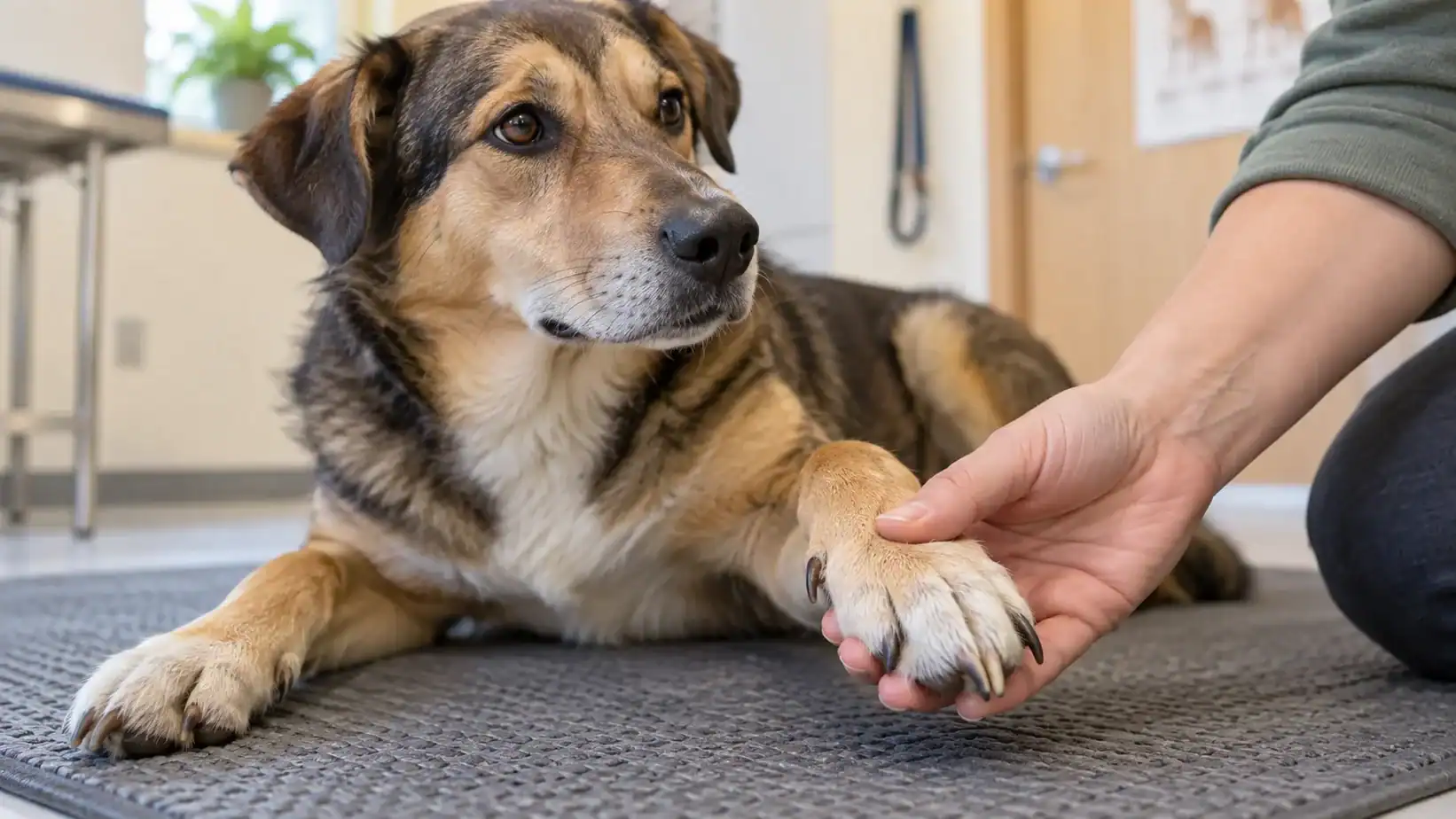
- Repeated licking or chewing of the paws
- Red, irritated skin on the face, feet, belly, groin, or under the tail
- Recurrent ear inflammation or infections
- Hair loss, hot spots, scabs, or darkened skin caused by chronic irritation
- Repeated vomiting, loose stool, diarrhea, gas, or abdominal discomfort

Some dogs have skin signs without digestive problems. Others have digestive signs with little or no itching. Recurrent bacterial or yeast infections may be secondary to the underlying inflammation and often need treatment while the food question is being investigated.[1]
Sudden facial swelling, hives, trouble breathing, weakness, or collapse is an emergency. Seek veterinary care immediately rather than trying a diet change at home.
Symptoms Do Not Identify the Ingredient
If a dog becomes itchy while eating a turkey recipe, turkey is only one possibility. The food may also contain chicken, beef, egg, dairy, wheat, soy, peas, fish oil with added flavoring, or another ingredient. The timing may be coincidental with flea exposure, pollen season, a skin infection, or an ear problem.
A useful first step is to write down everything your dog consumes. Include meals, toppers, table scraps, dental chews, training treats, flavored preventives, supplements, pill pockets, and anything another family member may share. This diet history helps your veterinarian choose a trial food that is truly different from past exposures.
Turkey Ingredients That Are Easy to Miss
Reading the front of the bag is not enough. Check the complete ingredient list and ask the manufacturer about vague terms when needed.

| Label Term | What It Means During a Turkey-Free Trial |
|---|---|
| Turkey, deboned turkey, turkey liver, or turkey heart | Direct turkey protein and should be excluded |
| Turkey meal or turkey by-product meal | Concentrated turkey ingredients that still contain protein |
| Turkey broth, stock, digest, or flavor | May contain turkey protein and should be excluded unless your veterinary team confirms otherwise |
| Poultry meal, poultry by-products, or poultry flavor | The species may not be clear, so contact the manufacturer |
| Turkey cartilage or collagen | May appear in joint supplements or chews and can contain turkey-derived protein |
| Turkey fat | Allergy is directed at protein, but purity and cross-contact vary, so most diagnostic trials exclude it unless the veterinarian approves it |
| “Natural flavor” | The source may not be obvious and may require manufacturer confirmation |
Ingredient lists can change. Recheck the label each time you buy food, treats, or supplements. For a diagnostic diet trial, an over-the-counter limited-ingredient food may also be exposed to undeclared proteins during manufacturing. A veterinary therapeutic diet is often preferred when avoiding cross-contact is important.[1]
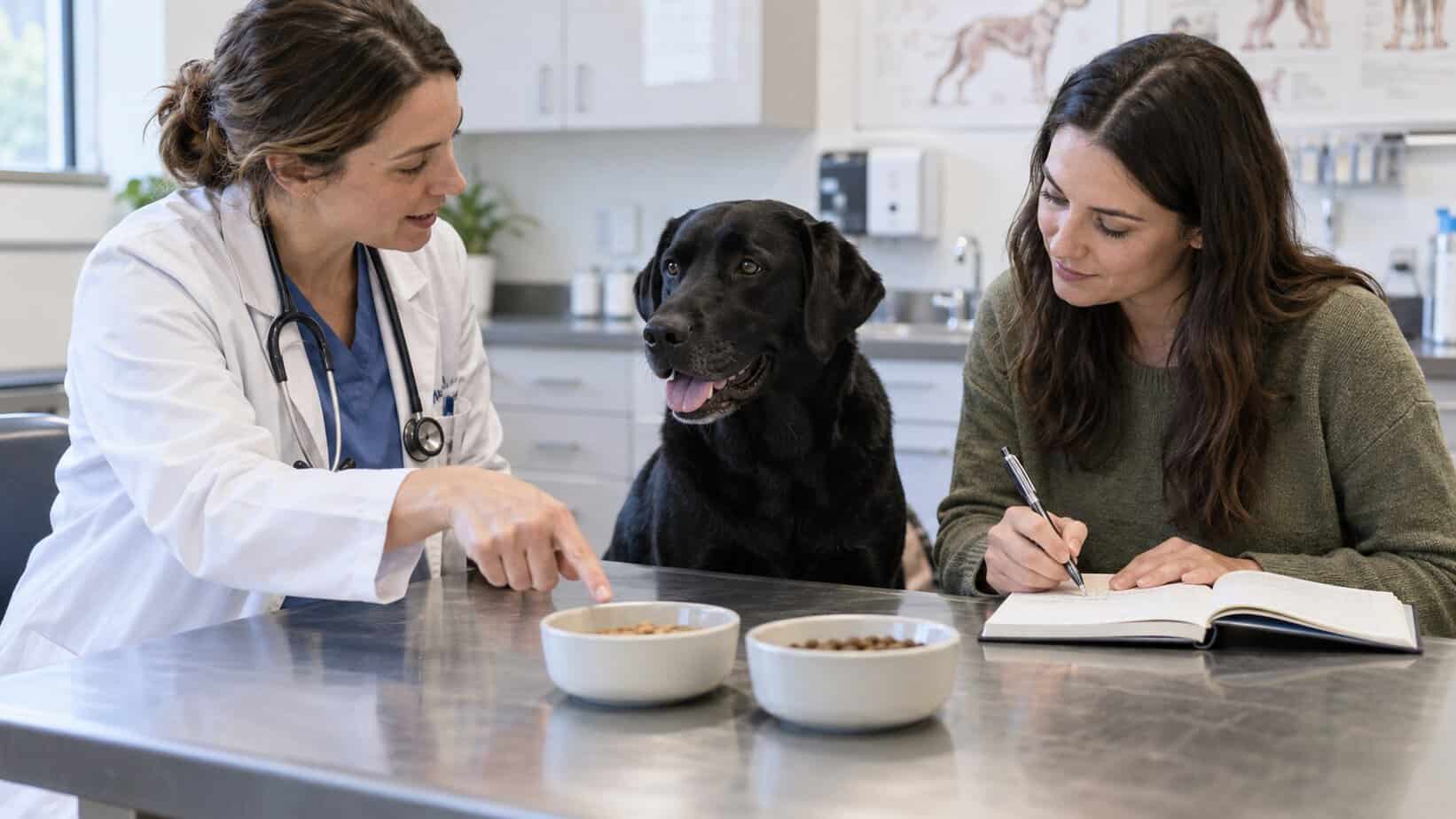
How a Veterinary Elimination Diet Trial Works
An elimination diet trial is not simply changing brands. The new diet must avoid ingredients your dog has eaten before or use proteins broken down enough to reduce recognition by the immune system.
1. Choose the Trial Diet
Your veterinarian may recommend one of three approaches:
- A veterinary therapeutic novel-protein diet based on a carefully reviewed diet history
- A veterinary therapeutic hydrolyzed-protein diet
- A complete home-prepared trial diet formulated for the individual dog by a veterinarian with nutrition expertise
Home-cooked meat and starch recipes found online are not automatically complete and balanced. They may be used for a short diagnostic period only when specifically formulated and supervised. Puppies, pregnant dogs, and dogs with other medical conditions need especially careful nutritional planning.
2. Remove Every Other Food Source
During the trial, the assigned diet must be the only food that crosses your dog’s lips. One flavored chew or a handful of another pet’s kibble can muddy the result. Review treats, chews, supplements, toothpaste, flavored medications, and preventives with your veterinarian before the trial begins.
Use pieces of the trial food as treats. Feed pets separately, secure trash, wash shared bowls, and make sure everyone in the household understands the plan. These small practical steps are often what make the trial useful.
3. Continue Long Enough to Judge the Result
Skin inflammation settles slowly. A review of elimination-diet studies found that more than 90 percent of dogs with food-responsive skin signs reached remission within eight weeks.[3] Some digestive signs may improve sooner, but an early change does not confirm turkey allergy. Follow the duration selected by your veterinarian, and do not stop the trial because the dog looks a little better after several days.
Keep a simple weekly log. Record itch level, paw licking, ear redness, stool quality, vomiting, medications, and any accidental exposures. Photos of the same skin areas can make gradual changes easier to see.
4. Treat Problems That Can Cloud the Trial
An ear infection, bacterial skin infection, yeast overgrowth, or flea infestation can keep a dog itchy even when the diet is helping. Your veterinarian may treat those problems at the start of the trial. Keep medications consistent unless your veterinarian changes them, since starting or stopping anti-itch treatment midway can make the response harder to interpret.
5. Perform a Planned Food Challenge
Improvement on the trial diet tells you that food may be involved. It does not identify turkey by itself. Confirmation requires a controlled challenge in which the previous food or a specific ingredient is reintroduced and the dog is watched for a return of signs.[1]
Challenges should be planned with your veterinarian. Do not deliberately re-expose a dog that previously had facial swelling, breathing trouble, collapse, or another severe reaction. If signs return after turkey is introduced and settle again when the elimination diet resumes, the evidence for turkey as a trigger becomes much stronger.
Tests That Cannot Confirm Turkey Allergy
Blood, saliva, and hair tests are marketed as convenient ways to identify food allergies. Current reviews have not found these tests reliable enough to diagnose adverse food reactions in dogs.[4] Skin testing is useful for selecting allergens for environmental allergy immunotherapy, but it does not replace a food elimination and challenge trial.
This can feel frustrating because a strict diet trial takes work. Still, it is better to spend those weeks gathering meaningful information than to build a long avoid-list from a test that may produce false positives. Unnecessary restriction can make feeding more expensive, less balanced, and much more complicated than it needs to be.
Can a Chicken-Allergic Dog Eat Turkey?
Maybe, but do not assume turkey is safe simply because it is a different bird. Laboratory research has found that antibodies from some chicken-reactive dogs can recognize turkey and duck proteins, which supports a potential for poultry cross-reactivity.[5] That study measured antibody recognition, not whether every dog would develop clinical signs after eating turkey.
The practical answer is individual. Some chicken-allergic dogs may tolerate turkey, while others may not. A veterinarian-guided diet history and challenge is safer and more informative than treating all poultry as interchangeable.
The same caution applies in reverse. A confirmed turkey allergy does not automatically prove that chicken, duck, goose, quail, or egg will cause a reaction. Test only what is useful for the dog’s long-term diet, and introduce one ingredient at a time after the initial trial is complete.
Is Turkey Meal, Turkey Fat, or Hydrolyzed Turkey Safe?
Turkey meal and turkey by-products still contain proteins, so they are not suitable for a dog with a confirmed turkey allergy.
Pure fat contains little protein, but pet-food fats may carry trace protein or encounter cross-contact during production. For a diagnostic trial, avoiding turkey fat is the clearest approach unless the supervising veterinarian has reviewed the specific product.
Hydrolyzed protein has been broken into smaller pieces. The degree of hydrolysis matters. Research using poultry-reactive sera found that extensive hydrolysis reduced antibody recognition more effectively than partial hydrolysis.[5] Even so, no hydrolyzed food is perfect for every dog. If a dog does not improve on one properly conducted trial, the veterinarian may reassess the diet choice, compliance, infections, parasites, and nonfood allergies before choosing the next step.
What to Feed After Turkey Allergy Is Confirmed
The best long-term food is one your dog tolerates, enjoys, and can eat as a complete and balanced diet. It does not need to carry a “hypoallergenic” marketing label. Your veterinarian may recommend staying with the successful therapeutic diet or transitioning to another carefully selected food after the trigger is confirmed.
Keep the plan simple:
- Avoid confirmed triggers rather than every ingredient that appeared on an unvalidated test.
- Choose a complete and balanced food appropriate for your dog’s life stage and medical needs.
- Check treats, chews, supplements, and flavored medications for the same trigger.
- Recheck labels because formulas can change.
- Contact your veterinarian if itching, ear disease, or digestive signs return. A relapse may come from accidental exposure, infection, fleas, environmental allergy, or a different medical problem.
Nutrition works best as part of the whole picture. Skin health, parasite control, ear care, infection treatment, digestion, and a balanced diet all influence how comfortable a dog feels. Removing turkey helps only when turkey is truly part of the problem.
Final Thoughts
A turkey allergy is possible, but symptoms alone cannot diagnose it. Start with a complete diet history and veterinary exam, then use a strict elimination diet and planned challenge to separate a true food trigger from look-alike problems. That approach protects your dog from unnecessary restrictions and gives you a feeding plan based on evidence instead of guesswork.
Frequently Asked Questions
You cannot tell from symptoms alone. A veterinarian first considers infections, parasites, environmental allergies, and other diet ingredients. A strict elimination diet followed by a controlled turkey challenge provides the strongest practical evidence.
Not universally. Turkey may function as a novel protein for a dog that has never eaten it, but many dogs have already encountered turkey in foods, treats, or supplements. Any dietary protein can potentially become a trigger.
A food allergy can contribute to ear inflammation, and inflamed ears may develop secondary yeast or bacterial infections. Turkey cannot be identified as the cause from an ear infection alone. The ear still needs an examination and appropriate treatment.
Many veterinary diet trials for skin signs last about eight weeks, although the exact plan depends on the dog. The clock starts when the dog is fully on the trial diet and receiving no unapproved foods, treats, chews, supplements, or flavored medications.
Yes. Turkey and chicken are distinct proteins, even though cross-reactivity may occur. A reaction to one does not automatically prove a reaction to the other. Test each ingredient only under a veterinarian-guided plan.
References
- Mueller, R. S., & Unterer, S. (2018). Adverse food reactions: Pathogenesis, clinical signs, diagnosis and alternatives to elimination diets. The Veterinary Journal, 236, 89–95. https://doi.org/10.1016/j.tvjl.2018.04.014
- Mueller, R. S., Olivry, T., & Prélaud, P. (2016). Critically appraised topic on adverse food reactions of companion animals (2): Common food allergen sources in dogs and cats. BMC Veterinary Research, 12, 9. https://doi.org/10.1186/s12917-016-0633-8
- Olivry, T., Mueller, R. S., & Prélaud, P. (2015). Critically appraised topic on adverse food reactions of companion animals (1): Duration of elimination diets. BMC Veterinary Research, 11, 225. https://doi.org/10.1186/s12917-015-0541-3
- Mueller, R. S., & Olivry, T. (2017). Critically appraised topic on adverse food reactions of companion animals (4): Can we diagnose adverse food reactions in dogs and cats with in vivo or in vitro tests? BMC Veterinary Research, 13, 275. https://doi.org/10.1186/s12917-017-1142-0
- Bexley, J., Kingswell, N., Olivry, T., & Mueller, R. S. (2017). Extensive protein hydrolyzation is indispensable to prevent IgE-mediated poultry allergen recognition in dogs and cats. BMC Veterinary Research, 13, 251. https://doi.org/10.1186/s12917-017-1183-4
A Note About Your Dog’s Health
This information provides general education and does not replace an examination, diagnosis, or individualized advice from your veterinarian. Contact a veterinary professional if you are concerned about your dog’s symptoms.
About the Author
Lindsie Parks B.S., CRDNS
Healthy Happy Dogs combines practical animal-care experience with responsible, evidence-informed guidance. Veterinary review is identified on individual articles when applicable.