
Category: Herbs For Dogs

  • Can You Use Witch Hazel on Dogs? Safety and Uses

    Can You Use Witch Hazel on Dogs? Safety and Uses

    By Dr. Candy Akers, DVM

    You can use a simple alcohol-free, fragrance-free witch hazel sparingly on a small patch of intact dog skin, but it is not my first choice for most problems. Do not use standard alcohol-based witch hazel on your dog. Keep it away from open wounds, eyes, the mouth, and any spot your dog can lick. Do not pour it into the ear canal.

    The safest choice depends on three things: the exact formula, the part of the body, and why the skin is irritated. A tiny wipe on healthy skin is very different from treating a hot spot, wound, or painful ear. When a problem is persistent or looks infected, soothing the surface is not enough. Your dog needs the cause addressed.

    What Is Witch Hazel?

    Witch hazel is a plant extract made from Hamamelis virginiana. It is an astringent, which means it can temporarily tighten and dry surface tissue. That drying effect is why some people use it on minor skin irritation.

    The name on the front of the bottle does not tell you the whole story. Many human witch hazel products contain 14 percent alcohol and are labeled for external use only. Those labels describe human over-the-counter use, not veterinary approval for dogs. [1]

    Why the Formula Matters

    For a dog, look beyond the words “witch hazel” and read the complete ingredient list.
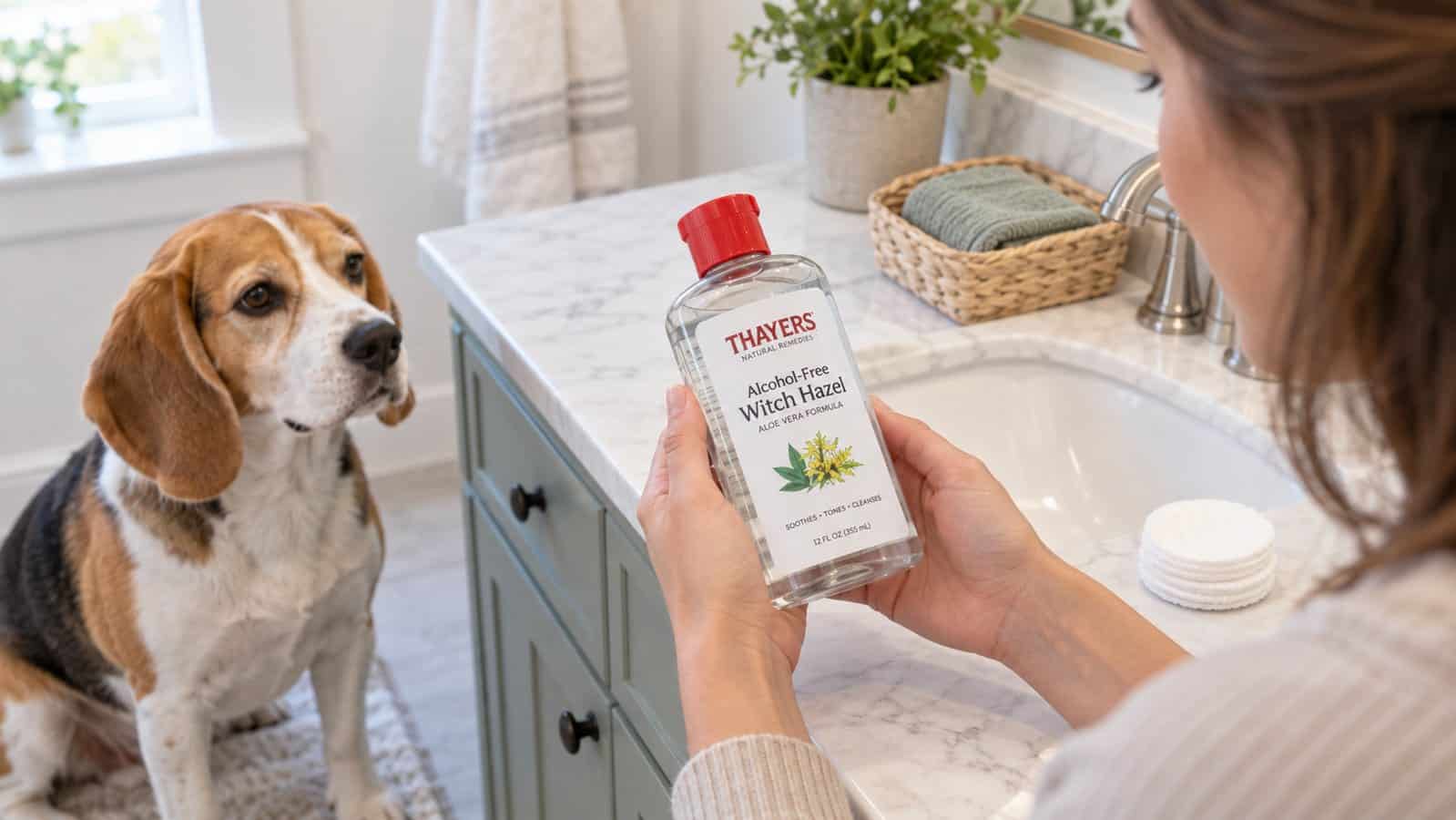
    Dog owner reading an alcohol-free witch hazel product label beside a beagle

    A product is a poor choice if it contains:

    • Alcohol
    • Fragrance
    • Essential oils
    • Menthol
    • Multiple active ingredients
    • A warning that does not fit the area you plan to treat

    Alcohol can sting and dry irritated skin. It also creates an ingestion concern when a dog licks the area. Alcohols can cause serious toxicosis in companion animals, with effects that may include vomiting, weakness, poor coordination, low body temperature, breathing problems, and nervous-system depression. [2]

    Even an alcohol-free product can irritate a sensitive dog. Preservatives, botanicals, and fragrances all matter. “Natural” describes where an ingredient came from. It does not guarantee that every formula is gentle or appropriate.

    Is Witch Hazel Safe for Dogs?

    Witch hazel is not universally safe or unsafe. The answer changes with the location and the condition of the tissue.

    Here is my practical guide:

    • Small area of intact skin: A simple alcohol-free, fragrance-free product may be tried sparingly after a patch test.
    • Intact paw surface: Water is usually better for cleaning. Limited witch hazel use may be reasonable if the skin is healthy and licking can be prevented.
    • Cracked or bleeding paw: Do not use it.
    • Open wound, puncture, or bite: Do not use it.
    • Healthy outer ear flap: A barely damp wipe may be reasonable on intact skin, while keeping liquid out of the canal.
    • Ear canal or painful ear: Do not use it without veterinary direction.
    • Eyes, nose, mouth, genitals, or other mucous membranes: Do not use it.
    • Large, inflamed, infected, or very itchy area: Skip the home remedy and arrange an examination.

    There is also an evidence question. A systematic review of medicinal plants in canine dermatology evaluated several herbs with promising topical properties, but witch hazel was not one of the plants assessed. That does not prove witch hazel is harmful. It does mean we should not turn human uses or traditional uses into strong canine treatment claims. [3]

    How to Use Witch Hazel on a Dog

    If your dog has a very small area of intact skin and you decide to try witch hazel, keep the method simple and conservative.

    Read the Label First

    Choose an alcohol-free, fragrance-free formula with a short ingredient list. Do not use a combination product with essential oils or other active ingredients. Avoid standard distilled witch hazel that lists alcohol.

    Patch Test and Apply Sparingly

    Try one small spot first.

    1. Gently clean the area with cool water and pat it dry.
    2. Put a small amount of witch hazel on a soft cotton pad. Do not pour or soak the skin.
    3. Dab the intact skin once.
    4. Watch for increased redness, dryness, swelling, pain, or scratching.
    5. Stop and rinse with cool water if the area looks or feels worse.

    There is no single dilution ratio that makes every product safe. Formulas vary, and irritated tissue varies. When the label is complicated or the skin is damaged, choose another option.

    Prevent Licking

    Keep your dog beside you until the area is dry. Wipe away any excess and redirect licking with calm supervision or a brief activity. If you cannot keep your dog from licking the spot, do not apply witch hazel there.

    Witch Hazel for Itchy Skin, Bites, and Hot Spots

    A cool-water rinse or cool compress is the gentlest place to start for a small, mildly itchy area. It can remove pollen or surface debris without adding another ingredient.

    Intact Itchy Skin and Insect Bites

    An alcohol-free witch hazel may give temporary surface relief on one small patch of intact skin. Use very little, keep it away from the face and genitals, and stop if it stings or dries the skin.

    Temporary relief is not the same as treatment. Itching can come from fleas, mites, allergies, contact irritation, bacterial or yeast overgrowth, pain, or another condition. If the itch returns, spreads, or interrupts sleep, your veterinarian should help identify the cause.

    Hot Spots and Ongoing Itch

    Do not rely on witch hazel for a hot spot. These moist, painful areas can worsen quickly, especially when licking and scratching continue. Spreading redness, wetness, odor, discharge, hair loss, or pain are reasons to seek veterinary care.

    A whole-dog approach looks beyond the red patch. Diet, environmental allergies, parasites, moisture, grooming products, and underlying health can all affect the skin. The goal is not only to quiet the symptom. It is to understand why the skin keeps asking for attention.

    Can You Use Witch Hazel on Dog Paws?

    For routine paw cleaning, plain water is usually enough. Rinse away dirt, salt, or pollen, then dry carefully between the toes.

    Dog owner rinsing and drying a healthy dog paw with plain water

    Intact Paw Pads

    If one small area of an intact pad is mildly irritated, a simple alcohol-free witch hazel can be tried sparingly after a patch test. Keep your dog from licking it and discontinue use if the pad becomes dry or tender.

    Cracked, Bleeding, or Inflamed Paws

    Do not put witch hazel on cracked pads, raw skin between the toes, a puncture, or a bleeding nail bed. Gently rinse the paw and check for thorns, burrs, glass, foxtails, or other debris that is easy to see. Do not dig into the tissue.

    Limping, swelling, discharge, heat, odor, bleeding, or constant licking deserves veterinary attention. Paw problems are often more painful than they first appear.

    Can You Use Witch Hazel on Dog Wounds?

    Do not use witch hazel on an open, deep, bleeding, or infected wound. It should not be described as a wound sterilizer, and there is not good canine evidence that it speeds healing.

    Minor Surface Scrapes

    For a very shallow scrape, gently flush away visible dirt with clean water or sterile saline. Pat around the area with clean gauze and prevent licking. Small scrapes still need monitoring because fur can hide swelling, discharge, and spreading redness.

    Open, Deep, or Infected Wounds

    For active bleeding, apply gentle, steady pressure with clean gauze. Protect the wound from further contamination and arrange veterinary care for punctures, bites, deep cuts, embedded debris, persistent bleeding, severe pain, swelling, pus, odor, or a dog who seems unwell. Veterinary wound management focuses on controlling contamination and inflammation while protecting the tissue from further trauma. [4]

    Do not scrub a wound or keep trying household products when the tissue is painful. Gentle first aid and timely evaluation are kinder than repeated experimentation.

    Can You Put Witch Hazel in a Dog’s Ears?

    Do not pour witch hazel into your dog’s ear canal. Witch hazel is not a treatment for an ear infection, and liquid placed in a painful ear can make irritation worse.

    Dog owner gently wiping a Labrador's healthy outer ear flap with a cotton pad

    The Outer Ear Flap

    If the visible ear flap is healthy and intact, a barely damp cotton pad with a simple alcohol-free product may be used to wipe a small dirty area. Keep the pad at the outer flap. Do not let liquid drip toward the canal.

    The Ear Canal and Ear Infections

    Ear cleaning can be helpful when the product and schedule fit the dog, but over-cleaning can trigger irritation and otitis. [5] The eardrum also cannot be assessed safely at home, which is one reason not to improvise with ear-canal products.

    Head shaking, scratching, pain, redness, odor, discharge, swelling, a head tilt, or balance changes call for a veterinary examination. Recurring ear trouble may be linked to allergy, trapped moisture, anatomy, parasites, or another underlying condition. In severe or stubborn cases, a veterinarian may need to examine a sample under the microscope or perform a culture.

    When to Stop and What to Use Instead

    Stop using witch hazel if your dog develops more redness, dryness, swelling, pain, scratching, or licking. Rinse the area gently with cool water.

    If your dog licks an alcohol-containing product or develops drooling, vomiting, diarrhea, weakness, wobbliness, unusual sleepiness, tremors, or breathing changes, contact a veterinarian or animal poison service promptly. Bring the bottle or take a clear photo of the label.

    Gentler Alternatives by Situation

    Match the alternative to the problem:

    • Mild irritation on intact skin: Cool water or a cool compress
    • Pollen or dirt on paws: Plain water followed by careful drying
    • Superficial scrape: Clean water or sterile saline
    • Routine ear care: A dog-specific ear cleaner recommended for your dog’s ears
    • Persistent itch, hot spot, painful ear, or suspected infection: Veterinary examination
    • Recurrent skin or ear trouble: A plan that investigates allergies, parasites, moisture, diet, and other underlying factors

    Gentler does not mean ignoring a problem. It means using the least irritating option while watching your dog closely and getting help when the pattern suggests more than a minor surface issue.

    Final Thoughts

    Witch hazel has a narrow place in dog care. A tiny amount of a simple alcohol-free formula on intact external skin is different from using it on a wound, in an ear, or over a large irritated area.

    My practical rule is to start with the gentlest option and stay curious about the cause. If the skin is broken, the ear is painful, the problem keeps returning, or your dog cannot stop licking, skip witch hazel and call your veterinarian. A thoughtful next step is more valuable than a stronger home remedy.

    Frequently Asked Questions

    You may try a very small amount of alcohol-free, fragrance-free witch hazel on one patch of intact skin after a patch test. Cool water is gentler and often a better first choice. Do not use witch hazel on raw, wet, infected, or widespread irritation. Persistent itch needs a veterinary evaluation.

    Only consider it on intact skin, use it sparingly, and prevent licking. Do not apply it to cracked pads, bleeding tissue, a puncture, or inflamed skin between the toes. Plain water is usually best for routine paw cleaning.

    Do not pour witch hazel into the ear canal. A barely damp wipe may be used on healthy, intact outer-ear skin, but an ear with pain, odor, discharge, redness, or head shaking should be examined by a veterinarian.

    Remove the product, check the ingredient label, and note how much may have been swallowed. Call your veterinarian or an animal poison service if the product contains alcohol, the amount is uncertain, or your dog has vomiting, weakness, wobbliness, unusual sleepiness, or another symptom.

    Puppies are small, may have sensitive skin, and are quick to lick topical products. Avoid home experimentation and ask your veterinarian for an age-appropriate option, especially when the skin is broken or the puppy has ongoing itch.

    References

    1. DailyMed. (2026). Witch hazel liquid: Drug label information. U.S. National Library of Medicine. https://dailymed.nlm.nih.gov/dailymed/drugInfo.cfm?setid=0098c983-c518-4a14-8635-c7bdde7bff4f
    2. Gwaltney-Brant, S. M. (2025). Toxicoses from alcohols in animals. MSD Veterinary Manual. https://www.msdvetmanual.com/toxicology/toxicoses-from-household-hazards/toxicoses-from-alcohols-in-animals
    3. Tresch, M., Mevissen, M., Ayrle, H., Melzig, M., Roosje, P., & Walkenhorst, M. (2019). Medicinal plants as therapeutic options for topical treatment in canine dermatology? A systematic review. BMC Veterinary Research, 15, 174. https://pmc.ncbi.nlm.nih.gov/articles/PMC6537371/
    4. Winkler, K. P. (2024). Initial wound management in small animals. Merck Veterinary Manual. https://www.merckvetmanual.com/emergency-medicine-and-critical-care/wound-management-in-small-animals/initial-wound-management-in-small-animals
    5. Nuttall, T., & Cole, L. K. (2004). Ear cleaning: The UK and US perspective. Veterinary Dermatology, 15(2), 127-136. https://pubmed.ncbi.nlm.nih.gov/15030561/
  • Can Dogs Eat Cilantro? Expert Opinion on Canine Nutrition

    Can Dogs Eat Cilantro? Expert Opinion on Canine Nutrition

    As dog owners, we want nothing but the best for our furry friends. We make sure they have the best food, the most comfortable beds, and plenty of toys to play with. But when it comes to feeding our dogs human food, we have to be careful. While some foods are safe for dogs to consume in moderation, others can be toxic. One food that often gets overlooked when it comes to feeding dogs is cilantro. Cilantro is a popular herb used in many different cuisines around the world. But can dogs eat cilantro? The short answer is yes! Dogs can eat cilantro in moderation.

    Knowing what foods are safe for your dog to eat is incredibly important. Feeding your dog something that is toxic or harmful can lead to serious health problems or even death. As responsible dog owners, it’s our job to research before adding any new food items into their diet. So let’s dive into the world of cilantro and dogs. Can they eat this tasty herb? And if so, what are the benefits?

    can dogs eat cilantro

    What is Cilantro?

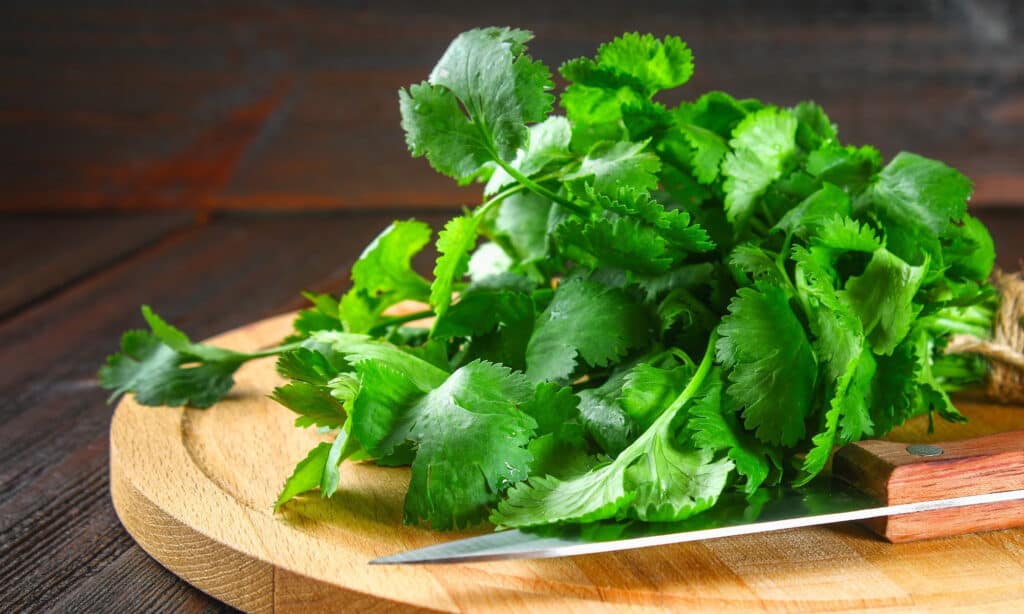
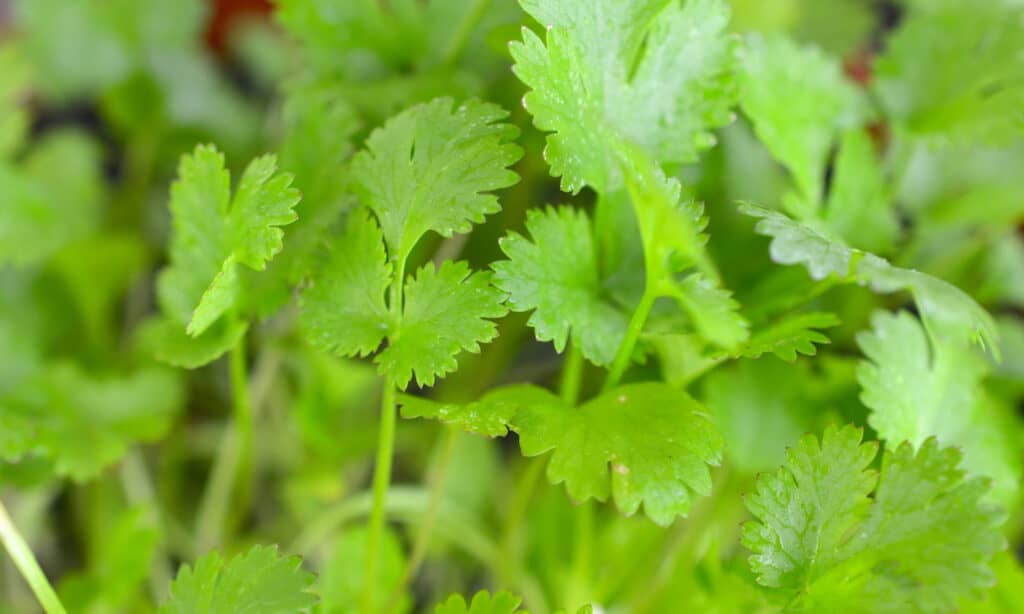
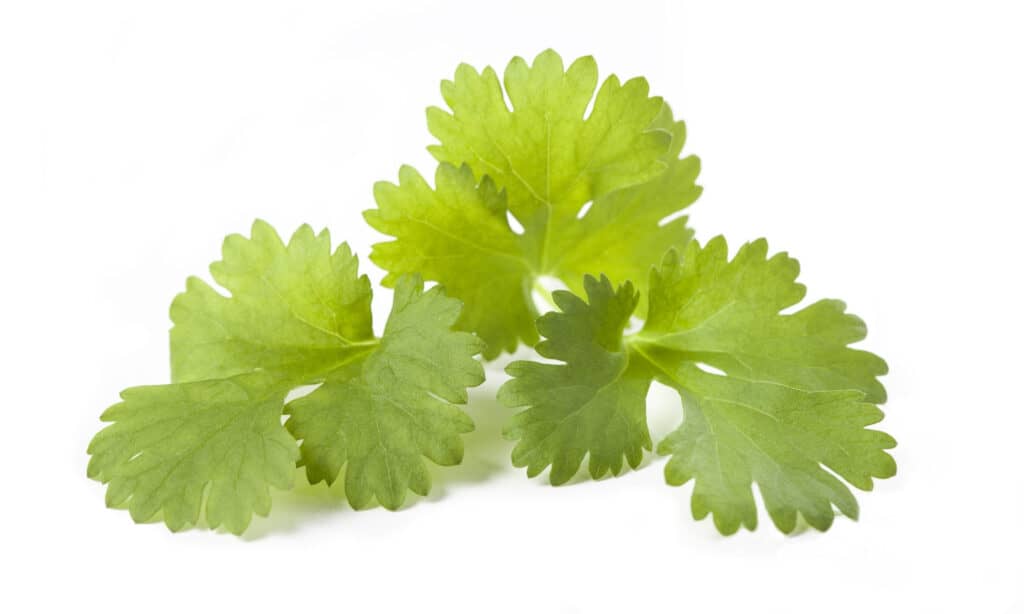
    Cilantro is a leafy green herb that belongs to the same family as parsley and carrots. It has a distinct taste that some people describe as citrusy or slightly soapy. The plant is also known as coriander in some parts of the world, although in North America, coriander usually refers to the seeds of the cilantro plant rather than its leaves.

    The cilantro plant has been cultivated for thousands of years and has a long history of use in both cooking and medicine. It is native to regions of Europe, Asia, and Africa but is now grown all over the world.

    Definition and Brief History

    Cilantro gets its name from the Spanish word for coriander, which comes from the Greek word “koris,” meaning bedbug. This is because the leaves of the cilantro plant have a slightly sweet aroma that some people find similar to the scent of bedbugs.

    Cilantro has been used in traditional medicines around the world for centuries. In ancient Egypt, it was used as a medicine and was found in tombs dating back to 1000 BC. In traditional Chinese medicine, it was used to treat stomach problems and relieve pain.

    Nutritional Value for Humans

    Cilantro is low in calories but high in vitamins and minerals. A single cup (about 4 grams) of chopped cilantro contains

    • Vitamin K: 258% of the recommended daily intake (RDI)
    • Vitamin C: 6% RDI
    • Calcium: 4% RDI – Iron: 4% RDI
    • Potassium: 3% RDI In addition to these important nutrients, cilantro contains antioxidants that may help protect against cellular damage caused by free radicals.

    Overall, cilantro is an excellent addition to your diet if you’re looking for a low-calorie way to boost your intake of vitamins and minerals. Plus, it adds flavor and freshness to a variety of dishes.

    cilantro for dogs

    Can Dogs Eat Cilantro?

    If you’re a dog owner and love to cook with fresh herbs, you might be wondering if cilantro is safe for your furry friend to eat. The good news is that cilantro is not toxic to dogs, and they can eat it in moderation. However, before adding it to your dog’s diet, there are some things you should know.

    Yes, but in moderation

    Cilantro contains many beneficial nutrients that can contribute to your dog’s health. It is rich in vitamins A and C, antioxidants, and anti-inflammatory properties.

    However, like with any food, too much of a good thing can be bad for dogs. Overconsumption of cilantro can lead to digestive issues such as diarrhea or vomiting.

    It’s important to note that while cilantro itself is safe for dogs, some of the ways it may be prepared or served may not be. For example, if cilantro is mixed with ingredients that are harmful to dogs like onions or garlic or served with a high-fat content food like cheese or bacon bits – this could cause an upset stomach.

    Benefits of Cilantro for Dogs

    Cilantro has several health benefits for dogs when consumed in moderation. One of the most noteworthy benefits of this herb is its ability to support dental hygiene by combating bad breath and tackling gingivitis. It’s also believed that incorporating cilantro into their diet may help strengthen their immune system due to its antioxidant properties which protect cells from damage caused by free radicals.

    This herb has antibacterial compounds which may play a role in preventing infection by killing off harmful bacteria in the gut. Overall adding small amounts of fresh cilantro leaves into your dog’s meals occasionally could have multiple benefits as long as precautions are taken when doing so!

    is cilantro good for dogs

    How to Serve Cilantro to Dogs

    Cilantro can be a tasty and healthy addition to your dog’s diet when served in moderation. There are a few ways to serve cilantro to dogs, including chopped or pureed as a topping or mix-in for dog food and homemade dog treats with cilantro as an ingredient.

    Chopped or Pureed as a Topping or Mix-In for Dog Food

    If you want to add some variety and flavor to your dog’s regular meals, you can chop up some fresh cilantro leaves and sprinkle them on top of their food. Alternatively, you can blend the cilantro into a puree and mix it in with their food.

    This is an easy way to give your pup the benefits of cilantro without having to make any major changes to their diet. When adding cilantro as a topping or mix-in for your dog’s food, it is important not to overdo it.

    Too much cilantro can upset your dog’s stomach and cause digestive issues such as vomiting and diarrhea. A general rule of thumb is that 1-2 teaspoons of chopped or pureed cilantro per day is safe for most dogs.

    should i give my dog cilantro

    Homemade Dog Treats with Cilantro as an Ingredient

    If you enjoy making homemade treats for your furry friend, consider incorporating some fresh cilantro into the recipe. Cilantro can add a unique flavor and aroma that many dogs love, making it a great choice for homemade snacks. A simple recipe for homemade cilantro treats involves combining 1 cup of flour, 1 egg, ¼ cup of fresh chopped cilantro leaves, and enough water to form a dough.

    Roll out the dough on a floured surface and use cookie cutters to create fun shapes. Bake at 350 degrees Fahrenheit for 15-20 minutes, or until golden brown.

    Remember to always supervise your dog while they are enjoying homemade treats and to store any leftovers in an airtight container in the fridge. Homemade treats should only be given in moderation as they can contribute to weight gain if overfed.

    Serving cilantro to your dog can be a healthy and tasty addition to their daily diet. Whether you choose to add it as a topping or mix-in for their regular meals or incorporate it into homemade treats, make sure you do so in moderation and always supervise your dog while they are eating.

    If you are unsure whether your dog will react well to cilantro or have any concerns about their diet, it is always best to consult with your veterinarian before making any changes. With a little bit of research and creativity, you can provide your pup with a variety of healthy and flavorful foods that they will love!

    Precautions When Feeding Cilantro to Dogs

    Possible Allergic Reactions in Some Dogs

    While cilantro is generally safe for dogs to eat, some dogs may be allergic to it. In fact, it’s not uncommon for dogs to have allergies to certain types of food.

    Signs of a cilantro allergy can include itchiness, skin rashes, and digestive issues like vomiting or diarrhea. If your dog shows any of these symptoms after eating cilantro, you should stop feeding it immediately and consult with your veterinarian.

    It is always recommended that you give your dog a small amount of any new food first before giving them more. This way, you can watch out for any signs of an allergic reaction without putting your pup at risk.

    Overconsumption Can Lead to Digestive Issues

    While cilantro is safe in moderation, too much of anything can be harmful – even good things like healthy herbs! Overconsumption of cilantro can lead to digestive issues in dogs such as bloating and gas. To avoid overfeeding cilantro or any other herb to your dog, make sure you are giving them the right portion size based on their weight and size.

    A good rule of thumb is that treats should make up no more than 10% of your dog’s daily calorie intake. It’s important also not to get carried away with how much fresh herbs or spices we add to our homemade dog meals without researching which amounts are beneficial and which ones can be harmful.

    Cooked or Raw Cilantro?

    Some pet owners prefer serving cooked cilantro as they believe it’s easier on their pet’s digestive system compared with raw leaves. Cooked leaves may have fewer essential oils that some animals find difficult to digest. However, there isn’t a clear nutrition benefit either way – both cooked or raw will still provide a range of vitamins and minerals for your furry friend.

    Avoid Cilantro with Added Spices

    Cilantro is a healthy herb but some packaged cilantro products can contain added spices or salt. These can be harmful to dogs, especially if they are already getting enough of these ingredients from their regular diet. When selecting cilantro, make sure you read the label and ingredients list before buying it to ensure that it’s free of added spices or preservatives.

    Consult with Your Vet

    If you’re still unsure about whether or not your dog can eat cilantro, consult your veterinarian. They’ll be able to advise you on which herbs are best for your dog and how much they should be eating based on their age, breed, weight, and overall health. Remember that every dog is different!

    Other Herbs Safe for Dogs to Eat

    Parsley

    Parsley is a popular herb that is safe for dogs to eat. It contains vitamins A, C, and K, as well as calcium and iron.

    Parsley can help freshen your dog’s breath, and some studies suggest that it may have anti-cancer properties. You can chop up parsley and add it to your dog’s food or use it as a garnish.

    Basil

    Basil is another herb that is safe for dogs to eat. It contains antioxidants and has anti-inflammatory properties, which can be helpful for dogs with joint pain or other inflammatory conditions.

    Basil can also help improve digestion and relieve gas in dogs. You can add chopped basil to your dog’s food or use it in homemade dog treats.

    can dogs have basil

    Thyme

    Thyme is an herb that has a strong flavor and aroma. It contains thymol, which has antiseptic properties that can help fight infections in dogs.

    Thyme also has anti-inflammatory properties and may be helpful for dogs with respiratory issues, such as coughing or bronchitis. You can add fresh thyme leaves to your dog’s food or make a tea out of thyme leaves and give it to your dog if they have respiratory issues.

    Oregano

    Oregano is an herb that is commonly used in Italian cuisine. It contains antioxidants and has antibacterial properties that may be helpful in preventing infections in dogs.

    Oregano also has anti-inflammatory properties that may help relieve pain in dogs with arthritis or other inflammatory conditions. You can sprinkle dried oregano on your dog’s food or use it in homemade dog treats.

    can dogs eat oregano

    Rosemary

    Rosemary is an herb that has a strong aroma and flavor. It contains antioxidants and has anti-inflammatory properties that can be helpful for dogs with joint pain or other inflammatory conditions.

    Rosemary may also help improve digestion and stimulate the appetite in dogs. You can add fresh rosemary leaves to your dog’s food or use it in homemade dog treats.

    There are many herbs that are safe for dogs to eat, including parsley, basil, thyme, oregano, and rosemary. These herbs not only add flavor to your dog’s food but also have various health benefits that can improve your dog’s overall well-being.

    However, it is important to remember that every dog is different and may have different dietary needs or restrictions. Before adding any new foods to your dog’s diet, consult with your veterinarian to ensure that they are safe for your furry friend.

    is cilantro toxic to dogs

    Conclusion

    Cilantro can be a safe and healthy addition to your dog’s diet when given in moderation. Cilantro is packed with nutrients such as antioxidants and vitamins A and C, which benefit your dog’s immune system, eyesight, and skin health.

    When feeding cilantro to your dog, it is important to prepare it properly, either chopped or pureed as a topping or mix-in for their regular food or as an ingredient in homemade treats. While cilantro is safe for most dogs to eat, it is important to know that some dogs may have allergic reactions to the herb.

    Keep an eye on your dog’s behavior after consuming cilantro, especially if they are new to the herb. Overconsumption of cilantro can also lead to digestive issues such as diarrhea or vomiting.

    If you are considering introducing any new food into your dog’s diet, it is crucial to research beforehand and check with your veterinarian before incorporating it. Additionally, always remember that every dog is different and may react differently even to foods considered safe.

    As a dog owner, you must prioritize your pet’s health and well-being. Knowing what to feed your dog and what to avoid can be overwhelming. However, taking the time to research and educate yourself on your pet’s dietary needs is a crucial part of responsible pet ownership.

    By incorporating new foods like cilantro into your dog’s diet in moderation and with proper preparation, you can provide them with added nutrients that benefit their overall health. Remember, our furry friends rely on us to make the best choices for their health, so let’s do our best to keep them happy and healthy!

    ~Sheena