PRACTICAL PREVENTIVE CARE
Dog Dental Health Guide
Build a realistic home-care routine, understand common causes of bad breath, and recognize when your dog’s mouth needs veterinary attention.

START WITH A ROUTINE YOUR DOG CAN TOLERATE
Consistency matters more than a complicated plan.
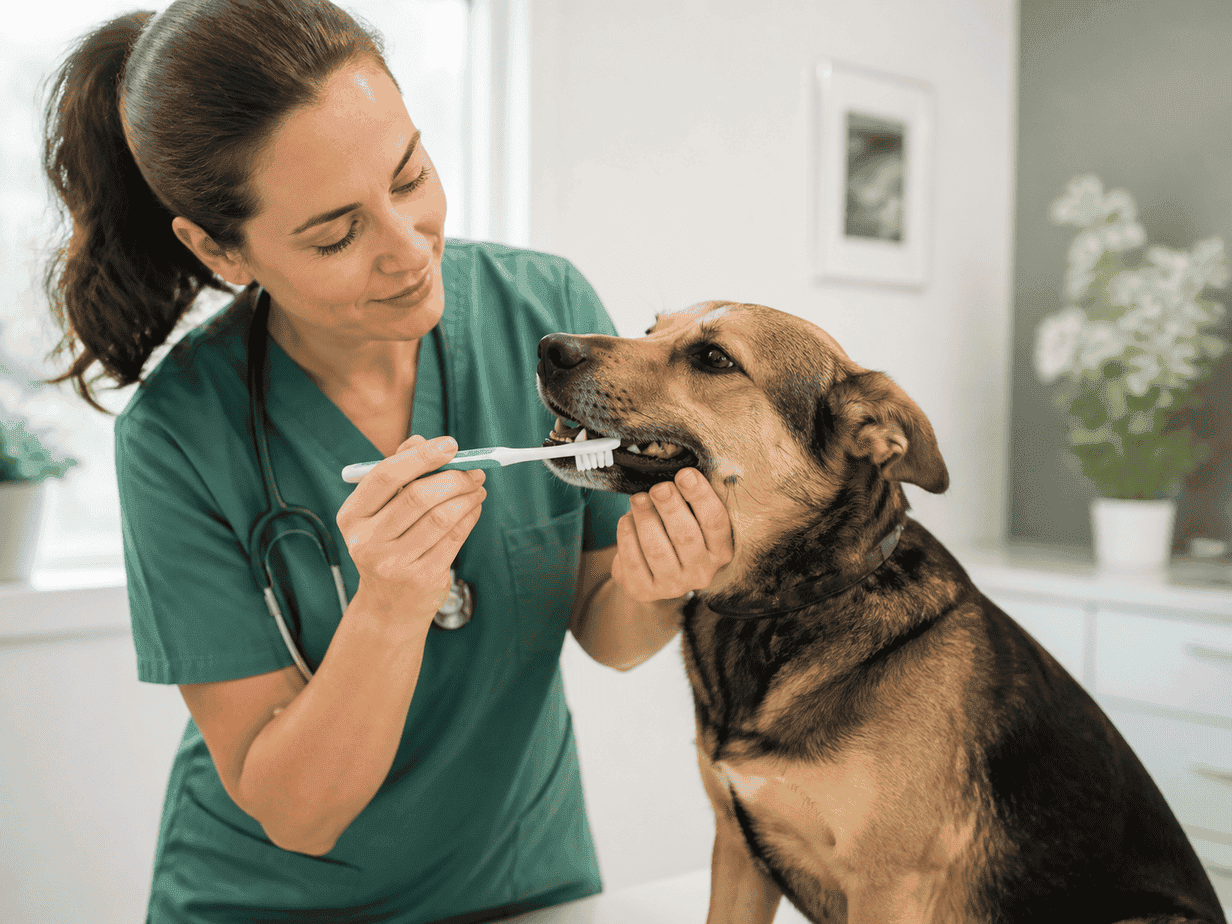
Dental care works best when it is gradual, comfortable, and matched to your dog’s health and temperament. Home care can support the mouth, but it cannot remove established disease beneath the gumline.
Look inside regularly
Watch for red gums, bleeding, swelling, broken teeth, heavy buildup, drooling, or changes in chewing.
Introduce care slowly
Begin with short, positive sessions and use products made specifically for dogs.
Notice behavior changes
Reluctance to eat, dropping food, pawing at the mouth, or sudden irritability can signal discomfort.
FEATURED DENTAL GUIDANCE
Start with the concern you are trying to solve.
These four guides cover daily care, helpful product choices, and common breath concerns so you can choose a sensible next step.
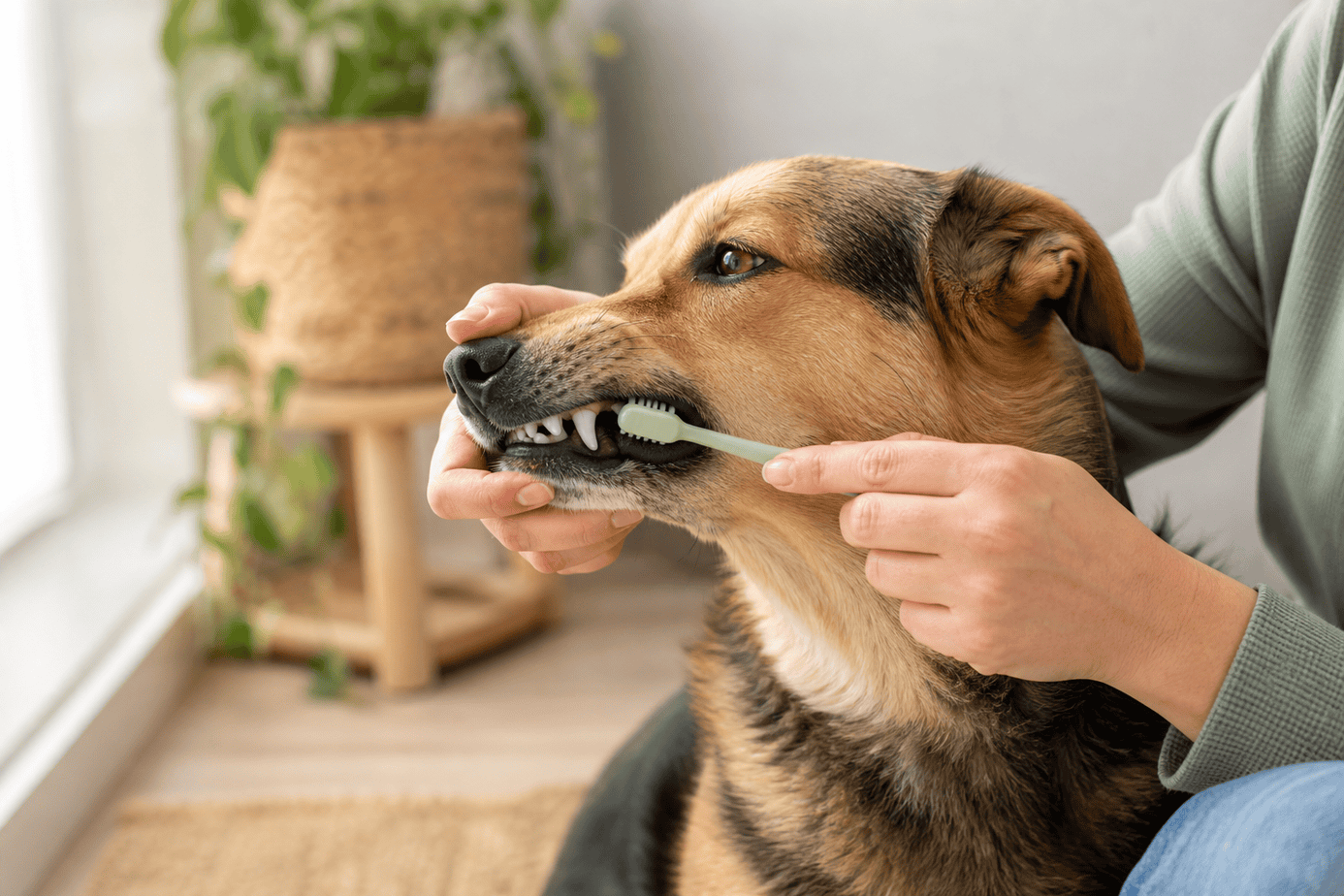
Integrative Dog Dental Health
Build a whole-dog plan that combines observation, tooth brushing, appropriate products, nutrition, and professional care.
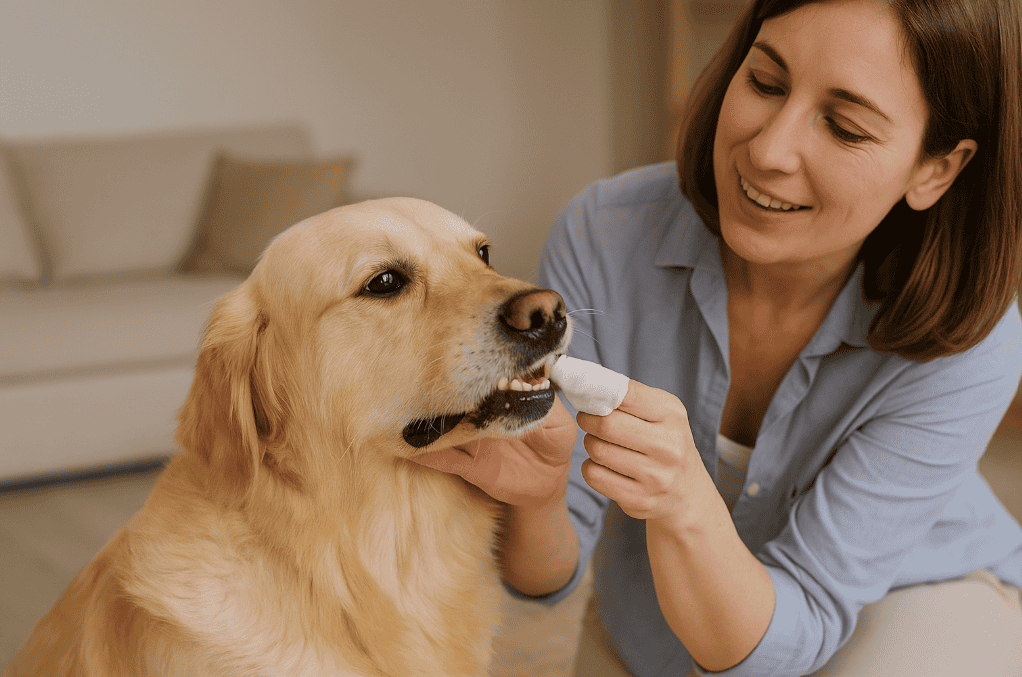
Dental Wipes for Dogs
Learn how dental wipes are used, what they can and cannot do, and how to compare practical options.

Why Does Dog Breath Smell Like Fish?
Compare dental causes with other possible sources of a fishy odor and know when an examination is useful.

Can Yogurt Help Dog Bad Breath?
Understand the limits of food-based breath remedies and why persistent odor needs a cause-focused approach.
A REALISTIC HOME-CARE PLAN
Build comfort one step at a time.
If your dog’s mouth is painful, bleeding, or difficult to handle, pause home care and ask your veterinarian how to proceed.
Begin with touch
Help your dog accept brief handling around the lips and muzzle before adding a brush or wipe.
Use dog-safe products
Choose toothpaste and dental products labeled for dogs. Human toothpaste may contain inappropriate ingredients.
Keep sessions short
Focus on calm repetition and the outer tooth surfaces rather than forcing a long session.
Schedule dental exams
Professional assessment is still important because disease can develop below the gumline.
COMMON QUESTIONS
Dog dental health FAQs
How often should I brush my dog’s teeth?
Daily brushing is often considered the most effective home routine, but your veterinarian can help you choose a realistic schedule and technique based on your dog’s mouth and tolerance.
Can dental wipes replace tooth brushing?
Wipes may help remove some material from accessible tooth surfaces, but they do not clean every area and cannot treat established dental disease.
Is bad breath normal for dogs?
Persistent or worsening odor can be associated with plaque, gum disease, damaged teeth, infection, diet, or a problem elsewhere in the body. It deserves attention rather than being covered up repeatedly.
When should my dog see a veterinarian for dental care?
Arrange an examination for bleeding or swollen gums, loose or broken teeth, facial swelling, mouth pain, difficulty eating, heavy buildup, or persistent bad breath. Sudden facial swelling or severe pain needs prompt care.
Can I use human toothpaste on my dog?
No. Human toothpaste is designed to be spit out and may contain ingredients that should not be swallowed by dogs. Use a product specifically labeled for canine use.
Keep exploring dog health guidance.
Return to the Dog Health & Symptoms hub for digestive health, eye and ear care, skin and paw concerns, and other practical symptom guides.
Explore Dog Health & Symptoms