By Dr. Candy Akers, DVM
German Shepherd dental care starts with one simple habit: brush the teeth every day with a dog-safe toothpaste. Add regular veterinary oral exams and carefully chosen dental products, but do not rely on chews or water additives to replace brushing. If your German Shepherd has persistent bad breath, bleeding gums, loose teeth, facial swelling, trouble chewing, or a sudden change in appetite, schedule a veterinary exam.
German Shepherds are not uniquely protected from dental disease because they are large, strong dogs. Plaque still forms on their teeth every day. If it is not removed, it can harden into tartar and contribute to painful periodontal disease below the gumline. A sensible routine can make a real difference, especially when you start before your dog is uncomfortable.
Why German Shepherd Dental Care Matters
A healthy mouth is about comfort, not just fresh breath. Dental disease can make a dog reluctant to chew, play with toys, or allow the face to be touched. Dogs also tend to hide oral pain. By the time an owner notices obvious symptoms, disease may already be advanced.
German Shepherds have powerful jaws and often enjoy chewing. That does not mean their teeth can safely handle bones, antlers, hooves, or very hard toys. In fact, a strong bite against an object that does not give can fracture a tooth. Large upper premolars are especially vulnerable.
Regular home care helps control plaque on visible tooth surfaces. Veterinary dentistry addresses what home care cannot, including hardened tartar, disease under the gumline, loose or fractured teeth, and problems that need dental X-rays.
What Bad Breath Can Mean
A little odor after a meal is one thing. Persistent foul breath is not something I would dismiss as normal dog breath. It is often associated with plaque, tartar, gingivitis, or periodontal disease, although oral growths, a damaged tooth, kidney disease, diabetes, and other medical problems can also change a dog’s breath.
Call your veterinarian if bad breath comes with any of these signs:
- Red, swollen, or bleeding gums
- Yellow or brown tartar along the gumline
- Drooling, pawing at the mouth, or rubbing the face
- Dropping food, chewing on one side, or refusing hard food
- A loose, chipped, dark, or obviously fractured tooth
- Facial swelling or swelling below an eye
- Blood on toys or in the water bowl
- Reduced appetite, weight loss, or unusual tiredness
A veterinary exam is also wise when bad breath appears suddenly or continues despite consistent home care.
Plaque and Tartar Are Not the Same
Plaque is a soft bacterial film that forms quickly on teeth. Brushing can disrupt and remove plaque before it matures. Tartar, also called calculus, is mineralized plaque that has hardened onto the tooth.
Once tartar is firmly attached, brushing will not safely scrape it away. Trying to chip it off at home can damage enamel, cut the gums, or miss disease below the gumline. A professional dental procedure allows the veterinary team to examine every tooth, take dental X-rays when indicated, clean above and below the gumline, polish the teeth, and treat painful disease.
A Daily German Shepherd Dental Routine
Daily brushing is the gold standard because plaque returns every day. If daily care is new, build the routine gradually. A calm 30-second session that ends well is more useful than a wrestling match.
1. Start With Handling Practice
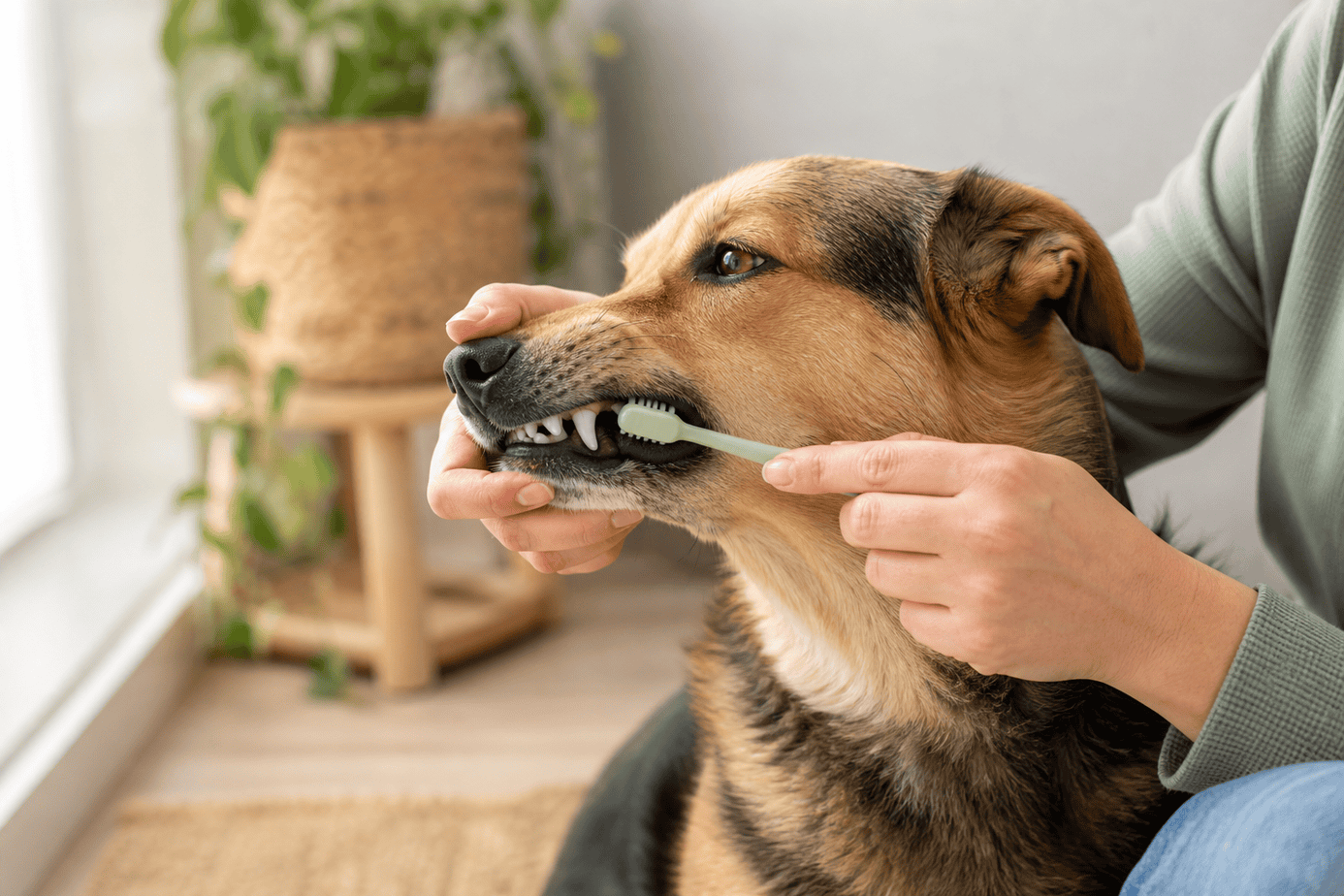
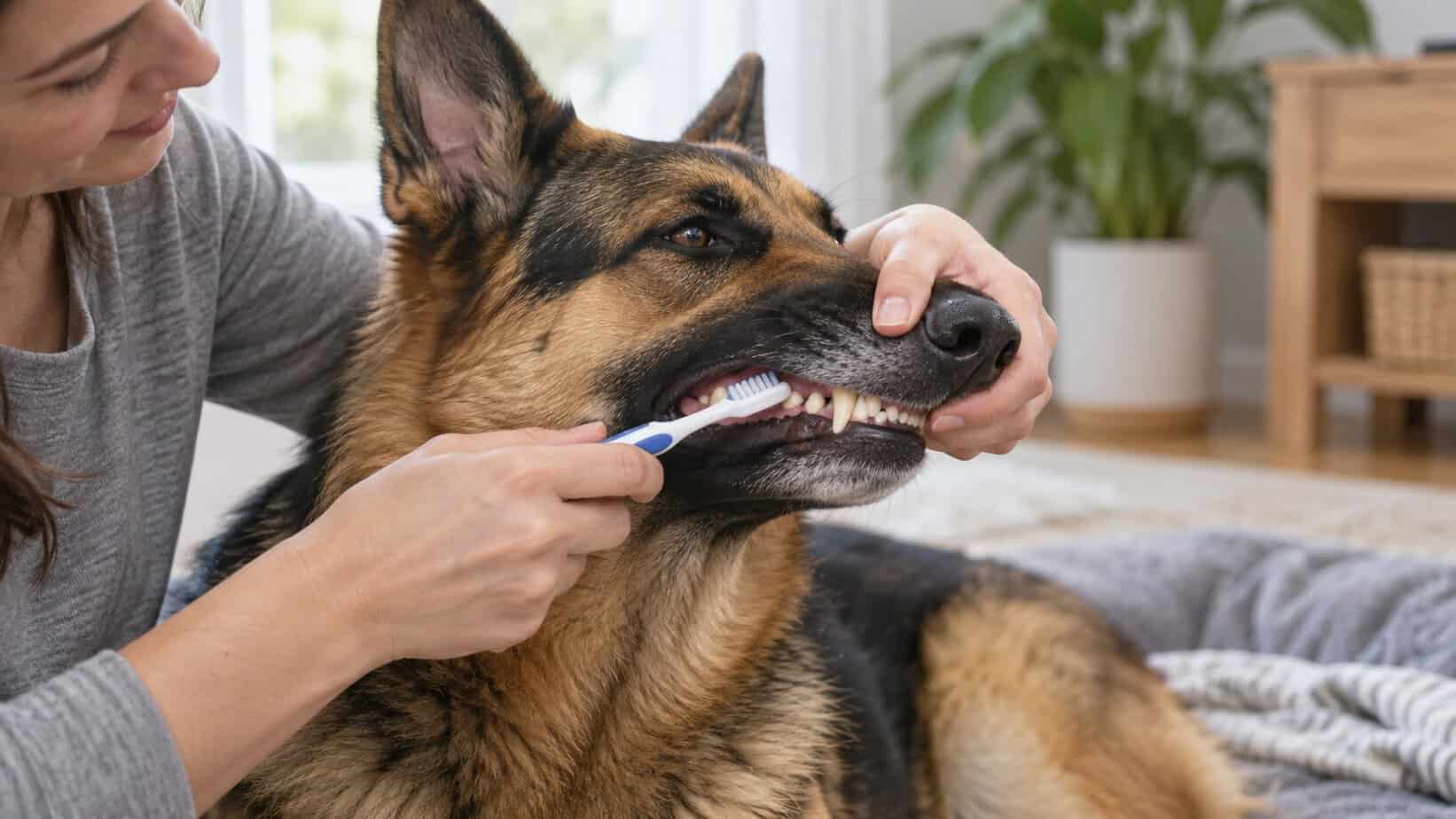
Choose a quiet time. Touch your dog’s cheek, lift the lip for a second, reward, and stop. Over several sessions, work toward gently touching the outer surfaces of the teeth and gums. For a large German Shepherd, it helps to have the dog sit beside you facing the same direction rather than confronting the dog head-on.
Never force the mouth open. Most brushing is done on the outer surfaces, where plaque commonly accumulates. If your dog shows pain, snaps, cries, or suddenly resists a previously accepted routine, stop and arrange an exam.
2. Use Dog-Safe Tools
Use a soft dog toothbrush, finger brush, or other veterinary-recommended brush that fits your dog’s mouth. Choose toothpaste made for dogs. Human toothpaste may contain ingredients that should not be swallowed, and some products contain xylitol, which is toxic to dogs.
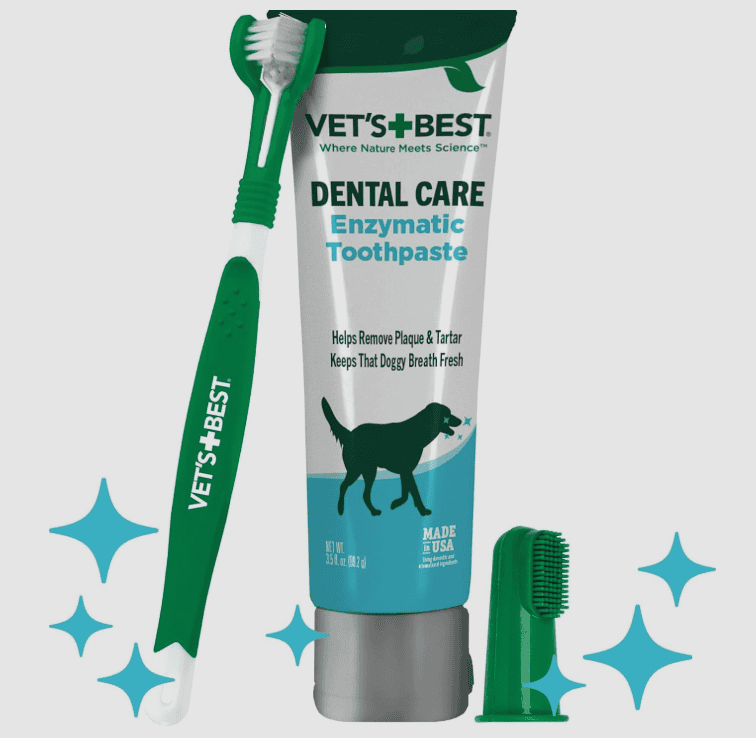
Vet’s Best Dog Toothpaste and Toothbrush Dental Care Kit
A practical all-in-one option for building a brushing routine. The kit includes dog-safe enzymatic toothpaste, a triple-headed toothbrush, and a finger brush. Choose the tool your dog accepts best and use gentle pressure along the gumline.
Let your dog taste a small amount first. A flavor your dog likes can make training much easier.
3. Brush the Gumline Gently
Lift the lip and place the brush at a slight angle toward the gumline. Use small, gentle circles or short strokes. Focus on the cheek-facing surfaces of the upper and lower teeth. Pay special attention to the large premolars and molars toward the back of the mouth.
Do not scrub hard. Healthy brushing should not cause ongoing bleeding. Mild bleeding can happen when inflamed gums are first touched, but repeated bleeding deserves a veterinary evaluation.
4. Keep the Habit Predictable
Brush at the same time each day, then follow with a favorite low-calorie reward, walk, or play session. If daily brushing is not immediately realistic, start with a few sessions per week and work toward daily care. Consistency matters more than perfection.
What If Your German Shepherd Will Not Accept a Toothbrush?
Some dogs need weeks of desensitization. Start with lip lifting, then a damp gauze pad or dental wipe on the outer tooth surfaces, and finally introduce a brush. A wipe can remove some surface plaque, but it does not reach every groove or clean below the gumline.
If your dog is fearful or has a bite history, ask your veterinarian or a qualified positive-reinforcement trainer for a cooperative-care plan. Pain should be ruled out before treating resistance as a training problem.
Diet and Dental Health
A complete and balanced diet supports overall health, but ordinary kibble does not automatically clean teeth. Most pieces crumble with limited contact along the gumline. Likewise, crunchy vegetables should not be described as toothbrushes or treatments for tartar.
Some veterinary dental diets have a specific texture or formulation designed to reduce plaque or tartar. Look for a Veterinary Oral Health Council, or VOHC, Seal of Acceptance and ask whether the product fits your dog’s nutritional needs.
Fresh water should always be available. Drinking water does not replace brushing, but normal hydration supports saliva production and general health.
Do Oral Probiotics Help?
Oral probiotics are an optional add-on, not a substitute for brushing or professional care. Research in dogs is still developing, and results depend on the strain, formulation, and outcome being measured. I would not promise that a probiotic will prevent dental disease or remove existing tartar.
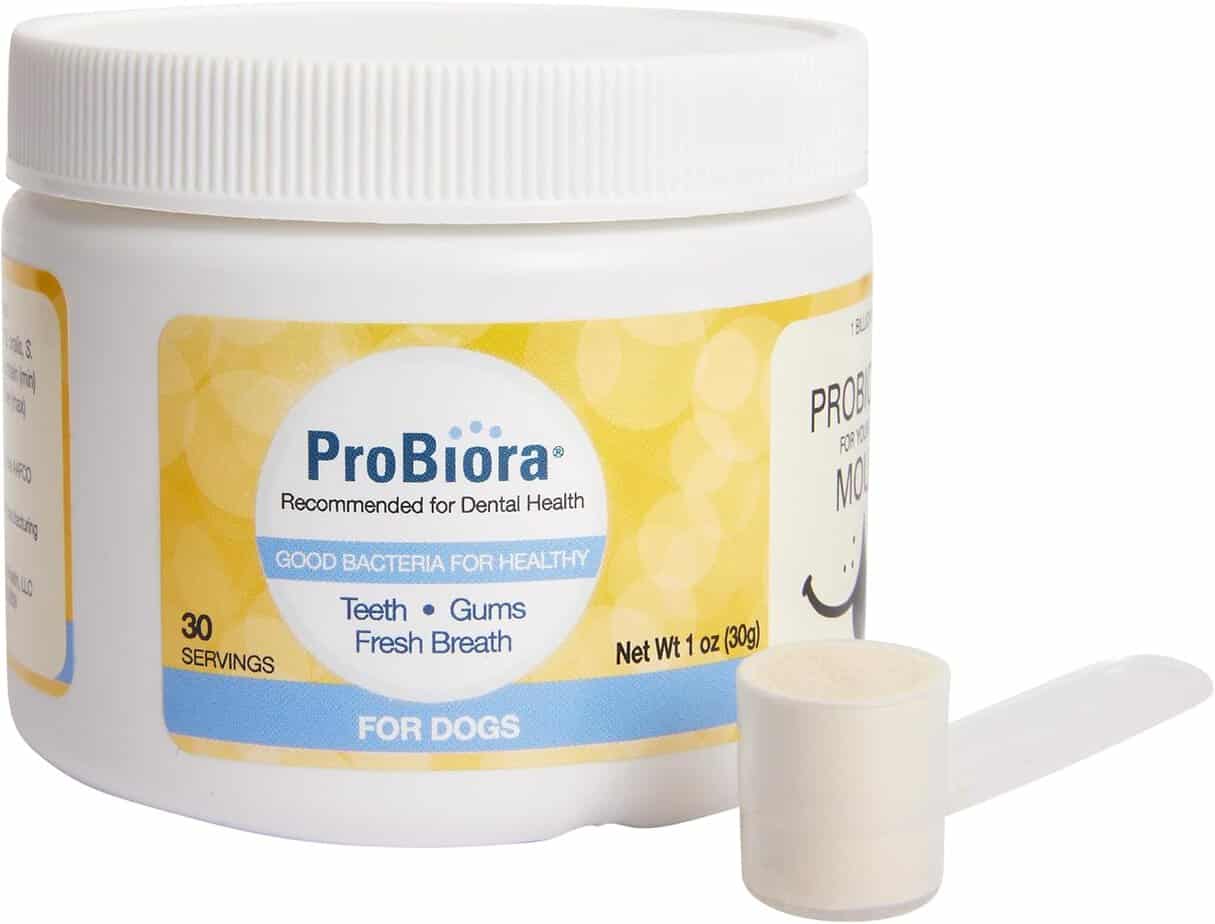
ProBioraPet Oral Probiotic for Pets
This flavorless oral probiotic powder is an optional addition to a dental routine. Use it according to the label, watch for digestive upset, and keep brushing and veterinary care in place. Fresher breath does not prove that tissues below the gumline are healthy.
Dental Chews and Products: What Helps?
Choose products for evidence, size, texture, calories, and your individual dog’s chewing style. The VOHC seal is a practical starting point because accepted products have submitted data showing an effect on plaque, tartar, or both when used as directed.

Even an accepted chew can be swallowed in a large piece. Select the correct size and supervise every chewing session. Treat calories also count toward the daily diet.

Beef Tendons for Dogs
Tendons may provide chewing enrichment, but they are not a proven replacement for brushing unless the exact product has appropriate dental evidence. Choose a size your German Shepherd cannot swallow whole, supervise closely, and discard small end pieces. Stop if the chew becomes sharp, splinters, or causes gagging or stomach upset.
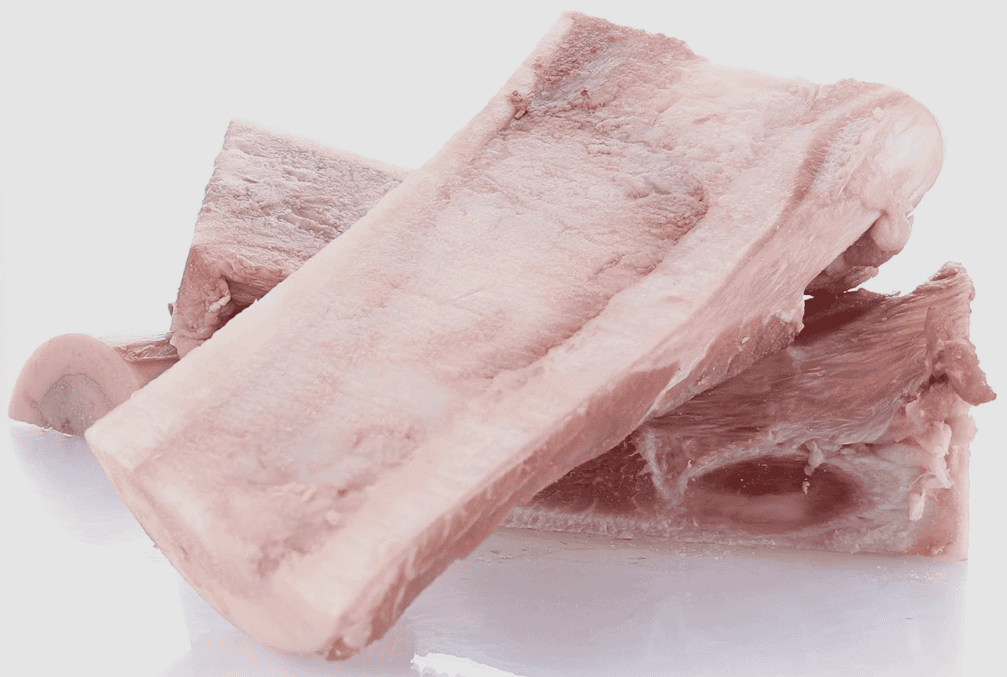
Raw Marrow Bones for Dogs
I do not recommend hard marrow bones as a routine dental-cleaning tool. Dense bones can fracture teeth, and raw animal products can carry bacterial and gastrointestinal risks. A German Shepherd’s strong bite does not protect the teeth from damage. If your dog already chews bones, discuss safer alternatives with your veterinarian.

Bully Sticks for Dogs
Bully sticks can provide supervised chewing enrichment, but dental benefit varies and they can be calorie-dense. Use an appropriate size, consider a holder that reduces gulping, and remove the final small piece. They are not a treatment for gum disease or hardened tartar.
Water Additives, Gels, Wipes, and Sprays
A water additive may be useful when brushing is incomplete, especially if the exact product has a VOHC seal. Follow the label precisely and provide plain water if your dog drinks less after the additive is introduced. Do not make broad claims that all additives harm the gut microbiome, and do not assume fresher breath means dental disease is controlled.
Dental gels, wipes, and sprays vary widely. Evidence for the exact product matters. Choose dog-specific products, avoid essential-oil home remedies, and ask your veterinarian before using antiseptic ingredients long term.
When Your German Shepherd Needs a Professional Dental Cleaning
Home care prevents and slows plaque accumulation. It cannot fully assess or treat disease hidden below the gumline.
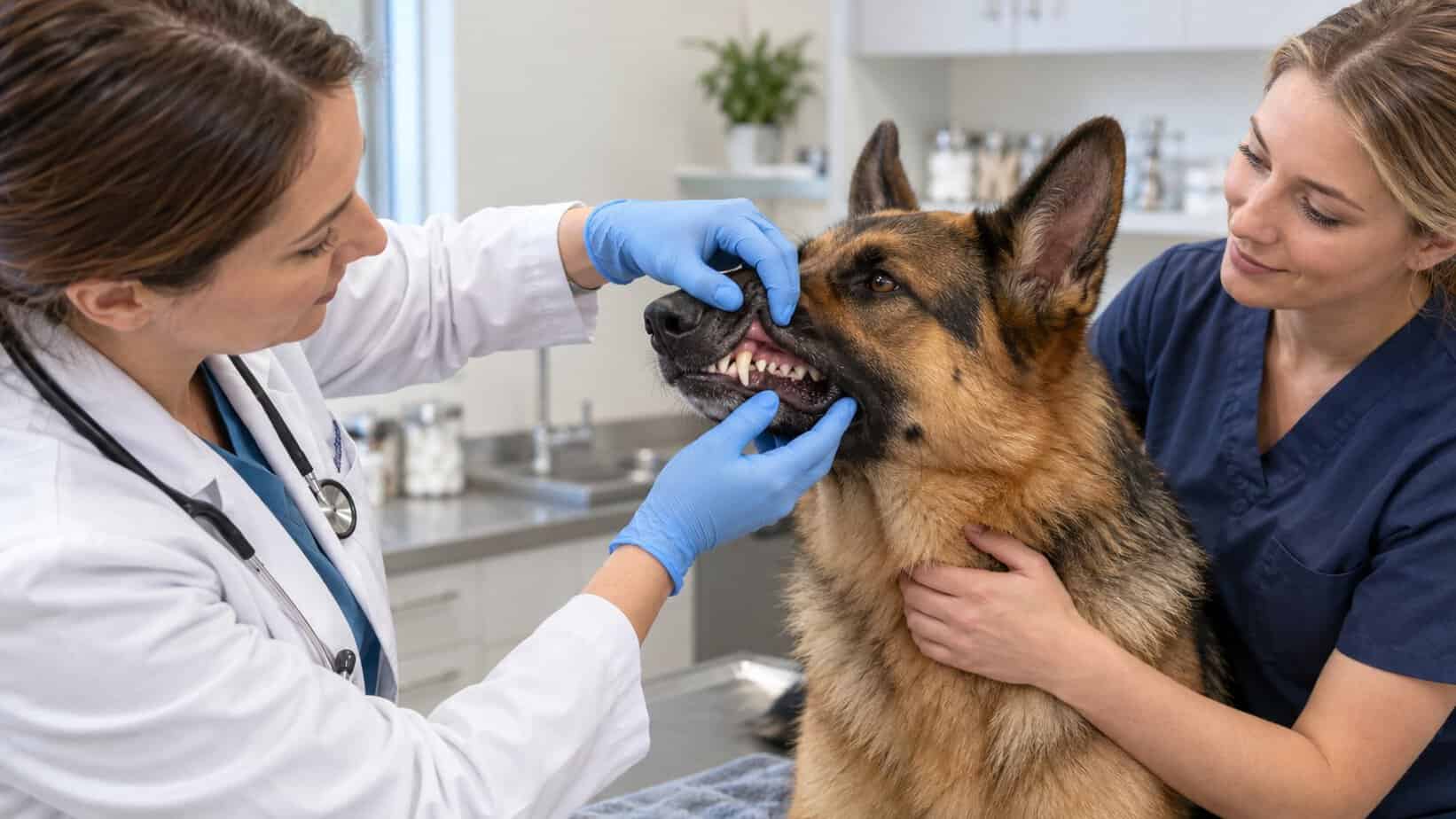
A complete professional dental procedure is performed under general anesthesia with airway protection. This allows a careful tooth-by-tooth exam, dental X-rays when needed, cleaning above and below the gums, polishing, and treatment of diseased teeth without pain or movement.
Anesthesia-free scraping removes only visible deposits and can leave disease below the gumline untouched. It may make teeth look cleaner without making the mouth healthy.
The timing of professional care is individualized. Some German Shepherds need cleaning earlier or more often because of their oral health, genetics, previous disease, chewing injuries, or home-care tolerance. Age alone is not a reason to avoid needed dentistry. Your veterinary team can assess anesthetic risk and tailor the plan.
A Simple Weekly Mouth Check
Once a week, take a quick look in good light. You are not trying to diagnose disease. You are noticing change.
Check for:
- Breath that is getting worse
- Redness or bleeding at the gumline
- New tartar buildup
- A chipped, loose, discolored, or missing tooth
- Swelling, sores, or a new lump
- A change in chewing or interest in food
This small habit is especially helpful for older German Shepherds and dogs that love to chew.
Final Thoughts From Dr. Candy
The best German Shepherd dental plan is not complicated. Brush daily with dog-safe toothpaste, use evidence-based products as support, avoid very hard chews, and have the mouth examined regularly. If bad breath persists or you see pain, swelling, bleeding, or a damaged tooth, do not wait for the next wellness visit.
A clean-looking smile is not the only goal. Comfort, healthy gums, and pain-free chewing are what matter most.
Frequently Asked Questions
Daily brushing is ideal because plaque forms continuously. If your dog is not ready for daily brushing, begin with short sessions a few times per week and gradually increase. Use dog-safe toothpaste and gentle pressure.
No. Brushing removes soft plaque, but hardened tartar should be assessed and removed by a veterinary team. Do not scrape teeth with metal tools or pick at deposits at home.
Persistent bad breath commonly accompanies dental disease, but damaged teeth, oral growths, diet, and some medical conditions can also change breath. An exam is appropriate when odor persists or comes with bleeding, pain, swelling, or appetite changes.
Choose the correct size for your dog and look for a VOHC Seal of Acceptance. The best option also depends on chewing style, calories, digestive tolerance, and tooth health. Supervise all chews and avoid products that are hard enough to fracture teeth.
There is no single schedule for every dog. Your veterinarian should recommend timing based on the oral exam, age, previous dental disease, home care, and individual risk. Visible tartar, gingivitis, pain, or bad breath may justify earlier evaluation.
References
- Bellows, J., Berg, M. L., Dennis, S., et al. (2019). 2019 AAHA Dental Care Guidelines for Dogs and Cats. American Animal Hospital Association. https://www.aaha.org/wp-content/uploads/globalassets/02-guidelines/dental/aaha_dental_guidelines.pdf
- Veterinary Oral Health Council. (n.d.). Veterinary Oral Health Council: accepted products and pet oral-health guidance. https://vohc.org/
- American Animal Hospital Association. (2019). Nonanesthetic dentistry and dental guideline resources. https://www.aaha.org/resources/2019-aaha-dental-care-guidelines-for-dogs-and-cats/resource-center/
- VCA Animal Hospitals. (2024). Fractured teeth in dogs. https://vcahospitals.com/know-your-pet/fractured-teeth-in-dogs
A note about your dog’s health
This article provides general education and does not replace an examination, diagnosis, or individualized advice from your veterinarian. Contact a veterinary professional if you are concerned about your dog’s symptoms.

ABOUT THE AUTHOR