Category: Dog Dental Health

  • Integrative Dog Dental Health: A Practical Whole-Dog Plan

    Integrative Dog Dental Health: A Practical Whole-Dog Plan

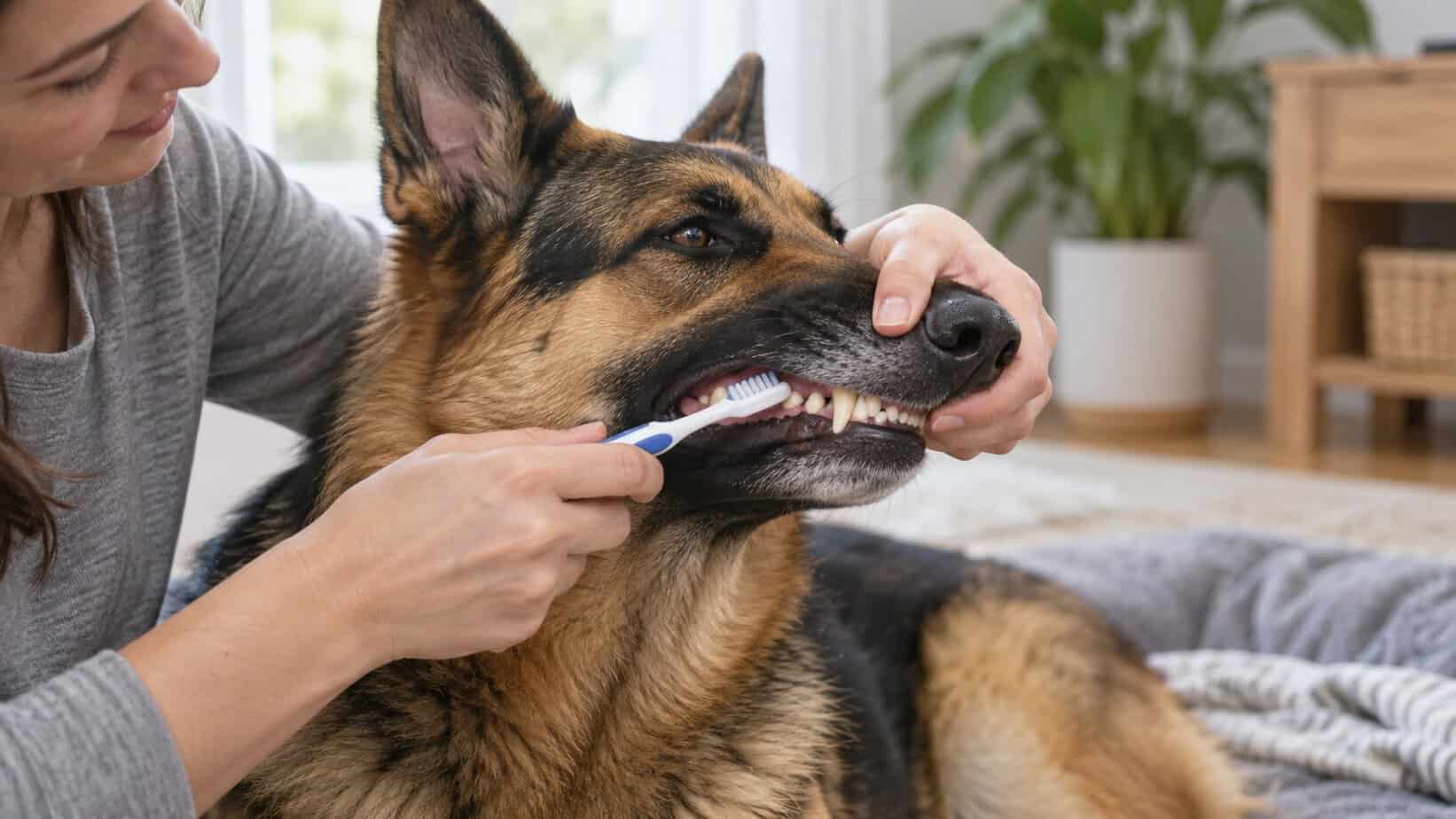
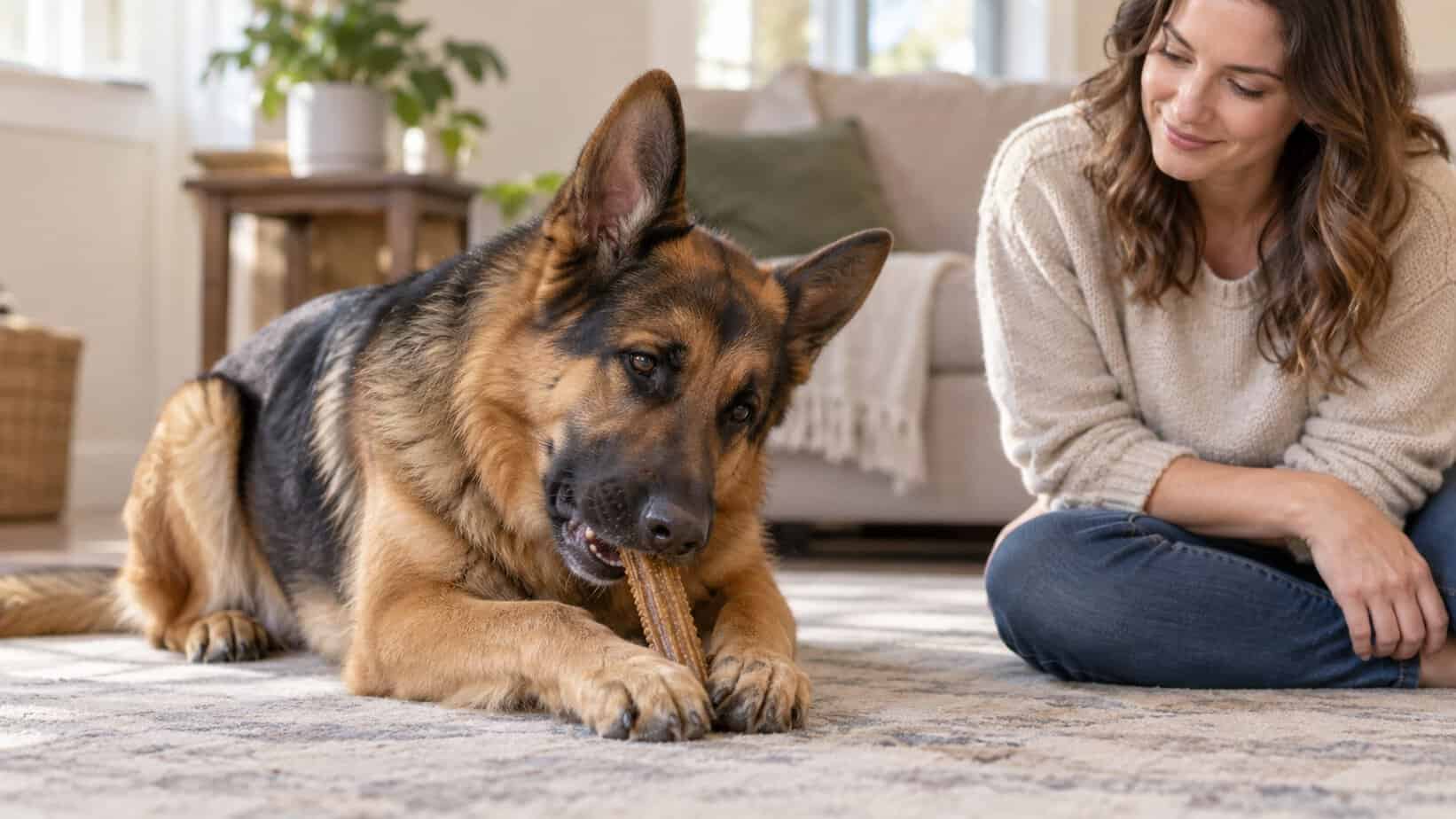
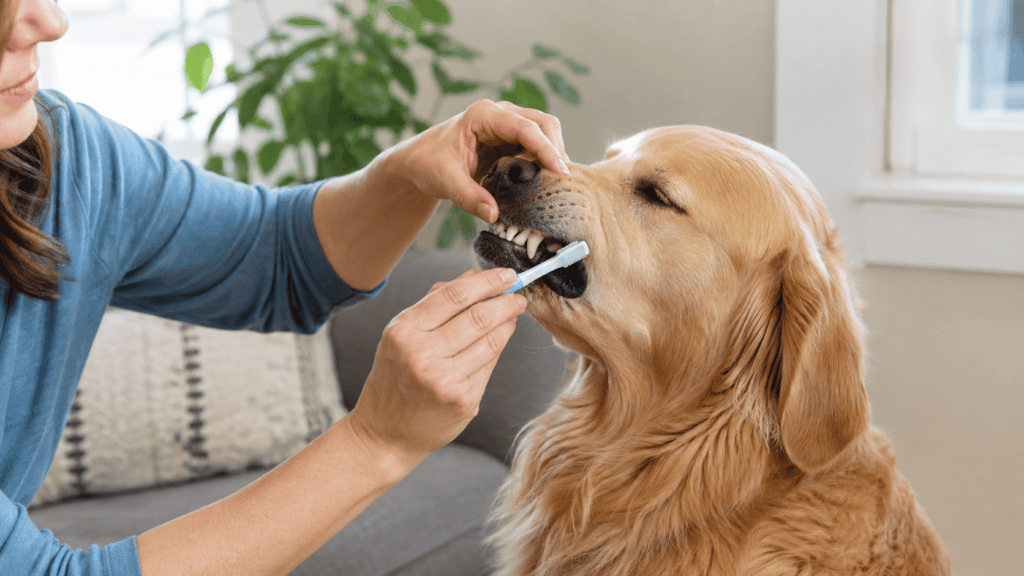
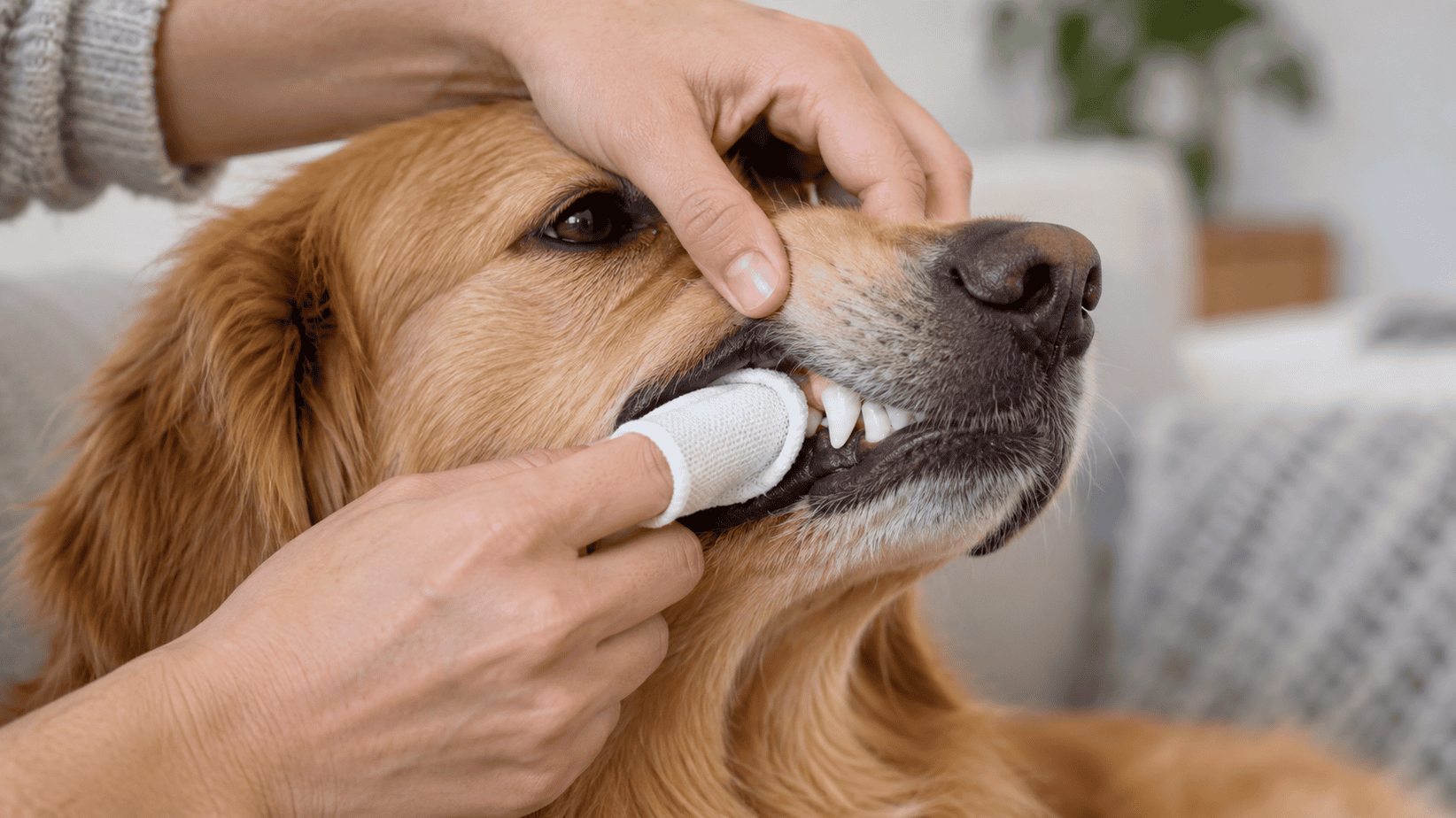
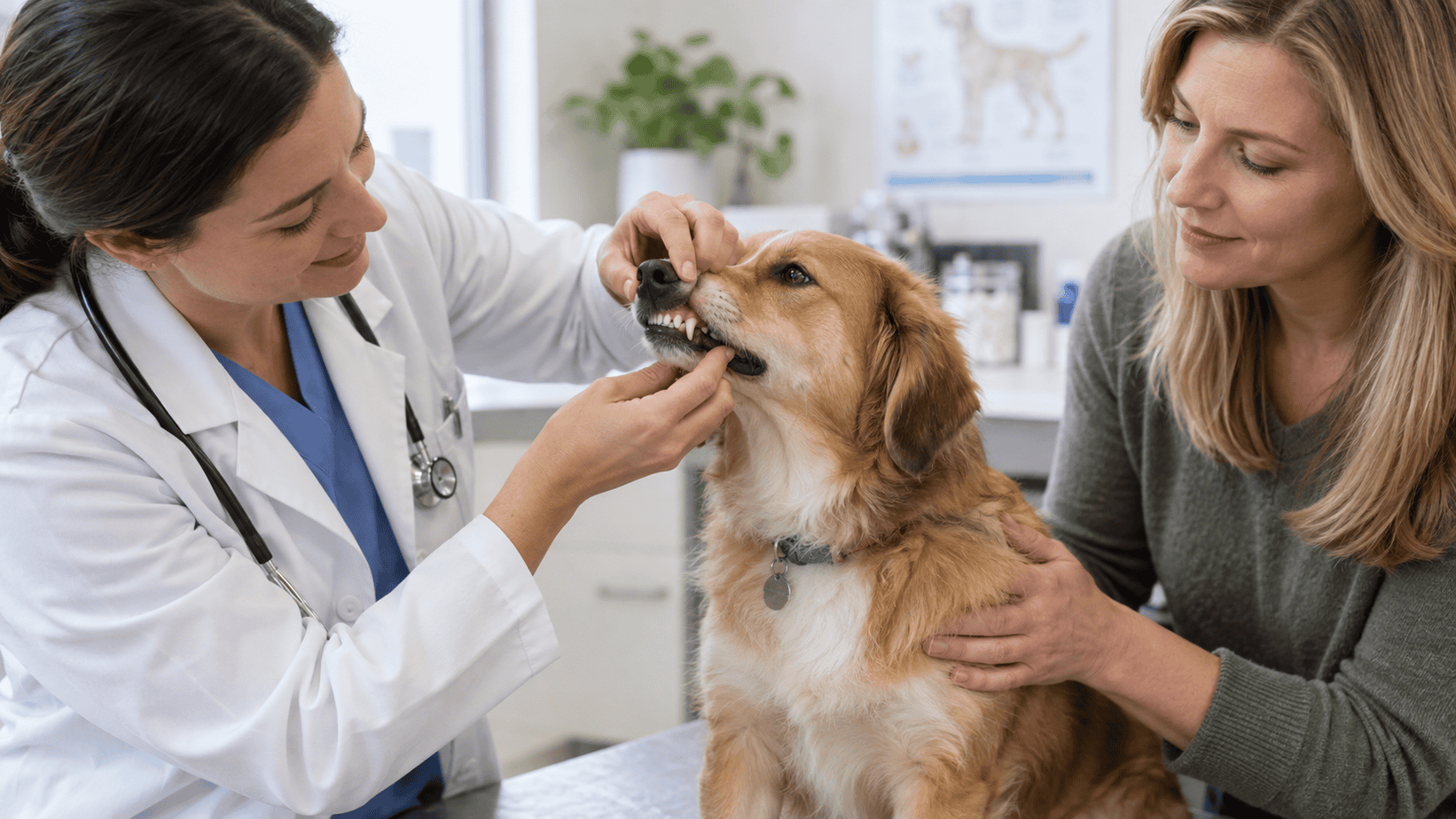
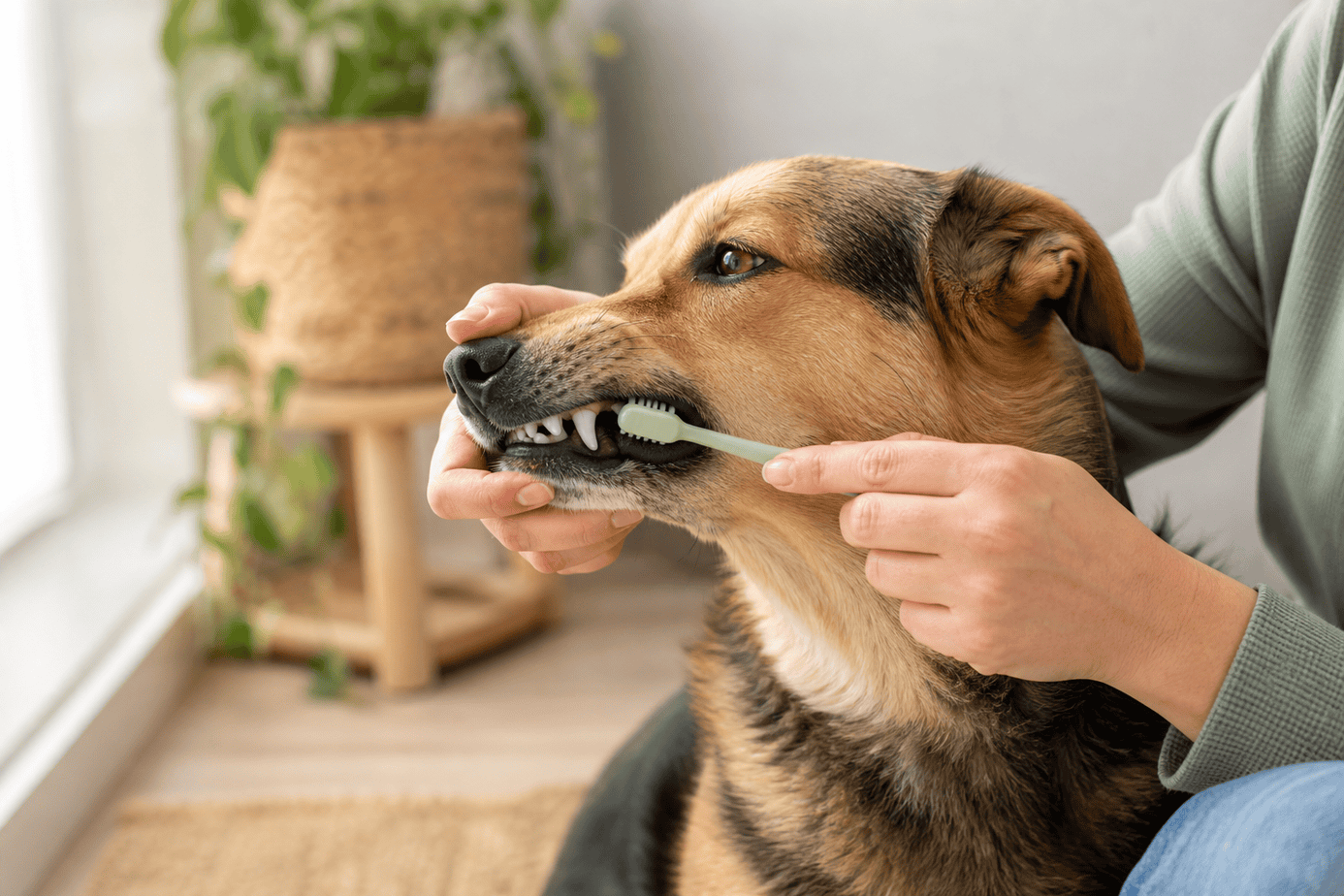
    Dog receiving gentle at-home tooth brushing for integrative dental health

    Integrative dog dental health combines daily plaque control, fresh whole-food nutrition, support for a balanced oral microbiome, safe natural chewing, and professional care when your dog needs it. It is not an alternative to dentistry. It is a whole-dog plan that uses the least invasive useful care without ignoring pain, infection, or disease below the gumline.

    The practical goal is simple: keep soft plaque from building up, support healthy oral tissues, notice changes early, and choose the right level of care for the dog in front of you. Most dogs do best with a layered plan rather than one miracle powder, chew, or cleaning.

    The five parts of a useful integrative plan are:

    1. Regular mouth checks and risk assessment
    2. Frequent mechanical plaque disruption
    3. Fresh, species-appropriate nutrition and good hydration
    4. Thoughtful support for chewing and the oral microbiome
    5. Professional assessment and treatment when home care cannot solve the problem

    What Integrative Dog Dental Health Really Means

    A preventive plan protects a comfortable mouth before major disease develops. A treatment plan addresses pain, damaged teeth, deep periodontal pockets, or disease hidden below the gumline. The two plans work together, but they are not interchangeable.

    Home care is best at controlling soft plaque. Once buildup has hardened into calculus, or the tissues supporting a tooth are damaged, brushing harder is not the answer. The dog may need a complete oral assessment, dental imaging, and treatment that matches the finding.

    Good integrative care asks five questions:

    1. What can I see and smell at home?
    2. How much plaque can I disrupt every day?
    3. Is this dog’s food pattern supporting healthy tissues and normal chewing?
    4. Which natural aids are suitable for this dog, and what can they realistically do?
    5. Is there any sign that needs professional care now?

    This approach keeps natural care practical. It also keeps professional dentistry in its proper role. A dog with a healthy mouth may need a consistent prevention routine. A dog with a painful tooth needs diagnosis and treatment, not a stronger dental powder.

    Start With a Simple At-Home Mouth Check

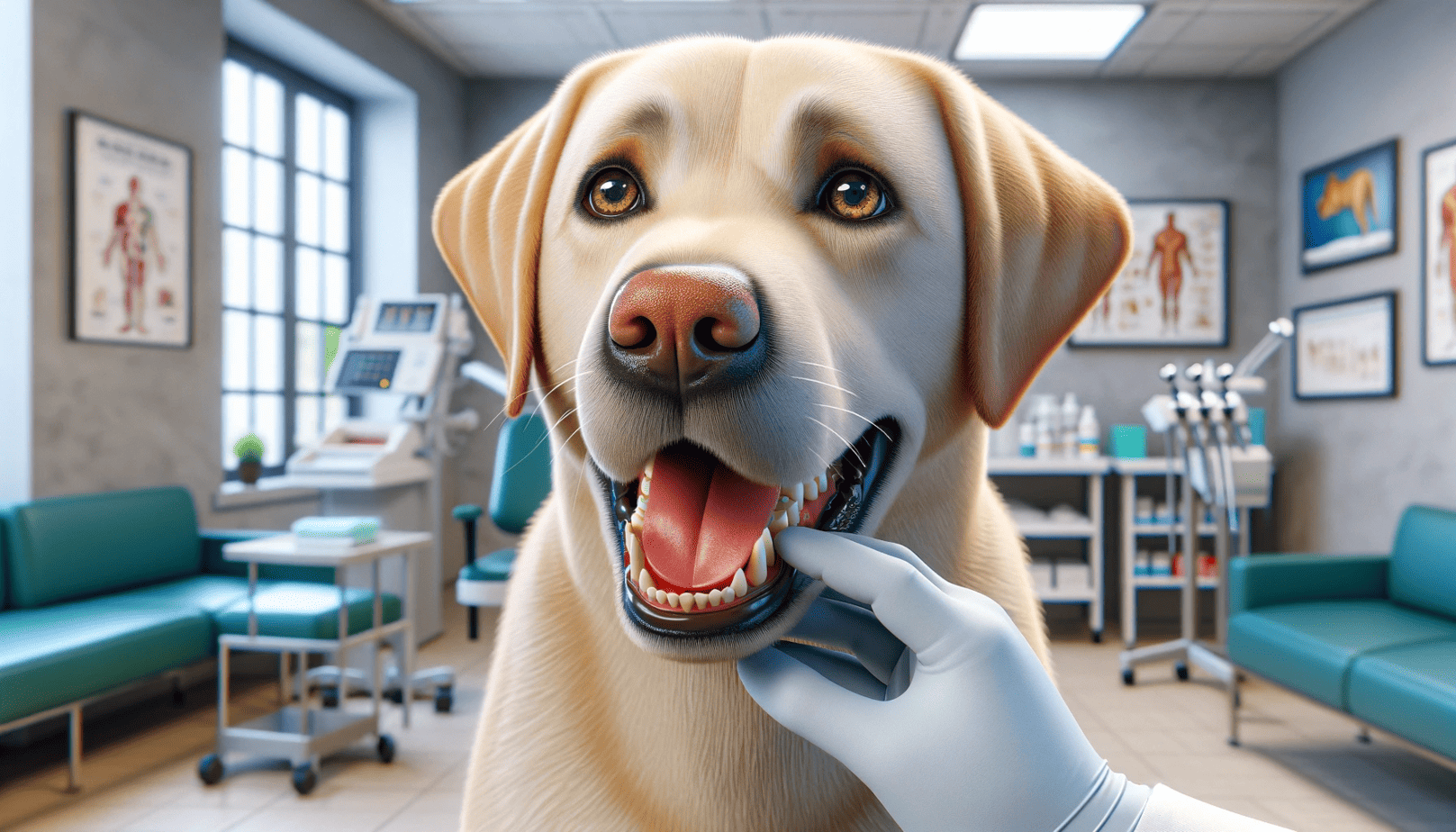
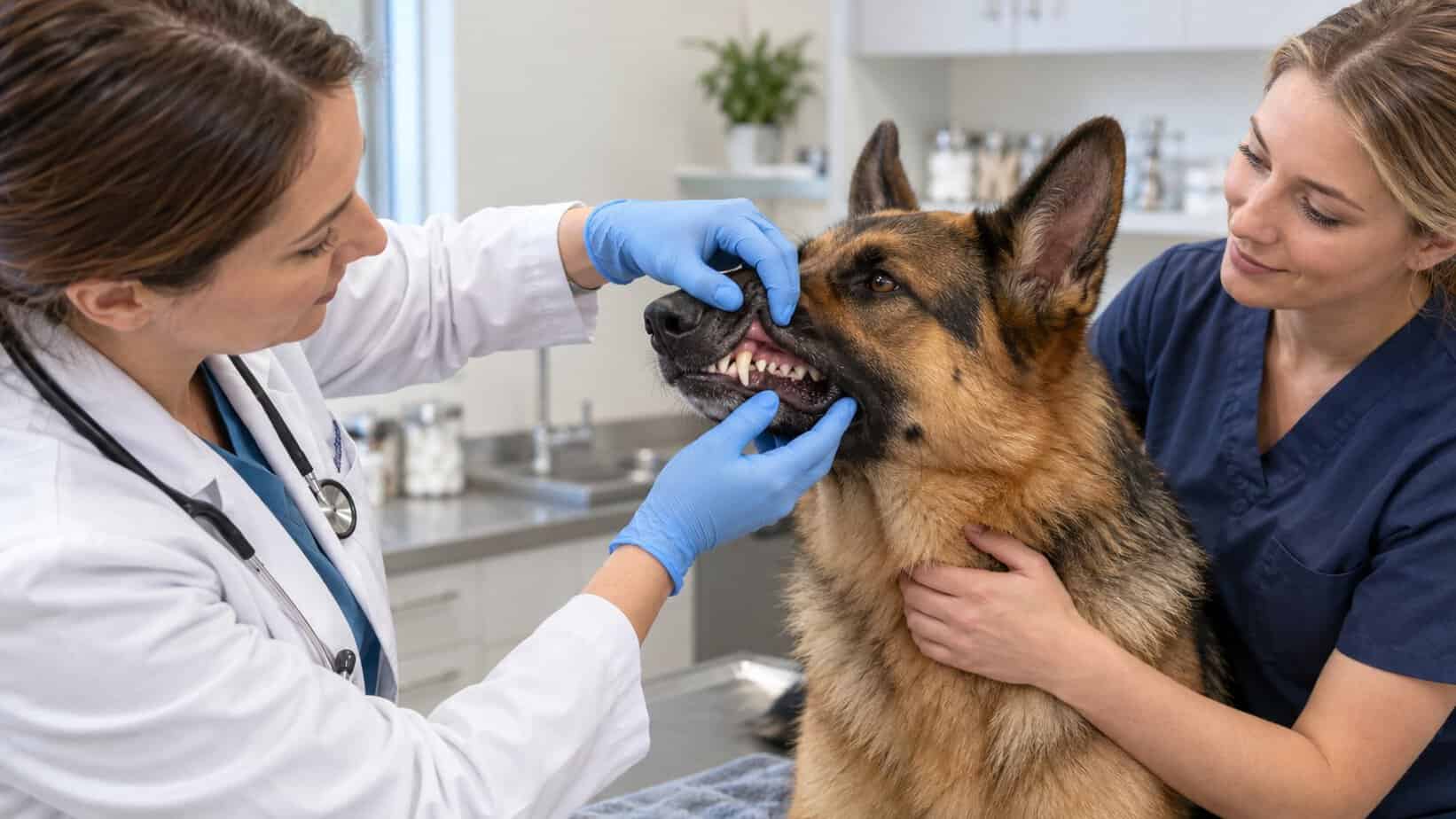
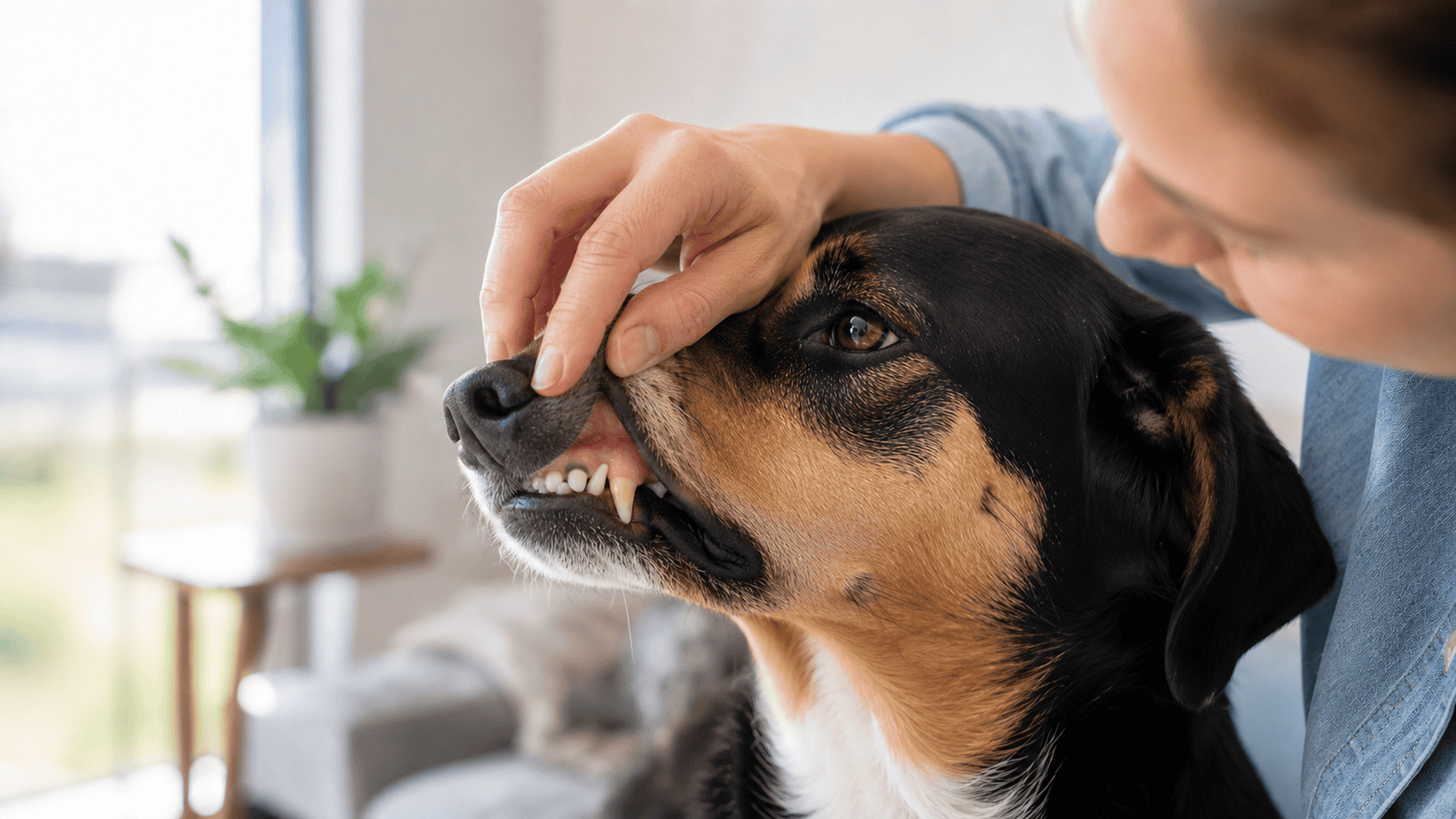
    Look at your dog’s mouth when your dog is relaxed. Lift the lip gently. Do not force the jaw open or continue if your dog shows pain or fear.

    Check the cheek-facing surfaces of the teeth and follow the gumline from front to back. Notice breath, visible plaque or calculus, gum color, swelling, bleeding, broken teeth, loose teeth, and comfort while chewing. Some healthy dogs have naturally pigmented gums, so look for changes from your dog’s usual appearance.

    What you seeWhat it may meanBest next step
    Clean-looking teeth, little odor, comfortable chewingNo obvious problem at homeContinue prevention and weekly checks
    Persistent odor, new plaque, yellow or brown calculus, mild rednessEarly buildup or inflammation may be presentImprove daily plaque control and schedule an assessment if it persists
    Bleeding, swelling, loose or broken teeth, pus, marked drooling, one-sided chewing, dropped food, or refusal to eatPain or established disease may be presentArrange prompt professional assessment

    A home check sees only part of each tooth. It cannot show what is happening under the gumline or around the roots. Age, small jaw size, crowded teeth, retained baby teeth, chewing style, and past dental problems all help determine how closely a dog should be watched.

    How Plaque Turns Into Gum Disease

    Plaque Is a Living Biofilm

    Plaque is a soft, sticky community of bacteria and other material that forms on teeth. It reforms quickly, which is why mechanical disruption needs to happen often.

    Calculus Is Hardened Buildup

    When plaque mineralizes, it becomes hard calculus, also called tartar. Its rough surface gives new plaque more places to cling. A brush may disturb plaque around it, but brushing does not reliably remove established calculus or reveal disease beneath the gumline.

    Gingivitis Can Progress to Periodontitis

    Gingivitis means inflamed gums. The gumline may look red, puffy, or prone to bleeding. Periodontitis is deeper damage to the tissues and bone that hold teeth in place. Periodontal disease is common in dogs, and risk tends to rise with age and in smaller dogs. [1]

    Crowding, retained teeth, tight spaces, and individual susceptibility can create protected areas where plaque collects. The goal is to reduce the daily bacterial burden and inflammation without making broad claims that every dental problem directly causes disease in another organ.
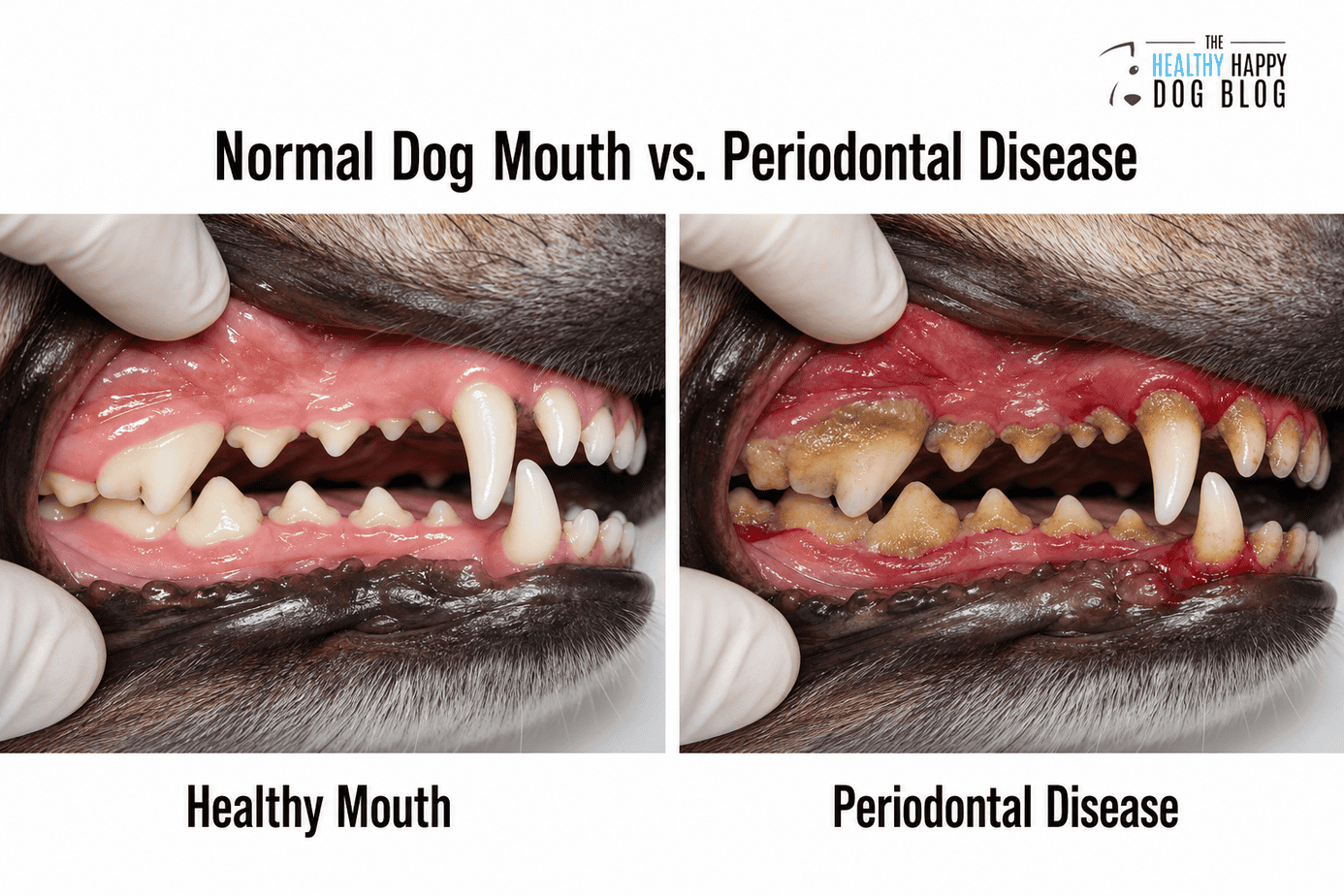
    Side-by-side veterinary comparison of a healthy dog mouth and a dog mouth with periodontal disease
    Veterinary textbook-style comparison showing healthy canine teeth and gums beside periodontal disease with heavy calculus, inflammation, and gum recession.

    Daily Home Care That Actually Disrupts Plaque

    Mechanical contact is the foundation. Product claims matter less than whether a brush, gauze pad, or wipe actually reaches the tooth surface along the outer gumline.

    Choose a Brush and Dog-Safe Paste

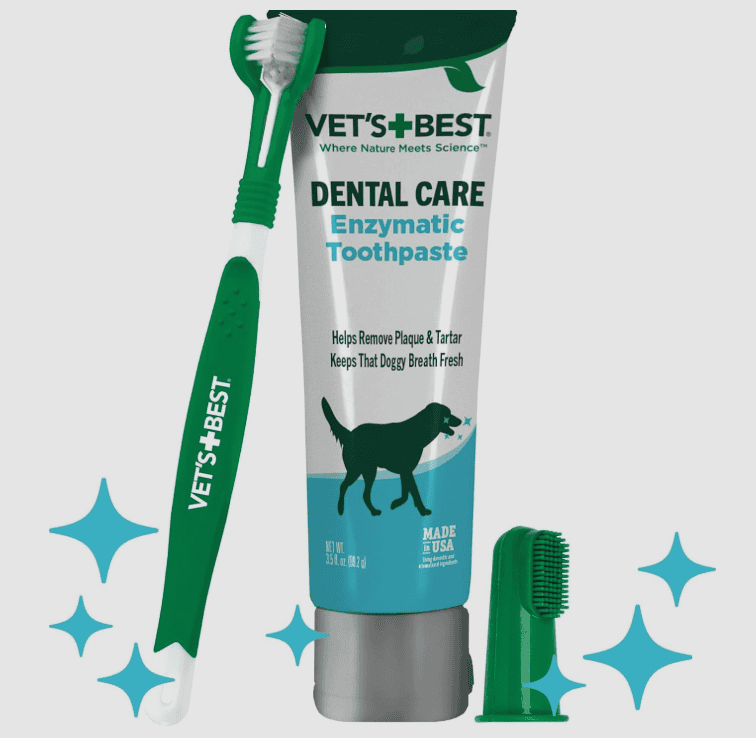
    Use a soft brush that fits your dog’s mouth. A small brush head or finger brush may be easier for a small dog, but a finger brush can still be bulky in a crowded mouth. Use only a paste made for dogs. Human toothpaste is not appropriate for a dog to swallow.

    A Gentle Six-Step Brushing Routine

    1. Touch the muzzle briefly, then reward calm cooperation.
    2. Lift one side of the lip without opening the whole mouth.
    3. Rub the outer teeth with a clean finger or damp gauze.
    4. Introduce a soft brush for only a few seconds.
    5. Angle the bristles toward the gumline and use gentle, short motions.
    6. Add time slowly, working toward the back teeth as your dog becomes comfortable.

    Focus first on the cheek-facing surfaces. Keep the session short and pleasant. A small amount of useful contact that happens regularly is better than a long struggle that makes tomorrow harder.

    How Often Brushing Needs to Happen

    Frequent brushing works better than occasional brushing. A controlled study found that more frequent toothbrushing improved plaque, calculus, and gum health measures in dogs. [2] Daily brushing is the most useful target, but a dog who is learning may need a gradual build-up. Missing one day is not failure. Return to the routine at the next calm opportunity.

    Gauze, Wipes, and Other Mechanical Options

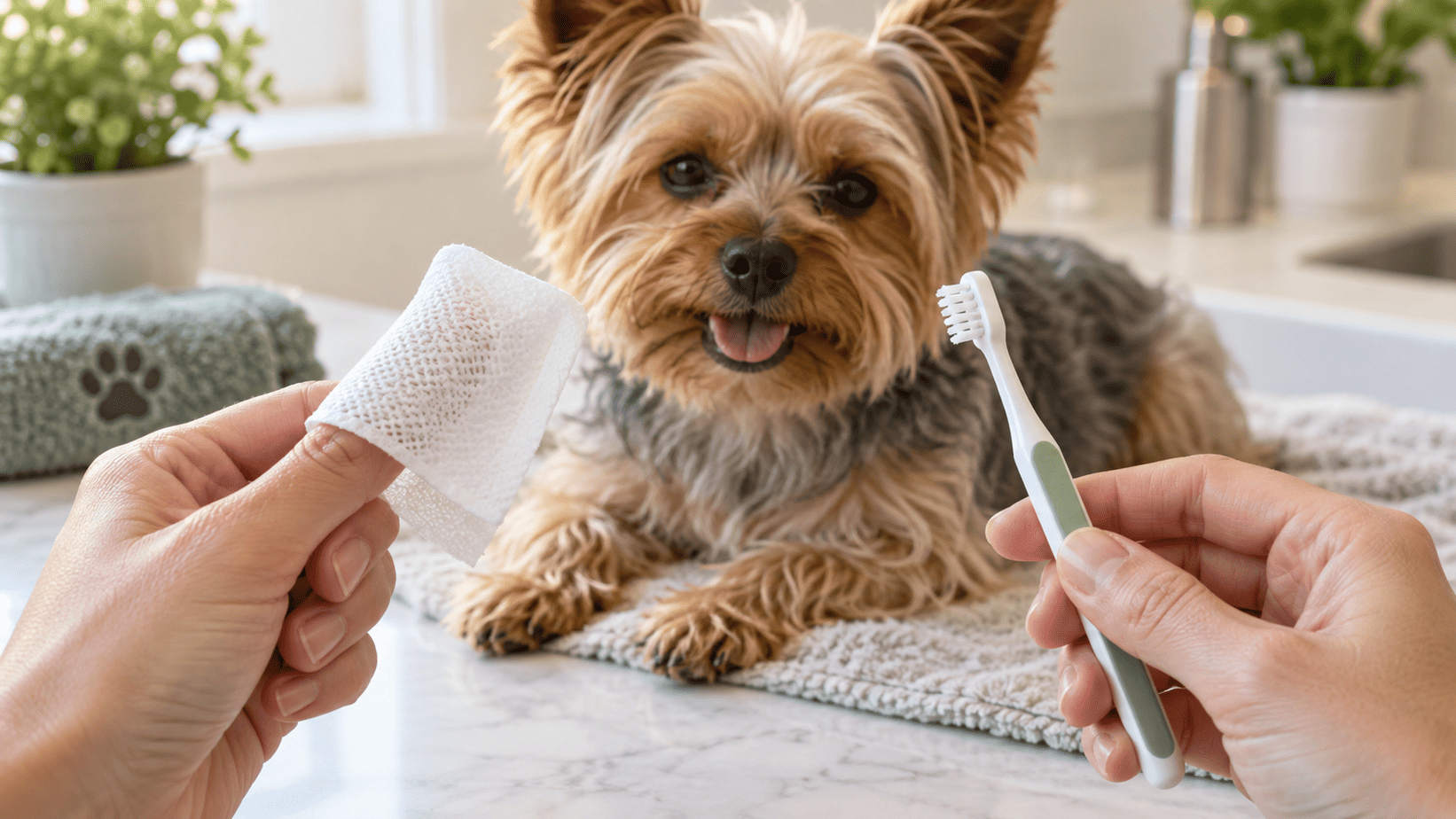
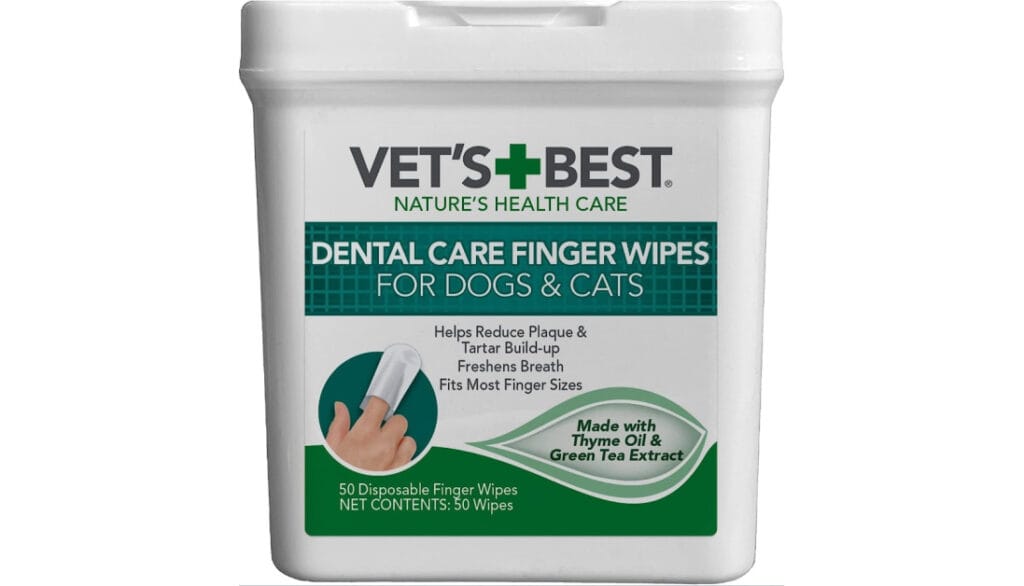
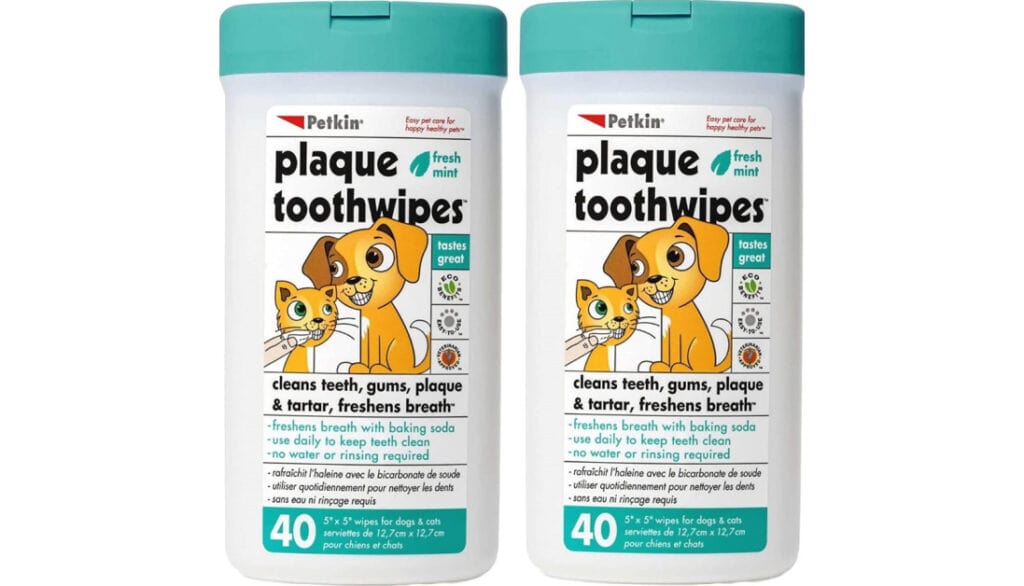
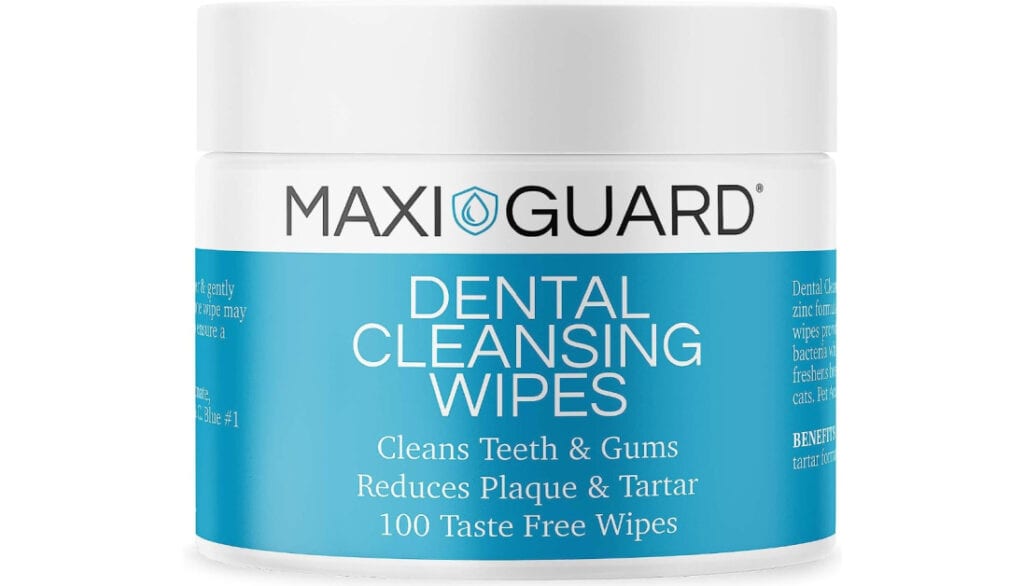
    Gauze and dental wipes can remove some soft plaque from reachable surfaces. They may be easier for a dog who resists a brush. They do not reach every groove or protected space, and they cannot clean below the gumline. Use them as a practical step, not as proof that the whole mouth is healthy.

    What to Do When Your Dog Will Not Tolerate Brushing

    Forcing the mouth can increase fear and resistance. Start below your dog’s stress threshold and build one small step at a time.

    If Brushing Is Impossible Today, Do This

    1. Practice one brief lip lift without trying to brush.
    2. Use damp gauze or a dog dental wipe on one easy-to-reach area.
    3. Offer a suitable supervised chew if the mouth is comfortable.
    4. Use one evidence-supported aid if it is appropriate for your dog.
    5. Look at the mouth more often for odor, redness, buildup, or discomfort.

    A lickable dog-safe paste can help create a positive association, but licking paste is not the same as brushing. A chew, powder, or water additive also cannot examine the roots of a tooth or correct a painful fracture.

    Dogs with facial pain, a history of forced handling, or strong sensitivity may need an even slower plan. If resistance appears suddenly, consider pain before treating it as a training problem.

    How Whole-Food Nutrition Supports Teeth and Gums

    Fresh, Species-Appropriate Food as the Foundation

    Teeth do not exist apart from the rest of the dog. Gum tissue, saliva, immune response, and healing all depend on the dog’s nutritional foundation. Dr. Candy Akers, DVM centers fresh, minimally processed, species-appropriate foods rather than highly processed kibble or prescription diets.

    That does not mean food alone prevents periodontal disease. Nutrition supports the tissues. Mechanical cleaning disrupts plaque. A dog may need both.

    Nutrition Supports the Mouth in Four Ways

    1. Adequate protein supplies building material for tissues and repair.
    2. Balanced minerals and fatty acids support normal tissue structure and inflammatory balance.
    3. Antioxidant-rich whole foods support the body’s response to everyday oxidative stress.
    4. Water-rich food and good hydration support saliva and the oral environment.

    Food choices still need to fit the individual dog. Kidney disease, pancreatitis, food sensitivities, digestive problems, and other conditions can change what is appropriate. An integrative plan uses the dog’s whole health picture rather than a one-size-fits-all menu.

    Why Kibble Texture Is Not a Complete Dental Plan

    Dry food is not automatically a toothbrush, and soft food is not automatically harmful. Many dogs swallow kibble with limited chewing. What matters is the total food pattern, the dog’s chewing behavior, and whether the plan includes real mechanical plaque control.

    The Oral Microbiome, Bad Breath, and Inflammation

    What the Oral Microbiome Is

    The oral microbiome is the community of microorganisms living in the mouth. A healthy mouth is not sterile. Health depends on the relationship among microbes, plaque, gums, saliva, food, and the immune response.

    What Dysbiosis Means

    Dysbiosis is an unfavorable shift in that microbial community. Research has found meaningful differences in the oral microbiome of dogs with periodontal disease compared with healthier dogs. [3] That does not mean one supplement can reset the mouth. It means daily care should support a healthier oral environment instead of focusing only on odor.
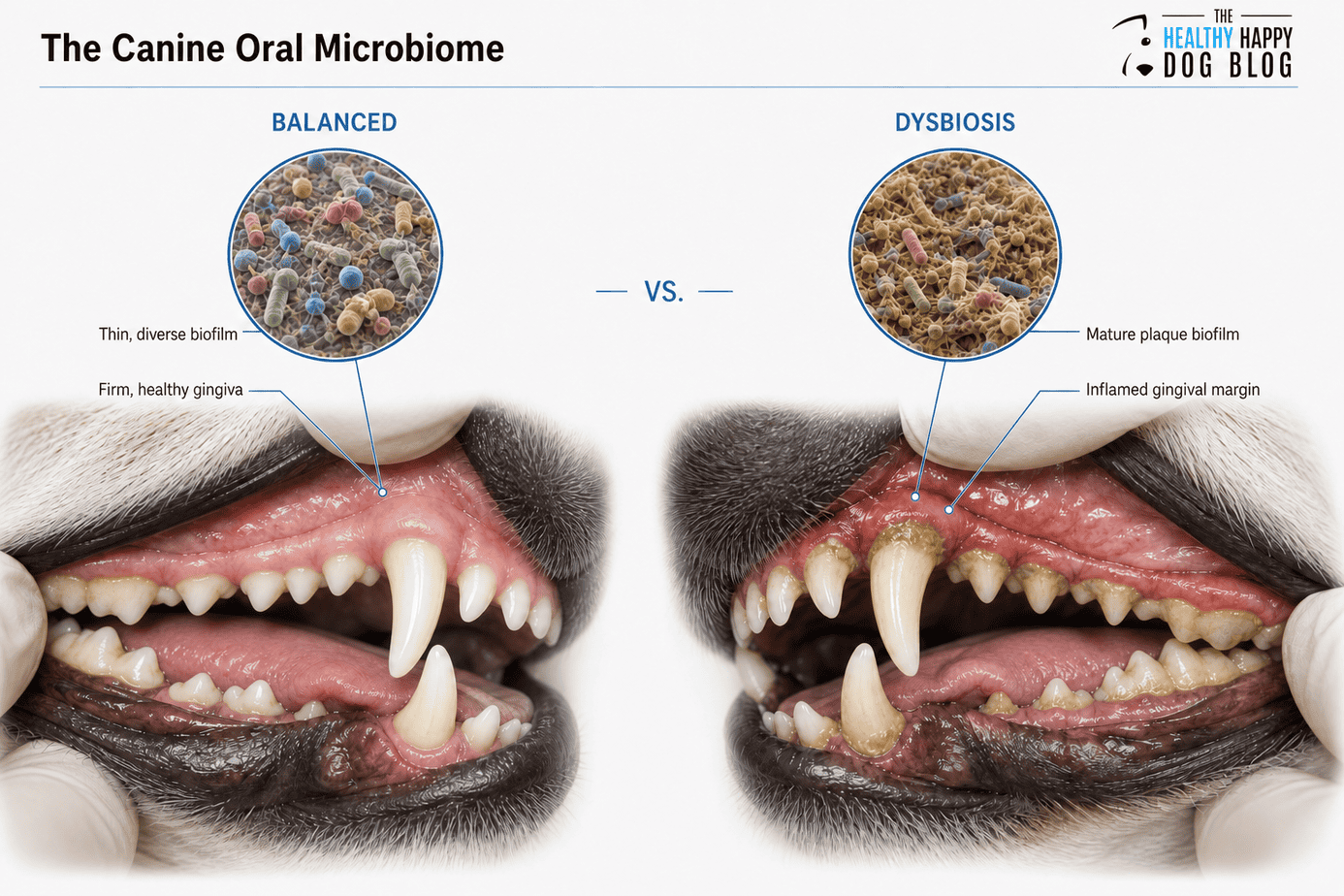
    Veterinary comparison of a balanced dog oral microbiome and dysbiosis with plaque and inflamed gums
    Veterinary educational comparison of a balanced canine oral microbiome and dysbiosis, showing changes in biofilm density, plaque accumulation, and gingival inflammation.

    Persistent bad breath can be a clue that the oral environment is unhealthy, but it is not a diagnosis. Food residue, gum inflammation, a damaged tooth, infection, and other problems can smell similar at home.

    How Plaque Control and Diet Affect the Oral Environment

    Brushing changes the surface where plaque communities grow. Suitable chewing may disturb some buildup and stimulate saliva. Fresh food and good hydration support the tissues and fluids that surround those microbes. These layers influence one another, but none replaces examination when pain or deep disease is suspected.

    What Probiotics and Postbiotics May Offer

    Probiotic, postbiotic, and other microbial approaches are promising, but results are product-specific. Evidence about the gut microbiome does not automatically prove an oral product works. One study found that a tested dental chew shifted the oral microbiota of adult dogs in a favorable direction, but that finding applies to the studied product and protocol. [4]

    Natural Chews and Raw Meaty Bones: Benefits and Limits

    How Chewing Can Help Mechanically

    Suitable chewing can scrape some tooth surfaces, stimulate saliva, and provide enrichment. It does not clean every surface, and it does not treat deep periodontal disease.

    A controlled study in Beagles found that raw beef bones reduced dental calculus. [5] A later controlled study specifically evaluated tooth injuries in Beagles given autoclaved beef bones. [6] These studies help explain the potential benefit and the need to think about tooth safety, but they do not prove that every bone is safe for every dog.

    Choosing an Item for the Individual Dog

    Consider the dog’s body size, jaw size, chewing force, existing tooth condition, the item’s size and hardness, splintering potential, supervision, and digestive tolerance. A suitable item should not be small enough to swallow whole. Cooked, brittle, or very hard items need special caution because they may splinter or raise the risk of a tooth fracture.
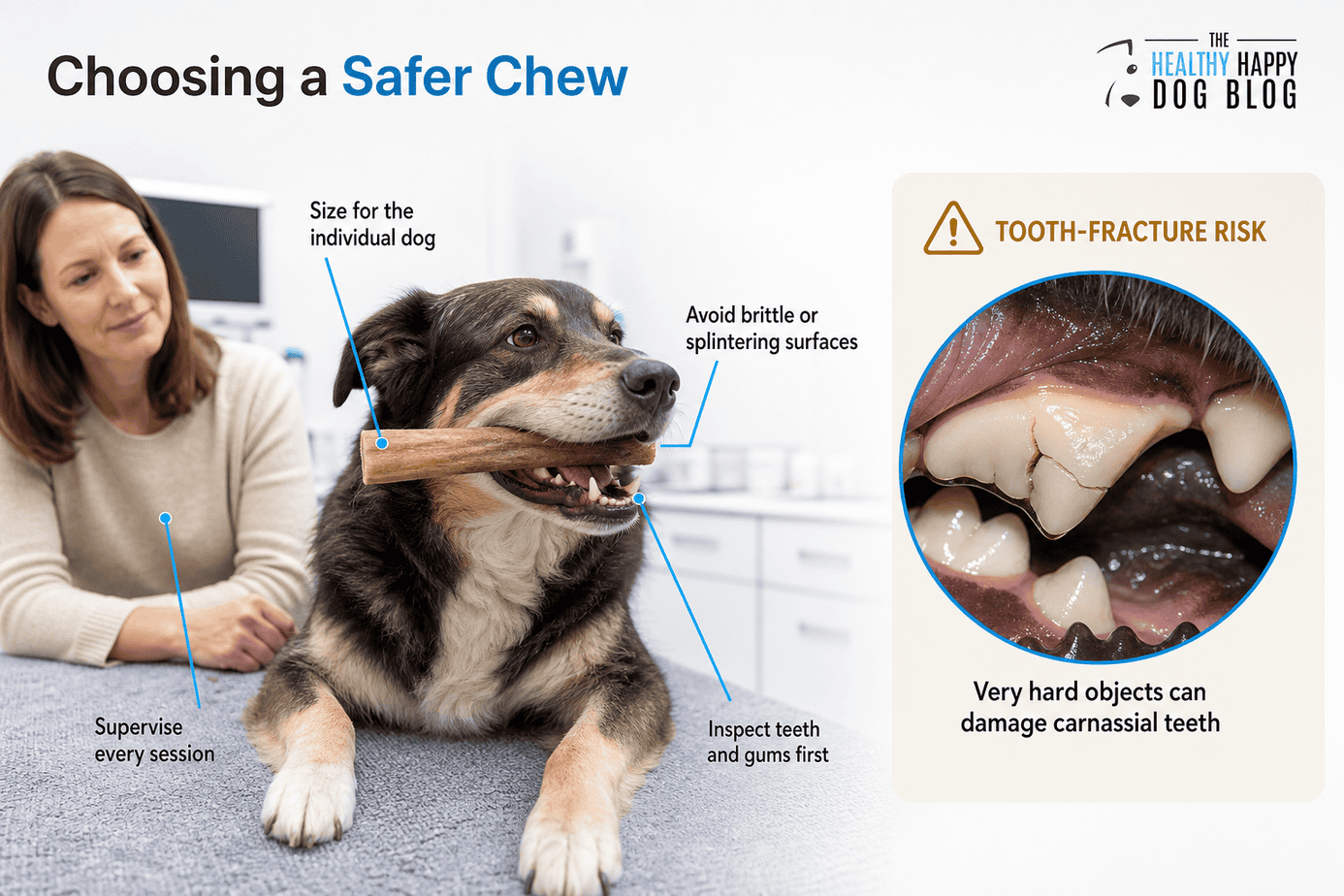
    Dog with a supervised chew beside a veterinary close-up of a fractured carnassial tooth
    Veterinary educational image showing supervised chew selection and a clinical example of carnassial tooth fracture associated with very hard objects.

    Puppies have ‘baby’ teeth which are less dense than ‘adult’ teeth. I do not recommend hard chews like antlers or dried/cooked bones for dogs under 1 year of age.

    Raw Bones, Tooth Injury, and Realistic Tradeoffs

    Natural does not mean risk-free. Aggressive chewers may apply enough force to fracture a tooth. Dogs can also swallow pieces or develop digestive trouble. Controlled bone studies use selected dogs and defined items, which is very different from giving any available bone without supervision.

    Pause chewing and seek guidance if your dog has mouth pain, loose or broken teeth, heavy calculus, recent oral surgery, or a health condition that changes digestive or infection risk.

    Probiotics, Kelp, Coconut Oil, Herbs, and Dental Powders

    Sort Products by Job, Not by Marketing Claim

    Ask what the product is supposed to do. Is it providing mechanical cleaning, microbiome support, odor control, saliva support, or temporary gum comfort? Then ask whether the exact ingredient and product have evidence for that job.

    OptionBest useEvidence statusWhat it cannot replace
    ToothbrushingMechanical plaque disruptionBest-supported daily foundationUnder-gum diagnosis or treatment
    Suitable chewsAdded mechanical action and enrichmentBenefit varies by item and dogBrushing every surface or treating disease
    Probiotics or postbioticsProduct-specific oral microbiome supportPromising and product-specificMechanical cleaning
    Kelp dental productsPossible plaque or calculus support for a studied formulaFormula-specific evidence neededIndividual health review or treatment
    Coconut oilPalatable carrier or brushing aidLimited dental-disease evidencePlaque removal or periodontal treatment
    Herbs or dental powdersIngredient-specific supportVerify exact ingredients and canine evidenceExamination, imaging, or treatment

    Kelp products, including those made with Ascophyllum nodosum, need product-specific evidence and clear ingredient information. A seaweed name on a label is not enough to assume the same result as a studied formula. Iodine content and the dog’s health history can also matter.

    Coconut oil may be a palatable carrier or brushing aid for some dogs. It should not be described as a treatment for periodontal disease. Herbs and topical products need the same careful review. Exact ingredients, concentration, dog safety, and direct evidence all matter.

    Introduce one change at a time. That makes it easier to notice digestive upset, mouth irritation, refusal, or a true benefit. Do not add several powders and chews at once and then guess which one helped.

    Why Small Dogs and Crowded Mouths Need Extra Attention

    Small and toy dogs often have the same number of adult teeth packed into less jaw space. Crowding creates tight areas that are hard to inspect and clean. Retained baby teeth and bite abnormalities can add more plaque-retentive spaces. Reviews of canine periodontal disease identify smaller size and increasing age as important risk factors, while still recognizing that individual dogs vary. [1]
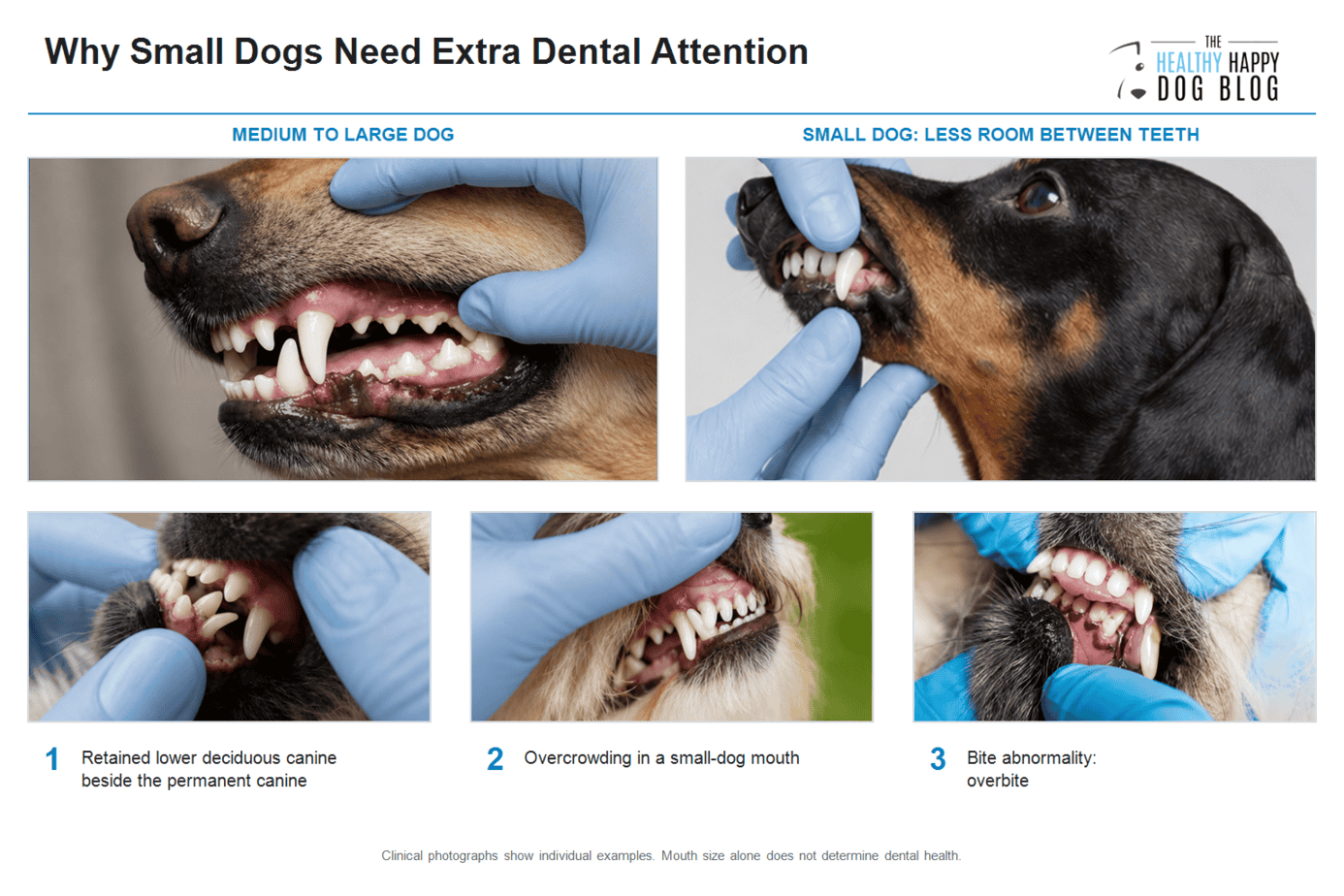
    Veterinary comparison of dental crowding, a retained deciduous canine, and an overbite in small dogs
    Veterinary educational photo guide comparing a medium-to-large dog mouth with small-dog dental risks, including limited jaw space, a retained deciduous canine, overcrowding, and an overbite.

    Small-Dog Dental Checklist

    1. Use a brush that can reach the back teeth without stretching the mouth.
    2. Check crowded areas and retained baby teeth more often.
    3. Begin gentle handling in puppyhood before visible disease appears.
    4. In adults, adjust the routine when buildup or tolerance changes.
    5. In seniors, watch for pain, reduced chewing, weight change, and new handling resistance.

    Age alone does not decide whether professional care is possible. The dog’s health, the expected procedure, diagnostics, monitoring, and recovery plan all matter.

    When Home Care Is Not Enough

    What an Oral Examination Can and Cannot Show

    A visual examination can reveal odor, gum inflammation, calculus, fractures, loose teeth, swelling, and obvious masses. It cannot fully assess roots, bone support, or every surface below the gumline.

    When Dental Radiographs Matter

    Dental radiographs can reveal root and bone problems that are hidden from view. A complete diagnostic and treatment procedure is different from removing visible calculus for cosmetic improvement. The purpose is a comfortable, functional mouth, not simply whiter crowns.
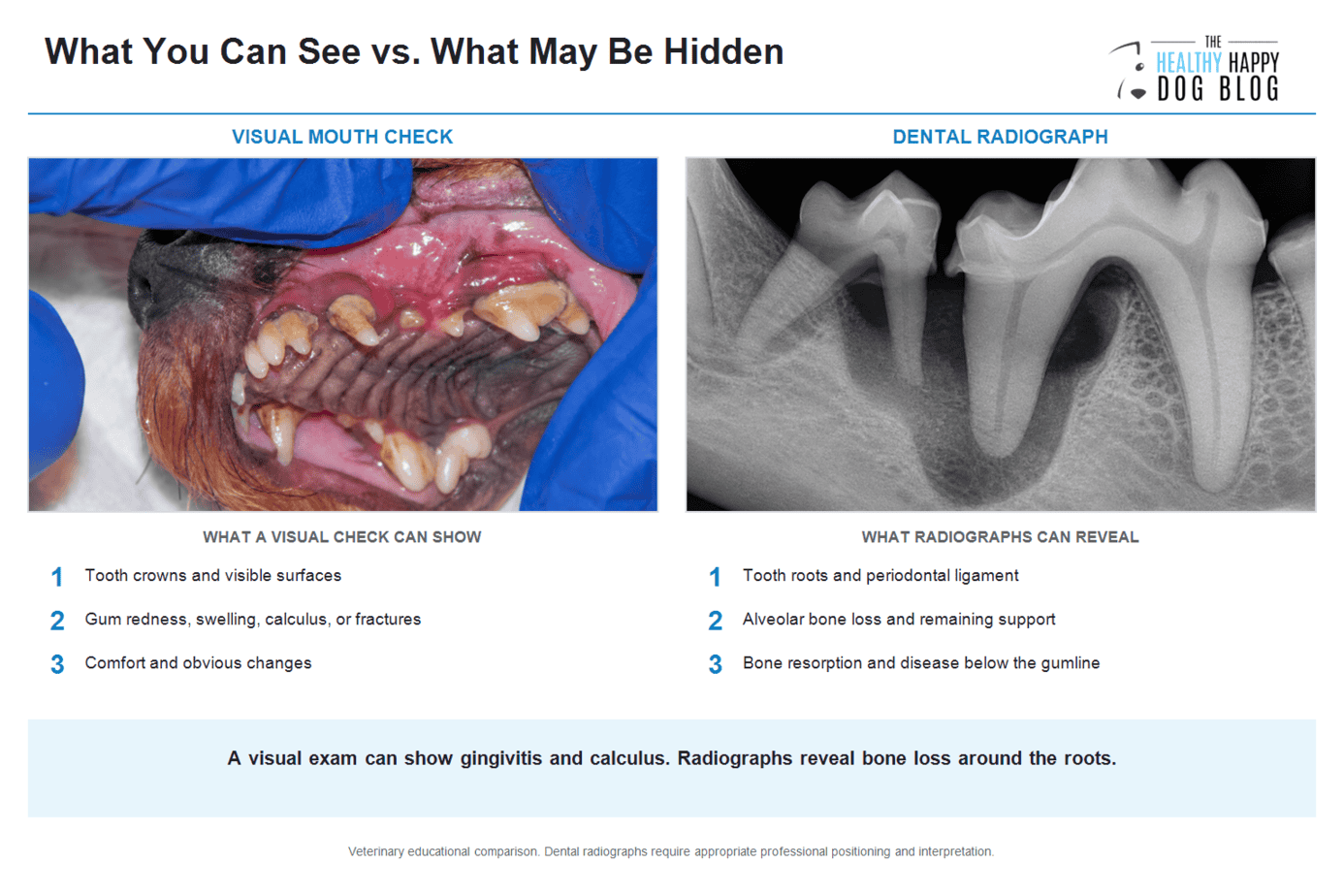
    Veterinary comparison of a dog mouth with severe gingivitis and calculus beside a dental radiograph showing bone loss around tooth roots
    Veterinary educational comparison showing visible gingivitis and calculus beside a canine dental radiograph that reveals bone loss and disease below the gumline.

    Scaling, Periodontal Treatment, and Extraction

    Scaling removes deposits from tooth surfaces, including areas that home tools cannot safely reach. Polishing smooths the surface after scaling. Periodontal treatment addresses diseased supporting tissues. Extraction removes a tooth that cannot be kept comfortable and functional.

    Anesthesia and Individualized Risk Planning

    Anesthesia is an individual medical decision. The plan should consider the dog’s health, needed diagnostics, expected treatment, monitoring, pain control, and recovery.

    Where Carefully Screened Non-Anesthetic Maintenance May Fit

    For a carefully selected dog with a comfortable mouth and no need for hidden-area diagnosis or treatment, non-anesthetic maintenance may have a limited role. It is not a universal substitute for dental radiographs, under-gum examination, or treatment of a painful tooth.

    SituationBest next stepWhy
    Comfortable mouth, little buildup, no concerning changesContinue home preventionHome care is working as prevention
    Persistent odor, visible calculus, mild redness, or gradual chewing changeSchedule an oral assessmentA home look cannot show roots or disease below the gumline
    Pain, facial swelling, bleeding, loose or broken teeth, pus, or refusal to eatSeek prompt professional careThese signs can reflect painful or advanced disease

    A Practical Daily and Weekly Dental Routine

    Best-Supported Routine for a Dog That Accepts Brushing

    Daily:

    1. Take a quick look for comfort, odor, redness, or damage.
    2. Brush the outer tooth surfaces with a soft brush and dog-safe paste.
    3. Feed a fresh, balanced food pattern and support hydration.
    4. Add suitable supervised chewing or a well-chosen oral aid when appropriate.

    Weekly:

    1. Look closely along the gumline and at the back teeth.
    2. Notice changes in breath, visible buildup, chewing, or willingness to be handled.
    3. Check the brush and chews for wear, sharp edges, or damage.

    Monthly:

    1. Ask whether the routine is truly happening.
    2. Keep the parts your dog accepts and simplify what is being skipped.
    3. Schedule an assessment if signs are getting worse.

    Fallback Routine for a Dog That Resists Brushing

    Daily:

    1. Practice a brief, calm lip lift.
    2. Use gauze or a dental wipe on one reachable area.
    3. Offer a suitable supervised chew if the mouth is comfortable.
    4. Use one evidence-supported aid that fits the dog.

    Weekly:

    1. Check the mouth more closely because less plaque is being removed mechanically.
    2. Watch for sudden resistance, one-sided chewing, dropped food, or new odor.
    3. Continue slow desensitization instead of forcing a full brushing session.

    Puppies benefit from gentle handling practice before they need a long cleaning session. Adults need consistency and adjustment as buildup changes. Seniors need the same prevention plus closer attention to comfort and new behavior changes. The best routine is the smallest useful routine you can repeat.
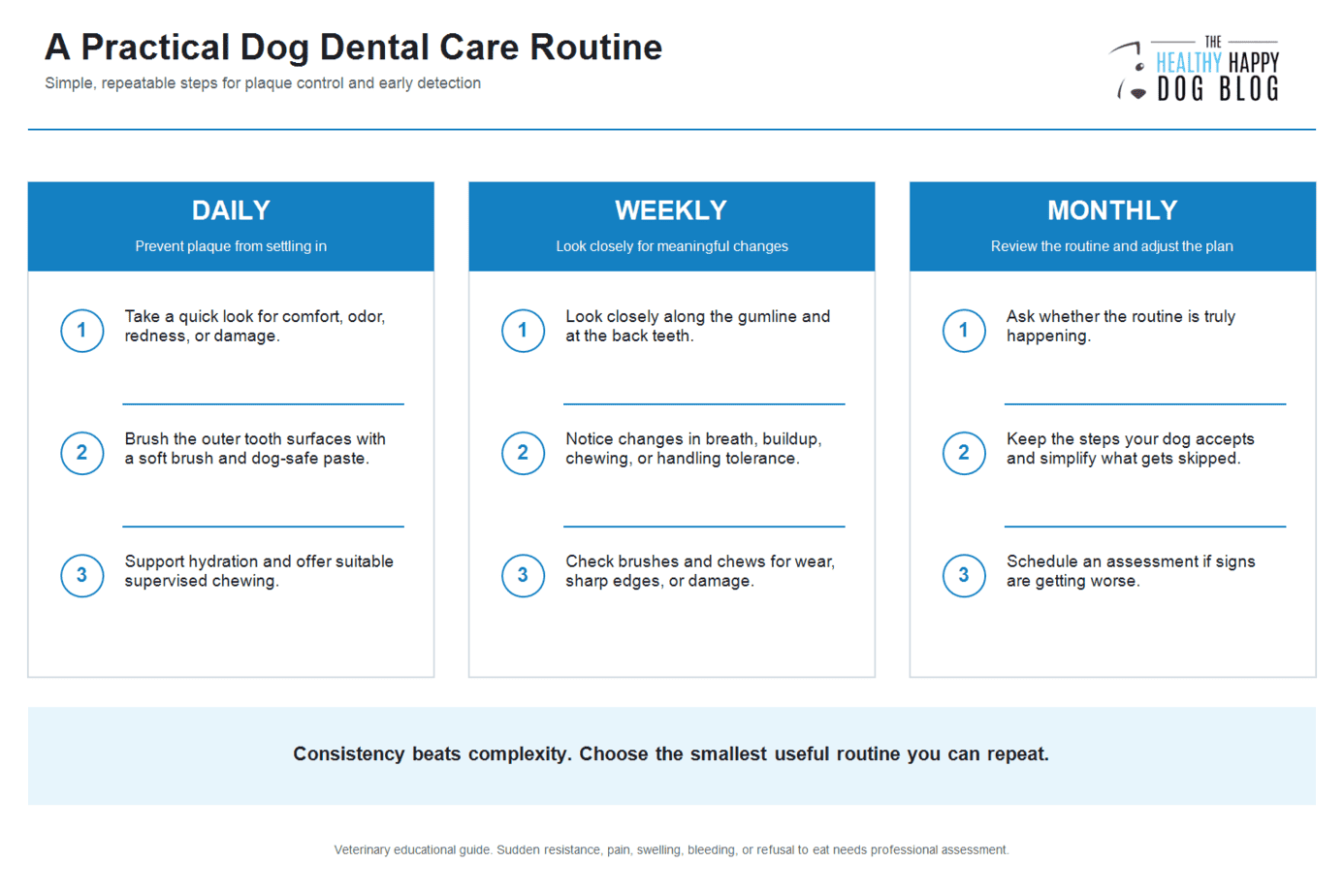
    Branded daily, weekly, and monthly dog dental care routine for plaque control and early detection
    Veterinary educational guide outlining practical daily, weekly, and monthly dog dental care steps for plaque control, routine mouth checks, and timely professional assessment.

    Final Thoughts

    A healthy mouth is built in layers. Regular assessment tells you what the dog needs. Brushing or another form of mechanical contact disrupts plaque. Fresh whole-food nutrition supports tissues and saliva. Suitable chews and carefully chosen microbiome aids can add support. Professional care steps in when home prevention cannot diagnose or treat the problem.

    Begin today with a gentle mouth check and one daily plaque-control habit your dog can accept. Keep the plan simple enough to repeat, and change course when the mouth shows you that more help is needed.

    Frequently Asked Questions

    What is the best natural way to clean a dog’s teeth?

    The most reliable natural foundation is mechanical plaque disruption. Brushing the outer tooth surfaces with a soft brush and dog-safe paste gives you the most control. Suitable chewing, fresh food, hydration, and selected natural aids can support the plan, but they do not replace contact with the tooth surface.

    Can hardened tartar be removed at home?

    Soft plaque can be disrupted at home. Hardened calculus is different. Brushing around it may slow new plaque, but scraping or forcing off deposits at home can injure the gum or tooth and still miss disease below the gumline. Visible heavy calculus is a reason to schedule an assessment.

    Do raw meaty bones really clean dogs’ teeth?

    Controlled research in Beagles found calculus reduction with raw beef bones. [5] A separate controlled study evaluated tooth injuries with autoclaved beef bones, so the evidence should not be read as proof that every bone is safe. [6] A raw meaty bone may help a suitable dog mechanically, but it cannot clean every surface or treat periodontal disease.

    What can I do if my dog will not let me brush?

    Start with a calm lip lift, then try one tooth with gauze or a wipe. Add a suitable supervised chew and one evidence-supported aid if appropriate. Keep checking the mouth, and build tolerance slowly. Sudden resistance may be a sign of pain.

    Can probiotics improve a dog’s dental health?

    They may help support the oral environment, but the evidence is product-specific. A product needs canine oral-health evidence, not only general gut-health claims. Probiotics and postbiotics do not replace brushing, examination, or treatment of a painful tooth.

    References

    1. Cunha, E., et al. (2022). Revisiting periodontal disease in dogs: How to manage this new challenge?
    2. Harvey, C. E., et al. (2015). Effect of frequency of brushing teeth on plaque and calculus accumulation, and gingivitis in dogs.
    3. Santibáñez, R., et al. (2021). Assessment of changes in the oral microbiome that occur in dogs with periodontal disease.
    4. Oba, P. M., et al. (2021). Dental chews positively shift the oral microbiota of adult dogs.
    5. Marx, F. R., et al. (2016). Raw beef bones as chewing items to reduce dental calculus in Beagle dogs.
    6. Pinto, C. F. D., et al. (2020). Evaluation of teeth injuries in Beagle dogs caused by autoclaved beef bones used as a chewing item to remove dental calculus.
  • Dental Health for Westie: No Bad Breath – From Vet

    Dental Health for Westie: No Bad Breath – From Vet

    Hey there, fellow dog parents! I’m Dr. Candy, your friendly holistic vet. Today, let’s talk about a topic that’s close to my heart – Westie Dental Health. As a vet, I can’t stress enough how crucial oral hygiene is for our furry friends. Dental health is a significant part of overall health, especially for our beloved West Highland White Terriers (Westies).

    Westies are known for their playful spirit and adorable white coats, but they are also prone to certain dental health issues. Just like us, their teeth need regular care to prevent problems like gum disease and tooth decay.

    But don’t worry, I’m here to guide you through the ins and outs of Westie oral hygiene. We’ll discuss common dental problems, practical dog dental health tips, and even my recommended dental chews and products. So, let’s get started on our journey to ensuring your Westie’s pearly whites stay healthy and strong!

    As a veterinarian, it’s my duty to guide you through the health challenges your Westie might face. In this article, we’ll focus on Westie Dental Health, an area often overlooked by pet parents until it’s too late. Let’s get into the tell-tale signs of dental disease in Westies, so you can be proactive in your furry friend’s health.

    Signs of Dental Disease

    Unpleasant Breath: While it’s common for dogs to have “doggy breath,” a persistent foul odor can be a sign of underlying dental disease. If your Westie’s breath starts to smell unusually bad, it might be time to check their oral health.

    Difficulty Eating: Westies are known for their hearty appetite. If your dog shows signs of discomfort while eating or loses interest in their food, it could be due to oral pain from dental issues. Watch out for changes in their eating habits.

    Discoloration or Tartar Buildup: Healthy dog teeth should be white or just slightly yellow. If you notice a brownish color or tartar buildup, it’s a clear sign of dental disease. Regular brushing can help prevent this, but once tartar has hardened, professional cleaning might be necessary.

    Bleeding Gums: While brushing your Westie’s teeth or playing tug-of-war, you might notice some blood. This could be a sign of gingivitis or periodontal disease. Don’t ignore bleeding gums as they can lead to more serious issues if left untreated.

    Loose or Missing Teeth: Adult dogs should have 42 teeth. If your Westie is missing any or if their teeth are loose, it’s a sign of advanced dental disease. At this stage, immediate veterinary attention is required.

    Behavioral Changes: Westies are typically lively and energetic. If your dog seems unusually lethargic or irritable, it could be due to dental pain. Keep an eye on their behavior and consult a vet if you notice any drastic changes.

    Remember, prevention is always better than cure. Regular brushing, a proper diet, and routine vet check-ups are key to maintaining your Westie’s dental health. Stay tuned as we explore some common dental health issues in Westies and how to address them in the upcoming sections. Your Westie’s bright, healthy smile is worth the effort!

    Common Dental Health Issues In Westies

    As a veterinarian, I’ve seen my fair share of dental health issues in Westies. This breed is particularly prone to certain conditions that can affect their oral health. Let’s delve into some of the most common ones:

    • Periodontal Disease: This is the most common dental problem in Westies, and it occurs when plaque and tartar build up on your dog’s teeth. If left untreated, it can lead to tooth loss and serious health complications.
    • Gingivitis: This is inflammation of the gums and is often the first stage of periodontal disease. You may notice your Westie’s gums are red, swollen, or bleeding.
    • Tooth Abscess: This painful condition occurs when bacteria infect the root of a tooth, leading to pus accumulation. It can cause severe discomfort and impact your Westie’s overall health.

    Understanding these common dental health issues is key to maintaining your Westie’s oral health. Regular dental check-ups, proper diet, and good oral hygiene practices can go a long way in preventing these conditions. Remember, Westie Dental Health is an integral part of your dog’s overall well-being.

    Next up, we’ll discuss conventional dental health treatments and their potential health obstacles. Stay tuned!

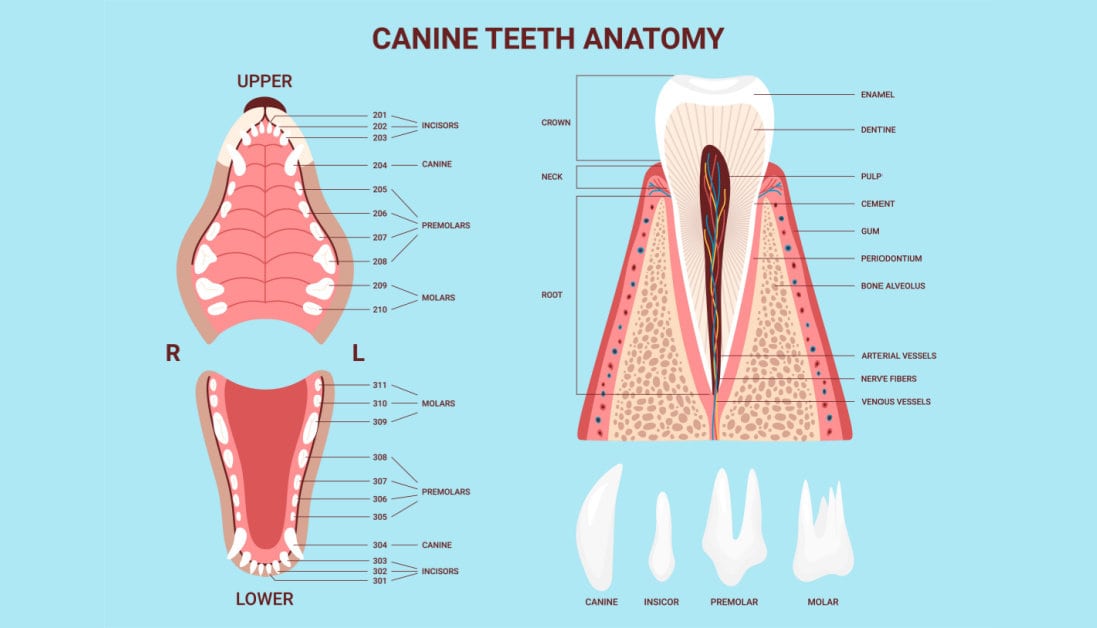
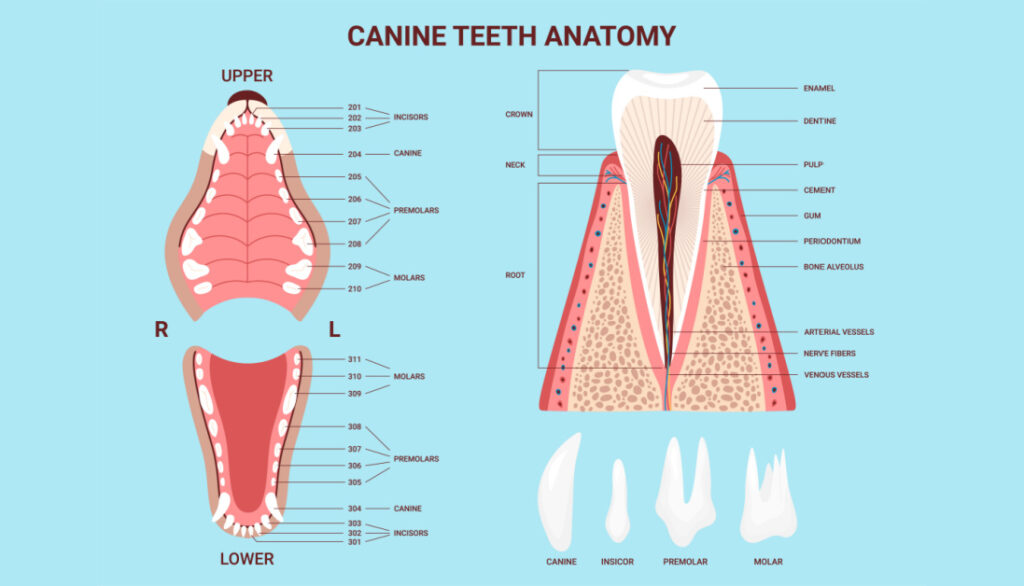
    canine tooth anatomy

    Conventional Dental Health Treatments

    When it comes to maintaining your Westie’s dental health, conventional dental treatments play a vital role. These are typically administered by a professional vet and aim to prevent and treat common dental issues that Westies may face.

    Anesthetic Dental Cleanings

    The gold standard in conventional dental health care for Westies, and indeed most breeds, is anesthetic dental cleanings. This procedure involves placing your pooch under general anesthesia so that a thorough dental examination and cleaning can be performed.

    The process is similar to the dental cleanings we humans receive, but with the added safety measure of anesthesia to prevent any discomfort or stress for your pet. The vet will clean the teeth, gums and mouth, remove plaque and tartar, and check for any signs of oral disease. This procedure is usually recommended to be done annually for optimal Westie dental health.

    Potential Individual Health Obstacles

    While anesthetic dental cleanings are generally safe, there are certain health obstacles that might make the procedure riskier for some Westies. These include:

    • Heart Problems: Westies with heart conditions could face increased risks under anesthesia. Always consult with your vet beforehand.
    • Drug Sensitivities: Some Westies might be sensitive to the anesthesia drugs used during the procedure. Your vet should be made aware of any known drug sensitivities your pet has.
    • Seizures: If your Westie has a history of seizures, the anesthesia could potentially trigger an episode. It’s crucial to discuss this with your vet.
    • Extreme Age: Older Westies could face more risks under anesthesia due to their age and potential underlying health conditions.

    These potential obstacles do not necessarily mean your Westie can’t undergo anesthetic dental cleanings; they just mean you and your vet need to take extra precautions. Regular check-ups and open communication with your vet can help ensure your Westie’s dental health is taken care of in the best possible way.

    Dr. Candy’s Holistic Approach To Oral & Dental Health

    When it comes to Westie dental health, I’m a firm believer in a holistic approach. This means focusing on preventative measures such as a well-balanced diet and the use of oral health specific probiotics. Let’s dive into how these two components can help keep your Westie’s teeth clean and healthy.

    Diet- Low Carbs, Avoid Added Sugars, Enzymes In Fresh Food

    Firstly, diet plays a significant role in your Westie’s dental health. A diet high in carbohydrates and sugars can lead to plaque buildup and tooth decay. Instead, opt for a low-carb diet for your furry friend. This means avoiding foods with added sugars and focusing on fresh foods rich in enzymes. Enzymes found in fresh foods such as raw fruits and vegetables can help break down plaque and tartar, contributing to a healthier mouth.

    • Low-carb foods: These include lean proteins like chicken, turkey, and fish. Vegetables like broccoli, spinach, and kale are also excellent choices.
    • Avoid added sugars: Always check the label of your dog food. Many commercial dog foods contain added sugars, which can be harmful to your Westie’s dental health.
    • Enzymes in fresh food: Foods like apples, carrots, and celery can help clean your Westie’s teeth naturally. They contain enzymes that help break down plaque and tartar.

    Oral Health Specific Probiotics

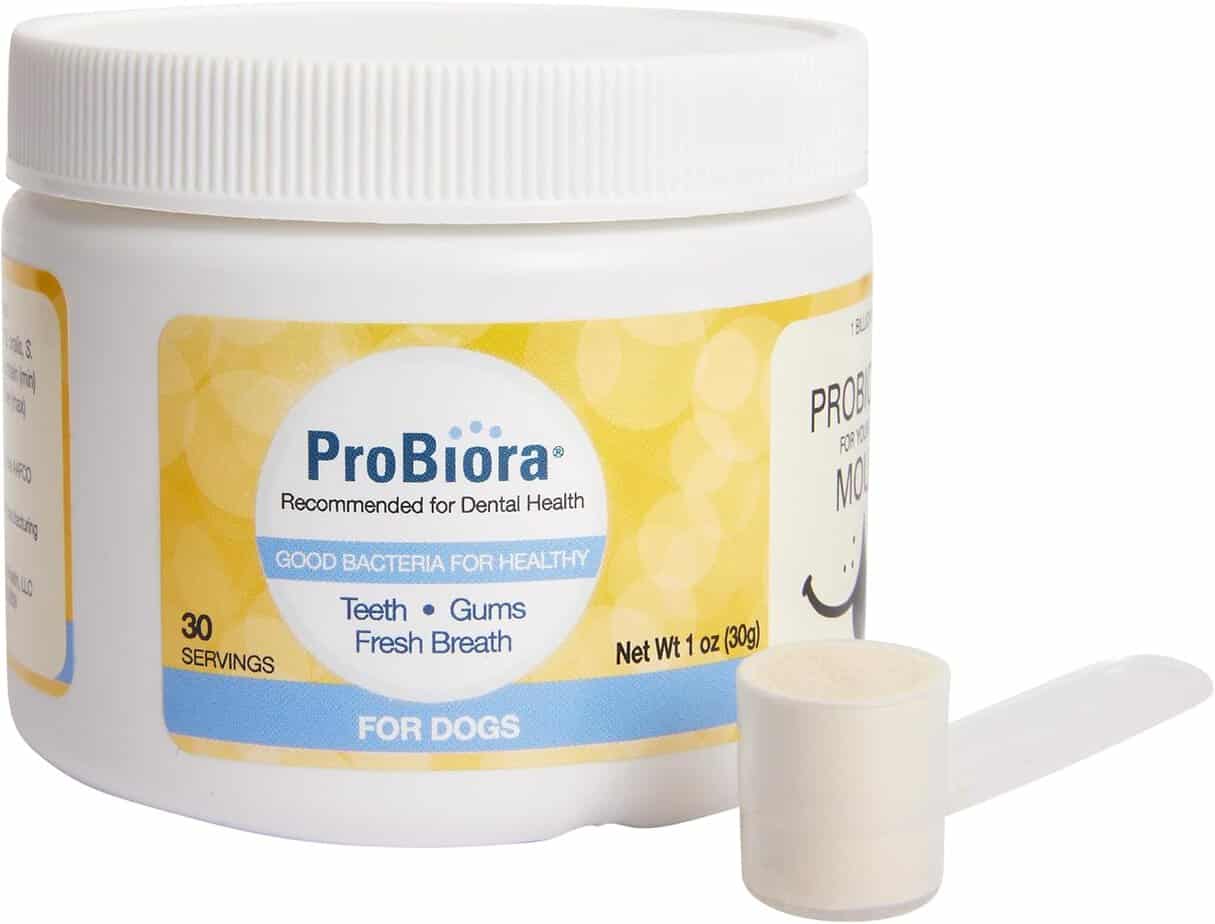
    Next, let’s talk about probiotics. These beneficial bacteria can help maintain a healthy balance in your Westie’s mouth, preventing harmful bacteria from causing dental diseases. I highly recommend Probiora for Dogs, an oral health targeted probiotic. This product is specifically designed to promote oral health, helping to keep your Westie’s teeth and gums in top shape.

    Probiotics work by crowding out harmful bacteria, reducing plaque, and freshening breath. They’re easy to use too. Simply sprinkle the recommended dose on your Westie’s food once a day. You should start to see improvements in your dog’s oral health within a few weeks.

    Remember, a holistic approach to Westie dental health is about more than just brushing your dog’s teeth. It’s about providing them with a diet that supports oral health and using products like probiotics to maintain a healthy balance of bacteria in their mouth. With these strategies, you can help ensure your Westie’s teeth stay clean and healthy for years to come.

    As a pet parent, you might be wondering what the best dental chews and products are for your beloved Westie. But before we delve into that, let’s talk about commercially promoted dental chews. Contrary to popular belief, these chews are not always the healthiest choice for your Westie. Many of these products are packed with artificial ingredients and sugars that can lead to dental issues, rather than prevent them. Furthermore, they often fail to provide the deep cleaning that a dog’s teeth truly need.

    Another product often suggested for canine dental health is drinking water additives. While these may seem like a convenient solution, they can actually harm the beneficial bacteria in your dog’s gut, disrupting their digestive health. It’s essential to remember that your dog’s overall health is interconnected, and what affects one area can impact others.

    Now, let’s turn our attention to healthier alternatives. Dr. Candy recommends focusing on single source natural proteins for dental chews. These include options like tendons, raw marrow bones, and bully sticks.

    Tendons

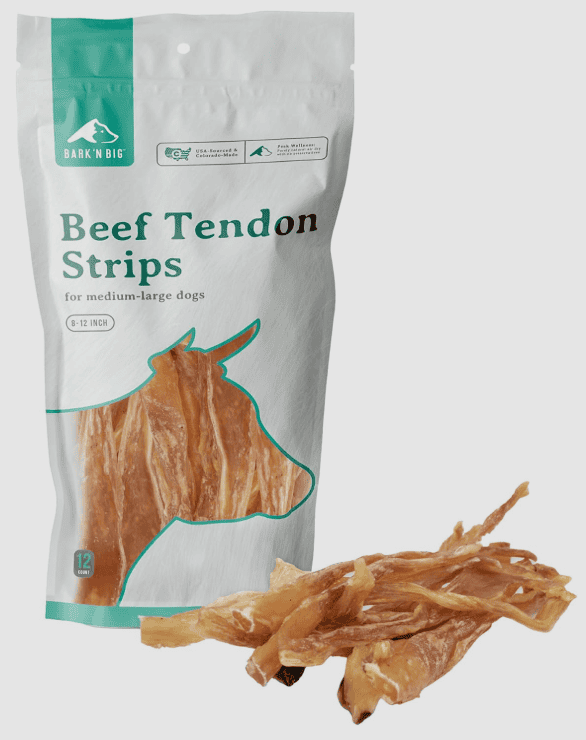
    Tendons are a fantastic natural chew for your Westie. They are tough and fibrous, which helps to scrape off plaque and tartar from your dog’s teeth. Plus, they are a good source of protein and collagen, promoting good joint health.

    beef tendons for dog dental health

    Raw Marrow Bones

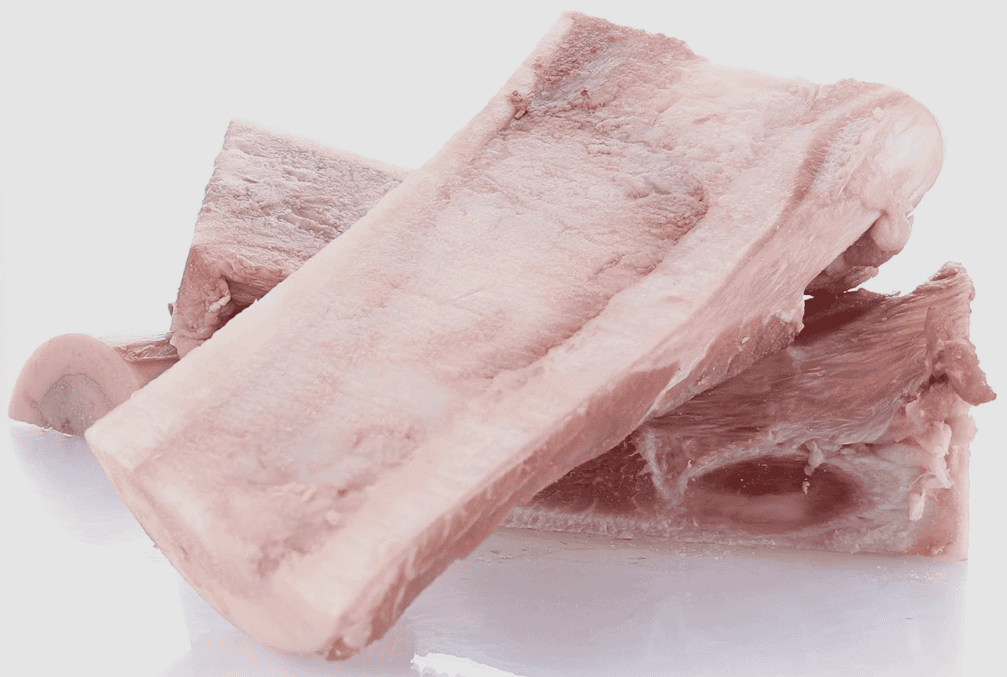
    Raw marrow bones are another excellent choice for maintaining your Westie’s dental health. They are a natural source of calcium and phosphorus, which are essential for healthy teeth and bones. Furthermore, the act of gnawing on bones can help to clean your dog’s teeth and gums.

    raw marrow bones for dogs dental health

    Bully Sticks

    Bully sticks are made from 100% beef muscle, providing a natural and digestible chew for your Westie. They can effectively remove plaque and tartar and are a good source of protein. However, always supervise your dog while they’re chewing on a bully stick to prevent any choking hazard.

    bully sticks for dog dental health

    Remember, no matter what type of chew you choose, supervision is key to preventing any potential choking hazards. And, of course, these chews should be used in conjunction with a good diet and regular check-ups with your vet to ensure your Westie’s dental health is in top condition.

    It’s important to note that every dog is unique, and what works for one Westie may not work for another. Always consult your vet before introducing any new products into your dog’s routine. With the right approach, you can ensure your Westie’s dental health remains in excellent condition, leading to a happier, healthier pup. And isn’t that what we all want for our furry friends?

    Frequently Asked Questions

    1. How can I prevent bad breath in my Westie?

    Regular dental care is essential to prevent bad breath in Westies. Brush your dog’s teeth daily using a dog-specific toothpaste and toothbrush. Additionally, provide dental chews or toys that promote chewing and help remove plaque buildup.

    2. Are there any specific dental treats suitable for Westies?

    Yes, there are dental treats available that are specifically designed for dogs, including Westies. Look for treats that have a texture that helps clean teeth and freshen breath. Consult with your veterinarian to find the most suitable dental treats for your Westie.

    3. How often should I schedule dental check-ups for my Westie?

    It is recommended to schedule a dental check-up with your veterinarian at least once a year for your Westie. Regular dental examinations can help identify any dental issues early on and ensure proper dental health.

    4. Can I use human toothpaste to brush my Westie’s teeth?

    No, you should never use human toothpaste to brush your Westie’s teeth. Human toothpaste contains ingredients that are toxic to dogs if swallowed. Always use a toothpaste specifically formulated for dogs, which is safe for them to ingest.

    5. What are some signs of dental problems in Westies?

    Some common signs of dental problems in Westies include bad breath, excessive drooling, difficulty eating or chewing, swollen or bleeding gums, loose or missing teeth, and reluctance to have their mouth touched. If you notice any of these signs, it is important to consult with your veterinarian for a dental examination.

  • Labrador’s Guide to Dental Health: No Bad Breath – From Vet

    Labrador’s Guide to Dental Health: No Bad Breath – From Vet

    Hi there, fellow dog lovers! I’m Dr. Candy, your friendly holistic veterinarian. Today, I want to talk about a topic that’s crucial to your Labrador’s overall health, but often overlooked – Labrador Dental Health.

    Just like us humans, our furry friends can suffer from a variety of dental health issues. In fact, dental disease is one of the most common health problems in dogs, especially in Labradors. But don’t worry, with proper care and attention, we can keep those canine smiles bright and healthy!

    Good oral hygiene is not just about avoiding bad breath (although that’s a bonus!). It’s about ensuring your Labrador’s overall health and wellbeing. Dental diseases can lead to severe problems like heart disease and kidney disease if left untreated. So, let’s get into it and learn how to keep your Labrador’s teeth clean and healthy, shall we?

    labrador dental health

    Spotting the Signs of Dental Disease in Your Labrador

    As a holistic veterinarian, I can’t stress enough the importance of paying close attention to your Labrador’s dental health. A dog’s mouth can tell us a lot about their overall health, and early detection of dental disease can save your Labrador from a lot of discomfort and potentially serious health issues. So, let’s dive into the signs of dental disease in Labradors.

    Firstly, bad breath is more than just an unpleasant smell. It’s often the first sign of dental disease. While it’s normal for your Labrador to have a certain doggy breath, a strong, foul odor can indicate a problem. Loss of appetite or difficulty eating can also be a sign of dental disease. If your Labrador is suddenly uninterested in their food, or seems to be having trouble chewing, it may be due to oral discomfort or pain.

    Another sign to look out for is changes in chewing habits. Labradors are known for their love of chewing, so if your dog is favoring one side of their mouth or has stopped chewing their favorite toys altogether, it could be a sign of dental discomfort. Excessive drooling or changes in the saliva can also indicate dental disease. If your Labrador’s saliva becomes thick or stringy, or if they start drooling more than usual, it’s time to check their oral health.

    Furthermore, bleeding gums or discolored teeth are clear signs of dental disease. Healthy gums should be pink, not red or white, and teeth should be clean, without any brown or yellow tartar.

    Labrador Dental Health

    Remember, dental disease doesn’t just affect your Labrador’s mouth. It can lead to more serious health problems, including heart, liver, and kidney disease. That’s why it’s essential to keep an eye out for these signs and seek veterinary care if you notice any changes. Regular teeth cleaning and proper oral hygiene can go a long way in preventing dental disease and ensuring your Labrador’s overall well-being.

    Common Dental Health Issues In Labrador

    As a veterinarian, I’ve noticed that Labrador Dental Health is a topic that often goes unnoticed by many pet parents. Labradors, like other breeds, can suffer from a range of dental health issues. Here are some of the most common ones:

    • Periodontal Disease: This is a common issue in Labradors and can lead to tooth loss if not treated. It starts with the build-up of plaque, which hardens into tartar. This can cause inflammation and infection of the gums.
    • Tooth Decay: Just like in humans, dogs can also suffer from tooth decay, often as a result of a diet high in sugars and carbohydrates.
    • Broken Teeth: Labradors are known for their love of chewing, and this can sometimes lead to broken or fractured teeth. These can be painful and can also lead to infection.

    Addressing Labrador Dental Health early on can prevent these issues from developing. Regular teeth cleaning, a healthy diet, and the use of dental chews can all contribute to maintaining your Labrador’s oral health. Remember, your Labrador’s mouth is a window into their overall health, so it’s important to keep it in top shape!

    canine tooth anatomy

    Conventional Dental Health Treatments

    When it comes to maintaining your Labrador’s dental health, there are a number of conventional treatments available that can help keep your furry friend’s teeth clean and healthy.

    Anesthetic Dental Cleanings

    One of the most common treatments is anesthetic dental cleanings. This involves a professional veterinarian performing a thorough cleaning of your Labrador’s teeth under anesthetic. It’s a highly effective way of removing plaque and tartar build-up, as well as addressing any other dental issues that might be present.

    However, as with any procedure involving anesthesia, there are some potential health obstacles to be aware of. These include heart problems, drug sensitivities, seizures, and the effects of age. It’s important to discuss these risks with your vet before deciding on this type of treatment.

    Potential Individual Health Obstacles

    Every Labrador is unique, and as such, may have individual health obstacles when it comes to dental care. For example, Labradors with heart problems may require special care during anesthetic dental cleanings, as anesthesia can sometimes put extra strain on the heart.

    Similarly, some Labradors may have drug sensitivities that can affect how they react to anesthesia. Seizures can also be a concern, as certain anesthetics can potentially trigger a seizure in susceptible dogs.

    Age is another potential obstacle. Older Labradors may have a harder time recovering from anesthesia, and may also be more likely to have underlying health issues that could complicate dental treatments.

    Understanding these potential health obstacles is crucial in ensuring your Labrador receives the best possible dental care. Always consult with your vet to assess your dog’s individual health status and discuss the most appropriate treatment options for your Labrador’s dental health.

    Remember, maintaining your Labrador’s dental health is a crucial part of their overall wellbeing. Regular cleanings and check-ups can help keep their teeth and gums healthy, and prevent more serious health issues down the line.

    Dr. Candy’s Holistic Approach To Oral & Dental Health

    As a passionate advocate for pet health, I firmly believe in a holistic approach to maintaining your Labrador’s dental health. This involves two key components: a balanced, nutritious diet and the use of oral health specific probiotics. Let’s delve into these two aspects.

    A Healthy Diet for Dental Health

    Just like humans, our furry friends’ dental health is significantly influenced by their diet. Here are some dietary guidelines to keep your Labrador’s teeth healthy:

    • Low-Carbs: A diet low in carbohydrates can help prevent the formation of plaque on your Labrador’s teeth. Carbs break down into sugars, which can contribute to tooth decay.
    • Avoid Added Sugars: Sugar is a major culprit in dental diseases. It’s best to avoid dog foods and treats with added sugars.
    • Enzymes In Fresh Food: Fresh foods, particularly raw or lightly cooked meats, contain natural enzymes that can help maintain your Labrador’s oral health. These enzymes can assist in breaking down plaque and tartar build-up.

    Oral Health Specific Probiotics

    In addition to a healthy diet, I recommend incorporating oral health specific probiotics into your Labrador’s routine. Probiotics are beneficial bacteria that can help balance the microflora in your dog’s mouth, thus promoting oral health.

    One product I highly recommend is Probiora for Dogs, an oral health targeted probiotic. This particular probiotic is designed to support your Labrador’s oral health by fighting off harmful bacteria, reducing plaque, and freshening breath. It’s easy to administer, too. Just sprinkle it onto their food once a day.

    Remember, maintaining your Labrador’s dental health is an ongoing commitment. With a balanced diet and the right probiotics, you can help keep your Labrador’s teeth and gums healthy, and their breath fresh. And as always, regular vet check-ups are essential for catching any potential dental issues early.

    So, let’s make a pact to prioritize our Labrador’s dental health, because a healthy mouth means a happy, healthy dog!

    Labrador Dental Health

    The Failure of Commercially Promoted Dental Chews

    As a dedicated dog parent, I know you’re always on the lookout for the best products for your Labrador. However, it’s important to be aware that not all commercially promoted dental chews are as beneficial as they claim. Many of these chews are packed with artificial flavors, colors, and preservatives that can harm your Labrador’s health over time. Moreover, many of these dental chews are too hard, potentially causing tooth fractures, while others are too soft and do not provide the necessary cleaning action.

    Additionally, some products, such as drinking water additives, may seem like a quick fix for your Labrador’s dental health, but they can actually harm the beneficial bacteria in your dog’s gut. These additives alter the pH balance in your dog’s mouth, which can lead to an overgrowth of harmful bacteria.

    Now, let’s discuss some of the recommended dental chews and products that can truly benefit your Labrador’s dental health. The key is to focus on single source natural proteins. Here are a few options:

    Tendons

    Tendons are a fantastic natural chew for your Labrador. They are tough and fibrous, which helps to scrape off plaque and tartar from your dog’s teeth. Plus, they are a good source of protein and collagen, promoting good joint health.

    beef tendons for dog dental health

    Raw Marrow Bones

    Raw marrow bones are another excellent choice for maintaining your Labrador’s dental health. They are a natural source of calcium and phosphorus, which are essential for healthy teeth and bones. Furthermore, the act of gnawing on bones can help to clean your dog’s teeth and gums.

    raw marrow bones for dogs dental health

    Bully Sticks

    Bully sticks are made from 100% beef muscle, providing a natural and digestible chew for your Labrador. They can effectively remove plaque and tartar and are a good source of protein. However, always supervise your dog while they’re chewing on a bully stick to prevent any choking hazard.

    bully sticks for dog dental health

    Remember, while these chews can contribute significantly to your Labrador’s dental health, they are not a substitute for regular teeth cleaning routines and vet check-ups. Always supervise your dog while they are chewing to prevent any choking hazards.

    By prioritizing your Labrador’s dental health, you’re not only ensuring that they have a fresh breath and a beautiful smile, but you’re also helping to prevent serious health issues down the line. Be discerning when it comes to commercial products and always opt for natural, healthy options whenever possible. Your Labrador will thank you for it!

    Frequently Asked Questions

    1. Why is dental health important for my Labrador?

    Dental health is crucial for Labradors as it helps prevent various oral diseases, maintain overall health, and ensures fresh breath.

    2. How often should I brush my Labrador’s teeth?

    It is recommended to brush your Labrador’s teeth at least 2-3 times a week to remove plaque and prevent tartar buildup.

    3. Can I use human toothpaste to brush my Labrador’s teeth?

    No, you should never use human toothpaste for your Labrador. Human toothpaste contains ingredients that can be harmful if swallowed by dogs. Always use toothpaste specifically formulated for dogs.

    4. Are dental chews and toys beneficial for my Labrador’s dental health?

    Yes, dental chews and toys can be beneficial for your Labrador’s dental health. They help in reducing plaque and tartar buildup, promote healthy gums, and provide mental stimulation.

    5. When should I take my Labrador to the vet for a dental check-up?

    It is recommended to take your Labrador to the vet for a dental check-up at least once a year. Regular dental examinations can help identify any potential dental issues early on and ensure proper treatment.

  • German Shepherd Dental Care: Ensuring No Bad Breath – From Vet

    German Shepherd Dental Care: Ensuring No Bad Breath – From Vet

    Hi there, fellow dog parent! I’m Dr. Candy, a holistic veterinarian with a passion for helping our furry friends live their best lives. Today, let’s talk about German Shepherd Dental Health. You might be surprised to learn that dental health is as crucial for our canine companions as it is for us humans. In fact, maintaining good oral hygiene can significantly impact your German Shepherd’s overall health and longevity.

    german shepherd dental health

    German Shepherds, like other breeds, can experience a range of dental problems, from plaque buildup to gum disease. But don’t worry, with proper German Shepherd teeth care and regular check-ups, these issues can be prevented or managed effectively.

    So, whether you’re a seasoned German Shepherd owner or you’ve just welcomed one of these intelligent, loyal dogs into your home, it’s essential to understand the importance of dental hygiene for German Shepherds. Stick with me as we explore everything you need to know about German Shepherd oral health, including common dental problems and how to keep those pearly whites sparkling clean with effective German Shepherd tooth brushing techniques.

    Dental Hygiene for German Shepherds

    Imagine being greeted by your German Shepherd after a long day, only to be welcomed by a waft of bad breath. That’s not the warm welcome you were hoping for, right? Now, let’s switch the roles; how do you think your furry friend feels about having a mouth full of plaque and possible tooth decay? Not so great, I bet. That’s why German Shepherd dental health is so crucial.

    German Shepherds, like other breeds, can suffer from various dental problems if their oral health isn’t properly maintained. This can lead to discomfort, bad breath, and even serious health issues. But don’t worry, I’m here to guide you through the process of maintaining your German Shepherd’s dental health.

    canine tooth anatomy

    German Shepherd Dental Care: Ensuring No Bad Breath

    As a dedicated veterinarian, I can’t stress enough how important German Shepherd dental health is. Just like in humans, poor dental health in your German Shepherd can lead to serious health issues. Ensuring no bad breath is just one of the ways to maintain your dog’s dental hygiene.

    Bad breath in dogs is often a sign of underlying dental problems. It’s crucial to regularly check your German Shepherd’s teeth and gums for any signs of disease. Here are some tips to ensure your German Shepherd’s dental health:

    • Regular Brushing: Brush your German Shepherd’s teeth at least three times a week. This helps remove plaque and prevent tartar buildup.
    • Use Dog-Specific Toothpaste: Human toothpaste can be harmful to dogs. Use a toothpaste specifically designed for dogs.
    • Provide Dental Chews: Dental chews can help clean your dog’s teeth and freshen their breath. We will cover the kind of dental chews we recommend further down, so stay tuned!

    Remember, German Shepherd teeth care is not just about preventing bad breath. It’s about ensuring overall oral health. Regular vet check-ups are also essential. Your vet can perform a thorough dental examination and provide professional cleaning if necessary.

    German Shepherd Teeth Cleaning

    As a loving German Shepherd parent, you’re probably aware of how important dental health is for your furry friend. German Shepherd Dental Health isn’t something to be overlooked. One of the most effective ways to maintain your pet’s oral health is through regular tooth brushing.

    Why Is Teeth Brushing Important?

    Brushing your German Shepherd’s teeth can help prevent a variety of dental problems. It removes plaque and tartar, preventing gum disease, tooth decay, and even tooth loss. It also helps keep your dog’s breath fresh. Moreover, good oral health can prevent potential health obstacles like heart problems, as bacteria from the mouth can travel to other parts of the body.

    How Often Should You Brush Your German Shepherd’s Teeth?

    Ideally, you should brush your German Shepherd’s teeth daily. However, if that’s not possible, aim for at least three times a week. Regular brushing will keep your pet’s mouth healthy and free from disease.

    The Right Tools for Tooth Brushing

    When it comes to brushing your German Shepherd’s teeth, using the right tools is essential. Use a toothbrush designed for dogs and a dog-friendly toothpaste. Human toothpaste can be harmful to dogs, so make sure to get a product specifically made for them.

    • Dog Toothbrush: A dog toothbrush has softer bristles and a longer handle than a human one, making it easier to reach all areas of your dog’s mouth.
    • Dog Toothpaste: Dog toothpaste is safe for dogs to swallow and comes in flavors that are more appealing to them.

    Brushing Your German Shepherd’s Teeth

    Start by introducing the toothbrush and toothpaste to your German Shepherd. Let them sniff and lick the toothpaste off the brush. Once they’re comfortable, gently lift their lips and brush their teeth in a circular motion. Make sure to brush the gum line as that’s where most plaque and tartar accumulate. Remember to always make the experience positive for your German Shepherd. Praise them and give them a treat after each brushing session to make it something they look forward to.

    Remember, maintaining your German Shepherd’s dental health doesn’t just mean a fresh breath and a beautiful smile. It’s about ensuring your furry friend’s overall well-being and happiness. So, let’s make dental care a priority, shall we?

    german shepherd dental health

    Diet for Dental Health

    As a responsible German Shepherd parent, you may already be aware that a well-balanced diet plays a significant role in your furry friend’s overall health. But, did you know that it also significantly impacts your German Shepherd’s dental health? Yes, you heard that right!

    Feeding your German Shepherd a low-carb diet can help maintain their dental health. Carbohydrates, especially those from processed foods, can stick to your dog’s teeth and lead to plaque buildup, which eventually results in dental diseases. So, try to limit the amount of carbs in your dog’s diet, particularly those from processed foods.

    Just like in humans, added sugars are no good for your German Shepherd’s teeth. They can lead to tooth decay and other dental problems. Therefore, always check the sugar content in the food and treats you give your German Shepherd.

    Furthermore, incorporating enzymes in fresh foods into your German Shepherd’s diet can be beneficial for their dental health. Fresh foods like apples, carrots, and celery can act as natural toothbrushes, scrubbing off plaque from your dog’s teeth as they chew. Plus, they contain enzymes that promote oral health.

    Oral Health Specific Probiotics

    Probiotics aren’t just for gut health; they can also work wonders for your German Shepherd’s dental health. Oral health specific probiotics, like Probiora for Dogs, can help balance the bacteria in your dog’s mouth, preventing plaque buildup and promoting healthier gums and teeth.

    These probiotics are easy to administer. You can simply sprinkle the recommended dose on your German Shepherd’s food once a day. They are tasteless and odorless, so your dog won’t even notice it’s there.

    Remember, maintaining your German Shepherd’s dental health is just as important as looking after their physical health. A healthy mouth can lead to a happier, healthier dog. So, make sure to include dental care in your regular pet care regimen. Your German Shepherd will thank you for it!

    Dental Chews and Products: What Works and What Doesn’t

    When it comes to German Shepherd dental health, there’s a lot of information out there, and it’s crucial to discern what’s beneficial from what’s not. One topic that often comes up is the use of dental chews. While these might seem like an easy solution, it’s important to understand that not all chews are created equal.

    Commercially promoted dental chews often contain artificial ingredients that can be harmful to your German Shepherd’s health. They also may not be effective in maintaining dental hygiene, as they often fail to reach all areas of the mouth. These chews tend to focus on masking bad breath rather than addressing the root cause of dental issues, which is plaque and tartar buildup.

    The Impact of Drinking Water Additives

    Another popular product for promoting dental health is drinking water additives. These products claim to improve oral health by killing bacteria in your dog’s mouth. However, they can also harm the beneficial bacteria in your dog’s gut. This is important to note because a healthy gut microbiome is vital for your German Shepherd’s overall health, including their immune system and digestion.

    So, what should you use for your German Shepherd’s dental health? The answer lies in single source natural proteins. These are dental chews made from natural sources like tendons, raw marrow bones, and bully sticks.

    Tendons

    Tendons are a fantastic natural chew for your German Shepherd. They are tough and fibrous, which helps to scrape off plaque and tartar from your dog’s teeth. Plus, they are a good source of protein and collagen, promoting good joint health.

    beef tendons for dog dental health

    Raw Marrow Bones

    Raw marrow bones are another excellent choice for maintaining your German Shepherd’s dental health. They are a natural source of calcium and phosphorus, which are essential for healthy teeth and bones. Furthermore, the act of gnawing on bones can help to clean your dog’s teeth and gums.

    raw marrow bones for dogs dental health

    Bully Sticks

    Bully sticks are made from 100% beef muscle, providing a natural and digestible chew for your German Shepherd. They can effectively remove plaque and tartar and are a good source of protein. However, always supervise your dog while they’re chewing on a bully stick to prevent any choking hazard.

    bully sticks for dog dental health

    Remember, the key to good German Shepherd dental health is regular and consistent care. Brushing your dog’s teeth daily, providing the right chews, and scheduling regular veterinary dental check-ups are all crucial for keeping their teeth and gums healthy. With these steps, you can ensure that your German Shepherd’s breath stays fresh and their smile stays bright!

    Frequently Asked Questions

    1. How often should I brush my German Shepherd’s teeth?

    It is recommended to brush your German Shepherd’s teeth at least 2-3 times a week to maintain good dental hygiene and prevent bad breath.

    2. Can I use regular human toothpaste for my German Shepherd?

    No, you should never use human toothpaste for your German Shepherd. Human toothpaste contains ingredients that can be harmful if swallowed by dogs. Instead, use a toothpaste specifically formulated for dogs.

    3. What are some signs of dental problems in German Shepherds?

    Some common signs of dental problems in German Shepherds include bad breath, yellow or brown tartar buildup, swollen or bleeding gums, difficulty chewing, and loss of appetite.

    4. Are dental chews effective in maintaining my German Shepherd’s dental health?

    Dental chews can be a helpful addition to your German Shepherd’s dental care routine. They can help reduce plaque and tartar buildup, promote healthy gums, and freshen breath. However, they should not be the sole method of dental care and regular brushing is still necessary.

    5. When should I take my German Shepherd to the vet for a dental check-up?

    It is recommended to take your German Shepherd to the vet for a dental check-up at least once a year. However, if you notice any signs of dental problems or have concerns about your dog’s oral health, it is best to consult with a veterinarian as soon as possible.

  • Bulldog Oral Hygiene: Fresh Breath Tips – From Vet

    Bulldog Oral Hygiene: Fresh Breath Tips – From Vet

    Hello there, fellow dog parent! As a holistic veterinarian, I can’t stress enough the importance of dental health in our beloved pets. Bulldog dental health, in particular, is an area that requires special attention. Bulldogs, with their unique jaw structure and adorable wrinkled faces, are prone to specific dental issues that can impact their overall health if not addressed promptly.

    Just like in humans, poor oral hygiene in bulldogs can lead to a host of problems, from bad breath and tooth loss to more serious conditions like heart disease. That’s why it’s crucial to maintain your bulldog’s teeth cleaning routine and understand the common dental problems in bulldogs.

    Whether you’re dealing with bulldog dental care for the first time or looking for new ways to improve your furry friend’s oral health, I’m here to guide you. Let’s explore the world of bulldog oral hygiene together and ensure your pet’s smile stays as bright and healthy as their personality!

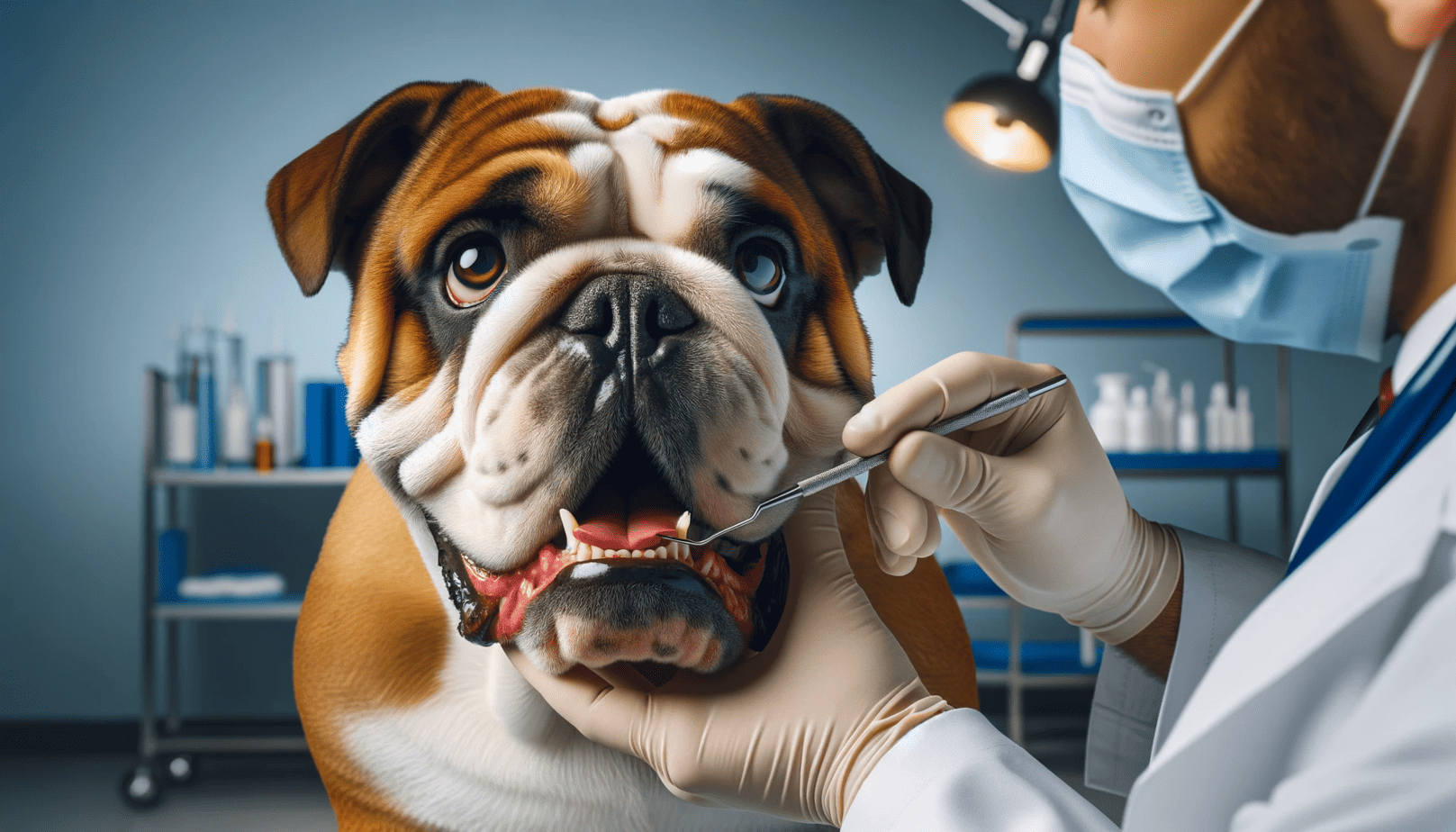
    bulldog dental health

    Signs of Dental Disease in Bulldogs

    As a holistic veterinarian, I’ve seen firsthand how dental health can affect the overall wellbeing of your beloved bulldog. Bulldogs are known for their distinctive looks and charming personalities, but they’re also prone to dental issues. Understanding the early signs of dental disease can help you take immediate action and prevent further complications. Let’s explore some of the common signs of dental disease in bulldogs.

    Bad breath is often the first sign of potential dental problems. While it’s normal for your bulldog to have a certain ‘doggy breath’, a sudden change in their breath’s odor could indicate underlying dental issues. If you notice a foul or unusually strong smell, it’s time to consult your vet.

    Another sign to watch out for is a change in eating habits. Bulldogs love their food, and a sudden loss of appetite or difficulty eating could be a sign of oral discomfort. If your bulldog is eating less, chewing on one side, or dropping food while eating, these could be signs of dental disease.

    Excessive drooling, bleeding gums, or visible tartar buildup are also common signs of dental problems. If your bulldog is drooling more than usual or if you notice blood on their toys or in their water bowl, it’s crucial to get their teeth checked. Tartar buildup, which appears as brown or yellow stains on the teeth, can lead to gum disease if not addressed promptly.

    Finally, changes in behavior can also indicate dental issues. If your bulldog seems more irritable than usual, is pawing at their mouth, or is less interested in playtime, they could be experiencing oral discomfort.

    Remember, early detection is key when it comes to bulldog dental health. Don’t ignore these signs – your bulldog’s oral health is an integral part of their overall wellbeing. Regular dental check-ups with your vet can help keep your bulldog’s mouth healthy and their tail wagging.

    Common Dental Health Issues In Bulldogs

    As a veterinarian, I’ve noticed that Bulldogs are particularly prone to certain dental health issues. Understanding these can help you maintain optimal Bulldog dental health.

    • Periodontal Disease: This is a common issue in Bulldogs, characterized by inflammation and infection of the tissues surrounding the teeth. If left untreated, it can lead to tooth loss.
    • Gingivitis: This is an early stage of periodontal disease where the gums become red, swollen, and bleed easily. Regular teeth cleaning can prevent gingivitis.
    • Halitosis: Also known as bad breath, this is often a sign of underlying dental issues in Bulldogs.

    It’s important to note that Bulldogs have a unique jaw structure, which can lead to overcrowded and misaligned teeth. This makes them more susceptible to plaque buildup and tartar, ultimately leading to dental diseases.

    Regular dental check-ups are essential to identify these problems early. As a pet parent, you should be aware of changes in your Bulldog’s eating habits, excessive drooling, or signs of discomfort while chewing. These could indicate a dental health problem.

    Remember, maintaining good Bulldog dental health is not just about fresh breath and a shiny coat, but also about preventing serious health issues. A healthy mouth contributes to a healthy, happy Bulldog!

    canine tooth anatomy

    Conventional Dental Health Treatments for Bulldogs

    When it comes to Bulldog Dental Health, there are several conventional treatment methods that veterinarians usually recommend. These treatment methods are aimed at maintaining your bulldog’s oral hygiene and preventing any dental problems.

    Anesthetic Dental Cleanings

    The most common dental treatment for bulldogs is anesthetic dental cleanings. This procedure involves putting your bulldog under general anesthesia. The vet then performs a thorough cleaning of your bulldog’s teeth, gums, and oral cavity. This method is highly effective in removing plaque and tartar build-up that can lead to dental diseases.

    While anesthetic dental cleanings can be highly beneficial, they are not without risks. The use of anesthesia can lead to potential complications, especially in breeds like bulldogs that are known to have breathing issues. Therefore, it’s crucial that a pre-anesthetic evaluation including bloodwork and a physical examination is done to assess the overall health of your bulldog before proceeding with the cleaning.

    Potential Individual Health Obstacles

    While conventional dental treatments can greatly help improve your bulldog’s oral health, there are potential individual health obstacles that need to be considered. Bulldogs are prone to certain health conditions that can complicate dental treatments.

    • Heart Problems: Bulldogs are prone to heart conditions. This can make the use of anesthesia risky as it can potentially affect your bulldog’s heart function.
    • Drug Sensitivities: Bulldogs can be sensitive to certain drugs, including those used for anesthesia. This can cause adverse reactions during dental procedures.
    • Seizures: Bulldogs are also prone to seizures, which can be triggered by stress or certain medications.
    • Extreme Age: Older bulldogs may face additional risks with anesthesia and dental procedures. Their overall health and wellness must be thoroughly evaluated before any procedure.

    It’s essential to discuss these potential health obstacles with your veterinarian before any dental procedure. Together, you can make the best decision for your bulldog’s dental health and overall well-being.

    Dr. Candy’s Holistic Approach To Oral & Dental Health

    As a veterinarian, I’ve seen how oral health issues can affect a bulldog’s overall health and quality of life. That’s why I’m a big advocate for a holistic approach to bulldog dental health, focusing on diet and oral health specific probiotics. Let’s dive into these two crucial components.

    Diet: Low Carbs, Avoid Added Sugars, Enzymes in Fresh Food

    Many people don’t realize how much a bulldog’s diet can impact their dental health. A diet high in carbohydrates can lead to plaque build-up and dental disease. So, I recommend a low-carb diet for your bulldog. This can help prevent dental issues and keep your bulldog’s teeth clean and healthy.

    Also, avoiding added sugars is crucial. Sugar is a primary food source for harmful bacteria in your bulldog’s mouth. By limiting their sugar intake, you can help prevent these bacteria from thriving and causing dental problems.

    Lastly, enzymes in fresh food can be beneficial for your bulldog’s oral health. Fresh fruits and vegetables contain natural enzymes that can help break down plaque and tartar. Incorporating fresh foods like apples, carrots, and green beans into your bulldog’s diet can aid in maintaining a healthy mouth.

    Oral Health Specific Probiotics

    Probiotics aren’t just for gut health; they can also play a significant role in maintaining your bulldog’s oral health. Oral health specific probiotics, like Probiora for Dogs, can help balance the bacteria in your bulldog’s mouth, preventing harmful bacteria from causing dental disease.

    Probiora for Dogs is a product I often recommend. It’s an oral health targeted probiotic that can help maintain a healthy balance of bacteria in your bulldog’s mouth. It’s easy to use – you simply sprinkle it on your bulldog’s food once a day. Many of my clients have seen significant improvements in their bulldogs’ oral health after using this product.

    Remember, bulldog dental health isn’t just about regular teeth cleanings; it’s also about maintaining a healthy diet and using products like Probiora for Dogs to support a healthy oral microbiome. By taking a holistic approach, you can help ensure your bulldog has a healthy mouth and a happier, healthier life.

    bulldog dental hygine

    Many dog parents believe that commercially promoted dental chews are a good way to maintain their bulldog’s dental health. However, these products often fall short of their promises. They are full of artificial ingredients, added sugars, and unhealthy preservatives that can lead to plaque buildup, tooth decay, and even gum disease. Furthermore, they can harm the beneficial bacteria in your bulldog’s gut, particularly when combined with drinking water additives.

    As a responsible bulldog parent, it’s essential to prioritize the use of natural, healthy alternatives for your pet’s oral hygiene. Single source natural proteins like tendons, raw marrow bones, and bully sticks are highly recommended. Let’s take a closer look at these options.

    Tendons

    Tendons are a fantastic natural chew for your bulldog. They are tough and fibrous, which helps to scrape off plaque and tartar from your dog’s teeth. Plus, they are a good source of protein and collagen, promoting good joint health.

    beef tendons for dog dental health

    Raw Marrow Bones

    Raw marrow bones are another excellent choice for maintaining your bulldog’s dental health. They are a natural source of calcium and phosphorus, which are essential for healthy teeth and bones. Furthermore, the act of gnawing on bones can help to clean your dog’s teeth and gums.

    raw marrow bones for dogs dental health

    Bully Sticks

    Bully sticks are made from 100% beef muscle, providing a natural and digestible chew for your bulldog. They can effectively remove plaque and tartar and are a good source of protein. However, always supervise your dog while they’re chewing on a bully stick to prevent any choking hazard.

    bully sticks for dog dental health

    In conclusion, maintaining your bulldog’s dental health is more than just brushing their teeth. Incorporating natural chews into their routine can help keep their teeth clean, their breath fresh, and their overall health in check. Remember, always consult with your vet before introducing any new products into your bulldog’s diet.

    Frequently Asked Questions

    1. How often should I brush my bulldog’s teeth?

    It is recommended to brush your bulldog’s teeth at least 2-3 times a week to maintain good oral hygiene and fresh breath.

    2. What kind of toothbrush and toothpaste should I use for my bulldog?

    Use a soft-bristled toothbrush specifically designed for dogs. Avoid using human toothpaste as it may contain ingredients that can be harmful to dogs. Instead, use a dog-friendly toothpaste that is safe for ingestion.

    3. My bulldog refuses to let me brush his teeth. What should I do?

    If your bulldog is resistant to teeth brushing, start by getting him used to the process gradually. Begin by gently touching his gums and teeth with your finger, then introduce a toothbrush with some dog-friendly toothpaste. Make the experience positive by rewarding him with treats and praise. If the resistance persists, consult your vet for alternative oral hygiene options.

    4. Are dental chews and toys effective in maintaining my bulldog’s oral health?

    Dental chews and toys can be beneficial in promoting oral health by reducing plaque and tartar buildup. However, they should not replace regular teeth brushing. Use them as a supplement to your bulldog’s oral hygiene routine, but remember that brushing is still the most effective method for maintaining fresh breath and healthy teeth.

    5. How can I prevent bad breath in my bulldog?

    In addition to regular teeth brushing, you can prevent bad breath in your bulldog by providing a balanced diet, avoiding table scraps, and ensuring proper hydration. Regular dental check-ups with your vet are also important to identify and address any underlying dental issues that may contribute to bad breath.

  • Border Collie Eye Health – Conditions & Solutions From Vet

    Border Collie Eye Health – Conditions & Solutions From Vet

    Border Collies are intelligent, active dogs whose eye health deserves careful attention. Some eye conditions are inherited, while others can affect any dog through injury, inflammation, infection, age-related change, or another underlying problem. Knowing what to watch for can help you seek veterinary care promptly and make informed decisions about screening.

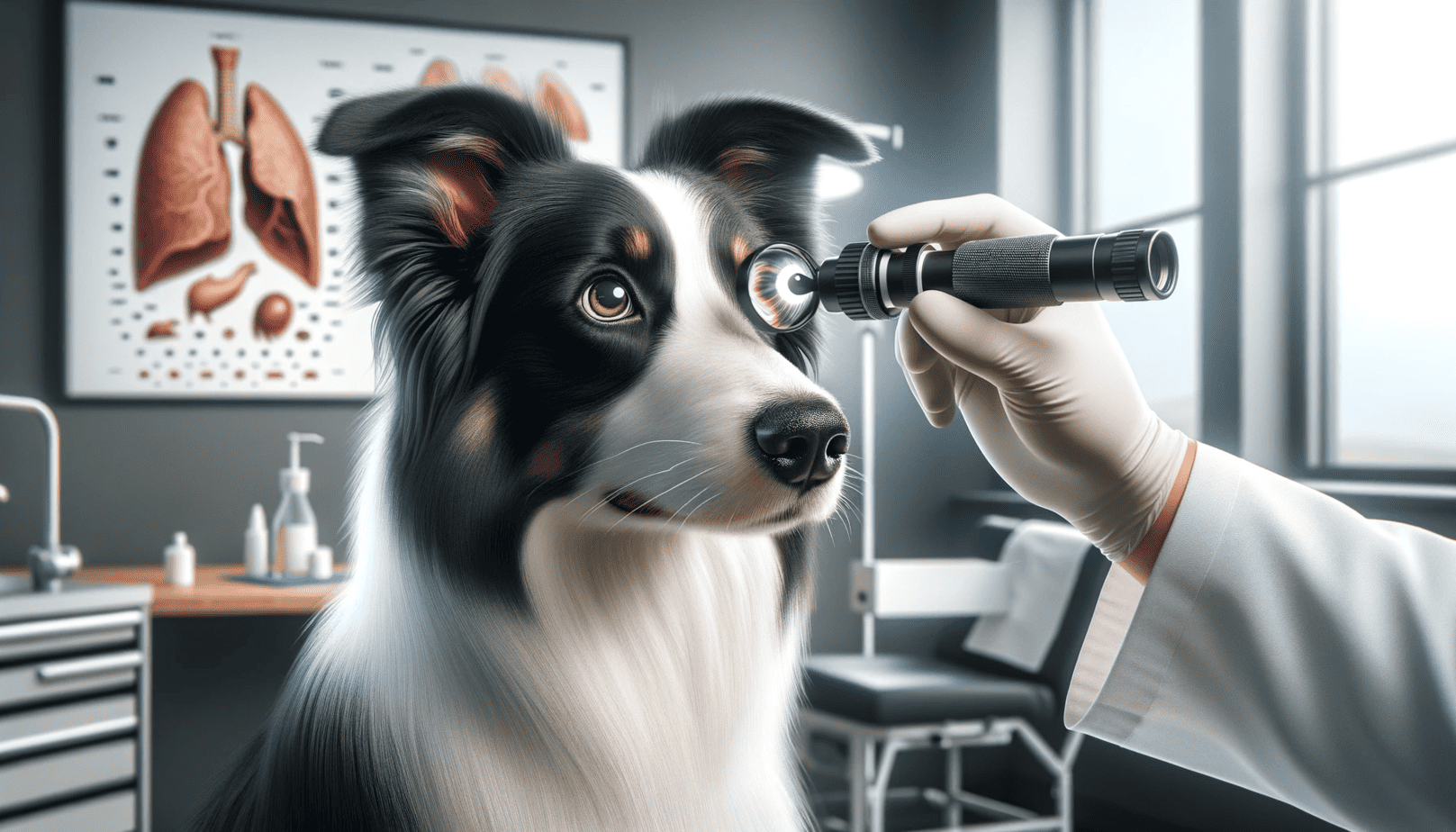
    Border Collie receiving an eye examination from a veterinarian

    When Eye Symptoms Need Prompt Veterinary Care

    Eye problems can become painful or threaten vision quickly. Contact a veterinarian promptly if your Border Collie has any of the following:

    • Squinting, holding an eye closed, or obvious eye pain
    • Sudden cloudiness, a blue appearance, or a visible change inside the eye
    • Redness accompanied by discharge, swelling, or frequent rubbing
    • A suspected scratch, puncture, foreign object, or chemical exposure
    • A sudden change in vision, bumping into objects, or difficulty navigating in dim light
    • Unequal pupils, a bulging eye, bleeding, or an eye that looks displaced

    Do not use human redness-relief drops or leftover prescription medication unless your veterinarian specifically directs you to do so. Different eye conditions can look similar, and the wrong product may delay diagnosis or worsen an injury.

    Inherited Eye Concerns in Border Collies

    Collie Eye Anomaly

    Collie Eye Anomaly (CEA) is an inherited developmental disorder affecting structures at the back of the eye. Severity varies. Some affected dogs have mild changes that do not noticeably impair vision, while more severe abnormalities can be associated with retinal detachment or vision loss. Because the condition is inherited and present early in life, screening and responsible breeding decisions matter.

    The Orthopedic Foundation for Animals lists a DNA test for CEA in Border Collies. A DNA test can help identify genetic status, but it does not replace a complete eye examination by a veterinarian or veterinary ophthalmologist.

    Progressive Retinal Atrophy

    Progressive Retinal Atrophy (PRA) describes inherited retinal diseases that gradually damage the light-sensitive tissue at the back of the eye. Night-vision difficulty is often noticed before daytime vision changes. PRA is not painful, but it can progress to blindness. There is no routine treatment that reverses retinal degeneration, so accurate diagnosis and guidance on home adaptation are important.

    Regular eye examinations can help identify retinal abnormalities. Owners who notice hesitation in dark rooms, difficulty on stairs at night, unusually dilated pupils, or increased eye shine should arrange an examination rather than assuming the change is normal aging.

    Labeled cross-section of canine eye anatomy showing the cornea, iris, lens, retina, choroid, sclera, and optic nerve

    Other Eye Problems Border Collie Owners May Encounter

    Not every eye problem in a Border Collie is inherited or breed-specific. The following conditions can occur in many dogs and require an examination to distinguish one from another:

    • Corneal injuries and ulcers: Damage to the clear surface of the eye may cause pain, tearing, redness, and squinting. Corneal ulcers require prompt veterinary treatment.
    • Conjunctivitis: Inflammation of the tissues around the eye may be associated with irritation, allergy, infection, eyelid problems, dry eye, or another condition. Redness alone does not identify the cause.
    • Cataracts: A cataract is an opacity within the lens. Cataracts differ from the normal age-related change called nuclear sclerosis, so a veterinary examination is needed.
    • Glaucoma: Increased pressure inside the eye can be painful and vision-threatening. Sudden redness, cloudiness, enlargement, or severe discomfort is urgent.
    • Dry eye: Inadequate tear production can cause irritation, thick discharge, redness, and recurrent corneal damage.

    How Veterinarians Evaluate Eye Problems

    The tests used depend on the symptoms and examination findings. A veterinarian may assess vision and pupil responses, examine the eyelids and surrounding tissues, measure tear production, apply fluorescein stain to look for corneal damage, measure pressure inside the eye, or examine the lens and retina. Referral to a board-certified veterinary ophthalmologist may be recommended for inherited disease, surgery, advanced imaging, or a problem that threatens vision.

    For dogs used in a breeding program, the OFA Companion Animal Eye Registry explains eye certification examinations and breeding recommendations. Screening results should be interpreted with the dog’s veterinarian and the applicable breed program.

    Nutritional Support for Eye Health

    A complete and balanced diet should remain the foundation of your Border Collie’s nutrition. Foods and supplements may provide general nutritional support, but they do not prevent, reverse, or treat Collie Eye Anomaly, Progressive Retinal Atrophy, glaucoma, cataracts, corneal ulcers, or another diagnosed eye condition.

    Freeze-dried blueberries and liver treats with a Border Collie in the background

    Eyeplex by Standard Process

    Eyeplex by Standard Process is one option Dr. Candy uses for targeted nutritional support when it is appropriate for an individual dog. Standard Process describes Eyeplex as supporting ocular health and normal eye function. It contains vitamins and a proprietary blend of whole-food and animal-derived ingredients, and it contains wheat. Because supplements can overlap with a dog’s diet, medications, and medical conditions, ask your veterinarian whether Eyeplex is appropriate and how it should be used for your dog.

    For more information, read Dr. Candy’s Eyeplex guide for dogs and review the Eyeplex product details.

    Freeze-Dried Blueberries

    Plain, unsweetened freeze-dried blueberries can be offered as an occasional treat. Blueberries contain naturally occurring antioxidants, including anthocyanins, but they should not be presented as a treatment for eye disease. Choose a product without added sugar, sweeteners, chocolate, or other ingredients, introduce it gradually, and keep treats within your dog’s daily calorie allowance.

    Freeze-Dried Liver

    Freeze-dried liver is nutrient-dense and provides vitamin A, which is required for normal vision and other body functions. It should be fed in small amounts as a treat rather than used to replace a balanced diet. Too much liver can add excessive calories and vitamin A, so ask your veterinarian about an appropriate amount, especially if your dog already receives supplements or eats a liver-rich diet.

    Environmental Hygiene for Eye Comfort

    A cleaner, less irritating environment may help reduce avoidable eye discomfort, although it cannot prevent inherited disease. Practical steps include:

    Border Collie resting in a clean, well-ventilated home environment
    • Reduce dust and dander with routine cleaning, clean bedding, and appropriate air filtration.
    • Keep indoor spaces well ventilated when weather and outdoor air quality allow.
    • Avoid tobacco smoke, aerosols, fragranced sprays, incense, essential-oil diffusers, and other airborne irritants around your dog.
    • Keep shampoo, household cleaners, lawn products, and other chemicals away from the eyes.
    • Gently clean debris from the fur around the eyes with a clean, damp cloth without rubbing the eye itself.

    Redness, squinting, discharge, cloudiness, rubbing, or a sudden vision change warrants veterinary evaluation rather than environmental care alone.

    Practical Daily Eye Care

    • Look at both eyes regularly so you recognize changes in clarity, comfort, discharge, and symmetry.
    • Gently wipe debris from the fur around the eye with a clean, damp cloth. Do not rub the surface of the eye.
    • Keep facial hair from repeatedly touching the cornea, and use care when trimming near the eyes.
    • Prevent scratching injuries by maintaining appropriate nail length.
    • Avoid smoke, aerosols, fragranced sprays, and other airborne irritants around your dog.
    • During bathing, keep shampoo and grooming products out of the eyes.

    A complete and balanced diet supports general health, but food or supplements should not be presented as treatments for inherited eye disease. Ask your veterinarian before adding a supplement, especially if your dog has another medical condition or already takes medication.

    Frequently Asked Questions

    Are Border Collies prone to eye problems?

    Border Collies can be affected by inherited eye disorders, including Collie Eye Anomaly, as well as the same injuries, inflammatory conditions, cataracts, and age-related changes seen in other dogs. Individual risk depends on genetics, age, health history, and examination findings.

    Can inherited eye disease be prevented?

    Daily care cannot prevent a dog from inheriting a genetic condition. Health screening and responsible breeding decisions can reduce the likelihood of passing certain disorders to future generations. Routine care may help prevent avoidable irritation and injury, while early evaluation can limit complications from some acquired problems.

    When should a Border Collie have an eye examination?

    Schedule an examination whenever you notice pain, redness, discharge, cloudiness, a change in vision, or an injury. Puppies and breeding dogs may need specific inherited-disease screening. Your veterinarian can recommend an examination schedule based on your dog’s age, family history, and intended use.

    Sources and Further Reading

  • Briard Dental Health – Solutions For Bad Breath

    Briard Dental Health – Solutions For Bad Breath

    Hello there, fellow dog parent! I’m Dr. Candy, your friendly holistic veterinarian. Today, we’re going to talk about a topic that’s close to my heart and crucial for our furry friends – Briard Dental Health. Now, if you’re a Briard parent like me, you know that these dogs are not just pets; they’re family. And just like any family member, their health is of utmost importance.

    One aspect of our Briard’s health that often gets overlooked is their dental health. But did you know that maintaining good oral hygiene is as essential for your Briard as it is for you? That’s right! Poor dental health can lead to a host of other health issues, including heart disease and kidney problems.

    So, let’s get down to it and explore the world of Briard Dog Dental Care. We’ll discuss the signs of dental disease, common dental health issues in Briards, and the best ways to keep your Briard’s teeth sparkling clean. Remember, a healthy mouth equals a healthy dog. So, let’s make sure our Briards are as healthy as they can be!

    briard dental health

    Signs of Dental Disease in Briard

    As a loving Briard parent, I know how crucial it is for you to ensure your furry friend is always in the best of health. A vital, yet often overlooked aspect of their well-being, is their dental health. Recognizing the signs of dental disease in your Briard can be the difference between early intervention and serious health complications.

    The first telltale sign of a potential dental issue is bad breath. While it’s common for dogs to have a certain level of ‘doggy breath’, an unusually foul odor could indicate a buildup of bacteria, which can lead to gum disease. If you notice that your Briard’s breath is consistently unpleasant, it’s time for a closer look.

    Another sign of dental disease is a change in eating habits. If your Briard is usually a voracious eater but suddenly becomes hesitant or shows discomfort while eating, they could be experiencing dental pain. Similarly, excessive drooling or a sudden loss of appetite can also signal dental issues.

    Visible changes in your Briard’s mouth are also a cause for concern. Red, swollen, or bleeding gums, yellow or brown tartar buildup on the teeth, loose or missing teeth are all signs of dental disease.

    Don’t overlook behavioral changes either. If your Briard seems unusually irritable, is pawing at their face, or has lost interest in their favorite chew toys, they could be suffering from dental discomfort.

    Finally, keep an eye out for any abnormal lumps or growths in your Briard’s mouth. While these could be benign, they could also indicate oral tumors, which are unfortunately common in dogs.

    As a holistic veterinarian, I can’t stress enough the importance of regular dental check-ups for your Briard. Early detection is key in addressing dental issues and preventing them from escalating into more serious health problems. Remember, your Briard’s dental health is a crucial part of their overall well-being.

    Common Dental Health Issues In Briard

    As a dedicated dog parent, you’re probably aware that your Briard’s dental health is just as important as their physical health. In my years as a veterinarian, I’ve noticed that Briards are prone to certain dental health issues. Let’s delve into these to ensure your furry friend maintains a healthy smile.

    Periodontal Disease: This is the most common dental issue in Briards. Just like in humans, plaque and tartar build-up can lead to gum inflammation, often resulting in periodontal disease. If left untreated, it can cause tooth loss and even affect the heart, liver, and kidneys.

    Broken Teeth: Briards are known for their playful and energetic nature. However, this can sometimes lead to broken or fractured teeth, especially when they chew on hard objects. Broken teeth can cause severe pain and lead to infections.

    Oral Tumors: Although not as common, oral tumors can occur in Briards. Regular dental check-ups can help detect these tumors early.

    Understanding these common dental issues in the Briard breed is the first step towards maintaining your dog’s oral health. Regular brushing, professional cleanings, and a balanced diet can go a long way in preventing these issues. Remember, a healthy mouth contributes significantly to your Briard’s overall health and well-being.

    Briard Dog Dental Care

    Conventional Dental Health Treatments

    When it comes to maintaining your Briard’s dental health, there are several conventional treatments available. One of the most common procedures is anesthetic dental cleanings. This involves putting your Briard under anesthesia and thoroughly cleaning their teeth and gums. This process can help prevent the buildup of tartar and plaque, which can lead to serious dental diseases like gingivitis and periodontitis.

    Anesthetic Dental Cleanings

    Anesthetic dental cleanings are a highly effective way to maintain your Briard’s oral health. However, they should be done by a professional veterinarian and are typically recommended once or twice a year, depending on your dog’s oral health condition. While under anesthesia, the vet will remove any tartar and plaque, clean the teeth, and examine the mouth for any signs of disease.

    It’s important to note that while anesthesia is generally safe, there are potential risks. Your vet should perform a thorough examination before the procedure to ensure that your Briard is healthy enough for anesthesia.

    Potential Individual Health Obstacles

    While anesthetic dental cleanings are beneficial, it’s crucial to consider your Briard’s overall health. Certain health conditions can make anesthesia riskier. These include heart problems, drug sensitivities, seizures, and extreme age.

    • Heart Problems: If your Briard has a heart condition, anesthesia could pose a risk. Your vet will need to monitor their heart closely during the procedure.
    • Drug Sensitivities: Some Briards might be sensitive to certain anesthetic drugs. Always inform your vet about any known sensitivities or adverse reactions your dog has had in the past.
    • Seizures: If your Briard suffers from seizures, anesthesia could potentially trigger an episode. It’s vital to discuss this with your vet before the procedure.
    • Extreme Age: Older Briards might have a harder time recovering from anesthesia. If your Briard is of extreme age, your vet might recommend alternative treatments.

    Remember, your Briard’s dental health is crucial for their overall well-being. Regular check-ups and cleanings can help keep their teeth and gums healthy. However, always consider their overall health and discuss any potential risks with your vet before deciding on any treatment.

    dog dental health

    Dr. Candy’s Holistic Approach To Oral & Dental Health

    As a dedicated pet parent, you’re probably always on the lookout for ways to boost your Briard’s health, right? Well, when it comes to Briard dental health, there’s a lot you can do to help your furry friend. Let’s dive into Dr. Candy’s holistic approach to oral and dental health.

    Diet- Low Carbs, Avoid Added Sugars, Enzymes In Fresh Food

    Firstly, let’s talk about diet. A diet low in carbs and free from added sugars is essential for maintaining your Briard’s dental health. Consuming too many carbs can lead to plaque buildup, while added sugars can cause tooth decay. So, feed your Briard a balanced diet filled with fresh foods that are rich in enzymes. These enzymes help to break down food particles and prevent them from sticking to your dog’s teeth.

    • Raw veggies: Raw vegetables like carrots and celery are not only low in carbs but also act as natural toothbrushes, scrubbing away plaque as your dog chews.
    • Lean meats: Lean meats are a great source of protein and are low in carbs. They also contain enzymes that can help to clean your dog’s teeth.
    • Fresh fruits: While some fruits can be high in natural sugars, they are also packed with essential vitamins and enzymes. Just be sure to limit portions to avoid excessive sugar intake.

    Oral Health Specific Probiotics

    Next up, let’s discuss probiotics. These beneficial bacteria can do wonders for your Briard’s oral health. They balance the oral microbiome, preventing harmful bacteria from taking over and causing dental diseases. One such product is Probiora for Dogs, an oral health targeted probiotic. It’s specifically designed to support your dog’s oral health, and I’ve seen some fantastic results with it. You can check it out here.

    Remember, every dog is unique and what works for one Briard may not work for another. It’s always best to consult with your vet before making any significant changes to your dog’s diet or introducing new supplements. Together, you can create a personalized plan to improve your Briard’s dental health.

    Briard Dog Dental health

    As a caring pet parent, you might be tempted to reach for commercially promoted dental chews in the hopes of maintaining your Briard’s dental health. However, you should be aware that these products often fail to deliver on their promises. These dental chews are usually filled with artificial flavors and preservatives, which can be harmful to your dog’s overall health. Furthermore, they often don’t provide the necessary mechanical action needed to effectively remove plaque and tartar.

    Another common product you might consider are drinking water additives. However, these can inadvertently harm the beneficial bacteria in your dog’s gut, potentially leading to digestive issues. So, it’s essential to look for alternatives that support your Briard’s dental health without compromising their overall wellbeing.

    When it comes to maintaining your Briard’s dental health, natural is always the best way to go. Here are some of Dr. Candy’s top recommendations:

    Tendons

    Tendons are a fantastic natural chew for your Briard. They are tough and fibrous, which helps to scrape off plaque and tartar from your dog’s teeth. Plus, they are a good source of protein and collagen, promoting good joint health.

    beef tendons for dog dental health

    Raw Marrow Bones

    Raw marrow bones are another excellent choice for maintaining your Briard’s dental health. They are a natural source of calcium and phosphorus, which are essential for healthy teeth and bones. Furthermore, the act of gnawing on bones can help to clean your dog’s teeth and gums.

    raw marrow bones for dogs dental health

    Bully Sticks

    Bully sticks are made from 100% beef muscle, providing a natural and digestible chew for your Briard. They can effectively remove plaque and tartar and are a good source of protein. However, always supervise your dog while they’re chewing on a bully stick to prevent any choking hazard.

    bully sticks for dog dental health

    Remember, each dog is unique, and what works for one might not work for another. It’s essential to monitor your Briard’s reaction to these products and make adjustments as necessary. Also, regular veterinary check-ups are crucial to ensure your Briard’s dental health is on track.

    With the right care and attention, you can help ensure your Briard enjoys a healthy, happy life with a sparkling smile. Keep in mind that Briard Dental Health is not just about preventing bad breath but also about enhancing your furry friend’s overall wellbeing.

    Frequently Asked Questions

    1. What causes bad breath in Briards?

    Bad breath in Briards can be caused by various factors such as poor dental hygiene, gum disease, tooth decay, or underlying health issues. It is important to regularly brush your Briard’s teeth and schedule dental check-ups to prevent bad breath.

    2. How can I improve my Briard’s dental hygiene?

    To improve your Briard’s dental hygiene, you should brush their teeth regularly using a dog-specific toothbrush and toothpaste. Additionally, providing dental chews or toys designed to promote oral health can help reduce plaque and tartar buildup.

    There are several dental products recommended for Briards, including toothbrushes with soft bristles, enzymatic toothpaste formulated for dogs, dental rinses, and dental treats. It is advisable to consult your veterinarian for specific product recommendations based on your Briard’s needs.

    4. How often should I schedule dental check-ups for my Briard?

    It is recommended to schedule dental check-ups for your Briard at least once a year. Regular check-ups allow the veterinarian to assess your dog’s dental health, perform professional cleanings if necessary, and address any potential dental issues before they worsen.

    5. Can bad breath in Briards be a sign of a more serious health problem?

    Yes, bad breath in Briards can sometimes indicate an underlying health problem such as periodontal disease, oral infections, gastrointestinal issues, or metabolic disorders. If your Briard’s bad breath persists despite proper dental care, it is advisable to consult a veterinarian for a thorough examination.

  • Broholmer Dental Health – Solutions For Bad Breath

    Broholmer Dental Health – Solutions For Bad Breath

    Hey there, fellow dog parent! I’m Dr. Candy, your friendly holistic veterinarian. Today, we’re going to talk about Broholmer Dental Health. Now, I know what you’re thinking, “Dental health? Isn’t that just for humans?” But let me assure you, it’s just as important for our furry friends. In fact, dental health is a crucial part of your Broholmer’s overall well-being.

    Just like us, dogs can suffer from a variety of dental issues, from bad breath to gum disease. And our Broholmers are no exception. But don’t worry, I’m here to help you navigate through the world of dog dental health. Together, we’ll explore the signs of dental disease, common dental health issues in Broholmers, and both conventional and holistic treatments.

    Remember, a healthy mouth leads to a healthy dog. So let’s get started on improving your Broholmer’s dental health and say goodbye to bad breath!

    broholmer dental health

    Signs of Dental Disease in Broholmer

    Picture this, your Broholmer greets you with a wagging tail and a wide grin after a long day. You bend down to pet him, but as soon as he opens his mouth, a foul smell hits you. Bad breath can be more than just an unpleasant greeting, it could be one of the first signs of dental disease in your Broholmer. Let’s delve into the other signs that you should be aware of.

    Just like humans, dogs can suffer from a range of dental diseases. If you’re a Broholmer parent, it’s essential to understand the signs of these conditions to ensure your furry friend’s overall health and happiness. After all, Broholmer Dental Health is a critical aspect of their wellbeing.

    One of the most common signs of dental disease in Broholmers is bad breath. While it’s normal for your dog’s breath to have a slight odor, a particularly foul smell may indicate a problem. Another sign to look out for is a change in eating or chewing habits. If your Broholmer is suddenly uninterested in his favorite chew toy or seems to have difficulty eating, it could be due to dental pain.

    Additionally, pay close attention to your Broholmer’s behavior. If he’s pawing at his mouth, drooling excessively, or showing signs of discomfort when his mouth or face is touched, these could be signs of dental disease. Other symptoms include bleeding gums, yellow or brown tartar buildup on the teeth, loose or missing teeth, and swollen or inflamed gums.

    • Bad breath
    • Change in eating or chewing habits
    • Excessive drooling
    • Bleeding gums
    • Tartar buildup
    • Loose or missing teeth
    • Swollen or inflamed gums

    It’s crucial to remember that dental disease can lead to more serious health issues if left untreated, such as heart, kidney, or liver disease. Therefore, if you notice any of these signs, it’s important to consult your veterinarian as soon as possible.

    Remember, prevention is better than cure. Regular teeth cleaning, a balanced diet, and dental chews can all contribute to good oral health. But first, you need to know what to look out for. So, keep an eye out for these signs and ensure your Broholmer’s grin stays as bright and healthy as his spirit.

    Broholmer Dental Health

    Common Dental Health Issues In Broholmer

    As a dedicated veterinarian, I’ve noticed that Broholmer dental health is often overlooked. It’s important to remember that these majestic dogs can face several dental issues.

    One common issue is periodontal disease. This is an infection of the tissues surrounding the teeth and can lead to tooth loss if left untreated. Broholmers are prone to this due to their large size and strong jaw, which can trap food and bacteria in their mouth.

    Gingivitis, or inflammation of the gums, is another common issue in Broholmers. Signs include red, swollen gums and bad breath. If left untreated, it can progress to periodontal disease.

    Finally, tooth decay is a significant concern. This happens when plaque builds up on the teeth and hardens into tartar. This can lead to cavities, and in severe cases, tooth loss.

    To maintain your Broholmer’s dental health, it’s crucial to keep an eye out for these issues. Regular brushing and dental check-ups are a must. Also, a diet rich in dental-friendly nutrients can help prevent these problems.

    Remember, Broholmer dental health is as important as their physical health. Keep those pearly whites shining bright!

    Conventional Dental Health Treatments

    When it comes to Broholmer Dental Health, it’s essential to understand the conventional treatments available for maintaining the oral hygiene of your furry friend.

    Anesthetic Dental Cleanings

    Anesthetic dental cleanings are a common solution to tackle dental issues in Broholmers. This procedure involves a thorough cleaning of your dog’s teeth and gums while they’re under anesthesia. It’s an effective way to remove tartar and plaque build-up, prevent periodontal disease, and maintain overall oral health. However, it’s important to consult with your vet before opting for this treatment as it may not be suitable for all dogs.

    Potential Individual Health Obstacles

    Though anesthetic dental cleanings are generally safe, there may be potential health obstacles for individual Broholmers. Dogs with heart problems might face risks associated with anesthesia. Also, some Broholmers may have drug sensitivities, which can lead to adverse reactions.

    Dogs with a history of seizures might face complications, as certain anesthetic drugs can trigger seizure episodes. Furthermore, extreme age can also be a factor to consider. Older dogs may have a higher risk of complications during anesthesia.

    As a responsible dog parent, you should discuss these potential issues with your vet before deciding on anesthetic dental cleanings. Remember, each Broholmer is unique, and what works for one might not work for another. Your vet can guide you in choosing the best dental health solutions for your beloved Broholmer.

    While conventional treatments play a crucial role in maintaining your Broholmer’s dental health, it’s equally important to consider holistic approaches and preventive measures. After all, prevention is always better than cure. So, make sure you’re providing your Broholmer with a balanced diet, regular dental check-ups, and appropriate dental chews to keep their teeth and gums healthy.

    dog dental health

    Diet: Low Carbs, Avoid Added Sugars, Enzymes In Fresh Food

    The first step to improving your Broholmer’s dental health is through their diet. Just like in humans, a diet high in carbohydrates and sugars can lead to dental issues in dogs. Here are some tips:

    • Low Carbs: A diet low in carbs can help prevent tartar build-up on your dog’s teeth. This is because carbs tend to stick to the teeth and can lead to plaque formation.
    • Avoid Added Sugars: Sugars are a big no-no. They can lead to cavities and other dental issues. Always check the ingredients of your dog’s food and treats to ensure they don’t contain added sugars.
    • Enzymes In Fresh Food: Fresh foods like fruits and vegetables contain natural enzymes that can help clean your dog’s teeth as they chew. Apples, carrots, and celery are good options. However, remember to give these in moderation as they can still contain sugars.

    Oral Health Specific Probiotics

    Another important part of Dr. Candy’s holistic approach is the use of oral health-specific probiotics. These can help balance the bacteria in your dog’s mouth and prevent dental issues. One product that Dr. Candy recommends is Probiora for Dogs, an oral health targeted probiotic.

    Probiotics work by introducing beneficial bacteria into your dog’s mouth, which can help keep harmful bacteria in check. This can prevent plaque build-up and gum disease, both of which can lead to bad breath and other dental problems.

    Remember, your Broholmer’s dental health is an important part of their overall health. By following Dr. Candy’s holistic approach, you can help ensure that your furry friend has a healthy mouth and a happy life.

    Broholmer tooth Health

    When it comes to maintaining your Broholmer’s dental health, the market is flooded with numerous dental chews and products. However, not all of these are beneficial. In fact, many commercially promoted dental chews fall short of their promises.

    The Failure of Commercially Promoted Dental Chews

    Many dog owners are drawn to commercially promoted dental chews due to their convenience and the promise of an effortless solution to their pet’s oral hygiene. However, it’s essential to understand that these products often contain artificial ingredients, added sugars, and preservatives. These ingredients can harm your Broholmer’s dental health and overall well-being. Furthermore, these chews can be too hard for your dog’s teeth, leading to fractured teeth or other dental injuries.

    Another common product recommended for canine dental health is drinking water additives. However, these can harm the beneficial bacteria in your dog’s gut, disrupting their digestive health. Therefore, it’s crucial to choose dental care products wisely.

    Dr. Candy advocates for natural, single-source proteins like tendons, raw marrow bones, and bully sticks. These are not only safe and healthy for your Broholmer but also effective in maintaining their dental health.

    Tendons

    Tendons are a fantastic natural chew for your Broholmer. They are tough and fibrous, which helps to scrape off plaque and tartar from your dog’s teeth. Plus, they are a good source of protein and collagen, promoting good joint health.

    beef tendons for dog dental health

    Raw Marrow Bones

    Raw marrow bones are another excellent choice for maintaining your Broholmer’s dental health. They are a natural source of calcium and phosphorus, which are essential for healthy teeth and bones. Furthermore, the act of gnawing on bones can help to clean your dog’s teeth and gums.

    raw marrow bones for dogs dental health

    Bully Sticks

    Bully sticks are made from 100% beef muscle, providing a natural and digestible chew for your Broholmer. They can effectively remove plaque and tartar and are a good source of protein. However, always supervise your dog while they’re chewing on a bully stick to prevent any choking hazard.

    bully sticks for dog dental health

    Remember, your Broholmer’s dental health is an essential aspect of their overall wellness. Therefore, it’s crucial to choose products that not only promote oral hygiene but also contribute to their overall health and well-being. By choosing natural, single-source proteins, you can ensure your Broholmer enjoys a healthy and happy life.

    Frequently Asked Questions

    1. What causes bad breath in Broholmers?

    Bad breath in Broholmers can be caused by various factors such as poor dental hygiene, gum disease, tooth decay, plaque buildup, or underlying health issues. It is important to address the root cause to effectively treat bad breath.

    2. How can I improve my Broholmer’s dental hygiene?

    To improve your Broholmer’s dental hygiene, you should brush their teeth regularly using a dog-specific toothbrush and toothpaste. Additionally, providing dental chews or toys can help reduce plaque buildup. Regular professional dental cleanings by a veterinarian are also recommended.

    3. Are there any home remedies for bad breath in Broholmers?

    While home remedies may provide temporary relief, it is best to consult with a veterinarian for a proper diagnosis and treatment plan. They may recommend specific dental products, dietary changes, or professional cleanings to address the underlying cause of bad breath.

    4. Can diet affect my Broholmer’s breath?

    Yes, diet can play a role in your Broholmer’s breath. Feeding a high-quality dog food and avoiding foods that are known to cause bad breath, such as certain spices or ingredients, can help improve their breath. Your veterinarian can provide guidance on the best diet for your Broholmer’s dental health.

    5. When should I seek veterinary help for my Broholmer’s bad breath?

    If your Broholmer’s bad breath persists despite regular dental care or if you notice any other concerning symptoms such as bleeding gums, excessive drooling, or changes in appetite, it is recommended to seek veterinary help. A veterinarian can evaluate your dog’s oral health and provide appropriate treatment.

  • Brussels Griffon Dental Health – Solutions For Bad Breath

    Brussels Griffon Dental Health – Solutions For Bad Breath

    Hi there, fellow dog lover! I’m Dr. Candy, your friendly holistic veterinarian. Today, we’re going to talk about a topic that’s close to my heart – Brussels Griffon Dental Health. This adorable breed, with their expressive eyes and distinctive beards, are known for their charming personalities. But did you know they’re also prone to dental health issues? It’s true! Just like us, our canine companions need good oral hygiene to maintain overall health.

    As a vet, I’ve seen many cases where dental disease in dogs led to more serious health problems. That’s why it’s so important to keep those doggy teeth clean and healthy. But don’t worry, I’m here to guide you through the process. From recognizing the signs of dental disease to understanding the best dental care for your Brussels Griffon, we’ll cover it all. We’ll even explore some holistic approaches to oral health. So, let’s get started on this journey to ensure your Brussels Griffon’s pearly whites stay healthy and strong!

    brussels griffon dental health

    Signs of Dental Disease in Brussels Griffon

    Understanding the signs of dental disease in your Brussels Griffon can be the first step towards ensuring a long, happy, and healthy life for your beloved pet. If you know what to look out for, you can act fast, providing the necessary care and treatment to keep your dog’s oral health in top shape. So let’s dive into the telltale signs of dental disease in Brussels Griffon.

    One of the most common signs of dental disease in Brussels Griffon is bad breath. While it’s normal for dogs to have breath that’s not exactly minty fresh, a persistent foul odor can indicate a serious issue. This breed is particularly prone to periodontal disease, which can lead to persistent bad breath.

    Another sign to look out for is a change in eating or chewing habits. If your Brussels Griffon suddenly loses interest in their favorite chew toys, or starts eating on one side of their mouth, it could be a sign of oral discomfort. Drooling or dropping food while eating can also be a sign of dental disease.

    Physical changes in your dog’s mouth can also be a clear sign of dental problems. Watch out for red, swollen, or bleeding gums. You may also notice a yellowish-brown crust of plaque on the teeth, especially along the gum line. Loose or missing teeth are also a clear sign of oral health issues and should be addressed immediately.

    Finally, changes in behavior can also indicate dental disease. If your normally playful Brussels Griffon becomes irritable or lethargic, it could be due to discomfort or pain in their mouth. They may also paw at their mouth or face frequently.

    Common Dental Health Issues In Brussels Griffon

    When it comes to Brussels Griffon Dental Health, there are several common issues that you should be aware of as a pet parent. This breed is prone to certain dental health problems due to their unique mouth structure and small size.

    One of the most common issues is Periodontal Disease. This is an infection of the tissues surrounding the teeth and can lead to tooth loss if not treated. Symptoms include bad breath, red or swollen gums, and difficulty eating.

    • Bruxism, or teeth grinding, is another common problem in Brussels Griffon. This can lead to wear and tear on the teeth, causing sensitivity and pain.
    • Brussels Griffon are also prone to Dental Hypoplasia, a condition where the enamel of the teeth is thin or absent. This can lead to tooth decay and loss.
    • Malocclusion, or misalignment of the teeth, is another issue that can affect Brussels Griffon Dental Health. This can cause difficulty eating and can lead to other dental problems.

    Regular dental check-ups and cleanings are essential to prevent these issues and maintain good Brussels Griffon Dental Health. Remember, early detection is key to preventing serious dental health problems.

    brussels griffon dental health

    Conventional Dental Health Treatments for Brussels Griffon

    When it comes to maintaining Brussels Griffon dental health, two conventional methods are commonly employed: anesthetic dental cleanings and addressing potential individual health obstacles.

    Anesthetic Dental Cleanings

    Anesthetic dental cleanings, also known as professional dental cleanings, are a common treatment for dental problems in Brussels Griffon. These cleanings involve your vet using anesthesia to put your dog to sleep, allowing them to perform a thorough cleaning and examination of your dog’s teeth and gums without causing discomfort. This process can help to remove plaque and tartar build-up, which can lead to dental diseases if left untreated.

    While anesthetic dental cleanings can be effective, they should be performed by a professional veterinarian to ensure that they are safe and successful. Regular Brussels Griffon teeth cleaning is crucial to prevent serious dental health problems.

    Potential Individual Health Obstacles

    Each Brussels Griffon is unique and may face individual health obstacles that can affect their dental health. These can include heart problems, drug sensitivities, seizures, and extreme age.

    • Heart problems: If your Brussels Griffon has heart problems, anesthesia used during dental cleaning can be risky. Always consult with your vet before any procedure.
    • Drug sensitivities: Some Brussels Griffons may have sensitivities or allergies to certain drugs used during dental procedures. It’s essential to inform your vet about any known drug sensitivities.
    • Seizures: If your Brussels Griffon has a history of seizures, certain drugs used during dental procedures can trigger an episode. Again, always inform your vet about any health conditions your dog may have.
    • Extreme age: Older Brussels Griffons may face increased risks during dental procedures, especially if anesthesia is used. It’s important to weigh the benefits and risks before deciding on a treatment plan.

    Maintaining Brussels Griffon dental health requires regular check-ups and cleanings, but it’s also important to consider your dog’s individual health challenges. Working closely with your vet will help ensure that your Brussels Griffon’s dental health is managed effectively and safely.

    When it comes to maintaining your Brussels Griffon’s dental health, a holistic approach can be highly beneficial. This involves considering all aspects of your pet’s lifestyle, from their diet to the products you use for their oral care. As a pet parent, your goal is to ensure your furry friend is healthy and happy, and their dental health plays a significant role in this.

    Diet: Low Carbs, Avoid Added Sugars, Enzymes In Fresh Food

    One of the crucial aspects of your Brussels Griffon’s dental health is their diet. Feeding your dog a diet low in carbohydrates can help prevent the build-up of plaque and tartar on their teeth. Carbohydrates, when broken down, can form sugars which can contribute to tooth decay. Therefore, a diet low in carbs and free from added sugars is ideal for your Brussels Griffon’s dental health.

    Additionally, incorporating fresh foods into your dog’s diet can provide natural enzymes that help in maintaining oral hygiene. Fresh fruits and vegetables, for instance, can act as natural toothbrushes, scrubbing off plaque as your dog chews them. They also stimulate saliva production, which can help wash away food particles and bacteria.

    Oral Health Specific Probiotics

    Probiotics are beneficial bacteria that can support your Brussels Griffon’s oral health. They work by crowding out harmful bacteria in the mouth, reducing the risk of dental diseases. One product I highly recommend for this purpose is Probiora for Dogs, an oral health targeted probiotic. This product has been specifically formulated to support canine oral health, helping to maintain a balanced oral microbiome. Regular use of this probiotic can help reduce bad breath, plaque, and tartar build-up.

    Incorporating these holistic approaches into your Brussels Griffon’s dental care routine can go a long way in maintaining their oral health. Always remember, a healthy mouth contributes significantly to your pet’s overall well-being. So, let’s take a step towards healthier smiles for our furry friends!

    dog dental health

    As a loving pet parent, you may have been lured into buying commercially promoted dental chews for your Brussels Griffon, believing they would promote good dental health. However, the harsh reality is that many of these products are not as beneficial as they’re marketed to be. They often contain ingredients that can be harmful to your dog’s health, such as artificial flavors, preservatives, and excessive amounts of carbohydrates.

    Even worse, many of these chews do not effectively clean your dog’s teeth. They’re often too soft to provide any real scraping action against the teeth, which is necessary to remove plaque and tartar buildup. Therefore, they end up being a tasty treat rather than an effective dental hygiene product.

    Another product that is often marketed for dental health is drinking water additives. These are claimed to freshen breath and reduce plaque. However, they can harm the beneficial bacteria in your dog’s gut, disrupting their digestive health. So, it’s essential to be cautious when considering these products.

    So, what’s the alternative? The answer lies in natural, single source proteins, which are not only healthy but also effective in maintaining your dog’s dental health. Here are some of Dr. Candy’s recommended dental chews and products:

    Tendons

    Tendons are a fantastic natural chew for your Brussels Griffon. They are tough and fibrous, which helps to scrape off plaque and tartar from your dog’s teeth. Plus, they are a good source of protein and collagen, promoting good joint health.

    beef tendons for dog dental health

    Raw Marrow Bones

    Raw marrow bones are another excellent choice for maintaining your Brussels Griffon’s dental health. They are a natural source of calcium and phosphorus, which are essential for healthy teeth and bones. Furthermore, the act of gnawing on bones can help to clean your dog’s teeth and gums.

    raw marrow bones for dogs dental health

    Bully Sticks

    Bully sticks are made from 100% beef muscle, providing a natural and digestible chew for your Brussels Griffon. They can effectively remove plaque and tartar and are a good source of protein. However, always supervise your dog while they’re chewing on a bully stick to prevent any choking hazard.

    bully sticks for dog dental health

    Remember, while these dental chews and products can help maintain your Brussels Griffon’s dental health, they should not replace regular check-ups with a vet. Regular professional cleanings are essential to prevent dental diseases and ensure your dog’s overall health.

    Frequently Asked Questions

    1. How can I prevent bad breath in my Brussels Griffon?

    Regular brushing of your Brussels Griffon’s teeth with a dog-specific toothbrush and toothpaste can help prevent bad breath. Additionally, providing dental chews or toys designed to promote oral hygiene can be beneficial.

    2. What are some signs of dental problems in Brussels Griffons?

    Signs of dental problems in Brussels Griffons may include bad breath, swollen or bleeding gums, difficulty eating, loose or missing teeth, excessive drooling, and reluctance to have their mouth touched.

    3. Can diet affect my Brussels Griffon’s dental health?

    A balanced and nutritious diet can contribute to your Brussels Griffon’s overall dental health. Feeding them high-quality dog food and avoiding sugary treats can help maintain healthy teeth and gums.

    4. Should I take my Brussels Griffon for professional dental cleanings?

    Yes, regular professional dental cleanings performed by a veterinarian are important for maintaining your Brussels Griffon’s dental health. These cleanings can remove tartar buildup and address any underlying dental issues.

    There are various dental products available for Brussels Griffons, such as dog-specific toothbrushes, toothpaste, dental chews, and oral rinses. It is recommended to consult with your veterinarian to determine the most suitable options for your dog.

  • Bull Terrier Dental Health – Solutions For Bad Breath

    Bull Terrier Dental Health – Solutions For Bad Breath

    Hi there, fellow dog parent! I’m Dr. Candy, your friendly holistic vet. Today, I’d like to talk about a topic that’s close to my heart – Bull Terrier Dental Health. As a vet, I’ve seen how dental issues can affect our fur babies, and it’s something I believe we need to pay more attention to.

    You see, your Bull Terrier’s dental health is not just about having a sparkling smile or fresh breath. It’s much more than that. Dental health is closely linked to their overall health. Poor dental hygiene can lead to serious health problems like heart disease and kidney disease. So, let’s explore more about the common dental problems in Bull Terriers, how to spot them, and most importantly, how to prevent them. I’ll also share my holistic approach to oral hygiene and recommend some effective dental chews and products. Let’s help our Bull Terriers flash those pearly whites with pride!

    bull terrier dental health

    Signs of Dental Disease in Bull Terriers

    As a dedicated dog parent, you might be well-versed in Bull Terrier dental health. But, are you aware of the signs of dental disease in these playful pups? Dental disease is a common issue in dogs, especially in Bull Terriers, and can lead to severe health complications if not addressed promptly.

    One of the most common signs of dental disease in Bull Terriers is bad breath. While it’s normal for your dog to have a certain level of doggy breath, a foul or unusually strong odor can be a sign of an underlying dental issue.

    Another key sign to watch out for is a change in eating habits. If your Bull Terrier is suddenly refusing to eat, dropping food from their mouth, or chewing on one side, it could indicate dental discomfort.

    Furthermore, watch out for any changes in the dog’s behavior. Bull Terriers are generally lively and active. If your dog seems lethargic or shows signs of discomfort when playing with chew toys or during meal times, it could be a sign of dental disease.

    Other signs include red, swollen or bleeding gums, yellow or brown buildup on the teeth (tartar), excessive drooling, and pawing at the mouth. In more severe cases, you might notice loose or missing teeth.

    Dental disease can be painful for your furry friend, but the good news is that it’s preventable. Regular teeth cleaning, a good diet, and the right chew toys can go a long way in maintaining your Bull Terrier’s dental health.

    In my holistic approach to veterinary care, I always emphasize the importance of understanding your dog’s unique needs and behaviors. This will not only help you to detect signs of dental disease early but also ensure your Bull Terrier lives a long, happy, and healthy life.

    Common Dental Health Issues In Bull Terriers

    As a veterinarian, I often see Bull Terriers with various dental health problems. Understanding these common issues can help you take better care of your pet’s oral hygiene. Here are the most common Bull Terrier Dental Health issues:

    • Periodontal Disease: This is a common dental issue in Bull Terriers. It’s an infection of the structures around the teeth, which includes the gums, periodontal ligament, and alveolar bone. Left untreated, it can lead to tooth loss.
    • Broken Teeth: Bull Terriers love to chew, and this can sometimes lead to broken or fractured teeth. These can be painful and can lead to infections if not treated promptly.
    • Gingivitis: This is inflammation of the gums and is often the first stage of periodontal disease. Symptoms include red, swollen gums and bad breath.
    • Oral Tumors: While less common, Bull Terriers can develop oral tumors. Regular dental check-ups can help detect these early.

    Remember, Bull Terrier Dental Health is crucial for your pet’s overall well-being. Regular dental check-ups, proper diet, and good oral hygiene can help prevent these common dental issues.

    As a responsible pet parent, it’s essential to be aware of these issues and seek veterinary care if you notice any changes in your Bull Terrier’s oral health.

    bull terrier

    Conventional Dental Health Treatments

    When it comes to Bull Terrier Dental Health, conventional treatments play a crucial role in maintaining your pet’s overall health. Let’s delve into some of the standard procedures.

    Anesthetic Dental Cleanings

    Anesthetic dental cleanings are a common procedure performed by veterinarians. This procedure involves your Bull Terrier being put under anesthesia so the vet can conduct a thorough cleaning of their teeth and gums. This process helps remove plaque and tartar build-up, which are the main culprits behind most dental diseases.

    While this procedure is beneficial, it’s important to note that anesthesia carries its risks, especially in breeds like Bull Terriers that are prone to certain health issues. These include heart problems, drug sensitivities, and seizures. Therefore, it is essential to have a detailed discussion with your vet about your dog’s health history before proceeding with an anesthetic dental cleaning.

    Potential Individual Health Obstacles

    Every Bull Terrier is unique, and some may face individual health obstacles that could make dental treatments more challenging. For instance:

    • Heart problems: If your Bull Terrier has a known heart condition, anesthesia could pose a risk. Your vet may need to adjust the anesthetic protocol or consider other dental health alternatives.
    • Drug Sensitivities: Bull Terriers can be sensitive to certain drugs used during dental procedures. It’s vital to inform your vet about any known drug sensitivities.
    • Seizures: Dogs with a history of seizures may be at a higher risk during anesthetic procedures. Your vet may need to adjust the anesthesia protocol accordingly.
    • Extreme Age: Older Bull Terriers may face additional risks during anesthesia. Your vet will likely conduct a thorough health check and may recommend regular dental cleanings to prevent severe dental issues.

    In conclusion, maintaining your Bull Terrier’s dental health is crucial. Conventional treatments like anesthetic dental cleanings can be beneficial, but it’s important to be aware of your pet’s individual health obstacles. Always consult with your vet to ensure the chosen dental health treatment is the best fit for your Bull Terrier’s specific needs.

    When it comes to maintaining your Bull Terrier’s dental health, I firmly believe in a holistic approach. This involves focusing on diet and supplements that can naturally promote oral hygiene and prevent common dental issues.

    dog dental health

    Diet: Low Carbs, Avoid Added Sugars, Enzymes In Fresh Food

    One of the most effective ways to maintain your Bull Terrier’s dental health is by managing their diet. Feeding your dog a diet low in carbohydrates and free from added sugars can significantly reduce the risk of dental problems.

    • Low Carbs: High-carbohydrate diets can lead to plaque buildup on your Bull Terrier’s teeth, which can result in periodontal disease. By feeding your dog a diet low in carbs, you can help prevent this issue.
    • Avoid Added Sugars: Just like in humans, sugar can cause tooth decay in dogs. Avoiding added sugars in your Bull Terrier’s diet can help maintain their dental health.
    • Enzymes In Fresh Food: Fresh foods, particularly raw fruits and vegetables, contain natural enzymes that can help clean your dog’s teeth and promote oral health. Chewing on crunchy vegetables like carrots can also provide a natural tooth brushing effect.

    Oral Health Specific Probiotics

    Probiotics are beneficial bacteria that can support your Bull Terrier’s overall health, including their oral health. Specifically, oral health-targeted probiotics can help balance the bacteria in your dog’s mouth, preventing the overgrowth of harmful bacteria that can lead to dental diseases.

    I highly recommend Probiora for Dogs, an oral health-targeted probiotic. This product is designed to support oral health by maintaining a healthy balance of bacteria in the mouth. It’s easy to use – simply sprinkle it on your dog’s food once a day.

    Incorporating these holistic approaches into your Bull Terrier’s routine can significantly improve their dental health. Remember, a healthy mouth is a key component of your dog’s overall wellbeing. So, invest in their dental health today for a happier, healthier Bull Terrier tomorrow.

    bull terrier dental

    When it comes to Bull Terrier dental health, not all products are created equal. Despite what commercials might have you believe, many of the popular dental chews on the market today fall short of their promises. They may seem like a convenient solution, but the reality is that these products often contain a long list of artificial ingredients that can be harmful to your furry friend.

    Commercial dental chews often feature hard-to-pronounce additives and fillers that offer minimal dental benefits. Worse, they can lead to digestive issues and potentially trigger allergic reactions. Additionally, many drinking water additives marketed for dental health can disrupt the balance of beneficial bacteria in your dog’s gut, leading to further health complications.

    But don’t worry, there’s a healthier way to maintain your Bull Terrier’s dental hygiene. I recommend opting for natural dental chews and products that serve a dual purpose – they are not only tasty treats but also act as natural teeth cleaners.

    For the optimal Bull Terrier dental health, I suggest you choose single-source natural proteins like tendons, raw marrow bones, and bully sticks. These are not only delicious for your pet, but they also help to scrape away plaque and tartar build-up, promoting healthier gums and fresher breath.

    Tendons

    Tendons are a fantastic natural chew for your Bull Terrier. They are tough and fibrous, which helps to scrape off plaque and tartar from your dog’s teeth. Plus, they are a good source of protein and collagen, promoting good joint health.

    beef tendons for dog dental health

    Raw Marrow Bones

    Raw marrow bones are another excellent choice for maintaining your dog’s dental health. They are a natural source of calcium and phosphorus, which are essential for healthy teeth and bones. Furthermore, the act of gnawing on bones can help to clean your Bull Terrier’s teeth and gums.

    raw marrow bones for dogs dental health

    Bully Sticks

    Bully sticks are made from 100% beef muscle, providing a natural and digestible chew for your Bull Terrier. They can effectively remove plaque and tartar and are a good source of protein. However, always supervise your dog while they’re chewing on a bully stick to prevent any choking hazard.

    bully sticks for dog dental health

    Remember, while these recommendations can significantly improve your Bull Terrier’s dental health, they should not replace regular check-ups with your vet. Together, these methods can help keep your Bull Terrier’s teeth clean and healthy, ensuring a happy and long life for your furry friend.

    Frequently Asked Questions

    1. How can I prevent bad breath in my Bull Terrier?

    Regular brushing of your Bull Terrier’s teeth is essential to prevent bad breath. Use a dog-specific toothbrush and toothpaste to clean their teeth at least 2-3 times a week. Additionally, provide them with dental chews or toys that promote oral hygiene.

    2. What are some signs of dental problems in Bull Terriers?

    Some common signs of dental problems in Bull Terriers include bad breath, swollen or bleeding gums, yellow or brown teeth, excessive drooling, difficulty eating, and pawing at the mouth. If you notice any of these signs, it’s important to consult a veterinarian.

    3. Can diet affect my Bull Terrier’s dental health?

    Yes, diet plays a significant role in your Bull Terrier’s dental health. Feeding them a balanced diet that includes high-quality dog food and avoids sugary treats can help maintain good oral hygiene. Dry kibble can also help remove plaque buildup.

    4. Are there any home remedies for bad breath in Bull Terriers?

    While it’s always best to consult a veterinarian for proper diagnosis and treatment, you can try adding a small amount of chopped fresh parsley to your Bull Terrier’s food, as it may help freshen their breath. However, this should not replace regular dental care.

    5. How often should I take my Bull Terrier for professional dental cleanings?

    Professional dental cleanings by a veterinarian are recommended at least once a year for Bull Terriers. However, the frequency may vary depending on your dog’s individual dental health. Regular check-ups with your vet will help determine the appropriate schedule.

  • Why Does My Dog’s Breath Smell Like Fish?

    Why Does My Dog’s Breath Smell Like Fish?

    If your dog’s breath smells like fish, start with the mouth. Dental plaque, inflamed gums, a damaged tooth, trapped food, or something unpleasant your dog scavenged are all common explanations. Anal gland fluid can also reach the mouth when a dog licks the rear end. Less often, bad breath accompanies a digestive, kidney, metabolic, or other whole-body problem.

    Most fishy breath is not an emergency by itself. Look at when the odor began, what your dog recently ate, the condition of the mouth, and whether you are seeing other changes. As a holistic veterinarian, I want to find the source of the odor instead of simply covering it with something minty. Your dog probably does not want minty kisses anyway.

    Why Does Dog Breath Smell Like Fish?

    A fishy smell can seem very specific to our noses, but it does not identify one particular disease. Several different substances can produce a similar odor.

    Bacteria in the mouth break down proteins and release smelly compounds, including volatile sulfur compounds. Research connects these compounds with canine oral malodor, plaque, and periodontal disease.1

    Common causes include:

    • Plaque, gingivitis, or periodontal disease
    • Food trapped between the teeth or under the gums
    • An infected, fractured, or loose tooth
    • A stick, bone fragment, string, hair, or other material caught in the mouth
    • Fish-based food, treats, or supplements
    • Garbage, feces, dead animals, or other scavenged material
    • Anal gland fluid transferred to the mouth during licking
    • Dirty, damp hair around the mouth, especially in bearded dogs
    • Digestive or whole-body illness

    The mouth is still the most likely place to begin. UC Davis veterinary guidance identifies oral and dental disease as the most common source of canine bad breath, although problems involving the nose, throat, digestive tract, kidneys, liver, or blood sugar can also change the breath.2

    Check Your Dog’s Mouth First

    You do not have to pry your dog’s jaws open. In fact, please do not turn this into a wrestling match. Choose a calm moment, use good light, and gently lift the lips.

    Look for:

    • Red, puffy, or bleeding gums
    • Yellow or brown tartar
    • A cracked, darkened, loose, or missing tooth
    • Swelling along the gums or face
    • Sores, unusual growths, or areas of raw tissue
    • Food, hair, sticks, string, or chew fragments
    • Drool that is thicker or blood-tinged
    • Pain when you touch one side of the face

    A painful dog can bite even when normally gentle. Stop if your dog pulls away sharply, cries, growls, or will not let you near the mouth.

    Do not pull on string that appears caught beneath the tongue or extends toward the throat. Part of it can be anchored farther down. A deeply wedged object, broken tooth, or obvious mouth wound also needs hands-on help.

    Owner gently lifts a dog’s upper lip to check the teeth and gums

    Signs That The Mouth Is Painful

    Dogs do not always stop eating when their teeth hurt. Some simply change how they eat.

    Watch for chewing on one side, dropping pieces of food, swallowing food without chewing, avoiding hard treats, pawing at the mouth, rubbing the face, excessive drooling, or backing away from the food bowl. A dog who suddenly refuses a favorite chew is giving you useful information.

    Fishy Breath In Puppies

    Puppies can have temporary mouth odor while they are teething, especially if there is a small amount of gum bleeding. Persistent fishy or rotten breath is not something I would dismiss as ordinary puppy breath.

    Check for a retained baby tooth, crowded teeth, an injured gum, a chew fragment, or something caught between the teeth. Puppies also investigate the world with their mouths, so the mysterious fish smell may have come from a very unmysterious trip to the trash.

    Could The Smell Come From Anal Glands?

    Anal gland fluid has a strong fishy odor. When a dog licks a leaking or uncomfortable anal gland area, the fluid can transfer to the tongue, lips, and hair around the mouth. That makes the breath smell fishy even though the original odor came from the other end of the dog.

    Look for clues such as:

    • Scooting
    • Frequent rear-end licking
    • A sudden fishy smell on bedding or furniture
    • Discomfort while sitting
    • Swelling or tenderness beside the anus
    • Straining or discomfort during a bowel movement

    If the mouth looks reasonably clean but your dog is licking the rear constantly, anal gland odor transfer moves higher on the list.

    Dog turns to lick its rear while an attentive owner watches

    Anal glands usually empty as firm stool passes. Repeated trouble can be connected with soft stool, food sensitivity, weight, anatomy, skin inflammation, and the overall quality of the diet. Addressing those underlying factors is more useful than treating every episode as an isolated gland problem.

    Food, Digestion, And Scavenging

    If your dog recently ate fish, a fish-based treat, or a fish oil supplement, the answer may be sitting right in the food bowl. This odor should fade after drinking, eating another meal, and receiving normal oral care.

    Scavenging can create the same short-lived smell. Check the trash, yard, litter box, and any suspiciously quiet corner where your dog was last seen. Vomiting, diarrhea, shaking, weakness, or known access to a toxin makes the situation more urgent.

    I also look at the entire diet when bad breath keeps returning. Fresh, minimally processed food made from recognizable ingredients supports overall nutrition and makes it easier to identify foods that change the breath or digestion. Even an excellent diet cannot scrub plaque from the gumline or heal an infected tooth, so nutrition and direct oral care need to work together.

    Digestive imbalance is more likely to be involved when the odor appears with burping, gas, nausea, stool changes, or a reduced appetite. A dog-specific probiotic supports healthy intestinal bacteria and is a useful part of a whole-dog plan when digestive symptoms are present.

    What You Can Do At Home

    The right first step depends on what else you see.

    What You Notice Likely Direction First Step
    Odor began after fish food or treats Food residue Offer fresh water and gently clean the teeth
    Red gums, tartar, bleeding, or chewing changes Dental or gum disease Begin gentle care only if comfortable and arrange an oral examination
    Sudden odor after outdoor activity Scavenging or trapped material Check the mouth and watch for digestive or toxin-related signs
    Scooting and rear-end licking Anal gland odor transfer Check the rear and address stool quality and recurring gland trouble
    Bad breath with thirst, urination, appetite, or weight changes Possible whole-body illness Arrange an examination and appropriate testing
    Facial swelling, breathing trouble, collapse, or uncontrolled bleeding Urgent problem Seek prompt veterinary care

    Brush The Teeth Regularly

    Daily brushing is the most effective home method for removing fresh plaque. Every-other-day brushing also produces better plaque and gingivitis control than brushing weekly or every other week, although daily brushing gives the strongest results.3

    Owner gently brushes a relaxed dog’s teeth with a soft toothbrush

    Use a soft dog toothbrush, finger brush, dental wipe, or damp gauze. Concentrate on the outer tooth surfaces and the gumline. You do not need to force the mouth wide open.

    Start with a few teeth and stop while your dog is still comfortable. A calm 20-second session that happens regularly is more useful than a dramatic full-mouth cleaning that convinces your dog to hide whenever the toothbrush appears.

    Brushing removes soft plaque. It does not remove hardened tartar or repair an infected tooth.

    Use Only Dog-Safe Oral Products

    Dogs swallow toothpaste and mouth rinses, so human products are not appropriate. Human toothpaste and mouthwash can contain alcohol, detergents, strong flavor oils, or xylitol.

    Choose a toothpaste, rinse, wipe, or water additive made for dogs. These products can support an oral-care routine, but they should not be used to perfume an unhealthy mouth while disease continues underneath.

    Offer Appropriate Chewing Options

    Chewing provides mechanical cleaning and can support healthier teeth and gums. In one controlled study, dogs receiving a specific daily dental chew had less calculus, gingivitis, gum-pocket bleeding, and breath-related sulfur compounds than control dogs.4

    The benefit depends on the product and the way the dog chews. Choose an appropriate size, supervise your dog, and avoid chews that are so hard they risk breaking a tooth. Dental chews and safe chew toys complement brushing rather than replacing it.

    Natural Ways To Freshen Dog Breath

    Natural remedies work best when the mouth is comfortable and the odor is mild or temporary. They should support cleaning and whole-body health, not hide a painful tooth.

    Fresh Water

    Keep clean water available at all times. Drinking rinses loose food particles from the mouth and supports normal saliva production. Wash the water bowl frequently because the slippery film along the inside contains bacteria.

    Fresh Parsley

    Roughly chopped fresh parsley mixed into food is a simple natural breath freshener. Use plain parsley rather than a seasoned herb blend containing garlic, onion, salt, or other added ingredients. Parsley contains phenolic compounds that have proven natural antioxidant and anti-inflammatory effects. It has even been studied in oral cancer in rats and has shown a reduction in cellular carcinogenic changes. (5)

    I also like adding fresh parsley because its packed with vitamin A, which helps your dog’s immune cells fight infection. Parsley freshens the mouth, but it does not remove tartar or treat infection. Persistent odor still deserves a closer look.

    Coconut Oil

    A small amount of coconut oil can be used on a soft toothbrush, dental wipe, or piece of gauze as a palatable mouth cleaner. Many dogs accept the taste readily, which can make the brushing routine easier.

    Coconut oil is rich in fat, so use only the small amount needed for cleaning, especially if your dog has a sensitive digestive system. It will not replace treatment for a damaged tooth or deep periodontal disease.

    Probiotics

    A dog-specific probiotic supports a healthier microbial balance in the digestive tract. This is especially useful when bad breath appears alongside gas, stool changes, or other signs that digestion needs attention.

    Some oral-care products also use beneficial bacteria or postbiotics. These can be part of a broader routine that includes nutrition, brushing, hydration, and safe chewing.

    When Your Dog Needs A Dental Examination

    Schedule an oral examination when the smell:

    • Persists despite water and regular home cleaning
    • Returns frequently
    • Becomes stronger
    • Comes with red or bleeding gums
    • Appears with tartar, a loose tooth, or facial swelling
    • Changes the way your dog chews or eats
    • Is accompanied by repeated pawing at the mouth or drooling

    Much of each tooth sits below the gumline. A dog can have a painful root, periodontal pocket, or bone loss that is not visible during a home check. Dental radiographs are useful when the examination suggests hidden disease.

    Professional cleaning removes established plaque and tartar above and below the gums. Daily home care is still essential afterward because plaque begins forming again quickly.

    When Fishy Breath Needs Prompt Care

    Fishy breath alone is rarely an emergency. Seek prompt care when it occurs with:

    • Trouble breathing
    • Rapid facial or throat swelling
    • Uncontrolled mouth bleeding
    • Collapse or extreme weakness
    • Repeated vomiting
    • Known toxin exposure
    • Inability to eat or drink
    • Severe mouth pain
    • String or another object extending into the throat

    Changes in thirst, urination, appetite, weight, or energy are quieter reasons to arrange an examination. Kidney, liver, metabolic, and digestive conditions can affect the breath, but odor alone cannot tell us which condition is present.

    Final Thoughts

    Fishy dog breath is a clue. Begin with a gentle mouth check, then consider recent food, scavenging, digestion, and rear-end licking. Fresh water, consistent brushing, safe chewing, parsley, coconut oil, and probiotics all have useful places in a holistic home-care plan.

    The goal is not just to make the odor disappear for an hour. We want to identify what created it and support a healthier mouth and body over time.

    If the odor keeps returning and you want help reviewing your dog’s food, digestion, supplements, and home-care routine, consider a holistic veterinary consultation. Visible dental disease or mouth pain also deserves a hands-on oral examination.

    Frequently Asked Questions

    Is it normal for a dog to have bad breath all the time?

    No. Temporary odor after fish, treats, or scavenging is understandable. Breath that remains unpleasant or repeatedly returns often means plaque, gum inflammation, a damaged tooth, trapped material, or another health problem needs attention.

    How often should I brush my dog’s teeth?

    Daily brushing gives the best plaque control. Every other day is still meaningfully better than occasional brushing. Introduce the toothbrush gradually and use only dog-safe toothpaste.

    Can anal glands make a dog’s breath smell fishy?

    Yes. A dog can lick anal gland fluid from the rear and transfer the odor to the mouth. Scooting, rear-end licking, swelling, or discomfort while sitting makes this explanation more likely.

    Is fishy breath an emergency?

    Usually not by itself. It needs prompt attention when accompanied by facial swelling, breathing difficulty, severe pain, uncontrolled bleeding, collapse, repeated vomiting, toxin exposure, or an inability to eat or drink.

    Will changing my dog’s diet or using a natural remedy fix fishy breath?

    Diet changes, fresh water, parsley, coconut oil, probiotics, and regular oral care can improve breath when food residue, digestion, or mild plaque is involved. They cannot repair a fractured tooth, remove hardened tartar, or treat a deep oral infection.

    References

    1. Croft, J. M., Patel, K. V., Inui, T., Ruparell, A., Staunton, R., & Holcombe, L. J. (2022). Effectiveness of oral care interventions on malodour in dogs. BMC Veterinary Research, 18, 164. https://doi.org/10.1186/s12917-022-03267-8
    2. Gardiner, J. (2019, April 11). Halitosis in dogs. University of California, Davis School of Veterinary Medicine. https://healthtopics.vetmed.ucdavis.edu/health-topics/canine/halitosis-dogs
    3. Harvey, C., Serfilippi, L., & Barnvos, D. (2015). Effect of frequency of brushing teeth on plaque and calculus accumulation, and gingivitis in dogs. Journal of Veterinary Dentistry, 32(1), 16-21. https://pubmed.ncbi.nlm.nih.gov/26197686/
    4. Oba, P. M., Sieja, K. M., Schauwecker, A., Somrak, A. J., Hristova, T. S., Keating, S. C. J., & Swanson, K. S. (2024). Effects of a novel dental chew on oral health outcomes, halitosis, and microbiota of adult dogs. Journal of Animal Science, 102, skae071. https://doi.org/10.1093/jas/skae071
    5. Mohamed, H. S. E., Hegazy, R. H., Bashir, M. H., Aboushady, I. M., Meselhy, M. R., El-Askary, H. I., & AbuBakr, N. (2025). Potential protective role of parsley on induced tongue carcinogenesis in albino rats. Dental and medical problems, 62(1), 79–87. https://doi.org/10.17219/dmp/161507
  • Dog Bad Breath Remedy: How Yogurt Can Freshen Your Dog’s Breath

    Dog Bad Breath Remedy: How Yogurt Can Freshen Your Dog’s Breath

    We’ve all been there: your furry friend leans in for a cuddle or a kiss, and you’re greeted by a whiff of, well…less than pleasant breath. While doggie breath might be a common issue many pet owners laugh about, persistent bad breath could be a sign of underlying health concerns. Plus, let’s face it, fresher breath makes those close moments even more enjoyable!

    bad breath in dogs

    If you’re in search of natural remedies to combat that notorious doggy breath, you’re in the right place. This blog delves into how yogurt, a simple pantry staple, might be the answer to freshening your canine’s breath. And not only will we explore the wonders of yogurt, but we’ll also introduce you to a few other natural remedies that promise to bring a breath of fresh air into your dog’s life. Let’s journey together into the world of canine oral health and discover how a spoonful of yogurt might just be the fresh start your dog needs.

    The Culprit Behind Bad Dog Breath

    Ah, the infamous doggy breath! While some might shrug it off as a “normal” part of owning a dog, it’s essential to remember that a dog’s breath doesn’t naturally smell foul. In fact, persistent bad breath can often be a telltale sign of underlying issues, much like with us humans.

    First and foremost, the most common cause of unpleasant canine breath is a buildup of bacteria in the mouth. Just as we humans accumulate plaque and tartar, dogs too face this dental dilemma. Left unchecked, this buildup can not only produce a rancid aroma but also lead to gum disease and tooth decay.

    Another potential offender? A dog’s diet. Sometimes, what your pooch is munching on might be contributing to the issue. Certain foods can get stuck in between teeth, break down, and produce an unwanted odor. Moreover, gastrointestinal issues or a diet that doesn’t agree with their stomach can also be reflected in their breath.

    Additionally, various health concerns, from kidney disease to diabetes, can manifest as bad breath. This makes it crucial for pet owners to be vigilant and not simply dismiss bad breath as an “ordinary” dog trait.

    In essence, while a fleeting whiff of bad breath post-tuna treat might be expected, chronic bad breath is usually a cry for attention from your pup’s body. By addressing and understanding the root causes, we can find effective, natural solutions, like the potential power of yogurt, to combat and prevent this widespread issue.

    yogurt for dogs bad breath

    Yogurt: A Natural Breath Freshener

    There’s something quite delightful about digging into a creamy bowl of yogurt, especially on a warm day. But did you know that this cool treat could also be a secret weapon against that notorious doggy breath? Let’s dive into the wonderful world of yogurt and discover how it can be a game-changer for your furry friend’s oral health.

    How Yogurt Works

    Most yogurts are teeming with beneficial bacteria known as probiotics. These little microscopic heroes are fantastic for balancing out the gut flora. But what does the gut have to do with your dog’s breath? A lot, as it turns out! An imbalance in the gut can manifest as various issues, including bad breath. By ensuring a balanced gut microbiome, you’re essentially tackling the problem from the root.

    Additionally, the consistency of yogurt can have a gentle cleaning effect, helping to dislodge trapped food particles and bacteria, especially when given as a treat after meals.

    Choosing the Right Yogurt

    Now, before you dash off to the fridge and scoop out a generous helping of yogurt for your pooch, there are some things to consider. Not all yogurts are created equal, especially when it comes to our four-legged friends.

    • Watch Out for Added Sugars: Just as excessive sugars aren’t great for our health, they’re not ideal for our dogs either. Sugars can feed harmful bacteria, leading to dental issues and, you guessed it, bad breath. Always opt for plain, unsweetened yogurt.
    • Beware of Artificial Sweeteners: Some yogurts, especially those labeled as ‘low-calorie’ or ‘diet’, might contain artificial sweeteners. One in particular, xylitol, is extremely toxic to dogs and can be life-threatening. Always read the label carefully before sharing any food with your dog.
    • Go for Natural and Unflavored: To ensure your dog gets the best, always choose natural, unflavored yogurt. It ensures they’re getting the benefits without any potential harmful additives.

    In essence, yogurt isn’t just a tasty treat; it’s a powerhouse of potential benefits that can aid in freshening your dog’s breath. As with any dietary addition, moderation is key, and always observe your dog for any allergic reactions or sensitivities.

    Other Natural Remedies for Bad Breath in Dogs

    While yogurt might be stealing the limelight in our quest for fresher doggy breath, it’s far from the only natural remedy out there. Mother Nature has provided us with a bounty of solutions, many of which might be sitting in your kitchen right now! Let’s explore some of these tried-and-true natural alternatives to keep your canine’s kisses fresh and inviting.

    Coconut Oil

    Oh, the wonders of coconut oil! Dubbed a ‘superfood’ for both humans and pets alike, its benefits are vast. For our purposes, its antimicrobial properties are what make it shine. The lauric acid present in coconut oil can help eliminate harmful bacteria in your dog’s mouth, leading to fresher breath.

    How to use: Consider adding a small spoonful to your dog’s food or using it as a toothpaste alternative for a gentle brushing session.

    coconut oil and parsley are great treatments for bad breath in dogs says veterinarian

    Parsley

    Often dismissed as just a garnish, parsley is a potent fresh breath agent. It contains chlorophyll, known for its deodorizing properties, which can neutralize bad odors.

    How to use: Finely chop some fresh parsley and sprinkle it over your dog’s food. Alternatively, you can brew a weak parsley tea and add it to their drinking water.

    Mint

    Mint isn’t just for our mojitos; it’s a refreshing treat for our dogs too! Known for its instant breath-freshening properties, it’s a natural choice for combatting bad odors.

    How to use: Ensure you’re using a dog-safe mint variety (like spearmint). You can grow a pot in your garden for your pup to nibble on, or occasionally sprinkle some fresh mint leaves onto their meals.

    mint and coconut oil and parsley for dog breath

    Oral Health Specific Probiotic

    Much like yogurt, other probiotics are designed specifically to target oral health. These supplements are crafted to introduce beneficial bacteria that combat the bad bacteria causing foul odors in your dog’s mouth.

    How to use: Oral probiotics for dogs usually come in chewable tablet or powder form. Always follow the recommended dosage and consult with your vet before introducing any new supplement.

    It’s amazing how many natural solutions are at our fingertips (or, in this case, our dog’s tongue-tip!) when it comes to addressing canine bad breath. Each dog is unique, so it’s worth exploring different options to discover which remedy your pup responds to best. Remember, while these remedies are fantastic, they aren’t a substitute for regular vet check-ups and good oral hygiene practices.

    The Importance of Regular Dental Care

    When we think of our dogs’ health, we often focus on their diet, exercise, and regular check-ups. But how often do we consider their dental health? Just as our teeth and gums play a crucial role in our overall well-being, so too does our canine companions’ dental health impact their quality of life. Let’s delve into why regular dental care should be high on your list of pet priorities.

    1. Prevention is Better than Cure

    Regular dental care for dogs isn’t just about preventing bad breath—it’s about warding off potential diseases. Plaque and tartar buildup can lead to periodontal disease, a common ailment in dogs. This condition can be painful and lead to tooth loss. By maintaining a consistent dental care routine, you can prevent such issues from arising or catch them early on.

    2. Systemic Health Concerns

    Dental problems don’t always stay confined to the mouth. Bacteria from gum disease can enter the bloodstream and affect other organs, including the heart, liver, and kidneys. This connection highlights the importance of oral hygiene in ensuring the overall health of your dog.

    3. Discovering Underlying Issues

    Regular dental check-ups, whether at home or with a professional, can help spot issues that might not be evident initially. Broken teeth, tumors, or other oral abnormalities can be detected early on, ensuring prompt treatment and better outcomes.

    4. Enhancing Quality of Life

    A dog with a painful mouth or toothache might not show overt signs of distress. They might eat less, play less, and become more irritable. Ensuring their oral health is in top shape means you’re providing them with a comfortable and pain-free life.

    5. Cost Efficiency

    Investing in regular dental care, such as toothbrushes, dental treats, and annual check-ups, might seem like an added expense. However, in the long run, it’s far more cost-effective than treating advanced dental diseases or related health complications.

    6. Strengthening the Human-Dog Bond

    Taking time to brush your dog’s teeth, check their gums, and provide dental treats is not just a health routine; it’s a bonding activity. It shows your dog you care, and it’s an additional opportunity for you to spend quality time together.

    In conclusion, while natural remedies like yogurt and parsley are fantastic tools in the battle against bad breath, they should be part of a broader, comprehensive approach to canine oral health. By valuing and prioritizing regular dental care, you’re investing in a happier, healthier life for your beloved four-legged family member.

    bad breathe in dogs

    Conclusion

    In our journey through the world of canine oral health, we’ve unearthed some delightful and natural solutions, proving once again that nature often holds the best answers. From the creamy wonders of yogurt to the refreshing touch of mint, our kitchens are rife with remedies to ensure our furry friends’ kisses remain fresh and sweet.

    But beyond these remedies, the true essence of our exploration is the understanding that our dogs’ well-being goes deeper than just their wagging tails and playful barks. It extends to every tooth, every gum, and indeed, every breath they take. As pet parents, our responsibility is not just to cherish the joyful moments and playful days but to ensure that every facet of their health is attended to, oral hygiene being paramount among them.

    Remember, a simple act like checking your dog’s teeth or introducing a spoonful of yogurt can make a world of difference. For in these small gestures, we find the profound love and commitment we share with our pets. Here’s to fresher breath, happier days, and a bond that grows stronger with every nuzzle and lick.

    Frequently Asked Questions (FAQs)

    1. Can I give my dog any kind of yogurt to combat bad breath?

    No, not all yogurts are suitable for dogs. It’s essential to choose plain, unsweetened yogurt without any artificial sweeteners, especially xylitol, which is toxic to dogs. Always check the label before sharing with your canine companion.

    2. How often should I introduce these natural remedies for my dog’s bad breath?

    While many of these remedies can be used daily, such as adding coconut oil or yogurt to their meals, it’s essential to start slowly and observe your dog for any adverse reactions. It’s also a good idea to consult with your vet to determine the best frequency and portion size.

    3. Besides natural remedies, what are other ways to maintain my dog’s oral hygiene?

    Regular brushing of your dog’s teeth with dog-specific toothpaste, offering dental chews and toys designed to reduce plaque, and ensuring yearly vet check-ups for professional dental assessments are crucial steps in maintaining your dog’s oral health.

    4. My dog doesn’t like yogurt. Are there other probiotic sources suitable for dogs?

    Yes, if your dog isn’t a fan of yogurt, there are various canine-specific probiotic supplements available. These come in forms such as chews, powders, or tablets. Always consult your vet to choose the right product and dosage for your dog.

    5. How will I know if my dog’s bad breath is a sign of a more severe health issue?

    While occasional bad breath can be related to the foods they eat or temporary imbalances, persistent or worsening bad breath can be indicative of underlying health problems. If you’ve tried natural remedies and maintain good oral hygiene practices but see no improvement, it’s essential to consult with your veterinarian to rule out more serious health concerns.

  • Dental Wipes for Dogs: What They Can and Cannot Do

    Dental Wipes for Dogs: What They Can and Cannot Do

    By Dr. Candy Akers, DVM

    Yes, dental wipes for dogs can help remove soft plaque and food debris from the tooth surfaces you can reach. They may also freshen your dog’s breath for a while. I think of them as a practical bridge for dogs who will not yet accept a toothbrush, or as a simple way to keep a daily mouth-care habit going.

    They do have limits. A wipe does not clean between teeth or below the gumline as thoroughly as a toothbrush. It cannot remove hardened tartar, diagnose dental disease, or replace a professional dental cleaning when one is needed. If your dog has painful gums, loose teeth, facial swelling, or heavy brown buildup, start with a veterinary exam instead of trying to scrub the problem away.

    Do Dental Wipes for Dogs Work?

    Dental wipes work mainly through gentle friction. When you rub a textured pad over the outer tooth surfaces, it can lift some of the soft, bacteria-rich film called plaque. Tartar, also called calculus, is mineralized buildup that is hard and resistant to removal with ordinary home care. That distinction matters because marketing language often treats plaque and tartar as if they were the same thing. They are not.[1]

    A wipe may be worthwhile when your dog tolerates a finger near the mouth but becomes worried by a brush. It can also help you practice lip lifting and brief mouth handling. Those small, calm repetitions may make better dental care possible later.

    I would not judge a wipe only by how minty your dog’s breath smells afterward. Fragrance can mask odor without solving its cause. Persistent bad breath may come with plaque, inflamed gums, a damaged tooth, or disease below the gumline that you cannot see at home.

    Benefits and Limits of Dog Dental Wipes

    Wipes Compared With Brushing

    Brushing remains the better mechanical option because bristles can follow the gumline and reach small spaces more effectively. In a randomized canine study, daily or every-other-day brushing controlled plaque, calculus accumulation, and gingivitis better than weekly or every-other-week brushing. The researchers recommended daily brushing.[2]

    That does not make a wipe useless. A gentle routine your dog accepts can be more helpful than a toothbrush that never leaves the cabinet. If wiping is the only comfortable option today, use it consistently and keep working toward brushing a few teeth at a time.

    Dog dental wipe and soft toothbrush shown as two home dental-care options

    Wipes Compared With Professional Dental Care

    Home care is preventive maintenance. It cannot provide a complete oral examination, dental X-rays, cleaning below the gumline, or treatment for a loose, fractured, or infected tooth.

    Once tartar is firmly attached, do not try to chip or scrape it off at home. That can injure the gums or tooth surface, and it leaves disease below the gumline unaddressed. A veterinarian can examine the whole mouth and recommend professional care based on what your dog actually needs.

    How to Choose Dental Wipes for Your Dog

    Start with the label, not the front-of-package promises. I look for a product made specifically for dogs or for dogs and cats, with a complete ingredient list and clear directions. Formulas can change, so check the package you are holding even if you have bought the product before.

    Consider these practical details:

    • Fit and grip. A finger sleeve may stay in place better for some hands. A flat wipe may be easier to fold to a comfortable size for a small mouth.
    • Texture. A lightly textured surface can add friction, but it should not feel rough enough to irritate healthy gums.
    • Flavor and scent. Strong mint or fragrance may make some dogs back away. Acceptance matters more than a fresh smell.
    • Directions and age guidance. Follow the manufacturer’s species, age, frequency, and storage instructions. Do not assume that an adult formula is appropriate for a puppy.
    • Individual sensitivities. If your dog has food allergies, oral irritation, or a history of reacting to grooming products, review the full ingredient list with your veterinarian.
    • Evidence for the exact product. The Veterinary Oral Health Council, or VOHC, reviews submitted product data and awards a seal for a specific plaque claim, tartar claim, or both. The seal applies only to the product and claim named. It is not a blanket endorsement of every item made by that company.[3]

    Use only oral-care products labeled for pets, and follow the directions because dogs will swallow some residue. Human dental wipes and human toothpaste may contain ingredients or concentrations that are not appropriate for dogs.[4]

    How to Use Dental Wipes Safely

    The goal is not to force a perfect cleaning. It is to build a calm routine while removing soft buildup from the surfaces you can safely reach. WSAVA dental guidance emphasizes starting slowly, keeping the experience positive, and avoiding force because struggling can increase resistance and bite risk.[4]

    1. Choose a quiet time. Try after a walk or another calm part of the day.
    2. Let your dog investigate. Offer the closed package or a fresh wipe to sniff without putting it in the mouth.
    3. Position yourself to the side. Avoid leaning over your dog or forcing the jaws open.
    4. Secure the wipe. Wrap a flat wipe firmly around your index finger, or fit a finger-style wipe according to the label. It should not be loose enough to slip into the mouth.
    5. Lift the lip gently. Keep the mouth closed and expose only the outer surfaces of the teeth.
    6. Wipe a few teeth. Use light circular or side-to-side strokes along the outer tooth surfaces and gumline. Start with the canine teeth or an easy section, then work toward the back teeth as your dog becomes comfortable.
    7. Keep the first sessions short. Ten calm seconds can be a successful beginning. Stop before your dog feels trapped.
    8. Reward cooperation. Praise, play, or a small appropriate treat can help the routine feel predictable and safe.
    9. Reseal the container. A dry wipe provides less useful contact and may drag against the gums.

    Stop if your dog shows pain, sudden resistance, growling, snapping, bleeding, swelling, repeated pawing at the mouth, or excessive drooling. Do not wipe over a broken tooth, loose tooth, mouth ulcer, or visibly inflamed area. If you are worried about being bitten, do not put your finger in the mouth.

    Owner gently lifts a dog's lip while using a secure finger dental wipe on the outer teeth

    How Often Should You Use Dental Wipes?

    Follow the product label first. For mechanical plaque control, daily care is the useful goal when your dog tolerates it. Plaque begins returning quickly after a tooth surface is cleaned, which is why consistency matters more than an occasional long session.[1]

    If a full-mouth wipe is too much, clean a small section and rotate areas over several days. Keep each session easy. Continue brushing wherever your dog accepts it, since the evidence for daily brushing is stronger and the brush reaches more effectively along the gumline.[2]

    Five Dental Wipe Options to Compare

    Vet’s Best Dental Care Finger Wipes

    Vet’s Best Dental Care Finger Wipes use a fitted finger-sleeve design. That format may feel more secure than a loose pad and can make it easier to control pressure. The current product information includes scent and botanical ingredients, so read the complete label if your dog has a sensitive mouth or dislikes flavored products.

    Best fit: Someone who prefers a sleeve that stays on one finger.

    Keep in mind: A finger wipe still cannot reach tight spaces as well as a soft toothbrush, and it will not remove established tartar.

    Vet's Best Dental Care Finger Wipes

    Petkin Plaque Dental Toothwipes

    Petkin Dog and Cat Dental Wipes are flat, premoistened tooth wipes with a mint scent. A flat pad can be folded to suit your hand and your dog’s mouth, which may be helpful for a small dog.

    Best fit: Someone who wants a simple fold-around-the-finger format.

    Keep in mind: A noticeable mint scent may reduce acceptance for a scent-sensitive dog. Check the current count and directions because packaging can change.

    Petkin Plaque Dental Toothwipes (80ct)

    Maxi-Guard Dental Cleansing Wipes

    Maxi-Guard Dental Cleansing Wipes for Dogs are small pads with a zinc-based formula. The compact format may be convenient for short sessions and small areas of the mouth.

    Best fit: Someone looking for a small wipe and a short, targeted routine.

    Keep in mind: Check the dimensions and full ingredient list before buying. Small pads can be harder to grip securely on a larger finger.

    Maxi-Guard Dental Cleansing Wipes for Dogs (100ct)

    Pet MD Dental Wipes

    Pet MD dental wipes are textured flat pads sold in an apple-and-mint scented formula. Texture may add surface friction. The scent is mainly a question of acceptance, not proof of dental benefit.

    Best fit: Someone who wants a larger flat pad that can be folded around a finger.

    Keep in mind: Scent is not evidence of dental benefit. If your dog turns away from fragrance, choose a milder option.

    NaturVet Medicated Dental Wipes

    NaturVet Medicated Dental Wipes for Dogs are another premoistened option intended for pet oral care. The word “medicated” in a product name does not tell you which dental outcome has been demonstrated, so the ingredient panel and exact label claims deserve a careful read. This wipe contains a low concentration of chlorhexidine which can help destroy odor causing bacteria in the mouth.

    Best fit: When a dog has recurring bad breath or dental disease. Could also be helpful for dogs who eat poop.

    Keep in mind: Do not use a product claim as a reason to delay an examination for painful gums, heavy tartar, or persistent odor.

    NaturVet Medicated Dental Wipes for Dogs & Cats 50 Count

    A Whole-Dog Dental Care Plan

    I see dental care as part of the whole dog, not a cosmetic project focused on white teeth or minty breath. A useful plan considers comfort, behavior, nutrition, chewing habits, the shape and crowding of the mouth, and what the family can repeat without creating fear.

    Wipes may be one part of that plan. Brushing, when tolerated, offers better plaque control. Appropriate diet, chews, or other products with evidence for the exact claim may add support. Choose chewing items carefully for your dog’s size, chewing style, calorie needs, and tooth condition. Very hard objects can fracture teeth in puppies or senior dogs.[4]

    Regular oral examinations still matter. VOHC describes brushing as the gold standard, recommends frequent home hygiene, and notes that many dogs need periodic professional scaling in addition to ongoing plaque control.[3]

    When Your Dog Needs Veterinary Dental Care

    Arrange a dental examination if you notice:

    • persistent or suddenly worse bad breath
    • red, swollen, or bleeding gums
    • yellow or brown hardened buildup
    • a loose, broken, discolored, or missing tooth
    • drooling, mouth rubbing, or pawing at the face
    • dropping food, chewing on one side, or refusing hard food
    • facial swelling or swelling below an eye
    • a new reluctance to let you touch the muzzle

    These signs can reflect pain or disease that a wipe cannot correct. Seek prompt care for facial swelling, active bleeding, significant pain, trauma, or trouble eating or drinking.

    Veterinarian gently examines a calm dog's teeth while the owner provides reassurance

    Final Thoughts

    Dental wipes can be a sensible tool when you use them for the job they can actually do: gently removing some soft plaque and debris from reachable tooth surfaces. They are convenient, often easier to introduce than a brush, and may help turn mouth care into a steady habit.

    Keep your expectations grounded. Wipes do not remove hardened tartar or replace a thorough oral examination, brushing, dental X-rays, or professional treatment. A calm ten-second session that you can repeat is a good place to begin. From there, build the safest and most complete routine your dog will comfortably accept.

    Do Dental Wipes for Dogs Really Work?

    They can help remove some soft plaque and food debris from the outer tooth surfaces through friction. Their reach is limited, so they are less thorough than brushing and cannot treat disease below the gumline.

    Can Dental Wipes Remove Tartar?

    No. Tartar is hardened, mineralized buildup that resists ordinary home removal. Do not scrape it yourself. Ask your veterinarian whether your dog needs a professional dental cleaning.[1]

    Can Dental Wipes Replace Brushing?

    Not completely. A toothbrush reaches the gumline and small spaces more effectively, and daily brushing has stronger evidence for plaque control. A wipe can be a practical supplement or a bridge for a dog who is still learning to accept brushing.[2]

    How Often Should I Use Dental Wipes?

    Use them as often as the product label directs. Daily care is a reasonable goal when the mouth is healthy and your dog is comfortable, but do not force a session. Short, positive cleaning is safer than a struggle.

    Are Dental Wipes Safe for Puppies and Small Dogs?

    They may be appropriate if the label includes your puppy’s age and species and the wipe can be held securely. Start with gentle lip handling and a very short session. For a small mouth, fold the wipe so it does not bunch up. Ask your veterinarian before use if your puppy has mouth pain, ulcers, retained baby teeth, or another dental concern.

    References

    1. Veterinary Oral Health Council. (n.d.). Protocols and submissions. https://vohc.org/protocols-and-submissions/
    2. Harvey, C., Serfilippi, L., & Barnvos, D. (2015). Effect of frequency of brushing teeth on plaque and calculus accumulation, and gingivitis in dogs. Journal of Veterinary Dentistry, 32(1), 16-21. https://doi.org/10.1177/089875641503200102
    3. Veterinary Oral Health Council. (n.d.). Finding the most effective route to good oral health for your dog or cat. https://vohc.org/
    4. World Small Animal Veterinary Association. (2020). WSAVA global dental guidelines. https://wsava.org/wp-content/uploads/2020/01/Dental-Guidleines-for-endorsement_0.pdf
  • Brittany Dental Health – Solutions For Bad Breath

    Brittany Dental Health – Solutions For Bad Breath

    Hi there, fellow dog parent! I’m Dr. Candy, your go-to holistic veterinarian. Today, let’s talk about something that’s often overlooked but is crucial to your dog’s overall health – Brittany Dental Health. Did you know that dental disease is not just about bad breath or yellow teeth? It can lead to serious health issues like heart disease and kidney problems if left untreated.

    brittany dental health

    If you’re a parent to a Brittany, you should be aware that this breed is particularly susceptible to dental health issues. But don’t worry, I’m here to guide you through the signs of dental disease, common dental health problems in Brittany Spaniels, and the conventional treatments available. I’ll also share my holistic approach to maintaining your Brittany’s dental health, which includes diet recommendations and specific probiotics. Lastly, I’ll recommend some dental chews and products that are actually effective, unlike some of the commercially promoted ones. So, let’s get started on ensuring your Brittany has a healthy and happy smile!

    Signs of Dental Disease in Brittany

    Understanding the signs of dental disease in your Brittany is crucial to ensure your fur baby’s overall health and well-being. Poor dental health can lead to severe issues, including heart, liver, and kidney disease. It’s not just about sparkling teeth; it’s about a healthy life for your pet.

    As a holistic veterinarian, I often get asked about the signs of dental disease in Brittanys. These dogs are known for their lively and energetic nature, but they are also predisposed to certain dental health issues. So, let’s dive into the signs to watch out for.

    • Bad breath: While it’s common for dogs to have a particular ‘doggy breath,’ excessively foul-smelling breath can be a sign of oral disease.
    • Difficulty eating: If your Brittany is showing reluctance in eating or chewing, or if they’re eating slowly, it could indicate dental pain.
    • Red or swollen gums: Healthy gums should be pink, not red or swollen. If you notice any changes in your dog’s gums, it’s a clear sign of dental issues.
    • Yellow or brown teeth: Discolored teeth are often the result of tartar build-up, which can lead to gum disease if not addressed promptly.
    • Loose or missing teeth: This is a severe sign of dental disease in Brittanys. If you notice any loose or missing teeth, it’s time to visit your vet immediately.

    Remember, prevention is always better than cure. Regular dental check-ups can help catch issues before they become severe. Incorporating dental care into your Brittany Spaniel’s routine is a critical part of their overall health plan. And if you notice any of these signs, don’t wait. Prompt veterinary attention can prevent further complications and keep your Brittany’s tail wagging for years to come.

    Through my holistic approach to Brittany dental health, I’ll guide you on how to maintain your pup’s pearly whites, from diet modifications to natural dental chews, and more. But first, understanding these signs of dental disease is the first step towards a healthier, happier Brittany.

    brittany dental health

    Common Dental Health Issues In Brittany

    As a veterinarian, I’ve observed that Brittany Dental Health issues are quite common in this breed. Let’s discuss some of the most prevalent dental problems we usually see in Brittanys:

    • Periodontal Disease: This is the most common dental issue in Brittanys. It starts with plaque buildup, which hardens into tartar over time. If not treated, it can lead to gum inflammation, tooth loss, and even systemic infections.
    • Broken Teeth: Brittanys, known for their active nature, are prone to breaking their teeth while playing or chewing hard objects. Broken teeth can cause pain and lead to infections if left untreated.
    • Oral Tumors: While not as common as the other two, oral tumors are a serious Brittany Dental Health concern. They can be benign or malignant, and early detection is crucial for successful treatment.

    It’s essential to know that these issues are largely preventable. Regular dental check-ups, good oral hygiene, and a balanced diet can significantly improve your Brittany’s dental health. Remember, prevention is always better than cure. So, don’t wait for signs of dental disease before you start caring for your Brittany’s teeth.

    Brittany Spaniel dogs, with their lively and energetic nature, require routine dental health check-ups to ensure they maintain a healthy mouth. There are a few conventional dental health treatments that can help keep your Brittany’s dental health in check. Let’s explore these options.

    Anesthetic Dental Cleanings

    One of the most common and effective ways to maintain your Brittany’s dental health is through anesthetic dental cleanings. This method involves putting your pet under general anesthesia and performing a thorough cleaning of their teeth and gums. This procedure is highly effective in removing plaque and tartar, which are the leading causes of periodontal disease. However, it’s essential to understand that this treatment should be performed by a professional veterinarian to ensure safety.

    dog dental health

    Potential Individual Health Obstacles

    While anesthetic dental cleanings are generally safe, there are certain health obstacles that may pose risks. Brittany Spaniel dogs with heart problems may not tolerate anesthesia well, making dental cleaning procedures potentially dangerous. Similarly, some dogs may have drug sensitivities, leading to adverse reactions to the anesthesia drugs used in the procedure.

    Brittany dogs that experience seizures may also face increased risks during anesthetic dental cleanings. The stress and anxiety associated with the procedure could potentially trigger a seizure episode. Therefore, it’s crucial to discuss these health concerns with your vet before opting for anesthetic dental cleaning.

    Lastly, extreme age can pose a significant health obstacle. Older dogs may not handle anesthesia as well as younger dogs. They also may have underlying health conditions that could complicate the procedure. Therefore, it’s essential to consult with your vet to determine the best dental health treatment for your elderly Brittany.

    Remember, maintaining your Brittany’s dental health is not just about preventing bad breath. It’s also about ensuring their overall health and happiness. Regular check-ups and appropriate dental treatments can go a long way in keeping your Brittany’s smile bright and healthy!

    When it comes to Brittany Dental Health, a holistic approach can be highly effective. One such approach is Dr. Candy’s method, which focuses on diet and oral health-specific probiotics. Let’s delve into this approach and see how it can improve your Brittany’s dental health.

    Diet- Low Carbs, Avoid Added Sugars, Enzymes In Fresh Food

    First off, diet plays a significant role in your Brittany’s dental health. A diet low in carbs is recommended as carbohydrates can lead to plaque buildup, which can result in dental diseases. Avoiding added sugars is also crucial. Sugars can create a breeding ground for harmful bacteria in your dog’s mouth, leading to tooth decay and gum disease.

    • Low-carb foods: Opt for foods like lean meats, vegetables, and high-quality dog food that is low in carbohydrates.
    • Avoid added sugars: Be sure to check the labels of your dog’s food and treats. Avoid products with added sugars.
    • Enzymes in fresh food: Fresh foods, especially raw or lightly cooked meats and vegetables, contain natural enzymes that can help clean your dog’s teeth and promote good oral health.

    Oral Health Specific Probiotics

    Another part of Dr. Candy’s holistic approach to Brittany Dental Health is the use of oral health-specific probiotics. Probiotics are beneficial bacteria that can help balance the microbiome in your dog’s mouth, preventing the overgrowth of harmful bacteria that can lead to dental diseases.

    One such probiotic is Probiora for Dogs, an oral health-targeted probiotic. This product is designed to support your dog’s oral health, helping to keep their teeth and gums healthy. It’s easy to use – simply sprinkle it on your dog’s food once a day.

    Remember, a holistic approach to Brittany Dental Health is about more than just brushing your dog’s teeth. It’s about taking care of their entire oral ecosystem, from their diet to the bacteria in their mouth. By following Dr. Candy’s approach, you can help ensure your Brittany Spaniel has a healthy mouth and a happy life.

    When it comes to maintaining your Brittany’s dental health, one of the most common pieces of advice you’ll hear is to give them dental chews. But not all dental chews are created equal. In fact, many commercially promoted dental chews may not be as effective as they claim to be. Some may even contain harmful ingredients that could compromise your furry friend’s overall health.

    brittany spaniel dental health

    The Failure of Commercially Promoted Dental Chews

    Commercially promoted dental chews often contain artificial colors, flavors, and preservatives which could potentially harm your dog. These products often promise to help with plaque and tartar control, but in reality, they only mask the symptoms of dental disease without addressing the root cause. Moreover, some dental chews and drinking water additives can even harm the beneficial bacteria in your dog’s gut, disrupting their digestive health.

    Instead of relying on these products, it’s best to turn to more natural and effective solutions. Single-source natural proteins like tendons, raw marrow bones, and bully sticks are excellent choices. They not only help clean your dog’s teeth but also provide them with essential nutrients.

    Dr. Candy recommends a number of dental chews and products for maintaining optimal Brittany Dental Health. Here are a few of her top picks:

    • Single-source natural proteins: These include tendons, raw marrow bones, and bully sticks. They are not only effective at cleaning teeth but are also a great source of protein for your dog.
    • Probiotic chews: These chews are infused with beneficial bacteria which can support your dog’s oral and gut health. They can help prevent plaque buildup and promote fresh breath.
    • Dental wipes: These are handy for cleaning your dog’s teeth and gums, especially when they’re not in the mood for a chew. They can help remove plaque and food debris.

    Remember, no dental chew or product can replace regular vet check-ups and professional cleanings. These products should be used as part of a comprehensive dental care routine for your Brittany.

    With the right products and care, you can help ensure your Brittany Spaniel’s teeth stay clean and healthy. Always consult with your vet before introducing any new dental products into your pet’s routine. Your furry friend’s dental health is just as important as their overall health, and taking care of their teeth can significantly improve their quality of life.

    Frequently Asked Questions

    What causes bad breath in Brittany Spaniel Dogs?

    Bad breath, or halitosis, in Brittany Spaniel Dogs can stem from a variety of sources, including poor dental hygiene, periodontal disease, insufficient saliva production, certain diets, and underlying health conditions.

    How can I improve my Brittany Spaniel’s breath?

    To enhance your Brittany Spaniel’s breath, consider implementing the following strategies:

    • Ensure regular brushing of your dog’s teeth with canine-specific toothpaste.
    • Utilize a dog-friendly toothbrush or dental wipes to clean the tongue and teeth.
    • Introduce dental chews or toys that help reduce plaque and tartar buildup.
    • Keep your dog hydrated to aid in saliva production, which naturally cleanses the mouth.
    • Avoid feeding your dog pungent foods that can worsen breath odor.
    • Schedule regular veterinary check-ups to monitor dental health and overall well-being.

    Can mouthwash alone solve my Brittany Spaniel’s bad breath?

    No, relying solely on mouthwash for your Brittany Spaniel will not tackle the root causes of bad breath. While certain dog-friendly dental rinses can temporarily improve breath odor, they should complement, not replace, comprehensive oral hygiene practices and veterinary care.

    When should I consult a vet about my Brittany Spaniel’s bad breath?

    If your Brittany Spaniel’s bad breath persists despite maintaining proper oral hygiene, it’s advisable to consult your veterinarian. Persistent bad breath could indicate underlying dental issues or other health problems that require professional attention.

    Are there any home remedies for improving a Brittany Spaniel’s bad breath?

    Yes, several home remedies can support your Brittany Spaniel’s oral health:

    • Offering crunchy, healthy treats such as carrots can naturally help clean your dog’s teeth.
    • Incorporating dental chews that are designed to reduce plaque and stimulate the gums.
    • Regularly providing fresh, clean water to encourage drinking, which helps rinse away food particles.
    • Consulting with your vet about adding specific supplements to your dog’s diet that promote oral health.
  • Brazilian Terrier Dental Health – Solutions For Bad Breath

    Brazilian Terrier Dental Health – Solutions For Bad Breath

    Hi there, fellow dog lover! I’m Dr. Candy, your friendly holistic veterinarian. Today, we’re going to talk about a topic that is often overlooked but incredibly important – Brazilian Terrier Dental Health. You see, just like us humans, our furry friends can also suffer from dental issues, and Brazilian Terriers are no exception.

    When it comes to our beloved pets, their dental health is just as crucial as their physical health. In fact, dental diseases can lead to serious complications if left untreated, affecting not just their mouth, but their overall health too.

    From recognizing the signs of dental disease in your Brazilian Terrier, to understanding common dental health issues they face, and exploring both conventional and holistic treatments – we’re going to cover it all. We’ll even touch on my recommended dental chews and products to help keep those canine teeth pearly white. So, let’s get started on this journey to better oral health for your Brazilian Terrier!

    brazilian terrier dental health

    Signs of Dental Disease in Brazilian Terrier

    If you’re a proud parent of a Brazilian Terrier, you know how important it is to keep them healthy and happy. But did you know that their dental health is just as crucial as their overall well-being? Poor dental health can lead to serious health complications, including heart and kidney diseases. Let’s delve into the telltale signs of dental disease in your Brazilian Terrier so we can nip any issues in the bud and keep those tails wagging.

    Bad Breath: Notoriously known for its unpleasantness, bad breath in dogs, especially Brazilian Terriers, can be a clear sign of dental disease. If your pup’s breath is consistently foul-smelling, it’s time to inspect their mouth for any signs of dental issues.

    Loose or Missing Teeth: As Brazilian Terriers age, they may naturally lose some teeth. However, if you notice this happening frequently or at a young age, it could signal a serious dental problem.

    Decreased Appetite: If your Brazilian Terrier is refusing to eat or showing a lack of interest in food, this could be due to pain or discomfort caused by dental disease.

    Swollen or Red Gums: Healthy gums should be pink and firm. If your pup’s gums are red, swollen, or bleeding, it’s a clear sign of gum disease, which is a common dental issue in Brazilian Terriers.

    Excessive Drooling: While some drooling is normal, especially during meal times, excessive or unusual drooling can be a sign of dental disease.

    Chewing on One Side: If you notice your Brazilian Terrier favoring one side of their mouth while eating, it could be due to discomfort or pain from dental disease.

    Behavior Changes: If your usually cheerful Brazilian Terrier is acting out of character, appearing irritable or lethargic, it could be a sign of discomfort from dental issues.

    Remember, early detection of Brazilian Terrier Dental Health issues can prevent more serious health problems down the line. Regular at-home check-ups and annual vet visits can help keep your pup’s pearly whites in top shape. Don’t forget, a healthy mouth equals a happy dog!

    dog dental health

    Common Dental Health Issues In Brazilian Terrier

    As a veterinarian, I’ve noticed that Brazilian Terrier Dental Health is a topic that often gets overlooked. However, it’s crucial to understand that like other breeds, Brazilian Terriers can also suffer from various dental health issues.

    One of the most common issues is periodontal disease. This condition begins when bacteria in the mouth form plaque that sticks to the surface of the teeth. If not removed promptly, it can lead to gum inflammation, tooth loss, and even systemic diseases.

    Tooth decay is another prevalent problem in Brazilian Terriers. Just like in humans, this occurs when bacteria in the mouth break down sugar, producing acids that can erode the tooth’s enamel.

    Brazilian Terriers may also suffer from broken teeth. This typically happens due to chewing on hard objects, rough play, or trauma. Broken teeth can cause significant pain and may lead to infections if not treated.

    Lastly, oral tumors can occur, though less commonly. These are abnormal growths in the mouth, which can be benign or malignant. Regular dental check-ups can help detect these issues early.

    • Periodontal Disease: Caused by plaque and bacteria, leading to gum inflammation and tooth loss.
    • Tooth Decay: Occurs when bacteria break down sugars, producing acids that erode tooth enamel.
    • Broken Teeth: Typically due to chewing on hard objects, rough play, or trauma, causing pain and potential infections.
    • Oral Tumors: Abnormal growths in the mouth, can be benign or malignant.

    Remember, Brazilian Terrier Dental Health is vital for your pet’s overall wellness. Regular dental check-ups and proper oral hygiene can go a long way in preventing these common issues.

    brazilian terrier

    When it comes to Brazilian Terrier dental health, conventional treatments are often the first line of defense against dental disease. Let’s delve into what these treatments entail and potential individual health obstacles that may arise.

    Anesthetic Dental Cleanings

    One of the most common dental treatments for Brazilian Terriers is anesthetic dental cleanings. This is a thorough cleaning method that requires your furry friend to be put under anesthesia. The process includes scaling (removal of dental plaque and tartar) and polishing, which helps to prevent periodontal disease.

    While this treatment is highly effective, it is essential to understand that anesthesia, though generally safe, carries some risks. Always have a discussion with your vet about your Brazilian Terrier’s overall health before proceeding with anesthetic dental cleanings.

    Potential Individual Health Obstacles

    While dental cleanings are essential for maintaining your Brazilian Terrier’s oral health, some health obstacles may affect the suitability of these treatments. For instance:

    • Heart Problems: If your Brazilian Terrier has heart disease, anesthesia could pose additional risks. Always consult your vet to determine the safest course of action.
    • Drug Sensitivities: Some dogs may have adverse reactions to the medications used in anesthetic dental cleanings. It’s crucial to inform your vet about any known drug sensitivities your dog has.
    • Seizures: Dogs with a history of seizures may face increased risks under anesthesia. Your vet may recommend alternative dental cleaning methods if this is the case.
    • Extreme Age: Older dogs, or those in poor health, may not be good candidates for anesthetic dental cleanings. Always consider your dog’s overall health and age when deciding on dental treatments.

    Remember, every dog is unique. What works for one Brazilian Terrier may not work for another. Always communicate openly with your vet about your dog’s health history and any concerns you have. By doing so, you’re taking a significant step in ensuring the best possible dental health for your Brazilian Terrier.

    Let’s delve into a holistic approach to maintain your Brazilian Terrier’s dental health. As a dog parent, it’s vital to understand that oral health goes beyond regular brushing and professional cleanings. A holistic approach to dental health involves a comprehensive plan that includes a balanced diet and the use of oral health-specific probiotics.

    Diet: Low Carbs, Avoid Added Sugars, Enzymes in Fresh Food

    What your Brazilian Terrier eats plays a significant role in their oral health. A diet rich in carbohydrates and added sugars can lead to plaque buildup and eventually dental issues. Therefore, it’s crucial to feed your pet a low-carb diet.

    • Low-carb foods: These include lean meats, fish, vegetables, and fruits. These foods not only keep your pet’s teeth clean but also contribute to their overall health.
    • Avoid added sugars: Sugary foods can lead to tooth decay. Avoid giving your pet foods with added sugars.
    • Enzymes in fresh food: Fresh foods like raw fruits and vegetables are rich in natural enzymes that can help clean your dog’s teeth and promote oral health. Consider adding fresh apples, carrots, or celery to your pet’s diet.

    Oral Health Specific Probiotics

    Probiotics are beneficial bacteria that play an essential role in maintaining your pet’s oral health. They help balance the oral microbiome, preventing the overgrowth of harmful bacteria that can lead to dental diseases.

    I recommend Probiora for Dogs, an oral health-targeted probiotic. This product is specially formulated to support the oral health of dogs, promoting fresh breath, and helping to maintain healthy teeth and gums. Simply add it to your Brazilian Terrier’s food or water, and it will work to balance the oral microbiome.

    Remember, a holistic approach to your Brazilian Terrier’s dental health involves more than just brushing their teeth and routine vet visits. It includes a balanced diet and the use of oral health-specific probiotics. By adopting this approach, you’ll not only be taking care of your pet’s dental health but also contributing to their overall well-being.

    Stay tuned for the next section where we’ll discuss recommended dental chews and products for your Brazilian Terrier. We’ll also explore why some commercially promoted dental chews fail to deliver on their promises.

    Remember, when it comes to Brazilian Terrier Dental Health, prevention is always better than cure. So, start implementing these holistic strategies today!

    Brazilian Terrier Dental Health

    As a loving Brazilian Terrier parent, you’ve likely seen a plethora of commercially promoted dental chews in pet stores and online. However, it’s important to understand that not all dental chews are created equal. In fact, many of these widely marketed products are not only ineffective in maintaining your dog’s dental health but can also be detrimental to their overall wellbeing.

    Many commercially promoted dental chews are packed with artificial ingredients, preservatives, and even added sugars. These can lead to an array of health issues, including obesity, diabetes, and other systemic diseases. They also do very little to remove plaque and tartar, which are the main causes of dental disease in dogs. Moreover, some dental chews and drinking water additives can harm the beneficial bacteria in your dog’s gut, disrupting their digestive health.

    So, what should you give your Brazilian Terrier to ensure their dental health? Here’s where nature comes in. Natural, single-source proteins like tendons, raw marrow bones, and bully sticks are excellent choices for maintaining your dog’s Brazilian Terrier Dental Health.

    Tendons

    Tendons are a fantastic natural dental chew for your Brazilian Terrier. They are tough and fibrous, providing a thorough, natural clean that can help scrape away plaque and tartar. Plus, they’re a great source of protein and collagen, which can contribute to your dog’s overall health.

    beef tendons for dog dental health

    Raw Marrow Bones

    Raw marrow bones are another excellent option. They are nature’s toothbrush, effectively cleaning your dog’s teeth as they gnaw. The marrow inside the bone is also a nutritious treat for your pet. However, remember to supervise your dog while they’re enjoying a raw bone to prevent any choking hazards.

    Bully Sticks

    Bully sticks are a favorite among many dogs, including Brazilian Terriers. They’re long-lasting, high in protein, and effectively clean your dog’s teeth as they chew. Just make sure to choose bully sticks that are free from artificial additives and preservatives to ensure they’re a healthy choice for your pup.

    bully sticks for dog dental health

    By choosing natural, single-source proteins as dental chews, you’re not only taking care of your Brazilian Terrier’s dental health, but you’re also contributing to their overall wellbeing. Remember, a healthy mouth is a crucial part of a healthy dog.

    Frequently Asked Questions

    1. How can I prevent bad breath in my Brazilian Terrier?

    Regular brushing of your Brazilian Terrier’s teeth with a dog-specific toothbrush and toothpaste can help prevent bad breath. Additionally, providing dental chews or toys designed to promote dental health can also be beneficial.

    2. What are some signs of dental problems in Brazilian Terriers?

    Signs of dental problems in Brazilian Terriers may include bad breath, swollen or bleeding gums, yellowish or brownish teeth, difficulty eating, pawing at the mouth, or a decrease in appetite. If you notice any of these signs, it is important to consult a veterinarian.

    There are various dental treats available in the market that can help improve your Brazilian Terrier’s dental health. Look for treats that are specifically designed to reduce plaque and tartar buildup, promote fresh breath, and are suitable for your dog’s size and chewing habits.

    4. How often should I take my Brazilian Terrier for professional dental cleanings?

    It is generally recommended to take your Brazilian Terrier for professional dental cleanings at least once a year. However, the frequency may vary depending on your dog’s individual dental health needs. Consult with your veterinarian to determine the appropriate schedule for your pet.

    5. Can certain foods contribute to bad breath in Brazilian Terriers?

    Yes, certain foods can contribute to bad breath in Brazilian Terriers. Avoid feeding your dog with foods that are known to cause bad breath, such as garlic, onions, and some dairy products. Opt for high-quality dog food that promotes good oral health.

  • Braque Saint-Germain Dental Health – Solutions For Bad Breath

    Braque Saint-Germain Dental Health – Solutions For Bad Breath

    Hi there, dog parents! I’m Dr. Candy, your friendly holistic veterinarian. Today, let’s talk about a topic that’s close to my heart – Braque Saint-Germain Dental Health. Now, you might be wondering, “Why dental health, Dr. Candy?” Well, let me tell you, oral hygiene is not just about fresh breath and pearly whites. It’s a crucial aspect of your Braque Saint-Germain’s overall health.

    Just like in humans, poor dental health in dogs can lead to serious health complications, including heart disease and kidney problems. And when it comes to our beloved Braque Saint-Germains, they are not immune to these issues. So, it’s our responsibility to ensure they have the best dental care possible.

    Throughout this article, we’ll explore the signs of dental disease, common dental health issues specific to Braque Saint-Germains, conventional and holistic treatments, and my recommended dental chews and products. So, let’s get started on this journey to better oral health for your Braque Saint-Germain!

    braque saint-germain dental health

    Signs of Dental Disease in Braque Saint-Germain

    As a holistic veterinarian, I understand how crucial it is to maintain optimal oral health for your Braque Saint-Germain. The mouth is the gateway to the rest of the body, and poor dental health can lead to a myriad of serious health issues. Recognizing the signs of dental disease is an essential first step in safeguarding your dog’s overall health.

    Bad breath is often the first noticeable sign of dental disease in dogs. While many pet parents might dismiss this as normal ‘doggy breath’, persistent bad breath could indicate a serious underlying issue. This is especially true for your Braque Saint-Germain, a breed known for its active and energetic nature. If your dog is less enthusiastic about playtime or meals, this could be due to oral discomfort.

    Another common sign of dental disease is a change in eating habits. If your Braque Saint-Germain is refusing to eat hard food or shows signs of discomfort while chewing, this could indicate a dental issue. You may also notice your dog drooling excessively or pawing at the mouth, both of which are common signs of oral discomfort.

    • Discoloration of teeth or visible tartar
    • Red, swollen or bleeding gums
    • Loose or missing teeth
    • Difficulty eating or loss of appetite
    • Excessive drooling

    It’s important to remember that dogs, especially active breeds like the Braque Saint-Germain, are experts at hiding pain. Therefore, regular at-home dental checks are essential. Look for signs of plaque or tartar buildup, which appears as a brownish substance on the teeth, especially along the gum line. Red, swollen, or bleeding gums are also a sign of dental disease.

    Loose or missing teeth are another clear sign of dental health issues. If you notice any of these signs, I recommend scheduling a visit with your holistic veterinarian as soon as possible. Early detection and treatment of dental disease can prevent more serious health problems down the line, ensuring your Braque Saint-Germain stays healthy and happy.

    Remember, Braque Saint-Germain dental health is not just about fresh breath and clean teeth. It’s about providing your furry friend with a healthy, pain-free life.

    Common Dental Health Issues In Braque Saint-Germain

    As a veterinarian, I often see a variety of dental health issues in Braque Saint-Germain dogs. These active and intelligent dogs are prone to certain oral health problems that, if left untreated, can lead to serious complications. Here are some common dental health issues you should be aware of:

    • Periodontal Disease: This is an inflammation of the tissues supporting the teeth, often caused by plaque and tartar buildup. It’s the most common dental issue in Braque Saint-Germain dogs.
    • Bad Breath: Also known as halitosis, bad breath can be a sign of underlying dental health issues in your Braque Saint-Germain. It’s often a result of bacteria buildup in the mouth.
    • Tooth Decay: Just like in humans, dogs can also suffer from tooth decay, often caused by a diet high in sugar and poor dental hygiene.
    • Gingivitis: This is an inflammation of the gums and is often the first stage of periodontal disease. If left untreated, it can lead to tooth loss.

    Remember, Braque Saint-Germain dental health is a vital aspect of their overall well-being. Regular check-ups, a balanced diet, and good oral hygiene can help prevent these common dental issues. As a dog parent, you play an essential role in ensuring your Braque Saint-Germain’s teeth stay healthy and strong.

    Braque Saint-Germain Dental Health

    Conventional Dental Health Treatments for Braque Saint-Germain

    When it comes to Braque Saint-Germain dental health, it’s important to be aware of conventional treatments that can help maintain your dog’s oral hygiene. These treatments are critical for preventing and treating dental diseases that are common in this breed.

    Anesthetic Dental Cleanings

    One of the most effective ways to ensure your Braque Saint-Germain’s dental health is through regular anesthetic dental cleanings. This involves your vet thoroughly cleaning your dog’s teeth while under anesthesia. This method allows vets to clean areas that are not visible or accessible during a standard awake dental exam. It also allows for a more comfortable experience for your dog, as dental cleanings can be uncomfortable or even painful.

    However, it’s important to understand that while anesthetic dental cleanings are highly effective, they do come with potential risks. These include the risks associated with anesthesia, such as heart problems, drug sensitivities, and seizures. Therefore, it’s crucial to discuss these potential risks with your vet before opting for anesthetic dental cleanings.

    Potential Individual Health Obstacles

    When considering Braque Saint-Germain dental health, it’s also important to be aware of potential individual health obstacles that could impact your dog’s oral hygiene. These can include pre-existing conditions, such as heart problems, which could make anesthesia more risky. Other potential obstacles can be drug sensitivities, which could cause adverse reactions to medications used during dental procedures.

    Additionally, age can play a significant role in your dog’s dental health. Older Braque Saint-Germains might have a higher risk of developing dental diseases, and they may also be more sensitive to anesthesia. Therefore, it’s crucial to take these factors into account when considering dental treatments for your dog.

    In conclusion, when it comes to maintaining your Braque Saint-Germain’s dental health, it’s critical to be aware of the conventional treatments available, as well as potential individual health obstacles. By staying informed and proactive, you can ensure that your dog maintains a healthy and happy mouth.

    dog dental health

    Dr. Candy’s Holistic Approach To Oral & Dental Health

    As a pet parent, you’re probably always looking for the best ways to keep your furry friend healthy and happy. When it comes to your Braque Saint-Germain’s dental health, I’m here to share a holistic approach that can help combat common oral health issues. This approach combines a balanced diet and the use of oral health-specific probiotics.

    Diet- Low Carbs, Avoid Added Sugars, Enzymes In Fresh Food

    The first step to maintaining your Braque Saint-Germain’s dental health is a balanced diet. Just like in humans, a diet high in carbohydrates and sugars can lead to dental problems in dogs. These substances stick to the teeth, providing a breeding ground for bacteria that can cause plaque and tartar build-up.

    • Low Carbs: Opt for dog food that is low in carbohydrates. This helps to reduce the amount of residue left on your dog’s teeth after eating, thereby reducing the risk of plaque development.
    • Avoid Added Sugars: Many commercial dog foods contain added sugars, which are not only unnecessary but can also contribute to dental disease. Always check the ingredients and opt for sugar-free options.
    • Enzymes In Fresh Food: Including fresh food in your Braque Saint-Germain’s diet can also improve their dental health. Fresh foods contain natural enzymes that can help to break down plaque and tartar. Consider adding foods like raw carrots or apple slices to your dog’s diet.

    Oral Health Specific Probiotics

    In addition to a balanced diet, I recommend incorporating oral health-specific probiotics into your Braque Saint-Germain’s daily routine. Probiotics are beneficial bacteria that can help to balance the oral microbiome, preventing the overgrowth of harmful bacteria that can lead to dental disease.

    One product I recommend is Probiora for Dogs, an oral health targeted probiotic. This easy-to-use product can be added to your dog’s food or water and is designed to promote a healthy balance of bacteria in the mouth. Regular use of this probiotic can help to prevent bad breath, plaque, and gingivitis in your Braque Saint-Germain.

    Remember, your Braque Saint-Germain’s dental health is an important aspect of their overall health and well-being. By incorporating these holistic strategies into your pet care routine, you can help to ensure that your furry friend’s smile stays healthy and bright.

    Braque Saint-Germain Oral Health

    As a devoted dog parent, you might be surprised to learn that many commercially promoted dental chews are not as beneficial for your Braque Saint-Germain’s dental health as they claim to be. Unfortunately, some of these products contain harmful additives and artificial ingredients that can cause digestive issues and other health problems. Not only that, but they often fail to adequately clean your pet’s teeth, leaving plaque and tartar behind.

    Moreover, some pet parents resort to using drinking water additives in an attempt to improve their dog’s oral health. However, these additives can disrupt the balance of good bacteria in your dog’s gut, leading to digestive problems.

    So, what can you do to ensure your Braque Saint-Germain’s dental health?

    I’m pleased to share a few of my recommended dental chews and products that are both safe and effective.

    Single Source Natural Proteins

    1. Tendons: These are fantastic natural chews for dogs. They’re not only tasty, but they also help to remove plaque and tartar from your dog’s teeth as they chew.

    beef tendons for dog dental health

    2. Raw Marrow Bones: These are a great source of natural calcium and can help keep your dog’s teeth clean. Just remember to supervise your dog while they’re chewing to prevent any possible choking hazards.

    3. Bully Sticks: These are high in protein and low in fat, making them an excellent choice for dogs. They can also help to reduce plaque and tartar build-up on your dog’s teeth.

    bully sticks for dog dental health

    These natural chews are not only beneficial for your Braque Saint-Germain’s dental health, but they also provide them with essential nutrients and proteins.

    Additional Dental Health Products

    Along with natural chews, there are other products you can use to help maintain your Braque Saint-Germain’s dental health.

    1. Dog Toothpaste and Toothbrush: Regular brushing with dog-specific toothpaste can help to prevent the build-up of plaque and tartar.

    2. Dental Sprays: These can help to freshen your dog’s breath and reduce plaque build-up.

    3. Dental Wipes: These are a great alternative to brushing and can be used to clean your dog’s teeth and gums.

    Remember, maintaining your Braque Saint-Germain’s dental health is a crucial part of their overall health. By choosing the right products and sticking to a regular dental care routine, you can ensure your furry friend’s pearly whites stay clean and healthy. Your Braque Saint-Germain will thank you with lots of wet, fresh-smelling kisses!


    Frequently Asked Questions

    1. How can I prevent bad breath in my Braque Saint-Germain?

    To prevent bad breath in your Braque Saint-Germain, it is important to maintain good dental hygiene. Brush your dog’s teeth regularly using a dog-specific toothbrush and toothpaste. Additionally, provide dental treats or toys that help clean their teeth and freshen their breath.

    2. What are the common causes of bad breath in Braque Saint-Germains?

    Common causes of bad breath in Braque Saint-Germains include poor dental hygiene, gum disease, plaque buildup, tartar accumulation, and oral infections. Certain health conditions or dietary factors may also contribute to bad breath.

    3. How often should I take my Braque Saint-Germain for a dental check-up?

    It is recommended to take your Braque Saint-Germain for a dental check-up at least once a year. Regular dental examinations by a veterinarian can help identify any dental issues early on and prevent them from worsening.

    4. Can I use human toothpaste for my Braque Saint-Germain’s dental care?

    No, you should never use human toothpaste for your Braque Saint-Germain’s dental care. Human toothpaste contains ingredients that are toxic to dogs if ingested. Always use toothpaste specifically formulated for dogs, which can be found at pet stores or recommended by your veterinarian.

    5. Are there any home remedies to improve my Braque Saint-Germain’s bad breath?

    While home remedies may provide temporary relief, it is essential to address the underlying cause of bad breath. Regular brushing, providing dental chews or toys, and maintaining a balanced diet can help improve your Braque Saint-Germain’s breath. However, consulting with a veterinarian for a proper diagnosis and treatment is recommended.

  • Braque Francais Pyrenean Dental Health – Solutions For Bad Breath

    Braque Francais Pyrenean Dental Health – Solutions For Bad Breath

    Hi there, fellow dog lover! I’m Dr. Candy, your friendly holistic vet. Today, let’s talk about an often overlooked aspect of dog health – dental care. Specifically, we’ll be focusing on Braque Francais Pyrenean Dental Health. This breed, with its charming personality and energetic nature, deserves the best care we can give, and that includes their oral hygiene.

    Did you know that dental health is a crucial part of your dog’s overall well-being? Issues like bad breath, plaque, and gum disease are not just uncomfortable for your furry friend, but can also lead to serious health problems if left untreated. It’s essential to keep an eye on your Braque Francais Pyrenean’s dental health and take proactive steps to maintain it.

    So, whether you’re a seasoned Braque Francais Pyrenean parent or just considering this breed, stick around. We’ll be exploring signs of dental disease, common issues, and both conventional and holistic treatments. Plus, I’ll share my top recommended dental chews and products for your pooch. Let’s ensure those pearly whites stay healthy and strong!

    Braque Francais Pyrenean dental health

    As a holistic veterinarian, I am often asked about the signs of dental disease in Braque Francais Pyrenean dogs, and I am eager to provide you with the information you need to keep your furry friend’s mouth healthy.

    Signs of Dental Disease in Braque Francais Pyrenean

    Understanding the signs of dental disease is key to ensuring your Braque Francais Pyrenean’s oral health. As with any dog breed, Braque Francais Pyreneans can suffer from a variety of dental issues, and recognizing the symptoms early can help prevent severe health consequences.

    One of the first signs you might notice is bad breath. While a certain level of ‘doggy breath’ is normal, extremely foul-smelling breath is often a sign of an underlying dental problem. This could be due to plaque and tartar build-up, which can lead to gingivitis and periodontal disease if not addressed.

    Another sign to look out for is difficulty eating or chewing. This can manifest as your dog dropping food, reluctance to eat, or eating on one side of the mouth. These behaviors can indicate dental pain or discomfort.

    Physical changes in your dog’s mouth can also indicate dental disease. Look for red, swollen gums, bleeding, loose or missing teeth, and yellow or brown tartar build-up on the teeth. If your Braque Francais Pyrenean is pawing at their mouth or rubbing their face on the ground, it may also be a sign of oral discomfort.

    Changes in behavior can also be indicative of dental issues. If your normally energetic and playful Braque Francais Pyrenean is suddenly lethargic or uninterested in their toys, it may be due to dental pain.

    I cannot stress enough the importance of regular dental check-ups for your Braque Francais Pyrenean. Regular professional cleanings and at-home care can go a long way in preventing dental disease. If you notice any of these signs, I recommend scheduling a visit with your veterinarian as soon as possible.

    Remember, your Braque Francais Pyrenean’s oral health is an integral part of their overall wellbeing. By recognizing the signs of dental disease early, you can help ensure your dog lives a long, happy, and healthy life.

    Key Takeaways:

    • Foul-smelling breath can indicate dental disease.
    • Difficulty eating or chewing can signify dental discomfort.
    • Physical changes in the mouth such as red, swollen gums or loose teeth are signs of dental issues.
    • Behavioral changes can also be indicative of dental problems.
    • Regular dental check-ups are crucial for maintaining your Braque Francais Pyrenean’s dental health.

    Common Dental Health Issues In Braque Francais Pyrenean

    As a veterinarian, I’ve seen many cases of Braque Francais Pyrenean dental health issues. This breed, like many others, is susceptible to a variety of dental problems, which can lead to discomfort, bad breath, and serious health complications if left untreated. Understanding these common issues can help you keep your furry friend’s mouth healthy.

    • Periodontal Disease: This is the most common dental issue in dogs. It starts with plaque build-up, which hardens into tartar. If left unchecked, it can lead to gum disease and tooth loss.
    • Broken Teeth: Braque Francais Pyreneans are active dogs and may break a tooth while playing or chewing on hard objects. Broken teeth are painful and can lead to infections.
    • Oral Tumors: While less common, oral tumors can occur in this breed. Regular dental check-ups can help detect these early.

    Regular dental check-ups and cleanings are crucial for maintaining your Braque Francais Pyrenean’s dental health. At home, you can also help by providing dental-friendly toys and chews, brushing your dog’s teeth regularly, and feeding them a balanced diet. Remember, a healthy mouth contributes to a healthy, happy dog.

    Braque Francais Pyrenean dental health

    Conventional Dental Health Treatments

    When it comes to maintaining your Braque Francais Pyrenean dental health, it’s essential to consider conventional dental treatments. One of the most common methods of ensuring proper oral hygiene is through anesthetic dental cleanings.

    Anesthetic Dental Cleanings

    Anesthetic dental cleanings are performed by a veterinary professional and involve a thorough cleaning of your dog’s teeth above and below the gum line. These cleanings help to remove plaque and tartar build-up, which are major contributors to dental disease. During this procedure, your Braque Francais Pyrenean will be under anesthesia to keep them calm and still. Remember, regular professional cleanings are vital for your dog’s oral health.

    Potential Individual Health Obstacles

    While anesthetic dental cleanings are effective, they may not be suitable for all Braque Francais Pyreneans. Certain health obstacles might make these procedures potentially risky. For instance, if your dog has heart problems, the anesthesia could pose a risk. Similarly, some dogs may have drug sensitivities that might react negatively to the anesthesia drugs used.

    Seizures are another health concern that could complicate the use of anesthesia. If your dog has a history of seizures, it’s essential to discuss this with your vet before any dental cleaning under anesthesia.

    Also, extreme age can make anesthesia riskier. Older dogs may have a harder time metabolizing the drugs used during anesthesia, which can lead to complications.

    In these cases, a more holistic approach might be beneficial. This could involve dietary changes and the use of oral health specific probiotics, which we’ll discuss in the following section.

    In the end, it’s all about finding the right balance for your Braque Francais Pyrenean. Regular dental cleanings, whether at home or professionally, are crucial in maintaining your dog’s dental health. However, always consider your pet’s overall health status and consult with your vet to determine the best approach to their oral care.

    Remember, a healthy mouth is a crucial part of your Braque Francais Pyrenean’s overall well-being. So, let’s keep those pearly whites sparkling and those bad breath days at bay!

    Dr. Candy’s Holistic Approach To Oral & Dental Health

    As a veterinarian, I’ve always believed in a holistic approach to pet health, and that includes Braque Francais Pyrenean dental health. This means we need to consider more than just the teeth themselves. Two key components of this approach are diet and the use of oral health specific probiotics.

    Diet- Low Carbs, Avoid Added Sugars, Enzymes In Fresh Food

    The food we feed our dogs plays a significant role in their overall health, including their dental health. A diet rich in carbohydrates and added sugars can lead to plaque build-up and tooth decay, not to mention obesity and other health issues. So, it’s crucial to keep your Braque Francais Pyrenean’s diet low in carbs and avoid added sugars.

    Instead, focus on providing fresh foods rich in enzymes. These enzymes can help break down plaque and tartar, promoting healthier teeth and gums. Foods like raw carrots, apples, and celery can be great additions to your dog’s diet. Not only do they provide the necessary enzymes, but their crunchy texture also helps clean your dog’s teeth as they chew.

    Oral Health Specific Probiotics

    Another important aspect of maintaining your Braque Francais Pyrenean’s dental health is the use of oral health specific probiotics. These are beneficial bacteria that can help maintain a healthy balance in your dog’s mouth, preventing the overgrowth of harmful bacteria that can lead to dental disease.

    I highly recommend Probiora for Dogs, an oral health targeted probiotic. This product is specifically designed to support your dog’s oral health, helping to keep their teeth and gums healthy. It’s easy to use – just sprinkle it on your dog’s food once a day. You’ll start noticing a difference in your dog’s breath and overall oral health in no time.

    Remember, maintaining your Braque Francais Pyrenean’s dental health is a holistic process. It’s not just about brushing their teeth or getting regular dental cleanings, although those are important too. It’s about providing a diet that supports dental health and using products like Probiora for Dogs to maintain a healthy oral microbiome. With these strategies, you can help ensure your dog’s mouth stays healthy for years to come.

    dog dental health

    When it comes to maintaining your Braque Francais Pyrenean’s dental health, not all products are created equal. It can be tempting to reach for those heavily marketed, commercially promoted dental chews you see in every pet store. However, these often fall short in providing the necessary dental hygiene benefits for your furry friend.

    Many of these products contain artificial flavors, preservatives, and colorings that can actually harm your dog’s health in the long run. More so, they often lack the necessary texture to effectively clean your dog’s teeth and gums, leaving plaque and tartar deposits untouched.

    Moreover, a common misconception is that drinking water additives can enhance your dog’s dental health. While they might mask bad breath, they can disrupt the balance of beneficial bacteria in your dog’s gut, potentially leading to digestive issues. In essence, it’s important to choose dental health products that are natural, effective, and safe for your Braque Francais Pyrenean.

    When it comes to dental hygiene for your Braque Francais Pyrenean, Dr. Candy recommends opting for products made from single-source natural proteins. These include:

    Tendons: These are firm and durable, providing a great chewing experience for your dog while effectively scraping off plaque and tartar.

    beef tendons for dog dental health

    Raw marrow bones: These are not only a delicious treat for your dog, but also a natural toothbrush. The act of gnawing on the bone helps to clean your dog’s teeth and gums, promoting overall oral health.

    raw marrow bones for dogs dental health

    Bully sticks: Made from 100% beef, these are a healthier alternative to processed dental chews. They are high in protein and low in fat, making them a great choice for your dog’s dental and overall health.

    bully sticks for dog dental health

    In addition to these chews, regular brushing with a dog-friendly toothpaste and toothbrush is crucial for maintaining your Braque Francais Pyrenean’s dental health. Remember, the best defense against dental disease is a good offense, so make sure to incorporate these recommended products into your dog’s dental hygiene routine.

    When it comes to Braque Francais Pyrenean Dental Health, it’s all about choosing the right products and being consistent with your dog’s dental care routine. With the right approach, you can ensure your furry friend’s pearly whites stay clean and healthy, paving the way for a happy, healthier life.

    Frequently Asked Questions

    1. How can I prevent bad breath in my Braque Francais Pyrenean?

    Regular brushing of your dog’s teeth with a dog-specific toothbrush and toothpaste can help prevent bad breath. Additionally, providing dental chews or toys designed to promote dental health can also be beneficial.

    2. What are some signs of dental problems in Braque Francais Pyreneans?

    Signs of dental problems may include bad breath, yellow or brown discoloration on the teeth, swollen or bleeding gums, difficulty eating, pawing at the mouth, or excessive drooling. If you notice any of these signs, it is important to consult a veterinarian.

    3. Can a change in diet improve my dog’s dental health?

    While diet alone may not solve all dental issues, feeding your Braque Francais Pyrenean a high-quality dog food that promotes dental health can be beneficial. Look for options that are specifically formulated to reduce plaque and tartar buildup.

    4. How often should I schedule dental cleanings for my dog?

    It is recommended to schedule professional dental cleanings for your Braque Francais Pyrenean at least once a year. However, the frequency may vary depending on your dog’s individual needs and the advice of your veterinarian.

    5. Are there any home remedies for bad breath in dogs?

    While home remedies may provide temporary relief, it is important to address the underlying cause of bad breath. Regular dental care, such as brushing your dog’s teeth and providing appropriate dental products, is the most effective way to combat bad breath in dogs.

  • Braque du Bourbonnais Dental Health – Solutions For Bad Breath

    Braque du Bourbonnais Dental Health – Solutions For Bad Breath

    Hi there, fellow dog lover! I’m Dr. Candy, your friendly holistic veterinarian. Today, let’s talk about a topic that’s close to my heart – Braque du Bourbonnais Dental Health. As a vet, I’ve seen firsthand how dental issues can affect our furry friends, and it’s especially crucial for specific breeds like the Braque du Bourbonnais.

    Did you know that dental health is a significant aspect of your dog’s overall well-being? It’s not just about a sparkling smile or fresh breath – poor oral hygiene can lead to severe health problems, including heart disease.

    Understanding the signs of dental disease, common dental health issues, and the available treatments are key to ensuring your Braque du Bourbonnais enjoys a long, happy life. So, let’s dive into the world of dog dental health and explore how we can keep your pup’s pearly whites in tip-top shape. Remember, a healthy mouth equals a healthy hound!

    Braque du Bourbonnais dental health

    Signs of Dental Disease in Braque du Bourbonnais

    As a caring Braque du Bourbonnais parent, you’re undoubtedly keen to ensure your furry friend stays in the best possible health. But did you know that your dog’s dental health plays a crucial role in their overall well-being? Let’s delve into the signs of dental disease in this breed and how you can spot them early.

    Bad breath is often the first sign of dental disease. While it’s normal for your dog to have a certain canine ‘scent’, persistent bad breath can indicate a buildup of bacteria in the mouth. This can lead to dental diseases such as periodontal disease, a condition where the gums become inflamed and can result in tooth loss.

    Another sign to watch out for is a change in eating habits. If your Braque du Bourbonnais is reluctant to eat, particularly hard food, or appears to be chewing on only one side of their mouth, this could be a sign of dental discomfort or disease.

    Excessive drooling, especially if it’s tinged with blood, is another red flag. This could indicate gum disease, oral injuries or even the presence of a foreign object lodged in your dog’s mouth.

    Furthermore, if your Braque du Bourbonnais seems to paw at their mouth frequently or shows signs of irritability when their mouth area is touched, these could be indications of oral discomfort or pain.

    Visibly yellow or brown teeth are also a clear sign of dental disease. Tartar buildup leads to discolored teeth and can cause gum disease if not addressed.

    Regularly checking your Braque du Bourbonnais’ mouth for these signs can help you catch and address any dental issues early. By doing so, you’re not just safeguarding your dog’s dental health but also their overall well-being. After all, dental disease can lead to more severe health problems if left untreated, including heart, liver, and kidney disease.

    So, remember, your Braque du Bourbonnais’ dental health is not just about maintaining that beautiful smile. It’s about ensuring they lead a healthy, comfortable, and happy life.

    Common Dental Health Issues In Braque du Bourbonnais

    As a veterinarian, I often see certain Braque du Bourbonnais dental health issues that are common in this breed. These include:

    • Periodontal Disease: This is a common dental issue in many dog breeds, including the Braque du Bourbonnais. It’s caused by the buildup of plaque and tartar on the teeth, leading to gum inflammation and potential tooth loss.
    • Bad Breath: Also known as halitosis, bad breath can be more than just a nuisance. It can be a sign of underlying dental health issues such as periodontal disease or tooth decay.
    • Tooth Decay: Just like humans, dogs can also suffer from tooth decay, which can lead to pain, tooth loss, and other serious health problems if not addressed.

    These Braque du Bourbonnais dental health issues can be quite serious if left untreated. But the good news is that they can be prevented with regular dental care and checkups. Ensuring your Braque du Bourbonnais has a proper diet and regular teeth cleaning can also help maintain their dental health.

    Remember, as a responsible pet parent, it’s your duty to ensure your furry friend’s teeth are as healthy as possible. If you notice any signs of dental disease, such as bad breath, swollen gums, or difficulty eating, don’t hesitate to seek veterinary care.

    Braque du Bourbonnais Dental Health

    Conventional Dental Health Treatments

    Anesthetic Dental Cleanings

    One of the primary methods of maintaining Braque du Bourbonnais dental health is through anesthetic dental cleanings. This process involves putting your dog under anesthesia, then thoroughly cleaning their teeth and gums. This is a highly effective way to combat tartar and plaque build-up, gum disease, and other dental issues common in this breed.

    While under anesthesia, the vet can also perform a comprehensive oral examination, allowing them to identify and address any hidden issues. This could include extracting loose or damaged teeth, which could otherwise lead to infections or abscesses.

    Potential Individual Health Obstacles

    Despite the effectiveness of anesthetic dental cleanings, there are some potential health obstacles to consider. For instance, certain dogs may have heart problems, which could make anesthesia riskier. Similarly, some dogs may have drug sensitivities, which could lead to adverse reactions to the anesthesia.

    Seizures are another health obstacle to consider. If your Braque du Bourbonnais has a history of seizures, anesthesia could potentially trigger them. Therefore, consult with your vet to determine if anesthetic dental cleanings are safe for your dog.

    Extreme age can also be a factor. Older dogs may not tolerate anesthesia as well as younger ones, and they may also have additional health issues that could complicate the procedure. Again, it’s crucial to discuss these concerns with your vet.

    While these potential health obstacles may seem daunting, remember that they are just that – potential. Not every dog will face these issues, and many can safely and effectively undergo anesthetic dental cleanings. The key is to work closely with your vet to ensure your Braque du Bourbonnais dental health is properly managed in a way that prioritizes their overall well-being.

    Dr. Candy’s Holistic Approach To Oral & Dental Health

    As a dog parent, you might be wondering if there’s a holistic approach to maintaining your Braque du Bourbonnais dental health. Well, you’re in luck! Dr. Candy, a renowned veterinarian, has a unique and effective method that focuses on two main areas: diet and oral health specific probiotics.

    Diet- Low Carbs, Avoid Added Sugars, Enzymes In Fresh Food

    Firstly, let’s talk diet. The food your Braque du Bourbonnais eats plays a significant role in their oral health. Dr. Candy suggests a diet low in carbohydrates. Why? Because carbs break down into sugars, and these sugars can contribute to tooth decay and gum disease.

    Also, avoid foods with added sugars. These are not only bad for your dog’s overall health but can also lead to dental problems. Instead, opt for fresh foods that are high in enzymes. Enzymes are crucial for breaking down food particles and preventing plaque buildup. Things like raw carrots, apples, and celery are excellent choices as they naturally clean your dog’s teeth while they chew.

    Oral Health Specific Probiotics

    Moving on to the second part of Dr. Candy’s approach – oral health specific probiotics. Probiotics are beneficial bacteria that can help keep your dog’s mouth healthy. They work by crowding out harmful bacteria, reducing plaque, and freshening breath.

    One product that Dr. Candy highly recommends is Probiora for Dogs. This oral health targeted probiotic is specially formulated to support your dog’s dental health. It’s easy to use too – simply sprinkle it on your dog’s food once a day. Your Braque du Bourbonnais will love the taste, and you’ll love the results!

    Remember, maintaining your Braque du Bourbonnais dental health doesn’t have to be complicated. By focusing on a low-carb, fresh food diet and incorporating oral health specific probiotics, you can help keep your dog’s teeth and gums healthy. After all, a healthy mouth is a key part of a happy, healthy dog!

    dog dental health

    As a dog parent, you may have come across commercially promoted dental chews that promise to maintain your Braque du Bourbonnais’s dental health. Unfortunately, many of these products don’t live up to their promises. They are often loaded with artificial ingredients and fillers, which do little to clean your dog’s teeth and can even contribute to dental issues. Moreover, some products like drinking water additives may harm the beneficial bacteria in your dog’s gut, further compromising their overall health.

    So, what’s the alternative? The answer lies in natural, single source proteins, which are not only healthy but also effective in maintaining your dog’s dental health. Here are some of Dr. Candy’s recommended dental chews and products:

    Tendons

    Tendons are a fantastic natural chew for your Braque du Bourbonnais. They are tough and fibrous, which helps to scrape off plaque and tartar from your dog’s teeth. Plus, they are a good source of protein and collagen, promoting good joint health.

    beef tendons for dog dental health

    Raw Marrow Bones

    Raw marrow bones are another excellent choice for maintaining your dog’s dental health. They are a natural source of calcium and phosphorus, which are essential for healthy teeth and bones. Furthermore, the act of gnawing on bones can help to clean your dog’s teeth and gums.

    raw marrow bones for dogs dental health

    Bully Sticks

    Bully sticks are made from 100% beef muscle, providing a natural and digestible chew for your dog. They can effectively remove plaque and tartar and are a good source of protein. However, always supervise your dog while they’re chewing on a bully stick to prevent any choking hazard.

    bully sticks for dog dental health

    Remember, while these dental chews and products can help maintain your Braque du Bourbonnais’s dental health, they should not replace regular check-ups with a vet. Regular professional cleanings are essential to prevent dental diseases and ensure your dog’s overall health.

    Frequently Asked Questions

    Q: What causes bad breath in Braque du Bourbonnais? A: Bad breath in Braque du Bourbonnais can be caused by various factors such as poor dental hygiene, gum disease, tooth decay, or underlying health issues. It is important to identify the root cause to effectively address the problem.

    Q: How can I improve my Braque du Bourbonnais’ dental health? A: Regular brushing of your Braque du Bourbonnais’ teeth using a dog-friendly toothbrush and toothpaste is crucial. Additionally, providing dental chews or toys designed to promote oral hygiene can help reduce bad breath and maintain healthy teeth.

    Q: Are there any specific dental products recommended for Braque du Bourbonnais? A: It is recommended to use dental products specifically formulated for dogs, including toothpaste and toothbrushes. Consult with your veterinarian to find the most suitable dental products for your Braque du Bourbonnais.

    Q: Can a change in diet help improve my Braque du Bourbonnais’ bad breath? A: Yes, a balanced and nutritious diet can contribute to better dental health and fresher breath. Feeding your Braque du Bourbonnais high-quality dog food and avoiding sugary or low-quality treats can help prevent dental issues that cause bad breath.

    Q: When should I seek veterinary help for my Braque du Bourbonnais’ bad breath? A: If your Braque du Bourbonnais continues to have persistent bad breath despite proper dental care, it is advisable to consult with a veterinarian. They can perform a thorough examination and determine if there are any underlying health issues contributing to the problem.

  • Boykin Spaniel Dental Health – Solutions For Bad Breath

    Boykin Spaniel Dental Health – Solutions For Bad Breath

    As a holistic veterinarian, I’m often asked about Boykin Spaniel Dental Health. It’s a topic close to my heart because dental health is so much more than just a sparkling smile and fresh breath. It’s an essential part of your Boykin Spaniel’s overall health and wellbeing.

    Did you know that dental disease can lead to serious health issues like heart disease and kidney problems? That’s why it’s crucial to keep an eye on your Boykin Spaniel’s oral care. But don’t worry, I’m here to guide you through the signs of dental disease, common dental health issues, and both conventional and holistic treatment options.

    boykin spaniel dental health

    Whether you’re dealing with Boykin Spaniel teeth cleaning or trying to prevent gum disease, I’ll share my recommendations for dental chews and products that are both effective and safe for your furry friend. Together, we can ensure your Boykin Spaniel’s pearly whites stay healthy and strong for years to come.

    Signs of Dental Disease in Boykin Spaniel

    As a caring Boykin Spaniel parent, it’s crucial that you’re aware of the signs of dental disease in your furry friend. Understanding these early warning signs can help you take quick action, ensuring your Boykin Spaniel’s dental health is top-notch. Let’s delve into these symptoms, so you know exactly what to look out for.

    One of the earliest signs of dental disease in your Boykin Spaniel might be bad breath. While it’s normal for dogs to have a slightly different breath odor than humans, excessively foul breath could signify a problem. This isn’t just about avoiding those unpleasant doggy kisses; bad breath can indicate a buildup of bacteria in your dog’s mouth, leading to more serious dental issues.

    Another sign to be aware of is a change in eating habits. If your Boykin Spaniel is reluctant to eat, especially hard food, or if they’re chewing on one side of their mouth, this could signal dental discomfort. Watch out for any changes in their appetite or unusual behavior during meal times.

    Also, pay attention to any changes in their behavior. Is your Boykin Spaniel pawing at their mouth more than usual? Are they more irritable or less playful? These changes could be signs of dental discomfort or pain.

    Furthermore, visible changes in your Boykin Spaniel’s mouth are a clear sign of potential dental disease. Look for red, swollen, or bleeding gums, yellow or brown tartar buildup on the teeth, or loose or missing teeth. Any of these symptoms should trigger a visit to your vet.

    Remember, your Boykin Spaniel may not always show obvious signs of dental discomfort. They’re naturally resilient and often hide their pain. That’s why regular check-ups with your vet and maintaining good oral hygiene at home are so important for your Boykin Spaniel’s dental health. Keep these signs in mind, stay vigilant, and you’ll be well on your way to ensuring your Boykin Spaniel’s mouth stays healthy and their tail keeps wagging!

    Boykin Spaniel Dental Health

    Common Dental Health Issues In Boykin Spaniel

    If you’re a proud parent of a Boykin Spaniel, it’s essential to be aware of the common dental health issues that can affect this breed. As a veterinarian, I’ve seen a range of dental problems in Boykin Spaniels, and I’m here to guide you on how to prevent and treat them.

    Firstly, periodontal disease is a significant concern in Boykin Spaniels. This condition, caused by plaque and tartar buildup, can lead to painful gums and tooth loss. Regular teeth cleaning is vital to prevent this disease.

    Broken teeth are another common issue. Boykin Spaniels love to chew, and this can sometimes lead to cracked or broken teeth. Providing safe chew toys and monitoring your dog’s chewing habits can help avoid this.

    Lastly, oral tumors can occur in Boykin Spaniels. These are often benign but can sometimes be malignant. Regular dental check-ups can help detect these early, increasing the chances of successful treatment.

    • Periodontal Disease – caused by plaque and tartar buildup, can lead to painful gums and tooth loss.
    • Broken Teeth – often caused by excessive or hard chewing, can lead to pain and infections.
    • Oral Tumors – can be benign or malignant, early detection increases chances of successful treatment.

    Understanding these Boykin Spaniel dental health issues is the first step towards ensuring your furry friend maintains a healthy mouth. Remember, prevention is always better than cure!

    Boykin Spaniel Dental care

    Conventional Dental Health Treatments

    When it comes to maintaining your Boykin Spaniel’s dental health, there are several conventional treatment options available. One of the most common procedures is Anesthetic Dental Cleanings.

    Anesthetic Dental Cleanings

    Just like humans, dogs also need their teeth professionally cleaned. This often involves the use of anesthesia to ensure your Boykin Spaniel is calm and comfortable throughout the process. A comprehensive dental cleaning involves scaling to remove plaque and tartar, polishing to smooth the tooth surface, and a thorough oral examination to check for any signs of dental disease.

    However, it’s crucial to understand that while anesthetic dental cleanings are generally safe, they do come with some risks. This is especially true if your Boykin Spaniel has certain underlying health conditions.

    Potential Individual Health Obstacles

    Before scheduling an anesthetic dental cleaning, it’s crucial to consider your Boykin Spaniel’s overall health. For example, dogs with heart problems may be at increased risk during anesthesia as it can affect heart rate and blood pressure. Similarly, some dogs may have drug sensitivities that could lead to adverse reactions to the anesthesia.

    Dogs suffering from seizures are another group that requires careful consideration, as some anesthetic drugs can potentially trigger seizure activity. Additionally, the risk of complications increases in dogs of extreme age due to their decreased ability to metabolize anesthetic drugs and their increased likelihood of having concurrent diseases.

    As a responsible dog parent, it’s important to discuss these potential health obstacles with your vet before proceeding with an anesthetic dental cleaning. They can help you weigh the benefits of the procedure against the risks, and suggest alternative treatments if necessary.

    Remember, when it comes to your Boykin Spaniel’s dental health, prevention is always better than cure. Regular brushing, a healthy diet, and dental chews can all play a role in keeping your dog’s teeth clean and healthy. However, if dental disease does occur, it’s comforting to know that there are effective treatments available.

    Dr. Candy’s Holistic Approach To Oral & Dental Health

    As a dog parent, you want the best for your Boykin Spaniel, and that includes their dental health. I’m here to share with you a holistic approach to maintain your furry friend’s oral health. This approach focuses on two main components: diet and oral health specific probiotics.

    Diet- Low Carbs, Avoid Added Sugars, Enzymes In Fresh Food

    Firstly, let’s talk about diet. A diet low in carbs and devoid of added sugars is essential for your Boykin Spaniel’s dental health. Carbs and sugars are known to promote bacterial growth in the mouth, leading to plaque build-up and gum disease.

    • Low Carbs: Carbohydrates, particularly simple ones, can stick to your dog’s teeth and provide a breeding ground for bacteria. Opt for dog food with a low carb content to minimize this risk.
    • Avoid Added Sugars: Just like in humans, added sugars are detrimental to a dog’s dental health. They can lead to tooth decay and other oral health problems. Always check the ingredients of your dog food to ensure it doesn’t contain added sugars.
    • Enzymes In Fresh Food: Fresh foods, especially raw fruits and vegetables, contain natural enzymes that can help clean your dog’s teeth and promote good oral health. Chewing on a crunchy carrot, for instance, can help scrape off plaque and tartar from your Boykin Spaniel’s teeth.

    Oral Health Specific Probiotics

    Next, let’s discuss oral health specific probiotics. Probiotics are beneficial bacteria that can help maintain a healthy balance of microorganisms in your dog’s mouth. They work by outcompeting harmful bacteria for resources, thereby reducing their numbers and promoting oral health.

    I highly recommend Probiora for Dogs, an oral health targeted probiotic. This product is designed specifically for dogs and contains a blend of probiotic strains that are beneficial for oral health. It’s easy to administer, you simply sprinkle it on your Boykin Spaniel’s food. Regular use can help reduce bad breath, plaque, and tartar, keeping your dog’s mouth healthy and fresh.

    Remember, your Boykin Spaniel’s dental health is a vital part of their overall wellbeing. By incorporating a low-carb diet, avoiding added sugars, including fresh foods with natural enzymes, and using oral health specific probiotics, you can help ensure your furry friend enjoys a happy, healthy life with a shining smile.

    dog dental health

    When it comes to maintaining your Boykin Spaniel’s dental health, not all dental chews and products are created equal. It’s a common misconception that all commercially promoted dental chews are beneficial. Unfortunately, this is far from the truth. Many of these products are filled with artificial ingredients and lack the necessary nutrients to promote good oral health. Moreover, they often fail to effectively clean your dog’s teeth and may even harm their digestive health.

    Similarly, while drinking water additives might seem like a convenient solution, they can actually disrupt your pet’s gut health. These additives can kill the beneficial bacteria in your dog’s gut, leading to digestive issues and potentially compromising their immune system.

    As a dog parent, you may have come across commercially promoted dental chews that promise to maintain your Boykin Spaniel’s dental health. Unfortunately, many of these products don’t live up to their promises. They are often loaded with artificial ingredients and fillers, which do little to clean your dog’s teeth and can even contribute to dental issues. Moreover, some products like drinking water additives may harm the beneficial bacteria in your dog’s gut, further compromising their overall health.

    So, what’s the alternative? The answer lies in natural, single source proteins, which are not only healthy but also effective in maintaining your dog’s dental health. Here are some of Dr. Candy’s recommended dental chews and products:

    Tendons

    Tendons are a fantastic natural chew for your Boykin Spaniel. They are tough and fibrous, which helps to scrape off plaque and tartar from your dog’s teeth. Plus, they are a good source of protein and collagen, promoting good joint health.

    beef tendons for dog dental health

    Raw Marrow Bones

    Raw marrow bones are another excellent choice for maintaining your dog’s dental health. They are a natural source of calcium and phosphorus, which are essential for healthy teeth and bones. Furthermore, the act of gnawing on bones can help to clean your dog’s teeth and gums.

    raw marrow bones for dogs dental health

    Bully Sticks

    Bully sticks are made from 100% beef muscle, providing a natural and digestible chew for your dog. They can effectively remove plaque and tartar and are a good source of protein. However, always supervise your dog while they’re chewing on a bully stick to prevent any choking hazard.

    bully sticks for dog dental health

    Remember, while these dental chews and products can help maintain your Boykin Spaniel’s dental health, they should not replace regular check-ups with a vet. Regular professional cleanings are essential to prevent dental diseases and ensure your dog’s overall health.

    Frequently Asked Questions

    1. How can I prevent bad breath in my Boykin Spaniel?

    Regular dental care is crucial for preventing bad breath in Boykin Spaniels. Brushing their teeth daily using dog-friendly toothpaste and providing dental chews or toys can help remove plaque and tartar buildup, reducing the chances of bad breath.

    There are various dental products available that are specifically designed for dogs, including Boykin Spaniels. Look for toothbrushes with soft bristles and toothpaste formulated for dogs. Additionally, dental chews or toys with ridges or textures can aid in cleaning their teeth.

    3. How often should I take my Boykin Spaniel for professional dental cleanings?

    Professional dental cleanings by a veterinarian are typically recommended once a year for Boykin Spaniels. However, the frequency may vary based on your dog’s individual dental health and the veterinarian’s advice. Regular check-ups can help determine the appropriate timing.

    4. What are the signs of dental problems in Boykin Spaniels?

    Some common signs of dental problems in Boykin Spaniels include bad breath, swollen or bleeding gums, yellow or brown teeth, difficulty chewing, pawing at the mouth, and a decrease in appetite. If you notice any of these signs, it’s important to consult a veterinarian for a dental examination.

    5. Can certain foods contribute to bad breath in Boykin Spaniels?

    Yes, certain foods can contribute to bad breath in Boykin Spaniels. Foods with strong odors, such as fish or certain spices, can cause temporary bad breath. Additionally, a diet high in carbohydrates or poor-quality dog food can lead to dental issues and persistent bad breath. Providing a balanced and nutritious diet can help maintain good dental health.

  • Boxer Dental Health – Solutions For Bad Breath

    Boxer Dental Health – Solutions For Bad Breath

    Hello there, fellow dog lovers! I’m Dr. Candy, your trusted holistic veterinarian. Today, let’s talk about something that’s crucial for our beloved Boxers – their dental health. You see, Boxer Dental Health is not just about maintaining those pearly whites, it’s about ensuring their overall well-being too. Just like us, our furry friends can suffer from a variety of dental issues, from bad breath to gum disease, and these can significantly impact their quality of life.

    Boxers, in particular, are prone to certain dental health issues. But don’t worry, there are plenty of solutions to keep their oral health in check. Whether it’s about “Boxer Dog Oral Care” or “Dental Health Tips for Boxers”, I’ve got you covered. Together, we can ensure that our Boxers enjoy not just a fresh breath, but a healthier and happier life. So, let’s get started on this journey to better Boxer Dental Health!

    boxer dental health

    Signs of Dental Disease in Boxers

    As a holistic veterinarian, I’ve seen firsthand how dental disease can affect our beloved Boxer dogs. It’s crucial for us as pet parents to recognize the signs of dental disease early. This way, we can take swift action to preserve our furry friend’s health and happiness. When it comes to Boxer dental health, there are several key signs that may indicate your pup is struggling with dental disease.

    One of the first signs you might notice is bad breath. While it’s common for dogs to have breath that’s not exactly minty fresh, persistent bad breath can indicate a problem. This isn’t just about an unpleasant smell – it’s a sign that harmful bacteria are thriving in your dog’s mouth.

    Another sign to look out for is a change in eating habits. If your Boxer is avoiding food, chewing on one side, or dropping food, it could be due to oral discomfort. Also, be aware of excessive drooling or bleeding from the mouth, as these can be signs of dental disease.

    Physical changes in your Boxer’s mouth can also signal dental issues. Watch for discolored, broken, or missing teeth. Swollen, red, or bleeding gums are also a cause for concern. You might even notice a hard brown or yellow substance on your dog’s teeth – this is tartar, and it’s a breeding ground for bacteria.

    Behavioral changes can also indicate dental disease. If your Boxer seems unusually irritable, is pawing at their mouth, or has lost interest in toys they once loved to chew, it’s time to investigate their oral health.

    Remember, your Boxer might not show obvious signs of discomfort even when dental disease is present. That’s why regular check-ups are so important. And if you notice any of these signs, don’t wait – seek veterinary attention right away.

    Understanding these signs of dental disease is the first step towards safeguarding your Boxer’s oral health. By keeping a close eye on your dog’s behavior and physical condition, you can help ensure they maintain a healthy, pain-free mouth. It’s all part of our commitment to holistic, proactive care for our four-legged friends.

    Common Dental Health Issues In Boxers

    As a veterinarian, I have observed that Boxer Dental Health is a critical aspect of their overall well-being. Boxers, like any other breed, can suffer from a variety of dental health issues. Let’s delve into some of the most common ones:

    • Periodontal Disease: This is a common issue in Boxers and can lead to bad breath, tooth loss, and even systemic diseases if not treated early. Regular brushing and routine dental check-ups can help prevent this condition.
    • Broken Teeth: Boxers are playful and energetic dogs. They love to chew on things, which can sometimes lead to broken teeth. If left untreated, broken teeth can cause pain and infection.
    • Oral Tumors: Boxers are more prone to oral tumors compared to other breeds. Regular oral examinations are crucial for early detection and treatment.
    • Gingivitis: This is an inflammation of the gums that can lead to more serious periodontal disease. Symptoms include red, swollen gums and bad breath.
    • Tooth Abscess: This is a painful condition caused by bacterial infection in the root of a tooth. It can cause severe pain, swelling, and if not treated, can spread the infection to other areas of the body.

    Understanding these Boxer Dental Health issues is the first step towards preventing them. Remember, prevention is always better than cure. Regular dental care, including brushing and professional cleanings, along with a balanced diet, can go a long way in maintaining your Boxer’s dental health.

    Boxer Dog Oral Care

    Conventional Dental Health Treatments for Boxers

    When it comes to maintaining your Boxer’s dental health, there are a couple of conventional treatments that can be beneficial. These treatments, though traditional, have proven to be effective in managing and preventing dental diseases in Boxers.

    Anesthetic Dental Cleanings

    One of the most common treatments is anesthetic dental cleanings. This involves placing your Boxer under anesthesia and thoroughly cleaning their teeth and gums. This procedure removes plaque and tartar build-up, both above and below the gum line. It’s a comprehensive cleaning that can help to prevent the onset of periodontal disease, a common dental health issue in Boxers. However, it’s important to note that while effective, this procedure should be performed by a trained veterinary professional due to the use of anesthesia.

    Potential Individual Health Obstacles for Boxers

    While anesthetic dental cleanings are generally safe, there are a few health obstacles that Boxers may face which could complicate the procedure. These include:

    • Heart problems: Boxers are prone to certain heart conditions which could make the use of anesthesia risky. Always consult with your vet if your Boxer has a known heart condition.
    • Drug sensitivities: Some Boxers may have adverse reactions to certain drugs used during anesthesia. It’s critical to discuss any known drug sensitivities with your vet prior to the procedure.
    • Seizures: Boxers with a history of seizures may be at an increased risk during anesthetic procedures. Again, it’s important to discuss this with your vet.
    • Extreme age: Older Boxers may have a higher risk of complications during anesthesia. It’s recommended to have a thorough health check-up prior to the procedure.

    Remember, every Boxer is unique and their individual health conditions should be taken into consideration when deciding on dental health treatments. Always consult with your vet to determine the safest and most effective treatment plan for your furry friend’s dental health.

    As a pet parent, you understand how important it is to keep your Boxer’s teeth clean and healthy. But did you know that your dog’s diet plays a crucial role in their dental health? Let’s take a closer look at Dr. Candy’s holistic approach to oral and dental health for Boxers.

    Diet: Low Carbs, Avoid Added Sugars, Enzymes In Fresh Food

    Just like in humans, a diet high in carbohydrates and sugars can lead to dental problems in dogs. These foods can stick to your Boxer’s teeth and gums, promoting the growth of harmful bacteria. To prevent this, Dr. Candy recommends a diet low in carbs and sugars.

    Instead, fill your Boxer’s diet with fresh foods that are rich in enzymes. Foods like raw carrots, apples, and celery can help clean your dog’s teeth as they chew. These foods are not only nutritious but also act as natural toothbrushes, scraping off plaque and tartar from your dog’s teeth.

    • Raw Carrots: They are crunchy and high in fiber, which helps clean your Boxer’s teeth.
    • Apples: They contain malic acid, which aids in maintaining fresh breath and clean teeth.
    • Celery: It’s fibrous nature acts like dental floss, removing food particles and bacteria from your Boxer’s teeth.

    Oral Health Specific Probiotics

    Probiotics are beneficial bacteria that can help maintain a healthy balance of microorganisms in your Boxer’s mouth. They can prevent harmful bacteria from multiplying and causing dental issues such as bad breath, gum disease, and tooth decay.

    Dr. Candy highly recommends Probiora for Dogs, an oral health targeted probiotic. This probiotic contains strains of bacteria specifically designed to promote oral health in dogs. It’s easy to use – just sprinkle it on your Boxer’s food once a day. Not only does it help maintain a healthy mouth, but it also supports your dog’s digestive health.

    Incorporating these tips into your Boxer’s daily routine can significantly improve their dental health. Remember, a healthy mouth is an essential part of your dog’s overall well-being. So, start today and keep that Boxer smile bright and healthy!

    dog dental health

    As a dog parent, you might be surprised to know that many commercially promoted dental chews are not as effective or healthy for your Boxer as they’re made out to be. For one, many of these products are high in calories and carbohydrates, which can lead to obesity and other health issues. Plus, they often contain artificial flavors, colors, and preservatives that can harm your pet’s health.

    Another thing to consider is that many dental chews just mask the problem rather than addressing the root cause of dental issues. They might freshen your pet’s breath for a short while, but they don’t do much to remove plaque or prevent gum disease.

    Moreover, some dental health products like drinking water additives can do more harm than good. These products often contain chemicals that can disrupt the balance of beneficial bacteria in your Boxer’s gut, leading to digestive issues and other health problems.

    As a dog parent, you may have come across commercially promoted dental chews that promise to maintain your Boxer’s dental health. Unfortunately, many of these products don’t live up to their promises. They are often loaded with artificial ingredients and fillers, which do little to clean your dog’s teeth and can even contribute to dental issues. Moreover, some products like drinking water additives may harm the beneficial bacteria in your dog’s gut, further compromising their overall health.

    So, what’s the alternative? The answer lies in natural, single source proteins, which are not only healthy but also effective in maintaining your dog’s dental health. Here are some of Dr. Candy’s recommended dental chews and products:

    Tendons

    Tendons are a fantastic natural chew for your boxer. They are tough and fibrous, which helps to scrape off plaque and tartar from your dog’s teeth. Plus, they are a good source of protein and collagen, promoting good joint health.

    beef tendons for dog dental health

    Raw Marrow Bones

    Raw marrow bones are another excellent choice for maintaining your dog’s dental health. They are a natural source of calcium and phosphorus, which are essential for healthy teeth and bones. Furthermore, the act of gnawing on bones can help to clean your dog’s teeth and gums.

    raw marrow bones for dogs dental health

    Bully Sticks

    Bully sticks are made from 100% beef muscle, providing a natural and digestible chew for your dog. They can effectively remove plaque and tartar and are a good source of protein. However, always supervise your dog while they’re chewing on a bully stick to prevent any choking hazard.

    bully sticks for dog dental health

    Remember, while these dental chews and products can help maintain your boxer’s dental health, they should not replace regular check-ups with a vet. Regular professional cleanings are essential to prevent dental diseases and ensure your dog’s overall health.

    Keep your boxer’s Boxer Dental Health a priority for a long, happy, and healthy life together!

    Frequently Asked Questions

    1. How can I prevent bad breath in my Boxer?

    Regular brushing of your Boxer’s teeth with a dog-specific toothbrush and toothpaste can help prevent bad breath. Additionally, providing dental chews or toys designed to promote dental health can also be beneficial.

    Yes, there are dental products specifically formulated for dogs, including Boxers. Look for toothpaste and dental chews that are safe for dogs and have ingredients that help control bad breath and maintain oral hygiene.

    3. How often should I brush my Boxer’s teeth?

    It is recommended to brush your Boxer’s teeth at least 2-3 times a week. However, daily brushing is ideal for optimal dental health and to prevent bad breath.

    4. Can diet affect my Boxer’s dental health and breath?

    Yes, diet plays a significant role in your Boxer’s dental health. Feeding a balanced diet that includes dental-friendly foods or dental treats can help reduce plaque and tartar buildup, leading to fresher breath.

    5. Should I take my Boxer to the vet for regular dental check-ups?

    Yes, regular dental check-ups with a veterinarian are essential for maintaining your Boxer’s dental health. A vet can perform professional cleanings, identify any dental issues, and provide appropriate treatments.