Medically Reviewed by: Dr. Candy Akers, DVM
Most standard children’s crayons are labeled non-toxic, so a small bite is generally more of a physical-ingestion concern than a poisoning emergency. Even so, “non-toxic” does not mean “safe to swallow.” A chunk of crayon, several crayons, a wrapper, or part of the box may cause stomach upset, choking, or a gastrointestinal blockage. Specialty, artist, fabric, industrial, antique, or unlabeled crayons need a separate look because their ingredients may differ. [1][2]
If your dog ate a crayon, check four things: the exact product, the amount missing, whether paper or packaging was swallowed, and how your dog is acting. Save the package. These details, along with your dog’s size, help separate a small standard-crayon exposure from a situation that needs prompt veterinary guidance.

Are Crayons Toxic to Dogs?
Most standard children’s crayons are made and labeled as non-toxic art materials. That is reassuring, but the label describes product toxicity. It does not promise that a swallowed object cannot upset a dog’s stomach, become lodged in the throat, or block the digestive tract. [1][3]
Standard Children’s Crayons Versus Specialty Products
The Art and Creative Materials Institute, or ACMI, uses an AP seal for art materials certified as non-toxic. A CL seal signals that cautionary labeling applies. These labels are useful when identifying the product, but neither is a dog-specific safety guarantee. Read the actual package rather than relying on the crayon’s color or shape. [1]
Crayola states that its products are evaluated for safety and are non-toxic, including when ingested or inhaled. That manufacturer information helps identify an ordinary Crayola product. It does not remove the physical risks of swallowing pieces or packaging. [2]
Artist pastels, oil sticks, fabric crayons, industrial marking crayons, older products, and unlabeled art supplies may not match the formulation of a standard children’s crayon. If the item is unusual or cannot be identified, keep the package or remaining pieces and get product-specific guidance.
What “Non-Toxic” Does and Does Not Mean
A non-toxic label lowers concern about poisoning from the product when used as intended. It does not make a crayon digestible. The practical risk depends on what was swallowed, how much was swallowed, whether paper or cardboard went with it, the dog’s size, and any symptoms that appear.
My Dog Ate a Crayon: What Should I Do Now?
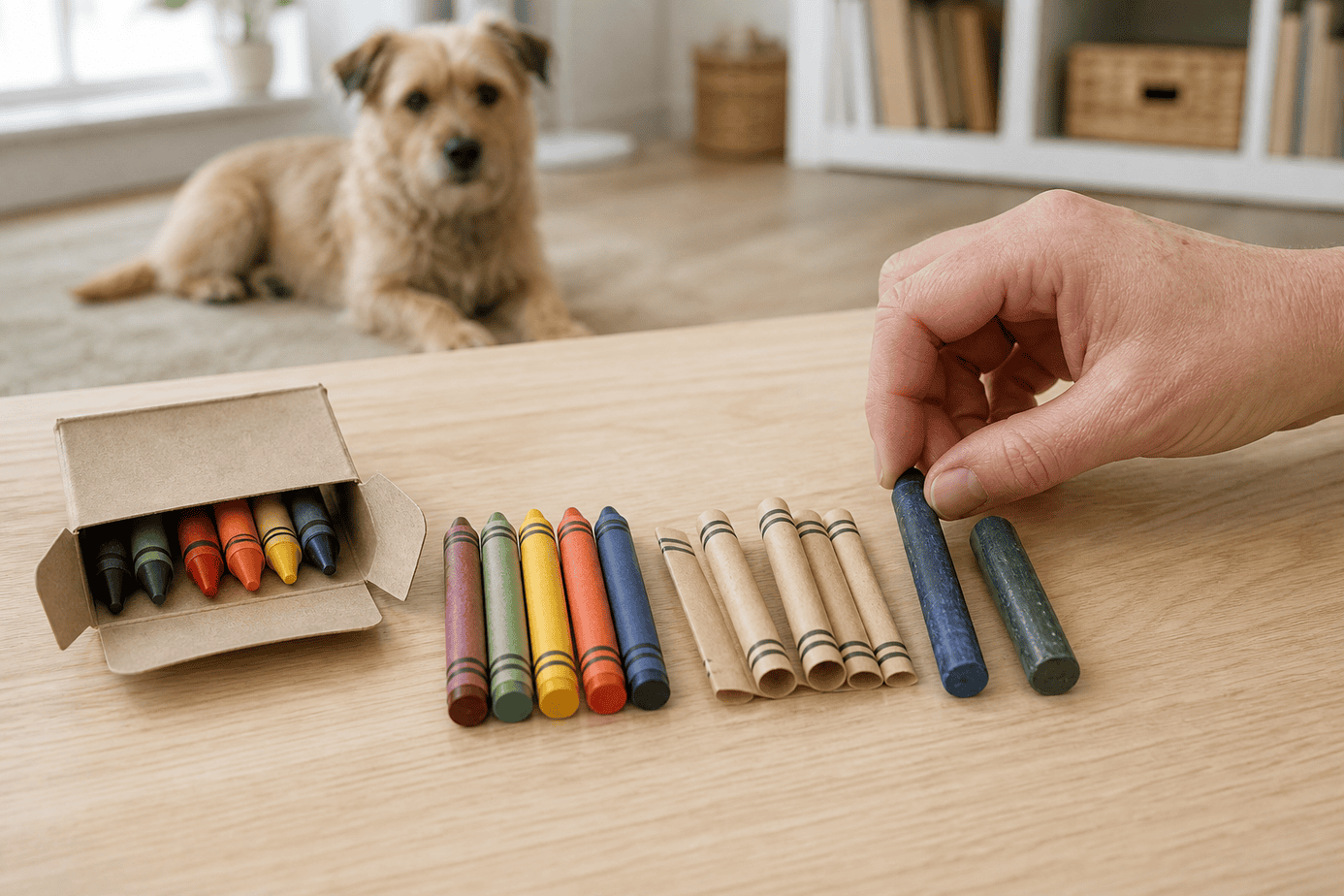
Start with a calm, quick check. The goal is to identify the exposure and notice anything that changes it from a small standard-crayon incident.
- Check the exact product and label. Look for the brand, product name, AP or CL seal, and any caution statement.
- Estimate the amount missing. One small bite is different from several whole crayons or a large chunk.
- Look for wrappers and packaging. Note whether paper, foil, plastic, or part of the box is also missing.
- Check your dog now. Notice breathing, comfort, appetite, energy, vomiting, and bowel movements.
Save the package and any remaining pieces. Product identification is more useful than guessing from the crayon’s appearance. If you are unsure how much is missing, treat the amount as uncertain rather than assuming it was only a nibble.
What Changes the Risk?
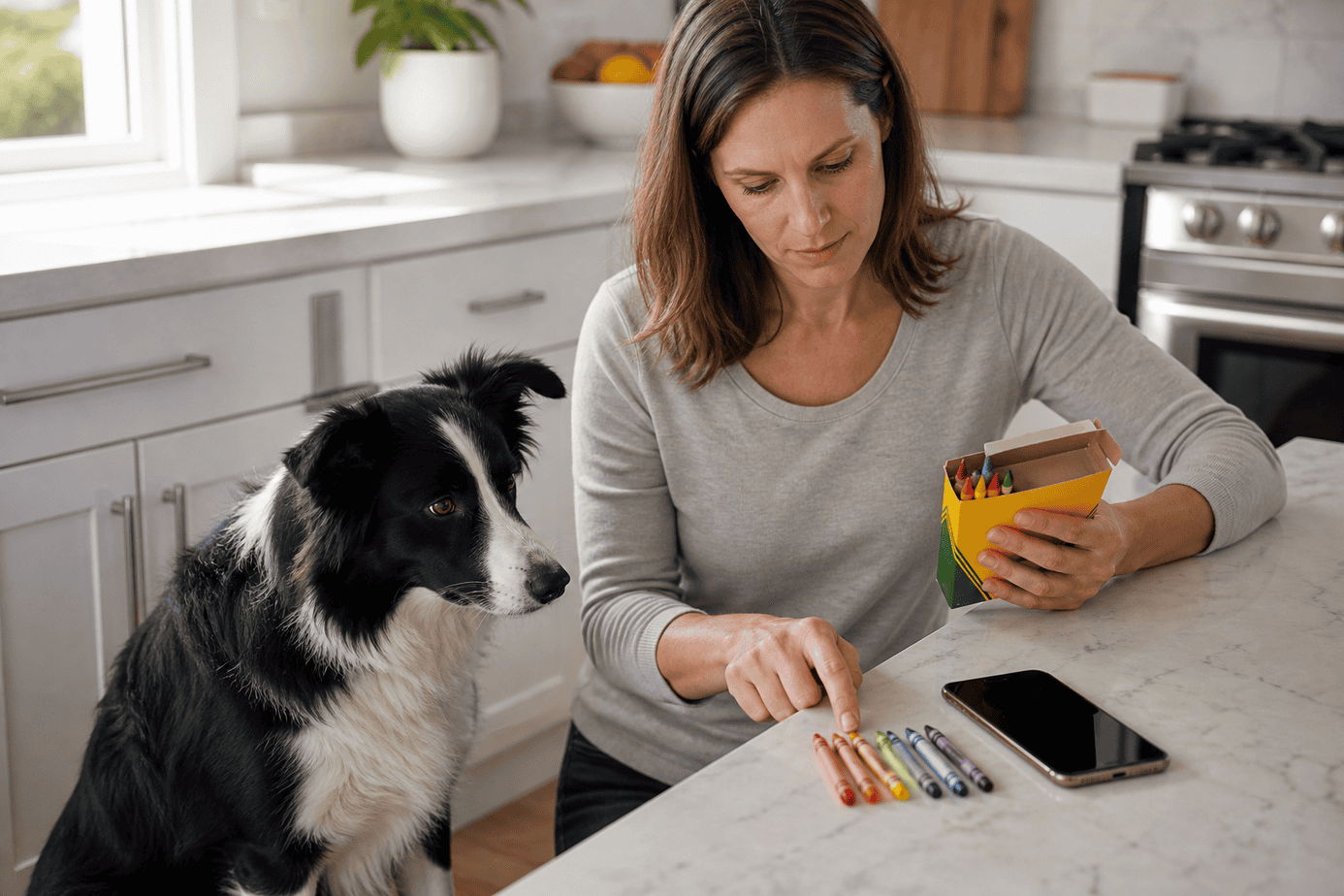
Risk depends more on the product, amount, packaging, dog’s size, and symptoms than on the word crayon alone.
One Small Piece Versus Several Crayons
A small piece of a standard labeled crayon is a different exposure from several crayons, a thick chunk, or a mixed handful of art supplies. More material creates more opportunity for stomach upset or a piece becoming a foreign body. There is no useful universal cutoff that fits every dog.
Puppies and Small Dogs
The same piece takes up more space in a small dog than it does in a large dog. Puppies also explore with their mouths and may swallow wrappers or other art materials along with the crayon. Size is one part of the decision, not the only part.
Wrappers, Boxes, and Other Swallowed Material
Paper, foil, plastic, and cardboard add material that was never meant to be swallowed. Packaging can matter as much as the crayon itself, especially when several pieces are missing. Foreign material in the digestive tract can cause a partial or complete obstruction. [3][4]
Specialty or Unlabeled Products
Do not assume every product called a crayon has the same ingredients. An artist product, industrial marker, pastel, antique item, or unlabeled stick deserves a separate evaluation. The package, product name, and caution label are the best starting points.
Signs to Watch After a Dog Eats a Crayon
A dog may have no obvious problem after a small exposure, or may develop mild digestive upset. Watch the dog, not just the clock. The pattern and persistence of symptoms matter.
Possible Mild Digestive Signs
Possible digestive changes include vomiting, loose stool, or reduced appetite. Watch for persistence, worsening, and changes in comfort, energy, food, water, or stool.
Possible Choking or Obstruction Signs
Foreign-body obstruction can cause vomiting, loss of appetite, abdominal discomfort, lethargy, diarrhea, straining, or failure to pass stool. Signs vary with the object’s location, how long it has been present, and whether the blockage is partial or complete. [3]
Get prompt guidance if you notice any of the following:
- Active choking or trouble breathing
- Repeated vomiting or an inability to keep food or water down
- Worsening appetite, marked tiredness, or abdominal discomfort
- Straining to pass stool or not passing stool
- Symptoms that persist, worsen, or appear after a large or uncertain exposure
When to Get Veterinary Help
A small amount of a standard labeled crayon in a comfortable dog is not the same as active choking, repeated vomiting, or an uncertain amount of a specialty product. Keep the decision quiet and symptom-based.
Seek prompt veterinary guidance when breathing is affected, symptoms are significant or persistent, your dog cannot keep food or water down, the abdomen seems painful, appetite or energy drops sharply, or stool is not passing normally. Gastrointestinal obstruction can become serious and may require imaging and removal of the object. [3]
The product itself also changes the decision. Get product-specific guidance when the crayon is an artist, fabric, industrial, antique, unlabeled, or otherwise unusual item, or when wrappers and packaging were swallowed. A large or uncertain amount deserves the same caution.
Why Do Dogs Eat Crayons?
A one-time crayon snack may simply reflect access, curiosity, texture, or boredom. Crayons are small, easy to carry, and often left where a dog can reach them. That does not prove a medical or behavioral disorder.
When Repeated Non-Food Eating Needs Attention
Pica is a term for repeatedly eating non-food items. It is a description, not a diagnosis. If a dog keeps seeking crayons or other household objects, look closely at the whole picture: access, daily routine, chewing needs, physical activity, mental enrichment, training, and health.
Do not assume repeated crayon eating automatically means a nutrient deficiency, anxiety, or any other single cause. Repetition is the reason to investigate the pattern more carefully.
How to Prevent Another Crayon Snack
Prevention starts with the dog’s environment. A practical household plan is more reliable than expecting a curious dog to ignore an easy target.
- Store crayons, pastels, markers, and art kits in a closed drawer, cabinet, or lidded container.
- Clean up wrappers, broken pieces, and boxes as soon as an art activity ends.
- Supervise children’s art time when the dog shares the room.
- Offer safe, size-appropriate chewing outlets that fit the individual dog.
- Practice a calm leave-it cue and reward the dog for moving away from dropped objects.
- Build physical activity, sniffing, play, and problem-solving into the daily routine.
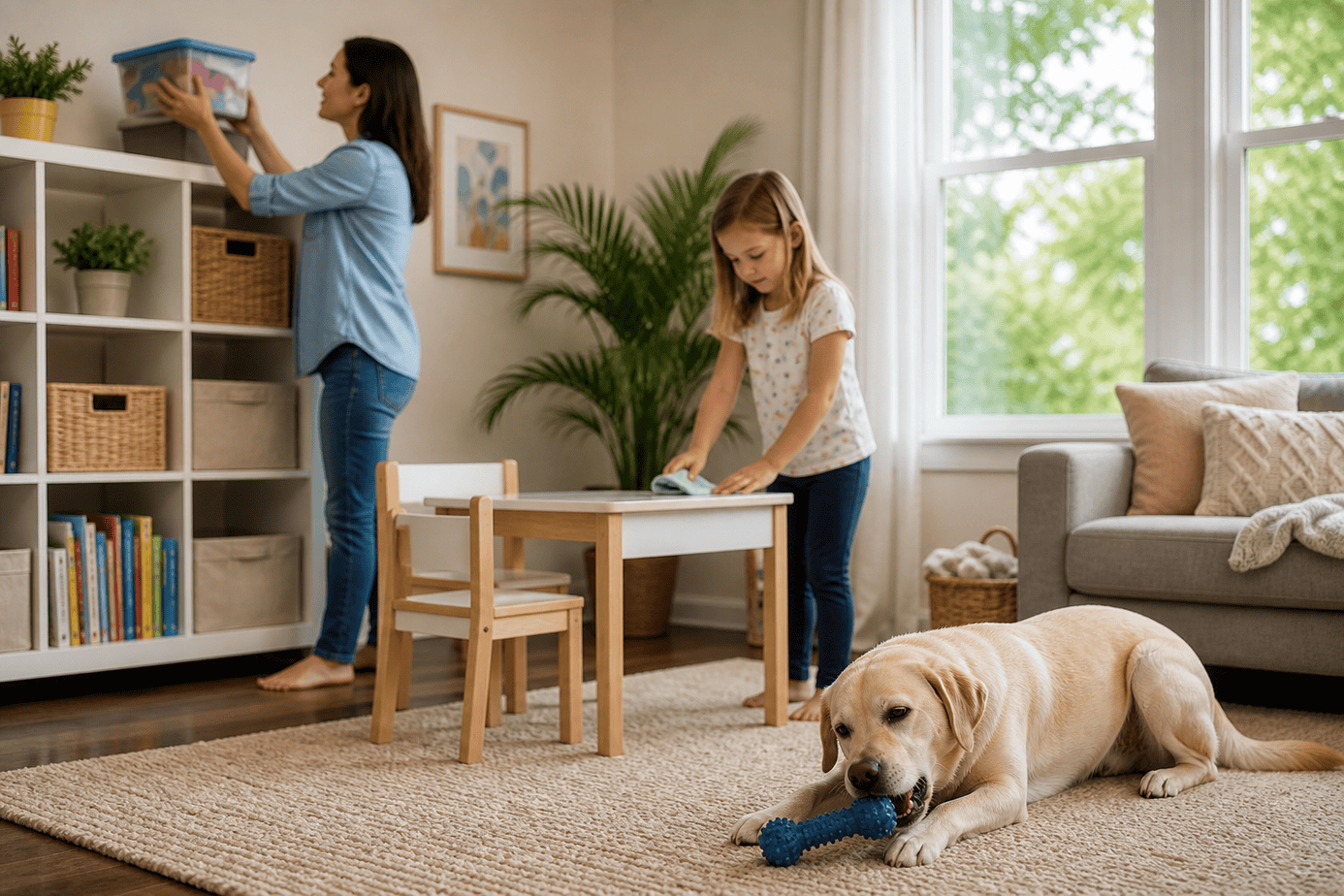
Make the plan easy for the whole family to follow. One storage place, one cleanup routine, and consistent supervision reduce repeated access without turning the household into an emergency drill.
Final Thoughts
Most standard children’s crayons are labeled non-toxic, but type, amount, packaging, dog size, and symptoms still matter. Check the package, estimate what is missing, look for swallowed wrappers, and observe how your dog is acting.
For a small standard-crayon exposure in a comfortable dog, calm observation may be reasonable. When the product is unusual, the amount is large or uncertain, packaging is missing, or symptoms appear, get prompt guidance. Then move the art supplies into secure storage and give your dog a more appropriate outlet for chewing and exploration.
Frequently Asked Questions
One small piece of a standard labeled crayon is generally a lower concern than several crayons, a large chunk, or swallowed packaging. Your dog’s size, the exact product, and any symptoms still matter. No single amount works as a universal cutoff for every dog.
Crayola states that its products are non-toxic. That is reassuring product information, but it is not a dog-specific promise. A swallowed piece or wrapper may still cause stomach upset, choking, or obstruction. [2][3]
Yes, a wrapper or part of a box adds foreign material that can contribute to an obstruction, especially when several pieces or other packaging were swallowed. Watch for vomiting, appetite changes, abdominal discomfort, lethargy, straining, or failure to pass stool. [3][4]
Repeated access, curiosity, texture, boredom, or unmet chewing needs may be part of the pattern. Repeated non-food eating is called pica, but the word does not identify the cause. Review the dog’s environment, activity, enrichment, training, and health rather than assuming one explanation.
References
- Art & Creative Materials Institute, Inc. (n.d.). Certified Products Search Tool.
- Crayola. (n.d.). Are Crayola and Silly Putty products nontoxic even if ingested or inhaled?
- Merck Veterinary Manual. (n.d.). Gastrointestinal obstruction in small animals.
- Merck Veterinary Manual. (n.d.). Household hazards.
A note about your dog’s health
This article provides general education and does not replace an examination, diagnosis, or individualized advice from your veterinarian. Contact a veterinary professional if you are concerned about your dog’s symptoms.

ABOUT THE AUTHOR