Category: Human Medications For Dogs

  • Can You Use Human Eye Drops on Dogs? What’s Safe and What Isn’t

    Can You Use Human Eye Drops on Dogs? What’s Safe and What Isn’t

    Can you use human eye drops on dogs? Sometimes, but the answer depends on the exact product and why your dog’s eye is irritated. Some sterile lubricating drops sold for people contain the same types of ingredients used in veterinary tear replacements, and common ocular lubricants have been studied directly in dogs. [1] [2] But a human eye drop is not automatically safe just because it is gentle for you.

    The biggest mistake is treating “human eye drops” like one category. Redness relievers, allergy drops, antibiotics, steroids, glaucoma medications, lubricants, and combination products do very different things. The safest choice is based on the active ingredients, the eye problem, and whether the product is actually meant to go on the surface of the eye.

    Quick Guide: Which Human Eye Drops Can Dogs Use?

    Eye Drop TypePractical AnswerWhy
    Plain sterile ocular lubricants or artificial tearsSometimes appropriateTear replacements use ingredients such as carboxymethylcellulose, propylene glycol, polyethylene glycol, glycerin, and related lubricants. Some common human-market lubricant formulations have been studied in dogs. [1] [2]
    Redness-relief dropsDo not use casuallySome contain imidazoline drugs such as tetrahydrozoline or naphazoline. Cornell lists imidazolines used in human eye and nasal products as toxic to pets. [3]
    Steroid eye dropsOnly when specifically prescribed for that eye problemSteroids can be useful ophthalmic medicines, but they are contraindicated when a corneal ulcer is present. [4]
    Antibiotic, allergy, glaucoma, or combination dropsOnly when the exact product is appropriate for the diagnosed problemA red or watery eye can have many causes. Using the wrong medication can treat the wrong problem or hide an important change.
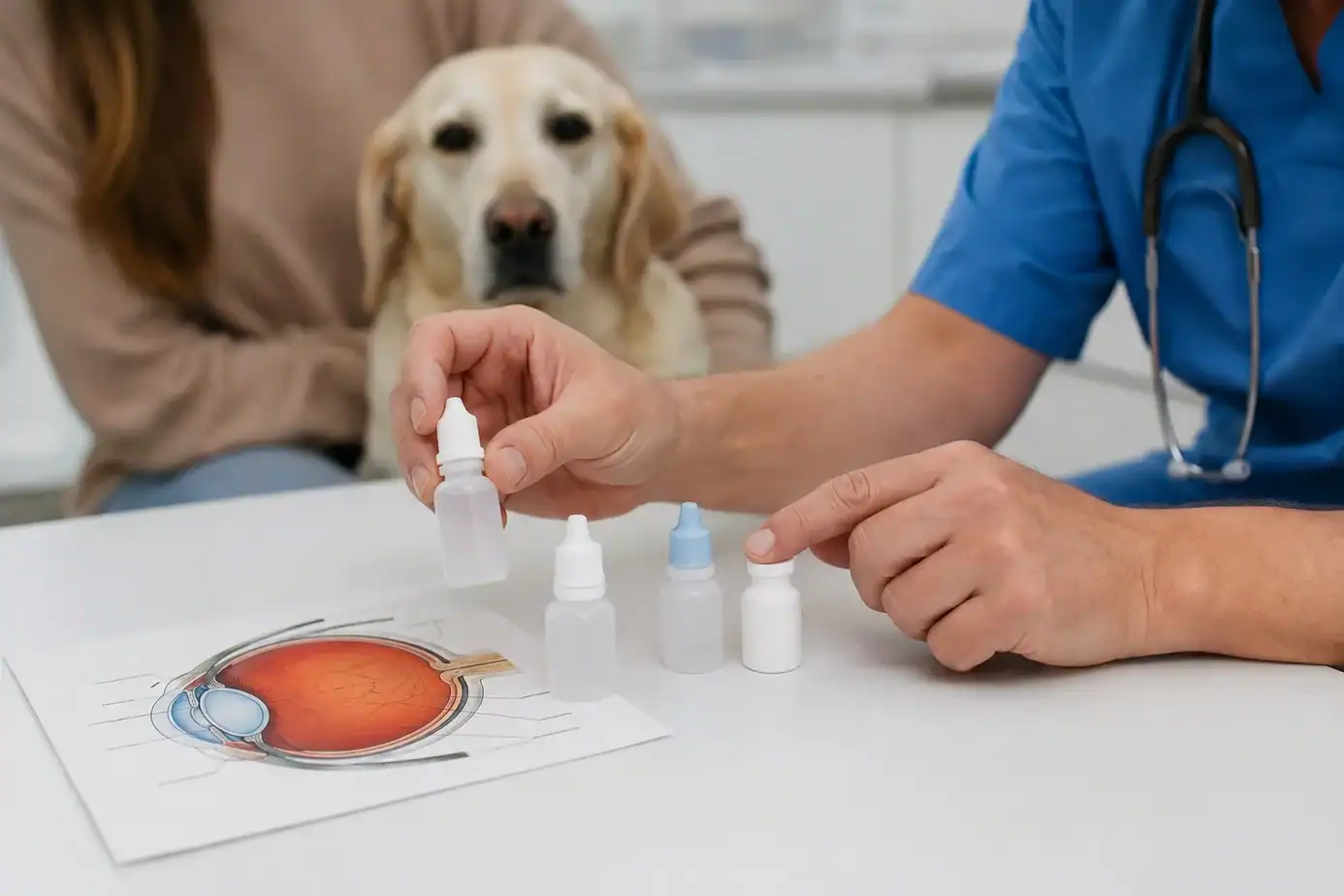
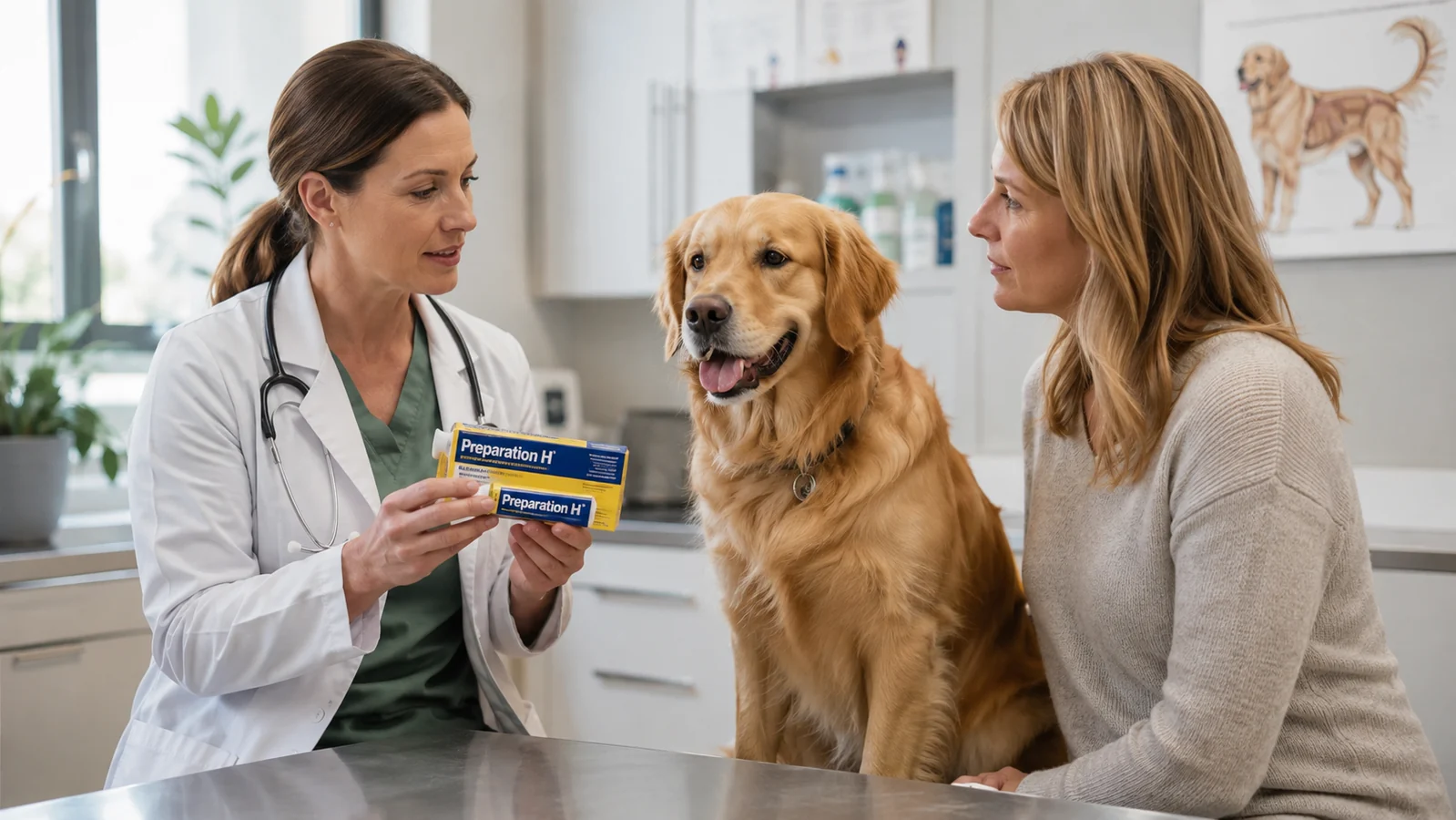
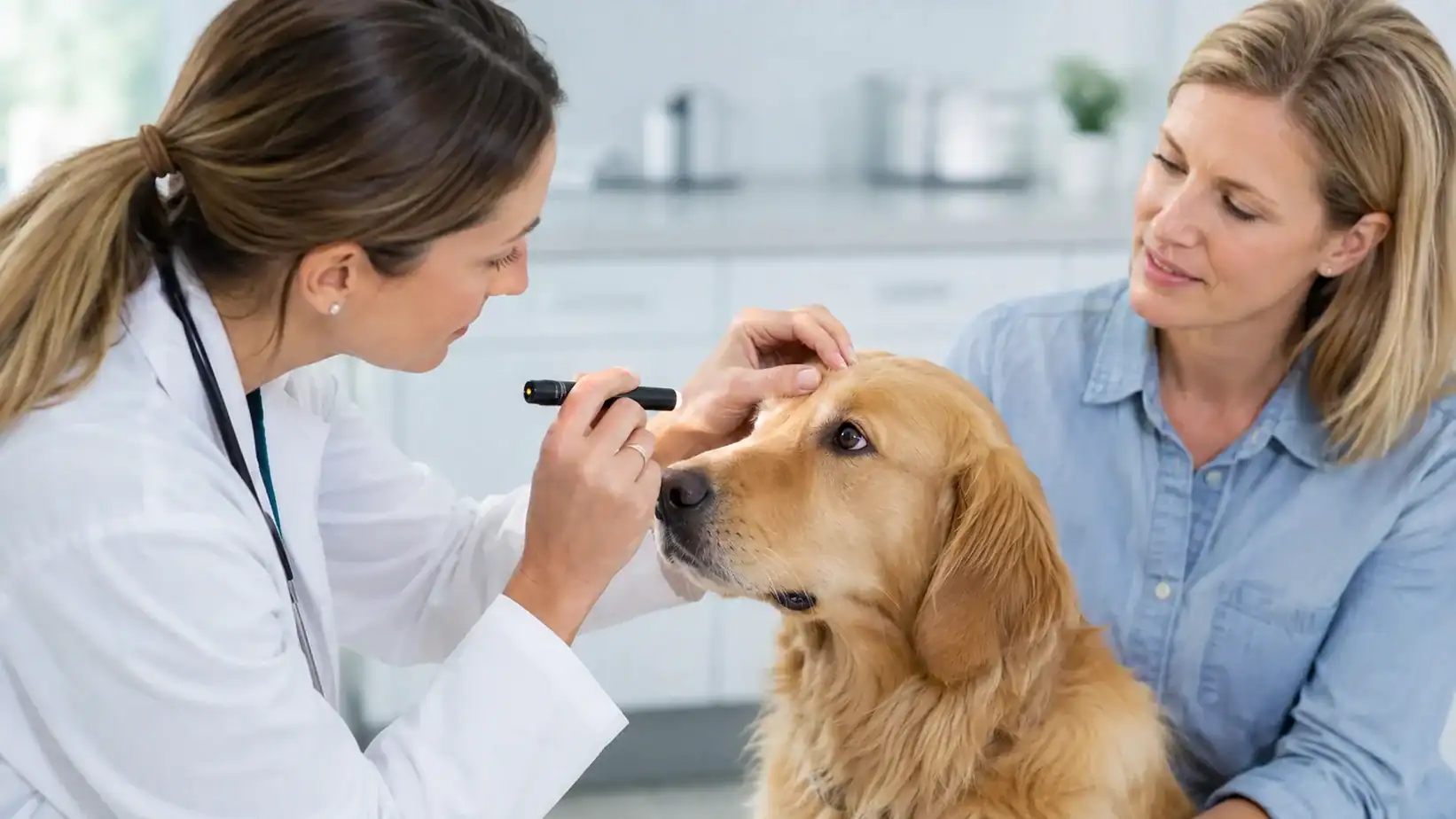
    Veterinarian comparing several types of eye drops for a dog

    This is why a product-specific answer is more useful than a blanket rule. Some medications used in veterinary ophthalmology are also used in human medicine. What matters is the formulation and the reason it is being used.

    Why The Type Of Eye Drop Matters

    Lubricating Drops And Artificial Tears

    Artificial tears are designed to support the tear film and protect the corneal surface. Veterinary tear replacements can contain cellulose-based lubricants, polyvinyl alcohol, glycerin, propylene glycol, polyethylene glycol, hyaluronic acid, and other ingredients chosen to improve lubrication or retention on the eye. [1]

    That does not mean every bottle labeled “dry eye” is interchangeable. Preservatives and lubricant combinations differ, and some products are better suited to frequent use than others. Merck notes that some detergent preservatives can be irritating to the corneal epithelium when products are used frequently. [1]

    A useful piece of canine research compared five ocular lubricants in healthy dogs. One of the products studied was Systane Ultra, which contains polyethylene glycol 400 and propylene glycol. The study measured how long the formulations remained on the dogs’ ocular surface. [2] That supports an important distinction: some human-market lubricants can have a legitimate place in canine eye care, but that is very different from saying any human eye drop is appropriate.

    Redness-Relief, Allergy, And Combination Drops

    Redness-relief drops deserve extra caution because some contain imidazoline drugs such as tetrahydrozoline or naphazoline. These ingredients constrict blood vessels, which makes a red eye look less red. Cornell University lists imidazolines used in human eye and nasal preparations as toxic to pets and not recommended for veterinary use. [3]

    Do not choose a human allergy or combination drop based only on symptoms such as redness or watering. Those signs can come from irritation, dry eye, a corneal scratch, eyelid or eyelash problems, foreign material, inflammation, or other causes. Redness is a clue, not a diagnosis.

    Prescription Antibiotic, Steroid, And Glaucoma Drops

    Prescription eye medications are even more condition-specific. An antibiotic only makes sense when an antimicrobial is appropriate. A glaucoma medication changes eye pressure. A steroid suppresses inflammation. These are not interchangeable treatments for “a red eye.”

    Steroid drops are a good example of why guessing can create trouble. They can be valuable for certain inflammatory eye diseases, but Merck Veterinary Manual states that the cornea should be checked with fluorescein before steroid use and that corticosteroids are contraindicated when a corneal ulcer is present. [4]

    If you have an old prescription eye medication in a cabinet, do not assume it fits a new episode just because the eye looks similar.

    What To Do If You Already Used Human Eye Drops

    First, Identify The Product

    If you already put a human eye drop in your dog’s eye, start with the bottle. Find the exact product name and active ingredients. One accidental use of a plain ocular lubricant is a very different situation from repeated use of a redness reliever or a prescription medication.

    Do not keep giving more drops while you are still trying to identify what was used. If the product contains tetrahydrozoline, naphazoline, oxymetazoline, or another imidazoline, take it seriously. Cornell identifies this drug group as toxic to pets. [3] If your dog licked or swallowed the product, or you are unsure how much exposure occurred, contact your veterinarian or an animal poison control service for product-specific guidance.

    Watch The Eye And The Whole Dog

    Next, look at the eye rather than only the bottle. A mildly watery eye that stays open and comfortable is different from an eye that is painful or suddenly looks abnormal.

    Seek prompt veterinary eye care if you notice:

    • persistent squinting or holding the eye tightly closed
    • pawing or rubbing because the eye seems painful
    • cloudiness or a blue-white change to the cornea
    • a visible foreign object, scratch, puncture, or blood
    • marked swelling
    • sudden vision change
    • an obviously enlarged eye or abnormal pupil
    • rapidly worsening redness or discharge

    Owner checking a beagle with a watery, squinting eye

    If the dog swallowed a potentially toxic eye-drop product or seems unwell after exposure, contact your veterinarian or an animal poison control service promptly. [3]

    What Your Dog’s Eye Symptoms May Be Telling You

    Irritation And Environmental Triggers

    When an eye problem keeps returning, a holistic approach does not treat redness as the whole problem. Dust, wind, smoke, fragrances, grooming products, pollen, plant material, and hair rubbing the eye can all be useful clues. Seasonal timing matters too. If the eyes flare at the same time as itchy skin or ears, that pattern is worth noticing.

    This is where a holistic approach becomes useful. Instead of repeatedly suppressing the visible symptom, look for the reason the eye keeps becoming irritated. Keep track of what changed in the environment, whether the problem affects one eye or both, whether it follows outdoor time or grooming, and whether your dog has other allergy-type signs.

    Squinting, Cloudiness, Discharge, Or Injury

    Eye symptoms are not all equal. Clear tearing after a windy walk may be simple surface irritation. Persistent squinting is a pain sign. Thick discharge can occur with several different eye problems. Cloudiness, trauma, sudden vision changes, or a tightly closed eye move the problem into a different category.

    This is also why leftover steroid drops are a poor choice when a dog suddenly starts squinting. A corneal ulcer can be painful and may look like a simple red eye early on, yet corticosteroids are contraindicated when an ulcer is present. [4]

    A Holistic Approach To Recurrent Eye Irritation

    Holistic care still starts with asking what is driving the problem. For a dog with repeated mild eye irritation, look at the environment, seasonal patterns, skin and ear history, diet history, facial hair, tear-film problems, and anything that repeatedly contacts the face.

    At the same time, natural does not automatically mean suitable for the eye. The ocular surface is not a place for homemade saline, herbal tea, apple cider vinegar, coconut oil, honey, witch hazel, or other nonsterile kitchen mixtures. If something is going directly into the eye, sterility, concentration, formulation, and the condition of the cornea matter.

    You can still use a holistic lens without putting a home remedy into the eye. Reduce smoke and strong fragrances, keep irritating hair away from the eye, notice seasonal or environmental patterns, support good whole-body nutrition, and work on the underlying allergy or inflammatory pattern when one is present.

    How To Give An Appropriate Eye Medication
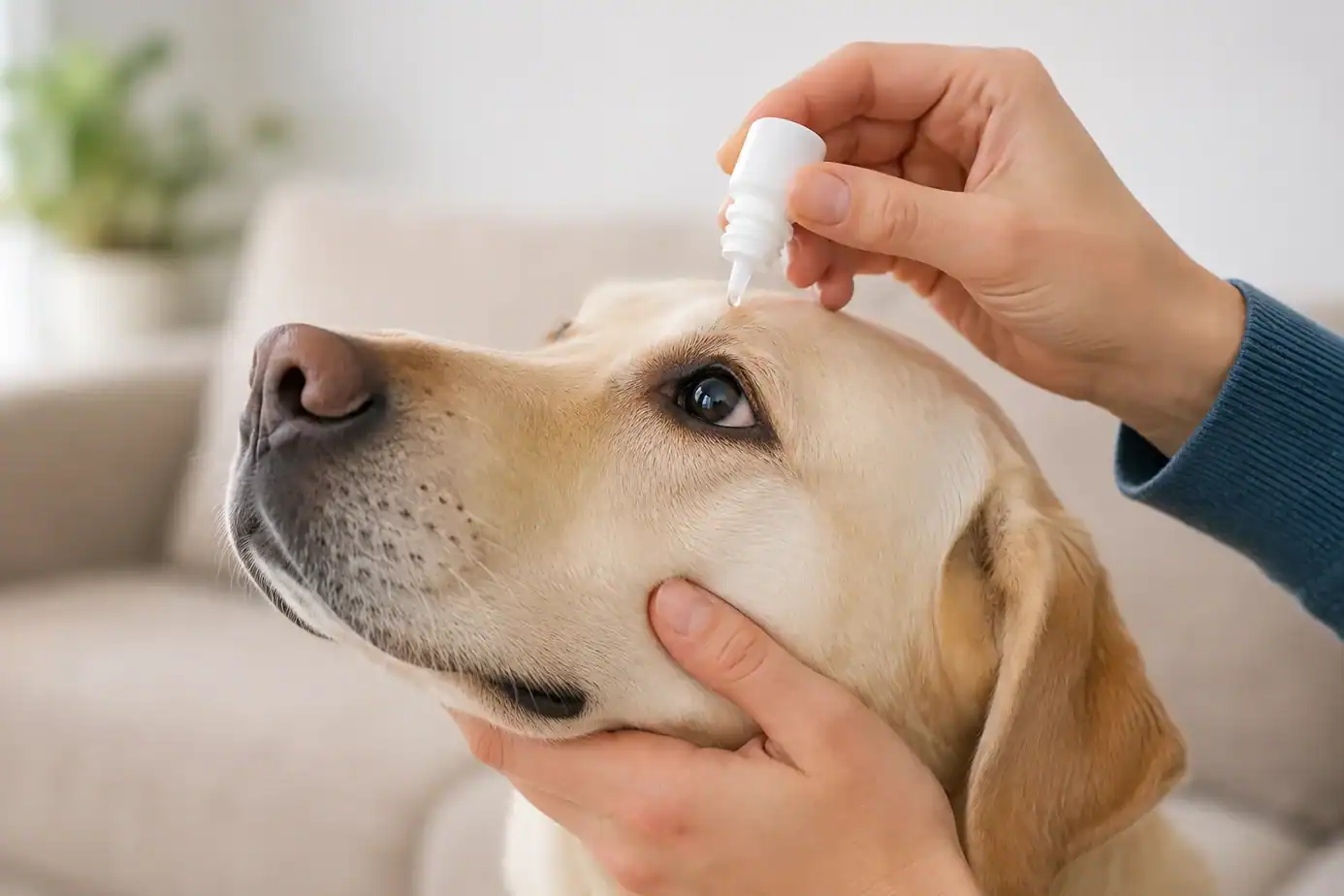
    Owner holding veterinarian-approved eye drops above a Labrador's eye without touching the bottle tip

    Once you know the eye medication is appropriate for your dog, good technique makes the process easier.

    1. Wash your hands and have the correct bottle ready.
    2. Gently steady your dog’s head. A calm position is usually easier than wrestling.
    3. If there is discharge on the eyelids, clean the surrounding skin gently before applying the medication.
    4. Hold the bottle close enough to aim accurately, but do not let the tip touch the eye, eyelashes, or skin.
    5. Apply the amount directed for that product.
    6. Let your dog blink, then reward cooperation.

    If your dog uses more than one eye medication, follow the order and timing given for those products rather than creating your own routine.

    Final Thoughts

    Can you use human eye drops on dogs? The useful answer is not simply yes or no. Some sterile ocular lubricants and some prescription ophthalmic drugs used for dogs are also human-market products. Other products, especially redness relievers or medications chosen without knowing the cause of the eye problem, are poor choices.

    The best next step is to identify the exact product and pay attention to the pattern behind the eye irritation. If the problem keeps returning, write down when it happens, what your dog was exposed to, and whether skin, ear, or allergy signs appear at the same time. Those details can help you get beyond repeated symptom treatment and closer to the reason the eye keeps flaring.

    FAQs

    Can I Use Visine On My Dog?

    Do not use a redness-relief product such as Visine as a casual dog eye treatment. Some redness-relief drops contain imidazolines such as tetrahydrozoline, and Cornell lists this drug group as toxic to pets. [3] Read the active ingredients rather than relying on the brand name alone.

    Can I Use Artificial Tears Such As Systane Or Refresh On My Dog?

    Some plain ocular lubricants can be appropriate for dogs, but the exact formulation matters. Tear replacements use several common lubricant ingredients, and a 2023 canine study included Systane Ultra among five ocular lubricants tested on healthy dogs. [1] [2] That does not make every Systane, Refresh, or artificial-tear product interchangeable.

    Can I Use Saline To Rinse My Dog’s Eye?

    If the goal is simply to rinse the eye, use a sterile ophthalmic rinse rather than homemade saline. If your dog is squinting, has a cloudy eye, has visible trauma, or remains uncomfortable after a simple rinse, do not keep experimenting with home treatment.

    Can I Use Leftover Antibiotic Or Steroid Eye Drops On My Dog?

    Not unless the exact medication has been confirmed as appropriate for the current eye problem. Antibiotics do not treat every cause of redness or discharge, and steroid drops can be harmful when a corneal ulcer is present. [4]

    References

    1. Whelan, N. (2025). Tear replacements in animals. Merck Veterinary Manual. https://www.merckvetmanual.com/pharmacology/systemic-pharmacotherapeutics-of-the-eye/tear-replacements-in-animals
    2. Bedos, L., Allbaugh, R. A., Roy, M., Kubai, M. A., & Sebbag, L. (2023). Precorneal retention time of ocular lubricants measured with fluorophotometry in healthy dogs. Veterinary Ophthalmology, 26(Suppl. 1), 81-88. https://doi.org/10.1111/vop.13065
    3. Cornell University College of Veterinary Medicine. (n.d.). Small animal toxins. https://www.vet.cornell.edu/hospitals/pharmacy/consumer-clinical-care-guidelines-animals/small-animal-toxins
    4. Whelan, N. (2024). Anti-inflammatory agents in animals. Merck Veterinary Manual. https://www.merckvetmanual.com/pharmacology/systemic-pharmacotherapeutics-of-the-eye/anti-inflammatory-agents-in-animals

    A note about your dog’s health

    This article provides general education and does not replace an examination, diagnosis, or individualized advice from your veterinarian. Contact a veterinary professional if you are concerned about your dog’s symptoms.

    Lindsie Parks B.S., CRDNS Avatar

    ABOUT THE AUTHOR

  • Can You Use Saline Solution on Dogs?

    Can You Use Saline Solution on Dogs?

    Written by Lindsie Parks, B.S., CRDNS

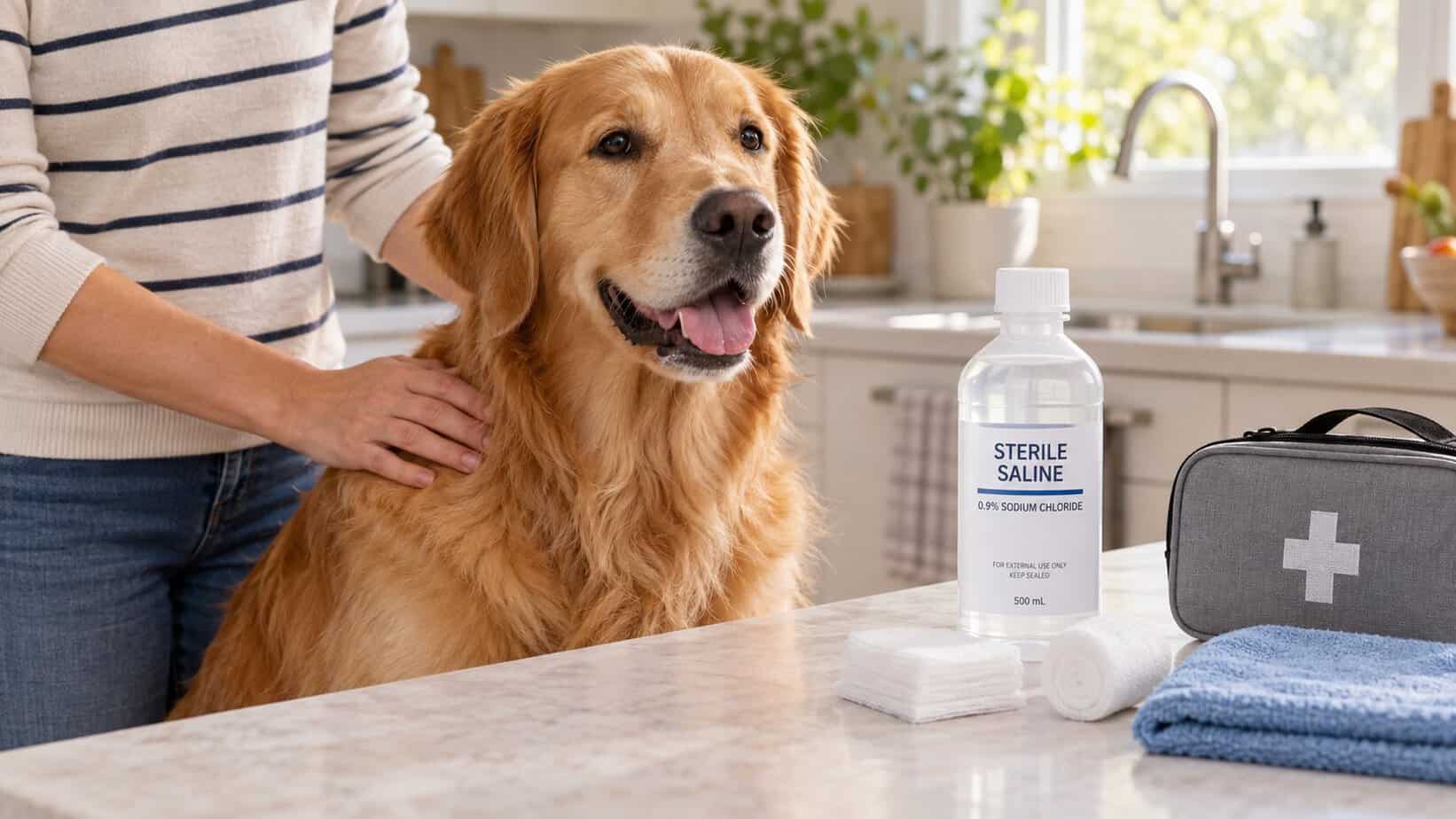
    Yes, you can use saline solution on dogs for limited external rinsing. For most at-home uses, choose a sealed, sterile product that contains plain 0.9% sodium chloride and is labeled as eye wash or irrigation. It can gently wash loose debris from the surface of an eye or a minor skin wound. It is not an antiseptic, and it does not treat infection. [1] [2]

    The body area matters just as much as the label. A product that is suitable for wound irrigation may not be packaged for the eyes. Contact lens cleaners, medicated eye drops, nasal decongestants, and injectable fluids are not interchangeable with plain saline. Never inject saline labeled for irrigation. [1]

    Quick Answer: Which Saline Is Safe for Dogs?

    Look for simple wording on the front and back of the package:

    Usually Appropriate for Limited External Rinsing

    • Sterile saline eye wash with plain 0.9% sodium chloride for the eye surface
    • Sterile 0.9% sodium chloride irrigation solution for minor wounds or skin
    • A new, sealed container that has not expired
    • A container with a clean tip that has not touched skin, fur, the eye, or another surface

    Avoid Unless Your Veterinarian Specifically Prescribed It

    • Multipurpose contact lens solution, enzymatic cleaner, or contact lens disinfectant
    • Redness-relief eye drops or any medicated human eye product
    • Medicated nasal spray or decongestant
    • Products containing alcohol, hydrogen peroxide, chlorhexidine, fragrance, essential oils, or other active ingredients
    • Saline irrigation solution used as an injection, oral rehydration drink, or home fluid treatment

    The word “saline” is not enough by itself. Read the full label. When the package lists more than sodium chloride and sterile water, pause and confirm that the product is intended for the exact body site you plan to rinse.

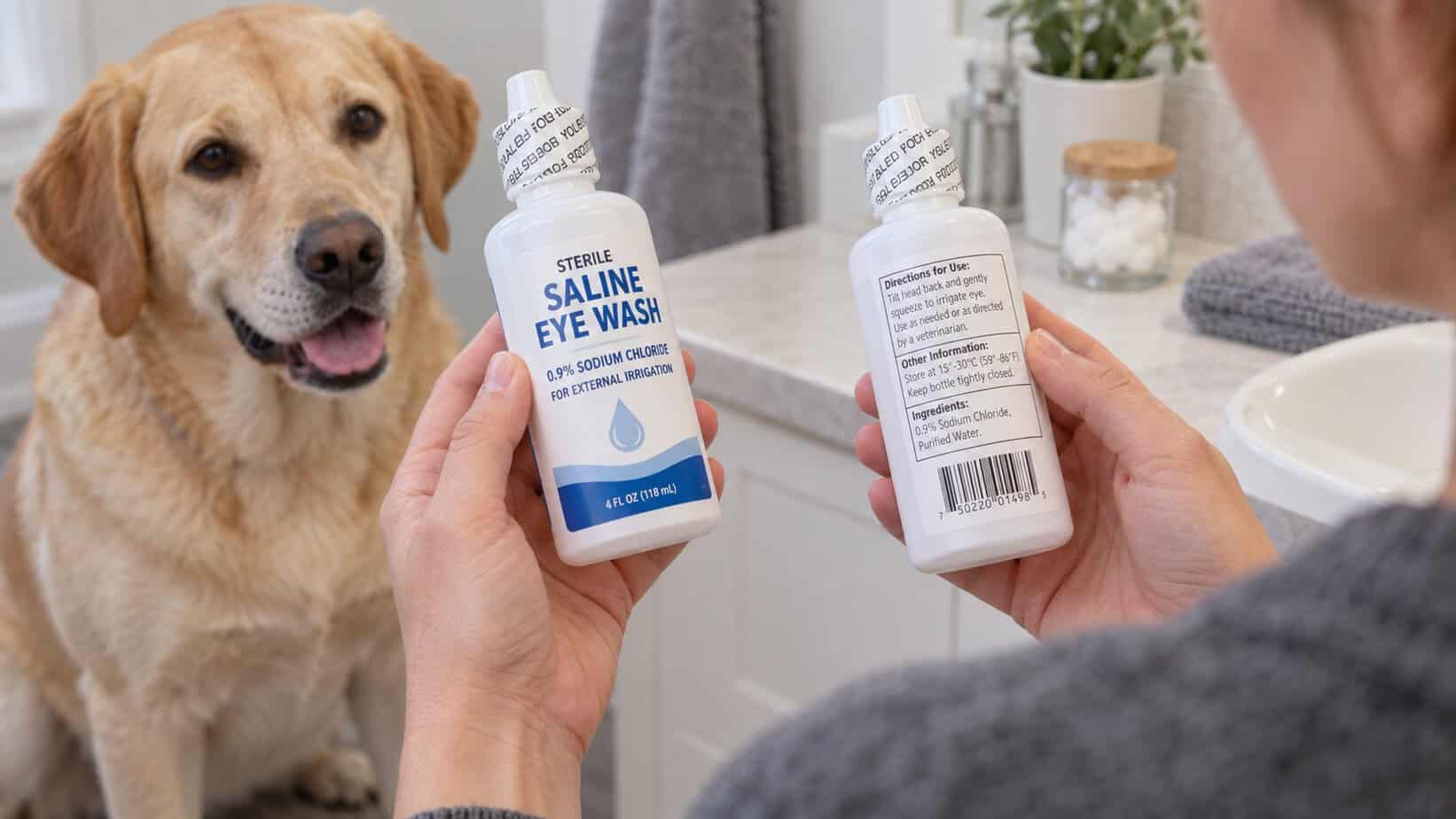
    Dog owner checking the front and back labels on a sterile saline eye wash bottle.

    How to Use Saline on Dogs by Body Area

    For Your Dog’s Eyes

    Sterile saline eye wash can help rinse dust, loose debris, or mild surface discharge from a dog’s eye. The American College of Veterinary Ophthalmologists specifically distinguishes sterile saline eye wash from contact lens solution and advises against using contact lens solution on a pet’s eye. [3]

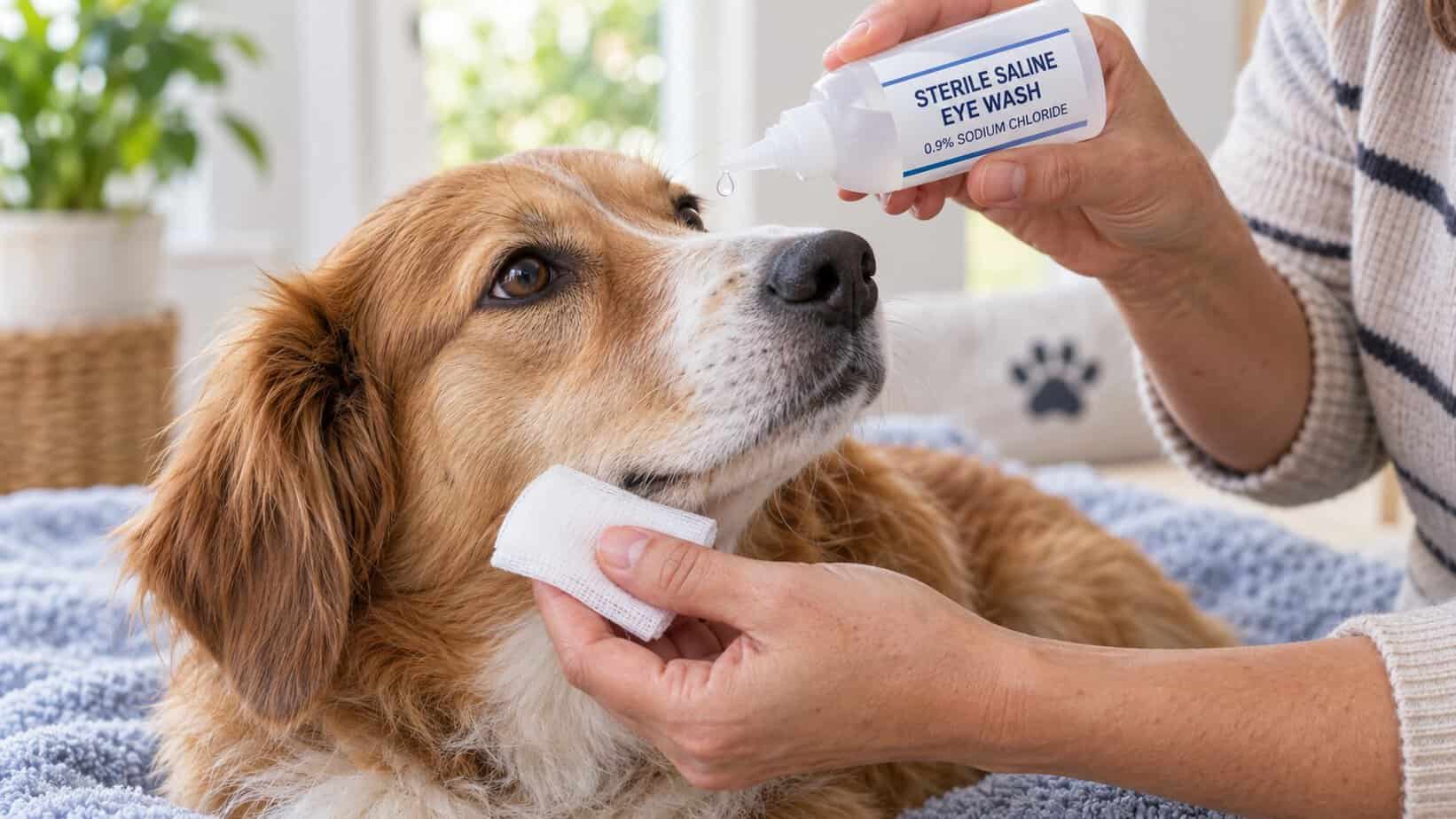
    Dog owner holding sterile saline eye wash above a calm dog’s eye without touching the bottle tip to the eye.

    To rinse an eye gently:

    1. Wash and dry your hands.
    2. Check the label again. It should say sterile saline eye wash and should not contain medication or a contact lens disinfectant.
    3. Keep the bottle tip away from the eye, eyelids, lashes, fur, and your fingers.
    4. Hold the eyelids open without squeezing the eye.
    5. Let a gentle stream flow across the surface and out toward the side of the face.
    6. Blot wet fur with clean gauze or a soft cloth. Do not rub the eye.

    If your dog uses prescribed eye drops or ointment, ACVO recommends using the rinse 10 to 15 minutes before the medication so the medicine is not washed away. Follow your veterinarian’s directions if they differ. [3]

    A rinse is reasonable for loose surface debris, but it should not delay care for squinting, obvious pain, cloudiness, swelling, blood, a chemical splash, a lodged object, a scratch, or discharge that returns quickly. Eye problems can worsen fast, and rubbing at a painful eye may cause more damage.

    For Minor Wounds and Skin

    Saline is useful for one simple job: lavage, which means washing debris away. Merck Veterinary Manual describes 0.9% sodium chloride as gentle on healing tissue while also making clear that it is not antiseptic. [2]

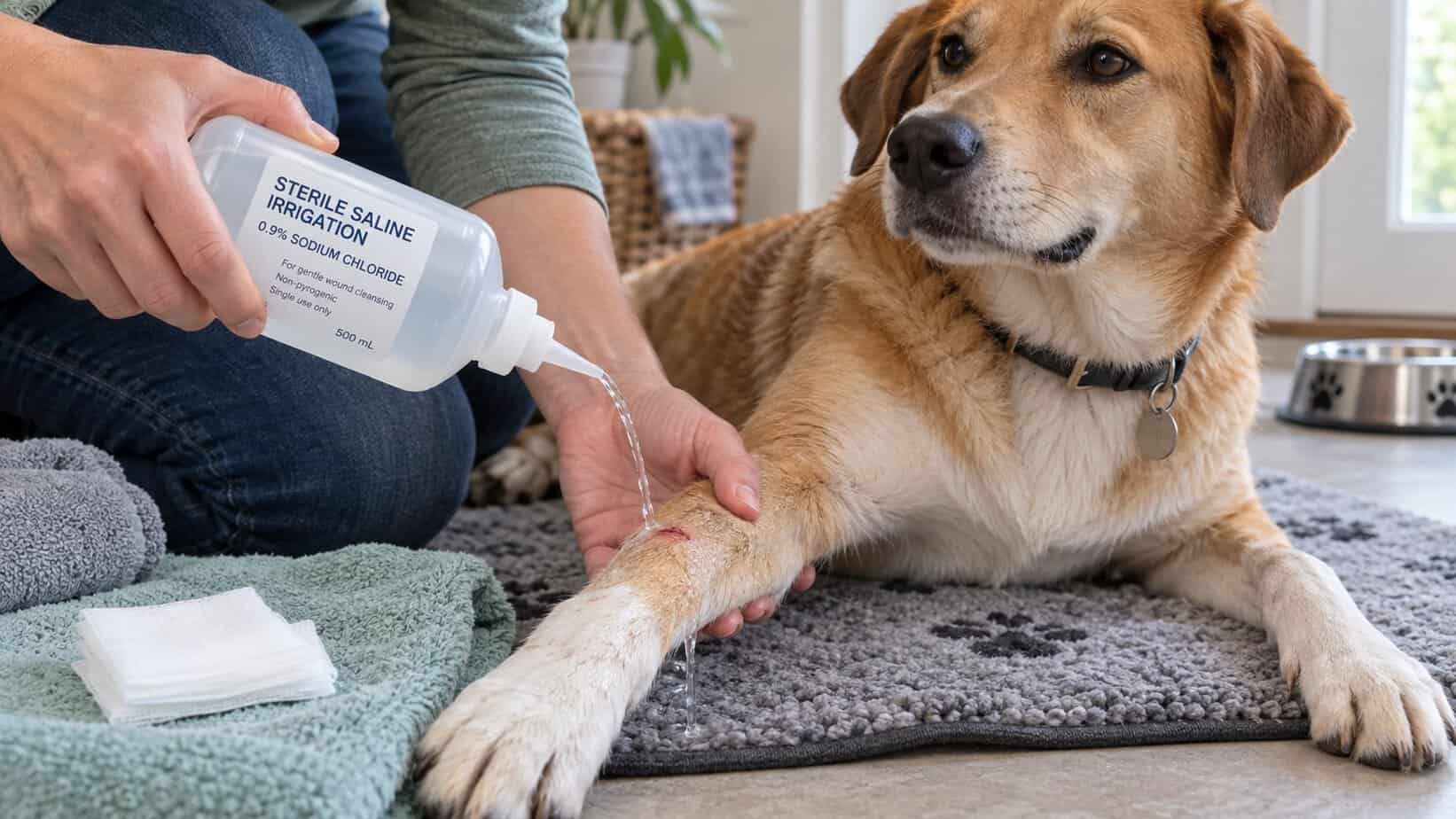
    Dog owner gently rinsing a small superficial leg wound with sterile saline.

    For a small, shallow scrape:

    1. Wash your hands and keep your dog as calm as possible.
    2. If the area is bleeding, apply steady pressure with clean gauze. Do not keep lifting the gauze to check every few seconds.
    3. Once bleeding is controlled, rinse with a generous amount of sterile saline using a gentle stream.
    4. Let the fluid carry dirt away. Do not scrub raw tissue or force fluid into a puncture.
    5. Blot the surrounding fur and skin. Avoid rubbing the wound itself.
    6. Prevent licking and watch the area over the next day for increasing redness, heat, swelling, odor, discharge, or pain.

    Large-volume rinsing removes more debris, but pressure should stay gentle for home first aid. Excessive pressure can push contamination deeper into tissue. [2]

    A deep, gaping, heavily contaminated, puncture, or bite wound needs veterinary assessment. The same is true when bleeding will not stop, material is embedded, a joint may be involved, or your dog seems weak or unusually painful. Saline can clean the surface while you arrange care, but it cannot show how much damage lies underneath.

    For Your Dog’s Nose

    A dog’s nose is not a wound to flush. Do not press the tip of a wound-wash bottle into a nostril or send a forceful stream into the nasal passages. If a veterinarian recommends saline drops or mist for a specific problem, use the exact product and technique they give you.

    Nasal discharge can come from several causes, so repeated rinsing can hide a pattern without solving it. Seek prompt help for trouble breathing, a nosebleed that does not settle, facial swelling, a suspected grass awn or other foreign object, or persistent discharge from only one nostril. One-sided discharge and pawing at the face can be clues that a foreign object is present. [4]

    For Your Dog’s Ears

    There is an important difference between wiping the visible outer ear and filling the ear canal.

    For a little dirt on the ear flap, you may moisten clean gauze with plain sterile saline and wipe only what you can easily see. You do not need to rinse saline off afterward. Blot away the excess and let the outer ear dry.

    For the ear canal, use a canine ear-cleaning solution selected for your dog’s needs rather than assuming plain saline is the right cleaner. Ear products are chosen partly by the type of debris, the condition of the canal, and whether infection is present. Cornell University College of Veterinary Medicine recommends gentle technique, avoiding forceful pressure, allowing the dog to shake, and wiping only as far as a finger can comfortably reach. Cotton swabs can push material deeper. [5]

    Stop if cleaning hurts. Redness, odor, discharge, head shaking, itching, or tenderness can signal infection or allergic ear disease. A head tilt, loss of balance, or sudden severe pain deserves prompt examination. [5]

    What Saline Can and Cannot Do

    Saline Can

    • Rinse loose dirt, dust, discharge, and small particles from a surface
    • Help clean a minor wound without the tissue toxicity associated with some harsh household products
    • Moisten gauze for wiping the visible outer ear or surrounding skin
    • Serve as one short first-aid step while you decide whether more care is needed

    Saline Cannot

    • Reliably kill bacteria or work as an antiseptic
    • Cure an eye, ear, skin, or wound infection
    • Replace antibiotics, antifungal medicine, pain relief, or another prescribed treatment
    • Remove an embedded foreign object
    • Repair a corneal ulcer, deep wound, or damaged eardrum
    • Rehydrate a sick dog when given by mouth or injected at home
    • Make every product labeled “saline” safe for every body area

    That distinction is the heart of safe use. Cleaning and treating are different jobs. Saline may support comfort and visibility, but the cause still matters.

    Should You Make Saline at Home?

    For eyes, the nose, and the ear canal, use a sealed sterile product intended for that body site. A homemade mixture is not sterile, even when the water was boiled, and kitchen measurements can produce the wrong concentration. It also becomes contaminated during mixing, cooling, storage, and handling.

    For a minor skin wound, commercial sterile saline is still the most predictable choice. If it is not available, clean running tap water can also be used to wash away surface debris. Veterinary wound guidance accepts warm saline or tap water for lavage, so there is usually no reason to improvise and store a homemade mixture. [6]

    Do not use a homemade preparation in an eye, nose, or ear canal. Do not nebulize or inject it. Do not keep a mixed jar on the counter for repeated use.

    When Saline Is Not Enough

    Eye Signs That Need Prompt Care

    Arrange an examination when your dog is squinting, holding an eye closed, pawing at the face, or showing marked redness, swelling, cloudiness, blood, or light sensitivity. A chemical exposure, sharp injury, or object stuck in or around the eye is also urgent. Rinsing may be part of first aid, but it is not a diagnosis.

    Wound Signs That Need Prompt Care

    Get help for a bite, puncture, deep cut, gaping edge, heavy contamination, uncontrolled bleeding, embedded material, exposed deeper tissue, or a wound near the eye, chest, abdomen, or a joint. Increasing heat, swelling, odor, discharge, pain, or low energy can mean the problem is moving beyond simple first aid. Merck notes that dirty, infected, and puncture wounds often need additional medical management. [2]

    Ear and Nose Signs That Need Prompt Care

    Ear pain, strong odor, thick discharge, a head tilt, balance trouble, or sudden hearing changes should not be managed with repeated rinsing. For the nose, breathing trouble, facial swelling, ongoing bleeding, or one-sided discharge needs an examination. These signs give useful clues about the underlying problem.

    A Whole-Dog View of Repeat Irritation

    A rinse can be soothing, but recurring discharge or itching is your dog’s way of showing that something else may be going on. Repeated ear trouble, for example, may be connected to allergies, mites, moisture, anatomy, or infection. Cornell notes that ear infection often has an underlying condition and that overcleaning can also irritate healthy ears. [5]

    The same whole-dog thinking helps with recurring eye discharge and slow-to-settle skin irritation. Notice when the problem started, whether it is one-sided, what makes it better or worse, and whether there are changes in food, environment, grooming, medications, or general health. Those patterns help a veterinarian look beyond the surface.

    Gentle cleaning has a place. Endless cleaning without asking why does not.

    Final Thoughts

    Plain sterile saline can be a useful item in a dog first-aid kit. Choose 0.9% sodium chloride in packaging intended for the body site, use it as a gentle external rinse, and keep the container tip clean. Remember that saline washes. It does not disinfect, cure infection, or replace an examination when your dog is painful or the problem keeps returning.

    If you are unsure, take a photo of the product label and the affected area before calling your veterinary team. That small step can make the conversation faster and more specific.

    Frequently Asked Questions

    Is Human Saline Safe for Dogs?

    Plain, sterile 0.9% sodium chloride sold for eye wash or irrigation can be appropriate for limited external use in dogs. The label and intended use matter more than whether the package is marketed for people. Do not use medicated drops, decongestants, contact lens disinfectants, or an irrigation product as an injection.

    Can I Use Contact Lens Solution in My Dog’s Eyes?

    No. Contact lens cleaning and disinfecting solutions may contain ingredients that are not meant for direct use on a dog’s eye. ACVO specifically warns against contact lens solution and recommends sterile saline eye wash instead. [3]

    Does Saline Need to Be Rinsed Out of a Dog’s Ear?

    If you used a small amount on gauze to wipe the visible outer ear, no second rinse is needed. Blot excess moisture. If your veterinarian instructed you to place a solution in the canal, follow that product’s directions, let your dog shake, and wipe only the material you can easily reach. Stop if the ear is painful. [5]

    Can Homemade Saline Be Used on Dogs?

    A sealed sterile product is best, especially for eyes and other sensitive areas. Homemade mixtures are not sterile and can have the wrong concentration. For a minor skin wound when saline is unavailable, clean running tap water is a reasonable rinse. Do not use homemade saline in the eyes, nose, or ear canal, and never inject it. [6]

    Can Saline Treat an Eye, Ear, or Wound Infection?

    No. Saline can wash away loose debris, but it is not an antiseptic and does not treat bacterial, fungal, or other infections. If redness, pain, swelling, odor, or discharge persists or worsens, your dog needs an examination and treatment directed at the cause. [2]

    References

    1. National Library of Medicine. (2025). 0.9% sodium chloride irrigation USP. DailyMed. https://dailymed.nlm.nih.gov/dailymed/fda/fdaDrugXsl.cfm?setid=5bd9b176-0402-4a3f-a6b4-c3f393fc092a&type=display
    2. Winkler, K. P. (2024, September). Initial wound management in small animals. Merck Veterinary Manual. https://www.merckvetmanual.com/emergency-medicine-and-critical-care/wound-management-in-small-animals/initial-wound-management-in-small-animals
    3. American College of Veterinary Ophthalmologists. (2020, October 28). How to clean your pet’s eyes. https://www.acvo.org/tips-treatments-tricks/how-to-clean-your-pets-eyes
    4. MSD Veterinary Manual. (n.d.). Rhinitis and sinusitis in dogs. https://www.msdvetmanual.com/dog-owners/lung-and-airway-disorders-of-dogs/rhinitis-and-sinusitis-in-dogs
    5. Cohen, A. (2025, October 21). How to clean your dog’s ears. Cornell University College of Veterinary Medicine. https://www.vet.cornell.edu/departments-centers-and-institutes/riney-canine-health-center/canine-health-topics/how-clean-your-dogs-ears
    6. Merck Veterinary Manual. (n.d.). Topical agents in wound management in small animals. https://www.merckvetmanual.com/emergency-medicine-and-critical-care/wound-management-in-small-animals/topical-agents-in-wound-management-in-small-animals

    A note about your dog’s health

    This article provides general education and does not replace an examination, diagnosis, or individualized advice from your veterinarian. Contact a veterinary professional if you are concerned about your dog’s symptoms.

    Lindsie Parks B.S., CRDNS Avatar

    ABOUT THE AUTHOR
  • Can You Use Calamine Lotion on Dogs? A Vet Explains

    Can You Use Calamine Lotion on Dogs? A Vet Explains

    I would not use human calamine lotion as a routine itch treatment for a dog. A common current calamine formulation contains both calamine and zinc oxide, and dogs are very good at licking topical products off their skin. [1] A quick accidental lick is not the same as repeated or heavy ingestion, but I would still choose a dog-appropriate option instead.

    If you already put calamine lotion on your dog, do not panic. Stop further licking, check the exact product label, and remove excess lotion from the skin. The next step depends on what is in the product, how much your dog may have swallowed, and whether any symptoms develop.

    Why Zinc Oxide Matters

    Calamine lotion is made for people, and formulas are not all identical. One current U.S. OTC label lists calamine 8% and zinc oxide 8% and states that the product is for external use only. [1]

    Veterinarian and dog owner reviewing a calamine lotion label that lists zinc oxide

    The zinc oxide is the ingredient I pay closest attention to with dogs. According to the Merck Veterinary Manual, acute ingestion of zinc oxide products most often causes stomach irritation, vomiting, and diarrhea. More serious blood-cell damage is not expected from most single acute exposures, but repeated ingestion over days to weeks can cause intravascular hemolysis, which means red blood cells break apart inside the circulation. [2]

    That difference is important. A dog that gets one tiny lick from a treated spot is in a different situation from a dog that keeps licking zinc-containing cream off the skin several times a day.

    Published canine case reports show why repeated exposure deserves respect. One dog developed severe zinc toxicosis after ingesting large amounts of zinc oxide cream that had been applied repeatedly for about a week. [3] Another report described hemolytic anemia after a 40% zinc oxide diaper-rash cream had been used daily for one week. [4]

    I do not use those cases to make every small exposure sound like an emergency. I use them to explain why a human zinc-containing topical is not my first choice for a dog that may keep licking it.

    What to Do If Calamine Is Already on Your Dog

    If you discover that calamine has already been applied, I would keep the response simple:

    1. Prevent more licking while you check the product.
    2. Read the active ingredients on the exact bottle. Do not assume every pink lotion has the same formula.
    3. Wipe away excess product and gently rinse the area if needed.
    4. Pay attention to how much your dog could realistically have swallowed and whether exposure happened once or repeatedly.
    Owner gently removing calamine lotion residue from a Labrador front leg with a damp cloth

    If your dog swallowed a meaningful amount, chewed the bottle, has been repeatedly licking the product for hours or days, or develops vomiting, diarrhea, unusual weakness, pale gums, dark urine, or another concerning change, contact your veterinarian or an animal poison service for advice based on that specific exposure. Zinc-containing topical products can cause more than simple stomach upset when enough is ingested repeatedly. [2][3][4]

    What If My Dog Licked Calamine Lotion?

    A small incidental lick and repeated ingestion are not the same problem.

    With a single quick lick, the most likely concern is gastrointestinal irritation rather than severe zinc toxicosis. Merck notes that acute zinc oxide ingestion commonly causes vomiting or diarrhea. [2] I would still prevent more licking and check the label, especially if the product contains other active ingredients.

    Repeated licking changes the picture. When a zinc oxide product stays on a dog’s skin and the dog keeps ingesting it over days, zinc can accumulate enough to damage red blood cells. [2][3][4]

    This is one reason I prefer not to start with human calamine at all. If I am trying to soothe a dog’s skin, I want the treatment itself to create as few new problems as possible.

    Safer Ways to Soothe Mild Itching

    For a very small area of mild irritation, a cool damp cloth can be a simple first step while you figure out why the skin is itchy. If there is residue from another product on the skin, gently removing it is often more useful than layering another human lotion over the top.

    When a topical product is needed, I prefer one that is made and labeled for dogs and that fits the actual problem. Dry, intact skin needs something different from a wet hot spot, an infected lesion, a bite, or an open wound.

    I also avoid turning mild itching into a pile of creams, sprays, essential oils, and home remedies. More ingredients are not automatically better, especially on skin that is already irritated and easy for a dog to lick.

    When Itching Means Something More

    This is where a holistic approach becomes much more useful than simply trying to shut the itch down.

    Dogs itch for many reasons. Canine dermatology includes allergic skin disease, secondary bacterial or yeast problems, parasites, wounds, and other conditions that need different approaches. [5] A lotion that briefly cools the skin does not tell us why the itching started.

    Veterinarian examining a beagle paw to investigate recurring itching

    If the problem keeps returning, I want to look at the whole pattern. That can include diet, seasonal or environmental exposures, parasites, grooming products, moisture, friction, repeated licking, and the health of the skin barrier.

    A dog that licks the same paw every evening, develops recurring red skin between the toes, or repeatedly gets hot spots needs a different plan from a dog with one mild patch of dry skin after a windy week.

    Dry Skin and Simple Irritation

    Simple dryness is usually easier. If the skin is intact and only mildly dry or irritated, remove obvious triggers, protect the area from more rubbing or licking, and use a dog-appropriate moisturizer if needed.

    Allergies and Recurring Itch

    Recurring itch, especially with paw licking, ear problems, redness, or seasonal patterns, makes me think beyond a topical lotion. Covering the itch for a few hours can make the skin look calmer without changing the underlying trigger.

    Hot Spots, Infection, and Open Wounds

    A wet, painful, spreading, foul-smelling, draining, or open lesion is not a good place to experiment with human calamine. These problems need care that matches the actual condition rather than a general anti-itch product.

    Can I Use Calamine Lotion for Hot Spots, Dry Skin, or Insect Bites?

    For routine dog care, I would skip human calamine in all three situations.

    For a hot spot, I want to know whether the area is wet, infected, painful, or being driven by allergy or self-trauma. For dry skin, a dog-appropriate moisturizer makes more sense than a zinc-containing human lotion. For a simple insect bite, gentle cooling and preventing scratching may be enough while you watch the reaction.

    The important part is matching the response to the problem. Calamine was designed as a human skin protectant, not as a universal canine skin treatment. [1]

    Final Thoughts

    So, can you use calamine lotion on dogs? I do not recommend it as a routine treatment.

    Many current calamine products contain zinc oxide, and a dog can turn a topical exposure into an oral exposure simply by licking. A one-time small lick is very different from repeated ingestion, but there is little reason to create that risk when better dog-specific options exist. [1][2]

    If calamine is already on your dog, check the exact label, remove the excess, stop more licking, and judge the exposure by the ingredients, amount, duration, and your dog’s condition. If the itching keeps coming back, work on the cause rather than repeatedly covering the symptom.

    Frequently Asked Questions

    Is Calamine Lotion Safe for Dogs?

    I would not use human calamine lotion as routine dog skin care. A common current calamine formulation contains zinc oxide, and dogs may ingest topical products by licking them from the skin. [1][2]

    What If My Dog Licked a Small Amount of Calamine Lotion?

    A quick small lick is more likely to cause stomach irritation than severe zinc toxicosis, but check the exact product label and prevent more licking. Repeated ingestion over days is more concerning because zinc oxide can eventually damage red blood cells. [2]

    Can I Use Calamine Lotion on a Dog Hot Spot?

    I would not choose human calamine for a hot spot. Hot spots can involve moisture, inflammation, self-trauma, allergy, and secondary infection, so the care should match the cause and condition of the skin. [5]

    What Human Cream Can I Put on My Dog for Itchy Skin?

    I do not use a one-size-fits-all human cream for dog itching. Mild irritation may only need gentle cooling and protection from licking. Persistent or recurring itch needs a cause-based plan, and any topical product should be appropriate for dogs and for the specific skin problem.

    What Should I Do If I Already Put Calamine Lotion on My Dog?

    Prevent further licking, check the active ingredients, wipe away excess product, and monitor your dog. If a meaningful amount was swallowed, the exposure was repeated, or symptoms develop, contact your veterinarian or an animal poison service for individualized advice. [2]

    References

    1. DailyMed. (2026). Calamine and zinc oxide lotion. U.S. National Library of Medicine.
    2. Stern, L., & Brutlag, A. (2025). Toxicosis in animals from human topical agents. Merck Veterinary Manual.
    3. Siow, J. W. (2018). Zinc toxicosis in a dog secondary to prolonged zinc oxide ingestion. Open Veterinary Journal, 8(4), 458-462.
    4. Ambar, N., & Tovar, T. (2022). Suspected hemolytic anemia secondary to acute zinc toxicity after ingestion of “max strength” (zinc oxide) diaper rash cream. Journal of Veterinary Emergency and Critical Care, 32(1), 125-128.
    5. Tresch, M., Mevissen, M., Ayrle, H., Melzig, M., Roosje, P., & Walkenhorst, M. (2019). Medicinal plants as therapeutic options for topical treatment in canine dermatology? A systematic review. BMC Veterinary Research, 15, 174.

    A note about your dog’s health

    This article provides general education and does not replace an examination, diagnosis, or individualized advice from your veterinarian. Contact a veterinary professional if you are concerned about your dog’s symptoms.

    Dr. Candy Akers, DVM Avatar

    ABOUT THE AUTHOR

  • Can You Use Liquid Bandage on Dogs? Vet Safety Guide

    Can You Use Liquid Bandage on Dogs? Vet Safety Guide

    By Dr. Candy Akers

    Yes, you can sometimes use a liquid bandage on a dog, but only use a product labeled for dogs and only on a small, clean, superficial cut or scrape after the bleeding has stopped. Do not use it on a deep or gaping wound, bite, puncture, infected area, burn, or surgical incision unless your veterinarian specifically directs you.

    The product is optional. Careful wound assessment comes first. If you cannot clearly see how deep the injury is, or your dog seems painful or unwell, let your veterinarian examine it.

    The Short Answer

    A dog-specific liquid bandage forms a thin film over the skin. It can help shield a very minor wound from dirt and friction while you watch it heal. It should never be used to seal a wound that may need cleaning, drainage, stitches, staples, or other veterinary treatment.

    Use this quick guide:

    Often Reasonable to Consider

    • A tiny, shallow scrape or abrasion
    • A small, clean cut with edges that sit together
    • Bleeding has fully stopped
    • The area is easy to inspect every day
    • The product label specifically allows use on that type of wound

    Do Not Treat With Liquid Bandage at Home

    • A deep, gaping, crushed, or heavily contaminated wound
    • A bite or puncture
    • Ongoing bleeding
    • Pus, odor, increasing redness, heat, or swelling
    • A wound near the eye, mouth, nose, ear canal, or genitals
    • Exposed fat, muscle, tendon, or bone
    • A burn or a large area of damaged skin

    Ask Your Veterinarian First

    • A surgical incision
    • A cut over a joint or on a paw pad
    • A wound your dog keeps reopening
    • Any injury when your dog has diabetes, takes immune-suppressing medication, or has delayed healing

    What Liquid Bandage Does

    Pet liquid bandages are film-forming topical products. Depending on the formula, the film may be waterproof or breathable. The useful part is the physical barrier, not a promise that every product prevents infection or speeds healing.

    Liquid Bandage Is Not Wound Glue

    A spray or brush-on liquid bandage is not the same thing as the medical tissue adhesive a veterinarian may use to close selected wounds. Veterinary wound closure is a clinical decision made after the wound has been inspected, cleaned, and assessed for contamination. A wound may need to stay open if it is contaminated or infected. The Merck Veterinary Manual notes that closure choices depend on factors such as wound location and contamination, and that cyanoacrylate is one of several closure methods veterinarians may use in appropriate cases. [1]

    Please do not try to glue wound edges together at home. Sealing contamination inside can create a much bigger problem.

    When Liquid Bandage May Be Appropriate

    The best candidate is a wound you might otherwise describe as a small surface scrape. It should be shallow, clean, and no longer bleeding. Your dog should be comfortable enough to let you inspect it without struggling or crying out.

    A Quick Wound Check

    Before reaching for any product, look at the whole dog as well as the skin. Is your dog alert? Are the gums their usual color? Is breathing normal? Was there a fall, vehicle injury, or animal bite? Merck emphasizes that the animal’s general condition takes priority because an obvious wound can distract from a more serious injury. [1]

    Then look closely at the wound:

    • Are the edges close together rather than pulled apart?
    • Can you see the entire base of the wound?
    • Is there only mild surface redness?
    • Has bleeding stopped with gentle, steady pressure?
    • Is there no dirt, splinter, glass, or other object embedded in it?
    • Is the area away from sensitive tissues?

    If any answer worries you, skip the liquid bandage and call your veterinarian.

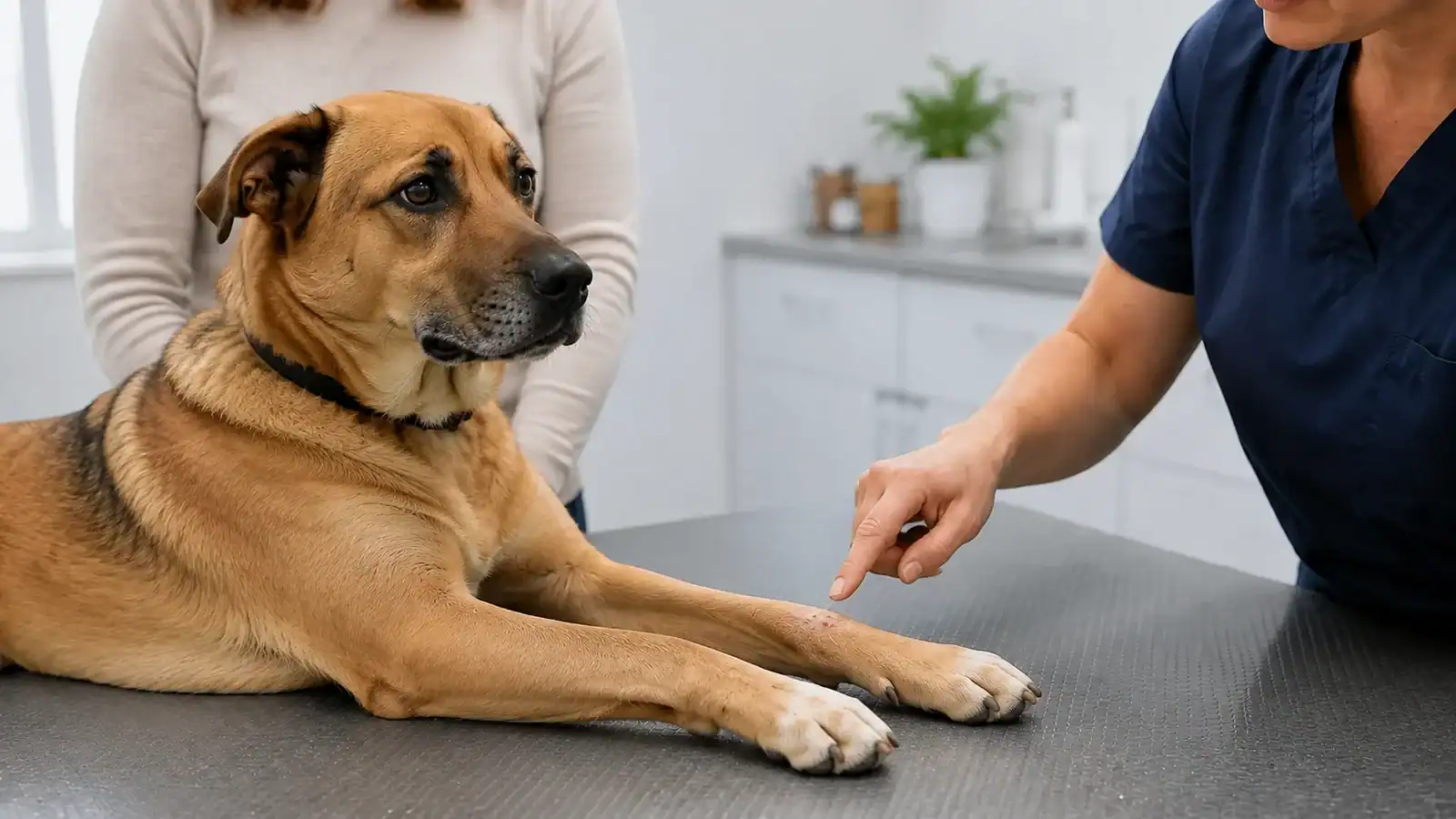
    Veterinarian pointing to a small superficial abrasion on a brown shepherd mix dog's front leg

    Product Label Checklist

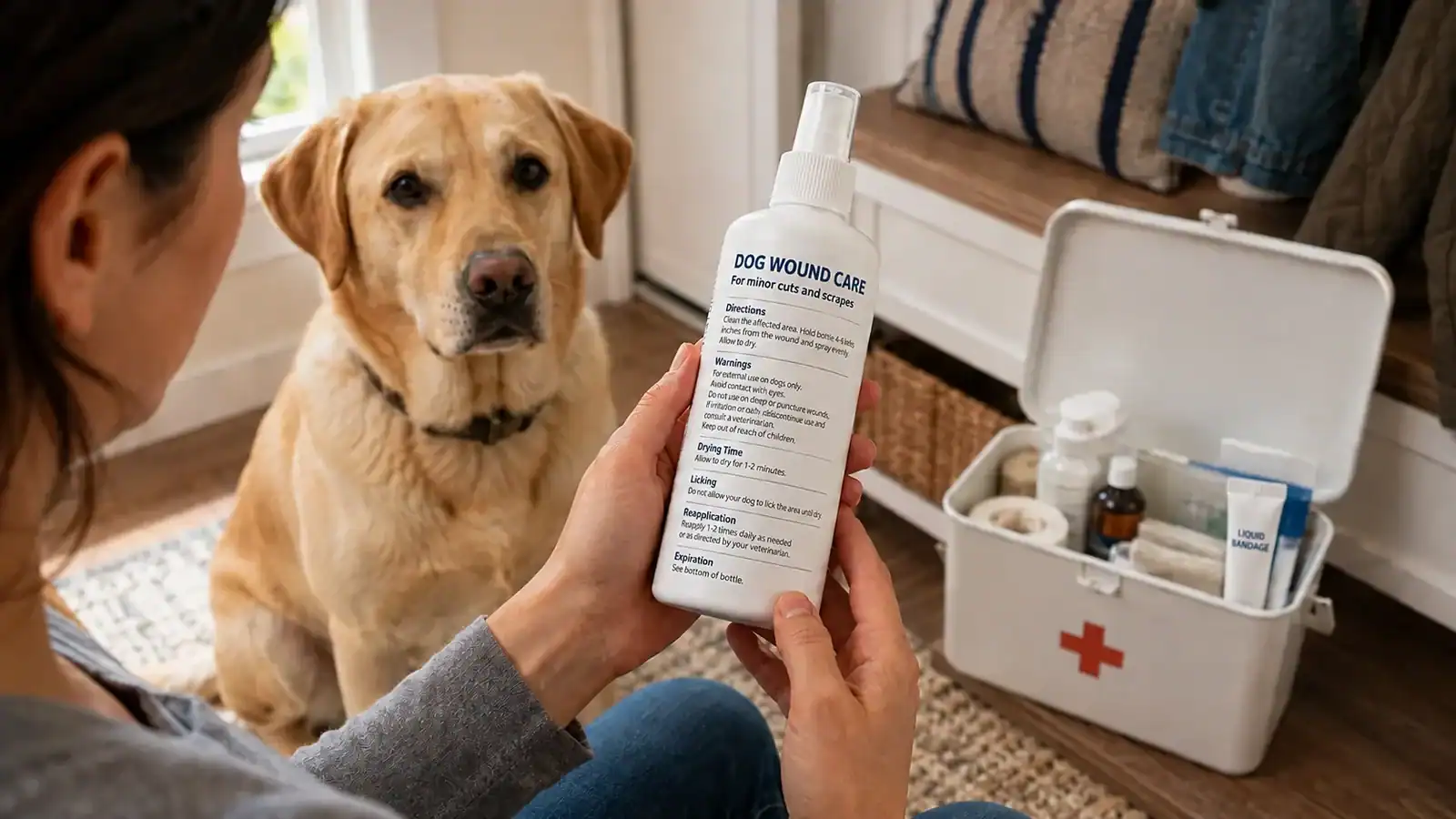
    Pet products are not interchangeable. Before applying one, check:

    • The label clearly says it is for dogs
    • The intended uses include the type of minor wound you see
    • The ingredients and warnings are readable
    • You know how long it must dry
    • You know whether and when to reapply it
    • You understand the licking precautions
    • The product is not expired

    A government database listing is not proof that a product has been approved as safe and effective. For example, the DailyMed page for VetraCare Pet Liquid Bandage contains label directions for minor cuts and scrapes, but it also states that the drug has not been found by the FDA to be safe and effective and that its labeling has not been FDA approved. [2] This difference helps you compare products accurately.

    Dog owner comparing a wound-care label beside a first-aid kit containing an unopened liquid bandage tube

    When Not to Use Liquid Bandage

    Liquid bandage is the wrong tool when a wound needs veterinary cleaning, drainage, closure, pain control, or infection treatment. Bite wounds and punctures can look small on the surface while carrying bacteria deep under the skin. Gaping wounds may involve tissues you cannot assess safely at home.

    Avoid home application if the area is:

    • Deep, wide, or longer than a small surface cut
    • Caused by a bite, puncture, crush, or burn
    • Dirty or contains a foreign object
    • Swollen, hot, very red, painful, or draining
    • Producing a bad odor
    • Bleeding despite steady pressure
    • Located over a joint, on a paw pad, or in a high-motion area that keeps opening
    • Close to an eye or mucous membrane
    • A surgical site that has opened or changed

    Do not cover a surgical incision with liquid bandage unless the veterinarian who performed the procedure tells you to. Incisions are designed and closed in specific ways. A change in the incision needs to be assessed, not hidden beneath another product.

    Signs of Infection

    Call your veterinarian if redness, swelling, heat, pain, or discharge is increasing rather than settling. Other concerns include an unpleasant smell, low energy, poor appetite, feverish behavior, or repeated licking that you cannot control.

    A film can make a wound harder to inspect. If you are using one, look at the surrounding skin at least daily and stop if the label tells you to stop after irritation.

    Emergency Warning Signs

    Seek urgent veterinary care for heavy bleeding, pale or white gums, weakness, collapse, breathing changes, major trauma, or exposed deeper tissue. Apply firm direct pressure with clean gauze or a clean cloth while arranging care. Merck lists stabilization and bleeding control as first priorities in wound management. [1]

    Can You Use Human Liquid Bandage on Dogs?

    I do not recommend treating human liquid bandage as a safe substitute for a dog-labeled product. Formulas vary, and dogs may lick whatever you put on their skin. A human label also does not account for fur, canine skin, or the chance that the product will be swallowed.

    If a veterinarian approves a particular product for your dog, follow that specific guidance. Otherwise, choose a dog-labeled product whose intended use matches the wound. If your dog has already licked or swallowed a human product, keep the package and call your veterinarian or an animal poison service for advice. The ingredients and amount matter.

    How to Apply a Dog-Specific Liquid Bandage Safely

    Once you have confirmed that the wound is minor and the label allows use, keep the process gentle.

    Step-by-Step Application

    1. Calm your dog. Ask someone to help with gentle restraint if needed. Stop if your dog is frightened or painful enough to bite.
    2. Control minor bleeding. Hold clean gauze or a clean cloth against the area with steady pressure. Do not keep lifting it to check every few seconds.
    3. Inspect the wound. Make sure it is shallow, clean, and free of embedded material.
    4. Rinse gently. Sterile saline is a good choice for a small surface wound. Merck describes 0.9% saline as the least toxic lavage fluid for healing tissue and warns that hydrogen peroxide is toxic to healthy tissue. [1] Do not scrub with rubbing alcohol, peroxide, surgical soap, or a home remedy.
    5. Pat the surrounding skin dry. A liquid film will not adhere well to wet fur or skin. Do not rub the raw surface.
    6. Follow the exact label. Directions vary. The VetraCare label says to clean and dry the area, spray, and allow it to air-dry. [2] Dogswell directs users to spray lightly and hold the dog still for 30 to 60 seconds. [3] Do not invent extra coats or warm the product unless your product’s instructions specifically say to do so.
    7. Prevent licking and rubbing. Keep your dog still until the film is completely dry. Use an Elizabethan collar or another veterinarian-approved barrier if your dog keeps reaching the area.
    8. Check it daily. Watch for film cracking, trapped moisture, redness, swelling, discharge, pain, or a wound that is getting larger.
    Beagle resting while two owners gently clean a minor front-leg wound with gauze and an Elizabethan collar nearby

    Paw and Joint Considerations

    Paws and joints move constantly. They also meet dirt, moisture, and rough surfaces, so a liquid film may crack or wear away quickly. A pad cut can be deeper than it first appears, and a poorly applied wrap can create circulation problems. Ask your veterinarian which type of protection is best if the injury is on a paw pad, between the toes, or over a joint.

    What If Your Dog Licks It?

    Do not assume licking is harmless just because a product is sold for pets. The safest plan is to prevent licking while the product dries and follow any continued restriction on the label.

    If your dog takes one quick lick from a dried film and remains well, contact the manufacturer or your veterinary clinic for product-specific advice. If a large amount was swallowed, or your dog drools, vomits, coughs, seems weak, or acts abnormally, call a veterinarian or animal poison service promptly. Have the container with you.

    Liquid Bandage Versus Other Options

    Sometimes the simplest care is enough. A tiny surface scrape may only need gentle rinsing and protection from licking while you monitor it. Liquid bandage can be helpful in selected spots, but it is not automatically better.

    A nonstick dressing may be preferable when a wound needs cushioning or absorption. Bandages must be applied correctly and checked often, especially on a leg or paw. Too much pressure or moisture can cause trouble.

    An Elizabethan collar may be the most useful tool when licking is the main problem. For wounds that need true closure, your veterinarian may choose sutures, staples, tissue adhesive, or open-wound management after examining the injury. [1]

    A Holistic Approach to Minor Wound Care

    Holistic care begins with the whole dog, not with a bottle. I want the wound clean, the dog calm, and the body given a good environment for normal healing.

    For a very minor injury, that usually means gentle cleansing, protection from licking and dirt, and a short break from activities that stretch or reopen the skin. Keep fresh water available and continue your dog’s normal balanced diet unless your veterinarian advises otherwise.

    More products are not always better. Essential oils, herbal mixtures, harsh antiseptics, and kitchen remedies can irritate open tissue or be unsafe when licked. Use only what you can identify, justify, and monitor.

    When to Call Your Veterinarian

    Call if you are unsure whether the wound is truly superficial. I would also want veterinary guidance for:

    • Any bite, puncture, burn, or crush injury
    • A wound that is deep, gaping, or very painful
    • Bleeding that returns or does not stop
    • Dirt or an object you cannot gently rinse away
    • Increasing redness, heat, swelling, discharge, or odor
    • A wound that keeps opening
    • A surgical incision that looks different
    • No clear improvement over the next day or two
    • A dog whose health condition or medication may slow healing

    A quick call can keep a small problem from becoming a painful one.

    Final Thoughts

    A dog-specific liquid bandage can be useful for a small, clean, superficial cut or scrape, but it should never replace careful wound assessment. When in doubt, rinse gently, prevent licking, and ask your veterinarian before sealing anything over the skin.

    For your dog’s first-aid kit, keep sterile saline, gauze, a clean cloth, an Elizabethan collar, and your veterinarian’s phone number. If you add a liquid bandage, choose one labeled for dogs and keep its directions with it.

    Frequently Asked Questions

    Is Human Liquid Bandage Safe for Dogs?

    Not as a general rule. Human formulas vary, and dogs may lick the product. Use a human product only if your veterinarian approves that exact formula for that exact wound.

    What Happens If My Dog Licks Liquid Bandage?

    The risk depends on the ingredients, amount, and whether the film was wet or dry. Prevent licking, save the package, and contact your veterinarian or an animal poison service if more than a tiny amount was swallowed or your dog develops symptoms.

    Can I Put Liquid Bandage on My Dog’s Paw?

    Possibly, but paw wounds deserve extra caution because pads can split deeply and films wear quickly with motion and moisture. Ask your veterinarian if the cut is more than a tiny surface scrape, sits between the toes, or keeps reopening.

    Can I Use Liquid Bandage on a Surgical Incision?

    Not unless the veterinarian who performed the surgery specifically directs you. An opening, discharge, swelling, or color change at an incision should be reported to that clinic.

    How Often Should I Reapply Liquid Bandage?

    Follow the exact product label. Some labels allow daily reapplication, while others differ. Remove nothing forcefully, and stop using the product if the wound worsens or the surrounding skin reacts.

    References

    1. Winkler, K. P., & Carnevale, J. (2024). Initial wound management in small animals. Merck Veterinary Manual.
    2. Avadim II, LLC. (2013). VetraCare pet liquid bandage [Drug label]. DailyMed.
    3. Dogswell. (n.d.). Remedy + Recovery liquid bandage.

    A note about your dog’s health

    This article provides general education and does not replace an examination, diagnosis, or individualized advice from your veterinarian. Contact a veterinary professional if you are concerned about your dog’s symptoms.

    Dr. Candy Akers, DVM Avatar

    ABOUT THE AUTHOR
  • Can You Use Bactine On Dogs? Expert Answers

    Can You Use Bactine On Dogs? Expert Answers

    Medically Reviewed by: Dr. Candy Akers, DVM

    To ensure the safety and well-being of your furry companion, you might wonder whether it’s okay to use Bactine on dogs. The short answer is yes. This blog will provide you with the necessary information to make an informed decision with regards to your pooch’s health. We will explore what Bactine is and whether it is safe for dogs to use. Additionally, we will discuss the various factors you should consider before using Bactine on your furry friend.

    bactine used on dogs

    What is Bactine?

    Bactine is a topical liquid used to treat minor skin irritations and injuries. It contains lidocaine, which helps numb the affected area, and benzalkonium chloride, which acts as an antiseptic. While Bactine is typically used for humans, some pet owners have considered using it on their dogs.

    When it comes to using Bactine on dogs, it’s essential to tread with caution. While the product is safe for human use, pets can have adverse reactions to certain ingredients in the medication. Moreover, animals tend to ingest or lick medication off their fur, causing harmful side effects.

    Pet owners should consult a veterinarian before administering any medication or treatment on their pets’ injuries. A licensed vet can examine the condition and provide suitable treatments that won’t harm your furry friend’s health.

    Can Dogs Use Bactine?

    When it comes to using Bactine on dogs, caution is advised. While Bactine is safe for human use, its active ingredients may not be suitable for canines. The primary ingredient in Bactine is lidocaine which can be toxic for dogs if used excessively. Furthermore, the other ingredients such as benzalkonium chloride may cause skin irritation or allergic reactions in some dogs.

    It is essential to consult with a veterinarian before using any human medication on your dog. They will examine your pet and advise you on the best treatment plan based on factors such as age, weight, and medical history. Your vet may recommend using an alternative topical antiseptic or administering oral medication.

    In summary, never use Bactine on your dog without veterinary advice. While it is safe for humans, animals have different physiological systems that can react differently to certain chemicals. Always prioritize the health and well-being of your pet by seeking professional advice before trying any at-home remedies.

    Factors to Consider Before Using Bactine on Dogs

    When considering using Bactine on dogs, several factors need to be considered to ensure the safe application of this product. It’s important to carefully assess the situation and take appropriate measures before applying Bactine to a dog.

    Here are some important factors to consider before using Bactine on dogs:

    1. Consult with a veterinarian: Before administering any treatment or medication to your pet, it’s always crucial to seek advice from a qualified veterinarian.
    2. Check for allergies: Dogs can have allergic reactions to various products, including Bactine. Performing an allergy test is advisable before applying the solution on your dog.
    3. Read label instructions: Always read the label instructions before applying any topical solution like Bactine on your dog.
    4. Observe the wound severity: Bactine might not be suitable for some types of wounds; hence it’s essential to determine if it suits the specific needs of your pet.
    5. Proper application: Whether it’s an open wound or a slight injury, proper application should be observed when using Bactine. Apply it in the recommended amount and frequency indicated in the label instructions.

    Additionally, while using Bactine on dogs is possible, you should note that human drugs should not replace veterinary care. Regular visits to veterinarians are crucial to maintaining good health and identifying potential medical concerns early.

    How Does Bactine Work on Dogs?

    To understand how Bactine works on dogs, you need to know its three primary benefits: antiseptic, anesthetic, and pain relief. Applying Bactine on dogs can help you prevent infections, numb skin, and alleviate pain.

    Bactine as an Antiseptic

    Bactine is a powerful antiseptic that can be used on dogs to treat minor cuts, wounds and skin irritations. The active ingredient in Bactine is benzalkonium chloride, which kills bacteria and other harmful pathogens on contact. When applied to the affected area, Bactine quickly reduces pain and inflammation while accelerating the healing process. Its ability to clean and sterilize the wound makes it an effective solution for preventing infection.

    Bactine also contains lidocaine hydrochloride which provides immediate relief from pain and itching. This unique combination of active ingredients makes Bactine a highly effective treatment for minor skin irritation in dogs. It’s important to note that Bactine should not be used on deep wounds or puncture wounds as it may lead to further complications.

    When using Bactine on dogs, it’s important to follow proper application techniques and dosage guidelines. It should only be used externally, avoiding contact with the eyes and mouth of the dog. Additionally, it’s essential to check your dog’s condition regularly after applying Bactine to ensure there have been no allergic reactions or adverse side effects.

    Bactine as an Anesthetic

    Bactine has a numbing effect on dogs due to its anesthetic properties, which work by blocking nerve signals. This allows for pain relief and alleviates discomfort in dogs. Using Bactine on open wounds or injuries can also help prevent infection, as it contains antibacterial properties that help kill harmful bacteria. Additionally, Bactine is gentle enough to use frequently while still being effective, making it a versatile tool in managing dog injuries and discomfort.

    Bactine as a Pain Reliever

    Bactine acts as an effective pain reliever for dogs through its active ingredient, benzalkonium chloride. This disinfectant and topical analgesic work by blocking nerve signals responsible for transmitting pain. Its fast-acting properties provide immediate relief to minor cuts, burns, and insect bites, preventing dogs from constantly gnawing or licking the affected area.

    Additionally, Bactine helps prevent infection by killing harmful bacteria on contact without stinging or causing further discomfort to animals. Its versatility and safety make it a popular choice among pet owners in managing their furry companions’ minor injuries.

    bactine on dogs

    Is Bactine Safe for Dogs?

    To ensure the safety of your furry companion, you need to know whether Bactine is safe for dogs. In this part, you will find all the answers to your queries regarding the usage of Bactine on dogs. We’ll be discussing the potential risks of using Bactine on dogs, and when to avoid using Bactine on dogs to keep your pet healthy.

    Potential Risks of Using Bactine on Dogs

    Bactine on Dogs: Potential Risks and Precautions

    The use of Bactine on dogs may pose several potential risks that pet owners should be aware of. This antiseptic spray contains benzalkonium chloride, which can cause skin irritation, allergic reactions, and toxicity if ingested by dogs.

    Here are some possible risks to consider:

    • Allergic Reactions: Benzalkonium chloride can trigger an allergic reaction in some dogs that may manifest as itching, redness, hives or swelling.
    • Skin Irritation: Bactine may cause skin irritation and redness that could be painful for the dog. It can also dry out the skin over time.
    • Toxicity: If your dog licks or swallows Bactine, it can lead to stomach upset, vomiting, diarrhea or even poisoning.
    • Infection Spread: If you use Bactine to treat open wounds, it may have adverse effects on wound healing. The disinfectant nature of Bactine removes both good and bad bacteria from the wound site making room for further infections.
    • Overdependence on Antiseptics: Overuse of antiseptics like Bactine may hamper a dog’s natural immunity system – especially when used on small cuts. This reliance could weaken your dog’s natural capability to fight infections.

    It is important to note that every situation is unique, and what works well for one dog might not be suitable for another. Always consult your veterinarian before administering any medication or treatment to your pet.

    In summary, while use of Bactine antiseptic spray on dogs can help sanitize them, this product poses several potential risks that should not go unnoted unless consulting professional consultation has been made beforehand.

    When to Avoid Using Bactine on Dogs

    Using Bactine spray or ointment can help alleviate pain and prevent infections in pets. However, there are certain situations where it’s not recommended to use the product. Here is a 3-step guide describing when to avoid using Bactine on dogs.

    1. Avoid using Bactine if your dog has an open wound that is bleeding profusely. Bactine can make blood clotting more difficult, causing more harm than good.
    2. Adversely, do not apply Bactine if the wound is too small and completely healed; spraying unnecessary chemical substances onto your furry friend’s skin may do more bad than good.
    3. If an allergic reaction or rash occurs after applying the product, stop its use immediately and reach out to a vet for further advice.

    It’s essential to note that dosing guidelines given by licensed veterinarians must be followed when applying any medicine/supplement/spray/ointment on your pet – taking care of our furry friends’ wellbeing should always be prioritized.

    Alternatives to Bactine for Dogs

    To find solutions for wounds on your furry friend, explore alternatives to Bactine for dogs with natural remedies, antiseptic solutions, and seeking advice from a vet. These sub-sections offer options for keeping your dog’s wound clean and promoting healing while avoiding potential side effects of Bactine or unsuitable alternatives.

    Natural Remedies for Wound Care on Dogs

    Wound care is essential to ensure your furry friend’s speedy recovery. Pet owners may consider replacing traditional treatment options with natural remedies for effective wound care. These remedies can aid in treatment, reduce pain and eliminate the risk of infection.

    • Herbs such as calendula and comfrey can be brewed into a tea and applied to wounds directly.
    • Honey has healing agents that are anti-inflammatory and antibacterial.
    • Aloe vera gel has therapeutic properties and can cool the skin while treating wounds.

    Using natural remedies is an effective alternative to traditional antibiotics as it eliminates potential side effects caused by harsh chemicals. However, it is important to understand that severe cases warrant professional veterinary attention.

    Pet owners should exercise caution and diligent care when treating their pets’ wounds as they need time to heal properly without interruption. If done correctly with the use of natural remedies, your loyal companion will soon regain its health and well-being.

    picture of first aid bags laying on table

    Other Antiseptic Solutions for Dogs

    For pet parents, it’s crucial to know the best antiseptic solutions to treat their furry friend’s wounds and injuries. Apart from Bactine, there are a few other antiseptic solutions that can help dog owners heal minor cuts and scrapes at home.

    Here are some of them:

    • Betadine Solution: This is an effective antiseptic solution that works well against bacteria, fungi and viruses. With its strong antimicrobial properties, Betadine is useful in treating insect bites, hot spots and minor wounds.
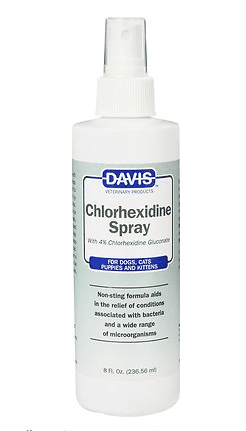
    • Chlorhexidine Solution: Chlorhexidine’s broad-spectrum disinfectant properties make it an excellent choice to treat superficial cuts, abrasions, and skin infections. It can also be used as a mouthwash to improve overall oral hygiene.
    • Hydrogen Peroxide: This mild antiseptic solution can be used safely on dogs when diluted with water in the right quantity. When applied topically, hydrogen peroxide releases oxygen that helps kill bacteria and clear debris from the wound.
    • Povidone Iodine Solution: Another great alternative to Bactine, this powerful yet cost-effective antiseptic is often recommended by veterinarians for treating open bruises or puncture wounds. Povidone iodine solution effectively eliminates common germs like staphylococci.
    • Witch Hazel Solution: With anti-inflammatory effects and astringent properties, witch hazel holds benefits for both humans and animals alike. It cools down skin irritations quickly while reducing redness and swelling in one go.
    • Saline Solution: Saltwater or saline solution makes a simple but effective natural cleanser for lacerations. A little salt dissolved into lukewarm water creates an environment where germs may not thrive easily.

    When choosing the best antiseptic solution for your dog, always check with a vet or animal health specialist first. It’s not uncommon for untreated wounds to develop complications like infection or sepsis, which can lead to severe health risks. Therefore, it is advised that you take medical consultation before trying any of these remedies.

    picture of dog on exam table with vet

    Consulting a Vet for Suitable Alternatives

    When looking for alternatives to Bactine for dogs, it is essential to seek guidance and recommendations from a veterinary professional. Suggestions from vets can ensure that the used product will not cause harm or interfere with existing medication. Speaking with a vet aids in receiving proper guidance on suitable wound care products.

    Vets recommend consulting for available topical based treatments that have been approved by veterinary authorities. A vet may suggest treatment options, such as betadine, antibacterial sprays, or even medicated shampoos depending on the nature of the wound and its severity. These treatment alternatives can help heal wounds while inhibiting bacterial growth and reducing infection risks in dogs.

    Paying attention to individual pet requirements is vital when exploring different product substitutes for Bactine. A veterinarian can give specific advice on what ingredients may be harmful to specific dog breeds. By discussing symptoms and signs of allergies or adverse reactions to particular substances beforehand, owners can receive recommendations on suitable alternative products that best cater to their dog’s needs.

    Tips for Proper Wound Care on Dogs

    To care for your furry friend’s wounds appropriately, you need expert tips on wound care with Bactine. In order to heal your dog’s wounds without complications, you must start by cleaning the wounds. You also need to use appropriate wound products and take preventive measures for wound infections.

    Cleaning of Wounds

    To maintain the health of an injured dog, proper hygienic measures must be followed. One of the essential steps is the adequate cleaning of wounds to avoid possible infections and complications.

    To clean the wound effectively, follow these four steps:

    1. Take some warm water and dilute an antibacterial soap as per instructions.
    2. Gently pour the solution onto the affected area and allow it to soak in for a minute or two.
    3. Rinse well with clean water and pat dry with soft cloth or gauze.
    4. If necessary, apply antiseptic cream or ointment recommended by a veterinarian.

    Apart from these basic measures, it is crucial to understand that not all wounds can be appropriately treated at home. Seek veterinary care if there are signs of excessive bleeding, swelling, foul odour, redness or discharge from the injury site.

    Infections are more common in deep or puncture wounds than in surface cuts. Therefore, do not neglect even minor injuries and seek appropriate medical attention immediately.

    Use of Appropriate Wound Products

    Wound care on dogs requires the use of appropriate products that aid in healing and prevent infections. Using the correct wound products for dogs ensures efficient healing, proper pain relief and decreases the risk of complications.

    • Antiseptic solutions such as chlorhexidine, povidone-iodine, and hydrogen peroxide can effectively clean wounds.
    • Wound dressings such as non-stick pads or Telfa allow for air flow while preventing dirt and debris from entering the wound.
    • Vet-prescribed topical creams or ointments can help expedite healing with their antibacterial properties.

    It is important to monitor wounds regularly to ensure adequate care is provided throughout the healing process. Additionally, consulting a veterinarian before applying any product on an animal’s wound is always advised to ensure it won’t cause any further harm or complications.

    Preventative Measures for Wound Infections

    Taking proactive measures to prevent wound infections is crucial for your furry friend’s health and well-being. Here are some tips to help you prevent such infections:

    1. Keep the wound area clean and dry, and regularly inspect it for any signs of redness, swelling or discharge.
    2. Use an antiseptic solution recommended by your veterinarian to clean the wound before applying any dressing or antibiotic ointment.
    3. Prevent your dog from licking or biting the wound by using a cone collar or bandage, as saliva can introduce bacteria that increases the risk of infection.
    4. Monitor your dog’s behavior after surgery or injury, watch out for excessive scratching, chewing, or pawing at the wound site.

    It’s not enough to simply treat wounds when they occur. Providing proper care and attention can keep infections at bay, reduce complications and promote faster healing for your canine companion. Remember that prevention is key in maintaining good health!

    picture of a king charles cavalier licking lips while wearing a cone

    Conclusion

    To wrap up, rest assured that you now have a solid understanding of whether or not you can use Bactine on dogs. In conclusion, we have discussed the expert opinion on the matter and shared our final verdict on using Bactine on dogs. Additionally, we have emphasized the importance of proper wound care for dogs, which is essential for the overall health and well-being of your furry friend.

    Final Verdict on Using Bactine on Dogs

    After careful consideration, it is not recommended to use Bactine on dogs without consulting a veterinarian first. Although it may be effective in treating minor cuts and scrapes, there are better options available that are specifically formulated for use on animals. Additionally, using human medications on pets can have adverse side effects and may worsen the condition.

    Moreover, pet owners should always prioritize their dog’s health and safety over convenience. There are many antiseptic sprays and ointments available that are specifically designed to treat wounds in dogs without causing harm. When in doubt, it is always best to seek advice from a licensed veterinarian.

    It is imperative to note that every pet’s health condition varies; thus, one must exercise caution while purchasing medication or administering any drug. It is crucial not to self-medicate your pet because improper treatment could lead to fatal consequences. Instead, visit a vet or consult with an expert practitioner who can provide adequate treatment for your furry friend.

    Importance of Proper Wound Care for Dogs

    Proper wound care is vital for the health and well-being of our furry companions. By tending to their injuries promptly, we prevent infections and avoid more severe health issues. Also, regular checkups with a veterinarian can help identify potential problems early on. Injuries on paws and ears are particularly prone to develop into infections if left untreated, so it’s important to seek medical attention immediately if you notice any lacerations or abrasions in these areas.

    It’s not just about treating dogs’ physical wounds; psychological healing is also necessary. Dogs who experience trauma from getting into fights or accidents may require professional therapy or training to regain their confidence and trust in humans. Additionally, proper nutrition plays a key role in aiding in the recovery process, as well as maintaining overall well-being.

    Overall, ensuring we take care of our dogs’ wounds properly will prevent complications from occurring and improve their quality of life. Let’s prioritize wound care for our furry friends to ensure they live happy and healthy lives.

    Frequently Asked Questions

    Q: Can you use Bactine on dogs?

    A: Yes, Bactine can be used on dogs to clean and treat minor cuts, scrapes, and insect bites.

    Q: How do you apply Bactine on dogs?

    A: Apply Bactine on a clean cotton ball or pad and gently rub over the affected area of the dog’s skin. Do not spray directly on the dog’s fur or in its eyes.

    Q: Is Bactine safe for dogs to lick?

    A: It is not recommended for dogs to ingest Bactine, but if they happen to lick it off their skin, it should not cause harmful effects.

    Q: Can Bactine be used on all types of skin conditions in dogs?

    A: Bactine is only recommended for minor skin irritations, cuts, scrapes, and insect bites. It should not be used for more serious or chronic skin conditions in dogs.

    Q: Are there any side effects of using Bactine on dogs?

    A: Some dogs may experience mild irritation or redness after using Bactine, but this is rare. If any adverse reactions occur, discontinue use and consult a veterinarian.

    A note about your dog’s health

    This article provides general education and does not replace an examination, diagnosis, or individualized advice from your veterinarian. Contact a veterinary professional if you are concerned about your dog’s symptoms.

    Sheena Keliher Avatar

    ABOUT THE AUTHOR
  • Can I Put Benadryl Cream on My Dog?

    Can I Put Benadryl Cream on My Dog?

    The Short Answer

    Yes, sometimes, but I would use Benadryl cream on a dog only in a narrow situation. The spot should be very small, the skin should be intact, the product should have no extra active drugs, and you must be able to prevent licking. I would not put it on raw, oozing, infected, or widespread skin. Keep it away from the eyes, mouth, genitals, and deep ear canal.

    If your dog is very uncomfortable, has facial swelling, is having trouble breathing, or is scratching over a large area, skip the cream and get veterinary help. A cream may quiet a symptom for a short time, but it cannot tell us why the itch started.

    Box of Benadryl itch stopping cream

    What Is in Benadryl Cream?

    Benadryl is a brand name used on several products, so do not assume every tube contains the same ingredients. A common extra-strength itch cream contains diphenhydramine hydrochloride 2% and zinc acetate 0.1%. Its human label says it is for external use only and should not be used on large areas of the body. [1]

    Diphenhydramine is an antihistamine. In a topical cream, it is meant to work at the skin surface. That does not make the product automatically appropriate for a dog. Dogs lick their skin, their coats trap products, and irritated canine skin may absorb a topical product differently than healthy skin.

    Check the Exact Label

    Read the active-ingredient panel before the tube touches your dog. I would avoid any cream, gel, or spray that contains an additional active drug unless your veterinarian has approved that exact product.

    Also check the expiration date and look at the cream itself. Do not use a product that has changed color, separated, or picked up debris. Topical and oral Benadryl are different decisions, even when both contain diphenhydramine.

    Person carefully reading a Benadryl itch cream label while a calm dog waits nearby

    When Benadryl Cream May Be Reasonable

    A limited use may be reasonable for a mild, localized problem such as one small insect bite or a tiny patch of contact irritation. The skin should be closed, dry, and only mildly pink. Your dog should otherwise feel well.

    Use Only on a Tiny Area of Intact Skin

    If your veterinarian has said that the exact product is appropriate, apply only a very thin film to the small affected spot. Do not keep adding more because the dog is still itchy. If the spot is not improving, the next step is to find the cause, not to increase the amount or frequency on your own.

    Watch the skin after application. Stop if the redness, swelling, pain, or itching becomes worse.

    Prevent Licking

    Lick prevention is essential. Stay with your dog until the cream is no longer wet, and use a properly fitted recovery collar when needed. A sock or bandage can trap moisture and may make some skin problems worse, so I do not cover an irritated area unless I know the type of lesion and how the covering will be managed.

    Dog wearing a properly fitted recovery collar to prevent licking a small skin spot

    When Not to Use Benadryl Cream

    • The skin is broken, bleeding, oozing, crusted, infected, hot, or very painful.
    • The irritated area is large or appears in several places.
    • The spot is in or near an eye, the mouth, the genitals, or deep in the ear canal.
    • The label lists another active drug you have not discussed with a veterinarian.
    • Your dog can reach the area and you cannot prevent licking.
    • Your dog is a young puppy, is pregnant or nursing, has a serious health condition, or takes other medication and you have not asked your veterinarian.
    • The itching comes with facial swelling, widespread hives, weakness, collapse, or any change in breathing.

    A moist, inflamed hot spot is not a good place for a human antihistamine cream. Hot spots often need clipping, cleaning, infection control, and treatment for the trigger. Sealing a cream under fur can make the area harder to evaluate.

    What to Do If Your Dog Licks It

    First, take the tube away and prevent more licking. Keep the package so you can report the active ingredients, product strength, and tube size. Note when the licking happened and estimate how much product is missing.

    Diphenhydramine exposure can cause sleepiness, but an excessive amount may also cause agitation, vomiting, a fast heartbeat, tremors, or seizures. [2] The risk depends on your dog’s weight, the amount swallowed, and every ingredient in the product.

    If your dog had more than a tiny taste, the amount is unknown, the product contains several active ingredients, or your dog has any unusual sign, call your veterinarian or ASPCA Animal Poison Control at (888) 426-4435. The service is available 24 hours a day, and a fee may apply. [3] Do not induce vomiting or give another medication unless a veterinary professional tells you to do so.

    Pug scratching its ear

    Why Is Your Dog Itchy?

    Itching is a sign, not a diagnosis. Parasites, infections, and allergies are among the most common causes in dogs. [4] I also think about insect bites, contact irritation, mites, dry or damaged skin, a wound, and pain that makes a dog lick one spot.

    Treat the Cause, Not Just the Itch

    Location and timing offer useful clues. Itching at the tail base can point toward fleas. Repeated paw licking may occur with allergy, infection, or contact irritation. An itchy ear may involve yeast, bacteria, mites, or a foreign object. Hair loss, odor, greasy skin, crusts, or discharge make infection more likely.

    A topical cream will not remove fleas, clear an ear canal, treat mites, or correct a food or environmental trigger. If the itch returns, spreads, or lasts more than a day or two, an examination can save your dog a lot of discomfort.

    Gentler Options for Itchy Skin

    For one mild spot on intact skin, I usually begin with simple comfort and a clean surface. A cool compress for five to ten minutes can calm the area without adding another ingredient. A gentle cool-water rinse also helps when pollen, dust, or another contact irritant may be sitting on the coat.

    Owner soothing a calm dog's intact skin with a cool compress

    Start With Simple Skin Support

    An oatmeal bath can be soothing when the itch is mild and widespread but the skin is not infected or broken. Choose a fragrance-free dog product, rinse well, and pat the coat dry. Heavy rubbing can make inflamed skin angrier.

    Some popular home options need more care:

    • hydrocortisone cream may help certain small inflammatory spots, but the strength, other ingredients, and diagnosis matter. Use it only with veterinary guidance and prevent licking.
    • calamine lotion can contain ingredients that are not meant to be swallowed. I do not use it on a dog without checking the exact label.
    • Aloe vera gel should be a dog-appropriate purified product, not gel scraped from an aloe plant. Keep it away from the mouth and stop if it stings or reddens the skin.
    • Coconut oil may feel soothing on a tiny dry patch, but it is greasy and encourages some dogs to lick. It is not a treatment for infection or allergy.
    • Apple cider vinegar can sting damaged skin. Never apply it to a raw hot spot, wound, or inflamed ear.
    • Chamomile tea is sometimes used as a cooled skin compress. A systematic review found promising laboratory and early topical evidence for chamomile and several other medicinal plants in canine dermatology, but it also found that stronger clinical research is needed. [5]

    Natural does not mean harmless, and a pleasant-smelling product is not always gentle. When I use holistic support, I match it to the skin in front of me and keep the plan simple enough to notice whether it is helping.

    Is Oral Benadryl the Same?

    No. A topical cream and an oral antihistamine are not interchangeable. Oral diphenhydramine decisions depend on your dog’s weight, age, health, other medications, and the exact product. Some combination products contain ingredients that can be dangerous for dogs.

    Do not calculate an oral dose from a cream label, and do not give oral Benadryl simply because a topical product did not help. Ask your veterinarian whether an antihistamine fits the type of itch your dog has.

    Husky scratching its neck and ear

    When to Call Your Veterinarian

    Arrange veterinary care when the skin is painful, moist, smelly, bleeding, crusted, producing pus, or spreading quickly. A dog who cannot sleep, keeps chewing one spot, develops hair loss, or has repeated flares also deserves a closer look.

    Seek urgent care for facial swelling, widespread hives, weakness, collapse, repeated vomiting, tremors, seizures, or any breathing change. The same applies after a meaningful or uncertain ingestion of a human skin product.

    Final Thoughts

    Benadryl cream can have a small role for a tiny patch of mild irritation, but it is not my default answer for unexplained itching. Check the label, use it only on intact skin when the exact product has been approved for your dog, and prevent licking.

    For many minor irritations, a cool rinse, a cool compress, or a dog-appropriate oatmeal product is a gentler first step. If the itch persists or the skin looks unhealthy, focus on the cause. That is where lasting relief begins.

    Frequently Asked Questions

    Can I Put Benadryl Cream on My Dog’s Paws?

    Only with care. Paw skin is easy to lick, and redness between the toes often comes from allergy, infection, a foreign object, or contact irritation. I would not use the cream on cracked pads, raw webbing, or an area your dog keeps chewing. A cool rinse and a veterinary check are safer when the problem is more than one tiny intact spot.

    Can I Use Benadryl Cream on a Hot Spot?

    No, not on a moist, raw hot spot. These lesions can spread quickly and may need the fur clipped, the skin cleaned, and infection or allergy treated. A human cream can trap moisture and will not fix the trigger.

    What Should I Do If My Dog Licked Benadryl Cream?

    Remove the product, keep the package, and estimate how much is missing. Call your veterinarian or ASPCA Animal Poison Control if it was more than a tiny taste, the amount is unknown, there are extra active ingredients, or your dog is acting unusual. Do not make your dog vomit unless a veterinary professional directs you.

    What Can I Put on My Dog for Itching?

    For mild irritation on intact skin, start with a cool compress, a cool-water rinse, or a fragrance-free dog oatmeal product. Avoid mixing several remedies. If there is odor, discharge, broken skin, hair loss, severe discomfort, or repeated itching, have your veterinarian identify the cause before applying more products.

    References

    1. DailyMed. (2026, January 14). Diphenhydramine hydrochloride, zinc acetate cream. U.S. National Library of Medicine. https://dailymed.nlm.nih.gov/dailymed/drugInfo.cfm?setid=6d7a7615-9ae7-4c55-8a84-dba746f535d7
    2. Merck Veterinary Manual. (n.d.). Toxicoses in animals from human cold and allergy medications. https://www.merckvetmanual.com/toxicology/toxicoses-from-human-cold-and-allergy-medications/toxicoses-in-animals-from-human-cold-and-allergy-medications
    3. American Society for the Prevention of Cruelty to Animals. (n.d.). ASPCA Poison Control. https://www.aspca.org/pet-care/aspca-poison-control
    4. Merck Veterinary Manual. (n.d.). Itching (pruritus) in dogs. https://www.merckvetmanual.com/dog-owners/skin-disorders-of-dogs/itching-pruritus-in-dogs
    5. Tresch, M., Mevissen, M., Ayrle, H., Melzig, M., Roosje, P., & Walkenhorst, M. (2019). Medicinal plants as therapeutic options for topical treatment in canine dermatology? A systematic review. BMC Veterinary Research, 15, 174. https://doi.org/10.1186/s12917-019-1854-4

    A note about your dog’s health

    This article provides general education and does not replace an examination, diagnosis, or individualized advice from your veterinarian. Contact a veterinary professional if you are concerned about your dog’s symptoms.

    Dr. Candy Akers, DVM Avatar

    ABOUT THE AUTHOR

  • Can You Use Visine on Dogs? Safer Eye Care Options

    Can You Use Visine on Dogs? Safer Eye Care Options

    No, you should not use redness-relief Visine in your dog’s eyes unless your veterinarian has reviewed the exact product and specifically told you to use it. Visine is a brand, not a single formula. Some products contain ingredients that narrow blood vessels to make a human eye look less red, but that does not treat the reason your dog’s eye is irritated.

    If you already used a drop, stop using it, save the bottle, and call your veterinarian with the product name and ingredient list. If your dog swallowed any eye-drop solution, contact a veterinarian or pet poison service right away.

    Can You Use Visine on Dogs?

    The safest general answer is no. A red eye is a symptom, and making the redness fade can create false reassurance while the real problem continues.

    Visine Red Eye Comfort, for example, is labeled for human use and contains tetrahydrozoline hydrochloride 0.05% as a redness reliever. Its official label also warns about contamination, overuse, eye pain, vision changes, and swallowing. [1] A human label does not establish that the product is appropriate for a dog.

    Visine Is a Brand, Not One Formula

    Brand names can be confusing because the products sitting next to one another may have very different active ingredients. One bottle may be a redness reliever. Another may be marketed as a lubricant or allergy product. A familiar logo on the front does not tell you whether the formula is suitable for a dog’s eye.

    Read the Drug Facts panel, not just the brand name. Avoid any product described as a redness reliever unless your veterinarian has directed its use after reviewing the exact formula. Do not assume that a product is safe because it says soothing, gentle, natural, or preservative-free.

    Why Redness Relievers Are the Wrong Tool

    Tetrahydrozoline is an imidazoline drug. It narrows small blood vessels, which can temporarily reduce the appearance of redness. That cosmetic effect does not remove a grass seed, heal a scratch, restore tear production, treat infection, or lower harmful pressure inside the eye.

    There is another practical concern. Dogs often rub a painful eye and may lick liquid from their face. They can also chew the bottle. Imidazolines can cause serious poisoning when swallowed, even in small amounts. Reported signs in pets include drooling, vomiting, a slow heart rate, low blood pressure, lethargy, stumbling, collapse, and death. [2]

    What Should You Do If You Already Used Visine?

    One accidental drop does not mean that every dog will become ill, but it is still worth taking seriously. The exact formula, the amount, your dog’s size, whether any was swallowed, and the condition of the eye all matter.

    Dog owner checks a Visine bottle while calling a veterinarian about possible eye-drop exposure
    1. Stop using the product. Do not add another drop or home remedy to counteract it.
    2. Save the bottle and packaging. Your veterinarian will want the active and inactive ingredient lists.
    3. Call your veterinarian. Explain whether the liquid went into the eye, onto the face, or into the mouth.

    Keep your dog from rubbing the eye while you wait for instructions. Do not force the eyelids open. If your veterinarian advises rinsing, use only the sterile eye-rinse product and technique they recommend.

    Seek urgent care if your dog is squinting, holding the eye closed, pawing at the face, developing swelling or cloudiness, acting unable to see, or becoming more uncomfortable.

    What If Your Dog Swallowed Visine?

    Treat swallowed redness-relief eye drops as a poison concern. Call your veterinarian, an emergency clinic, or a pet poison service immediately. Do not wait for symptoms, and do not induce vomiting unless a veterinary professional specifically tells you to do so.

    Have the package in your hand when you call. Be ready to share your dog’s weight, the product name, the ingredients, the possible amount, the time of exposure, and any signs you are seeing.

    Go to emergency care promptly if your dog becomes very sleepy, weak, wobbly, collapses, vomits repeatedly, seems to have trouble breathing, or has an unusually slow heartbeat. Pet Poison Helpline notes that imidazoline exposures can affect the digestive, cardiovascular, and nervous systems. [2]

    Why Is Your Dog’s Eye Red?

    Redness can begin with something minor, such as dust or wind, but it can also be the first visible sign of a painful eye problem. Looking at the whole dog helps. So does resisting the urge to diagnose the cause by color alone.

    Irritation, Debris, or Trauma

    Dust, shampoo, plant material, a bug, or another small irritant can make an eye red and watery. A scratch from brush, a toy, or a cat claw can injure the clear corneal surface. A dog may blink rapidly, rub the face, or refuse to open the eye.

    Corneal ulcers are painful and may worsen quickly. The Royal Veterinary College lists trauma, dry eye, eyelid abnormalities, and primary corneal problems among possible causes. [3] A large or embedded object should be left in place while you head to a veterinary clinic. Trying to pull it out can make the injury worse.

    Conjunctival Inflammation or Infection

    The conjunctiva is the tissue around the eye and inside the eyelids. It can become inflamed from allergy, irritation, infection, or another eye problem. Thick yellow or green discharge may make infection more likely, but discharge alone does not tell you which treatment is needed.

    Antibiotic drops are not a universal solution. They will not treat allergy, glaucoma, dry eye, or every corneal problem. Leftover medication can also be contaminated or contain an ingredient, such as a steroid, that may be dangerous when an ulcer is present.

    Dry Eye and Eyelid Problems

    Some dogs do not make enough healthy tears. Others have eyelashes, facial hairs, or eyelids that rub the cornea every time they blink. These dogs may have recurring redness, stringy discharge, or a dull-looking eye.

    Lubrication can be part of a veterinarian’s treatment plan, but the underlying cause still matters. A dog with dry eye may need ongoing testing and prescription care rather than an occasional human drop.

    Corneal Ulcer, Uveitis, or Glaucoma

    A corneal ulcer is damage to the clear outer surface of the eye. Uveitis is inflammation inside the eye. Glaucoma involves pressure that can damage vision. All can cause redness and discomfort, and none can be safely sorted out with a quick look at home.

    A large primary-care study found that canine corneal ulcer disease affects welfare through pain and possible effects on vision. [4] That is why squinting, cloudiness, sudden vision change, or a very painful red eye deserves prompt examination.

    What Can You Safely Put in a Dog’s Eye?

    The honest answer is that it depends on why the eye is red. Flushing, lubricating, and medicating are three different jobs. A product that helps with one may be useless or harmful for another.

    Sterile Saline for Loose Debris

    Your veterinarian may recommend a sterile saline eye wash for loose surface debris. Use a sealed product made for eye irrigation, not contact-lens disinfectant and not a homemade mixture.

    Veterinarian shows a dog owner a sterile saline eye wash beside a calm beagle

    A gentle rinse can help move dust or a small particle off the surface. It cannot treat an ulcer, infection, dry eye, uveitis, or glaucoma. If your dog is painful or the material appears embedded, skip home flushing and go in for an examination.

    Homemade saline is not sterile enough for an eye. Human medical guidance also warns that homemade saline can introduce infection when used as an eye rinse. [5] The same sterility concern is reason enough to keep kitchen-made mixtures away from a dog’s eye.

    Lubricating Drops Need Formula Review

    Veterinarians sometimes recommend plain lubricating artificial tears for certain dogs. That does not make every human dry-eye product interchangeable.

    Before using one, ask your veterinarian to review the exact ingredients. Choose only the formula they approve, use it for the reason they identify, and follow their schedule. Avoid combination products that also claim to remove redness or treat allergy unless they have been specifically prescribed or approved for your dog.

    What Not to Put in the Eye

    An irritated eye is not the place to experiment. Do not use:

    • Redness-relief drops
    • Homemade salt water
    • Tea, chamomile, eyebright, or other herbal infusions
    • Essential oils
    • Contact-lens cleaning or disinfecting solution
    • Leftover antibiotic or steroid drops
    • Another pet’s prescription
    • Any cloudy, expired, or contaminated bottle

    Natural does not automatically mean sterile or gentle enough for the cornea. A holistic approach should lower risk and support healing, not add another unknown to a sensitive eye.

    When Does a Red Eye Need Prompt Veterinary Care?

    Use good light and compare both eyes, but do not force a painful eye open. Notice whether your dog can blink normally and move around without bumping into things.

    Arrange prompt veterinary care for any of these signs:

    • Squinting or holding the eye closed
    • Repeated pawing or rubbing
    • Cloudiness, a blue haze, or a visible spot on the cornea
    • Blood, a wound, or a foreign object
    • A bulging eye or pupils that look different in size
    • Sudden trouble seeing
    • Thick yellow or green discharge
    • Marked swelling
    • Chemical exposure
    • Redness that is worsening or not settling quickly

    Pain, trauma, chemical exposure, cloudiness, a bulging eye, or sudden vision change can be urgent. Call the clinic while you are on the way so the team can guide you.

    How Will a Veterinarian Check a Red Eye?

    An eye examination is usually quick, but each part answers a different question. Your veterinarian may look under the eyelids and across the cornea, check how the pupils respond, and examine the eye with focused light.

    A fluorescein stain can reveal a corneal scratch or ulcer. A tear test helps assess dry eye. Measuring eye pressure helps the veterinarian evaluate for glaucoma or inflammation inside the eye. Those findings guide the right treatment.

    This is also why borrowing someone else’s drops is risky. Two red eyes can look similar at home and need completely different medications.

    How to Give Prescribed Eye Drops

    Once your veterinarian has chosen the correct medication, a calm routine can make treatment easier.

    Veterinary professional safely gives prescribed eye drops to a calm spaniel without touching the bottle tip to the eye
    1. Wash your hands and have the bottle ready.
    2. Check the label, eye, dose, and timing.
    3. Position your dog comfortably. A helper can offer quiet support.
    4. Rest the side of your hand against your dog’s head so your hand moves with them.
    5. Gently pull down the lower eyelid to form a small pocket.
    6. Hold the bottle above the eye without touching the tip to the eye, eyelashes, fur, or fingers.
    7. Give only the prescribed amount, then let your dog blink.
    8. Replace the cap and offer praise or a small reward.

    If your dog needs more than one eye medication, follow the spacing and order provided by your veterinary team. Call the clinic if you cannot get the drops in safely. Wrestling a frightened dog can injure both of you and turn every future dose into a battle.

    A Holistic, Safety-First Approach to Eye Health

    I like to think about the eye and the rest of the dog together. Redness may be local, but the dog’s environment, facial anatomy, tear quality, allergies, and overall health can influence how often irritation returns.

    Reduce smoke, aerosol sprays, dusty bedding, and face-level chemical cleaners. Keep facial hair clean and trimmed when your dog’s coat or eye shape makes rubbing more likely. Protect curious faces from stiff brush and sharp seed heads on walks.

    A complete diet, clean water, regular movement, and good allergy management support the whole dog. They do not replace an eye examination when pain or redness appears. Avoid putting herbs, oils, supplements, or homemade preparations directly into the eye unless a veterinarian with ocular experience has recommended a sterile, appropriate product for that individual dog.

    Final Thoughts

    Put the Visine away. If exposure already happened, keep the bottle and call your veterinarian with the exact formula. If any was swallowed, contact a veterinary professional or pet poison service immediately.

    For a mildly irritated eye, your veterinarian may advise a sterile rinse or a plain lubricant after checking the ingredients. For pain, cloudiness, trauma, swelling, discharge, or vision changes, the kindest choice is prompt examination. Eyes can change quickly, and early care gives your dog the best chance to stay comfortable and protect vision.

    Frequently Asked Questions

    Can One Drop of Visine Hurt a Dog?

    One topical drop does not guarantee harm, but the risk depends on the formula, the eye problem, your dog’s size, and whether any was swallowed. Stop using it, save the package, and call your veterinarian for product-specific guidance.

    Can I Rinse My Dog’s Eye With Saline?

    A veterinarian may recommend a sealed, sterile saline eye wash for loose surface debris. Do not use homemade saline or contact-lens disinfectant. Do not flush an embedded object or delay care when the eye is painful, cloudy, injured, or swollen.

    Are Human Artificial Tears Safe for Dogs?

    Some plain lubricating products may be appropriate after a veterinarian reviews the exact formula. Avoid redness-relief and combination drops. A lubricant can soothe or protect the surface, but it will not treat every cause of redness.

    What Should I Do if My Dog Swallowed Eye Drops?

    Call your veterinarian, an emergency clinic, or a pet poison service immediately. Do not induce vomiting unless instructed. Keep the bottle with you and report the product, ingredients, possible amount, time, your dog’s weight, and any symptoms.

    How Quickly Should a Red Eye Be Examined?

    Pain, squinting, cloudiness, trauma, chemical exposure, swelling, a bulging eye, unequal pupils, or sudden vision trouble deserves urgent care. Mild redness without pain should still be discussed with your veterinarian if it persists, worsens, or keeps returning.

    References

    1. DailyMed. (2024, November 13). VISINE Red Eye Comfort: Tetrahydrozoline hydrochloride ophthalmic solution. U.S. National Library of Medicine. https://dailymed.nlm.nih.gov/dailymed/drugInfo.cfm?setid=d7abd7cb-e094-481f-bea5-a5983e2c9ef4
    2. Pet Poison Helpline. (n.d.). Imidazolines are toxic to pets. https://www.petpoisonhelpline.com/poison/imidazoline/
    3. Royal Veterinary College. (n.d.). Corneal ulcers in pets. https://www.rvc.ac.uk/small-animal-vet/teaching-and-research/fact-files/corneal-ulcers
    4. O’Neill, D. G., Lee, M. M., Brodbelt, D. C., Church, D. B., & Sanchez, R. F. (2017). Corneal ulcerative disease in dogs under primary veterinary care in England: Epidemiology and clinical management. Canine Genetics and Epidemiology, 4, 5. https://pmc.ncbi.nlm.nih.gov/articles/PMC5471714/
    5. Cleveland Clinic. (2024, May 21). Saline solution: What it is, types and uses. https://my.clevelandclinic.org/health/treatments/saline-solution

    A note about your dog’s health

    This article provides general education and does not replace an examination, diagnosis, or individualized advice from your veterinarian. Contact a veterinary professional if you are concerned about your dog’s symptoms.

    Lindsie Parks B.S., CRDNS Avatar

    ABOUT THE AUTHOR
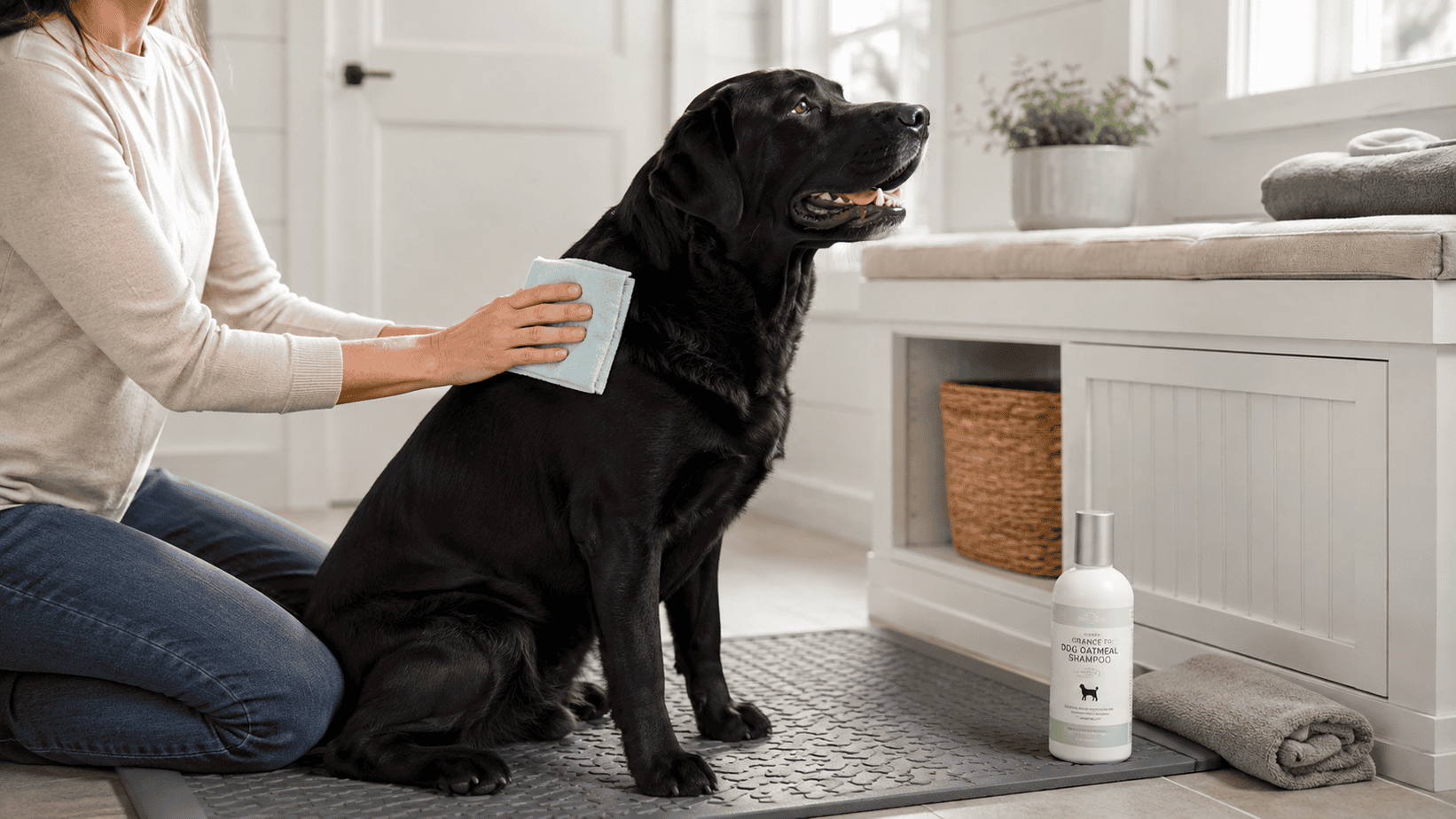
  • Mupirocin Topical Ointment for Dogs- Vet Gives OTC Alternatives

    Mupirocin Topical Ointment for Dogs- Vet Gives OTC Alternatives

    *This page may include affiliate links, which means that if you make a purchase through one of the product links, we may receive a small commission. For full affiliate disclosure please see our disclaimer page.

    Every dog owner knows the pang of seeing their furry friend in discomfort, scratching at an itchy patch or nursing a sore paw. Our dogs can’t tell us when something’s wrong, but their behaviors and physical symptoms often do the talking. In the world of canine care, the importance of choosing the right topical treatment can’t be overstated. Mupirocin, a common name on the list of ointments prescribed by veterinarians, often comes up as a solution. But, as with every medication or treatment, it’s crucial to understand its uses, benefits, and potential risks. In this comprehensive guide, we’ll dive deep into the world of Mupirocin ointment for dogs. If you’re curious about its safety profile, want to understand its uses, or are searching for over-the-counter alternatives, we have the information you need. Let’s help our four-legged companions lead happier, healthier lives, one paw at a time!

    Mupirocin for dog

    Is Mupirocin Ointment Safe for Dogs?

    For those of us with tail-wagging friends at home, their health and safety are paramount. We’re constantly asking ourselves: Is this treat okay for them? Is that toy safe? Similarly, when it comes to medications, we need to be doubly sure. Mupirocin often finds its way into our conversations, especially when dealing with topical infections in our pups. So, is Mupirocin ointment a safe choice for our four-legged buddies?

    Mupirocin, initially developed for human use, is an antibiotic ointment that targets a wide range of bacteria, making it a popular pick for various skin conditions. Over the years, vets have recognized its efficacy for dogs too, especially for those pesky bacterial skin infections.

    However, like any medication, it’s not a one-size-fits-all solution. The key lies in its appropriate use. A vet will prescribe Mupirocin for a dog after assessing the specific condition, its severity, and the dog’s overall health. It’s essential not to assume that what worked for one dog will work for another, even if the symptoms seem similar. Individual allergies, health conditions, or other medications might influence how a dog reacts to Mupirocin.

    In summary, yes, Mupirocin ointment can be safe for dogs when used correctly and under the watchful eye of a veterinarian. It’s a tool in our pet care arsenal, but as with all tools, it’s most effective – and safest – when used with understanding and care. Always consult with your vet and follow the prescribed guidelines to the letter to ensure your pup’s well-being. Because, at the end of the day, a happy dog means a happy home!

    muricin for dogs

    Side Effects of Mupirocin on Dogs

    Dogs, just like us, have their own unique bodily reactions to medications. Even if a product is deemed safe, it’s always wise to be aware of potential side effects. It allows us to make informed decisions and to spot any unusual changes in our pets swiftly. With Mupirocin, while many dogs handle it well, there can be exceptions. Let’s delve into what to watch out for after applying this ointment to your canine companion.

    Common Side Effects of Mupirocin

    Dogs, in most cases, tolerate Mupirocin quite well. However, some might experience:

    • Redness or Irritation: A mild reaction at the application site which usually subsides on its own.
    • Itchiness: Your dog might scratch the area more than usual.
    • Mild Swelling: Some puffiness around the application area.
    • Temporary Hair Loss: This is especially noticeable if the ointment is applied to a hairy area.

    Rare but Serious Side Effects of Mupirocin

    While uncommon, it’s good to be alert to the possibility of:

    • Severe Skin Reactions: Blistering or oozing at the application site.
    • Allergic Reactions: Symptoms could include facial swelling, hives, or difficulty breathing. If these appear, seek veterinary attention immediately.
    • Digestive Upset: This can happen if your dog licks the ointment. Signs might include vomiting or diarrhea.

    What to Do If Your Dog Exhibits Side Effects to Mupirocin

    1. Stay Calm: Panicking won’t help, and our dogs often pick up on our emotions.
    2. Clean the Area: If it’s a mild reaction, gently wipe off the ointment using a damp cloth.
    3. Document the Reaction: Take pictures and note down the symptoms. This will be helpful when consulting with the vet.
    4. Seek Veterinary Advice: Always call your vet to discuss any concerns. They might ask you to monitor the situation or bring your dog in for a check-up.

    The golden rule is always to observe. After applying any medication, keep a watchful eye on your dog, noting any changes in behavior or appearance. And remember, it’s never an inconvenience to call your vet with questions or concerns. They’re there to help, and your dog’s health and happiness are always the top priority. So, let’s be proactive paw-parents and keep our furry friends feeling their best!

    Comparison: Mupirocin for Dogs vs. Humans

    We’ve all been there – reaching for a medication in our cabinet, then hesitating, wondering if it’s okay for our furry friend too. This line of thought often emerges with Mupirocin, given its prevalence in human medicine. But how does Mupirocin for dogs stack up against its counterpart for humans? Let’s break it down.

    Origins and Similarities of Mupirocin

    Developers originally created Mupirocin for human use. It is a powerful antibiotic ointment designed to address various bacterial skin infections. The active ingredient in Mupirocin stays consistent, regardless of its intended use for humans or dogs.

    Differences in Formula and Concentration of Mupirocin

    While the active ingredient might be the same, there could be differences in:

    • Concentration: The strength of Mupirocin might vary based on the intended recipient.
    • For more severe human infections, doctors might use a higher concentration, while they might prefer a milder one for dogs to minimize potential side effects.
    • Additional Ingredients: The base or other inactive ingredients can differ, potentially affecting absorption or causing irritations in some dogs.

    Application and Safety Guidelines

    • Duration of Treatment: While a doctor might prescribe Mupirocin to a human for extended use, a vet might limit the duration to prevent potential complications in dogs.
    • Frequency of Application: Depending on the severity and type of infection, the frequency of application could differ for dogs compared to humans.
    • Safety Precautions: Dogs have a tendency to lick areas where ointments are applied. This ingestion risk is a concern and might not be as pronounced when considering human use.

    Why Not to Substitute Mupirocin Without Vet Advice

    • Individual Needs: Every dog is unique. What works for one might not work for another, and self-prescribing can be risky.
    • Potential Allergies or Reactions: Without a proper vet consultation, you run the risk of exposing your dog to unnecessary side effects or allergic reactions.
    • Drug Interactions: Dogs might be on other medications that could negatively interact with Mupirocin.

    While Mupirocin ointment for humans and dogs may seem similar, they serve specific needs and may have distinctions crucial to their effective and safe application. Before reaching into our medicine cabinets for a quick fix, always remember our pets deserve the same care and consideration we’d give to any human family member. If you’re uncertain, chatting quickly with the vet can eliminate confusion and ensure you provide the best care tailored to your pet’s needs.

    mupirocin ointment on dog paw

    Uses of Mupirocin Ointment in Dogs

    A dog’s life, with its joyful romps, curious sniffs, and occasional mischief, isn’t always without its small hitches. Bumps, scratches, and minor infections can come as part and parcel of their adventurous lives. That’s where treatments like Mupirocin come into play. Let’s explore the diverse ways Mupirocin ointment can be a boon for our four-legged friends.

    Hot Spots

    • What Are They? Hot spots, or acute moist dermatitis, are inflamed, infected, and often painful patches of skin. They can appear rapidly and spread if not treated.
    • Mupirocin’s Role: Mupirocin can help in treating the bacterial infections that often accompany hot spots, soothing the area and preventing the spread of the infection.

    Ears

    • Common Issues: Dogs, especially those with floppy ears, are prone to bacterial infections in the ear canal. This can cause itchiness, redness, and sometimes discharge.
    • Mupirocin’s Magic: Applied topically, Mupirocin can address superficial bacterial infections in the outer ear, providing relief and aiding in recovery.

    Paws

    • Paw Problems: From stepping on rough terrains to allergies, our dogs’ paws can become breeding grounds for infections, especially between the toes.
    • How Mupirocin Helps: It acts against bacteria that might infect small cuts or cracks in the paw pads, ensuring that a minor problem doesn’t escalate.

    Yeast Infections

    • The Yeasty Beast: Caused by the overgrowth of yeast, these infections can lead to itchy and smelly skin, often accompanied by a characteristic reddish-brown discoloration.
    • Mupirocin’s Role: While Mupirocin primarily tackles bacterial infections, in combination with antifungal treatments, it can prevent secondary bacterial infections that might arise due to skin damage from persistent scratching.

    Open Wounds

    • Timely Treatment: Whether it’s a scrape from a tussle with a fellow pooch or a minor cut from exploring, open wounds can become gateways for bacteria.
    • Mupirocin to the Rescue: By creating an inhospitable environment for bacteria, Mupirocin helps prevent wound infections, allowing the body to focus on healing.

    Mupirocin is like a versatile first-aid kit tailored for our dogs. Its myriad uses make it a potent ally in ensuring our pets’ minor health hiccups don’t transform into bigger issues. However, as always, a vet’s guidance is indispensable. An informed decision, combined with the therapeutic properties of Mupirocin, ensures our dogs continue their romps and explorations with their tails wagging high!

    mupirocin ointment label

    How Should I Use Mupirocin For Dogs?

    Ensuring the right method of application for any medication is just as crucial as its ingredients. When it comes to Mupirocin for dogs, this holds especially true. Here’s a step-by-step guide on how to use Mupirocin correctly for your canine companion.

    Proper Dosage of Mupirocin

    For this medication to work effectively:

    • Always give it exactly as your veterinarian has prescribed.
    • Double-check the prescription label and package information to ensure you are administering the drug correctly.

    Preparation & Application of Mupirocin

    1. Cleanse: Before applying Mupirocin, cleanse the affected area as instructed by your veterinarian. This ensures optimal absorption and effectiveness.
    2. Puncture the Tube: When using Mupirocin for the first time, remove the entire applicator assembly. Use the white portion of the cap to puncture the tube, then replace the entire applicator assembly.
    3. Dispensing: Remove the white part of the cap. Gently squeeze the medicine out of the tube.
    4. Application: Ensure you apply enough ointment to cover the entire infected area thoroughly. The goal is to create a barrier that prevents further bacterial proliferation.
    5. Seal: After use, remember to replace the white cap securely to prevent contamination.

    Mupirocin Post-Application Care

    • Contact Time: The product requires at least 10 minutes of contact time with the affected area to work effectively.
    • Avoid Licking: Dogs have a natural instinct to lick wounds. However, ensure your pet does not lick or chew the affected area for at least 20 to 30 minutes post-application. Ingesting the product might lead to side effects.
    • Eye Safety: Exercise caution to ensure the ointment doesn’t come into contact with your pet’s eyes. If it does, seek veterinary advice promptly.

    Special Instructions

    • Duration of Treatment: This medication can be prescribed for various durations. However, according to the label, the maximum duration of treatment is 30 days. It’s crucial to understand how long your veterinarian wants you to continue the treatment. If necessary, make arrangements for prescription refills in advance.

    OTC Alternatives to Mupirocin for Dogs

    While Mupirocin remains a powerful ally in addressing various skin issues in dogs, it’s not the only tool available. Many pet parents seek over-the-counter (OTC) alternatives for a variety of reasons, from mild cases that don’t require prescription-strength treatment to preferences for more natural solutions. Let’s delve into some OTC alternatives to Mupirocin for our furry pals.

    ointment for rashes and abrasions

    Dermapaw Dog Skin and Paw Treatment

    • Best for: Rashes or self-inflicted scratches due to itching or allergies.
    • Features: This treatment is specially formulated for areas where most of the hair is still present, offering relief for abrasions and other minor injuries. It promotes healing and provides soothing relief to irritated areas.

    natural ointment for dogs

    RESQ Organics Skin Care with Manuka Honey

    • Best for: Superficial wounds or mild irritations.
    • Features: An all-natural, organic product that harnesses the healing properties of Manuka Honey. This honey is renowned for its antibacterial and anti-inflammatory properties, making it an excellent choice for minor skin issues.

    pet wound gel

    Forticept Blue Butter Pet Wound Filler Antimicrobial Gel

    • Best for: Deeper wounds such as those resulting from dog bites or unfortunate encounters with barbed wire.
    • Features: This gel provides a protective barrier against germs while promoting a moist environment conducive to wound healing.

    pet wound spray

    Davis Chlorhexidine Dog and Cat Spray

    • Best for: Serious infections that might have been overlooked for a day or two.
    • Features: Chlorhexidine is a potent antiseptic agent. This spray provides an easy-to-apply solution that can combat various bacterial, fungal, and yeast infections in pets.

    silver wound spray for dogs

    Colloidal Silver Wound and Skin Care for Dogs & Cats  

    • Best for: Wider wounds with significant skin layer damage where no hair remains. It’s also recommended for wounds under bandages that need to be kept for several days.
    • Features: Colloidal silver has been praised for its antimicrobial properties for years. It’s gentle yet effective for promoting the healing of wounds and is a popular choice among natural remedy enthusiasts.

    In wrapping up, it’s essential to remember that while OTC products can be incredibly useful, they should not replace a vet’s advice, especially in severe cases. Monitoring your dog’s skin condition is crucial. Regular checks can make the difference between a speedy recovery and a prolonged issue. If you ever feel uncertain or if a wound seems to be worsening, always reach out to your veterinarian. After all, a proactive approach is the key to ensuring our dogs remain happy, healthy, and ever-ready for their next adventure!

    Conclusion

    Navigating the health and well-being of our beloved canine companions often feels like a journey filled with love, concern, and the constant pursuit of knowledge. With tools like Mupirocin ointment in our pet care arsenal, we’re better equipped to face the minor setbacks that come with a dog’s adventurous life. But, as with every tool, it’s not just about having it—it’s about knowing when and how to use it. Through this guide, we’ve aimed to shed light on the nuances of Mupirocin for dogs, offering insights that empower you, the dedicated pet parent, to make informed decisions. Remember, a proactive approach, combined with regular vet consultations, is the hallmark of exceptional pet care. Because at the end of the day, our ultimate goal is to see our four-legged friends thrive, explore, and live their best lives, with their tails wagging in joy and contentment.

    Frequently Asked Questions

    How is Mupirocin useful?

    The FDA (U.S. Food & Drug Administration) has approved this drug for use in dogs for treating bacterial infections on the skin. The FDA allows veterinarians to prescribe and use products containing this drug in different species or for other conditions in certain situations. You and your veterinarian can discuss why this drug is the most appropriate choice.

    How long until I will know if Mupirocin is working, and how long will the effects of this medication last?

    This medication should start having effects within 1 to 2 hours; however, you may not see the effects of this medication outwardly. Your animal should begin feeling better within 1 to 2 days. The effects of this medication are short-lived, meaning they will stop working within 24 hours.

    What are the side effects of this medication?

    Side effects that usually are not serious include:
    – Pain, redness, and itching at the application site.
    If any of these signs are severe, worsen, or continue to be a problem, contact your veterinarian.

    Side effects that may be serious or indicate a serious problem:
    – Increased thirst and/or urinating more than usual
    – Vomiting
    – Poor appetite
    – Low energy level
    – Worsening of the skin problem

    If my animal gets too much of Mupirocin (an overdose), what should I do?

    If you witness or suspect an overdose or accidental ingestion of the product, contact your veterinarian or an animal poison control center for further advice. Animal poison control centers open 24-hours a day include: Pet Poison HELPLINE (855-764-7661) and ASPCA Animal Poison Control Center (888-426-4435); a consultation fee may be charged for these services.

    A note about your dog’s health

    This article provides general education and does not replace an examination, diagnosis, or individualized advice from your veterinarian. Contact a veterinary professional if you are concerned about your dog’s symptoms.

    Dr. Candy Akers, DVM Avatar

    ABOUT THE AUTHOR

  • Omeprazole For Dogs: Vet Gives Uses, Dosage, & Side Effects

    Omeprazole For Dogs: Vet Gives Uses, Dosage, & Side Effects

    *This page may include affiliate links, which means that if you make a purchase through one of the product links, we may receive a small commission. For full affiliate disclosure please see our disclaimer page.

    When it comes to our furry friends, their health and wellbeing are always at the top of our priority list. Just as humans occasionally need medications to soothe ailments or prevent health issues, our pets sometimes require them too. One such medication that has stirred up discussions among pet parents is Omeprazole for dogs. Originally known for its use in humans to treat conditions like heartburn, acid reflux, and stomach ulcers, it’s no surprise that many are curious about its application in canine care. But is it safe? Is it the same formulation we take? And are there better alternatives?

    As a devoted pet owner, you deserve clear, accurate answers. This comprehensive guide aims to delve deep into the subject, providing insights from a vet’s perspective on the uses, dosage, side effects, and even alternative treatments for your beloved pooch. Let’s embark on this informative journey together, ensuring that our four-legged family members receive the best care possible.

    omeprazole for dogs

    Is Omeprazole for Dogs Safe?

    Navigating the world of medications for our canine companions can sometimes feel like walking through a maze. One turn leads to promising benefits, while another might lead to cautionary tales. So, where does Omeprazole fit in this labyrinth of dog health?

    Omeprazole, commonly recognized in human medicine as a go-to remedy for various gastrointestinal issues, has indeed found its place in veterinary care. But, like all medications, it’s not a simple “one size fits all” scenario.

    For many dogs, Omeprazole acts as a godsend. Administered under the watchful eye of a vet, it can alleviate painful symptoms, improve quality of life, and bring relief from conditions like gastric ulcers or acid reflux. When you use it correctly and follow the recommended dosages and guidelines, it’s generally safe for canine use.

    However, there’s a catch – emphasis on the “when used correctly.” Like any medication, potential misuse or overuse can lead to complications. This is why it’s paramount to consult with a veterinarian before administering Omeprazole or any new medication to your dog. They can offer insights tailored to your dog’s unique health profile, considering factors like age, weight, existing health conditions, and other medications.

    In summary, while Omeprazole can be a beneficial tool in a vet’s arsenal for treating specific canine conditions, its safety largely hinges on responsible usage and professional guidance. After all, as we journey through the intricate maze of pet healthcare, it’s always best to have an expert guide by our side.

    Omeprazole for Humans vs. Dogs: Is There a Difference?

    Have you ever stood in front of your medicine cabinet, eyed a pill bottle, and thought, “Could this work for my pup?” Especially when you see certain medications, like Omeprazole, in both human and veterinary contexts. Let’s demystify this together.

    At its core, the active ingredient in Omeprazole stays the same whether packaged for humans or dogs. Both designs aim to reduce stomach acid production and treat conditions like acid reflux or ulcers.So, in essence, the basic drug is the same.

    However – and this is a big however – there are nuances to consider. The formulation or the additional inactive ingredients in human medications might differ from those in veterinary versions. These seemingly minor differences can be significant for our pets. For instance, certain additives harmless to us might be intolerable or even harmful for dogs.

    Moreover, the concentration or dosage available in human Omeprazole might not align with what’s appropriate for our four-legged friends. This is where things can get tricky and why a simple “pill-splitting” method isn’t always advisable.

    The takeaway? While the core of Omeprazole remains consistent across the board, the devil is in the details. Before raiding our medicine cabinets with the noble intention of helping our pets, it’s crucial to consult with a veterinarian. They’ll provide insights on safe usage and ensure our good intentions don’t inadvertently lead to unwanted complications.

    omeprazole for dogs safe

    Uses of Omeprazole in Dogs

    Ah, the versatile world of Omeprazole! Just as this little pill carves a niche in human medicine, it finds various uses in the realm of canine care. Let’s uncover some of the most common scenarios where our furry friends might benefit from this medication.

    Gastric Ulcers

    • What are they? Simply put, gastric ulcers form as sores on a dog’s stomach lining. They can be a real bother, causing discomfort and pain for our pets.
    • How does Omeprazole help? Omeprazole acts as a stomach shield. By reducing the amount of acid the stomach produces, it allows ulcers the chance to heal and prevents them from worsening. It’s like giving the stomach a little breather.

    Acid Reflux (GERD)

    • What is it? Similar to the heartburn humans often complain about after a spicy meal, dogs can experience acid reflux, too. This is when stomach acid irritates the esophagus, leading to symptoms like coughing, gagging, or even vomiting.
    • How does Omeprazole help? By acting as an acid suppressant, Omeprazole ensures that there’s less acid available to reflux into the esophagus. Think of it as turning down the volume on acid production, making meal times and post-meal lounging more comfortable for our pups.

    Preventative Measures

    • Why consider it? Vets sometimes prescribe medications or administer treatments to dogs that might raise the risk of stomach issues. In these cases, they might introduce Omeprazole as a precaution.
    • How does Omeprazole help? By keeping acid levels in check, Omeprazole can act as a protective layer, ensuring that other necessary treatments don’t come at the cost of stomach health.

    Delving into the world of dog health can sometimes feel like decoding a complex puzzle.
    But as we understand each piece like Omeprazole, we equip ourselves better to ensure our furry companions lead comfortable, happy lives. Remember, always work closely with your vet to determine the best course of action for your pet’s unique needs.

    omeprazole package

    Side Effects of Omeprazole in Dogs

    Navigating the realm of medications is a bit like setting sail on open waters. The destination is clear (better health!), but unexpected waves can arise along the journey. In the case of Omeprazole, while it offers many benefits, it’s essential to be aware of potential side effects that might surface. Let’s examine these closely so you can steer the ship with confidence.

    Common Side Effects of Omeprazole

    While not every dog will experience these, it’s good to have them on your radar:

    • Digestive Upset: This might manifest as diarrhea, vomiting, or even flatulence.
    • Loss of Appetite: You might notice Fido is less enthusiastic about mealtime. It’s a temporary reaction some dogs have while adjusting to the medication.
    • Lethargy: Just as we might feel a bit off after starting a new medication, dogs can too. They might seem a bit more tired or less playful initially.

    Less Common, but Serious Side Effects of Omeprazole

    These are rarer, but it’s crucial to be aware and consult your vet if you spot them:

    • Blood in Stools or Vomit: This is a sign that something isn’t sitting right, literally. It’s essential to address this promptly.
    • Severe Diarrhea: An occasional upset tummy is one thing, but persistent diarrhea needs attention.
    • Neurological Issues: If your pup seems unusually dizzy, uncoordinated, or has tremors, it’s a clear sign to get in touch with your veterinarian.

    While the list might seem a tad daunting, remember that many dogs take Omeprazole without any hitches. The goal isn’t to alarm but to arm you with knowledge. Every dog is unique, and what works seamlessly for one might require adjustments for another. Always maintain open communication with your vet and monitor your dog’s behavior and health closely when introducing any new medication. Being proactive ensures smooth sailing, even on the medicinal seas!

    How to Give Omeprazole to Your Dog

    Let’s face it – administering medicine to our canine companions can sometimes feel like a mission.
    When dogs wriggle, suddenly avoid treats, or spit out a pill you thought they swallowed, you need a mix of patience and technique to handle the task. Here’s a step-by-step guide on how to make the Omeprazole-giving process smoother for both you and your fur-baby.

    Step-by-step Administration of Omeprazole

    1. Preparation: Ensure you have the correct dosage ready. Always double-check the pill or liquid measurement before administering.
    2. Use Pill Pockets: If you’re using pill form, consider pill pockets – these tasty treats can be a game-changer. Hide the pill inside, and most dogs will gobble it up, none the wiser.
    3. Liquid Form: If your vet has prescribed a liquid form of Omeprazole, use a syringe or dropper. Ensure your dog is calm, gently open their mouth, and administer the liquid to the side of the cheek, not directly down the throat to prevent choking.
    4. Follow with a Treat: Positive reinforcement works wonders. After successfully administering the medicine, give your dog their favorite treat. This not only rewards them but also ensures that the pill goes down smoothly.
    5. Monitor After Administration: Keep an eye on your dog for a few minutes after giving the medicine. This ensures they don’t spit it out and helps in spotting any immediate adverse reactions.

    Omeprazole Dosing Chart For Dogs

    Please note that the following is a general guideline. Always use the specific dosage recommended by your vet:

    Dog SizeOmeprazole Dosage
    Small Dogs (10lbs or less)2.5 mg to 5 mg once daily
    Medium Dogs (10 to 20lbs)5 mg to 10 mg once daily
    Large Dogs (20 to 40lbs)10 mg to 20 mg once daily
    Extra Large Dogs (over 40lbs)20 mg to 40 mg once daily

    Remember, giving medication is a mix of art and science. While you aim for precision in dosage, the method might need some creative adjustments based on your dog’s temperament and preferences. Always prioritize safety, create a calm environment, and of course, give cuddles after completing the task to make the process smoother for next time!

    back of omeprazole package

    Omeprazole Alternatives & Dr. Candy’s Recommendations

    It’s worth exploring alternative routes, especially when we have expert guidance to light the way. Dr. Candy, with her vast experience and dedication to animal health, has some noteworthy recommendations to consider:

    Famotidine

    • What is it? People often recognize Famotidine by its commercial name, Pepcid, as another acid-reducing medication.
    • Why I recommend it: For some dogs, Famotidine might be gentler on the system, offering similar benefits without some of the side effects associated with Omeprazole.
    • Usage Tips: As with any medication, it’s essential to consult with a vet regarding dosage and suitability for your specific pet.

    Prilosec

    • What is it? A bit confusing, right? While Omeprazole and Prilosec might seem interchangeable, Prilosec is actually a brand name for Omeprazole.
    • Why I recommend it: The brand-specific formulation might sometimes offer a more consistent therapeutic effect due to its proprietary makeup.
    • Usage Tips: Always follow prescribed doses and watch for any reactions, especially when switching from generic Omeprazole to Prilosec.

    Slippery Elm

    • What is it? Venturing into the realm of natural remedies, people have used the herb slippery elm for centuries to treat various ailments.
    • Why I recommend it: For dogs that have minor digestive issues or for those who prefer a more holistic approach, slippery elm can soothe the digestive tract and reduce inflammation.
    • Usage Tips: Since it’s a natural remedy, it’s crucial to source high-quality products. And, as always, discuss with your vet before introducing it to your dog’s regimen.

    Health isn’t a one-size-fits-all approach. Every dog is a unique individual, and what works wonders for one might require tweaking for another. By staying informed, consulting experts, and always prioritizing our pet’s wellbeing, we can confidently navigate the multiple avenues of animal healthcare.

    omeprazole alternatives for dogs

    Conclusion

    Journeying through the world of canine health can often feel like a maze, with its twists, turns, and overwhelming options. But with the right information, a keen eye, and a loving heart, we can chart a course that leads to the well-being of our four-legged family members. Omeprazole, like many other tools in our pet care arsenal, holds the promise of relief and comfort for our dogs when used wisely. However, as with all health decisions, a close partnership with your veterinarian ensures that the choices we make are in the best interests of our furry companions.

    Navigating pet health isn’t just about medications or treatments; it’s a testament to the lengths we’ll go to ensure our pets lead the healthiest, happiest lives. Whether you’re exploring Omeprazole or seeking alternative routes, the compass that guides you should always be love, care, and informed choices. Here’s to many more tail-wagging, happy moments with your loyal companion!

    Frequently Asked Questions

    How is Omeprazole useful?

    Omeprazole is a medication that is used to prevent and/or treat stomach ulcers. The FDA (U.S. Food & Drug Administration) has approved this drug for use in horses and humans. The FDA allows veterinarians to prescribe and use products containing this drug in other animal species in certain situations. You and your veterinarian can discuss why this drug is the most appropriate choice.

    How long until I will know if Omeprazole is working, and how long will the effects of this medication last?

    This medication should help your animal feel better within 1 to 2 days. Your animal’s clinical signs should improve after that time. The effects of this medication are short-lived, meaning they will stop working within 24 hours, although the benefits may be prolonged if your animal has decreased kidney and/or liver function.

    If my animal gets too much of Omeprazole (an overdose), what should I do?

    Usually, overdoses of omeprazole are not serious, but if you know or think your animal got too much of this medication and they are showing adverse effects, contact your veterinarian or an animal poison control center for further advice. Animal poison control centers that are open 24 hours a day include: Pet Poison HELPLINE (855-764-7661) and ASPCA Animal Poison Control Center (888-
    426-4435); a consultation fee is charged for these services.

    How should Omeprazole be given?

    – For this medication to work, give it exactly as your veterinarian has prescribed. Do not cut or break tablets unless instructed to by your veterinarian or pharmacist. It’s a good idea to always check the prescription label to be sure you are giving the drug correctly.
    – Omeprazole should be given about 30 minutes before a meal, generally the first meal of the day. If your animal vomits or acts sick after getting it on an empty stomach, give it with the meal instead. If vomiting continues, contact your veterinarian.

    What should I do if I miss giving a dose of Omeprazole?

    If you miss a dose, wait and give the next dose when it is usually time to do so. Do not double-up doses or give an extra dose.

    What other information is important for Omeprazole?

    – Omeprazole is available OTC (over-the-counter, without a prescription). Do not give omeprazole (or any other OTC medications) to your animal without first consulting a veterinarian.
    – Do not change or switch dosage forms without first consulting with a veterinarian or pharmacist, as the dose may not be the same.
    – Use of this drug may not be allowed in certain animal competitions. Check rules and regulations before entering your animal in a competition while this medication is being administered.

    A note about your dog’s health

    This article provides general education and does not replace an examination, diagnosis, or individualized advice from your veterinarian. Contact a veterinary professional if you are concerned about your dog’s symptoms.

    Dr. Candy Akers, DVM Avatar

    ABOUT THE AUTHOR
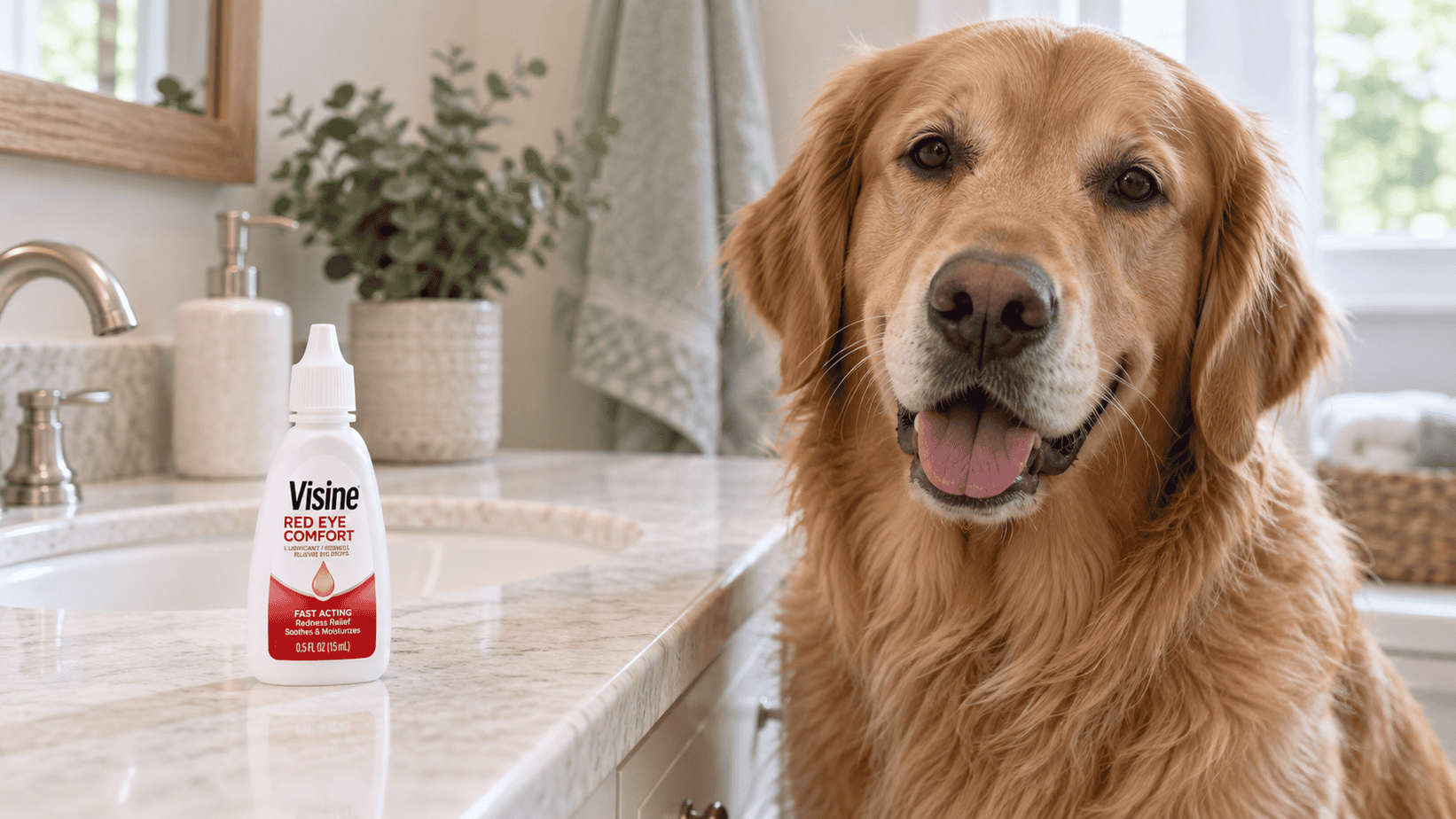
  • Is Aquaphor Safe for Dogs? Navigating the Terrain of Pet Skin Care

    Is Aquaphor Safe for Dogs? Navigating the Terrain of Pet Skin Care

    As devoted pet parents, we all want the best for our furry companions, especially when it comes to their health and comfort. Just like us, our four-legged friends occasionally suffer from skin irritations, dry patches, or minor injuries. Naturally, we’re tempted to reach into our own medicine cabinets to offer relief. One product that’s been getting some buzz among dog owners is Aquaphor. Traditionally a go-to for human skin ailments, its potential as a pet remedy has raised eyebrows and questions alike. Is it safe? Effective? Or just another trend that could potentially harm our pets?

    Navigating the vast world of pet skin care can be daunting, but don’t worry; we’re here to help. In this guide, we’ll delve deep into the topic, weighing the pros and cons of using Aquaphor on dogs and exploring safe alternatives. Let’s embark on this journey of ensuring our pets remain comfortable, healthy, and happy.

    aquaphor for dogs

    What is Aquaphor?

    Aquaphor is a popular ointment often found in household medicine cabinets and is renowned for its multi-purpose applications. At its core, it’s designed to soothe, protect, and heal the skin. Let’s delve deeper into its components and how they function:

    1. Petrolatum: This is the primary ingredient in Aquaphor, making up about 41% of the formula. Also known as white petroleum jelly, petrolatum acts as a skin protectant, creating a barrier that helps to retain moisture and aid in the healing of minor cuts, burns, and dry skin.
    2. Mineral Oil & Ceresin: Both serve as skin conditioning agents, working together to enhance the skin’s smooth texture.
    3. Lanolin Alcohol: This is a fatty alcohol derived from wool-bearing animals like sheep. It’s an emollient that helps soften and smooth the skin, preventing moisture loss.
    4. Panthenol & Glycerin: Both of these ingredients are humectants, which means they attract moisture. They aid in hydrating the skin and promoting faster healing.
    5. Bisabolol: Extracted from the chamomile plant, bisabolol acts as a skin-soothing agent, reducing redness and irritation.

    Given its formulation, it’s easy to see why Aquaphor is favored for a plethora of skin issues in humans. The ointment provides a protective barrier, locks in moisture, and aids in the skin’s natural healing process. But the question remains: can this popular human remedy translate effectively and safely to our canine companions? Read on as we unpack the potential benefits and concerns of using Aquaphor on our beloved pets.

    Common Skin Issues in Dogs

    Every dog owner has, at some point, witnessed their furry friend itching, licking, or showing signs of skin discomfort. Our dogs, just like us, can be susceptible to a variety of skin issues. Understanding these can aid in more effective care and treatment. Here are some of the most common skin issues dogs face:

    1. Allergies: Dogs can develop allergies to a range of substances including certain foods, dust mites, pollen, or even specific shampoos. Allergic reactions often manifest as itching, redness, and inflammation on the skin.
    2. Fleas, Ticks, and Mites: External parasites can be a significant source of discomfort. The bites from these pests can lead to itching, inflammation, and even secondary bacterial infections if the skin becomes broken from excessive scratching.
    3. Dermatitis: This is an inflammation of the skin that can be caused by a variety of factors including contact with irritants, environmental conditions, or underlying health issues.
    4. Dry or Flaky Skin: Just as humans suffer from dry skin, especially in colder months, dogs can also experience dryness and flakiness. This condition can make them itch and can be a sign of nutritional deficiencies or environmental factors.
    5. Fungal and Bacterial Infections: These can arise due to moisture (especially in breeds with skin folds), minor injuries, or a compromised immune system. Symptoms might include sores, crusty skin, and a distinct odor.
    6. Hot Spots (Acute Moist Dermatitis): These are red, moist, inflamed patches of skin that can appear suddenly. They’re painful and itchy, often leading dogs to bite, lick, or scratch the area, worsening the condition.

    Understanding the root cause of a skin issue is crucial. While some conditions might benefit from the soothing properties of products like Aquaphor, others might require more specific treatments or veterinary care.

    can i put aquaphor on my dog's skin

    The Good: Benefits of Using Aquaphor on Dogs

    As pet owners, our prime concern is the welfare and comfort of our furry companions. Given Aquaphor’s popularity in human skincare, it’s no surprise many are curious about its potential benefits for dogs. Here’s why some dog owners and vets might lean towards using Aquaphor for pet skin care:

    1. Moisturizing Properties: Just as it aids in human skin hydration, Aquaphor can help to alleviate dry or flaky patches on dogs. Its main ingredient, petrolatum, creates a protective barrier that locks in moisture, providing relief for parched skin.
    2. Wound Protection: Minor cuts, scrapes, or abrasions can benefit from Aquaphor’s protective qualities. It can act as a barrier against external irritants, helping wounds heal without getting infected or aggravated.
    3. Safe for Sensitive Skin: Due to its mild formulation devoid of many common irritants like fragrances or dyes, Aquaphor is often well-tolerated, even on dogs with sensitive skin.
    4. Relief from External Irritants: If your dog has been exposed to elements that cause skin irritation – say, a particular type of grass or an irritating substance – a thin layer of Aquaphor can soothe the affected area.
    5. Natural Ingredients: With ingredients like panthenol and bisabolol, which are known for their skin-soothing and hydrating properties, Aquaphor is often preferred over products that contain harsh chemicals.
    6. Versatility: From paw pads to noses, Aquaphor can be applied to various parts of a dog’s body, making it a versatile addition to a pet owner’s toolkit.

    While these benefits paint a positive picture, it’s essential to balance them with caution. Dogs, unlike humans, might ingest products they can reach, either from their skin or directly from the container. Moreover, what works for one dog might not necessarily be suitable for another.

    The Caution: Potential Concerns and Side Effects

    While Aquaphor offers numerous benefits, it’s crucial for dog owners to be aware of the possible side effects and concerns associated with its use on our furry companions. Informed decisions are the best decisions, especially when it comes to pet care. Here are some potential issues to consider:

    1. Ingestion Risk: One of the primary concerns with applying Aquaphor on dogs is the risk of ingestion. Dogs are known to lick unfamiliar substances off their skin, which might lead to them consuming a significant amount of the product. While Aquaphor isn’t necessarily toxic, consuming large amounts can cause digestive upset or, in rare cases, an intestinal blockage.
    2. Petrochemical Concerns: Petrolatum, the primary ingredient in Aquaphor, is a petrochemical. While it’s considered safe for topical application, some pet owners and experts have concerns about its long-term effects, especially if ingested.
    3. Allergic Reactions: Even though Aquaphor is generally mild, there’s always a possibility of an allergic reaction. Symptoms might include increased itching, redness, swelling, or the development of a rash.
    4. Respiratory Irritation: Dogs with pre-existing respiratory conditions might find the thick consistency of Aquaphor challenging, especially if applied near the nose. It might hinder comfortable breathing.
    5. Interference with Natural Healing: While Aquaphor can act as a protective barrier, it might also trap bacteria or other harmful agents in wounds, potentially hindering the natural healing process or leading to infections.
    6. Greasy Residue: Aquaphor can leave a greasy residue that might attract dirt or other particles, potentially leading to clogged pores or additional skin irritations.

    While Aquaphor might be beneficial in some instances, it’s essential to apply it with caution. Always monitor your dog after application, ensure they’re not consuming it, and consult with a veterinarian if you notice any adverse reactions or if you’re uncertain about its use.

    aquaphor varieties available on shelves in stores for dogs

    Tips for Safely Applying Aquaphor on Dogs

    If you’re considering using Aquaphor to address your dog’s skin issues, it’s crucial to do so with care. Adopting safe practices can help maximize the benefits while minimizing potential risks. Here are some expert-recommended tips for safely using Aquaphor on dogs:

    1. Patch Test First: Before fully committing to an application, try a small amount on a patch of your dog’s skin. Monitor for any adverse reactions like redness, swelling, or increased itching over 24 hours.
    2. Limit Licking: Dogs are curious creatures and might try to lick off anything applied to their skin. To prevent ingestion, distract your dog post-application – perhaps with a toy or treat. Consider using a protective collar if necessary.
    3. Apply Thin Layers: A little goes a long way. Apply a thin layer of Aquaphor to ensure it’s effective without becoming overly greasy or messy.
    4. Clean the Area First: Before applying Aquaphor, especially on wounds or irritated areas, make sure the skin is clean. This prevents trapping dirt or bacteria beneath the ointment.
    5. Avoid Sensitive Areas: Be cautious when applying near the eyes, nose, or mouth. Inhalation or ingestion could lead to complications.
    6. Regularly Monitor: Always keep an eye on the treated area after application. If you notice worsening conditions or any signs of infection, discontinue use and consult a veterinarian.
    7. Wash Your Hands: After applying Aquaphor, ensure you wash your hands to prevent any unintentional transfer to areas where it’s not intended (like your dog’s eyes).
    8. Store Safely: Always keep Aquaphor and other similar products out of your pet’s reach to prevent accidental ingestion.

    Remember, while Aquaphor can be a beneficial addition to your dog’s skincare arsenal, it’s not a cure-all. Regular check-ups with your vet are vital to ensure your dog’s overall well-being and address any underlying health concerns.

    Alternatives to Aquaphor for Dogs

    While Aquaphor has its merits, it’s always beneficial to be aware of alternative products or remedies, especially those designed explicitly for canine skin care. Here are some notable alternatives:

    1. Veterinary Ointments and Creams: There are numerous products formulated specifically for dogs that veterinarians often recommend. These are tailored to address canine skin issues, ensuring both safety and effectiveness.
    2. Coconut Oil: Known for its moisturizing and anti-inflammatory properties, coconut oil can be a natural remedy for dry skin or minor irritations. Ensure you’re using organic, cold-pressed coconut oil and always start with a small amount to gauge your dog’s reaction.
    3. Calendula Cream: Calendula, derived from marigold flowers, has natural anti-inflammatory and healing properties. It’s often used in natural creams or ointments for skin irritations or minor wounds.
    4. CBD-infused Balms: With the rise in popularity of CBD for pets, some companies now offer CBD-infused balms or ointments that can help with skin issues and inflammation. Always consult your vet before trying new products, especially those with active compounds like CBD.
    5. Pet-specific Lotions: Several brands design moisturizers and lotions specifically for pets, which can be ideal for addressing dry skin or flakiness without the risks associated with human products.
    6. Witch Hazel: An organic astringent, witch hazel can help with minor skin irritations or itching. Ensure it doesn’t contain alcohol, as this can dry out the skin further.
    7. Chamomile Tea Rinse: Chamomile has natural soothing properties. Brewing a chamomile tea and allowing it to cool, then using it as a rinse, can help alleviate skin irritations.

    Remember, while exploring alternatives is beneficial, the suitability of a product varies from one dog to another. Individual needs, allergies, and sensitivities should be considered, and consulting a veterinarian before introducing a new skincare product or remedy is always recommended.

    is aquafor safe for dogs

    Conclusion

    The world of pet care is vast and ever-evolving, with products like Aquaphor sparking discussions among dedicated dog owners searching for the best for their furry companions. While Aquaphor has several merits in soothing and protecting our dog’s skin, it’s equally essential to tread with caution, given the unique physiology and behavior of our canine friends.

    However, Aquaphor is just one of many tools in the expansive toolbox of pet skincare. Whether you opt for this product, its alternatives, or a combination of remedies, the key lies in informed decision-making, observation, and consultation. Every dog is unique, and their well-being often relies on a blend of tried-and-true solutions, vet advice, and the intuitive care only a loving owner can provide.

    In this journey of ensuring our dogs have healthy, comfortable skin, we’re reminded of the profound bond we share with these creatures. Their well-being becomes our mission, and in return, they gift us with unconditional love and loyalty. So, as you navigate the terrain of pet skincare, remember to cherish each moment, each wag, and each nuzzle – for in the end, it’s this shared journey of love and care that truly matters.

    Frequently Asked Questions

    1. Is Aquaphor toxic to dogs if ingested?

    While Aquaphor isn’t necessarily toxic to dogs, ingestion in large quantities can cause digestive upset. It’s essential to monitor your dog after application to ensure they’re not licking or consuming the product.

    2. Can I use Aquaphor on my dog’s paws?

    Yes, Aquaphor can be applied to a dog’s paws, especially if they’re dry or cracked. Its moisturizing properties can provide relief. However, ensure that your dog doesn’t lick it off immediately after application.

    3. How often should I apply Aquaphor to my dog’s skin issues?

    The frequency of application depends on the specific issue you’re addressing and how your dog reacts to the product. For minor irritations or dry spots, applying once a day might suffice. For more severe issues, consult your veterinarian for guidance.

    4. Are there specific dog breeds that shouldn’t use Aquaphor?

    No specific breed restrictions exist for using Aquaphor. However, individual dogs, regardless of breed, might have allergies or sensitivities. Always conduct a patch test first and monitor for any reactions.

    5. How does Aquaphor compare to products specifically designed for dogs?

    While Aquaphor offers several benefits similar to products formulated for dogs, it’s originally designed for human use. Dog-specific products might be tailored to canine skin needs and might have fewer risks of side effects or complications. Consulting with a vet can provide clarity on the best choice for your pet.

    A note about your dog’s health

    This article provides general education and does not replace an examination, diagnosis, or individualized advice from your veterinarian. Contact a veterinary professional if you are concerned about your dog’s symptoms.

    Dr. Candy Akers, DVM Avatar

    ABOUT THE AUTHOR
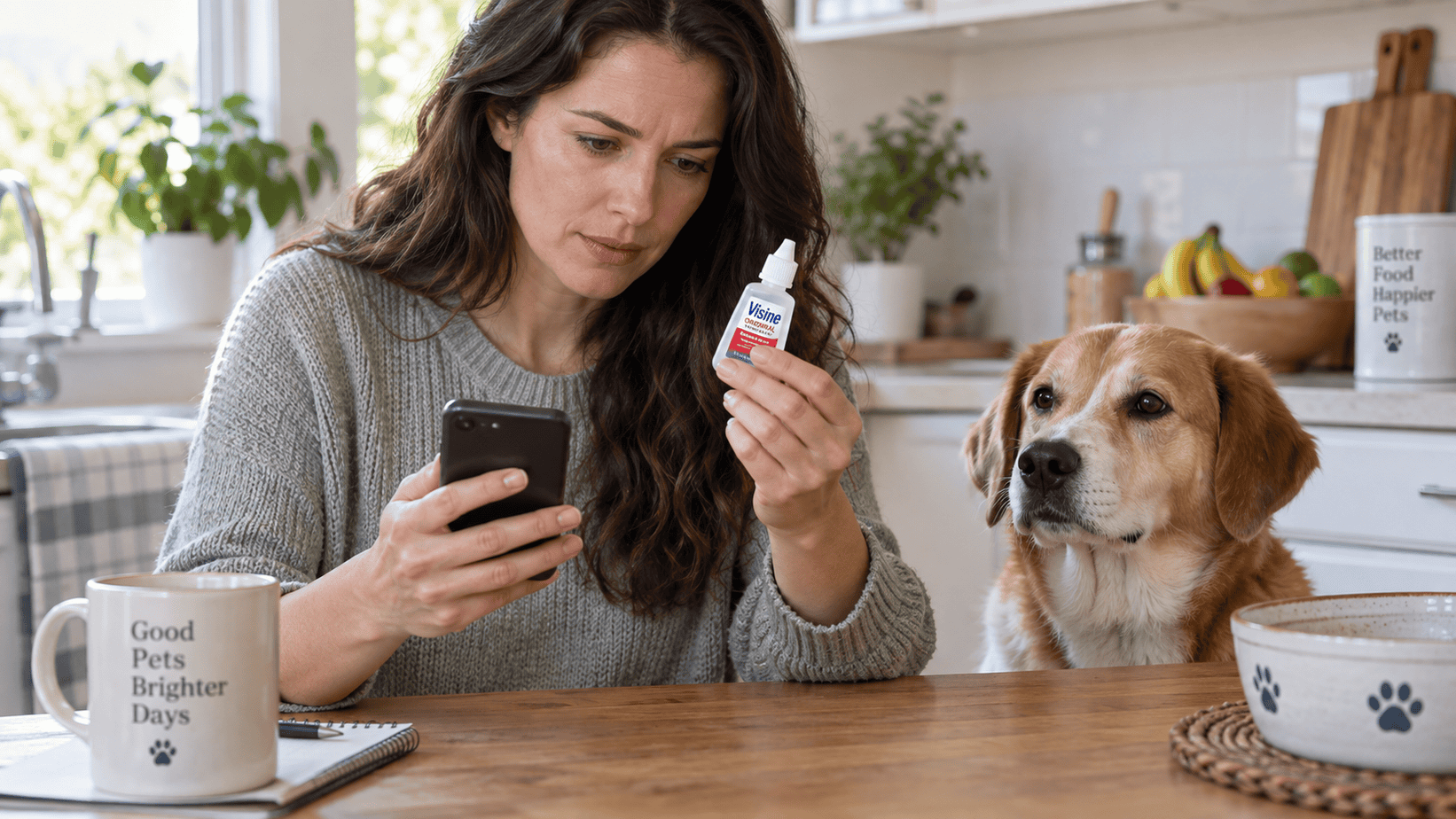
  • Can You Use Cortizone-10 on Dogs?

    Can You Use Cortizone-10 on Dogs?

    Yes, but be selective. A very small amount of plain 1% hydrocortisone can be a reasonable short-term option for a small patch of intact, mildly itchy skin on a dog. Hydrocortisone is also used in veterinary topical products. Cortizone-10, however, is a family of human products rather than one single formula. Check the exact label first, keep the cream away from the eyes and other sensitive areas, and do not let your dog lick it. [1]

    If the skin is raw, wet, oozing, infected, badly inflamed, or the itching keeps coming back, I would not keep covering the symptom with cream. That is when I want to look at why the skin is irritated in the first place.

    Owner applying a thin layer of hydrocortisone cream to a dog's intact leg

    Can You Use Cortizone-10 on Dogs?

    Hydrocortisone is a corticosteroid that reduces inflammation and itching. Topical corticosteroid preparations are used in dogs for some skin problems, and veterinary references specifically caution that topical ointments, gels, and sprays should be used sparingly so a dog does not lick excessive amounts. [2]

    That does not make every tube of Cortizone-10 interchangeable with a dog product. The active ingredient may be hydrocortisone 1%, but the rest of the formula can vary. For a dog, especially one that will lick the area, I prefer the simplest suitable formula or a pet-labeled hydrocortisone product.

    Check the Cortizone-10 Formula Before You Use It

    Cortizone-10 is a brand family. Current human drug labels list several Cortizone-10 products with hydrocortisone 1% as the active ingredient, but the inactive ingredients differ from one formula to another. Some are simple ointment-style products, while others contain ingredients added for cooling, texture, moisturization, or other human skin-care purposes.

    Before putting a human product on your dog, read the entire ingredient list. I would skip a formula if you are unsure what an added ingredient does, if it seems irritating, or if your dog is likely to lick a meaningful amount off the skin. A dog-specific product removes much of that guesswork.

    Dog owner checking a Cortizone-10 formula before using it on a dog

    When Hydrocortisone Is Reasonable and When to Skip It

    Small, Intact, Localized Skin

    The situation where I am most comfortable with short-term topical hydrocortisone is a small, localized patch of intact skin with mild redness or itching. Think of a minor insect bite or a small irritated spot that is not open, wet, infected, or spreading.

    Use only a thin film. More cream is not better. The goal is to calm a small irritated area while you watch what happens next.

    Open, Infected, Wet, or Very Irritated Skin

    I would skip hydrocortisone as a home remedy when the skin is broken, ulcerated, actively bleeding, wet, oozing, foul-smelling, very painful, or obviously infected. I would also avoid putting it in or around the eyes, mouth, nose, genitals, or other mucous membranes.

    A cream that quiets redness can make a problem look temporarily better without fixing the cause. If the area is getting larger, your dog is intensely uncomfortable, or the same rash keeps returning, the next useful step is figuring out what is driving the inflammation.

    How to Use Topical Hydrocortisone More Safely

    For a small area of intact skin, keep the application simple:

    • Check that the product is plain 1% hydrocortisone or another formula you have specifically decided is appropriate.
    • Apply a very thin layer to the affected skin.
    • Keep it away from the eyes and mucous membranes.
    • Prevent licking until the product has had time to remain on the skin.
    • Stop if the area becomes more irritated.
    • Do not keep repeating topical steroid use indefinitely when the itch keeps returning.

    Pet-labeled hydrocortisone products also instruct owners to avoid the eyes and to prevent licking, which is a good practical reminder that the medication belongs on the skin, not in the mouth. [3]

    What If Your Dog Licks Cortizone-10?

    A quick lick of a tiny amount is different from swallowing a noticeable quantity. I would not panic over a trace lick, but I would wipe away excess product and stop your dog from licking more.

    Human Cortizone-10 labels are for external use and tell people to seek help if the product is swallowed. With a dog, the sensible limit is similar: if your dog swallowed more than a trace amount, chewed the tube, or seems unwell afterward, get veterinary or animal poison guidance rather than guessing.

    For dogs that immediately lick every topical product, an Elizabethan collar, recovery collar, T-shirt, or another simple barrier may be more useful than repeatedly reapplying cream.

    Why Is Your Dog Itchy in the First Place?

    Fleas, Allergies, Irritants, and Skin Barrier Problems

    Hydrocortisone can turn down inflammation, but it does not tell you why the inflammation started. Repeated itching can come from fleas or other parasites, environmental allergies, food reactions, contact irritants, yeast or bacterial overgrowth, dry or damaged skin, or a combination of several factors.

    This is where my holistic approach matters most. I do not want to chase the itch forever. I want to look at the skin, coat, diet, environment, parasite exposure, bathing products, seasonal pattern, and the exact places your dog is chewing or scratching. Those details often point us toward the underlying cause.

    Owner checking a dog's paw for causes of recurring itching

    When Recurring Itch Needs a Different Plan

    If you are reaching for hydrocortisone over and over, the cream has become a signal. The dog needs a broader plan rather than another temporary layer of itch control.

    Pay attention to recurrent ear problems, paw licking, belly or armpit redness, greasy skin, odor, hair loss, scabs, hot spots, or itching that wakes your dog up. Those patterns give us more useful information than simply asking whether another application of cream is safe.

    Gentler Holistic Options for Mild Itchy Skin

    Calendula and Chamomile

    For mild skin irritation, I often consider gentle plant-based topical support once I know the skin is not dealing with a problem that needs a different treatment. Calendula and chamomile have a long history of topical use. A systematic review of medicinal plants in canine dermatology found evidence supporting antibacterial, antifungal, anti-inflammatory, and wound-healing properties across the plants it evaluated, including calendula and chamomile. [4]

    That does not mean every homemade herbal preparation belongs on every rash. Keep topical care simple, avoid heavily fragranced mixtures, and stop anything that makes the skin redder or itchier.

    Oatmeal and Skin-Barrier Support

    A plain oatmeal soak or rinse can be soothing for a dog with mild, diffuse itching. I prefer lukewarm water and gentle handling rather than aggressive scrubbing, which can make irritated skin feel worse.

    After bathing, dry the coat well, especially in skin folds and between the toes. Moisture trapped against already irritated skin can create another problem on top of the original itch.

    Owner drying a dog after a gentle oatmeal rinse for itchy skin

    Nutrition and Omega-3 Support

    When itching keeps returning, I also look at nutrition and fatty-acid balance. Skin is an organ, and it reflects what is happening inside the body as well as what touches it from the outside.

    A fresh, minimally processed diet that fits the individual dog, along with appropriate omega-3 support when indicated, can be part of a broader skin plan. I do not use nutrition as a quick substitute for identifying parasites, infection, allergies, or irritants. I use it as one piece of supporting healthier skin over time.

    Dog-Specific Hydrocortisone Options

    There are hydrocortisone products labeled specifically for pets, including products made for dogs. If you want topical hydrocortisone available at home, I generally prefer a dog-specific product because the directions and formulation are designed with animal use in mind.

    I like keeping a Dog-Specific Hydrocortisone Cream available for pet parents who want a practical pet-specific option.

    Final Thoughts

    Cortizone-10 is not an automatic yes or an automatic no for dogs. Plain 1% hydrocortisone can be useful for a small patch of intact, mildly irritated skin, but the exact formula matters, licking matters, and repeated itching deserves more than repeated symptom control.

    If you use it, think small area, thin layer, short term, and no licking. Then pay attention to what the skin is telling you. When the itch keeps returning, finding the cause is where the real progress begins.

    Frequently Asked Questions

    Is It Okay If My Dog Licks Cortisone Cream?

    Try to prevent licking. A trace lick is different from swallowing a meaningful amount, but topical hydrocortisone is meant to stay on the skin. Wipe off excess product and prevent more licking. If your dog chewed the tube, swallowed more than a trace amount, or seems unwell, get veterinary or animal poison guidance.

    What Anti-Itch Cream Can I Use on My Dog?

    For a small area of intact, mildly irritated skin, plain 1% hydrocortisone or a dog-specific hydrocortisone product can be reasonable for short-term relief. Avoid putting creams on open, infected, wet, or badly inflamed skin, and check all ingredients in human products before using them on a dog.

    Which Hydrocortisone Cream Is Best for a Dog?

    I prefer a simple formulation or a product labeled for pets. Human Cortizone-10 products can share the same 1% hydrocortisone active ingredient while using different inactive ingredients, so do not assume every tube is the same.

    Can I Put Cortizone-10 on My Dog’s Paw?

    Only if the skin is intact and the irritated area is small, and only if you can stop your dog from licking it. Paws are especially easy for dogs to lick, so a pet-specific product or another approach may be more practical.

    How Long Can I Use Hydrocortisone on My Dog?

    Think of topical hydrocortisone as short-term relief, not a recurring long-term skin plan. If you keep needing it, the important question becomes why your dog is still itchy. Recurrent itch deserves a closer look at parasites, allergies, infection, irritants, diet, and skin-barrier health.

    References

    1. U.S. National Library of Medicine. (2025). Cortizone-10 [Drug label]. DailyMed. https://dailymed.nlm.nih.gov/dailymed/drugInfo.cfm?setid=bb3d1a3e-4c0c-4694-9c05-80152dd9bd1c
    2. Moriello, K. A. (2024). Treatment of skin disorders in dogs. Merck Veterinary Manual. https://www.merckvetmanual.com/dog-owners/skin-disorders-of-dogs/treatment-of-skin-disorders-in-dogs
    3. U.S. National Library of Medicine. (2026). Just for Pets: Hydrocortisone 1% and pramoxine hydrochloride 0.5% spray [Drug label]. DailyMed. https://www.dailymed.nlm.nih.gov/dailymed/drugInfo.cfm?setid=4f5ee8d3-0f2f-4cf9-abde-b13de562d8a1
    4. Tresch, M., Mevissen, M., Ayrle, H., Melzig, M., Roosje, P., & Walkenhorst, M. (2019). Medicinal plants as therapeutic options for topical treatment in canine dermatology? A systematic review. BMC Veterinary Research, 15, 174. https://doi.org/10.1186/s12917-019-1854-4

    A note about your dog’s health

    This article provides general education and does not replace an examination, diagnosis, or individualized advice from your veterinarian. Contact a veterinary professional if you are concerned about your dog’s symptoms.

    Dr. Candy Akers, DVM Avatar

    ABOUT THE AUTHOR
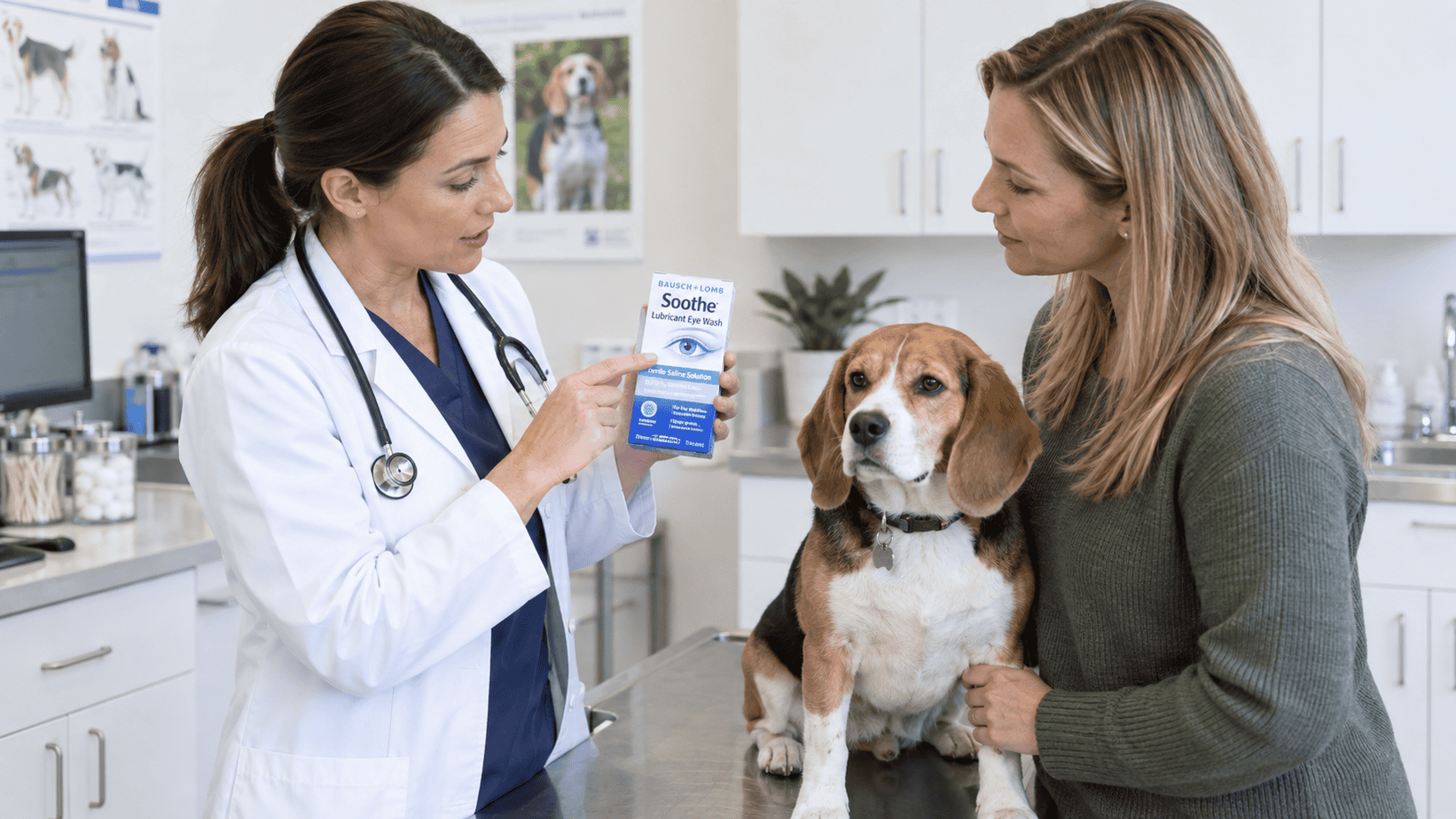
  • Can You Use Preparation H on Dogs? What to Know

    Can You Use Preparation H on Dogs? What to Know

    I do not recommend using an unspecified Preparation H product on your dog. Preparation H is a family of human products, not one formula, and a sore or swollen rear end in a dog is usually not a human-style hemorrhoid.

    If your veterinarian has examined your dog and approved one exact product for one exact problem, follow those directions. Otherwise, check the label, keep the product out of licking range, and focus on what is causing the redness, scooting, swelling, or itch.

    preparation h for dogs

    Can You Put Preparation H on a Dog?

    There is no blanket yes or no that fits every Preparation H product. Some formulas contain phenylephrine, some add a numbing ingredient, some contain hydrocortisone, and some are witch hazel wipes. Each formula has different concerns.

    My practical rule is simple. Do not put Preparation H inside a dog’s rectum, in the eyes or mouth, on a deep or infected wound, or anywhere your dog can quickly lick it off. Do not use a suppository made for people. If a veterinarian recommends a topical product, ask them to confirm the exact name and Drug Facts label.

    Why the Exact Preparation H Product Matters

    Before reaching for Preparation H, turn the package over. The brand name on the front does not tell you enough.

    Dog owner checking a Preparation H Drug Facts label while a beagle sits nearby

    Phenylephrine Ointments and Pain-Relief Creams

    One current maximum-strength cream label lists glycerin, phenylephrine hydrochloride, pramoxine hydrochloride, and white petrolatum. Phenylephrine narrows blood vessels. Pramoxine numbs the skin. Glycerin and petrolatum act as protectants. [1]

    Those ingredients were combined for human hemorrhoid symptoms. A dog with anal sac disease, infected skin, a wound, or a growth needs a different plan.

    Hydrocortisone Anti-Itch Cream

    A Preparation H anti-itch formula contains hydrocortisone 1 percent and is labeled for external human use. [2] Hydrocortisone can calm inflammation, but calming the redness does not identify the cause. It may also be the wrong choice if the area is infected, ulcerated, or being licked.

    Veterinarians sometimes use topical steroids for dogs. That does not make every human hydrocortisone cream appropriate for every itchy spot. The base ingredients, body location, duration, and diagnosis still matter.

    Preparation H ointment tube beside dog-care supplies with an English bulldog in the background

    Witch Hazel Wipes

    Preparation H medicated wipes use witch hazel and also contain ingredients such as aloe, glycerin, preservatives, surfactants, and propylene glycol. The label is for external human use. [3] A wipe may look gentle, but it is still a formulated product. Friction, preservatives, or repeated licking can make an already sore area more uncomfortable.

    Suppositories and Internal Products

    Do not insert a human hemorrhoid suppository or applicator into your dog. If tissue is protruding from the anus, if your dog cannot pass stool, or if there is significant bleeding, that needs prompt veterinary care.

    Dogs Rarely Have Human-Style Hemorrhoids

    People often use the word “hemorrhoid” for any red, swollen, or painful tissue near a dog’s anus. In dogs, another condition is much more likely.

    Anal sac disease is the most common disease of the anal region in dogs. The sacs can become impacted, infected, or abscessed. Other possible causes include irritated skin, a wound, parasites, a perineal hernia, a fistula, a mass, or rectal prolapse. [4]

    Anal sac problems are common enough to deserve a closer look. A large UK primary-care study found a one-year prevalence of 4.40 percent. It also found meaningful breed and body-weight patterns. [5] Small dogs are often affected, although any dog can have a problem. [6]

    Watch for scooting, repeated licking, a strong fishy odor, pain when sitting, swelling beside the anus, blood or pus, or straining to pass stool. These signs tell us where the discomfort is. They do not tell us the cause.

    Why Dog Owners Reach for Preparation H

    It is easy to see why a familiar human product comes to mind. The words “itch relief,” “pain relief,” or “shrinks swelling” seem to match what you see. The trouble is that the same outward sign can come from very different problems.

    Dog owner watching a terrier turn toward its hindquarters after scooting

    Anal Gland Discomfort and Scooting

    A dog who scoots may have full anal sacs, an infection, parasites, loose stool, allergies, or irritation caught in the coat. Cream on the surface cannot empty an impacted sac or treat an abscess. It may quiet the licking for a short time while the problem continues underneath.

    cream for anal gland problems in dogs

    Itchy Skin and Insect Bites

    Preparation H is sometimes suggested online for itchy skin, rashes, or insect bites. I prefer to begin with the least complicated care that fits the skin in front of me. A cool rinse or compress may be enough for a tiny patch of mild external irritation. Ongoing itch needs a reason, whether that is fleas, allergies, yeast, bacteria, mites, or contact irritation.

    Swelling, Ear Tips, and Small Wounds

    A blood vessel constrictor may sound useful for swelling or a bleeding ear tip. Yet an ear-edge injury can reopen with every head shake, and a swollen lump may not be simple inflammation. Deep, punctured, draining, or repeatedly bleeding wounds should not be covered with a human hemorrhoid product.

    Risks of Using Preparation H on Dogs

    The main concerns are the exact formula, the body site, and licking.

    Licking and Ingestion

    Dogs investigate discomfort with their mouths. Even a thin topical layer may be swallowed within minutes.

    Phenylephrine exposure in dogs most often causes vomiting. With larger exposures, agitation, nervousness, and high blood pressure are possible. [7] The risk is not identical for every dog or every lick. It depends on the product, amount, dog’s weight, and any other active ingredients.

    Do not assume a tiny lick guarantees poisoning. Do not assume a chewed tube is harmless either.

    Skin and Mucosal Irritation

    A human product can sting inflamed skin or cause a local reaction. The risk rises around the eyes, mouth, anus, genitals, broken skin, and moist folds. Redness that spreads, facial swelling, hives, or breathing trouble after a topical product needs immediate attention.

    Masking the Underlying Cause

    Temporary comfort can be misleading. If a dog stops licking because the skin is numb, an infection, abscess, wound, or mass can still worsen. A holistic plan should reduce discomfort while also asking why it is happening.

    What to Do If You Already Applied It

    Stay calm and gather useful details.

    1. Move the tube, wipes, or suppositories out of reach.
    2. Take a photo of the front label and the full Drug Facts panel.
    3. Prevent more licking with close supervision or a properly fitted recovery collar.
    4. If the product is only on external skin, gently remove the excess with a damp cloth. Do not scrub sore tissue.
    5. Call your veterinarian or an animal poison service if your dog swallowed more than a small lick, chewed the package, received an unknown amount, or has symptoms.
    6. Do not induce vomiting unless a veterinary professional specifically tells you to do so.

    Report the product name, active ingredients, estimated amount, time of exposure, your dog’s weight, where it was applied, and any signs you see. That information is far more helpful than the brand name alone.

    Safer Options by Symptom

    Safe care depends on the problem. These options are for comfort while you decide whether your dog needs an examination. They do not replace treatment for infection, injury, or anal sac disease.

    Veterinarian demonstrating a cool damp compress for a calm dog's mild skin irritation

    For Mild External Skin Irritation

    Rinse the area with cool or lukewarm water and pat it dry. A cool compress can calm a small, intact patch.

    For broader mild itch, a dog-formulated bath may be more practical than a human hemorrhoid cream. Studies support a short-term benefit from shampoo therapy for some itchy dogs, although the formula and diagnosis matter. [8] Gentle oatmeal shampoos fit Dr. Candy’s whole-dog approach when the skin is intact and there is no known oat sensitivity.

    A tiny amount of plain coconut oil may reduce friction on a very small patch of intact, dry skin, but evidence in dogs is limited. Stop if redness increases, and prevent licking. The linked oil is a preserved product reference, not medical evidence and not a treatment for yeast, bacteria, parasites, or an open wound.

    For a Sore Bottom or Scooting

    Gently clean visible debris with water and a soft cloth, then keep the area dry. Do not squeeze the anal sacs unless a veterinary professional has shown you that it is appropriate for your dog. Repeated or painful scooting deserves an examination.

    A warm, damp compress held against the outside of the area for a few minutes may be comforting if your dog allows it. Stop if your dog resists or seems more painful.

    dog hemorrhoid treatment

    For Wounds, Bleeding, or a Lump

    Use gentle pressure with clean gauze for minor surface bleeding. Do not push tissue back into the rectum and do not cover a draining wound or lump with Preparation H.

    A lump, pus, a deep wound, repeated bleeding, black tissue, or protruding tissue needs veterinary care. The goal is to identify the structure involved, not simply make it look smaller.

    A Holistic Plan for Recurring Irritation

    Recurring skin or anal irritation is a pattern worth investigating. I look at the whole dog, including digestion, stool quality, diet, allergies, parasites, grooming, weight, and the skin barrier.

    Keep a short log of stool consistency, scooting, licking, odor, diet changes, treats, seasonal itch, and grooming. Photos taken at the same distance can help your veterinary team see whether swelling is changing.

    Firm, comfortable stools help many dogs empty their anal sacs naturally. That does not mean every dog needs a large fiber supplement. A sudden fiber increase can create gas or change stool quality in the wrong direction. Ask your veterinarian how to adjust food gradually and whether recurrent loose stool, constipation, allergies, or weight are contributing.

    For itchy skin, use gentle bathing as support, not as a way to hide a flare. A complete, appropriate diet and good parasite control help create a steadier foundation. If the same problem keeps returning, a diagnosis gives you a much better chance of stopping the cycle.

    When to Get Veterinary Help

    Arrange same-day care if your dog has:

    • Pain when sitting or passing stool
    • Blood, pus, or a strong odor with swelling
    • A rapidly enlarging lump
    • Repeated straining
    • Constant scooting or licking
    • A wound that is deep, hot, draining, or reopening
    • Vomiting, marked restlessness, or weakness after exposure

    Seek emergency care for breathing trouble, tremors, collapse, severe distress, heavy bleeding, an inability to pass stool, or tissue protruding from the anus.

    Final Thoughts

    Preparation H is not one product, and “hemorrhoid” is usually not the right diagnosis for a dog’s sore bottom. That is why I do not recommend grabbing a tube based on the brand name alone.

    Check the exact label. Prevent licking. Match relief to the symptom, and look for the root cause when irritation returns. If a veterinarian recommends a particular formula for your dog, use only that product in the location and manner they specify.

    Frequently Asked Questions

    Can I Use Preparation H on My Dog’s Anal Glands?

    Do not put Preparation H into the anal sacs or rectum. A veterinarian may occasionally approve a specific topical product for irritated skin around the anus, but an impacted, infected, or abscessed anal sac needs condition-specific care.

    Do Dogs Get Hemorrhoids?

    Human-style hemorrhoids are not a common canine diagnosis. Swelling near a dog’s anus is more often related to anal sacs, irritated skin, a wound, a hernia, a fistula, a mass, or prolapsed tissue. [4]

    What If My Dog Licks Preparation H?

    Check the active ingredients and estimate how much was swallowed. Prevent more licking and call your veterinarian or an animal poison service for a chewed tube, an unknown amount, or symptoms such as repeated vomiting, agitation, weakness, tremors, or collapse. [7]

    Can I Use Hydrocortisone Preparation H on My Dog’s Itchy Skin?

    Not without checking the exact product and the cause of the itch. Hydrocortisone may be used in veterinary skin care, but a human formula can be inappropriate for infected, broken, moist, or easily licked skin. Your veterinarian can tell you whether a dog-specific product is a better fit.

    What Can I Put on My Dog’s Sore Bottom?

    For mild external irritation, gently rinse away debris, pat the area dry, and consider a warm external compress. Do not insert anything. Pain, swelling, blood, discharge, a lump, repeated scooting, or straining needs a veterinary examination.

    References

    1. U.S. National Library of Medicine. (n.d.). Preparation H: Glycerin, phenylephrine hydrochloride, pramoxine hydrochloride, and white petrolatum cream. DailyMed. Retrieved September 4, 2026, from https://dailymed.nlm.nih.gov/dailymed/drugInfo.cfm?setid=7cc03d2e-e708-589a-d9bb-58ebbda989c0
    2. U.S. National Library of Medicine. (n.d.). Preparation H Soothing Relief Anti-Itch: Hydrocortisone cream. DailyMed. Retrieved September 4, 2026, from https://dailymed.nlm.nih.gov/dailymed/drugInfo.cfm?setid=d6148d77-ef6f-4552-b5ba-43b429923f19
    3. U.S. National Library of Medicine. (n.d.). Preparation H Medicated Wipes: Witch hazel cloth. DailyMed. Retrieved September 4, 2026, from https://dailymed.nlm.nih.gov/dailymed/drugInfo.cfm?setid=8d9961f0-1ecf-d7fb-b6b4-856d636d68e1
    4. MSD Veterinary Manual. (n.d.). Disorders of the rectum and anus in dogs. Retrieved September 4, 2026, from https://www.msdvetmanual.com/dog-owners/digestive-disorders-of-dogs/disorders-of-the-rectum-and-anus-in-dogs
    5. O’Neill, D. G., Hendricks, A., Phillips, J. A., Brodbelt, D. C., Church, D. B., & Loeffler, A. (2021). Non-neoplastic anal sac disorders in UK dogs: Epidemiology and management aspects of a research-neglected syndrome. Veterinary Record, 189(2), e203. https://pubmed.ncbi.nlm.nih.gov/33645764/
    6. Cornell University College of Veterinary Medicine. (n.d.). Anal sac diseases. Retrieved September 4, 2026, from https://www.vet.cornell.edu/departments-centers-and-institutes/riney-canine-health-center/canine-health-information/anal-sac-diseases
    7. Merck Veterinary Manual. (n.d.). Toxicoses in animals from human cold and allergy medications. Retrieved September 4, 2026, from https://www.merckvetmanual.com/toxicology/toxicoses-from-human-cold-and-allergy-medications/toxicoses-in-animals-from-human-cold-and-allergy-medications
    8. Löflath, A., von Voigts-Rhetz, A., Jaeger, K., Schmid, M., Kuechenhoff, H., & Mueller, R. S. (2007). The efficacy of a commercial shampoo and whirlpooling in the treatment of canine pruritus: A double-blinded, randomized, placebo-controlled study. Veterinary Dermatology, 18(6), 427–431. https://pubmed.ncbi.nlm.nih.gov/17991160/

    A note about your dog’s health

    This article provides general education and does not replace an examination, diagnosis, or individualized advice from your veterinarian. Contact a veterinary professional if you are concerned about your dog’s symptoms.

    Dr. Candy Akers, DVM Avatar

    ABOUT THE AUTHOR
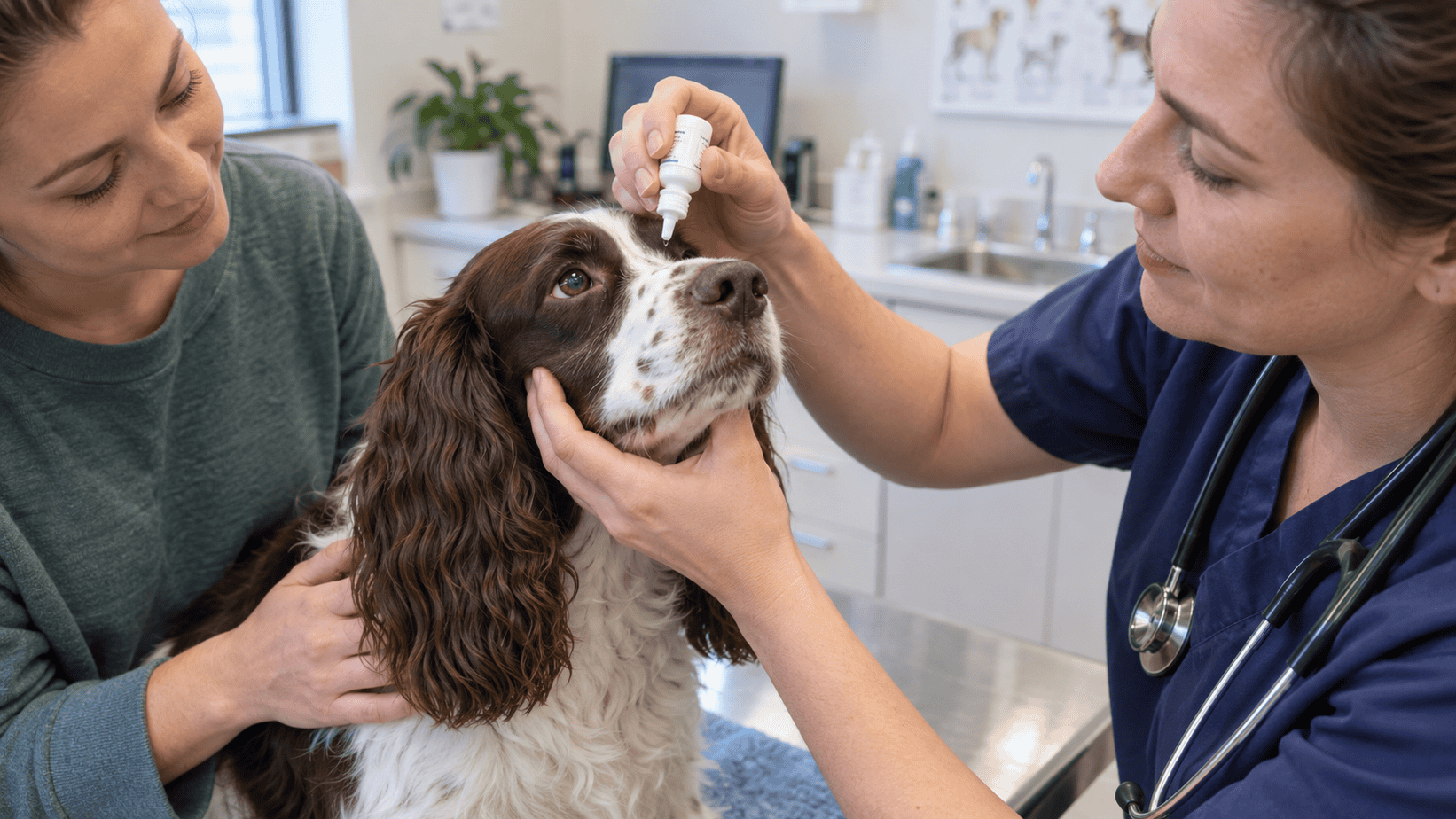
  • Can I Give My Dog Aspirin For A Limp? Is It Safe?

    Can I Give My Dog Aspirin For A Limp? Is It Safe?

    Hello, dear pet parents! As a veterinary professional, I completely understand the worry and concern that arise when you see your beloved four-legged friend limping. Your first instinct? To alleviate their pain as swiftly and effectively as possible. Many of us have found ourselves wondering, “Can I give my dog aspirin for a limp?” The short answer is, no.

    It’s commendable that you’ve taken the time to research and understand the implications of this seemingly simple question. In this article, we’ll delve deep into the world of canine health, discussing the potential benefits and risks of administering aspirin to your dog. It’s essential to approach your pet’s health with knowledge and caution, and I’m here to guide you through. Remember, our ultimate goal is to ensure the safety and well-being of your furry companion.

    can i give my dog aspirin

    Understanding the Cause of Your Dog’s Limp

    Observing your dog limping can be a heart-wrenching experience. As they look up at you with those trustful eyes, it’s only natural to feel an urge to help them immediately. But before jumping to conclusions or remedies, it’s pivotal to comprehend the root cause of the limp. Every limp tells a story.

    1. Acute Injuries:

    Just like us, dogs can have their off days. They might step wrongly on a rocky path, play a bit too rough with a fellow pup, or perhaps jump from a height that’s just a tad too much. Sprains, strains, and minor injuries can cause sudden limping.

    2. Chronic Issues:

    Conditions like arthritis, hip dysplasia, or degenerative joint diseases might lead to a more gradual onset of limping. These often are age-related, but genetics and breed predispositions can play a role too.

    3. Infections and Diseases:

    Ticks carrying Lyme disease or fungal infections can infiltrate the paw or joint areas, causing discomfort and limping. It’s always a good idea to check between their toes and around the paw pads for any signs of infections, injuries, or foreign objects.

    4. Nail and Paw Problems:

    A broken nail, a small cut on the paw, or even an embedded thorn can be the culprit. It might seem minor to us, but for a dog, even the smallest foot issue can be immensely painful.

    5. Bone Issues:

    Fractures or bone cancers can also lead to limping. These are more serious concerns and require immediate veterinary attention.

    It’s crucial to approach your dog’s limping with a blend of empathy and detective work. While it might be tempting to simply administer pain relief, understanding the cause is essential. After all, treating the symptom without addressing the underlying problem can lead to more complications down the road. Always consult with your veterinarian for a proper diagnosis. Remember, our dogs communicate with us in many ways, and a limp is a clear sign that they need our attention and care.

    What is Aspirin?

    Ah, aspirin! A common household name that many of us reach for when that annoying headache strikes or when our joints seem to be voicing their protest after a long day. But what really is this little pill that has stood the test of time, and why has it been a trusted companion in many medicine cabinets?

    1. A Historical Glimpse:

    Aspirin, or acetylsalicylic acid as the scientists would call it, has roots tracing back thousands of years. Ancient civilizations, including the Greeks and Egyptians, used willow bark – a natural source of salicylates – to alleviate aches and pains. It wasn’t until the late 1800s that aspirin was synthesized and patented, forever changing the landscape of over-the-counter pain relief.

    2. The Science Behind the Magic:

    Without getting too technical (and trust me, the chemistry can get dizzying!), aspirin works by inhibiting certain enzymes in our body. This results in reduced production of substances that cause inflammation and pain. It’s like telling those pain-causing agents, “Hey, take a break!”

    3. More Than Just Pain Relief:

    Over the years, researchers have found aspirin to be quite the overachiever. Apart from pain relief, it’s often prescribed in low doses to reduce the risk of heart attacks or strokes. Its ability to thin the blood makes it a valuable tool in certain medical scenarios.

    4. A Word of Caution:

    While aspirin might seem like a wonder drug, it’s not without its side effects. For humans, prolonged use can lead to issues like stomach ulcers. This brings us to an essential question: If it has side effects for us, what about our canine companions? (But more on that later!)

    To wrap up our aspirin 101: it’s a versatile drug with a rich history and a wide array of applications. However, like with anything, knowledge and caution are paramount. Before popping that pill—or thinking of giving it to your furry friend—it’s always wise to understand what it is and how it works.

    can dogs have aspirin for a limp

    Can Dogs Safely Take Aspirin?

    The age-old saying “what’s good for the goose is good for the gander” doesn’t always hold true, especially when it comes to our dogs. The debate around giving our furry companions human medications, like aspirin, is one that has pet parents buzzing with questions. So, can you share your headache remedy with a limping Lassie or a pained Pooch?

    1. A Different Metabolism:

    First things first, dogs are not just furry humans. Their metabolism—how they process and break down substances—is quite different from ours. While we might metabolize certain drugs safely, the same isn’t always true for our pets. This difference can alter the effects of aspirin on their system.

    2. Possible Benefits:

    In some cases, vets might prescribe aspirin for short-term relief from pain and inflammation. Yes, it can act as a temporary solution for conditions like arthritis or minor injuries. But emphasis on the ‘temporary’!

    3. Dosage Matters:

    If you ever find yourself in a situation where aspirin seems like the only option, dosage is crucial. A small slip in the amount can result in adverse effects. Generally, it’s essential to consult with a veterinarian to get the dosage right. And please, resist the urge to guesstimate!

    4. Beware of Side Effects:

    Dogs can exhibit side effects from aspirin, just like humans. Stomach upset, ulcers, or even kidney issues are some of the risks involved. Monitoring for signs like vomiting, diarrhea, or behavioral changes is crucial after administering aspirin.

    5. Regular vs. Occasional Use:

    It’s one thing to give aspirin occasionally under a vet’s guidance and quite another to use it regularly. Continuous usage can heighten the risk of side effects and potentially lead to more severe health concerns.

    In a nutshell, while aspirin can sometimes be given to dogs under specific circumstances, it’s not a decision to take lightly. Always, and I mean always, consult with a veterinarian before heading to the medicine cabinet. Our pets trust us to make the best decisions for them, and armed with the right knowledge, we can ensure they lead happy, pain-free lives.

    Risks of Giving Aspirin to Dogs

    I know, I know. As pet parents, it feels like we’re always navigating a minefield of “dos” and “don’ts.” And when it comes to aspirin, the terrain gets a tad tricky. While it’s tempting to think, “It helps me; why not Fido?” we need to tread with care. Let’s delve into the potential pitfalls of sharing your aspirin stash with your four-legged friend.

    1. Stomach and Digestive Issues:

    Just like in humans, aspirin can irritate a dog’s stomach lining. This can lead to gastritis, ulcers, or even perforations. Signs to look out for include vomiting (sometimes with blood), diarrhea, or a lack of appetite. And trust me, seeing your pet lose their zest for their favorite treat is not a sight you’d enjoy.

    2. Bleeding Complications:

    Aspirin has an anti-clotting effect. While this is beneficial in certain human conditions, for dogs, it can pose a risk. Even minor injuries could lead to prolonged bleeding, and surgeries or procedures can become riskier.

    3. Kidney and Liver Concerns:

    These vital organs bear the brunt of processing and eliminating many drugs, aspirin included. Over time, or with an overdose, they can be adversely affected, leading to reduced function or even failure.

    4. Aspirin Toxicity:

    Overdosing is a real concern. Symptoms of aspirin toxicity include rapid breathing, tremors, seizures, and even coma. If you ever suspect an overdose, it’s a race against time; seek veterinary attention immediately.

    5. Drug Interactions:

    If your dog is on other medications, aspirin can interfere or react with them, leading to a myriad of potential complications. This is yet another reason why consulting with your vet is non-negotiable.

    6. Hypersensitivity Reactions:

    Though rare, some dogs might have an allergic or hypersensitive reaction to aspirin. This can manifest as swelling, hives, difficulty breathing, or other concerning symptoms.

    To wrap up this cautionary chapter: using aspirin for dogs is a bit like navigating stormy seas. Sure, you might reach calm waters, but there are many risks along the way. Before casting off into the aspirin sea, anchor yourself with sound advice from a veterinarian. Our canine companions look to us for guidance and protection, and with knowledge on our side, we can steer clear of troubled waters.

    Alternatives to Aspirin for Dogs

    Seeing our furry buddies in discomfort nudges us into problem-solving mode. While aspirin is a tempting quick-fix, it’s not the only arrow in our quiver. Thankfully, the world of veterinary medicine has evolved and presented us with alternatives that might be safer and more tailored to our canine companions. Let’s explore some of these alternatives, shall we?

    1. Veterinary-Approved NSAIDs:

    Not all NSAIDs (Non-Steroidal Anti-Inflammatory Drugs) are created equal. Some are specifically formulated for dogs, taking their unique physiology into account. Examples include Carprofen, Meloxicam, and Deracoxib. They tend to have fewer side effects than aspirin, but always monitor for any changes in your dog’s behavior or health.

    2. Natural Supplements and Remedies:

    Mother Nature has bestowed us with a treasure trove of natural pain-relieving and anti-inflammatory agents. Glucosamine, chondroitin, and fish oil are often hailed for their joint-supporting benefits. Turmeric, with its active ingredient curcumin, has also gained popularity for its anti-inflammatory properties. But remember, natural doesn’t always mean safe. Dosage and potential allergies are things to keep in mind.

    3. Physical Therapy:

    You’d be surprised at how much a structured physical therapy regimen can help. Whether it’s post-surgery or for chronic pain management, regular exercises, massages, or even hydrotherapy can bring about significant relief.

    4. Acupuncture:

    Ancient practices to the rescue! Acupuncture for dogs is gaining traction. By targeting specific points on the body, it’s believed to enhance circulation and release pain-reducing chemicals. Skeptical? Many pet parents swear by its effectiveness.

    5. Comfort Measures:

    Sometimes, simple changes can bring about big relief. Orthopedic beds, warm compresses, or even ramps to avoid stairs can make your dog’s life much more comfortable.

    6. Prescription Pain Medications:

    In some cases, your veterinarian might prescribe stronger pain medications like Tramadol or Gabapentin. These are for more severe pain scenarios and should be used strictly as prescribed.

    In essence, while aspirin might be the age-old go-to, it’s not the only tool at our disposal. Exploring alternatives, especially under the guidance of a veterinarian, can lead to safer, more effective solutions for our pets’ pain and discomfort. After all, they rely on us to provide the best, and with the plethora of options available, we can certainly rise to the occasion.

    can i give my dog aspirin for a limp

    Safe Administration Tips if You Decide to Give Aspirin

    I get it. Sometimes, despite knowing all the potential risks, you might find yourself in a situation where aspirin seems like the only viable option. Maybe it’s a weekend, or you’re miles away from the nearest vet. If you absolutely must go down this route, it’s essential to do so safely. Here are some guidelines and a handy dosing chart to help ensure you administer aspirin to your dog in the safest way possible.

    1. Consultation First: Always, always consult your veterinarian before giving aspirin to your dog, even if it’s just a phone call.

    2. Opt for Buffered Aspirin: Buffered aspirin is less acidic, making it a tad gentler on your dog’s stomach. It’s designed specifically for canine consumption.

    3. Always with Food: Giving aspirin on an empty stomach can increase the risk of ulcers. Ensure your dog has eaten something before administering the tablet.

    4. No Human Coatings: Some human aspirins have coatings (like enteric) that can be difficult for dogs to digest. It might stay longer in their system, leading to potential overdosing.

    5. Monitor for Side Effects: Keep a close eye on your dog after giving them aspirin. Any signs of distress, bleeding, or unusual behavior warrants immediate veterinary attention.

    6. Start Small: If you’re unsure about the dose, it’s always safer to start with a smaller amount and observe your dog’s reaction.

    Dosing Chart:

    (Please note: This chart is a general guideline. Individual dog needs can vary, so always consult with your veterinarian for precise dosing)

    Dog’s WeightRecommended Dose
    Under 10 lbsConsult your vet
    10-30 lbs81 mg (baby aspirin) every 12-24 hours
    30-50 lbs162 mg (two baby aspirins) every 12-24 hours
    50-100 lbs325 mg (one regular strength tablet) every 12-24 hours
    Over 100 lbsConsult your vet

    To wrap up, while aspirin might sometimes be a necessary route, it’s essential to approach it with caution and care. Think of it as a temporary band-aid, not a long-term solution. Our dogs rely on our wisdom and love to navigate their health hurdles, and with meticulous attention, we can ensure they remain happy, healthy, and wagging their tails.

    Signs It’s Time to See a Veterinarian

    As pet parents, we often pride ourselves on understanding our furry companions. From that mischievous glint in their eyes when they’ve gotten into the trash to the contented sigh they let out during cuddles, we’re usually in tune with their moods and quirks. But sometimes, amidst the tail wags and belly rubs, there are signs that things might be amiss. Knowing when it’s time to swap your detective hat for a trip to the vet’s office can make all the difference. Here’s what to keep an eye out for:

    • Persistent Limping: If a limp lasts or seems painful, seek expert advice.
    • Appetite Changes: Skipping meals or overeating could be warning signs.
    • Abnormal Thirst & Urination: Increased intake or more frequent urination might indicate health concerns.
    • Weight Changes: Sudden fluctuations should be noted.
    • Breathing Issues: Excessive panting or coughing are serious.
    • Digestive Issues: Consistent upsets, vomiting, or constipation are red flags.
    • Behavioral Shifts: Sudden mood changes could be pain-related.
    • Unusual Odors: Bad breath or odd smells can hint at infections or dental issues.
    • Visible Distress Signs: Lumps, wounds, or swelling need attention.
    • Excessive Scratching/Shaking: This could suggest allergies or infections.

    The takeaway? Trust your gut and your knowledge of your dog. If something feels off, it probably is. While our dogs might not speak our language, they have a myriad of ways to communicate with us. It’s our responsibility to listen, observe, and act. Remember, when in doubt, it’s always better to err on the side of caution. A trip to the vet, even if just for peace of mind, is worth its weight in gold.

    Conclusion

    Navigating the world of canine health can often feel like a balancing act on a tightrope. On one hand, we have our undying love for our furry friends and an innate desire to see them pain-free and frolicking. On the other, there’s a maze of information, medication, and decisions to weave through. Aspirin, while a household name for us, throws up its own set of challenges when we consider it for our four-legged companions.

    The essence of this journey through the aspirin quandary is not about painting aspirin as a villain. Instead, it’s about understanding its place, its risks, and its alternatives. Knowledge is our strongest ally, and when paired with the advice of veterinary professionals, we’re armed to make the best choices for our pets.

    So, the next time your dog limps into the room or seems under the weather, remember: you’ve got tools in your arsenal. Sometimes it’s a simple remedy, and other times it’s the reassuring voice of your vet on the phone. But always, at the heart of it, is a bond between you and your dog — a bond that calls for care, understanding, and above all, love.

    Stay informed, trust your instincts, and here’s to countless more days of wagging tails, wet noses, and joyful barks!

    Frequently Asked Questions (FAQs)

    Can I give my dog the same aspirin I take for headaches or pain?

    While it’s technically possible for dogs to consume human aspirin in some scenarios, it’s crucial to get the dosage right and be aware of the risks. Always consult with your veterinarian before administering any human medication to your pet.

    How long can I give my dog aspirin if needed?

    Aspirin is best used as a short-term solution for pain and inflammation in dogs. If your dog’s symptoms persist or if you find the need to administer aspirin regularly, it’s essential to consult your veterinarian for a more sustainable and safe treatment plan.

    My dog accidentally ingested a large amount of aspirin. What should I do?

    If you suspect your dog has consumed a large amount or overdose of aspirin, it’s vital to seek emergency veterinary care immediately. Symptoms of aspirin toxicity can escalate quickly, so timely intervention is crucial.

    Are there any specific signs to look for after giving my dog aspirin?

    Monitor your dog for any unusual behavior, digestive upsets (like vomiting or diarrhea), excessive panting, changes in appetite, or signs of distress. If any of these symptoms appear, contact your vet promptly.

    Can I combine aspirin with other pain relief medications for my dog?

    Combining medications can lead to adverse reactions or increase the risk of overdose. Always consult with your veterinarian before administering any combination of medications to ensure the safety and well-being of your pet.

    A note about your dog’s health

    This article provides general education and does not replace an examination, diagnosis, or individualized advice from your veterinarian. Contact a veterinary professional if you are concerned about your dog’s symptoms.

    Dr. Candy Akers, DVM Avatar

    ABOUT THE AUTHOR
  • Can You Give A Dog Nyquil? Expert Answers

    Can You Give A Dog Nyquil? Expert Answers

    As pet parents, we always strive to take good care of our furry buddies and ensure their well-being. However, there are times when our dogs may suffer from health issues that require medication to ease their symptoms. If you’re a pet parent, you might have a bottle of Nyquil lying around at home. But, can you give a dog Nyquil? It’s a valid question, and unfortunately, the answer isn’t a straightforward yes or no.

    In this blog, we’ll dive deep into the effects of Nyquil on dogs, the potential risks involved in administering it to them, and explore alternative treatment options. We’ll also share real-life stories of pet parents who have given Nyquil to their dogs, along with insights from veterinary experts.

    So, if you’re a concerned pet parent who wants to know if Nyquil is safe for your dog, keep reading. Our blog will equip you with the knowledge you need to make an informed decision about your pup’s health.

    can dogs have nyquil

    What Is Nyquil?

    Nyquil is a popular over-the-counter medication that’s widely used to treat symptoms of cold and flu in humans. It comes in different forms such as liquids, capsules, and tablets, and contains a blend of active ingredients like acetaminophen, dextromethorphan, and doxylamine succinate. These ingredients work together to ease various symptoms like cough, fever, congestion, and sneezing.

    Note that Nyquil is formulated for human use only, and it is not safe for dogs. Giving Nyquil to your furry friend without consulting a veterinarian can pose risks since the dosage and ingredients are not tailored to meet your pet’s unique needs. Additionally, some of the components in Nyquil can be harmful to dogs if not administered in the right amounts.

    Can You Give a Dog Nyquil?

    One of the most common questions among pet owners is whether it’s safe to give their dog Nyquil. You might be tempted to give your furry friend Nyquil when they exhibit symptoms of a cold or flu. However, it’s crucial to understand that Nyquil is formulated for humans and is not approved for use in dogs.

    While Nyquil contains ingredients that can be effective in treating human cold and flu symptoms, the dosage and composition may be harmful to dogs. Some of the active ingredients in Nyquil, such as acetaminophen, can cause liver damage and even death in dogs if given in excess. Moreover, doxylamine succinate and dextromethorphan, which are also present in Nyquil, can cause severe side effects in dogs if not administered correctly.

    If your dog is suffering from symptoms such as coughing, sneezing, or congestion, it’s essential to consult a veterinarian before giving them Nyquil. A safe and effective treatment plan specifically designed for your dog’s needs can be recommended by your vet. The veterinarian may prescribe safe medications that treat your dog’s specific symptoms.

    Signs of Nyquil toxicity in dogs

    What are the Harmful Ingredients in Nyquil?

    Nyquil contains several active ingredients that can be harmful to dogs if not given in the correct dosage. One of the main ingredients in Nyquil is acetaminophen, which is a pain reliever and fever reducer. While acetaminophen is safe for humans in the recommended doses, it can be toxic to dogs and cause liver damage, vomiting, diarrhea, and even death if given in high amounts.

    Another ingredient in Nyquil is dextromethorphan, which is a cough suppressant. In dogs, dextromethorphan can cause lethargy, vomiting, loss of coordination, and even seizures if given in high doses.

    Additionally, Nyquil contains doxylamine succinate, an antihistamine that can cause drowsiness and dry mouth in humans. In dogs, doxylamine succinate can cause gastrointestinal upset, lethargy, and even seizures if given in excessive amounts.

    Your vet can recommend a safe and effective treatment plan specifically designed for your dog’s needs. If your dog is exhibiting symptoms of a cold or flu, it’s crucial to consult a veterinarian before giving them any medication, including Nyquil. Your vet can tailor a safe and effective treatment plan that meets your dog’s needs and does not harm their health.

    What Signs To Watch For If Your Dog Accidentally Ingests Nyquil?

    If your dog accidentally ingests Nyquil, there are several signs you should watch for that may indicate a potential issue. The severity of the symptoms can vary depending on the amount of Nyquil your dog has consumed and their overall health condition. Here are some of the signs to watch for if your dog ingests Nyquil:

    1. Vomiting and diarrhea – These are common symptoms that may indicate that your dog’s digestive system is reacting to the medication.
    2. Lethargy – Lethargy in dogs could indicate Nyquil is impacting their nervous system.
    3. Loss of coordination – Nyquil may harm your dog’s coordination, particularly while exercising, which can be hazardous to their health.
    4. Disorientation – If your dog seems confused or disoriented, it may be a sign that they have ingested too much Nyquil.
    5. Tremors and seizures – In severe cases, Nyquil ingestion can cause tremors or seizures, which require immediate medical attention.

    If you notice any of these symptoms in your dog after they have ingested Nyquil, it’s important to contact your veterinarian immediately. The vet can evaluate the issue and suggest proper treatment to minimize harm to your dog. In general, it’s best to keep Nyquil and other medications out of reach of your dog to avoid accidental ingestion.

    What to do if your dog accidentally ingests Nyquil

    When or If You Should Go To The Vet?

    If your dog has ingested Nyquil, it’s important to monitor them closely for any symptoms of an adverse reaction. If your dog is exhibiting any of the signs mentioned earlier, you should contact your veterinarian immediately.

    In general, it’s best to err on the side of caution and seek veterinary care if you suspect that your dog has ingested Nyquil. The veterinarian can assess your dog’s condition, perform diagnostic tests if necessary, and recommend the appropriate treatment.

    If your dog has ingested Nyquil recently, the veterinarian may recommend inducing vomiting to prevent further absorption of the medication. In some cases, they may also administer activated charcoal to help absorb any remaining medication in your dog’s stomach.

    Your dog may require hospitalization for supportive care, including intravenous fluids and medication to manage their symptoms in severe cases. Your vet will closely monitor your dog’s condition and provide the necessary care to ensure their recovery.

    Are There Any Dog Safe Alternatives to Nyquil?

    If you’re looking for a safe alternative to Nyquil to treat your dog’s symptoms, there are several options available that are formulated specifically for pets. Here are a few dog-safe alternatives to Nyquil:

    1. Benadryl – This over-the-counter medication is an antihistamine that can help relieve itching, sneezing, and runny nose in dogs. It’s also used to treat motion sickness and anxiety in dogs.
    2. Robitussin DM – Dog-safe cough suppressant relieves kennel cough, bronchitis, and respiratory conditions.
    3. Mucinex – Mucinex thins mucus in the respiratory tract, aiding dogs in coughing it up. It can be helpful in treating respiratory infections and other respiratory conditions.
    4. Natural remedies – Some natural remedies, such as honey, eucalyptus oil, and ginger, can help alleviate certain symptoms in dogs.
    A close-up of a Nyquil bottle with a warning label for pets

    Conclusion

    It’s important to note that even dog-safe medications can have potential side effects, so it’s crucial to follow your veterinarian’s instructions when administering medication to your dog. Always check with your vet before giving your dog any medication or natural remedies to avoid potential harm.

    In conclusion, giving Nyquil to your dog can be harmful, and it’s essential to seek professional advice before administering any medication to your furry friend. Nyquil is formulated for human use only and can cause serious health problems in dogs if given inappropriately.

    If your dog is exhibiting symptoms of a cold or flu, it’s crucial to consult with a veterinarian to determine the best course of treatment. Your veterinarian can recommend safe and effective medication options that are specifically designed for your dog’s needs.

    Remember to keep all medications, including Nyquil, out of reach of your pets to prevent accidental ingestion. If you suspect that your dog has ingested Nyquil or any other medication, seek veterinary care immediately.

    By being proactive about your dog’s health and seeking veterinary care when necessary, you can help ensure that your furry friend stays healthy and happy for years to come.

    ~Lindsie

    A note about your dog’s health

    This article provides general education and does not replace an examination, diagnosis, or individualized advice from your veterinarian. Contact a veterinary professional if you are concerned about your dog’s symptoms.

    Lindsie Parks B.S., CRDNS Avatar

    ABOUT THE AUTHOR