*This page may include affiliate links, which means that if you make a purchase through one of the product links, we may receive a small commission. For full affiliate disclosure please see our disclaimer page.
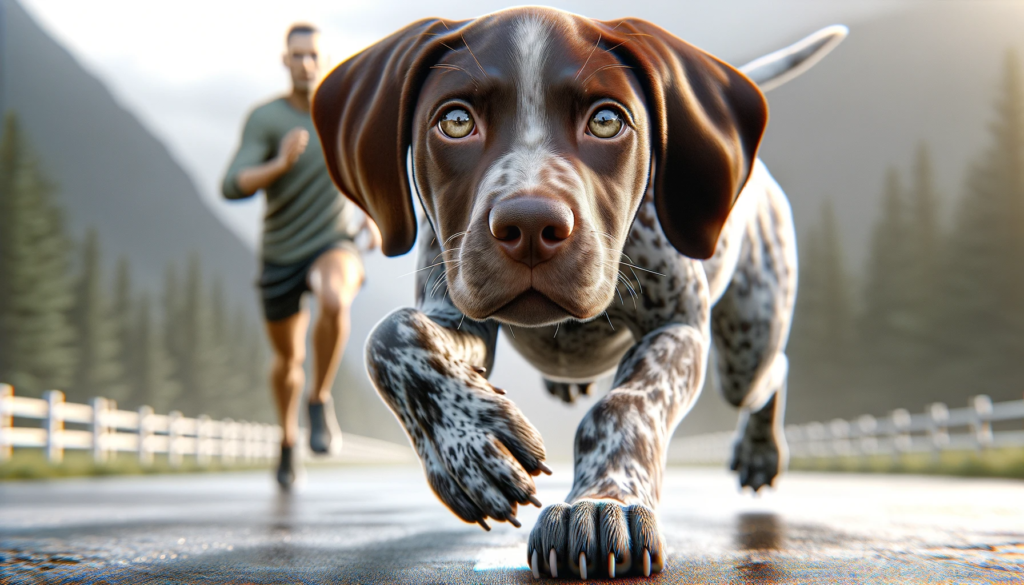
Every year I get a lot of questions from families that want to know when they can start running with their puppy. This is a great question and I think that it shows that they are tuned into the health of their new pup. Unfortunately, there are a lot of mixed messages out there. Some vets say 6 months, some say 1 year. Other vets say you can start running or jogging with a puppy as soon as you bring them home and on the flip side, some vets say don’t EVER run with a dog.
In my experience as a holistic veterinarian, I know there are a lot of different factors that should be considered when answering this important question. This article, will go over approximate ages to start running based on different factors of dog size, breed, genetics, health status, spay and neuter timing, and weather. We will cover 3 tips for introducing your puppy to running smoothly and I’ll also teach you what to look for if your pooch is pushing it too far.
Also, I’ll go over paw care and tell you the two supplements that I put all large and giant breed puppies on to prevent joint damage or serious injury to tendons and ligaments. Furthermore, I will also highlight a few pieces of gear that can make running with your dog even more enjoyable for both of you.
Can You Start Running With Your Puppy?
When you are deciding when to start jogging or running with your puppy there are a lot of factors to consider. Every pet is an individual and I think that’s why differing veterinarians have such a wide range of answers. You know your pet the best, so the decision is up to you and your pup. To focus on our target beginning age you should consider the size that your dog will be as an adult, your dog’s breed and, the timing of their spay and neuter surgery. Other considerations include your dog’s health status, genetic lines, and environmental factors like weather and elevation.
How Big Should My Puppy Be When We Start Running?
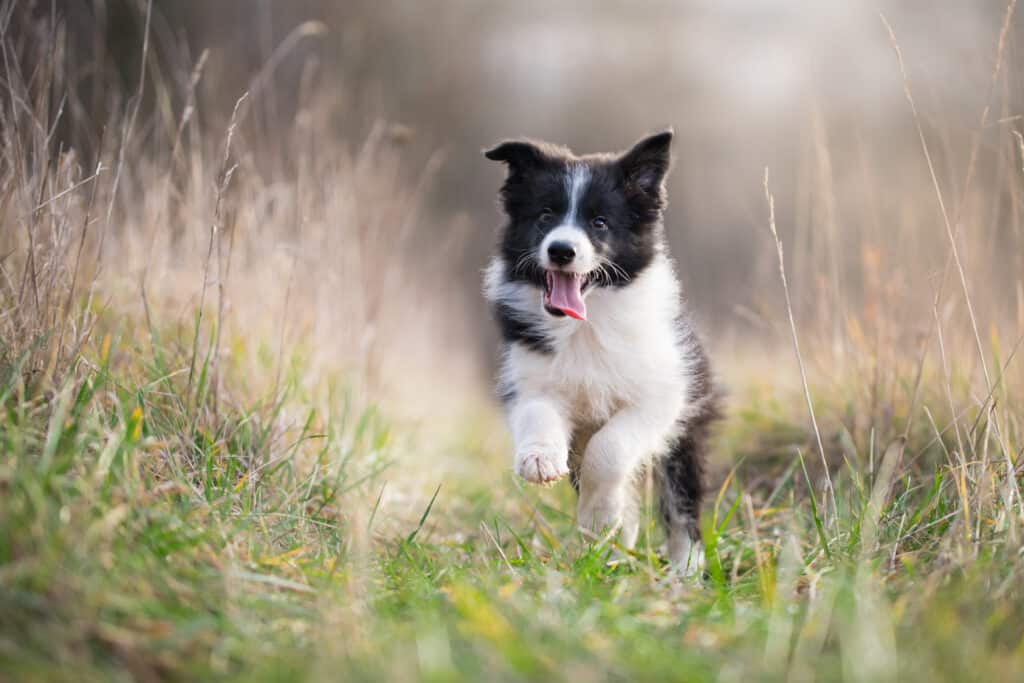
When you are deciding when to start running with your dog, knowing their estimated adult size is very important. Since large and giant breed dogs mature more slowly we will want them to be close to full grown. Most large breed dogs will take approximately 18 months to grow to maturity. Giant breeds will take around 2 years. Since these large dogs are already at higher risk for arthritis and joint diseases, we want to make sure all of those growth plates are big and strong.
Additionally, large breed dogs also experience very fast growth during some developmental stages. Sometimes this can lead to a puppy that puts on a lot of weight before its joints are ready to handle it. It always looks so goofy to me to watch a big puppy take a clumsy gallop across the lawn as they learn how to coordinate their growing body. If you keep the puppies lean and delay running activities until they’re around 18 months old, these situations usually have a much better outcome.
What Breeds Can I Run With?
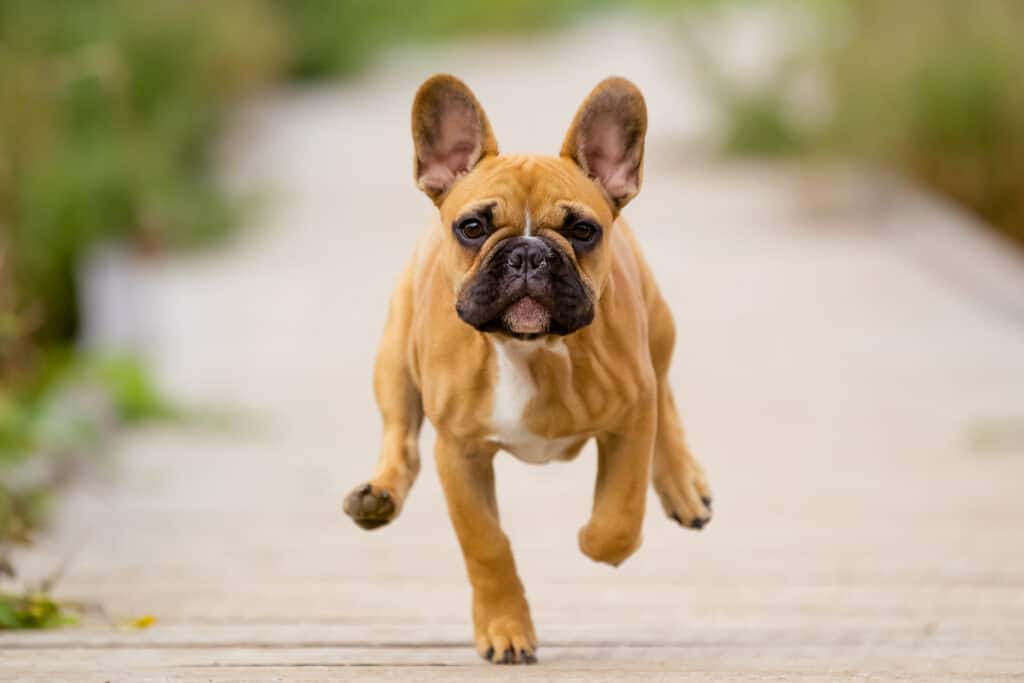
Not all breeds are considered equal when it comes to strenuous exercise like jogging or running. Some breeds have smushed in noses, also called brachycephalic dogs. These pups frequently have narrow airways, small nostrils, and other changes to oral anatomy. Although these special breeds are cute, it does warrant additional consideration when deciding when to start running with your puppy.
Some Breeds That I Do NOT Recommend Running With Include:
- Pugs
- French Bulldog
- Shih Tzu
- Lhasa Apso
- Pekingese
- Boston Terrier
- Brussels Griffon
- English Bulldog
- King Charles Cavalier Spaniel
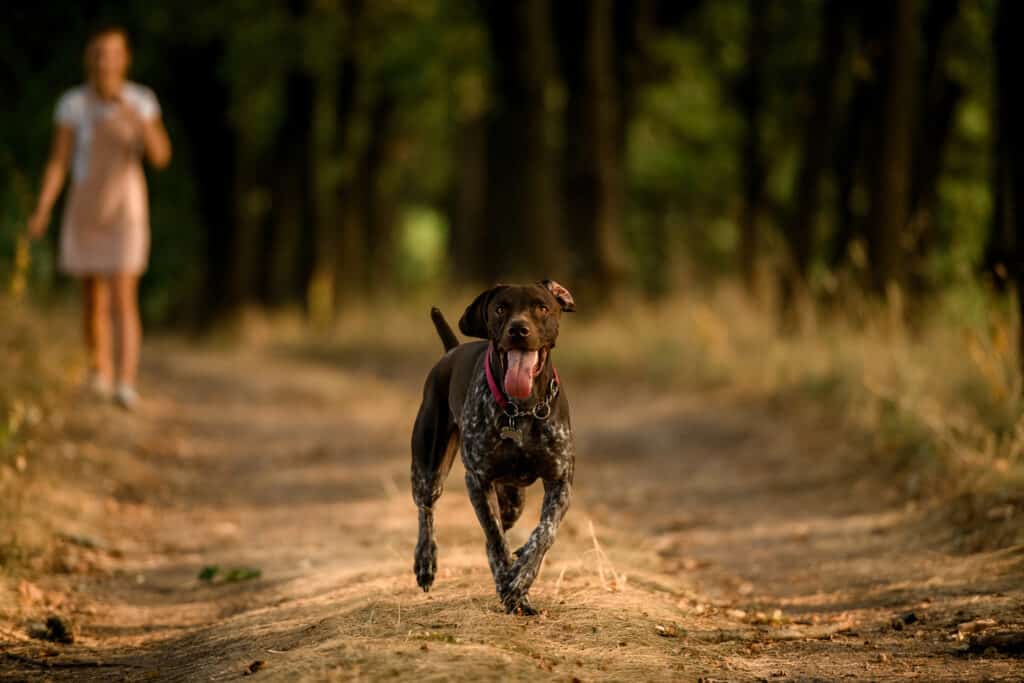
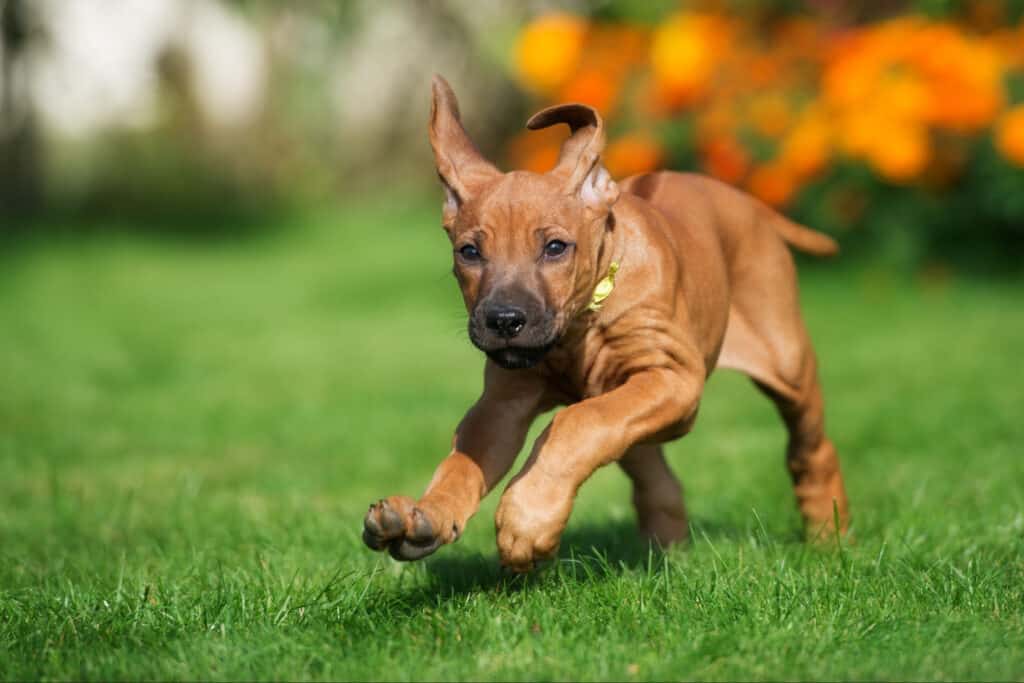
Breeds That Could Be A Great Running Mate Include:
- Vizsla
- German Shepherd
- Dalmatian
- Labrador Retrievers
- Golden Retriever
- German Shorthaired Pointer
- Ridgebacks
- Belgian Malinois
- Cattle Dogs
- Staffordshire Terrier
- And the athletic favorite – Greyhounds
Check the chart below for a quick glance of average time to start running based on dog size and breed.
| Size | Breed Examples | 6 months | 12 months | 18 months | 24 months |
|---|---|---|---|---|---|
| Toy/Miniature | Chihuahua Maltese Toy Poodle Yorkshire Terrier Pomeranian | Not Recommended For Running | Not Recommended For Running | Not Recommended For Running | Not Recommended For Running |
| Small | Corgi Jack Russel Terrier Beagle Basenji Rat Terrier Shiba Inu | 6 months | |||
| Medium | Bull Terrier Cattle Dog Wheaton Terrier Australian Shepherd* Staffordshire Terrier* Border Collie | 12 months | |||
| Large | Golden Retriever Pointer German Shepherd Standard Poodles Huskies* Labrador Retriever Weimaraner Greyhound | 18 months | |||
| Giant | Great Dane Mastiff* Newfoundland* Great Pyrenees* Cane Corso* Irish Wolfhound | 24 months |
The Importance of Spay and Neuter Timing
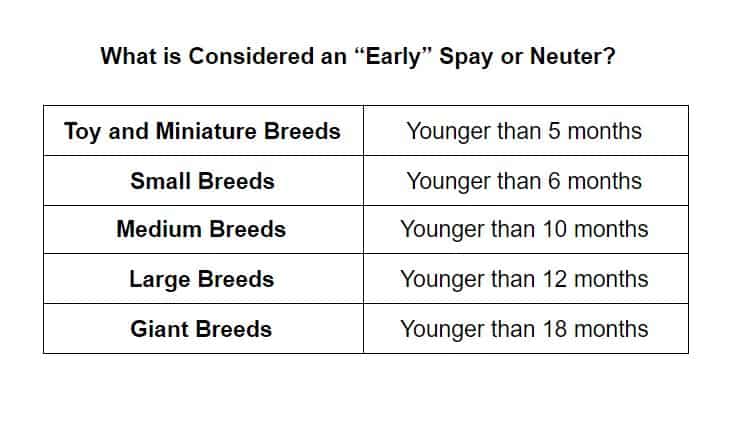
The age at which a dog is spayed or neutered and its resulting health has been explored a lot in the past 10 years. Most veterinarians are recognizing that early spay and neuter can sometimes make certain dogs more prone to injuries like ligament tears and hip dysplasia. Data also suggests a higher than normal chance of cancer, especially bone cancer, in large-breed dogs that are spayed or neutered early. Additionally, evidence points toward a higher risk of hormone imbalances like thyroid or adrenal disorders.
What Happens When My Dog Is Neutered Too Early?
But, what is considered “early”? Early spay or neuter timeline is based on the approximate age of sexual maturity in that specific dog breed and it also aligns with the adult size of the dog. Complete maturity in large breed dogs like Labs occurs between 12 and 18 months. Full adult maturity in giant breed dogs usually occurs between 18 and 24 months of age. Keeping your dog intact till they are mature allows them to properly grow bones, joints, a strong immune system, and balanced hormone pathways.
Dogs that are neutered early are not automatically given a poor health prognosis. I also wouldn’t advise that you NOT run with your dog if they were spayed or neutered early. Many rescue and shelter dogs have their neuter surgery before they are adopted. Most of these dogs under 50 pounds experience vibrant health. Larger dogs who are spayed before 1 year old have differences in body growth and shape when compared to the same pup that is not spayed till after full maturity.
Consequences of Early Spay / Neuter
The removal of hormonal glands such as the ovaries, uterus, and testicles causes bone growth plates to close. Hence, joint surfaces stop growing in these early spay dogs, but long bones continue to grow. This results in a taller, longer, more lanky body shape which changes the angle and direction of weight bearing. Growth changes that disrupt normal joint health can lead to knee injuries like medial cruciate ligament tears ( MCL ) or anterior cruciate ligament ( ACL ) ruptures. Other musculoskeletal injuries linked to early spay and neuter include luxating patella’s, back injuries, elbow arthritis, and hip dysplasia.
If you find that your dog might be included in this early spay and neuter category, don’t panic. Just get them onto the recommended joint supplements below, wait an additional 3-6 months and take it slow when introducing jogging and running. The gradual strengthening of the body muscles and a holistic nutritional approach to ligament strength is your best bet for keeping your pup running by your side for many happy years.
Health Status of Your Running Partner
When evaluating the health status of your dog, we just want to think about a few factors. Serious illness in puppies can stunt their growth and strain their immune system. These dogs may need a few extra months to grow before you start running with them. Additionally, a puppy that is “the runt” may be linked to malnutrition or social stress. I usually see that these dogs flourish and catch up in growth within a few months of going to their new home. Also, I recommend waiting an additional 3 to 6 months to give their body the chance to grow and get strong.
Other illnesses like parvovirus, worms, or pneumonia should also be monitored closely when deciding when to start running with your puppy. Metabolic imbalances like diabetes or trauma from a fall should always be discussed with your veterinarian prior to starting running or jogging.
Does Genetics Matter When Finding a Puppy to Run With?
Over the years I have noticed a big difference in the role that genetics plays when it comes to musculoskeletal health and exercise. This is one reason why researching for a responsible breeder is so important. Poorly bred dogs can have joint abnormalities from as young as 8 weeks of age. Nutrition also plays a role in body development. If a pup cannot get enough of the right vitamins or minerals, then deficiencies can build up.
If you are looking to get a dog from a breeder, make sure that their dogs have all been checked and tested for all of the appropriate diseases and disorders. For example, any person breeding Labrador Retrievers should have their breeding dog’s hips checked with an OFA certification. More information about these health tests can be found on websites like akc.org.
With rescue dogs we may have less data to go on when evaluating family health and genetics, but luckily myself and many other veterinarians find that many mixed breed dogs have a lower risk of genetic diseases.
Environmental Factors for Running With Your Puppy : Weather and Elevation
The last condition that is important to making the decision of when to start running with your puppy are your individual environmental conditions such as weather and elevation. At higher elevations, you should wait an extra 3-6 months before starting any jogging or running. Also, when you do start the training of your puppy at these higher elevations be sure to go nice and slow and overtime go further and further.
The consideration of weather in your environment is a common sense evaluation of temperature conditions and how this might affect your puppy. Extreme cold and significant heat can make it much more difficult to recover after a run. Dogs from cold weather climates like Huskies and Newfoundlands have thick coats and are very prone to overheating and this can lead to enormous bodily injury. So follow the basic suggestions of running in the morning or evening when temps are cooler if you live in a hot climate. Alternatively, if you live in a cooler region, run when it is a bit warmer, and be sure to let your puppy develop nearly full body mass and full fur coat before jogging together.
Make Running with Your Puppy a Positive Experience
Sometimes we focus so much on the physical aspect of running together that we forget to evaluate the mental and emotional reactions from our pets. Above all else, you need to make sure that running is a fun experience for your dog. She has to enjoy her exercise and her time with you. If it is a scary experience, or emotionally negative, your dog will not want to make this a regular practice. So make sure they are having fun every time, at the beginning you may want to give them treats, praise, pets, or toys to positively reinforce the running experience. A few positive experiences will make running fun for you both.
Start Slow When Introducing Your Puppy to Running
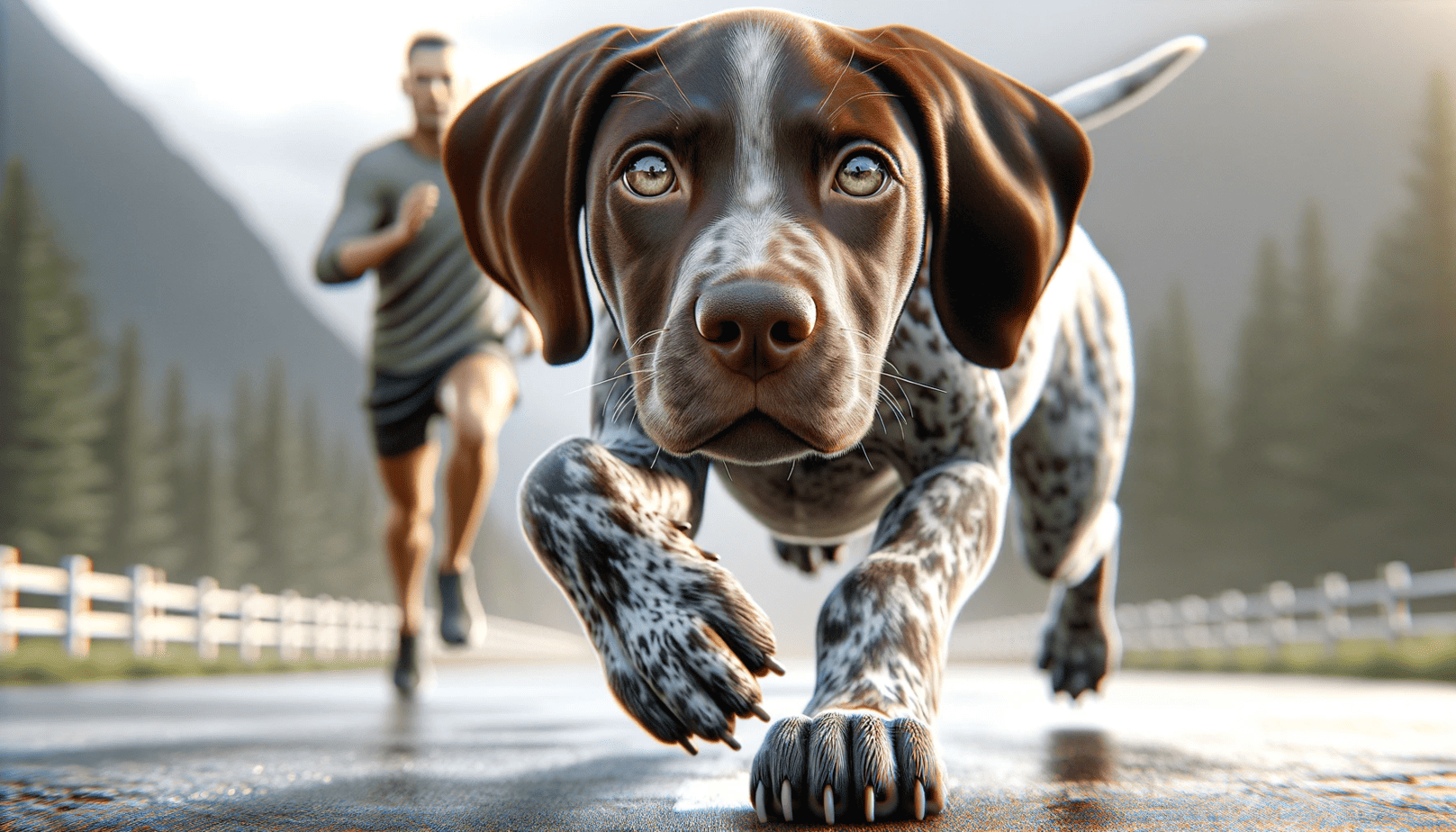
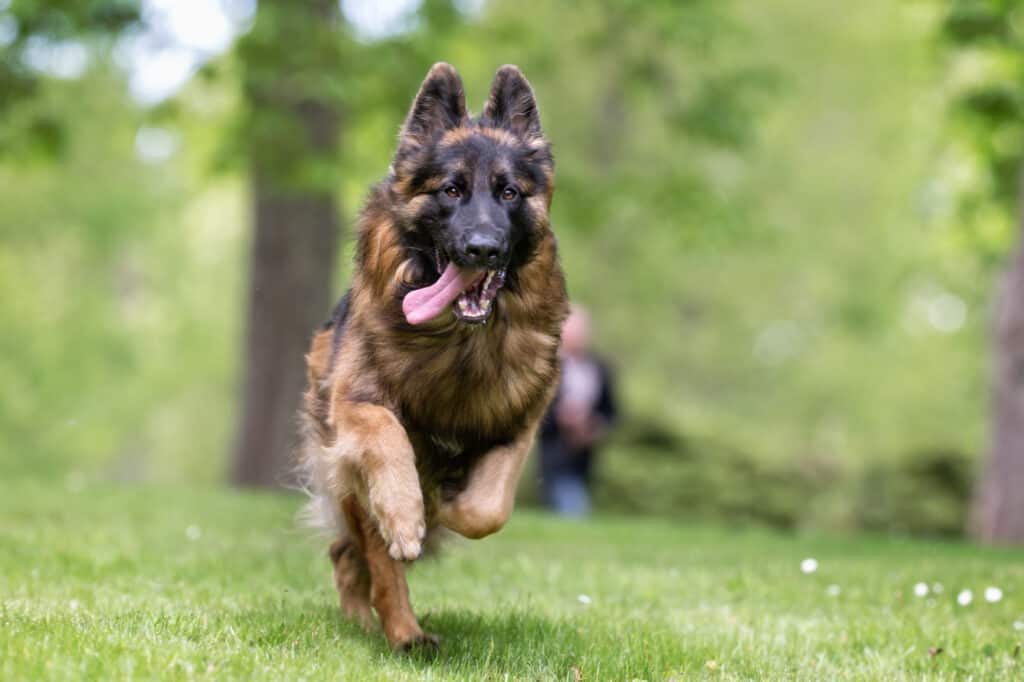
When you are introducing running to your puppy, short distance runs are extremely important. Your dog has to adjust physically and emotionally to this new activity and you both are getting to know one another in a new way. Start with very small distances, like maybe 100-200 yards. For smaller dogs, it might even be less than this to begin. Slow and steady is what the puppies say.
Build Up Gradually to Running with Your Puppy
Increases should be small steps so that your dog can recover in a healthy way after the run and a very gradual increase to build up stamina. It’s very common for puppies to want to run long distances, and some get so excited by this new hobby. So sometimes they do not want to stop. Other pups want to please you, and they will keep running until you tell them to stop. These people pleasers will push their little bodies too far. If overexerted, puppies can suffer some pretty serious health consequences.
Choose Comfortable Running Terrain
Just like when we “break-in” a new pair of shoes, it takes a little while for our bodies to adapt. The same thing happens when a new exercise is introduced to a human or a dog. Watch paws for scrapes, blisters, or burns. When starting, consider using a softer trail or park grass. Running on dirt and other natural surfaces is much easier on the puppy’s feet and joints. We will come back to discuss a few more tips on paw care later but now I want to go over things to look for as clues that your pup is not feeling well during or after runs.
Signs Your Puppy Needs A Break From Running
- Vomiting
- Diarrhea
- Coughing
- Gagging
- Stopping
- Slowing way down
- Laying down
- Turning pale or blue
- Limping
- Skipping
- Falling
- Hopping
Some of these are warning signs that your pet’s body is getting too stressed. Before stress becomes outwardly obvious, many animals ( including humans ) may show some warning signs that your puppy’s physical body is compensating and almost overwhelmed. The most commonly experienced symptoms in this warning phase are vomiting or diarrhea.
Signs that your dog cannot physically endure the demand for energy, oxygen, and proper circulation to all parts of his body. These include coughing, gagging, stopping, slowing way down, laying down, or turning pale or blue. If this happens then you want to stop immediately, sit down, take a break, and allow your puppy to rest. When available, she can have a small drink of water. I don’t recommend allowing your dog to drink a gigantic amount of water at this time. You still have to get home and they can have more water when you get home.
Other symptoms may be occurring if they are in physical pain. Look for changes in movement such as limping, skipping, falling, or hopping. If you continue to run with your puppy while she is injured, you could risk causing permanent damage such as scar tissue, stretched tendons, or damaged joints.
Even Some Hyper Dogs Don’t Do Well Running
“When I was 21, I lived in an apartment with my two dogs. Sully was a miniature Dachshund and Kasey was a pug and Jack Russel Terrier mix. Pugs can be pretty hyper and Jack Russel’s can also be super hyper. Looking for ways to burn off a little bit of that extra energy in Kasey, I decided to try running. So I started jogging with her she would often have one normal bowel movement, and then one that was soft or runny. She was experiencing diarrhea when everything else seemed so normal, so I wondered why. You name it, I did it: checked for parasites, looked at new foods, and carefully watched everything she ate. After some research, I figured out that those soft stool episodes were related to her getting overheated while we jogged. Due to this, I stopped running and everything went back to normal.”
Immediately After a Run
Check how long it takes for your puppy to return to a normal respiratory rate. This phase shouldn’t last more than 5-7 minutes. If your puppy is still panting 30 minutes later, then you overdid it. In this case, you would just give them a day or two to recover and then try again with a shorter distance.
Rest of the Day and Night After a Run
The rest of the day after the run- sleeping, long naps, drinking a bit of water, and slobbering that all over the water bowl is pretty normal. Stretching and sprawling out is also pretty normal. These good signs can show that your puppy is worn out, but feels good.
You do NOT want to see the following signs:
- Vomiting
- Diarrhea
- Regurgitation
- Poor Appetite
- Hiding
- Growling / Being Grumpy
- Hesitation To Go Up Stairs
- Crying / Whimpering
Next Day After a Run
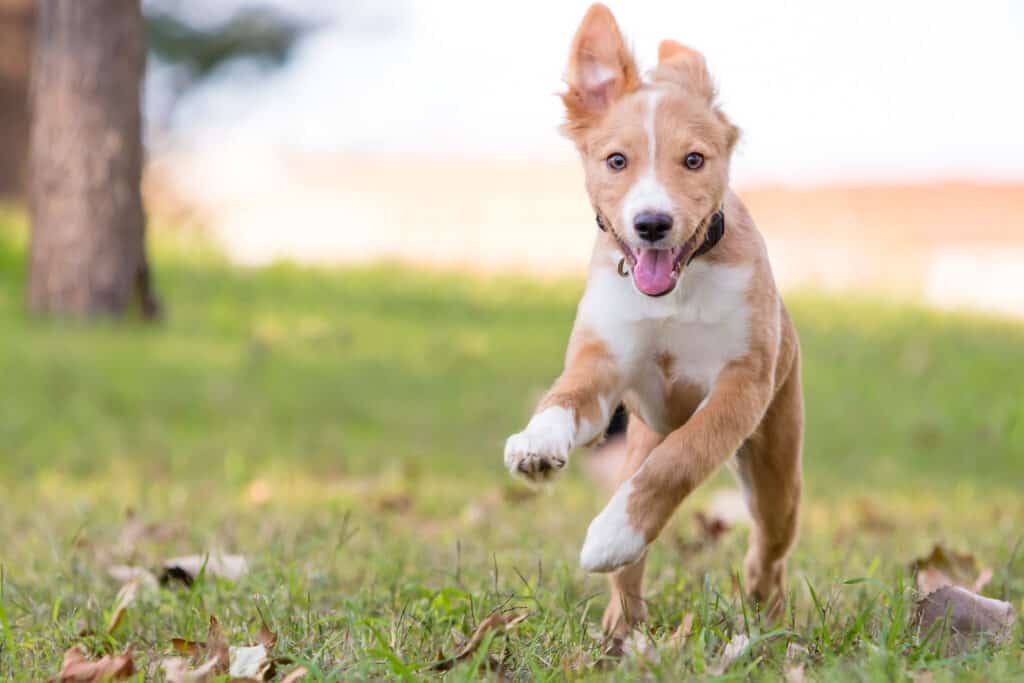
At first, you will need to take a recovery day in between each run. You can start running every day after two weeks if your dog responds well. Watching through your recovery day to make sure that your puppy’s muscles heal and that her appetite and digestion are normal. Just like us, humans, keep your pup well hydrated, this will allow her muscles to heal and drain any lactic acid produced.
Light massage, specially formulated safe essential oils, as well as ice packs and heat pads, can sometimes be helpful. Watch for changes in gait, odd behaviors, or signs of pain. Never give your dog any human medications, they can be toxic. If you have concerns about your dog’s health or pain status go to your veterinarian and tell them what is happening. They can make sure everything looks good and that they are comfortable.
| SIDE NOTE – If you do end up in a vet hospital anytime after a strenuous run, I recommend not allowing the vet to give any booster vaccines at this time. Instead, allow your pup to heal and then go back for the vaccine. When vaccines, especially multiple vaccines, are given while a pet is sick, healing, or injured, the vaccine can overstimulate their immune system and there is a risk for autoimmune disease or chronic illness. |
Two Must-Have Supplements for Your Running Pup
My last few tips regarding running with puppies revolve around optimal nutrition and safety gear to consider. As I stated up above, I put all large breed puppies on two critically important supplements before they start running. Whole food based nutritional supplements will provide your puppy with all the nutrients and proteins she needs to heal and stay strong. I have found that adding these supplements can help puppies develop strong muscles, tendons, and ligaments. Additionally, these two supplements greatly reduce the risk of serious injury, like knee problems, as well as the risk of arthritis in the future.
Standard Process Canine Musculoskeletal Support
# 1 ) Standard Process Canine Musculoskeletal Support – It is packed with superfoods like liver, cartilage, and green-lipped mussels. These ingredients keep joints healthy and heal muscle tissue. Carefully selected herbs fight inflammation with natural antioxidants. 100% natural raw bone meal provides bioavailable forms of calcium and minerals that are necessary to keep bones strong during growth and exercise. You can learn more about Standard Process Canine Musculoskeletal Support and how it can help your pets HERE.
Standard Process Ligaplex II
# 2 ) Standard Process Ligaplex II – Ligaplex is also developed by Standard Process and comes in two forms. Ligaplex I and Ligaplex II. In young, healthy, or growing puppies, I use Ligaplex II to provide critical vitamins and minerals the way nature intended. These nutrients come from nature, so they are provided in the right forms. They are also available for absorption by your dog’s digestive system and they are presented in the correct ratios for maximum benefit. When real whole foods are used for healing, like in Ligaplex II, they also come with the necessary enzymes for absorption and utilization. If a nutrient is supplemented but the body cannot absorb it, then your dog does not get any of the benefits.
Another benefit of this supplement is the inclusion of vitamins as full complexes. For example, there are multiple forms of Vitamin C complex in nature and we know of at least 8 forms of vitamin B. Studies have shown that full complex vitamins provide improved healing properties. Synthetic pieces of vitamins can not even begin to compete with the benefits of natural vitamin complexes.
Important Paw Care & Gear for Running with Your Puppy
Should dogs have boots to run in?
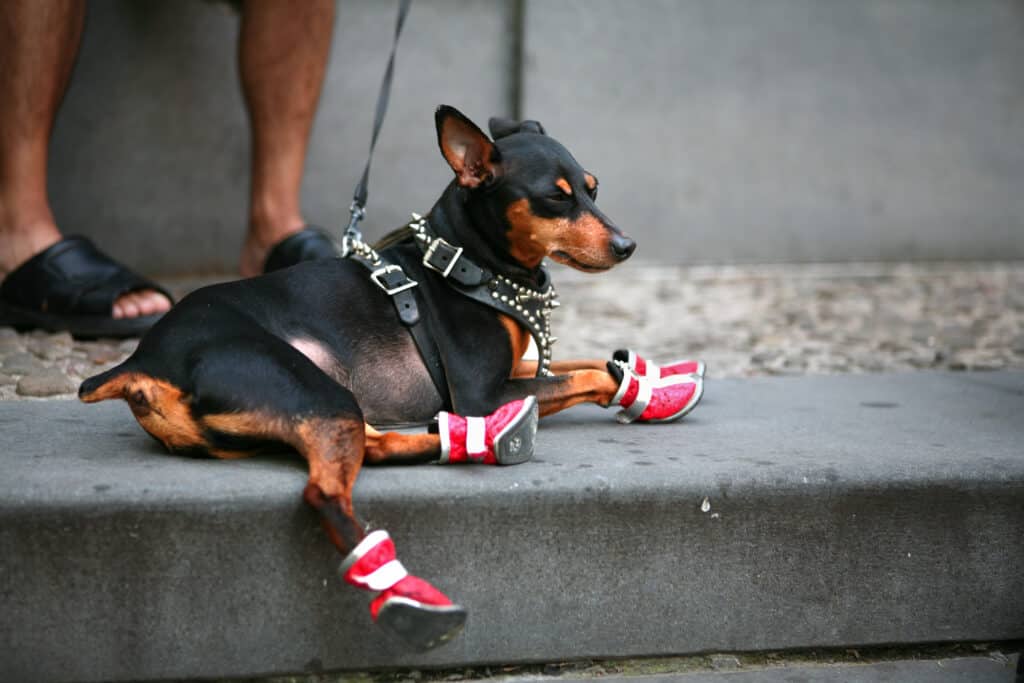
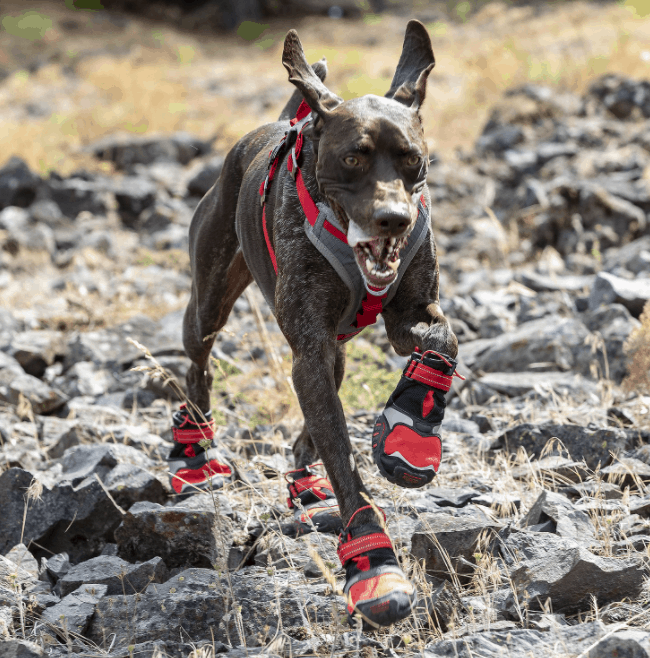
Two other topics that commonly pop up when talking to clients about running with puppies are paw care and other gear. Do you wonder if your puppy will need boots or other footwear? For the most part, booties or shoes are not necessary nor enjoyed by your doggie partner. If you start slowly and only gradually increase the run times, your dog’s paws will adapt. Kinda like developing a protective callus or breaking in a new pair of shoes.
Does my dog need boots in the snow?
Are you and your puppy going to be running long distances in snow? Your dog may benefit from booties. Dogs sometimes need to wear snow boots to protect against paw surface ice balls, abrasions, and cuts from ice. Frozen terrain can be pretty rough. In fact, sled dogs competing in the legendary Iditarod are required to have booties. Sometimes hair in between paw pads can develop little ice balls that stay trapped between their toes. This could be uncomfortable and long-time exposures can lead to frostbite. So, if you are running for more than an hour in snowy conditions, snow boots are recommended. If it is just a jog around the block, your pup will be fine with a few small care tasks.
Your puppy’s paws will need to be checked before and after a run in the snow. Watch out for long hair between paw pads and keep it trimmed but not shaved. The right amount of foot hair will keep warm air against your dog’s toes. But long hairs can accumulate sticky snowballs. Keep toenails properly trimmed and check the surface of paw pads for dryness and cracks. Dry “chapped” cracks can be painful. Luckily there are a bunch of lotions and balms that are specifically designed for dogs.
My favorite Paw Balm is called Musher’s Secret.
Finding the correct fit can sometimes be difficult, so I recommend reading the product’s sizing chart carefully. Most dogs around my area do well with the Kurgo Blaze Boots.
Other Outdoor Gear
Should my dog have a coat during a run?
For most situations, puppies and dogs do not need coats. A few exceptions include extreme cold and extreme sun exposure ( for thin-coated or non-haired breeds ). Pups should be able to regulate their body heat through their skin and coat, so covering it up can quickly make your dog hot. Watching for shivering and starting with small walks is your best bet to keeping your dog comfy.
Does my puppy need a rain coat during a run?
Most medium and large breed dogs do not need a rain coat when walking or running outside. If conditions result in your pup being soaked, just make sure to dry them thoroughly when you get home. Some dogs love splashing around in the rain. And some breeds of dogs have thick glossy hair that can have a waterproof effect. In most situations, adding a rain coat will disrupt temperature regulation and make it harder to observe your pup.
Do Dogs Need a Snack During a Long Run or Hike?
The last question that I get about getting your dog to run and the items required is commonly about a snack or meal. If you were to ask your dog if he needs a snack…they would surely say YES. A handful of pet parents (myself included) feel like they have to pack a snack for every occasion. “Going to grooming? Here’s their snack and blankie”. However, most dogs do not need a jogging snack. We are talking about puppies here, so you should not be traveling great distances that might include a snack. Keep runs to an hour or less and remember to increase very slowly. Also, if your pup has a health condition like diabetes, then I do not recommend running with them. Healthy dogs should be well able to maintain a normal blood sugar level.

Do Dogs Need Water When Running?
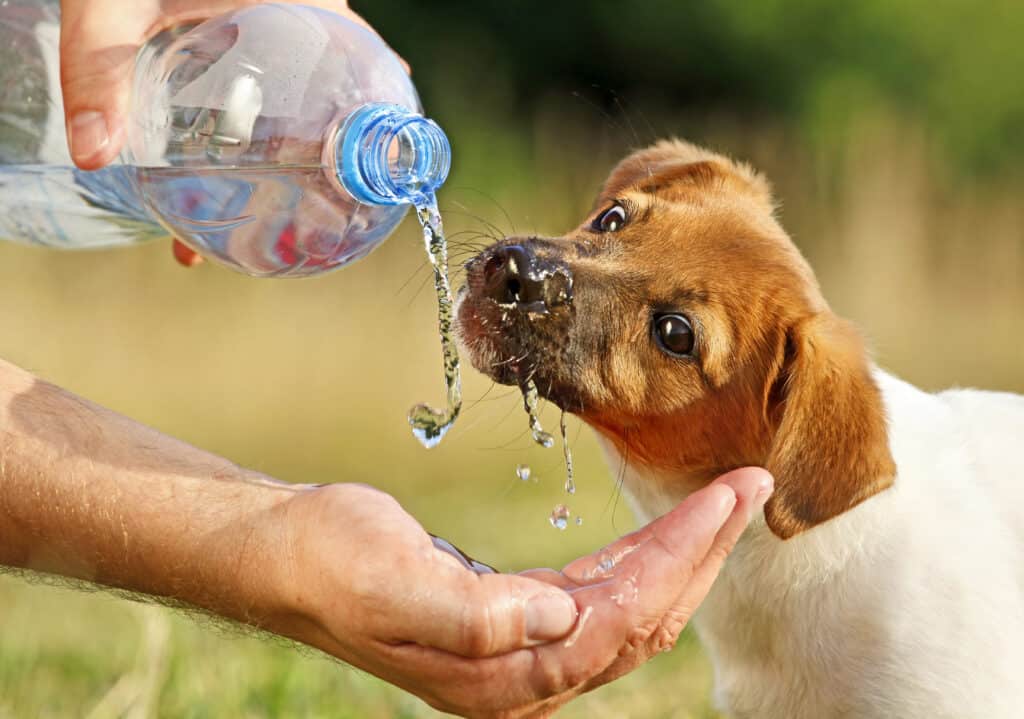
Since most runs should be less than an hour, most puppies and dogs won’t really need a water break. But, I know when I hike, I do like to have a little bit of water with me. You can make the call to bring a water bottle or not. It might be easiest to just pour a little of your water in your hand for a quick hydration lap. They also make handy dandy collapsible bowls. Other ideas include water bottles that attach to running belts or doggie backpacks with storage. But still, young dogs should not be running that far that they would need a substantial water break.
Cool Gear to Elevate The Running Experience
Safety should be your first priority when teaching a dog to run. In most environments, they should always be secured with a leash and it’s commonly a law in public places. You’ll want to make sure your dog’s collar or harness is secure so that they cannot pull out of it. It’s all about safety and it’s all about fun.
Check out this article to learn more about the gear you will need to keep things running smoothly. We have reviewed and compared tons of great gear so you don’t have to.
Running with your puppy will take some patience but the benefits are worth it. Your personal health and happiness will skyrocket! You will meet a new best friend and you will be on your way to a very healthy and happy dog.
Check out our other articles for even more knowledge to keep your dog healthy and happy!
7 Beneficial Herbs For Dogs That You Can Grow In Your Garden
Can Dogs Eat Blueberries? Are Blueberries Good For My Dog?
Let us know if you like our content by giving us a LIKE, SHARE and FOLLOW.
A note about your dog’s health
This article provides general education and does not replace an examination, diagnosis, or individualized advice from your veterinarian. Contact a veterinary professional if you are concerned about your dog’s symptoms.

ABOUT THE AUTHOR