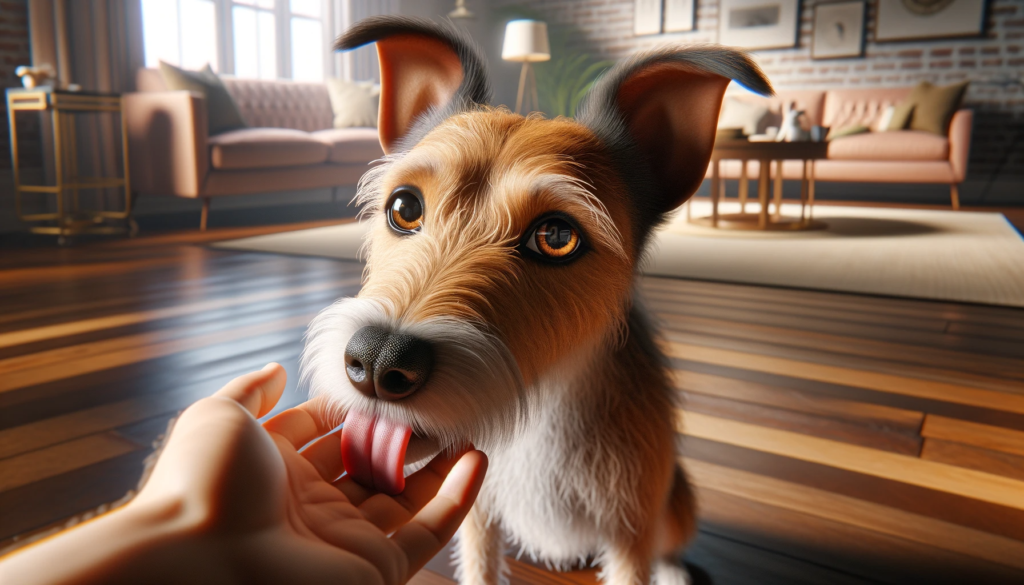
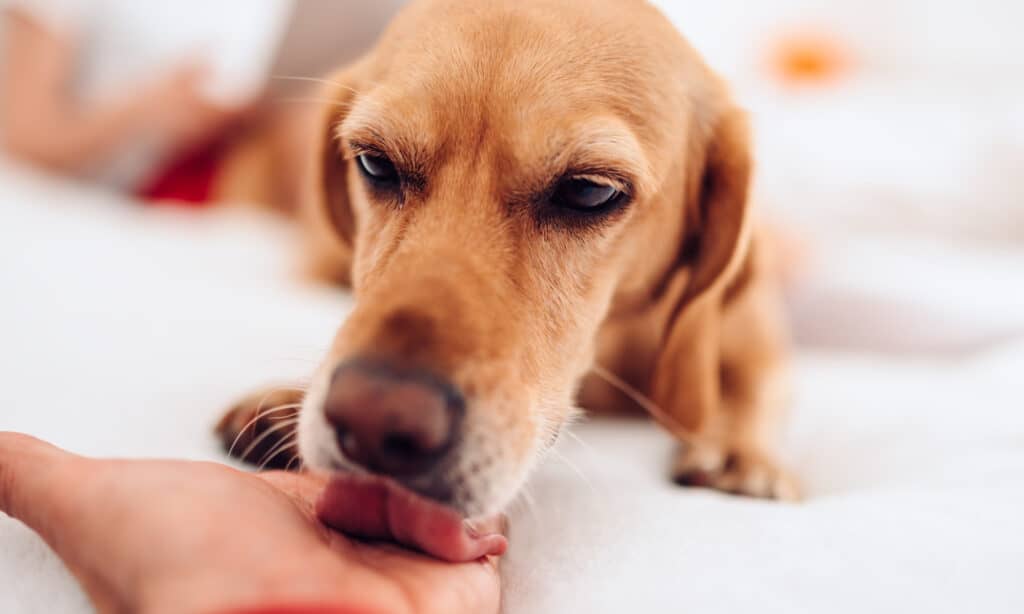
If you’re a dog owner, you know that your furry friend can be curious and sometimes even a little mischievous. While their playful nature can be endearing, it can also lead them into some potentially dangerous situations. One such situation is when a dog comes into contact with human blood, either accidentally or intentionally. Dogs have a natural instinct to lick and investigate things with their mouth, and the sight or smell of blood can be particularly intriguing to them. However, this behavior can pose some risks to both the dog and the human. We’ll explore why dogs are attracted to human blood and what happens if a dog licks human blood.
Why Dogs Lick Blood
Dogs have an instinctive drive to investigate and taste new things, and the smell or taste of blood can be intriguing to them. Dogs are highly attuned to the various scents found in blood, especially the distinct odor of the iron it contains. Additionally, dogs may be attracted to blood because it can signal an injured or vulnerable prey animal, which would be a natural target for a dog in the wild. Dogs’ hunting instincts can make them investigate and consume blood if given the chance.
It’s important to note that while some dogs may be more attracted to blood than others, this behavior is generally instinctive and not a sign of a behavioral problem or lack of training. Prevent dog from contact with human blood to avoid health risks.
Potential Health Risks of Dogs Licking Human Blood
While the smell and taste of human blood may attract dogs, this behavior carries potential health risks. One of the biggest concerns is the transmission of diseases and infections from dogs to humans through their saliva. Dogs can carry a variety of bacteria and viruses in their mouth that can be harmful to humans, including Capnocytophaga canimorsus, which can cause severe infections in people with weakened immune systems. Human blood can expose dogs to the risk of disease transmission or bloodborne illnesses, making it a potential danger. It’s important to take precautions to prevent your dog from licking human blood to minimize these risks.
What to Do if a Dog Licks Human Blood
If your dog licks human blood, take immediate action to minimize risks and stay safe. Firstly, you should try to stop your dog from licking any further and remove them from the area if possible. Wash the affected area with soap and water to remove any potential pathogens from the dog. Contact your vet to assess if further action is needed for your pet’s health.
Your vet may recommend monitoring your dog or advise bringing them in for testing or treatment. If the human whose blood was licked is experiencing any symptoms or has reason to believe that they may have a bloodborne illness, they should seek medical attention immediately. By taking these actions promptly, you can help minimize the risks to both your dog and any humans involved.
Prevention Strategies
Preventing your dog from licking human blood is the best way to minimize the potential health risks associated with this behavior. There are several strategies you can use to accomplish this:
Keep your dog on a leash: Leashing your dog while walking can prevent contact with human blood in certain areas.
Keep first aid supplies out of reach: Prevent dog access to first aid supplies to avoid accidental ingestion.
Train your dog: Train your dog to obey commands and avoid licking or investigating unwanted things.
Keep an eye on your dog: Supervise your dog to avoid situations where they may encounter human blood.
Practice good hygiene: Clean up blood spills quickly to prevent your dog from accessing them if someone is bleeding.
By taking these preventative measures, you can reduce the likelihood of your dog coming into contact with human blood and minimize the potential health risks associated with this behavior.
Conclusion
In conclusion, while it may seem harmless for your dog to lick human blood, there are some potential health risks associated with this behavior. Dogs are naturally attracted to the scent and taste of blood, and may investigate or lick it if given the chance. This behavior can spread diseases and pose risks to both pets and humans.
By taking steps to prevent your dog from coming into contact with human blood, such as training, supervision, and good hygiene practices, you can reduce the likelihood of this behavior and minimize the risks. If your dog does come into contact with human blood, it’s important to take prompt action to minimize the risks, such as washing the affected area and contacting your veterinarian or doctor. Be proactive to prevent risks for a healthy and safe dog and family.
~Sheena
A note about your dog’s health
This article provides general education and does not replace an examination, diagnosis, or individualized advice from your veterinarian. Contact a veterinary professional if you are concerned about your dog’s symptoms.
Sheena Keliher is a passionate and knowledgeable pet expert with over a decade of experience in the veterinary profession and rescue work. She has always been dedicated to caring for animals and has spent countless hours helping them in any way she can. Throughout her career, Sheena has provided valuable insights to pet owners and helped them make informed decisions about their furry friends.
In her 13 years in the veterinary profession, Sheena has gained extensive knowledge and experience in animal health and wellness, including diagnostics, treatments, and surgeries. She has worked with a wide range of animals, from dogs and cats to exotic pets and wildlife, and has always been committed to providing the best possible care for each and every one of them.
In addition to her work in the veterinary field, Sheena has also been actively involved in rescue work for the past 15 years. She has helped countless animals find loving homes and has been a tireless advocate for animal welfare. Sheena’s dedication to rescue work has been unwavering, and she continues to be a source of inspiration to many in the animal welfare community.
At home, Sheena is a proud parent of one German Wirehaired Pointer named Jasper and three cats named Sammie, Bat, and Ezra. Her pets are her family, and she always goes above and beyond to ensure that they are happy and healthy.
With her wealth of knowledge and experience, Sheena is an exceptional resource for pet-related advice and assistance. Her love for animals is evident in everything she does, and she is committed to making a positive difference in the lives of pets and their owners.
If you’re a dog owner who loves to decorate your home with indoor plants, you may have wondered whether certain plants are safe for your furry friend. One plant that may have caught your eye is the croton plant. These tropical plants are known for their bright and colorful foliage, making them a popular choice for indoor decor. However, if you’re considering adding a croton to your home, you may be wondering: are crotons toxic to dogs?
The answer is not a straightforward yes or no. While crotons do contain toxins that can be harmful to dogs if ingested, the severity of the toxicity can vary depending on the size of the dog and the amount of plant material consumed. In this blog post, we’ll explore the potential risks of crotons for dogs and provide expert answers to help you make an informed decision about whether to bring this plant into your home.
What Are Crotons?
Crotons are absolutely stunning tropical plants that boast gorgeous and vibrant foliage. Originally hailing from Southeast Asia, specifically Indonesia and Malaysia, they have rapidly become popular both indoors and outdoors worldwide. They are part of the Euphorbiaceae family, which comprises over 2,000 plant species, and are scientifically known as Codiaeum variegatum. Sometimes referred to as variegated crotons or garden crotons, their most distinguishing feature is their leaves, which come in a vast array of hues, including yellow, green, purple, and red. The leaves also display a diverse range of shapes and patterns, such as spirals or lobes. This variety in color and pattern is dependent on the species of croton and the conditions under which it’s grown.
Gardeners and landscapers love to use crotons as ornamental plants in both indoor and outdoor spaces due to their relative ease of care and ability to thrive in various conditions. They require periodic watering and well-draining soil, and they are adaptable to a wide range of environments. In addition, certain species of croton have long been employed in traditional Southeast Asian medicine.
Are Crotons Toxic To Dogs?
If you’re a dog owner who loves to decorate your home with indoor plants, you may have wondered whether certain plants are safe for your furry friend. One plant that may have caught your eye is the croton plant.
Crotons are beloved for their stunning foliage and come in a variety of colors, shapes, and patterns. Unfortunately, the answer to the question of whether crotons are toxic to dogs is not a simple yes or no. Although crotons contain toxins that can be harmful to dogs if ingested, the severity of the toxicity varies based on the size of the dog and the quantity of plant material consumed.
Some of the symptoms your dog may experience if they ingest croton include vomiting, diarrhea, and loss of appetite. If they consume a large amount of the plant, it can cause more serious complications, such as liver or kidney damage.
As a responsible pet owner, it’s crucial to ensure that any plants you have in your home are safe for your furry friend. If you have a curious dog who loves to explore and potentially eat plants, it may be best to avoid having crotons in your home altogether. However, if you’re determined to add these beautiful plants to your indoor garden, it’s essential to keep them in a location that your dog cannot access, such as on a high shelf or in a room where your dog is not allowed.
What Should You Do If Your Dog Eats A Crotons?
If you suspect that your dog has eaten any part of a croton plant, it’s crucial to act quickly. The severity of the symptoms your dog experiences will depend on the amount of plant material ingested, so it’s essential to contact your veterinarian right away.
The first step is to monitor your dog closely for any signs of illness or discomfort, such as vomiting, diarrhea, loss of appetite, or lethargy. If your dog is experiencing severe symptoms, it’s best to seek veterinary care immediately.
When you contact your veterinarian, be sure to provide as much information as possible about the situation. Let them know when you first noticed the symptoms, how much plant material you think your dog may have consumed, and any other relevant details.
Depending on the severity of the situation, your veterinarian may recommend inducing vomiting or administering medication to help alleviate the symptoms. In some cases, hospitalization may be necessary to provide supportive care, such as intravenous fluids or medications to protect the liver or kidneys.
To avoid future incidents, it’s crucial to keep all potentially toxic plants, including crotons, out of your dog’s reach. This includes not only indoor plants but also any plants in your yard or garden that your dog may have access to. With some caution and awareness, you can help keep your furry friend safe and healthy.
Potential Physical Dangers Presented by Crotons
Crotons are stunning plants that can brighten up any space with their colorful and unique foliage. However, while they are undoubtedly beautiful, crotons can also present some physical dangers, particularly for curious pets and young children.
The most significant danger associated with crotons is their toxicity. Crotons contain toxins that can cause serious health problems in both humans and pets if ingested. These toxins can affect various organs, including the liver, kidneys, and gastrointestinal tract. Symptoms of toxicity can include vomiting, diarrhea, abdominal pain, loss of appetite, and even death in severe cases.
In addition to their toxicity, crotons can also present a physical hazard due to their sharp edges and thorns. The leaves of some species of croton are sharp and can cause injury if handled roughly or accidentally brushed against. The thorns of some varieties can also cause puncture wounds if not handled carefully.
To minimize the physical dangers presented by crotons, it’s essential to take precautions when handling and caring for these plants. Keep crotons out of reach or in a secure room if you have children or pets. When handling crotons, be sure to wear gloves to avoid injury from the sharp edges or thorns.
Signs and Symptoms of Crotons Plant Ingestion
If you suspect that your pet has ingested any part of a Croton plant, it’s essential to monitor them closely for any signs and symptoms of illness. The severity of the symptoms can vary depending on the size of the animal and the amount of plant material consumed.
Some of the most common signs and symptoms of croton plant ingestion include:
vomiting
diarrhea
loss of appetite
lethargy
abdominal pain
In some cases, pets may also experience excessive salivation, tremors, or seizures.
If your pet is exhibiting any of these symptoms and you suspect that they may have ingested Croton, it’s crucial to contact your veterinarian right away. Providing your veterinarian with information on the plant species, the amount ingested, and symptoms can help them determine the best course of treatment.
When Should You Take Your Dog To The Vet?
If you suspect that your dog has ingested any part of a croton plant, it’s important to monitor them closely for any signs or symptoms of illness. In some cases, the symptoms may be mild and may resolve on their own with minimal intervention. However, in other cases, croton plant ingestion can cause severe symptoms that require immediate veterinary care.
If your dog is exhibiting any of the following symptoms, it’s crucial to take them to the vet as soon as possible:
Severe vomiting or diarrhea that persists for more than 24 hours
Refusal to eat or drink
Lethargy or weakness
Abdominal pain or swelling
Difficulty breathing or wheezing
Seizures or tremors
Collapse or loss of consciousness
These symptoms can indicate severe toxicity or other complications that require prompt intervention.
Prevention Is The Best Medicine – How To Prevent Your Dog from Eating Crotons Plants
Prevention is the best medicine when it comes to keeping your furry friend safe from croton plants. Here are some tips to help prevent your dog from eating crotons:
Keep Croton plants out of reach: Keep croton plants out of reach to prevent dogs from eating them. Place them on high shelves or in a room that your dog cannot access.
Use barriers: If you can’t keep croton plants out of reach, consider using barriers to prevent your dog from getting to them. This could include using baby gates or putting the plants in a locked room.
Provide alternative toys and chews: Sometimes dogs will eat plants out of boredom or a desire to chew. To prevent this, provide your dog with plenty of toys and chews to keep them entertained.
Train your dog: Train your dog to leave plants alone. Reward your dog when they leave plants alone and provide verbal cues to discourage them from approaching plants.
Be aware of your dog’s behavior: Keep an eye on your dog’s behavior around plants. Intervene if you see them trying to eat them. Redirect their attention to a toy or treat to discourage them from eating the plants.
By taking these steps, you can help prevent your dog from eating crotons and keep them safe from the potential dangers of this toxic plant. If you have any concerns about your dog’s behavior or health, be sure to contact your veterinarian for advice and assistance.
So, Why Do Dogs Eat Crotons Plants?
Dogs may eat croton plants for a variety of reasons. Some dogs may be attracted to the bright and colorful foliage of crotons. Some may try to eat them out of curiosity or boredom. Others may be drawn to the texture of the leaves or the scent of the plant.
In some cases, dogs may eat Croton plants as a form of self-medication. Crotons have been used in traditional Southeast Asian medicine for their medicinal properties. Some dogs may instinctively seek out plants that can help alleviate certain health conditions.
Unfortunately, dogs don’t have the ability to distinguish between toxic and non-toxic plants, so they may inadvertently eat plants that can cause harm. This is why it’s essential to be aware of the potential dangers of crotons and to take steps to prevent your dog from eating them.
If you suspect that your dog has eaten Croton or any other toxic plant, it’s crucial to seek veterinary care immediately. Early intervention can help prevent serious complications and improve the chances of a positive outcome for your furry friend.
Conclusion
In conclusion, croton plants can add a beautiful and colorful touch to your home or garden. However, it’s important to be aware of the potential risks associated with these plants, especially if you have pets or young children in your home. Crotons are toxic to dogs and can cause a range of symptoms, including vomiting, diarrhea, and even liver or kidney damage in severe cases.
To keep your furry friend safe, it’s crucial to take steps to prevent them from eating Croton plants. This can include keeping the plants out of reach, providing alternative toys and chews, and training your dog to leave plants alone. If you suspect that your dog has ingested croton or any other toxic plant, it’s crucial to seek veterinary care immediately.
By being aware of the potential dangers of crotons and taking proactive steps to prevent your dog from eating them, you can enjoy the beauty of these plants safely and without worry. Remember, when it comes to your pet’s health and safety, prevention is always the best medicine.
~Sheena
A note about your dog’s health
This article provides general education and does not replace an examination, diagnosis, or individualized advice from your veterinarian. Contact a veterinary professional if you are concerned about your dog’s symptoms.
Sheena Keliher is a passionate and knowledgeable pet expert with over a decade of experience in the veterinary profession and rescue work. She has always been dedicated to caring for animals and has spent countless hours helping them in any way she can. Throughout her career, Sheena has provided valuable insights to pet owners and helped them make informed decisions about their furry friends.
In her 13 years in the veterinary profession, Sheena has gained extensive knowledge and experience in animal health and wellness, including diagnostics, treatments, and surgeries. She has worked with a wide range of animals, from dogs and cats to exotic pets and wildlife, and has always been committed to providing the best possible care for each and every one of them.
In addition to her work in the veterinary field, Sheena has also been actively involved in rescue work for the past 15 years. She has helped countless animals find loving homes and has been a tireless advocate for animal welfare. Sheena’s dedication to rescue work has been unwavering, and she continues to be a source of inspiration to many in the animal welfare community.
At home, Sheena is a proud parent of one German Wirehaired Pointer named Jasper and three cats named Sammie, Bat, and Ezra. Her pets are her family, and she always goes above and beyond to ensure that they are happy and healthy.
With her wealth of knowledge and experience, Sheena is an exceptional resource for pet-related advice and assistance. Her love for animals is evident in everything she does, and she is committed to making a positive difference in the lives of pets and their owners.
If you’re a dog owner and a fan of Japanese cuisine, you may be wondering can dogs eat natto? Natto is a traditional Japanese food made from fermented soybeans and is known for its strong smell and sticky texture. While natto is a popular dish in Japan, it may not be a common food for dogs in other parts of the world.
In this blog post, we’ll explore whether or not dogs can safely consume natto and what potential benefits or risks it may have for your canine companion. We’ll also discuss some other dog-friendly alternatives to natto that you can share with your pet. So, if you’re curious about whether or not your dog can eat natto, keep reading to find out!
What Is Natto?
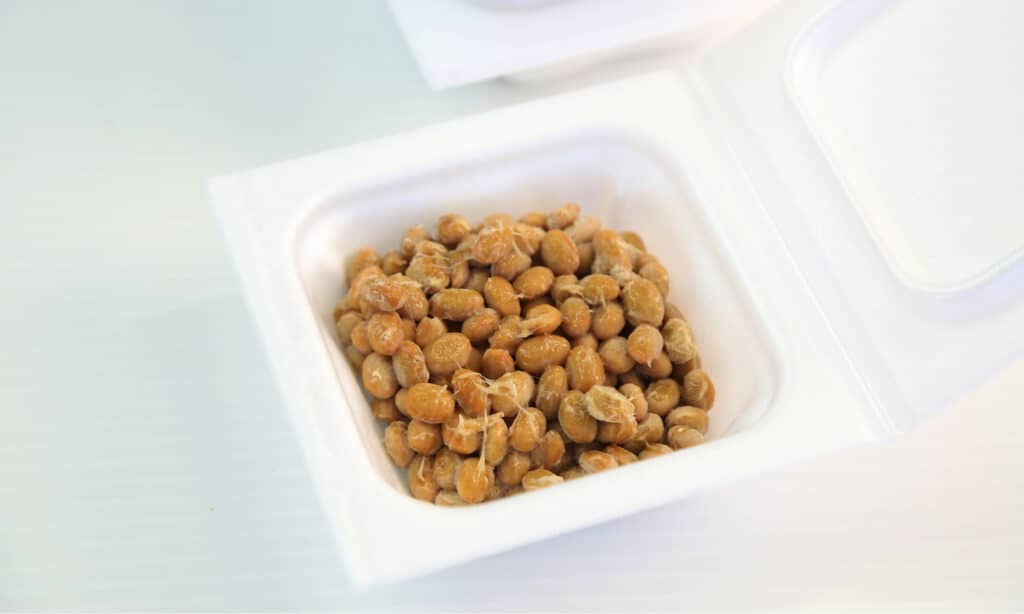
Natto is a Japanese dish made from fermented soybeans that has a distinct texture and aroma. Boiled soybeans are fermented with Bacillus subtilis var. natto, giving them their unique texture and flavor.
The texture of natto can be slimy and sticky, which may take some getting used to for those who are trying it for the first time. The taste is often described as nutty or cheesy and can have a pungent aroma.
In Japan, natto is a popular breakfast food and is typically served with rice and various condiments like soy sauce, mustard, and green onion. It can also be used as a topping for sushi or mixed into other dishes for added flavor and nutrition.
Although the smell and texture of natto may not appeal to everyone, it is considered a healthy food in Japan due to its high protein and probiotic content. In recent years, natto has become more popular worldwide as a unique and nutritious food option.
Can Dogs Eat Natto?
While natto is a nutritious food for humans, it’s important to consider whether or not it’s safe for dogs to eat. While there is no definitive answer to this question, it’s generally not recommended to feed natto to your canine companion.
One of the main reasons for this is the fact that natto is a soy-based product, and many dogs are allergic to soy. Additionally, natto has a sticky, slimy texture that may be difficult for dogs to digest, leading to potential gastrointestinal issues.
Another consideration is the strong odor and taste of natto, which may not appeal to many dogs. While some dogs may be curious and try a small amount of natto, it’s best to avoid feeding it to them regularly or in large quantities.
If you’re looking for a healthy treat to share with your dog, there are plenty of other options available that are more suitable for their digestive system and taste preferences. Feed your dog lean proteins, fruits, and veggies.
Are There Harmful Ingredients in Natto?
When it comes to feeding natto to dogs, it’s important to consider the potential risks associated with its ingredients. While natto is generally considered a safe and nutritious food for humans, it may not be suitable for dogs due to its soy content and sticky texture.
One potential concern with natto is its high vitamin K content. While vitamin K is essential for blood clotting and bone health, excessive amounts can be harmful to dogs taking certain medications.
Another consideration is the potential for allergic reactions to soy. Some dogs may be allergic to soy, and consuming natto may lead to an allergic reaction and potential complications.
Additionally, the slimy texture of natto may be difficult for dogs to digest and lead to gastrointestinal upset.
What Signs To Watch For If Your Dog Accidentally Ate A Lot of Natto?
If your dog accidentally eats a lot of natto, there are several signs that you should watch for that may indicate a potential problem. Natto is safe for humans, but not suitable for dogs due to soy and sticky texture.
One of the first signs to watch for is vomiting or diarrhea. The sticky texture of natto may be difficult for dogs to digest, and consuming too much of it may lead to gastrointestinal distress.
Another sign to look out for is lethargy or a lack of energy. If your dog has eaten a large amount of natto, they may feel unwell and exhibit signs of fatigue or weakness.
In more severe cases, your dog may experience difficulty breathing, swelling of the face or throat, or seizures. These symptoms may indicate an allergic reaction to soy or another ingredient in the natto and require immediate veterinary attention.
If you suspect that your dog has consumed a large amount of natto and is exhibiting any of these symptoms, it’s important to seek veterinary care right away. Avoid feeding dogs natto or soy-based products to prevent gastrointestinal upset and allergic reactions.
When or If You Should Go To The Vet?
If you suspect that your dog has eaten a large amount of natto and is exhibiting any signs of distress, it’s important to seek veterinary care as soon as possible. Signs to look out for include vomiting, diarrhea, lethargy, difficulty breathing, facial or throat swelling, or seizures.
If your dog is experiencing mild gastrointestinal distress after consuming natto, it may be best to monitor them closely at home and provide plenty of water to prevent dehydration. However, if the symptoms persist or worsen, it’s best to seek veterinary care.
In more severe cases, such as if your dog is having difficulty breathing or is experiencing an allergic reaction, it’s crucial to seek immediate veterinary attention. Anaphylactic reactions to food can be life-threatening and require prompt medical treatment.
If you’re unsure whether or not your dog requires veterinary care, it’s always best to err on the side of caution and contact your veterinarian for guidance. They can help you determine the best course of action based on your dog’s individual situation.
Safe Dog-Friendly Alternative to Natto:
Safe, dog-friendly alternatives to natto provide similar nutrients without risks. Options include lean proteins, veggies, yogurt, and bone broth.
Lean proteins such as chicken, turkey, and fish are great options for dogs and can provide a high-quality source of protein that is easy to digest. Add sweet potatoes, carrots, or green beans to your dog’s diet for extra fiber and nutrients.
Add plain yogurt or kefir to your dog’s food for a probiotic-rich alternative to natto. These foods contain live cultures of beneficial bacteria that can help support digestive health.
Another option is to incorporate bone broth into your dog’s diet. Bone broth is rich in amino acids and collagen, which can help support joint health and promote healthy skin and coat.
Natto may not be safe for dogs due to its soy content and sticky texture. Monitor for symptoms of GI distress or allergies & seek vet care if needed, should your dog eat natto accidentally.
Fortunately, there are many safe and nutritious alternatives to natto that can provide similar nutritional benefits for your furry friend. Adding lean proteins, veggies, and probiotic-rich foods like yogurt to your dog’s diet can improve their health.
As with any changes to your dog’s diet, it’s important to consult with your veterinarian to ensure that their nutritional needs are being met. Collaborate with your vet to design a diet that meets your dog’s unique nutritional needs and preferences.
~Lindsie
A note about your dog’s health
This article provides general education and does not replace an examination, diagnosis, or individualized advice from your veterinarian. Contact a veterinary professional if you are concerned about your dog’s symptoms.
Lindsie Parks is the founder of Healthy Happy Dogs and holds a bachelor’s degree in biology. She brings more than 19 years of experience across veterinary medicine, animal welfare, practice leadership, nutrition, cold laser therapy, rescue work, and emergency animal response. Her goal is to give pet parents clear information, practical options, and greater confidence in the decisions they make for their animals.
If you’re a dog parent who loves indulging in eggrolls every now and then, you might be wondering whether your furry friend can join in on the fun. We all know that our dogs have different nutritional needs than we do, and it can be tough to figure out which human foods are safe for them to eat. In this blog post, we’re going to dive into the world of eggrolls and answer the burning question: can dogs eat eggrolls? We’ll discuss the nutritional value of eggrolls, any potential risks associated with feeding them to our four-legged friends, and offer up some alternative, dog-friendly treats. So, if you’re curious about whether your pup can chow down on some eggrolls, keep reading to find out!
What Are Egg Rolls?
Egg rolls are a popular Chinese-American dish that typically consists of a crispy, deep-fried shell filled with a mixture of vegetables, meat, and sometimes egg. The filling can vary widely, depending on the recipe and the cook’s preferences, but some common ingredients include cabbage, carrots, bean sprouts, celery, onions, and ground pork or shrimp.
Egg rolls are typically served as an appetizer or snack, often accompanied by a sweet and sour sauce or a spicy dipping sauce. They’re enjoyed by many people around the world for their crispy texture, savory filling, and delicious flavor.
While egg rolls may be a tasty treat for us humans, it’s important to consider whether they’re a safe and healthy choice for our furry friends. In the next section of this blog post, we’ll explore whether dogs can eat egg rolls and any potential risks associated with feeding them this popular snack.
Can Dogs Eat Egg Rolls?
The short answer is that it’s generally not a good idea to feed your dog egg rolls, or any human foods that are high in fat, salt, and spices. While some of the ingredients in egg rolls, such as vegetables and meat, may be safe for dogs in small amounts, the fried wrapper and seasoning could cause health problems for your pup.
Foods that are high in fat, such as deep-fried egg rolls, can cause pancreatitis in dogs, which is a painful and potentially life-threatening condition. The seasoning and spices used in egg rolls can also upset your dog’s stomach and lead to vomiting, diarrhea, or other digestive issues.
Additionally, the high salt content in egg rolls can cause dehydration in dogs and contribute to high blood pressure or other health issues over time.
So, while your dog may be eyeing your egg rolls with interest, it’s best to resist the urge to share this snack with them. Instead, consider offering your dog some healthy, dog-friendly treats, such as carrots, green beans, or small pieces of cooked, lean meat.
Harmful Ingredients in Egg Rolls:
As mentioned earlier, egg rolls typically contain a mixture of vegetables, meat, and sometimes egg, all wrapped in a deep-fried wrapper. While some of these ingredients may be safe for dogs in moderation, there are a few things to watch out for.
First and foremost, the deep-fried wrapper of an egg roll is high in fat and calories, which can be harmful to your dog’s health. Foods that are high in fat can cause pancreatitis in dogs, which is a painful and potentially life-threatening condition.
Another potential issue with egg rolls is the seasoning and spices used in the filling. Many egg roll recipes include garlic, onions, or other ingredients that can be toxic to dogs in large quantities. Additionally, the high salt content of egg rolls can cause dehydration in dogs and contribute to high blood pressure or other health problems over time.
Finally, it’s important to note that many egg rolls are made with ingredients that could cause allergic reactions in dogs. For example, if your dog is allergic to shellfish, feeding them egg rolls that contain shrimp or other seafood could be dangerous.
All in all, while it may be tempting to share your egg rolls with your dog, it’s best to err on the side of caution and avoid feeding them this snack altogether. If you’re looking for a safe and healthy way to treat your dog, consider offering them some fresh fruits or vegetables, or some lean, cooked meats. And as always, if you have any concerns about your dog’s diet or health, be sure to consult with your veterinarian.
Safe Ingredients in Egg Rolls:
While egg rolls aren’t the healthiest snack for dogs, there are a few ingredients in them that could be okay for our furry friends to enjoy in moderation.
Some of the veggies in egg rolls, like cabbage, carrots, and bean sprouts, contain nutrients that are good for dogs. For example, cabbage is a great source of vitamin C and fiber, while carrots are loaded with beta-carotene, which helps keep their eyes healthy.
If you do want to give your dog a taste of the egg roll filling, it’s best to stick to the meat ingredients and avoid the fried wrapper. Cooked, lean ground pork or shrimp could be a safe and tasty option.
Still, it’s important to keep in mind that egg rolls are high in fat and salt, and the seasoning could be harmful to your dog’s digestion. Plus, there’s always the risk of an allergic reaction to certain ingredients.
Overall, while a few ingredients in egg rolls may be okay for dogs to eat, it’s best to play it safe and avoid giving them this snack altogether. Stick to dog-friendly treats that are specifically formulated for their nutritional needs, and if you have any questions or concerns about your dog’s diet, don’t hesitate to talk to your veterinarian.
What Signs To Watch For If Your Dog Accidentally Ate A Lot of Egg Rolls?
If your dog accidentally ate a lot of egg rolls, there are a few signs you should watch for that could indicate a health problem. Here are some of the most common signs to look out for:
Vomiting: If your dog has eaten too much of any food, they may start to vomit as their body tries to expel the excess. Keep an eye out for frequent vomiting or vomiting that lasts for more than a few hours.
Diarrhea: Diarrhea is another common sign of digestive distress in dogs. If your dog has loose or watery stools, or if they’re having accidents in the house, they may be suffering from gastrointestinal upset.
Abdominal pain: Dogs who have eaten too much fatty or spicy food may experience abdominal pain or discomfort. Look for signs like whining, restlessness, or a hunched posture.
Dehydration: If your dog has consumed a lot of salt, they may become dehydrated. Signs of dehydration include lethargy, dry gums, and sunken eyes.
Pancreatitis: In some cases, consuming a lot of high-fat food like egg rolls can cause pancreatitis, a serious condition that can be life-threatening. Signs of pancreatitis in dogs include vomiting, diarrhea, abdominal pain, and loss of appetite.
If you notice any of these signs in your dog after they’ve eaten a lot of egg rolls or any other human food, it’s important to seek veterinary care right away. Your veterinarian can help diagnose any underlying health issues and provide treatment to get your pup feeling better.
When or If You Should Go To The Vet?
If your furry pal has overindulged in egg rolls and you’re worried about their health, it’s important to take action and get them checked out by a vet if necessary. Here are some things to keep in mind:
First off, give your vet a call and describe what’s going on with your pup. They can help you decide whether or not you should bring your four-legged friend in for an exam.
Pay close attention to your dog’s behavior and look for any signs of trouble. If they’re barfing, experiencing diarrhea, or just seem out of sorts, it’s probably best to play it safe and take them to the vet as soon as you can.
And if your vet thinks it’s a good idea to bring your dog in for an exam, make sure you listen to their advice. They may need to do some tests or give you some medication to help your pup feel better.
Just remember, your dog’s health is a top priority. If you’re worried about them, don’t hesitate to seek veterinary care. Keep an eye out for any changes in their behavior or symptoms, and always trust your instincts when it comes to getting them the care they need.
Safe Dog-Friendly Alternative to Egg Rolls:
If you’re looking for some safe and healthy alternatives to egg rolls that your pup will enjoy, here are some ideas to try out:
Baby carrots: Dogs love the crunch of these little veggies, and they’re packed with nutrients that are good for them.
Apple slices: Apples are a tasty and nutritious treat for dogs, but be sure to remove the seeds and core before giving them to your furry friend.
Cooked chicken: Dogs can digest chicken easily, and it’s a great source of protein. Just be sure to remove the skin and bones before feeding it to your pup.
Green beans: These veggies are low in calories but high in vitamins and fiber, making them a good choice for dogs who need to watch their weight.
Sweet potato: Sweet potatoes are full of vitamins and fiber, and they’re a tasty alternative to traditional dog treats.
Homemade dog treats: If you enjoy cooking, try making your own dog treats using ingredients like peanut butter, pumpkin, and oats. There are plenty of recipes available online to get you started.
Of course, it’s important to talk to your vet before introducing any new foods to your dog’s diet. They can help you figure out what foods are safe and healthy for your pup and give you guidance on portion sizes and feeding schedules.
In summary, while egg rolls can be a delicious treat for humans, they’re not the best choice for dogs. The high fat content and potential for harmful ingredients make them a risky choice for your furry friend. If your dog does accidentally eat egg rolls, be on the lookout for signs of digestive distress or other health problems, and seek veterinary care if necessary.
On the other hand, there are plenty of safe and healthy alternatives to egg rolls that your pup will love. From baby carrots to homemade dog treats, there are plenty of options to choose from that are packed with nutrients and flavor.
Ultimately, it’s important to prioritize your dog’s health and well-being when it comes to their diet. Consult with your veterinarian to figure out what foods are safe and healthy for your pup, and be sure to keep an eye on any changes in their behavior or health that could indicate a problem. With the right diet and care, your furry friend can enjoy a happy and healthy life.
~Lindsie
A note about your dog’s health
This article provides general education and does not replace an examination, diagnosis, or individualized advice from your veterinarian. Contact a veterinary professional if you are concerned about your dog’s symptoms.
Lindsie Parks is the founder of Healthy Happy Dogs and holds a bachelor’s degree in biology. She brings more than 19 years of experience across veterinary medicine, animal welfare, practice leadership, nutrition, cold laser therapy, rescue work, and emergency animal response. Her goal is to give pet parents clear information, practical options, and greater confidence in the decisions they make for their animals.
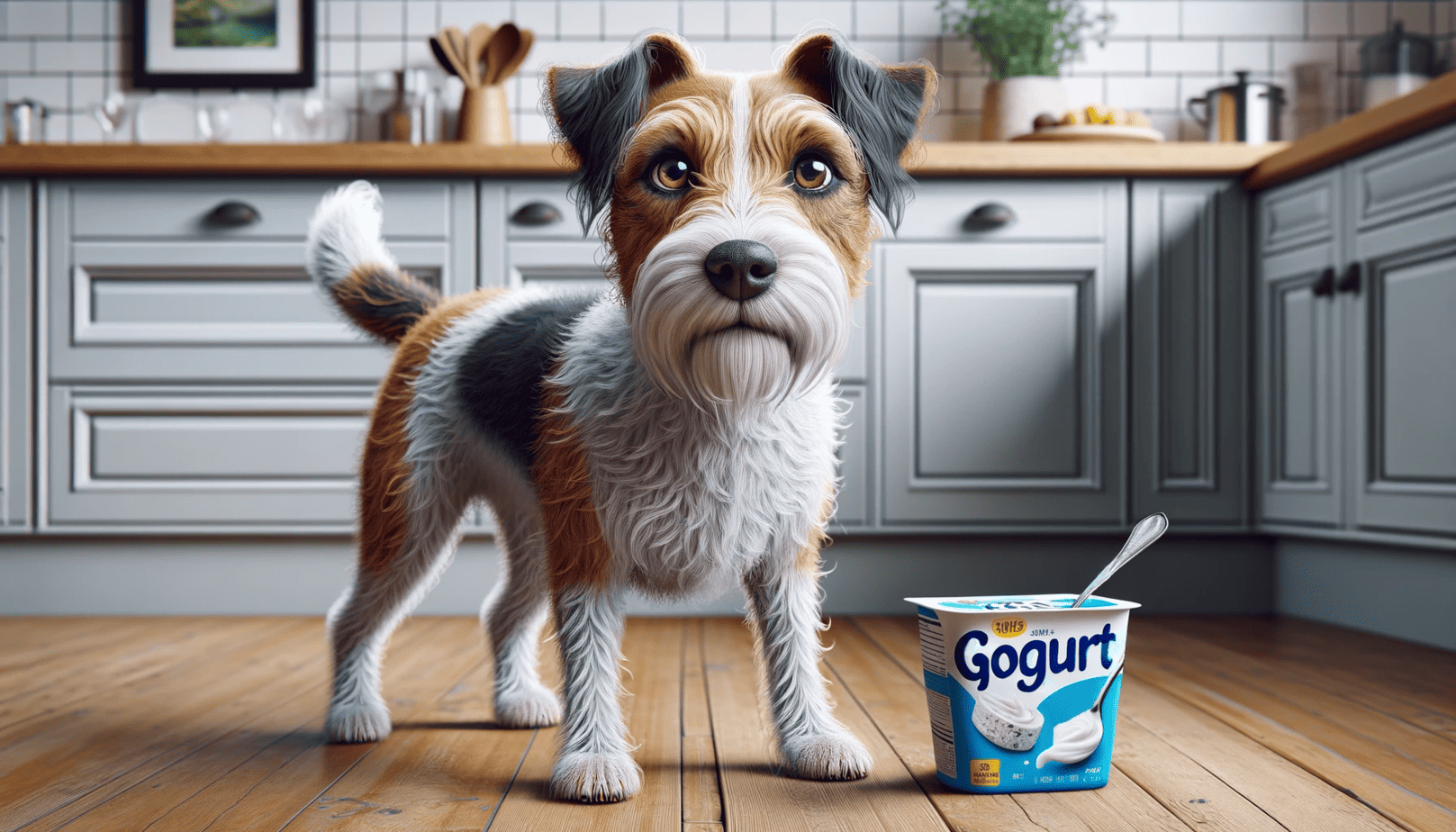
As pet owners, we all want to provide our furry friends with tasty treats every now and then. While there are plenty of human foods that are safe for dogs to consume in moderation, there are also many that can be harmful or even toxic. This leads us to the question: can dogs eat GoGurt?
GoGurt is a popular brand of yogurt marketed towards kids, with its distinctive tube-shaped packaging and fruity flavors. Many of us have enjoyed it as a snack or lunchtime addition, but is it safe for our four-legged companions to indulge in as well? In this blog post, we’ll dive into the nutritional content of GoGurt, as well as any potential risks or benefits associated with letting your dog partake. Whether you’re a concerned pet owner or just curious about what your dog can and can’t eat, read on to learn more!
What is Gogurt:
If you’re not familiar with GoGurt, it’s a brand of yogurt that’s designed with kids and teens in mind. The product is made by Yoplait and comes in small, plastic tubes that are easy to consume on-the-go. Flavors include strawberry, blueberry, cherry, peach, and more.
Parents appreciate GoGurt as a snack option for their children, as the tubes are portable and can be eaten without utensils. Plus, the product is marketed as a good source of calcium and vitamin D, two important nutrients for kids’ development.
Now, as for whether or not dogs can eat GoGurt, that’s a different story. Like with any human food, it’s important to consider the nutritional content and potential risks before giving it to your pet.
Can Dogs Eat Gogurt:
When it comes to whether dogs can eat GoGurt, the answer is not a straightforward one. While yogurt itself can be a healthy treat for dogs, the flavored and sweetened varieties of GoGurt can contain ingredients that are not safe for dogs to consume.
One of the main concerns with giving dogs flavored GoGurt is the sugar content. Dogs have a different digestive system than humans, and consuming too much sugar can lead to gastrointestinal upset, obesity, and even diabetes. Additionally, some flavors of GoGurt may contain artificial sweeteners like xylitol, which is extremely toxic to dogs and can cause seizures, liver failure, and even death.
If you do want to give your dog yogurt as a treat, it’s best to choose plain, unsweetened yogurt and limit the amount you give them. Yogurt can be a good source of probiotics and calcium for dogs, but it should not make up a significant portion of their diet.
Harmful Ingredients in Gogurt:
Of course! Here’s a more human-like version of the information on harmful ingredients in GoGurt:
Although GoGurt is marketed towards kids and teenagers, it’s important to remember that some of the ingredients in the product can be harmful to dogs. For example, flavored GoGurt can contain high levels of sugar, which can lead to digestive issues, obesity, and even diabetes in dogs.
Furthermore, certain flavors of GoGurt may contain artificial sweeteners like xylitol, which can be extremely toxic to dogs and cause serious health problems such as seizures and liver failure. Some types of GoGurt may also contain food coloring and preservatives that can trigger allergic reactions or upset the digestive system of some dogs.
If you do decide to give your dog yogurt as a treat, it’s best to choose plain, unsweetened varieties and to limit the amount you give them. This helps to avoid any potentially harmful ingredients that may be present in flavored GoGurt.
Safe Ingredients in Gogurt:
There are also some ingredients in the product that are safe for dogs to eat. Here are some examples of safe ingredients that can be found in GoGurt:
Plain yogurt: If you opt for plain, unsweetened GoGurt, the yogurt itself can be a safe and healthy treat for your dog. Yogurt contains probiotics, which can aid in digestion, as well as calcium, which can promote strong bones.
Natural flavors: Some flavors of GoGurt are made with natural flavorings that are derived from plant sources. These can be safe for dogs to consume, as long as they do not contain any added sugars or artificial sweeteners.
Fruit purees: GoGurt can contain pureed fruit as a flavoring ingredient. While dogs should not consume too much fruit due to the high sugar content, small amounts of pureed fruit can be safe for dogs to eat in moderation.
If you want to give your dog GoGurt as a treat, it’s best to choose plain, unsweetened varieties or those that are flavored with natural ingredients.
What Signs To Watch For If Your Dog Accidentally Ate A Lot of Gogurt?
If your dog accidentally eats a lot of GoGurt or any other food that may be harmful to them, there are several signs you should watch for. Here are some symptoms that may indicate your dog is experiencing a negative reaction to the food:
Vomiting: If your dog ingests a large amount of GoGurt, they may begin to vomit as their body attempts to rid itself of the excess sugar or other harmful ingredients.
Diarrhea: Similar to vomiting, diarrhea can be a sign that your dog’s digestive system is having trouble processing the ingredients in GoGurt.
Lethargy: Dogs who consume too much sugar or other harmful ingredients may become lethargic and tired, as their body works to process the excess substances.
Increased thirst or urination: If your dog ingests a lot of sugar or artificial sweeteners like xylitol, they may become excessively thirsty and urinate more frequently than usual.
Seizures: If your dog consumes a large amount of xylitol, it can lead to seizures, which are a serious medical emergency.
If you notice any of these symptoms in your dog after they have consumed GoGurt, it’s important to contact your veterinarian right away. In severe cases, your dog may require immediate medical attention to prevent serious health complications.
When or If You Should Go To The Vet?
If you suspect that your dog has eaten a lot of GoGurt or any other food that may be harmful to them, it’s important to pay close attention to their behavior and look out for any signs of negative reactions. If you notice symptoms like vomiting, diarrhea, lethargy, increased thirst or urination, or seizures, it’s best to contact your veterinarian as soon as possible.
While some mild symptoms may resolve on their own, it’s always better to err on the side of caution and seek veterinary attention if you are concerned. Your veterinarian can advise you on the best course of action based on your dog’s specific symptoms and medical history.
Remember that some symptoms may not appear right away, and your dog may not show signs of distress until several hours after ingesting the food. If you are ever unsure whether or not your dog requires medical attention, it’s always best to consult with your veterinarian. They can provide you with the guidance you need to ensure the health and safety of your furry friend.
Safe Dog-Friendly Alternative to Gogurt:
If you’re looking for a safe and dog-friendly alternative to GoGurt, there are several options to consider. Here are a few ideas:
Plain yogurt: Plain, unsweetened yogurt is a great alternative to GoGurt for dogs. It contains probiotics that can aid in digestion and calcium to promote strong bones.
Frozen yogurt treats: You can make your own frozen yogurt treats for your dog by blending plain yogurt with fresh fruit like strawberries or blueberries. Pour the mixture into a silicone mold or ice cube tray and freeze until solid.
Pumpkin puree: Pumpkin puree is a nutritious and tasty treat for dogs. It’s high in fiber and can aid in digestion. Mix a spoonful of pumpkin puree with some plain yogurt for a healthy snack.
Peanut butter: Most dogs love peanut butter, and it’s a safe and tasty treat in moderation. Look for all-natural peanut butter without added sugar or xylitol.
Fresh fruit: Small amounts of fresh fruit like blueberries, strawberries, and apples can be a healthy treat for dogs. Just be sure to remove any seeds or pits and cut the fruit into small pieces.
Remember to always introduce new foods to your dog’s diet gradually and in moderation. Consult with your veterinarian before introducing any new treats, especially if your dog has any underlying health conditions.
In conclusion, while GoGurt may be a convenient and tasty snack for humans, it’s important to consider the potential risks before giving it to your furry friend. Flavored and sweetened varieties of GoGurt can contain ingredients that are harmful or even toxic to dogs, including sugar, artificial sweeteners, and food coloring.
However, there are safe and dog-friendly alternatives to GoGurt that can provide your pet with a nutritious and delicious treat. Plain yogurt, frozen yogurt treats, pumpkin puree, peanut butter, and fresh fruit are all excellent options that your dog is sure to enjoy.
Remember to always consult with your veterinarian before introducing any new foods into your dog’s diet, and to monitor your pet closely for any signs of negative reactions after consuming a new treat. By taking these steps, you can help to ensure the health and happiness of your furry friend for years to come.
~Lindsie
A note about your dog’s health
This article provides general education and does not replace an examination, diagnosis, or individualized advice from your veterinarian. Contact a veterinary professional if you are concerned about your dog’s symptoms.
Lindsie Parks is the founder of Healthy Happy Dogs and holds a bachelor’s degree in biology. She brings more than 19 years of experience across veterinary medicine, animal welfare, practice leadership, nutrition, cold laser therapy, rescue work, and emergency animal response. Her goal is to give pet parents clear information, practical options, and greater confidence in the decisions they make for their animals.
As pet owners, we all want to provide the best nutrition for our furry companions. And with the popularity of human foods that are not traditionally fed to dogs, such as avocados, blueberries, and even pumpkin spice, it’s natural to wonder: can my dog eat ube?
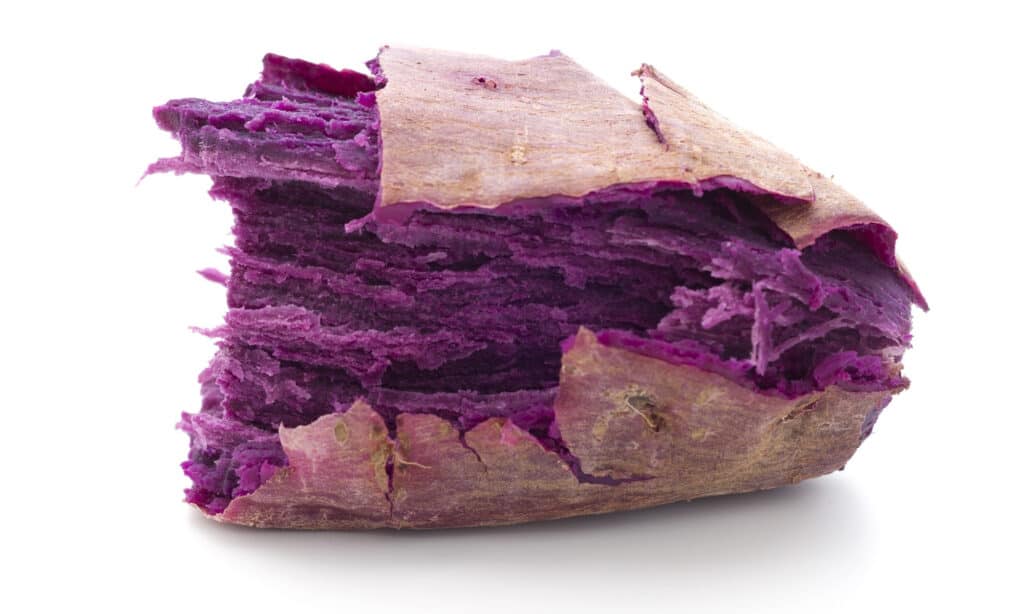
Ube, also known as purple yam, is a root vegetable that’s native to the Philippines and commonly used in Southeast Asian cuisine. It’s a versatile ingredient that can be boiled, mashed, baked, or fried, and is often used in desserts like ice cream, cakes, and pastries. Ube is also a good source of fiber, vitamin C, and potassium, among other nutrients.
But is it safe for dogs to consume? Can they reap the same health benefits as humans, or are there potential risks involved? In this blog post, we’ll explore the question of whether dogs can eat ube, and what pet owners should consider before sharing this colorful tuber with their four-legged friends.
What is Ube:
Ube, also known as purple yam, is a root vegetable that’s commonly used in Southeast Asian cuisine. It has a distinct deep purple color and a mildly sweet taste that makes it popular for use in desserts like ice cream, cakes, and pastries. Ube is native to the Philippines but is also grown in other parts of Asia, as well as some tropical regions in South America and Africa. The vegetable is high in fiber and contains vitamins C and B6, potassium, and manganese. Due to its vibrant color and unique flavor, ube has gained popularity in Western countries in recent years and is now available in many specialty stores and restaurants.
Can Dogs Eat Ube:
While ube is generally considered safe for dogs to eat, it’s important to remember that dogs have different nutritional needs than humans. While humans can benefit from the fiber, vitamins, and minerals found in ube, dogs require a different balance of nutrients in their diet.
Additionally, some dogs may be sensitive to new foods, and introducing a new food like ube too quickly can cause digestive upset, such as vomiting or diarrhea. It’s always a good idea to introduce new foods to your dog’s diet gradually, starting with small amounts and watching for any adverse reactions.
Finally, some forms of ube-based desserts, such as cakes or ice cream, may contain ingredients that are harmful to dogs, such as chocolate, sugar, or artificial sweeteners. These can cause serious health problems like vomiting, diarrhea, seizures, or even death in extreme cases.
In summary, while dogs can technically eat ube in moderation, it’s important to consider their individual nutritional needs and to introduce new foods slowly and with caution. If you’re unsure about whether a particular food is safe for your dog, it’s always best to consult with a veterinarian first.
Harmful Ingredients in Ube:
While ube itself is generally considered safe for dogs to eat in moderation, some ube-based desserts may contain ingredients that are harmful to dogs.
One of the most common harmful ingredients found in desserts is chocolate, which can cause vomiting, diarrhea, and even seizures or death in dogs. Chocolate contains theobromine, a compound that dogs metabolize much more slowly than humans, leading to a buildup of toxins in their system.
Other potentially harmful ingredients in ube-based desserts include sugar and artificial sweeteners. While small amounts of natural sugars are typically safe for dogs, consuming large amounts can cause upset stomach, obesity, and dental problems. Artificial sweeteners like xylitol, commonly used in sugar-free desserts, are especially dangerous for dogs, as they can cause a rapid insulin release and a drop in blood sugar levels, leading to seizures, liver failure, or even death.
In general, it’s best to avoid giving your dog any desserts or human foods that contain chocolate, sugar, or artificial sweeteners. If you want to share ube with your dog, it’s best to prepare it plain, boiled, and mashed, without any added sugar or ingredients.
Safe Ingredients in Ube:
When it comes to incorporating ube into your dog’s diet, it’s best to stick to simple, plain preparations without added sugar or artificial sweeteners. Some safe ingredients that can be added to ube to make it more appealing and nutritious for dogs include:
Plain, cooked chicken or turkey: Adding a small amount of cooked, shredded chicken or turkey to boiled, mashed ube can make it more palatable for dogs and provide a source of lean protein.
Carrots or green beans: These vegetables are low in calories and high in fiber, vitamins, and minerals, making them a healthy addition to ube-based meals. Just be sure to cook them thoroughly and chop them into small pieces to prevent choking.
Plain, low-fat yogurt: A small amount of plain, low-fat yogurt can add a creamy texture and probiotics to ube-based meals, which can aid in digestion and promote healthy gut bacteria.
Coconut oil: Adding a small amount of coconut oil to ube can provide healthy fats and improve the texture of the food. Just be sure to use plain, unflavored coconut oil, and start with a small amount to avoid digestive upset.
Overall, it’s important to remember that dogs have different nutritional needs than humans, and should be fed a balanced diet that meets their specific requirements. While ube can be a nutritious and tasty addition to your dog’s diet in moderation, it’s important to avoid adding any harmful ingredients and to consult with a veterinarian if you have any concerns or questions.
What Signs To Watch For If Your Dog Accidentally Ate A Lot of Ube?
While small amounts of ube are generally considered safe for dogs to eat, consuming a large amount can lead to digestive upset and other health problems. Here are some signs to watch for if your dog eats too much ube:
Vomiting or diarrhea: This is the most common sign of digestive upset in dogs and can occur shortly after consuming a large amount of ube.
Lethargy or weakness: If your dog seems unusually tired or has trouble standing or walking, this could be a sign of an underlying health problem.
Loss of appetite: If your dog refuses to eat or seems disinterested in food, this could be a sign of nausea or discomfort.
Increased thirst or urination: Eating a lot of ube can cause dehydration and increased urination, which can lead to further health problems if left untreated.
Abdominal pain or discomfort: If your dog is pacing, whining, or seems to be in pain, this could be a sign of abdominal discomfort.
If you notice any of these signs in your dog after they have eaten a lot of ube, it’s important to contact your veterinarian right away.
When or If You Should Go To The Vet?
If your dog has consumed a small amount of ube and shows no signs of digestive upset, there’s usually no need to take them to the vet. However, if your dog has eaten a large amount of ube or shows any signs of illness or discomfort, it’s important to contact your veterinarian right away.
Some signs that your dog may need veterinary attention after eating ube include:
Vomiting or diarrhea that persists for more than 24 hours
Signs of dehydration, such as dry gums, sunken eyes, or lethargy
Abdominal pain or discomfort that persists for more than a few hours
Loss of appetite or refusal to drink water
Blood in vomit or diarrhea
Lethargy or weakness that persists for more than a day
Seizures, collapse, or difficulty breathing
If you’re unsure whether your dog needs veterinary attention after eating ube, it’s always best to err on the side of caution and contact your vet. Vets can evaluate your dog and advise treatment over the phone or in person, which may involve medication, exams, or at-home care.
Remember, early intervention is key when it comes to treating any health problem in dogs, so don’t hesitate to reach out to your veterinarian if you have any concerns about your dog’s health after eating ube.
Safe Dog-Friendly Alternative to Ube:
Certainly! Here are some safe and dog-friendly alternatives to ube that you can incorporate into your dog’s diet:
Sweet potatoes: Sweet potatoes, like ube, are low-fat root vegetables that are rich in fiber, vitamins, and minerals. You can boil or bake them, and then mash them up and add them to your dog’s regular meals.
Pumpkin: Another nutritious root vegetable, pumpkin is high in fiber and is a great source of vitamins A and C. Cook fresh pumpkin or plain canned pumpkin puree and add it to your dog’s food for a nutritious alternative to ube.
Carrots: Carrots are a crunchy and nutritious vegetable that’s low in calories and high in fiber, vitamins, and minerals. Raw or cooked, grated or chopped, carrots make a healthy treat for dogs.”
Green beans: Green beans are a great source of fiber and vitamins, and are low in calories. They can be given cooked or raw, and can be a great snack or addition to your dog’s regular meals.
Apples: Apples are a tasty and healthy fruit that’s high in fiber and vitamins. Remove apple seeds and core, chop into small pieces before giving as a treat or adding to dog’s food.
These are just a few examples of safe and dog-friendly alternatives to ube. Remember to always introduce new foods gradually, and to monitor your dog for any signs of digestive upset or food allergies. If you’re unsure whether a particular food is safe for your dog, it’s always best to consult with a veterinarian first.
In conclusion, while ube can be a nutritious and flavorful addition to your own diet, it’s important to consider your dog’s individual nutritional needs and any potential health risks before sharing this food with them. Safe for dogs to eat plain, cooked ube in small amounts, but avoid harmful ingredients like chocolate, sugar, and sweeteners.
If you do decide to share ube with your dog, it’s best to stick to simple preparations without added sugar or ingredients, and to introduce new foods gradually and in moderation.If your dog feels sick after eating ube, contact your vet for advice.
Remember, while it can be tempting to share our favorite foods with our furry friends, their nutritional needs and digestive systems are different from ours. Mindful feeding helps ensure your dog’s long-term health and well-being.
~LIndsei
A note about your dog’s health
This article provides general education and does not replace an examination, diagnosis, or individualized advice from your veterinarian. Contact a veterinary professional if you are concerned about your dog’s symptoms.
Lindsie Parks is the founder of Healthy Happy Dogs and holds a bachelor’s degree in biology. She brings more than 19 years of experience across veterinary medicine, animal welfare, practice leadership, nutrition, cold laser therapy, rescue work, and emergency animal response. Her goal is to give pet parents clear information, practical options, and greater confidence in the decisions they make for their animals.
As a holistic veterinarian specializing in natural nutrition and holistic healing, I am passionate about helping dogs live the healthiest and happiest lives. Today I want to talk to you about a simple and effective way to evaluate your furry friend’s eye health: the fluorescein stain test. This test is commonly used in the diagnosis of most eye conditions including pannus and dry eye.
Your dog’s eyes are very important, and we want to protect your dog’s lifelong vision. Eye testing is essential to make sure they’re comfortable and have good vision. And when it comes to ocular health, fluorescein stain testing is one of the most useful tools we have.
What is Fluorescein staining in dogs?
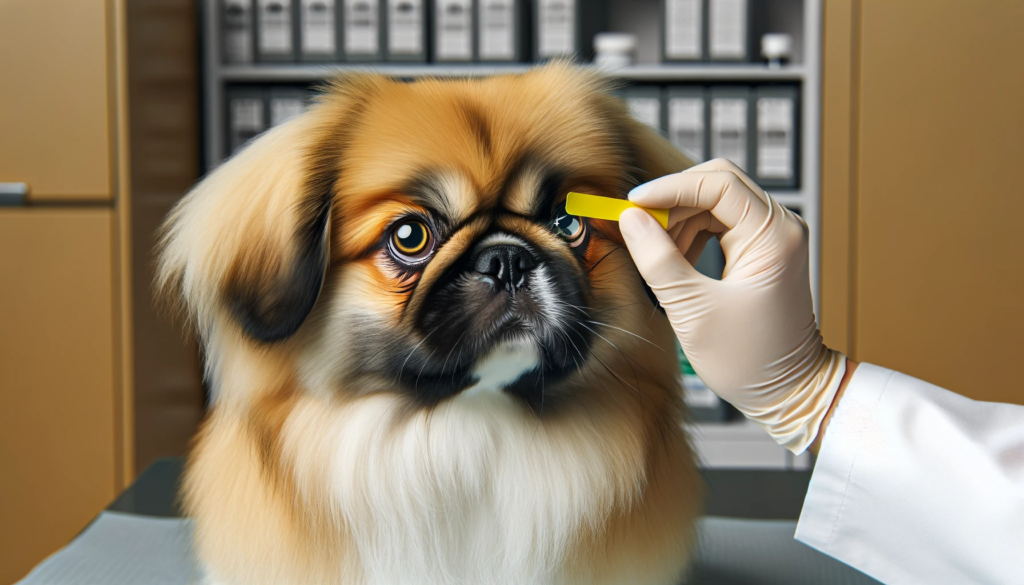
Fluorescein stain testing is a diagnostic test that uses a special dye to see if there are any problems with the cornea. If there are, the dye will be bright green under a blue light, which can help the doctor diagnose the problem.
How is Fluorescein Staining Performed?
The test is safe for dogs and takes only a few minutes to perform. By examining the cornea under the blue light, we can detect any areas where the dye has stuck, indicating the presence of a corneal ulcer or abrasion. These can cause symptoms such as redness, discharge, and squinting, but they may not always be visible to the naked eye. That’s why fluorescein stain testing is such a valuable tool for assessing eye health.
Why Are Fluorescein Eye Stain Tests Done For Dogs?
When is fluorescein stain testing needed for a dog? If your dog is experiencing any of the symptoms mentioned above, it is a good idea to bring them in for an eye exam. Even if their eyes seem perfectly healthy, regular eye exams are important to catch any problems early on.
Fluorescein dye procedures also help the veterinarian prescribe the correct medication for your dog’s eye issue. If the wrong eye drop is used, it could make the condition worse.
What Happens if The Fluorescein Test is Positive?
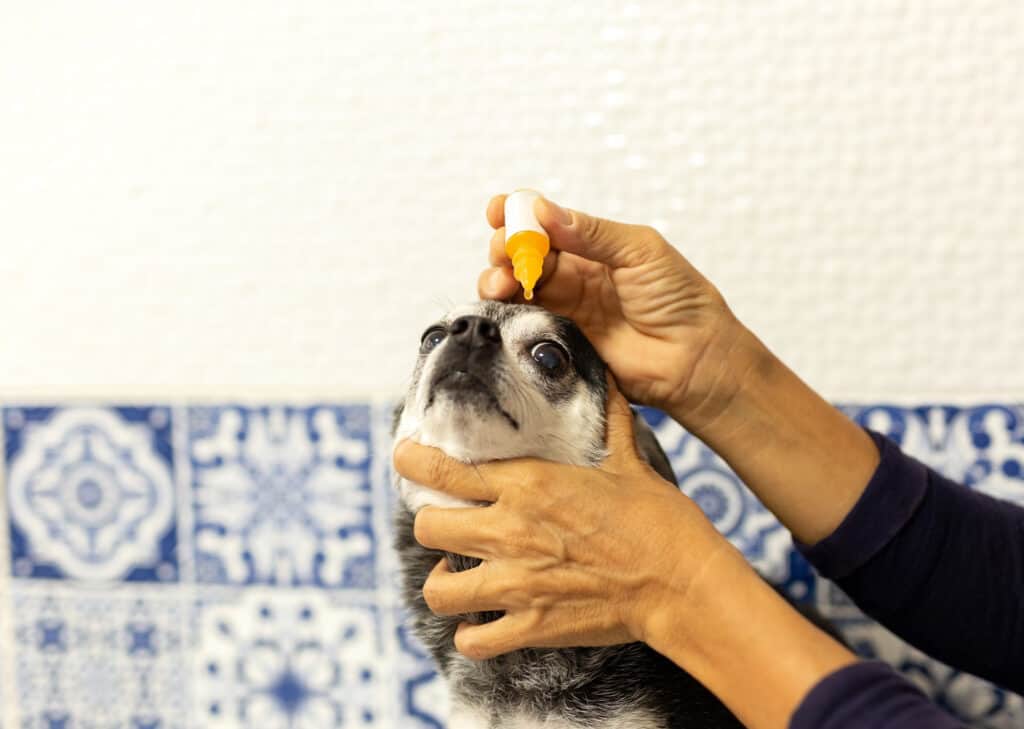
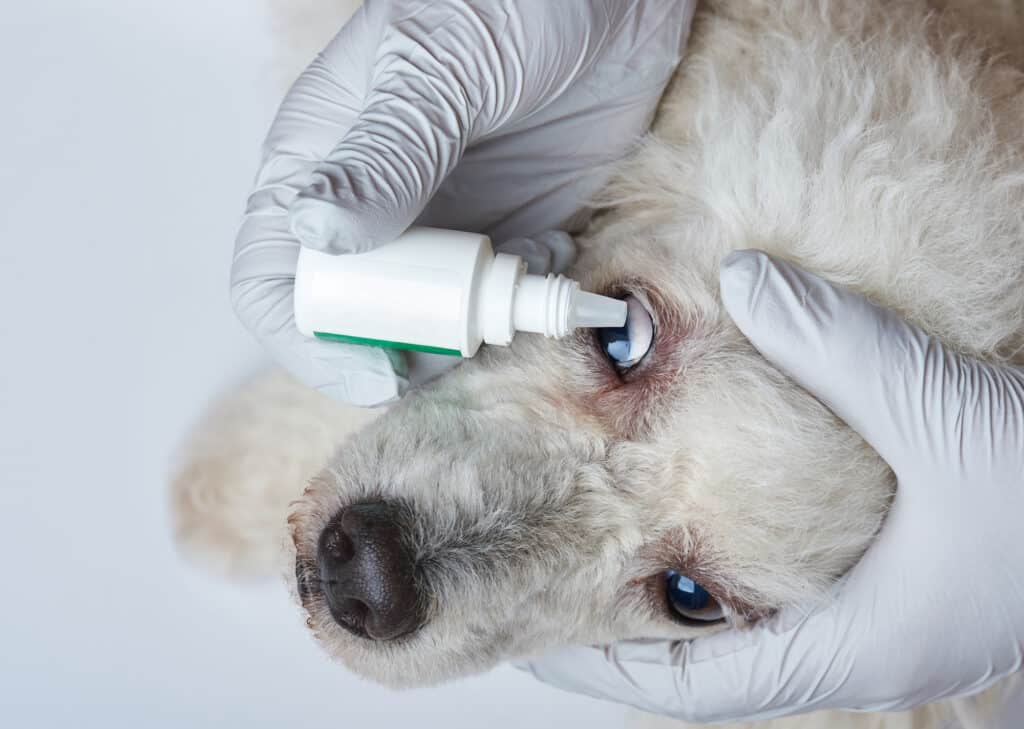
If a corneal ulcer or abrasion is detected with fluorescein stain testing, don’t be alarmed. There are a variety of treatments available, such as eye drops, ointments, and more depending on the severity of your dog’s injury. Your local vet will work with you to create a treatment plan that is tailored to your dog’s individual needs.
“I always remind my clients that ocular issues develop very quickly, but when treated correctly…they also heal very quickly. It’s common for eye issues to pop up “overnight”. Follow the medical instructions from your vet as closely as possible. If this means applying eye drops three times a day, or at night- do it. We want to correct your dog’s eye disorder as quickly as possible to avoid scar tissue and loss of vision.”
Dr. Candy
Dog Eye Stain Test Cost
A basic dog fluorescein eye stain test costs around $30 – 50 in general veterinary practice. Online stain tests may be unreliable due to unknown production and storage methods, so I’m cautious about recommending them. And since we are dealing with your dog’s vision- we want to be as clean and sterile as possible.
Home Care After Testing
There are some other things you can do at home to help keep their eyes healthy. Cleaning their eyes regularly and removing any irritants can help keep them from developing future eye problems. This includes the actual drops and ointments that the vet recommends. If you accidentally apply a large amount simply clean up the excess residue. Leaving this or letting it build up can damage your dog’s eye lids, skin or hair.
At the end of the day, its easy to address your dog’s eye conditions and we are here to help keep your furry friend healthy and happy. Reach out to your local vet if you have any questions or concerns about your dog’s eye health. They will be able to steer you in the right direction. If you and your pet are facing a chronic eye issue and want some help with a holistic approach, grab a holistic online consult with me.
A note about your dog’s health
This article provides general education and does not replace an examination, diagnosis, or individualized advice from your veterinarian. Contact a veterinary professional if you are concerned about your dog’s symptoms.
Dr. Candy Akers earned her Doctor of Veterinary Medicine degree from Oklahoma State University in 2009 after completing undergraduate studies at the University of Delaware. Her experience includes companion-animal nutrition, chronic disease, allergies, autoimmune conditions, cold laser therapy, wildlife rehabilitation, and emergency wildlife response. She combines conventional veterinary knowledge with a whole-animal perspective to help pet parents understand their options and recognize when individualized veterinary care is needed.
*This page may include affiliate links, which means that if you make a purchase through one of the product links, we may receive a small commission. For full affiliate disclosure please see our disclaimer page.
Every year I get a lot of questions from families that want to know when they can start running with their puppy. This is a great question and I think that it shows that they are tuned into the health of their new pup. Unfortunately, there are a lot of mixed messages out there. Some vets say 6 months, some say 1 year. Other vets say you can start running or jogging with a puppy as soon as you bring them home and on the flip side, some vets say don’t EVER run with a dog.
In my experience as a holistic veterinarian, I know there are a lot of different factors that should be considered when answering this important question. This article, will go over approximate ages to start running based on different factors of dog size, breed, genetics, health status, spay and neuter timing, and weather. We will cover 3 tips for introducing your puppy to running smoothly and I’ll also teach you what to look for if your pooch is pushing it too far.
Also, I’ll go over paw care and tell you the two supplements that I put all large and giant breed puppies on to prevent joint damage or serious injury to tendons and ligaments. Furthermore, I will also highlight a few pieces of gear that can make running with your dog even more enjoyable for both of you.
Can You Start Running With Your Puppy?
When you are deciding when to start jogging or running with your puppy there are a lot of factors to consider. Every pet is an individual and I think that’s why differing veterinarians have such a wide range of answers. You know your pet the best, so the decision is up to you and your pup. To focus on our target beginning age you should consider the size that your dog will be as an adult, your dog’s breed and, the timing of their spay and neuter surgery. Other considerations include your dog’s health status, genetic lines, and environmental factors like weather and elevation.
How Big Should My Puppy Be When We Start Running?
When you are deciding when to start running with your dog, knowing their estimated adult size is very important. Since large and giant breed dogs mature more slowly we will want them to be close to full grown. Most large breed dogs will take approximately 18 months to grow to maturity. Giant breeds will take around 2 years. Since these large dogs are already at higher risk for arthritis and joint diseases, we want to make sure all of those growth plates are big and strong.
Additionally, large breed dogs also experience very fast growth during some developmental stages. Sometimes this can lead to a puppy that puts on a lot of weight before its joints are ready to handle it. It always looks so goofy to me to watch a big puppy take a clumsy gallop across the lawn as they learn how to coordinate their growing body. If you keep the puppies lean and delay running activities until they’re around 18 months old, these situations usually have a much better outcome.
What Breeds Can I Run With?
Not all breeds are considered equal when it comes to strenuous exercise like jogging or running. Some breeds have smushed in noses, also called brachycephalic dogs. These pups frequently have narrow airways, small nostrils, and other changes to oral anatomy. Although these special breeds are cute, it does warrant additional consideration when deciding when to start running with your puppy.
Some Breeds That I Do NOT Recommend Running With Include:
Pugs
French Bulldog
Shih Tzu
Lhasa Apso
Pekingese
Boston Terrier
Brussels Griffon
English Bulldog
King Charles Cavalier Spaniel
Breeds That Could Be A Great Running Mate Include:
Vizsla
German Shepherd
Dalmatian
Labrador Retrievers
Golden Retriever
German Shorthaired Pointer
Ridgebacks
Belgian Malinois
Cattle Dogs
Staffordshire Terrier
And the athletic favorite – Greyhounds
Check the chart below for a quick glance of average time to start running based on dog size and breed.
Size
Breed Examples
6 months
12 months
18 months
24 months
Toy/Miniature
Chihuahua Maltese Toy Poodle Yorkshire Terrier Pomeranian
Not Recommended For Running
Not Recommended For Running
Not Recommended For Running
Not Recommended For Running
Small
Corgi Jack Russel Terrier Beagle Basenji Rat Terrier Shiba Inu
Bull Terrier Cattle Dog Wheaton Terrier Australian Shepherd* Staffordshire Terrier* Border Collie
12 months
Large
Golden Retriever Pointer German Shepherd Standard Poodles Huskies* Labrador Retriever Weimaraner Greyhound
18 months
Giant
Great Dane Mastiff* Newfoundland* Great Pyrenees* Cane Corso* Irish Wolfhound
24 months
* – This symbol represents breeds that do not do well in warm or hot weather and additional precautions should be taken
The Importance of Spay and Neuter Timing
The age at which a dog is spayed or neutered and its resulting health has been explored a lot in the past 10 years. Most veterinarians are recognizing that early spay and neuter can sometimes make certain dogs more prone to injuries like ligament tears and hip dysplasia. Data also suggests a higher than normal chance of cancer, especially bone cancer, in large-breed dogs that are spayed or neutered early. Additionally, evidence points toward a higher risk of hormone imbalances like thyroid or adrenal disorders.
What Happens When My Dog Is Neutered Too Early?
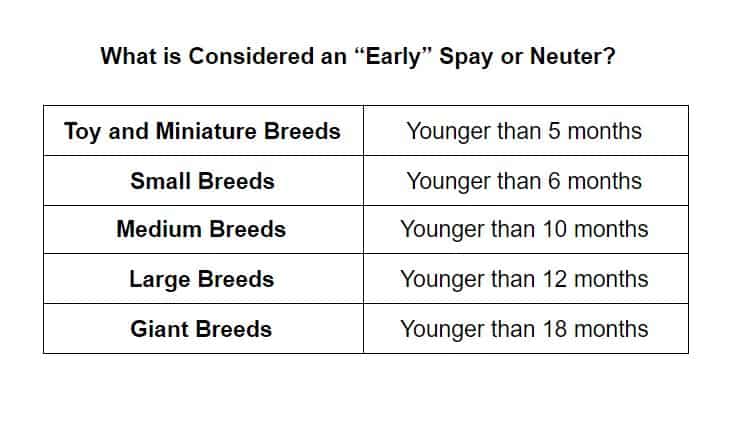
But, what is considered “early”? Early spay or neuter timeline is based on the approximate age of sexual maturity in that specific dog breed and it also aligns with the adult size of the dog. Complete maturity in large breed dogs like Labs occurs between 12 and 18 months. Full adult maturity in giant breed dogs usually occurs between 18 and 24 months of age. Keeping your dog intact till they are mature allows them to properly grow bones, joints, a strong immune system, and balanced hormone pathways.
Dogs that are neutered early are not automatically given a poor health prognosis. I also wouldn’t advise that you NOT run with your dog if they were spayed or neutered early. Many rescue and shelter dogs have their neuter surgery before they are adopted. Most of these dogs under 50 pounds experience vibrant health. Larger dogs who are spayed before 1 year old have differences in body growth and shape when compared to the same pup that is not spayed till after full maturity.
Consequences of Early Spay / Neuter
The removal of hormonal glands such as the ovaries, uterus, and testicles causes bone growth plates to close. Hence, joint surfaces stop growing in these early spay dogs, but long bones continue to grow. This results in a taller, longer, more lanky body shape which changes the angle and direction of weight bearing. Growth changes that disrupt normal joint health can lead to knee injuries like medial cruciate ligament tears ( MCL ) or anterior cruciate ligament ( ACL ) ruptures. Other musculoskeletal injuries linked to early spay and neuter include luxating patella’s, back injuries, elbow arthritis, and hip dysplasia.
If you find that your dog might be included in this early spay and neuter category, don’t panic. Just get them onto the recommended joint supplements below, wait an additional 3-6 months and take it slow when introducing jogging and running. The gradual strengthening of the body muscles and a holistic nutritional approach to ligament strength is your best bet for keeping your pup running by your side for many happy years.
Health Status of Your Running Partner
When evaluating the health status of your dog, we just want to think about a few factors. Serious illness in puppies can stunt their growth and strain their immune system. These dogs may need a few extra months to grow before you start running with them. Additionally, a puppy that is “the runt” may be linked to malnutrition or social stress. I usually see that these dogs flourish and catch up in growth within a few months of going to their new home. Also, I recommend waiting an additional 3 to 6 months to give their body the chance to grow and get strong.
Other illnesses like parvovirus, worms, or pneumonia should also be monitored closely when deciding when to start running with your puppy. Metabolic imbalances like diabetes or trauma from a fall should always be discussed with your veterinarian prior to starting running or jogging.
Does Genetics Matter When Finding a Puppy to Run With?
Over the years I have noticed a big difference in the role that genetics plays when it comes to musculoskeletal health and exercise. This is one reason why researching for a responsible breeder is so important. Poorly bred dogs can have joint abnormalities from as young as 8 weeks of age. Nutrition also plays a role in body development. If a pup cannot get enough of the right vitamins or minerals, then deficiencies can build up.
If you are looking to get a dog from a breeder, make sure that their dogs have all been checked and tested for all of the appropriate diseases and disorders. For example, any person breeding Labrador Retrievers should have their breeding dog’s hips checked with an OFA certification. More information about these health tests can be found on websites like akc.org.
With rescue dogs we may have less data to go on when evaluating family health and genetics, but luckily myself and many other veterinarians find that many mixed breed dogs have a lower risk of genetic diseases.
Environmental Factors for Running With Your Puppy : Weather and Elevation
The last condition that is important to making the decision of when to start running with your puppy are your individual environmental conditions such as weather and elevation. At higher elevations, you should wait an extra 3-6 months before starting any jogging or running. Also, when you do start the training of your puppy at these higher elevations be sure to go nice and slow and overtime go further and further.
The consideration of weather in your environment is a common sense evaluation of temperature conditions and how this might affect your puppy. Extreme cold and significant heat can make it much more difficult to recover after a run. Dogs from cold weather climates like Huskies and Newfoundlands have thick coats and are very prone to overheating and this can lead to enormous bodily injury. So follow the basic suggestions of running in the morning or evening when temps are cooler if you live in a hot climate. Alternatively, if you live in a cooler region, run when it is a bit warmer, and be sure to let your puppy develop nearly full body mass and full fur coat before jogging together.
Make Running with Your Puppy a Positive Experience
Sometimes we focus so much on the physical aspect of running together that we forget to evaluate the mental and emotional reactions from our pets. Above all else, you need to make sure that running is a fun experience for your dog. She has to enjoy her exercise and her time with you. If it is a scary experience, or emotionally negative, your dog will not want to make this a regular practice. So make sure they are having fun every time, at the beginning you may want to give them treats, praise, pets, or toys to positively reinforce the running experience. A few positive experiences will make running fun for you both.
Start Slow When Introducing Your Puppy to Running
When you are introducing running to your puppy, short distance runs are extremely important. Your dog has to adjust physically and emotionally to this new activity and you both are getting to know one another in a new way. Start with very small distances, like maybe 100-200 yards. For smaller dogs, it might even be less than this to begin. Slow and steady is what the puppies say.
Build Up Gradually to Running with Your Puppy
Increases should be small steps so that your dog can recover in a healthy way after the run and a very gradual increase to build up stamina. It’s very common for puppies to want to run long distances, and some get so excited by this new hobby. So sometimes they do not want to stop. Other pups want to please you, and they will keep running until you tell them to stop. These people pleasers will push their little bodies too far. If overexerted, puppies can suffer some pretty serious health consequences.
Choose Comfortable Running Terrain
Just like when we “break-in” a new pair of shoes, it takes a little while for our bodies to adapt. The same thing happens when a new exercise is introduced to a human or a dog. Watch paws for scrapes, blisters, or burns. When starting, consider using a softer trail or park grass. Running on dirt and other natural surfaces is much easier on the puppy’s feet and joints. We will come back to discuss a few more tips on paw care later but now I want to go over things to look for as clues that your pup is not feeling well during or after runs.
Some of these are warning signs that your pet’s body is getting too stressed. Before stress becomes outwardly obvious, many animals ( including humans ) may show some warning signs that your puppy’s physical body is compensating and almost overwhelmed. The most commonly experienced symptoms in this warning phase are vomiting or diarrhea.
Signs that your dog cannot physically endure the demand for energy, oxygen, and proper circulation to all parts of his body. These include coughing, gagging, stopping, slowing way down, laying down, or turning pale or blue. If this happens then you want to stop immediately, sit down, take a break, and allow your puppy to rest. When available, she can have a small drink of water. I don’t recommend allowing your dog to drink a gigantic amount of water at this time. You still have to get home and they can have more water when you get home.
Other symptoms may be occurring if they are in physical pain. Look for changes in movement such as limping, skipping, falling, or hopping. If you continue to run with your puppy while she is injured, you could risk causing permanent damage such as scar tissue, stretched tendons, or damaged joints.
Even Some Hyper Dogs Don’t Do Well Running
“When I was 21, I lived in an apartment with my two dogs. Sully was a miniature Dachshund and Kasey was a pug and Jack Russel Terrier mix. Pugs can be pretty hyper and Jack Russel’s can also be super hyper. Looking for ways to burn off a little bit of that extra energy in Kasey, I decided to try running. So I started jogging with her she would often have one normal bowel movement, and then one that was soft or runny. She was experiencing diarrhea when everything else seemed so normal, so I wondered why. You name it, I did it: checked for parasites, looked at new foods, and carefully watched everything she ate. After some research, I figured out that those soft stool episodes were related to her getting overheated while we jogged. Due to this, I stopped running and everything went back to normal.”
Immediately After a Run
Check how long it takes for your puppy to return to a normal respiratory rate. This phase shouldn’t last more than 5-7 minutes. If your puppy is still panting 30 minutes later, then you overdid it. In this case, you would just give them a day or two to recover and then try again with a shorter distance.
Rest of the Day and Night After a Run
The rest of the day after the run- sleeping, long naps, drinking a bit of water, and slobbering that all over the water bowl is pretty normal. Stretching and sprawling out is also pretty normal. These good signs can show that your puppy is worn out, but feels good.
You do NOT want to see the following signs:
Vomiting
Diarrhea
Regurgitation
Poor Appetite
Hiding
Growling / Being Grumpy
Hesitation To Go Up Stairs
Crying / Whimpering
Next Day After a Run
At first, you will need to take a recovery day in between each run. You can start running every day after two weeks if your dog responds well. Watching through your recovery day to make sure that your puppy’s muscles heal and that her appetite and digestion are normal. Just like us, humans, keep your pup well hydrated, this will allow her muscles to heal and drain any lactic acid produced.
Light massage, specially formulated safe essential oils, as well as ice packs and heat pads, can sometimes be helpful. Watch for changes in gait, odd behaviors, or signs of pain. Never give your dog any human medications, they can be toxic. If you have concerns about your dog’s health or pain status go to your veterinarian and tell them what is happening. They can make sure everything looks good and that they are comfortable.
SIDE NOTE – If you do end up in a vet hospital anytime after a strenuous run, I recommend not allowing the vet to give any booster vaccines at this time. Instead, allow your pup to heal and then go back for the vaccine. When vaccines, especially multiple vaccines, are given while a pet is sick, healing, or injured, the vaccine can overstimulate their immune system and there is a risk for autoimmune disease or chronic illness.
Two Must-Have Supplements for Your Running Pup
My last few tips regarding running with puppies revolve around optimal nutrition and safety gear to consider. As I stated up above, I put all large breed puppies on two critically important supplements before they start running. Whole food based nutritional supplements will provide your puppy with all the nutrients and proteins she needs to heal and stay strong. I have found that adding these supplements can help puppies develop strong muscles, tendons, and ligaments. Additionally, these two supplements greatly reduce the risk of serious injury, like knee problems, as well as the risk of arthritis in the future.
Standard Process Canine Musculoskeletal Support
# 1 ) Standard Process Canine Musculoskeletal Support – It is packed with superfoods like liver, cartilage, and green-lipped mussels. These ingredients keep joints healthy and heal muscle tissue. Carefully selected herbs fight inflammation with natural antioxidants. 100% natural raw bone meal provides bioavailable forms of calcium and minerals that are necessary to keep bones strong during growth and exercise. You can learn more about Standard Process Canine Musculoskeletal Support and how it can help your pets HERE.
Standard Process Ligaplex II
# 2 ) Standard Process Ligaplex II– Ligaplex is also developed by Standard Process and comes in two forms. Ligaplex I and Ligaplex II. In young, healthy, or growing puppies, I use Ligaplex II to provide critical vitamins and minerals the way nature intended. These nutrients come from nature, so they are provided in the right forms. They are also available for absorption by your dog’s digestive system and they are presented in the correct ratios for maximum benefit. When real whole foods are used for healing, like in Ligaplex II, they also come with the necessary enzymes for absorption and utilization. If a nutrient is supplemented but the body cannot absorb it, then your dog does not get any of the benefits.
Another benefit of this supplement is the inclusion of vitamins as full complexes. For example, there are multiple forms of Vitamin C complex in nature and we know of at least 8 forms of vitamin B. Studies have shown that full complex vitamins provide improved healing properties. Synthetic pieces of vitamins can not even begin to compete with the benefits of natural vitamin complexes.
Important Paw Care & Gear for Running with Your Puppy
Should dogs have boots to run in?
Two other topics that commonly pop up when talking to clients about running with puppies are paw care and other gear. Do you wonder if your puppy will need boots or other footwear? For the most part, booties or shoes are not necessary nor enjoyed by your doggie partner. If you start slowly and only gradually increase the run times, your dog’s paws will adapt. Kinda like developing a protective callus or breaking in a new pair of shoes.
Does my dog need boots in the snow?
Are you and your puppy going to be running long distances in snow? Your dog may benefit from booties. Dogs sometimes need to wear snow boots to protect against paw surface ice balls, abrasions, and cuts from ice. Frozen terrain can be pretty rough. In fact, sled dogs competing in the legendary Iditarod are required to have booties. Sometimes hair in between paw pads can develop little ice balls that stay trapped between their toes. This could be uncomfortable and long-time exposures can lead to frostbite. So, if you are running for more than an hour in snowy conditions, snow boots are recommended. If it is just a jog around the block, your pup will be fine with a few small care tasks.
Your puppy’s paws will need to be checked before and after a run in the snow. Watch out for long hair between paw pads and keep it trimmed but not shaved. The right amount of foot hair will keep warm air against your dog’s toes. But long hairs can accumulate sticky snowballs. Keep toenails properly trimmed and check the surface of paw pads for dryness and cracks. Dry “chapped” cracks can be painful. Luckily there are a bunch of lotions and balms that are specifically designed for dogs.
Finding the correct fit can sometimes be difficult, so I recommend reading the product’s sizing chart carefully. Most dogs around my area do well with the Kurgo Blaze Boots.
Other Outdoor Gear
Should my dog have a coat during a run?
For most situations, puppies and dogs do not need coats. A few exceptions include extreme cold and extreme sun exposure ( for thin-coated or non-haired breeds ). Pups should be able to regulate their body heat through their skin and coat, so covering it up can quickly make your dog hot. Watching for shivering and starting with small walks is your best bet to keeping your dog comfy.
Does my puppy need a rain coat during a run?
Most medium and large breed dogs do not need a rain coat when walking or running outside. If conditions result in your pup being soaked, just make sure to dry them thoroughly when you get home. Some dogs love splashing around in the rain. And some breeds of dogs have thick glossy hair that can have a waterproof effect. In most situations, adding a rain coat will disrupt temperature regulation and make it harder to observe your pup.
Do Dogs Need a Snack During a Long Run or Hike?
The last question that I get about getting your dog to run and the items required is commonly about a snack or meal. If you were to ask your dog if he needs a snack…they would surely say YES. A handful of pet parents (myself included) feel like they have to pack a snack for every occasion. “Going to grooming? Here’s their snack and blankie”. However, most dogs do not need a jogging snack. We are talking about puppies here, so you should not be traveling great distances that might include a snack. Keep runs to an hour or less and remember to increase very slowly. Also, if your pup has a health condition like diabetes, then I do not recommend running with them. Healthy dogs should be well able to maintain a normal blood sugar level.
Do Dogs Need Water When Running?
Since most runs should be less than an hour, most puppies and dogs won’t really need a water break. But, I know when I hike, I do like to have a little bit of water with me. You can make the call to bring a water bottle or not. It might be easiest to just pour a little of your water in your hand for a quick hydration lap. They also make handy dandy collapsible bowls. Other ideas include water bottles that attach to running belts or doggie backpacks with storage. But still, young dogs should not be running that far that they would need a substantial water break.
Cool Gear to Elevate The Running Experience
Safety should be your first priority when teaching a dog to run. In most environments, they should always be secured with a leash and it’s commonly a law in public places. You’ll want to make sure your dog’s collar or harness is secure so that they cannot pull out of it. It’s all about safety and it’s all about fun.
Check out this article to learn more about the gear you will need to keep things running smoothly. We have reviewed and compared tons of great gear so you don’t have to.
Running with your puppy will take some patience but the benefits are worth it. Your personal health and happiness will skyrocket! You will meet a new best friend and you will be on your way to a very healthy and happy dog.
Check out our other articles for even more knowledge to keep your dog healthy and happy!
This article provides general education and does not replace an examination, diagnosis, or individualized advice from your veterinarian. Contact a veterinary professional if you are concerned about your dog’s symptoms.
Dr. Candy Akers earned her Doctor of Veterinary Medicine degree from Oklahoma State University in 2009 after completing undergraduate studies at the University of Delaware. Her experience includes companion-animal nutrition, chronic disease, allergies, autoimmune conditions, cold laser therapy, wildlife rehabilitation, and emergency wildlife response. She combines conventional veterinary knowledge with a whole-animal perspective to help pet parents understand their options and recognize when individualized veterinary care is needed.
*This page may include affiliate links, which means that if you make a purchase through one of the product links, we may receive a small commission. For full affiliate disclosure please see our disclaimer page.
Is rubber mulch safe for dogs? Before building a dog run or upgrading your landscaping you should know the answer. On the internet, there are a lot of conflicting answers. Some landscaping companies say it’s completely safe and non-toxic. I don’t fully agree and I want to share some information with concerned pet parents.
As a veterinarian, I have a unique perspective on this common question. In this article, you will get the facts and proof that this product is not as safe as manufacturers lead you to believe.
Is Rubber Mulch Safe For Dogs?
No, rubber mulch is not safe for dogs and is not a good substrate choice for dog runs. Most rubber mulch products are made out of recycled tires and can contain numerous toxic chemicals. I have also seen quite a few cases where a dog ate a piece or two and the outcome was extremely sad.
Will Dogs Eat Rubber Mulch?
It seems like dogs would not eat this product, and for the majority of pets, this is true. But some dogs will eat anything. Young dogs like to taste the environment, other pets are driven to eat odd materials due to nutrition deficiency. Stress and mental health also play a role in the unusual ingestion of items. Puppies are more likely to eat foreign objects. But I have seen many adult dogs experience a nutritional deficiency and start to eat weird stuff.
Most of these dogs are looking for calcium and other minerals. Injuries can change calcium requirements and food ingredients have variable absorption rates. Stress can impact nutritional needs as well. So, while 99% of dogs will not eat the rubber mulch, what if your dog is that 1%?
Heavy Metals in Rubber Mulch
Rubber mulch manufacturers like to state that their product is 99.9% free of metals. This is because in the process of making tires, metal wires are used in certain areas. When the tires are processed they try to remove all of the metal wires with magnets and filters. But it is not large pieces of metal that cause the danger, it is the addition of metals like lead into the actual rubber compound.
Studies of Rubber Mulch Products Have Found the Following Heavy Metals:
Copper
Iron
Magnesium
Aluminum
Cadmium
Chromium
Manganese
Molybdenum
Selenium
Sulfur
Zinc
Some products have held so much zinc that the landscaping plants they planted in those flower beds died of zinc toxicity. Other experiments in coral reef rebuilding resulted in changes in the survival of plants, snails, fish, and plankton. (1)
Does Rubber Mulch Cause Cancer?
This answer obviously depends on the chemicals used and the exposure to your pet. But workers who have jobs in manufacturing or processing various rubbers have been found to have statistical connections to cancer.
The two most common cancers around these products around the world include leukemia and bladder cancer in humans. Studies using mice and rats showed multi-organ cancers along with lymphoma and hemangiosarcomas. (2) (3)
While every exposure is different, that’s still enough uncertainty of cancer risk for me to not lay this under my dog’s feet.
SIDE NOTE → Similar questions about cancer and rubber exposure have been raised in regards to children’s playgrounds and sports fields. These same recycled rubber products are used to provide a safe cushioned texture if children fall on the playground. But moms were worried about residues and started looking at reports. Athletic coaches became uncertain when multiple young healthy athletes were being diagnosed with non-Hodgkin lymphoma. And also that the majority of the cases were occurring in goalkeepers. Goalkeepers spend more time in contact with the turf, diving, and sliding.(4)(5)
Disruption of Soil Microbes By Rubber Mulch
Some rubber mulch companies state that their product is superior in preventing weeds than other types of mulch. They state ( syn ) that you won’t need any weed blocking landscaping fabric. That seemed odd to me at first, but then I read about the various chemicals that leach into the ground. These chemicals have a wide variety of possible effects, but almost all of them result in changes to the natural microbiome ecosystem. Many types of beneficial bacteria and bugs are killed off.
Rubber Mulch Contains Phthalates
This family of chemicals is becoming well known to consumers in the US. We see warnings everywhere and new products boast they are “phthalate free”. I found them in my deodorants and shampoos but they can be anywhere. We have learned that these compounds act like hormones and can cause changes in sex hormone levels. It could be linked to infertility and other medical issues.
Studies on Phthalates have been Linked to a Variety of Diseases Including:
Now it’s time to talk about those sad cases that I saw in veterinary clinics. Dogs are eating stuff all the time. Socks, underwear, and hairbands are probably the three most common. But dogs eat toys too, they rip them apart, pull out the stuffing and demolish the squeaker till it can squeak no-more. When dogs eat pieces of toys sometimes they get stuck, sometimes they are thrown up and sometimes they pass through.
However, sometimes foreign objects only cause a blockage intermittently. The pet will have a history of random vomiting over the course of days, weeks, or months. Most of the time, these objects turn out to be tennis balls, rubber toys, or chunks of plastic toys. These objects do not always show up on x-rays. Rubbers especially do not show up on x-rays, so much so that a major international brand of rubber dog toys made a whole product line that features a special ingredient that makes the chew toy show up on x-rays. (6)
Rubber objects that get stuck in pets require surgery to remove. The cases that I have seen in clinics had a very sad outcome in about 50% of the cases. While this means that only a handful of pets died…that is still a risk that I wound’t take. Especially since there are so many safe alternatives out there.
This article provides general education and does not replace an examination, diagnosis, or individualized advice from your veterinarian. Contact a veterinary professional if you are concerned about your dog’s symptoms.
Dr. Candy Akers earned her Doctor of Veterinary Medicine degree from Oklahoma State University in 2009 after completing undergraduate studies at the University of Delaware. Her experience includes companion-animal nutrition, chronic disease, allergies, autoimmune conditions, cold laser therapy, wildlife rehabilitation, and emergency wildlife response. She combines conventional veterinary knowledge with a whole-animal perspective to help pet parents understand their options and recognize when individualized veterinary care is needed.
Gardening season is almost upon us and a great time to grow herbs for dogs! I personally have been dreaming all winter. I started gardening a few years ago and every season is a learning experience for me. One thing I always do in my garden is grow a lot of herbs. I love the flavor that they bring to our foods and that familiar aroma of fresh herbs.
I have been using various herbs for animal healing for quite a while now. The very first herb that I started adding to my dogs’ food was parsley. I had read in multiple holistic healing books that parsley was so great for oral health. And other nutrition education programs taught me that it is super packed with vitamin A.
So I started chopping it up and mixing in with my dog’s food. At first, Jak, our Peekapoo took a look in his bowl and then looked back up at me like he was saying “you gotta be kidding me”. He picked around it and left half his dinner in the bowl. My other dogs just wolfed the new ingredient down with the rest of their meal.
Over the years I have seen how beneficial some of these herbs are for dogs. I love talking with other pet parents about ways we can add health boosting ingredients to our pet’s food. In this article, I am going to briefly go over some common beneficial herbs that you can grow in your garden. I will rate these plants on how easy they are to grow and their taste appeal for the average family dog as well as teach you some of the important health benefits that each herb can have for your dog.
For convenience, I have made a quick glance chart and then each herb gets its own, more detailed spotlight below the table.
Peppermint
Mint is full of vitamin A and vitamin C complex. It contains the trace minerals manganese and iron. Potassium, magnesium, and calcium also join this party along with a huge dose of antioxidants.
Basil is a proven anti-viral. Like many vibrant green veggies, basil contains cancer fighting compounds. It can also improve oral health like gingivitis and some dogs receive a relaxing effect.
Thyme
Thyme is light and earthy and can help remove inflammation in the digestive tract. Thyme is another natural antibiotic and has also been used for various upper respiratory conditions.
Burdock
Burdock is a great herb for general use and is very safe to use. It can help your dog’s body detox through the liver and kidneys. This can decrease inflammation, balance the thyroid, reduce itching, and detox chemicals and medications.
Parsley
Parsley is great for gums and teeth. All of those antioxidants and detox compounds kill bacteria as your dog chews them. Parsley is also a great boost to the immune system due to the large amounts of vitamin A and vitamin C. Parsley is great for digestion and may also contain cancer-fighting components and helps with swelling by improving lymph flow.
Cilantro
Cilantro has properties that are antibacterial and anti-fungal as well. As a strong antioxidant, cilantro reduces inflammation. This easy herb is a big package of vitamins and minerals that boosts the immune system as well as bone health. Coriander has been studied as a remedy for stomach pains, gassiness, nausea, toothaches, and arthritis.
Chamomile
The health benefits of Chamomile are endless. It is great at promoting calmness, it helps to relieve stress and anxiety. It can soothe stomachs and also reduce mouth pain
Peppermint Is A Tasty And Healthy Herb For Dogs
Peppermint is pretty easy to grow. It doesn’t like dry environments or blasting full hot sun. It does spread readily through underground shoots called runners or rhizomes. Also, it is perennial which means that it will grow back every year in most climates. Most dogs love the taste and smell of mint.
In healthy growing environments mint is full of vitamin A and vitamin C complex. It contains the trace minerals manganese and iron. Potassium, magnesium, and calcium also join this party along with a huge dose of antioxidants.
Dogs can benefit from mint in multiple ways, but each individual dog can react differently. It can soothe a stomach ache, reduce burping gasses, clean the teeth, reduce inflammation and freshen breath.
Basil Is An Amazing Antiviral Herb For Dogs
Basil is moderately easy to grow. I have seen people grow it indoors and out. Healthy soil is the key to growing this herb. I have had the best luck growing this as a “partner” crop to tomato plants. I give the tomatoes a few weeks head start, and then I plant cuttings or seeds around the main stem where the basil will get a little shade and hold its moisture. And the smell of that combination is divine!
Most dogs like the taste of basil, especially freshly cut from the garden. I cut up the leaves and sprinkle them into my dog’s meal. Basil is so well known as a flavor and spice, but there is not much talk about the magnificent health benefits. Basil is great at reducing inflammation and is a natural antibiotic. Basil is also a proven anti-viral. Like many vibrant green veggies, basil contains cancer fighting compounds. It can also improve oral health like gingivitis and some dogs receive a relaxing effect.
Take Your Time With Thyme – A Natural Antibiotic Herb For Dogs
Thyme is another classic herb that you can easily grow in your garden. It is not difficult to grow or keep alive however sprouting from seeds may be a challenge. Seeds must be warm to sprout and grow. So, honestly, I usually buy one thyme plant from a garden center and give it its own pot on my deck. Where I live in Colorado, thyme does not usually grow back each year but in some climates, it can be a nice perennial. Thyme does not like too much water and its roots can die if the soil has poor drainage and stays wet.
Not all dogs like the taste of thyme. My pug used to grab a few pieces…but then again…she’s a pug and pugs will eat anything. Thyme is light and earthy and can help remove inflammation in the digestive tract. Thyme is another natural antibiotic and has also been used for various upper respiratory conditions.
Burdock Is A Great Detox Herb For Dogs
A lesser known member of the garden is Burdock. It originates in Asia and has a light radish-artichoke-lotus taste. It is used to flavor stir fry or added to salads. Gardeners in the US say that Burdock is easy to grow once it is established. You have to have a nutrient-rich soil for the plant to grow. Most of the flavor and medicinal properties of this plant occur in the roots.
Dogs that are used to getting yummy health boosting fresh foods in their meals do not mind the taste of burdock. Most people use the herb thinly sliced or shredded fresh on food.
Burdock is a great herb for general use and is very safe to use. It can help your dog’s body detox through the liver and kidneys. This can decrease inflammation, balance the thyroid, reduce itching, and detox chemicals and medications.
Parsley More Than A Dog Bowl Garnish
Parsley, as described above, is a great introduction to using herbs for dogs. You can grow parsley almost anywhere, it is a pretty hardy herb. I usually directly sow these seeds into my herb garden. I love to grow it instead of buying it from the grocery store. Plants sold in great quantities in grocery stores are usually produced hydroponically. They push rapid growth of the parsley rather than nutritional content. The better your soil is, the better your parsley will be.
Most dogs don’t mind the taste of parsley. Start with small pieces in small amounts and mix them into their meal. You can quickly increase the amount thrown in there. I also like to put some parsley in any food I am making for my dogs such as sweet potatoes, chicken, or bone broth.
Parsley is great for gums and teeth. All of those antioxidants and detox compounds kill bacteria as your dog chews them. Parsley is a great boost to the immune system, probably due to the large amounts of vitamin A and vitamin C. Parsley is great for digestion, that’s why it is used as a garnish next to meals. This common herb may also contain cancer-fighting components and helps with swelling by improving lymph flow.
Cilantro aka Coriander Is a Great Antifungal Herb for Your Dog
My personal favorite herb is probably cilantro. I can put cilantro on anything! Tacos, salads, rice, chili, or ramen. Yummm Delicious! Luckily I do not have that gene that makes cilantro taste like soap.
Cilantro is the name used when referring to the green leafy immature part of this plant. The mature seeds after the plant flowers are known as Coriander. Some gardeners use these terms interchangeably.
Cilantro is very easy to grow and like many greens, you can harvest a large portion of the leafy stems and the roots will grow back. It grows best with light shade in my garden, it didn’t do too well when I tried a bed in full sun. I have found that most dogs don’t mind the taste of cilantro. I guess they don’t have to worry about being a carrier of that human gene that makes cilantro taste like “soap”.
I first read about the medicinal qualities of cilantro when I was researching heavy metal toxicity in one of my very old dogs. This amazing plant has active compounds that bind to toxic metals and prepares them for excretion. Cilantro has properties that are antibacterial and antifungal as well. As a strong antioxidant, cilantro reduces inflammation. This easy herb is a big package of vitamins and minerals that boosts the immune system as well as bone health. Coriander has been studied as a remedy for stomach pains, gassiness, nausea, toothaches, and arthritis. It does all of this, while also being delightfully delicious in tacos and burritos. Sold!
Chamomile: A Fancy Sounding Simple Herb for Your Dog
Right now I don’t have to plant chamomile, because it grows in the wild in most of my pastures. Chamomile likes soil on the dry side and can flourish in full sun or partial shade. Depending on the variety, people grow chamomile fairly easily. Also after a year or two, the established plant should come back year after year. You can find some on your property or in wild public meadows. Most people start it from seed and I have personally used this organic seed variety.
I don’t believe that dogs object to the taste of chamomile, it’s pretty mild. I have even used some flowers that I had leftover from something that I dried and crushed up onto my dog’s meals. My blind pitbull, Wally, likes a little bit of chamomile tea in his meal I also use chamomile tea bags to make tea and then I toss in a few cups of organic oatmeal and let it set for about 10 minutes. After ten minutes or so, the dogs will have a healthier addition to their meal. I also use the chamomile tea oatmeal to stuff frozen bones for treats or boredom busters.
The health benefits are endless. It is great at promoting calmness, it helps to relieve stress and anxiety. It can soothe stomachs and also reduce mouth pain. I have also used it as a light tea to add to bathing water. Two of my Dachshunds that were born without useable front limbs prefer a “sponge” bath instead of a dunk or shower. I make a light tea and while still warm use it for their baths. It is soothing to their skin and acts as a natural antiseptic.
You Can’t Go Wrong With These Herbs For Your Dog
As you can see, there are many uses for herbs that you can grow in your own garden. As a bonus, these herbs can be planted in areas where your dog hangs out. It’s totally safe if a dog takes a bite, sniff, or roll. The worst that might happen would be an upset stomach or vomiting from each too much of a woody part.
Herbs can increase our health and quality of life in amazing ways. It’s easy to give these benefits to your dogs too. So go on and get outside, play with your dog and plant a garden, because small amounts of herbs can bring so much life and healing. Start small and share your experience on our social media pages. We would love to hear about your family!
A note about your dog’s health
This article provides general education and does not replace an examination, diagnosis, or individualized advice from your veterinarian. Contact a veterinary professional if you are concerned about your dog’s symptoms.
Dr. Candy Akers earned her Doctor of Veterinary Medicine degree from Oklahoma State University in 2009 after completing undergraduate studies at the University of Delaware. Her experience includes companion-animal nutrition, chronic disease, allergies, autoimmune conditions, cold laser therapy, wildlife rehabilitation, and emergency wildlife response. She combines conventional veterinary knowledge with a whole-animal perspective to help pet parents understand their options and recognize when individualized veterinary care is needed.
The original variety of Neosporin IS safe for dogs
In very small amounts, yes, plain Neosporin can be used on dogs. This would be about the size of a dime or the tip of your fingertip. I recommend using the original regular strength product. Don’t use products with pain relief medications, and make sure that there are no other additives or drugs.
Dr. Candy’s PRO-TIP: After treating dog wounds in clinics and at home, I have found better results with ointment products, than cream type products for small cuts and wounds. Creams are better for rashes or more complicated skin issues.
What To Do If Your Dog Ingests
A Few Licks
I recommend trying to not let your dog lick up all the ointment. While this antibacterial ointment is not directly “toxic” to your dog, it can still cause an upset stomach or diarrhea if too much is ingested.
If your dog got a few licks, its okay, just watch for any signs of digestive issues for the next 24 hours.
Large Amount
If your dog has eaten a whole tube by accident, you should definitely go to your vet. If your dog licks the wound area a lot, the antibacterial effects of the Neosporin will be lost. And excessive licking can damage the skin further, leaving moisture and introduce more bacteria to the wound.
Prevention of Licking
To prevent licking of the area, you can get creative with socks, bandages, wraps, distractions, and e-collars. Whichever methods you try, make sure the material is breathable and not too tight. Always supervise your doggie friend so that they don’t eat the bandage or sock.
Dr. Candy’s PRO-TIP: There are many “No Lick” magical products out there on the market. In my experience, they do not really work. And it just gives your dog one more flavor to lick off and enjoy. Yuummm Bitter Apple.
Monitor your dog’s wound very carefully. Check it at least once a day and watch for healing or progression of the sore.
Call your veterinarian if the wound gets worse, looks infected, creates yellow, green, or white discharge, or starts to smell.
More Resources
Need a product for ear infections? Check out these top OTC alternatives for Animax.
A note about your dog’s health
This article provides general education and does not replace an examination, diagnosis, or individualized advice from your veterinarian. Contact a veterinary professional if you are concerned about your dog’s symptoms.
Dr. Candy Akers earned her Doctor of Veterinary Medicine degree from Oklahoma State University in 2009 after completing undergraduate studies at the University of Delaware. Her experience includes companion-animal nutrition, chronic disease, allergies, autoimmune conditions, cold laser therapy, wildlife rehabilitation, and emergency wildlife response. She combines conventional veterinary knowledge with a whole-animal perspective to help pet parents understand their options and recognize when individualized veterinary care is needed.