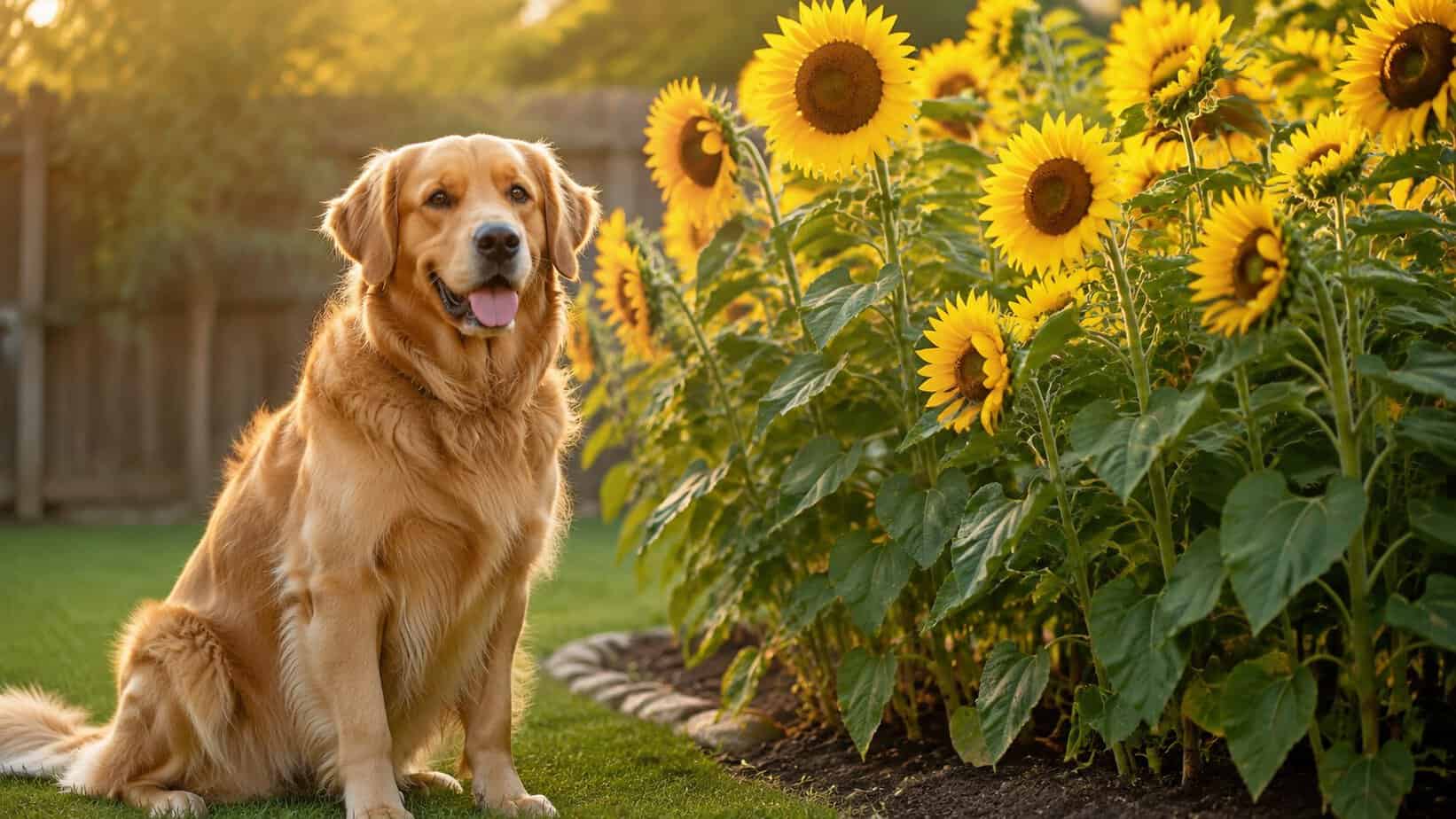
Sunflowers are not toxic to dogs. The ASPCA includes sunflowers, or Helianthus species, among its non-toxic flowers and plants. [1], [2] If your dog takes a small bite of a clean petal or leaf and feels fine, careful observation is usually all that is needed.
There is still a practical second question: what exactly did your dog eat? A thick stalk, a seed head, a pile of shells, heavily salted seeds, sunflower butter with xylitol, or a plant coated with garden chemicals can create a problem even though the sunflower itself is not poisonous.
I find it helpful to separate the plant from everything around it. Check the part, amount, ingredients, and your dog’s symptoms. Those four details will usually tell you whether you can monitor calmly or need professional guidance.
Are Sunflowers Safe for Dogs?
Yes, the sunflower plant is considered non-toxic to dogs. [1], [2] Petals and leaves are generally the lowest-concern parts when a dog only nibbles a little. Stems, stalks, seed heads, and shells deserve more caution because they are tougher and bulkier. Seeds, butter, and oil add questions about quantity and ingredients.
| Plant Part or Product | Main Concern | Practical Response |
|---|---|---|
| Petals or leaves | Large amounts may irritate digestion | Monitor after a small, clean nibble |
| Soft stem pieces | Digestive upset if a lot was eaten | Note the amount and watch for symptoms |
| Thick stalk or seed head | Tough foreign material | Call for guidance if a large piece is missing |
| Shelled, plain kernels | Rich food and extra calories | Offer only a few, if any |
| Whole seeds or shells | Choking or intestinal blockage | Use more caution, especially with a small dog |
| Salted or flavored seeds | Salt and added ingredients | Check the label and amount |
| Sunflower butter | Xylitol or other additives | Read every ingredient before offering |
| Sunflower oil | Digestive upset after a larger amount | Do not use it as a routine supplement without a reason |
| Garden plant | Pesticide, herbicide, or fertilizer residue | Check what was applied and follow the product label |
Which Parts of a Sunflower Can Cause Problems?
Petals and Leaves
A small amount of clean petal or leaf is unlikely to poison a dog. A larger serving of unfamiliar plant material can still irritate the stomach and lead to vomiting, reduced appetite, or loose stool. Dietary indiscretion and ingested plant or foreign material are recognized causes of acute gastritis in dogs. [3]
If your dog is comfortable, interested in normal activities, and not vomiting, observe closely. Remove access to the rest of the plant so one experimental nibble does not become a full meal.
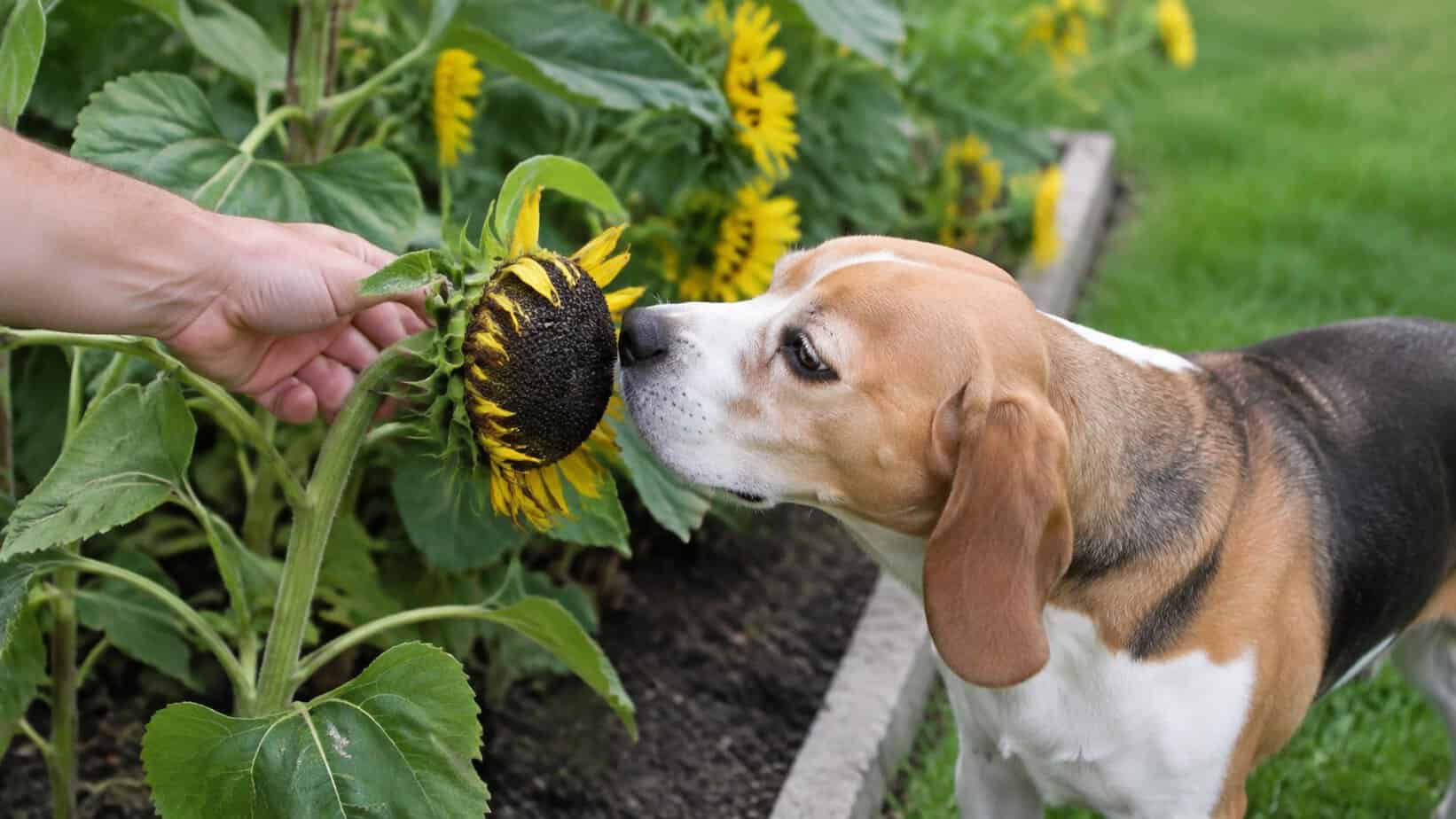
Stems, Stalks, and Seed Heads
Sunflower stalks can become thick, fibrous, and woody. A swallowed chunk may behave more like a stick than a vegetable. Seed heads can also be bulky, particularly when they are dry.
Foreign material can cause a partial or complete gastrointestinal obstruction. Repeated vomiting, loss of appetite, abdominal discomfort, diarrhea, and lethargy are among the signs described by the MSD Veterinary Manual. [4] Risk depends on the size and shape of the piece, your dog’s size, and whether it is moving through normally.
Seed Shells and Whole Seeds
The kernel inside a sunflower seed is different from the hard hull around it. Shells are not a useful dog treat. They add rough, indigestible material and may become a choking or obstruction concern when a dog eats many of them or swallows a compact clump.
A few shells do not automatically mean an emergency. Count or estimate what is missing, think about the size of your dog, and watch for repeated vomiting, abdominal pain, loss of appetite, or difficulty passing stool. Call your veterinarian promptly when a large amount is involved or any of those signs appear.
Salt, Seasonings, and Xylitol
Packaged sunflower seeds are often salted or flavored. Too much sodium can cause gastrointestinal and neurologic signs, including vomiting, weakness, poor coordination, tremors, and seizures. [5] The amount matters, as does access to water and your dog’s health.
Seasoning blends may contain ingredients that are not appropriate for dogs. If your dog got into a snack bag, save the package and read the full ingredient list.
Do the same with sunflower seed butter. Some sugar-free products can contain xylitol. The FDA warns that xylitol is poisonous to dogs and can cause life-threatening low blood sugar, liver injury, or both. [6] Treat a known or possible xylitol exposure as urgent.
Garden Chemicals and Moldy Material
A sunflower can be non-toxic while something on it is not. Pesticides, herbicides, fertilizers, and slug or rodent products all need to be considered separately. The EPA advises keeping pets away from treated areas until a pesticide has dried or for the period stated on the label. [7]
Also use caution with damp, decaying, or visibly moldy seed heads. Do not let a dog clean up material that has been sitting under a feeder or rotting in the garden. If the plant was treated or the material looks spoiled, contact your veterinarian or an animal poison-control service with the product label or a clear photo.
What to Do if Your Dog Ate a Sunflower
Check What Was Eaten
Start with a quick, calm inventory:
- Identify the part or product. Was it a petal, leaf, stalk, seed head, kernel, shell, birdseed mix, butter, or oil?
- Estimate the amount and when it happened.
- Check labels for salt, seasonings, xylitol, pesticides, herbicides, or fertilizer.
- Consider your dog’s size, digestive history, and present behavior.
You do not need perfect measurements. A sensible estimate and a photo often give a veterinarian enough context to guide the next step.
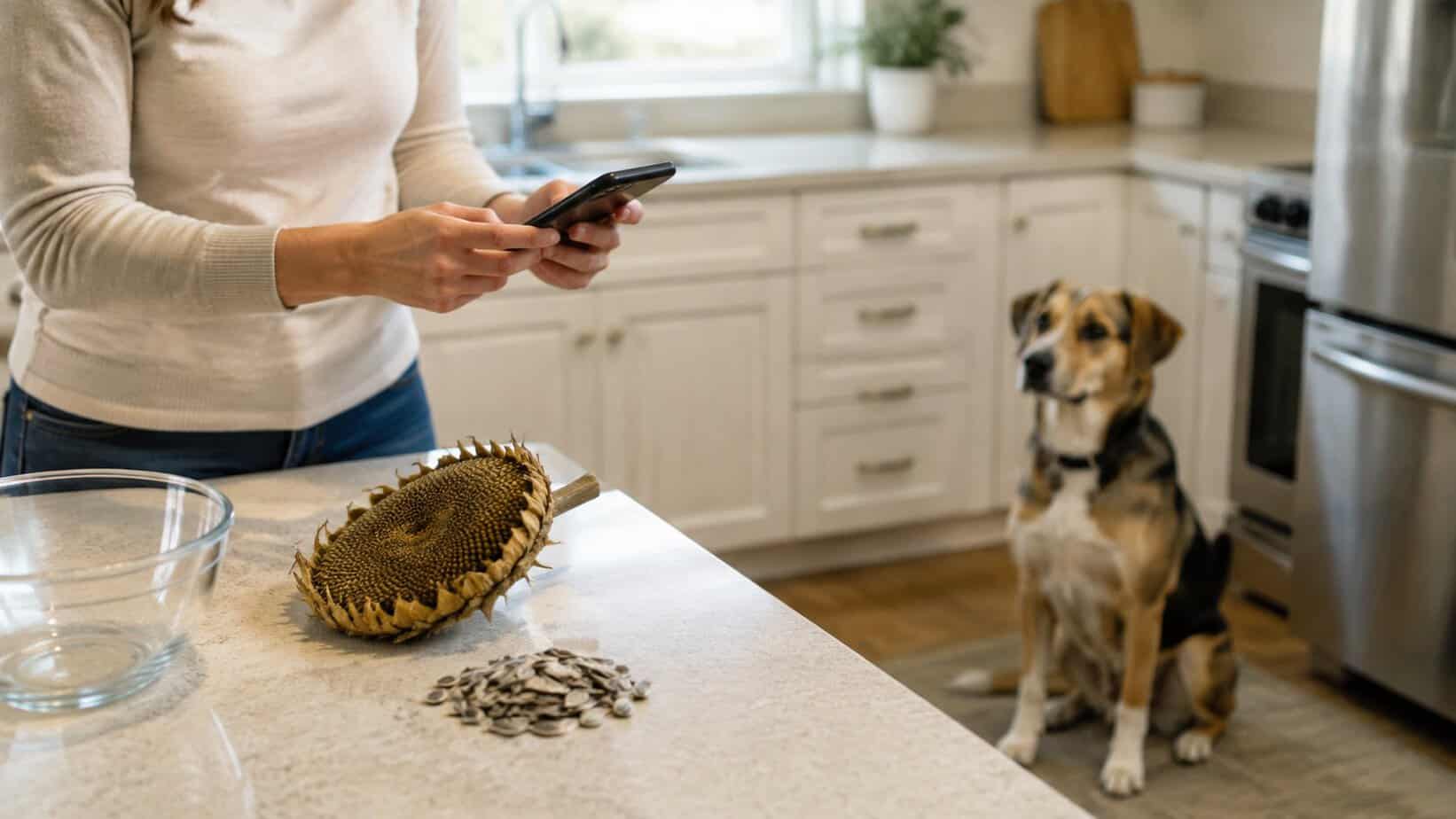
Remove Access and Watch Closely
Move the remaining plant or product out of reach. Save any packaging. If your dog allows it and you can do so safely, look for loose plant fibers or shells at the front of the mouth. Do not reach deep into the throat.
Do not induce vomiting unless a veterinarian or animal poison expert specifically tells you to. The safest response depends on the material, amount, timing, and your dog’s condition.
For a small bite of a clean petal or leaf in a symptom-free dog, monitor appetite, energy, comfort, vomiting, stool, and ability to drink normally. The whole dog matters more than one isolated detail.
Know When to Get Help
Get urgent veterinary help for choking, trouble breathing, collapse, seizures, severe weakness, or a known or possible xylitol exposure.
Call your veterinarian promptly if your dog swallowed a large stalk piece, an entire dry seed head, many shells, a heavily salted product, or any treated garden material. Also call for repeated vomiting, a painful or swollen abdomen, marked lethargy, inability to keep water down, refusal of food, or straining without passing stool. Gastrointestinal obstruction can become an emergency and is best addressed early. [4]
Can Dogs Eat Sunflower Seeds?
Plain Shelled Seeds
Plain, unsalted, shelled sunflower kernels are not the toxic part of the plant, but they are still optional human food. If you choose to share any, use only a few. They are not needed for wellness, and more is not better. [1], [2] I would rather keep the portion small and protect the balance of a dog’s regular whole-food nutrition than turn a seed into a daily supplement.
Skip sunflower seeds if your dog is on a veterinarian-directed fat restriction, has a history of digestive trouble after rich foods, or cannot chew them comfortably. If you choose to offer any, use plain kernels only. Avoid shells, salt, and flavor coatings.
Birdseed and Flavored Seeds
Birdseed is not a dog treat. A mix can contain shells, stale or damp material, other seed types, and additives. Seed that has collected under a feeder may also be dirty or moldy.
Flavored sunflower seeds create a different problem. The sunflower kernel may be non-toxic, but the salt and seasoning can change the risk. Put the bag away and choose a simple dog-appropriate treat instead.
Are Sunflower Butter and Sunflower Oil Safe?
Sunflower Butter
Sunflower seed butter is an optional food, not a wellness supplement. The ingredient list and amount come first. Confirm that the product contains no xylitol and no concerning seasoning. [6] Because seed butter is concentrated and easy to overfeed, use only a little.
If a dog has a medically restricted diet, recurrent digestive sensitivity, or a condition that requires tight calorie control, ask the treating veterinarian before sharing it.
Sunflower Oil
A small accidental lick of sunflower oil is not the same as eating a poisonous plant. A larger amount of oil can still trigger vomiting or diarrhea in a sensitive dog.
There is usually no reason to pour sunflower oil over food simply because it comes from a non-toxic flower. Any added oil should have a specific nutritional purpose and fit the dog’s complete diet.
How to Keep Sunflowers Dog-Safe
Most problems are easier to prevent than to sort out after a dog raids the garden.
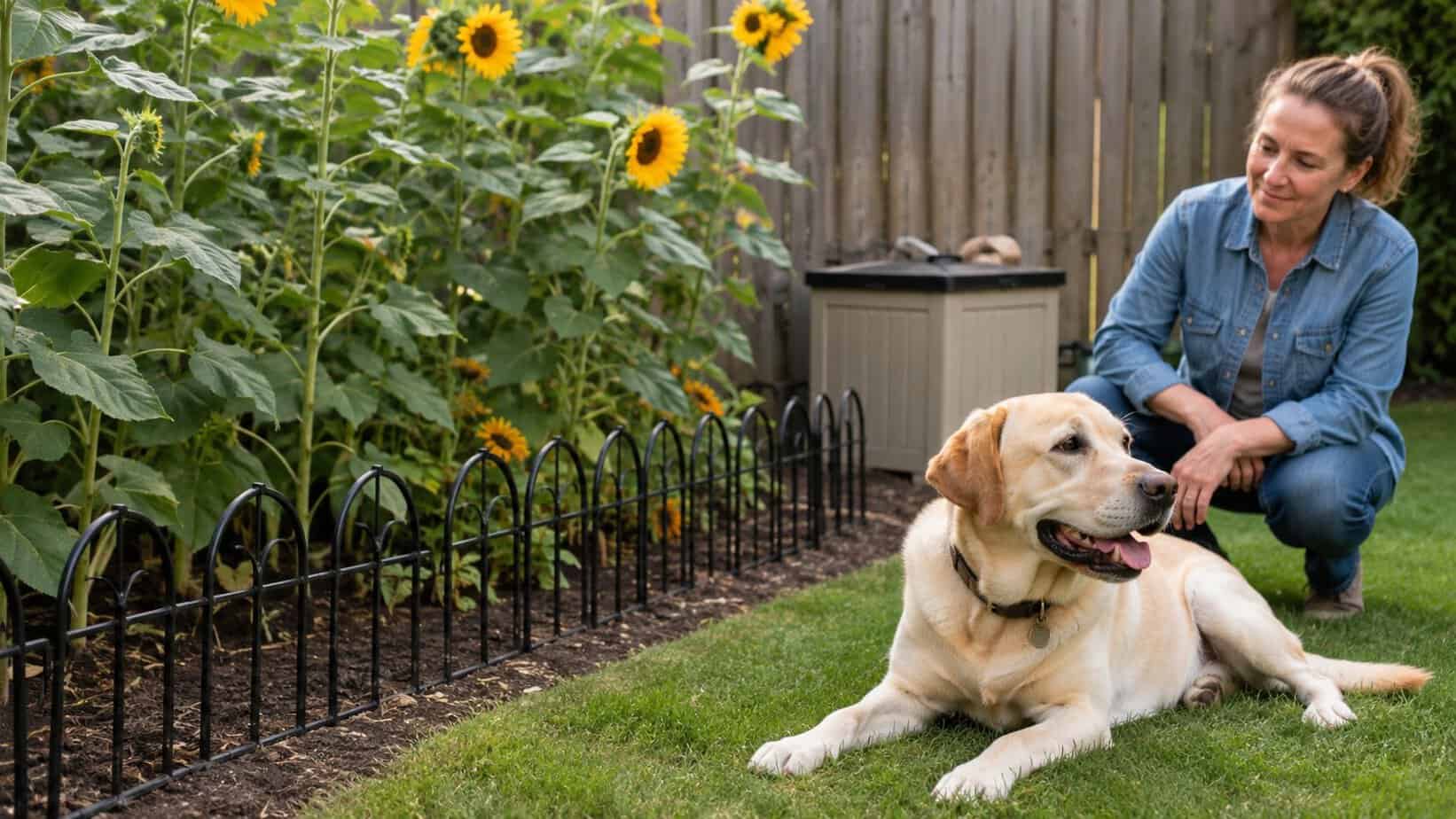
- Supervise dogs that like to chew plants.
- Place a low barrier around thick stalks and maturing seed heads.
- Collect fallen heads and loose seeds before they become a snack.
- Store birdseed, packaged seeds, butter, and oil behind a closed door.
- Teach a reliable “leave it” cue and reward the choice to move away.
- Keep pets out of treated areas for the label-directed interval. [7]
- Choose the least complicated garden routine that works, with secure storage and careful product use.
These steps protect the garden without treating every sunflower like a threat.
Final Thoughts
Sunflowers are not toxic to dogs, so a small nibble of a clean petal or leaf is usually a low-concern event. The response changes when a dog eats a tough stalk, many shells, a seasoned product, xylitol-containing butter, spoiled material, or a treated plant.
Check the part, amount, ingredients, and symptoms. That simple review gives you a calm way to decide whether to observe at home or call for help.
~Lindsie
No. The ASPCA lists sunflowers among plants that are non-toxic to dogs. [1], [2] A large amount of any unfamiliar plant material may still cause stomach upset, so monitor for vomiting, diarrhea, poor appetite, or discomfort.
A tiny soft piece may pass without trouble, but a thick or woody piece can act as foreign material. Call your veterinarian if a large section is missing, your dog is small, or you notice repeated vomiting, abdominal pain, lethargy, appetite loss, or difficulty passing stool. [4]
Sunflower seed shells are not recommended for dogs. They are hard and indigestible, and a large amount can create choking or obstruction concerns. Shelled, plain, unsalted kernels are the safer form if you offer any.
No. Birdseed mixes are not formulated as dog treats and may include shells, other seed types, additives, or stale and moldy material. Keep bags secure and clean up fallen seed.
Sunflower seed butter is not needed as a dog treat. If you plan to share it, use only a very small amount of a plain product after confirming that it contains no xylitol. A product containing xylitol is an urgent poisoning concern. [6]
References
- American Society for the Prevention of Cruelty to Animals. (n.d.). Sunflower. https://www.aspca.org/pet-care/aspca-poison-control/toxic-and-non-toxic-plants/sunflower
- American Society for the Prevention of Cruelty to Animals. (2026, April 30). Do you know which flowers and plants are toxic to pets? Our experts explain. https://www.aspca.org/news/do-you-know-which-flowers-and-plants-are-toxic-pets-our-experts-explain
- MSD Veterinary Manual. (n.d.). Gastritis in small animals. https://www.msdvetmanual.com/digestive-system/diseases-of-the-stomach-in-small-animals/gastritis-in-small-animals
- MSD Veterinary Manual. (n.d.). Gastrointestinal obstruction in small animals. https://www.msdvetmanual.com/digestive-system/surgical-problems-of-the-gastrointestinal-tract-in-small-animals/gastrointestinal-obstruction-in-small-animals
- Merck Veterinary Manual. (n.d.). Salt toxicosis in animals. https://www.merckvetmanual.com/toxicology/salt-toxicosis/salt-toxicosis-in-animals
- U.S. Food and Drug Administration. (2025, February 14). Paws off! Xylitol is toxic to dogs. https://www.fda.gov/animal-veterinary/animal-health-literacy/paws-xylitol-toxic-dogs
- U.S. Environmental Protection Agency. (2026, June 10). Pesticide safety tips. https://www.epa.gov/pesticide-incidents/pesticide-safety-tips
A note about your dog’s health
This article provides general education and does not replace an examination, diagnosis, or individualized advice from your veterinarian. Contact a veterinary professional if you are concerned about your dog’s symptoms.

ABOUT THE AUTHOR