Eye wipes can help remove dried tears, light crust, and debris from the fur and skin around a dog’s eyes. They cannot treat an eye infection, ulcer, dry eye, blocked tear duct, or other medical problem. Choose a fragrance-free product made specifically for the eye area, use a fresh wipe for each eye, and keep the wipe on the eyelids and surrounding fur rather than the eyeball.
If your dog is squinting, pawing at an eye, acting painful, or has redness, swelling, cloudiness, trauma, or yellow-green discharge, skip the grooming routine and call your veterinarian. Eye problems can worsen quickly, and cleaning away discharge does not fix the cause.
I have seen how much easier eye care becomes when dogs learn that the routine is gentle and predictable. The right wipe can make everyday cleanup simple, but the technique and your dog’s symptoms matter more than the brand.
What Eye Wipes Can and Cannot Do
Dog eye wipes are grooming products. Their main job is to soften and lift debris from the eyelids, facial folds, and hair below the eyes. That can help keep the area dry and comfortable, especially in dogs that have shallow eye sockets, facial folds, long facial hair, or mild tear overflow.
Wipes do not prevent every infection. They also do not diagnose why an eye is watering. Excess tears, also called epiphora, are a symptom rather than a disease. Tears may overflow because the eye is irritated, tear production has increased, eyelid or eyelash anatomy directs tears onto the face, or the normal drainage pathway is narrowed or blocked (VCA Animal Hospitals, n.d.).
That distinction matters. If the skin is simply damp or the fur has a little dried material, gentle cleaning may be useful. If the eye itself looks abnormal or your dog is uncomfortable, your veterinarian needs to examine it.
When Eye Discharge Needs a Veterinary Exam
A small amount of clear or pale crust after sleep can be normal for some dogs. A new change in amount, color, odor, or comfort deserves attention.
Contact your veterinarian promptly if you notice:
- Squinting, holding an eye closed, or avoiding light
- Pawing or rubbing at the face
- Redness or swelling
- A cloudy, blue, or dull-looking eye surface
- Thick yellow, green, or bloody discharge
- Sudden heavy tearing, especially from one eye
- A visible scratch, foreign object, or recent trauma
- A change in vision or bumping into objects
Redness, irritation, and thick green discharge can occur with dry eye, a condition that can lead to painful corneal ulcers and vision damage when untreated (Cornell University College of Veterinary Medicine, 2025). Do not assume that wiping away thick discharge makes the problem safe to watch.
If a chemical gets in the eye, flush as directed by a veterinarian or poison-control professional and seek urgent care. Do not try to neutralize it with another household product.
How to Choose a Safe Eye Wipe
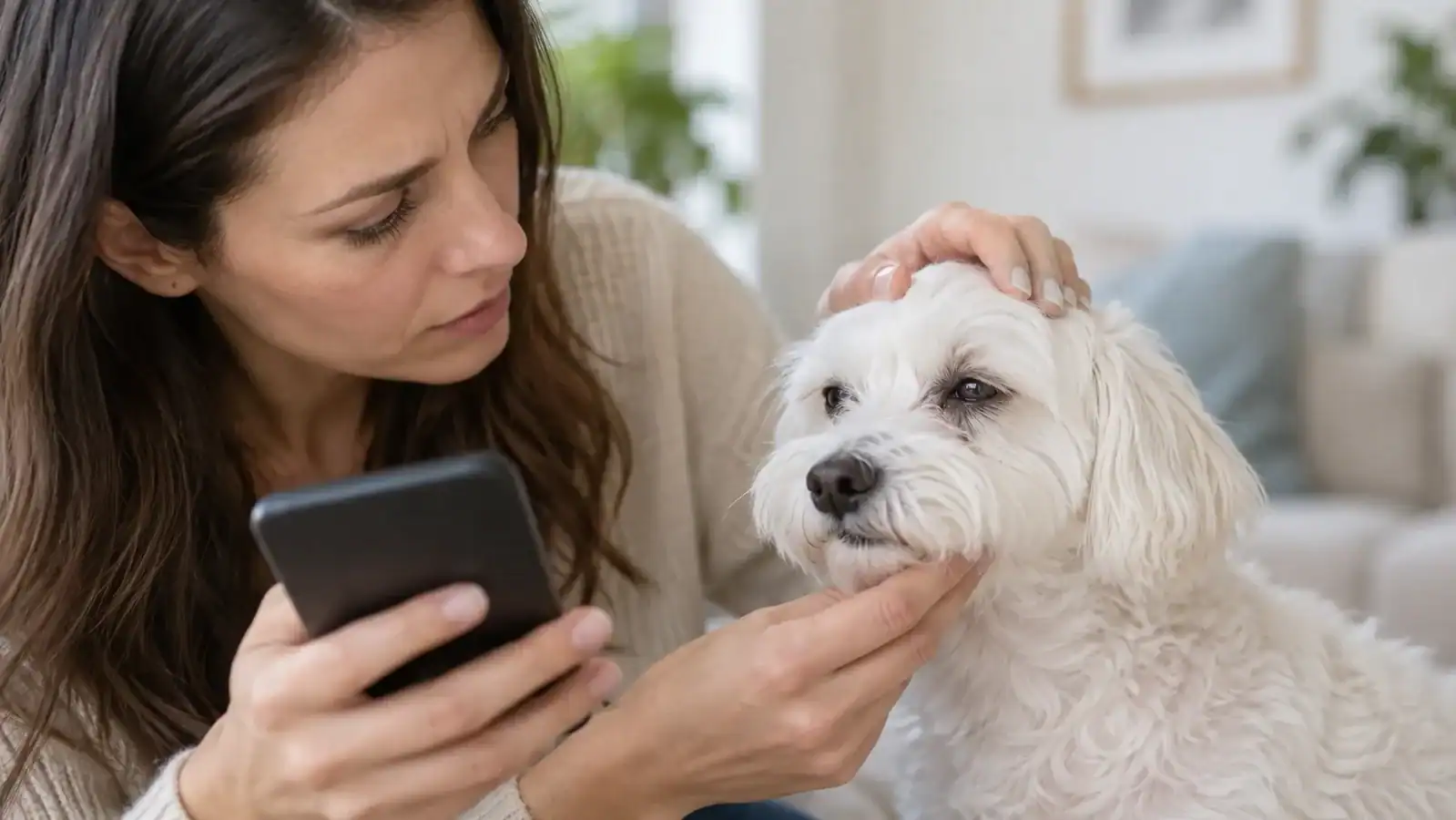
The front of the package is not enough. Read the intended-use statement and ingredient list before using any product near the eyes.
Look for a wipe that is:
- Made for dogs and labeled for the eye area or eyelids
- Fragrance-free or very lightly formulated
- Soft, low-lint, and large enough to control with your fingers
- Packaged to stay moist and clean
- Clear about whether rinsing is required
Avoid products with alcohol, hydrogen peroxide, essential oils, strong fragrance, or harsh disinfectants. Human baby wipes and general household wipes are not designed for a dog’s eye area. A product marketed as natural can still sting or irritate sensitive tissue.
Most eye wipes are meant for the skin, eyelids, and fur around the eye. Unless the label specifically says the product is an ophthalmic solution, do not put the liquid directly into the eye.
For dogs with allergies or sensitive skin, test a small area below the eye first. Stop if you see redness, itching, swelling, or increased tearing.
How to Clean Around Your Dog’s Eyes
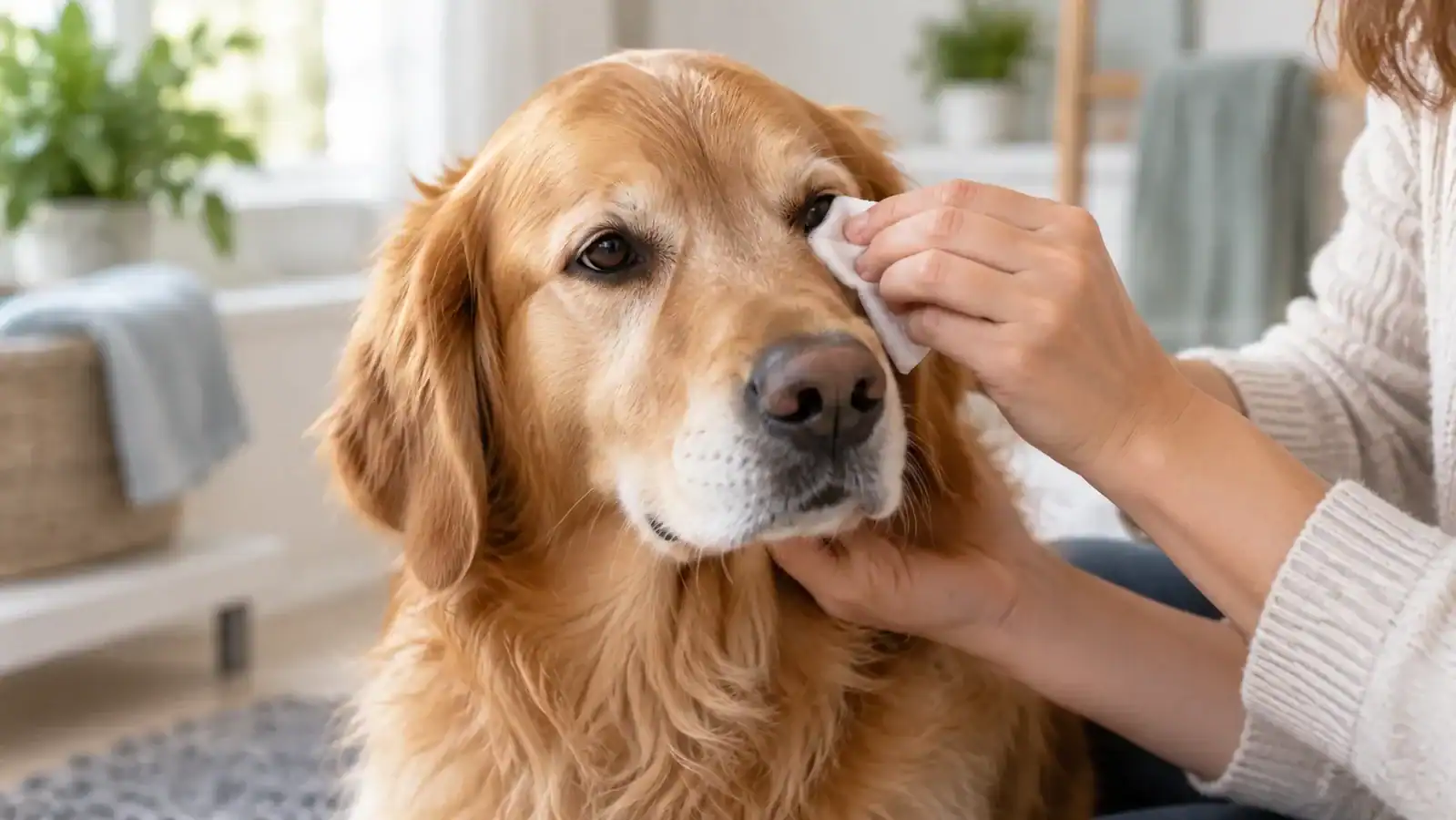
Set up before you bring your dog over. You will need the wipes, a clean towel, and a few treats. Good light helps you see the eye without pulling on the eyelids.
- Wash and dry your hands.
- Let your dog sniff the closed package, then reward calm behavior.
- Support the head gently without squeezing the muzzle.
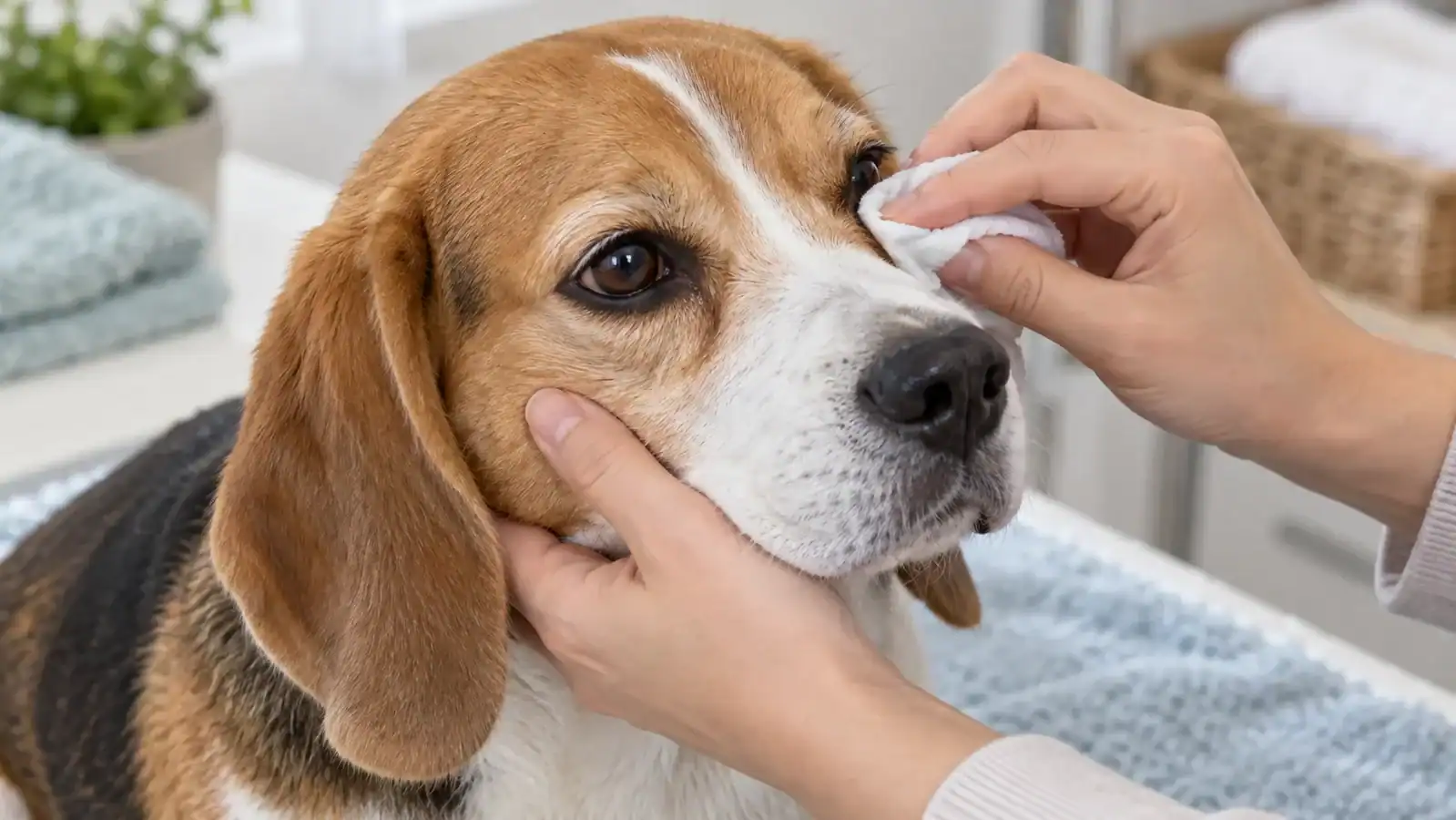
- If debris is dry, hold a warm, damp cloth against the fur for several seconds to soften it. Do not press on the eye.
- Wipe the eyelid and surrounding fur with a gentle motion that moves debris away from the eye.
- Use a fresh wipe or clean section for the other eye. Never carry material from one eye to the other.
- Pat the fur dry, then reward your dog and end the session.
Never scrape hard crust with a fingernail or comb. If material is stuck to the eyelid margin, or your dog resists because the area hurts, stop and call your veterinarian.
For a nervous dog, practice in five-second steps. Touch the cheek, reward. Lift the wipe near the face, reward. Wipe once, reward. Short, calm sessions build trust better than forcing a full cleaning.
Top 5 Eye Wipes for Dogs Ranked by a Vet
These five products were featured in the original article and remain in the same order. Labels and formulas can change, so confirm the current directions and ingredients before use. I rank them by their practical fit for the eye area, ease of use, and how clearly they should be handled around sensitive tissue.


1. Wet Ones for Pets Extra Gentle Hypoallergenic Dog Wipes With Witch Hazel
These are general pet wipes rather than a dedicated ophthalmic product. Their larger size can be handy for cleaning facial fur, but I would keep them well below the eyelid and away from the eye itself. Witch hazel can sting sensitive tissue, so this is not my choice for wiping the eyelid margin.
Best for: Light cleanup on facial fur below the eye.
Use caution if: Your dog has sensitive skin, active redness, or wet discharge close to the eye.
2. Miracle Care Eye Wash Pads for Dogs
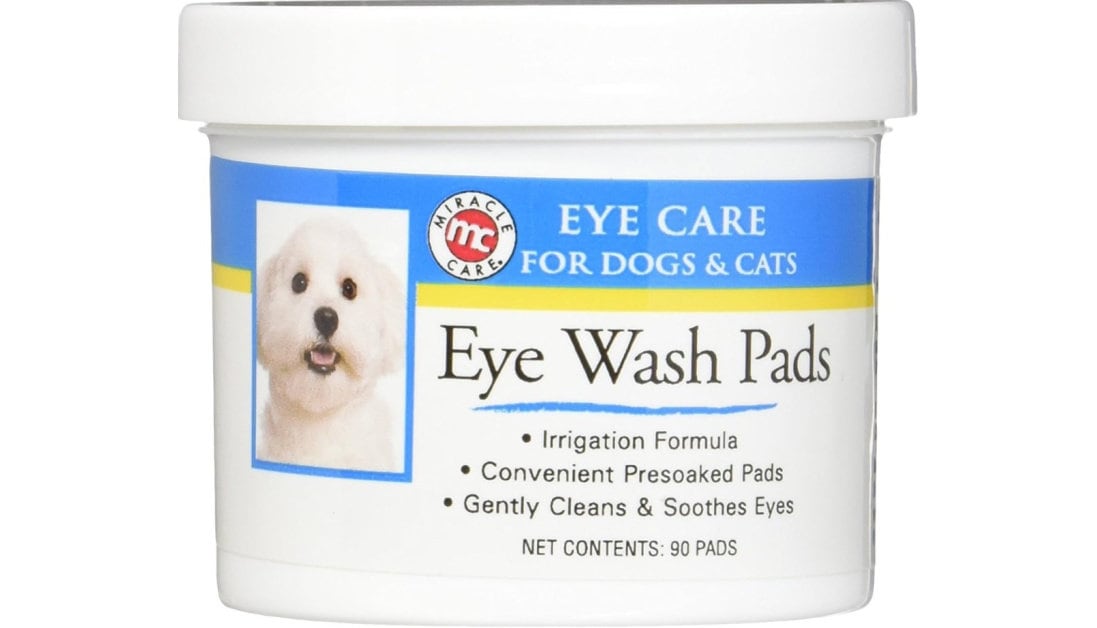
The premoistened pads are sized for controlled cleaning around the eyelids and inner corner. They are convenient when you need to soften and lift small amounts of dried debris without handling a large sheet.
Best for: Routine eyelid and eye-corner cleanup.
Use caution if: The eye is painful, cloudy, or producing thick discharge. Those signs need an exam, not repeated wiping.
3. Project Watson Dog Eyelid Wipes
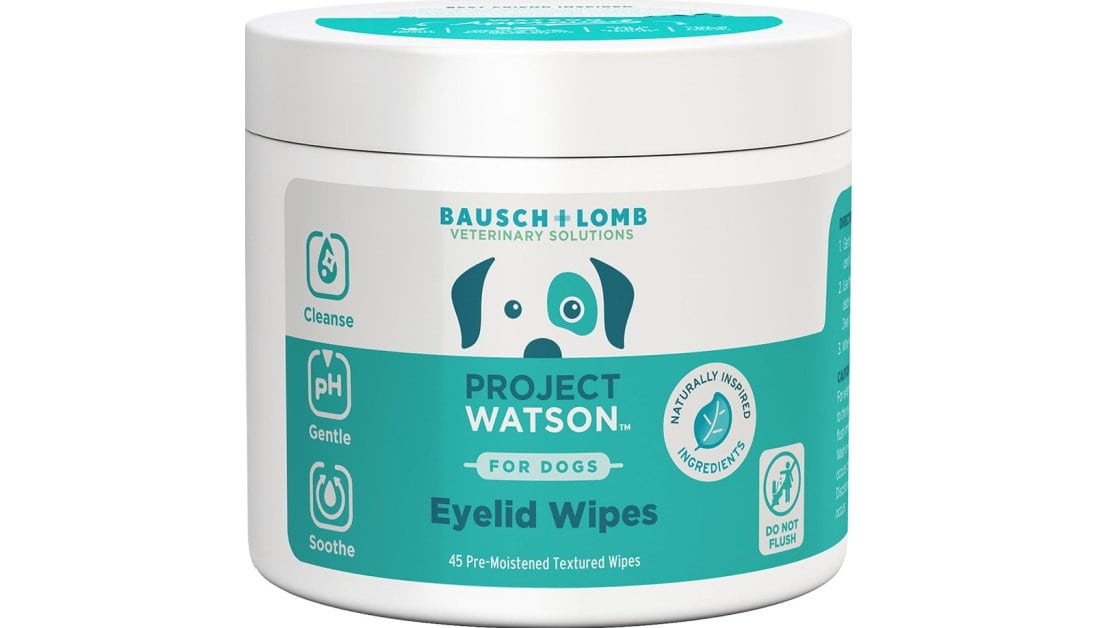
This product is designed for the eyelid area, which makes the intended use clearer than with an all-purpose pet wipe. The individual pad format also makes it easier to use one clean pad per eye.
Best for: Dogs that need regular eyelid or facial-fold cleaning.
Use caution if: Your dog develops more tearing or redness after use. Stop and contact your veterinarian.
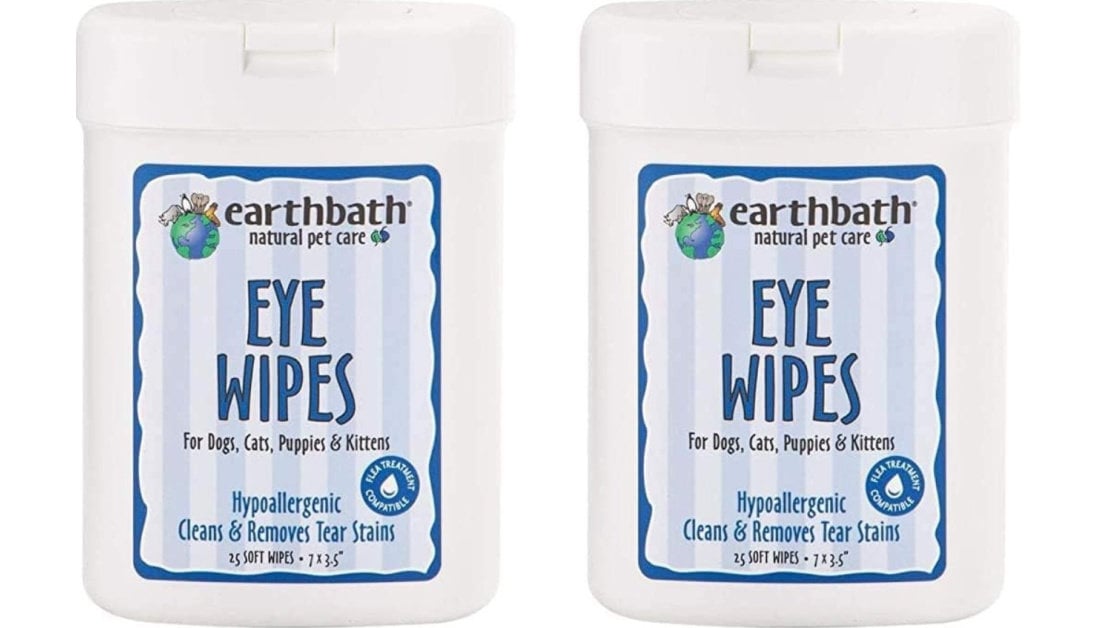
4. Earthbath All Natural Specialty Eye Wipes
These wipes are made for the fur around the eyes and can help with everyday debris and tear-stained hair. Remember that natural ingredients are not automatically irritation-free. Keep the pad on the fur and eyelid skin, not the corneal surface.
Best for: Routine grooming and light tear-stain cleanup.
Use caution if: Your dog has known plant sensitivities or inflamed skin.
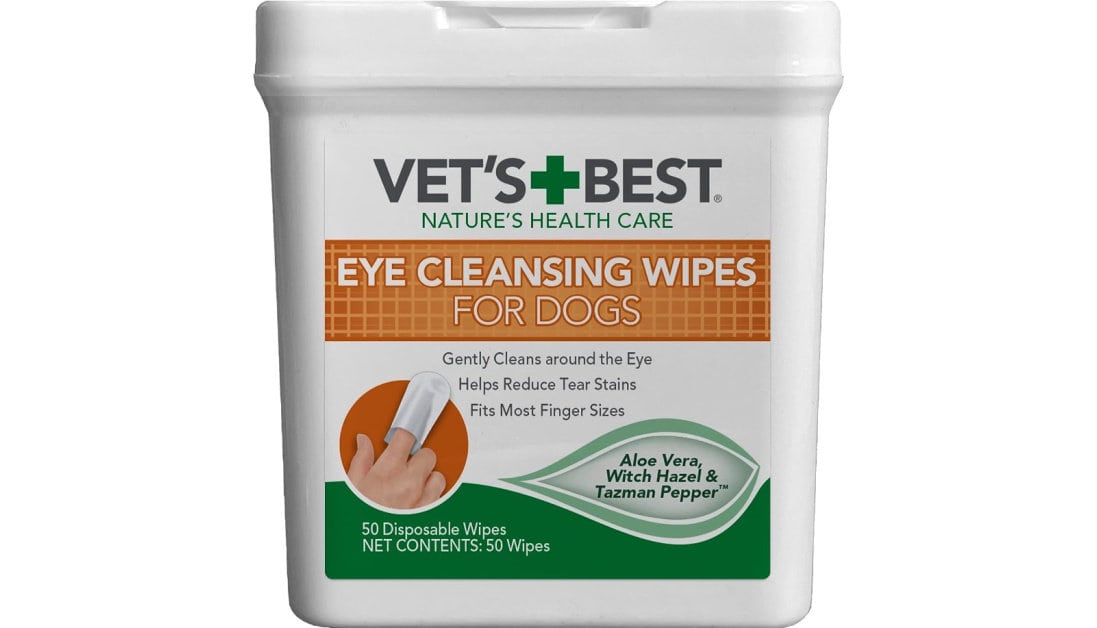
5. Vet’s Best Eye Cleansing Wipes for Dogs
These small wipes are easy to control around the eye area and may be useful for daily grooming in dogs that collect light debris. Follow the label and avoid letting liquid run into the eye.
Best for: Quick cleanup of small amounts of dried material.
Use caution if: The eyelids are swollen, sore, or crusted. Those changes can need veterinary treatment.
What About Tear Stains?
Tear stains are the reddish-brown marks that develop when tears repeatedly wet light-colored fur. Pigments in tears contribute to the color, but staining is not simply a hygiene problem.
Some dogs stain because of facial anatomy or hair that channels tears onto the face. Other possible contributors include eyelid or eyelash problems, irritation, allergies, excessive tear production, and poor tear drainage. VCA notes that tear overflow can be linked to many different conditions and may require an eye exam to find the cause (VCA Animal Hospitals, n.d.).
Daily gentle cleaning may reduce buildup on the hair, but it will not correct a blocked duct, painful corneal problem, or abnormal eyelid. Ask your veterinarian about persistent staining, especially when it starts suddenly, affects one eye more than the other, smells bad, or comes with discomfort.
Keep long hair trimmed by a groomer or veterinary professional so it does not rub the eye. Do not use bleach, peroxide, stain-removing powders, or human cosmetic products near the eyes.
Safer Alternatives to Eye Wipes
You do not always need a packaged wipe. For light debris on the outer fur, a soft cloth or cotton pad dampened with warm water may be enough. Use a separate clean area for each eye and dry the fur afterward.
If your veterinarian wants you to rinse the eye, use a sterile saline eye wash or another ophthalmic product they recommend. Contact-lens disinfecting solution is not the same thing as sterile eye wash.
Skip homemade saline, chamomile tea, coconut oil, aloe gel, apple cider vinegar, and witch hazel near the eye. Homemade mixtures can have the wrong salt concentration, may be contaminated, and can irritate the cornea. Oils and plant extracts can blur the surface or trigger more inflammation.
A warm, wet washcloth can help loosen external crust, and VCA includes gentle warm-cloth cleaning as supportive care for dogs with medically managed dry eye (VCA Animal Hospitals, 2023). That does not replace prescribed medication or an exam.
How Often Should You Use Eye Wipes?
Use them only as often as your dog needs and the label allows. Some dogs need a quick daily wipe because of facial anatomy. Others need cleaning only after sleep or outdoor play.
More is not always better. Frequent rubbing can make delicate skin sore. If you are wiping several times a day because discharge keeps returning, the next step is a veterinary exam.
Final Thoughts
Eye wipes can be useful grooming tools when the eye itself is comfortable and clear. Choose a product made for the eye area, keep it on the eyelids and fur, use a fresh wipe for each eye, and stop if your dog shows pain or irritation.
The biggest safety rule is simple: do not clean away a warning sign and assume the problem is solved. Sudden tearing, squinting, redness, cloudiness, swelling, trauma, or colored discharge deserves veterinary attention.
Frequently Asked Questions
No. Baby wipes are made for human skin and may contain fragrance, preservatives, or cleansers that irritate a dog’s eyes. Use a dog eye-area wipe or a soft cloth dampened with warm water on the outer fur.
Usually not. Most wipes are intended for eyelids and surrounding fur. Only use a liquid in the eye if it is clearly labeled as an ophthalmic product and your veterinarian or the product directions support that use.
Once daily or as needed may be reasonable for mild external buildup, depending on the label and your dog’s skin. If discharge returns quickly, becomes colored, or requires frequent cleaning, schedule an exam.
Gentle daily cleaning and keeping the fur dry can help manage staining. Persistent or one-sided staining needs a veterinary exam because tear overflow can come from irritation, anatomy, or a drainage problem.
Seek urgent veterinary care for squinting, obvious pain, a cloudy or blue eye, trauma, sudden vision change, a protruding eye, or chemical exposure. Thick yellow-green discharge with redness also needs prompt evaluation.
References
VCA Animal Hospitals. (n.d.). Eye discharge (epiphora) in dogs. https://vcahospitals.com/know-your-pet/eye-discharge-or-epiphora-in-dogs
Cornell University College of Veterinary Medicine. (2025, December 2). Keratoconjunctivitis sicca (KCS) in dogs. https://www.vet.cornell.edu/departments-centers-and-institutes/riney-canine-health-center/canine-health-topics/keratoconjunctivitis-sicca-kcs-dogs
VCA Animal Hospitals. (2023, January 18). Keratoconjunctivitis sicca (KCS) or dry eye in dogs. https://vcahospitals.com/know-your-pet/keratoconjunctivitis-sicca-kcs-or-dry-eye-in-dogs
A note about your dog’s health
This article provides general education and does not replace an examination, diagnosis, or individualized advice from your veterinarian. Contact a veterinary professional if you are concerned about your dog’s symptoms.

ABOUT THE AUTHOR