Medically Reviewed by: Dr. Candy Akers, DVM
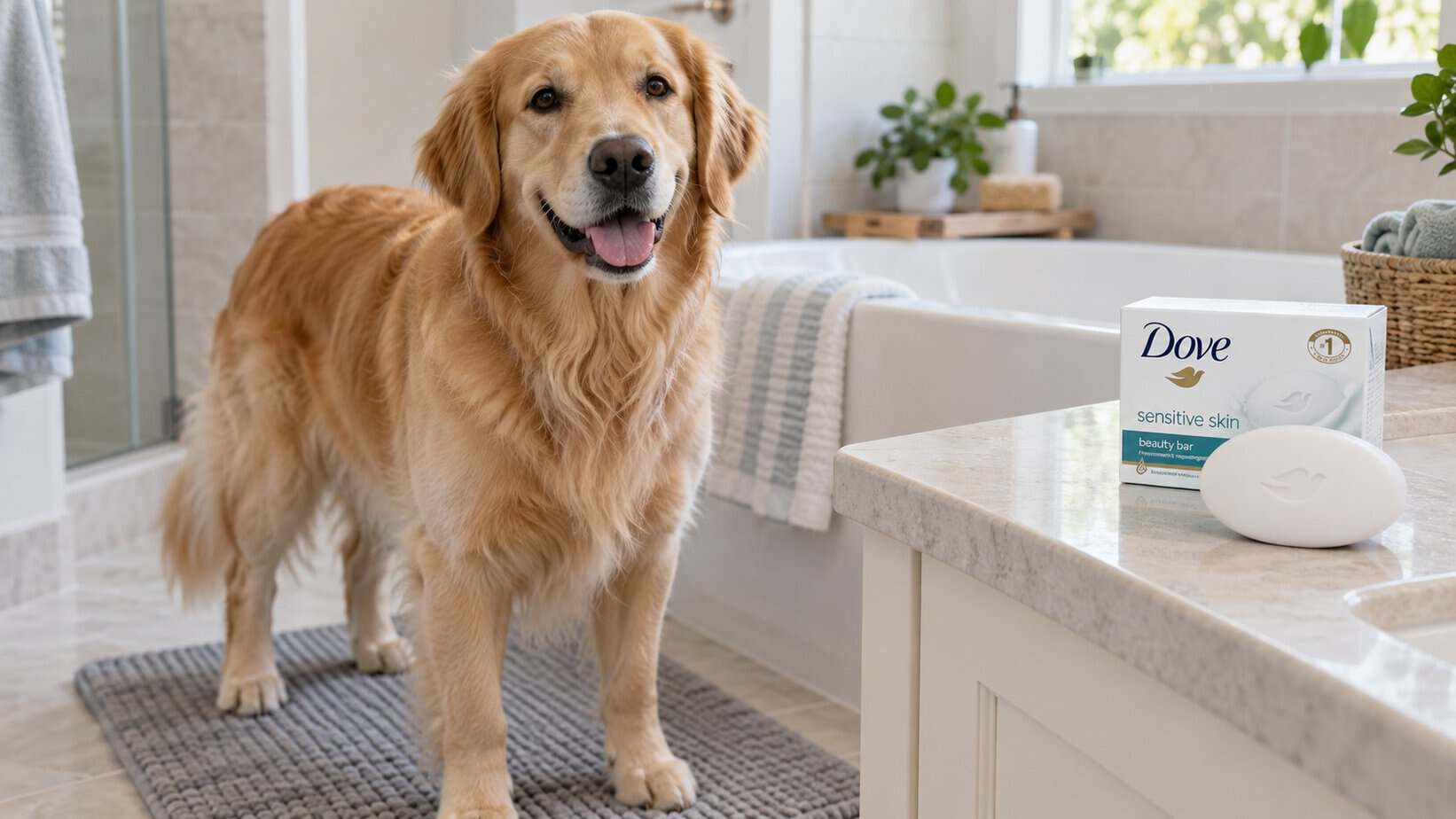
Dove soap is not the best choice for your dog’s regular baths. It is made for human skin, and some dogs become dry, itchy, flaky, or uncomfortable after using it. A dog-specific shampoo is the safer everyday choice.
If you already used Dove once, take a breath. Rinse your dog again with plenty of lukewarm water, dry the coat gently, and watch for redness, persistent scratching, hives, eye discomfort, vomiting, or diarrhea. A single thorough wash is usually a rinse-and-monitor situation, not a reason to assume lasting harm. Dogs with allergies, inflamed skin, open sores, or a history of reacting to grooming products deserve extra caution.
Can I Use Dove Soap on My Dog?
For routine bathing, my answer is no. Dove Beauty Bars and body washes are designed around human cleansing and skin feel, not a dog’s coat, skin barrier, or tendency to lick after a bath. Even a product that feels creamy and mild in your hands can leave a dog’s skin dry or the coat coated with residue.
The pH explanation is more nuanced than many quick answers suggest. Healthy canine skin does not have one fixed pH. In a study of 77 healthy dogs, skin pH varied with age, body location, sex, and hair characteristics [1]. That means pH matters, but it is not the only reason to choose a dog shampoo. The strength of the cleanser, fragrance, residue, bath frequency, and your dog’s individual skin health matter too.
One use and repeated use are different decisions. If your dog rolled in something unpleasant and Dove was all you had, one careful wash may cause no obvious problem. That does not make it a good routine product. Repeated exposure can be harder on a dog who already has dry skin, allergies, a thin coat, or an irritated skin barrier.
What to Do If You Already Used Dove Soap
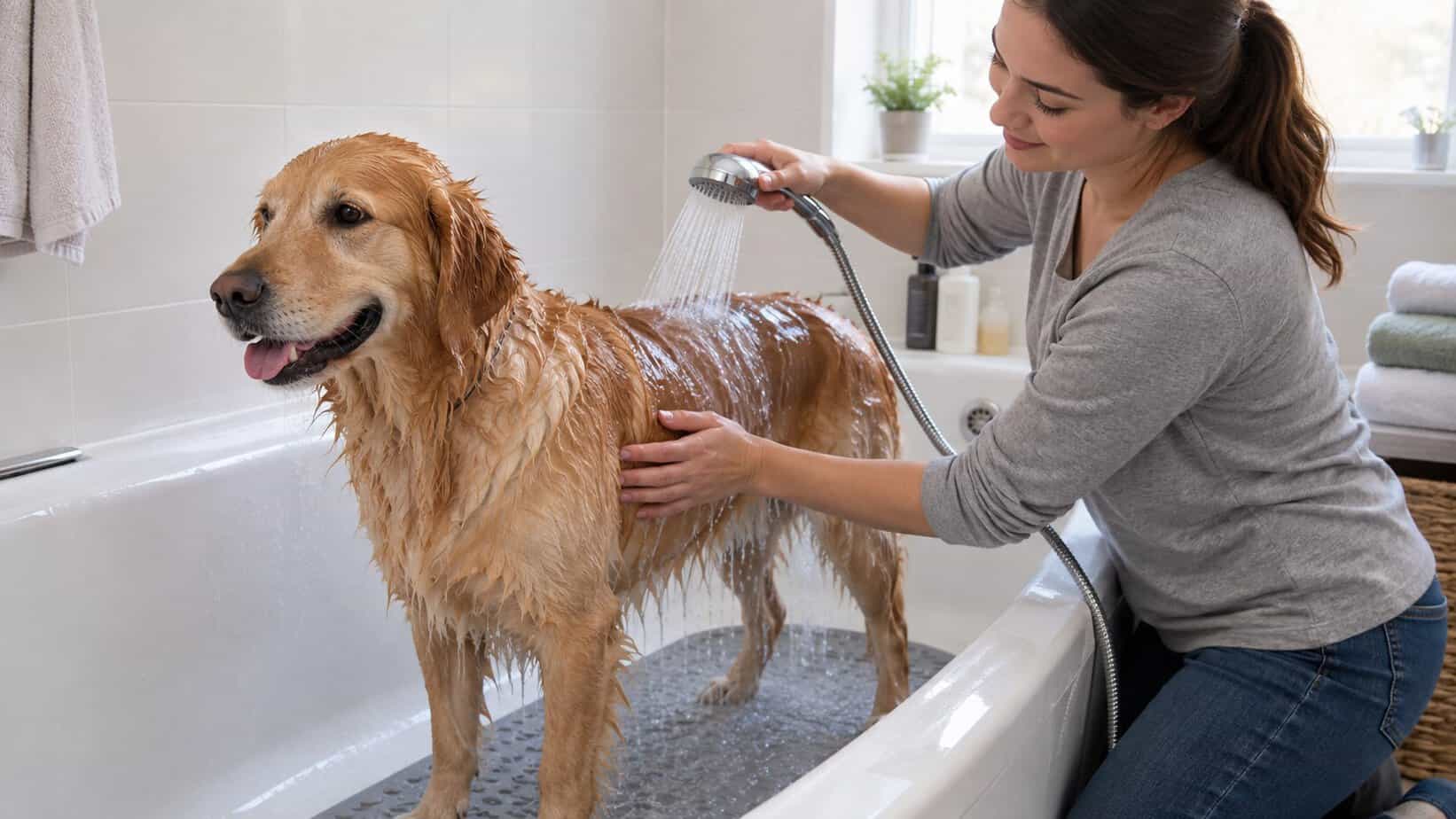
The most useful response is simple:
- Rinse again. Use lukewarm water and work it through the coat until the water runs clear and the fur no longer feels slippery.
- Dry gently. Pat with a towel instead of rubbing hard. Keep your dog warm while the coat dries.
- Observe. Over the next day or two, look for new redness, flaking, hives, persistent scratching, facial swelling, eye pain, or digestive upset.
Do not follow Dove immediately with another full shampoo unless a veterinary professional has told you to. Layering another cleanser onto skin that already feels tight or itchy may make the discomfort worse.
If soap reached the eyes, flush them gently with clean lukewarm water. If your dog swallowed more than a lick, keeps vomiting, seems unusually quiet, or has trouble breathing, call your veterinarian or an animal poison service promptly. Do not try to make your dog vomit. Soap and shampoo can foam, and vomiting can increase the risk of aspiration [3]. Breathing difficulty, collapse, or rapidly increasing facial swelling needs urgent care.
Why Dove Soap Is Not Ideal for Regular Dog Baths
A dog’s skin and coat work as a connected protective system. The skin barrier helps hold in moisture and helps keep irritants out. The coat also traps product, which is why a bar or body wash that rinses easily from human skin may take more work to remove from dense fur.
Dove products vary, but they may include fragrance and conditioning ingredients that are not necessary for a dog’s bath. Fragrance can be a problem for a sensitive dog, and leftover cleanser can contribute to itching or a dull, greasy feel. The concern is irritation and poor fit, not a vague claim that every ingredient is poisonous.
Bathing can be genuinely helpful when the product and purpose match. Veterinary shampoo therapy can deliver cleansing, antimicrobial, itch-relieving, or skin-barrier-supporting ingredients directly to the skin. The right choice depends on the goal, and directions such as dilution, contact time, and rinsing matter [2]. That is a much better framework than choosing a product simply because it is already beside the sink.
Which Dove Soap Is Safest in a Pinch?
No Dove product is my first choice for a dog. If there is a true one-time need and you cannot wait for dog shampoo, this order helps you make the least irritating choice:
| Dove product | One-time use | Routine use | Practical note |
|---|---|---|---|
| Sensitive Skin Beauty Bar | Least objectionable Dove option | No | Choose the plain fragrance-free version, use very little, and rinse completely. |
| Original or scented Beauty Bar | Better to avoid | No | Added scent may bother sensitive skin or noses. |
| Body wash | Avoid when possible | No | Liquid formulas can spread quickly through the coat and may be difficult to rinse completely. |
| Hand wash | Avoid | No | It is unnecessary for a full bath and may be too cleansing for repeated skin contact. |
“Least objectionable” does not mean dog-safe for every dog. Skip Dove altogether on the face, around the eyes, on broken or inflamed skin, and on a very young puppy. For muddy paws or a small dirty patch, lukewarm water and a soft washcloth will often do the job.
Better Choices When You Have No Dog Shampoo
If the bath can wait, waiting is often the wisest option. Brush out dry dirt, rinse the coat with lukewarm water, or clean one small area with a damp cloth. You do not need to add a cleanser simply because your dog got dusty.
For an urgent one-time wash on intact skin, a small amount of mild, unscented liquid castile soap diluted well in water may be a practical fallback. It is still a human household cleanser, so use it sparingly, avoid the face, rinse completely, and do not turn it into a routine.
I would not use essential-oil blends as an improvised shampoo. “Natural” is not the same as automatically gentle, and concentrated botanical ingredients can be irritating. Dish detergent, including Dawn, is best reserved for a specific degreasing reason rather than ordinary bathing. If your dog was exposed to an oily chemical, skunk spray, or another unusual substance, get product-specific guidance before experimenting.
How to Choose a Dog Shampoo
Start with the reason for the bath. A healthy dog who is simply dirty needs a gentle routine cleanser. A dog with odor, flakes, greasy skin, recurrent infections, or intense itching may need a different plan. Veterinary shampoos are chosen by therapeutic goal, not by scent alone [2].
Look for clear dog labeling and directions you can realistically follow. For sensitive dogs, a simple fragrance-free formula is often easier to assess than a strongly scented product with a long list of botanical extras. If the label gives a contact time, set a timer. Rinsing too soon can make a therapeutic shampoo less useful, while leaving an ordinary cleanser behind may cause irritation.
Take a whole-dog view when skin trouble keeps returning. Coat type, age, allergies, parasites, diet, medications, weather, swimming, and bath frequency can all affect what you see. A shampoo may soothe the surface, but recurring odor or itching can be a clue that the underlying problem needs attention.
Dog Shampoos for Odor, Dry Skin, and Shedding
These options are organized by grooming goal. Formulas can change, so check the current label before use. Stop if your dog becomes more itchy or uncomfortable.
Odor Control Shampoos
- Nature’s Miracle Supreme Odor Control Shampoo & Conditioner: A two-in-one option to compare when ordinary coat odor is the main concern.
- Duoxo S3 Odor Control Shampoo: An option to review for dogs whose odor comes with oily or flaky skin. Persistent odor can have an underlying cause, so do not rely on deodorizing alone.
Dry Skin Shampoos
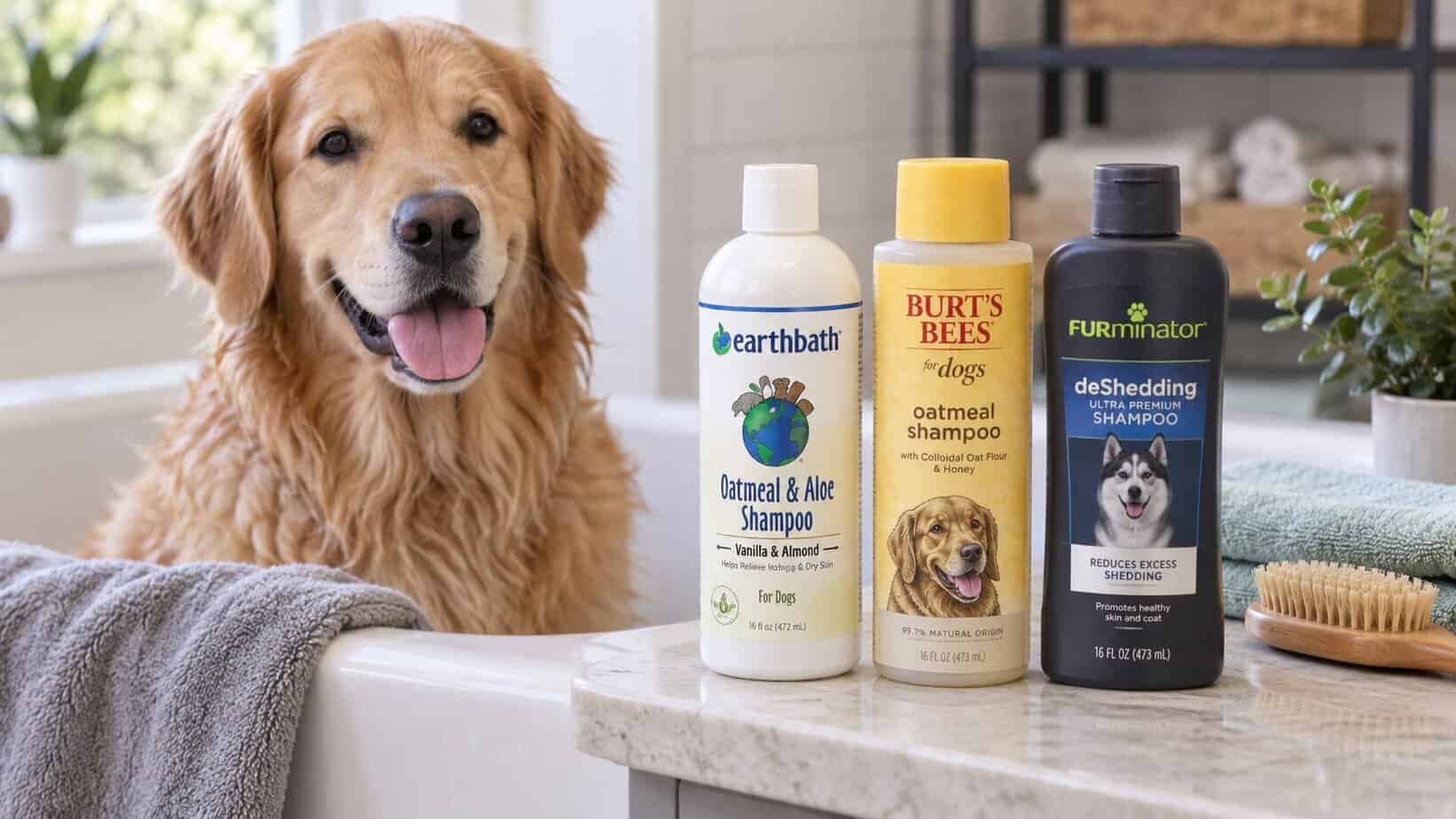
- Earthbath Oatmeal & Aloe Shampoo: A dog-specific option built around oatmeal and aloe for a dog who tends to feel dry after bathing.
- Burt’s Bees for Dogs Natural Oatmeal Shampoo: Another oatmeal-based choice to compare for gentle routine cleansing.
Shedding Shampoos
- FURminator deShedding Ultra Premium Dog Shampoo: A coat-care option for owners focused on loose hair and seasonal shedding.
- TropiClean Shed Control Shampoo: Another shedding-focused formula to compare by label, scent, and your dog’s skin response.
A shampoo can help clean the coat, but it cannot solve every source of odor, dryness, or hair loss. If you see bald patches, sores, heavy scaling, a yeasty smell, or a sudden change in shedding, pause the product search and address the reason for the change.
How to Bathe Your Dog Without Irritating the Skin
A calm setup makes a better bath for both of you.
- Gather supplies. Set out dog shampoo, towels, a brush or comb, a washcloth, and a non-slip mat before you bring your dog in.
- Brush first. Remove loose hair and work through tangles before the coat gets wet. Water can tighten mats.
- Choose a secure spot. Use a tub, shower, or outdoor area where your dog cannot slip or bolt.
- Check the water. Lukewarm is best. Hot water can make itchy skin feel worse.
- Wet the coat slowly. Keep the spray away from the eyes, ears, and nose.
- Apply shampoo as labeled. Work it through the coat with your fingertips. Do not scrub irritated skin.
- Respect contact time. Medicated products may need several minutes on the skin. Follow the label or your veterinary plan.
- Rinse longer than you think you need to. Keep going until the water is clear and the coat no longer feels slick.
- Clean the face separately. Use a damp washcloth without soap near the eyes, nostrils, and ear openings.
- Dry gently. Towel dry, keep the ear canals dry, and use only a pet-safe dryer on a cool, low setting if your dog is comfortable with it.
- End positively. Praise, a treat, and a quiet place to dry can make the next bath easier.
Homemade Dog Shampoo Recipes
Homemade does not automatically mean gentler. Do not use these mixes on broken, infected, or inflamed skin, around the eyes, or on a very young puppy. If your dog has an active skin condition, use a plan chosen for that condition.
Patch test a small area first. Make a small fresh batch, rinse it out completely, and discard leftovers rather than storing a mixture without a tested preservative.
Basic Oatmeal Shampoo
Colloidal oatmeal has a skin-soothing rationale in dermatology, although the review most often cited is based on human atopic dermatitis rather than dog-specific bathing [4]. For dogs, keep the claim modest and pay attention to the individual response.
Ingredients:
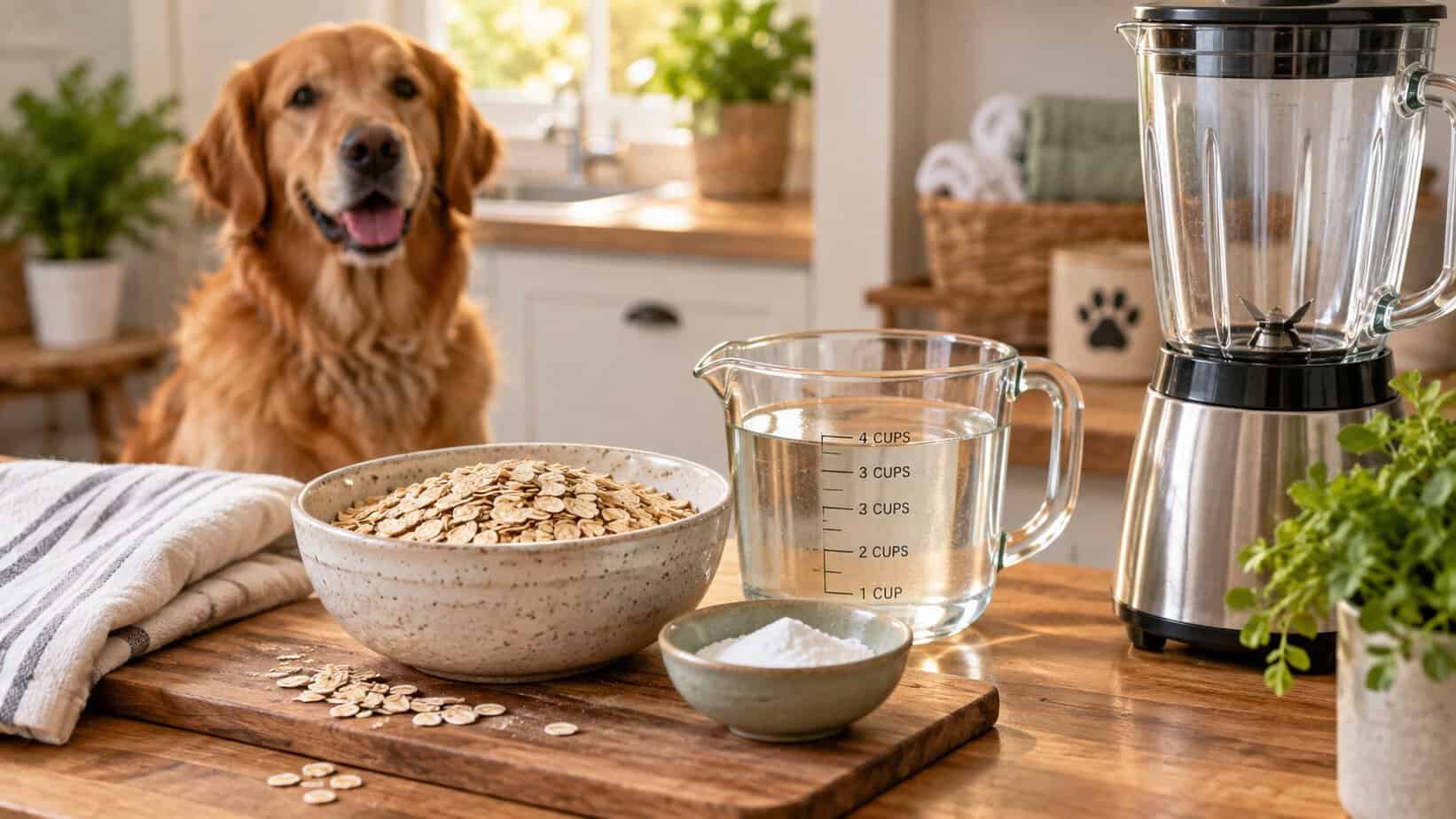
- 1 cup uncooked oatmeal
- 1/2 cup baking soda
- 1 quart warm water
Directions:
- Grind the oatmeal into a very fine powder.
- Mix the oatmeal, baking soda, and warm water in a large bowl.
- Wet your dog’s coat, then massage the mixture through the fur while avoiding the face.
- Rinse thoroughly with clean water and towel dry.
Gentle Aloe Vera and Glycerin Shampoo
Ingredients:
- 1 cup water
- 1 cup mild, unscented liquid castile soap
- 2 tablespoons aloe vera gel
- 1 tablespoon vegetable glycerin
Directions:
- Combine the water, castile soap, aloe vera gel, and vegetable glycerin in a bottle or jar.
- Shake gently to mix.
- Patch test before a full bath.
- Apply to the wet coat, away from the eyes, ears, nose, and mouth.
- Rinse thoroughly and towel dry.
Despite the name, this mixture may not feel gentle to every dog. Castile soap is still soap, and aloe products can contain added ingredients. Read labels and stop if the skin becomes red or itchy.
Deodorizing Apple Cider Vinegar Shampoo
Ingredients:
- 2 cups water
- 1/2 cup apple cider vinegar
- 1/4 cup mild, unscented liquid castile soap
Directions:
- Combine the water, apple cider vinegar, and castile soap in a bottle or jar.
- Shake gently to mix.
- Use only on intact skin after a small patch test.
- Massage into the wet coat, staying well away from the face.
- Rinse thoroughly and towel dry.
Vinegar can sting raw or inflamed skin. If odor keeps returning, look beyond deodorizing. Ear disease, skin infection, anal gland trouble, and other conditions can create an odor that a bath will only cover briefly.
When Skin Changes Need Attention
Mild dryness after a bath may settle once the product is fully rinsed and the skin has time to recover. Persistent or worsening changes deserve more attention.
Contact a veterinary professional if you notice:
- Redness that spreads or does not settle
- Intense or nonstop scratching
- Hives or facial swelling
- Eye redness, squinting, or obvious pain
- Repeated vomiting or diarrhea after licking soap
- Lethargy or unusual weakness
- Open sores, discharge, or a strong new odor
- Irritation that continues beyond a day or two
Trouble breathing, collapse, or rapidly increasing facial swelling is an emergency. For a dog with known allergies or chronic skin disease, it is reasonable to call sooner because a small grooming change can create a bigger flare.
Final Thoughts
Dove soap belongs in the human shower, not in your dog’s regular bathing routine. If you used it once, rinse well, dry gently, and watch the skin. For future baths, choose a dog-specific shampoo that matches the job and your dog’s skin history.
The best grooming plan is not the one with the fanciest ingredient list. It is the one that keeps the coat clean without leaving your dog itchy, dry, frightened, or overbathed. A little patience and a simple, well-matched product usually go a long way.
~Sheena
Frequently Asked Questions
Dove Sensitive Skin is the least objectionable Dove option for a true one-time pinch because the fragrance-free version removes one common source of irritation. It is still made for human skin, so do not use it as your dog’s regular shampoo. Use very little, keep it away from the face, and rinse completely.
Rinse the coat again with lukewarm water until it no longer feels slippery, then towel dry and observe your dog. Watch for persistent itching, redness, hives, eye discomfort, vomiting, or diarrhea. Significant ingestion, facial swelling, or breathing trouble calls for prompt help.
Do not use it on the face or around the eyes, nose, mouth, or ear openings. For ordinary paw dirt, lukewarm water and a damp cloth are usually enough. If paws are red, cracked, swollen, or constantly licked, cleaning alone may not address the cause.
For ordinary dirt, use lukewarm water, brushing, or a damp washcloth and wait until you can get dog shampoo. If a full wash truly cannot wait, a very small amount of well-diluted, mild, unscented castile soap may be used once on intact skin, followed by thorough rinsing.
It is better not to. Puppy skin can be sensitive, and young puppies chill easily during bathing. Use a puppy-labeled cleanser only when a bath is necessary, keep the room warm, rinse carefully, and dry the puppy completely.
References
- Schlake, A., Devriendt, N., Talloen, L., Dadi, T. B., & de Rooster, H. (2022). Influence of age, sex, body condition score, rectal temperature, anatomical location and hair on skin pH in dogs. Veterinary Dermatology, 33, 3-e2. https://doi.org/10.1111/vde.13011
- Bajwa, J. (2025). Shampoo therapy in veterinary dermatology: Benefits and practical tips. Canadian Veterinary Journal, 66(12), 1354-1357. https://pmc.ncbi.nlm.nih.gov/articles/PMC12825626/
- MSD Veterinary Manual. (n.d.). Toxicoses from household cleaners and personal care products in animals. Retrieved September 6, 2026, from https://www.msdvetmanual.com/toxicology/toxicoses-from-household-hazards/toxicoses-from-household-cleaners-and-personal-care-products-in-animals
- Fowler, J. F., Jr. (2014). Colloidal oatmeal formulations and the treatment of atopic dermatitis. Journal of Drugs in Dermatology, 13(10), 1180-1183. https://pubmed.ncbi.nlm.nih.gov/25607551/
A note about your dog’s health
This article provides general education and does not replace an examination, diagnosis, or individualized advice from your veterinarian. Contact a veterinary professional if you are concerned about your dog’s symptoms.

ABOUT THE AUTHOR