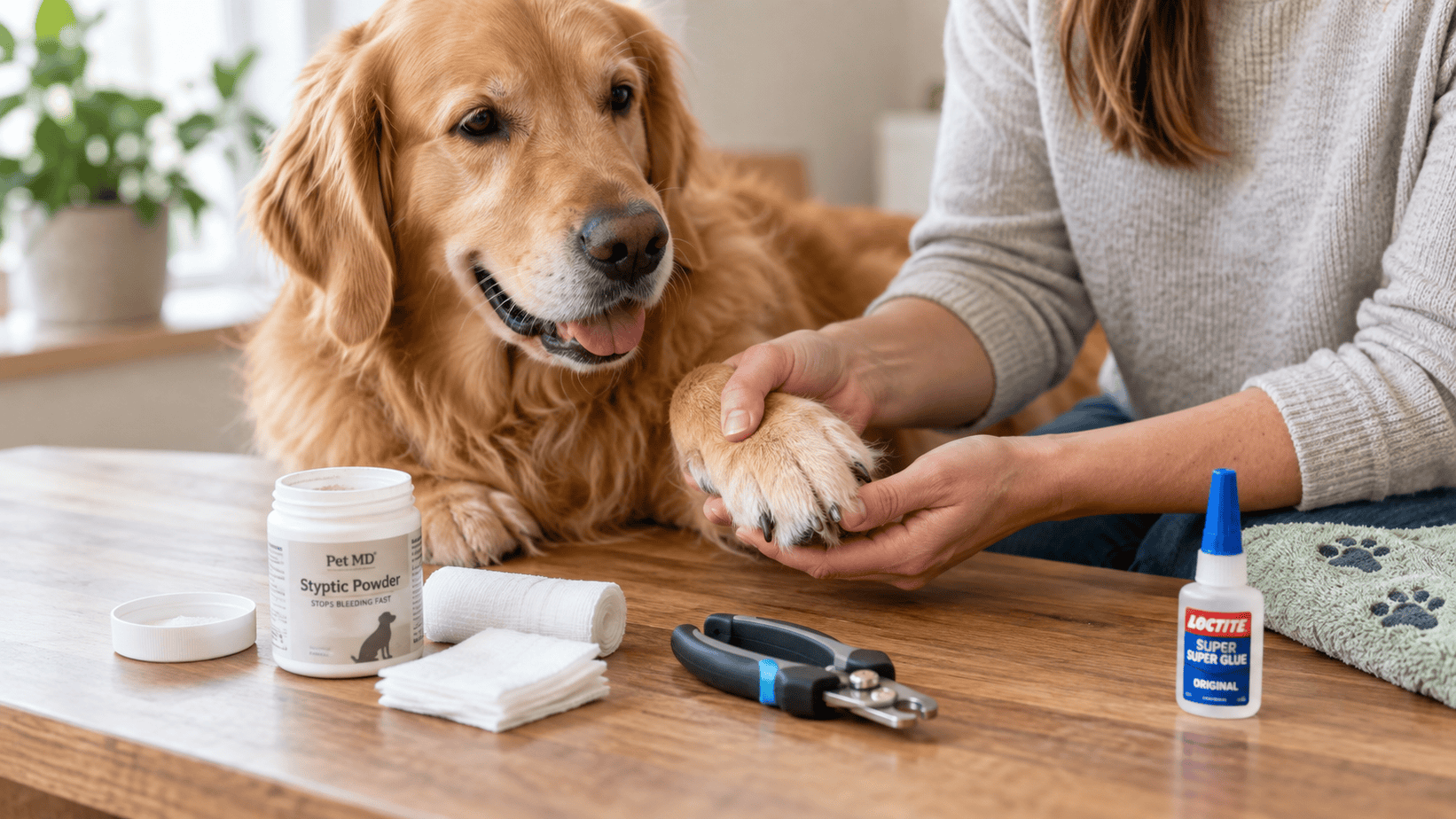
No, I do not recommend putting household super glue on a dog’s bleeding nail. If you clipped the quick, the safer first response is to apply Styptic Powder and hold steady pressure. If you do not have styptic powder, cornstarch can be a temporary backup while you watch the bleeding closely.
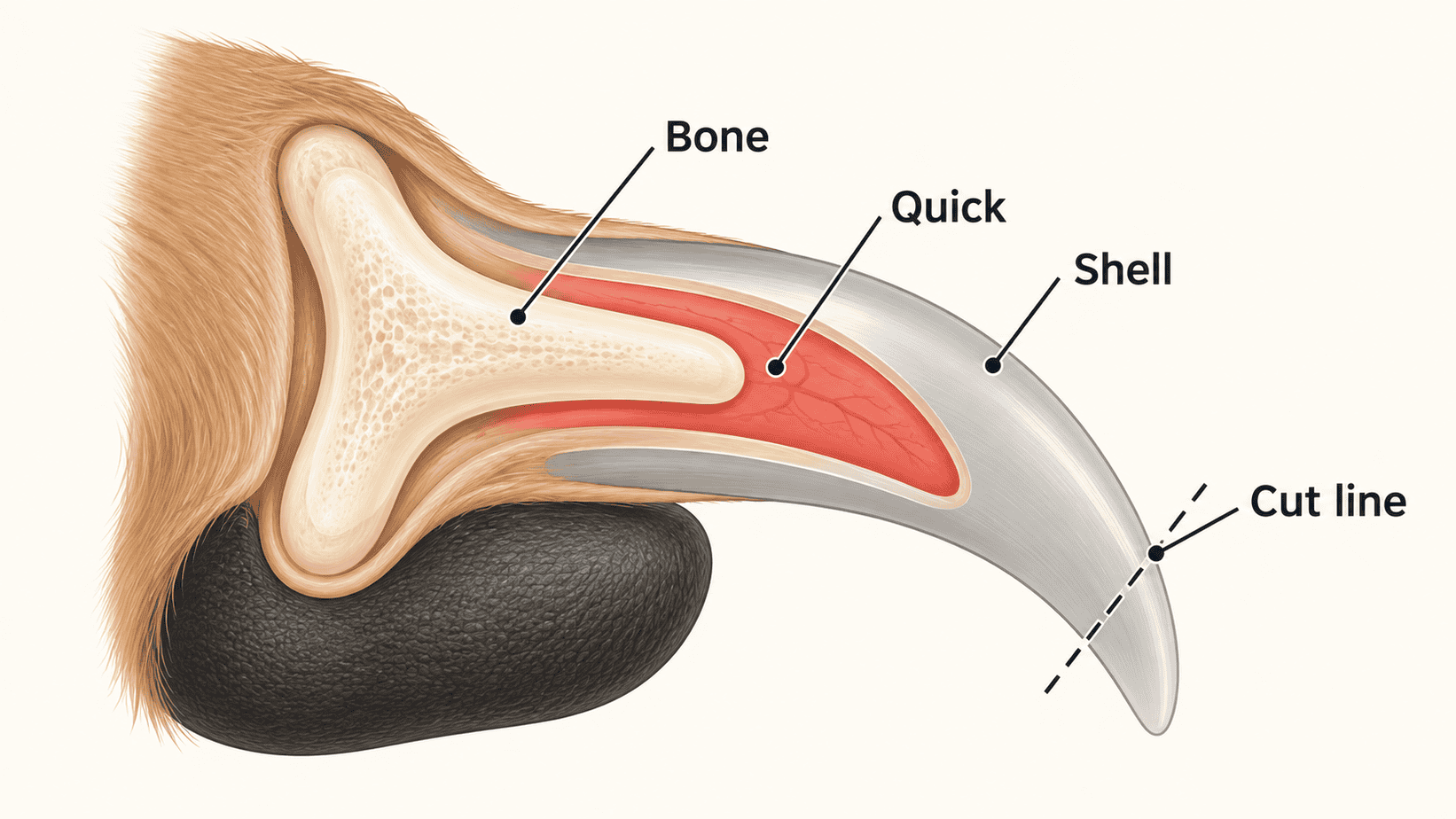
A nicked quick often looks dramatic because that living center of the nail contains blood vessels and nerves. Most small trimming accidents can be managed at home, but a split, torn, or partly detached nail is a different problem. Those injuries can be painful, keep reopening, and need veterinary care.
What To Do Right Now
Take a breath before you reach for anything. Your dog will notice if you are frightened or rushing, and a wiggling paw makes the situation harder for both of you.
- Move to a quiet, well-lit area. Ask someone to help if your dog is comfortable with a second person. Support the paw gently without twisting the leg.
- Blot away enough blood to see which nail is affected. Do not scrub the nail bed or keep wiping it every few seconds.
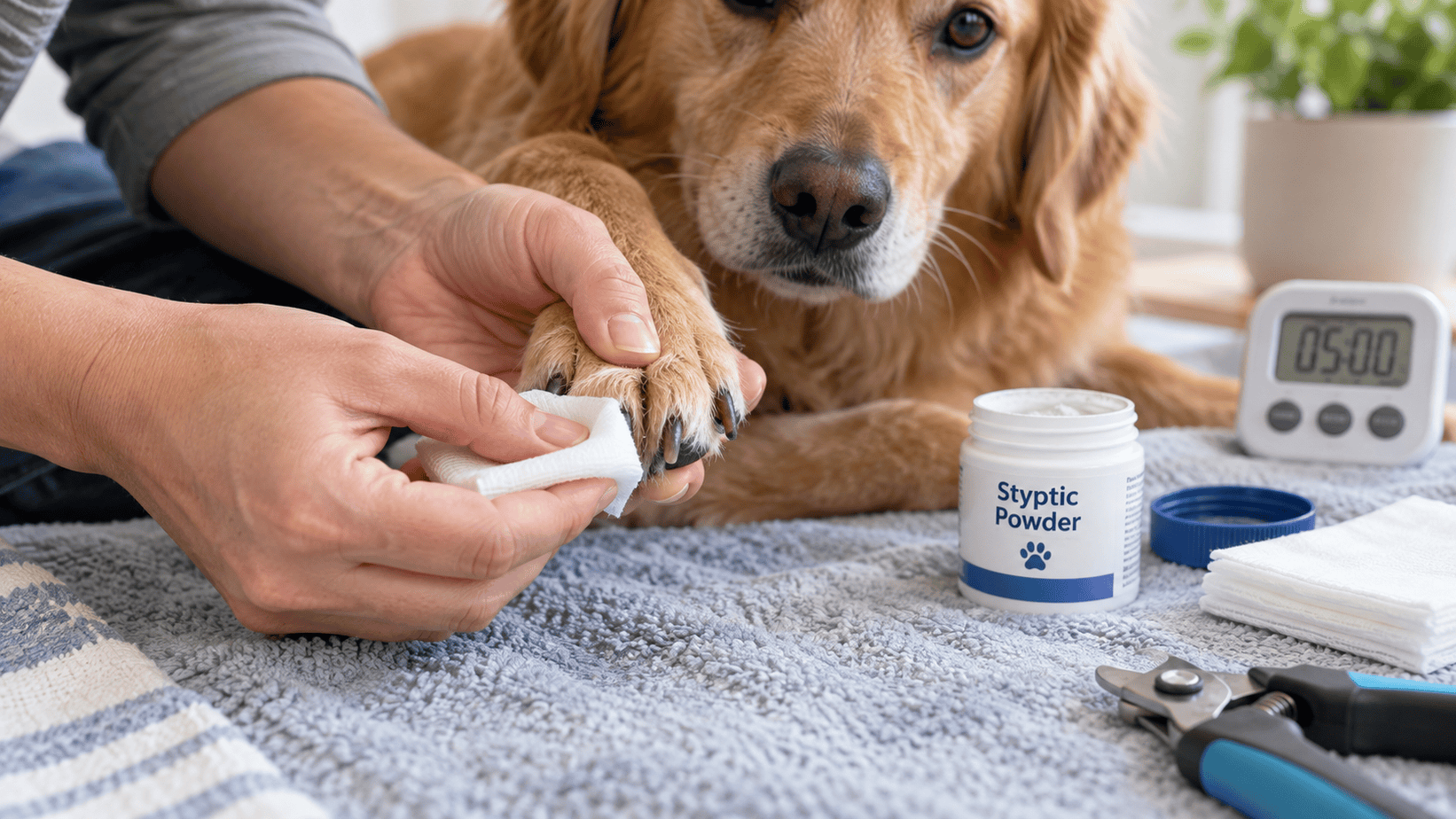
- Press styptic powder onto the cut surface. Then hold clean gauze or a folded paper towel firmly against the nail for two to three minutes without lifting it to check.
- Recheck once. If bleeding has stopped, keep your dog calm and off rough ground for the rest of the evening. If it is still active, repeat the powder and pressure once.
Washington State University’s nail-trimming guidance recommends having styptic powder available in case a nail is cut too short. [1] I like keeping it with the grooming tools so it is within reach before a trim begins.
If You Have Styptic Powder
Powder is usually easier to press onto a cut quick than to sprinkle from above. Put a small amount in the lid or on a clean surface, dip the bleeding nail into it, then apply pressure. Avoid packing product far under a lifted or broken nail.
Styptic pencils can also help with a small quick nick, although some dogs dislike the sting. Wet the tip only as directed on the product label and touch it to the cut surface. If your dog is struggling or the nail is structurally damaged, stop and get help instead of forcing the paw still.
If You Do Not Have Styptic Powder
Cornstarch can provide a temporary physical barrier for a minor quick nick. Press it onto the nail and follow with steady pressure. It is less reliable than a purpose-made styptic product, so watch closely for renewed bleeding.
I would not cycle through baking soda, flour, soap, glue, and multiple gels. Every new product means more handling and more material on an open surface. One simple backup, patient pressure, and a clear decision about when to call the clinic is a safer plan.
Why Household Super Glue Is Not the Best Choice
Household cyanoacrylate sets quickly by bonding surfaces together. On a paw, that means it can bond fur, skin, pads, the nail, your fingers, or debris around the injury. It may also generate heat as it cures, especially when it contacts absorbent material such as cotton.
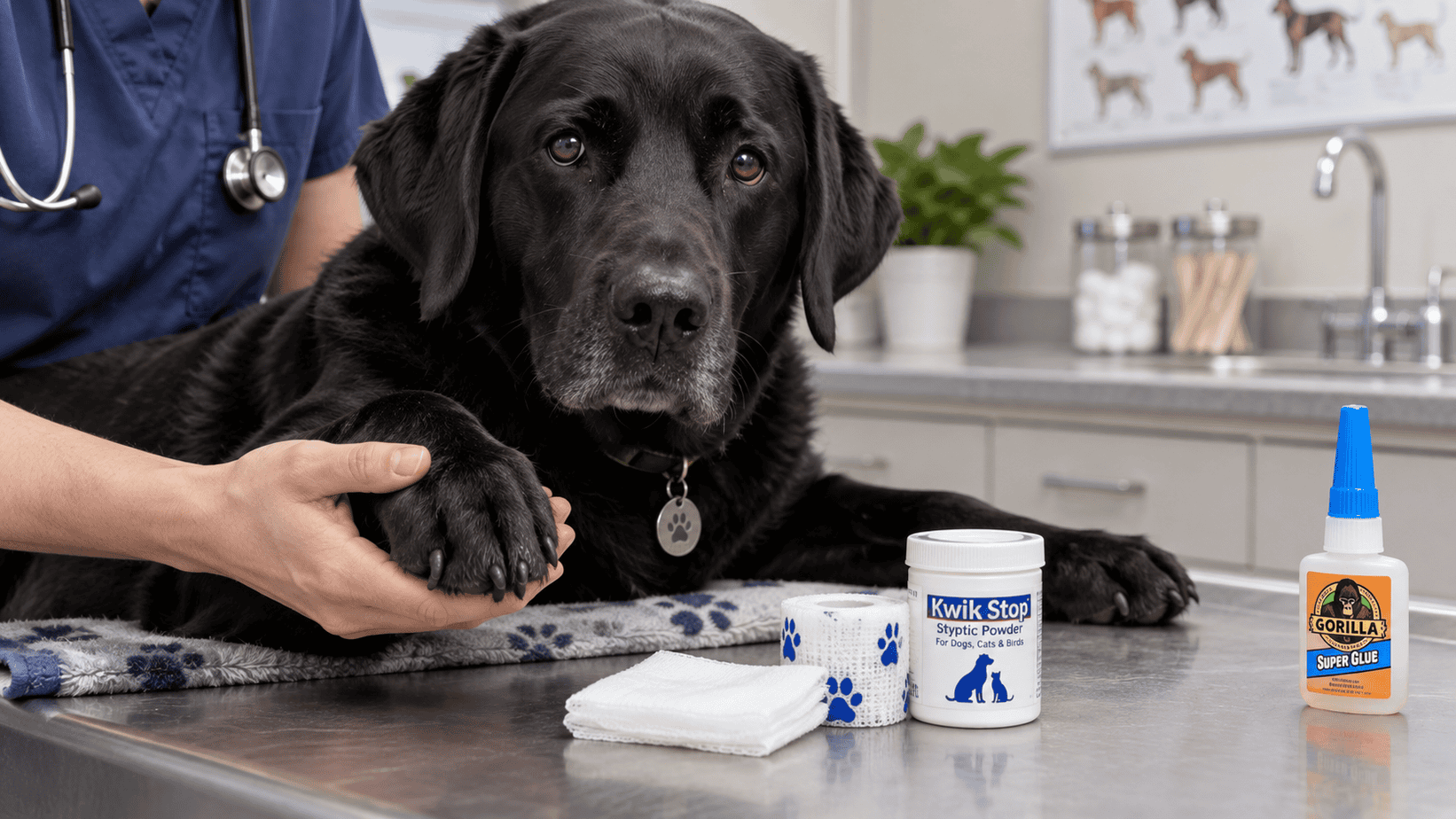
The ASPCA explains that cyanoacrylate super glues can irritate skin and mucous membranes but are relatively low in systemic toxicity. It separately warns that expandable construction and wood glues can swell in the stomach and cause a dangerous blockage. [2] These are different glue problems. The fact that ordinary cyanoacrylate is usually not highly poisonous does not make it a good wound-care product.
For clarity, this household super glue is the type I do not recommend putting on an actively bleeding dog nail. A quick nick is contaminated easily, and sealing the surface can trap blood, moisture, powder, fur, or dirt where you cannot assess it.
Veterinary Tissue Adhesive Is Different
Veterinarians sometimes use medical-grade tissue adhesive in controlled situations. That does not make a bottle from the junk drawer interchangeable with a veterinary product. For example, 3M describes Vetbond as a veterinary tissue adhesive intended for procedures such as closing minor lacerations. [3] Product formulation, sterility, application site, tissue preparation, and professional judgment all matter.
Even veterinary tissue adhesive is not a substitute for examining a nail that is split through the quick, dangling, or injured at the nail bed. The first question is not simply how to cover the bleeding. It is whether the nail is stable and whether damaged tissue needs treatment.
If You Already Used Super Glue
Do not panic, and do not pull bonded tissue apart. Forceful separation can tear skin or worsen the nail injury.
Prevent licking while you look at the paw. If the glue is only on the hard nail shell and the toe looks comfortable, keep the area dry and monitor it. If skin, pads, fur, or your fingers are bonded, call your veterinarian for instructions. Do not use acetone on an open nail, irritated skin, or near the eyes or mouth.
Get prompt professional help if glue entered the eye or mouth, the toe feels hot, your dog is very painful, swelling develops, or the nail is stuck to surrounding tissue. If your dog chewed a bottle of expandable polyurethane construction glue, treat that as a different and more urgent exposure. Call your veterinarian or a pet poison service immediately.
A Clipped Quick vs. a Split or Torn Nail
This distinction changes what you should do next.
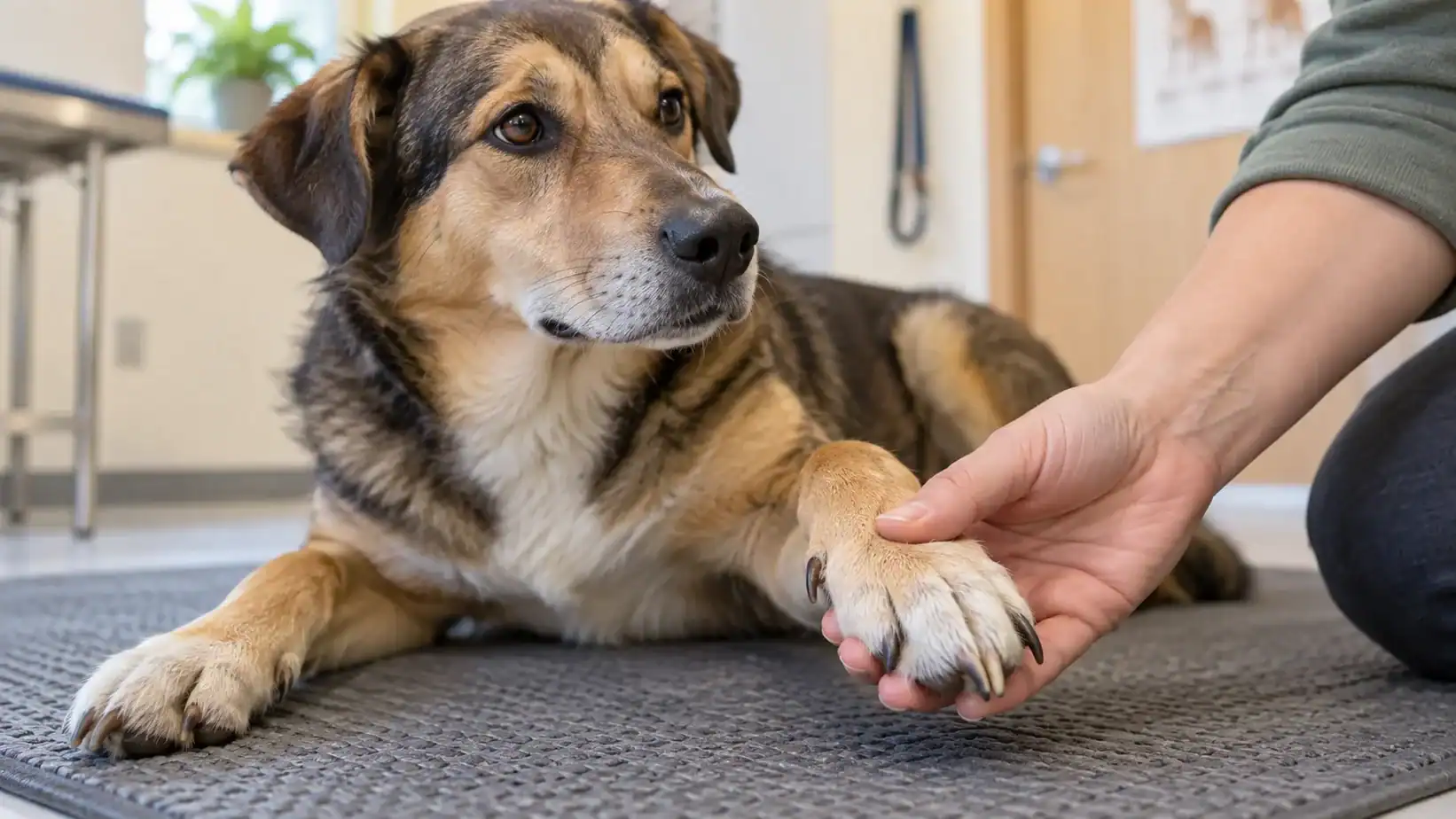
A clipped quick usually follows a nail trim. The nail remains solid and attached, but a small round surface at the tip bleeds. Once the bleeding stops, many dogs are comfortable with brief rest and monitoring.
A split or torn nail may show a crack running up the nail, a loose shell, a hanging fragment, exposed tissue, bleeding near the base, limping, or repeated bleeding when the dog walks. Do not twist, cut, or pull a loose piece at home. The nail bed can be very sensitive, and your veterinarian may need to trim damaged material safely, control pain, and decide whether infection prevention is needed.
When a Bleeding Nail Needs Veterinary Care
Call your veterinary clinic promptly if:
- Bleeding remains active after about 10 minutes of uninterrupted firm pressure and styptic powder.
- Blood is spurting, pooling quickly, or soaking through repeated gauze.
- The nail is split, partly detached, broken near the base, or pushed at an odd angle.
- Your dog will not bear weight, cries when the toe is touched, or cannot settle.
- The toe becomes swollen, warm, red, or produces discharge or odor.
- Bleeding restarts repeatedly or more than one nail is bleeding without a clear trimming accident.
- Your dog seems weak, unusually quiet, or has pale gums.
If your dog takes medication that affects clotting or has a known bleeding disorder, call sooner. A simple quick nick should improve, not become progressively more painful or swollen.
Aftercare for a Clipped Quick
Once bleeding has stopped, the best aftercare is usually quiet and simple. Keep the paw clean and dry. Choose leash walks on clean, smooth ground for the next day, and skip running, digging, rough play, and muddy trails until the nail stays dry and comfortable.
Check the nail later that day and again the next morning. A little dried blood at the tip is not unusual. Renewed bleeding, constant licking, limping, swelling, warmth, discharge, or a bad smell deserves a call to the clinic.
A wrapped Cold Compress may help with comfort around an intact toe after bleeding has stopped, but it will not seal a cut quick. Keep it outside a thin towel and use it briefly. Do not hold a frightened dog down to apply it.
An Over-the-Counter Gel should only be used if its label specifically says it is safe for pets and appropriate for nail bleeding. Human liquid bandage products are not automatically safe for a dog to lick, and they should not be used to hide a split or contaminated nail.
Avoid tight home bandages unless your veterinary team has shown you how to place one. Paw wraps can slip, trap moisture, or restrict circulation. If you need a temporary cover for transport, use a loose clean gauze layer and remove it as directed by the clinic.
Preventing Future Nail Bleeding
Most nail-trim accidents happen because the quick is difficult to see, the tool crushes instead of cuts cleanly, or the dog moves at the wrong moment. A slower setup prevents more problems than any rescue product.
Use the Right Tools
Choose sharp nail clippers that fit your dog’s nail size, or use a grinder if your dog prefers it. Dull blades squeeze the nail and make control harder. Keep your styptic product open and ready before you start.
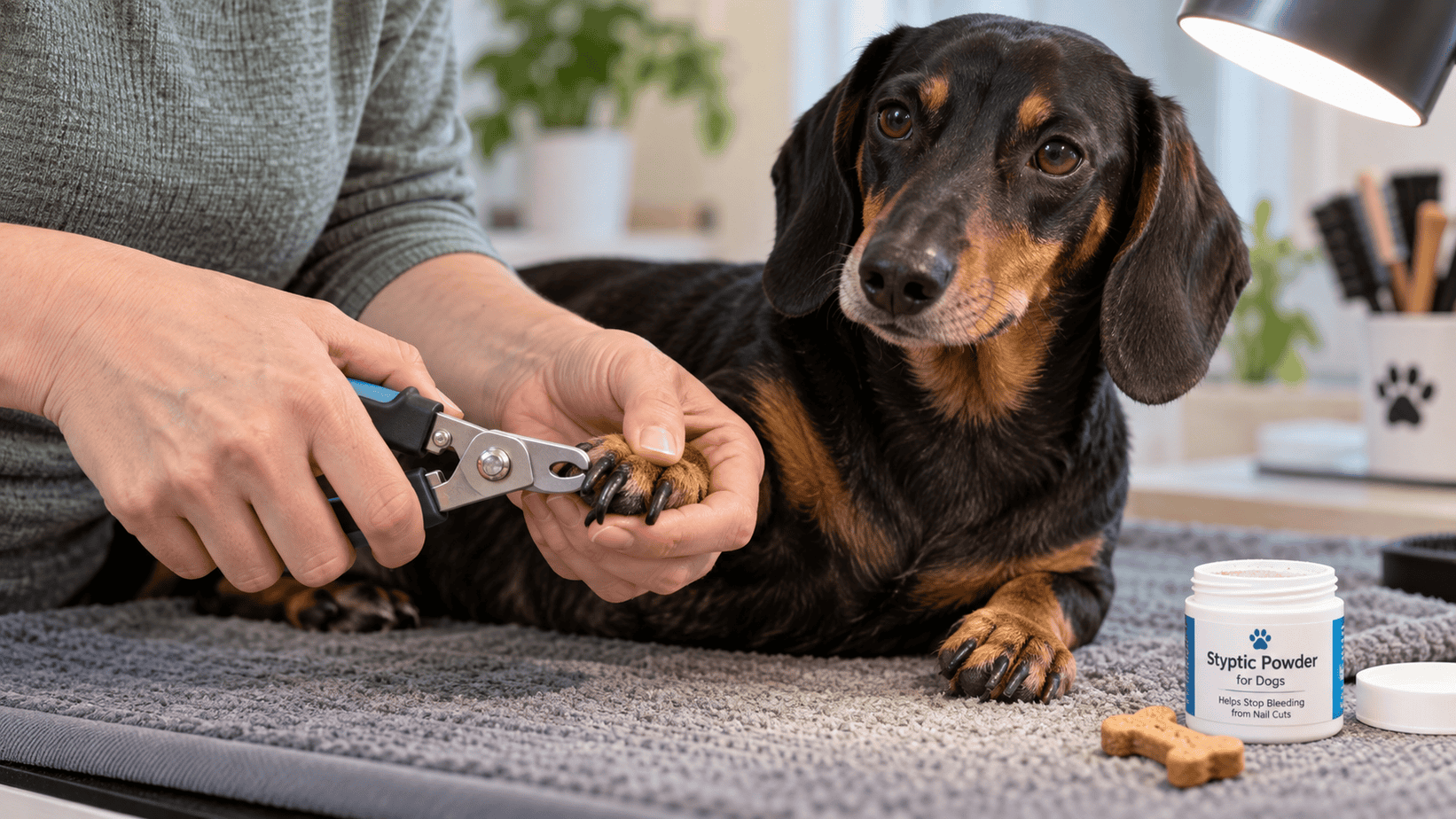
Trim tiny amounts at a time. On pale nails, stop before the pink quick. On dark nails, examine the cut surface after each small trim. A dry, pale center gives way to a darker, softer-looking center as you approach the quick. Stop before that center becomes glossy or shows a small dark dot.
Tips for Dark Nails
Bright light helps, but do not rely on shining a flashlight through every dark nail. Many black nails are too opaque for that to work. Instead, use repeated thin slices, steady paw support, and the changing texture of the cut surface.
If the nails are very overgrown, do not try to restore ideal length in one session. The quick may have grown forward with the nail. Small trims at regular intervals are safer and more comfortable.
Build Cooperative Handling
Practice touching the shoulder, sliding your hand down the leg, holding the paw for one second, and releasing. Reward each calm step. On another day, touch the tool to one nail without trimming. Short sessions teach your dog that paw handling ends quickly and predictably.
If your dog freezes, repeatedly pulls away, growls, snaps, or panics, stop. A professional groomer or veterinary team can help you build a lower-stress plan. Forcing a frightened dog through a full trim increases the chance of injury to everyone.
Protective Paw Choices
For dogs whose nails crack on rough terrain, well-fitted protective footwear may help during hiking or winter walks. Boots must fit correctly, stay dry inside, and be removed after activity so you can inspect the toes. They do not replace routine nail care.
Final Thoughts
A bleeding quick is upsetting, but household glue adds problems that pressure and styptic powder usually avoid. My practical rule is simple: control the bleeding, decide whether the nail is structurally intact, and do not cover damage you cannot assess.
Keep a small nail-care kit with styptic powder, gauze, good lighting, and your dog’s preferred rewards. If the nail is split, the bleeding will not stop, or your dog is very painful, let your veterinary team take over.
Frequently Asked Questions
Cornstarch can help a minor quick nick by creating a temporary barrier when styptic powder is unavailable. Press it onto the cut surface and hold steady pressure. If bleeding stays active or the nail is damaged, contact your veterinarian.
A minor nick should begin slowing within a few minutes with powder and uninterrupted pressure. If bleeding remains active after about 10 minutes, or it is heavy at any point, call a veterinary clinic for guidance.
Prevent licking and do not pull bonded tissue apart. If skin, pads, fur, eyes, mouth, or people are bonded, call your veterinarian. Avoid acetone on the open nail or irritated tissue.
Usually, pressure and styptic powder are safer first steps for a simple quick nick. Home paw bandages can become too tight or trap moisture. Use a wrap only when a veterinary professional recommends it and explains how long it should stay on.
Use bright light, sharp tools, and very small cuts. Check the cut surface after each slice and stop as the center becomes darker, softer, or glossy. Frequent small trims are safer than trying to remove a large amount at once.
References
- Washington State University Veterinary Teaching Hospital. (2026, February 25). How to clip a dog’s nails.
- American Society for the Prevention of Cruelty to Animals. (2019, August 2). These popular hobbies could pose a threat to pets!
- 3M. (n.d.). 3M Vetbond Tissue Adhesive, 1469SB, 0.1 oz (3 mL).

ABOUT THE AUTHOR