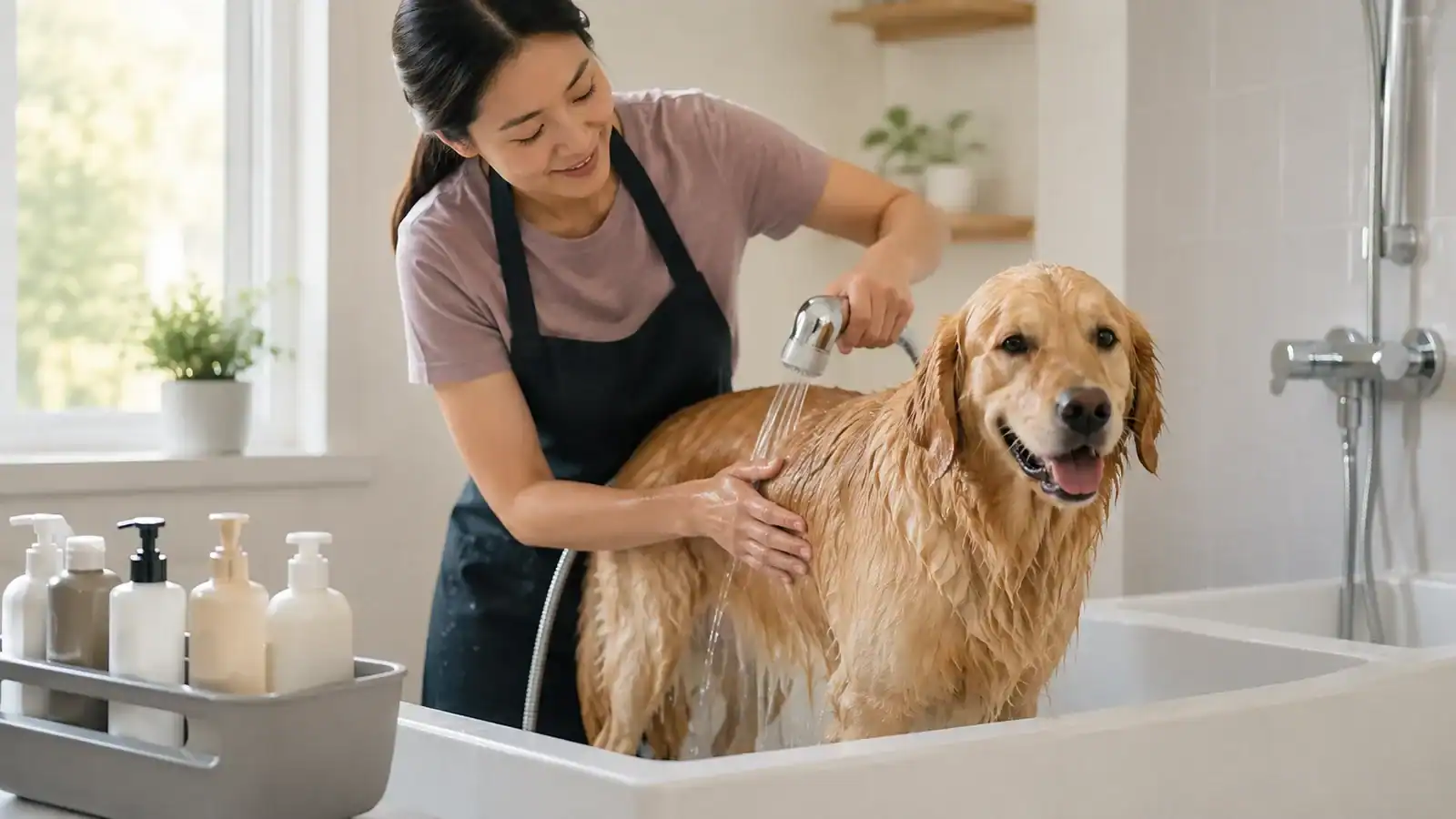
If you are staring at a flaky dog and a bottle of Head & Shoulders, do not make it your dog’s routine shampoo. It is a human anti-dandruff product, and different versions contain different active and inactive ingredients. A dog-specific shampoo is the safer starting point.
Already used it once? Take a breath. Rinse your dog thoroughly with lukewarm water, keep the shampoo away from the eyes and mouth, and watch for irritation or illness. The next step depends on the formula, the amount of exposure, and how your dog feels.
The Short Answer
There are three situations worth separating:
- Routine bathing: Choose a shampoo labeled for dogs. Human dandruff shampoo is not the best everyday or occasional default for canine skin.
- One accidental bath: Rinse away every trace you can, dry your dog gently, and monitor. A comfortable dog after a well-rinsed bath is different from a dog with eye pain, vomiting, or heavy ingestion.
- Veterinarian-directed use: Some active ingredients found in human products also appear in veterinary dermatology. That does not make every human formula interchangeable with a dog product. If your veterinarian recommends a specific off-label product, follow the exact product, contact time, frequency, and rinsing directions you were given.
Why Head & Shoulders Is Not the Best Routine Dog Shampoo
Human dandruff shampoo is made and labeled for the human scalp. For example, a current U.S. Head & Shoulders Classic Clean 2-in-1 label lists pyrithione zinc 1% as the active ingredient, calls the product an anti-dandruff treatment, and warns that it is for external use only. It also says to avoid eye contact and seek help if swallowed. [1]
That is useful label information, but it is not a canine bathing instruction.
You may see a simple explanation online that human shampoo is always wrong because humans and dogs have different skin pH. There is some truth behind the concern, but the real picture is more nuanced. A small study in healthy dogs found that skin-surface pH varied by body site and changed differently after different veterinary shampoos. [2] Product pH is one factor. The complete formula, the dog’s skin condition, contact time, rinsing, and licking risk matter too.
Most importantly, flakes do not tell you the cause. Washing away scale may make the coat look better for a day while leaving the underlying problem untouched.
What Is in Head & Shoulders?
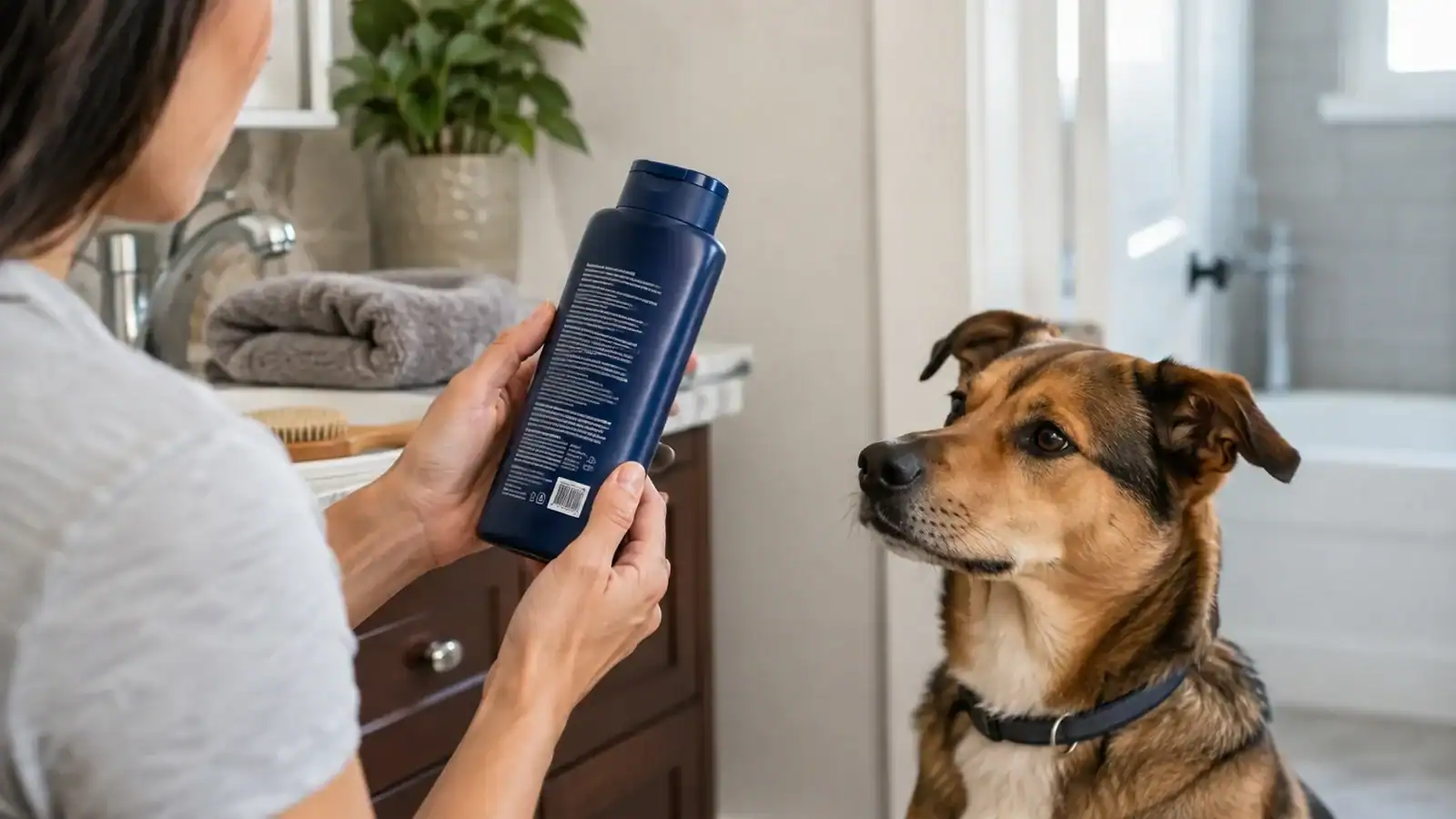
Head & Shoulders is a product family, not one shampoo. Check the Drug Facts or ingredient panel on the exact bottle in your hand.
Pyrithione Zinc
The current Classic Clean 2-in-1 label lists pyrithione zinc 1%. The same label includes fragrance, cleansing agents, conditioners, colors, and other inactive ingredients. [1] A dog can react to the complete formulation, not only the named active ingredient.
Selenium Sulfide
Some Clinical Strength versions use selenium sulfide 1% instead. A current U.S. label identifies it as a human anti-dandruff and anti-seborrheic dermatitis product. [3] Again, the presence of a familiar medicated ingredient does not turn a human shampoo into a general dog-care product.
Formulas can change over time and differ by country. That is why a blanket rule such as “dilute it half and half” is not dependable. The bottle label and your dog’s situation are more useful than advice written for an unspecified version.
What to Do If You Already Used It
If Your Dog Seems Comfortable
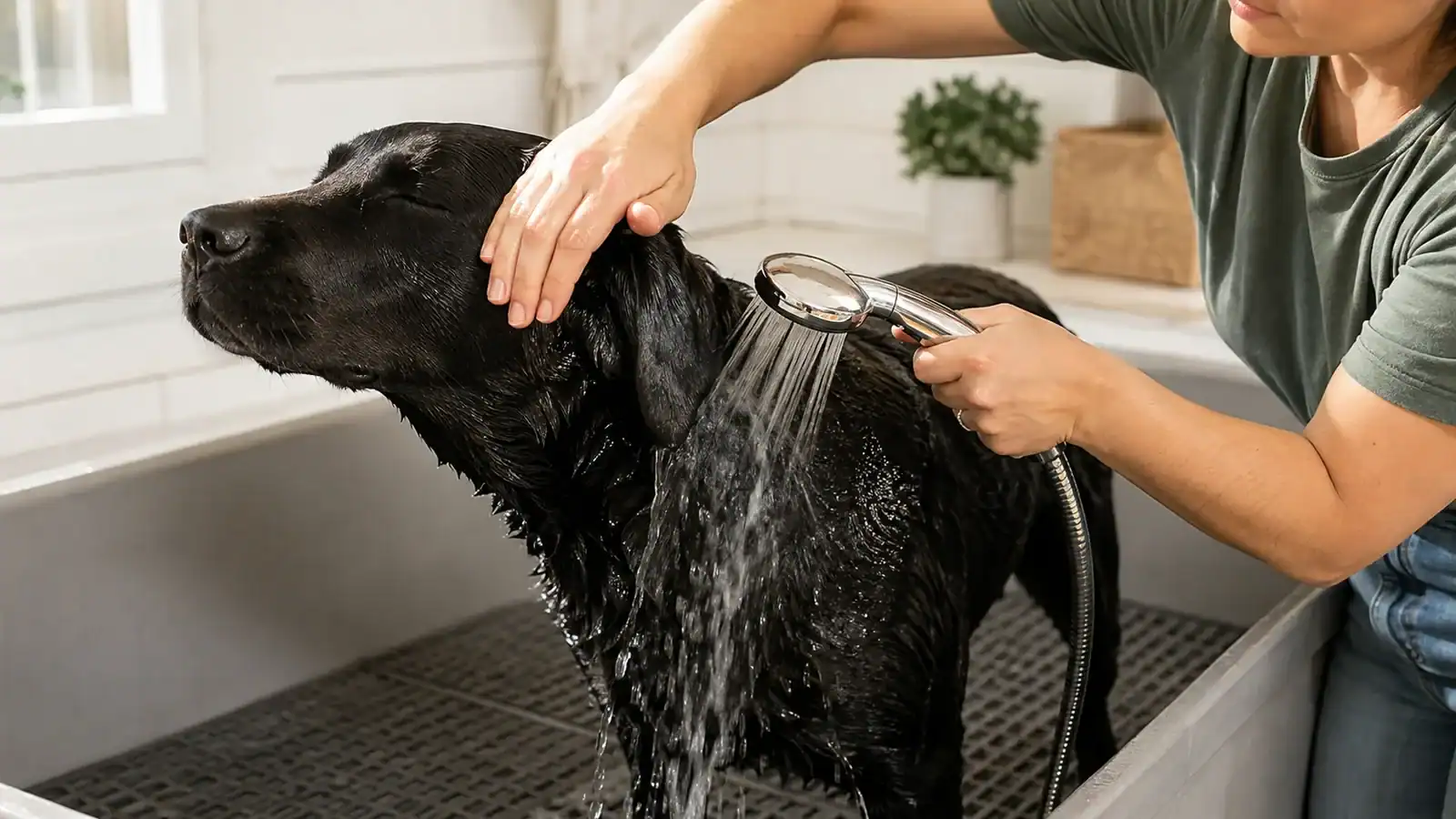
Rinse the coat and skin very well with lukewarm water. Pay attention to skin folds, the belly, paws, and thick areas of coat where residue can hide. Do not layer on another shampoo to “neutralize” the first one.
Towel-dry gently. Prevent licking while the coat is still damp, then watch for redness, increased scratching, hives, drooling, vomiting, diarrhea, unusual tiredness, or behavior that tells you your dog is uncomfortable.
If Shampoo Reached the Eyes
Rinse the eyes gently and thoroughly with clean, lukewarm water. The human product label itself directs users to rinse after eye contact. [1] If your dog keeps squinting, pawing at the face, tearing, or holding an eye closed after rinsing, contact a veterinarian promptly. Eyes can worsen quickly, and ongoing pain deserves care.
If Your Dog Swallowed Shampoo
Remove access to the bottle and stop further licking. Keep the label or take a clear photo of it so the exact product and ingredients are available.
Do not induce vomiting or try a home antidote unless a veterinary professional tells you to. If more than a small lick may have been swallowed, or if you notice drooling, vomiting, diarrhea, weakness, tremors, breathing trouble, or unusual behavior, call your veterinarian, an emergency veterinary clinic, or ASPCA Animal Poison Control at (888) 426-4435. The ASPCA service is available around the clock, and a consultation fee may apply. [4]
Why Does My Dog Have Flakes or Itching?
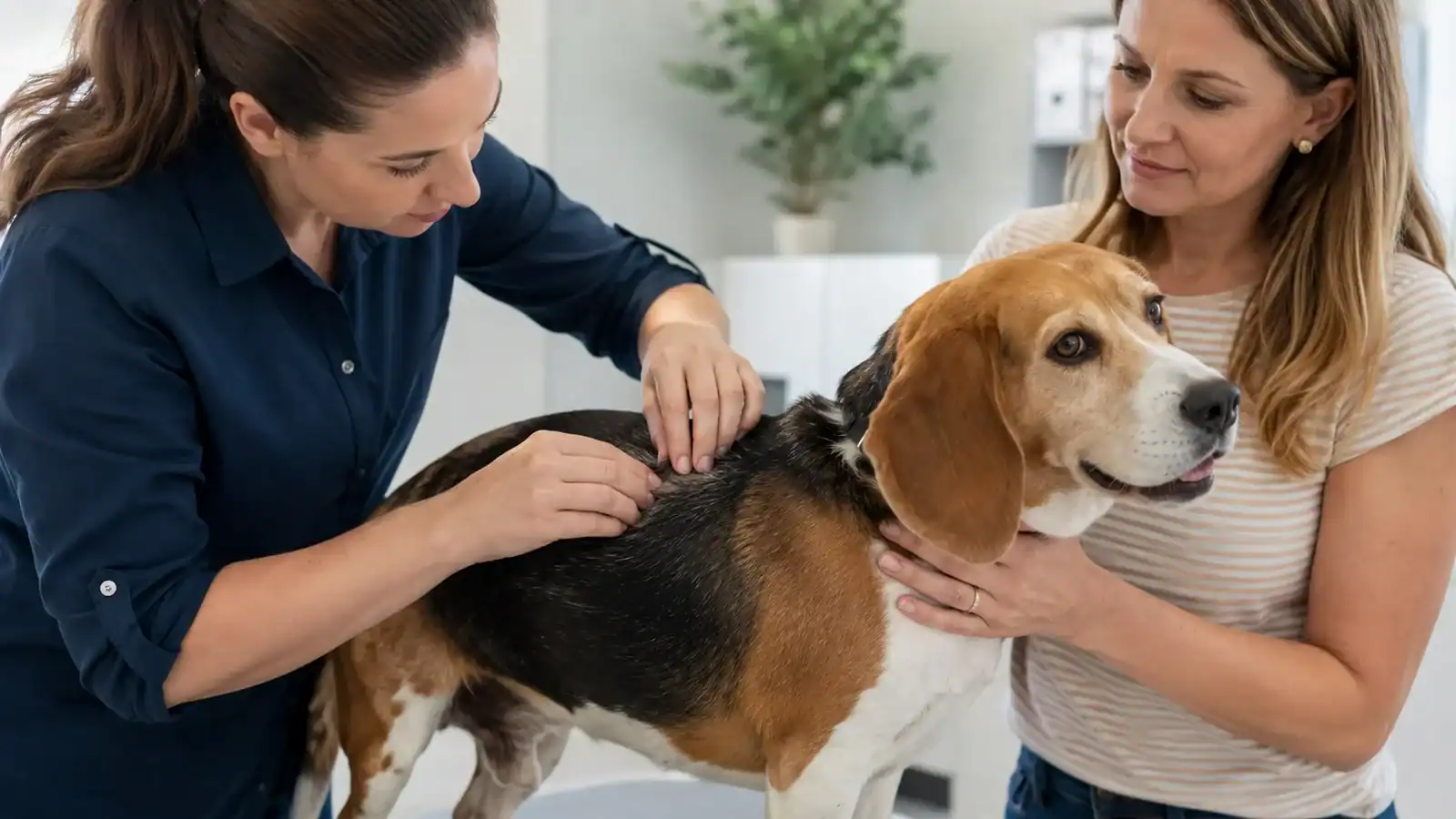
Dandruff is a description of scaling, not a complete diagnosis. Primary seborrhea is uncommon. Most dogs with noticeable scaling have a secondary problem that is changing how the skin renews itself or how the coat holds oil and debris. Allergies and endocrine disorders are common underlying categories, and secondary bacterial or yeast problems may occur. [5]
A quick look at the whole pattern is more helpful than focusing on flakes alone.
| What you notice | What it may suggest | Sensible first step |
|---|---|---|
| Fine, dry flakes with otherwise comfortable skin | Dry air, bathing routine, product irritation, or early skin imbalance | Pause new products and choose a gentle dog-labeled shampoo |
| Greasy scale or a strong odor | Seborrhea or microbial overgrowth may be present | Arrange an exam rather than rotating through home remedies |
| Redness, repeated scratching, or licking | Allergy, parasites, irritation, or infection may be involved | Check parasite prevention and seek guidance if signs persist |
| Hair loss, crusts, sores, or pain | A more significant skin problem needs diagnosis | Schedule veterinary care promptly |
These clues overlap. They help you decide what to do next, but they cannot identify the cause by themselves.
How to Choose a Safer Shampoo for Your Dog
For a Routine Bath
Look for a product clearly labeled for dogs and appropriate for your dog’s age. A simple formula with a mild scent or no added fragrance can be a comfortable starting point, especially for a dog with sensitive skin. Follow the product’s dilution, contact-time, and rinsing directions instead of borrowing a schedule from a different shampoo.
For Flaky or Itchy Skin
Start by asking whether the skin is dry, oily, smelly, red, sore, or intensely itchy. A moisturizing dog shampoo may suit uncomplicated dryness, while a medicated product may be needed for a diagnosed infection or keratinization problem. Those are different jobs.
Avoid assuming that “natural” means gentle. Essential oils, acidic rinses, concentrated plant extracts, and kitchen ingredients can irritate skin or create a licking hazard when the formula and dose are not designed for dogs.
For a Diagnosed Skin Condition
Use the product chosen for that diagnosis. Medicated shampoos vary in active ingredient, strength, contact time, and bathing frequency. The MSD Veterinary Manual advises following veterinary guidance for seborrhea shampoo selection and not using a shampoo formulated for people without veterinary consent. [5]
A Holistic Way to Think About Skin Health
Healthy skin is shaped by more than the bottle in the shower. Look at the whole dog:
- Has the itching changed with a season, food, medication, household cleaner, or new grooming product?
- Is parasite prevention current and appropriate for your dog’s exposure?
- Are the ears, paws, belly, or skin folds involved?
- Is the coat dry, greasy, odorous, thinning, or painful?
- Did the problem begin suddenly, or has it returned in a pattern?
This wider view helps separate a one-time irritation from a recurring health issue.
Plant-based care deserves the same thoughtful standard. A systematic review in the HHD Source Library found promising antimicrobial, anti-inflammatory, and wound-healing signals for several medicinal plants, but it also emphasized the need for more clinical research in dogs. [6] That supports careful investigation, not improvised essential-oil or herbal shampoo recipes.
When to Contact Your Veterinarian
A little flaking after dry weather or a recent bath is not always urgent. Contact your veterinarian when the problem lasts, keeps returning, or is getting worse. An appointment is especially useful if you notice:
- intense or constant itching
- greasy scale or a strong odor
- spreading redness
- hair loss, crusts, open sores, or pain
- ear redness, discharge, or head shaking
- widespread skin changes
- symptoms that continue after you stop a new product
Seek prompt help after shampoo exposure if your dog has ongoing eye pain, repeated vomiting, marked weakness, tremors, trouble breathing, collapse, or any other severe change. Bring the product label with you.
Final Thoughts
Head & Shoulders may be close at hand, but it is not the best routine shampoo for a dog. Choose a dog-specific product for everyday grooming, and let the pattern of flakes, itch, odor, and inflammation guide the next question.
If you already used it once, rinse well and assess the dog in front of you. A comfortable dog with no symptoms can usually be monitored. Eye exposure, meaningful ingestion, or new signs call for individual advice. Recurring skin trouble deserves a cause-based plan, not a stronger guess from the bathroom shelf.
Frequently Asked Questions
It is better to use a dog-labeled shampoo. If one bath has already happened, rinse thoroughly and monitor rather than panicking. Contact a veterinarian if irritation, eye pain, vomiting, unusual tiredness, or other concerning signs appear.
Do not use it as a do-it-yourself treatment. Flakes can come from many causes, and visible improvement does not prove the underlying problem is treated. A veterinarian can choose a dog-appropriate medicated shampoo when yeast, bacteria, seborrhea, or another condition is diagnosed.
Stop further licking, keep the bottle or a photo of the label, and watch closely. For more than a small lick or for drooling, vomiting, diarrhea, weakness, tremors, breathing trouble, or unusual behavior, contact your veterinarian or ASPCA Animal Poison Control at (888) 426-4435. [4]
For an ordinary bath, use a gentle shampoo labeled for dogs. For recurring flakes, odor, redness, or itch, choose a product based on the cause rather than the marketing word “dandruff.” A veterinarian can help match a medicated shampoo to a diagnosed problem.
Baby shampoo is still formulated for people, so it is not the best routine choice. If there is no urgent need to bathe your dog, wait until you have a dog-labeled product. If you are removing a harmful substance from the coat, call a veterinarian or animal poison-control service for product-specific decontamination advice.
References
- DailyMed. (2026, March 12). Head and Shoulders 2in1 Classic Clean: Pyrithione zinc lotion/shampoo. U.S. National Library of Medicine.
- Oh, T. H., & Park, S. J. (2001). The comparison of various shampoos on skin pH in normal dogs. Journal of Veterinary Clinics, 18(4), 363–367.
- DailyMed. (2025, October 3). Head and Shoulders Clinical Strength Cooling Itch Relief: Selenium sulfide shampoo. U.S. National Library of Medicine.
- American Society for the Prevention of Cruelty to Animals. (n.d.). ASPCA Animal Poison Control.
- MSD Veterinary Manual. (n.d.). Seborrhea in dogs.
- Tresch, M., Mevissen, M., Ayrle, H., Melzig, M., Roosje, P., & Walkenhorst, M. (2019). Medicinal plants as therapeutic options for topical treatment in canine dermatology? A systematic review. BMC Veterinary Research, 15, 174.
A note about your dog’s health
This article provides general education and does not replace an examination, diagnosis, or individualized advice from your veterinarian. Contact a veterinary professional if you are concerned about your dog’s symptoms.

ABOUT THE AUTHOR