Category: Healthy Happy Dogs

  • Unleash the Fun: Best Dog Playpen for Indoor and Outdoor Use

    Unleash the Fun: Best Dog Playpen for Indoor and Outdoor Use

    Are you looking for the best dog playpens for your pup? As a dog owner, it’s common to worry about the safety of your pup in their new home. While many pet owners choose to crate their dogs for safety, it can limit their movement and playtime, which can be discouraging for any energetic pup.

    Thankfully, there’s an alternative to crating that can give your pet the freedom to move and play while keeping them safe and secure. A high-quality dog playpen provides a contained space for your pet to play with their toys and roam freely while you’re out running errands or busy with household chores.

    Investing in a dog playpen can give you peace of mind knowing that your furry friend is safe and happy, even when you’re not at home.

    outdoor playpen for small dogs

    Benefits of Dog Playpens

    • A dog playpen provides your pet with more space to move around, stretch and play compared to a crate, helping them stay active.
    • It encourages exercise, promoting the development of muscles and joints and making them stronger.
    • The playpen helps develop independence and confidence in dogs by allowing them to move around freely without being attached to you.
    • It provides a safe, enclosed area for your dog to move around in, without having access to your entire home.
    • The playpen can be used to keep your pet out of mischief and prevent them from accessing certain rooms or areas.

    Types of Dog Playpens

    You need to understand the different types of dog playpens available in the market to make it easier for you to select a playpen that suits your needs. Here are the two types of dog playpens.

    Indoor Dog Playpens

    If you’re looking for a way to provide your dog with some indoor playtime while keeping them safe and contained, then an indoor dog playpen is a great option. Designed specifically for indoor use, these playpens give your furry friend plenty of space to move around and play without having to confine them to a small area.

    Not only does an indoor playpen help keep your dog contained and off certain areas in your house, it can also be a useful tool for housetraining your puppy. By giving your pet a designated space to call their own, they’ll feel more at ease in their new home and be less likely to have accidents outside of their designated area.

    Outdoor Dog Playpens

    If you’re worried about your dog’s safety when letting them play outside, an outdoor dog playpen might just be what you need. These pens are designed to keep your furry friend secure and out of harm’s way, especially if you live near a busy road or don’t have a fenced-in yard. With an outdoor playpen, your dog can enjoy some fresh air and exercise while you have peace of mind knowing they’re safe and secure. Plus, it gives them the freedom to play and move around without the constraints of a leash.

    playpen for pets

    Things to Consider When Buying a Dog Playpen

    When buying a dog playpen, it’s important to keep several factors in mind to ensure that you get the best playpen for your furry friend. Here are some of the things to consider:

    Dog Size

    Make sure that the playpen you choose is big enough to accommodate your dog and provide them with space to move around and play. The playpen should also be tall enough to prevent your dog from jumping out.

    Location

    Consider where you’ll be keeping the playpen. If it will be outdoors, you may want to look for a playpen with added features like waterproofing. For indoor playpens, you may want to choose a color that matches your décor.

    Stability and Durability

    The best dog playpen should be stable and durable enough to contain your pet. Look for playpens with stabilizing stakes to keep them in place, especially if you have a large dog who could knock it over.

    Material

    Playpens are made of different materials, each with their own pros and cons. Metal playpens are strong and durable but may scratch your floors. Wooden playpens are aesthetically pleasing but not durable enough for outdoor use. Plastic playpens are suitable for indoor and outdoor use but may not be suitable for heavy chewers. Mesh playpens are less durable but can be used indoors.

    Portability

    If you need to move the playpen around, look for one that’s portable and easy to move. Collapsible playpens are a good option for those who need to move them around frequently.

    Flexibility

    Consider whether you need a playpen that can accommodate multiple pets or one with a specific shape to fit your space. Some playpens can change size and shape with the removal of additional panels.

    Entry

    Playpens with doors can be helpful for large dogs who can’t be lifted over the fence, and can also prevent dogs from jumping over the playpen.

    By considering these factors, you can choose a high-quality dog playpen that will keep your pet safe, secure, and comfortable.

    best dog playpens

    Top 10 Best Dog Playpens

    Finding the best dog playpen for your furry friend can be a daunting task with the numerous options available in the market. As a responsible pet owner, safety, durability, and stability should be among the top factors to consider when shopping for a playpen. You want to ensure that your pet has enough space to play, relax, and move around without feeling caged or restricted.

    To make it easier for you, we have compiled a list of the top 10 best dog playpens that offer both reliability and durability. Our reviews highlight the features, pros, and cons of each playpen to help you make an informed decision that best suits your needs and your pet’s safety.

    1) Richell Convertible High Pet Playpen (3-in-1)

    Richell Convertible High Pet Playpen is a simple playpen that is full of ingenious features. It is made of extremely durable plastic that can be used inside or outside. The playpen does not harbor mold, germs, or any other contamination. It includes a mat to provide extra comfort to your dogs. The mat can also be used as a roof cover when conditions are not ideal outside.

    The pet pen is made of quality and durable plastic that is completely water-resistant. It has vertical bars to prevent dogs from climbing or jumping and escaping. The pen includes specially designed caps to safely lock the panels in place at 90°, 120°, and 180° angles. It has a door with a safety lock so your dog can’t escape. The playpen can be laid out as a rectangle or square or even as a hexagon. It can be converted into a pet gate and room divider easily.

    Pros

    • Lots of Space: This playpen is really roomy, measuring 48 inches in diameter. That means your furry friend will have plenty of space to run around and play.
    • Easy to Assemble: You don’t need any tools to set up this playpen, which is great news if you’re not super handy. It’s made up of eight panels that snap together, so it’s really straightforward to put together.
    • Portable: When you’re not using the playpen, you can easily fold it up and store it away. Plus, it’s really lightweight, which means you can take it with you wherever you go.
    • Tough and Durable: This playpen is made of sturdy metal, so it can handle even the rowdiest of pups. It also comes with four metal stakes that you can use to secure it to the ground.
    • Versatile: Whether you’re looking for an indoor or outdoor playpen, this one fits the bill. It’s also suitable for a variety of pets, not just dogs.

    Cons

    • This playpen is expensive

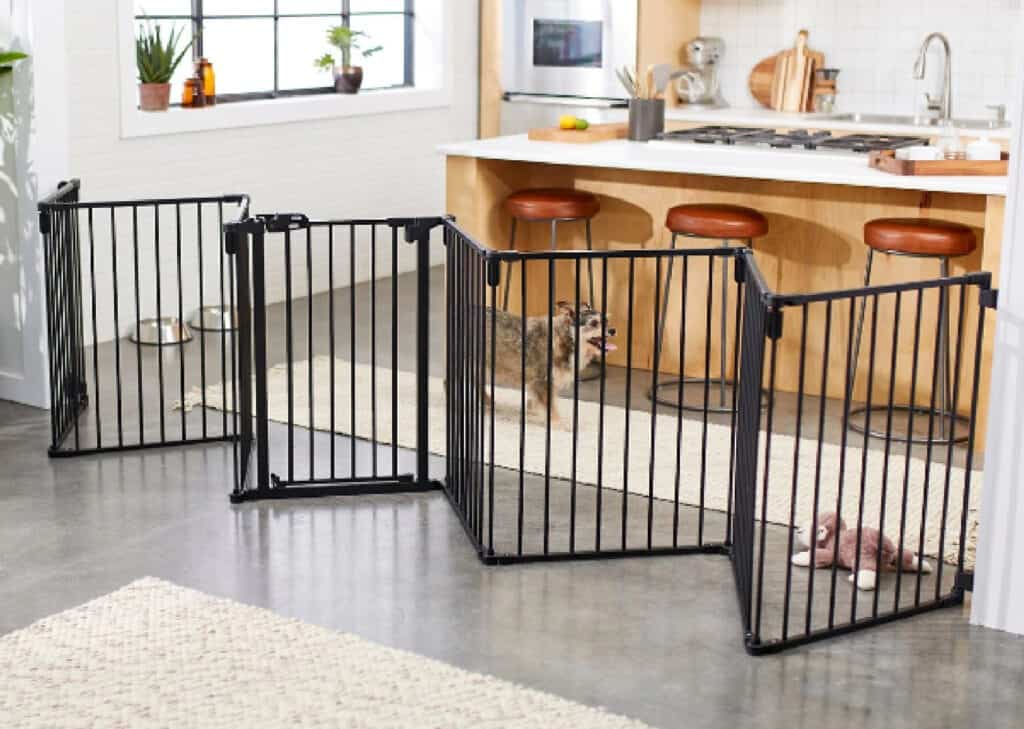
    2) Frisco Steel 8-Panel Configurable Dog Gate & Playpen

    This product is an eight-panel gate made by Frisco that is both versatile and durable. You can mount it on the wall or set it up as a freestanding gate in various shapes such as a square, rectangle, or octagon to fit your specific needs and space. It comes with large anchors to secure the gate between walls and separate open spaces, providing your pet with a safe place to roam freely.

    The gate-mounting process requires a pencil and screwdriver, but setting it up as a freestanding gate is tool-free. Each panel is 30 inches tall and has a powder-coated finish. The easy-press buttons allow you to remove panels quickly and tailor the gate to your needs. The gate measures 186.5 inches without mounting brackets and 190 inches with brackets.

    The gate also features a self-closing door that automatically shuts if left open less than 90 degrees, and it swings freely in both directions. The dual-lock system keeps your pet safely contained. Frisco products are designed, tested, and approved by the pet experts at Chewy, and they strive to create products that will bring you and your pet more happy moments together. From dog gates to apparel to potty gear, Frisco offers a variety of products to meet your pet’s needs.

    Pros

    • Versatile: This eight-panel gate is very versatile and can be configured into different shapes and sizes to fit your space and pet’s needs. It can be used as a gate or as a freestanding enclosure to create a designated play area for your pet.
    • Durable: Made of steel, this playpen is durable and built to last. It also features a powder-coated finish to ensure it holds up well over time.
    • Easy to install: The gate-mounting process requires only a pencil and screwdriver, and setting it up as a freestanding gate is tool-free, making it very easy to install.
    • Secure: The playpen comes with large anchors to secure the gate between walls and separate open spaces, ensuring your pet stays safe and secure in their designated area. The self-closing door and dual-lock system also provide added security.
    • Pet Expert Approved: Frisco products are designed, tested, and approved by the pet experts at Chewy, so you can trust that this playpen is made with your pet’s safety and comfort in mind.
    3) Iris Plastic Pet Playpen

    The Iris Plastic Pet Playpen is a great choice for small – to medium-sized dog breeds, especially if you have limited space in your home. This pet playpen is compact, lightweight, and a fantastic alternative to traditional wire playpens. It’s made of heavy-duty plastic and features double steel door latches, making it a sturdy option for your furry friend.

    You can select from different color options to match your home decor. This playpen is ideal for puppies who tend to chew on things they shouldn’t, keeping them safe and secure. Assembly is quick and easy, and the playpen can be used both indoors and outdoors. It even includes a sturdy dog door to allow easy access for your pup. Additionally, you can purchase add-on panels to increase the size of the playpen.

    Pros

    • Versatile: This playpen can be used for a variety of purposes, such as a dog play yard, play gate, or small dog fence. It’s a great option for pet owners who need flexibility in their pet containment options.
    • Portable: The Iris playpen is lightweight and easy to move around, making it a great option for pet owners who like to take their furry friends with them on trips.
    • Durable: Made of heavy-duty molded plastic, this playpen is built to last. It’s also designed with non-skid rubber feet to protect floors from scratches.
    • Expandable: If you need more play space for your pet, you can easily add on additional panels to create a larger playpen. This makes it a great investment for pet owners who anticipate their pet’s play needs evolving over time.
    • Spacious: With a total enclosure area of 21 sq. ft, this playpen provides plenty of room for your pet to run around and play. The door openings are also large enough to allow easy access for both you and your pet.

    Cons

    • It does not provide you with height choices to choose from.
    • The playpen may be too short for climbers/jumpers.
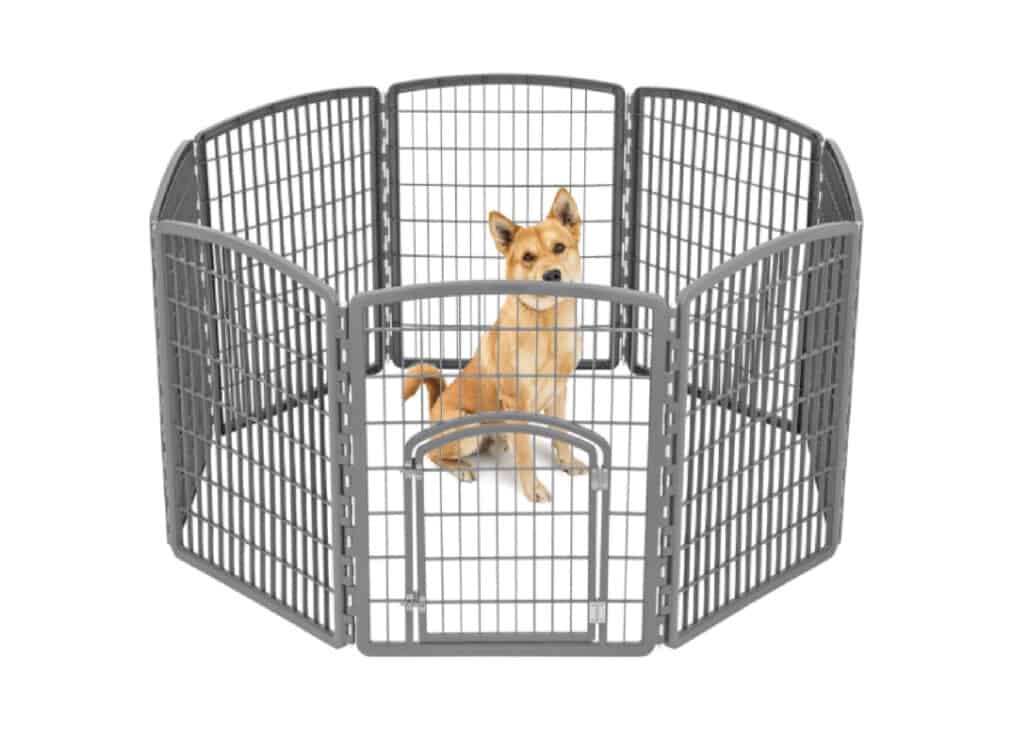
    4) Frisco Deco Horizontal Lines 3-Panel Dog Gate

    Looking for a pet gate that not only keeps your pup contained but also looks great in your home? Check out the Frisco Deco Horizontal Lines 3-Panel Pet Gate! It’s 24 inches tall, making it perfect for extra-small, small, and medium-sized breeds. The gate features a folding, freestanding design that works as a gate or room divider, giving your pet their own safe space wherever you need it.

    One of the best things about this gate is that it’s really easy to use. There’s no assembly required and no tools needed. Simply unfold the three panels and turn the support feet, and you’re good to go! The two swiveling, sturdy support feet add extra stability when needed, ensuring that your pet won’t accidentally knock it over.

    The Frisco Deco Horizontal Lines 3-Panel Pet Gate isn’t just functional, it’s also stylish. The gate features a deco-style design with horizontal line cutouts that add a touch of elegance to any room. It comes in two color options – clean white or rich espresso – so you can choose the one that matches your home decor.

    Pros

    • Stylish Design: This pet gate features a stylish deco-style design with horizontal line cutouts that add a touch of elegance to any room. It’s a great option for pet owners who want a functional pet gate that also looks great in their home.
    • Easy to Use: There’s no assembly required and no tools needed to use this pet gate. Simply unfold the three panels and turn the support feet, and you’re good to go! This makes it very convenient for pet owners who want a hassle-free solution.
    • Portable: The folding, freestanding design of this pet gate makes it easy to move around. You can use it as a gate or room divider wherever your pet needs their own safe space.
    • Sturdy: The two swiveling, sturdy support feet add extra stability to this pet gate when needed. This ensures that your pet won’t accidentally knock it over, providing peace of mind for pet owners.
    • Versatile: This pet gate is 24 inches tall, making it perfect for extra-small, small, and medium-sized breeds. It’s a great option for pet owners who want a pet gate that can be used in a variety of settings, from doorways to hallways to open spaces.
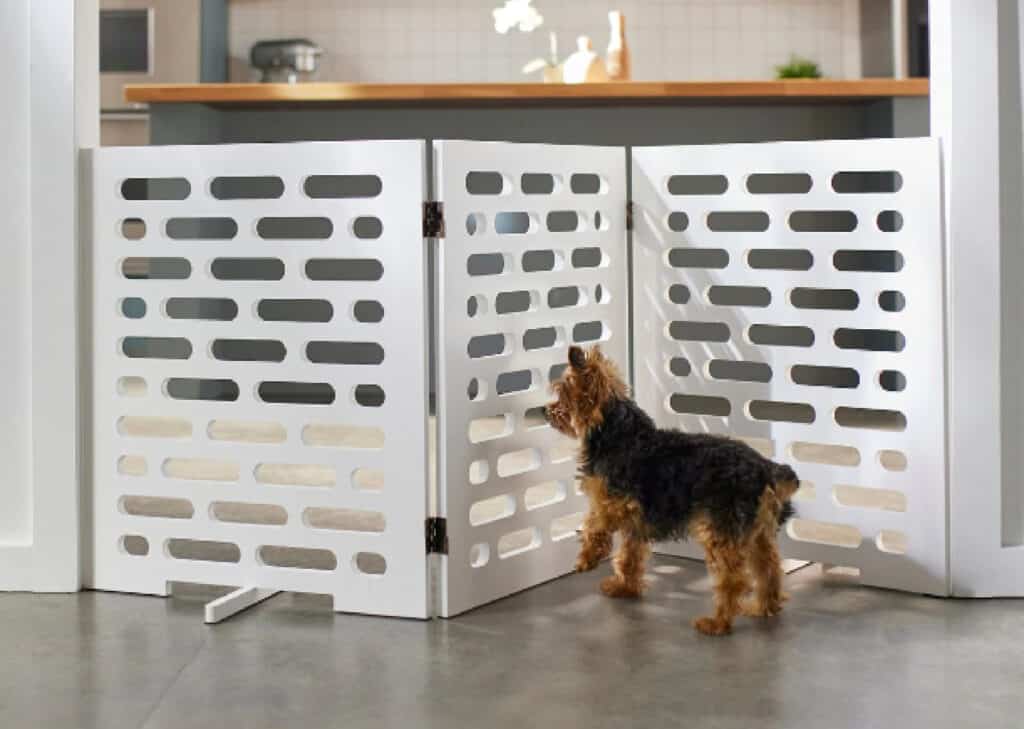
    5) Midwest Exercise Pen

    The Midwest Exercise Pen is an excellent choice for large-breed puppies that need more space to play and exercise. It consists of eight 24-inch wide panels with a sleek black E-coat finish to provide protection from the elements, which makes it perfect for outdoor use. The playpen has corner stabilizers for indoor use and ground stakes for outdoor use, ensuring that your furry friend is safe and secure.

    The exercise pen comes in five different heights, allowing you to choose the perfect size for your pet. It also features an optional sunscreen or wire mesh top that provides shade or added security while your dog is outside. The double latch dog door ensures that your pet can enter and exit the playpen easily. The exercise pen is easy to fold down for storage or transportation, making it perfect for pet owners on the go. Additionally, the pen comes with a one-year manufacturer’s warranty for added peace of mind.

    Pros

    • Durable: Durable steel pet gate resists chewing for determined pets.
    • Easy to Install: The pet gate features pressure-mounted technology, which means there’s no need for drilling or tools. Simply adjust the tension knobs to secure the gate in place and you’re good to go!
    • Versatile: This 30-inch tall pet gate fits openings 29-39 inches wide, offering versatile use for pet owners.
    • One-Handed Operation: Gate has one-handed lock for easy opening/closing while holding pet/items.
    • Stylish: This pet gate features a sleek, modern design that complements any home decor. It’s available in both black and white to match your personal style.

    Cons

    • Dog owners cannot purchase single add-on panels.
    • The playpen may not be sturdy enough for full-grown dogs.
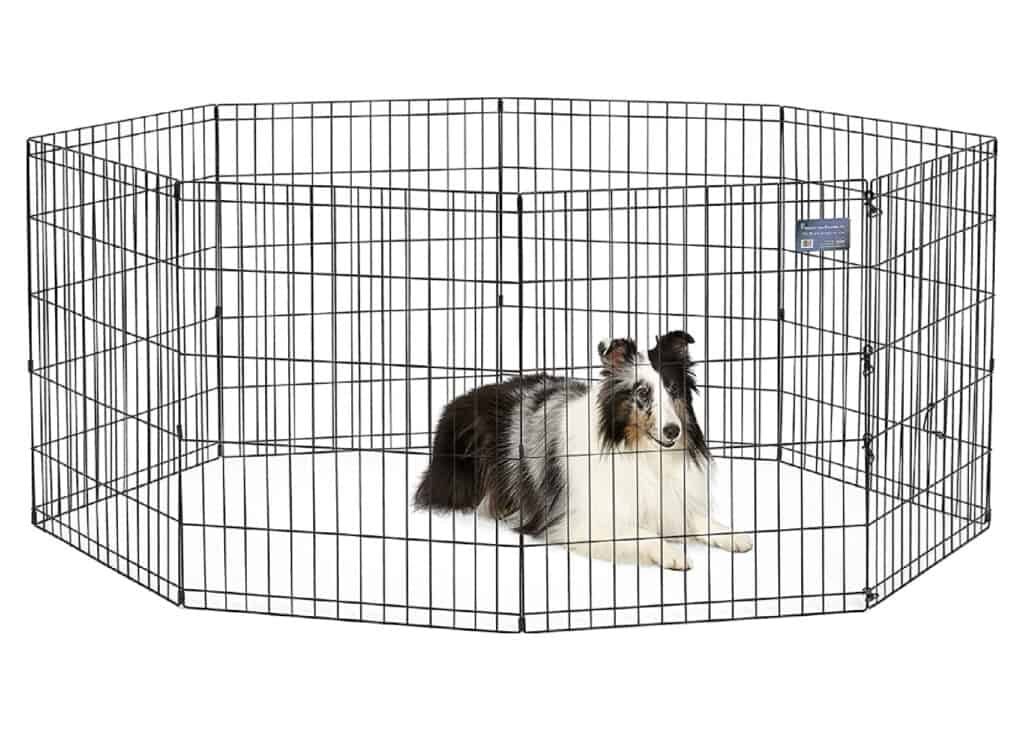
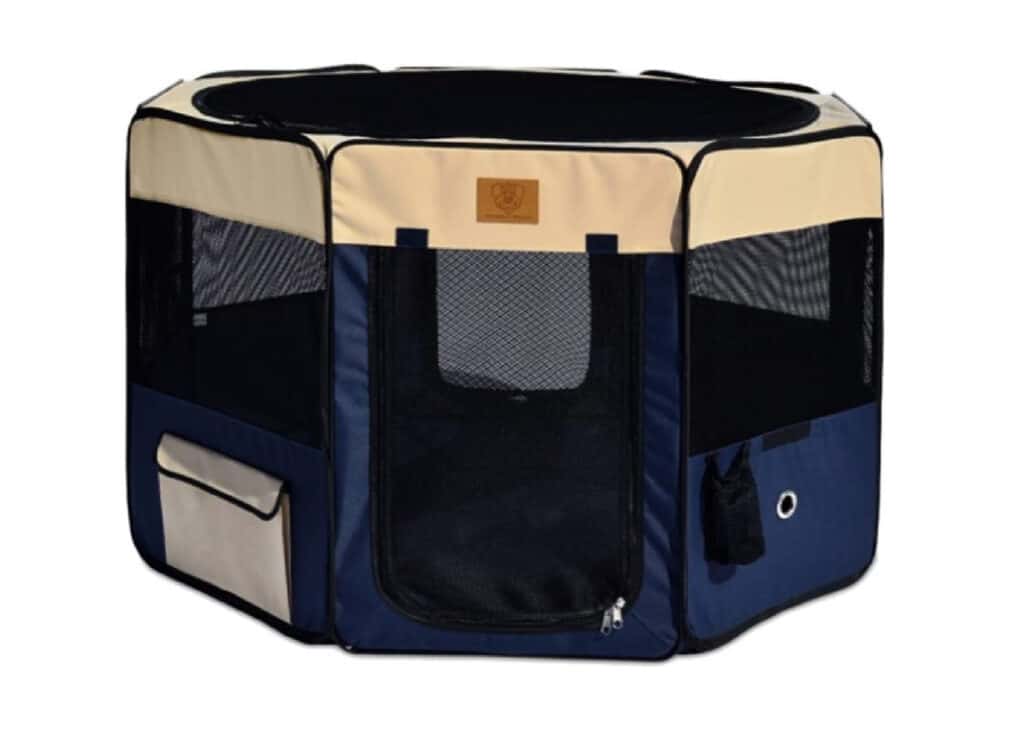
    6) Zampa Foldable Portable Dog Playpen

    Zampa Foldable Portable Pet Playpen is a portable playpen that is easy to set up. It easily folds down and comes with a handy carrying case for easy transportation and storage. The playpen is durable and comes with an attached floor mat. It includes reinforced corners and seams to keep your dog safe and secure.

    The portable pet playpen is water-resistant for the outdoors. It measures 24 inches high and 45 inches in diameter. The playpen is ideal for small and medium dog breeds but may not be ideal for larger breeds or older puppies once they grow bigger. It does not require any assembly. The pen has a zippered dog door that ensures easy entry and exit for your pet. It comes with a 1-year money-back guarantee.

    Pros

    • Safe and Durable: Water-resistant, high-quality materials with reinforced corners and protected seams for pet safety.
    • Spacious and Convenient: Plenty of space for pets to play with a 45″ diameter and 24″ height. Plus, the exterior side pockets and bottle holder make it easy to keep your personal items close by.
    • Easy to Use: Setting up this playpen is a breeze – it pops up in seconds with no assembly required! And when you’re not using it, the playpen folds flat, making it easy to store and transport. Plus, the included carrying case makes it easy to take with you on the go.
    • Mesh Top: The included mesh top can be zipped on when needed, providing added security and protection for your pet.
    • Great Customer Service: Zampa is dedicated to providing top-notch customer service. In addition to the playpen, you’ll receive 4 metal spikes for outdoor safety, and the customer service team is committed to making things right. Plus, they even provide a video tutorial to help you get started with your new playpen!

    Cons

    • It is not ideal for large dog breeds.
    • The playpen is not as sturdy as metal playpens.

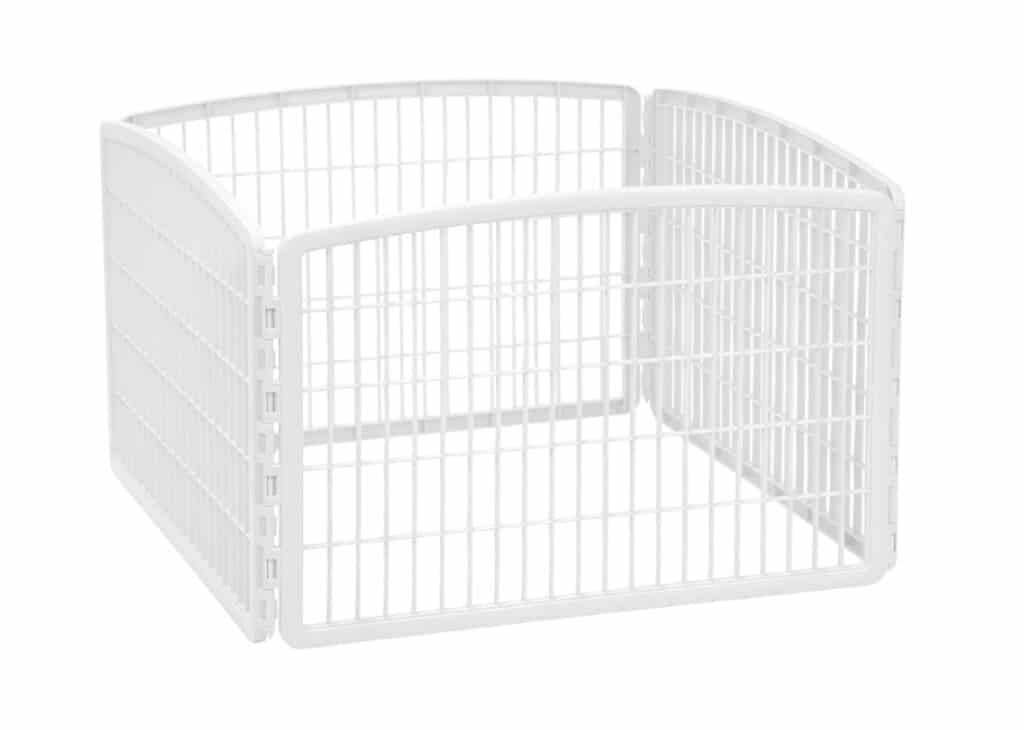
     7) IRIS Indoor & Outdoor Plastic Dog PlayPen

    IRIS Indoor & Outdoor Plastic Pet Pen is a solid and sturdy pet pen that can be used indoors or outdoors. It is a quality puppy pen that is made in the US. The pen is designed to keep your pet safe and comfortable while providing him with enough space to play. It is made of durable heavy-duty molded plastic for durability and reliability.

    The Plastic Pet Pen features an 8-panel construction that is solid and comes with non-skid rubber feet to protect your flooring. The panels interlock together securely with full-length connecting rods. It easily folds for quick and easy transportation anywhere. The plastic material not only makes it lightweight but also makes it extremely easy to clean and disinfect. It comes in two sizes of either 4 or 8 panels and is available in different colors such as chocolate, white, green, blue, and chrome.

    Pros

    • Versatile: This playpen is versatile for indoor/outdoor use, creating a safe and secure play space for your furry friend.
    • Portable: IRIS Playpen is portable and lightweight. It provides 8 sq ft play area for pets.
    • Easy to Use: Easy setup and use with 33″W x 24″H panels and 14”W x 16.5”H door. The distance between the bars is 1.5”, ensuring that even small pets are safely contained.
    • Expandable: To create a more spacious exercise pet playpen, you can add any IRIS 24” Exercise 4-Panel Playpen Panel Add-On. This makes it a great investment for pet owners who anticipate their pet’s play needs evolving over time.
    • Durable: The IRIS Exercise Pet Playpen is made of durable, heavy-duty molded plastic that will never rust. This playpen lasts for years, providing a safe and secure space to play and exercise.
    8) Precision Soft Side Dog Playpen Indoor

    Looking for a strong and sturdy indoor playpen for your small or medium dog? Check out the Precision Soft Side Play Pen! It’s easy to set up and put away for storage or transport and even comes with a carrying case to make things even easier.

    The bottom panel is also a breeze to remove and wash, so your pet can always have a clean and cozy play area. And if you need to set it up outside for a bit, no worries – its water-resistant materials help protect it from the elements.

    Overall, the Precision Soft Side Play Pen is a great investment for pet owners who want a durable and reliable playpen that’s simple to use. It gives your pup plenty of space to stretch their legs and play indoors.

    Pros

    • Durable and Reliable: You can count on the Precision Soft Side Play Pen to keep your pet safely contained while they play and exercise. It’s made to be sturdy and strong, so you can trust it to last.
    • Easy to Use: Setting up and taking down this playpen is a breeze – it’s designed to be simple and user-friendly. And when you’re ready to pack it up, it folds up easily for storage or transport. Plus, the included carrying case is a nice touch!
    • Spacious and Comfy: Your furry friend will have plenty of room to stretch out and play in this playpen. It’s designed to provide a comfortable and spacious play area, both indoors and outdoors.
    • Easy to Clean: The removable bottom panel is a real game-changer when it comes to keeping the playpen clean. You can simply take it out and wash it whenever you need to, ensuring your pet always has a hygienic play area.
    • Water-Resistant: You don’t have to worry about spills or accidents damaging this playpen – it’s made from water-resistant materials to help protect it from the elements. This makes it a great option for indoor and outdoor use.

    Cons

    • It is not ideal for large dog breeds.

    9) BestPet Heavy Duty Dog Playpen

    If you’re on the hunt for an outdoor playpen that’ll keep your pet safe and secure, look no further than the BestPet Heavy Duty Pet Playpen. It’s built to withstand whatever Mother Nature throws its way, so you can rest easy knowing your furry friend is in good hands.

    The playpen is super versatile, too – you can set it up in all kinds of shapes, from octagonal to squared to L-shaped. And the best part? You don’t need any extra parts or tools to do it. Just use the 8 panels and you’re good to go. The door panel is a nice touch, too, making it easy for your pet to come and go as they please.

    If you have multiple pets, you can even get two playpens and combine them for a larger play area. How cool is that? Overall, the BestPet Heavy Duty Pet Playpen is a great choice for pet owners who want a playpen that’s tough, reliable, and versatile enough to suit their needs.

    Pros

    • Durable and Reliable: This playpen is built to last, with heavy-duty materials that can withstand even the toughest weather conditions. You can trust it to keep your pet safe and secure, no matter what.
    • Versatile: With its 8-panel construction and ability to be assembled in different shapes, this playpen is super versatile. You can customize it to suit your space and your pet’s needs, making it a great option for all kinds of situations.
    • Easy to Use: Assembly is a breeze – no tools or extra parts are required. Plus, the door panel makes it easy for your pet to come and go as they please.
    • Spacious: Ample space for pet play and exercise in octagonal, square, or L-shaped design.
    • Expandable: Easily combine 2 playpens to create a larger play area for multiple pets. It’s a great option for pet owners who want flexibility and versatility when it comes to their pet’s play area.

    10) Parkland Foldable Dog Playpen

    If you’re in the market for a lightweight, easy-to-set-up playpen for your furry friend, look no further than the Parkland Foldable Playpen. This thing is a breeze to assemble – no tools required – and it gives your pet plenty of room for all their favorite things, from blankets to toys to food and water.

    One of the best things about this playpen is how easy it is to clean and maintain. And if you’re planning a camping trip with your pet, it’s a great choice. It’s super affordable, too, so you won’t have to break the bank to keep your pet safe and happy on the go.

    The playpen features a zipper on the top and a door on the front, making it easy for your pet to get in and out whenever they please. And once you’ve unzipped the door, you can roll it up to keep it out of the way – no more tripping over the door when you’re playing with your pet!

    At just 1.94 pounds, this playpen is lightweight and easy to take with you wherever you go. Whether you’re hanging out indoors, enjoying the great outdoors, or hitting the road for a long trip, the Parkland Foldable Playpen is a great choice for pet owners who want convenience and ease of use.

    Pros

    • Hassle-Free Assembly: You won’t need any fancy tools or complicated instructions to set up this playpen – just unfold it and you’re good to go! It’s the perfect solution for pet owners who want a hassle-free play area for their furry friend.
    • Lightweight and Portable: This playpen is lightweight and portable for pet owners on-the-go. Ideal for travel or temporary containment, this playpen is an excellent option for pet owners.
    • Easy to Clean: Easy cleaning: wipe with a damp cloth – done! Durable materials ensure longevity, no need to worry about wear and tear.
    • Budget-Friendly: If you’re looking for a quality playpen that won’t break the bank, this is it. It’s an affordable option that still delivers all the features you need to keep your pet safe and happy.
    • Convenient Design: Easy pet access with top zipper and front door in this playpen. Roll up the door once open to keep it out of the way during playtime.

    Cons

    • The playpen is not water-resistant.

    LINDSIE PRO TIP: Put a large, washable potty pad under your pup’s playpen if you keep it inside. This will help the cleanup process tremendously! I keep 4-5 of these potty pads on rotation all the time in my house.

    Conclusion

    At the end of the day, our fur babies’ safety is always a top priority. When it comes to finding the right playpen for your pup, there are so many options to choose from – different sizes, shapes, and features can make the search overwhelming. But don’t fret, because we’ve got you covered!

    Our team has put in the time and effort to research and test a variety of playpens to find the best of the best. We’ve made sure that each one provides ample space for your dog to play and lounge, while also being comfortable and secure.

    We hope our reviews have been helpful in your search for the perfect playpen. And if you end up selecting one of the playpens we’ve recommended, we would love to hear about your experience with it! Our ultimate goal is to help you find the right playpen for your furry best friend, so they can stay safe and happy while you’re away.

    ~Lindsie

    A note about your dog’s health

    This article provides general education and does not replace an examination, diagnosis, or individualized advice from your veterinarian. Contact a veterinary professional if you are concerned about your dog’s symptoms.

    Lindsie Parks B.S., CRDNS Avatar

    ABOUT THE AUTHOR
  • Can Dogs Eat Tamales – Expert Answers

    Can Dogs Eat Tamales – Expert Answers

    Tamales are a delicious and popular food item in many cultures, but if you’re a dog owner, you may be wondering if it’s safe to share this treat with your furry friend. While some human foods can be dangerous or even toxic to dogs, the answer to whether or not dogs can eat tamales isn’t necessarily straightforward. In this blog post, we’ll take a closer look at the ingredients in tamales and what they mean for your dog’s health. Whether you’re considering sharing your tamale with your pup or simply curious about their dietary needs, read on to learn more!

    can dogs have tamales

    What Are Tamales?

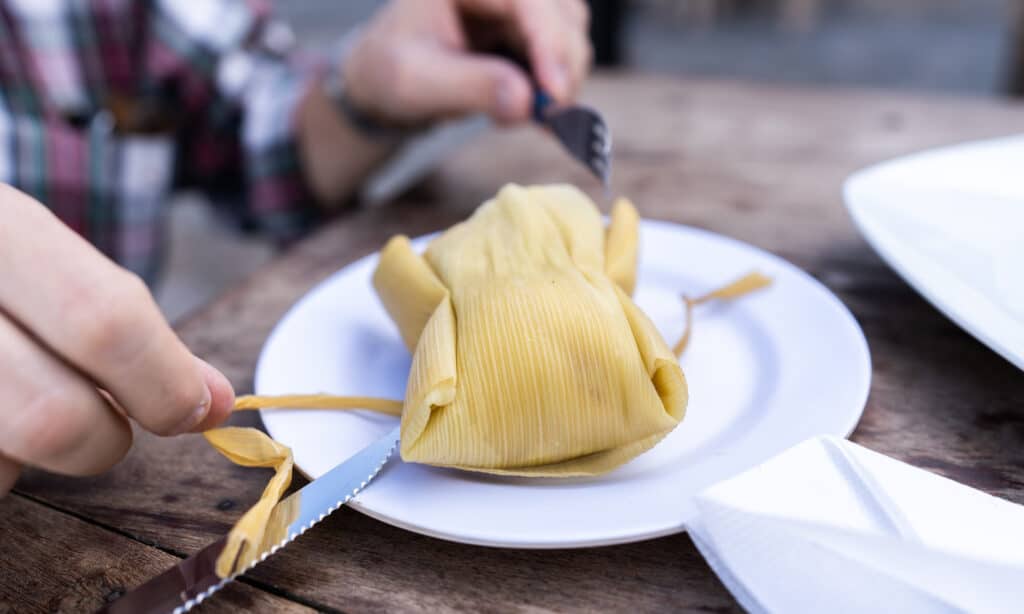
    Tamales are a traditional Latin American dish made from masa (a type of dough made from corn) that is filled with various ingredients, such as meat, cheese, vegetables, or chili peppers. The filling is then wrapped in corn husks and steamed until it’s fully cooked.

    The history of tamales can be traced back to the ancient Mayan and Aztec civilizations in Mexico, where they were a staple food source. Today, tamales are enjoyed in many Latin American countries and regions, and they have become a popular food item in the United States as well.

    Tamales come in a variety of flavors and can be served as a main course, appetizer, or snack. Some popular types of tamales include chicken, pork, beef, cheese and jalapeño, and sweet tamales with fruit or cinnamon.

    While tamales are a tasty and satisfying food for humans, it’s important to consider whether they’re safe for our furry friends to eat. In the next section, we’ll explore whether dogs can safely consume tamales and what potential risks there may be.

    Can Dogs Have Tamales?

    While tamales are a delicious and popular food item, they may not be the best choice for your furry friend. Dogs have different nutritional needs than humans, and certain ingredients in tamales may not agree with their digestive systems or could even be harmful to their health.

    For example, tamales often contain spices, such as garlic and onion, which can be toxic to dogs in large quantities. Additionally, the masa dough used to make tamales is high in carbohydrates and can be difficult for some dogs to digest, leading to upset stomach, diarrhea, or even pancreatitis.

    If you’re considering giving your dog a small bite of tamale, it’s best to err on the side of caution and avoid it altogether. Instead, consider giving your pup a treat specifically designed for dogs or some plain cooked meat or vegetables.

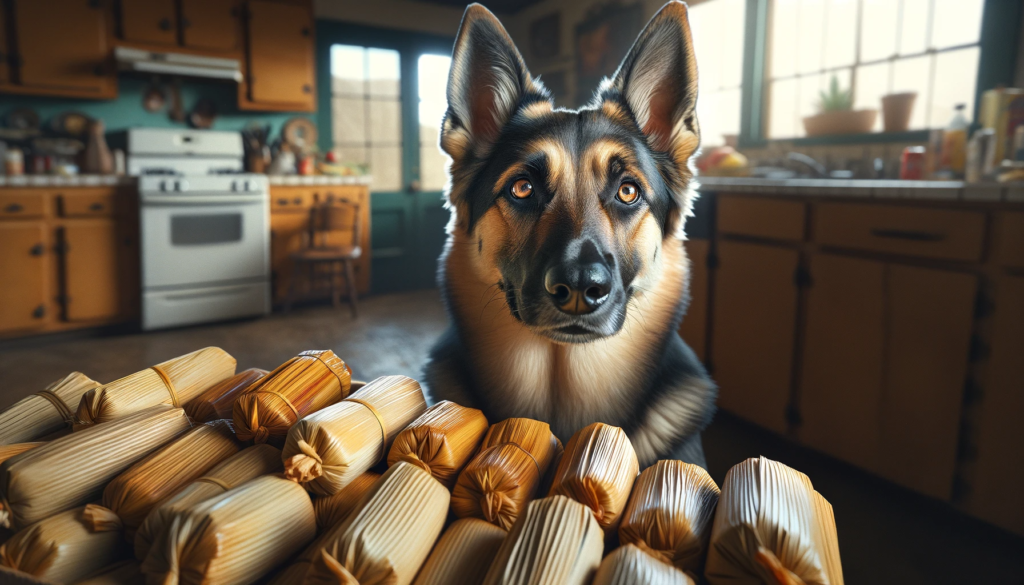
    Canine-friendly tamale with natural ingredients

    Harmful Ingredients in Tamales:

    While tamales can be a delicious treat for humans, they often contain ingredients that can be harmful to dogs. Here are some of the main ingredients in tamales that you should be cautious about feeding your furry friend:

    1. Garlic and onion: Garlic and onion can be toxic to dogs in large amounts, often used to season tamales. They contain compounds that can damage dogs’ red blood cells and lead to anemia.
    2. Spices: In addition to garlic and onion, many tamales are seasoned with spices like cumin, paprika, and chili powder. Small amounts of spices are not toxic, but too much can cause stomach upset or other digestive issues in dogs.
    3. Masa dough: The dough used to make tamales is made from cornmeal, which is high in carbohydrates. Small amounts of masa are safe for dogs, but too much can cause digestive issues.
    4. Filling ingredients: Tamale fillings like raisins, avocado, or chocolate can be toxic to dogs.

    In general, it’s best to avoid feeding your dog tamales or any other human food that contains potentially harmful ingredients. If you want to give your dog a special treat, there are plenty of dog-friendly foods and treats available that are formulated specifically for their dietary needs.

    Safe Ingredients in Tamales:

    Here are some safe ingredients in tamales that dogs can enjoy:

    1. Plain meat: Use plain, unseasoned meat as a filling for your dog’s tamale if you’re making tamales at home. Chicken, beef, and pork are all good options.
    2. Vegetables: Carrots, green beans, and sweet potatoes are safe and tasty veggies for dogs in a dog-friendly tamale.
    3. Cheese: In moderation, cheese can be a safe and delicious addition to a dog’s tamale. Stick to plain, unsalted varieties like mozzarella or cheddar.

    It’s important to remember that dogs have different nutritional needs than humans, so even safe ingredients should be fed in moderation. If you have any concerns about your dog’s diet or health, be sure to consult with your veterinarian before making any changes to their diet or feeding them any new foods.

    What Signs To Watch For If Your Dog Accidentally Ate A Lot of Tamales?

    Monitor dog for symptoms after eating tamales and contact vet if symptoms persist or worsen. Here are some of the most common signs to look out for:

    1. Vomiting: If your dog ate a large amount of tamales, they may start vomiting or retching. This could be a sign that their digestive system is struggling to process the food.
    2. Diarrhea: Loose or watery stools in dogs may indicate digestive upset.
    3. Loss of appetite: Sick dogs may have reduced appetite and drinking less than usual due to upset stomach.
    4. Lethargy: If your dog is feeling unwell, they may be more tired or less active than usual.
    5. Abdominal pain: Signs of belly pain in dogs may include whining, panting, and avoidance of touch.

    If you notice any of these signs after your dog has eaten tamales, it’s important to monitor them closely and contact your veterinarian if their symptoms persist or worsen. In some cases, your vet may recommend treatment to help alleviate your dog’s symptoms or prevent further complications.

    Can dogs have tamales? Yes, with these pet-safe ingredient

    When or If You Should Go To The Vet?

    Monitor your dog closely and contact a vet if they show symptoms after eating a lot of tamales. Keep an eye on your dog’s digestion after eating tamales; see a vet if symptoms persist or worsen.

    It’s especially important to seek veterinary attention if your dog has pre-existing health conditions that could be exacerbated by the tamales or if you’re unsure whether or not they have eaten something toxic. Bring a tamale sample and symptoms list to the vet if your dog eats them and requires medical attention. Your vet will be able to provide a proper diagnosis and treatment plan tailored to your dog’s specific needs.

    Dog-Friendly Tamale Recipe

    Tamale Tail-Waggers

    Ingredients:

    • 2 cups of corn flour
    • 1/2 teaspoon of baking powder
    • 1/2 teaspoon of salt
    • 1/2 cup of chicken broth
    • 1/2 cup of water
    • 1/2 cup of cooked and shredded chicken
    • 1/4 cup of shredded carrots
    • 1/4 cup of chopped green beans

    Instructions:

    1. Preheat the oven to 350°F (180°C).
    2. In a mixing bowl, combine the corn flour, baking powder, and salt. Mix well.
    3. Add the chicken broth and water to the bowl and stir until you have a smooth dough.
    4. In a separate bowl, mix the cooked and shredded chicken, shredded carrots, and chopped green beans.
    5. Roll out the dough on a flat surface and cut it into 4-inch squares.
    6. Place a spoonful of the chicken and vegetable mixture in the center of each square.
    7. Fold the dough over the filling to create a pocket, and then fold in the ends to seal the tamale.
    8. Place the tamales in a baking dish and bake for 30 minutes or until golden brown.
    9. Let the tamales cool before serving them to your furry friend.

    Note: You can adjust the ingredients according to your dog’s taste and dietary requirements. Also, make sure that the tamales are not too spicy and avoid using onions, garlic, and other harmful ingredients.

    Safe Dog-Friendly Alternative to Tamales:

    If you’re looking for safe and healthy alternatives to tamales that are suitable for dogs, there are plenty of options to choose from. One idea is to make homemade dog treats using simple and healthy ingredients like peanut butter, pumpkin, or sweet potato. These treats are a great way to reward your furry friend without exposing them to harmful or toxic ingredients.

    Raw vegetables like carrots, green beans, or broccoli can also make a tasty and nutritious snack for dogs. They are low in calories and high in nutrients, making them a good choice for dogs of all sizes and ages.

    Another option is to offer your dog a small piece of lean, cooked meat like chicken, turkey, or beef. Just be sure to remove any bones or fat before serving it to your dog.

    Fruits such as apples, bananas, or blueberries can also be a healthy and delicious snack for dogs when given in moderation. However, be sure to remove any seeds or pits and cut the fruit into small, bite-sized pieces.

    Lastly, you can also purchase commercial dog treats that are made from natural and high-quality ingredients. Be sure to read the labels and avoid treats that contain fillers or artificial additives.

    Remember to always feed your dog treats in moderation and to consider their individual dietary needs and preferences. It’s also a good idea to consult with your veterinarian if you have any concerns or questions about your dog’s diet or health.

    Healthy Store-Bought Options:

    In conclusion, while tamales can be a delicious treat for humans, they may not be the best choice for dogs. Certain ingredients in tamales, such as garlic, onion, and spices, can be harmful to dogs, and the high carbohydrate content of masa dough can also cause digestive issues. If sharing a tamale with your dog, avoid harmful ingredients and watch for digestive issues.

    Safe and healthy dog-friendly alternatives to tamales include homemade treats, raw veggies, lean meats, fruits, and natural commercial dog treats. By choosing these options, you can reward your dog with a tasty treat without putting their health at risk.

    As always, it’s important to consult with your veterinarian if you have any concerns or questions about your dog’s diet or health. By working together with your vet and providing your dog with a balanced and nutritious diet, you can help ensure that they stay happy and healthy for years to come.

    ~Lindsie

    A note about your dog’s health

    This article provides general education and does not replace an examination, diagnosis, or individualized advice from your veterinarian. Contact a veterinary professional if you are concerned about your dog’s symptoms.

    Lindsie Parks B.S., CRDNS Avatar

    ABOUT THE AUTHOR
  • Can Dogs Eat Mike and Ikes – Expert Answers

    Can Dogs Eat Mike and Ikes – Expert Answers

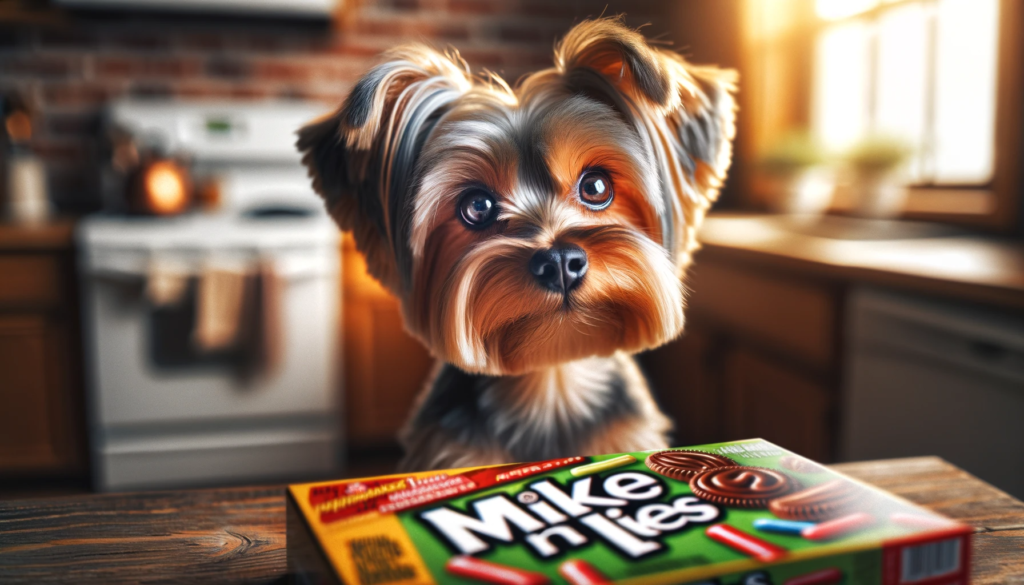
    As a dog owner, it’s natural to want to share your favorite snacks with your furry friend. However, not all human foods are safe for dogs to eat. One popular candy that often raises questions is Mike and Ikes. These colorful chewy candies are a favorite among many, but can dogs safely consume them? In this blog, we’ll take a closer look at the ingredients in Mike and Ikes and the potential risks they pose to our four-legged companions. So, if you’re curious about whether or not your dogs can eat Mike and Ikes, keep reading!

    can dogs have mike n ikes

    What Are Mike and Ikes?

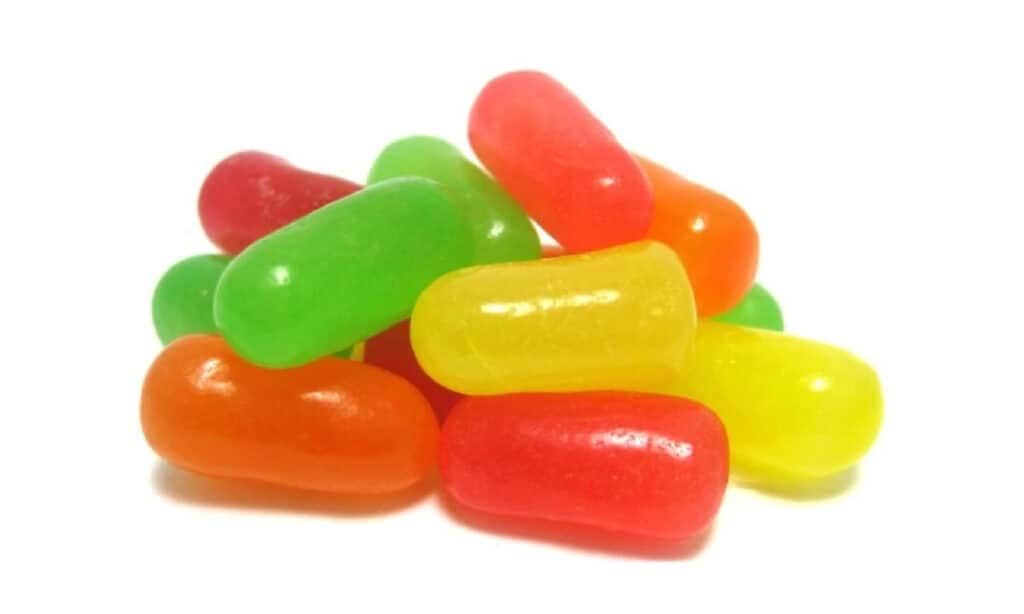
    Have you ever heard of Mike and Ikes? They’re a type of candy that was first introduced in the US way back in 1940. These chewy, colorful treats come in a range of flavors, including cherry, lemon, lime, orange, and strawberry. The candy was actually named after its creators, Mike and Ike, who were two Ukrainian immigrants that started a candy company in Bethlehem, Pennsylvania. While the candy began as a flavored jelly bean, it eventually evolved into the chewy form we know and love today. Nowadays, you can find Mike and Ikes in many candy aisles and movie theaters throughout the US. While they’re a delicious snack for humans, many pet owners may wonder if it’s safe for their furry companions to indulge in a few pieces. It’s definitely worth considering whether or not the ingredients in Mike and Ikes could be harmful to dogs.

    Can Dogs Have Mike and Ikes?

    While Mike and Ikes may be a tasty treat for humans, it’s important to consider whether or not they are safe for dogs to consume. Unfortunately, the answer is no. These candies contain a variety of ingredients that can be harmful to dogs, such as high levels of sugar, artificial colors and flavors, and potential allergens like wheat and soy.

    Eating too much sugar can lead to a variety of health problems for dogs, such as obesity, dental issues, and even diabetes. Artificial colors and flavors may also be problematic for some dogs, as they can cause allergic reactions or gastrointestinal upset. Additionally, wheat and soy are common allergens for dogs, which means that if your furry friend has a food sensitivity, consuming Mike and Ikes could result in a serious allergic reaction.

    Overall, it’s best to avoid feeding Mike and Ikes to your dog, no matter how tempting they may be. Instead, stick to dog-friendly treats that are specifically designed for canine consumption. Your dog will appreciate the special attention, and you can feel good knowing that you’re keeping them healthy and safe.

    Harmful Ingredients in Mike and Ikes:

    Mike and Ikes are a candy that contains several ingredients that can be harmful to dogs. Here are some of the most concerning ingredients:

    1. High levels of sugar: Mike and Ikes contain a significant amount of sugar, which can lead to health problems such as obesity, diabetes, and dental issues in dogs.
    2. Artificial colors and flavors: These candies contain artificial colors and flavors that may cause allergic reactions or gastrointestinal upset in dogs. These ingredients are also known to be linked to various health concerns, including cancer.
    3. Wheat and soy: Mike and Ikes may also contain wheat and soy, which are common allergens for dogs. Consuming these ingredients could result in a serious allergic reaction for dogs that are sensitive to them.

    In addition to these ingredients, Mike and Ikes may also contain other additives, preservatives, and chemicals that could be harmful to dogs. It’s always best to stick to dog-friendly treats and avoid feeding your furry friend any human foods that could be potentially harmful. If you’re ever unsure about whether or not a particular food is safe for your dog to eat, it’s always best to consult with your veterinarian for advice.

    Candies for dogs: A look at Mike and Ikes

    Safe Ingredients in Mike and Ikes:

    Unfortunately, there are no safe ingredients in Mike and Ikes for dogs. The candy contains high levels of sugar, artificial colors and flavors, and potential allergens like wheat and soy, which can all be harmful to dogs. While some ingredients in human food can be beneficial for dogs, such as certain fruits and vegetables, Mike and Ikes do not fall into this category. These candies are not nutritionally beneficial for dogs and should be avoided. It’s important to always read the ingredient labels of any human food or candy before sharing it with your furry friend, and to consult with your veterinarian if you’re unsure about whether or not a particular food is safe for your dog to consume.

    What Signs To Watch For If Your Dog Accidentally Ate A Lot of Mike and Ikes?

    If your dog accidentally ate a lot of Mike and Ikes, it’s important to monitor them closely for any signs of discomfort or illness. Here are some of the signs that you should watch for:

    1. Vomiting: If your dog ingested a significant amount of candy, they may start to vomit shortly afterward. This can be a sign that their body is trying to expel the harmful ingredients in the candy.
    2. Diarrhea: Diarrhea is another common symptom of consuming something that the dog’s body is not used to. It could be an indication that the candy is causing gastrointestinal issues for your dog.
    3. Lethargy: If your dog is feeling sick or uncomfortable, they may become lethargic or listless. They may appear tired or disinterested in their usual activities.
    4. Increased thirst and urination: Consuming a large amount of sugar can cause an increase in thirst and urination in dogs. If your dog is drinking and urinating more than usual, it may be a sign that they are experiencing sugar-related issues.
    5. Upset stomach: Dogs may exhibit signs of an upset stomach after consuming Mike and Ikes, such as excessive drooling, licking their lips, or abdominal pain.

    If you notice any of these symptoms, it’s important to contact your veterinarian right away. They can provide guidance on the best course of action to help your dog feel better and avoid any potential complications.

    the truth about feeding dogs Mike and Ikes

    When or If You Should Go To The Vet?

    If you notice that your dog is exhibiting signs of discomfort or illness after consuming a large amount of Mike and Ikes, it’s important to act quickly. In some cases, you may need to take your furry friend to the vet for treatment.

    If your dog is experiencing severe or persistent vomiting or is unable to keep any food or water down, it’s definitely time to get professional help. Similarly, if your dog has diarrhea that lasts more than a day, it’s important to seek veterinary care. Dehydration is a serious concern for dogs, so if your dog is showing signs of dehydration, such as dry gums or sunken eyes, it’s important to get them the help they need.

    If your dog is exhibiting signs of an allergic reaction, such as swelling of the face or difficulty breathing, it’s important to seek veterinary care immediately. Allergic reactions can be very dangerous and require prompt treatment.

    In general, if you’re unsure whether or not your dog needs to go to the vet, it’s always better to err on the side of caution and seek professional advice. Your veterinarian can provide guidance on the best course of action to help your dog feel better and avoid any potential complications.

    Safe Dog-Friendly Alternative to Mike and Ikes:

    If you’re looking for a safe dog-friendly alternative to Mike and Ikes, there are many great options to choose from. Here are a few ideas:

    1. Natural dog treats: You can find a variety of natural dog treats that are made from high-quality ingredients and are free from harmful additives and preservatives. Look for treats that are specifically formulated for your dog’s size and breed.
    2. Fruits and vegetables: Many fruits and vegetables are safe and healthy for dogs to eat in moderation. Some examples include apples, bananas, blueberries, carrots, and green beans. Be sure to remove any seeds or pits, and avoid feeding your dog grapes, raisins, onions, and garlic, as these can be harmful to dogs.
    3. Frozen dog treats: During hot weather, frozen dog treats can be a great way to cool down your furry friend while providing a tasty snack. You can make your own frozen dog treats using ingredients like yogurt, fruit, and peanut butter.
    4. Chews and bones: Chewing is a natural behavior for dogs, and providing them with appropriate chews and bones can help to satisfy their urge to chew while promoting healthy teeth and gums. Look for chews that are made from natural ingredients and avoid giving your dog cooked bones, as these can splinter and cause serious harm.

    Remember, when giving your dog any new treats or foods, it’s important to introduce them gradually and in moderation. Always read the ingredient labels and avoid any foods that could be harmful to your furry friend. With a little bit of research, you can find plenty of safe and tasty alternatives to Mike and Ikes that your dog will love.

    Healthy Store-Bought Options:

    In conclusion, while Mike and Ikes may be a delicious treat for humans, they are not safe for dogs to consume. The candy contains a variety of harmful ingredients, including high levels of sugar, artificial colors and flavors, and potential allergens like wheat and soy. If your dog accidentally ingests a large amount of Mike and Ikes, it’s important to monitor them closely for any signs of discomfort or illness and to contact your veterinarian if necessary.

    Fortunately, there are many safe and healthy alternatives to Mike and Ikes that you can give your furry friend. Natural dog treats, fruits and vegetables, frozen dog treats, and chews and bones are all great options to consider. By choosing dog-friendly treats and foods, you can help to keep your furry friend healthy and happy.

    Remember, as a responsible pet owner, it’s important to always be mindful of what your dog is consuming and to avoid feeding them any foods or treats that could be potentially harmful. With a little bit of research and careful consideration, you can ensure that your dog is getting the nutrition they need while still enjoying a few tasty treats along the way.

    ~Lindsie

    A note about your dog’s health

    This article provides general education and does not replace an examination, diagnosis, or individualized advice from your veterinarian. Contact a veterinary professional if you are concerned about your dog’s symptoms.

    Lindsie Parks B.S., CRDNS Avatar

    ABOUT THE AUTHOR
  • Can Dogs Eat Liverwurst – Expert Answers

    Can Dogs Eat Liverwurst – Expert Answers

    Liverwurst is a type of sausage that’s made from liver and other ingredients such as spices, onions, and sometimes bacon. It’s a popular food item for humans, but what about dogs? As a dog owner, you may be wondering whether it’s safe to feed your furry friend liverwurst as a treat or as part of their regular diet. In this blog post, we’ll explore the nutritional benefits and potential risks of feeding liverwurst to dogs, as well as provide some tips on how to safely incorporate it into their meals. So, if you’re curious about whether dogs can eat liverwurst, keep reading to find out.

    can dogs have liverwurst

    What Is Liverwurst?

    Liverwurst is a type of sausage that people make from liver, pork, and some other stuff like spices, onions, and sometimes bacon. It’s pretty darn popular in lots of places, especially in Europe and North America. People usually cut it up and put it on bread or crackers, and sometimes they add mustard or pickles to make it even tastier. There are all sorts of liverwurst out there, made with different kinds of liver like chicken or beef, and some are smoked or cured while others are fresh. You can usually find it at the grocery store or deli, and it’s a go-to for sandwiches or snacks with crackers. But if you’re a dog owner, you might be curious whether liverwurst is safe for your furry friend to munch on.

    Can Dogs Eat Liverwurst?

    So, can dogs chow down on liverwurst? The answer is a little complicated. Liverwurst is made from liver, which is usually pretty healthy for dogs when given in moderation. Liver is a good source of protein, vitamins, and minerals like iron and zinc. But, liverwurst also has other stuff in it that might not be so great for your furry buddy, like spices, onions, and too much salt and fat.

    Eating too much salt and fat can be a no-no for dogs, and onions are downright poisonous in large amounts. Plus, liver can have a ton of vitamin A, which is dangerous for dogs when they have too much of it. So, if you do give your dog liverwurst, make sure it’s only every now and then, and not a huge part of their diet.

    If you do decide to treat your pup, be sure to get fresh, natural liverwurst without any chemicals or fake flavors. Also, keep an eye on your dog’s weight and overall health when giving them liverwurst or any other treats. When you introduce a new food, go slow and small, and watch for any bad reactions. And if you’re not sure if liverwurst is a good choice for your dog, it’s always smart to check with your vet.

    The nutritional value of liverwurst for your canine companion

    Harmful Ingredients in Liverwurst:

    Liverwurst contains several ingredients that can be harmful to dogs if consumed in large quantities. One of these ingredients is salt, which can lead to dehydration, kidney damage, and other health problems in dogs when consumed in excess. Liverwurst also often contains onions, which are toxic to dogs and can cause anemia, vomiting, and diarrhea. Even small amounts of onions can be harmful to dogs, so it’s best to avoid giving them liverwurst that contains this ingredient.

    Another harmful ingredient in liverwurst is fat. While dogs need a certain amount of fat in their diet, excessive consumption of fatty foods like liverwurst can lead to obesity, pancreatitis, and other health issues. Additionally, liverwurst often contains preservatives and additives such as nitrates and nitrites, which have been linked to cancer and other health problems in both humans and animals.

    Finally, it’s worth noting that liverwurst is a processed food that is typically high in calories and low in nutritional value. While small amounts of liverwurst may be okay as an occasional treat for dogs, it’s not a food that should make up a significant portion of their diet. If you’re looking for healthier treat options for your pup, consider giving them fresh fruits and vegetables, lean meats, or low-fat dairy products instead.

    Safe Ingredients in Liverwurst:

    Yep, there are definitely some safe and even healthy ingredients in liverwurst that can be good for dogs in the right amounts. For example, liver is packed with protein, vitamins, and minerals that are great for dogs, like vitamin A, iron, and zinc. When liver is combined with other good stuff like lean pork or beef, and natural spices and flavors, it can be a yummy and nutritious snack for your pup.

    But, it’s super important to watch out for other ingredients in liverwurst that can be bad for dogs, such as too much salt, onions, and too much fat. When you pick out liverwurst for your dog, go for a high-quality product that’s made with natural ingredients and doesn’t have any harmful additives or preservatives. And always give liverwurst to your dog in moderation, along with other healthy foods.

    What Signs To Watch For If Your Dog Accidentally Ate A Lot of Liverwurst?

    If your dog accidentally ate a lot of liverwurst, there are several signs you should watch for to determine if they are experiencing any adverse reactions. One of the most common signs of overconsumption of liverwurst is gastrointestinal upset, which can manifest as vomiting, diarrhea, or abdominal pain.

    Other signs to watch for include dehydration, lethargy, and loss of appetite. If your dog has consumed liverwurst that contains onions, they may also experience symptoms of onion toxicity, such as weakness, pale gums, and rapid breathing. In severe cases, onion toxicity can lead to anemia, which can be life-threatening for dogs.

    If you notice any of these symptoms in your dog after they’ve consumed a large amount of liverwurst, it’s important to contact your veterinarian right away. Your vet can evaluate your dog’s condition and recommend appropriate treatment, which may include administering fluids to prevent dehydration, medication to address gastrointestinal upset, or in severe cases, blood transfusions to address anemia caused by onion toxicity.

    Is liverwurst safe for dogs to eat?

    When or If You Should Go To The Vet?

    If you notice any signs of illness or negative reactions in your dog after they’ve eaten a lot of liverwurst, it’s best to take them to the vet as soon as possible. If your dog starts throwing up, having diarrhea, acting tired or not wanting to eat, you should call your vet right away.

    Also, if your dog ate liverwurst that had onions in it and they’re showing any signs of onion toxicity, like acting weak or having trouble breathing, you need to get to the vet immediately. Onion toxicity can be super dangerous for dogs and needs urgent care.

    When you take your dog to the vet, be sure to give them all the information you have about your dog’s symptoms and how much liverwurst they ate. Your vet might want to do some tests, like bloodwork or x-rays, to find out what’s going on and how to treat your dog.

    Safe Dog-Friendly Alternative to Liverwurst:

    If you’re on the hunt for a healthier and safer treat option for your pup, fear not! There are plenty of tasty alternatives to liverwurst that your furry friend is sure to love. Here are a few ideas:

    • Lean meats are a great choice! You can give your dog small pieces of chicken, turkey, or beef for a protein-packed snack.
    • Fruits and veggies are also a hit with many dogs! Apple slices, carrot sticks, and green beans are low in calories and high in vitamins and fiber, making them a healthy and delicious choice.
    • If your pup likes dairy, try giving them some plain yogurt or cottage cheese. These options are high in protein and calcium, and can even help with their digestion.
    • Natural dog treats are a great option too! Look for treats made with high-quality ingredients like real meat, vegetables, and whole grains. And steer clear of treats with any artificial colors, flavors, or preservatives.

    Remember to start slowly when introducing new foods to your dog, and always check with your vet if you have any concerns. Your furry friend will thank you for finding them a tasty and healthy snack!

    Healthy Store-Bought Options:

    In conclusion, while liverwurst can be a tasty treat for dogs, it’s important to be aware of its potential risks and to offer it in moderation. Liver is a nutritious food for dogs, but liverwurst often contains other ingredients that can be harmful in excess, such as salt, onions, and excessive amounts of fat.

    Fortunately, there are plenty of safe and healthy alternatives to liverwurst that your dog is sure to enjoy. Lean meats, fresh fruits and vegetables, low-fat dairy products, and natural dog treats are all great options that provide your pup with a variety of nutrients and flavors.

    As always, when introducing new foods or treats to your dog, it’s important to do so slowly and in moderation, and to watch for any signs of adverse reactions. And, when in doubt, always consult with your veterinarian for expert advice on your dog’s diet and health.

    With a little bit of knowledge and creativity, you can find plenty of safe and delicious ways to spoil your furry friend and keep them healthy at the same time. Happy snacking!

    ~Lindsie

    A note about your dog’s health

    This article provides general education and does not replace an examination, diagnosis, or individualized advice from your veterinarian. Contact a veterinary professional if you are concerned about your dog’s symptoms.

    Lindsie Parks B.S., CRDNS Avatar

    ABOUT THE AUTHOR
  • Can Dogs Eat Sunflower Butter – Expert Answers

    Can Dogs Eat Sunflower Butter – Expert Answers

    If you’re a dog owner, you may have wondered can your dogs eat sunflower butter as a treat. Sunflower butter, also known as sunflower seed butter or sunbutter, is a popular alternative to peanut butter and is often used as a spread or ingredient in various recipes.

    However, when it comes to our canine companions, it’s important to be cautious about what we feed them. While some human foods are safe for dogs to consume in moderation, others can be harmful or even toxic to their health.

    In this blog, we’ll explore whether or not dogs can safely eat sunflower butter. We’ll take a closer look at the nutritional content of sunflower butter, potential health benefits and risks, and tips for feeding it to your dog. So, if you’re curious about adding sunflower butter to your pup’s diet, keep reading!

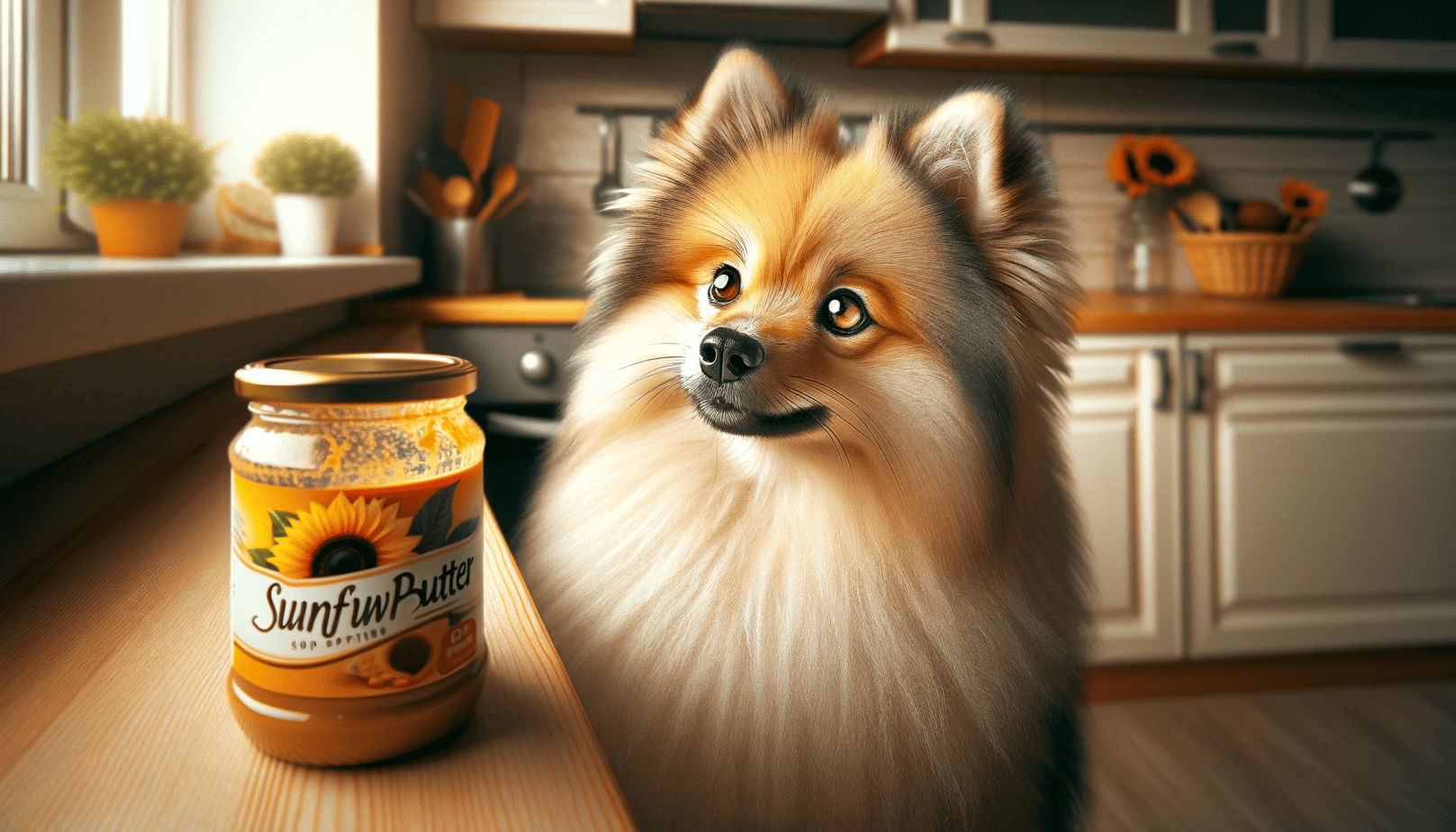
    can dogs have sunflower butter

    What Is Sunflower Butter?

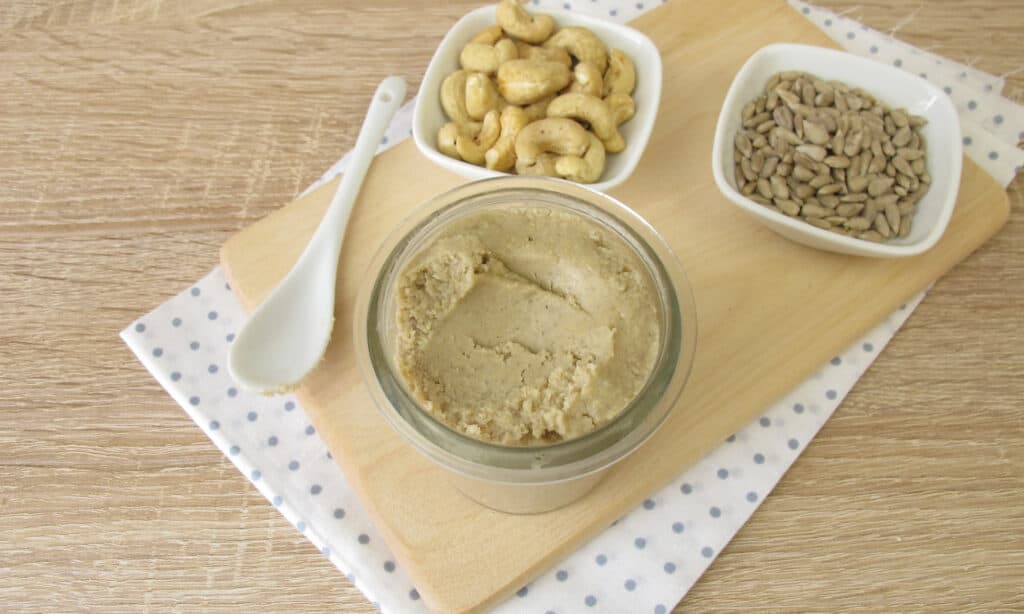
    Sunflower butter, also known as sunflower seed butter or sunbutter, is a spread made from ground-roasted sunflower seeds. It has a similar texture and taste to peanut butter, but is nut-free, making it a popular alternative for those with nut allergies.

    Sunflower butter is often used as a spread on toast, crackers, and sandwiches, or as an ingredient in recipes such as smoothies, baked goods, and sauces. It’s a good source of protein, healthy fats, and vitamins and minerals such as vitamin E, magnesium, and selenium.

    In addition to being nut-free, sunflower butter is also vegan and gluten-free, making it a versatile option for people with dietary restrictions or preferences. It’s readily available at most grocery stores and can also be easily made at home using a food processor or blender.

    Can Dogs Eat Sunflower Butter?

    So, if you’re a dog owner and wondering whether it’s safe to give your furry friend some sunflower butter, the answer is yes, but in moderation. Sunflower butter can actually provide some health benefits for dogs, like protein, healthy fats, and vitamins and minerals, which can help support their overall health.

    However, it’s important to keep in mind that sunflower butter should not be the main source of nutrition for dogs and some dogs may have an allergic reaction to sunflower seeds. So, it’s best to introduce sunflower butter slowly and monitor your dog for any signs of an allergic reaction.

    Also, when choosing a brand of sunflower butter, make sure it doesn’t contain any harmful ingredients like xylitol, chocolate, or raisins. Sunflower butter should be given as a treat and not as a substitute for their regular food.

    As always, if you have any concerns about giving sunflower butter to your dog, it’s best to check with your veterinarian first. They can give you personalized advice based on your dog’s health needs and dietary requirements.

    Is sunflower butter safe for dogs to eat? Find out now!

    Harmful Ingredients in Sunflower Butter:

    Generally, sunflower butter is a safe and healthy treat for dogs, but it’s important to choose a brand that does not contain any added ingredients that can be harmful to them. Some sunflower butter brands may include harmful ingredients such as xylitol, chocolate, or raisins.

    Xylitol is a sweetener that is toxic to dogs and can cause a rapid insulin release, leading to hypoglycemia (low blood sugar) and liver failure. Chocolate contains theobromine, a compound that can be toxic to dogs in large quantities and cause symptoms like vomiting, diarrhea, seizures, and even death. Raisins, meanwhile, can cause kidney failure in some dogs.

    To keep your dog safe, always check the ingredient list on the sunflower butter jar and make sure it does not contain any harmful ingredients. If you’re unsure, it’s always a good idea to consult with your veterinarian before giving any new food or treat to your dog.

    Safe Ingredients in Sunflower Butter:

    Sunflower butter is a great treat option for dogs as it contains only one ingredient – roasted sunflower seeds. These seeds are safe and healthy for dogs and provide them with protein, healthy fats, and essential vitamins and minerals like vitamin E, magnesium, and selenium.

    However, it’s important to be cautious when selecting a sunflower butter brand for your furry friend. Some brands may add harmful ingredients like xylitol, chocolate, or raisins which can cause health issues like hypoglycemia, liver failure, and kidney failure in dogs.

    While some sunflower butter brands may contain a small amount of salt or sugar for flavor, excessive amounts can be harmful to dogs. Therefore, it’s best to choose unsweetened and unsalted sunflower butter if possible.

    Remember, moderation is key when feeding your dog sunflower butter as it should not be a replacement for their regular food. As always, it’s best to check with your veterinarian before introducing any new food or treat into your dog’s diet, especially if they have any pre-existing health conditions.

    Healthy snack for dogs: sunflower butter

    What Signs To Watch For If Your Dog Accidentally Ate A Lot of Sunflower Butter?

    If your dog accidentally eats a lot of sunflower butter, there are a few signs you should watch out for that may indicate a problem. These include vomiting, diarrhea, lethargy, loss of appetite, and signs of an allergic reaction like itchiness, swelling, or difficulty breathing.

    It’s important to keep an eye on your dog and monitor them closely if you notice any of these signs. Contacting your veterinarian is a good idea if the symptoms persist or worsen. In some cases, they may recommend treatment or medication to help your dog feel better.

    Remember, while sunflower butter is generally safe for dogs, it’s always a good idea to feed it to them in moderation and check for any added ingredients that could be harmful to their health.

    When or If You Should Go To The Vet?

    If you notice any signs or symptoms that your dog has eaten too much sunflower butter or is having an adverse reaction, it’s important to keep a close eye on them and reach out to your veterinarian if their symptoms persist or worsen.

    Your veterinarian can help determine if your dog needs to come in for an examination and recommend the best course of action based on their symptoms. If your dog is experiencing distressing symptoms like vomiting, diarrhea that persists for more than a day, lethargy, loss of appetite, or signs of an allergic reaction such as swelling or difficulty breathing, it’s important to take them to the vet for an evaluation.

    Remember, it’s always better to be safe than sorry when it comes to your dog’s health. Seeking veterinary advice can help prevent any potential health issues and provide guidance on the best course of action to help your furry friend feel better.

    Safe Dog-Friendly Alternative to Sunflower Butter:

    If you’re looking for a safe dog-friendly alternative to sunflower butter, there are a few options to consider:

    Peanut butter: Peanut butter is a popular and safe alternative to sunflower butter for dogs. Just be sure to choose a brand that does not contain xylitol, a sweetener that is toxic to dogs.

    Almond butter: Almond butter is another safe option for dogs, but like peanut butter, it should be unsweetened and free of xylitol.

    Coconut oil: Coconut oil is a healthy and tasty alternative to nut butters. It’s high in medium-chain fatty acids, which can provide several health benefits for dogs.

    Pumpkin puree: Pumpkin puree is a nutrient-rich and low-calorie alternative to nut butters. It’s high in fiber and vitamins and can also help with digestion.

    Remember, moderation is key when feeding your dog any kind of treat, including nut butters or alternatives. Be sure to check with your veterinarian if you have any concerns about your dog’s diet or if they have any health conditions that may require specific dietary restrictions.

    Healthy Store-Bought Options:

    To sum it up, sunflower butter can be a great treat for dogs as long as it’s given in moderation and with the right precautions. It contains lots of healthy nutrients and can make for a tasty snack. However, it’s important to make sure that the brand you choose doesn’t contain any harmful ingredients, and to start small when introducing it into your dog’s diet.

    If you’re not sure if sunflower butter is a good option for your dog, talking to your veterinarian can help you determine if it’s the right choice. They can give you personalized advice based on your dog’s health needs and dietary restrictions.

    If sunflower butter isn’t right for your dog, there are plenty of other safe and tasty alternatives available, like peanut butter, almond butter, coconut oil, and pumpkin puree.

    Just remember, treats should always be given in moderation and as part of a balanced diet. With a little bit of experimentation, you can find the perfect treat for your furry friend that they’ll love and that will help keep them healthy and happy.

    ~Lindsie

    A note about your dog’s health

    This article provides general education and does not replace an examination, diagnosis, or individualized advice from your veterinarian. Contact a veterinary professional if you are concerned about your dog’s symptoms.

    Lindsie Parks B.S., CRDNS Avatar

    ABOUT THE AUTHOR
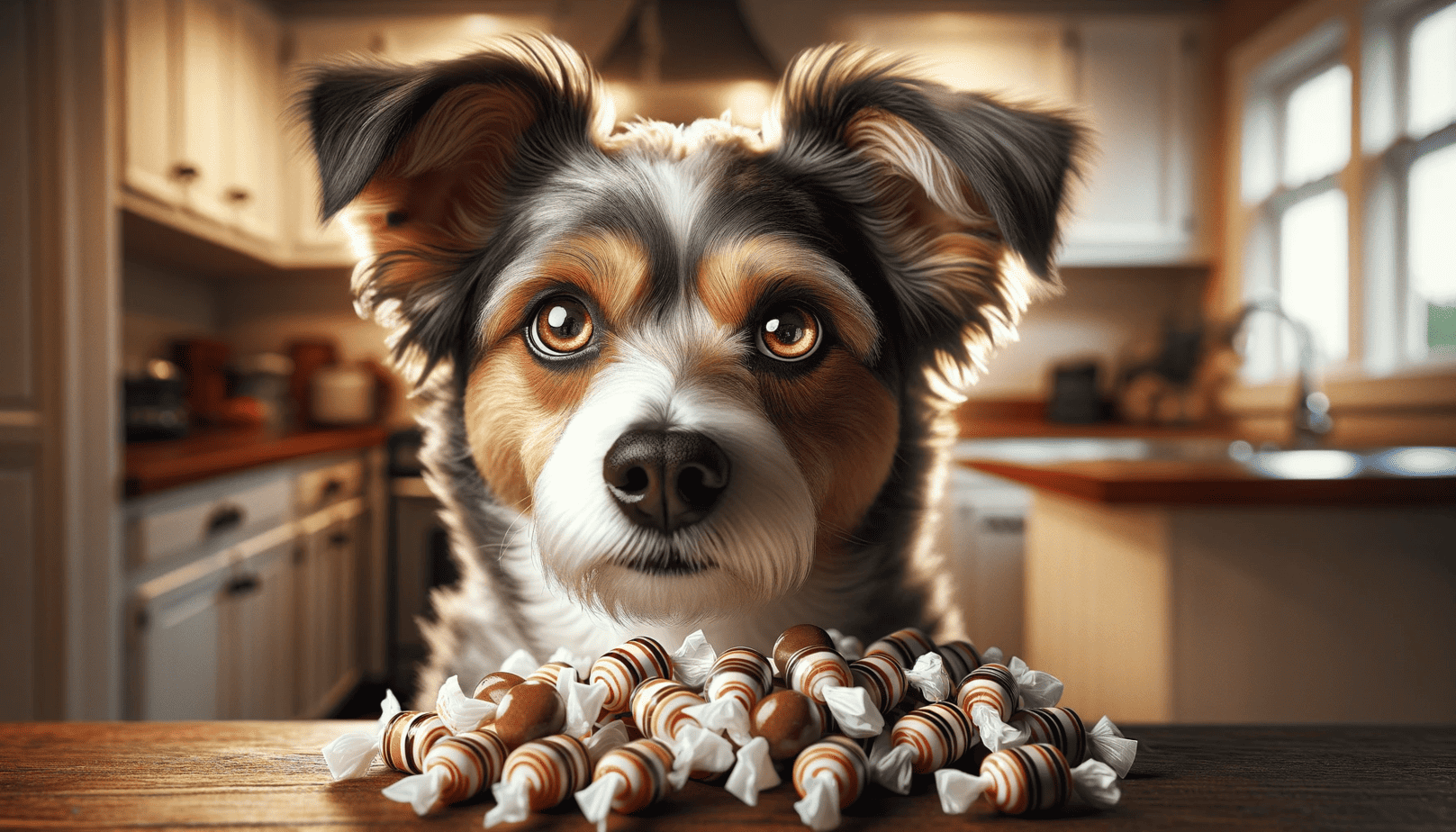
  • Can Dogs Eat Tootsie Rolls? – Expert Answers

    Can Dogs Eat Tootsie Rolls? – Expert Answers

    As a pet owner, it’s important to be mindful of what your furry friend is consuming. While it’s tempting to share some of your favorite treats with your dog, not all human foods are safe for dogs to eat. One common treat that may come to mind is Tootsie Rolls. These small chocolatey candies have been a beloved treat for many of us since childhood, but can dogs eat tootsie rolls too? In this blog, we’ll explore the potential risks feeding Tootsie Rolls to your dog, and provide some expert advice on how to keep your pup healthy and happy.

    can dogs have tootsie rolls

    What Are Tootsie Rolls?

    Tootsie Rolls have been a beloved candy for over a century. They were first introduced in 1896 by the Sweets Company of America and have since become a staple in candy aisles worldwide. Tootsie Rolls are made by melting together a blend of cocoa powder, sugar, and other ingredients, which are then formed into small, chewy logs with a smooth yet slightly gritty texture. Along with the classic chocolate flavor, Tootsie Rolls come in a variety of other flavors such as cherry, vanilla, and grape. They have become a cultural icon in their own right, enjoyed by people of all ages. However, when it comes to sharing these treats with our furry friends, it’s important to consider whether they are safe for dogs to eat.

    Can Dogs Have Tootsie Rolls?

    When it comes to sharing human food with our furry companions, it’s important to consider whether or not it is safe for them to consume. So, can dogs have Tootsie Rolls?

    Unfortunately, the answer is no. Tootsie Rolls are not safe for dogs to eat. The primary reason for this is that they contain chocolate, which is toxic to dogs. Chocolate contains a chemical called theobromine, which can cause a range of symptoms in dogs such as vomiting, diarrhea, seizures, and even death in severe cases. The amount of theobromine in Tootsie Rolls varies depending on the type and size of the candy, but even small amounts can be dangerous for dogs.

    In addition to the chocolate content, Tootsie Rolls are also high in sugar and artificial additives, which can cause digestive upset and contribute to obesity in dogs. While a small piece of Tootsie Roll may not cause immediate harm, it’s best to err on the side of caution and avoid feeding these candies to your furry friend altogether.

    In conclusion, while Tootsie Rolls may be a nostalgic and delicious treat for humans, they are not safe for our canine companions. If you’re looking to spoil your dog with a special treat, there are many safe and healthy options available specifically designed for dogs, such as dog-friendly biscuits and treats.

    Harmful Ingredients in Tootsie Rolls:

    Tootsie Rolls are a popular candy, but they contain several harmful ingredients that can be dangerous for dogs and humans alike.

    Firstly, Tootsie Rolls contain chocolate, which as previously mentioned, contains theobromine. This chemical is toxic to dogs and can cause a range of symptoms such as vomiting, diarrhea, seizures, and even death in severe cases. The darker the chocolate, the more theobromine it contains, which means that the darker chocolate Tootsie Rolls pose a higher risk to dogs.

    Secondly, Tootsie Rolls are high in sugar and artificial additives. Sugar can contribute to dental problems, obesity, and diabetes in dogs, while artificial additives can cause digestive upset and allergic reactions.

    Additionally, Tootsie Rolls contain corn syrup, a sweetener that has been linked to health problems such as obesity, type 2 diabetes, and heart disease in humans. While the effects of corn syrup on dogs are not as well understood, it’s best to avoid feeding your furry friend any foods that contain this ingredient.

    Overall, while Tootsie Rolls may be a tasty treat for humans, they contain several harmful ingredients that make them unsafe for dogs to eat. If you want to treat your dog to something special, it’s best to opt for dog-specific treats that are free from these harmful ingredients.

    The dangers of Tootsie Rolls for dogs: what you need to know

    What Signs To Watch For If Your Dog Accidentally Ate A Lot of Tootsie Rolls?

    If your dog accidentally ate a lot of Tootsie Rolls, it’s important to watch for signs of chocolate toxicity and digestive upset. The symptoms may not appear immediately after ingestion, so it’s important to monitor your dog closely for the next few hours or even days.

    Some signs to watch for include:

    1. Vomiting and/or diarrhea
    2. Increased thirst and urination
    3. Hyperactivity or restlessness
    4. Muscle tremors or seizures
    5. Rapid heart rate or abnormal heart rhythm
    6. Elevated body temperature
    7. Difficulty breathing or panting
    8. Staggering or loss of coordination

    If you notice any of these symptoms in your dog, it’s important to seek veterinary attention immediately. Chocolate toxicity can be life-threatening, and prompt treatment is crucial for the best chance of recovery.

    In conclusion, if you suspect that your dog has eaten a lot of Tootsie Rolls or any other chocolate-containing product, it’s important to watch for signs of chocolate toxicity and seek veterinary attention if necessary. Prevention is the best approach, so it’s always best to keep chocolate and other harmful foods out of reach of your furry friend.

    When or If You Should Go To The Vet?

    If you suspect that your dog has eaten a lot of Tootsie Rolls or any other chocolate-containing product, and they show signs of chocolate toxicity or digestive upset, it’s important to seek veterinary attention immediately.

    If your dog is showing any of the following symptoms, you should go to the vet:

    1. Vomiting or diarrhea that persists for more than 24 hours
    2. Blood in the vomit or diarrhea
    3. Signs of dehydration, such as dry mouth, sunken eyes, or lethargy
    4. Difficulty breathing or panting
    5. Rapid heart rate or abnormal heart rhythm
    6. Muscle tremors or seizures
    7. Loss of consciousness

    These symptoms may indicate a more serious condition that requires immediate veterinary attention.

    It’s also important to note that chocolate toxicity can be fatal, especially in smaller dogs or those with pre-existing health conditions. If you’re unsure whether your dog has eaten enough chocolate to cause a problem, it’s always best to err on the side of caution and seek veterinary attention.

    In conclusion, if your dog has eaten a lot of Tootsie Rolls or any other chocolate-containing product and shows signs of chocolate toxicity or digestive upset, it’s important to seek veterinary attention immediately. Prompt treatment can make all the difference in the outcome of your dog’s health.

    Sweet temptation: why Tootsie Rolls can be dangerous for dogs

    Safe Dog-Friendly Alternative to Tootsie Rolls:

    If you’re searching for a yummy and healthy alternative to Tootsie Rolls for your four-legged friend, there are lots of options available. For example, dog biscuits are a great choice because they’re designed just for dogs and come in many different flavors and textures. Crunchy and nutritious snacks like carrot or apple slices are also a fantastic option that are low in calories and high in fiber. You could also whip up some homemade frozen treats by blending fruits with yogurt or peanut butter and freezing them. Jerky treats are another tasty option that are high in protein and come in a variety of flavors. And if you’re looking for something natural and low-calorie, pumpkin or sweet potato chews are a great choice since they’re high in fiber and vitamins.

    Overall, there are plenty of safe and dog-friendly alternatives to Tootsie Rolls that will make your furry friend happy without compromising their health. By choosing treats that are made from wholesome ingredients and specifically designed for dogs, you can give your pet a delicious and healthy snack they’ll love.

    Healthy Store-Bought Options:

    In conclusion, while Tootsie Rolls may be a beloved candy for humans, they are not safe for our furry friends to consume. They contain chocolate, sugar, and artificial additives that can be harmful to dogs and cause digestive upset, obesity, and other health issues. If your dog accidentally eats Tootsie Rolls or any other chocolate-containing product, it’s important to monitor them closely for signs of chocolate toxicity and seek veterinary attention if necessary.

    Fortunately, there are plenty of safe and dog-friendly alternatives to Tootsie Rolls that you can offer your furry friend. From dog biscuits to frozen treats, jerky treats, and natural chews, there are many options available that are made from wholesome ingredients and designed specifically for dogs. By choosing these treats, you can give your dog a special snack without compromising their health.

    As a responsible pet owner, it’s important to be mindful of what your dog is consuming and ensure that their diet is balanced and healthy. By avoiding harmful foods like Tootsie Rolls and providing your dog with nutritious treats, you can help them live a long and happy life.

    ~Lindsie

    A note about your dog’s health

    This article provides general education and does not replace an examination, diagnosis, or individualized advice from your veterinarian. Contact a veterinary professional if you are concerned about your dog’s symptoms.

    Lindsie Parks B.S., CRDNS Avatar

    ABOUT THE AUTHOR

  • Can Dogs Eat Egg Rolls? – Expert Answers

    Can Dogs Eat Egg Rolls? – Expert Answers

    If you’re a dog parent who loves indulging in eggrolls every now and then, you might be wondering whether your furry friend can join in on the fun. We all know that our dogs have different nutritional needs than we do, and it can be tough to figure out which human foods are safe for them to eat. In this blog post, we’re going to dive into the world of eggrolls and answer the burning question: can dogs eat eggrolls? We’ll discuss the nutritional value of eggrolls, any potential risks associated with feeding them to our four-legged friends, and offer up some alternative, dog-friendly treats. So, if you’re curious about whether your pup can chow down on some eggrolls, keep reading to find out!

    can dogs have egg rolls

    What Are Egg Rolls?

    Egg rolls are a popular Chinese-American dish that typically consists of a crispy, deep-fried shell filled with a mixture of vegetables, meat, and sometimes egg. The filling can vary widely, depending on the recipe and the cook’s preferences, but some common ingredients include cabbage, carrots, bean sprouts, celery, onions, and ground pork or shrimp.

    Egg rolls are typically served as an appetizer or snack, often accompanied by a sweet and sour sauce or a spicy dipping sauce. They’re enjoyed by many people around the world for their crispy texture, savory filling, and delicious flavor.

    While egg rolls may be a tasty treat for us humans, it’s important to consider whether they’re a safe and healthy choice for our furry friends. In the next section of this blog post, we’ll explore whether dogs can eat egg rolls and any potential risks associated with feeding them this popular snack.

    Can Dogs Eat Egg Rolls?

    The short answer is that it’s generally not a good idea to feed your dog egg rolls, or any human foods that are high in fat, salt, and spices. While some of the ingredients in egg rolls, such as vegetables and meat, may be safe for dogs in small amounts, the fried wrapper and seasoning could cause health problems for your pup.

    Foods that are high in fat, such as deep-fried egg rolls, can cause pancreatitis in dogs, which is a painful and potentially life-threatening condition. The seasoning and spices used in egg rolls can also upset your dog’s stomach and lead to vomiting, diarrhea, or other digestive issues.

    Additionally, the high salt content in egg rolls can cause dehydration in dogs and contribute to high blood pressure or other health issues over time.

    So, while your dog may be eyeing your egg rolls with interest, it’s best to resist the urge to share this snack with them. Instead, consider offering your dog some healthy, dog-friendly treats, such as carrots, green beans, or small pieces of cooked, lean meat.

    Dogs and Egg Rolls: Risks and Precautions

    Harmful Ingredients in Egg Rolls:

    As mentioned earlier, egg rolls typically contain a mixture of vegetables, meat, and sometimes egg, all wrapped in a deep-fried wrapper. While some of these ingredients may be safe for dogs in moderation, there are a few things to watch out for.

    First and foremost, the deep-fried wrapper of an egg roll is high in fat and calories, which can be harmful to your dog’s health. Foods that are high in fat can cause pancreatitis in dogs, which is a painful and potentially life-threatening condition.

    Another potential issue with egg rolls is the seasoning and spices used in the filling. Many egg roll recipes include garlic, onions, or other ingredients that can be toxic to dogs in large quantities. Additionally, the high salt content of egg rolls can cause dehydration in dogs and contribute to high blood pressure or other health problems over time.

    Finally, it’s important to note that many egg rolls are made with ingredients that could cause allergic reactions in dogs. For example, if your dog is allergic to shellfish, feeding them egg rolls that contain shrimp or other seafood could be dangerous.

    All in all, while it may be tempting to share your egg rolls with your dog, it’s best to err on the side of caution and avoid feeding them this snack altogether. If you’re looking for a safe and healthy way to treat your dog, consider offering them some fresh fruits or vegetables, or some lean, cooked meats. And as always, if you have any concerns about your dog’s diet or health, be sure to consult with your veterinarian.

    Egg Rolls for Dogs: Ingredients to Avoid

    Safe Ingredients in Egg Rolls:

    While egg rolls aren’t the healthiest snack for dogs, there are a few ingredients in them that could be okay for our furry friends to enjoy in moderation.

    Some of the veggies in egg rolls, like cabbage, carrots, and bean sprouts, contain nutrients that are good for dogs. For example, cabbage is a great source of vitamin C and fiber, while carrots are loaded with beta-carotene, which helps keep their eyes healthy.

    If you do want to give your dog a taste of the egg roll filling, it’s best to stick to the meat ingredients and avoid the fried wrapper. Cooked, lean ground pork or shrimp could be a safe and tasty option.

    Still, it’s important to keep in mind that egg rolls are high in fat and salt, and the seasoning could be harmful to your dog’s digestion. Plus, there’s always the risk of an allergic reaction to certain ingredients.

    Overall, while a few ingredients in egg rolls may be okay for dogs to eat, it’s best to play it safe and avoid giving them this snack altogether. Stick to dog-friendly treats that are specifically formulated for their nutritional needs, and if you have any questions or concerns about your dog’s diet, don’t hesitate to talk to your veterinarian.

    What Signs To Watch For If Your Dog Accidentally Ate A Lot of Egg Rolls?

    If your dog accidentally ate a lot of egg rolls, there are a few signs you should watch for that could indicate a health problem. Here are some of the most common signs to look out for:

    1. Vomiting: If your dog has eaten too much of any food, they may start to vomit as their body tries to expel the excess. Keep an eye out for frequent vomiting or vomiting that lasts for more than a few hours.
    2. Diarrhea: Diarrhea is another common sign of digestive distress in dogs. If your dog has loose or watery stools, or if they’re having accidents in the house, they may be suffering from gastrointestinal upset.
    3. Abdominal pain: Dogs who have eaten too much fatty or spicy food may experience abdominal pain or discomfort. Look for signs like whining, restlessness, or a hunched posture.
    4. Dehydration: If your dog has consumed a lot of salt, they may become dehydrated. Signs of dehydration include lethargy, dry gums, and sunken eyes.
    5. Pancreatitis: In some cases, consuming a lot of high-fat food like egg rolls can cause pancreatitis, a serious condition that can be life-threatening. Signs of pancreatitis in dogs include vomiting, diarrhea, abdominal pain, and loss of appetite.

    If you notice any of these signs in your dog after they’ve eaten a lot of egg rolls or any other human food, it’s important to seek veterinary care right away. Your veterinarian can help diagnose any underlying health issues and provide treatment to get your pup feeling better.

    When or If You Should Go To The Vet?

    If your furry pal has overindulged in egg rolls and you’re worried about their health, it’s important to take action and get them checked out by a vet if necessary. Here are some things to keep in mind:

    First off, give your vet a call and describe what’s going on with your pup. They can help you decide whether or not you should bring your four-legged friend in for an exam.

    Pay close attention to your dog’s behavior and look for any signs of trouble. If they’re barfing, experiencing diarrhea, or just seem out of sorts, it’s probably best to play it safe and take them to the vet as soon as you can.

    And if your vet thinks it’s a good idea to bring your dog in for an exam, make sure you listen to their advice. They may need to do some tests or give you some medication to help your pup feel better.

    Just remember, your dog’s health is a top priority. If you’re worried about them, don’t hesitate to seek veterinary care. Keep an eye out for any changes in their behavior or symptoms, and always trust your instincts when it comes to getting them the care they need.

    Feeding Egg Rolls to Dogs: What You Need to Know

    Safe Dog-Friendly Alternative to Egg Rolls:

    If you’re looking for some safe and healthy alternatives to egg rolls that your pup will enjoy, here are some ideas to try out:

    1. Baby carrots: Dogs love the crunch of these little veggies, and they’re packed with nutrients that are good for them.
    2. Apple slices: Apples are a tasty and nutritious treat for dogs, but be sure to remove the seeds and core before giving them to your furry friend.
    3. Cooked chicken: Dogs can digest chicken easily, and it’s a great source of protein. Just be sure to remove the skin and bones before feeding it to your pup.
    4. Green beans: These veggies are low in calories but high in vitamins and fiber, making them a good choice for dogs who need to watch their weight.
    5. Sweet potato: Sweet potatoes are full of vitamins and fiber, and they’re a tasty alternative to traditional dog treats.
    6. Homemade dog treats: If you enjoy cooking, try making your own dog treats using ingredients like peanut butter, pumpkin, and oats. There are plenty of recipes available online to get you started.

    Of course, it’s important to talk to your vet before introducing any new foods to your dog’s diet. They can help you figure out what foods are safe and healthy for your pup and give you guidance on portion sizes and feeding schedules.

    Healthy Store-Bought Options:

    In summary, while egg rolls can be a delicious treat for humans, they’re not the best choice for dogs. The high fat content and potential for harmful ingredients make them a risky choice for your furry friend. If your dog does accidentally eat egg rolls, be on the lookout for signs of digestive distress or other health problems, and seek veterinary care if necessary.

    On the other hand, there are plenty of safe and healthy alternatives to egg rolls that your pup will love. From baby carrots to homemade dog treats, there are plenty of options to choose from that are packed with nutrients and flavor.

    Ultimately, it’s important to prioritize your dog’s health and well-being when it comes to their diet. Consult with your veterinarian to figure out what foods are safe and healthy for your pup, and be sure to keep an eye on any changes in their behavior or health that could indicate a problem. With the right diet and care, your furry friend can enjoy a happy and healthy life.

    ~Lindsie

    A note about your dog’s health

    This article provides general education and does not replace an examination, diagnosis, or individualized advice from your veterinarian. Contact a veterinary professional if you are concerned about your dog’s symptoms.

    Lindsie Parks B.S., CRDNS Avatar

    ABOUT THE AUTHOR

  • Can Dogs Eat Hay? – Expert Answers

    Can Dogs Eat Hay? – Expert Answers

    As a dog owner, it’s natural to keep your pup safe and healthy. While we don’t typically think of hay as something we want to feed our dogs, often we use hay as bedding in their doghouses or sleeping areas. One question that often comes up is whether or not dogs can eat hay. After all, it’s a common food source for other animals like horses and cows. In this blog, we’ll explore the topic of dogs and hay in more detail to help you make informed decisions about what to feed your canine companion.

    can dogs eat hay

    What Is Hay?

    Hay is essentially dried grass or legume that is widely used as animal feed. It’s made by cutting, drying, and storing grass or legume crops until they reach a moisture content of around 15%, which helps preserve their nutritional value and make them easier to store and transport.

    There are different types of hay available, including timothy, alfalfa, and clover, each with its own unique nutritional composition. Is hay safe for dogs? It’s commonly fed to horses, cows, goats and sheep, but learn more in this blog.

    While hay can be a good source of fiber for some animals, it’s important to take into account the specific nutritional requirements of dogs before including it in their diet.

    Can Dogs Eat Hay?

    As a dog owner, you may be wondering whether it’s safe for your furry friend to eat hay. While hay is commonly fed to other animals like horses and cows, dogs have different nutritional needs and digestive systems.

    The good news is that in small quantities, hay is generally safe for dogs to consume. Hay can provide a source of fiber, which is important for maintaining healthy digestion and bowel movements in dogs. However, it’s important to keep in mind that hay is not a complete or balanced food source for dogs and should not be relied upon as their sole source of nutrition.

    It’s also important to note that some dogs may have allergies or sensitivities to certain types of hay. Seek veterinary help if your dog has vomiting, diarrhea, or appetite changes after eating hay.

    Can dogs safely eat hay? Find out here

    Harmful Ingredients in Hay:

    While hay is generally considered safe for dogs to eat in small quantities, there are some potential risks and harmful effects to be aware of.

    Firstly, hay can be a choking hazard for dogs, especially if it’s not cut into small enough pieces or if your dog tends to eat quickly without chewing properly. Eating hay can cause choking, gagging, and blockages, leading to serious medical emergencies.

    Additionally, some types of hay can contain mold, dust, or other allergens that can cause respiratory issues or allergic reactions in dogs. Ingesting moldy hay can also lead to digestive upset and illness.

    Finally, feeding your dog too much hay can lead to nutritional imbalances and deficiencies, as hay alone is not a complete source of nutrition for dogs. This can lead to health issues such as malnutrition, weight loss, or even chronic health problems over time.

    Safe Ingredients in Hay:

    Yes, there are some safe and beneficial aspects of dogs eating hay in moderation.

    One of the main benefits of feeding hay to dogs is that it can provide a good source of fiber, which is important for maintaining healthy digestion and bowel movements. Fiber can help to regulate the digestive system and prevent constipation or other digestive issues.

    Hay can also provide a healthy outlet for dogs that enjoy chewing or gnawing on things. Chewing on hay can help to satisfy your dog’s natural urge to chew, which can be beneficial for their dental health by promoting teeth cleaning and reducing the risk of dental problems.

    In addition, some types of hay may contain vitamins and minerals that are beneficial for dogs, such as vitamin C and calcium. Hay isn’t a complete food source for dogs. Feed it in moderation with nutritionally complete dog food.

    Is hay safe for dogs? Here's what experts say

    What Signs To Watch For If Your Dog Accidentally Ate A Lot of Hay?

    If your dog accidentally eats a large amount of hay, it’s important to keep an eye out for any potential signs of discomfort or illness. Some common symptoms to watch out for include vomiting, diarrhea, and changes in bowel movements. If your dog seems more lethargic than usual or lacks energy, this could also be a sign that they are not feeling well due to eating too much hay.

    In more severe cases, eating too much hay can lead to more serious symptoms such as abdominal pain, dehydration, and loss of appetite. Act fast and seek veterinary care if your dog shows severe symptoms or distress after eating hay.

    It’s always best to be cautious when introducing new foods or treats into your dog’s diet, and hay is no exception. While small amounts of hay can be a safe and beneficial addition to your dog’s diet, too much can lead to potential health issues. Watch for symptoms of distress and seek vet care if your dog ingests too much hay.

    When or If You Should Go To The Vet?

    If your dog is showing signs of illness or discomfort after eating hay, it’s important to keep a close eye on them and seek veterinary care if necessary.

    If your dog is experiencing mild symptoms such as vomiting or diarrhea, you can try to manage their symptoms at home by providing them with plenty of water and monitoring their condition closely. See a vet if your dog’s symptoms worsen or don’t improve. Proper care and treatment is necessary.

    If your dog is exhibiting more severe symptoms such as abdominal pain, dehydration, or a loss of appetite, it’s essential to seek veterinary care as soon as possible. These symptoms could indicate a more serious condition or illness that requires immediate attention to prevent further complications.

    If you’re unsure whether or not to take your dog to the vet, it’s always better to err on the side of caution and seek professional advice. Vet advice can help manage dog symptoms and determine if further treatment is needed. Remember, your dog’s health and well-being should always come first.

    A dog owner offering a piece of hay to their furry friend

    Safe Dog-Friendly Alternative to Hay as Bedding:

    If you’re looking for safe and healthy alternatives to hay for your dog, there are several options to consider. Here are some dog-friendly alternatives to hay:

    1. Straw: Straw is similar to hay but is made from the stems of grain plants instead of grass or legumes. It can provide a comfortable and safe bedding option for dogs and can also be used as a chew toy.
    2. Shredded Paper: Shredded paper is a safe, comfortable bedding option for dogs as it can be ingested without harm. Make sure to use non-toxic paper and avoid glossy or coated paper, which can be harmful to dogs.
    3. Pine Shavings: Pine shavings are a popular bedding option for dogs and other small animals. They’re absorbent, easy to clean, and can help to control odors.
    4. Fleece Blankets: Fleece blankets can provide a soft and comfortable bedding option for dogs. They’re also easy to clean and can be washed in the washing machine.
    5. Grass Mats: Grass mats are made from dried grass and can provide a safe and natural chew toy for dogs. They’re also biodegradable and can be used as a bedding option for dogs.

    Overall, there are several safe and healthy alternatives to hay that you can consider for your dog’s bedding. Consult with a vet before introducing new bedding or chew toys to your dog’s routine for their safety.

    Healthy Store-Bought Options:

    In conclusion, while hay can be a safe and beneficial addition to your dog’s diet in moderation, it’s important to keep in mind that it’s not a complete or balanced food source for dogs. Hay should be given in small quantities and alongside a well-balanced and nutritionally complete dog food.

    If you’re considering using hay as bedding for your dog, it’s important to be cautious and monitor them closely for any signs of discomfort or illness. Safe alternatives to hay include straw, paper, pine shavings, fleece blankets, and grass mats for dog bedding.

    Ultimately, the health and well-being of your dog should always be your top priority. By taking the time to research and choose safe and appropriate bedding and food options for your dog, you can help to ensure that they live a happy and healthy life. Consult your vet for personalized advice on feeding and caring for your dog.

    ~Lindsie

    A note about your dog’s health

    This article provides general education and does not replace an examination, diagnosis, or individualized advice from your veterinarian. Contact a veterinary professional if you are concerned about your dog’s symptoms.

    Lindsie Parks B.S., CRDNS Avatar

    ABOUT THE AUTHOR
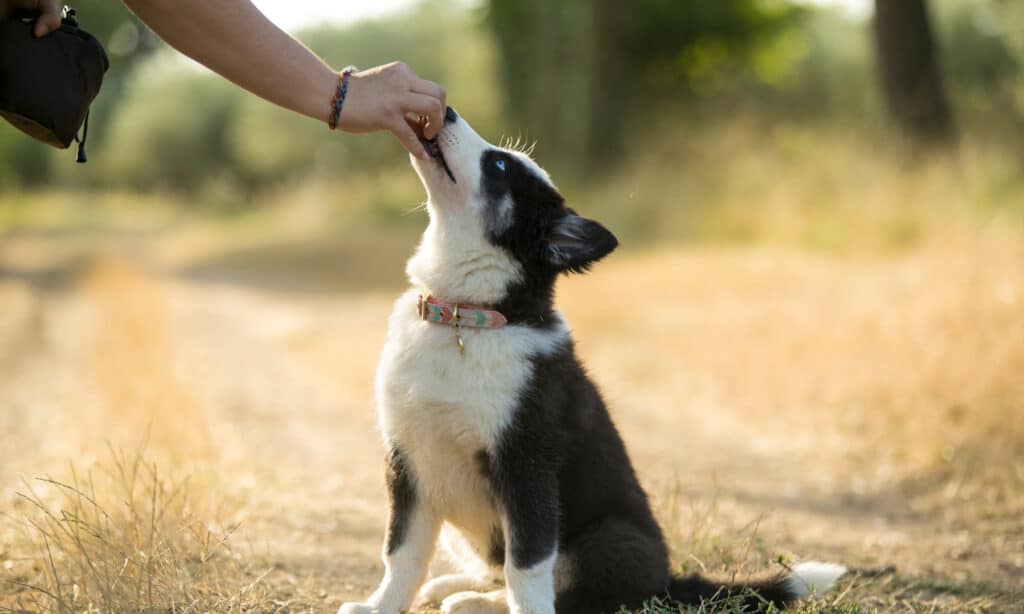
  • Can Dogs Eat Meatballs? – Expert Answers

    Can Dogs Eat Meatballs? – Expert Answers

    As a dog owner, you’re always looking for ways to keep your furry friend healthy and happy. And since meatballs are a favorite dish for many people, you might be wondering if your dog can join in on the fun. After all, dogs are known for their love of meat, so it seems like a natural fit, right? But before you start sharing your meatballs with your pup, it’s important to consider whether it’s safe and healthy for them to eat this human food. In this blog post, we’ll take a closer look at the question of whether dogs can eat meatballs and what you need to know to keep your dog healthy and happy.

    can dogs eat meatballs

    What Are Meatballs?

    Meatballs are a type of food made from ground meat, typically beef, pork, or a combination of the two, mixed with seasonings and sometimes other ingredients like breadcrumbs, eggs, and herbs. The mixture is rolled into small, bite-sized balls and cooked by frying, baking, or simmering in a sauce. Meatballs are a popular dish in many cuisines around the world, from Italian spaghetti and meatballs to Swedish meatballs served with lingonberry sauce. They can be eaten on their own as a snack or appetizer, or as a main course served with pasta, rice, or vegetables. While meatballs are a human food, some dog owners may wonder if it’s safe for their furry friends to eat them too.

    Can Dogs Have Meatballs?

    When it comes to feeding your dog, it’s important to know which human foods are safe and which ones can be harmful to their health. So, can dogs have meatballs? The answer is: it depends. While plain, cooked meatballs made from high-quality ingredients can be a tasty and nutritious addition to your dog’s diet, some types of meatballs are not safe for dogs to eat.

    Meatballs that contain onions, garlic, or other seasonings that are toxic to dogs should be avoided. Additionally, meatballs that are high in fat or salt can cause digestive upset or even lead to more serious health issues like pancreatitis.

    If you want to give your dog meatballs as a treat or part of their regular diet, it’s best to make them yourself using lean, unseasoned ground meat and avoid adding any harmful ingredients. You can also consult with your veterinarian to make sure that meatballs are a suitable food for your dog based on their individual health needs and dietary restrictions.

    Remember, while it can be tempting to share your human food with your furry friend, it’s important to prioritize their health and safety and only offer them foods that are appropriate for their specific needs.

    Can dogs eat meatballs? The answer is yes, with a few caveats

    Harmful Ingredients in Meatballs:

    While plain, cooked meatballs made from high-quality ingredients can be a tasty and nutritious addition to your dog’s diet, certain ingredients commonly found in meatballs can be harmful to dogs. Here are some examples:

    1. Onions and Garlic: These ingredients are toxic to dogs and can cause damage to their red blood cells, leading to anemia. Even small amounts of onions or garlic can be dangerous, so it’s best to avoid any meatballs that contain these ingredients.
    2. Salt: Meatballs that are high in salt can cause your dog to become dehydrated, leading to excessive thirst and urination. In severe cases, salt poisoning can cause seizures, vomiting, and even death.
    3. Fat: Meatballs that are high in fat can be difficult for your dog to digest and may cause diarrhea, vomiting, or even pancreatitis, a serious condition that can require hospitalization.
    4. Bread Crumbs: Breaded meatballs can be high in carbs, causing weight gain and health problems in some dogs.
    5. Spices and Seasonings: Seasoned meatballs can contain harmful ingredients to dogs such as chili powder, paprika, or rosemary.

    Overall, it’s best to stick to plain, unseasoned meatballs made from high-quality ingredients to ensure your dog stays healthy and happy.

    Safe Ingredients in Meatballs:

    If you want to treat your dog to some meatballs, it’s important to choose ingredients that are safe and healthy for them. Here are some examples of ingredients you can use to make safe and nutritious meatballs for your furry friend:

    1. Lean Meat: Choose high-quality lean meat such as ground beef, turkey, or chicken as the main ingredient in your meatballs. Avoid fatty meat, as it’s hard to digest and can cause health issues for your dog.
    2. Vegetables: Add veggies like carrots or sweet potato to meatballs for dogs to boost fiber and vitamins. Just make sure to avoid any vegetables that are toxic to dogs, such as onions, garlic, or avocado.
    3. Eggs: Egg in meatball mix binds ingredients, adds protein to your dog’s diet.
    4. Oats: Oats are a good source of fiber and can help keep your dog’s digestive system healthy. You can add a small amount of rolled oats to your meatball mixture as a healthy filler.
    5. Herbs: Herbs like parsley and basil add nutrition and flavor to meatballs without harming dogs. Just be sure to avoid any herbs that can be toxic to dogs, such as thyme or sage.

    By using these safe and healthy ingredients, you can make delicious meatballs that your dog can enjoy as a treat or part of their regular diet.

    Homemade meatballs for dogs: easy and nutritious

    What Signs To Watch For If Your Dog Accidentally Ate A Lot of Meatballs?

    If your dog accidentally eats a lot of meatballs or meatballs that contain harmful ingredients, it’s important to watch for signs of potential health issues. Here are some common symptoms to watch for:

    1. Vomiting: If your dog eats something that doesn’t agree with their stomach, they may vomit to expel the substance. If your dog vomits more than once or if the vomit contains blood or bile, contact your veterinarian.
    2. Diarrhea: Eating something that’s not part of their regular diet can upset your dog’s digestive system and cause diarrhea. If your dog has diarrhea that lasts for more than a day or that contains blood, contact your veterinarian.
    3. Loss of appetite: Loss of appetite or thirst in dogs may signal gastrointestinal distress or a serious health problem.If your dog refuses food or water for more than 24 hours, contact your veterinarian.
    4. Lethargy: If your dog seems unusually tired or sluggish, it may be a sign that they’re not feeling well. If your dog is lethargic for more than a day or if they’re also exhibiting other symptoms, contact your veterinarian.
    5. Abdominal pain: If your dog is experiencing abdominal pain, they may whine, whimper, or pant excessively. They may also appear to be hunched over or uncomfortable.

    If you notice any of these symptoms or if your dog appears to be in distress, contact your veterinarian immediately. Depending on the severity of the symptoms, your veterinarian may recommend bringing your dog in for an examination or treatment.

    When or If You Should Go To The Vet?

    If you suspect that your dog has eaten a lot of meatballs or meatballs containing harmful ingredients, it’s important to keep a close eye on them and watch for any signs of potential health issues. Err on caution & contact vet if your dog shows listed symptoms.

    In some cases, your veterinarian may recommend bringing your dog in for an examination or treatment. Depending on the severity of the symptoms, they may advise you to monitor your dog at home or bring them in for immediate treatment.

    If you’re not sure whether your dog needs to see a veterinarian, it’s always better to be safe than sorry. Your veterinarian can help you determine whether your dog needs treatment and can provide you with guidance on how to manage any symptoms at home.

    Remember, prevention is key. To avoid any potential issues, it’s best to only feed your dog meatballs made from safe, high-quality ingredients in moderate amounts. And always keep harmful ingredients like onions and garlic out of your dog’s reach. By taking these precautions, you can help keep your furry friend healthy and happy.

    Canine-friendly meatballs made with all-natural ingredients

    Safe Dog-Friendly Alternative to Meatballs:

    If you’re looking for a dog-friendly alternative to meatballs, there are plenty of safe and nutritious options to choose from. Here are some ideas:

    1. Homemade Dog Treats: DIY dog treats = healthy and tasty snacks for your furry friend. Make homemade dog treats using peanut butter, sweet potato, and pumpkin. Recipes are available online for tasty and nutritious options.
    2. Carrots: Carrots are a low-calorie, fiber-rich snack that many dogs enjoy. You can cut them into bite-sized pieces and offer them as a healthy treat throughout the day.
    3. Green Beans: Green beans are another low-calorie, fiber-rich snack that can help keep your dog feeling full and satisfied. Steam or blanch and give as snack or mix in regular meals for your dog
    4. Lean Meat: Choose lean chicken, turkey, or beef for your dog’s meaty treats. You can cook the meat and cut it into small pieces for a tasty and nutritious snack.
    5. Freeze-Dried Meat: Freeze-dried meat treats are a convenient and healthy option that many dogs enjoy. They’re made from high-quality, human-grade meat that has been freeze-dried to lock in nutrients and flavor.

    By choosing safe and healthy alternatives to meatballs, you can provide your dog with tasty and nutritious snacks without risking their health. Just remember to introduce new foods slowly and in moderation to avoid any digestive upset or food sensitivities.

    A cute pup eagerly waiting for a meatball snack

    Recipe For Healthy Meatballs for Dogs

    Here’s a simple and dog-friendly meatball recipe:

    Ingredients:

    • 1 pound lean ground beef
    • 1/2 cup cooked and mashed sweet potato
    • 1/4 cup finely chopped carrots
    • 1 egg
    • 1/4 cup rolled oats
    • 1/4 teaspoon dried parsley

    Instructions:

    1. Preheat your oven to 350°F (175°C).
    2. In a large mixing bowl, combine the ground beef, mashed sweet potato, chopped carrots, egg, rolled oats, and dried parsley. Mix well until all ingredients are fully incorporated.
    3. Using your hands, shape the mixture into small, bite-sized meatballs.
    4. Place the meatballs on a baking sheet lined with parchment paper.
    5. Bake for 20-25 minutes or until the meatballs are cooked through and lightly browned on the outside.
    6. Let the meatballs cool before serving to your furry friend.

    This recipe makes approximately 20-25 meatballs, depending on the size. You can store any leftover meatballs in an airtight container in the fridge for up to 5 days or in the freezer for up to 3 months.

    Healthy Store-Bought Options:

    As a responsible dog owner, it’s important to prioritize your furry friend’s health and safety when it comes to their diet. While meatballs can be a tasty and convenient human food, it’s important to be mindful of the potential risks and to only feed your dog meatballs made from safe and nutritious ingredients.

    If you do decide to give your dog meatballs as a treat or part of their regular diet, make sure to avoid any harmful ingredients like onions and garlic, and choose lean meats and healthy fillers like vegetables and oats. And always keep an eye on your dog for any signs of potential health issues, such as vomiting or diarrhea.

    Remember, there are many safe and healthy alternatives to meatballs that you can offer your dog, from homemade treats to lean meats and vegetables. By prioritizing your dog’s health and making informed choices about their diet, you can help ensure that they live a long, happy, and healthy life by your side.

    ~ Lindsie

    A note about your dog’s health

    This article provides general education and does not replace an examination, diagnosis, or individualized advice from your veterinarian. Contact a veterinary professional if you are concerned about your dog’s symptoms.

    Lindsie Parks B.S., CRDNS Avatar

    ABOUT THE AUTHOR
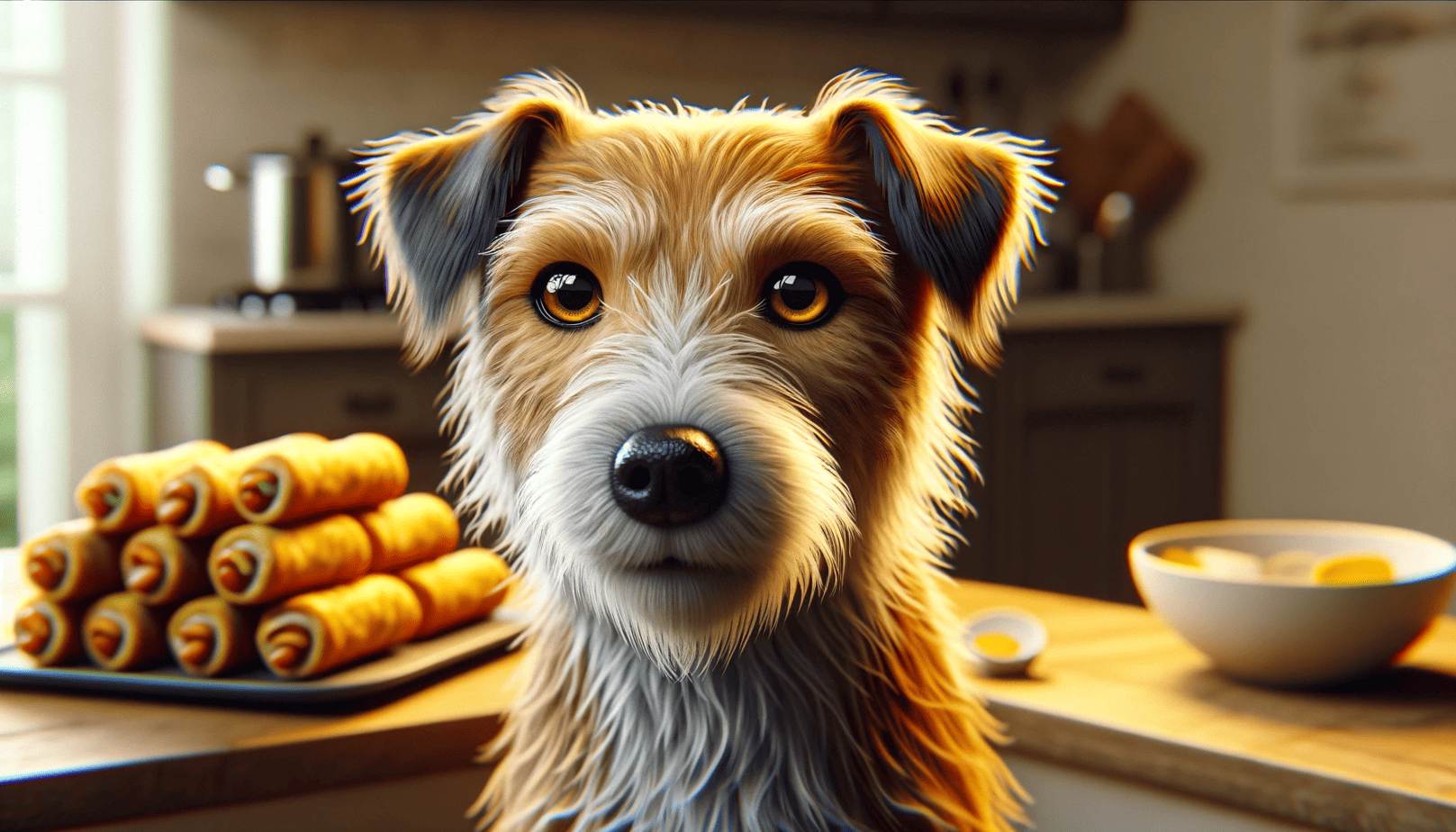
  • Can Dogs Eat Pizza Rolls? – Expert Answers

    Can Dogs Eat Pizza Rolls? – Expert Answers

    If you’re a dog owner, you’re probably familiar with the pleading eyes and hopeful wagging tail that come with every mealtime. And let’s be honest, it’s hard to resist giving in to those adorable requests for a bite of whatever we’re eating. But when it comes to pizza rolls, you may be wondering if they’re safe for your furry friend to indulge in. After all, dogs have different nutritional needs and digestive systems than humans, and what’s safe for us may not be safe for them. So, can dogs eat pizza rolls? In this blog, we’ll explore the potential risks and benefits of feeding pizza rolls to your dog, and give you all the information you need to make an informed decision about what to feed your canine companion.

    Can dogs safely eat pizza rolls?

    What Are Pizza Rolls?

    Pizza rolls are a popular snack food that are often enjoyed as a quick and easy meal or snack. They are typically made by wrapping pizza ingredients such as cheese, sauce, and toppings inside a small, breaded and baked or fried dough shell. Pizza rolls are often sold frozen and can be heated up in the oven, microwave, or deep fryer for a crispy, convenient snack.

    While pizza rolls can be a tasty treat for humans, it’s important to keep in mind that they may not be suitable for our four-legged friends. Dogs have different nutritional needs and digestive systems than humans, and certain ingredients commonly found in pizza rolls could potentially be harmful to their health. In the next sections, we’ll explore the potential risks and benefits of feeding pizza rolls to dogs, so you can make an informed decision about what to feed your furry friend.

    Can Dogs Eat Pizza Rolls?

    When it comes to feeding pizza rolls to dogs, the short answer is that it’s best to avoid it if possible. While some ingredients in pizza rolls may not be harmful in small quantities, there are several reasons why they are not an ideal food for our canine companions.

    One of the main concerns is the high fat and calorie content of pizza rolls, which can lead to weight gain and obesity in dogs. Pizza rolls contain processed meats, like pepperoni or sausage, which are high in sodium and preservatives harmful to dogs.

    Another potential issue with feeding pizza rolls to dogs is the risk of gastrointestinal upset. Dogs have sensitive digestive systems and consuming foods that are high in fat, salt, or spices can lead to vomiting, diarrhea, or other digestive issues.

    Finally, some ingredients commonly found in pizza rolls, such as garlic or onion powder, can be toxic to dogs if consumed in large quantities.

    While it may be tempting to share your pizza rolls with your furry friend, it’s best to stick to dog-friendly snacks and treats that are specifically formulated for their nutritional needs. Consult your vet if unsure about your dog’s food safety to make the best choices for their wellbeing.

    Pizza rolls - a dog-friendly treat?

    Harmful Ingredients in Pizza Rolls:

    Pizza rolls may be a delicious and convenient snack for humans, but they can contain several ingredients that are potentially harmful to dogs. Some of the most concerning ingredients in pizza rolls include:

    1. Garlic and Onion Powder: Pizza roll ingredients can cause anemia in dogs if eaten excessively.
    2. Cheese: Cheese-filled pizza rolls may cause GI upset in dogs despite cheese being generally safe for them.
    3. Processed Meats: Avoid giving pizza rolls with processed meats to dogs, as they may contain harmful preservatives and high sodium.
    4. Dough: Pizza rolls’ dough high in calories & carbs can cause weight gain & health issues in dogs.
    5. Spices: Pizza rolls’ spices like oregano, basil, and red pepper flakes can cause digestive upset in some dogs.

    If your dog has consumed any of these ingredients, it’s important to monitor them closely for any signs of gastrointestinal upset, such as vomiting or diarrhea. When in doubt, consult your vet about whether certain foods are safe for your dog. Some ingredients may require attention.

    Safe Ingredients in Pizza Rolls:

    While there are several ingredients commonly found in pizza rolls that can be harmful to dogs, there are also some ingredients that are safe for our furry friends to consume in moderation. Some safe ingredients in pizza rolls include:

    1. Tomatoes: Tomatoes are a common ingredient in pizza sauce and are safe for dogs to eat in small quantities. Some dogs may be allergic to tomatoes or experience digestive upset if they consume too much.
    2. Vegetables: Many pizza rolls contain vegetables such as bell peppers, mushrooms, and onions. Small amounts of veggies are safe for dogs. Onions are harmful, but other options provide nutritional benefits.
    3. Meat: Pizza rolls with high-quality meats like grilled chicken or lean beef are safe for dogs in moderation; avoid processed meats.
    4. Herbs: Basil, parsley, and thyme in pizza rolls have health benefits for dogs and are safe for consumption.

    However, it’s important to remember that pizza rolls should never be a regular part of your dog’s diet, and any ingredients should be given in moderation. Additionally, it’s always best to consult with your veterinarian before introducing any new foods into your dog’s diet to ensure that they are safe and appropriate for your pet’s individual nutritional needs.

    Healthy or harmful? Pizza rolls for dogs

    What Signs To Watch For If Your Dog Accidentally Ate A Lot of Pizza Rolls?

    If your dog accidentally ate a lot of pizza rolls, you should keep an eye out for the following signs of gastrointestinal distress:

    1. Vomiting: Excess food or indigestible ingredients may cause vomiting in dogs.
    2. Diarrhea: Dogs’ diarrhea is a sign of digestive upset due to overconsumption of fat or hard-to-digest ingredients
    3. Abdominal Pain: Your dog may exhibit signs of discomfort such as whining or pacing if they are experiencing abdominal pain.
    4. Lethargy: Overeating can make dogs tired, less active than usual.
    5. Loss of Appetite: Sick dogs may lose appetite or refuse to eat.

    If your dog exhibits any of these symptoms, it’s important to monitor them closely and make sure they have access to plenty of fresh water. In some cases, exposure to certain ingredients in pizza rolls may require veterinary attention, so it’s always best to consult with your veterinarian if you’re ever unsure about whether a particular food is safe for your dog to eat or if your dog is exhibiting any signs of illness or distress.

    When or If You Should Go To The Vet?

    If your dog has accidentally consumed a large amount of pizza rolls or is exhibiting signs of gastrointestinal distress such as vomiting or diarrhea, you should monitor them closely for any changes in their condition. In some cases, exposure to certain ingredients in pizza rolls can be harmful to dogs and may require veterinary attention.

    You should consider taking your dog to the vet if they are exhibiting any of the following symptoms:

    1. Severe vomiting or diarrhea: Frequent vomiting or diarrhea in dogs can cause dehydration and electrolyte imbalances, which can be dangerous if untreated.
    2. Abdominal pain: Abdominal pain in dogs? Whining, pacing, or reluctance to move? Seek medical attention immediately.
    3. Difficulty breathing: Seek immediate veterinary care if your dog has breathing problems or is in distress.
    4. Loss of consciousness: If your dog becomes unresponsive or loses consciousness, they require emergency veterinary care.
    5. Allergic reaction: A dog allergic to pizza rolls or showing hives/difficulty breathing needs urgent medical attention.

    It’s always better to err on the side of caution and seek veterinary care if you’re unsure about your dog’s condition or if they are exhibiting any signs of illness or distress. Your veterinarian can help diagnose any underlying health issues and provide appropriate treatment to help your dog recover as quickly as possible.

    "Feeding your dog pizza rolls: what you need to know

    Safe Dog-Friendly Alternative to Pizza Rolls:

    If you’re looking for a safe and healthy alternative to pizza rolls for your furry friend, there are several dog-friendly snacks and treats that you can try. Here are a few options to consider:

    1. Homemade Dog Treats: There are many simple and easy-to-make dog treat recipes that you can try at home. DIY treats = high-quality, dog-friendly ingredients and customized recipe to suit your pup’s nutritional needs and taste buds.
    2. Vegetables: Carrots, sweet potatoes, and green beans are safe and healthy low-calorie snacks for dogs. You can try baking or steaming the vegetables to make them more appealing to your dog.
    3. Fruits: Some fruits such as apples, bananas, and blueberries can be a tasty and nutritious treat for dogs in moderation. However, it’s important to remove any seeds or pits that could be harmful to your dog’s health.
    4. Dental Chews: Dental chews promote good oral hygiene and clean teeth in dogs while providing a tasty snack. Be sure to choose dental chews that are appropriate for your dog’s size and chewing habits.
    5. Lean Meat: Grilled chicken or turkey is a healthy protein-rich snack for dogs in moderation. However, it’s important to avoid processed meats and to remove any bones that could be a choking hazard.

    Remember that while it’s important to provide your dog with healthy and nutritious snacks, treats should always be given in moderation and as part of a balanced diet. If you’re ever unsure about whether a particular food is safe for your dog to eat, it’s always best to consult with your veterinarian.

    Healthy Store-Bought Options:

    In conclusion, while pizza rolls may be a tempting snack for both humans and dogs alike, it’s important to keep in mind that they may not be the best choice for our furry friends. With their high fat and calorie content, as well as potential harmful ingredients such as garlic and onion powder, pizza rolls can lead to health issues such as obesity, digestive upset, and anemia in dogs.

    Fortunately, there are many safe and healthy alternatives that you can try, such as homemade dog treats, vegetables, fruits, dental chews, and lean meats. By choosing dog-friendly snacks and treats, you can ensure that your furry friend is getting the nutrients they need without risking their health.

    Remember, if your dog ever accidentally consumes a large amount of pizza rolls or is exhibiting signs of gastrointestinal distress, it’s always best to monitor them closely and consult with your veterinarian if you’re unsure about their condition. With proper care and attention, you can help ensure that your dog stays happy and healthy for years to come.

    ~Lindsie

    A note about your dog’s health

    This article provides general education and does not replace an examination, diagnosis, or individualized advice from your veterinarian. Contact a veterinary professional if you are concerned about your dog’s symptoms.

    Lindsie Parks B.S., CRDNS Avatar

    ABOUT THE AUTHOR
  • Can Dogs Eat Mealworms? – Expert Answers

    Can Dogs Eat Mealworms? – Expert Answers

    As pet owners, we are always concerned about what we feed our furry friends, and it’s natural to wonder if certain foods are safe or harmful for them. Mealworms are a popular snack among many animals, including birds, reptiles, and even humans, but can dogs eat mealworms? In this post, we’ll delve into the nutritional value of mealworms and explore whether they pose any risks to your canine companion. Discover if mealworms are a good choice for your dog’s diet or if traditional dog food is best.

    can dogs eat mealworms

    What Are Mealworms?

    Mealworms are actually the larvae of darkling beetles and are used as a protein source for many animals, including birds, reptiles, and even humans. They’re about an inch long and cylindrical with a tough outer shell. You might find them in stored food items like grains, flour, and other cereal products.

    These little critters pack a nutritional punch, containing protein, fat, and fiber, along with various vitamins and minerals like B vitamins, iron, and calcium. That’s why many pet owners have started feeding them to their furry friends as a healthy and nutritious snack.

    But, as with anything new in your pet’s diet, it’s important to understand if there are any potential risks involved. Next, we’ll explore if mealworms are safe for dogs and what precautions to consider.

    Can Dogs Have Mealworms?

    When it comes to whether dogs can have mealworms, the short answer is yes, but there are some important considerations to keep in mind.

    Mealworms are a supplement, not a replacement, for your dog’s regular diet, providing protein and other nutrients. Mealworms should only be fed as a treat or supplement in small amounts, as part of a balanced diet. This is because dogs have specific dietary requirements that may not be met solely by mealworms.

    Secondly, it’s crucial to ensure that the mealworms you’re giving your dog are safe and free from harmful chemicals or pesticides. Mealworms intended for animal consumption are available commercially and are typically raised specifically for this purpose. Check packaging for animal consumption when feeding dogs commercial mealworms, which are typically safe.

    Additionally, it’s important to consider your dog’s individual dietary needs and any health concerns they may have before introducing mealworms into their diet. Consult with your vet before giving new foods to dogs with known allergies or sensitivities.

    Finally, it’s worth noting that while mealworms are generally safe for dogs to eat, they can still pose a choking hazard if not prepared properly. Supervise your dog while they eat mealworms, and cut them into small pieces to reduce choking risk.

    In summary, dogs can have mealworms in moderation, as long as they are safe and prepared properly. As with any new addition to your dog’s diet, it’s essential to take the necessary precautions and consult with your veterinarian if you have any concerns.

    All you need to know about dogs and mealworms

    Harmful Ingredients in Mealworms:

    While mealworms can provide a source of protein and other nutrients for dogs, there are some potential risks and harmful effects to keep in mind.

    One concern is the risk of an intestinal blockage if your dog eats too many mealworms or consumes them too quickly without chewing them properly. This can lead to symptoms such as vomiting, diarrhea, and abdominal pain, and may require medical attention.

    Another risk is the potential for mealworms to carry harmful bacteria or parasites, which could cause food poisoning or other health problems in dogs. It’s crucial to ensure that the mealworms you feed your dog are safe and free from harmful chemicals or pesticides.

    Furthermore, some dogs may have an allergic reaction to mealworms, which could cause symptoms such as itching, swelling, or difficulty breathing. Stop feeding mealworms if allergic reaction occurs and consult with vet.

    In summary, while mealworms can be a nutritious snack for dogs, there are potential risks and harmful effects to be aware of. Introduce mealworms in moderation, supervise while eating, and consult with vet if concerned about dog’s health.

    Safe Ingredients in Mealworms:

    Yes, there are several safe aspects of mealworms when it comes to feeding them to dogs.

    Firstly, mealworms are a rich source of protein, fiber, and other nutrients that can be beneficial for your dog’s health. Mealworms can be a low-fat and low-calorie dog treat that is both tasty and healthy.

    Secondly, commercial mealworms that are intended for animal consumption are generally safe for dogs to eat. These mealworms are raised specifically for this purpose and are often screened for potential contaminants or harmful chemicals.

    Thirdly, mealworms can be a fun and interactive treat for dogs. They come in various shapes and sizes, making them an exciting addition to your dog’s diet. Additionally, some dogs enjoy the crunchiness and texture of mealworms, which can provide mental stimulation and help promote dental health.

    In summary, mealworms can be a safe and nutritious treat for dogs when introduced in moderation and prepared properly. Mealworms offer protein and nutrients, making them a fun and interactive treat for your furry friend.

    What Signs To Watch For If Your Dog Accidentally Ate A Lot of Mealworms?

    If your dog accidentally eats a lot of mealworms, there are several signs you should watch out for. These signs may indicate that your dog is experiencing an intestinal blockage or other health problems.

    One of the most common signs of intestinal blockage is vomiting. Repetitive vomiting after eating mealworms could be a sign of digestive system blockage in dogs. Other symptoms of an intestinal blockage may include diarrhea, loss of appetite, and abdominal pain or discomfort.

    If your dog has eaten a large amount of mealworms, they may also experience symptoms of food poisoning, such as nausea, vomiting, and diarrhea. In some cases, mealworms may carry harmful bacteria or parasites that can cause these symptoms.

    If your dog is allergic to mealworms, they may experience symptoms such as itching, swelling, or difficulty breathing. Stop feeding mealworms if your dog shows allergic symptoms and seek veterinary attention.

    In summary, if your dog accidentally eats a lot of mealworms, it’s important to monitor them closely for any signs of intestinal blockage, food poisoning, or allergic reactions. If you notice any concerning symptoms, seek veterinary attention immediately to ensure the safety and well-being of your furry friend.

    Are mealworms a healthy snack for dogs?

    When or If You Should Go To The Vet?

    If you’re worried that your dog has eaten too many mealworms and is showing signs of an intestinal blockage, food poisoning, or an allergic reaction, it’s best to take them to the vet as soon as possible.

    If your dog is vomiting repeatedly, has diarrhea, seems to be in pain or discomfort, or is generally unwell after eating mealworms, it could be a sign of an intestinal blockage. This is a serious condition and requires immediate veterinary attention.

    Similarly, if your dog is experiencing symptoms like vomiting, diarrhea, or lethargy that may indicate food poisoning, it’s important to take them to the vet. Your vet can provide supportive care to help your dog recover and manage any symptoms they may be experiencing.

    If your dog is showing signs of an allergic reaction, like itching, swelling, or difficulty breathing, it’s crucial to seek veterinary attention right away. Allergies can be dangerous; your vet may give medication to manage symptoms and ensure your dog’s safety.

    Safe Dog-Friendly Alternative to Mealworms:

    If you’re not comfortable feeding your dog mealworms or they’re not readily available, there are several safe and dog-friendly alternatives you can offer them.

    One tasty option is cooked, lean meats like chicken, turkey, or beef. These meats are rich in protein and make a healthy and nutritious addition to your dog’s diet.

    Another option is to offer your dog fruits and vegetables that are safe for them to eat, such as carrots, green beans, and apples. “Fiber-rich fruits and veggies make for a healthy, delicious snack for your pup.”

    Lastly, you can consider offering your dog commercially available dog treats that are made with high-quality ingredients and specifically formulated for their health. These treats offer a safe and convenient way to provide your dog with a tasty and nutritious snack.

    In summary, there are plenty of safe and delicious alternatives to mealworms that you can give your dog. Your dog can enjoy healthy snacks like cooked lean meats, fruits, vegetables, and high-quality commercial dog treats.

    Healthy Store-Bought Options:

    Mealworms can be a safe and nutritious dog treat when introduced in moderation and prepared properly. Mealworms are protein-rich, nutrient-dense, and fun snacks for your furry friend.

    However, it’s crucial to consider your dog’s individual dietary needs and any health concerns they may have before introducing mealworms into their diet. It’s also important to ensure that the mealworms you feed your dog are safe and free from harmful chemicals or pesticides.

    If you suspect that your dog has eaten too many mealworms or is experiencing any concerning symptoms, it’s best to seek veterinary attention right away. Your vet can diagnose problems and treat your dog to keep them safe and healthy.

    Overall, while mealworms may not be the best choice for every dog, they can be a tasty and nutritious treat that your furry friend is sure to love.

    ~Lindsie

    A note about your dog’s health

    This article provides general education and does not replace an examination, diagnosis, or individualized advice from your veterinarian. Contact a veterinary professional if you are concerned about your dog’s symptoms.

    Daniel Bird Avatar

    ABOUT THE AUTHOR

  • Can Dogs Eat Gooseberries? Expert Answers

    Can Dogs Eat Gooseberries? Expert Answers

    As pet owners, we all want to provide our furry friends with a healthy and balanced diet. However, with so many different types of fruits and vegetables out there, it can be difficult to know which ones are safe for our canine companions to consume. In this post, we will take a closer look at gooseberries and whether they are a suitable addition to your dog’s diet. We will explore the potential health benefits and risks associated with feeding your dog gooseberries, as well as provide some tips on how to incorporate them into your dog’s meals if they are deemed safe. So, if you’re curious about whether or not dogs eat gooseberries, read on to find out more!

    can dogs eat gooseberries

    What are Gooseberries?

    Gooseberries are these small, round fruits that grow on bushes in cooler regions. They come in a range of colors, from green to red, and have a sour-sweet taste. You’ve probably tasted them in pies, jams, or sauces. They’re not just delicious, they’re also packed with nutrients, such as vitamin C, vitamin A, potassium, and fiber, which make them a healthy choice for people.

    As a pet owner, you might be wondering whether your furry friend can safely eat gooseberries too. It’s a fair question, and we’ll delve deeper into this topic in the following sections. Depending on the type, gooseberries are usually ready for picking in late spring or early summer. They’re popular among humans, but is it okay for your dog to munch on them? We’ll find out soon.

    Can Dogs Eat Gooseberries?

    As a dog owner, you want to make sure you’re giving your furry friend the best nutrition possible. And you might be wondering if gooseberries are a healthy and safe treat for your dog.

    Well, the answer is yes and no. Small amounts of gooseberries are generally safe for dogs to eat and can provide some health benefits, such as vitamins and fiber. But too much of this fruit can cause stomach problems like diarrhea and vomiting because of the natural sugars in it.

    One thing to keep in mind is that the leaves and stems of the gooseberry plant are toxic to dogs and can lead to kidney damage or other health issues. So, make sure your dog doesn’t have access to any parts of the plant.

    Overall, gooseberries can be a tasty and healthy treat for your dog, but it’s important to give them in moderation and watch for any negative reactions. If you’re not sure whether gooseberries are safe for your dog, it’s always a good idea to check with your vet.

    How to serve gooseberries to your dog: tips and tricks

    What Signs To Watch For If Your Dog Accidentally Ate A Lot of Gooseberries?

    If your dog accidentally eats a large amount of gooseberries, you should keep an eye out for the following signs:

    1. Diarrhea: Excessive consumption of gooseberries can cause your dog’s digestive system to become upset, leading to loose stools and diarrhea.
    2. Vomiting: Your dog may vomit as a result of consuming too many gooseberries. This can be a natural response to try to rid their stomach of the excess fruit.
    3. Abdominal discomfort: If your dog is experiencing discomfort in their belly, such as bloating, cramping, or pain, this could be a sign that they’ve eaten too many gooseberries.
    4. Loss of appetite: Your dog may not feel like eating if their stomach is upset from the excess gooseberries.
    5. Lethargy: If your dog is feeling unwell, they may seem lethargic or less energetic than usual.

    If you notice any of these symptoms after your dog has consumed gooseberries, it’s important to monitor their condition closely. In most cases, these symptoms should subside within a few hours to a day or two. However, if your dog is experiencing severe symptoms or if their condition doesn’t improve, it’s important to contact your veterinarian for advice and treatment. Additionally, if you suspect your dog has consumed a large amount of gooseberry leaves or stems, contact your vet immediately as this can be more serious and potentially life-threatening.

    When or If You Should Go To The Vet?

    If your dog eats a lot of gooseberries and starts showing signs of discomfort like diarrhea, vomiting, loss of appetite, or lethargy, don’t panic. It’s usually a natural reaction to the excess fruit, and your furry friend will likely recover on their own within a few hours to a day or two.

    However, if your dog’s condition worsens or if they’re showing more severe symptoms like persistent vomiting or diarrhea, dehydration, difficulty breathing, or signs of neurological problems, you should take them to the vet right away. These symptoms could be a sign of a more serious condition that requires prompt attention.

    And if you suspect that your dog has consumed a lot of gooseberry leaves or stems, or if they’re exhibiting signs of kidney failure, such as excessive urination, thirst, or lethargy, you should seek veterinary attention immediately. These are serious symptoms that need prompt treatment.

    In summary, if you’re unsure whether to take your dog to the vet after consuming gooseberries, it’s always better to be safe than sorry. Your vet can give you the best advice based on your dog’s specific symptoms and help you determine the best course of action.

    Gooseberries for dogs: nutritional facts and benefits

    Safe Dog-Friendly Alternative to Gooseberries:

    Of course, here’s a more conversational version:

    Looking for a safe and healthy alternative to gooseberries for your furry friend? Here are some options that dogs tend to love:

    1. Blueberries: These little berries are packed with vitamins and antioxidants, and they make for a great snack that’s low in calories.
    2. Watermelon: This refreshing fruit is an excellent source of vitamins A and C, potassium, and fiber, and it’s safe for dogs to eat in moderation.
    3. Carrots: Dogs love the crunchy texture of carrots, and they’re a great source of fiber and beta-carotene, which the body converts into vitamin A.
    4. Pumpkin: This nutrient-rich vegetable is easy to digest and high in fiber, making it great for regulating your dog’s digestive system. It’s also a good source of vitamins A and C.
    5. Apples: Apples are another healthy option that’s safe for dogs as long as you remove the seeds and core. They’re rich in fiber and vitamins A and C, and they can even help freshen your dog’s breath.

    Remember to introduce new foods slowly and watch for any signs of digestive upset or allergies. And if you have any questions or concerns about your dog’s diet, don’t hesitate to reach out to your veterinarian for advice.

    Healthy Store-Bought Options:

    In conclusion, while gooseberries can be a healthy and safe treat for dogs in moderation, it’s important to monitor their intake and make sure they don’t overindulge. If your dog accidentally eats too many gooseberries, they may experience digestive upset and other symptoms. It’s also crucial to keep your dog away from the leaves and stems of the gooseberry plant, which are toxic and can cause serious health issues.

    Fortunately, there are plenty of safe and nutritious alternatives to gooseberries that you can offer your dog. Blueberries, watermelon, carrots, pumpkin, and apples are just a few of the options that can provide your furry friend with vitamins, minerals, and fiber without the risk of digestive upset or toxicity.

    As always, consult with your veterinarian if you have any questions or concerns about your dog’s diet or if you suspect that they’ve consumed a harmful substance. With a little bit of knowledge and caution, you can keep your dog healthy and happy for years to come.

    ~Lindsie

    A note about your dog’s health

    This article provides general education and does not replace an examination, diagnosis, or individualized advice from your veterinarian. Contact a veterinary professional if you are concerned about your dog’s symptoms.

    Lindsie Parks B.S., CRDNS Avatar

    ABOUT THE AUTHOR

  • Can Dogs Have Cloves? Expert Answers

    Can Dogs Have Cloves? Expert Answers

    As dog owners, we always want to provide our furry friends with the best possible care and nutrition. However, with so many conflicting opinions and information out there, it can be challenging to know what is safe and healthy for our dogs to eat. One such ingredient that often raises questions is cloves. Used for centuries in human cooking and medicinal practices, cloves have several potential benefits. But can dogs safely consume this spice? In this blog, we’ll dive into the topic of whether or not dogs can have cloves and what precautions to take if you choose to incorporate them into your pet’s diet.

    can dogs eat cloves

    What Are Cloves?

    Cloves are a type of aromatic spice that is commonly used in cooking and medicinal practices around the world. They are derived from the dried flower buds of the clove tree, which is native to Indonesia but now grown in several countries. Cloves have a strong, sweet, and slightly bitter flavor, which makes them a popular ingredient in various cuisines. They are also known for their potential health benefits, including their ability to reduce inflammation, improve digestion, and relieve pain. Overall, cloves are a versatile spice that can add both flavor and potential health benefits to a wide range of dishes.

    Can Dogs Eat Cloves?

    When it comes to the question of whether or not dogs can eat cloves, there is no straightforward answer. While cloves themselves are not toxic to dogs, they can pose a risk if consumed in large amounts. Eugenol in cloves can cause vomiting, diarrhea, and abdominal pain in dogs. Additionally, the essential oil of cloves can be toxic to dogs and should be avoided altogether.

    That being said, in small amounts, cloves can be beneficial for dogs. Some pet owners use cloves as a natural remedy for canine dental health, as the eugenol can help to soothe toothaches and reduce inflammation in the gums. However, it is essential to use cloves in moderation and under the guidance of a veterinarian.

    If you do decide to incorporate cloves into your dog’s diet, it is important to do so gradually and to monitor your dog for any adverse reactions. Consult a vet before giving new foods/supplements to your dog for their safety and appropriateness.

    How to keep your furry friend safe around cloves

    What Signs To Watch For If Your Dog Accidentally Ate A Lot of Cloves?

    If your dog accidentally eats a large amount of cloves, there are several signs to watch for that may indicate an adverse reaction. The high concentration of eugenol in cloves can cause irritation and inflammation in the mouth, throat, stomach, and intestines, leading to the following symptoms:

    1. Vomiting
    2. Diarrhea
    3. Abdominal pain and discomfort
    4. Loss of appetite
    5. Excessive drooling or pawing at the mouth
    6. Lethargy or weakness
    7. Rapid breathing or difficulty breathing
    8. Changes in behavior, such as restlessness or agitation

    If you notice any of these symptoms after your dog has ingested cloves, it is important to contact your veterinarian immediately. In severe cases, ingesting a large amount of cloves can lead to more serious health issues, such as liver damage, seizures, or even death. Acting quickly reduces risks and ensures the best outcome for your dog’s health.

    When or If You Should Go To The Vet?

    If you suspect that your dog has ingested a large amount of cloves or is showing any signs of an adverse reaction, it is important to contact your veterinarian right away. Large amounts of eugenol in cloves can irritate and inflame the digestive system

    Your veterinarian may recommend bringing your dog in for an examination to assess their condition and determine the appropriate course of treatment. Treatment may include fluid therapy and medication for pain and inflammation, depending on symptoms and amount ingested.

    In severe cases, hospitalization may be necessary to monitor your dog’s condition and provide more intensive care. Your veterinarian may also perform diagnostic tests, such as blood work or X-rays, to check for any underlying health issues or complications.

    In general, it is always better to err on the side of caution and seek veterinary care if you have any concerns about your dog’s health. Quick treatment helps dogs recover from clove ingestion and resume normal activities.

    The dangers of feeding cloves to your dog

    Safe Dog-Friendly Alternative to Cloves:

    If you’re looking for a safe and dog-friendly alternative to cloves, there are several options to consider. Here are a few ideas:

    1. Parsley: Parsley freshens dog’s breath and reduces mouth bacteria.Add parsley to your dog’s food or offer as a healthy snack to freshen their breath.
    2. Cinnamon: Cinnamon can offer health benefits similar to cloves, but with less risk of irritation and inflammation. Just be sure to use it in moderation and avoid cinnamon essential oil, which can be toxic to dogs.
    3. Coconut oil: Coconut oil has antimicrobial properties and can help to promote healthy digestion and a shiny coat in dogs. You can add a small amount to your dog’s food or offer it as a treat.
    4. Mint: Like parsley, fresh mint can help to freshen your dog’s breath and promote healthy oral hygiene. You can add a few leaves to your dog’s food or offer them as a snack.

    As always, it is important to introduce new foods and supplements gradually and to monitor your dog for any signs of adverse reactions. If you have any concerns about your dog’s diet or health, it is always best to consult with a veterinarian for personalized guidance and advice.

    Healthy Store-Bought Options:

    In conclusion, while cloves can provide potential health benefits for dogs, they should be used with caution and in moderation. Ingesting large amounts of cloves can cause irritation and inflammation in the digestive system, leading to discomfort and other health issues. Cloves can aid canine dental health when used under veterinary supervision.

    If you are looking for a safe and dog-friendly alternative to cloves, there are several options to consider, such as parsley, cinnamon, coconut oil, and mint. By introducing these ingredients gradually and monitoring your dog’s response, you can help to promote their overall health and well-being.

    As responsible dog owners, it is essential to be informed about the foods and supplements we give to our furry friends. By staying educated and working with a veterinarian, we can ensure that our dogs receive the best possible care and nutrition.

    ~Lindsie

    A note about your dog’s health

    This article provides general education and does not replace an examination, diagnosis, or individualized advice from your veterinarian. Contact a veterinary professional if you are concerned about your dog’s symptoms.

    Lindsie Parks B.S., CRDNS Avatar

    ABOUT THE AUTHOR

  • Can Dogs Have Saltine Crackers? – Expert Answers

    Can Dogs Have Saltine Crackers? – Expert Answers

    It’s no secret that dogs have an insatiable love for food and often beg for a nibble of their human’s snacks. However, not all human foods are safe for our furry friends, and it can be challenging to discern which foods are suitable for sharing. One snack that pet owners may not give a second thought to sharing with their pooch is the humble Saltine cracker. But is it safe for dogs to eat Saltines, or should we avoid sharing this snack with them? In this post, we’ll dive deeper into the potential risks and benefits of feeding Saltines to dogs.

    saltine crackers

    What Are Saltine Crakers?

    Saltine crackers are those thin, crispy, salty crackers you probably have stashed away in your pantry. You know the ones – they’re perfect for topping with cheese, peanut butter, or whatever else you’re in the mood for. They’re made with basic ingredients like flour, water, salt, and yeast, and baked until they’re light and crunchy. You can recognize Saltines by their square shape and those little holes on top. And let’s not forget about that distinctively salty flavor that keeps us coming back for more! Whether you’re snacking on them straight out of the box or using them to jazz up your favorite dip, Saltine crackers are a classic snack that we all know and love.

    Can Dogs Have Saltine Crackers?

    While Saltine crackers are generally safe, they are not great to feed to our pups in large amounts. Dogs have different nutritional needs and digestive systems compared to humans, which means that not all human foods are safe or appropriate for them.

    When it comes to Saltine crackers, there’s no immediate danger if your dog eats one or two accidentally. However, Saltines are high in sodium, which is not healthy for dogs in large amounts. Ingesting too much salt can lead to dehydration, kidney damage, and other health issues, particularly in dogs with pre-existing health conditions.

    Furthermore, Saltine crackers don’t provide any significant nutritional value for dogs. They’re low in protein, fiber, and other essential nutrients that dogs need to thrive. So, while Saltines may be a tasty treat for us humans, they should not be a regular part of a dog’s diet.

    Harmful Ingredients in Saltine Crackers:

    While Saltine crackers are generally considered safe for human consumption in moderation, there are a few ingredients in these crackers that can be harmful if consumed in large amounts.

    One of the main ingredients in Saltine crackers is salt, and as previously mentioned, too much sodium can be dangerous for dogs. Consuming too much salt can cause excessive thirst, dehydration, and in severe cases, can lead to kidney damage or even death. Saltine crackers contain refined flour lacking fiber/nutrients of whole grains and can cause weight gain and health issues.

    In addition to these concerns, some brands of Saltine crackers may contain artificial flavors, colors, and preservatives that can be harmful to dogs. For example, BHA and BHT are commonly used as preservatives in processed foods, including some brands of Saltines. These chemicals have been linked to cancer and other health issues in dogs and should be avoided whenever possible.

    While it’s unlikely that your dog will experience any immediate harm from eating a Saltine cracker or two, it’s essential to be mindful of the ingredients and potential risks associated with feeding them to your furry friend.

    Can Saltine Crackers Benefit Your Dog's Health? Learn More

    Safe Ingredients in Saltine Crackers:

    When it comes to safe ingredients in Saltine crackers, there aren’t many that are particularly beneficial for dogs. While Saltines are not toxic to dogs, they don’t provide any significant nutritional value either.

    Saltines are primarily made up of flour, water, and salt, with some brands including additional ingredients like yeast, sugar, and soybean oil. These ingredients are generally considered safe for dogs to consume in small amounts, but they don’t offer any substantial health benefits.

    What Signs To Watch For If Your Dog Accidentally Ate A Lot of Saltine Crackers?

    If your dog accidentally eats a large quantity of Saltine crackers, it’s important to monitor them closely for any signs of discomfort or illness. Some signs to watch for include:

    1. Excessive thirst: Excessive salt intake can make your dog excessively thirsty and increase water consumption.
    2. Upset stomach: Saltine crackers can be difficult for dogs to digest, especially if they’ve eaten a large amount. Your dog may experience diarrhea, vomiting, or abdominal pain as a result.
    3. Dehydration: Too much salt can cause dehydration, which can be dangerous for dogs. Signs of dehydration include dry mouth, sunken eyes, lethargy, and loss of appetite.
    4. Restlessness or pacing: If your dog is experiencing discomfort or pain, they may be restless or pace around the house.
    5. Increased urination: Saltines can increase urination in dogs, leading to more frequent potty breaks.

    If you notice any of these symptoms in your dog after they’ve eaten Saltine crackers, it’s important to contact your veterinarian right away. Depending on the severity of your dog’s symptoms, your vet may recommend supportive care, such as IV fluids or medications to manage their symptoms. In severe cases, your dog may need to be hospitalized for treatment.

    When or If You Should Go To The Vet?

    If your dog has accidentally eaten a large quantity of Saltine crackers and is experiencing any of the following symptoms, you should seek veterinary care immediately:

    1. Severe vomiting or diarrhea: Excessive vomiting or diarrhea in dogs can lead to dehydration, which is dangerous if left untreated.
    2. Lethargy or weakness: Unusual fatigue or weakness, difficulty standing or walking, may signal a serious health issue in dogs.
    3. Excessive thirst or urination: Unusual fatigue or weakness, difficulty standing or walking, may signal a serious health issue in dogs.
    4. Rapid heartbeat or difficulty breathing: Elevated heart rate or breathing difficulties in dogs may indicate a serious condition that requires immediate veterinary care.

    If your dog is experiencing any of these symptoms, it’s important to contact your veterinarian right away or take them to an emergency veterinary clinic. In less severe cases, you may be able to monitor your dog’s symptoms at home and provide supportive care, such as offering small amounts of water and a bland diet to help settle their stomach. However, it’s always better to err on the side of caution and seek veterinary care if you have any concerns about your dog’s health.

    Can Dogs Safely Eat Saltine Crackers? Find Out Here

    Safe Dog-Friendly Alternative to Saltine Crackers:

    If you’re looking for a safe and healthy alternative to Saltine crackers to offer your dog, there are plenty of options to choose from! Here are a few dog-friendly alternatives that are both tasty and nutritious:

    1. Carrots: Carrots are low in calories and high in fiber, making them a great snack for dogs. They’re also rich in vitamin A, which is essential for maintaining healthy skin and eyesight.
    2. Green beans: Green beans are another low-calorie, high-fiber snack that many dogs enjoy. They’re also a good source of vitamins and minerals, including vitamin C, vitamin K, and potassium.
    3. Apple slices: Apples are a healthy snack for dogs in moderation. Apples provide fiber, vitamin C, and antioxidants but remove seeds and core, which can harm dogs.
    4. Peanut butter: Many dogs love peanut butter, which is a good source of protein and healthy fats. Moderation is key with natural, unsalted peanut butter for dogs due to its high-calorie content.
    5. Rice cakes: Rice cakes are a low-calorie, low-sodium alternative to Saltine crackers that many dogs enjoy. They’re also a good source of complex carbohydrates, which can provide energy and help keep your dog feeling full.

    Remember, when introducing any new food into your dog’s diet, it’s important to do so gradually and in moderation to avoid digestive upset or other health issues.

    Healthy Store-Bought Options:

    In conclusion, while Saltine crackers may seem like a harmless and tasty snack to share with your dog, they’re not particularly beneficial for their health and can even be harmful if consumed in large amounts. High in sodium and lacking in essential nutrients, Saltines should be avoided as a regular part of your dog’s diet. Instead, consider offering your furry friend healthy, dog-friendly alternatives like carrots, green beans, and apple slices, which are not only safe but also provide valuable nutrition. As always, consulting with your veterinarian is the best way to ensure that your dog is receiving a balanced and healthy diet that meets their individual needs.

    ~Lindsie

    A note about your dog’s health

    This article provides general education and does not replace an examination, diagnosis, or individualized advice from your veterinarian. Contact a veterinary professional if you are concerned about your dog’s symptoms.

    Daniel Bird Avatar

    ABOUT THE AUTHOR

  • Can Dogs Eat Saltine Crackers? – Expert Answers

    Can Dogs Eat Saltine Crackers? – Expert Answers

    It’s not uncommon for humans to snack, and dogs are known to beg for a taste due to their love of food. But not all human foods are safe for our canine companions, and it can be tough to know what’s okay to share and what’s not. One snack that many of us might not think twice about offering our pups is the humble Saltine cracker. But can dogs eat Saltine crackers without any ill effects, or should we steer clear of sharing this snack with them? Let’s take a closer look at the risks and benefits of giving Saltines to dogs.

    What Are Saltine Crakers?

    Saltine crackers are those thin, crispy, salty crackers you probably have stashed away in your pantry. You know the ones – they’re perfect for topping with cheese, peanut butter, or whatever else you’re in the mood for. The manufacturers make Saltine crackers by mixing flour, water, salt, and yeast, and baking them until they turn light and crunchy. You can recognize Saltines by their square shape and those little holes on top. And let’s not forget about that distinctively salty flavor that keeps us coming back for more! Saltine crackers are a classic snack, whether eaten plain or used to jazz up dips

    Can Dogs Eat Saltine Crackers?

    Feeding dogs too many Saltines can cause digestive issues, and the high sodium content can harm those with heart disease.If you do decide to give your dog a Saltine cracker as a treat, make sure it’s a small amount and only given occasionally.

    Harmful Ingredients in Saltine Crackers:

    While Saltine crackers themselves are not necessarily harmful to dogs in small quantities, there are some ingredients in them that can be problematic if consumed in excess.

    One of the main concerns is the high sodium content in Saltine crackers. Too much salt can cause dehydration, high blood pressure, and other health issues in dogs. Saltines may contain harmful additives like HFCS, artificial flavors, and preservatives that are not good for dogs.

    Some Saltine crackers may contain seasonings or toppings that can be toxic to dogs, such as onion powder or garlic powder. These ingredients are often used to enhance the flavor of the crackers, but they can be dangerous for dogs, especially in large amounts.

    If you’re going to share Saltine crackers with your dog, it’s essential to read the label carefully and make sure that the crackers don’t contain any harmful ingredients. Limit your dog’s Saltine intake; they lack vital nutrients and shouldn’t be a large part of their diet. Saltine crackers are safe for dogs in moderation but watch out for high sodium and harmful ingredients.

    Safe Ingredients in Saltine Crackers:

    While Saltine crackers may not be the healthiest option for dogs, there are a few ingredients in these crackers that are safe for them to consume in moderation.

    Saltine crackers are primarily made from simple ingredients like flour, water, salt, and yeast. These ingredients are generally safe for dogs to eat.

    Saltine crackers are also typically low in fat, which can be beneficial for dogs that are overweight or have a history of pancreatitis.

    While Saltine crackers are not the healthiest snack option for dogs, they can be consumed safely in moderation as a treat. Never replace dogs’ balanced diet for their specific nutritional needs with Saltines or any other human food. If you’re looking for healthier treat options for your furry friend, there are many safe and nutritious treats available that are specifically designed for dogs.

    What Signs To Watch For If Your Dog Accidentally Ate A Lot of Saltine Crackers?

    If your dog accidentally eats a lot (and I mean A LOT) of Saltine crackers, you should monitor them closely for any signs of discomfort or illness. Some of the most common signs of salt toxicity in dogs include:

    1. Excessive thirst or urination: Excessive salt can cause vomiting, diarrhea, thirst, and frequent urination in dogs
    2. Vomiting and diarrhea: Consuming too much salt can irritate your dog’s stomach and cause vomiting or diarrhea.
    3. Lethargy: If your dog has eaten too much salt, they may experience severe vomiting or diarrhea and weakness
    4. Tremors or seizures: In severe cases of salt toxicity, dogs may experience muscle tremors or even seizures.
    5. Swollen or bloated abdomen: Saltine crackers are also high in carbohydrates, which can cause bloating or discomfort in some dogs.

    If you notice any of these symptoms in your dog, it’s essential to seek veterinary care right away. Salt toxicity can be dangerous or even life-threatening if left untreated, particularly in dogs with pre-existing health conditions or who are prone to dehydration.

    When or If You Should Go To The Vet?

    If your dog has eaten a large quantity of Saltine crackers and is exhibiting any concerning symptoms, it’s important to contact your veterinarian right away.

    Some symptoms that may indicate the need for veterinary care include:

    1. Severe vomiting or diarrhea: Severe vomiting or diarrhea can cause dehydration and danger for your dog.
    2. Excessive thirst or urination: Excessive thirst or urination in dogs can indicate a serious medical issue – seek veterinary care immediately
    3. Lethargy or weakness: If your dog is unusually tired or weak, it may be a sign that they’re not feeling well.
    4. Loss of appetite: If your dog isn’t interested in food or treats, it could indicate an underlying health problem.
    5. Changes in behavior: Anxious, restless, or agitated behavior in dogs may indicate pain or discomfort – seek veterinary care if concerned.

    If you’re unsure whether or not your dog needs veterinary care, it’s always better to err on the side of caution and seek medical attention. Your veterinarian can assess your dog’s condition and provide the appropriate treatment or recommendations for monitoring their symptoms at home. In severe cases, your dog may require hospitalization or additional medical interventions to manage their symptoms and prevent further complications.

    Safe Dog-Friendly Alternative to Saltine Crackers:

    If you’re looking for a safe and healthy alternative to Saltine crackers to give your dog, there are several options that you can try. Here are some dog-friendly alternatives to Saltine crackers:

    1. Carrots: Raw carrots are a healthy and low-calorie treat for dogs that can help promote dental health.
    2. Apple slices: Apples are a good source of fiber and vitamins, and many dogs enjoy the taste. Be sure to remove the seeds and core before offering apple slices to your dog.
    3. Plain popcorn: Air-popped popcorn is a safe, low-calorie dog snack without salt or butter.
    4. Rice cakes: Rice cakes are a low-fat and low-sodium snack that many dogs enjoy. Be sure to choose plain rice cakes without any added flavors or seasonings.
    5. Sweet potato slices: Sweet potatoes are a good source of fiber, vitamins, and antioxidants, and many dogs enjoy the taste. Slice them thinly and bake them in the oven for a crunchy treat.

    It’s important to remember that while these alternatives are generally safe and healthy for dogs to eat, they should still be given in moderation as part of a balanced diet. As with any new food, it’s best to introduce them gradually to avoid any digestive upset or allergic reactions.

    Healthy Store-Bought Options:

    While Saltine crackers may be a tasty snack for us humans, they’re not the best option for our furry friends. Dogs have different nutritional needs and digestive systems, and consuming too much salt can be dangerous for them. While a few Saltine crackers won’t cause any harm, it’s best to avoid feeding them to your dog regularly.

    Instead, consider offering your dog healthier alternatives, like fresh fruits and vegetables or low-sodium treats specifically formulated for dogs. And remember, if your dog accidentally consumes a large quantity of Saltine crackers or shows any signs of illness, it’s important to seek veterinary care right away.

    By being mindful of what we feed our dogs and providing them with a balanced and nutritious diet, we can help them live happy and healthy lives. So, next time you’re snacking on Saltine crackers, remember to keep them out of reach of your furry friend and opt for a dog-friendly treat instead!

    ~Lindsie

    A note about your dog’s health

    This article provides general education and does not replace an examination, diagnosis, or individualized advice from your veterinarian. Contact a veterinary professional if you are concerned about your dog’s symptoms.

    Lindsie Parks B.S., CRDNS Avatar

    ABOUT THE AUTHOR

  • Can Dogs Eat GoGurt? – Expert Answers

    Can Dogs Eat GoGurt? – Expert Answers

    As pet owners, we all want to provide our furry friends with tasty treats every now and then. While there are plenty of human foods that are safe for dogs to consume in moderation, there are also many that can be harmful or even toxic. This leads us to the question: can dogs eat GoGurt?

    GoGurt is a popular brand of yogurt marketed towards kids, with its distinctive tube-shaped packaging and fruity flavors. Many of us have enjoyed it as a snack or lunchtime addition, but is it safe for our four-legged companions to indulge in as well? In this blog post, we’ll dive into the nutritional content of GoGurt, as well as any potential risks or benefits associated with letting your dog partake. Whether you’re a concerned pet owner or just curious about what your dog can and can’t eat, read on to learn more!

    can dogs eat gogurt

    What is Gogurt:

    If you’re not familiar with GoGurt, it’s a brand of yogurt that’s designed with kids and teens in mind. The product is made by Yoplait and comes in small, plastic tubes that are easy to consume on-the-go. Flavors include strawberry, blueberry, cherry, peach, and more.

    Parents appreciate GoGurt as a snack option for their children, as the tubes are portable and can be eaten without utensils. Plus, the product is marketed as a good source of calcium and vitamin D, two important nutrients for kids’ development.

    Now, as for whether or not dogs can eat GoGurt, that’s a different story. Like with any human food, it’s important to consider the nutritional content and potential risks before giving it to your pet.

    Can Dogs Eat Gogurt:

    When it comes to whether dogs can eat GoGurt, the answer is not a straightforward one. While yogurt itself can be a healthy treat for dogs, the flavored and sweetened varieties of GoGurt can contain ingredients that are not safe for dogs to consume.

    One of the main concerns with giving dogs flavored GoGurt is the sugar content. Dogs have a different digestive system than humans, and consuming too much sugar can lead to gastrointestinal upset, obesity, and even diabetes. Additionally, some flavors of GoGurt may contain artificial sweeteners like xylitol, which is extremely toxic to dogs and can cause seizures, liver failure, and even death.

    If you do want to give your dog yogurt as a treat, it’s best to choose plain, unsweetened yogurt and limit the amount you give them. Yogurt can be a good source of probiotics and calcium for dogs, but it should not make up a significant portion of their diet.

    Can dogs enjoy GoGurt?

    Harmful Ingredients in Gogurt:

    Of course! Here’s a more human-like version of the information on harmful ingredients in GoGurt:

    Although GoGurt is marketed towards kids and teenagers, it’s important to remember that some of the ingredients in the product can be harmful to dogs. For example, flavored GoGurt can contain high levels of sugar, which can lead to digestive issues, obesity, and even diabetes in dogs.

    Furthermore, certain flavors of GoGurt may contain artificial sweeteners like xylitol, which can be extremely toxic to dogs and cause serious health problems such as seizures and liver failure. Some types of GoGurt may also contain food coloring and preservatives that can trigger allergic reactions or upset the digestive system of some dogs.

    If you do decide to give your dog yogurt as a treat, it’s best to choose plain, unsweetened varieties and to limit the amount you give them. This helps to avoid any potentially harmful ingredients that may be present in flavored GoGurt.

    Safe Ingredients in Gogurt:

    There are also some ingredients in the product that are safe for dogs to eat. Here are some examples of safe ingredients that can be found in GoGurt:

    1. Plain yogurt: If you opt for plain, unsweetened GoGurt, the yogurt itself can be a safe and healthy treat for your dog. Yogurt contains probiotics, which can aid in digestion, as well as calcium, which can promote strong bones.
    2. Natural flavors: Some flavors of GoGurt are made with natural flavorings that are derived from plant sources. These can be safe for dogs to consume, as long as they do not contain any added sugars or artificial sweeteners.
    3. Fruit purees: GoGurt can contain pureed fruit as a flavoring ingredient. While dogs should not consume too much fruit due to the high sugar content, small amounts of pureed fruit can be safe for dogs to eat in moderation.

    If you want to give your dog GoGurt as a treat, it’s best to choose plain, unsweetened varieties or those that are flavored with natural ingredients.

    Is GoGurt safe for dogs to eat?

    What Signs To Watch For If Your Dog Accidentally Ate A Lot of Gogurt?

    If your dog accidentally eats a lot of GoGurt or any other food that may be harmful to them, there are several signs you should watch for. Here are some symptoms that may indicate your dog is experiencing a negative reaction to the food:

    • Vomiting: If your dog ingests a large amount of GoGurt, they may begin to vomit as their body attempts to rid itself of the excess sugar or other harmful ingredients.
    • Diarrhea: Similar to vomiting, diarrhea can be a sign that your dog’s digestive system is having trouble processing the ingredients in GoGurt.
    • Lethargy: Dogs who consume too much sugar or other harmful ingredients may become lethargic and tired, as their body works to process the excess substances.
    • Increased thirst or urination: If your dog ingests a lot of sugar or artificial sweeteners like xylitol, they may become excessively thirsty and urinate more frequently than usual.
    • Seizures: If your dog consumes a large amount of xylitol, it can lead to seizures, which are a serious medical emergency.

    If you notice any of these symptoms in your dog after they have consumed GoGurt, it’s important to contact your veterinarian right away. In severe cases, your dog may require immediate medical attention to prevent serious health complications.

    When or If You Should Go To The Vet?

    If you suspect that your dog has eaten a lot of GoGurt or any other food that may be harmful to them, it’s important to pay close attention to their behavior and look out for any signs of negative reactions. If you notice symptoms like vomiting, diarrhea, lethargy, increased thirst or urination, or seizures, it’s best to contact your veterinarian as soon as possible.

    While some mild symptoms may resolve on their own, it’s always better to err on the side of caution and seek veterinary attention if you are concerned. Your veterinarian can advise you on the best course of action based on your dog’s specific symptoms and medical history.

    Remember that some symptoms may not appear right away, and your dog may not show signs of distress until several hours after ingesting the food. If you are ever unsure whether or not your dog requires medical attention, it’s always best to consult with your veterinarian. They can provide you with the guidance you need to ensure the health and safety of your furry friend.

    Safe Dog-Friendly Alternative to Gogurt:

    If you’re looking for a safe and dog-friendly alternative to GoGurt, there are several options to consider. Here are a few ideas:

    1. Plain yogurt: Plain, unsweetened yogurt is a great alternative to GoGurt for dogs. It contains probiotics that can aid in digestion and calcium to promote strong bones.
    2. Frozen yogurt treats: You can make your own frozen yogurt treats for your dog by blending plain yogurt with fresh fruit like strawberries or blueberries. Pour the mixture into a silicone mold or ice cube tray and freeze until solid.
    3. Pumpkin puree: Pumpkin puree is a nutritious and tasty treat for dogs. It’s high in fiber and can aid in digestion. Mix a spoonful of pumpkin puree with some plain yogurt for a healthy snack.
    4. Peanut butter: Most dogs love peanut butter, and it’s a safe and tasty treat in moderation. Look for all-natural peanut butter without added sugar or xylitol.
    5. Fresh fruit: Small amounts of fresh fruit like blueberries, strawberries, and apples can be a healthy treat for dogs. Just be sure to remove any seeds or pits and cut the fruit into small pieces.

    Remember to always introduce new foods to your dog’s diet gradually and in moderation. Consult with your veterinarian before introducing any new treats, especially if your dog has any underlying health conditions.

    Healthy Store-Bought Options:

    In conclusion, while GoGurt may be a convenient and tasty snack for humans, it’s important to consider the potential risks before giving it to your furry friend. Flavored and sweetened varieties of GoGurt can contain ingredients that are harmful or even toxic to dogs, including sugar, artificial sweeteners, and food coloring.

    However, there are safe and dog-friendly alternatives to GoGurt that can provide your pet with a nutritious and delicious treat. Plain yogurt, frozen yogurt treats, pumpkin puree, peanut butter, and fresh fruit are all excellent options that your dog is sure to enjoy.

    Remember to always consult with your veterinarian before introducing any new foods into your dog’s diet, and to monitor your pet closely for any signs of negative reactions after consuming a new treat. By taking these steps, you can help to ensure the health and happiness of your furry friend for years to come.

    ~Lindsie

    A note about your dog’s health

    This article provides general education and does not replace an examination, diagnosis, or individualized advice from your veterinarian. Contact a veterinary professional if you are concerned about your dog’s symptoms.

    Lindsie Parks B.S., CRDNS Avatar

    ABOUT THE AUTHOR

  • Can Dogs Eat Miso Soup? – Expert Answers

    Can Dogs Eat Miso Soup? – Expert Answers

    Welcome to my blog where we will be exploring the question, “Can dogs eat miso soup?” As a pet owner, it’s important to ensure that our furry friends are getting a well-balanced and nutritious diet. While dogs are known to be meat-eaters, there are some human foods that they may be able to enjoy in moderation. Miso soup, a traditional Japanese soup made from fermented soybeans, is a popular dish that many people enjoy. But is it safe for dogs to consume? In this blog, we will be discussing the potential benefits and risks of feeding miso soup to dogs, as well as exploring alternative food options that may be more suitable for our canine companions. Dog owners curious about miso soup for pets – keep reading to learn about safety, ingredients, and alternatives.

    can dogs have miso soup

    What is Miso Soup:

    Miso soup is a classic Japanese dish that’s made by fermenting soybeans. First, the soybeans are mashed and mixed with water and a paste made from rice or barley. Then, the mixture is left to ferment for several months, which breaks down the proteins and carbohydrates in the soybeans and creates a thick paste with a delicious umami flavor. This paste is mixed with dashi (Japanese fish stock), tofu, seaweed, scallions, or mushrooms for flavor and nutrition.

    Miso soup is a popular breakfast food or light meal in Japan and is known for its health benefits. Miso paste is packed with protein, vitamins, minerals, and probiotics that can help with digestion and strengthen the immune system. However, it’s also important to note that miso soup can be high in sodium and should be consumed in moderation, especially for those with high blood pressure or sensitivity to salt.

    While miso soup is a beloved dish for humans, it’s important to consider whether or not it’s safe for our furry friends to eat. In the next section, we’ll dive into the potential risks and benefits of feeding miso soup to dogs.

    Can Dogs Eat Miso Soup:

    When it comes to feeding our canine companions, it’s natural to wonder if they can enjoy some of the same foods that we do. One popular dish that some dog owners may be curious about is miso soup. So, can dogs eat miso soup?

    The short answer is that it depends. While miso soup can be a healthy and nutritious food for humans, it may not be the best choice for dogs. “Dogs can’t digest miso soup like humans, and some ingredients may not be safe for them.”

    One of the main concerns with feeding miso soup to dogs is its high sodium content. Dogs have a lower tolerance for salt than humans, and consuming too much sodium can lead to health problems such as dehydration, kidney damage, and high blood pressure. Onions and garlic in miso soup are toxic to dogs and should be avoided.

    If you’re considering feeding miso soup to your dog, it’s important to consult with a veterinarian first. A vet can advise if miso soup is safe for your dog and suggest alternative foods. Practice moderation and balance, feed safe and healthy foods tailored to your dog’s needs.

    Can dogs have miso soup?

    Harmful Ingredients in Miso Soup:

    While miso soup can be a healthy and flavorful dish for humans, it contains certain ingredients that can be harmful or toxic to dogs. One of the primary concerns is the high sodium content in miso soup. Dogs have a lower tolerance for salt than humans, and consuming too much sodium can lead to health problems such as dehydration, kidney damage, and high blood pressure.

    Another potential harmful ingredient in miso soup for dogs is onions and garlic. These ingredients are commonly used to enhance the flavor of miso soup, but they can be toxic to dogs and cause serious health problems such as anemia, lethargy, and gastrointestinal issues. Avoid miso soup with onions or garlic as even small amounts can be harmful to dogs.

    In addition to sodium and onions/garlic, some other ingredients in miso soup may also be problematic for dogs. For example, some miso soup recipes may include mushrooms, which can be toxic to dogs if they contain certain compounds. Seaweed, another common ingredient in miso soup, may be safe for dogs in small amounts but can cause gastrointestinal upset if consumed in excess.

    If you’re considering feeding miso soup to your dog, it’s important to carefully check the ingredients list and consult with a veterinarian first. They can help you determine if miso soup is a safe and appropriate addition to your dog’s diet, and offer suggestions for alternative foods that may be better suited to your furry friend’s nutritional needs. Be mindful of miso soup ingredients & moderate your dog’s diet to keep them healthy.

    Safe Ingredients in Miso Soup:

    Although some ingredients in miso soup can be harmful to dogs, there are also safe and nutritious ingredients that our furry friends can enjoy. Here are some examples of safe ingredients in miso soup for dogs:

    1. Miso paste: Miso paste is the primary ingredient in miso soup and is made from fermented soybeans. It’s a great source of protein, vitamins, and minerals and contains probiotics that can boost digestion and the immune system.
    2. Tofu: Tofu is a common ingredient in miso soup and is a low-fat, low-calorie source of protein and other nutrients. It’s ideal for dogs that need to maintain or lose weight.
    3. Carrots: Carrots are a healthy, low-calorie vegetable that can add nutrition and crunch to miso soup. They contain vitamins and minerals that are beneficial for dogs, and their texture can be good for dental health.
    4. Broccoli: Like carrots, broccoli is a nutrient-dense vegetable that can provide vitamins, minerals, and fiber to your dog’s diet. It’s a great ingredient to add to miso soup to increase its nutritional value.

    It’s important to remember that not all dogs will be able to tolerate all of these ingredients. Before introducing new foods to your dog’s diet, it’s best to consult with a veterinarian to ensure that they’re safe and appropriate. Incorporating some of these safe ingredients in moderation can add variety and nutrition to your dog’s diet, making mealtime more enjoyable for your furry friend.

    Can dogs safely eat miso soup?

    What Signs To Watch For If Your Dog Accidentally Ate A Lot of Miso Soup?

    If your dog accidentally eats a large amount of miso soup, it’s important to monitor them closely for any signs of adverse reactions or health problems. Here are some common signs to watch for if your dog ingests too much miso soup:

    1. Vomiting: Excessive consumption of miso soup can irritate your dog’s stomach and lead to vomiting. If your dog starts vomiting repeatedly or seems to be in distress, it’s important to seek veterinary attention right away.
    2. Diarrhea: Misos soup’s high sodium content can also cause diarrhea in dogs. If your dog has diarrhea after eating miso soup, hydrate them and contact a vet if symptoms persist.
    3. Dehydration: As mentioned earlier, high levels of sodium in miso soup can lead to dehydration in dogs. Signs of dehydration include lethargy, dry gums, and sunken eyes. If you notice these symptoms, it’s important to provide your dog with plenty of fresh water and contact your veterinarian.
    4. Hyperactivity: Miso soup can contain caffeine, which can make dogs hyperactive and restless. Watch for hyperactivity in your dog after eating miso soup; seek vet attention if needed.

    If your dog displays any of these symptoms or shows signs of distress after consuming miso soup, it’s important to seek veterinary attention right away. Your veterinarian can evaluate your dog’s condition and provide appropriate treatment to prevent further complications.

    When or If You Should Go To The Vet?

    If you suspect that your dog has consumed a large amount of miso soup or is experiencing any symptoms of illness after eating miso soup, it’s important to contact your veterinarian right away. Your veterinarian can provide advice on how to proceed and may recommend that you bring your dog in for an examination.

    In general, you should consider seeking veterinary attention if your dog displays any of the following symptoms:

    1. Repeated vomiting or diarrhea
    2. Severe or prolonged lethargy
    3. Dehydration
    4. Loss of appetite
    5. Difficulty breathing
    6. Seizures or tremors

    These symptoms may indicate that your dog is experiencing a serious health problem that requires immediate attention. It’s always better to err on the side of caution and seek veterinary care if you’re concerned about your dog’s health.

    If you’re unsure whether or not to seek veterinary attention, you can also contact a pet poison control hotline for advice. These hotlines can provide guidance on whether or not a particular food or substance is toxic to dogs and what steps you should take if your dog has consumed it.

    Is miso soup safe for dogs? Here's what you need to know

    Safe Dog-Friendly Alternative to Miso Soup:

    If you’re looking for a safe and tasty alternative to miso soup that your furry friend can enjoy, there are several options available. Here are some ideas to consider:

    1. Homemade broth: Make homemade broth by boiling bones with veggies like carrots, celery, and parsley. This provides a lot of nutrition for your dog and is a great alternative to miso soup.
    2. Bone broth: This is similar to homemade broth but made specifically from animal bones. It’s a nutrient-dense option that offers numerous health benefits for your dog and is simple to prepare.
    3. Wet dog food: Many wet dog foods come in flavors like chicken or beef that are comparable to miso soup. These can be a convenient and safe alternative for your dog.
    4. Cooked lean meats: Chicken, turkey, and lean cuts of beef are all healthy sources of protein for dogs. You can cook them and mix them with veggies or brown rice to make a nutritious meal for your dog.
    5. Fresh vegetables: Vegetables like carrots, green beans, and sweet potatoes are all safe and healthy options for dogs. You can cook or serve them raw to add some healthy variety to your dog’s diet.

    It’s worth noting that not all dogs will tolerate all of these options equally well. Before introducing any new foods to your dog’s diet, it’s always best to check with your veterinarian to make sure they are safe and appropriate. By opting for safe and nutritious alternatives to miso soup, you can ensure your furry friend stays healthy and happy.

    Healthy Store-Bought Options:

    Conclusion:

    In conclusion, while miso soup may be a popular and healthy dish for humans, it’s important to approach feeding it to our furry friends with caution. Certain ingredients in miso soup can be harmful or toxic to dogs, and excessive consumption can lead to a range of health problems.

    If you’re considering feeding miso soup to your dog, it’s important to be aware of the potential risks and to consult with a veterinarian before introducing new foods to your dog’s diet. Additionally, if your dog accidentally consumes a large amount of miso soup, it’s important to monitor them closely for any signs of adverse reactions or health problems and to seek veterinary attention if necessary.

    Fortunately, there are many safe and nutritious alternatives to miso soup that your dog can enjoy. Homemade broth, bone broth, wet dog food, cooked lean meats, and fresh vegetables are all healthy options that can provide a range of health benefits for your furry friend.

    By taking the time to educate yourself about the risks and benefits of feeding miso soup to your dog and exploring alternative options, you can ensure that your furry friend stays healthy, happy, and well-fed for years to come.

    A note about your dog’s health

    This article provides general education and does not replace an examination, diagnosis, or individualized advice from your veterinarian. Contact a veterinary professional if you are concerned about your dog’s symptoms.

    Lindsie Parks B.S., CRDNS Avatar

    ABOUT THE AUTHOR

  • Can Dogs Eat Mango Ice Cream? – Expert Answers

    Can Dogs Eat Mango Ice Cream? – Expert Answers

    As dog owners, we all love to spoil our furry friends with special snacks every now and then. And when it’s scorching hot outside, what could be more refreshing than a spoonful of fruity mango ice cream? But before you treat your four-legged buddy to this frozen delight, you might be wondering: is it okay for dogs to eat mango ice cream?

    That’s where this blog comes in. We’ll delve into the potential pros and cons of giving your pooch mango ice cream. We’ll examine the nutritional value of mangoes and dairy products, look at possible health risks associated with feeding your dog ice cream, and offer tips on how to make safe and healthy treats for your furry pal. So, if you’re pondering whether you can share your sweet treat with your pup, keep reading to discover the answer!

    can dog eat miso ice cream

    What is Mango Ice Cream?

    Mango ice cream is a delightful frozen treat that’s created by blending fresh or frozen mangoes with dairy products like cream, milk, and sugar. This luscious dessert boasts a smooth and creamy texture and a sweet, fruity flavor that makes it a fantastic pick-me-up on a hot summer day.

    There are loads of different ways to make mango ice cream, and many recipes add other tasty ingredients like vanilla extract, lemon juice, or additional fruits. For those with dietary restrictions, some recipes swap out dairy products for non-dairy alternatives like coconut milk or almond milk, making it a perfect option for those with lactose intolerance or vegan preferences.

    Mango ice cream is a popular dessert in many countries worldwide, particularly in places where mangoes are grown and harvested locally. You can enjoy this frozen treat on its own or use it as a topping for cakes, pies, or other sweet treats.

    However, if you’re considering sharing this tasty dessert with your furry friend, it’s crucial to think about whether it’s safe for dogs to consume.

    Can Dogs Eat Mango Ice Cream?

    If you’re a dog owner and you love mango ice cream, you might be wondering if it’s safe to share this tasty treat with your furry friend. Unfortunately, the answer isn’t straightforward.

    While mangoes themselves are generally safe for dogs to eat in small amounts, the ingredients that go into making ice cream can pose potential health risks to dogs. For instance, dairy products like cream and milk can be difficult for dogs to digest, especially if they are lactose intolerant. In addition, many store-bought ice creams contain added sugar or artificial sweeteners, which can be toxic to dogs.

    Moreover, dogs should not consume foods that contain xylitol, a sugar substitute that is commonly used in sugar-free products, including some ice creams. Xylitol can cause a sudden and dangerous drop in blood sugar levels, leading to symptoms such as vomiting, loss of coordination, and seizures.

    If you want to treat your dog to some mango goodness, it’s best to stick to plain, fresh mangoes. This juicy fruit is packed with vitamins and minerals that are beneficial to dogs, including vitamin C, vitamin A, and potassium. You can also consider making your own homemade mango ice cream using dog-friendly ingredients, such as plain Greek yogurt or unsweetened coconut milk, and skipping any sugar or artificial sweeteners. As always, it’s essential to talk to your veterinarian before giving your dog any new foods or treats to ensure their safety and well-being.

    Canine-safe mango ice cream in a cup

    Harmful Ingredients in Mango Ice Cream:

    While mango ice cream can be a delicious and refreshing dessert for humans, there are several ingredients commonly found in ice cream that can be harmful to dogs if consumed. Here are a few key ingredients to keep in mind:

    1. Dairy Products – Most ice cream contains dairy products such as milk, cream, and butter, which can be difficult for dogs to digest, particularly if they are lactose intolerant. Consumption of dairy products can lead to gastrointestinal upset, including diarrhea and vomiting.
    2. Sugar and Artificial Sweeteners – Many store-bought ice creams contain high amounts of sugar or artificial sweeteners, such as xylitol. Sugar can contribute to obesity and diabetes in dogs, while xylitol can be extremely toxic and can cause a rapid drop in blood sugar levels, leading to seizures, liver failure, and even death.
    3. Chocolate and Nuts – Some variations of mango ice cream may contain chocolate chips, nuts, or other ingredients that are toxic to dogs. Chocolate contains theobromine, which can cause vomiting, diarrhea, and seizures in dogs, while nuts like macadamias can cause weakness, tremors, and hyperthermia.
    4. Additives and Preservatives – Ice cream may also contain various additives and preservatives that can be harmful to dogs, such as artificial colors, flavors, and stabilizers. These ingredients can cause digestive upset, allergic reactions, or other health problems.

    To keep your dog safe, it’s best to avoid giving them mango ice cream or any other human desserts that contain these potentially harmful ingredients. Instead, consider making homemade treats for your furry friend using dog-friendly ingredients like plain Greek yogurt, unsweetened coconut milk, and fresh fruits like mango. Always consult with your veterinarian before introducing any new foods or treats to your dog’s diet to ensure their health and safety.

    Safe Ingredients in Mango Ice Cream:

    When it comes to making homemade mango ice cream for your furry friend, there are several safe and healthy ingredients that you can use. These ingredients will not only make the treat delicious, but also safe for your dog to consume.

    Fresh mango is a great ingredient to start with, as it is not only sweet and delicious, but also loaded with nutrients that can benefit your dog’s health. You can blend fresh, ripe mangoes with dog-friendly dairy alternatives like plain Greek yogurt or unsweetened coconut milk to create a yummy and healthy ice cream base.

    For dogs that are lactose intolerant or have trouble digesting dairy, non-dairy milk alternatives like coconut milk or almond milk can be used as a substitute. These alternatives are often low in fat and calories and can be consumed by dogs in small amounts.

    To add some sweetness to your homemade mango ice cream, you can use natural sweeteners like honey or maple syrup instead of processed sugars or artificial sweeteners. These natural sweeteners are safe for dogs in moderation and can help make the ice cream even more delicious.

    Plain, unsweetened yogurt is another safe and healthy ingredient that can be used as a base for homemade mango ice cream recipes. It’s a great source of protein and probiotics that can benefit your dog’s digestive health, and it can be mixed with fresh mango or other dog-friendly fruits to create a scrumptious and wholesome dessert.

    As always, it’s important to talk to your veterinarian before introducing any new foods or treats to your dog’s diet to ensure their health and safety. With these dog-friendly ingredients, you can create a safe and delectable mango ice cream treat that your furry friend will love!

    Canine summer delight: mango ice cream for dogs

    What Signs To Watch For If Your Dog Accidentally Ate A Lot of Mango Ice Cream?

    If your dog accidentally eats a large amount of mango ice cream or any other ice cream that contains harmful ingredients, there are several signs that you should watch for. Here are some common symptoms of ice cream poisoning in dogs:

    1. Gastrointestinal Upset – Consumption of dairy products, sugar, and artificial sweeteners can cause vomiting, diarrhea, and other digestive issues in dogs. You may notice your dog having difficulty digesting their food or experiencing an upset stomach.
    2. Lethargy – If your dog has consumed a lot of ice cream, they may become tired, lethargic, and less active than usual.
    3. Increased Thirst – High sugar content in ice cream can cause dehydration, leading your dog to drink more water than usual.
    4. Hyperactivity – Some dogs may become hyperactive or restless after consuming large amounts of sugar or artificial sweeteners.
    5. Tremors and Seizures – Consumption of xylitol, a sugar substitute found in some ice creams, can cause rapid insulin release, leading to seizures and loss of coordination in dogs.

    If you notice any of these symptoms in your dog after they have consumed mango ice cream, it’s important to contact your veterinarian right away. In severe cases, ice cream poisoning can cause life-threatening health issues, so it’s crucial to seek medical attention immediately to ensure the safety and well-being of your furry friend.

    When or If You Should Go To The Vet?

    If your dog has accidentally consumed a large amount of mango ice cream or any other ice cream containing harmful ingredients, it’s important to monitor their behavior closely for any signs of distress or discomfort. Depending on the severity of the symptoms, you may need to seek veterinary care right away.

    If your dog is exhibiting mild symptoms such as gastrointestinal upset, lethargy, or increased thirst, you may be able to monitor them at home and make them comfortable until the symptoms subside. It’s important to provide plenty of fresh water and monitor their food and water intake.

    However, if your dog is exhibiting more severe symptoms such as tremors, seizures, or loss of coordination, or if they have consumed ice cream containing xylitol, you should seek veterinary care immediately. Xylitol poisoning can be life-threatening if not treated promptly.

    If you are unsure whether your dog requires veterinary attention, it’s always better to err on the side of caution and contact your veterinarian. They can provide you with guidance on how to monitor your dog’s symptoms and whether further medical attention is necessary. Remember, early intervention is key to ensuring the safety and well-being of your furry friend.

    Dogs enjoying a cool treat of mango ice cream

    Safe Dog-Friendly Alternative to Mango Ice Cream:

    If you’re looking for dog-friendly alternatives to mango ice cream, there are several tasty and healthy options that your furry friend will love! Here are a few ideas to get you started:

    1. Frozen Fruit Treats – Frozen fruit treats are an easy and healthy option for dogs. Simply blend up some fresh, dog-friendly fruits like bananas, strawberries, or blueberries, and freeze them in ice cube trays or silicone molds for a cool and refreshing treat.
    2. Yogurt-Based Treats – Yogurt is a great source of protein and probiotics that can benefit your dog’s digestive health. You can mix plain, unsweetened yogurt with dog-friendly fruits like apples or berries, and freeze them into small portions for a healthy and delicious snack.
    3. Coconut Cream-Based Treats – Coconut cream is a great dairy-free alternative to traditional cream, and it’s safe for dogs to consume in moderation. You can mix coconut cream with dog-friendly fruits like pineapple or mango and freeze them for a tropical and refreshing dessert.
    4. Peanut Butter-Based Treats – Most dogs love peanut butter, and it can be a great ingredient for homemade treats. Mix peanut butter with banana or pumpkin puree, freeze it in small portions, and you’ll have a tasty and healthy snack that your dog will go crazy for!

    Remember, it’s important to always consult with your veterinarian before introducing any new foods or treats to your dog’s diet to ensure their health and safety. With these dog-friendly alternatives, you can provide your furry friend with a delicious and healthy treat that they’ll love!

    .

    Healthy Store-Bought Options:

    In conclusion, while mango ice cream can be a delicious treat for humans on a hot summer day, it’s important to keep in mind that it may not be safe for dogs to consume. The dairy products, sugar, and artificial sweeteners commonly found in ice cream can cause digestive issues and other health problems in dogs. Additionally, some ice creams may contain toxic ingredients like chocolate or xylitol, which can be extremely dangerous for dogs.

    If you want to treat your furry friend to a frozen dessert, there are plenty of dog-friendly alternatives to mango ice cream that you can try, such as frozen fruit treats, yogurt-based treats, coconut cream-based treats, or peanut butter-based treats. These options are not only safe for dogs to consume, but they are also nutritious and delicious.

    As always, it’s important to consult with your veterinarian before introducing any new foods or treats to your dog’s diet, to ensure their health and safety. With these tips and alternatives in mind, you can provide your furry friend with a refreshing and healthy treat that they’ll love!

    ~ Lindsie

    A note about your dog’s health

    This article provides general education and does not replace an examination, diagnosis, or individualized advice from your veterinarian. Contact a veterinary professional if you are concerned about your dog’s symptoms.

    Lindsie Parks B.S., CRDNS Avatar

    ABOUT THE AUTHOR

  • Can Dogs Eat Ube? – Expert Answers

    Can Dogs Eat Ube? – Expert Answers

    As pet owners, we all want to provide the best nutrition for our furry companions. And with the popularity of human foods that are not traditionally fed to dogs, such as avocados, blueberries, and even pumpkin spice, it’s natural to wonder: can my dog eat ube?

    Ube, also known as purple yam, is a root vegetable that’s native to the Philippines and commonly used in Southeast Asian cuisine. It’s a versatile ingredient that can be boiled, mashed, baked, or fried, and is often used in desserts like ice cream, cakes, and pastries. Ube is also a good source of fiber, vitamin C, and potassium, among other nutrients.

    But is it safe for dogs to consume? Can they reap the same health benefits as humans, or are there potential risks involved? In this blog post, we’ll explore the question of whether dogs can eat ube, and what pet owners should consider before sharing this colorful tuber with their four-legged friends.

    can dogs have ube

    What is Ube:

    Ube, also known as purple yam, is a root vegetable that’s commonly used in Southeast Asian cuisine. It has a distinct deep purple color and a mildly sweet taste that makes it popular for use in desserts like ice cream, cakes, and pastries. Ube is native to the Philippines but is also grown in other parts of Asia, as well as some tropical regions in South America and Africa. The vegetable is high in fiber and contains vitamins C and B6, potassium, and manganese. Due to its vibrant color and unique flavor, ube has gained popularity in Western countries in recent years and is now available in many specialty stores and restaurants.

    Can Dogs Eat Ube:

    While ube is generally considered safe for dogs to eat, it’s important to remember that dogs have different nutritional needs than humans. While humans can benefit from the fiber, vitamins, and minerals found in ube, dogs require a different balance of nutrients in their diet.

    Additionally, some dogs may be sensitive to new foods, and introducing a new food like ube too quickly can cause digestive upset, such as vomiting or diarrhea. It’s always a good idea to introduce new foods to your dog’s diet gradually, starting with small amounts and watching for any adverse reactions.

    Finally, some forms of ube-based desserts, such as cakes or ice cream, may contain ingredients that are harmful to dogs, such as chocolate, sugar, or artificial sweeteners. These can cause serious health problems like vomiting, diarrhea, seizures, or even death in extreme cases.

    In summary, while dogs can technically eat ube in moderation, it’s important to consider their individual nutritional needs and to introduce new foods slowly and with caution. If you’re unsure about whether a particular food is safe for your dog, it’s always best to consult with a veterinarian first.

    Harmful Ingredients in Ube:

    While ube itself is generally considered safe for dogs to eat in moderation, some ube-based desserts may contain ingredients that are harmful to dogs.

    One of the most common harmful ingredients found in desserts is chocolate, which can cause vomiting, diarrhea, and even seizures or death in dogs. Chocolate contains theobromine, a compound that dogs metabolize much more slowly than humans, leading to a buildup of toxins in their system.

    Other potentially harmful ingredients in ube-based desserts include sugar and artificial sweeteners. While small amounts of natural sugars are typically safe for dogs, consuming large amounts can cause upset stomach, obesity, and dental problems. Artificial sweeteners like xylitol, commonly used in sugar-free desserts, are especially dangerous for dogs, as they can cause a rapid insulin release and a drop in blood sugar levels, leading to seizures, liver failure, or even death.

    In general, it’s best to avoid giving your dog any desserts or human foods that contain chocolate, sugar, or artificial sweeteners. If you want to share ube with your dog, it’s best to prepare it plain, boiled, and mashed, without any added sugar or ingredients.

    Ube for dogs: a healthy and tasty addition to their diet

    Safe Ingredients in Ube:

    When it comes to incorporating ube into your dog’s diet, it’s best to stick to simple, plain preparations without added sugar or artificial sweeteners. Some safe ingredients that can be added to ube to make it more appealing and nutritious for dogs include:

    • Plain, cooked chicken or turkey: Adding a small amount of cooked, shredded chicken or turkey to boiled, mashed ube can make it more palatable for dogs and provide a source of lean protein.
    • Carrots or green beans: These vegetables are low in calories and high in fiber, vitamins, and minerals, making them a healthy addition to ube-based meals. Just be sure to cook them thoroughly and chop them into small pieces to prevent choking.
    • Plain, low-fat yogurt: A small amount of plain, low-fat yogurt can add a creamy texture and probiotics to ube-based meals, which can aid in digestion and promote healthy gut bacteria.
    • Coconut oil: Adding a small amount of coconut oil to ube can provide healthy fats and improve the texture of the food. Just be sure to use plain, unflavored coconut oil, and start with a small amount to avoid digestive upset.

    Overall, it’s important to remember that dogs have different nutritional needs than humans, and should be fed a balanced diet that meets their specific requirements. While ube can be a nutritious and tasty addition to your dog’s diet in moderation, it’s important to avoid adding any harmful ingredients and to consult with a veterinarian if you have any concerns or questions.

    What Signs To Watch For If Your Dog Accidentally Ate A Lot of Ube?

    While small amounts of ube are generally considered safe for dogs to eat, consuming a large amount can lead to digestive upset and other health problems. Here are some signs to watch for if your dog eats too much ube:

    • Vomiting or diarrhea: This is the most common sign of digestive upset in dogs and can occur shortly after consuming a large amount of ube.
    • Lethargy or weakness: If your dog seems unusually tired or has trouble standing or walking, this could be a sign of an underlying health problem.
    • Loss of appetite: If your dog refuses to eat or seems disinterested in food, this could be a sign of nausea or discomfort.
    • Increased thirst or urination: Eating a lot of ube can cause dehydration and increased urination, which can lead to further health problems if left untreated.
    • Abdominal pain or discomfort: If your dog is pacing, whining, or seems to be in pain, this could be a sign of abdominal discomfort.

    If you notice any of these signs in your dog after they have eaten a lot of ube, it’s important to contact your veterinarian right away.

    Feeding your dog Ube: tips and advice

    When or If You Should Go To The Vet?

    If your dog has consumed a small amount of ube and shows no signs of digestive upset, there’s usually no need to take them to the vet. However, if your dog has eaten a large amount of ube or shows any signs of illness or discomfort, it’s important to contact your veterinarian right away.

    Some signs that your dog may need veterinary attention after eating ube include:

    • Vomiting or diarrhea that persists for more than 24 hours
    • Signs of dehydration, such as dry gums, sunken eyes, or lethargy
    • Abdominal pain or discomfort that persists for more than a few hours
    • Loss of appetite or refusal to drink water
    • Blood in vomit or diarrhea
    • Lethargy or weakness that persists for more than a day
    • Seizures, collapse, or difficulty breathing

    If you’re unsure whether your dog needs veterinary attention after eating ube, it’s always best to err on the side of caution and contact your vet. Vets can evaluate your dog and advise treatment over the phone or in person, which may involve medication, exams, or at-home care.

    Remember, early intervention is key when it comes to treating any health problem in dogs, so don’t hesitate to reach out to your veterinarian if you have any concerns about your dog’s health after eating ube.

    Safe Dog-Friendly Alternative to Ube:

    Certainly! Here are some safe and dog-friendly alternatives to ube that you can incorporate into your dog’s diet:

    1. Sweet potatoes: Sweet potatoes, like ube, are low-fat root vegetables that are rich in fiber, vitamins, and minerals. You can boil or bake them, and then mash them up and add them to your dog’s regular meals.
    2. Pumpkin: Another nutritious root vegetable, pumpkin is high in fiber and is a great source of vitamins A and C. Cook fresh pumpkin or plain canned pumpkin puree and add it to your dog’s food for a nutritious alternative to ube.
    3. Carrots: Carrots are a crunchy and nutritious vegetable that’s low in calories and high in fiber, vitamins, and minerals. Raw or cooked, grated or chopped, carrots make a healthy treat for dogs.”
    4. Green beans: Green beans are a great source of fiber and vitamins, and are low in calories. They can be given cooked or raw, and can be a great snack or addition to your dog’s regular meals.
    5. Apples: Apples are a tasty and healthy fruit that’s high in fiber and vitamins. Remove apple seeds and core, chop into small pieces before giving as a treat or adding to dog’s food.

    These are just a few examples of safe and dog-friendly alternatives to ube. Remember to always introduce new foods gradually, and to monitor your dog for any signs of digestive upset or food allergies. If you’re unsure whether a particular food is safe for your dog, it’s always best to consult with a veterinarian first.

    Healthy Store-Bought Options:

    In conclusion, while ube can be a nutritious and flavorful addition to your own diet, it’s important to consider your dog’s individual nutritional needs and any potential health risks before sharing this food with them. Safe for dogs to eat plain, cooked ube in small amounts, but avoid harmful ingredients like chocolate, sugar, and sweeteners.

    If you do decide to share ube with your dog, it’s best to stick to simple preparations without added sugar or ingredients, and to introduce new foods gradually and in moderation.If your dog feels sick after eating ube, contact your vet for advice.

    Remember, while it can be tempting to share our favorite foods with our furry friends, their nutritional needs and digestive systems are different from ours. Mindful feeding helps ensure your dog’s long-term health and well-being.

    ~LIndsei

    A note about your dog’s health

    This article provides general education and does not replace an examination, diagnosis, or individualized advice from your veterinarian. Contact a veterinary professional if you are concerned about your dog’s symptoms.

    Lindsie Parks B.S., CRDNS Avatar

    ABOUT THE AUTHOR
  • Can Dogs Eat Bacon Bits? – Expert Answers

    Can Dogs Eat Bacon Bits? – Expert Answers

    Welcome to our blog post on a question that many dog owners have likely asked themselves at some point: Can dogs eat bacon bits? As dog owners, we all want to treat our furry friends with delicious snacks and tasty meals, but we also want to make sure that what we’re feeding them is safe and healthy.

    Bacon bits are a popular topping for salads, baked potatoes, and other dishes, but is it okay to share them with our canine companions? “Learn about bacon bits for dogs: nutrition, safety, and potential risks to avoid

    We’ll also provide some alternative treat ideas for your dog that are both tasty and nutritious. Curious about what your dog can safely eat? Read on!

    can dogs eat bacon bits

    What are Bacon Bits:

    Bacon bits are small pieces of bacon that have been chopped up into small, bite-sized pieces.Bacon bits top salads, potatoes, & dishes; sold in grocery stores as real/imitation.

    Real bacon bits are made from cooked and crumbled bacon, while imitation bacon bits are typically made from textured vegetable protein or soy protein concentrate that has been flavored to taste like bacon.

    Bacon bits add flavor and texture to dishes for those who love bacon but not its quantity. Consider if bacon bits are safe for dogs before giving them to your pet.

    Can Dogs Eat Bacon Bits:

    While bacon bits may be a tasty treat for humans, whether or not dogs can eat them safely is a more complicated question. The short answer is that dogs can technically eat bacon bits, but it’s not necessarily recommended.

    One reason for this is that bacon is high in fat, which can be hard for dogs to digest and may lead to stomach upset or even pancreatitis if consumed in large amounts. Most store-bought bacon bits have harmful salt and preservatives for dogs.

    Furthermore, imitation bacon bits may contain other ingredients that aren’t safe for dogs, such as onion or garlic powder. Some amounts of these ingredients are toxic to dogs and may cause anemia or digestive problems.

    If you do want to give your dog a small taste of bacon, it’s best to stick with small amounts of cooked, unseasoned bacon rather than bacon bits. Bacon is an occasional treat, not a significant portion of a dog’s diet.

    Bacon bits and the risk of pancreatitis in dogs

    Harmful Ingredients in Bacon Bits:

    While bacon bits may seem like a harmless treat, some of the ingredients found in them can actually be harmful to your dog’s health. Here are some examples of harmful ingredients that may be present in bacon bits:

    1. Salt: Excessive consumption of heavily salted bacon bits can lead to sodium poisoning in dogs. Symptoms of sodium poisoning in dogs include vomiting, diarrhea, tremors, seizures, and even death in severe cases.
    2. Preservatives: Bacon bits may harm your dog due to preservatives like sodium nitrite. These preservatives have been linked to an increased risk of cancer in humans and may have similar effects on dogs.
    3. Onion and garlic powder: Onion or garlic powder in bacon bits can be toxic to dogs in large amounts. These ingredients can cause anemia and digestive issues in dogs and should be avoided.
    4. Imitation bacon bits: Fake bacon bits can be hard for dogs to digest, causing stomach problems. They may also contain other harmful ingredients such as artificial flavors and colors.

    In general, it’s best to avoid giving your dog bacon bits altogether and opt for healthier treat options instead.

    Safe Ingredients in Bacon Bits:

    While bacon bits may not be the healthiest snack option for your furry friend, there are some ingredients that are safe for dogs to eat in moderation. Here are a few examples of ingredients that may be found in bacon bits that are generally safe for dogs:

    • Real bacon: For safe bacon bits, choose cooked, small pieces of real bacon. Bacon is high in fat, but small amounts of cooked bacon are safe for dogs.
    • Natural flavors: Some bacon bits may contain natural flavors, which are generally safe for dogs in small amounts. However, it’s important to make sure that the natural flavors used don’t come from harmful ingredients like onion or garlic. Always check the label before giving any human food to your dog.
    • Smoke flavoring: Smoke flavoring in bacon bits is safe for dogs if free of harmful additives or preservatives.
    • Meat-based protein sources: Some bacon bits may be made with alternative meat-based protein sources like chicken or turkey. These can be a healthy and safe option for dogs, but make sure they aren’t heavily seasoned or processed.

    Remember, it’s important to always check the label and be cautious when giving your dog any human food. Bacon should only be given as an occasional treat and should not make up a significant portion of your dog’s diet.

    How much bacon can dogs eat safely?

    What Signs To Watch For If Your Dog Accidentally Ate A Lot of Bacon Bits?

    Instead of feeding your furry friend bacon bits, opt for safe and healthy alternatives like lean proteins, fresh fruits and vegetables, and homemade dog treats. Cooked chicken, turkey, and lean beef are great sources of protein for dogs. You can also try feeding your dog fresh fruits and vegetables like apples, carrots, and green beans.

    1. Vomiting: Overindulging in bacon bits may cause vomiting in dogs. This can be a sign that your dog’s digestive system is struggling to process the bacon.
    2. Diarrhea: Eating too many bacon bits can also lead to diarrhea, which can cause dehydration and discomfort for your dog. Keep an eye on your dog’s poop and call the vet if diarrhea lasts over 24 hrs.
    3. Abdominal pain: Your dog may also experience abdominal pain or discomfort after consuming a large amount of bacon bits. This can manifest as lethargy, restlessness, or reluctance to move or be touched.
    4. Pancreatitis: Eating too many bacon bits can cause pancreatitis, which can be life-threatening. Symptoms of pancreatitis in dogs include vomiting, diarrhea, loss of appetite, abdominal pain, and lethargy.

    If you notice any of these symptoms in your dog after they have consumed bacon bits, it’s important to contact your veterinarian right away. While small amounts of bacon may not cause any harm, excessive consumption can lead to serious health issues. It’s always better to err on the side of caution when it comes to your dog’s health and well-being.

    If your dog has accidentally consumed a large amount of bacon bits, there are several signs to watch for that may indicate an issue. Here are some symptoms to keep an eye out for:

    When or If You Should Go To The Vet?

    If your dog has eaten a large amount of bacon bits, it’s important to monitor them closely for any signs of illness or discomfort. While small amounts of bacon bits may not cause any issues, excessive consumption can lead to serious health problems in dogs.

    If you notice any symptoms such as vomiting, diarrhea, abdominal pain, or lethargy, it’s important to contact your veterinarian right away. These symptoms can indicate that your dog’s digestive system is struggling to process the excess food or that they may be experiencing more serious health issues like pancreatitis.

    Your vet may recommend bringing your dog in for an examination and possibly some diagnostic tests like blood work or an abdominal x-ray to determine the extent of the problem. In some cases, your vet may recommend hospitalization or other treatments to manage your dog’s symptoms and prevent further complications.

    It’s always better to be safe than sorry when it comes to your dog’s health, so if you’re ever unsure whether your dog’s bacon bit consumption warrants a trip to the vet, it’s always best to err on the side of caution and seek professional advice.

    Bacon bits for dogs: Yay or nay?

    Safe Dog-Friendly Alternative to Bacon Bits:

    If you’re on the hunt for some tasty and healthy alternatives to bacon bits for your furry companion, there are plenty of options to choose from! Here are a few ideas:

    • Cooked lean meats: Instead of bacon, you can try giving your dog small pieces of cooked chicken or turkey. These meats are low in fat and high in protein, making them a nutritious treat option.
    • Fresh fruits and vegetables: Dogs can safely eat many fruits and veggies, rich in vitamins and minerals. Apples, carrots, green beans, and blueberries are all examples of healthy snacks that your pup is sure to enjoy.
    • Plain rice or pasta: Sometimes simple is best! Rice or pasta can give carb boost to dogs on diet. These foods are easy to digest and can provide your dog with a quick burst of energy.
    • Peanut butter: Most dogs go wild for peanut butter, and it can be a healthy source of protein and fats. Just make sure to choose a brand that doesn’t contain any harmful ingredients like xylitol.
    • Commercial dog treats: Many safe and healthy dog treats are available on the market. Look for options made with natural, high-quality ingredients and steer clear of any products that contain preservatives or additives.

    Remember, it’s important to give your dog any human food in moderation and always check with your vet if you’re unsure whether a particular food is safe for your dog to eat. With a little creativity, you can find plenty of healthy treat options that your pup is sure to love!

    Healthy Store-Bought Recommendations:

    In conclusion, while it may be tempting to share your bacon bits with your furry friend, it’s important to remember that not all human foods are safe for dogs to eat. Choose healthier snack options for your dog instead of relying on bacon bits.

    By keeping an eye on your dog’s diet and choosing snacks that are high in nutrients and low in harmful ingredients, you can ensure that your furry friend stays happy and healthy for years to come. Check with your vet before giving any questionable food to your dog.

    Remember, your dog relies on you to make the best choices for their health and well-being. By choosing safe and healthy alternatives to bacon bits, you can show your pup how much you care and help them live their best life possible.

    ~ Lindsie

    A note about your dog’s health

    This article provides general education and does not replace an examination, diagnosis, or individualized advice from your veterinarian. Contact a veterinary professional if you are concerned about your dog’s symptoms.

    Lindsie Parks B.S., CRDNS Avatar

    ABOUT THE AUTHOR