Written By: Dr. Candy Akers, DVM
For a healthy dog with one small, mildly itchy patch of intact skin, a plain 1% hydrocortisone product can be a reasonable short-term option. Of the three human products reviewed here, my pick for a dry, localized spot is Aquaphor Itch Relief Ointment because the ointment base stays where you put it. Amazon Basic Care is lighter and easier to spread. PROcure adds calendula and moisturizers, but its longer ingredient list deserves extra scrutiny.
Do not put hydrocortisone in your dog’s eyes, ear canal, nose, mouth, or genital area. Skip it on open, oozing, crusted, painful, or infected skin, and prevent licking. If the itch is widespread, keeps returning, or comes with odor, discharge, swelling, or hair loss, the cream is not the real solution.
This article contains affiliate links. If you buy through one of these links, Healthy Happy Dogs may earn a commission at no extra cost to you.
Quick Answer: Which OTC Hydrocortisone Cream Is Best?
If I am choosing among the three products already reviewed on this page, I prefer Aquaphor Itch Relief Ointment for a small, dry patch. An ointment is thicker than a lotion, so it tends to stay on the skin and adds a protective, moisturizing layer. That same thickness makes it a poor choice for a wet, greasy, or oozing area.
Amazon Basic Care Maximum Strength Anti-Itch Intensive Healing Lotion is the easier option when you want a thin layer that spreads without leaving much residue. PROcure Hydrocortisone Cream with Calendula may appeal to families who prefer a botanical-leaning formula, but botanicals do not automatically make a product safer or more effective for a dog.
There is also a good argument for choosing a pet-labeled 1% hydrocortisone product. The strength may be familiar, but the directions and vehicle were designed with pets in mind. That can remove some of the guesswork. Cornell’s canine hot-spot guidance notes that generic 1% hydrocortisone can be used as part of care for an otherwise healthy dog, which is why I do not treat every human formula as automatically off-limits [1]. I do, however, check the entire label.

Can You Use Human Hydrocortisone Cream on a Dog?
Sometimes, yes. The safest version of that answer has five parts:
- The active ingredient is plain hydrocortisone at 1%.
- The dog is generally healthy.
- The irritated area is small, superficial, and intact.
- The product has no concerning added medication.
- The dog cannot lick the treated area.
The words “hydrocortisone 1%” on the front do not tell you everything. Human creams may also contain numbing agents, pain relievers, antibiotics, antifungals, fragrances, or other active ingredients. Some human topical medicines are dangerous when pets lick them. A peer-reviewed review of household pet exposures describes how accidental contact with human dermatology products can cause serious harm, depending on the ingredient and amount [2]. That is why I want pet parents to read the Drug Facts panel, not just the brand name.
If your dog has diabetes, Cushing’s disease, a weakened immune system, a history of steroid reactions, or is pregnant or nursing, do not improvise with an OTC steroid. The same is true for a very young puppy or a dog already taking a steroid medication. Those situations deserve individualized advice.
What Hydrocortisone Does, and What It Cannot Fix
Hydrocortisone is a low-potency corticosteroid medicine. Applied to the skin, it can calm inflammation, redness, and itching [3]. That can make a dog more comfortable and may help interrupt the itch-scratch cycle for a short time.
What it cannot do is identify why the skin is itchy. Hydrocortisone does not kill fleas or mites. It does not treat a bacterial or yeast infection. It does not remove a grass awn, change a food allergy, or fix repeated contact with an irritating shampoo. By quieting redness, it can even make an infection or other underlying problem look less obvious for a while.
I think of hydrocortisone as a small fire extinguisher, not a renovation crew. It can settle a minor flare while you remove the trigger and watch the skin. If you keep reaching for it, that pattern is useful information. Something underneath the itch needs attention.
How to Choose a Safer OTC Product
Start with the complete ingredient list. For simple short-term use, I look for one active medication: hydrocortisone 1%. I avoid combination formulas unless I have a specific reason to use every active ingredient. Products with lidocaine, benzocaine, pramoxine, zinc oxide, antibiotic drugs, antifungal drugs, essential oils, or strong fragrance should not be treated as interchangeable with plain hydrocortisone.
Next, match the vehicle to the skin:
- Ointment is thick and useful for a dry, small patch. It can trap moisture, so avoid it on wet or oozing skin.
- Cream is less greasy and works well on a small, dry-to-normal patch.
- Lotion spreads easily but is easier for a dog to lick and may contain more inactive ingredients.
- Spray can be convenient on hairy areas, but overspray near the face is a concern.
Check the package every time you replace a product. Formulas can change. If the label is missing, hard to read, expired, or different from what you expected, do not use it on your dog.
Three OTC Hydrocortisone Products Compared
| Product | Format | Best Fit | Main Caution |
|---|---|---|---|
| Aquaphor Itch Relief Ointment | 1% ointment | Small, dry patch | Avoid wet or oozing skin |
| Amazon Basic Care Lotion | 1% lotion | Small, intact area | Easy to lick, more inactive ingredients |
| PROcure With Calendula | 1% cream | Botanical-leaning option | More ingredients can irritate |
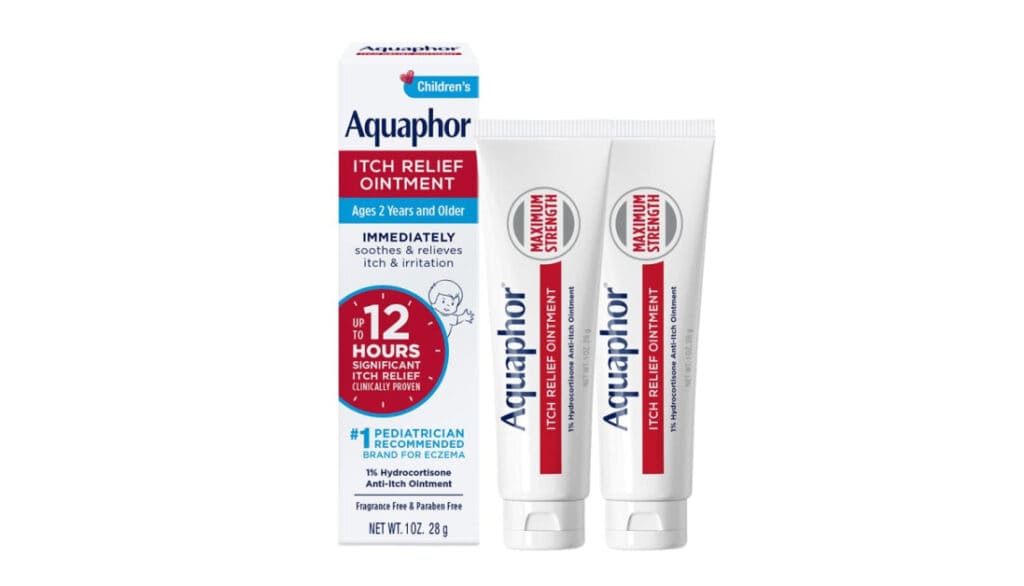
Best Overall for Dry, Localized Itch: Aquaphor Itch Relief Ointment
Aquaphor Itch Relief Ointment is my first choice of these three when the irritated spot is small, dry, and not infected. The ointment base helps the medication stay in contact with the skin. Use only a very thin film. A heavy layer does not work better, and it gives your dog more to lick.
Do not use an ointment to seal in moisture over a hot, weeping, or smelly lesion. That kind of skin needs a closer look.
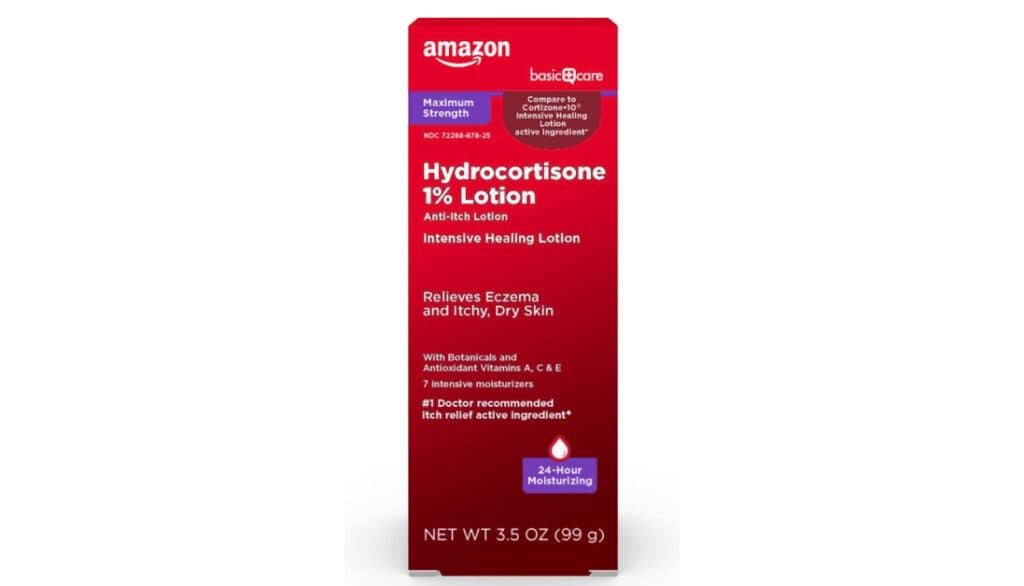
Best Lighter Lotion: Amazon Basic Care 1% Hydrocortisone
Amazon Basic Care Maximum Strength Anti-Itch Intensive Healing Lotion is easier to spread and feels lighter on the skin. That may be useful for a small area where an ointment would mat the coat or collect dirt.
The tradeoff is that lotion can travel. Keep it away from the eyes and mouth, and supervise your dog until the layer has dried. Recheck the current ingredient panel before every new purchase because a familiar product name does not guarantee an unchanged formula.
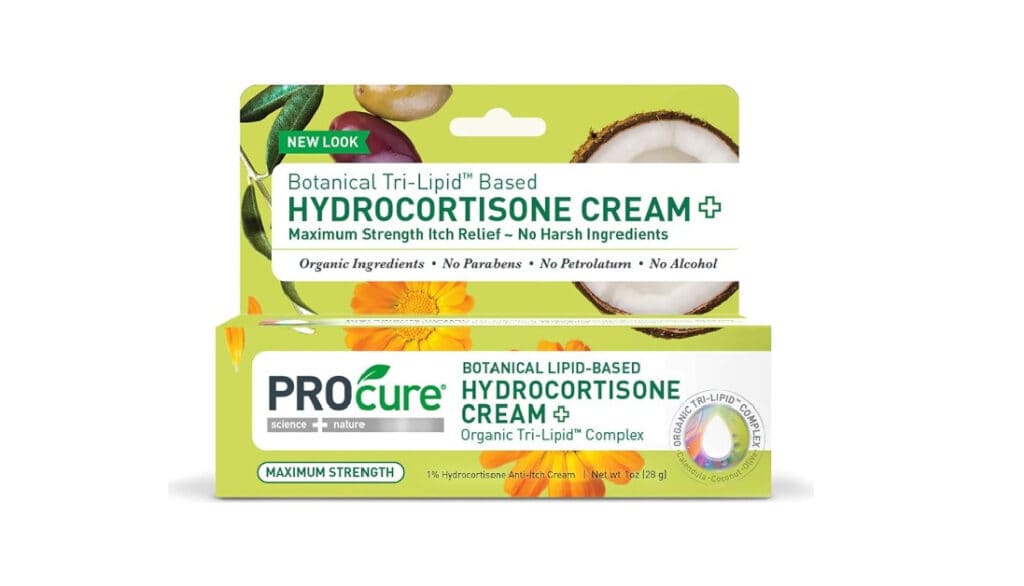
Best Botanical-Leaning Option: PROcure Hydrocortisone With Calendula
PROcure Hydrocortisone Cream with Calendula combines 1% hydrocortisone with calendula, aloe, coconut oil, olive oil, and other inactive ingredients listed by the manufacturer [4]. It may suit an owner who prefers a cream with botanical and moisturizing ingredients.
I would not call it stronger, safer, or more healing because it contains calendula. A longer ingredient list can be a benefit for one dog and an irritation risk for another. Use a tiny test area first, and stop if redness or itching increases.
How to Apply Hydrocortisone Cream Safely
- Look before you treat. The area should be small, intact, and only mildly red or itchy. Do not cover a puncture, bite, burn, lump, surgical site, or raw hot spot with OTC cream.
- Clean gently. If needed, wipe away surface dirt with lukewarm water or a pet-safe cleanser, then pat the area completely dry. Do not scrub irritated skin.
- Test a tiny spot. Apply a rice-grain amount to a small portion of the area and watch for more redness, swelling, or discomfort.
- Use a thin film. More is not better. Follow the current product label and any instructions your veterinarian has given for your dog.
- Prevent licking. Offer a supervised walk, food puzzle, or calm activity while the product dries. A well-fitted recovery collar may be needed for a dog who will not leave the area alone.
Wash your hands after application. Do not bandage or tightly cover the area unless your veterinarian specifically recommends it. Covering can increase moisture and medication absorption.

When Not to Use Hydrocortisone
Skip home treatment and arrange veterinary care when the skin is open, bleeding, ulcerated, wet, crusted, swollen, hot, painful, or foul-smelling. Pus, dark discharge, rapid spread, hair loss, or a dog who seems ill also points away from a simple itch.
Location matters. Do not put OTC hydrocortisone:
- In or directly around the eyes
- Inside the ear canal
- On the nose, lips, or inside the mouth
- On the genitals or anus
- On an open wound or surgical incision
- Across a large part of the body
For paws, a tiny amount on intact skin may be reasonable, but paws are easy to lick and problems between the toes often involve infection, allergy, a foreign object, or moisture. For ears, cream on the outer flap is very different from cream inside the canal. Head shaking, odor, discharge, or pain needs an ear exam.

A Holistic Look at Recurring Itchy Skin
My holistic approach addresses the whole dog and the factors behind the itch. I start by looking for patterns: Where did the irritation begin? Is it seasonal? Are the paws, ears, belly, or base of the tail affected? Did symptoms appear after a new shampoo, lawn treatment, food, medication, boarding stay, or flea exposure? These details guide a focused plan that supports skin health while addressing what may be triggering the irritation.
Healthy skin begins with consistent daily care. I prioritize gentle grooming, a complete and balanced diet, reliable flea prevention, clean bedding, and a bathing routine that protects the skin and coat. I also encourage pet parents to record flare dates, affected areas, products used, and their dog’s response. Photos taken in consistent lighting help us track progress and make informed adjustments.
Thoughtful use of natural therapies is part of holistic veterinary care. Each treatment should have a clear purpose and be appropriate for the individual dog. When hydrocortisone is part of the plan, I keep topical care focused rather than layering essential oils, vinegar, peroxide, alcohol, or multiple herbal products onto the same area. Inflamed skin needs carefully chosen care, especially where a dog can lick. A targeted approach lets us assess each treatment’s benefit and build a plan around what helps your dog.
When Your Dog Needs Veterinary Care
Get prompt care if your dog has facial swelling, trouble breathing, collapse, widespread hives, severe pain, a rapidly spreading rash, or repeated vomiting after licking a product. Those are not wait-and-see signs.
Arrange an exam soon when itching lasts more than a few days, keeps returning, disrupts sleep, causes self-trauma, or involves the ears or feet. The same applies to odor, discharge, thickened skin, scabs, hair loss, or more than one body area.
Bring the product package or a clear photo of the label. The complete ingredient list is more useful than saying “itch cream.” If your dog swallowed more than a quick lick, has symptoms, or the formula contains another active drug, contact your veterinarian or a pet poison service right away.
Final Thoughts
For a small, dry, mildly itchy patch on intact skin, plain 1% hydrocortisone can have a narrow, useful role. Of the three preserved human products, Aquaphor Itch Relief Ointment is my top choice for a dry localized spot. A pet-labeled 1% product is often the simpler option when you want dog-specific directions.
Keep the job small: verify the ingredients, apply the thinnest film, prevent licking, and watch the skin. If you find yourself treating the same place again, stop chasing the itch and look for the cause.
Frequently Asked Questions
Sometimes. A plain 1% product may be used briefly on a healthy dog’s small area of intact, mildly irritated skin. Check every active and inactive ingredient, avoid sensitive locations, and prevent licking. A pet-labeled product is a good choice when you want directions designed for dogs.
One quick lick of a small amount of plain 1% hydrocortisone may only cause drooling or stomach upset, but the full formula matters. Wipe away the remaining product, check the label, and call your veterinarian or a pet poison service if your dog swallowed more, develops symptoms, or the cream contains other active drugs.
A tiny amount may be reasonable on intact skin where your dog cannot lick it. Do not use it on cracked pads, between-toe swelling, discharge, odor, or a possible foreign object. Repeated paw licking commonly needs a cause-based exam.
Do not put an OTC skin cream inside the ear canal. A small amount on intact outer-ear skin is a different situation, but head shaking, pain, odor, or discharge can signal an ear infection and needs veterinary care.
Use it for the shortest practical time and follow the current label or your veterinarian’s instructions. If the area is not clearly improving within a few days, worsens at any time, or returns after treatment stops, discontinue it and have the skin evaluated.
References
1. Cornell University College of Veterinary Medicine. (n.d.). Hot spots. https://www.vet.cornell.edu/departments-centers-and-institutes/riney-canine-health-center/canine-health-topics/hot-spots
2. Asad, U., Boothe, D., & Tarbox, M. (2020). Effect of topical dermatologic medications in humans on household pets. Baylor University Medical Center Proceedings, 33(1), 131-132. https://doi.org/10.1080/08998280.2019.1679003
3. National Library of Medicine. (2018). Hydrocortisone topical. MedlinePlus. https://medlineplus.gov/druginfo/meds/a682793.html
4. PROcure. (n.d.). Hydrocortisone cream with calendula. https://www.procureheals.com/products/hydrocortisone/

ABOUT THE AUTHOR