Hello, I’m Dr. Candy Akers. Chlorhexidine wipes for dogs can be useful for targeted, external skin care when you choose a pet-specific product and follow its label or your veterinarian’s instructions. They help cleanse paws, skin folds, underarms, and other small areas, but they do not diagnose the cause of itching, odor, redness, or infection.
The formula matters. Some wipes contain chlorhexidine alone. Others pair it with an antifungal ingredient such as ketoconazole or miconazole. Directions, concentrations, and safe body areas can differ, so I do not treat every chlorhexidine wipe as interchangeable.
Are Chlorhexidine Wipes Safe for Dogs?
For many dogs, pet-specific chlorhexidine wipes are well tolerated when used as directed. Safety depends on the complete formula, the condition of the skin, the body area, and how often the product is used.
Quick Safety Checklist
- Use a wipe made for animals, not a human disinfecting wipe.
- Read the active and inactive ingredients before the first use.
- Follow the label or your veterinarian’s directions for frequency.
- Keep the product out of the eyes, nose, mouth, and other mucous membranes.
- Do not put a skin wipe into the ear canal unless it is specifically labeled for ear use.
- Do not use it on an open wound, cut, or raw area unless your veterinarian directs you to.
- Prevent licking until the area is dry.
- Stop if redness, swelling, pain, or itching appears or gets worse.
The Pet MD chlorhexidine wipe label, for example, says the product is for topical use, warns against eye and mucous-membrane contact, advises preventing licking until dry, and says to avoid open wounds, cuts, and raw areas [1].
What Chlorhexidine Wipes Can and Cannot Do
Chlorhexidine is an antiseptic. In a pet wipe, it helps reduce microbes on the skin surface and make it easier to care for small, hard-to-reach areas. Combination wipes may include an azole antifungal ingredient for problems that are responsive to that ingredient.
Research supports cautious use. A small pilot study found that wipes containing chlorhexidine, climbazole, and Tris-EDTA reduced Malassezia yeast on canine skin [2]. Another study found that a 2% chlorhexidine surgical scrub improved signs in some dogs with superficial pyoderma [3]. These studies involved specific formulas and small groups. They do not prove that every wipe will work for every itchy or infected dog.
A wipe cannot tell you whether your dog has bacteria, yeast, mites, allergy, a foreign body, ringworm, an endocrine problem, or simple irritation. Those conditions can look similar. When a problem is persistent or recurrent, cytology and a veterinary exam can guide the right treatment.
In my clinical experience, many skin problems that benefit from chlorhexidine care also involve yeast. That is one reason some veterinary products combine chlorhexidine with ketoconazole, miconazole, or another antifungal ingredient. Still, the right choice depends on what is actually happening on your dog’s skin.
How to Choose the Right Wipe
Check the Active Ingredients
Start with the label. Note the chlorhexidine concentration and whether the formula includes ketoconazole, miconazole, climbazole, Tris-EDTA, a steroid, alcohol, fragrance, or soothing ingredients. Watch out for high concentrations of alcohol as using this can be painful and might create an unwanted “treatment experience” which could make future treatments more difficult.
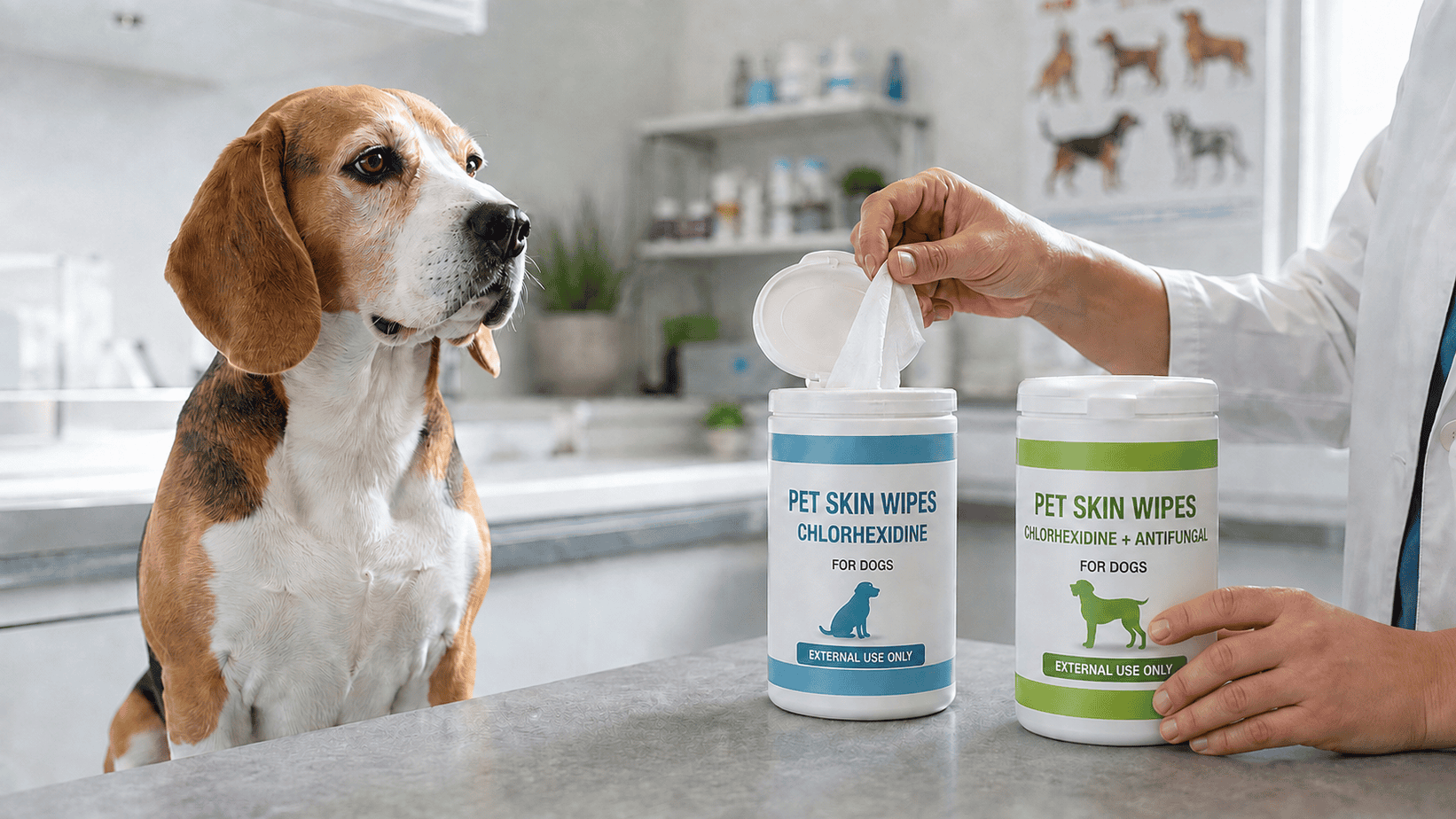
A higher chlorhexidine percentage is not automatically better. A 0.2% hygiene wipe and a 2% medicated wipe may be designed for different jobs. Choose the product that matches the body area and the plan for your dog.
Match the Wipe to the Area
Small pads can fit between toes and into narrow skin folds. Larger wipes are easier for a belly, groin, or several folds. For the face, use only a product whose label supports facial use, and stay well away from the eyes, nose, and mouth.
Ear skin is not the same as the ear canal. A wipe may be appropriate for the outer ear flap, but the canal needs an ear-specific product and a clear plan. Chlorhexidine can harm the eye, and some chlorhexidine products should not be used in an ear when the eardrum’s condition is unknown.
Consider the Whole Formula
Dogs can react to active or inactive ingredients. Fragrance, preservatives, and added medications can matter as much as the main antiseptic. If your dog has very sensitive skin or a history of reactions, try to use products with only a few ingredients, and make sure they are not too concentrated.
How to Use Chlorhexidine Wipes Safely
Before You Start
Look closely at the area. If the skin is open, bleeding, very painful, deeply cracked, or producing pus, skip home treatment and contact your veterinarian. If the problem is mild and the product is appropriate, check the label for the target area, frequency, and any age limits.
Step-by-Step Use
- Wash and dry your hands, or wear gloves if the label recommends them.
- Remove loose dirt or debris gently if the label directs you to. Do not scrub inflamed skin.
- Take out one wipe. Close the container so the remaining wipes do not dry out.
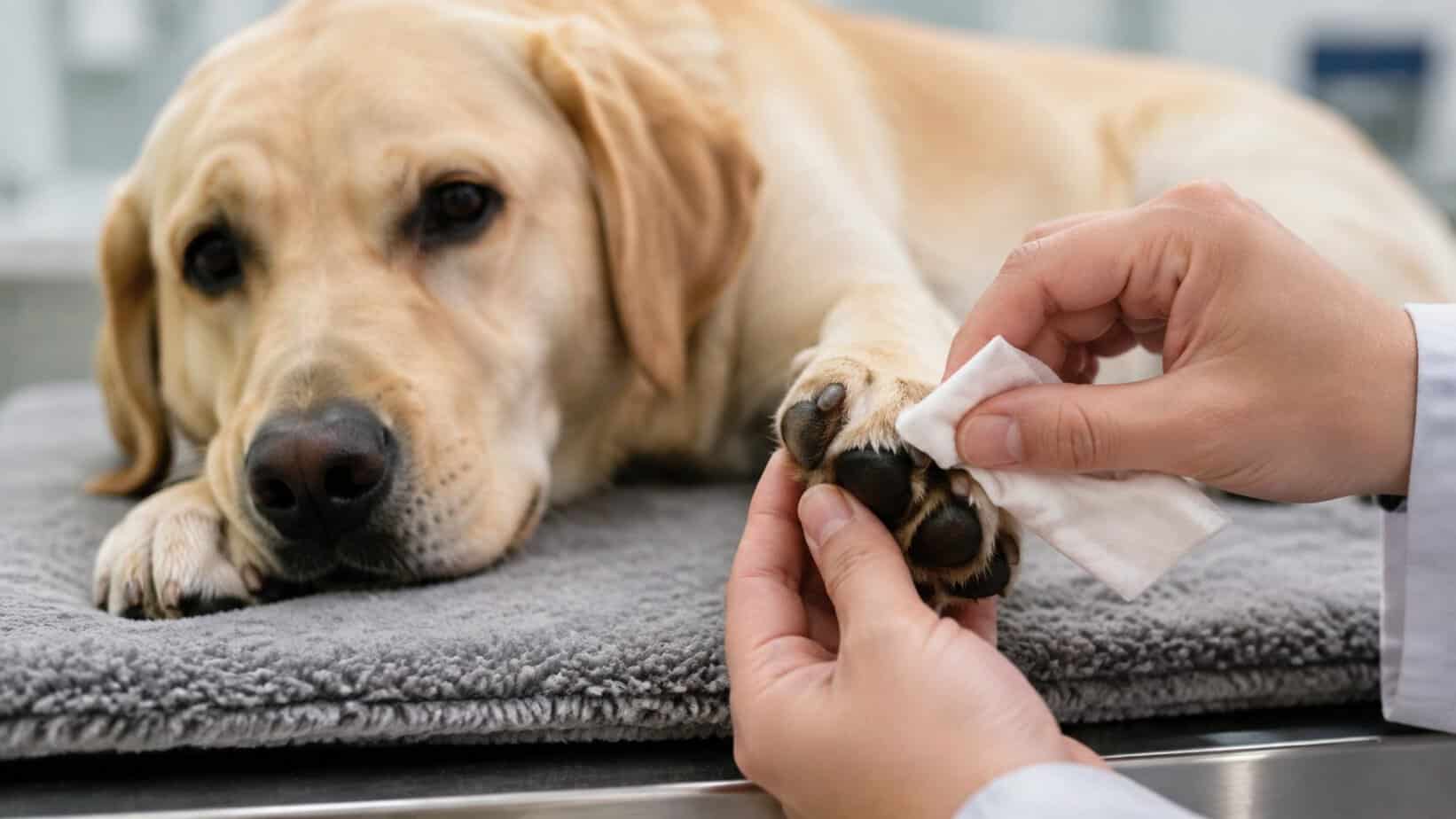
- Wipe the targeted skin gently. For paws, separate the toes and reach the skin without forcing or rubbing.
- Use a fresh wipe for a different infected or irritated area when cross-contamination is a concern.
- Let the area air-dry unless the label says otherwise.
- Keep your dog from licking or chewing the area until it is dry. Some veterinary guidance recommends a longer no-lick period, or other practitioners might recommend covering the area with a shirt, so follow the appropriate instructions for your product.
- Discard the wipe after one use and wash your hands.
Frequency and Contact Time
Most of the time I recommend my clients use these chlorhexidine wipes once a day unless you are treating a very aggressive fungal or bacterial infection. There is no single schedule that fits every wipe. Some labels direct use one to three times daily. A veterinarian may recommend a different schedule based on the diagnosis and formula. Do not increase the frequency because the skin still looks red after one or two applications. More frequent use can worsen dryness or irritation.
Where You Can Use Chlorhexidine Wipes
Paws and Between the Toes
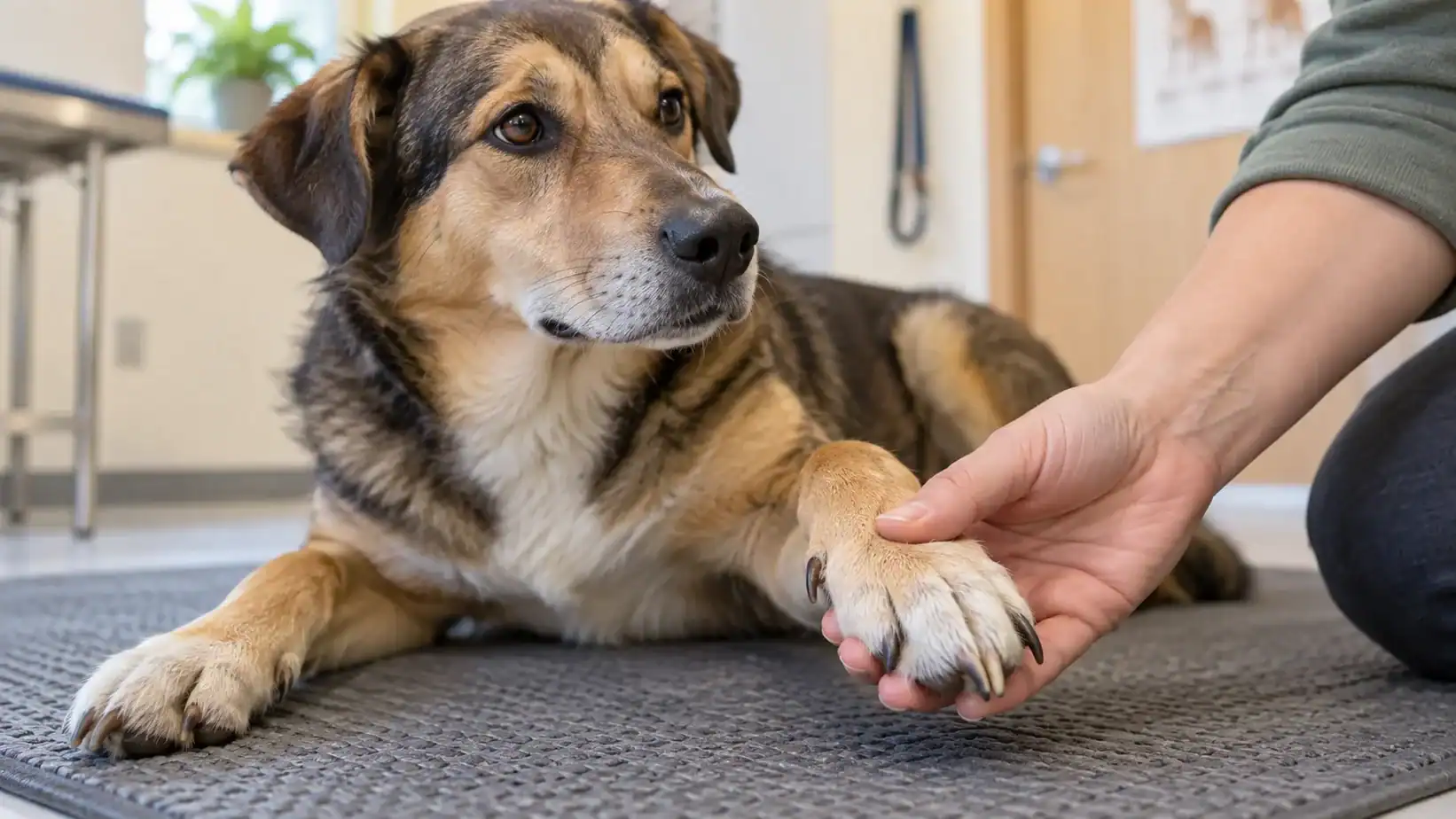
Wipes are convenient for the webbing between toes, nail folds, and small areas of the paw. While you are there check for splinters, grass awns, cuts, swelling, or a broken nail first. Recurrent paw licking often needs a deeper look for allergy, infection, pain, or a foreign object.
Skin Folds, Underarms, and Groin
These warm, moist areas are common targets for pet-specific wipes. Gently open the fold, wipe the skin, and let it dry. If the fold smells strong, oozes, hurts, or quickly becomes irritated again, your dog may need cytology and a treatment plan.
Face and Muzzle
Never use a chlorhexidine wipe for your dog’s eyes. Use only a product labeled for facial skin. Keep a good distance from the eyes, nostrils, and lips. Do not wipe inside the mouth. If chlorhexidine reaches the eye, rinse with water and seek veterinary advice if irritation continues.
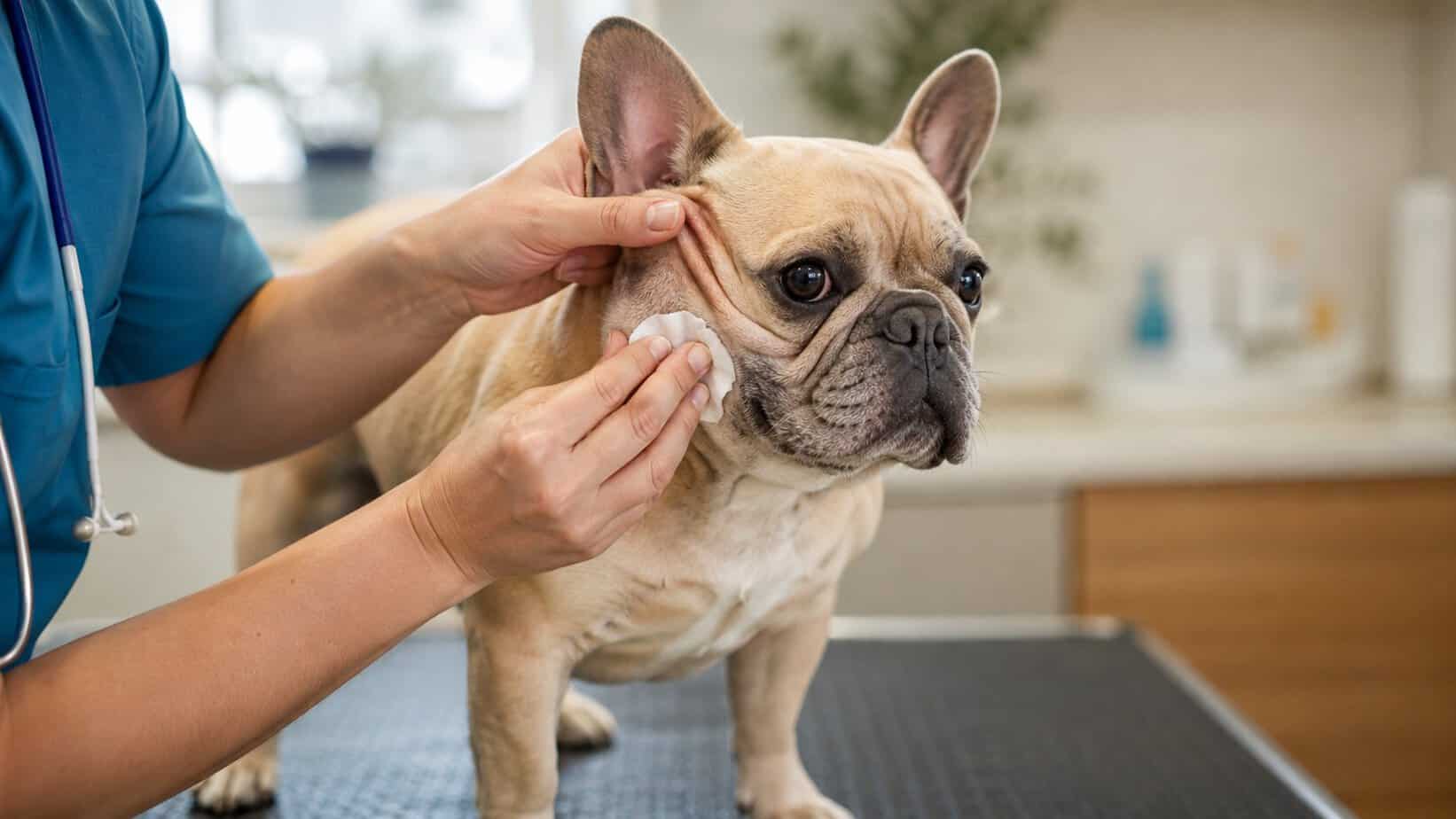
Ears
Do not push a skin wipe into the ear canal. You may be able to wipe the outer ear flap with an appropriate product, but a newly painful, smelly, red, or draining ear needs an exam. The eardrum cannot be evaluated from home.
Wounds and Surgical Sites
Many medicated wipe labels say not to use the product on open wounds, cuts, or raw areas. Do not use a chlorhexidine wipe on an incision or post-surgical site unless the veterinarian who performed the procedure gives you specific instructions.
My Vet-Selected Chlorhexidine Wipes for Dogs
These are the five products that I recommend the most. Formulas and labels can change, so confirm the current package before buying or applying any product. My comments reflect practical product differences, not a promise that one wipe will treat every condition.
Nootie Medicated Dog Wipes
This formula has traditionally paired 2% chlorhexidine with 2% miconazole. I consider it when you need both antibacterial and antifungal topical support. The larger wipe can be useful on the belly or several folds. The scent and residue may be too much for some households, and a strong combination formula is not necessary for routine dirt.
Pet MD XL Topical Wipes With Aloe
The XL size is convenient for wider areas. Some Pet MD formulas combine chlorhexidine with ketoconazole, so check the exact listing and label. Aloe and humectants may feel soothing, but inactive ingredients can still irritate a sensitive dog. Close the container firmly because large wipes can dry out.
Dechra MiconaHex+Triz Wipes
This type of product combines chlorhexidine, miconazole, and Tris-EDTA. It can be a practical fit when you want a combination product for a small localized area. The jar size and cost may be less convenient for long treatment courses.
Vetnique Dermabliss Medicated Wipes
Dermabliss products come in more than one strength and formula. Confirm whether you are buying a lower-strength hygiene wipe or a stronger chlorhexidine plus antifungal product. I like the convenience for folds and small areas, but fragrance, residue, and ingredient sensitivity still deserve attention.
Smiling Paws Medicated Wipes
The small wipe size can fit between toes and into narrow folds. Combination versions have included chlorhexidine and ketoconazole. Small pads are less efficient for large areas, and the scent may bother some people or dogs.
Side Effects and When to Call Your Vet
Stop Using the Wipes If
Stop and contact your veterinarian if the skin becomes redder, more swollen, more painful, or itchier after application. Also stop if you see hives, facial swelling, breathing trouble, or a rapidly spreading reaction. Breathing difficulty or significant facial swelling is an emergency.
Dryness and flaking can occur with repeated use. A reaction may also come from fragrance, preservatives, alcohol, or an added antifungal ingredient rather than chlorhexidine alone.
Schedule Veterinary Care If
- The area is open, raw, bleeding, or draining.
- There is pus, a strong odor, spreading hair loss, crusting, or marked pain.
- Your dog keeps licking or chewing the same place.
- The problem returns soon after treatment.
- The ear is newly painful, smelly, or producing discharge.
- You are unsure whether the cause is bacterial, fungal, allergic, parasitic, or traumatic.
- Your dog swallowed a wipe or shows vomiting, drooling, weakness, or other unusual signs.
A Holistic Look at Recurrent Skin Problems
Topical care works best when it is part of a bigger plan. Recurrent paw, fold, or skin problems may be driven by allergies, fleas or mites, trapped moisture, anatomy, hormonal disease, or an infection that needs targeted treatment.
I look at comfort, skin-barrier support, grooming, drying after swimming or bathing, parasite prevention, diet history, and the pattern of flare-ups. The goal is not just to quiet the surface for a day. It is to understand why the problem keeps returning.
Final Thoughts
Chlorhexidine wipes can be a useful tool for targeted external skin care. The safest approach is simple: choose a pet-specific formula, follow the exact label, protect the eyes and mucous membranes, prevent licking until dry, and stop if the skin worsens.
If your dog’s skin problem is persistent or recurrent, you may have to look a little deeper. I’ve observed skin issues that look like a typical infection, but are driven by food sensitivities. Food goes in the mouth, but reactions can appear through the skin. Yes, even the ear canal, between the toes, and the anal glands near the rectum. It’s all skin related.
If you are facing a complicated or confusing issue with your dog and conventional veterinary medicine has failed to clear it, you may want a full holistic veterinary consultation which includes sensitivity testing, nutrition, supplements, and guidance. I offer a limited number of online consults to help pet parents develop a full plan to get your pup feeling better. If I’m all booked up I can point you to a trusted consultant.
Frequently Asked Questions
No product is safe for every dog. Many dogs tolerate pet-specific chlorhexidine wipes when they are used on the right body area and according to the label. Dogs can still react to chlorhexidine or another ingredient.
Yes, unless a product label says a specific dog age. Most over the counter wipes sold in stores are safe. Watch closer for reaction or irritation since many young puppies have sensitive skin. Puppies also have smaller bodies and may lick treated areas quickly, so supervision matters.
I usually recommend using these wipes once a day. Follow the exact product label or your veterinarian’s plan. Depending on the formula and condition, directions may range from occasional use to one or more applications per day. Do not assume more is better.
Prevent licking until the area is fully dry. If your dog swallowed part of a wipe or develops drooling, vomiting, coughing, weakness, or unusual behavior, call your veterinarian or an animal poison service promptly.
Do not put a general skin wipe into the ear canal. Wipes can be used in the outer folds of the ear, but if you have an active ear infection use an ear-specific product. In ears, new pain, odor, head shaking, or discharge deserves an examination.
References
- DailyMed. (2023). Pet MD chlorhexidine wipes: Chlorhexidine gluconate and ketoconazole cloth. https://dailymed.nlm.nih.gov/dailymed/drugInfo.cfm?setid=b5e7b5b4-da71-4f32-ac33-0c11e919c54e
- Cavana, P., Peano, A., Petit, J.-Y., Tizzani, P., Perrot, S., Bensignor, E., & Guillot, J. (2015). A pilot study of the efficacy of wipes containing chlorhexidine 0.3%, climbazole 0.5% and Tris-EDTA to reduce Malassezia pachydermatis populations on canine skin. Veterinary Dermatology, 26(4), 278-e61. https://doi.org/10.1111/vde.12220
- Murayama, N., Nagata, M., Terada, Y., Shibata, S., & Fukata, T. (2010). Efficacy of a surgical scrub including 2% chlorhexidine acetate for canine superficial pyoderma. Veterinary Dermatology, 21(6), 586-592. https://doi.org/10.1111/j.1365-3164.2010.00898.x
A note about your dog’s health
This article provides general education and does not replace an examination, diagnosis, or individualized advice from your veterinarian. Contact a veterinary professional if you are concerned about your dog’s symptoms.

ABOUT THE AUTHOR