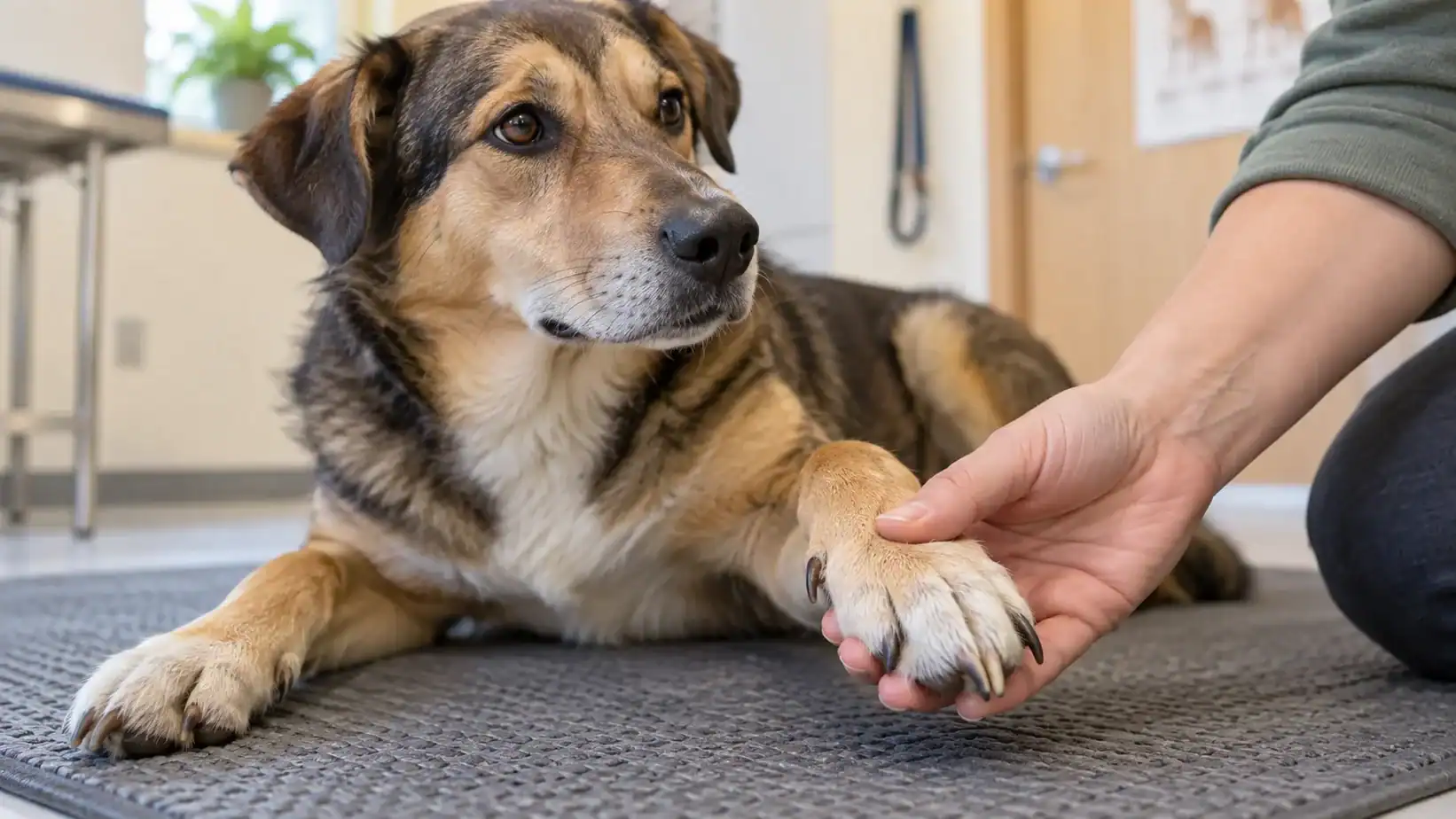
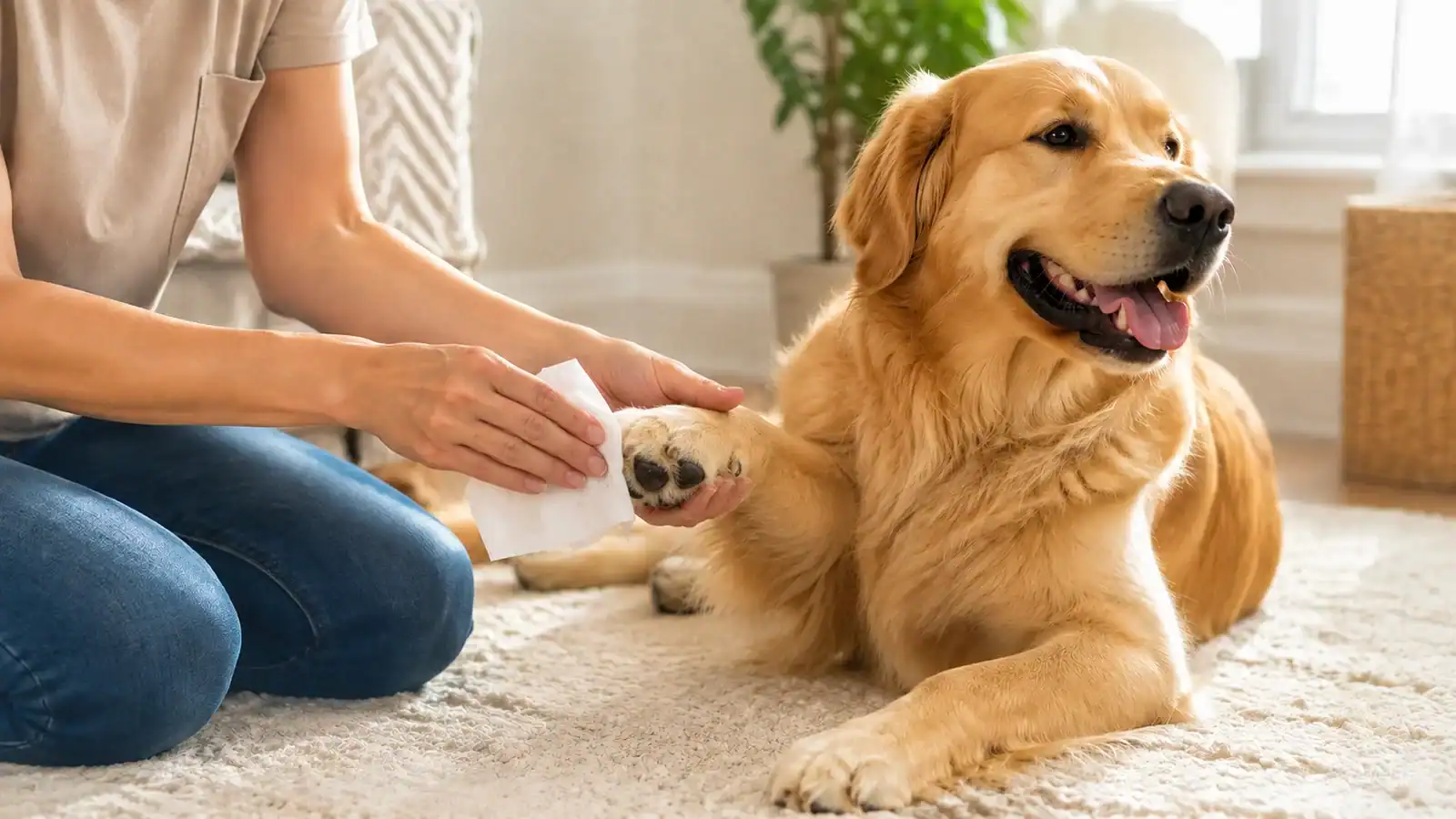
Medicated antifungal wipes can be a good choice when your dog has a small, localized problem on a paw, ear, between skin folds, under an arm, or around the groin. I usually look for a clearly labeled veterinary product with chlorhexidine plus an azole antifungal such as ketoconazole or miconazole. The right formula depends on the body area and what is actually causing the skin irritation.
Best Antifungal Wipes for Dogs: Quick Pick
My best overall recommendation is Vetnique Dermabliss Medicated Wipes because the chlorhexidine-and-ketoconazole formula fits the most common skin need: convenient care for a small patch of skin or a hard-to-reach fold.
Smiling Paws is useful for very small areas, Dechra MiconaHex + Triz offers a familiar veterinary-style formula, Nootie gives you a larger pad, and Curaseb is the ear-specific option. Do not put a skin wipe in the ear, and do not apply any medicated wipe to open or ulcerated skin unless the label or your veterinarian specifically directs it.
Dog wipes have become more popular in the past few years. The wipe products have been found to be very effective, while also being super convenient. A small study in dogs found that wipes containing chlorhexidine, climbazole, and Tris-EDTA substantially reduced Malassezia yeast populations on treated skin. [1]
Antifungal Wipes for Dogs at a Glance
| Product | Formula Focus | Best For | Potential Drawback |
|---|---|---|---|
| Vetnique Dermabliss | Chlorhexidine plus ketoconazole | Best overall for small skin areas and folds | Small pad; confirm the latest label |
| Smiling Paws | Chlorhexidine plus ketoconazole | Toes, facial folds, and other tight spaces | Too small for broad areas |
| Dechra MiconaHex + Triz | Chlorhexidine, miconazole, and TrizEDTA | Targeted veterinary-style maintenance | May leave a noticeable residue |
| Nootie Medicated Wipes | 2% chlorhexidine plus 2% miconazole | Larger localized areas | A shampoo or spray may be easier for widespread trouble |
| Curaseb Ear Treatment Wipes | Ear-focused medicated formula | Accessible outer-ear folds | Not a substitute for a skin wipe or treatment deep in the ear canal |
Understanding Canine Fungal Infections
Fungal infections are common in dogs, but they do not all look or behave the same way. Some affect the skin, while others show up in the paws, skin folds, ears, or nose. Knowing the basic differences helps you choose sensible home care and recognize when a problem needs a closer look.
What Are Canine Fungal Infections?
Fungi are microorganisms that thrive in warm, moist places. Some live naturally on a dog’s skin without causing trouble. When the normal balance changes, however, those organisms can multiply and irritate the skin.
Common Types of Fungal Infections in Dogs
- Ringworm (dermatophytosis): Despite the name, ringworm is not a worm. It is a fungal infection that can cause circular, red, scaly patches and may spread to other animals or people.
- Yeast infections (Malassezia dermatitis): Yeast commonly causes trouble in the ears, paws, and skin folds. Watch for itching, redness, greasy skin, or a distinctive odor.
- Aspergillosis: This fungal infection usually affects the nasal cavity. Signs can include nasal discharge, nosebleeds, or swelling around the nose.
Symptoms to Watch For
– More itching or scratching than usual
– Red, inflamed, or scaly skin
– Patches of hair loss
– An unpleasant odor from the skin or ears
– Discharge from the ears or nose
– Swelling or warmth in an affected area
Causes and Risk Factors
Warmth and moisture give fungi an easy place to grow. A dog may also be more vulnerable when allergies, hormone imbalances, immune problems, or prolonged antibiotic or steroid use disturb the skin’s normal defenses.
Why Early Care Matters
An irritated patch is much easier to manage before a dog has scratched it raw or spread the problem to a larger area. Some fungal infections can also pass to other pets or people. If the area keeps spreading, becomes painful, or returns soon after treatment, it is time to find out what is driving it rather than continuing to wipe the surface.
Why Use Antifungal Wipes for Dogs?
Pet parents often ask me for a practical option between full baths. Antifungal wipes fill that role nicely when the affected area is small and the product matches the problem.
- They are convenient. The wipes come pre-moistened, so there is nothing to mix and very little mess. They are easy to keep on hand at home or while traveling.
- They provide targeted care. A wipe lets you reach a paw, skin fold, outer ear flap, or other specific spot without treating the whole dog.
- They can limit surface spread. Regularly cleaning areas that tend to stay damp can help keep yeast and other microbes from getting comfortable.
- They are often less stressful than a bath. Some dogs will accept a quick, gentle wipe much more readily than a shampoo or spray treatment.
- They can complement other treatment. When a dog is also receiving oral medication or another topical treatment, a wipe can support local skin care and help the area recover.
Antifungal wipes are not the right answer for every rash or itchy spot, but they are a useful tool when you know what you are treating and choose a formula made for that part of the body.
How I Chose These Medicated Wipes
I ranked these products by the clarity of their formula, the body area they are meant for, pad size, ease of use, and how practical they are for a real dog-care routine. A good wipe should put the medication where you need it without turning a small paw or fold problem into a full bath.
I also separate product specifications from proof of effectiveness. An ingredient list tells us what is in the jar. It does not tell us what organism is on your dog, whether the concentration is right for that problem, or whether a fungal infection is driving the cycle. The Merck Veterinary Manual notes that a topical wipe or cream can be appropriate for focal lesions, while also stressing that the underlying condition predisposing the skin to infection must be managed. [2]
Formulas can change. Before you buy or apply any wipe, read the latest package label and make sure it matches the body area you plan to treat.
The 5 Best OTC Antifungal Wipes for Dogs
1. Vetnique Dermabliss Medicated Pet Wipes: Best Overall
Vetnique Dermabliss is my best all-around choice for a small, localized patch because it combines chlorhexidine with ketoconazole in a convenient pad. This pairing gives owners a practical way to address a spot where both bacterial and yeast overgrowth may be part of the picture.
Pros
Veterinary-strength formula: These wipes contain 2% chlorhexidine, which helps reduce bacteria on the skin, and 1% ketoconazole, an antifungal ingredient. The combination is useful for skin problems such as ringworm and seborrhea.
Easy and convenient: The small wipes are made for quick, targeted cleaning at home or on the go.
Soothing aloe: Aloe vera leaf juice can calm itching and irritated skin, which is especially welcome for dogs with allergies or skin sensitivities.
Cons
Some customers report that the product leaves a residue that they or their pets find unpleasant.
Great for: Irritated skin and mild infections
Keep in mind: Do not use near the eyes or inside the ear unless the exact label says that use is safe.
2. Smiling Paws Medicated Wipes: Best for Small, Hard-to-Reach Areas
The Smiling Paws Pets Medicated Antibacterial & Antifungal Wipes are a handy size for tight spaces. They are easiest to use between toes, around nail folds, and in small facial or body folds where a large pad feels clumsy.
Pros
Broad topical support: Ketoconazole and chlorhexidine help address yeast, fungus, and bacteria on the skin. The formula is marketed for concerns that include mange, ringworm, hot spots, and pyoderma.
A useful size for tight spaces: At about 2.5 by 2.5 inches, the thin wipes can reach paws and small creases without feeling bulky.
Soothing ingredients: Aloe and essential fatty acids help calm irritated areas while the active ingredients do their work.
Cons
The container may not last long when a dog needs repeated treatment or when several pets are being treated.
Some customers dislike the scent, especially those who prefer fragrance-free products.
Great for: Hot spots, superficial infections, and crusty hair loss along the edge of the ear
Keep in mind: Be sure to avoid the eyes and mucous membranes and to stop and consult a veterinarian if irritation develops or increases. [3] Always compare the jar in your hand with the label because brand ownership, packaging, and formulas can change.
3. Dechra MiconaHex + Triz Wipes: Best Veterinary-Style Formula
The Dechra MiconaHex + Triz Wipes combine a familiar topical approach: chlorhexidine, miconazole, and TrizEDTA. I like this type of formula for targeted maintenance when you have already identified the problem and want an easy way to reach paws, folds, or other small skin areas.
Pros
These versatile wipes can be used for dogs, cats, and horses, which is convenient in a multi-pet household.
Customer reviews describe improvement in yeast-related skin trouble, itching, and redness.
They are simple to use and less messy than many shampoos or sprays.
Cons
The small wipe size can be frustrating on a large dog or when you need to cover a broad area.
The 50-count package can become expensive when a skin problem needs ongoing care.
Great for: Small spots or areas with crusty hair loss, or focused maintenance in a diagnosis-guided skin plan.
Keep in mind: The strong antiseptic formula can sometimes cause pain or irritation if the skin is affected deeply, cracked, or bleeding.
4. Nootie Medicated Wipes: Best Larger Pad
The Nootie Medicated Dog Wipes use 2% chlorhexidine and 2% miconazole in a larger pad. That extra surface area is useful when you are treating more than one toe, a broad fold, or a patch on the belly and do not want to reach for several tiny wipes.
Pros
The combination of 2% chlorhexidine and 2% miconazole is intended for problems that include ringworm, hot spots, allergy dermatitis, and ear or skin infections.
The 2-inch wipes fit into hard-to-reach areas, and the 70-count package gives you a useful supply.
Pet parents describe them as easy to use for irritated, itchy skin.
Cons
The scent is fairly strong. It is not necessarily unpleasant, but some people may find the added fragrance bothersome.
The formula can leave a sticky residue on your hands.
Great for: Stubborn fungal infections and ringworm, or larger but still localized areas.
Keep in mind: Widespread or deep skin disease deserves a veterinarian’s examination rather than a larger stack of wipes.
5. Curaseb Ear Treatment Wipes: Best Ear-Specific Option
Curaseb Cat & Dog Ear Infection Treatment Wipes belong in a separate category. They are designed for the accessible parts of the outer ear, not for general body skin and not for pushing down into the ear canal.
Ear odor and debris may accompany yeast, bacteria, allergy, a foreign body, or ear mites. A wipe can clean what you can safely see, but it cannot tell you why the ear is inflamed. Pain, marked swelling, a head tilt, loss of balance, pus, blood, or repeated trouble calls for a prompt veterinary visit.
Pros
These wipes are made to soothe itchy, inflamed ears while removing wax, dirt, and discharge from the areas you can safely see and reach.
Curaseb makes its pet health products in the United States with an emphasis on quality and safety. I’ve been using this brand for decades, and I always have good results.
The wipes are quick to use and have a cucumber-melon scent that many pet parents find pleasant.
Cons
A 100-count container can still run out quickly when a dog with chronic ear trouble needs daily cleaning.
No ear product works the same way for every dog. Some dogs take several days to improve, while others need a different approach.
Great for: Puppies and breeds with shorter hair. Quick maintenance cleaning of accessible outer-ear folds.
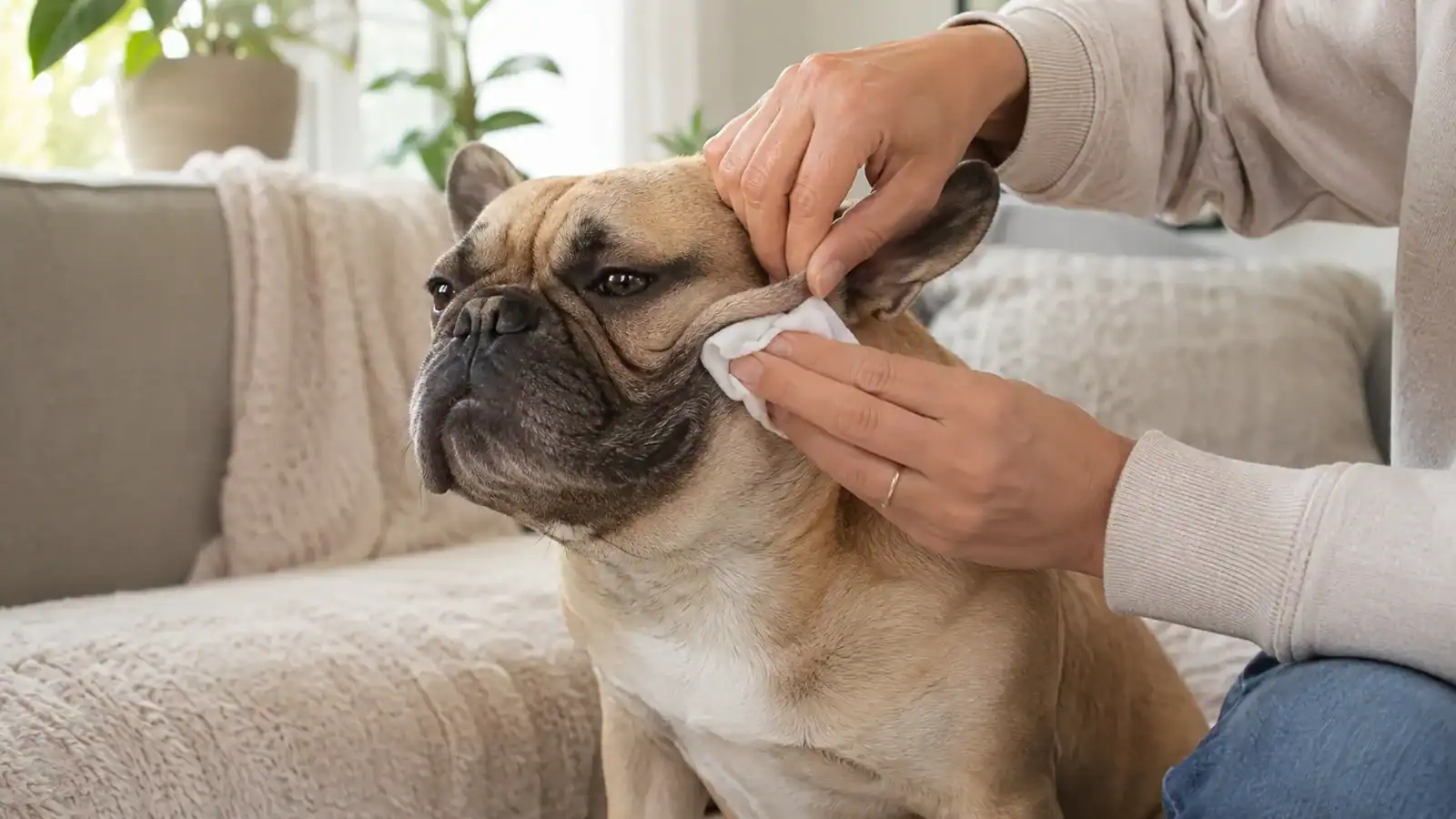
Keep in mind: Never insert a wipe deeply into the canal or use a skin product in the ear just because the ingredients look similar.
How to Choose the Right Wipe
Choose by Body Area
Start with location. Paws, groin, underarms, and skin folds need a product labeled for skin. The outer ear needs an ear-specific product. The eyes, lips, genital mucosa, open wounds, and deep ear canal deserve extra caution because a product that is comfortable on intact skin may be painful or unsafe there.
If the label does not name the body area you intend to treat, choose another product or ask your vet. Pad size matters more than it seems. Small rounds are precise between toes. Larger squares cover a belly patch faster. When you need to wipe the same broad area repeatedly, consider whether a spray, mousse, or shampoo would make the routine gentler and more even.
Ingredients to Look for in Antifungal Wipes
The active ingredients tell you far more than the front of the package. Some formulas focus on fungus or yeast, some also address bacteria, and others add soothing ingredients to make repeated use more comfortable.
Ketoconazole
Ketoconazole is an antifungal medication. It disrupts the fungal cell membrane, which makes it useful against a broad range of fungi and explains why it appears in many medicated pet wipes.
Chlorhexidine
Chlorhexidine is an antiseptic and disinfectant with antibacterial and antifungal activity. It helps reduce yeast and bacteria on the skin surface, supporting a healthier environment while irritated skin settles down.
Aloe Vera
Aloe vera is not an antifungal ingredient, but it can soothe itching and inflammation. It also supports skin comfort and hydration while the medicated ingredients address the infection.
Witch Hazel
Witch hazel is a natural astringent that can calm irritated skin and help dry weepy areas where fungi tend to thrive. Multiple applications in a row can dry out the skin or cause irritation.
Boric Acid
Boric acid has antiseptic properties and can slow the growth of fungi and bacteria. It is often used for yeast-related problems and can help restore a healthier skin environment.
Salicylic Acid
Salicylic acid helps loosen and remove dead skin cells. That gentle exfoliating action reduces buildup where fungi or skin mites can flourish and can also ease redness and inflammation.
When comparing antifungal wipes, look for a formula that pairs an appropriate antifungal or antiseptic with soothing ingredients. If the label does not make it clear where the product can be used, choose a different one rather than guessing.
Consider Sensitive Skin, Scent, Pad Size, and Packaging
For a dog with reactive skin, test a small area first. Always watch for increased redness, heat, swelling, discomfort, or frantic licking.
Dr. Candy’s Pro-Tip: One additional tip that I can offer is to look at the container the wipes come in and choose a package that seals well. I personally get frustrated when I go to get a wipe but the sticker-type lid came open while in the cabinet. A medically sensible formula is not useful if the pads dry out before you finish the container. I also favor a pad you can handle without scrubbing. More friction is not more treatment.
When Antifungal Wipes Can Help
Medicated wipes make the most sense for a small area with a known or strongly suspected superficial overgrowth, especially when your veterinarian has already seen a similar episode. Common places include skin folds, between the toes, around nail beds, under the arms, and the groin.
Malassezia pachydermatis is a yeast that normally lives on canine skin. Changes in the skin environment or the dog’s defenses can allow it to multiply. In the pilot wipe study, the treated areas included the axillae, groin, perianal area, and umbilical region, which helps explain why wipes are so often discussed for folds and localized sites. [1]
A wipe is a poor fit for widespread hair loss, open or oozing sores, deep swelling, severe pain, rapidly spreading redness, or a dog who feels ill. Ringworm, parasites, bacterial infection, allergy, and immune or hormonal disease can overlap in appearance. If you keep treating the surface without understanding the pattern, the skin may improve briefly and then flare again.
How to Use Antifungal Wipes Safely
Medicated wipes are simple to use, but they still contain active ingredients. A few sensible habits make the treatment more comfortable for your dog and help prevent avoidable irritation.
- Read the label first. Products differ in how often they should be used, where they can be applied, and how they should be stored.
- Stay away from the eyes and mouth. A skin wipe can sting or irritate these sensitive tissues. Use an ear wipe only where the label directs, and never push it deep into the canal.
- Watch the first application closely. Check for new redness, swelling, itching, or unusual behavior. Stop using the product if the area becomes more irritated.
- Store the container out of reach. A curious dog may chew the package or swallow a wipe.
- Wash your hands afterward. This keeps medication from accidentally reaching your own eyes, mouth, or other sensitive areas.
A medicated wipe should make home care easier, not turn it into a wrestling match or leave the skin looking angrier. Gentle application and a formula that suits the location usually make all the difference.
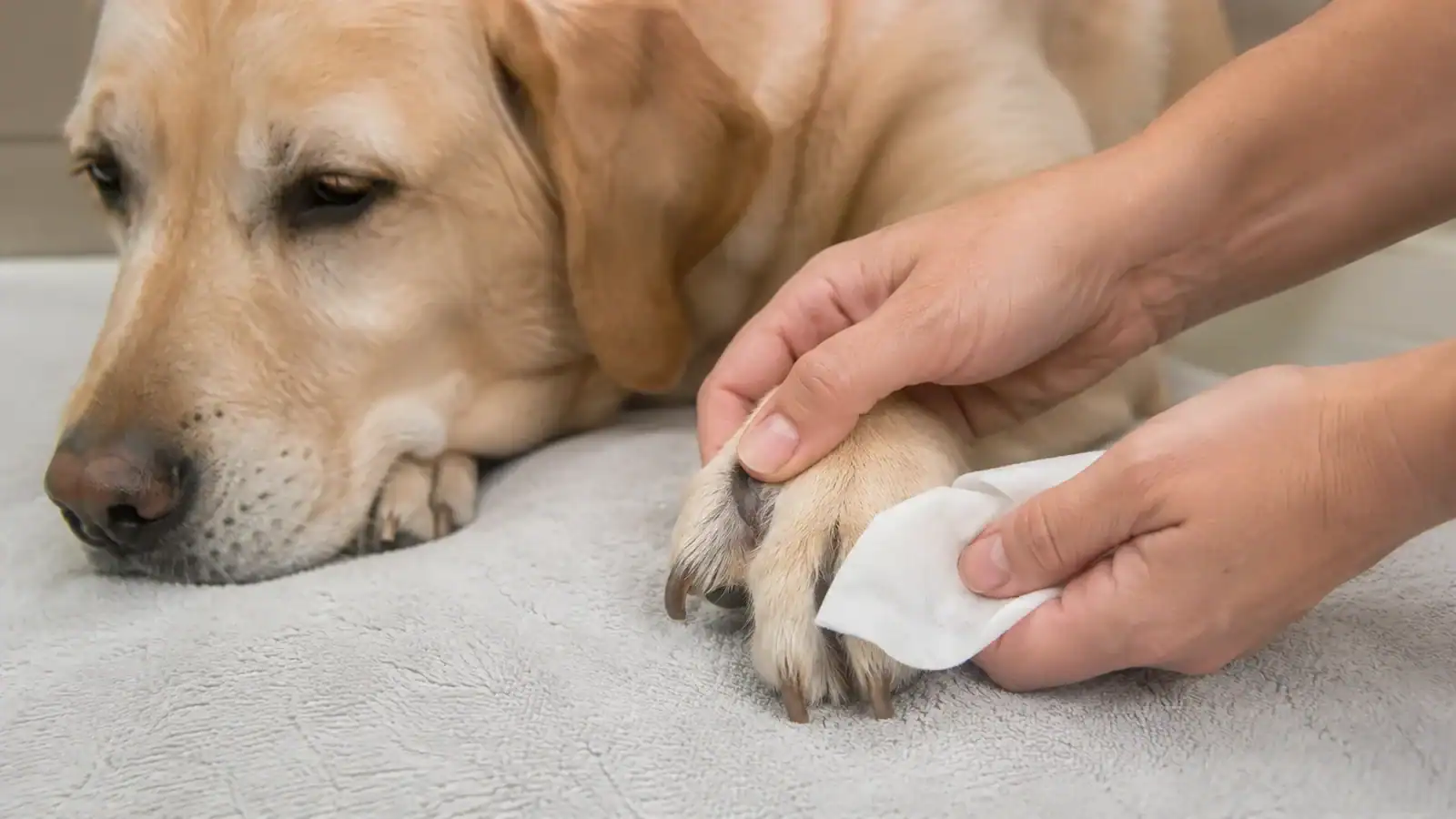
What to Do About Licking or Irritation
If your dog licks a freshly treated area, prevent more access and check the product label. If they ate the packaging or whole wipes call your veterinarian or an animal poison resource. Check if a meaningful amount may have been swallowed or if drooling, vomiting, weakness, coughing, or other symptoms appear.
Offer a distraction to your dog when you apply an antifungal wipe. A toy or small treat can keep your dog busy for a few minutes while the area dries.
Stop using the product and seek guidance if redness, swelling, pain, or itching increases. [3]
A Holistic Plan for Recurring Skin Trouble
Moisture, Friction, and the Home Environment
Yeast and bacterial overgrowth are often the visible end of a longer story. Damp paws, deep folds, swimming, humid weather, tight collars or harnesses, repeated licking, and friction can keep the skin barrier under stress.
Dry paws and folds well after bathing or wet walks. Wash bedding and grooming tools regularly. Keep hair mats from trapping moisture. If one season, room, cleaning product, or outdoor route seems to trigger a flare, write it down. A simple log can reveal patterns that are easy to miss from day to day.
Nutrition, Allergy Patterns, and Skin-Barrier Support
I look at skin from the inside and the outside. Nutrition, digestion, allergy patterns, grooming, stress, sleep, medications, movement, and the home environment all matter. A wipe may reduce surface organisms, but it cannot correct an allergy or rebuild a chronically damaged skin barrier on its own.
Herbal or botanical options deserve thoughtful attention, not casual mixing. A systematic review found promising antibacterial, antifungal, anti-inflammatory, and wound-supporting signals for several medicinal plants. [4] But I don’t recommend making up a homemade antifungal wipe recipe or applying concentrated essential oils.
You can find safe recipes and directions in holistic pet care books. My newest go-to is ‘The Forever Dog Life’ written by Dr. Karen Becker and Rodney Habib. I’m always reaching for Chapter 6 which covers recipes for the body.
Wipes vs. Shampoo, Spray, or Prescription Treatment
Choose a wipe when the area is small, easy to reach, and appropriate for the label. Choose a shampoo when several body regions need even coverage and your dog can tolerate bathing and contact time. A spray or mousse may be easier for a medium-sized area or a dog who dislikes rubbing.
Prescription or systemic treatment may be needed when infection is confirmed, lesions are deep or widespread, topical care has failed, or an underlying immune disorder is driving repeated flares.
When Your Dog Needs a Veterinarian
Arrange veterinary care promptly for open sores, pus, bleeding, severe pain, rapidly spreading redness, marked swelling, strong discharge, fever, lethargy, facial swelling, or breathing trouble. Ear pain, a head tilt, loss of balance, or a swollen ear flap also deserves prompt attention.
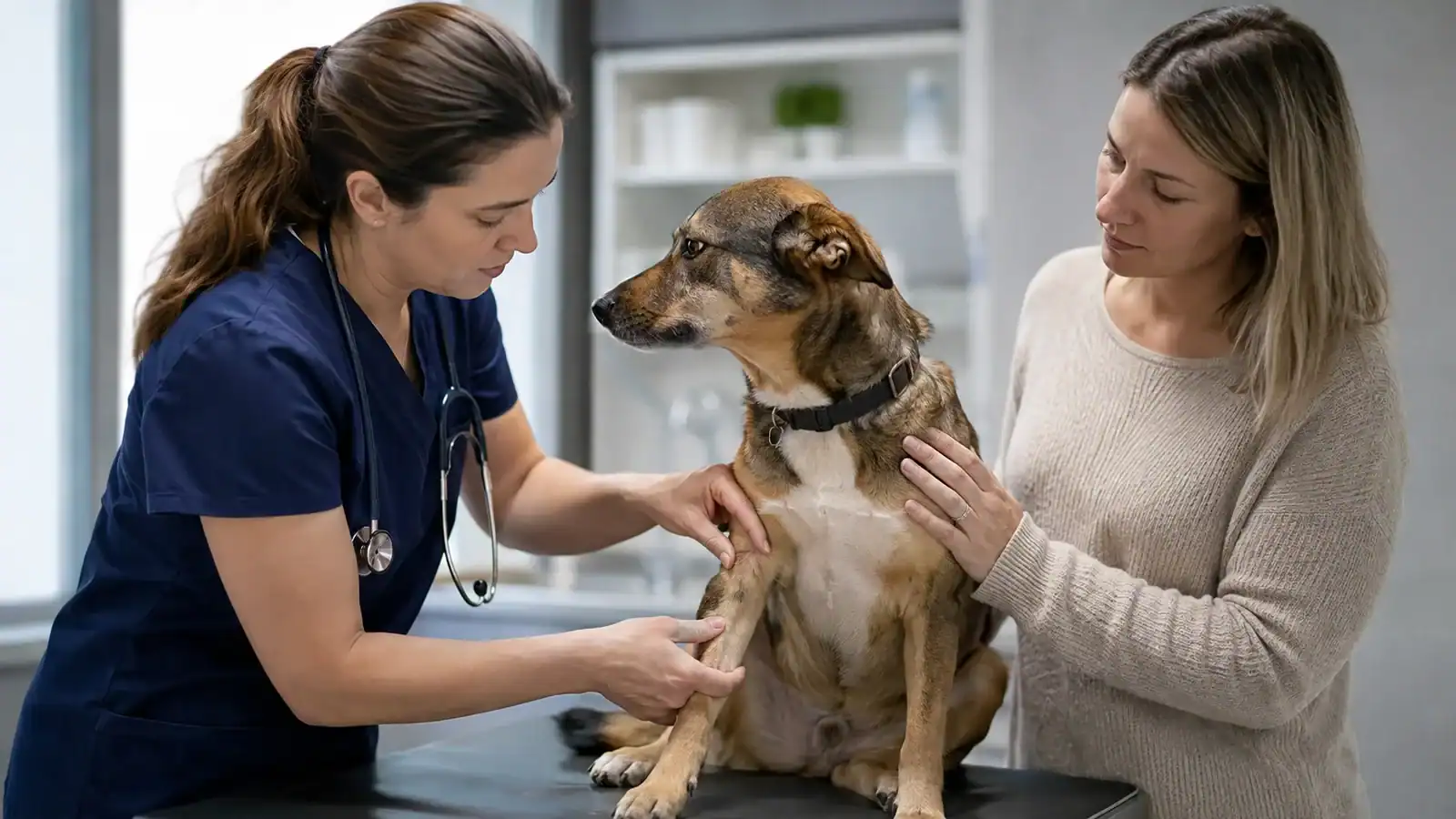
Book a recheck when the problem returns as soon as you stop wiping, spreads to new places, or fails to improve during the label-directed period. Your veterinarian may use skin cytology, fungal testing, culture, or other diagnostics to distinguish yeast, bacteria, dermatophytes, parasites, and inflammatory disease. That clarity can save your dog from weeks of trial and error.
If you have tried conventional treatment patterns such as systemic antibiotics or steroids, you may need more personal guidance from a holistic or integrative veterinarian. I do a limited number of online consults that will go over a full plan to get your pup back on track. It includes food sensitivity testing, nutrition, supplements, topical care and more.
Final Thoughts
Fungal skin problems can make a dog miserable, even when the affected area looks small. Antifungal wipes give you a practical way to care for paws, folds, the outer ear flap, and other targeted areas without putting your dog through a full bath every time.
Choose the product by its active ingredients and intended body area, then pay attention to how the skin responds. If the irritation is severe, persistent, or keeps coming back, the next useful step is figuring out why. The goal is not simply a cleaner patch of skin. It is a dog who feels comfortable again.
Frequently Asked Questions
Follow the exact product label or your veterinarian’s plan. Frequency varies with the active ingredients, body area, diagnosis, and skin sensitivity. Using a wipe more often is not automatically more effective and can increase irritation.
I do not recommend using a human antifungal wipe unless your veterinarian has reviewed the exact product and body area. Human products may have different active ingredients, concentrations, fragrances, solvents, and warnings, and dogs are likely to lick treated skin.
Prevent more licking, read the label, and watch your dog closely. Contact your veterinarian or an animal poison resource if a meaningful amount may have been swallowed or if your dog develops drooling, vomiting, coughing, weakness, or unusual behavior.
There is no honest one-size-fits-all promise. A localized superficial problem may begin to look calmer during the first week if the product matches the cause. If the skin worsens, remains painful, spreads, or does not improve as the label predicts, stop guessing and arrange a veterinary examination.
Most dogs tolerate pet-specific antifungal wipes well. Possible problems include dryness, redness, stinging, increased itching, or contact sensitivity. Stop the product and get advice if irritation increases. Seek urgent care for facial swelling, hives, breathing difficulty, collapse, or another severe reaction.
References
- Cavana, P., Peano, A., Petit, J.-Y., Tizzani, P., Perrot, S., Bensignor, E., & Guillot, J. (2015). A pilot study of the efficacy of wipes containing chlorhexidine 0.3%, climbazole 0.5% and Tris-EDTA to reduce Malassezia pachydermatis populations on canine skin. Veterinary Dermatology, 26(4), 278-e61. https://pmc.ncbi.nlm.nih.gov/articles/PMC4660877/
- Merck Veterinary Manual. (n.d.). Pyoderma in dogs and cats. https://www.merckvetmanual.com/integumentary-system/pyoderma/pyoderma-in-dogs-and-cats
- U.S. National Library of Medicine. (n.d.). Antibacterial & antifungal medicated wipes. DailyMed. https://dailymed.nlm.nih.gov/dailymed/fda/fdaDrugXsl.cfm?setid=0346ba3c-5e6b-45e2-bd06-653f267f4e2e&type=display
- Tresch, M., Mevissen, M., Ayrle, H., Melzig, M. F., Roosje, P., & Walkenhorst, M. (2019). Medicinal plants as therapeutic options for topical treatment in canine dermatology? A systematic review. BMC Veterinary Research, 15, 174. https://bmcvetres.biomedcentral.com/articles/10.1186/s12917-019-1854-4
A note about your dog’s health
This article provides general education and does not replace an examination, diagnosis, or individualized advice from your veterinarian. Contact a veterinary professional if you are concerned about your dog’s symptoms.

ABOUT THE AUTHOR