
By Dr. Candy Akers, DVM
Yes, dental wipes for dogs can help remove soft plaque and food debris from the tooth surfaces you can reach. They may also freshen your dog’s breath for a while. I think of them as a practical bridge for dogs who will not yet accept a toothbrush, or as a simple way to keep a daily mouth-care habit going.
They do have limits. A wipe does not clean between teeth or below the gumline as thoroughly as a toothbrush. It cannot remove hardened tartar, diagnose dental disease, or replace a professional dental cleaning when one is needed. If your dog has painful gums, loose teeth, facial swelling, or heavy brown buildup, start with a veterinary exam instead of trying to scrub the problem away.
Do Dental Wipes for Dogs Work?
Dental wipes work mainly through gentle friction. When you rub a textured pad over the outer tooth surfaces, it can lift some of the soft, bacteria-rich film called plaque. Tartar, also called calculus, is mineralized buildup that is hard and resistant to removal with ordinary home care. That distinction matters because marketing language often treats plaque and tartar as if they were the same thing. They are not.[1]
A wipe may be worthwhile when your dog tolerates a finger near the mouth but becomes worried by a brush. It can also help you practice lip lifting and brief mouth handling. Those small, calm repetitions may make better dental care possible later.
I would not judge a wipe only by how minty your dog’s breath smells afterward. Fragrance can mask odor without solving its cause. Persistent bad breath may come with plaque, inflamed gums, a damaged tooth, or disease below the gumline that you cannot see at home.
Benefits and Limits of Dog Dental Wipes
Wipes Compared With Brushing
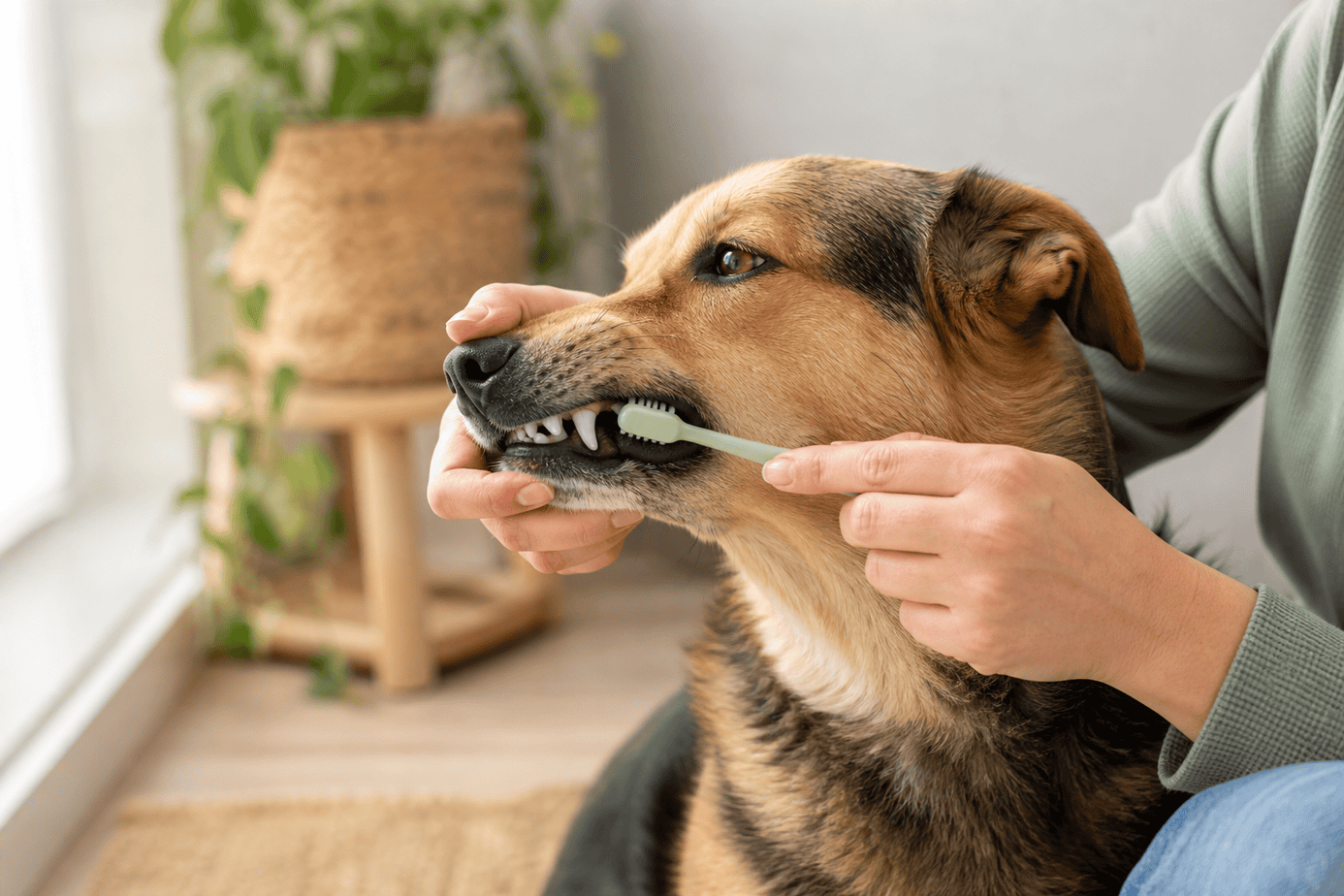
Brushing remains the better mechanical option because bristles can follow the gumline and reach small spaces more effectively. In a randomized canine study, daily or every-other-day brushing controlled plaque, calculus accumulation, and gingivitis better than weekly or every-other-week brushing. The researchers recommended daily brushing.[2]
That does not make a wipe useless. A gentle routine your dog accepts can be more helpful than a toothbrush that never leaves the cabinet. If wiping is the only comfortable option today, use it consistently and keep working toward brushing a few teeth at a time.
Wipes Compared With Professional Dental Care
Home care is preventive maintenance. It cannot provide a complete oral examination, dental X-rays, cleaning below the gumline, or treatment for a loose, fractured, or infected tooth.
Once tartar is firmly attached, do not try to chip or scrape it off at home. That can injure the gums or tooth surface, and it leaves disease below the gumline unaddressed. A veterinarian can examine the whole mouth and recommend professional care based on what your dog actually needs.
How to Choose Dental Wipes for Your Dog
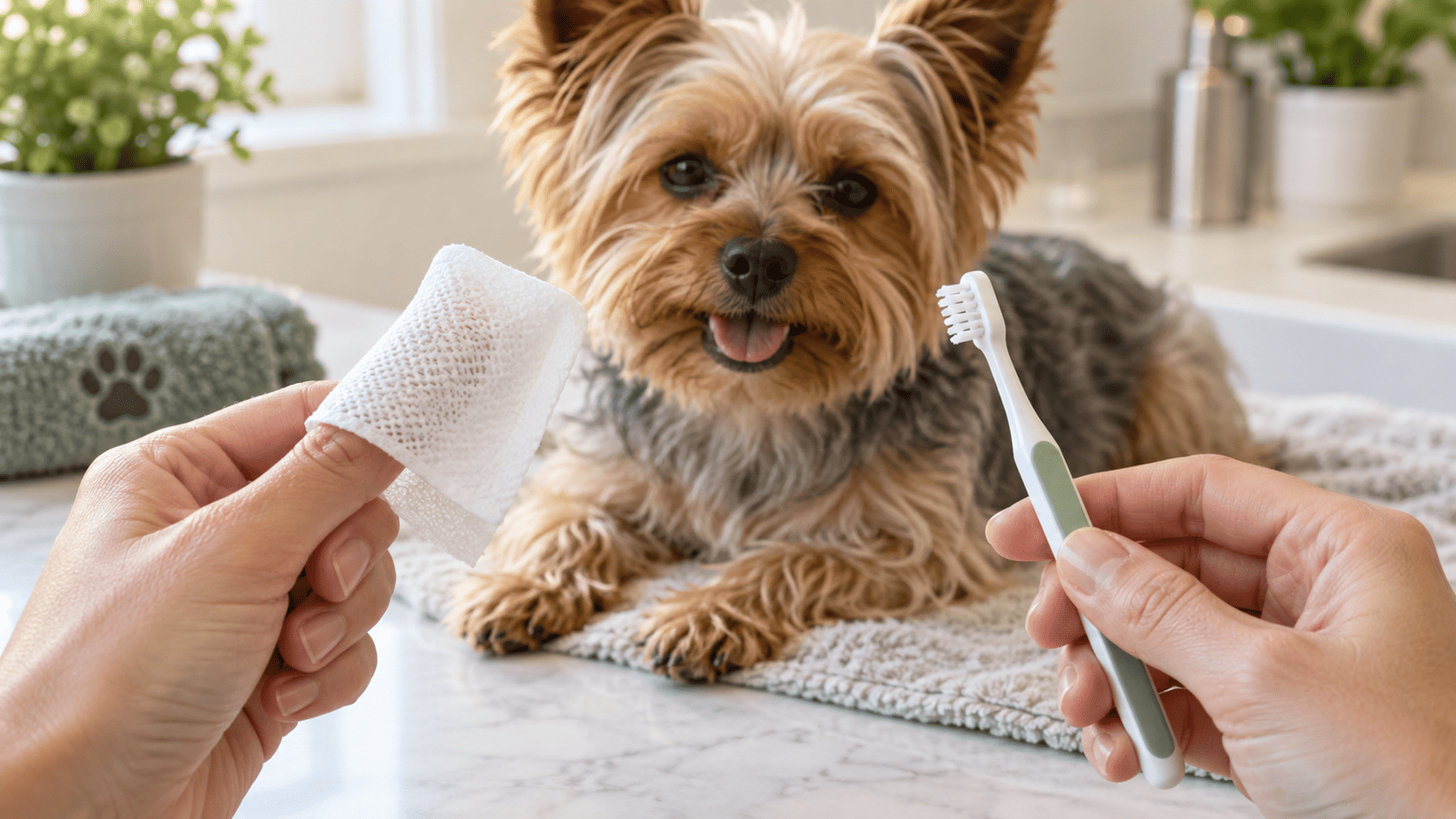
Start with the label, not the front-of-package promises. I look for a product made specifically for dogs or for dogs and cats, with a complete ingredient list and clear directions. Formulas can change, so check the package you are holding even if you have bought the product before.
Consider these practical details:
- Fit and grip. A finger sleeve may stay in place better for some hands. A flat wipe may be easier to fold to a comfortable size for a small mouth.
- Texture. A lightly textured surface can add friction, but it should not feel rough enough to irritate healthy gums.
- Flavor and scent. Strong mint or fragrance may make some dogs back away. Acceptance matters more than a fresh smell.
- Directions and age guidance. Follow the manufacturer’s species, age, frequency, and storage instructions. Do not assume that an adult formula is appropriate for a puppy.
- Individual sensitivities. If your dog has food allergies, oral irritation, or a history of reacting to grooming products, review the full ingredient list with your veterinarian.
- Evidence for the exact product. The Veterinary Oral Health Council, or VOHC, reviews submitted product data and awards a seal for a specific plaque claim, tartar claim, or both. The seal applies only to the product and claim named. It is not a blanket endorsement of every item made by that company.[3]
Use only oral-care products labeled for pets, and follow the directions because dogs will swallow some residue. Human dental wipes and human toothpaste may contain ingredients or concentrations that are not appropriate for dogs.[4]
How to Use Dental Wipes Safely
The goal is not to force a perfect cleaning. It is to build a calm routine while removing soft buildup from the surfaces you can safely reach. WSAVA dental guidance emphasizes starting slowly, keeping the experience positive, and avoiding force because struggling can increase resistance and bite risk.[4]
- Choose a quiet time. Try after a walk or another calm part of the day.
- Let your dog investigate. Offer the closed package or a fresh wipe to sniff without putting it in the mouth.
- Position yourself to the side. Avoid leaning over your dog or forcing the jaws open.
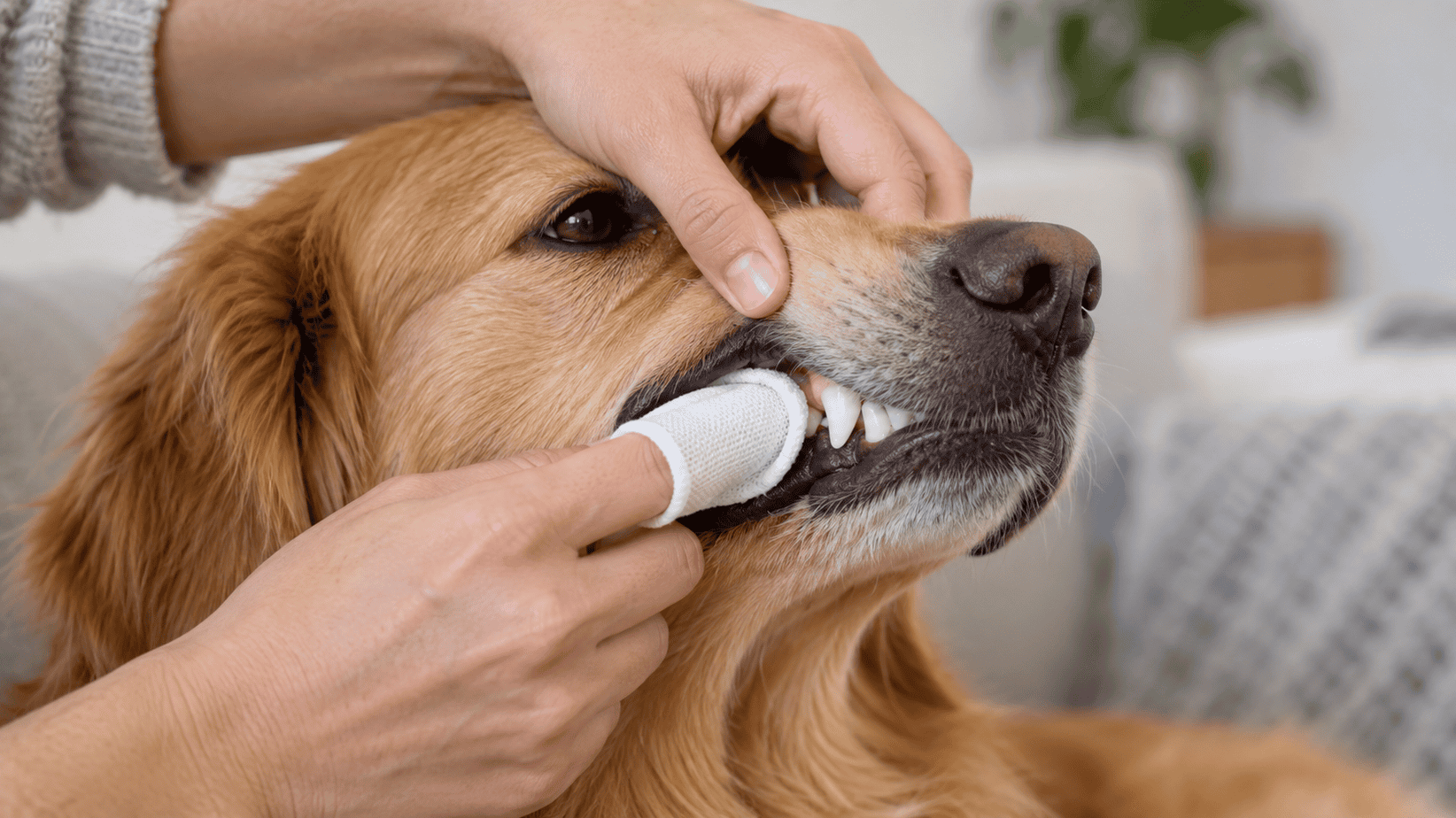
- Secure the wipe. Wrap a flat wipe firmly around your index finger, or fit a finger-style wipe according to the label. It should not be loose enough to slip into the mouth.
- Lift the lip gently. Keep the mouth closed and expose only the outer surfaces of the teeth.
- Wipe a few teeth. Use light circular or side-to-side strokes along the outer tooth surfaces and gumline. Start with the canine teeth or an easy section, then work toward the back teeth as your dog becomes comfortable.
- Keep the first sessions short. Ten calm seconds can be a successful beginning. Stop before your dog feels trapped.
- Reward cooperation. Praise, play, or a small appropriate treat can help the routine feel predictable and safe.
- Reseal the container. A dry wipe provides less useful contact and may drag against the gums.
Stop if your dog shows pain, sudden resistance, growling, snapping, bleeding, swelling, repeated pawing at the mouth, or excessive drooling. Do not wipe over a broken tooth, loose tooth, mouth ulcer, or visibly inflamed area. If you are worried about being bitten, do not put your finger in the mouth.
How Often Should You Use Dental Wipes?
Follow the product label first. For mechanical plaque control, daily care is the useful goal when your dog tolerates it. Plaque begins returning quickly after a tooth surface is cleaned, which is why consistency matters more than an occasional long session.[1]
If a full-mouth wipe is too much, clean a small section and rotate areas over several days. Keep each session easy. Continue brushing wherever your dog accepts it, since the evidence for daily brushing is stronger and the brush reaches more effectively along the gumline.[2]
Five Dental Wipe Options to Compare
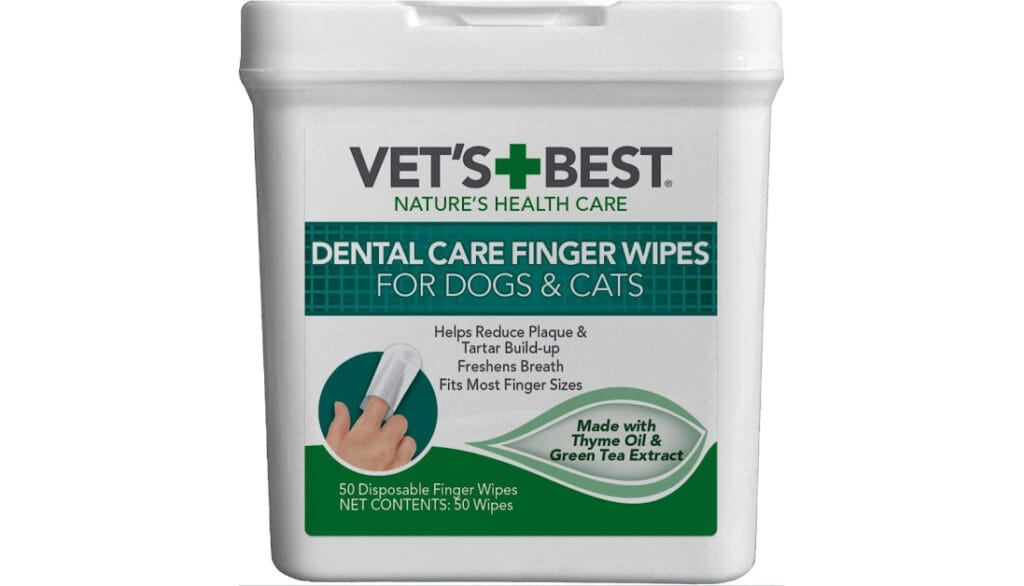
Vet’s Best Dental Care Finger Wipes
Vet’s Best Dental Care Finger Wipes use a fitted finger-sleeve design. That format may feel more secure than a loose pad and can make it easier to control pressure. The current product information includes scent and botanical ingredients, so read the complete label if your dog has a sensitive mouth or dislikes flavored products.
Best fit: Someone who prefers a sleeve that stays on one finger.
Keep in mind: A finger wipe still cannot reach tight spaces as well as a soft toothbrush, and it will not remove established tartar.
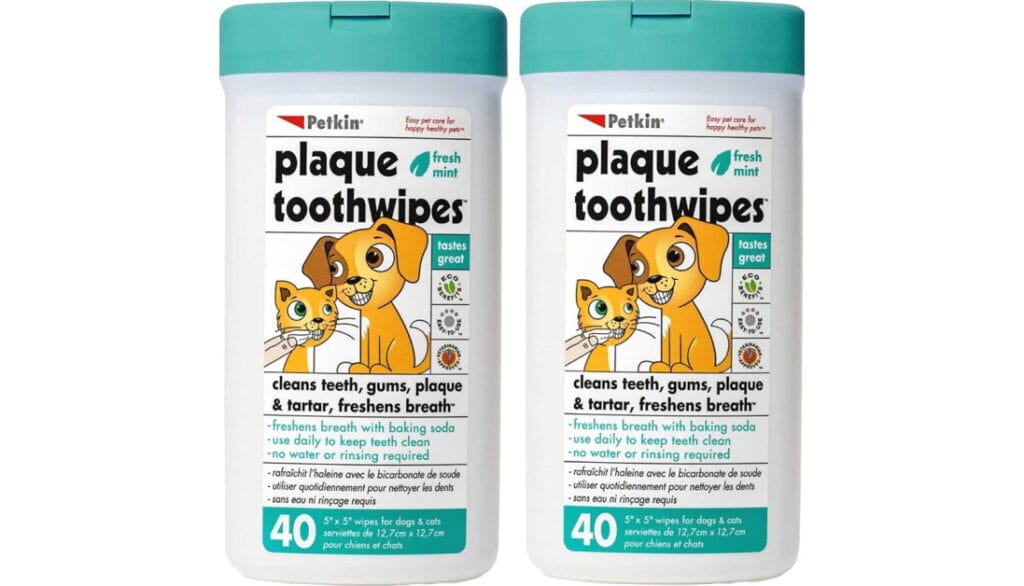
Petkin Plaque Dental Toothwipes
Petkin Dog and Cat Dental Wipes are flat, premoistened tooth wipes with a mint scent. A flat pad can be folded to suit your hand and your dog’s mouth, which may be helpful for a small dog.
Best fit: Someone who wants a simple fold-around-the-finger format.
Keep in mind: A noticeable mint scent may reduce acceptance for a scent-sensitive dog. Check the current count and directions because packaging can change.
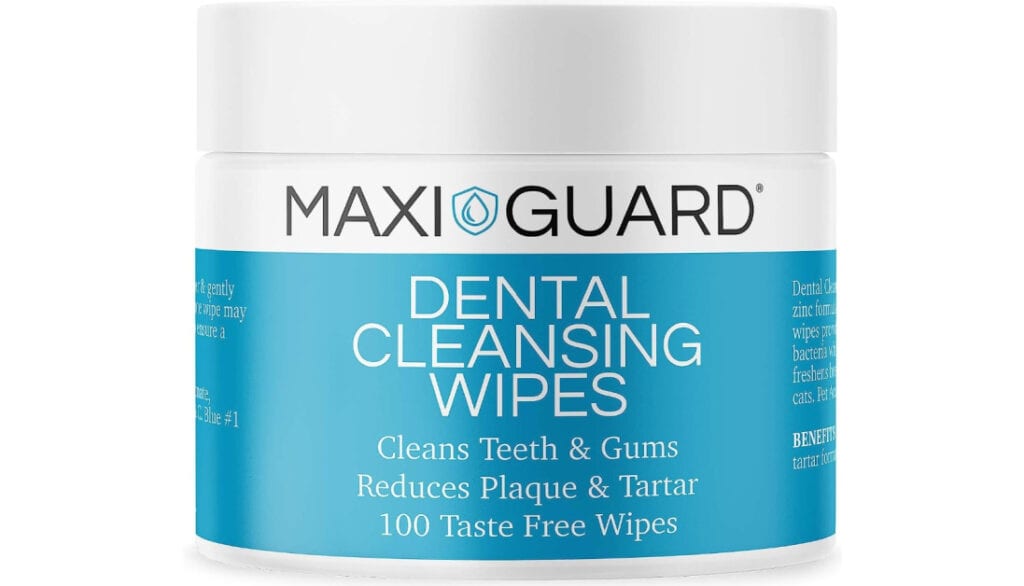
Maxi-Guard Dental Cleansing Wipes
Maxi-Guard Dental Cleansing Wipes for Dogs are small pads with a zinc-based formula. The compact format may be convenient for short sessions and small areas of the mouth.
Best fit: Someone looking for a small wipe and a short, targeted routine.
Keep in mind: Check the dimensions and full ingredient list before buying. Small pads can be harder to grip securely on a larger finger.
Pet MD Dental Wipes
Pet MD dental wipes are textured flat pads sold in an apple-and-mint scented formula. Texture may add surface friction. The scent is mainly a question of acceptance, not proof of dental benefit.
Best fit: Someone who wants a larger flat pad that can be folded around a finger.
Keep in mind: Scent is not evidence of dental benefit. If your dog turns away from fragrance, choose a milder option.
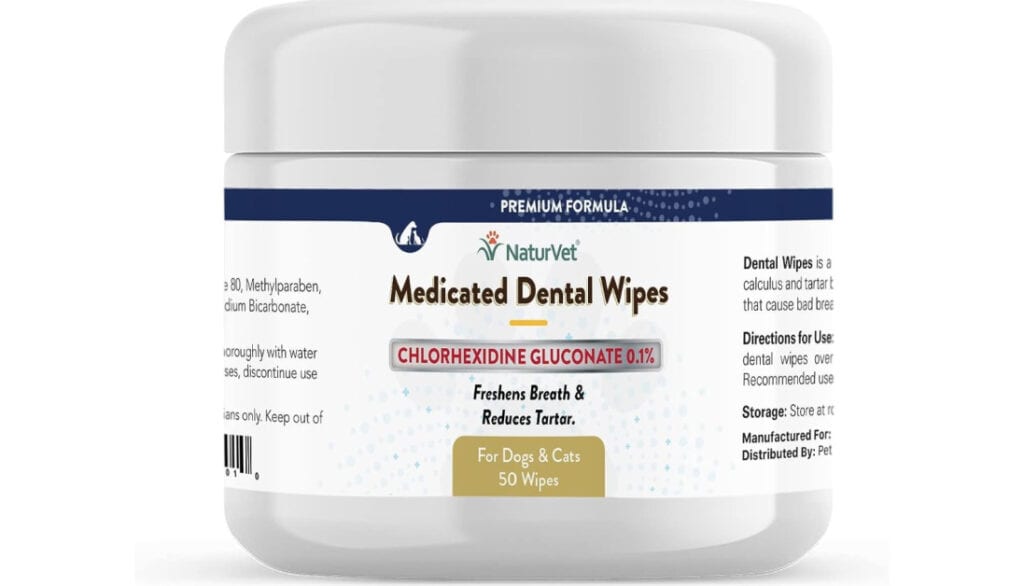
NaturVet Medicated Dental Wipes
NaturVet Medicated Dental Wipes for Dogs are another premoistened option intended for pet oral care. The word “medicated” in a product name does not tell you which dental outcome has been demonstrated, so the ingredient panel and exact label claims deserve a careful read. This wipe contains a low concentration of chlorhexidine which can help destroy odor causing bacteria in the mouth.
Best fit: When a dog has recurring bad breath or dental disease. Could also be helpful for dogs who eat poop.
Keep in mind: Do not use a product claim as a reason to delay an examination for painful gums, heavy tartar, or persistent odor.
A Whole-Dog Dental Care Plan
I see dental care as part of the whole dog, not a cosmetic project focused on white teeth or minty breath. A useful plan considers comfort, behavior, nutrition, chewing habits, the shape and crowding of the mouth, and what the family can repeat without creating fear.
Wipes may be one part of that plan. Brushing, when tolerated, offers better plaque control. Appropriate diet, chews, or other products with evidence for the exact claim may add support. Choose chewing items carefully for your dog’s size, chewing style, calorie needs, and tooth condition. Very hard objects can fracture teeth in puppies or senior dogs.[4]
Regular oral examinations still matter. VOHC describes brushing as the gold standard, recommends frequent home hygiene, and notes that many dogs need periodic professional scaling in addition to ongoing plaque control.[3]
When Your Dog Needs Veterinary Dental Care
Arrange a dental examination if you notice:
- persistent or suddenly worse bad breath
- red, swollen, or bleeding gums
- yellow or brown hardened buildup
- a loose, broken, discolored, or missing tooth
- drooling, mouth rubbing, or pawing at the face
- dropping food, chewing on one side, or refusing hard food
- facial swelling or swelling below an eye
- a new reluctance to let you touch the muzzle
These signs can reflect pain or disease that a wipe cannot correct. Seek prompt care for facial swelling, active bleeding, significant pain, trauma, or trouble eating or drinking.
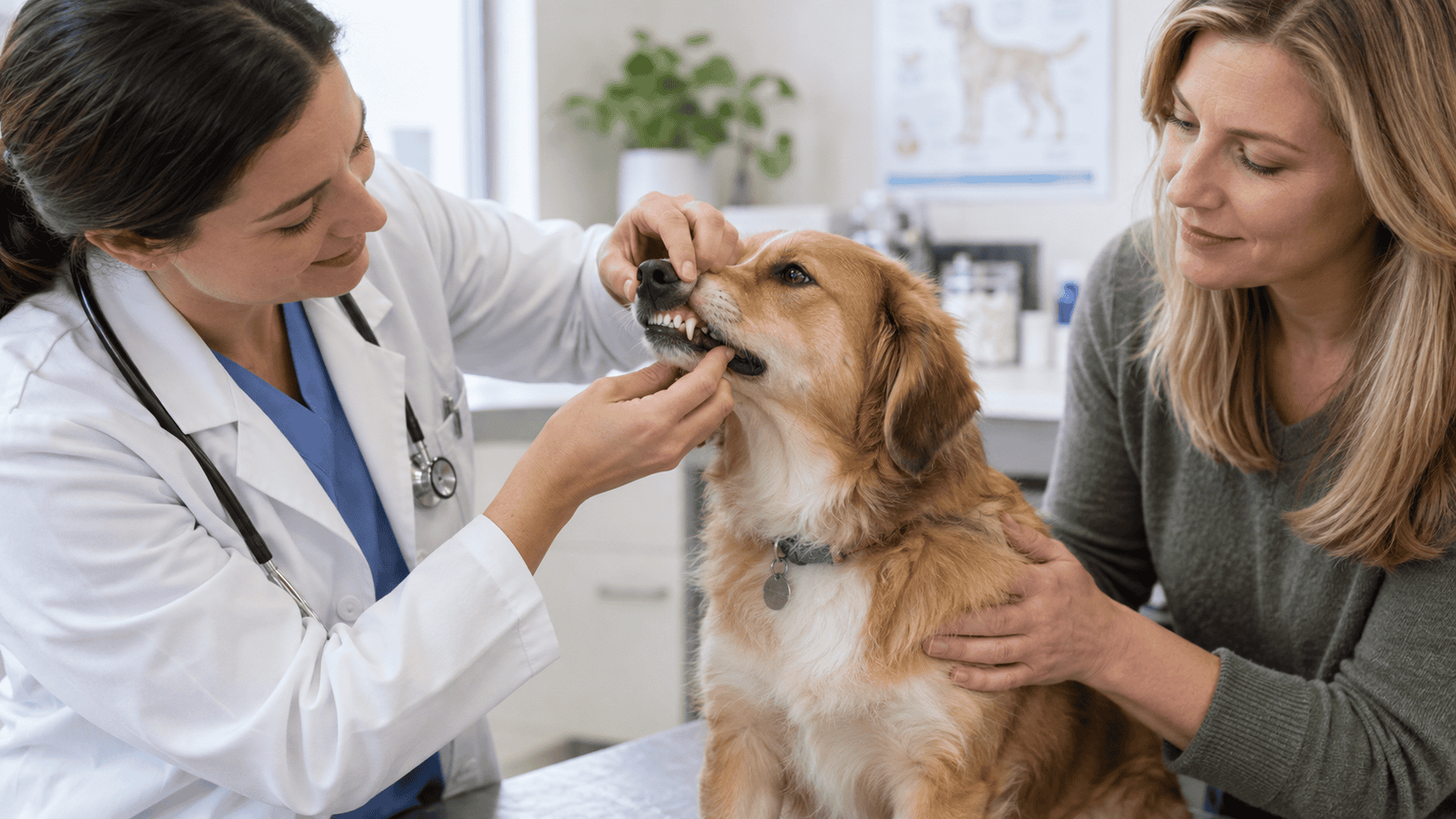
Final Thoughts
Dental wipes can be a sensible tool when you use them for the job they can actually do: gently removing some soft plaque and debris from reachable tooth surfaces. They are convenient, often easier to introduce than a brush, and may help turn mouth care into a steady habit.
Keep your expectations grounded. Wipes do not remove hardened tartar or replace a thorough oral examination, brushing, dental X-rays, or professional treatment. A calm ten-second session that you can repeat is a good place to begin. From there, build the safest and most complete routine your dog will comfortably accept.
They can help remove some soft plaque and food debris from the outer tooth surfaces through friction. Their reach is limited, so they are less thorough than brushing and cannot treat disease below the gumline.
No. Tartar is hardened, mineralized buildup that resists ordinary home removal. Do not scrape it yourself. Ask your veterinarian whether your dog needs a professional dental cleaning.[1]
Not completely. A toothbrush reaches the gumline and small spaces more effectively, and daily brushing has stronger evidence for plaque control. A wipe can be a practical supplement or a bridge for a dog who is still learning to accept brushing.[2]
Use them as often as the product label directs. Daily care is a reasonable goal when the mouth is healthy and your dog is comfortable, but do not force a session. Short, positive cleaning is safer than a struggle.
They may be appropriate if the label includes your puppy’s age and species and the wipe can be held securely. Start with gentle lip handling and a very short session. For a small mouth, fold the wipe so it does not bunch up. Ask your veterinarian before use if your puppy has mouth pain, ulcers, retained baby teeth, or another dental concern.
References
- Veterinary Oral Health Council. (n.d.). Protocols and submissions. https://vohc.org/protocols-and-submissions/
- Harvey, C., Serfilippi, L., & Barnvos, D. (2015). Effect of frequency of brushing teeth on plaque and calculus accumulation, and gingivitis in dogs. Journal of Veterinary Dentistry, 32(1), 16-21. https://doi.org/10.1177/089875641503200102
- Veterinary Oral Health Council. (n.d.). Finding the most effective route to good oral health for your dog or cat. https://vohc.org/
- World Small Animal Veterinary Association. (2020). WSAVA global dental guidelines. https://wsava.org/wp-content/uploads/2020/01/Dental-Guidleines-for-endorsement_0.pdf
A note about your dog’s health
This article provides general education and does not replace an examination, diagnosis, or individualized advice from your veterinarian. Contact a veterinary professional if you are concerned about your dog’s symptoms.

ABOUT THE AUTHOR