Ear wipes can be a handy way to remove visible wax, dirt, and moisture from the outer part of a dog’s ear. They are best for the ear flap and the opening you can safely reach with your fingertip. They do not flush the deeper L-shaped ear canal, and they do not treat an ear infection.
That distinction matters. If your dog’s ear is painful, very red, swollen, smelly, or producing discharge, skip the routine wipe and call your veterinarian. Those signs can come from infection, allergy, mites, a foreign body, or another problem that needs a proper exam.
I am Dr. Candy Akers, and I have helped many families make ear care less stressful. My favorite product is not always the strongest formula. It is the one that fits the dog’s needs, is used in the right place, and does not delay veterinary care.
This article contains affiliate links. If you buy through one, Healthy Happy Dogs may earn a commission at no extra cost to you.
Are Ear Wipes Good for Dogs?
Yes, dog ear wipes can be useful for light, surface-level cleaning. They work well when you see a little wax on the ear flap, want to tidy the ear opening after a dusty outing, or need a less messy option than liquid cleaner.
Wipes have limits. A dog’s ear canal bends downward and then inward. A wipe wrapped around your finger cannot safely reach the deeper canal. If wax and debris are farther down, a veterinarian may recommend a liquid ear cleanser that can move through the canal. Cornell’s canine ear-cleaning guide explains that liquid cleanser, gentle massage, and cotton or gauze at the opening are used to loosen and remove debris [1].
Cleaning also is not the same as treatment. In dogs with otitis externa, veterinarians look for the primary cause, contributing factors, infection, inflammation, and changes inside the canal. Ear cleaning may support treatment, but it cannot replace diagnosis or the medication plan [2].
Ear Wipes vs. Liquid Ear Cleaner
Choose the tool based on where the debris is and how the ear looks.
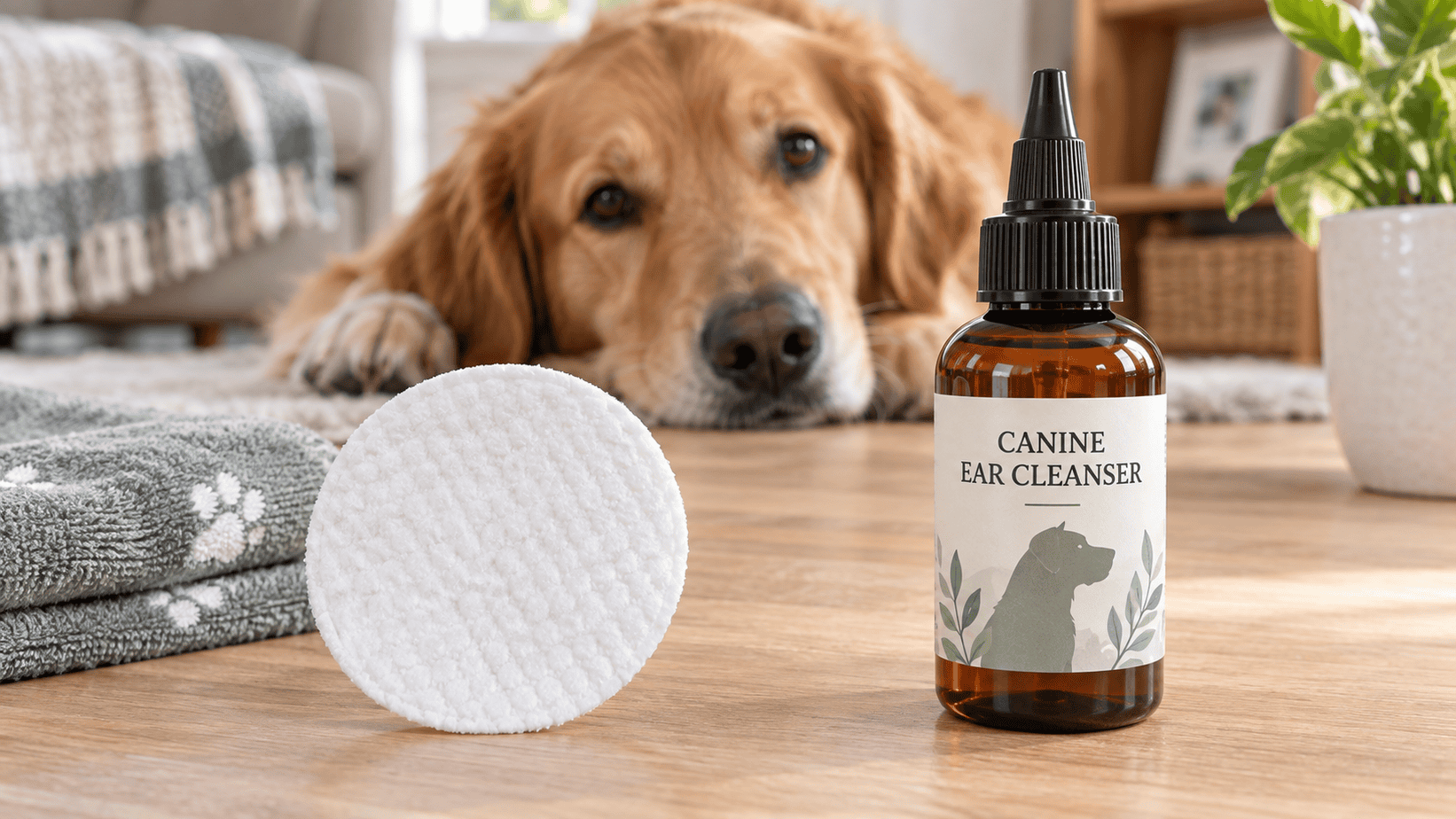
Ear wipes are best for: visible wax on the ear flap, light dirt near the entrance, quick cleanups, travel, and dogs that dislike liquid in the ear.
Liquid ear cleaner is best for: debris inside the canal, dogs with a veterinarian-approved maintenance plan, and cleaning before medication when your veterinarian tells you to do so.
Do not clean at home before an exam when: the ear is painful, very red, swollen, bleeding, or producing pus-like or dark discharge. Also stop if your dog tilts the head, loses balance, cries when the ear is touched, or suddenly develops a one-sided problem. MSD Veterinary Manual lists pain, itching, head shaking, odor, discharge, redness, and swelling among common signs of otitis externa [3].
How to Choose Dog Ear Wipes
Start with the label. The package should clearly say the wipe is intended for a dog’s ears. Skin wipes and general grooming wipes are not automatically safe for the ear canal.
Look for a size and texture that give you control. Finger wipes can be helpful for small folds. A larger round pad may be easier for a broad ear flap. The wipe should be moist enough to lift debris without hard rubbing, yet sturdy enough that it does not tear.
Fragrance-free can be a good choice for a sensitive dog, but no ingredient list can promise zero irritation. “Natural” is not a safety guarantee either. Plant extracts and essential oils may still bother an individual dog. Use the product exactly as labeled, never add concentrated essential oils, and stop if the skin becomes red or your dog seems uncomfortable.
Check age limits and species directions. Some formulas are labeled for puppies, while others are for adult dogs only. If your dog has a damaged eardrum, chronic ear disease, a known allergy, or a prescribed ear medication, ask your veterinarian which cleaner is compatible with the treatment plan.
How to Clean a Dog’s Ears With Wipes
1. Check before you clean. Lift the ear flap and look for redness, swelling, heavy discharge, blood, a strong odor, or obvious pain. If you see any of these, pause and call your veterinarian.
2. Set up a calm spot. Have the wipes open, treats ready, and your dog on a non-slip surface. Let your dog sniff the package. Reward relaxed behavior before touching the ear.
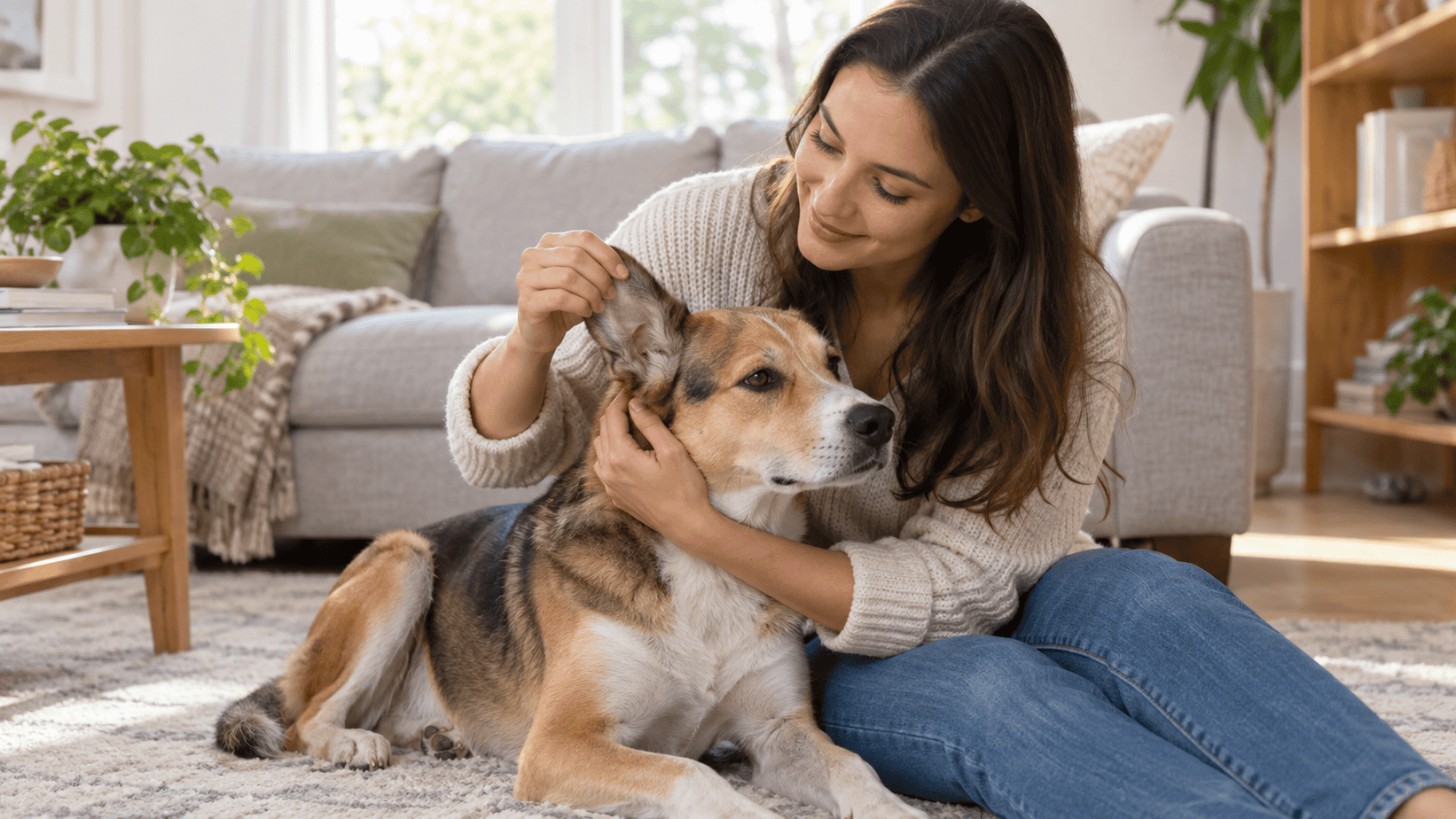
3. Wipe only what you can see. Hold the ear flap gently. Wrap the wipe around your fingertip and clean the inner flap and the entrance to the canal with light strokes. Do not push the wipe into the canal.
4. Use a fresh area of the wipe. Fold or rotate the pad as it collects wax. Use a separate wipe for the other ear so you do not move debris from side to side.
5. Stop if your dog objects. Pulling away, yelping, repeated head shaking, or sudden scratching can signal pain. A forced cleaning can increase fear and may injure an inflamed ear.
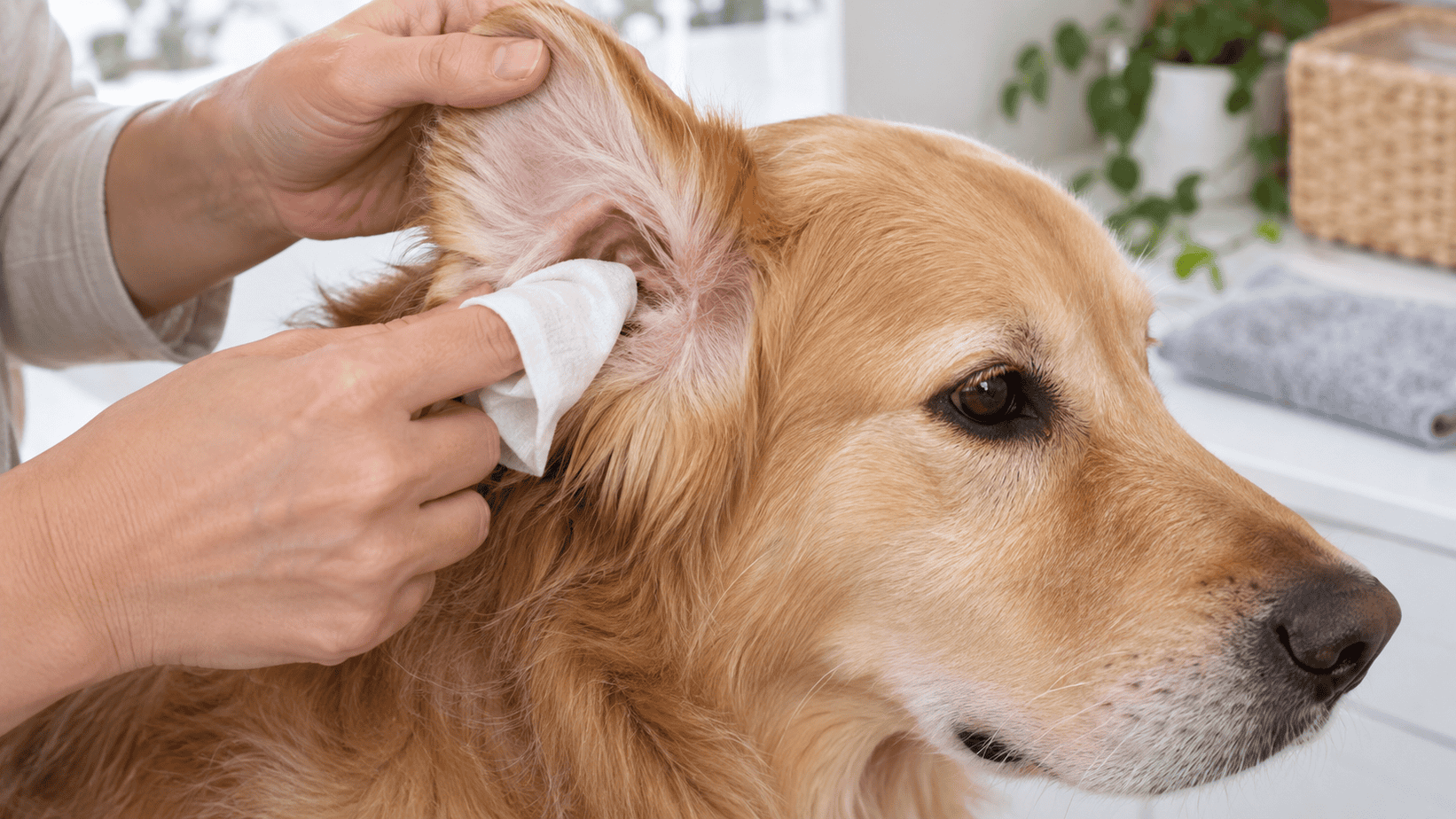
Never insert a cotton swab where you cannot see the tip. Washington State University’s veterinary hospital advises owners not to put a swab farther into the ear than they can see [4].
Best Ear Wipes for Dogs: Dr. Candy’s Five Picks
These products are kept in the same order as my original recommendations. Product formulas and labels can change, so confirm the current package before use. The two medicated skin wipes below are not routine ear-canal cleaners. I include them because they were in the original guide, but they belong on external skin only when the label and your veterinarian support that use.
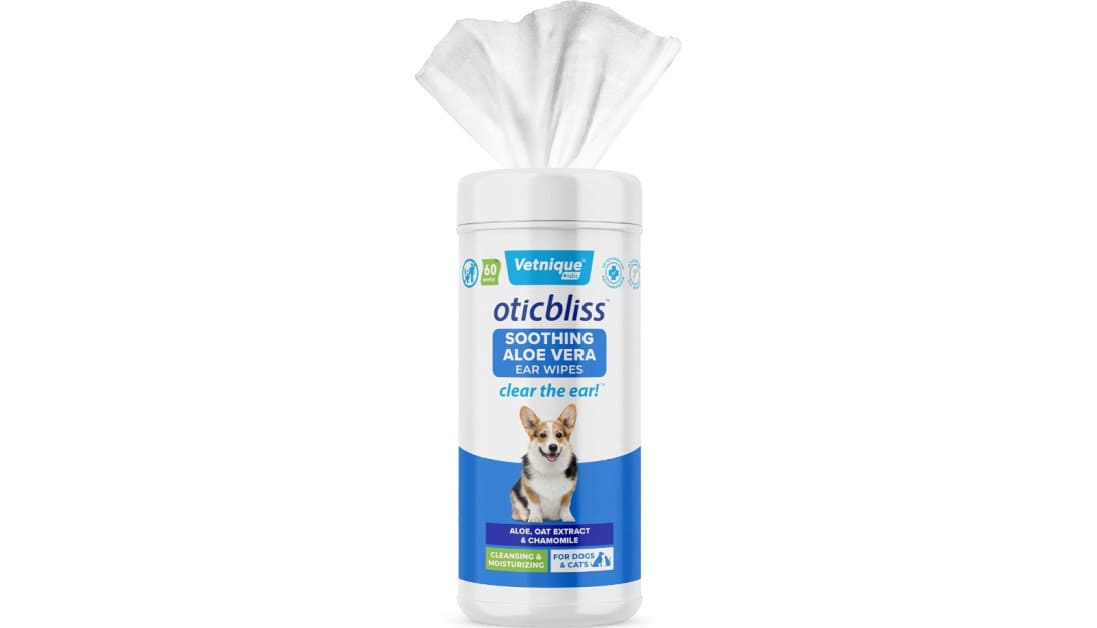
Vetnique Labs Oticbliss Ear Cleaner Wipes
Best for: large, routine ear wipes with a botanical formula.
Vetnique Labs Oticbliss Ear Cleaner Wipes are made for dogs and cats and are easy to use on the ear flap and visible entrance. I like the generous wipe size for larger ears. Aloe is included in the formula, but a scented or botanical product may not suit every sensitive dog.
What to know: Use only as labeled. Do not scrub an inflamed ear or push the wipe deeper to chase wax. Some users may find the scent strong, and the wipes may feel thin when working around large folds.
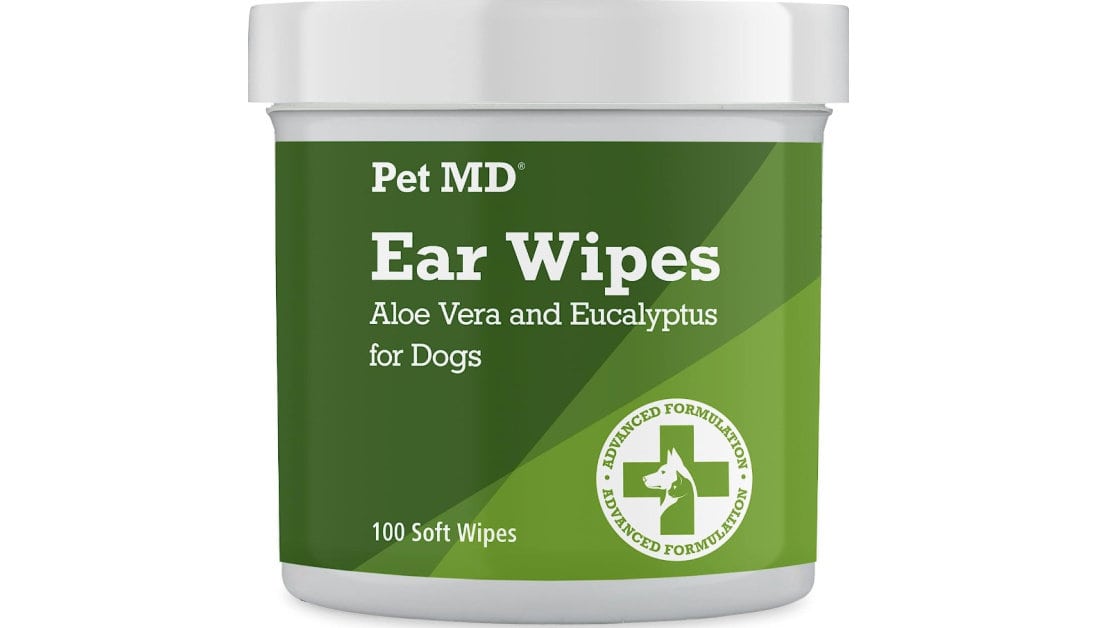
Pet MD Dog Ear Cleaner Wipes
Best for: a 100-count option for routine surface cleaning.
Pet MD Dog Ear Cleaner Wipes are premoistened and marketed for regular dog ear care. The round pads are convenient for visible wax around the opening. The current listing describes an alcohol-free formula with aloe and eucalyptus and sets an age minimum, so check the package for the latest directions.
What to know: Eucalyptus fragrance may be too strong for some dogs or people. “Veterinarian formulated” does not mean the product can diagnose, prevent, or treat an infection. Use it for hygiene, not as a substitute for an exam.
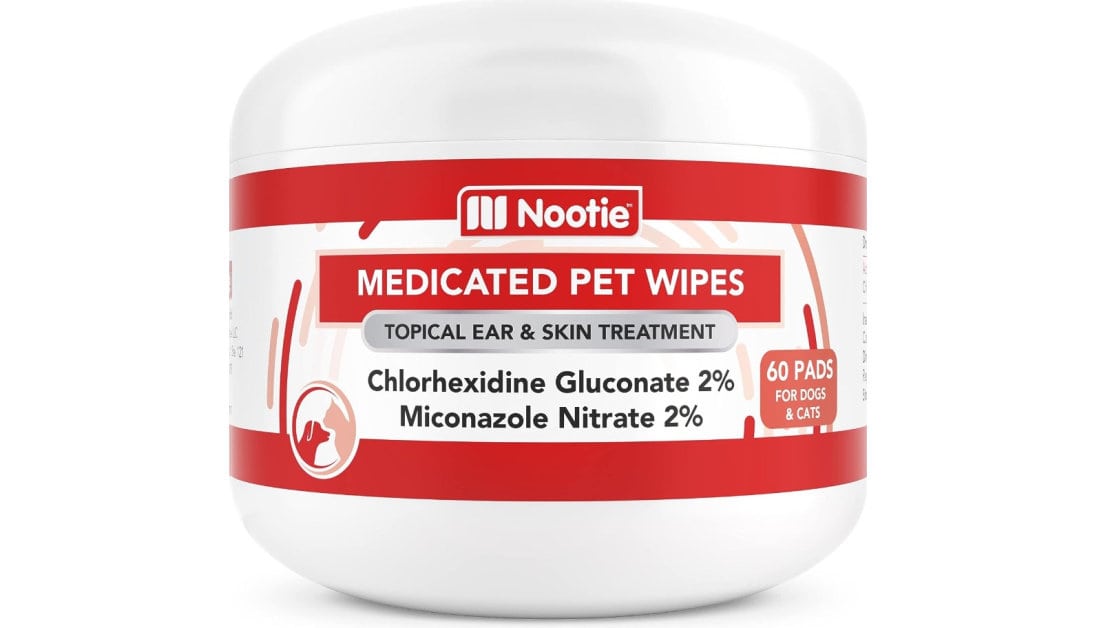
Nootie Medicated Dog Wipes
Best for: veterinarian-directed care of external skin around the ear, not routine cleaning inside the ear.
Nootie Medicated Dog Wipes contain chlorhexidine and miconazole and are designed as medicated skin wipes. They may be useful on external skin when your veterinarian has identified a condition and approves that exact use.
What to know: Do not place these wipes inside the ear canal unless the current label specifically allows it and your veterinarian directs you. They are not a home treatment for a painful, smelly, or discharging ear. The formula can leave residue and may irritate a sensitive dog.
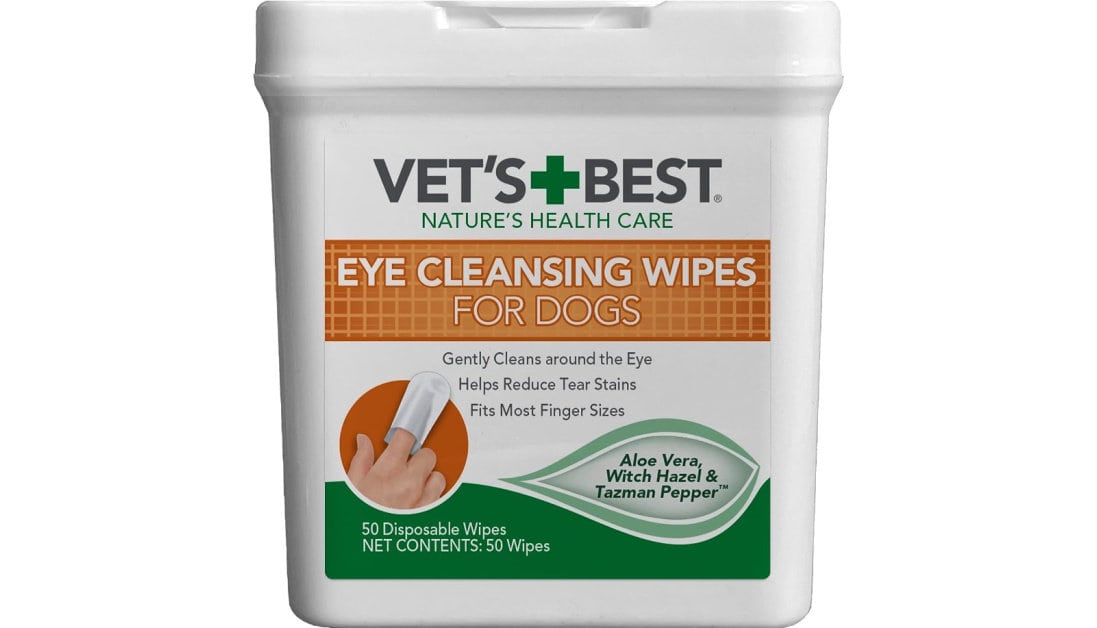
Vet’s Best Ear Relief Finger Wipes
Best for: fingertip control around small folds.
Vet’s Best Ear Relief Finger Wipes slip over a finger, which can make it easier to clean the ear flap without a loose pad bunching up. The formula includes witch hazel, aloe, and tea tree oil in a finished dog product.
What to know: Use the finished product only as labeled. Never add tea tree oil or another essential oil to your dog’s ear. The fragrance may bother sensitive dogs, and the finger design still does not make deep cleaning safe.
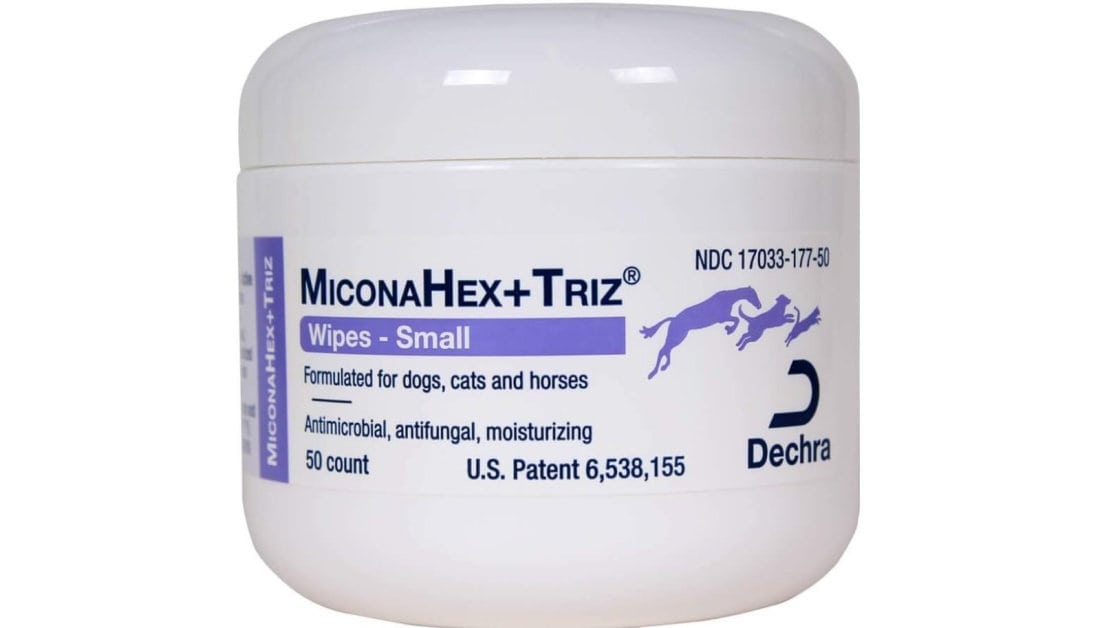
Dechra MiconaHex + Triz Wipes for Dogs
Best for: veterinarian-directed use on external skin near the ear.
Dechra MiconaHex + Triz Wipes combine miconazole, chlorhexidine, and tris-EDTA in a medicated skin wipe. They were part of my original list because dogs with ear trouble can also have irritated skin around the ear flap.
What to know: These are skin wipes, not a general ear-canal cleaner. Do not put them down the canal without label support and veterinary direction. A dog with recurring ear and skin problems may need evaluation for allergy or another underlying cause rather than repeated surface treatment.
When Wipes Are Not Enough
Call your veterinarian before cleaning if you notice pain, swelling, marked redness, blood, pus-like material, or a bad odor. Make an appointment if head shaking or scratching persists, if the problem returns often, or if one ear suddenly looks different from the other.
Seek prompt care for a head tilt, loss of balance, unusual eye movements, weakness on one side of the face, severe pain, or sudden hearing change. These signs can involve more than the outer ear.
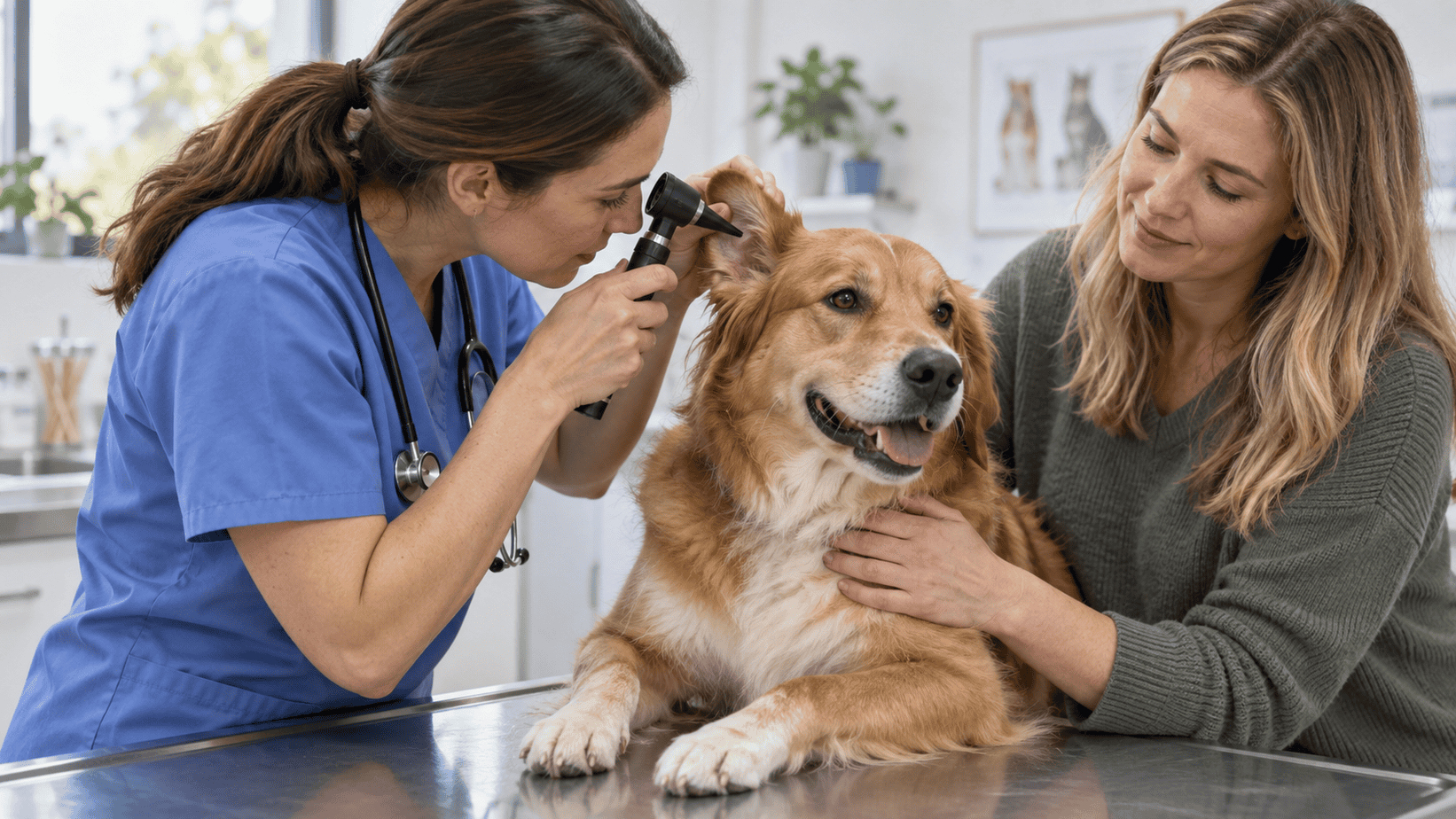
A veterinarian can look down the canal, check the eardrum when possible, examine a sample under the microscope, and identify bacteria, yeast, mites, inflammation, or a foreign body. That information guides the right cleaner and medication. Recurrent otitis often has an underlying driver such as allergy, moisture, ear anatomy, or chronic skin disease [2][3].
Common Ear-Cleaning Mistakes
Cleaning a painful ear before an exam. Debris may be part of the diagnostic picture, and inflamed ears can be very sore.
Pushing a wipe or cotton swab into the canal. Clean only the area you can see and reach safely.
Assuming stronger is better. Medicated skin wipes and concentrated oils can irritate tissue or be unsafe in the canal.
Using human baby wipes. Their pH, fragrance, preservatives, and intended body area are not designed for a dog’s ear.
Cleaning on a fixed schedule without checking the dog. Some healthy dogs need little ear cleaning. Others need a veterinarian-guided maintenance plan. Overcleaning can irritate the canal.
Using a wipe when liquid cleanser is needed. A wipe cannot flush debris from the deeper canal.
Frequently Asked Questions
There is no universal schedule. Check healthy ears regularly and clean only when needed or as your veterinarian directs. Dogs that swim, produce more wax, or have recurrent otitis may need a tailored maintenance plan.
No. Use a product labeled for canine ears. Baby wipes may contain fragrance or preservatives that irritate the ear, and they are not designed for the canine ear environment.
Common warning signs include redness, swelling, odor, discharge, pain, scratching, and head shaking. These signs are not specific to one cause, so a veterinary exam is the safest next step.
Ear shape can affect airflow and moisture, but it is only one factor. Allergies, swimming, skin disease, canal changes, foreign bodies, and prior infections can also matter. Do not assume every floppy-eared dog needs frequent cleaning.
Veterinarian-recommended liquid cleaners can be safe when used as directed. The right product depends on the condition of the canal and eardrum. Ask before using a liquid if the ear is painful, inflamed, or being treated with medication.
References
[1] Cornell University College of Veterinary Medicine. (2025, October 21). How to clean your dog’s ears. https://www.vet.cornell.edu/departments-centers-and-institutes/riney-canine-health-center/canine-health-topics/how-clean-your-dogs-ears
[2] Bajwa, J. (2019). Canine otitis externa: Treatment and complications. Canadian Veterinary Journal, 60(1), 97-99. https://pubmed.ncbi.nlm.nih.gov/30651659/
[3] MSD Veterinary Manual. (n.d.). Otitis externa in animals. https://www.msdvetmanual.com/ear-disorders/otitis-externa/otitis-externa-in-animals
[4] Washington State University Veterinary Teaching Hospital. (2022, January 4). Examining and medicating the ears of a dog. https://hospital.vetmed.wsu.edu/2022/01/04/examining-and-medicating-the-ears-of-a-dog/
A note about your dog’s health
This article provides general education and does not replace an examination, diagnosis, or individualized advice from your veterinarian. Contact a veterinary professional if you are concerned about your dog’s symptoms.

ABOUT THE AUTHOR