Dog shampoo can make a scabies bath gentler and more useful, but shampoo alone usually does not cure canine scabies. A veterinarian may recommend a product that loosens crusts, washes away debris, soothes irritated skin, or manages a secondary infection. Your dog still needs an appropriate treatment that targets Sarcoptes mites.
That distinction matters when you are standing in front of a shelf packed with bottles promising relief. The word “medicated” does not tell you what a shampoo treats. The safest choice is the one that matches your dog’s diagnosis, treatment plan, age, skin condition, and product label.
First, Make Sure It Is Sarcoptic Mange
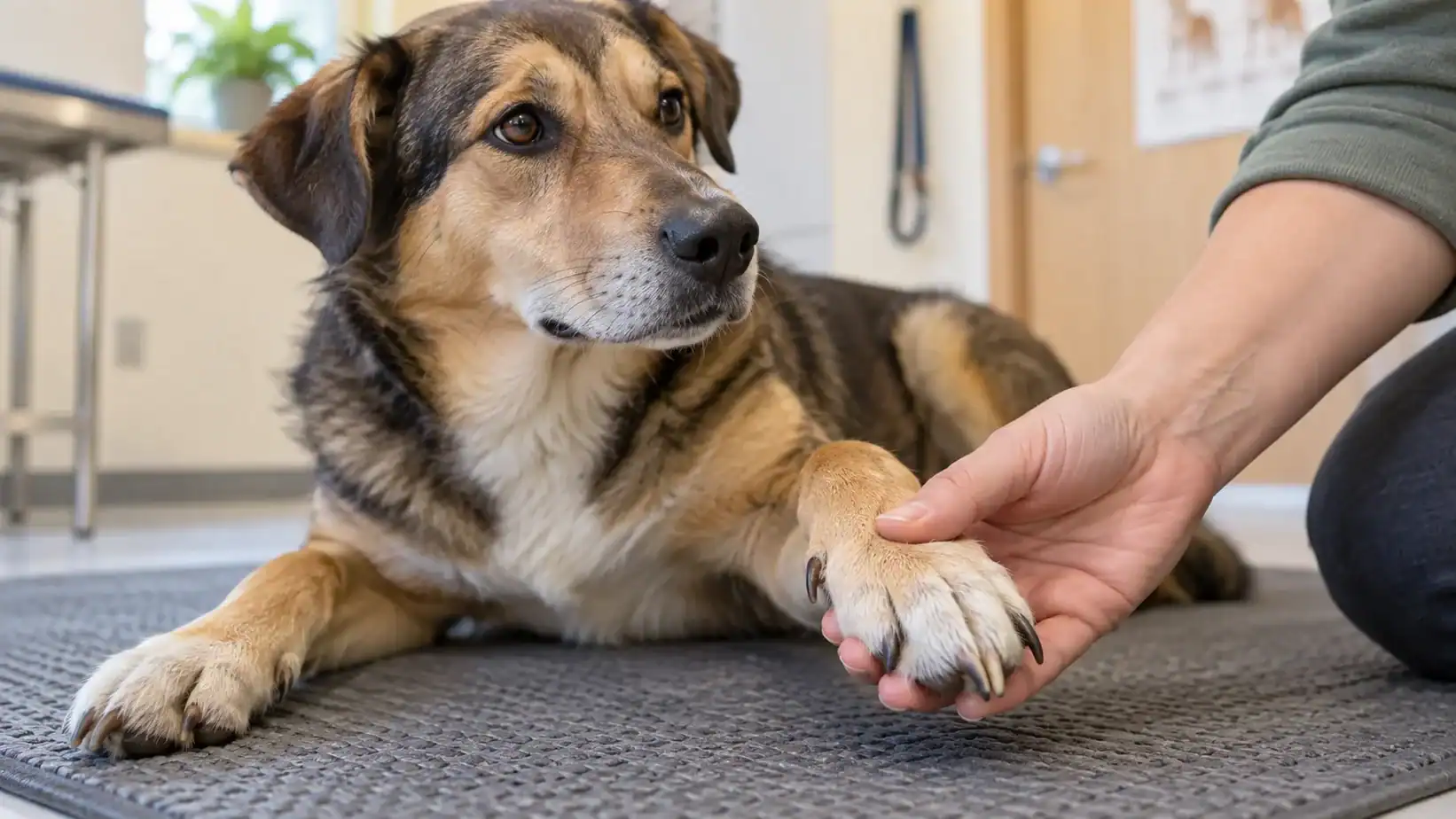
Sarcoptic mange, also called canine scabies, is caused by Sarcoptes scabiei mites. These mites burrow into the outer layers of the skin and can trigger intense itching. Common trouble spots include the ear edges, elbows, hocks, chest, and belly. You may also see redness, crusts, scales, hair loss, or sores from scratching. Severe cases can affect a dog’s appetite, energy, and body condition. [1] [2] [3]

Other problems can look similar. Fleas, allergies, bacterial or yeast infections, and demodectic mange can all cause itchy or damaged skin. Demodectic mange involves a different mite and calls for a different diagnostic and treatment plan.
A veterinarian may perform skin scrapings or other tests. Sarcoptic mites can be hard to find, so a negative scraping does not always rule out the disease. When the history and skin pattern strongly suggest scabies, a veterinarian may use response to treatment as part of the diagnosis. [1] [2]
Canine scabies is contagious between dogs. Mites can also move on recently shared bedding, brushes, clippers, towels, or close-contact surfaces. People exposed to an affected dog may develop an itchy rash, although the canine mite does not usually maintain its life cycle on people. Contact your physician if anyone in the home develops a persistent or uncomfortable rash. [1] [2]
What Shampoo Can And Cannot Do
Think of shampoo as one member of the care team, not the whole team. A good supportive shampoo may soften crusts, lift debris, reduce excess scale, cleanse damaged skin, or make a dog more comfortable. An antimicrobial shampoo may help when a veterinarian has identified a secondary bacterial or yeast problem.
Those jobs are useful, but they are not interchangeable with killing Sarcoptes mites. An antibacterial ingredient fights bacteria. An antifungal ingredient targets fungi or yeast. Oatmeal and aloe may soothe some dogs. None of those labels automatically means the product is an effective scabies treatment.
| Shampoo Type | Primary Job | Kills Sarcoptes Mites? | Best Used When |
|---|---|---|---|
| Veterinarian-directed anti-mite dip or rinse | Targets mites when the active ingredient is labeled or prescribed for that purpose | Some can | Your veterinarian includes it in the treatment plan |
| Keratolytic or antiseborrheic shampoo | Loosens crusts, oil, and scale | Usually no | Thick crusts or heavy scale need gentle removal |
| Antimicrobial shampoo | Helps manage bacteria or yeast | No, unless it also contains a proven anti-mite active with appropriate directions | A secondary infection is diagnosed |
| Soothing shampoo | Cleans gently and eases dryness or itch | No | Comfort and skin-barrier support are needed |
Older topical plans sometimes pair an antiseborrheic wash with an acaricidal, or mite-killing, dip. Lime-sulfur is one option a veterinarian may select, especially in specific patients. It has a strong odor and must be prepared and used exactly as directed. Please do not create your own dilution from an agricultural product or an online recipe. [2]
How To Choose A Dog Shampoo For Scabies
Check The Active Ingredients And Label Claims
Start with the label, not the front-of-bottle marketing. Look for the exact active ingredients, species, minimum age, directions, contact time, rinse instructions, warnings, and the condition the product is meant to address.
Sulfur or benzoyl peroxide shampoos may help with crusts, scale, oil, and follicular debris. Chlorhexidine and antifungal ingredients may be useful for a diagnosed secondary infection. Colloidal oatmeal or aloe may offer soothing support. A bottle can contain helpful ingredients and still be the wrong choice for a particular dog.
Match The Product To Your Dog
A puppy, senior, pregnant dog, frail dog, or dog with raw skin needs extra care. Product choice also changes when a dog has a seizure history, takes other parasite medications, or lives with cats. Some dog-safe pesticide products and essential oils can be hazardous to cats.
Tell your veterinarian about every topical, chew, collar, supplement, and home remedy you are using. Layering several products can increase irritation or toxicity. They can make bath day much more dramatic, though.
Look For Skin-Soothing Support
When your veterinarian approves it, a gentle shampoo can help a dry, uncomfortable dog. Fragrance-free products may be easier on sensitive skin. Oatmeal, aloe, and moisturizing ingredients are comfort measures, not mite treatments.
After the mites are controlled, the skin may need time to rebuild. A mild bathing plan, complete and balanced nutrition, good hydration, rest, and clean bedding can support that process.

Be Careful With Essential Oils And Home Mixes
Natural products deserve the same label-reading care as conventional ones. Concentrated essential oils can irritate damaged skin, and licking increases exposure. Avoid tea tree oil, improvised pesticide mixtures, and strong oils on raw or open areas unless your veterinarian has approved a specific dog-safe product.
A systematic review of medicinal plants in canine dermatology found promising antibacterial, anti-inflammatory, and wound-support evidence for several plants, including calendula and chamomile. [4]
Product Options For Dogs with Scabies
Here are a few medicated shampoos that can help sooth and clean the skin of a puppy with scabies.
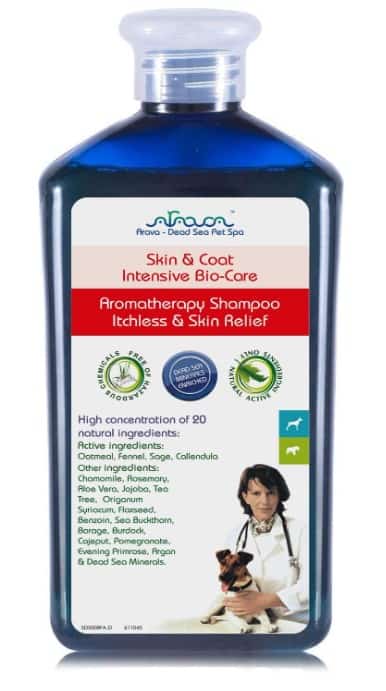
Arava Medicated Dog Shampoo
Formulas and labels can change. Check the current package and ask your veterinarian what role, if any, this product should have in your dog’s plan.
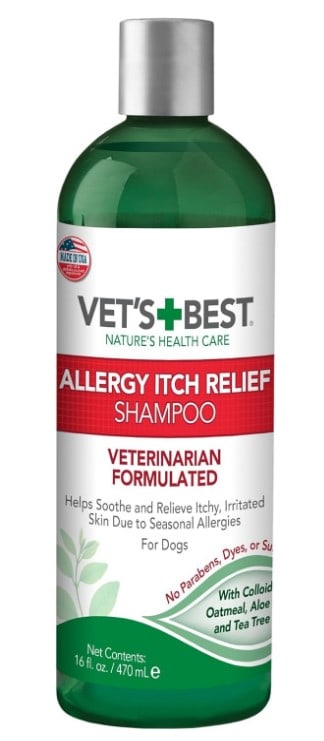
Vet’s Best Allergy Itch Relief Dog Shampoo
Formulas and labels can change. Check the current package and ask your veterinarian what role, if any, this product should have in your dog’s plan.
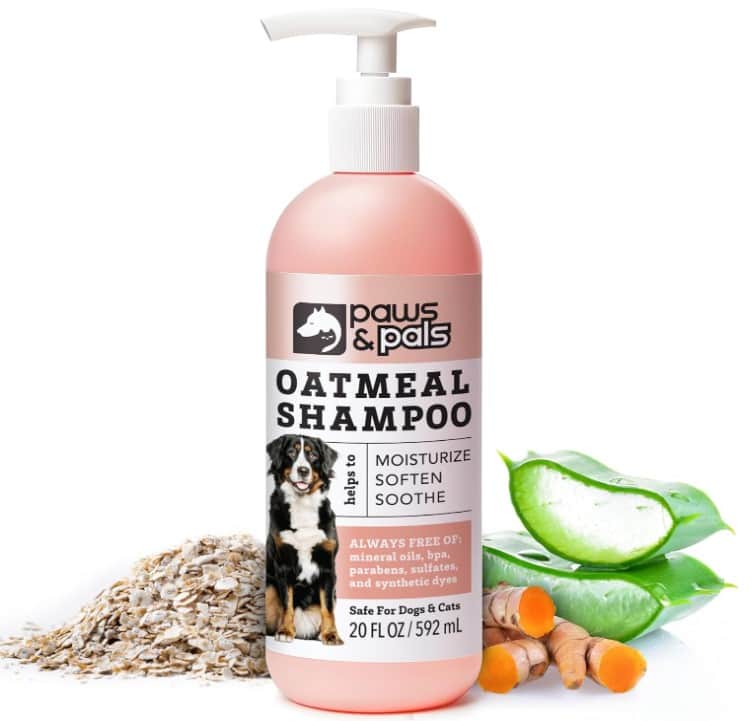
Paws & Pals 6-In-1 Oatmeal Dog Shampoo
Formulas and labels can change. Check the current package and ask your veterinarian what role, if any, this product should have in your dog’s plan.
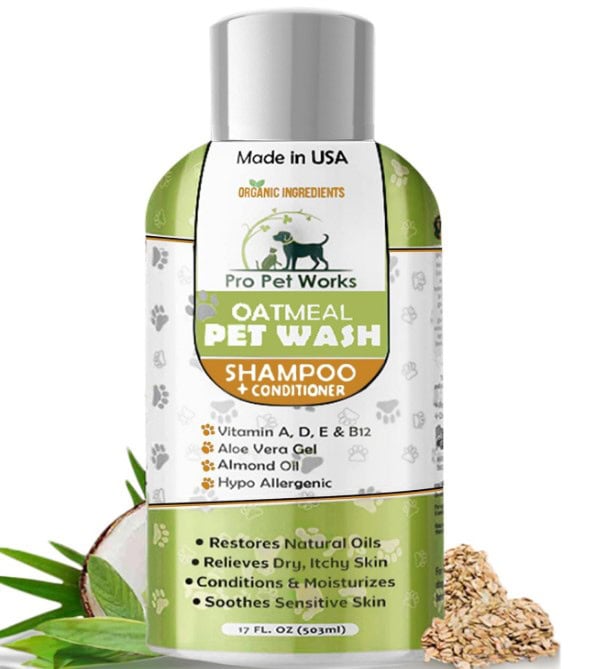
Pro Pet Works All Natural Organic Oatmeal Pet Shampoo
Formulas and labels can change. Check the current package and ask your veterinarian what role, if any, this product should have in your dog’s plan.
These products may have cleansing, soothing, or antimicrobial features. Do not assume that a product treats Sarcoptes mites unless its current label and your veterinarian say it does.
How To Bathe A Dog With Suspected Scabies
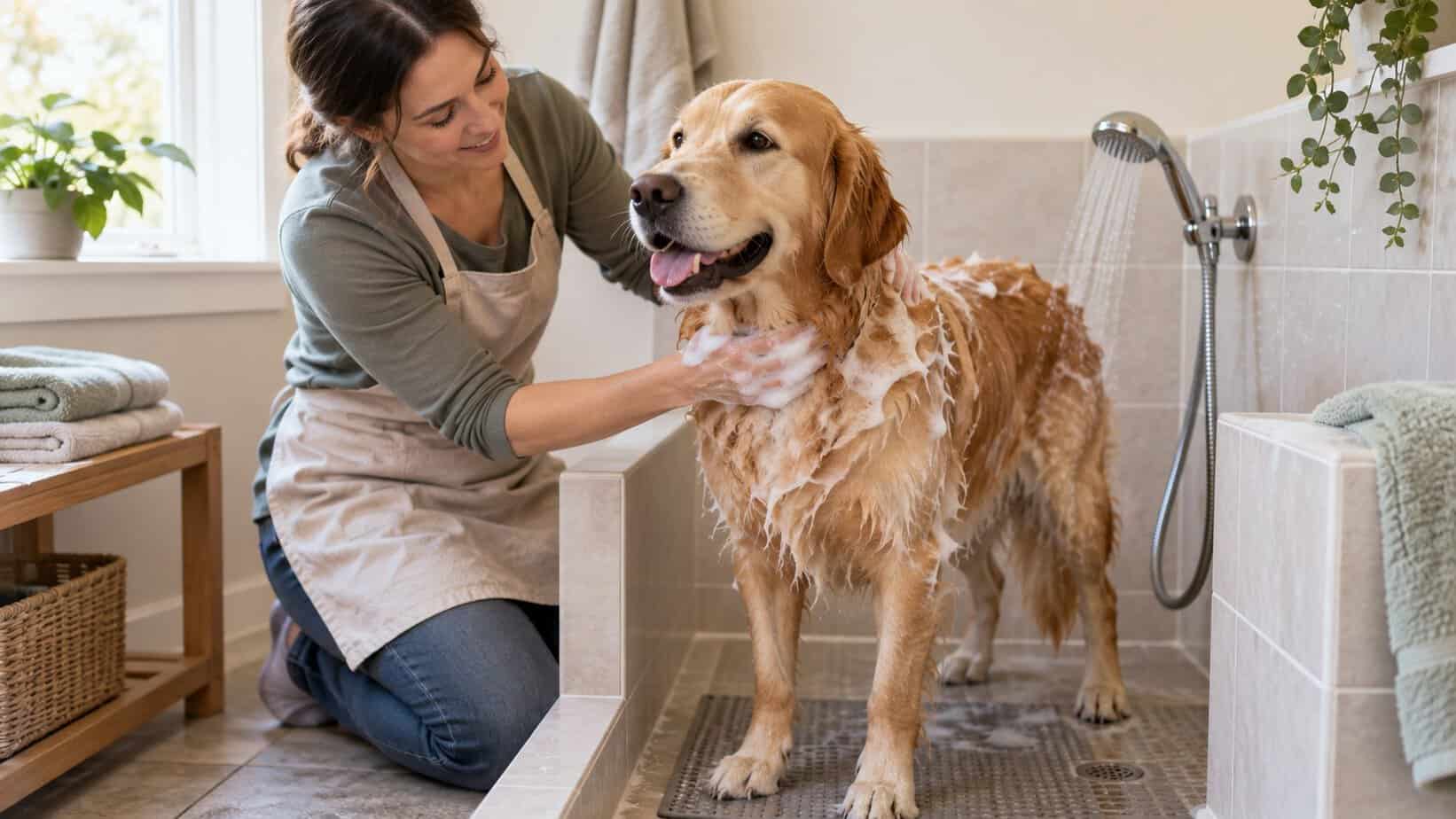
Bathing inflamed skin calls for a gentle hand. Scrubbing harder will not speed healing.
- Confirm the plan. Ask which product to use, whether it needs dilution, how often to bathe, and whether the shampoo should be used before another treatment.
- Read the whole label. Note the minimum age, warnings, contact time, and rinse directions.
- Protect yourself as directed. Gloves and washable clothing may be sensible when handling a contagious dog or a medicated product.
- Wet the coat with comfortably warm water. Hot water can make irritated skin feel worse.
- Apply gently. Work the product down to the skin without scraping crusts or rubbing open sores.
- Avoid the eyes, mouth, nose, and ear canals unless the label specifically directs otherwise.
- Keep the product on for exactly the directed contact time. Guessing is not helpful here.
- Rinse completely and dry with a clean towel. Do not share that towel or grooming tools with another pet.
- Watch for a reaction. Rinse and contact a veterinarian if redness, swelling, vomiting, tremors, weakness, breathing trouble, or sudden distress develops.
There is no universal “once a week” rule for scabies shampoo. The correct schedule depends on the product and the full treatment plan.
Treat The Mites, Not Just The Itch
Modern scabies care often relies on veterinarian-selected topical or oral anti-parasite medication. Label-approved options include selamectin and topical moxidectin with imidacloprid. Veterinarians may also consider other products based on current evidence, local approval, a dog’s health, and individual risk. [1]
A review of systemic treatments found that several macrocyclic lactones and isoxazolines can produce parasitological cure and meaningful improvement. The studies varied, and safety, licensing, breed sensitivity, application route, and owner preference still matter. [5] That is why a treatment that worked for a neighbor’s dog is not a prescription for yours.
Every dog in close contact with an affected dog may need evaluation or treatment, even if only one is itchy today. Wash or replace bedding as directed, clean shared grooming equipment, and limit close dog-to-dog contact until your veterinarian says the risk has passed. [1] [2]
Itching may not stop the moment the mites die. Inflamed skin, allergic response, and secondary infection can take time to settle. Call the clinic if your dog is not improving on the expected timeline rather than adding another shampoo on your own.
Holistic Support While The Skin Heals
A holistic plan looks at the whole dog while keeping the mite treatment nonnegotiable. The most helpful basics are wonderfully unglamorous:
- Feed a complete and balanced diet that suits your dog.
- Keep fresh water available.
- Support rest and reduce unnecessary stress.
- Use only gentle, veterinarian-approved skin products.
- Keep nails short enough to reduce scratching damage.
- Wash bedding and clean shared tools according to the treatment plan.
- Recheck the skin if odor, discharge, pain, or new lesions appear.

When To Call The Veterinarian Promptly
Arrange prompt care when your dog has:
- Intense or nonstop itching
- Bleeding, raw, thick, or heavily crusted skin
- Pus, odor, warmth, swelling, or obvious pain
- Rapidly spreading hair loss or lesions
- Low energy, poor appetite, weight loss, or fever
- Symptoms in a puppy, senior, pregnant dog, or medically fragile dog
- Tremors, weakness, vomiting, or collapse after a product
- Facial swelling or breathing difficulty
- Other dogs in the home starting to itch
- A household member with a persistent itchy rash
Frequently Asked Questions
Some veterinarian-directed anti-mite dips or rinses can kill Sarcoptes mites. Ordinary soothing, antibacterial, or antifungal shampoo usually cannot. Your dog may also need a prescription topical or oral treatment.
Follow the schedule for the exact product and treatment plan. Frequency varies, and overbathing can irritate already damaged skin.
No. Human products may contain ingredients or concentrations that are unsafe or inappropriate for dogs. Use a dog-labeled or veterinarian-prescribed product.
Improvement depends on the severity, treatment, secondary infection, and allergic inflammation. The itch can continue after mite numbers fall. Ask your veterinarian what timeline to expect and call if the skin worsens or does not improve.
References
- Companion Animal Parasite Council. (2019). Sarcoptic mite. https://capcvet.org/guidelines/sarcoptic-mite/
- Dryden, M. W. (2025). Mange in dogs and cats. Merck Veterinary Manual. https://www.merckvetmanual.com/integumentary-system/mange/mange-in-dogs-and-cats
- Cornell University College of Veterinary Medicine. (n.d.). Sarcoptic mange (scabies). https://www.vet.cornell.edu/departments-centers-and-institutes/riney-canine-health-center/canine-health-topics/sarcoptic-mange-scabies
- Tresch, M., Mevissen, M., Ayrle, H., Melzig, M., Roosje, P., & Walkenhorst, M. (2019). Medicinal plants as therapeutic options for topical treatment in canine dermatology? A systematic review. BMC Veterinary Research, 15, 174. https://doi.org/10.1186/s12917-019-1854-4
- Dumitrache, M. O., & Cadiergues, M. C. (2023). The most effective systemic treatment in dogs with sarcoptic mange: A critically appraised topic. BMC Veterinary Research, 19, 189. https://doi.org/10.1186/s12917-023-03759-1
A note about your dog’s health
This article provides general education and does not replace an examination, diagnosis, or individualized advice from your veterinarian. Contact a veterinary professional if you are concerned about your dog’s symptoms.

ABOUT THE AUTHOR