Persistent bad breath is not normal for a Doberman. It often means plaque and bacteria are collecting along the gumline, and it can be the first sign of painful dental disease. The best home habit is simple: brush your dog’s teeth every day with a soft brush and dog-safe toothpaste. If you see heavy tartar, red or bleeding gums, swelling, a broken tooth, or a change in eating, your Doberman needs a veterinary oral exam rather than another home remedy.
I also like to support the mouth with fresh, low-processed food, thoughtful chew choices, and, for some dogs, an oral probiotic. Those tools can complement brushing. They cannot clean below the gumline or repair a diseased tooth.
Is Bad Breath Normal in a Doberman?
A healthy dog’s breath may not smell like mint, but it should not make you pull away. Ongoing foul breath deserves a closer look.
Plaque is a soft bacterial film that forms on teeth. When minerals in saliva harden it, plaque becomes tartar, also called calculus. Tartar gives bacteria a rough surface to cling to and can irritate the gums. Gingivitis is inflammation at the gumline. Periodontitis is deeper disease that damages the tissues and bone supporting the teeth.
Dobermans are not automatically protected from dental disease because they are a large breed. They can still develop plaque, fractured teeth, painful pockets below the gumline, and loose teeth. What matters most is the individual dog’s mouth, daily care, chewing habits, age, and health history.
Warning Signs to Act On
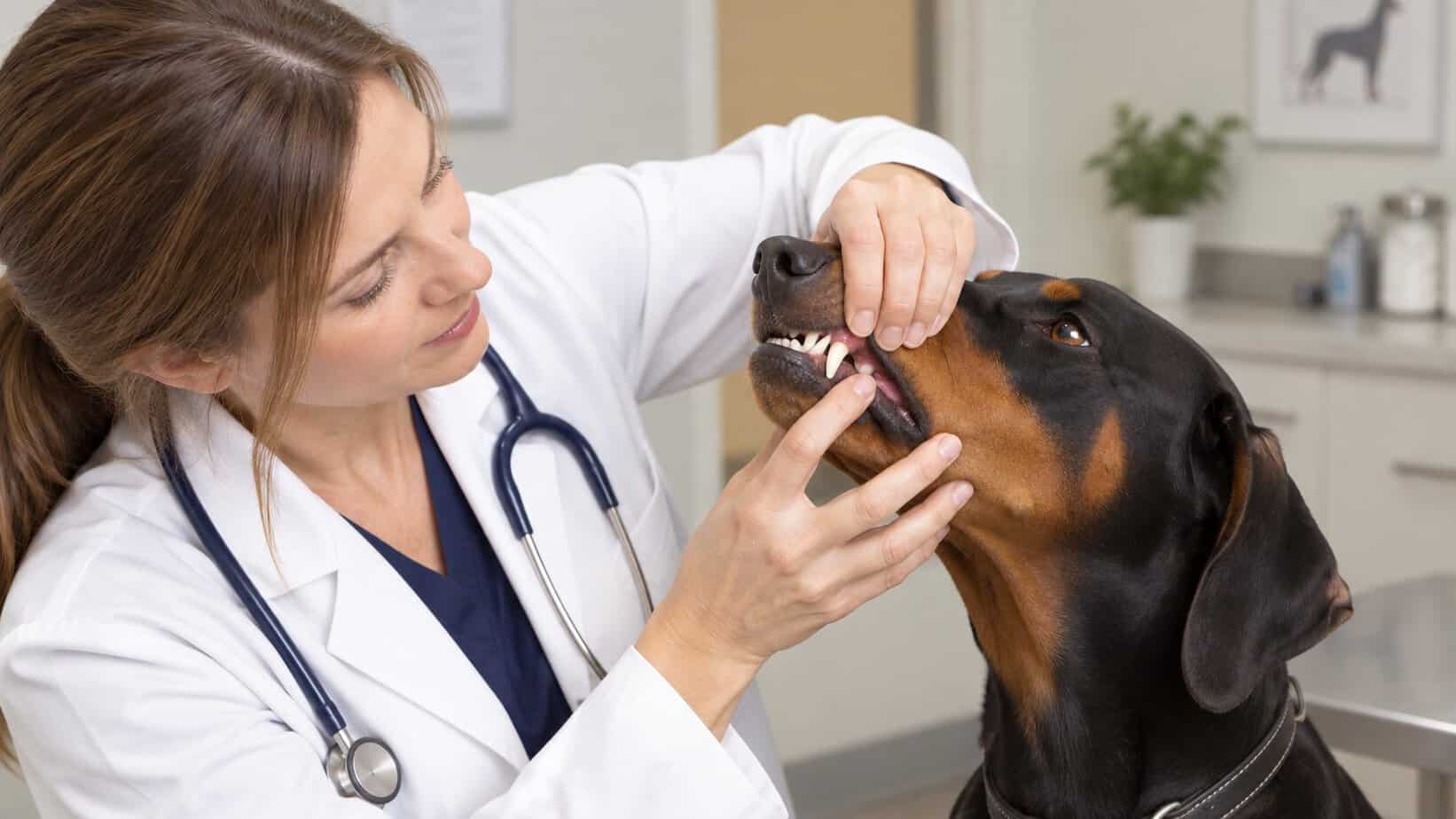
Look at your Doberman’s mouth at least once a week. Lift the lips gently in good light and check both sides. Call your veterinarian if you notice:
- Strong or suddenly worse breath
- Red, swollen, or bleeding gums
- Yellow or brown tartar at the gumline
- Drooling, lip smacking, or pawing at the face
- Chewing on one side or dropping food
- Less interest in food or hard treats
- A loose, discolored, chipped, or broken tooth
- Facial or jaw swelling
- Bloody or one-sided nasal discharge
Cornell’s canine dental guidance lists bad breath, trouble eating, oral bleeding, drooling, and facial swelling among the signs that need veterinary attention [1]. Dogs often keep eating even when their mouths hurt, so a normal appetite does not rule out dental pain.
A Simple Doberman Dental Care Routine
You do not need a complicated shelf of dental products. A dependable routine is more useful than a dozen products used once.
Daily
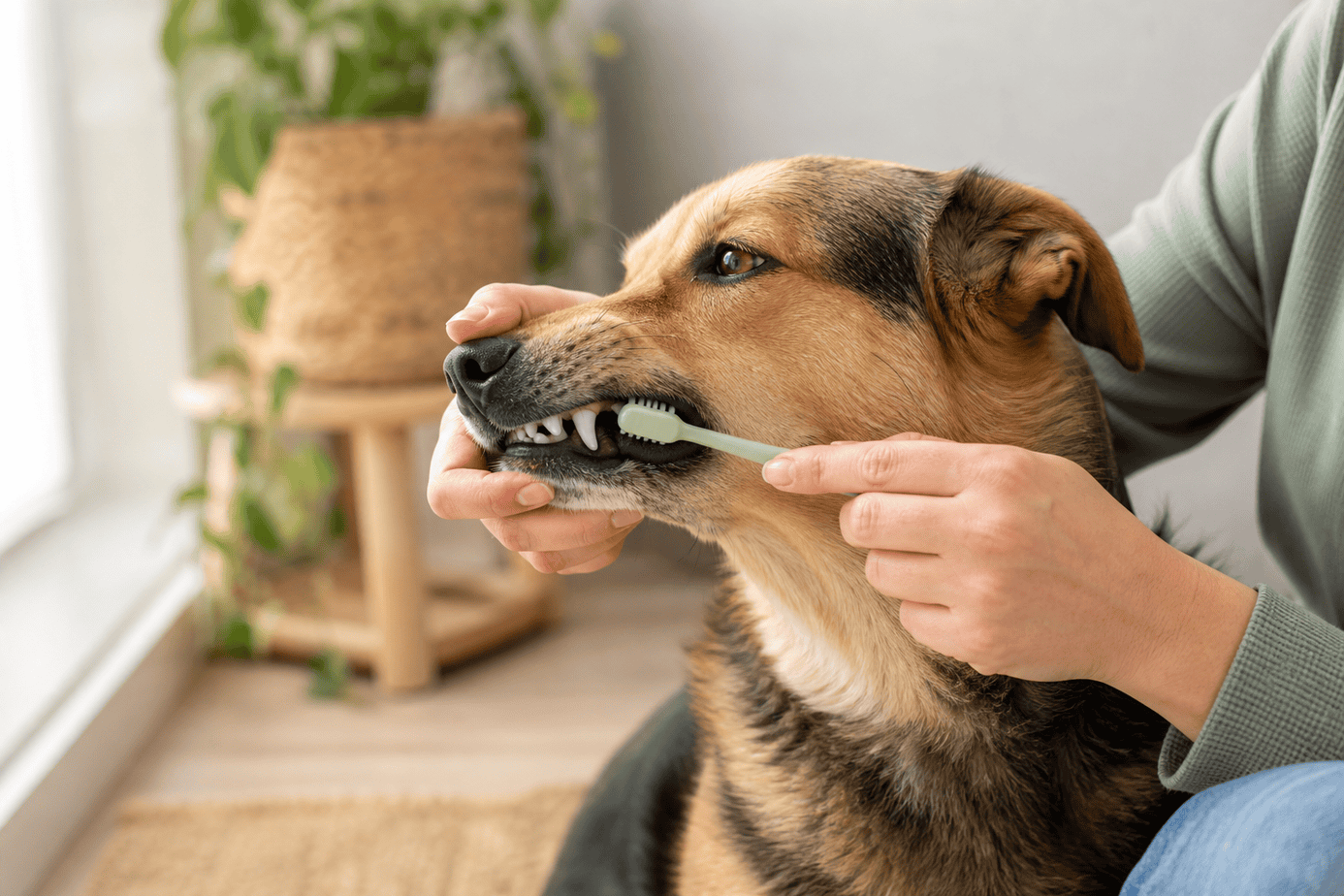
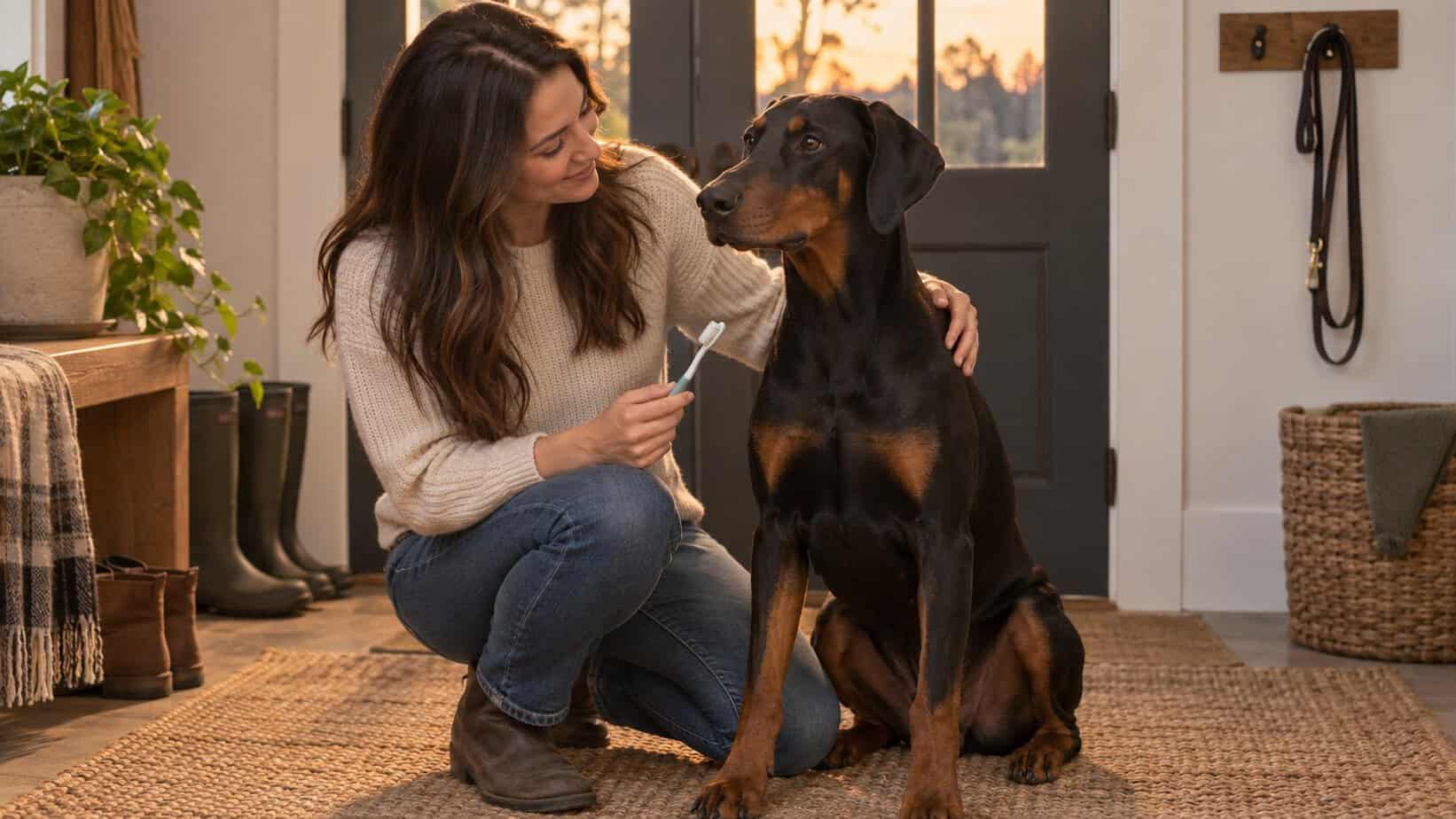
Brush the outer tooth surfaces and gumline. This is the most effective home method for controlling plaque [1]. Keep the session short enough that your dog can succeed. Thirty to sixty seconds per side is a reasonable long-term goal, but five calm seconds is a perfectly good starting point.
If you use an oral probiotic, give it as directed after brushing or at another consistent time. Think of it as microbiome support, not a toothbrush in powder form.
Weekly
Do a quick mouth check. Look for redness, odor, tartar, damaged teeth, or anything caught between the teeth. Wash reusable brushes and replace worn ones. Review chew toys and edible chews for sharp edges, small ends, or changes in hardness.
At Veterinary Visits
Ask for an oral exam during routine care. Your veterinarian can tell you whether home care is keeping up or whether your dog needs a professional dental procedure. The timing should be based on what is actually happening in your Doberman’s mouth, not a rigid once-a-year rule.
How to Brush Your Doberman’s Teeth
Brushing works best when it feels like a familiar handling exercise, not a wrestling match. If your Doberman already has a painful mouth, start with an exam. Forcing a brush against inflamed gums or a fractured tooth can make the fear and pain worse.
What You Need
Use a soft dog toothbrush, a small soft human toothbrush, or a finger brush if that gives you better control. Choose toothpaste made for dogs. Human toothpaste may contain ingredients that dogs should not swallow.
Keep a few small rewards nearby. The reward can be praise, a favorite activity, or a tiny piece of your dog’s usual food. The goal is to make cooperation worthwhile without turning dental care into a sugary snack event.
A Seven-Step Brushing Method
- Let your dog lick a small amount of dog toothpaste from your finger.
- Gently touch the lips and muzzle, then reward calm behavior.
- Lift one lip and rub the outer teeth with your finger or gauze.
- Introduce the brush for only a few seconds.
- Angle the bristles toward the gumline and use small, gentle circles.
- Focus on the outside surfaces, especially the back teeth. You do not need to pry the mouth wide open.
- Stop while your dog is still doing well, then build time gradually.
Daily brushing gives the best plaque control. If every day is not realistic yet, brush as often as you can while you train toward a daily habit. The World Small Animal Veterinary Association’s dental guidelines place plaque control at home, especially toothbrushing, alongside regular professional assessment [2].
If your dog resists, break the process into smaller steps. Spend several days only touching the muzzle. Then lift the lip. Then use a finger. Progress may feel slow, but calm repetition usually gives you a routine you can keep.
Diet, Oral Probiotics, and the Mouth
I prefer to support the whole dog with fresh, minimally processed food that is properly balanced for that individual. Food alone does not scrub the gumline clean, and a crunchy texture is not the same as brushing. Still, a thoughtful diet can help you avoid sticky, heavily sweetened extras and can fit naturally into a broader wellness plan.
Offer clean water throughout the day. If you change food, treats, supplements, or dental products, change one thing at a time when possible. That makes it easier to notice digestive upset, itching, or another reaction.
ProBiora as an Optional Add-On
The mouth has its own community of microbes. That makes oral probiotics and postbiotics an interesting area of research. In a small randomized, placebo-controlled study, a canine oral postbiotic reduced measured odor compounds over 14 days [3]. That is promising, but it does not prove that every oral probiotic prevents periodontal disease or replaces brushing and professional care.
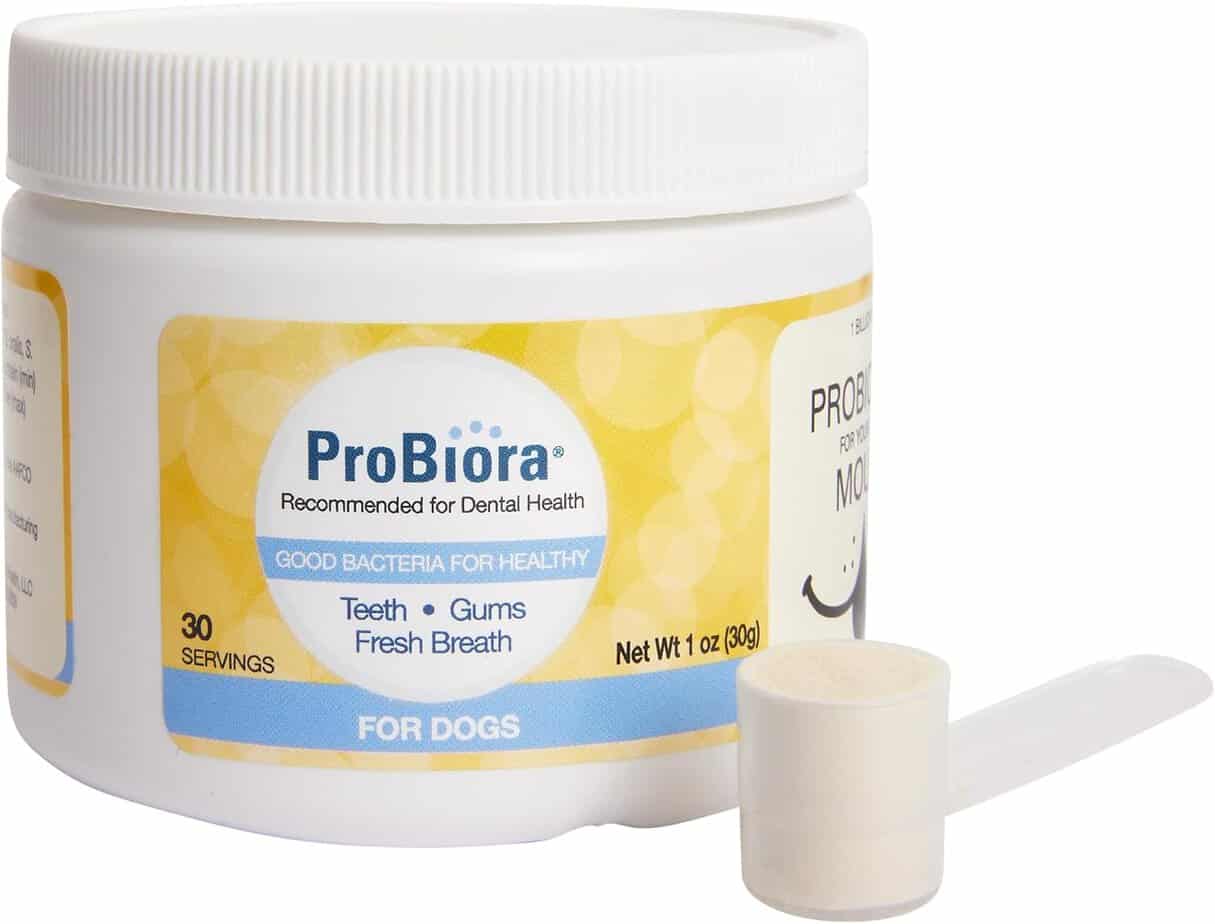
Dr. Candy’s Pick
ProBioraPet Oral Probiotic for Pets
A flavorless oral probiotic powder intended to support healthier teeth and gums and fresher breath. Use it consistently as an add-on to brushing and veterinary care, not as a replacement for either.
If breath stays foul, do not keep adding more powder. Have the mouth examined.
Natural Chews: Benefits and Real Risks
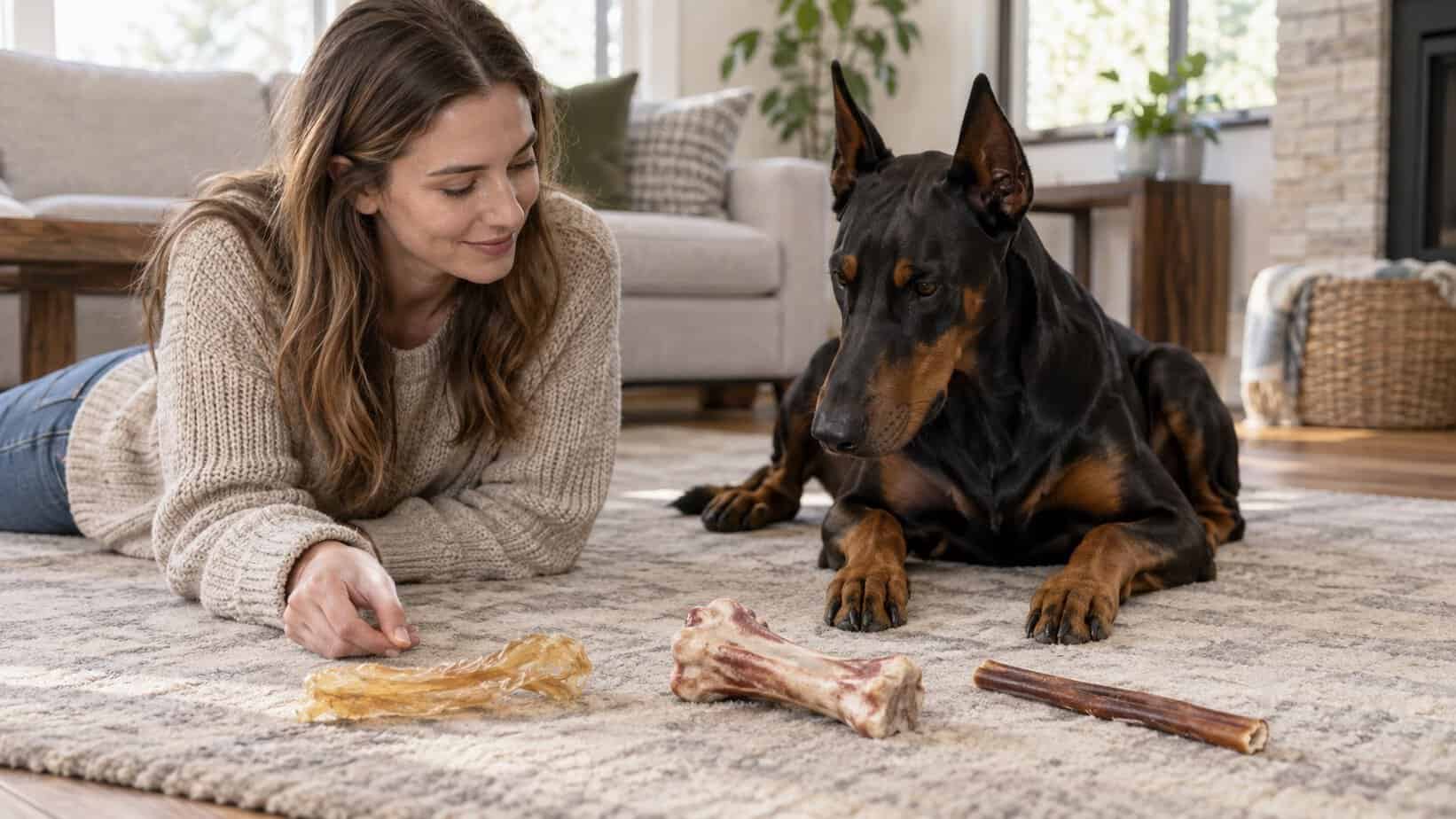
Chewing can provide enrichment and may mechanically rub some tooth surfaces. It does not clean every surface, and it cannot reach disease below the gumline. The hardest part is finding a chew that gives your Doberman satisfying resistance without asking the tooth to win a strength contest against something harder than enamel.
A short study in 12 adult Beagles found that autoclaved beef bones removed a substantial amount of visible calculus over 13 days. No tooth fractures or intestinal obstructions were observed during that brief study, although some gum lesions and retained fragments occurred [4]. That is useful evidence of mechanical cleaning, but it is not a guarantee that bones are safe for every dog. Real-world chewing style, bone shape, dental health, and exposure time vary widely.
Beef Tendons
Beef tendons are one of my favorite single-ingredient options for dogs that chew steadily rather than trying to crush everything in one bite. Choose a size your Doberman cannot swallow whole. Supervise closely and remove the last small piece.
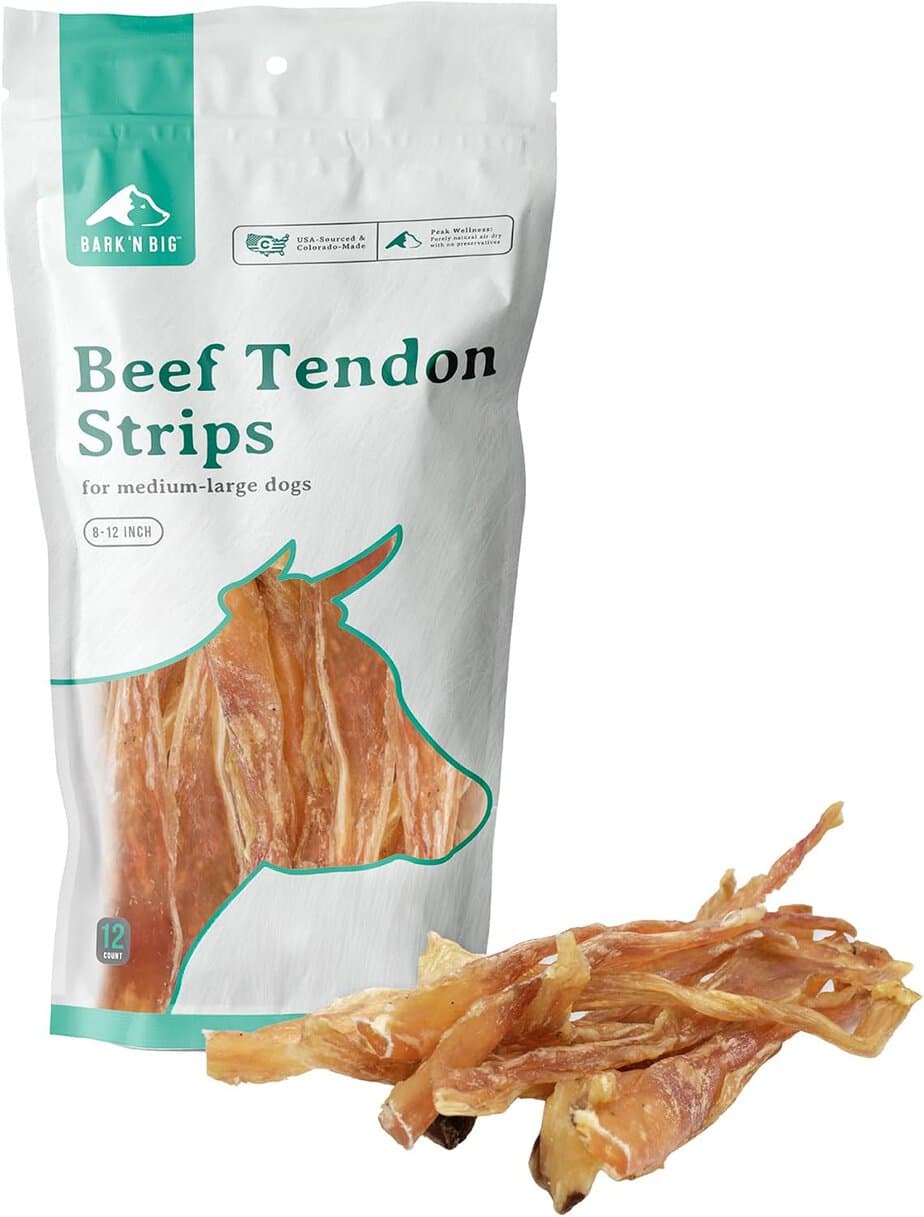
Recommended Chew
BARK’N BIG Beef Tendons
Single-ingredient beef tendon chews that fit the simple, animal-based approach many owners want. Choose a size your Doberman cannot swallow whole, supervise every session, and remove the final small piece.
Raw Marrow Bones
Raw marrow bones are a traditional choice, and I understand why many dogs love them. They are also very hard. A powerful Doberman can fracture a premolar on a bone that seems perfectly normal.
If you choose raw marrow bones, select one that is much larger than your dog can swallow, use short supervised sessions, and inspect the teeth afterward. Avoid weight-bearing bones that are rock hard, saw-cut edges, and any bone that splinters. Skip bones entirely for dogs with worn teeth, crowns, known fractures, painful gums, or a history of gulping.
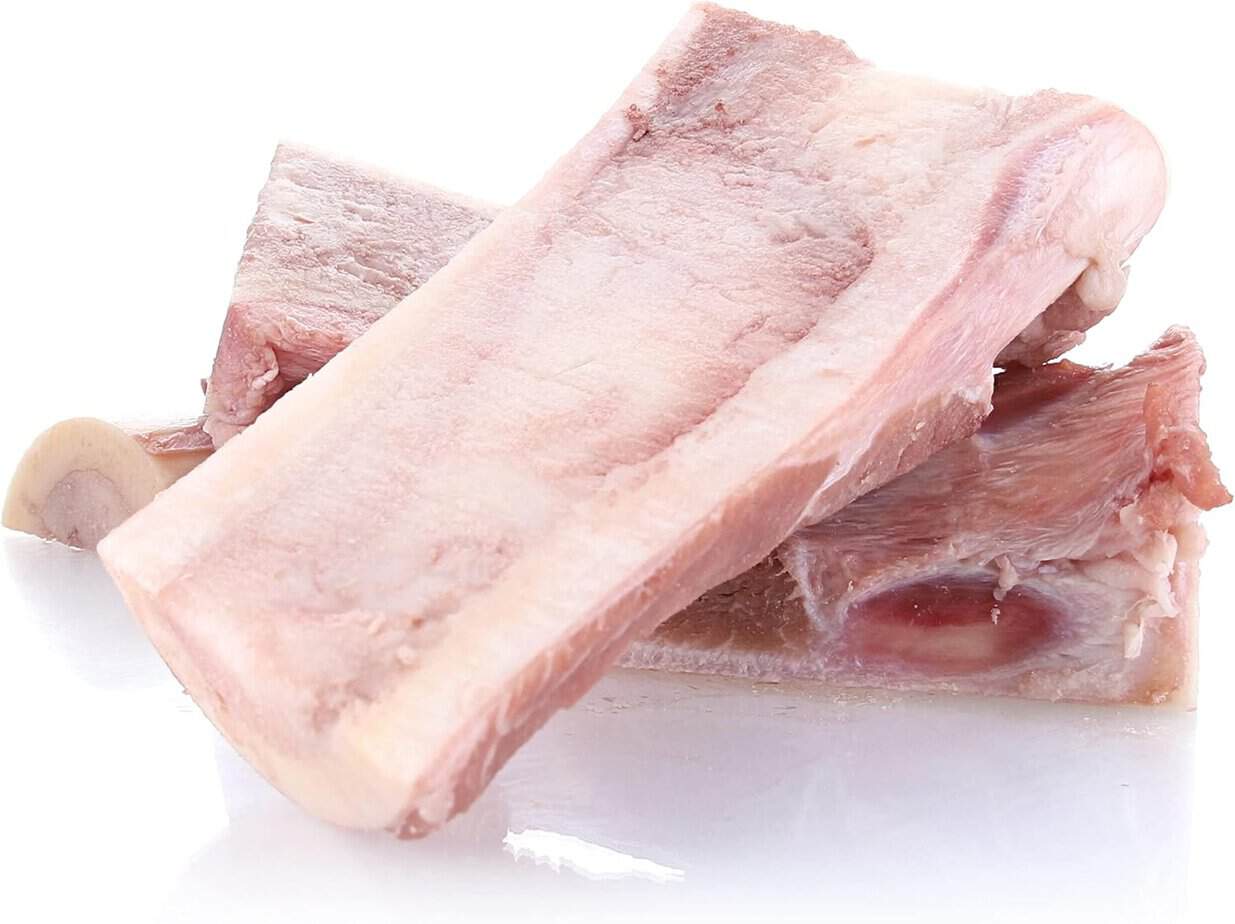
Use With Extra Caution
Raw Paws Split Beef Marrow Bones
Frozen split beef marrow bones. These are very hard, so use only with careful individual selection, brief supervision, and veterinary guidance. Skip them for dogs with worn, crowned, painful, or damaged teeth.
Bully Sticks
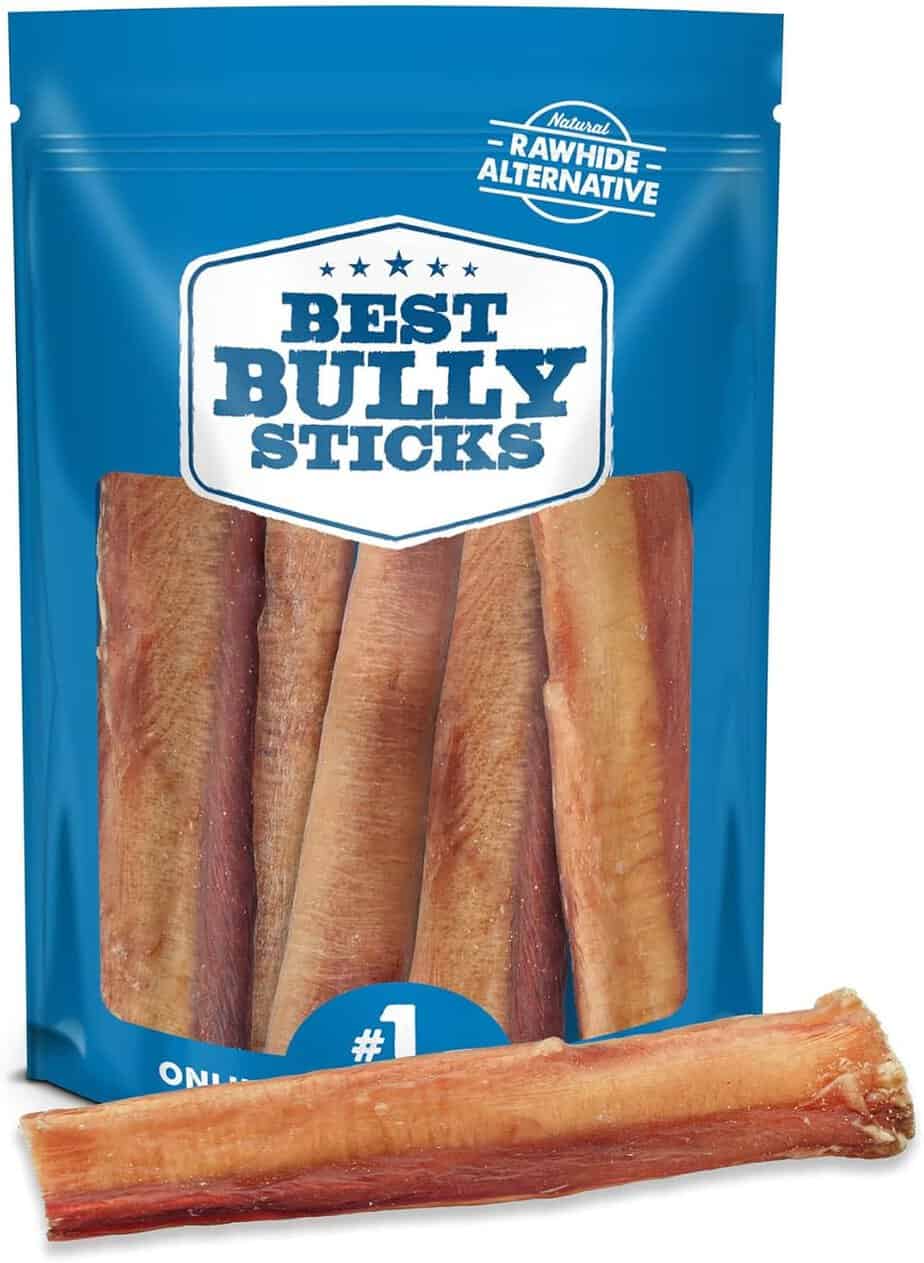
Bully sticks are generally more forgiving than dense bone, although they still carry choking and digestive risks. Choose a thick, appropriately sized chew, use a holder if your dog tends to swallow the end, and take the chew away when it becomes small.
Recommended Chew
Best Bully Sticks Thick Bully Sticks
Thick, single-ingredient beef pizzle chews. Size them appropriately, supervise every session, use a holder for dogs that gulp, and remove the final small piece.
A Simple Chew-Safety Rule
If a chew feels like a stone, does not give at all, or would hurt if you tapped it against your kneecap, it is too hard for a tooth-saving routine. No natural label makes a chew automatically safe. Supervision, the right size, and your individual dog’s chewing style matter more than marketing.
Stop the chew and check the mouth if your Doberman suddenly yelps, drops it, starts chewing on one side, or develops blood around a tooth. A fractured tooth needs veterinary care even if your dog goes back to eating.
When Your Doberman Needs Professional Dental Care
Brushing removes soft plaque. It does not remove established tartar, clean a periodontal pocket, or show what is happening beneath the gumline. Once disease is present, a professional dental procedure is the appropriate next step.
What a Professional Cleaning Includes
A complete veterinary dental procedure is more than scraping visible tartar from an awake dog. It typically includes anesthesia, a full oral examination, cleaning above and below the gumline, polishing, probing around the teeth, and dental radiographs when indicated. Damaged or unsupported teeth may need extraction or another treatment. Cornell explains that a thorough exam and dental X-rays require anesthesia and that cleaning must reach both above and below the gumline [1].
Anesthesia allows the team to protect the airway, examine every surface, take clear radiographs, and treat painful problems safely. “Anesthesia-free” scraping may make the crown look cleaner while leaving disease under the gumline untouched.
Anesthesia and Older Dogs
Age alone does not decide whether a dental procedure is appropriate. A 13-year-old Doberman and a healthy 7-year-old can have very different risks. Your veterinarian weighs the mouth’s disease burden against the dog’s heart, kidneys, liver, medications, physical exam, and pre-anesthetic test results.
Ask how the team will evaluate your dog before anesthesia, monitor blood pressure and oxygenation, control pain, and support recovery. A thoughtful plan weighs the discomfort and damage from untreated dental disease against the anesthetic risk for this individual dog.
Final Thoughts
Good Doberman dental care is not about finding one miracle chew. It is a rhythm: brief daily brushing, a weekly look inside the mouth, thoughtful food and chew choices, and professional care when the gums or teeth show disease.
Start small tonight. Let your dog taste canine toothpaste, lift one lip, and brush for a few seconds. If the breath is strong or you see tartar, redness, pain, or a damaged tooth, make the oral exam the first step. A comfortable mouth is worth protecting.
Frequently Asked Questions
Daily is best because plaque forms continually. If your dog is new to brushing, begin with a few seconds several times a week and build toward daily care. Consistency matters more than making the first sessions perfect.
No. Brushing can remove soft plaque, but hardened tartar and disease below the gumline need professional treatment. Do not chip tartar off with a metal tool. You can injure the enamel or gums and miss deeper disease.
They can be a reasonable add-on. Early canine research suggests some oral postbiotics may reduce odor, but product formulas differ. Use a probiotic alongside brushing and veterinary care, not in place of them.
No bone is risk-free. Some dogs chew bones without an obvious problem, while others fracture teeth or swallow pieces. A short supervised study found calculus reduction without fractures, but it involved only 12 Beagles and a controlled setting [4]. If you use a bone, choose carefully, supervise, limit the session, and stop at the first sign of pain or damage.
Anesthesia always has risk, but age by itself is not a diagnosis. A pre-anesthetic exam, appropriate testing, an individualized protocol, careful monitoring, and trained staff help manage that risk. Untreated dental disease also causes pain and can worsen. Ask your veterinarian to explain the risk-benefit plan for your dog.
References
[1] Cornell University College of Veterinary Medicine. (n.d.). Dental disease and home dental care.
[2] Niemiec, B. A., Gawor, J., Nemec, A., et al. (2020). World Small Animal Veterinary Association global dental guidelines. Journal of Small Animal Practice, 61(7), E36-E161.
[3] Sordillo, A., Casella, L., Turcotte, R., & Sheth, R. U. (2025). A novel postbiotic reduces canine halitosis. Animals, 15(11), 1596.
[4] Pinto, C. F. D., Lehr, W., Pignone, V. N., Chain, C. P., & Trevizan, L. (2020). Evaluation of teeth injuries in Beagle dogs caused by autoclaved beef bones used as a chewing item to remove dental calculus. PLOS ONE, 15(2), e0228146.
A note about your dog’s health
This article provides general education and does not replace an examination, diagnosis, or individualized advice from your veterinarian. Contact a veterinary professional if you are concerned about your dog’s symptoms.

ABOUT THE AUTHOR