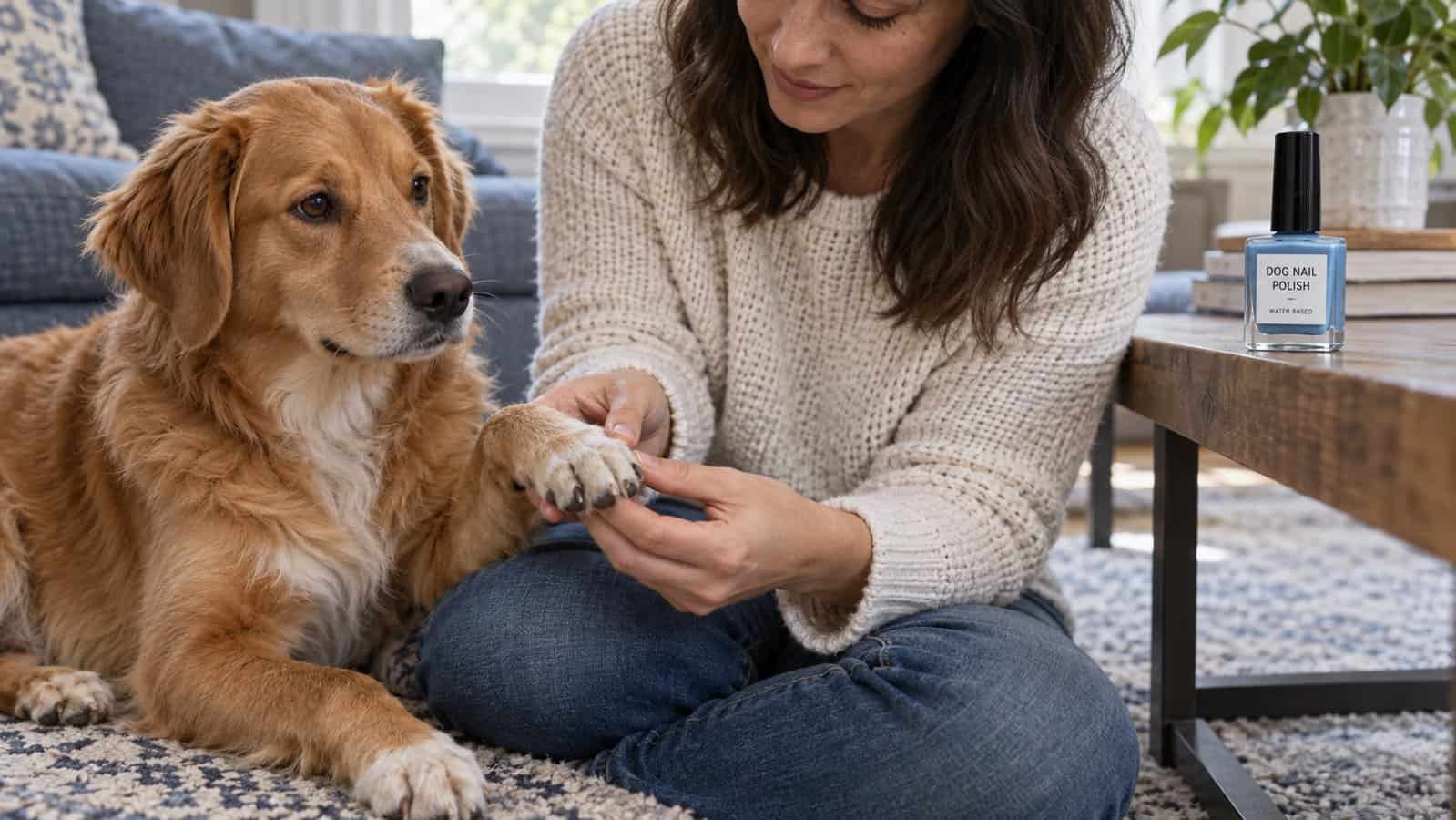
Human nail polish is not my first choice for dogs. A tiny, fully dried spot is unlikely to create the same risk as swallowing liquid polish, but human formulas are not made for dogs that lick their paws, chew their nails, or react to strong odors. If you want colorful paws, choose a product labeled for dogs, read its ingredient list, use it in fresh air, and prevent licking until it is completely dry.
The bigger concern is exposure, not the color itself. Wet polish can be licked or spilled. Vapors can bother a sensitive dog. Remover adds another chemical exposure. I would rather skip the human manicure and use a simple, pet-specific option only when the dog is relaxed and comfortable.
Why Human Nail Polish Is a Poor Choice for Dogs
Nail polish formulas vary. That matters because broad claims such as “every human polish is toxic” are not accurate. The U.S. Food and Drug Administration explains that nail products may contain different solvents, resins, plasticizers, colorants, and other ingredients. Some can irritate the skin or cause harm if swallowed, even though the products are intended for normal human nail use [1].
Dogs use their paws differently from people. They lick between their toes, chew at an itchy nail, walk on freshly painted surfaces, and sometimes investigate a dropped bottle before we can pick it up. Those habits create exposure routes that a human cosmetic label does not account for.
The practical answer is simple: do not use a human product just because it says “free from” one or two ingredients. A “3-free,” “5-free,” or “non-toxic” marketing claim does not automatically make a polish appropriate for dogs. Read the full label and use only a formula specifically labeled for canine use.
What About Formaldehyde, Toluene, and DBP?
You may see warnings about a “toxic trio” of formaldehyde, toluene, and dibutyl phthalate, or DBP. Those ingredients have appeared in some nail products, but not every bottle contains all three. The FDA notes that formaldehyde can be present in some hardeners and polishes, that toluene use has declined, and that DBP was found in only a small number of products in an older agency survey [1].
That nuance should not be mistaken for a green light. We do not have to prove that every human polish is dangerous before choosing the lower-risk option. The product was designed for human nails, while your dog may lick it, chew it, or inhale concentrated fumes close to the floor.
Are Nail Polish Fumes Harmful to Dogs?
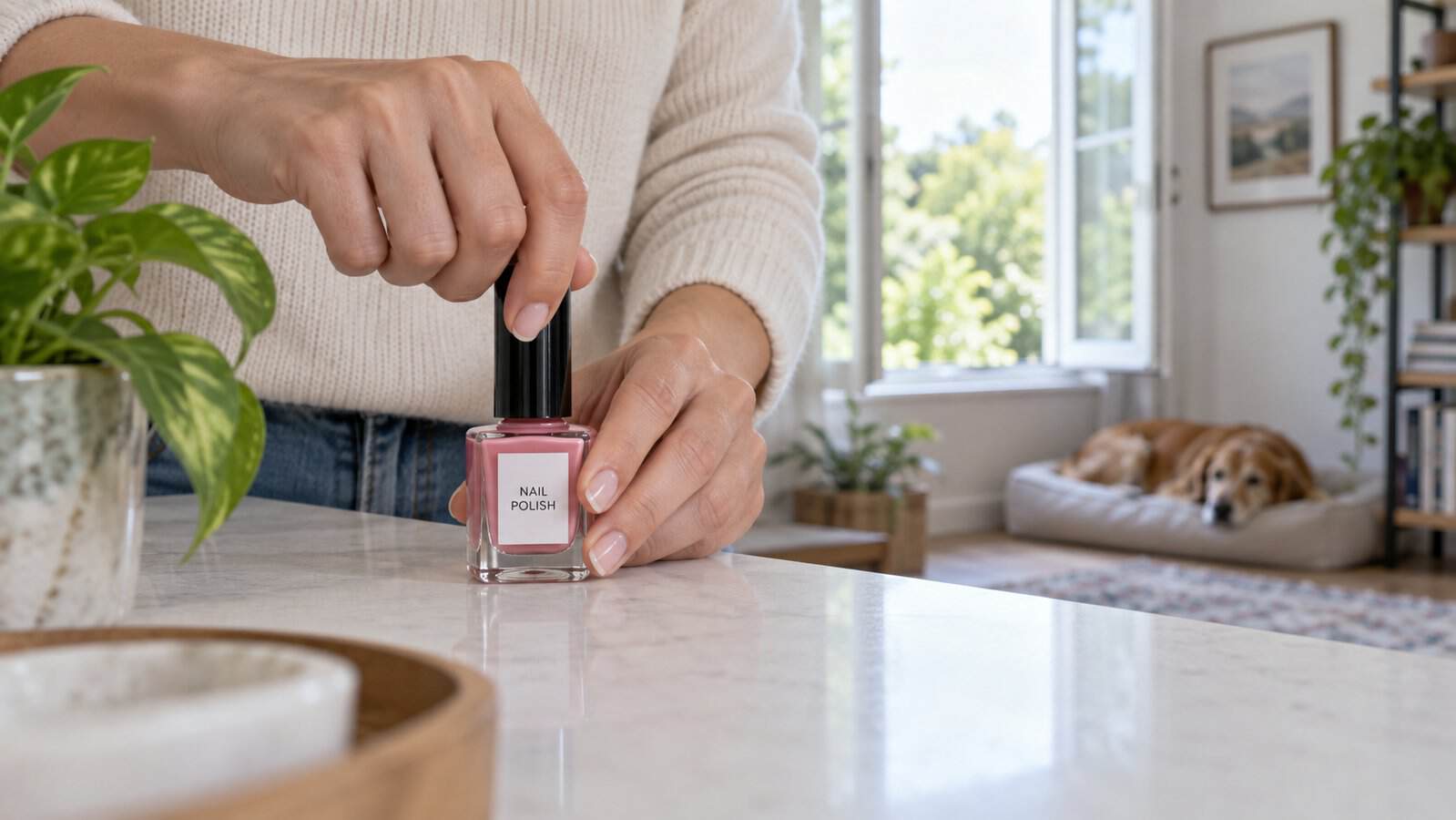
Strong polish or remover odors can irritate the eyes, nose, and airways. The safest setup is a well-ventilated room with the bottle capped between coats. If the odor seems strong to you, move your dog away and air out the space.
Stop the session if your dog coughs, sneezes repeatedly, drools, paws at the face, seems unsteady, or acts distressed. Move to fresh air and call your veterinarian or a pet poison service for guidance. A dog with trouble breathing, collapse, seizures, or rapidly worsening signs needs urgent veterinary care.
What If My Dog Licked or Swallowed Nail Polish?
Do not panic, but do not guess. The right response depends on the product, amount, timing, and your dog’s size and symptoms.
- Move your dog away from the spill and close the container.
- Wipe fresh product from the mouth or fur with a damp cloth if you can do so safely. Do not scrub the eyes or force water into the mouth.
- Save the bottle or take clear photos of the front label, ingredient list, and product number.
- Call your veterinarian, Pet Poison Helpline at 855-764-7661 [3], or ASPCA Animal Poison Control Center at 888-426-4435.
- Do not induce vomiting and do not give milk, oil, salt, or another home antidote unless a veterinary professional tells you to do so.
Cornell’s veterinary first-aid guidance recommends having the brand, ingredients, estimated amount, exposure time, and your dog’s weight ready when you call. A poison expert can help decide whether home monitoring is reasonable or an examination is needed [2].
Watch for vomiting, repeated drooling, coughing, breathing changes, weakness, wobbliness, unusual sleepiness, tremors, or seizures. These signs are not specific to nail polish, but they warrant prompt professional advice after a known exposure.
When the Polish Is on Fur or Skin
Keep your dog from licking the wet area. Blot gently with a damp cloth and mild dog shampoo, then rinse well. Avoid acetone, paint thinner, or other harsh solvents on the coat or skin. If polish is stuck near the eye, mouth, an open wound, or deeply between the toes, call your veterinary clinic before trying to remove it.
Is Dog Nail Polish Safer?
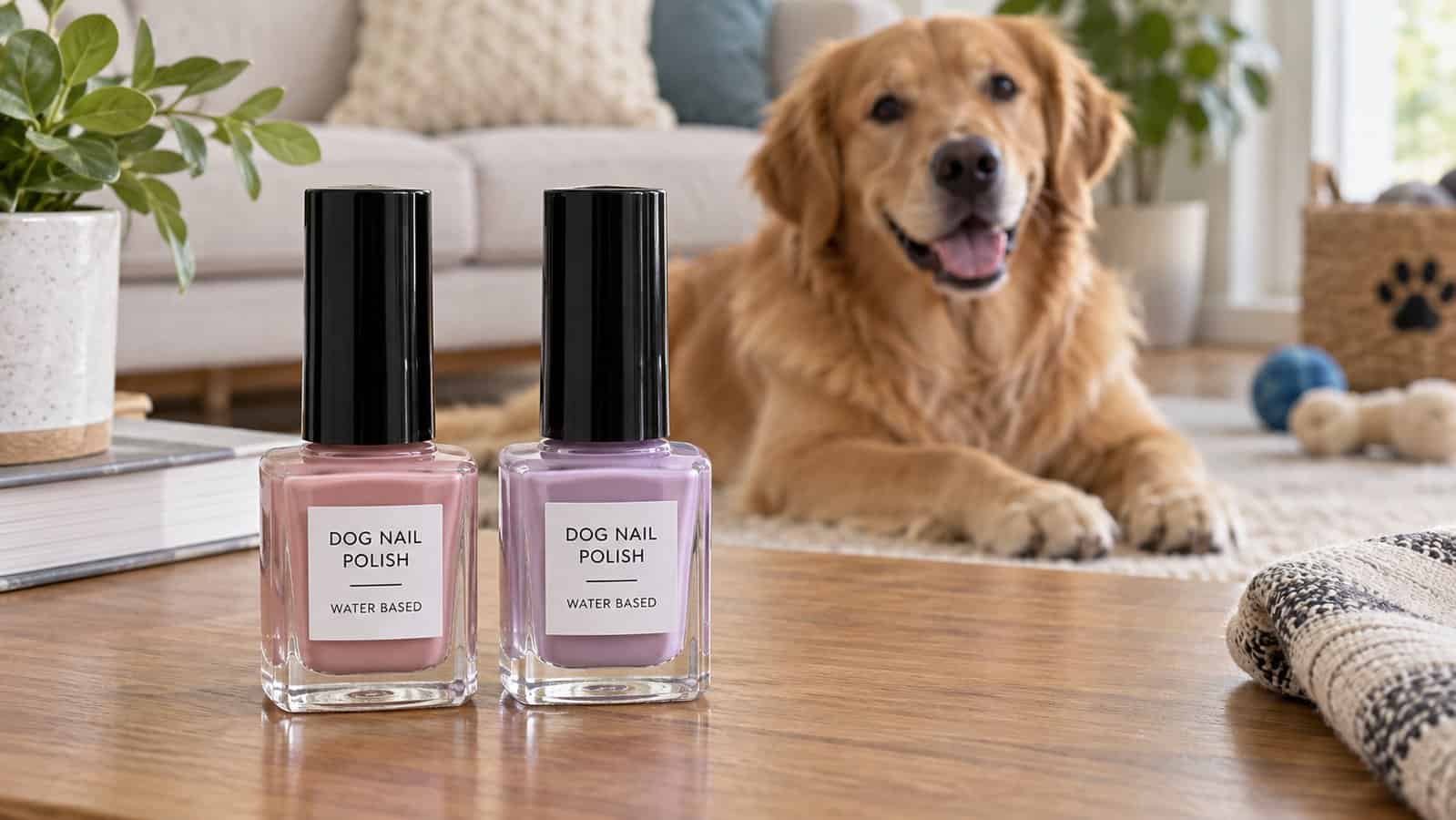
A product made and labeled for dogs is the better choice, but “pet-safe” does not mean risk-free. Look for a water-based, low-odor formula with a complete ingredient list and clear directions. Avoid products with missing labels, vague ingredients, or instructions that depend on acetone for removal.
Check the label each time you buy. Formulas can change, and two products with similar names may have different ingredients. If your dog has allergies, irritated paws, cracked nails, or a history of licking, skip the polish and let the paws heal first.
Dog nail polish pens can be easier to control than an open bottle because they reduce drips and drying time. The existing Healthy Happy Dogs recommendation for painting your dog’s nails can still be useful when the specific product is labeled for dogs and used exactly as directed.
A Quick Product Checklist
| Look for | Skip or question |
|---|---|
| Labeled specifically for dogs | Human-only cosmetic directions |
| Complete ingredient list | Missing or vague ingredients |
| Water-based, low-odor formula | Strong solvent odor |
| Fast-drying directions | Long wet time that invites licking |
| Clear removal instructions | Acetone required for removal |
| Intact seal and current label | Old, separated, or unlabeled product |
How to Apply Dog Nail Polish Safely
Pretty paws are optional. Comfort is not. If your dog dislikes paw handling, pulls away, pants, freezes, growls, or repeatedly licks the lips, stop. A color is never worth forcing a fearful dog through the process.
For a dog who is comfortable with paw care, use this gentle routine:
- Read the product label from start to finish.
- Choose a ventilated room and protect the floor with a washable towel.
- Inspect each paw. Do not paint cracked, bleeding, inflamed, or infected nails.
- Clean and dry the nails. Trim only if your dog is already comfortable with nail care.
- Test one nail first, especially if your dog has sensitive skin.
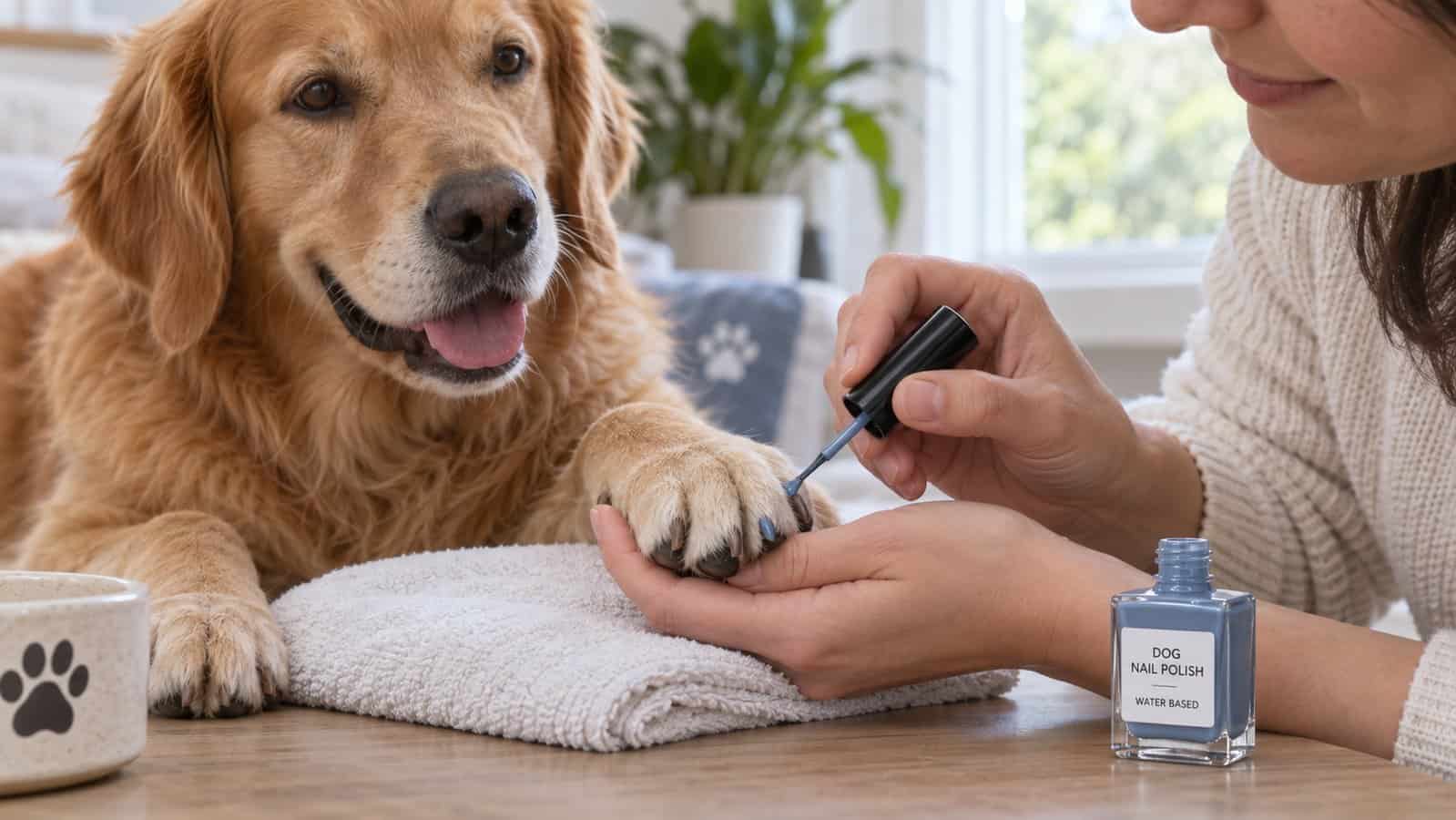
- Apply one thin coat to the nail only. Keep polish off the cuticle, skin, paw pads, and fur.
- Keep the paw still with calm handling and food rewards until the coat is fully dry.
- Prevent licking and watch for redness, swelling, itching, or discomfort.
Short sessions work best. You can paint one paw, take a break, and decide whether your dog wants to continue. That slower pace often looks less glamorous in the moment, but it protects trust and makes future paw care easier.
How to Remove Polish From a Dog’s Nails
Follow the pet-product label. Water-based polish may soften with warm water or come off with the manufacturer’s remover. Use the smallest amount needed, keep it off the skin, and work in a ventilated area.
Do not reach for human acetone remover by default. It can be irritating, has strong fumes, and gives your dog another substance to lick. Never peel or scrape hard polish from a damaged nail. If the polish will not come off without force, contact the manufacturer or ask your veterinarian or groomer for a safer plan.
After removal, wash and dry the paws. Look for redness, cracking, swelling, odor, discharge, or pain. Those signs may reflect irritation, infection, or a nail injury rather than a cosmetic problem.
When to Skip the Pawdicure
Leave the nails bare if your dog has:
- A cracked, split, bleeding, or loose nail
- Red or swollen nail folds
- An open sore between the toes
- Frequent paw licking or chewing
- A known contact allergy
- Breathing disease that makes strong odors hard to tolerate
- Fear or distress during paw handling
If the paw is painful or infected, polish can hide changes you need to see. Treat the health issue first. Color can wait.
Final Thoughts
Human nail polish is not the safest choice for dogs because its ingredients, fumes, and removal process were not designed around canine behavior. If you want to add color, use a clearly labeled dog nail product, keep the room ventilated, apply a thin coat only to healthy nails, and prevent licking until everything is dry.
When a spill or ingestion happens, save the label and call for advice instead of trying a home remedy. Most cosmetic plans can be postponed. A calm dog, healthy paws, and a clear view of the nails matter much more than a perfect finish.
Frequently Asked Questions
I do not recommend it. Even short wear time includes wet polish, fumes, licking risk, and removal. A product labeled for dogs is the better option.
Not every small lick causes poisoning, but the formula and amount matter. Save the bottle and call your veterinarian or a pet poison service for product-specific advice. Seek urgent care for breathing trouble, collapse, seizures, or rapidly worsening signs.
Avoid human acetone remover unless a veterinary professional or the dog-product manufacturer specifically directs you to use it. Follow the pet polish label and keep any remover off the skin, eyes, mouth, and paw pads.
Water-based and dog-labeled is a better starting point, but no cosmetic should be treated as food. Prevent licking until the polish is fully dry, and call for advice if your dog swallows wet product.
Yes, if the nails and surrounding skin are healthy and your dog accepts paw handling. Some colors may need a dog-labeled base coat to show clearly. Keep every layer thin and allow it to dry fully.
References
- U.S. Food and Drug Administration. (2023, November 15). Nail care products.
- Cornell University College of Veterinary Medicine. (n.d.). First aid for poisonous substances.
- Pet Poison Helpline. (n.d.). Pet poison control.
A note about your dog’s health
This article provides general education and does not replace an examination, diagnosis, or individualized advice from your veterinarian. Contact a veterinary professional if you are concerned about your dog’s symptoms.

ABOUT THE AUTHOR