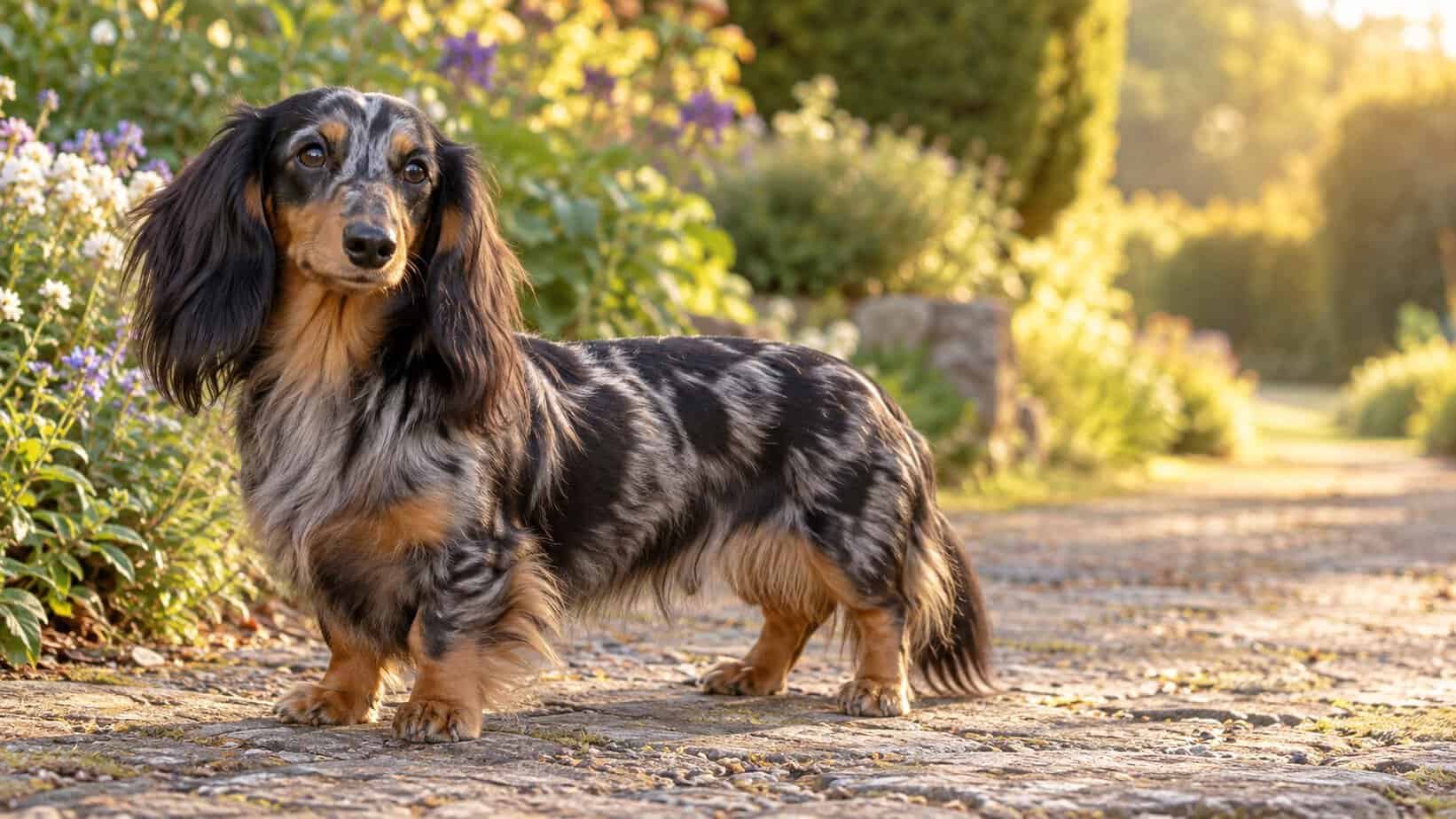
A long-haired dapple Dachshund is a Dachshund with two separate traits: a flowing long coat and the dapple, or merle, color pattern. It is not a separate breed, and the word “dapple” does not tell you whether the dog is standard or miniature.
These little hounds get attention for their marbled coats, feathered ears, and sometimes blue or partly blue eyes. The pretty pattern is only part of the story, though. If you are thinking about bringing one home, it is just as important to understand the genetics behind dapple, the health risks of double dapple, the daily coat care, and the questions a responsible breeder should answer.
What Makes a Long-Haired Dapple Dachshund?
It helps to separate four traits that are often blended together in puppy listings.
| Trait | What it means | What it does not tell you |
|---|---|---|
| Breed | Dachshund | Exact adult size or personality |
| Size | Standard or miniature | Coat type or color pattern |
| Coat | Long-haired, with feathering | Base color or dapple status |
| Pattern | Dapple, also called merle | Health or temperament by itself |
In the United States, the American Kennel Club recognizes standard and miniature Dachshunds. Miniatures are 11 pounds or under at 12 months old. Standards are usually 16 to 32 pounds. Dogs between those weights are often casually called “tweenies,” but that is not a third official size.
The long coat has soft feathering around the ears, chest, underside, backs of the legs, and tail. Dapple describes lighter, irregular patches mixed into a darker base color. A puppy can inherit the long coat without dapple, dapple without the long coat, or both.
What the Dapple Pattern Looks Like
No two dapple coats look exactly alike. One dog may have bold silver areas across a black-and-tan coat. Another may have subtle lighter patches that are easy to miss, especially on red.
Official color names vary by kennel club. The Royal Kennel Club lists red dapple, silver dapple and tan, and chocolate and tan dapple among accepted colors for the long-haired variety. Whatever the label, health and temperament matter more than color.
Some dapple Dachshunds have one blue eye, two blue eyes, or an eye with both blue and brown. That can be a normal effect of merle pigment. Eye color alone does not prove that a dog is healthy or unhealthy. A veterinarian and, when appropriate, a veterinary ophthalmologist should evaluate the dog itself.
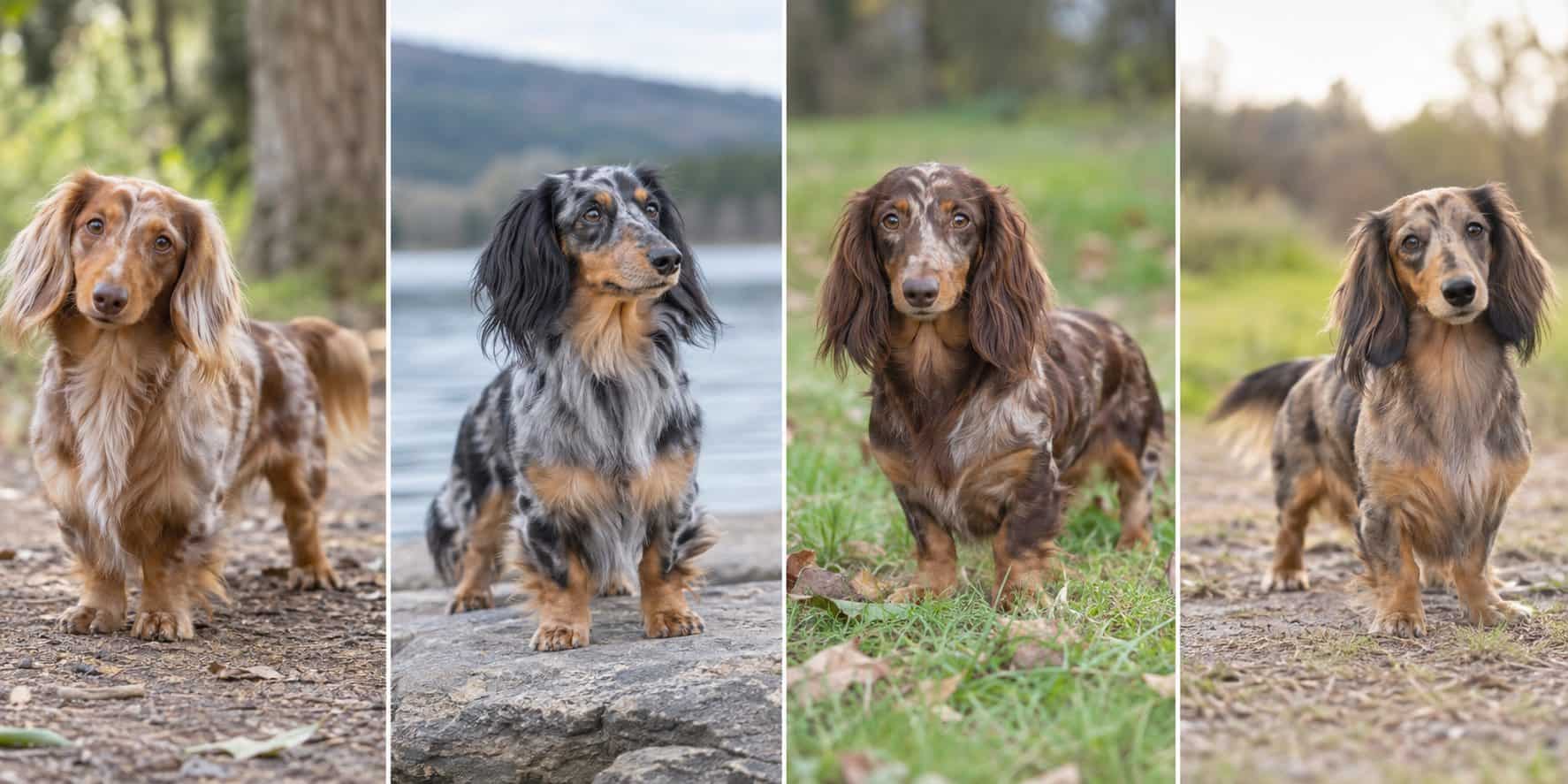
You may see dapple puppies advertised as “rare.” That word is often marketing, not a reliable measure of how uncommon a pattern is. Ask for health information before you ask about exclusivity.
Dapple Genetics and Double-Dapple Risk
Dapple is the Dachshund name for the merle pattern. UC Davis Veterinary Genetics Laboratory explains that merle is linked to a variable insertion in the PMEL gene. The pattern can range from obvious mottling to little or no visible dappling.
| Status or pairing | Possible outcome | Why it matters |
|---|---|---|
| Non-dapple + dapple | Non-dapple or dapple puppies, depending on genetics | Avoids a double-merle pairing only when the first parent is truly non-merle |
| Dapple + dapple | Puppies may inherit merle variants from both parents | Avoid this pairing because double-merle puppies can have serious defects |
| Double dapple | A dog inherited merle variants from both parents | Higher risk of hearing, eye, skeletal, and other problems |
| Cryptic merle | Little or no visible dapple pattern | DNA testing can clarify status when appearance is uncertain |
The most important breeding point is simple: two dogs that carry merle variants should not be paired. Their puppies can inherit two merle copies, commonly called double dapple or double merle. UC Davis reports that double-merle dogs may have hearing, eye, skeletal, and other defects.
This does not make affected dogs less lovable. It does mean the pairing was avoidable and can create serious welfare problems.
A dog can also carry a shorter merle variant while showing little or no visible pattern. This is sometimes called cryptic, phantom, or hidden merle. That is why looking at the coat is not always enough. If a breeder is unsure about a parent’s merle status, DNA testing can help clarify the pairing before breeding.
Temperament and Family Life
Long-haired dapple Dachshunds are still Dachshunds. Many are curious, devoted, funny, alert, and surprisingly bold for their size. Many also have an independent streak. These are tendencies, not promises.
Coat length and dapple pattern do not determine personality. Genetics beyond color, early handling, socialization, training, health, and daily life all shape the dog you live with.
Dachshunds can do well with respectful children, but their long backs and small size call for careful handling. Teach children to sit on the floor for cuddles, support the dog’s chest and rear when lifting, and leave the dog alone while eating or sleeping.
They may live happily with other dogs and cats, especially with thoughtful introductions. Their hunting history can show up as chasing, digging, barking, or intense interest in small animals. Supervision and management are kinder than expecting instinct to disappear.
Grooming a Long-Haired Coat
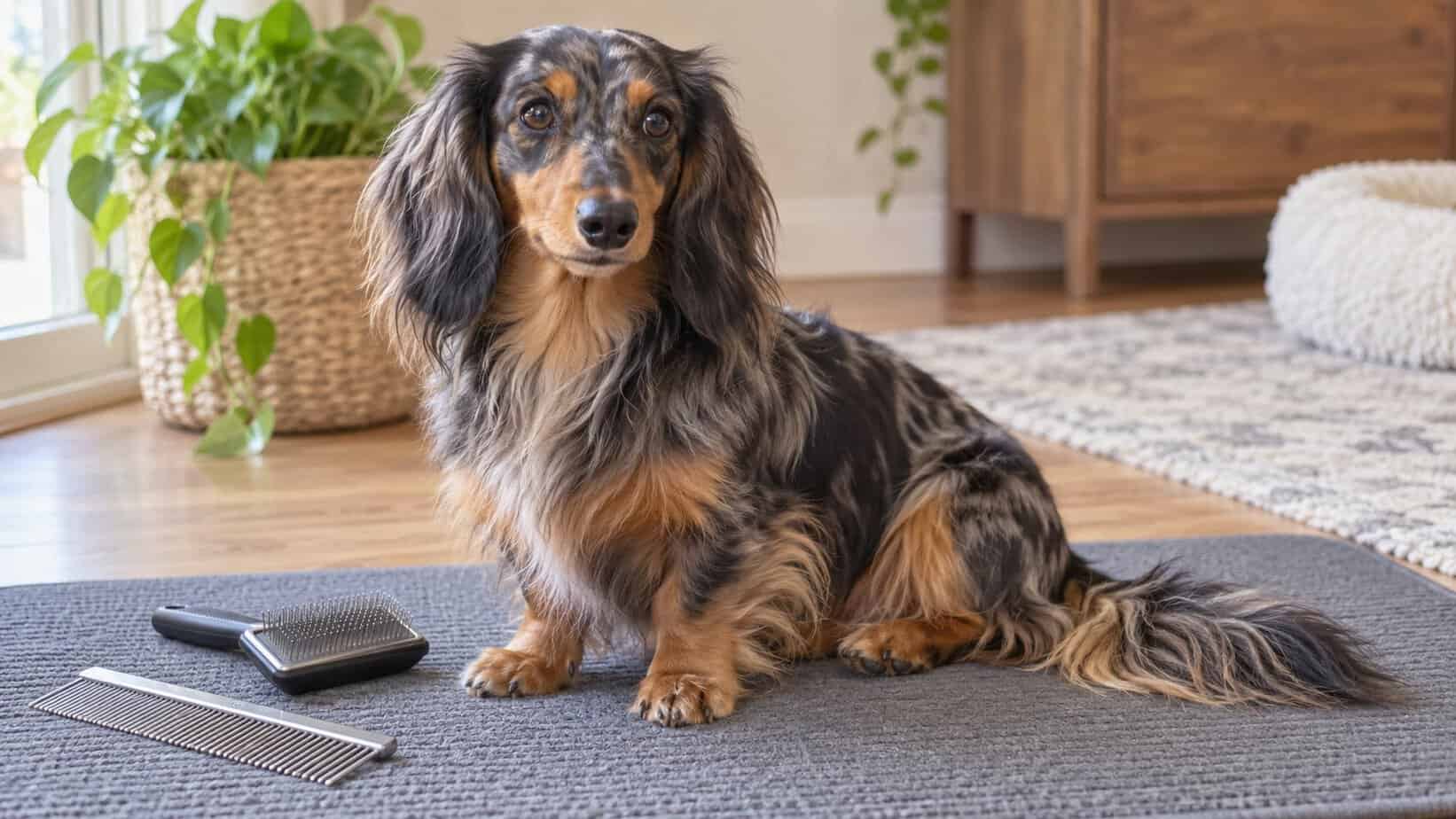
The long coat is not usually difficult, but it is not wash-and-wear. The Royal Kennel Club recommends grooming more than once a week. Some dogs need more frequent brushing during seasonal shedding, after outdoor adventures, or where the feathering tangles easily.
I would pay special attention to these areas:
- Behind and under the ears
- The chest and armpits
- The belly and groin
- The backs of the legs
- The tail feathering
Use a gentle pin brush or slicker suited to the coat, then check your work with a metal comb. Start near the ends of a tangle and work toward the skin. Pulling from the root can hurt and can teach a dog to avoid grooming.
Baths are needed when the coat is dirty, greasy, or smelly. Dry the long feathering well. Check the ears for redness, odor, discharge, or soreness, but do not put cleaners into an irritated ear unless your veterinarian has advised it.
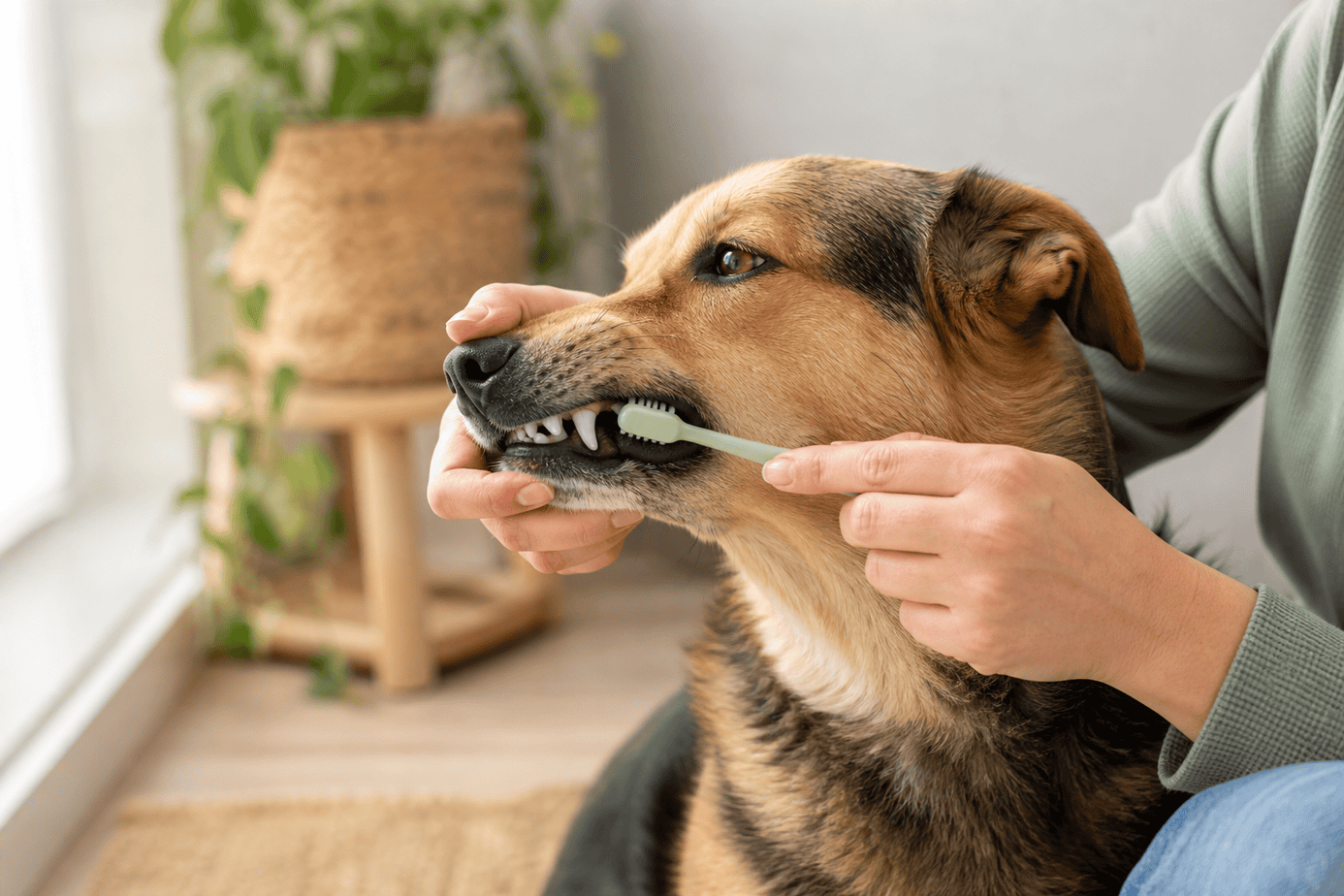
Keep nails short enough for comfortable movement and include regular dental care. Routine shaving is not required for a healthy long-haired coat. A sanitary trim or light tidy around problem areas may help some dogs, but drastic clipping should be discussed with a skilled groomer.
Exercise, Training, and Back-Friendly Habits
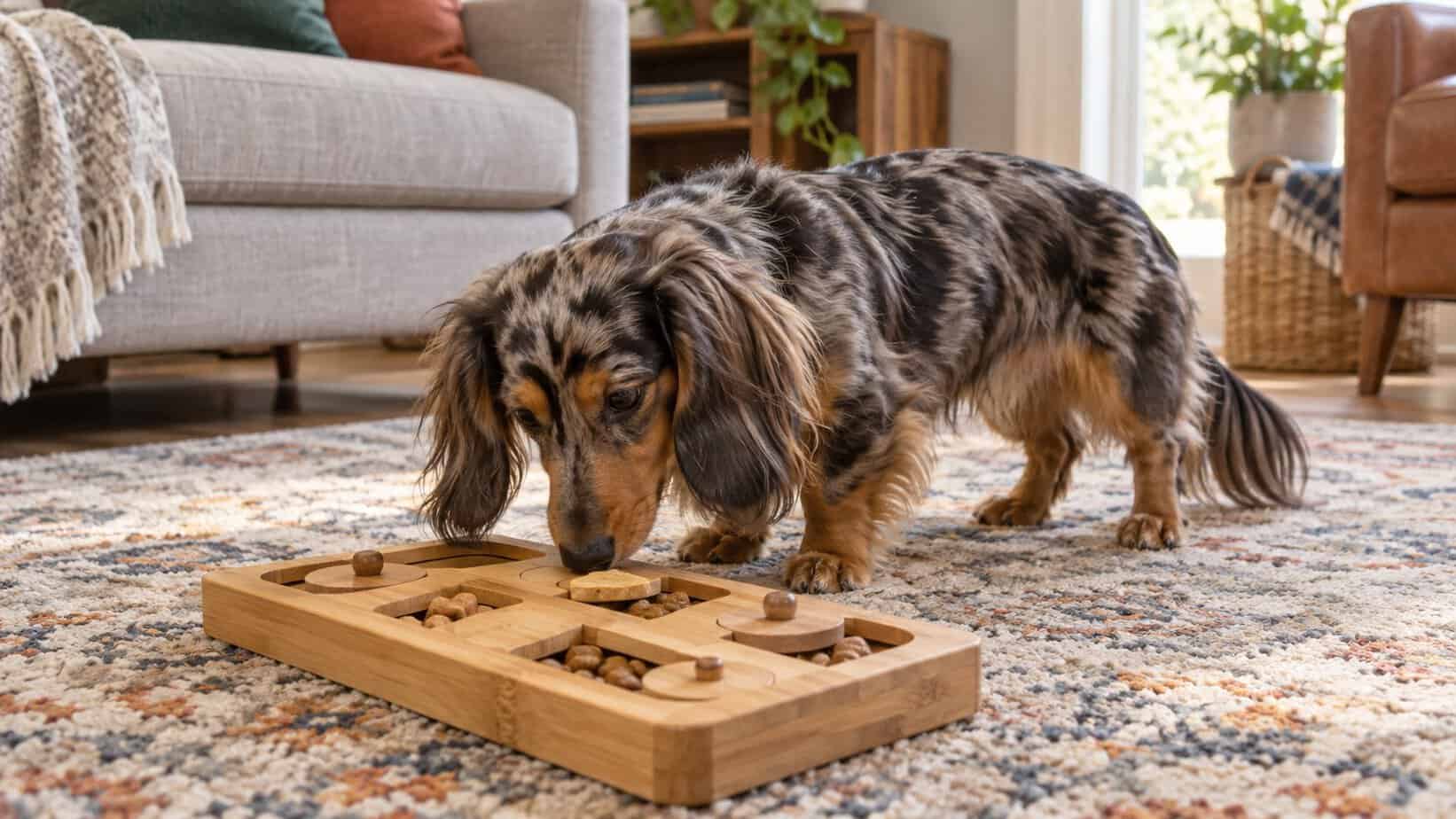
A Dachshund may have short legs, but this is an active hound, not a couch decoration. Regular walks, sniffing, play, and food puzzles help with fitness and boredom.
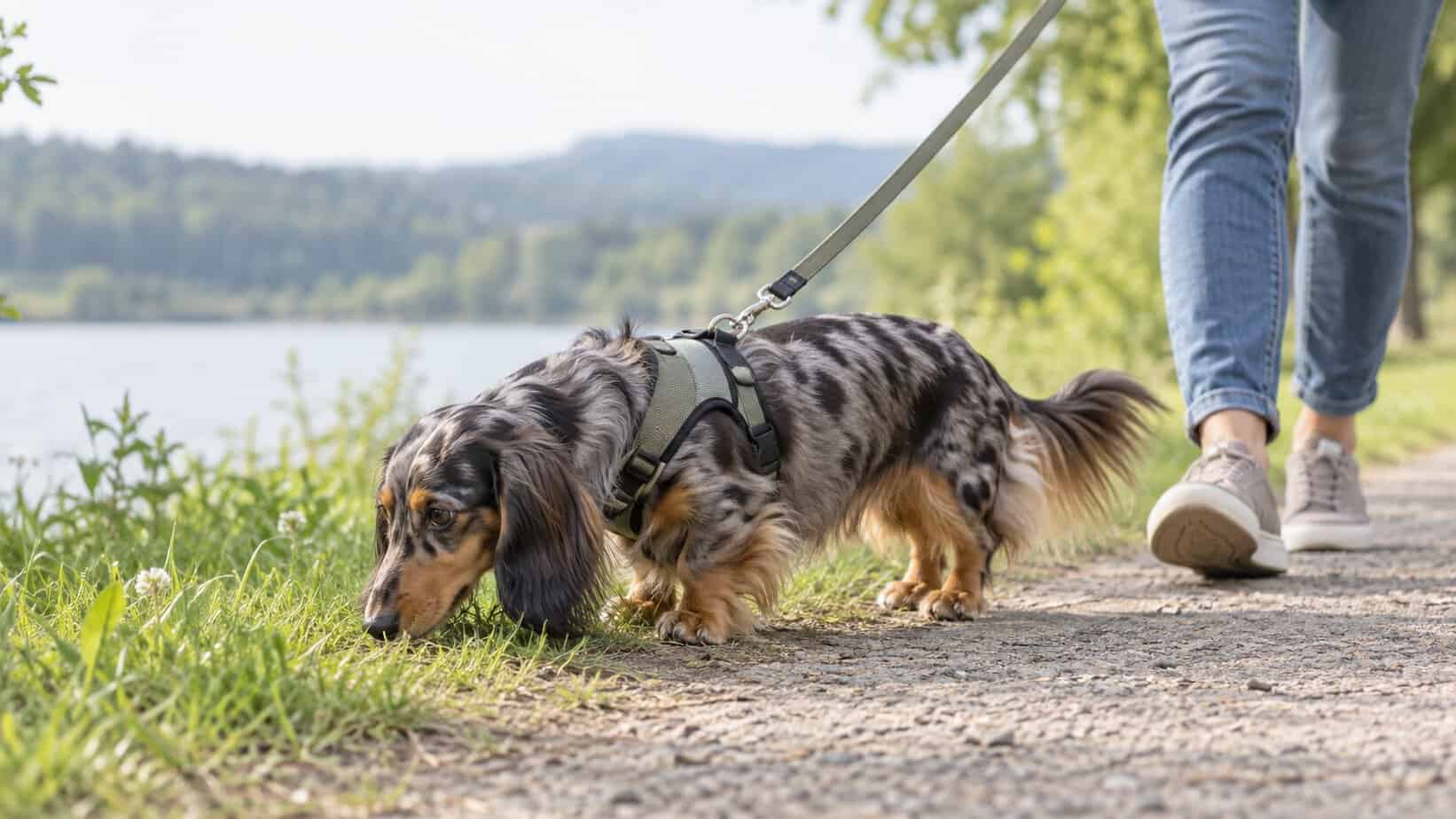
Build activity gradually for puppies, seniors, and dogs returning from illness. Healthy body condition matters because extra weight adds work for the joints and spine. Ask your veterinarian what is appropriate for your dog’s age and health.
Back care should be practical, not fearful. Avoid repeated uncontrolled leaps from high furniture. Ramps, steps, rugs on slippery floors, and secure support when lifting can make daily life easier. At the same time, do not assume every run or jump causes IVDD. Conditioning, body weight, genetics, age, and individual medical history all matter.

Training works best in short, upbeat sessions. Use food, toys, praise, and chances to sniff as rewards. Practice recall, settling, handling, leash skills, and quiet behavior around the door. If barking or chasing becomes a problem, change the setup and reward the behavior you want instead of relying on punishment.
Health Issues to Understand
Intervertebral disc disease, or IVDD, is one of the biggest health concerns in Dachshunds. A peer-reviewed DachsLife study estimated that about 19 to 24 percent of Dachshunds show clinical signs related to IVDD during their lifetime. That is a population estimate, not a prediction for one dog.
Keep your Dachshund lean, provide regular suitable exercise, and talk with your veterinarian about your dog’s individual risk. A routine puppy exam cannot guarantee that IVDD will never occur.
Sudden back or neck pain, reluctance to move, difficulty walking, wobbliness, weakness, dragging a limb, paralysis, or loss of bladder control needs prompt veterinary attention. Severe weakness or paralysis is an emergency. Early assessment can matter.
Pattern-related risks belong in a separate category. A single dapple pattern is not the same thing as double dapple. The avoidable concern is breeding two merle-carrying dogs together, especially when a hidden merle variant is missed.
A responsible breeder should discuss the health history in the line, identify both parents, explain current breed-specific testing, and let you verify results. Recommendations change over time, so check the Dachshund Club of America and Orthopedic Foundation for Animals rather than relying on a vague “vet checked” statement.
Rescue or Responsible Breeder?
Both routes can lead to a wonderful dog.
A rescue may not know every detail of a dog’s genetic background. A good rescue will still share the veterinary records it has, describe behavior honestly, and help you decide whether the dog fits your home.
If you choose a breeder, look past the photos and color labels. Ask for:
- The registered names and identities of both parents
- Current breed-specific health tests and public result links
- Each parent’s dapple or merle status
- Written confirmation that two merle-carrying dogs were not paired
- Puppy veterinary records and a clear vaccination and deworming history
- Details about early handling, socialization, and where the puppies are raised
- A contract that explains health terms and includes a return-to-breeder policy
- Time to ask questions without pressure
Walk away from a seller who markets “rare” color as the main value, will not identify the parents, cannot explain the pairing, hides health records, or wants to rush payment.
What Does a Long-Haired Dapple Dachshund Cost?
There is no single dependable price. Cost changes with region, age, breeder practices, veterinary care, demand, and whether the dog comes through rescue.
A higher price does not prove better breeding. A lower price does not tell you the whole story either. Compare health testing, transparency, puppy care, socialization, contract terms, and lifelong support.
Plan for more than the purchase or adoption fee. Food, grooming tools, preventive care, dental care, training, safe travel gear, and possible back-related veterinary costs are part of the real budget.
Is This Dachshund Right for You?
A long-haired dapple Dachshund can be a delightful companion if you like an involved little dog with a big opinion.
Before you commit, ask yourself whether you can provide:
- Brushing several times a week when the coat needs it
- Patient, reward-based training
- Daily exercise and mental enrichment
- Safe handling and practical back-friendly setup
- Weight management and routine veterinary care
- Companionship and a plan for time alone
- A budget for both everyday care and unexpected medical needs
Choose the dog, not just the coat. A healthy match is built on temperament, care, transparency, and the life you can offer.
Frequently Asked Questions
There is no dependable, universal rate that proves all long-haired dapples are rare. Availability varies by region and breeding population. Treat “rare” as a marketing word unless the seller can support it with credible data.
Yes. Merle can affect eye pigment, so a dapple Dachshund may have one or two blue eyes or partly blue eyes. Eye color alone does not diagnose a health problem.
No. Dapple usually describes a dog with a merle variant. Double dapple means a dog inherited merle variants from both parents. Double-dapple dogs have a higher risk of serious hearing and eye defects.
Brush more than once a week and adjust to the individual coat. Check the feathering behind the ears, on the chest, under the legs, along the belly, and on the tail more often because these areas tangle easily.
They can be either. Long-haired describes coat type, and dapple describes pattern. Size is inherited separately.
References
American Kennel Club. (n.d.). Dachshund dog breed information. https://www.akc.org/dog-breeds/dachshund/
The Royal Kennel Club. (n.d.). Dachshund (Long Haired). https://www.royalkennelclub.com/search/breeds-a-to-z/breeds/hound/dachshund-long-haired/
University of California, Davis Veterinary Genetics Laboratory. (n.d.). Merle. https://vgl.ucdavis.edu/test/merle
Packer, R. M. A., Seath, I. J., O’Neill, D. G., De Decker, S., & Volk, H. A. (2016). DachsLife 2015: An investigation of lifestyle associations with the risk of intervertebral disc disease in Dachshunds. Canine Genetics and Epidemiology, 3, 8. https://pubmed.ncbi.nlm.nih.gov/27695583/
Morrison, B. J. (2025, December 11). Canine intervertebral disc disease (IVDD): Symptoms, treatment, and recovery. PetMD. https://www.petmd.com/dog/conditions/neurological/intervertebral-disc-disease-in-dogs
Dachshund Club of America. (n.d.). Dachshund Club of America. https://www.dachshundclubofamerica.org/
Orthopedic Foundation for Animals. (n.d.). CHIC program. https://ofa.org/chic-programs/
~Lindsie

ABOUT THE AUTHOR