A Pitbull Poodle mix can be a bright, athletic, people-focused companion, but the name does not promise a particular size, coat, or personality. This is a mixed-breed dog with no single standard. The outcome depends on which dog is meant by “pit bull,” whether the Poodle parent is Standard or Miniature, the traits each puppy inherits, and how the dog is raised.
If you are considering a Pit Boodle, Pitoodle, or Pittie Poo, look past the cute label. Ask about the actual parents, meet the individual dog when possible, and plan for a coat and activity level that may land anywhere between the two sides of the family.
Quick facts
- Breed status: Mixed breed, not a standardized purebred
- Common names: Pit Boodle, Pitoodle, Pittie Poo, Pitbull Poodle mix
- Adult size: Variable, often medium to large when a Standard Poodle is involved
- Coat: Short, wiry, wavy, curly, or a combination
- Shedding: Low to moderate, but never guaranteed
- Training: Best with reward-based, consistent practice
- Best fit: An engaged home ready for exercise, grooming, and continued training
What Is a Pitbull Poodle Mix?
A Pitbull Poodle mix is a cross between a Poodle and a pit bull-type dog. The phrase “pit bull” is used loosely in everyday conversation, so it may refer to an American Pit Bull Terrier, American Staffordshire Terrier, Staffordshire Bull Terrier, or another dog with a similar look. That means two puppies sold under the same mix name may have different ancestry.
The United Kennel Club standard describes the American Pit Bull Terrier as a strong, athletic, medium-sized dog, while the American Kennel Club recognizes Poodles in Standard, Miniature, and Toy varieties.[1][2] A responsible rescue or breeder should be able to tell you what is known about the parents rather than relying on the hybrid name alone.
Size and Appearance
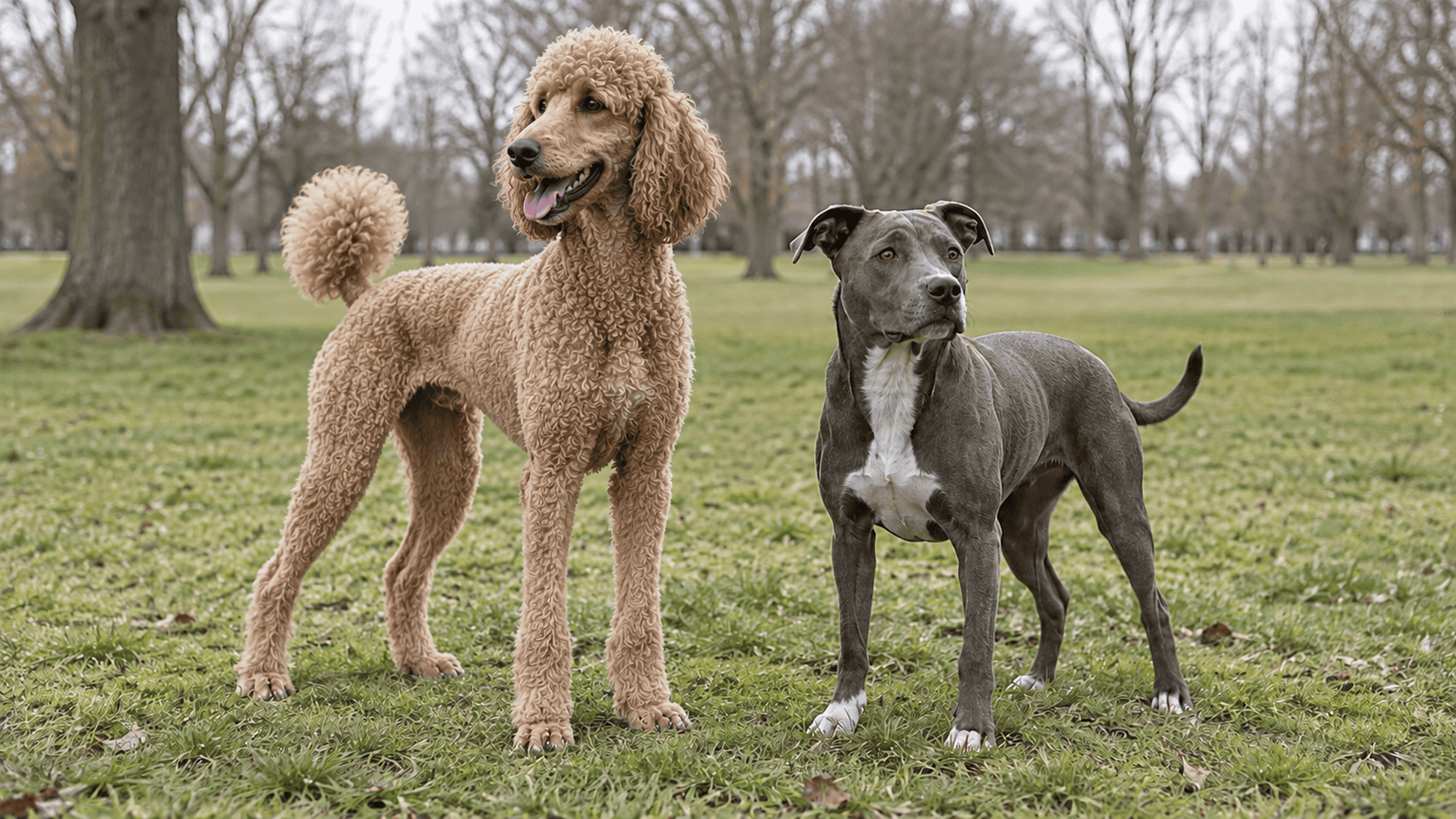
There is no dependable “full-grown Pitbull Poodle mix” measurement. A dog with a Standard Poodle parent will usually have a different growth range from one with a Miniature Poodle parent, and the pit bull-type parent may vary too. Parent weights and heights are more useful than a generic online chart.
These dogs may have a broad or more refined head, a sturdy or lean frame, folded or semi-prick ears, and a tail carried in many different ways. Colors can include black, blue-gray, brown, cream, white, brindle, or combinations with patches and markings. Some look obviously curly. Others have a short coat and only a hint of furnishings around the face.
If you adopt a puppy of uncertain parentage, treat adult size as an estimate. A veterinarian can track the growth curve, but even that will not turn a mixed-breed puppy into a precise formula.
Coat, Shedding, and Allergies
The coat is often the biggest surprise. A puppy can inherit the Poodle’s curl, a short pit bull-type coat, a soft wave, or a mixed texture that mats more easily than it appears. Littermates may not match.
No Pitbull Poodle mix is guaranteed to be hypoallergenic. A peer-reviewed study comparing Can f 1 allergen levels across dog breeds found no evidence that any breed can reliably be described as hypoallergenic.[3] Low shedding may reduce loose hair in the home, but allergens also come from skin particles and saliva.
If someone in your household has dog allergies, spend time with the individual dog before adoption and speak with an allergist about the person’s specific risk. Do not rely on a breeder’s “allergy safe” promise.
Temperament and Family Fit
You may see Pit Boodles described as loyal, affectionate, intelligent, protective, playful, or eager to please. Any individual dog may show some of those qualities, but a mixed-breed label cannot tell you how that dog will behave in every setting.
A large genomics study found that breed explained only about 9 percent of behavioral variation among individual dogs.[4] Genetics still matter, especially for physical traits and some broad tendencies, but socialization, learning history, health, age, and daily environment also shape behavior.
Children and other pets
Some Pitbull Poodle mixes live beautifully with children, dogs, or cats. Others need quieter homes or careful introductions. Judge the dog in front of you.
For children, look for a dog who can relax around movement and noise, recover after surprises, and disengage when given space. Adults should supervise every dog-child interaction and give the dog a protected resting area.
For other pets, ask about foster-home observations, previous history, and controlled introduction results. Do not assume that a “friendly breed mix” will automatically enjoy every animal.
Training and Socialization
Start with clear routines and reinforce the behavior you want. Short sessions usually work better than drilling, especially for an energetic young dog. Useful early skills include name response, recall, loose-leash walking, settling on a mat, trading objects, cooperative grooming, and calmly greeting people.
The American Veterinary Society of Animal Behavior recommends reward-based methods and advises against training that relies on pain, fear, intimidation, or force.[5] That approach is practical as well as kind. It helps a dog stay engaged and gives you more information about what the dog understands.
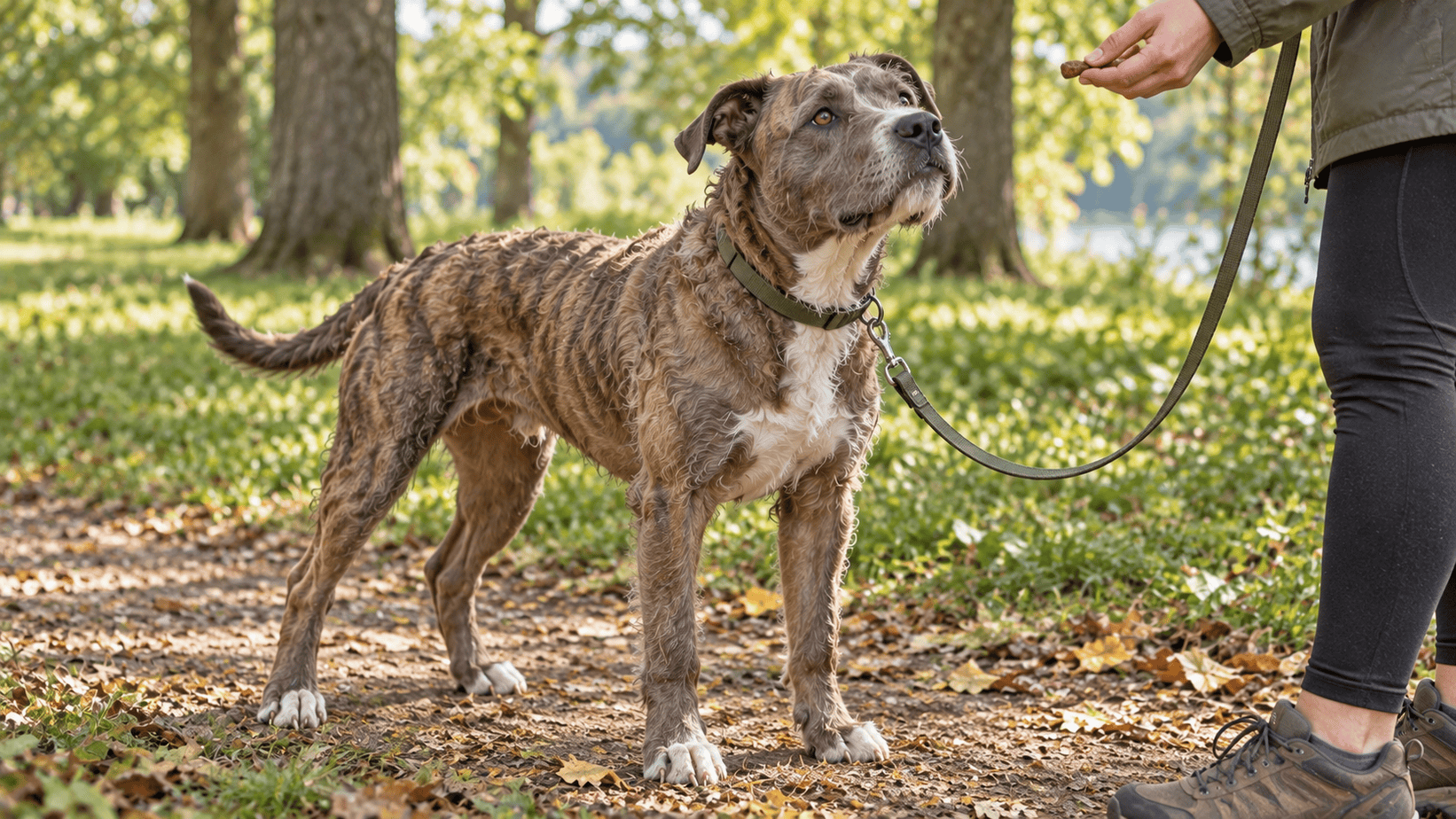
Socialization should be thoughtful, not overwhelming. Let puppies and newly adopted adults experience people, surfaces, sounds, handling, and friendly animals at a pace that keeps them comfortable. If you see freezing, hiding, frantic pulling, growling, or an inability to take food, add distance and make the task easier.
Exercise and Enrichment
Many adults from this cross will enjoy an active routine, but there is no universal exercise quota. Build the day around the dog’s age, body condition, joints, weather tolerance, and ability to settle afterward.
A balanced routine might include a sniffing walk, a shorter training walk, play, food puzzles, and quiet chewing or rest. Running, jumping, and repetitive fetch should be introduced gradually, especially while a puppy is growing. Mental work can take the edge off without pushing the body too hard.
Watch the recovery, not just the mileage. A dog who becomes more frantic after intense play may benefit from slower sniffing activities and structured rest. A dog who remains relaxed and ready for more may need a longer outing or a new training challenge.
Grooming a Pitbull Poodle Mix
Grooming needs follow the coat, not the mix name.
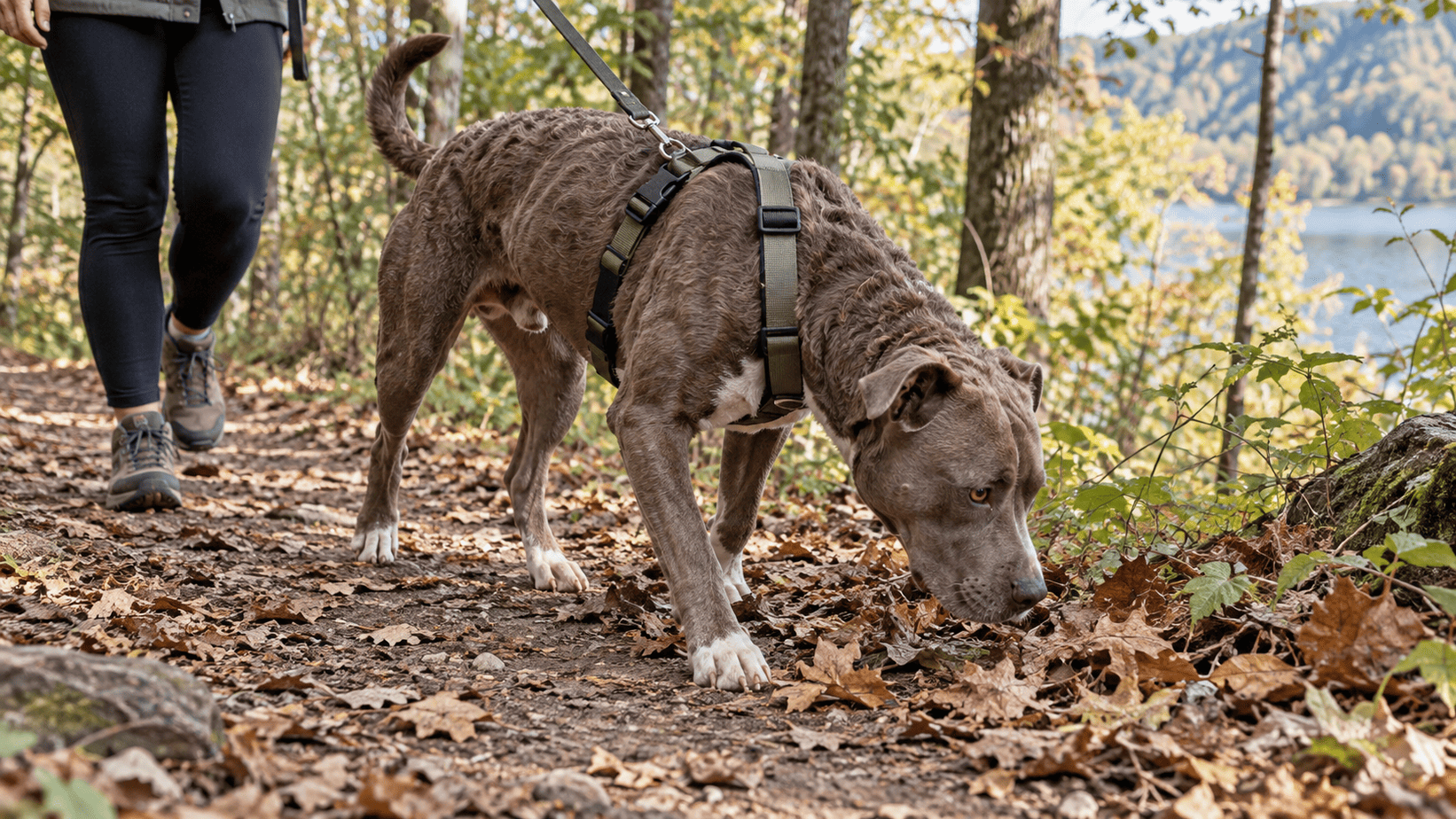
For a short coat, a soft brush or grooming mitt once or twice a week may be enough to lift loose hair and help you notice skin changes. For a wavy or curly coat, comb all the way to the skin several times a week. Pay special attention behind the ears, under the collar, in the armpits, around the tail, and anywhere a harness rubs.
Curly or continuously growing coats usually need professional grooming on a regular schedule. Ask a groomer to show you which comb reaches through your dog’s coat. Surface brushing can leave tight mats hidden underneath.
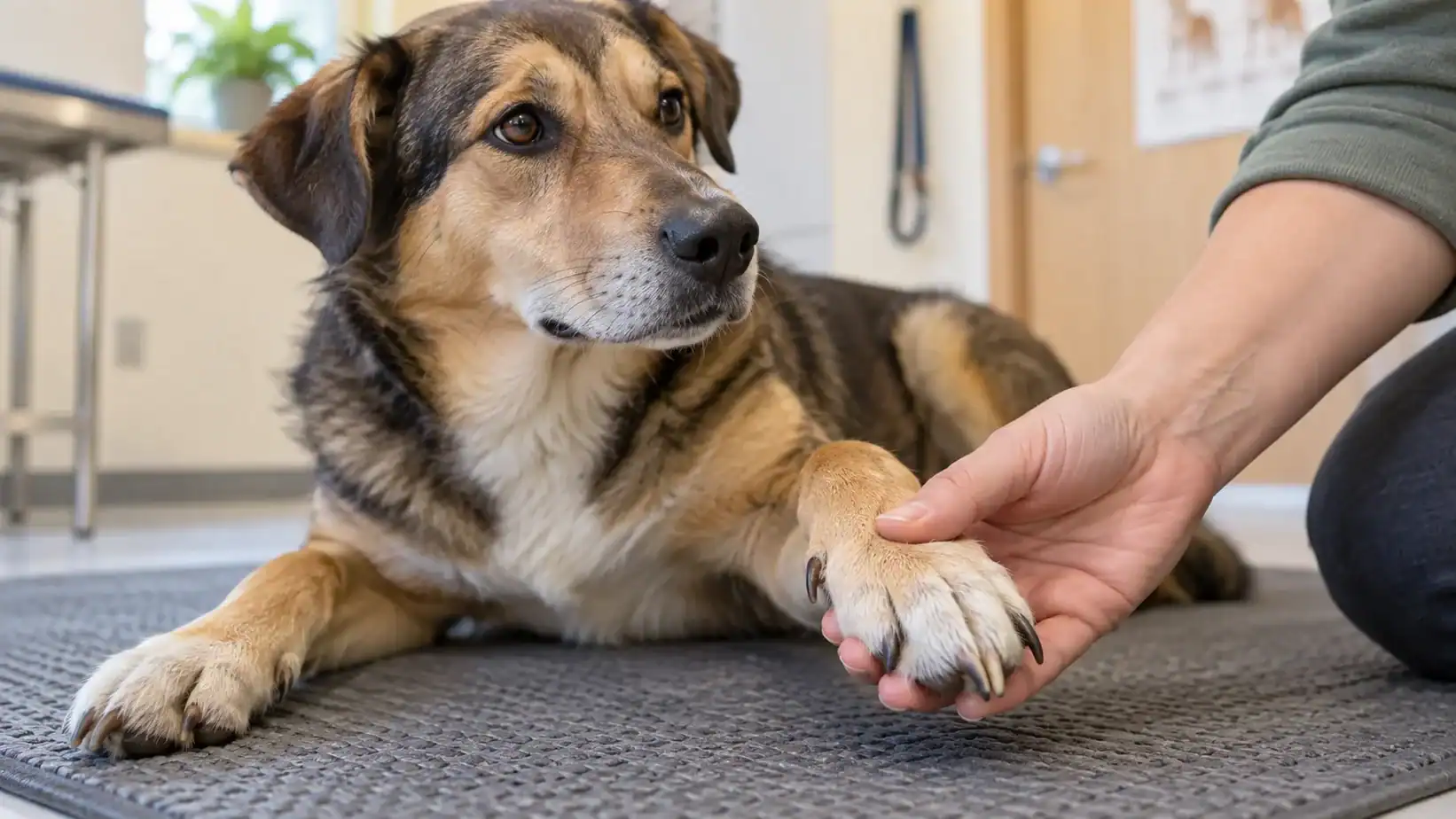
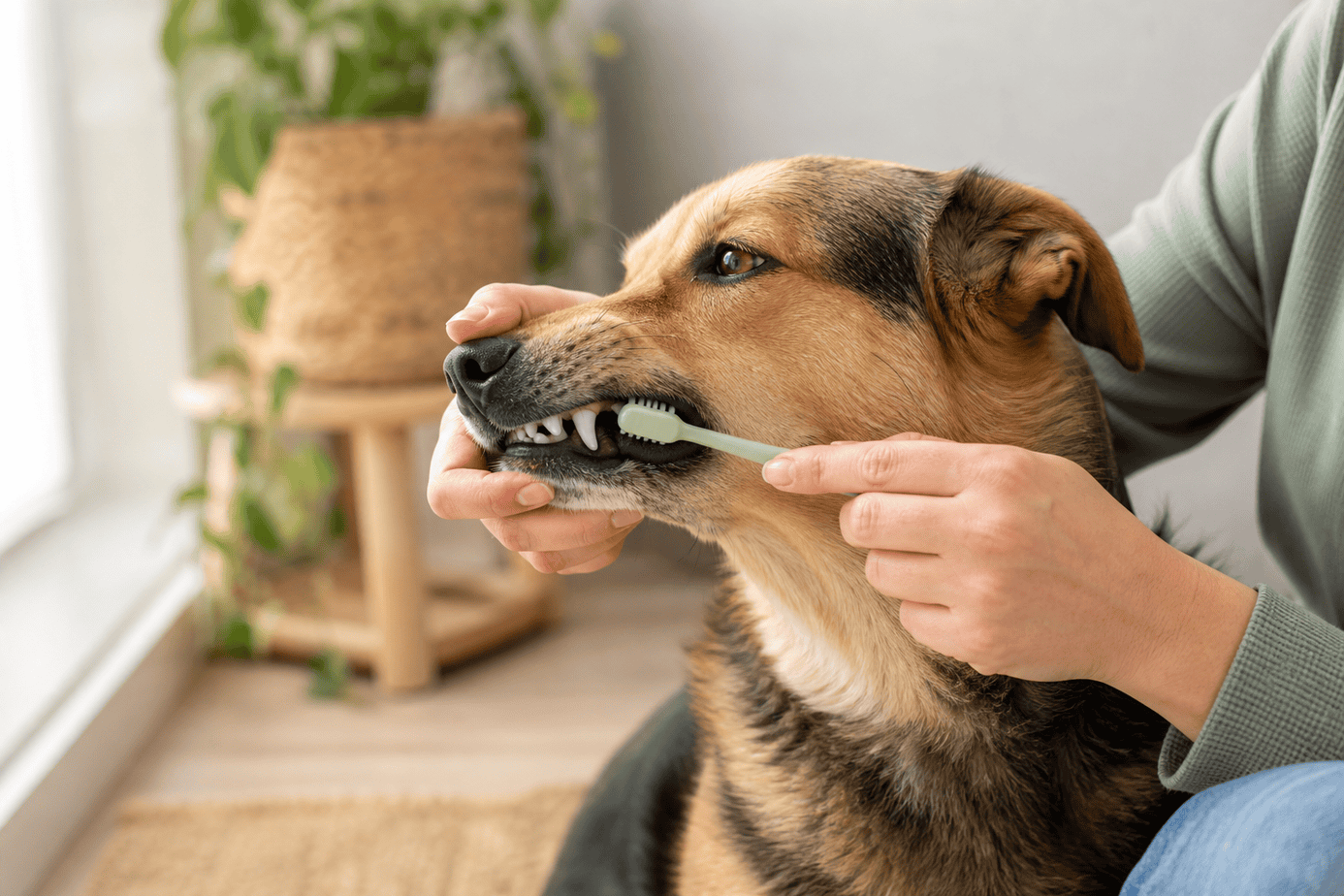
Add nail care, ear checks, and tooth brushing gradually with treats and breaks. Persistent ear odor, redness, discharge, painful skin, or sudden coat loss deserves veterinary attention rather than a stronger home product.
Health and Health Testing
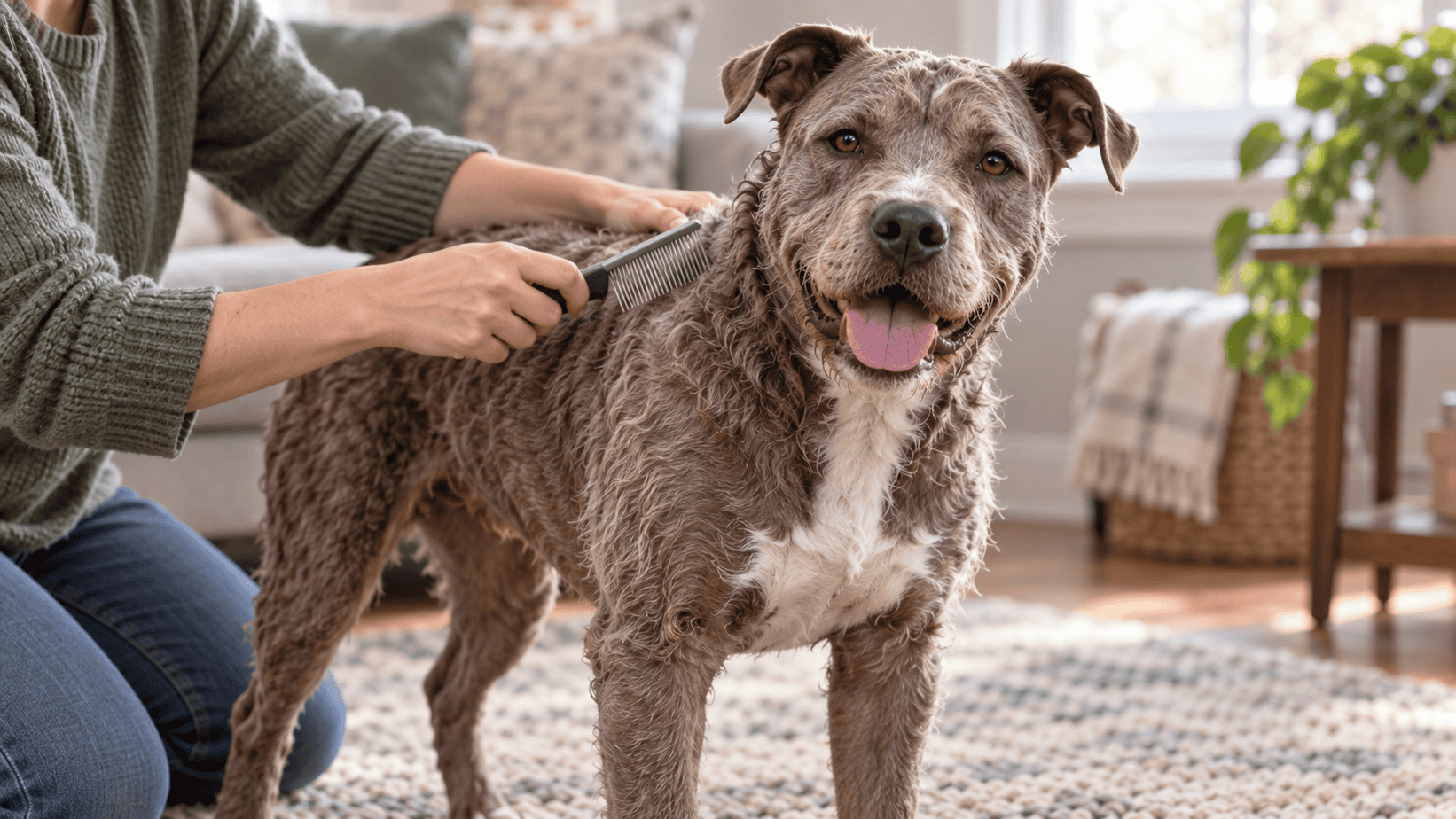
Mixed ancestry does not make a dog automatically healthier or less healthy. A puppy can inherit risk variants from either side, and good breeding depends on more than a basic DNA panel.
For Standard Poodles, the AKC lists parent-club recommendations that include hip and eye evaluation plus DNA testing for neonatal encephalopathy with seizures and von Willebrand disease type I. Additional testing may be appropriate depending on the Poodle variety and family history.[2] The Poodle Club of America also discusses conditions such as sebaceous adenitis and Addison’s disease and emphasizes informed health screening.[6]
On the pit bull-type side, ask which actual breed the parent is and request the health testing recommended for that breed. At a minimum, discuss orthopedic, cardiac, eye, thyroid, and relevant DNA results with the breeder and your veterinarian. A result should be traceable to the individual parent, not just shown as a generic “clear” badge.
Whether you adopt or buy, schedule a veterinary exam soon after the dog comes home. Bring every record you received. Keep up with preventive care, dental care, parasite control suited to your region, and body-condition monitoring.
Feeding and Healthy Weight
Feed a diet labeled complete and balanced for the dog’s life stage unless your veterinarian recommends something different. Portions on a bag are a starting point. Adjust them to your dog’s body condition, growth, activity, treats, and health needs.
I favor thoughtfully chosen, minimally processed foods and fresh whole-food additions when they fit the dog, but balance comes first. Randomly combining meat, vegetables, and supplements can leave important nutrients too low or too high. If you want to feed a home-prepared diet, ask for a recipe formulated for your individual dog by a qualified veterinary nutrition professional.
Keep your dog lean enough that you can feel the ribs with light pressure and see a waist from above. Extra weight makes exercise harder and adds stress to joints.
Adopting or Buying a Pitbull Poodle Mix
Rescue is an excellent place to start. Search broadly by Poodle mix, pit bull mix, and mixed breed rather than expecting the shelter to know the exact genetics. A foster-based rescue may have the most useful notes about house manners, grooming tolerance, pets, children, and time alone.
Questions to ask a rescue
- What behavior has the dog shown in a home, not only in a kennel?
- How does the dog respond to handling, grooming, food, toys, visitors, and being left alone?
- Has the dog lived with children, cats, or other dogs?
- What medical work has been completed, and what still needs follow-up?
- Can we meet more than once or arrange a carefully managed introduction with resident pets?
Questions to ask a breeder
- What are the registered breeds, sizes, ages, and temperaments of both parents?
- Can I verify health-test results for each parent?
- Where are the puppies raised, and what early socialization do they receive?
- What grooming has already been introduced?
- What happens if I cannot keep the dog later?
Be cautious if a seller guarantees adult size, a non-shedding coat, an allergy-free dog, perfect behavior, or “hybrid vigor.” Also avoid pressure to pay before you can verify the dogs, records, and contract.
Is a Pitbull Poodle Mix Right for You?
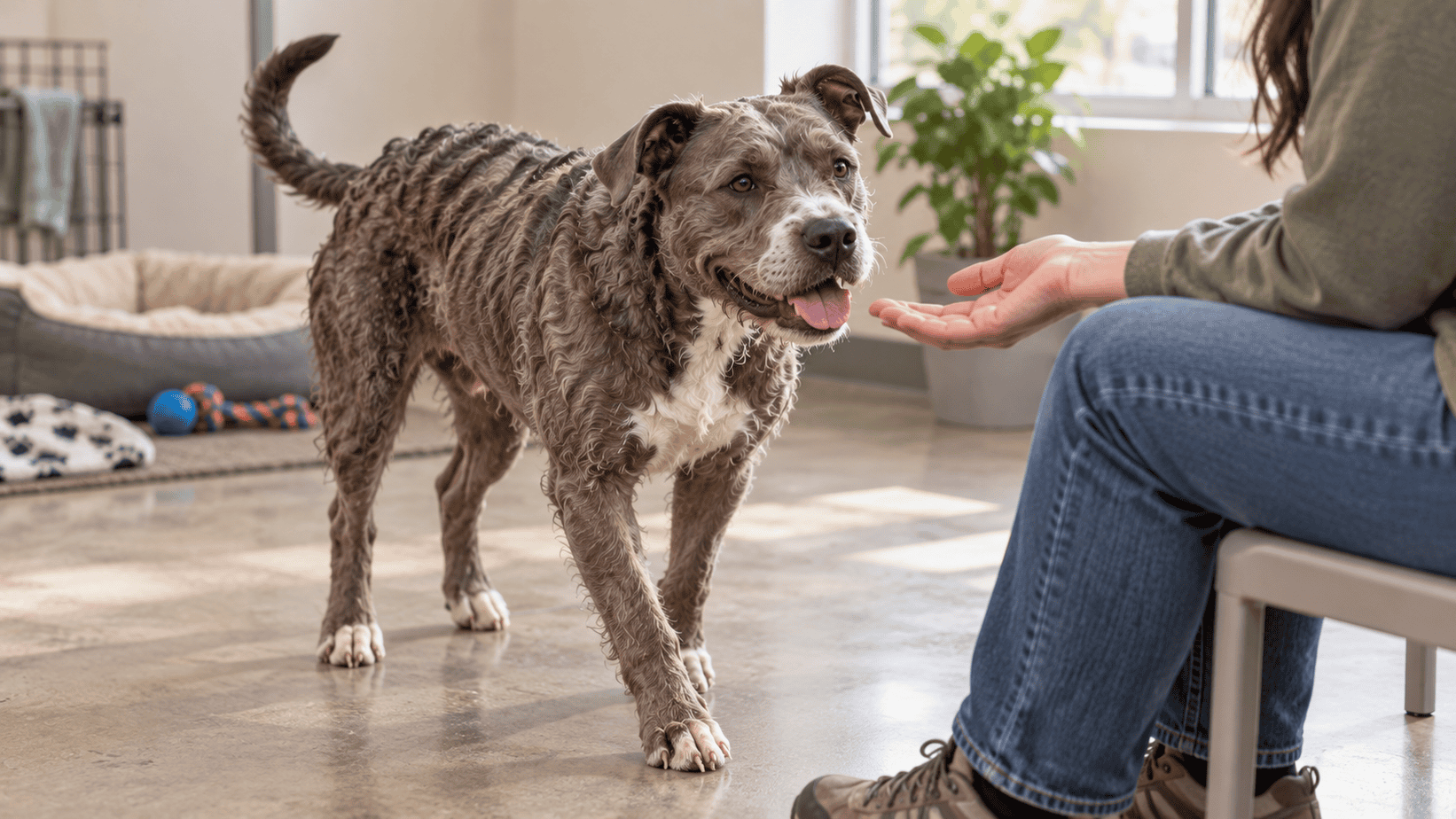
This mix may suit you if you enjoy training, can provide daily activity and companionship, and are willing to groom the coat you get rather than the coat you expected. It also helps to be comfortable owning a dog whose size and appearance may be difficult to predict as a puppy.
Think twice if your housing or insurance has breed restrictions, if a person in the home has significant dog allergies, or if you need a guaranteed low-maintenance coat or temperament. Check local rules before bringing the dog home. Labels can affect housing even when they say little about an individual dog’s behavior.
Final Thoughts
A Pitbull Poodle mix can be a wonderful companion, but the healthiest expectations are flexible ones. Choose the individual dog, learn what you can about the parents and early history, and build your care plan around the coat, body, and temperament in front of you.
If you are adopting, take your time with introductions and ask for foster notes and medical records. If you are working with a breeder, verify health testing instead of accepting promises. The thoughtful match matters far more than the clever mix name.
~Lindsie
Frequently Asked Questions
A Pitbull Poodle mix may be called a Pit Boodle, Pitoodle, Pittie Poo, or Poodle Pitbull mix. None of these names describes a standardized breed.
Adult size depends on the actual pit bull-type parent and the Poodle variety. Parent sizes and the puppy’s growth record are more useful than a generic range online.
They can. Some have low-shedding curly coats, while others shed more or have mixed textures. Coat type also affects matting and professional grooming needs.
Some are excellent family companions, but the label is not a guarantee. Evaluate the individual dog’s comfort with children, handling, noise, other animals, and time alone.
There is no reliable lifespan figure for this nonstandard cross. Longevity depends on the dog’s size, genetics, preventive care, body condition, environment, and any health problems that develop.
References
[1] United Kennel Club. (n.d.). American Pit Bull Terrier breed standard. https://www.ukcdogs.com/american-pit-bull-terrier
[2] American Kennel Club. (n.d.). Poodle (Standard): Dog breed information. https://www.akc.org/dog-breeds/poodle-standard/
[3] Vredegoor, D. W., Willemse, T., Chapman, M. D., Heederik, D. J. J., & Krop, E. J. M. (2012). Can f 1 levels in hair and homes of different dog breeds: Lack of evidence to describe any dog breed as hypoallergenic. Journal of Allergy and Clinical Immunology, 130(4), 904–909.e7. https://pubmed.ncbi.nlm.nih.gov/22728082/
[4] Morrill, K., Hekman, J., Li, X., et al. (2022). Ancestry-inclusive dog genomics challenges popular breed stereotypes. Science, 376(6592), eabk0639. https://pubmed.ncbi.nlm.nih.gov/35482869/
[5] American Veterinary Society of Animal Behavior. (2021). Position statement on humane dog training. https://avsab.org/wp-content/uploads/2021/08/AVSAB-Humane-Dog-Training-Position-Statement-2021.pdf
[6] Poodle Club of America. (n.d.). Health concerns. https://poodleclubofamerica.org/health-concerns/

ABOUT THE AUTHOR