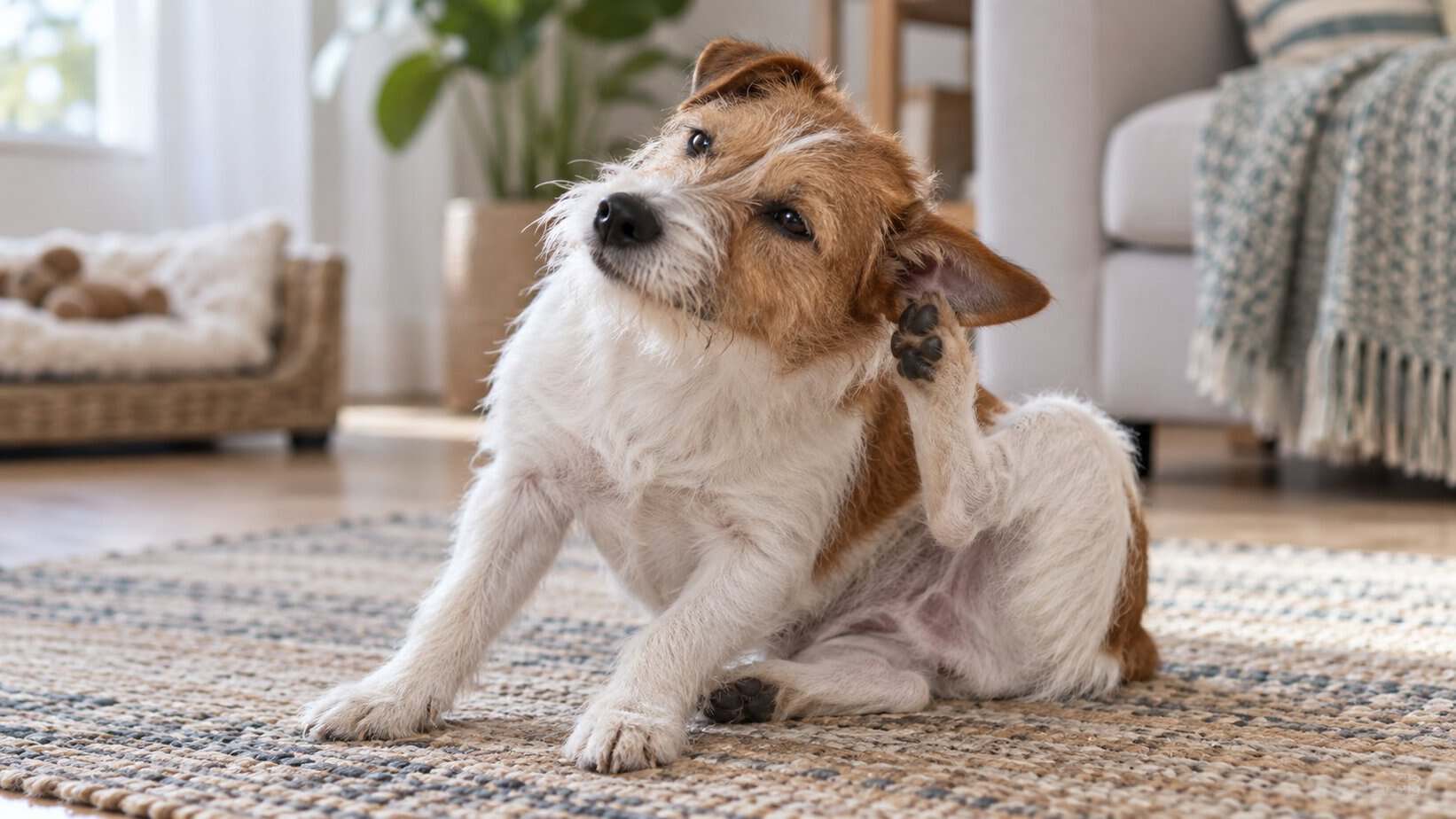
If your dog has an itchy ear, start with comfort and protection, not a home mixture. Keep the ear dry, stop your dog from scratching if you can, and wipe only the part of the ear you can clearly see with soft gauze or a cotton pad. Do not push a cotton swab into the canal or pour in vinegar, peroxide, oil, tea, cleaner, or medicated drops unless your veterinarian has confirmed that the product fits the cause and the eardrum is safe.
An itchy ear can come from allergies, yeast, bacteria, mites, trapped moisture, a grass seed, or another problem. Pain, a strong odor, discharge, swelling, bleeding, a head tilt, or trouble balancing means your dog needs veterinary care rather than another home remedy. [1]
What You Can Do Right Now
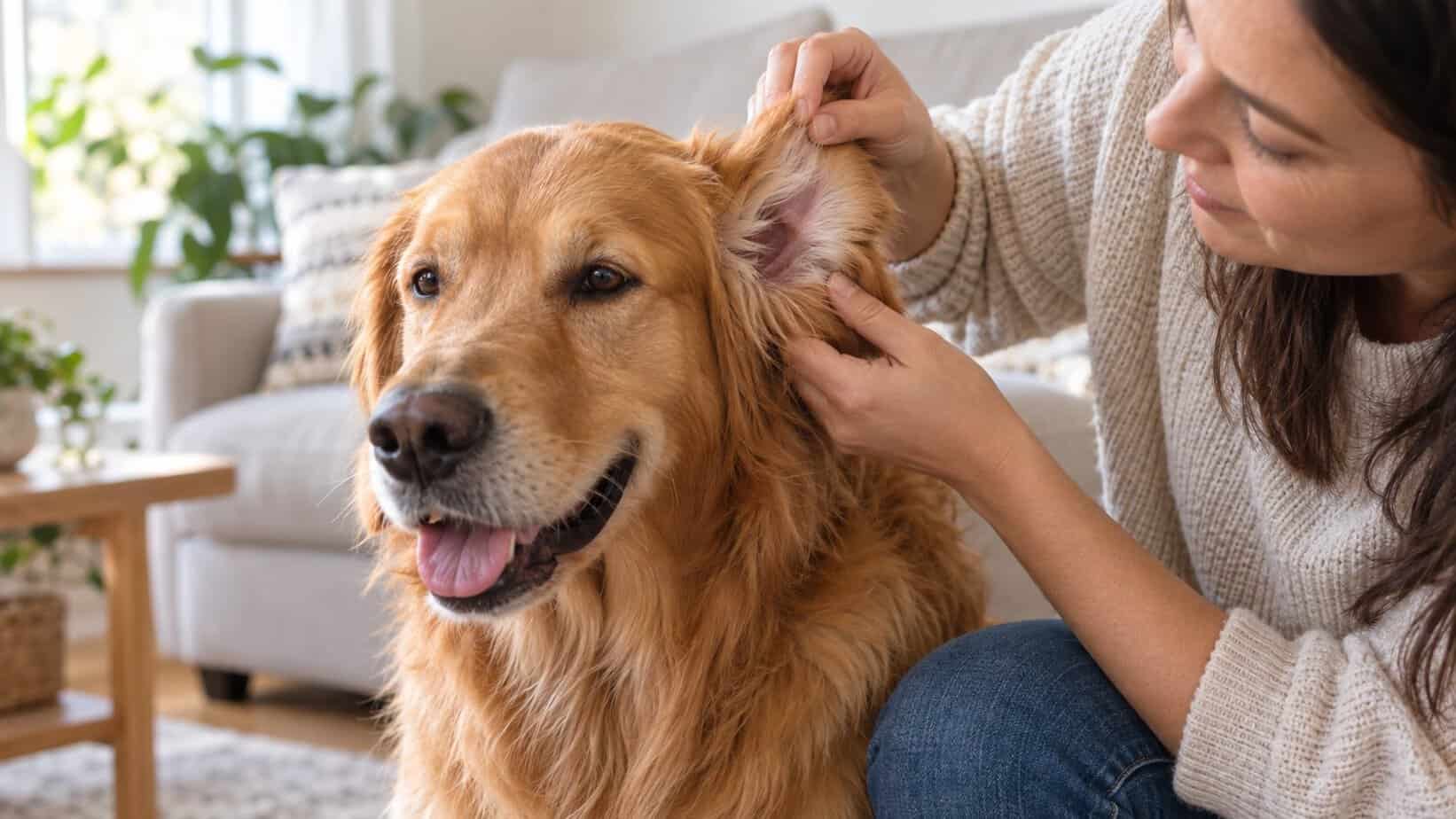
First, take a calm look at both ears in good light. Lift the ear flap gently. Do not force the ear open if your dog pulls away, cries, snaps, or seems painful.
You can take these low-risk steps while arranging care:
- Keep the ear dry. Pause swimming and avoid getting bath water in the ear.
- Wipe loose debris from the visible ear flap with dry gauze or a soft cotton pad. Stay where you can see your fingers and the pad.
- Prevent self-injury. If scratching is making the skin raw, an Elizabethan collar can give the ear a break.
- Note what you see and smell. Redness, dark debris, yellow or brown discharge, blood, swelling, and odor are useful details for your veterinarian.
- Take a photo if your dog will hold still. It can help show how the ear changed before the appointment.
Do not keep cleaning a sore ear to make it look normal. A veterinarian may need to examine the debris or collect a sample before the ear is cleaned. Frequent cleaning can also add irritation. [2]
Check for Signs That Need Prompt Care
Call your veterinarian the same day if your dog has obvious pain, repeated head shaking, a strong odor, moist or pus-like discharge, bleeding, marked redness, swelling, or skin damage from scratching. A puffy ear flap can be an ear hematoma and also needs care.
Seek urgent help for a sudden head tilt, stumbling, circling, unusual eye movement, vomiting with balance trouble, facial droop, severe pain, or significant trauma. These signs can point to a deeper ear problem.
A sudden problem in one ear after a walk can mean a grass seed or other foreign object is trapped in the canal. Do not probe for it with tweezers or a cotton swab. Removal may require an otoscope, pain control, or sedation. [1]

Why Your Dog’s Ear Is Itchy
The itch is a symptom, not a diagnosis. Several problems can look alike from the outside, and more than one can be present at the same time.
Allergies
Environmental or food allergies can inflame the skin lining the ear. That irritated skin then becomes more welcoming to yeast or bacteria. Dogs with allergy-related ear trouble may also lick their paws, rub their face, or have itchy skin elsewhere. Treating only the secondary infection may bring short relief, but the ear often flares again if the allergy plan is not addressed. [1]
Yeast or Bacteria
Yeast and bacteria are common secondary problems in inflamed ears. Odor, redness, pain, waxy buildup, and discharge can occur with either one. Color or smell alone cannot reliably tell you which organism is involved. An ear swab examined under a microscope helps a veterinarian choose the right treatment. [2]
Ear Mites
Ear mites can cause intense itching and dark, crumbly debris, especially in puppies or pets who have been around an affected animal. Dark debris is not proof of mites, though. Wax, yeast, and blood can look similar. Random mite treatment can delay the correct diagnosis and may further inflame a sore ear. [1]
Moisture, Wax, or Overcleaning
Swimming, bathing, humid weather, and ears with limited airflow can leave the canal damp. Moisture does not create every infection, but it can help yeast or bacteria grow in an already vulnerable ear. Too much cleaning can strip and irritate the ear lining, so more cleaning is not always better. [2]
A Foreign Body or Growth
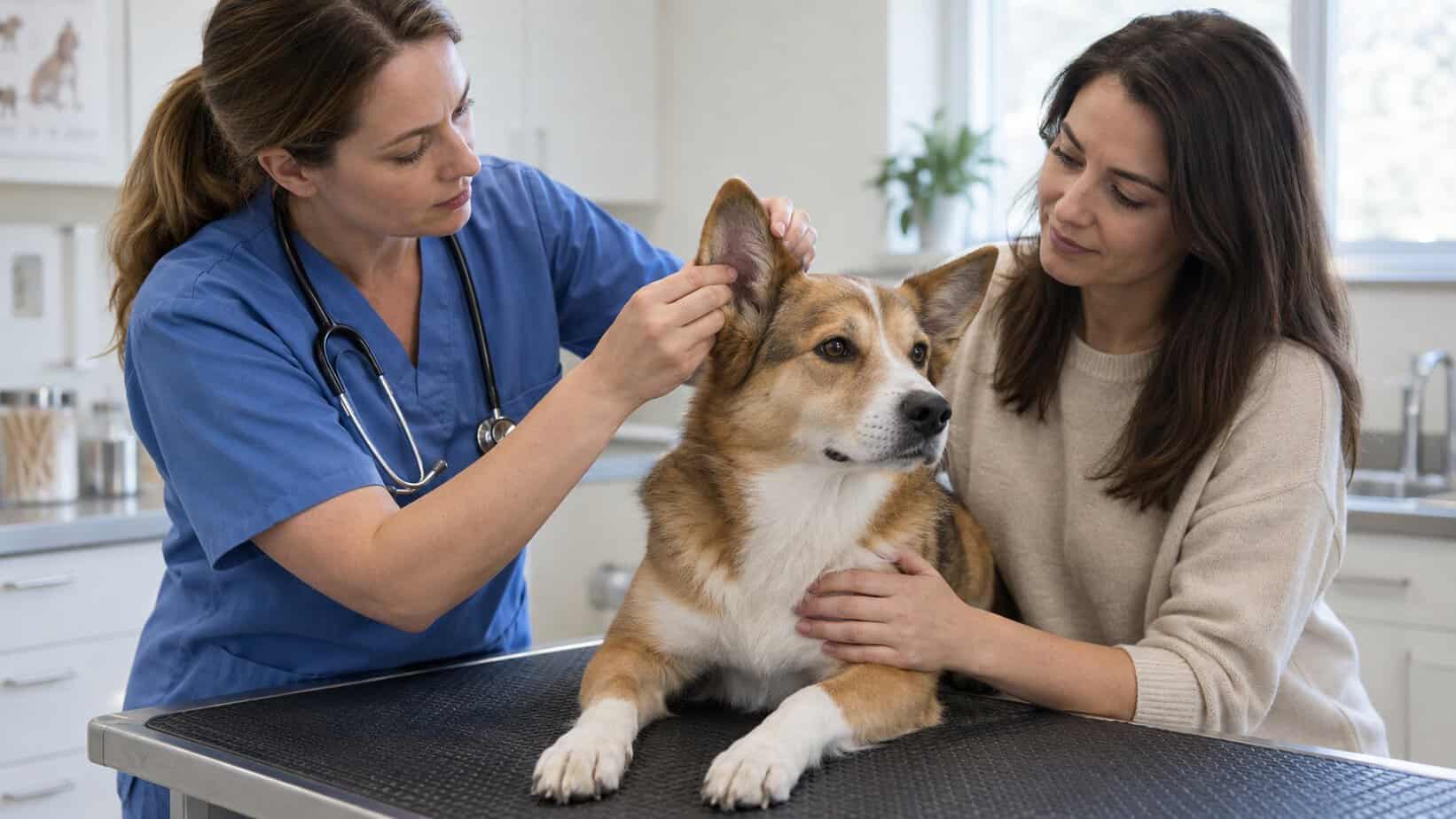
Grass seeds, trapped hair, polyps, and other growths can cause one-sided itching that does not settle. A veterinarian may need an otoscope to see the full canal and eardrum. Some dogs need sedation for a complete, comfortable examination or safe removal. [3]
How to Clean Only When It Is Safe
If the ear is mildly dirty but not painful, swollen, raw, foul-smelling, or draining, you may wipe the visible ear flap with a soft pad. That is different from flushing the canal.
For canal cleaning, use only a product your veterinarian has selected for your dog and follow the label. The right cleaner depends on the ear’s condition and on whether the eardrum is intact. Some ingredients can be harmful if the eardrum is damaged, and a swollen canal may be too painful to clean safely. [3]
Never insert a cotton swab, finger, or tool into the canal. A swab can push material deeper, scrape sore tissue, or make a frightened dog move suddenly. If your veterinarian has shown you how to use a cleaner, let your dog shake afterward and wipe away only the material that reaches the visible outer ear.
There is no universal daily or weekly schedule. A dog with healthy ears may need little or no routine cleaning. A swimmer or a dog with recurring allergy-related ear trouble may need a veterinarian-approved plan.
Household Remedies to Avoid in the Ear Canal
It is understandable to reach for something already in the kitchen, but a sore ear is not a good place to experiment.
- Apple Cider Vinegar is acidic and can sting inflamed, scratched, or ulcerated tissue. Do not pour it into an undiagnosed ear.
- Hydrogen peroxide and rubbing alcohol can irritate tissue and should not be used as routine dog ear cleaners.
- Coconut Oil can coat the canal and trap debris. It does not identify or reliably treat the cause of the itch.
- Chamomile Tea is not sterile and should not be dripped into the canal. A cool compress held against the outside of a closed, uninjured ear flap is different from putting tea inside the ear, but stop if your dog resists.
The goal is not to rule out every plant-based approach. It is to protect a painful, delicate structure until you know what is causing the problem.
How to Think About Over-the-Counter Ear Products
The word “ear product” covers very different jobs. A cleanser, a medicated drop, and a parasite treatment are not substitutes for one another.
An Ear Cleanser such as Epiklean is designed to remove wax or debris. It does not replace treatment for a painful infection, foreign body, or damaged eardrum. Use a cleaner only when the ear is safe to clean and the product matches your veterinarian’s plan.
Medicated Ear Drops such as Zymox may be useful in selected cases, but the symptoms still need a cause. Drops chosen for one problem may be ineffective or unsafe for another, especially when the eardrum cannot be seen.
An Antiparasitic Treatment such as PetArmor should be used only for the parasites and species listed on its label. Do not assume dark debris means mites, and do not combine ear products unless your veterinarian says the combination is appropriate.
If a product burns, your dog cries, or the ear becomes redder, stop and call your veterinarian. Improvement on a product does not prove the original cause, so recurring symptoms still deserve an examination.
When Ear Itching Keeps Coming Back
Repeated ear trouble is a clue that something underneath has not been controlled. Common drivers include environmental allergies, food allergy, moisture, narrow or hairy canals, a foreign object, a growth, resistant organisms, and changes caused by long-term inflammation.
A useful recheck may include an otoscopic exam and ear cytology. In stubborn cases, a veterinarian may recommend culture, allergy workup, imaging, or a deeper examination. The aim is not simply to dry the discharge. It is to identify the primary cause, treat the secondary problem, and make a prevention plan that fits that dog. [2]
Keep a simple flare log. Record the date, which ear is affected, swimming or bathing, new foods or treats, skin symptoms, products used, and how quickly signs returned. Patterns can be more helpful than trying a different bottle each time.
Preventing the Next Flare
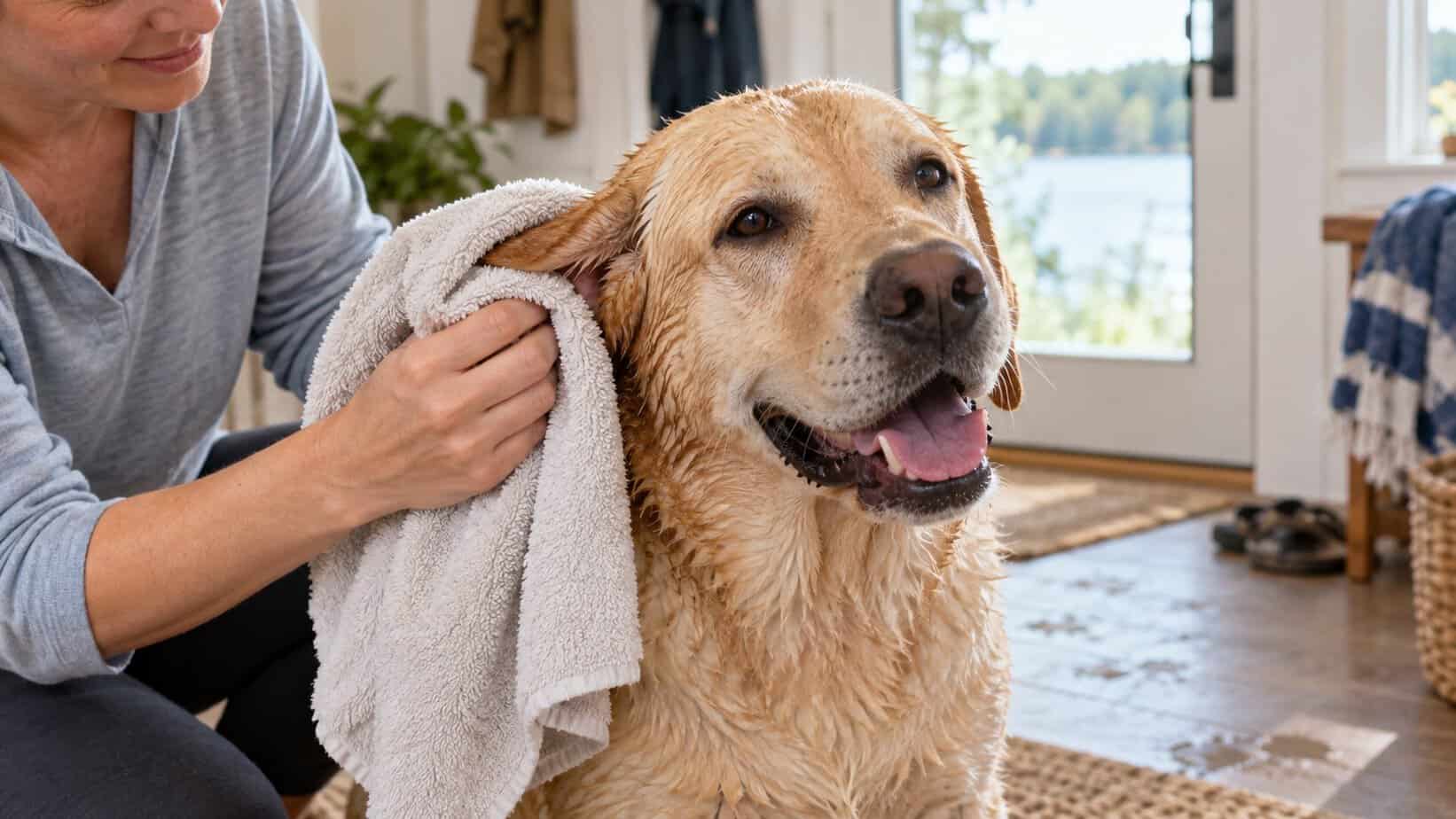
Check your dog’s ears during normal grooming so you learn what healthy looks and smells like. After swimming or bathing, gently dry the visible ear flap. Do not pack the canal with cotton.
Follow an individual cleaning plan if your veterinarian recommends one. More frequent cleaning is not automatically better. Use the selected product, amount, and schedule, and stop if the ear becomes painful.
If allergies are part of the problem, follow the complete allergy plan rather than changing foods at random. A properly designed diet trial takes time and strict consistency. It is different from switching brands for a few days.
Dogs with floppy ears or hairy, narrow canals may need closer observation, but ear shape alone does not prove an infection. Early attention to mild scratching or odor can prevent days of discomfort and self-trauma.
Frequently Asked Questions
Keep the ear dry, prevent scratching, and wipe only loose material from the visible outer flap with soft gauze. Avoid putting liquid or medication into the canal until the cause and eardrum status are known. Call your veterinarian if the itch is persistent or the ear is painful, smelly, swollen, or draining.
Do not use an antihistamine as a substitute for an ear examination. It will not remove a foreign body or treat a yeast or bacterial infection. Ask your veterinarian whether an antihistamine is appropriate for your dog, especially if your dog has other conditions or takes medication.
Allergy, mites, moisture, excess wax, a foreign body, a growth, or irritation from cleaning can all cause itching. Infection can also be present before the odor or discharge becomes obvious. A persistent one-sided itch deserves an examination.
There is no one schedule for every dog. Healthy ears may need little cleaning. Dogs who swim or have recurring ear disease may need a specific product and schedule from their veterinarian. Overcleaning can irritate the canal.
Do not put cotton swabs, alcohol, hydrogen peroxide, vinegar mixtures, oils, tea, or unselected medication into a painful or undiagnosed ear canal. Do not use a cleaner or drops if the eardrum may be damaged unless a veterinarian has confirmed the product is safe.
References
1. Cornell University College of Veterinary Medicine. (n.d.). Itchy ear problems. https://www.vet.cornell.edu/departments-centers-and-institutes/riney-canine-health-center/canine-health-information/itchy-ear-problems
2. MSD Veterinary Manual. (n.d.). Otitis externa in animals. https://www.msdvetmanual.com/ear-disorders/otitis-externa/otitis-externa-in-animals
3. VCA Animal Hospitals. (n.d.). Ear infections in dogs (otitis externa). https://vcahospitals.com/know-your-pet/ear-infections-in-dogs-otitis-externa
ABOUT THE AUTHOR
Lindsie Parks is the founder of Healthy Happy Dogs and holds a bachelor’s degree in biology. She brings more than 19 years of experience across veterinary medicine, animal welfare, practice leadership, nutrition, cold laser therapy, rescue work, and emergency animal response. Her goal is to give pet parents clear information, practical options, and greater confidence in the decisions they make for their animals.